
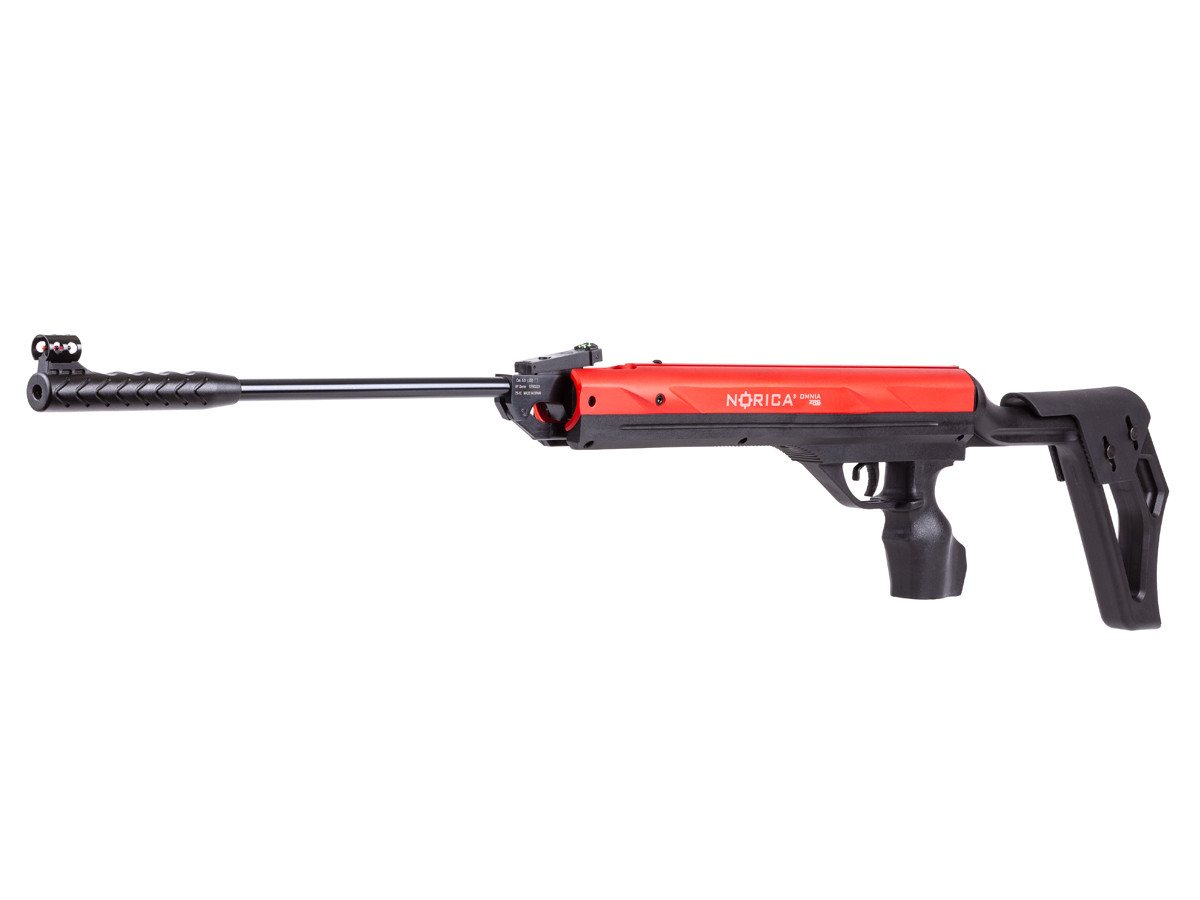
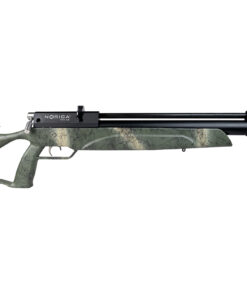
Norica Omnia ZRS Fire Air Rifle
$200.00
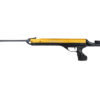
The Norica Omnia ZRS Fire is a break-barrel springer available in both .177 and .22 caliber, offering versatility for target shooters and pest controllers alike. Norica has been building Spanish airguns for decades, and the Omnia ZRS Fire carries that tradition of affordable, reliable performance.
With .177 reaching 984 fps and .22 running at 755 fps, this is a serious spring-piston rifle with enough power for small game and pest work at reasonable ranges.
- Calibers Available: .177 Cal (984 fps) and .22 Cal (755 fps)
- Action: Break-barrel spring piston
- Manufacturer: Norica — established Spanish airgun maker
- Best For: Backyard pest control, field shooting, casual target practice
Caliber .177 caliber, .22 caliber Brand Norica
Norica Omnia ZRS Fire Air Rifle
Norica Omnia ZRS Fire Air Rifle Overview
Norica Air Rifle Engineering With Zero-Recoil Performance
The Norica Omnia ZRS Fire Air Rifle represents a major development in break-barrel engineering. Instead of accepting the sharp movement traditionally associated with a powerful spring-powered platform, Norica created its Zero Recoil System to reduce the recoil transferred to the shooter. Consequently, the rifle combines straightforward break-barrel operation with smooth shot behaviour that resembles the controlled experience of a pre-charged pneumatic model.
The manufacturer describes the Omnia as the first model on the market to use its recoilless ZRS arrangement. Its mechanism is designed to improve shooting comfort, protect mounted optics and support repeatable accuracy. Furthermore, it does not require a compressor, charging bottle or high-pressure hand pump. The shooter simply cocks the barrel, inserts a suitable pellet, closes the action and prepares to fire safely.
ZRS System and Norica Break Barrel Rifle Accuracy
A conventional Norica break barrel rifle normally generates forward and rearward movement when its internal powerplant operates. However, the ZRS mechanism manages that movement before it reaches the shooter. Therefore, sight alignment can remain more stable during the firing cycle.
This design is particularly valuable for precision practice because spring-powered recoil can influence follow-through and optic durability. Although the shooter must still apply proper breathing, trigger control and hold technique, the reduced disturbance helps make each firing sequence more predictable.
The Omnia ZRS Fire retains the convenience of a Norica springer rifle, yet it delivers a smoother experience. It also includes an anodised aluminium cylinder, ambidextrous ergonomics, a cheekpiece and an 11 mm rail extending along the cylinder for compatible optical equipment.
Norica .177 Air Rifle and Norica 4.5mm Air Rifle Configuration
The Norica .177 air rifle, also described as a Norica 4.5mm air rifle, is well suited to precision paper-target shooting, recreational range sessions and controlled marksmanship training. Its lighter pellets generally produce a flatter trajectory than heavier alternatives, which can make range estimation more manageable.
In its maximum international specification, the 4.5 mm version may achieve a manufacturer-stated velocity of up to 330 metres per second and energy of up to 24 joules. However, actual output varies according to pellet weight and the laws of the destination country.
Norica .22 Air Rifle and Norica 5.5mm Air Rifle Configuration
The Norica .22 air rifle, or Norica 5.5mm air rifle, uses a larger and generally heavier pellet. As a result, it may retain more momentum while travelling at a lower velocity than the .177 version.
Norica lists a maximum velocity of approximately 275 metres per second and maximum energy of 24 joules for the 5.5 mm configuration. Therefore, buyers should choose between the two calibres according to their lawful application, preferred distance and local power restrictions.
Norica Quick, Norica Quick 500 and Norica Quick Review
Shooters researching the Norica Quick, Norica Quick 500 or a detailed Norica Quick review may also encounter searches for a Norica Quick accuracy review. These phrases typically reflect interest in Norica’s traditional sporting designs. However, the Omnia ZRS Fire distinguishes itself through its recoil-management mechanism and visually striking red finish.
The best comparison should consider cocking effort, stock geometry, trigger feel, weight, calibre and optic compatibility rather than power alone. The Omnia weighs approximately 3.6 kilograms, has a 484 mm barrel and measures about 1,195 mm overall. Therefore, it offers substantial stability while remaining familiar to shooters accustomed to full-length sporting rifles.
Norica Marvic, Norica Titan and Norica Titan XS
The Norica Marvic, Norica Titan and Norica Titan XS are frequently considered by buyers comparing established models from the same manufacturer. Searches for Norica Titan power output generally focus on velocity and energy, yet power should never be the only purchasing criterion.
The Omnia’s main advantage is how that power is controlled during firing. Its recoil-management design can improve comfort, reduce stress on optical equipment and support consistent follow-through. Therefore, shooters who prioritise refined shot behaviour may regard it as a more technically advanced option.
Norica Ox and Norica Black Hawk Comparisons
The Norica Ox and Norica Black Hawk provide additional reference points within broader Norica product searches. Each model may differ in stock design, powerplant, dimensions and intended market. Consequently, buyers should confirm exact specifications rather than assuming every rifle bearing the Norica name operates identically.
A Norica synthetic stock is often preferred because it resists minor weather exposure and provides straightforward maintenance. The Fire edition also appeals to shooters seeking a modern appearance rather than a traditional wood finish.
Norica Scope Mounts and Optics Protection
Correct Norica scope mounts are essential because the Omnia uses an 11 mm mounting rail. Rings should match both the rail and the optic’s tube diameter. They must also be tightened evenly without damaging the scope body.
The ZRS mechanism provides additional protection for the scope by reducing firing-cycle shock. Nevertheless, owners should still select an optic designed for use on spring-powered equipment and inspect all mounting screws regularly.
Norica Air Rifle Moderator and Safe Sound Management
A Norica air rifle moderator may be considered only where the rifle’s design and local law permit one. Buyers must verify compatibility before installing any accessory. Unapproved alterations may affect safety, performance, warranty protection or legal classification.
Hearing protection and a properly managed range remain advisable, especially when firing inside enclosed facilities.
Norica Pellets and Precision Testing
The best Norica pellets are those that produce consistent groups and load smoothly without skirt deformation. Pellet weight, head diameter and manufacturing quality can all influence performance.
For accurate testing, the shooter should fire several groups from a supported position at the same distance. The barrel, pressure system and optic should remain unchanged during each comparison. Consequently, the most consistent pellet can be identified through evidence rather than assumption.
Norica vs Hatsan
A Norica vs Hatsan comparison often examines power, construction, recoil, price and model variety. Hatsan offers many powerful platforms, while Norica places strong emphasis on Spanish manufacturing heritage and proprietary technologies.
The Omnia’s most distinctive advantage remains its ZRS firing arrangement. Therefore, buyers seeking smoother break-barrel operation may find it particularly appealing. However, handling both options at an authorised retailer remains the best way to evaluate balance and comfort.
Buy Norica Air Rifle and Norica Air Rifle for Sale
Customers searching Buy Norica air rifle, Norica air rifle for sale or Best Norica air rifle should purchase only from an authorised and legally compliant seller. The exact calibre, energy level, included accessories, warranty terms and ownership requirements should be confirmed before payment.
The rifle’s maximum energy may be reduced to comply with national regulations. Norica specifically states that output is modified according to the laws of each country.
Taipan Slash and Taipan Veteran Search Comparisons
The taipan slash, taipan slash airgun, taipan slash tactical, taipan veteran, veterans tactical, citadel taipan, veteran tactical and taipan black phrases relate to a different category of equipment. A Taipan air rifle or Taipan PCP air rifle uses stored high-pressure air rather than the self-contained break-barrel system found in the Omnia.
Likewise, the Taipan Veteran II, taipan veteran 2 and Taipan Veteran Standard are not direct mechanical equivalents. Although tactical air guns may offer compact dimensions and multi-shot capability, they require separate charging equipment. The Omnia instead provides single-shot simplicity without an external air supply.
Ultimately, the Norica Omnia ZRS Fire delivers an unusual combination of power, straightforward operation, optic protection and controlled firing behaviour. For lawful target practice and sporting use, it offers a compelling choice for shooters who want spring-powered independence with noticeably smoother performance.
Design, Performance, Handling and Practical Ownership
Zero-Recoil Mechanical Design
The defining feature of this model is its recoil-control mechanism. Traditional spring-powered rifles create a complex firing movement because the internal piston accelerates rapidly before stopping at the end of its stroke. That movement can cause the rifle to shift before the pellet has fully exited the barrel.
This model is engineered to reduce the movement transferred to the shooter. As a result, the firing cycle feels smoother and more controlled than that of many conventional spring-powered designs. The reduced disturbance can help the shooter maintain sight alignment, improve follow-through and achieve more repeatable groups.
However, the system does not replace good technique. The shooter must still use a consistent grip, stable cheek position and controlled trigger release. The mechanism simply creates a more forgiving platform on which those fundamentals can be applied.
Self-Contained Power System
One of the greatest practical advantages is that the rifle does not require an external charging source. There is no need to carry a diving cylinder, electric compressor or high-pressure filling hose.
The shooter creates the stored energy by opening and cocking the barrel. Once a pellet has been inserted and the barrel has been closed securely, the rifle is ready for the next controlled shot.
This self-contained arrangement makes the rifle convenient for organised range sessions and lawful sporting activities in locations where access to compressed-air equipment is limited. It also simplifies ownership because fewer accessories are required.
Nevertheless, the cocking procedure must always be performed carefully. The barrel should remain under physical control until it locks securely into position. The trigger should never be touched while the barrel is open.
Modern Stock Construction
The stock is designed to provide a modern appearance while supporting practical handling. Its durable exterior is easier to maintain than many traditional wooden finishes and is less vulnerable to minor changes in humidity.
The shape supports both right-handed and left-handed use. This ambidextrous layout broadens its suitability and allows different members of an authorised shooting club or household to use the rifle comfortably under proper supervision.
The grip angle encourages controlled trigger-finger placement, while the raised cheek area helps align the shooter’s eye with an installed optic. Consistent contact with the cheekpiece is especially important because even a small change in head position may alter the apparent sight picture.
Fire-Style Visual Finish
The striking exterior gives the rifle a distinctive identity. Rather than following a plain sporting design, the finish creates a modern and energetic appearance.
Although appearance does not improve accuracy directly, a well-designed stock can increase owner satisfaction and encourage proper care. The exterior should still be protected from scratches, solvents and excessive heat.
Cleaning should be performed with a soft cloth and a product suitable for synthetic surfaces. Harsh chemicals may damage the finish or affect nearby seals and metal components.
Weight and Stability
The rifle has enough mass to feel stable during supported shooting. Additional weight can reduce minor movement caused by breathing, pulse and uneven trigger pressure.
However, weight distribution matters as much as total weight. A rifle that balances naturally between the hands is usually easier to control than one that feels excessively heavy at the front.
During standing use, the supporting arm should remain beneath the rifle in a relaxed position. Excessive muscular effort will increase movement and fatigue. For longer sessions, a bench, shooting bag or approved support may provide greater comfort.
Barrel Length and Precision Potential
The barrel provides sufficient length for stable pellet acceleration and controlled guidance. Its performance depends on manufacturing consistency, internal condition and compatibility with the chosen ammunition.
A longer barrel does not automatically guarantee better accuracy. Precision depends on the complete relationship between the barrel, firing system, pellet and shooter.
The barrel should remain protected from impact. Even a small amount of damage near the muzzle can influence pellet stability. The rifle should therefore be transported inside a padded case and should never be rested directly on the muzzle.
Adjustable Trigger System
A predictable trigger helps the shooter release the shot without disturbing alignment. The trigger system is designed to provide a staged movement that allows pressure to be applied progressively.
The first stage prepares the trigger, while the second stage provides a more defined release point. When properly adjusted, this arrangement can improve control and reduce the likelihood of an abrupt shot.
Adjustments should follow the manufacturer’s instructions. An excessively light or incorrectly configured trigger can become unsafe. Any uncertainty should be referred to a qualified technician.
The finger should contact the trigger consistently. Pressure should be applied straight toward the rear instead of sideways across the blade.
Cocking Technique
Correct cocking technique protects the mechanism and improves safety. The rifle should first be pointed in a safe direction. The shooter should then hold the stock securely while controlling the barrel with the other hand.
The barrel must be moved through its full cocking arc until the internal mechanism engages. A pellet can then be inserted into the breech with its head facing forward.
The barrel should be returned smoothly and firmly to the closed position. It must never be allowed to snap shut because this may damage the locking surfaces and create an unsafe condition.
The shooter should confirm that the barrel has locked correctly before raising the rifle toward the target.
Single-Shot Loading
The single-shot configuration encourages a deliberate shooting rhythm. Each pellet must be loaded individually, which gives the shooter an opportunity to inspect the ammunition before firing.
Bent skirts, damaged heads and contaminated pellets should be rejected. Deformed ammunition may load poorly, reduce accuracy or leave unwanted material inside the barrel.
The slower loading process can also support disciplined training. Instead of concentrating on rapid firing, the shooter can focus on body position, breathing, trigger control and follow-through.
Optic Mounting
The integrated rail allows a compatible optic to be installed. Ring height should be selected so that the objective lens clears the rifle while the shooter can maintain a natural cheek position.
An optic designed to tolerate spring-powered firing cycles should be chosen. Even though the recoil-management system reduces transmitted movement, unsuitable equipment may still experience stress.
The rings should be positioned without placing pressure on adjustment turrets or other sensitive components. Screws should be tightened evenly and checked after the first few shooting sessions.
Overtightening can damage threads, distort the scope tube or affect internal adjustment.
Open-Sight and Scope Considerations
Depending on the supplied configuration, the rifle may be used with its existing sighting arrangement or fitted with an optic. Open sights can be suitable for short-range practice and fundamental marksmanship training.
A scope provides a more precise aiming reference, particularly when small targets or longer distances are involved. Moderate magnification is usually sufficient for most controlled sporting applications.
Very high magnification can exaggerate natural movement and reduce the visible field of view. Therefore, the optic should be selected according to the actual shooting environment rather than maximum magnification alone.
Zeroing Procedure
The optic should be zeroed at an authorised range with a suitable backstop. The initial shots should be fired at a short distance to ensure that they land safely on the target board.
Rather than adjusting after every shot, the shooter should fire a small group. The centre of that group provides a more reliable indication of the required adjustment.
Corrections should be made in small increments. Once the group is centred at the chosen distance, performance should be checked at shorter and longer ranges.
The results should be recorded because pellet trajectory changes with distance. A written range chart can help the shooter understand expected points of impact.
Pellet Selection
Ammunition quality strongly influences performance. Pellets of the same nominal calibre may differ in head diameter, weight, skirt thickness and balance.
Several reputable types should be tested from a stable position. Each type should be evaluated through multiple groups under similar conditions.
The smallest single group should not be the only deciding factor. The best choice is the pellet that produces consistently tight groups across repeated tests.
Pellets should be stored in a dry container. Dirt and moisture can affect loading and may contaminate the barrel.
Managing Spring-Powered Hold Sensitivity
Even with reduced recoil, the rifle may respond differently to changes in grip pressure. The supporting hand should remain in the same position from shot to shot.
The rifle should not be pulled tightly into the shoulder. A firm but relaxed hold often produces more consistent results.
The shooter should avoid resting the barrel directly on a hard support. Instead, the stock should be placed on a padded rest or supported by the hand.
Minor changes in pressure can alter the way the rifle moves during the firing cycle. Therefore, consistency is more important than force.
Breathing and Follow-Through
Breathing creates movement in the upper body. The shooter should establish a normal breathing rhythm and release the shot during a brief natural pause.
Holding the breath for too long can create tension and visual disturbance. The firing process should remain comfortable and controlled.
After the trigger releases, the shooter should keep the head, hands and shoulder position steady for a moment. This follow-through allows the pellet to leave the barrel before the rifle is moved.
Good follow-through also helps the shooter observe errors in technique.
Range Use
This rifle is best used at a controlled facility or on private property where shooting is specifically lawful and a safe backstop is available.
The target area must be inspected before shooting begins. Roads, buildings, people and animals must not be located behind or near the target.
Hard surfaces and water should never be used as backstops because pellets may ricochet unpredictably.
Eye protection is advisable. Hearing protection may also be appropriate at enclosed ranges or when several shooters are operating nearby.
Outdoor Conditions
Wind is one of the most important environmental influences on pellet flight. Light projectiles can move sideways even when the wind appears moderate.
Range flags, grass and nearby vegetation may help the shooter assess direction and strength. However, shots should be postponed when conditions become difficult to judge.
Rain can reduce visibility and create slippery handling surfaces. The rifle should be dried carefully after exposure to moisture.
Temperature may also influence lubrication and internal seal behaviour. The rifle should not be left in extreme heat or direct sunlight.
Cleaning the Barrel
Routine barrel cleaning should be conservative. Excessive cleaning can cause more harm than benefit if unsuitable rods or abrasive materials are used.
A soft pull-through system is generally appropriate when accuracy declines or visible contamination is present. Only products intended for this type of equipment should be used.
The rifle must be unloaded before cleaning begins. The barrel should be pointed in a safe direction, and the firing mechanism should remain uncocked.
After cleaning, several shots may be required before accuracy stabilises again.
Exterior Maintenance
Metal components should be wiped after use to remove moisture and fingerprints. A lightly treated cloth can help protect the finish, provided the product is suitable for the material.
Oil should never be allowed to enter the compression chamber unless the manufacturer specifically approves it. Excess lubricant may ignite under pressure and cause internal damage.
The stock should be inspected for cracks, loose fasteners and impact damage. The barrel pivot and locking surfaces should also be checked periodically.
Any unusual looseness, grinding sensation or difficulty during cocking should be investigated before further use.
Long-Term Spring Care
The rifle should not remain cocked for extended periods. Keeping the spring compressed unnecessarily may reduce performance and creates an avoidable safety risk.
After a shooting session, the owner should confirm that the rifle is unloaded and uncocked. Dry firing should not be used as a method of releasing the mechanism unless the manufacturer explicitly permits it.
If a loaded shot must be discharged, it should be fired into an approved backstop at a lawful location.
Safe Storage
The rifle should be stored unloaded in a locked cabinet or secure storage system. Access must be restricted to authorised adults.
A dry environment is essential because moisture can affect metal components and internal parts. Storage in damp sheds or unventilated garages should be avoided.
Ammunition should be controlled separately where local rules require it. Keys or access codes should never be left where children or visitors can find them.
Transportation
During transportation, the rifle should be unloaded, uncocked and placed in a protective case. The optic should be supported so that it cannot strike the sides of the case.
The rifle should remain out of public view. It should never be left unattended in a vehicle where theft or heat exposure may occur.
Local transportation rules must be checked before travelling. Additional documentation may be required when crossing regional or national boundaries.
Troubleshooting Inconsistent Groups
Poor grouping can result from several simple issues Taipan air rifle. Loose optic mounts, damaged pellets, wind and inconsistent grip pressure should be checked first.
The shooter should also confirm that the barrel locks securely after loading. Any movement at the breech may affect alignment.
If accuracy declines suddenly, the barrel may require cleaning. However, cleaning should not be performed automatically after every session.
Persistent problems should be assessed by a qualified technician rather than through unapproved internal modifications.
Recognising Mechanical Warning Signs
Unusual sounds, excessive vibration, difficult cocking or an inconsistent trigger release may indicate a mechanical issue.
The rifle should not be used when its behaviour changes significantly. Continued operation could worsen the problem or create a safety hazard.
The compression system and recoil-control components require specialist knowledge. Internal repairs should therefore be completed by an authorised service provider.
Who Should Consider This Model
This rifle is suitable for shooters who want spring-powered independence without the sharper firing behaviour commonly associated with traditional designs.
It may appeal to experienced users who want a distinctive technical system, as well as developing shooters who value a stable and predictable platform.
However, younger or inexperienced users require direct adult supervision and formal instruction. The rifle must never be treated as a toy.
Overall Practical Assessment
The Norica Omnia ZRS Fire Air Rifle combines mechanical independence, distinctive styling and controlled firing characteristics in one platform.
Its recoil-management design supports comfort and optic protection, while the self-contained power system removes the need for external charging equipment.
With suitable ammunition, correct optic setup and consistent shooting technique, the rifle offers strong precision potential for lawful target and sporting use. Long-term reliability will depend on careful cocking, conservative maintenance, secure storage and professional servicing whenever mechanical concerns arise.
Be the first to review “Norica Omnia ZRS Fire Air Rifle”
Related products
Norica Air Rifles
Norica Air Rifles
Norica Air Rifles
Norica Air Rifles
Norica Air Rifles
Norica Air Rifles
Norica Air Rifles
Reviews
There are no reviews yet.