
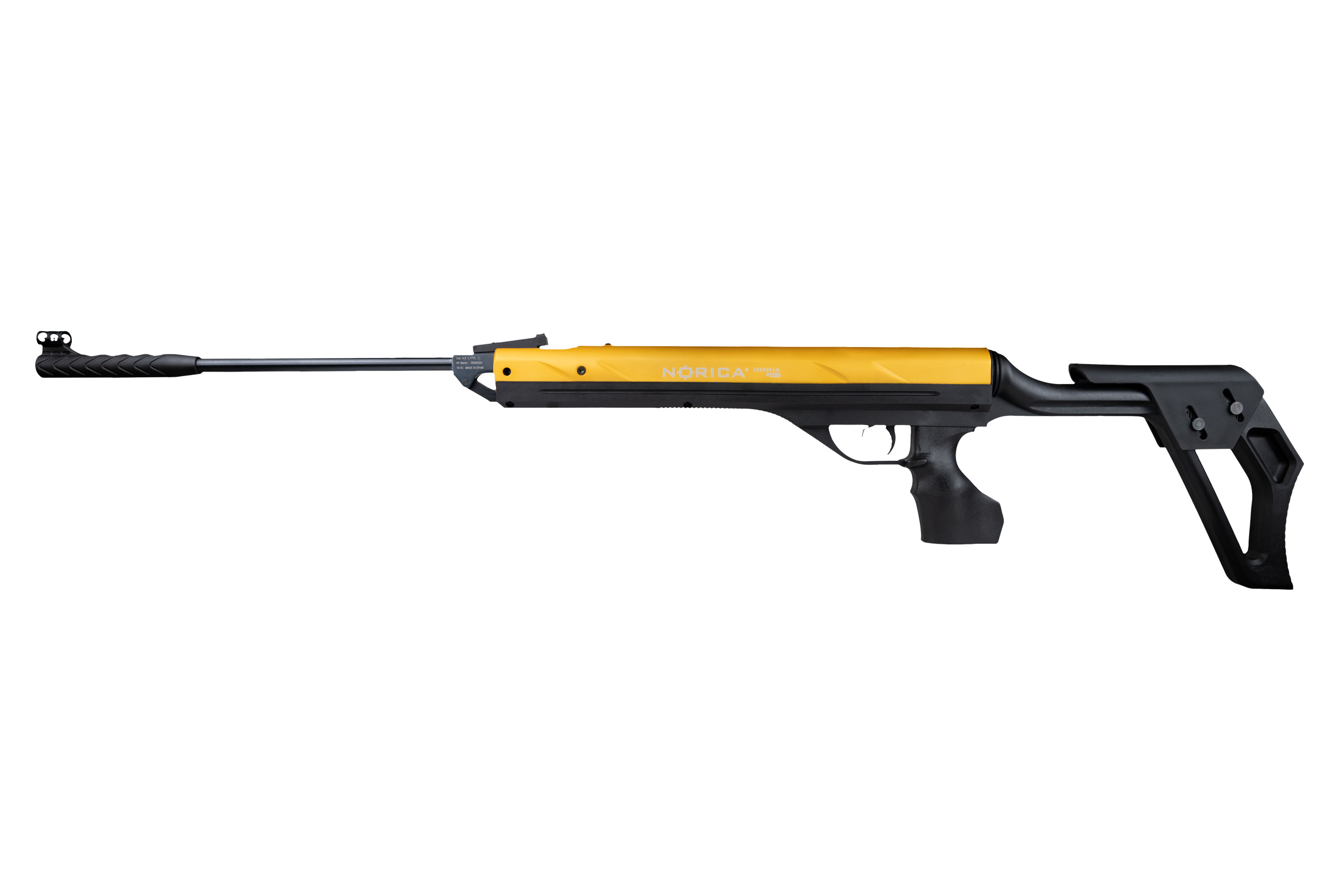
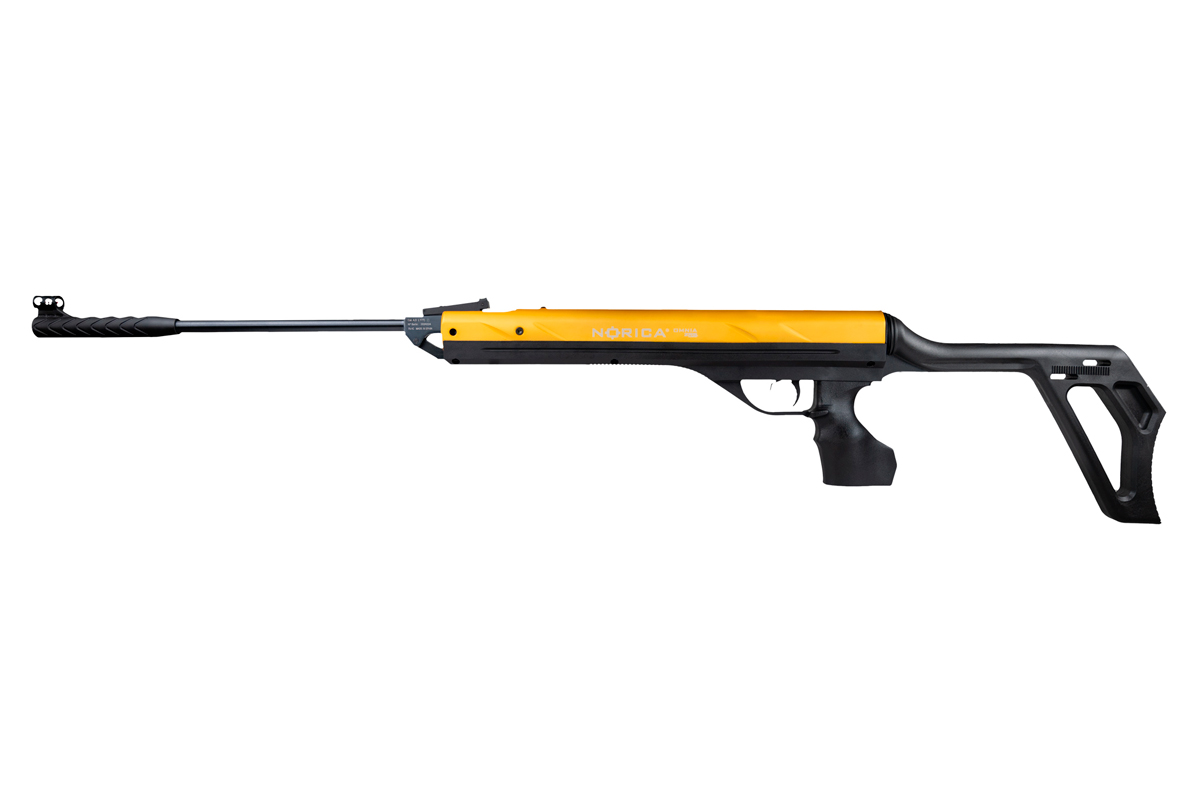
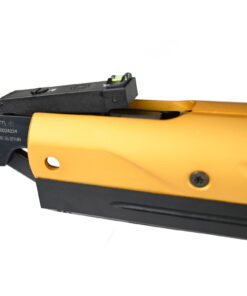
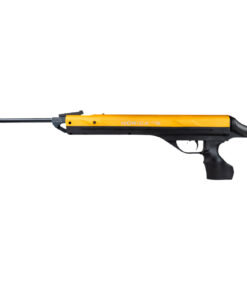
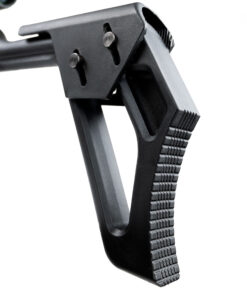
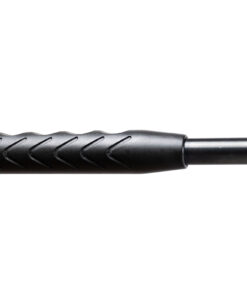
Omnia ZRS Gold
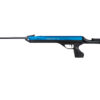
$230.00
WE ONLY NEED ONE SHOT!
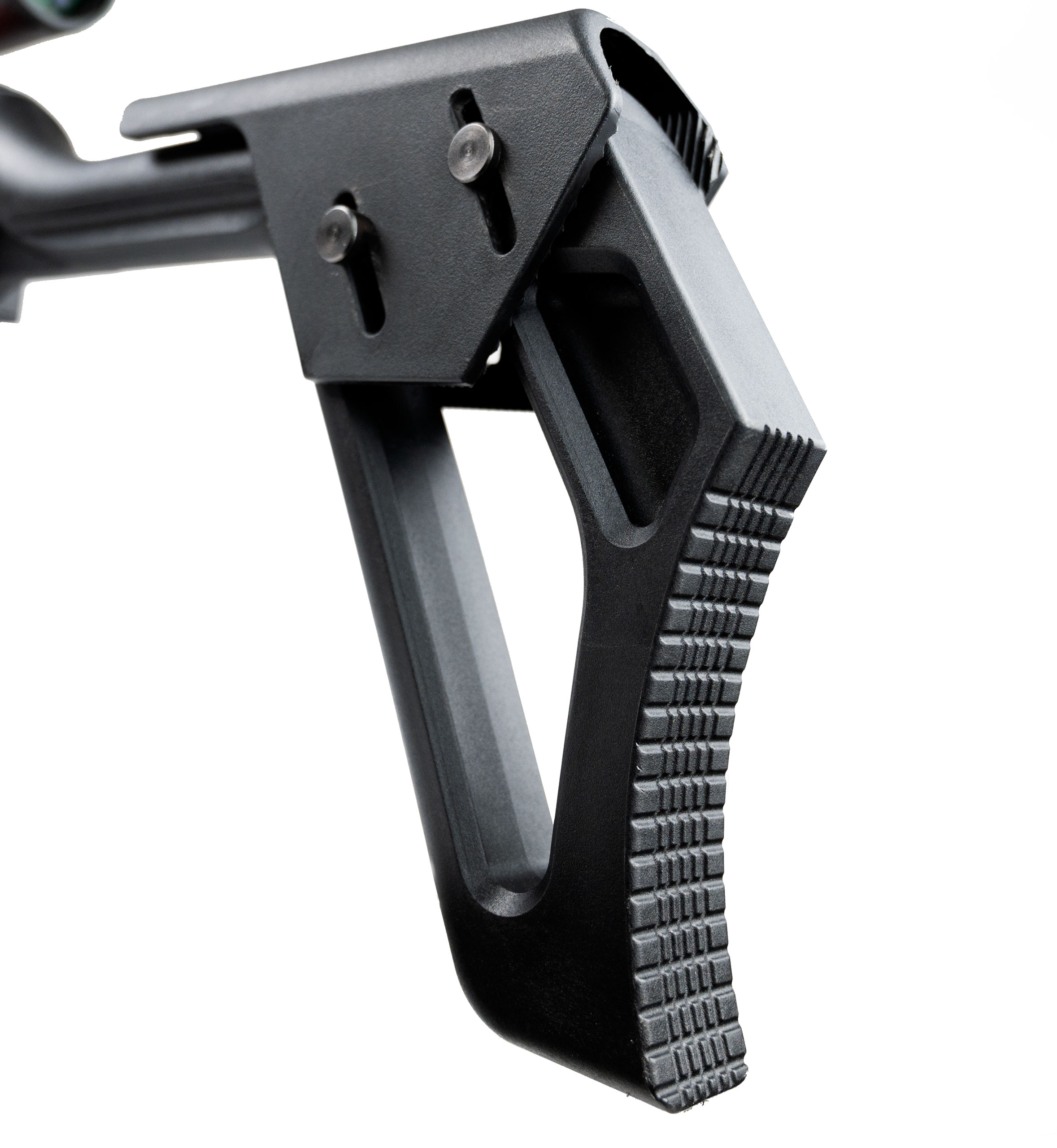
“ZRS recoilless, we only need one shot.” A revolutionary technology in the field of break barrel air rifles, which consists in the elimination of recoil at the moment of firing, providing the shooter with maximum accuracy.
ZRS system: Maximum power without recoil:
- Shooting smoothness like a PCP.
- Maximum accuracy by eliminating recoil to the shooter.
- Total protection for the scope and other parts.
Ease of maintenance and maximum reliability:
- Simple disassembly and assembly without special tools.
- Maintenance-free mechanism.
Easy to use:
- Identical use as any break barrel air rifle.
- No need for a high pressure pump or pressurized air cylinders
Specifications
First air rifle on the world market with a recoilless ZRS system.
High quality anodized aluminum cylinder.
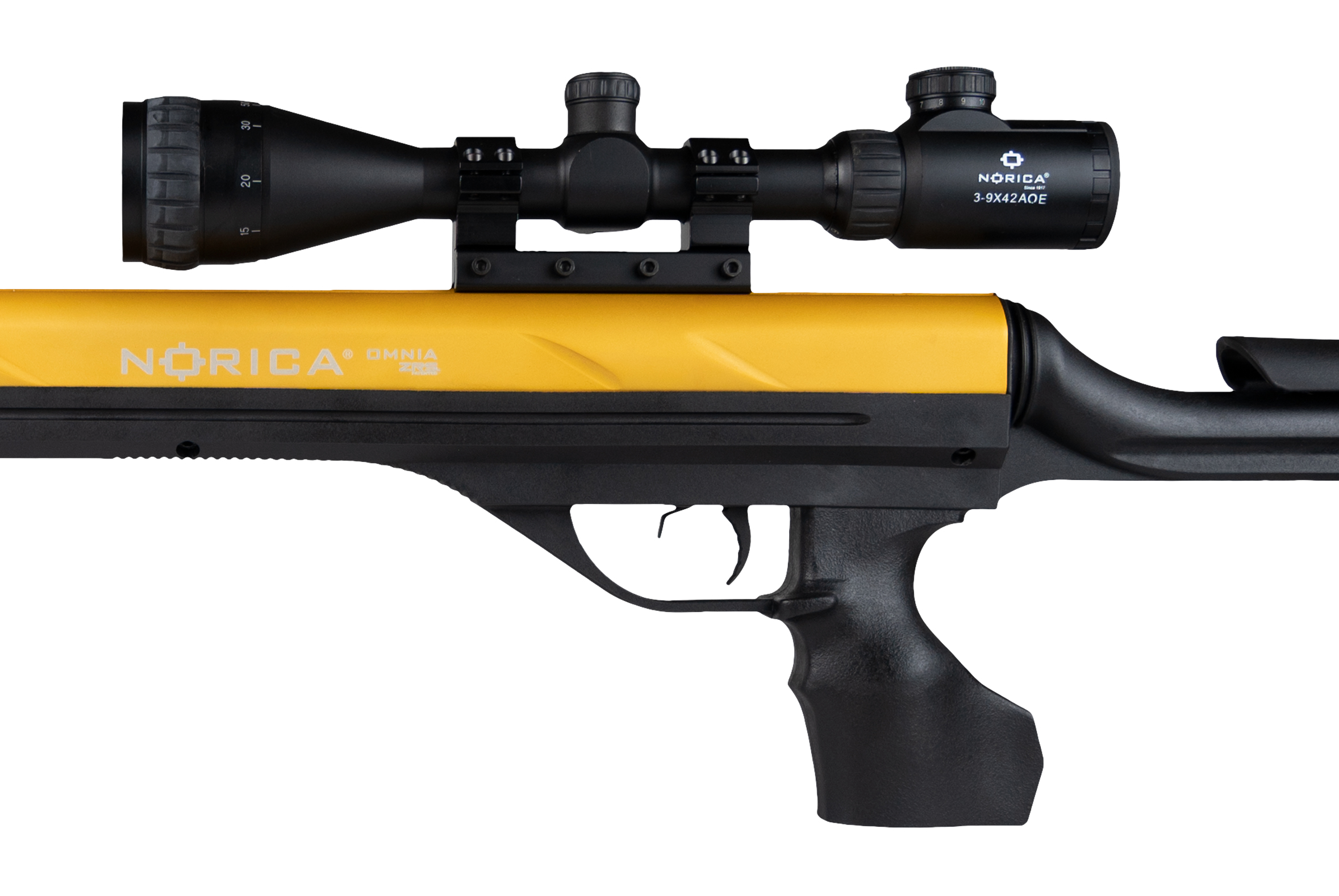
11mm rail along the cylinder for laserdot and high magnification scope on the same rail.
Ambidextrous ergonomics optimized for precise shooting in any situation.
Cheek piece included.Technical data
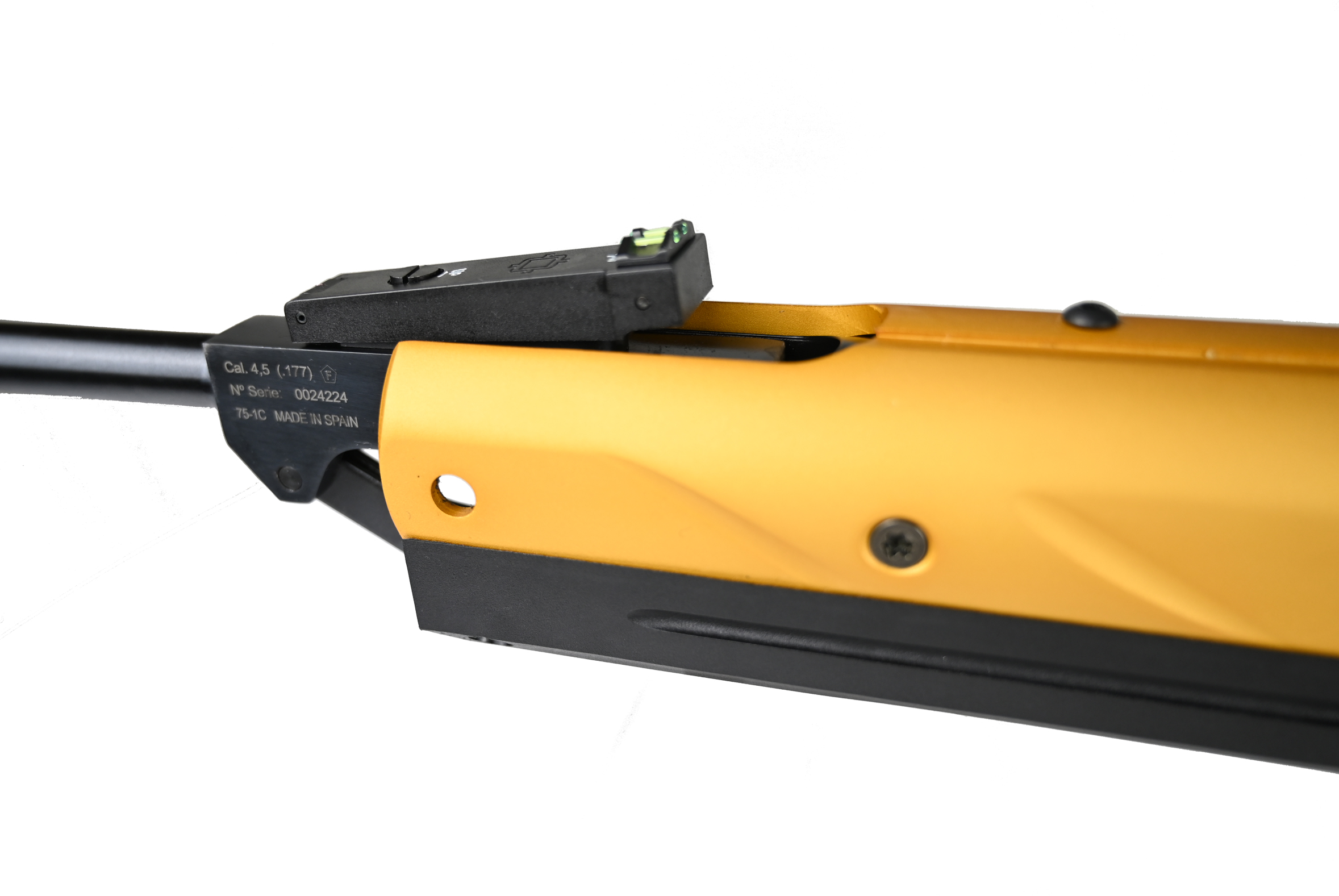
Reference 111.30.042 111.30.043 Caliber (mm/inch) 4,5 (.177) 5,5 (.22) Weight (kg) 3,6 3,6 Barrel length (mm) 484 484 Total length (mm) 1195 1195 Speed (m/s) 330 275 Energy (J) * 24 24 *GRS technology is not included in models with energies below 16J.
*The indicated energy is the maximum possible. The energy will be modified according to the laws of each country. We reserve the right to make any changes without notice.
Norica Omnia ZRS Gold Air Rifle – Recoilless Break-Barrel Performance, Gas-Ram Power and Precision-Focused Engineering
The Omnia ZRS Gold is an advanced break-barrel air rifle developed by Norica around one particularly important engineering objective: reducing the recoil normally associated with powerful spring-piston and gas-ram rifles.
Norica describes the Omnia ZRS platform as the first air rifle on the market equipped with its recoilless ZRS system. During firing, the system is intended to reduce the recoil transmitted to the shooter while preserving the familiar operation of a conventional break-barrel rifle. Consequently, the rifle offers an unusual combination of self-contained power, simple cocking, and smoother shot behavior without requiring an external compressed-air bottle or high-pressure pump.
The Gold version is currently offered in 4.5mm / .177 and 5.5mm / .22, weighs approximately 3.6kg, uses a 484mm barrel, and measures approximately 1195mm overall. Norica lists maximum factory energy at 24 joules, although actual market versions may be modified to comply with national legislation.
Why Choose the Omnia ZRS Gold?
The strongest reason to consider this platform is its recoil-management technology.
Traditional break-barrel rifles can produce noticeable forward and rearward movement during the firing cycle. That movement can influence shooter comfort, optic durability, and practical accuracy.
The ZRS system was developed specifically to reduce that movement.
Norica states that the resulting firing sensation approaches the smoothness associated with a PCP while retaining the simplicity of a self-contained break-barrel platform. The system is also intended to protect scopes and other attached components from the harsh recoil impulses found on conventional powerful springers.
Therefore, shooters who prefer not to manage high-pressure charging equipment may find the design particularly interesting.
ZRS Recoilless Technology
The patented ZRS concept is central to the rifle.
According to Norica, the system reduces recoil at the moment of firing, which can help improve stability and preserve sight alignment.
That does not mean accuracy becomes automatic. Pellet selection, trigger technique, optic quality, shooting position, wind, and shooter consistency still matter.
However, reducing mechanical movement gives the shooter a more stable platform from which to develop repeatable groups.
Norica also promotes the system as maintenance-friendly and states that disassembly and assembly can be completed without specialized tools.
Gas-Ram Power System
Current Norica catalogue information lists GRS Gas Ram System technology on the Omnia ZRS Gold.
A gas-ram powerplant replaces the conventional coiled mainspring with a compressed-gas unit.
Consequently, the firing cycle can feel different from a traditional metal spring.
Gas-ram systems are generally valued for consistent operation, reduced spring vibration, and a self-contained design that does not require external charging equipment.
Norica notes that its GRS technology may not be included on lower-powered versions below 16 joules, so the specification of the exact rifle being sold should always be confirmed.
.177 and .22 Caliber Options
The Omnia ZRS Gold is currently available in two calibers.
The .177 / 4.5mm version is listed at a maximum velocity of approximately 330m/s, while the .22 / 5.5mm version is listed at approximately 275m/s.
Both versions are shown with a standard maximum energy figure of approximately 24 joules, subject to country-specific legal restrictions.
The smaller caliber is often selected for flatter trajectory characteristics and general target use, while the larger caliber uses heavier pellets.
Actual performance depends on ammunition weight, design, barrel preference, and the legal power configuration of the individual rifle.
Precision and Shooting Stability
Precision is supported by more than recoil reduction.
Norica’s current catalogue identifies SSC Shooting Stability Control, an adjustable trigger system, a solid steel breech, fiber-optic open sights, and automatic safety among the platform’s technologies.
Together, these features create a more complete precision-focused shooting system.
The steel breech provides a rigid barrel-to-action interface, while the adjustable trigger allows the firing feel to be refined within safe operating limits.
Meanwhile, reduced recoil can help the shooter maintain a more stable sight picture through the firing cycle.
11mm Optics Rail
The rifle includes an 11mm rail running along the cylinder.
Norica states that the rail can support sighting accessories and high-magnification optics.
This long mounting area gives the shooter flexibility when establishing eye relief and optic position.
Because powerful break-barrel rifles can normally be demanding on scopes, the reduced-recoil concept is particularly important for users who intend to mount optical equipment.
However, appropriate mounts and a suitably rated optic should still be selected.
Ambidextrous Ergonomics
The platform uses an ambidextrous ergonomic layout designed for accurate shooting from either shoulder.
Norica specifically identifies ambidextrous ergonomics as part of the rifle’s precision-focused design.
This can make the platform suitable for both right- and left-handed users.
A cheekpiece is associated with the system, although current documentation differs between listings on whether it is included or optional. The exact retailer package should therefore be checked before purchase.
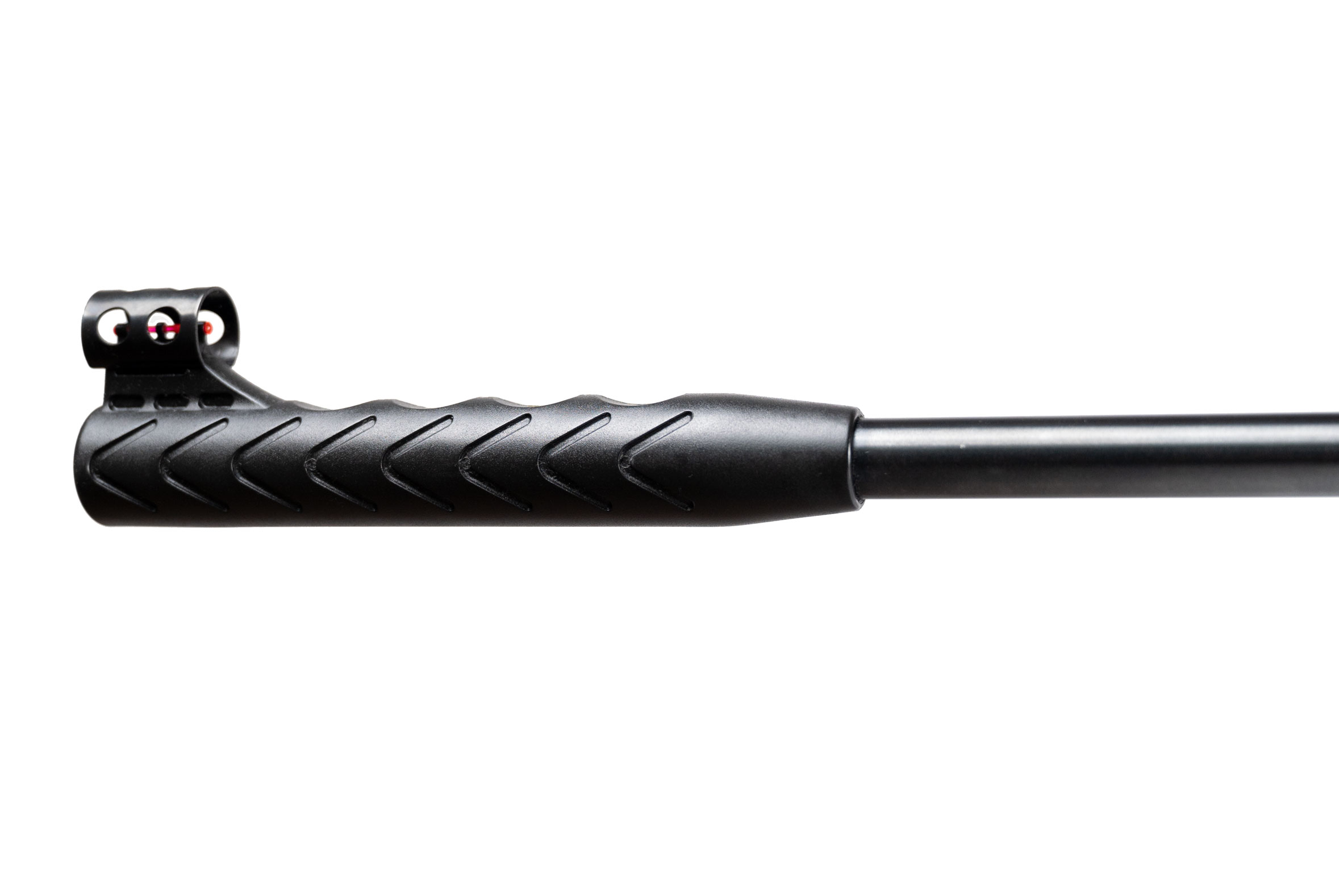
Fiber-Optic Open Sights
Current manufacturer catalogue information lists fiber-optic open sights.
These provide a visible aiming reference without requiring an optic.
For short- and medium-distance recreational target shooting, open sights can also help shooters develop consistent sight alignment and trigger technique before adding a scope.
Adjustable Trigger
Norica lists its NATS Adjustable Trigger EVO technology on the current platform.
Trigger predictability is particularly important for precision.
A heavy, inconsistent, or abrupt release can disturb sight alignment immediately before the pellet exits the barrel.
An adjustable mechanism gives the shooter additional control over feel, although all adjustments should remain within the manufacturer’s safe specifications.
Automatic Safety
An automatic safety is included among the current listed technologies.
This provides an additional layer of protection during normal handling.
Nevertheless, a mechanical safety should never replace proper muzzle direction and trigger discipline.
Norica Air Rifle
The phrase Norica air rifle covers a broad catalogue of Spanish-manufactured airguns.
The Omnia platform represents one of the more technically distinctive options because of its recoil-control architecture.
Therefore, shoppers comparing different Norica designs should pay attention to powerplant type, stock design, recoil characteristics, caliber, weight, and intended use rather than treating every model as mechanically identical.
Norica Springer Rifle
The phrase Norica springer rifle is commonly used for conventional spring-powered break-barrel models.
The Omnia differs because current manufacturer documentation lists a gas-ram system alongside its patented recoil-management architecture.
Consequently, it should not simply be treated as a traditional coiled-spring rifle.
Norica .177 Air Rifle
The Norica .177 air rifle category includes the 4.5mm configuration.
For the Gold model, the manufacturer lists approximately 330m/s maximum velocity and up to 24 joules depending on legal configuration.
This caliber can be attractive for precision-oriented recreational shooting because a wide range of target pellets is available.
Norica .22 Air Rifle
The Norica .22 air rifle category includes the 5.5mm version.
It is listed at approximately 275m/s maximum velocity with the same nominal maximum 24-joule energy rating.
Heavier ammunition changes the external ballistic behavior, so users should test different pellet weights rather than assuming one type will perform best.
Norica 4.5mm Air Rifle and Norica 5.5mm Air Rifle
Searches for Norica 4.5mm air rifle and Norica 5.5mm air rifle correspond directly to the two current caliber offerings.
The best choice depends on the intended legal sporting application, ammunition availability, desired trajectory characteristics, and local energy restrictions.
Norica Quick
The Norica Quick belongs to another part of the manufacturer’s range.
Search terms such as Norica Quick review, Norica Quick accuracy review, and Norica Quick 500 should therefore be treated as related-model research rather than technical specifications of the Gold platform.
Model-specific dimensions, powerplant design, stock configuration, and output should always be verified independently.
Norica Marvic
The Norica Marvic is another established model name within the wider catalogue.
Buyers comparing it with the Omnia should focus particularly on recoil behavior, action technology, weight, ergonomics, and sighting setup.
The defining advantage of the Omnia remains its specialized recoil-control architecture.
Norica Titan and Norica Titan XS
Searches for Norica Titan, Norica Titan XS, and Norica Titan power output concern another family of products.
Those terms should not be used as Omnia specifications.
Power ratings can vary between models and countries, so individual factory information should always be checked.
Norica Ox
The Norica Ox is another separate Norica platform.
Its features should not be transferred automatically to this model.
Product comparisons are most useful when they consider exact powerplant design, caliber, overall dimensions, trigger, stock, and intended use.
Norica Black Hawk
The Norica Black Hawk represents another popular search within the same brand.
Again, model identity matters.
Different rifles may use different stock materials, power systems, sights, and energy configurations.
Norica Synthetic Stock
The keyword Norica synthetic stock reflects shopper interest in durable, weather-resistant stock designs.
The Omnia ZRS Gold uses an ambidextrous precision-oriented stock arrangement, while exact finish and included cheek support should be checked against the current retailer package.
Stock ergonomics are particularly important because repeatable shoulder and cheek placement support more consistent accuracy.
Norica Break Barrel Rifle
The phrase Norica break barrel rifle accurately describes the operating format.
The barrel is used as part of the cocking cycle, giving the user a self-contained system with no need for an external compressed-air source.
That simplicity is one of the most important reasons some shooters continue to prefer break-barrel designs.
Norica Scope Mounts
Appropriate Norica scope mounts become important when adding optics to the 11mm rail.
The mount should provide secure alignment without damaging the rail.
Because optic position affects eye relief and cheek placement, mounting should be completed carefully and checked periodically.
Norica Air Rifle Moderator
The term Norica air rifle moderator concerns optional sound-management accessories rather than a standard defining feature of this model.
Legal requirements for moderators vary by country.
Compatibility should therefore be confirmed before installation, and local laws should always be followed.
Norica Pellets
The choice of Norica pellets or other suitable quality ammunition can influence precision significantly.
Different barrels may prefer different pellet weights, head sizes, and shapes.
For meaningful testing, several compatible pellet types should be fired under similar conditions.
The smallest and most repeatable groups provide more useful information than advertised velocity alone.
Norica vs Hatsan
The search phrase Norica vs Hatsan reflects common brand-comparison intent.
A useful comparison should consider recoil system, powerplant, trigger quality, weight, optics compatibility, stock ergonomics, warranty support, and local pricing.
The Omnia’s strongest point of differentiation is its dedicated recoil-control technology rather than simply maximum power.
Best Norica Air Rifle
The Best Norica air rifle depends on what the shooter values most.
For someone prioritizing a self-contained break-barrel format combined with unusually smooth firing behavior, the Omnia stands out.
Other models may be better suited to shoppers prioritizing lower weight, traditional simplicity, or a lower purchase price.
Buy Norica Air Rifle
Searches for Buy Norica air rifle and Norica air rifle for sale indicate strong purchase intent.
Before buying, the shooter should verify caliber, country-specific energy output, included cheekpiece, optics package, warranty, spare-part support, and retailer reputation.
Important Specifications
- Calibers: .177 / 4.5mm and .22 / 5.5mm
- Maximum factory energy: approximately 24 joules
- .177 velocity: approximately 330m/s
- .22 velocity: approximately 275m/s
- Weight: approximately 3.6kg
- Barrel length: approximately 484mm
- Overall length: approximately 1195mm
- Patented recoil-control system
- Gas-ram powerplant on applicable power configurations
- Shooting Stability Control
- Adjustable trigger
- Solid steel breech
- Fiber-optic open sights
- Automatic safety
- High-quality anodized aluminum cylinder
- 11mm optics rail
- Ambidextrous ergonomics
These figures come from Norica’s current product page and recent manufacturer catalogue.
Why the Omnia ZRS Gold Offers Strong Practical Value
The Omnia ZRS Gold is distinctive because it addresses one of the biggest compromises traditionally associated with powerful break-barrel rifles: recoil.
Instead of requiring compressed-air tanks, pumps, or external charging equipment, the rifle remains self-contained. Meanwhile, the recoil-management architecture, gas-ram power system, adjustable trigger, steel breech, optics rail, and ambidextrous ergonomics provide a more refined shooting experience than a basic break-barrel design.
For shooters who value simplicity but still want smoother shot behavior and strong precision potential, the Omnia ZRS Gold offers an unusually sophisticated combination of self-contained power, recoil control, durability, and accuracy-focused engineering.
Accuracy, Recoil Management, Trigger Control, Handling, and Practical Shooting Performance
Building Consistent Accuracy
Consistent accuracy comes from controlling the same variables from one shot to the next.
A self-contained break-barrel platform can deliver very good precision when the shooter maintains stable shoulder contact, consistent cheek placement, suitable ammunition, correct sight alignment, and smooth trigger control.
Rather than changing several settings at once, the shooter should establish a repeatable routine.
This makes it easier to understand whether an improvement comes from ammunition, technique, sight adjustment, or mechanical setup.
Understanding Recoil Management
One of the biggest challenges with powerful break-barrel systems is movement during the firing cycle.
The internal powerplant can create both rearward and forward motion before the pellet completely leaves the barrel.
A recoil-management system is designed to reduce how much of this movement reaches the shooter and sighting equipment.
However, reduced recoil does not eliminate the need for good technique.
The rifle should still be held consistently so its movement remains predictable.
Developing a Repeatable Hold
The rifle should be supported firmly enough for stability without being squeezed excessively.
A very tight hold can introduce muscular tension.
A hold that is too loose may allow unnecessary movement.
The best approach is usually light but repeatable contact.
The supporting hand should remain in approximately the same position for every shot.
Changing the support point can alter balance and may affect group location.
Shoulder Contact
The butt should sit naturally against the shoulder.
Excessive rearward pressure can change how the rifle behaves during the firing cycle.
Too little pressure can reduce stability.
A consistent contact point is more valuable than trying to pull the rifle tightly into the body.
Once a comfortable shoulder position is found, the shooter should repeat it for every group.
Cheek Placement
Cheek placement affects eye alignment with the sights or optic.
If the head is positioned differently on each shot, the sight picture may also change.
The shooter should allow the cheek to settle naturally without pressing excessively into the stock.
A consistent head position improves both comfort and repeatability.
Trigger Control
The trigger should be pressed smoothly rather than pulled sharply.
The shooter should become familiar with the first stage and final release point.
Once the trigger behavior becomes predictable, more attention can be given to sight alignment.
A sudden trigger movement can disturb the rifle just before pellet release.
Smooth pressure generally produces more consistent groups.
Trigger-Finger Position
Finger placement should remain natural.
Too much finger can pull the rifle sideways.
Too little contact can make the movement awkward.
The trigger finger should move independently from the rest of the hand.
This helps prevent changes in grip pressure during the final release.
Breathing Technique
Breathing creates natural movement through the upper body.
The shooter should avoid holding the breath for too long.
A brief pause after exhalation often provides a stable moment for firing.
If the position becomes strained, the shooter should reset.
Comfortable breathing improves concentration and helps keep the firing rhythm consistent.
Follow-Through
Follow-through should continue after the shot is released.
The shooter should maintain cheek placement, shoulder contact, and sight alignment briefly rather than immediately lifting the head.
This helps preserve consistency through the full firing cycle.
It also makes errors easier to recognize.
Good follow-through is especially important when evaluating group size.
Cocking Technique
The barrel should be cocked smoothly and through its complete intended movement.
The shooter should avoid slamming or forcing the mechanism.
A controlled cocking movement supports long-term mechanical consistency.
Before closing the barrel, the pellet should be seated correctly.
The breech should then close fully and securely before the rifle is placed into the firing position.
Pellet Seating
Pellets should be inserted carefully.
The skirt should sit cleanly without being crushed or distorted.
Damaged ammunition can affect both accuracy and barrel sealing.
The shooter should avoid forcing pellets that feel unusually tight.
If one pellet type repeatedly feels inconsistent during loading, another suitable option may provide better practical results.
Ammunition Selection
Different barrels often prefer different pellet weights and head dimensions.
Several appropriate options should therefore be tested.
Each type should be fired under similar conditions.
Distance, support method, sight settings, and shooter technique should remain unchanged.
Changing one variable at a time provides clearer information.
The fastest pellet is not automatically the most accurate.
Group Testing
Several-shot groups provide more useful information than individual impacts.
One excellent shot may happen by chance.
Likewise, one poor shot may result from shooter error.
Multiple groups reveal whether performance is genuinely repeatable.
The shooter should compare overall patterns rather than focusing on one isolated result.
Open-Sight Use
When open sights are used, front and rear alignment should remain consistent.
The front element should be centered in the rear reference.
The same aiming point should be used for every shot.
Small alignment differences can create noticeable changes at distance.
For this reason, sight discipline remains important even when mechanical recoil is reduced.
Optic Setup
If an optic is installed, mounting hardware should remain secure.
A sight that moves even slightly can cause changes in point of impact.
The optic should also be positioned so the shooter obtains a full sight picture naturally.
Eye relief should not require excessive neck movement.
Mounting screws should be secure but should not be over-tightened.
Zero Confirmation
Zero should be confirmed using complete groups.
Adjusting the sight after every individual shot can create confusion.
A better approach is to fire several carefully controlled shots, identify the center of the group, make a small correction, and then repeat the process.
Once the desired zero is achieved, unnecessary adjustments should be avoided.
Supported Shooting
A stable rest can help establish a performance baseline.
However, the rifle should not be clamped excessively.
The support point should remain consistent.
The goal is to reduce shooter movement while still allowing the rifle to behave naturally during the firing cycle.
Standing Practice
Standing shooting requires balance and muscle control.
The shooter should avoid excessive tension in the shoulders and arms.
Short practice strings are often more productive than very long sessions.
As fatigue develops, trigger control and sight alignment become less consistent.
Kneeling and Seated Positions
Kneeling and seated positions can provide additional stability.
The same shoulder contact, cheek placement, and trigger technique should still be maintained.
These positions can be useful once the rifle has been zeroed from a stable rest.
They provide a practical bridge between bench testing and unsupported shooting.
Managing Barrel Condition
The barrel should not be cleaned aggressively without reason.
If grouping remains stable, frequent deep cleaning may not be necessary.
When cleaning is required, suitable non-abrasive materials should be used.
The muzzle crown should be protected because damage in this area can affect pellet exit consistency.
Monitoring Mechanical Consistency
Changes in cocking effort, trigger feel, barrel lockup, or point of impact should be noted.
A consistent rifle should feel broadly similar from session to session.
If the barrel develops noticeable movement at the breech or the firing cycle changes significantly, inspection may be required.
Mechanical problems should not be compensated for indefinitely through technique.
Environmental Conditions
Wind can affect lightweight pellets significantly at longer distances.
Temperature can also influence performance.
Changing light may alter how open sights appear.
For this reason, a shift in point of impact should not automatically lead to mechanical adjustment.
Environmental conditions should always be considered.
Managing Fatigue
Fatigue affects breathing, grip, sight alignment, and trigger control.
The shooter may begin making small mistakes without noticing.
Regular breaks help restore concentration.
A poor group late in a session should not automatically be treated as evidence of a rifle problem.
Recording Results
A simple shooting log can improve long-term understanding.
Useful details include pellet type, distance, group size, sight settings, weather conditions, and shooting position.
Over time, patterns become easier to identify.
This reduces unnecessary experimentation and makes future setup decisions more informed.
Long-Term Practical Performance
Strong performance comes from combining mechanical consistency with disciplined shooting technique.
Stable shoulder contact, careful ammunition testing, smooth trigger control, consistent sight alignment, secure optics, and proper maintenance all contribute to predictable results.
When these factors are managed together, the rifle becomes easier to understand and more dependable during lawful recreational and precision-focused target shooting.
Shooting Technique, Balance, Accuracy Development, Setup Refinement, and Consistent Results
Building a Repeatable Shooting Position
A repeatable shooting position is essential when the goal is consistent performance.
The relationship between the shoulder, cheek, supporting hand, trigger hand, and sighting system should remain as similar as possible from one shot to the next.
Small changes in posture can alter sight alignment and increase group size.
Therefore, the shooter should build a natural position that does not require excessive muscular effort.
A comfortable setup also reduces fatigue and makes longer practice sessions easier to manage.
Shoulder Contact
The rear of the rifle should sit securely against the shoulder without being forced into position.
Too much pressure can create unnecessary tension through the upper body.
Too little contact can reduce stability.
A light and repeatable contact point usually provides better results than trying to pull the rifle tightly into the shoulder.
Consistency matters more than force.
Cheek Position
Cheek placement should remain stable throughout the session.
If the head moves to a different position for each shot, the eye may not align with the sights in exactly the same way.
The shooter should allow the head to settle naturally.
Excessive cheek pressure can introduce tension, while too little contact may reduce repeatability.
A comfortable and consistent position helps maintain the same sight picture.
Supporting Hand Placement
The supporting hand should stabilize the rifle without squeezing it excessively.
Moving the hand farther forward or backward changes the balance point.
That can influence how the rifle behaves during the firing cycle.
Once a comfortable support position is found, it should be repeated as closely as possible.
A consistent support point helps make group testing more meaningful.
Trigger-Hand Control
The trigger hand should remain secure but relaxed.
The shooter should avoid tightening the grip immediately before firing.
That movement can pull the rifle away from the intended line of aim.
The trigger finger should move independently from the rest of the hand.
A smooth movement generally produces better results.
Trigger Release
The trigger should be pressed progressively rather than pulled suddenly.
The shooter should become familiar with the first stage and final release point.
Once the trigger feel becomes predictable, more attention can remain on sight alignment and breathing.
A sudden movement can disturb the rifle just before the pellet leaves the barrel.
Smooth trigger pressure supports better consistency.
Breathing Technique
Breathing creates natural movement through the upper body.
The shooter should avoid holding the breath for too long.
A brief pause after exhalation often provides a stable moment for firing.
If the position begins to feel strained, the shooter should reset rather than forcing the shot.
Comfortable breathing improves concentration and supports a consistent firing rhythm.
Follow-Through
Follow-through should continue briefly after the shot.
The shooter should maintain cheek placement, shoulder contact, and sight alignment rather than moving immediately.
This helps preserve consistency through the complete firing cycle.
It also makes technique easier to evaluate.
If the shooter lifts the head too early, the cause of a poor shot may become harder to identify.
Managing the Firing Cycle
A powerful self-contained action can produce noticeable internal movement.
Even when recoil is reduced, the shooter should allow the rifle to move naturally rather than trying to restrain it excessively.
A consistent hold makes the movement more predictable.
Trying to overpower the firing cycle with a very tight grip can create more variation.
A relaxed but controlled hold generally works better.
Establishing a Shooting Rhythm
A repeatable rhythm can improve practical accuracy.
The sequence may include building the position, confirming alignment, controlling breathing, applying trigger pressure, firing, maintaining follow-through, opening the action, loading, closing the barrel, and resetting.
Rushing this process can introduce mistakes.
A deliberate rhythm helps the shooter recognize when one part of the sequence feels different from normal.
Loading Technique
The barrel should be opened and closed smoothly.
Excessive force is unnecessary.
The shooter should avoid slamming the action shut.
The pellet should be seated carefully in the breech before the barrel is returned to the firing position.
A controlled loading routine supports both mechanical care and repeatable shooting.
Pellet Inspection
Pellets should be checked before loading.
Bent skirts, damaged heads, or visible contamination can affect performance.
A quick visual inspection is usually enough.
Defective ammunition should be removed from accuracy testing.
This helps ensure that poor results are not caused by damaged pellets.
Ammunition Testing
Different pellet designs can perform differently in the same barrel.
Several suitable weights and profiles should therefore be compared.
Each type should be tested under similar conditions.
Distance, support method, sight settings, and shooter technique should remain unchanged where possible.
Changing one variable at a time provides more useful information.
Group Evaluation
A group of several shots provides more useful information than a single impact.
One excellent shot can happen by chance.
Likewise, one poor shot may result from shooter error.
Multiple groups reveal whether performance is genuinely repeatable.
The shooter should look for patterns rather than focusing on isolated results.
Open-Sight Technique
When open sights are used, the relationship between the front and rear elements should remain consistent.
The same aiming point should be used for every shot.
Small alignment errors can create noticeable changes at distance.
The shooter should focus on maintaining the same visual picture rather than trying to eliminate every small movement.
Optic Alignment
If an optic is installed, it should remain level and secure.
The shooter should obtain a clear sight picture without stretching the neck.
Eye relief should remain comfortable.
Loose mounting hardware can cause unexpected changes in point of impact.
Mounts should therefore be checked periodically, although excessive tightening should be avoided.
Refining Zero
Zero should be adjusted gradually.
The shooter should fire a complete group before making changes.
Adjusting after every individual shot can make the process confusing.
Small corrections followed by another group provide more reliable information.
Once the desired zero is established, unnecessary changes should be avoided.
Supported Testing
A stable rest can help reveal the rifle’s mechanical consistency.
The support should steady the rifle without clamping it excessively.
The same contact point should be used for every shot.
This reduces variation and makes ammunition testing more meaningful.
Supported shooting is especially useful when refining sights or comparing pellet types.
Standing Practice
Standing shooting requires balance and muscle control.
The shooter should avoid excessive tension.
The supporting arm and body should work together to create a natural hold.
Short practice strings are usually more productive than long ones because fatigue can develop quickly.
The objective is repeatability rather than complete stillness.
Kneeling and Sitting Positions
Kneeling and sitting positions can provide additional stability.
The same shoulder contact, cheek placement, and trigger technique should still be maintained.
These positions are useful after the basic setup has been confirmed from a stable rest.
They also help develop practical control without relying completely on a bench.
Managing Environmental Conditions
Wind can influence lightweight pellets significantly at longer distances.
Temperature can also affect performance.
Changing light may alter how the sights appear.
For this reason, environmental conditions should be considered before making unnecessary mechanical adjustments.
What appears to be an equipment problem may actually be caused by changing conditions.
Recognizing Fatigue
Fatigue can affect grip, breathing, sight alignment, and trigger control.
The shooter may begin changing technique without noticing.
Regular breaks can help restore concentration.
If groups begin opening up late in the session, fatigue should be considered before assuming there is a mechanical problem.
Detecting Changes in Performance
A shooter who becomes familiar with the rifle can recognize unusual changes more easily.
Different cocking effort, altered trigger feel, shifting zero, or changed firing behavior may indicate that inspection is needed.
Repeated changes should be investigated rather than ignored.
Technique should not be used indefinitely to compensate for mechanical issues.
Keeping Shooting Records
A simple shooting log can improve long-term consistency.
Useful details include pellet type, distance, group size, sight settings, weather, and shooting position.
Over time, patterns become easier to identify.
This reduces unnecessary experimentation and makes future adjustments more informed.
Developing Long-Term Familiarity
Consistent performance develops gradually.
The shooter learns how the rifle balances, how the trigger feels, which ammunition performs best, and how the firing cycle behaves.
This familiarity improves confidence and makes unusual behavior easier to recognize.
When technique, ammunition selection, sight setup, body position, and maintenance are handled consistently, the rifle becomes increasingly predictable and effective for lawful recreational and precision-focused target shooting.
Be the first to review “Omnia ZRS Gold”
Related products
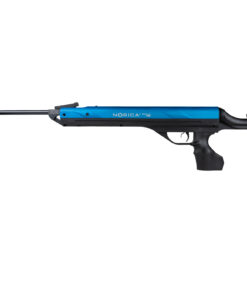
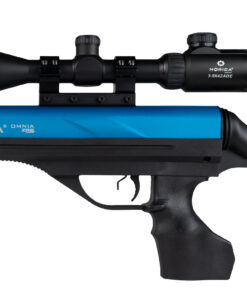
Norica Air Rifles
Norica Air Rifles
Norica Air Rifles
Norica Air Rifles
Norica Air Rifles
Norica Air Rifles
Norica Air Rifles
Reviews
There are no reviews yet.