
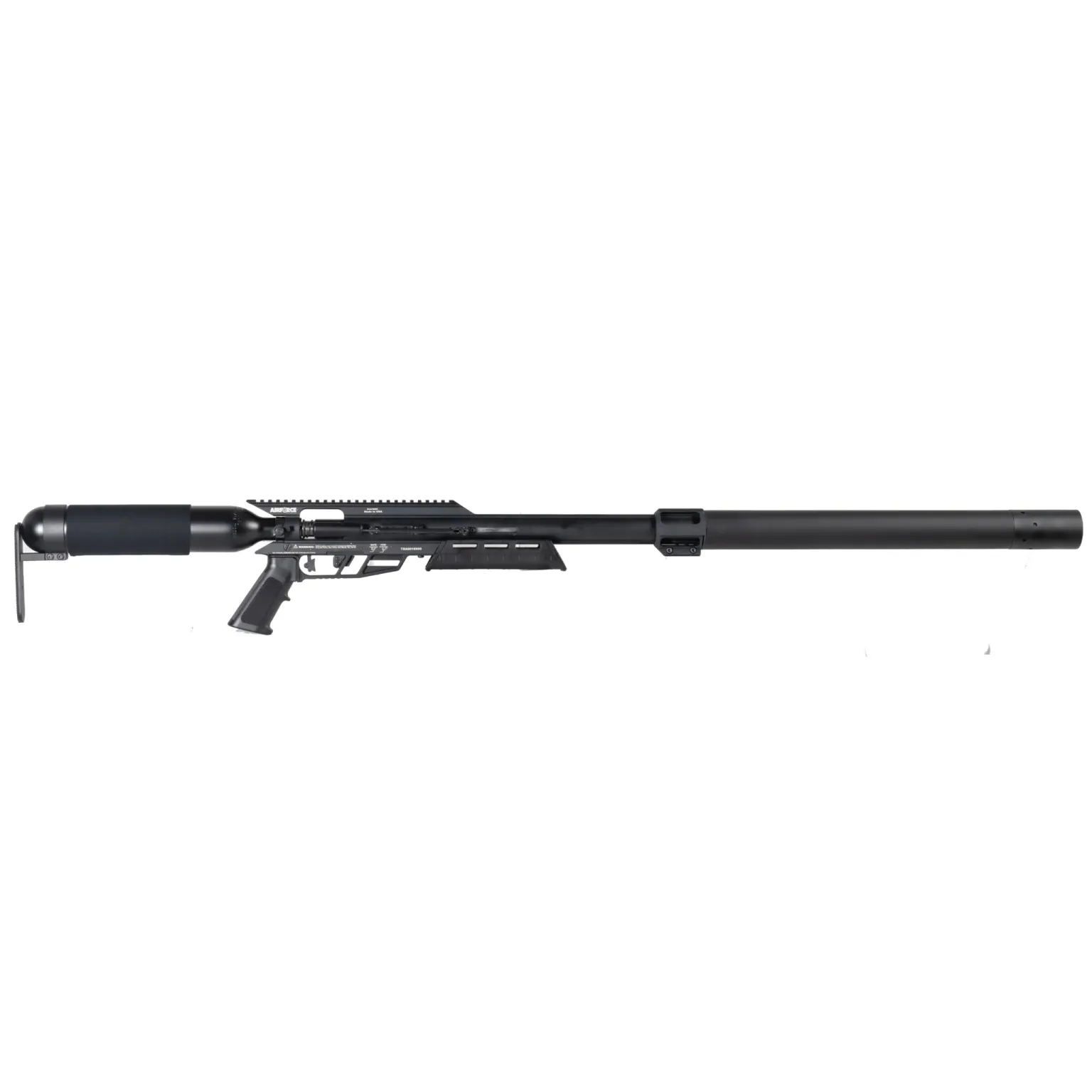
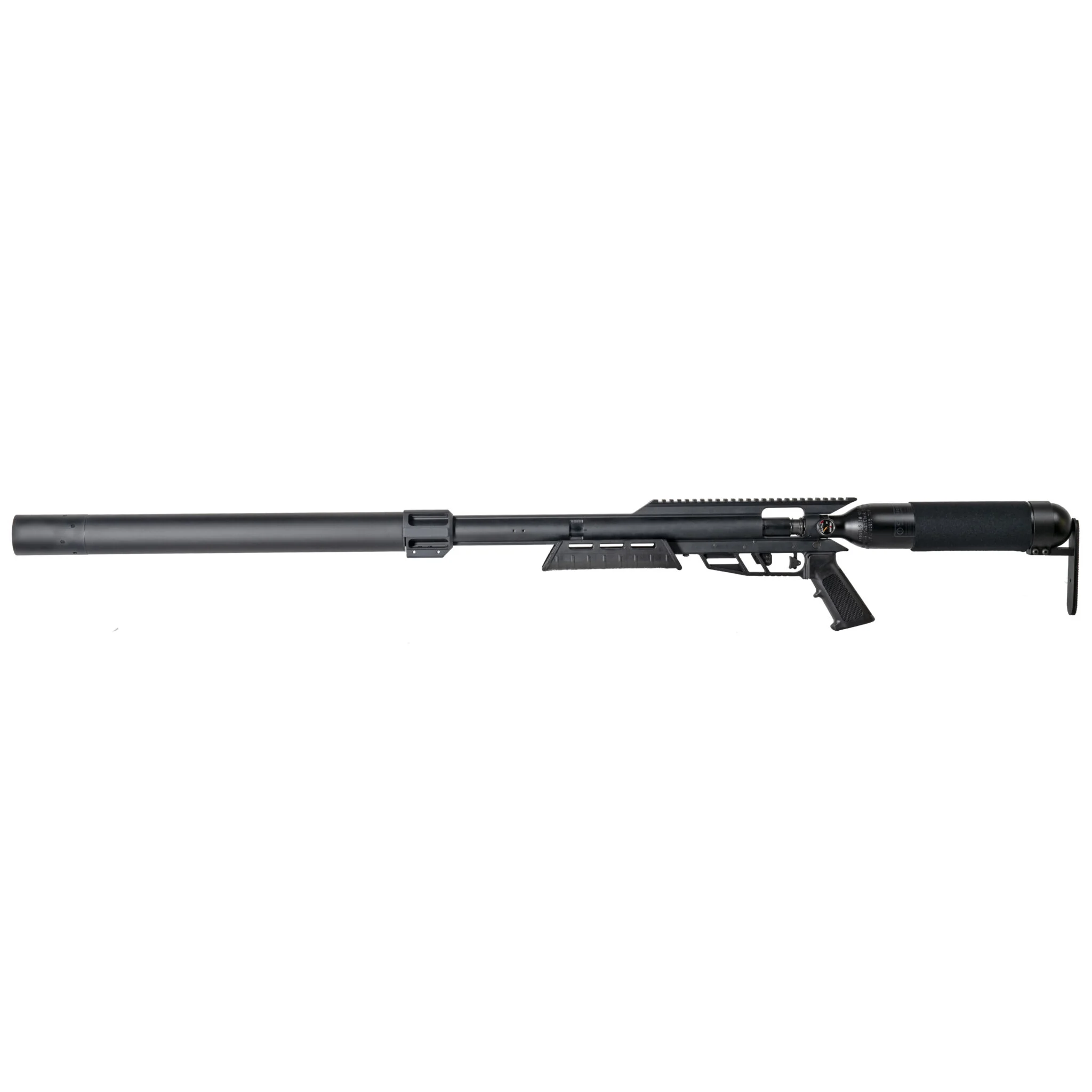
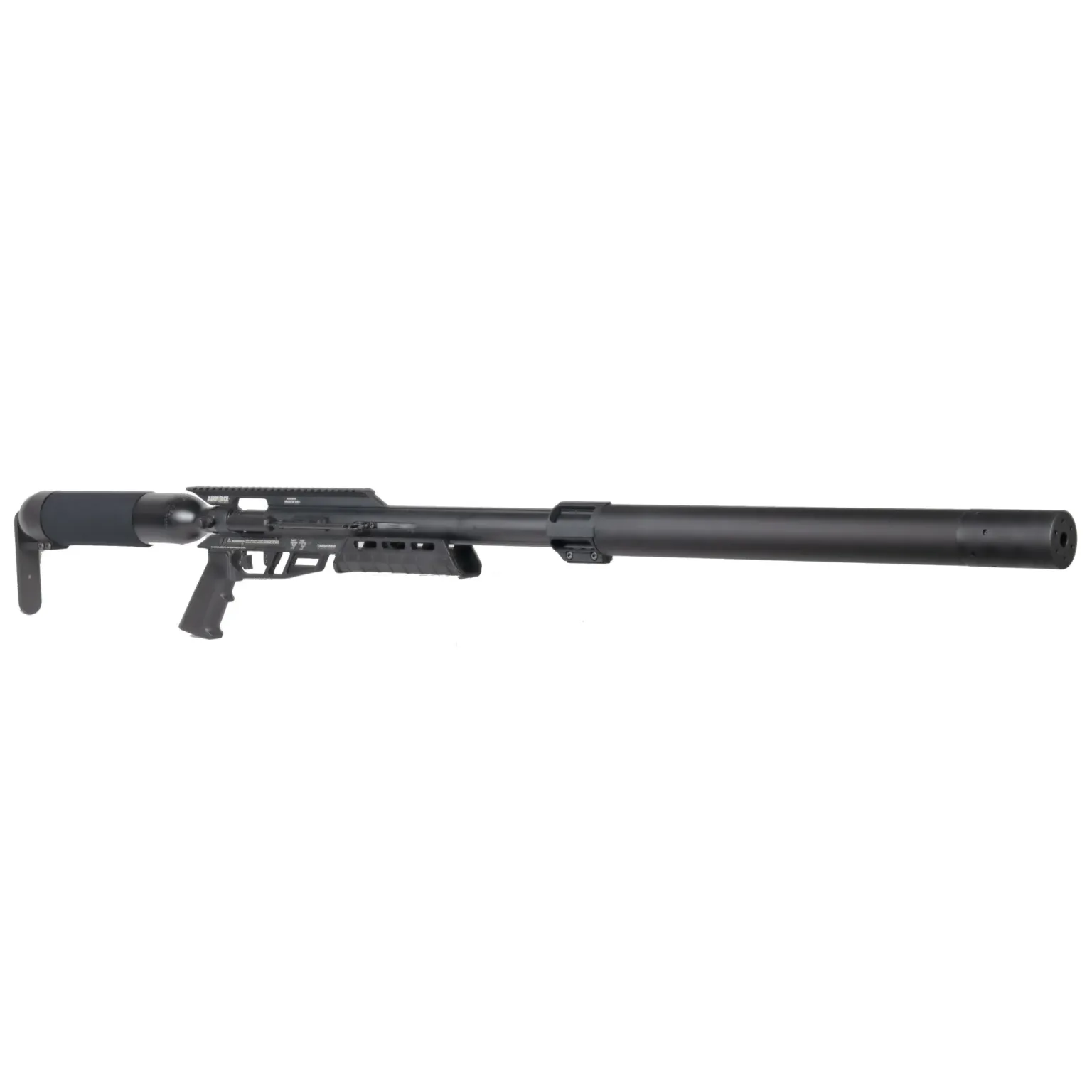
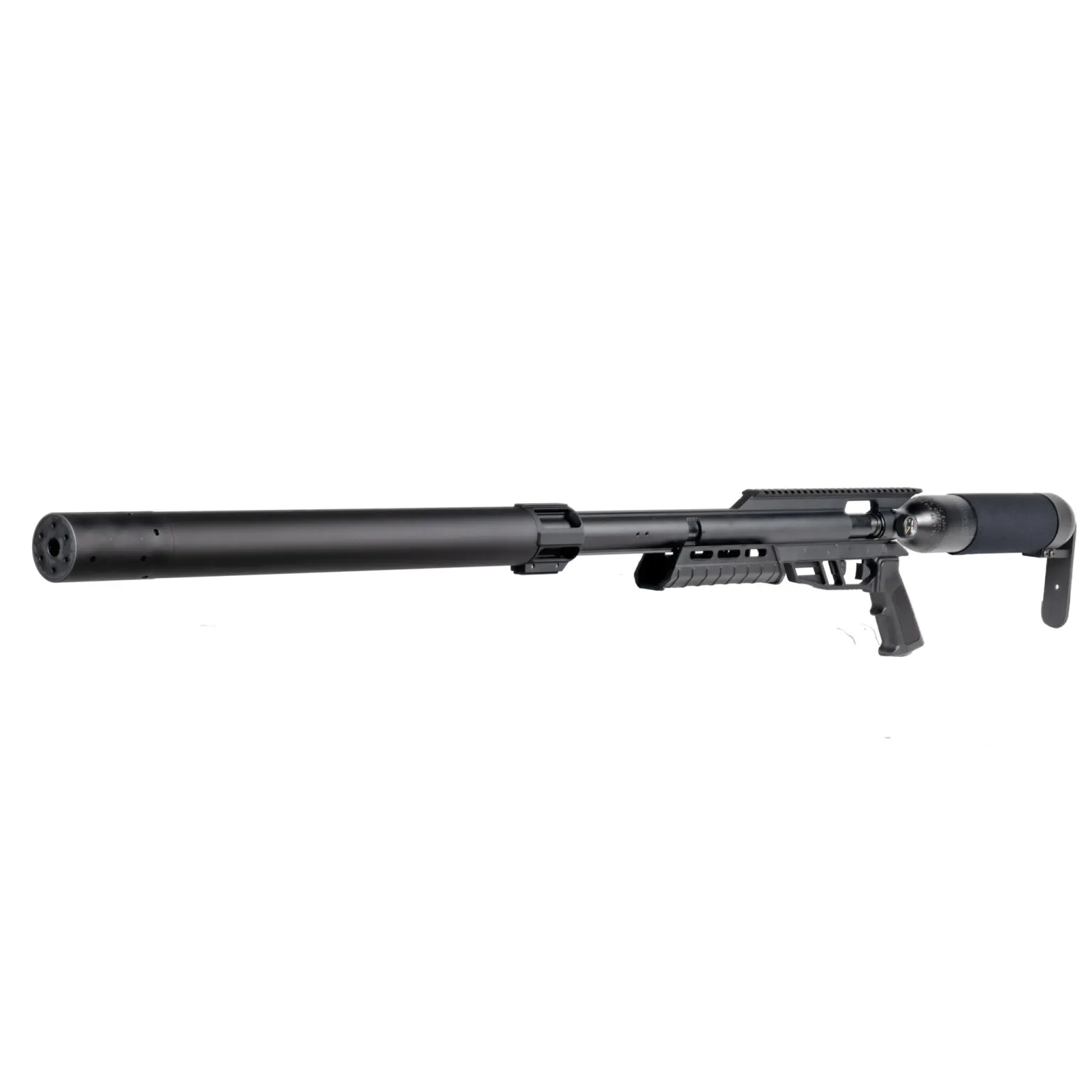
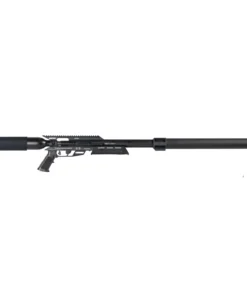
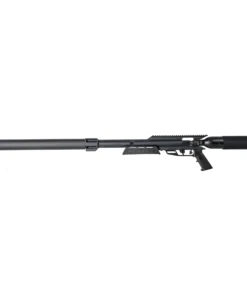
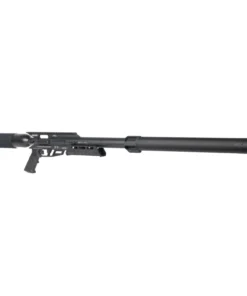
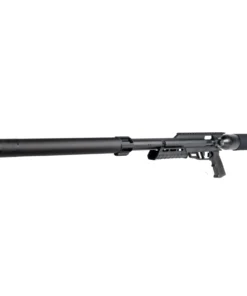
TexanLSS .457 Caliber
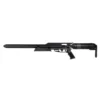
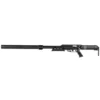
$1,050.00
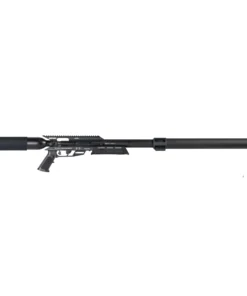
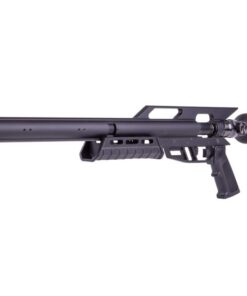
The AirForceTexan® LSS .457 Big Bore PCP Air Rifle gives shooters the best of both worlds by combining the power of a full-sized Texan and the sound suppression system of the Texan SS. The concept for the LSS comes from direct feedback received from hunters in the field who wanted the extra power and ability to shoot heavier slugs provided by the traditional Texan with the added benefits of a quieter gun like the Texan SS. This new version of the Texan features a Picatinny Scope rail and an upper and lower dovetail rails for attaching accessories. In addition the new Texan has a manual safety.
The TexanLSS .457 Caliber now features our updated TX2 valve. The TX2 Valve increases efficiency and power to the next level, allowing the Texan .457 to achieve power levels over 600 ft-lbs of energy.
Easy to load and simple to use, this Big Bore air rifle will let you focus on hunting with the knowledge you have enough power to get the job done.
The TexanLSS .457 Caliber is available in Original Black. We also offer shooting kits to meet your specific shooting application.
AirForce Texan® LSS .457 Big Bore PCP Air Rifle
Texan LSS .457 Cal Air Rifle – Texan Series
- Action: Single Shot Sidelever
- Air Tank Volume: 500cc
- Barrel: 34” Lothar Walther
- Buttplate: Adjustable
- Caliber: .457
- Energy: 800+ FPE
- Grip: Ambi
- Length: 51.5 Inches
- Max Fill Pressure: 3000 Psi /206 Bar
- Rails: Picatinny Scope Rail; Dovetail upper and lower for accessories
- Safety: Manual
- Sights: Open or Optical
- Shrouded: Yes
- Shots per Fill: 4-5
- Trigger 2 Stage, Adjustable
- Velocity: 1,000+ fps
- Weight: 8 Lbs
- Warranty: Limited Life Time
AirForce TexanLSS .457 Caliber Big Bore PCP Air Rifle
AirForce TexanLSS .457 Caliber Overview
The AirForce TexanLSS .457 Caliber combines serious big-bore power with a long precision barrel, simplified single-shot operation, and an integrated sound-suppression system. Built in Texas, the rifle was developed for shooters who wanted the power associated with the full-size airforce texan together with quieter operation similar to the airforce texan ss. AirForce currently specifies the standard aluminum-reservoir .457 model with a 34-inch Lothar Walther barrel, 500cc air tank, TX2 valve, 3,000 PSI maximum fill pressure, adjustable two-stage trigger, manual safety, and energy exceeding 800 FPE depending on projectile weight and setup.
For buyers researching AirForce, airforce airguns, air force guns, airforce texan air rifle, airforcetexan, or even the informal search phrase texas air force rifle, this model represents one of the manufacturer’s purpose-built big-bore platforms.
Air Force Texan LSS Power and Precision
The 34-inch barrel forms an important part of the rifle’s performance. AirForce uses a Lothar Walther barrel and rates the platform at more than 1,000 fps, although actual velocity depends heavily on projectile weight and operating conditions. Energy is listed at more than 800 FPE on the current product page.
That places the rifle in a very different category from a lightweight pellet gun, common air rifle and air pistol, or smaller air guns for target shooting.
Searches for high powered air rifles 4000 fps should not be taken as a specification for this rifle. The TexanLSS does not produce 4,000 fps. Its performance comes from moving much heavier large-caliber projectiles at substantially lower velocities while producing considerable muzzle energy.
500cc Air Reservoir and Filling System
The standard TexanLSS .457 uses a 500cc air tank with a maximum fill pressure of 3,000 PSI / 206 BAR. AirForce specifies compressed air or dry nitrogen for the system.
Consequently, anyone researching an air gun pump should verify that the selected filling equipment can safely reach the required pressure.
For someone asking what is an air rifle, this model belongs to the pre-charged pneumatic category. Compressed air is stored in the reservoir and released through the valve system when the rifle fires.
Single-Shot Sidelever Action
The TexanLSS uses a single-shot sidelever mechanism rather than the conventional design associated with many bolt action air rifles.
Every projectile is loaded individually. Therefore, the platform emphasizes controlled shooting and careful shot placement rather than rapid magazine-fed operation.
This configuration also separates it from smaller AirForce models frequently found in searches such as airforce talon p, air force talon p, airforce condor, air force talon, airforce 25, .30 cal air rifle, and airbolt rifle.
Sound-Suppressed LSS Configuration
One of the primary reasons to choose the LSS design is its shrouded architecture. AirForce developed the model to combine the greater power and heavier-projectile capability of the full-length Texan with quieter operation inspired by the shorter suppressed version.
Nevertheless, quieter does not mean silent. A rifle developing hundreds of foot-pounds of energy can still generate considerable sound.
TexanLSS Versus Tex-Rex and Brush Gun Models
Buyers may also encounter Tex-Rex AirForce brush gun, Brush Gun, tex-rex, air force tex rex, AirForce Tex-Rex PCP rifle, Tex-Rex Brush Gun air rifle, AirForce Texan Brush Gun, AirForce Tex-Rex air rifle, AirForce Tex-Rex hunting rifle, brush gun PCP air rifle, AirForce brush gun, AirForce big bore airgun, and AirForce big bore air rifle while researching this category.
Those names should not automatically be treated as alternative names for the TexanLSS. The Tex-Rex and compact brush-oriented platforms have different configurations, dimensions, reservoir specifications, and performance characteristics. Likewise, airforce texanss refers to the shorter suppressed Texan SS family rather than this full-length LSS.
Target and Lawful Hunting Applications
The rifle’s combination of heavy-projectile capability and substantial energy makes it fundamentally different from ordinary recreational equipment.
Searches such as 50 caliber air rifle for deer hunting often lead shoppers toward large-bore pneumatic rifles, although this model is specifically .457 caliber, not .50 caliber. Whether it can legally be used for hunting depends on the jurisdiction, species, season, projectile requirements, and local energy rules.
Similarly, anyone searching airgun shooting range near me should confirm that the facility permits high-energy big-bore pneumatic rifles and provides an appropriate backstop.
Comparing the TexanLSS With FX Platforms
Shoppers comparing premium pcp airguns may also encounter FX Panthera MkII, fx airguns, fx airguns sverige, fx airguns sweden, fxairguns, fx impact m4, fx impact m3, f x impact m3, fx impact, f x impact, fx drs tactical, fx drs, fx drs classic, fx drs pro, fx leopard, fx leopard airgun, fx king, fx wildcat, fx panthera, fx dynamics, fx m4, fx impact m3 air rifle, impact m4 air rifle, impact m4 500mm, fx air rifle, fx outdoors, fx chronograph, and fx airguns usa.
These rifles share the broader high-end pneumatic market, but many emphasize regulated, magazine-fed precision shooting in smaller calibers. The TexanLSS .457 instead focuses on heavy-projectile big-bore performance, single-shot simplicity, and substantial muzzle energy.
Why Choose the TexanLSS .457 Caliber?
The strongest reasons to consider this rifle are its 34-inch precision barrel, TX2 valve, 500cc reservoir, integrated shrouded configuration, adjustable trigger, Picatinny optics rail, substantial energy output, and uncomplicated single-shot design. AirForce also lists approximately four to five shots per fill, an adjustable buttplate, ambidextrous grip, and a limited lifetime warranty.
For an experienced adult shooter seeking a serious big-bore pneumatic platform rather than a conventional recreational pellet rifle, the TexanLSS .457 offers a focused combination of precision engineering, substantial power, controlled operation, and proven AirForce design.
Performance, Air System, Accuracy, Handling, and Practical Ownership
The .457-caliber platform is designed around high-energy pneumatic performance, deliberate single-shot operation, and precise control. Rather than focusing on rapid firing or high-capacity magazines, the rifle is better suited to shooters who value consistency, mechanical simplicity, and carefully placed shots. Its long barrel, substantial air reservoir, adjustable controls, and integrated sound-reduction system work together to create a specialized shooting platform that requires thoughtful setup and responsible use.
Understanding how the rifle behaves under real-world conditions is important because maximum published figures represent only part of its performance. Projectile weight, reservoir pressure, environmental conditions, optic setup, shooting position, and maintenance can all influence accuracy and consistency.
Long-Barrel Performance
The long barrel helps the rifle make efficient use of compressed air.
When the valve releases air behind the projectile, the extended barrel provides additional distance for that expanding air to accelerate it before it exits the muzzle. This contributes to the substantial energy potential of the platform.
However, barrel length alone does not guarantee accuracy.
A quality projectile must fit properly, the optic needs to remain secure, pressure should stay within a consistent operating range, and the shooter must maintain stable technique.
For this reason, the rifle should be tested systematically rather than judged from only one or two shots.
Understanding the Air Reservoir
The reservoir stores compressed air that provides the energy for each shot.
Because the rifle launches relatively heavy projectiles, each firing cycle consumes considerably more air than a lightweight recreational model.
As a result, the useful shot count per fill is limited.
This should not be viewed as a weakness. Instead, it reflects the amount of energy being transferred to each projectile.
Owners should become familiar with the pressure gauge and learn how performance changes as the reservoir pressure decreases.
Once the rifle reaches the lower end of its preferred operating range, refilling can help maintain better consistency.
Establishing a Reliable Pressure Window
A consistent pressure range can be more useful than simply filling the reservoir to maximum pressure and shooting until it becomes nearly empty.
During early testing, the owner can record the starting pressure and observe the point at which velocity or point of impact begins changing noticeably.
A chronograph can provide useful information for this process, although careful target groups can also reveal changes in consistency.
By identifying a dependable operating window, the shooter can develop a more predictable routine.
This helps reduce unnecessary variation between shooting sessions.
Filling Equipment
A suitable filling source is an important part of ownership.
The compressor, cylinder, hose, fitting, and pressure gauge should all be rated for the operating pressure required by the rifle.
Improvised equipment should be avoided.
Connections should remain clean and undamaged because dirt or damaged seals can create leakage.
The reservoir should never be filled beyond the manufacturer’s specified maximum.
Excess pressure does not automatically increase useful performance and can create unnecessary safety concerns.
Projectile Selection
The rifle can behave differently with different projectile weights and designs.
A lighter projectile may travel faster, while a heavier option may retain more momentum and follow a different trajectory.
Neither option is automatically superior.
The most suitable choice is the one that produces consistent accuracy and matches the intended lawful use.
Testing should be carried out methodically.
Different projectiles should not be mixed when evaluating group size because changes in weight or shape can alter point of impact.
Once a suitable projectile is identified, consistency can improve when the same type is used regularly.
Accuracy Development
A supported shooting position is ideal for establishing a baseline.
Using a stable rest reduces movement and helps determine what the rifle itself is capable of producing.
The shooter should fire several careful groups rather than relying on one unusually good result.
Consistent groups are more meaningful than a single tight cluster.
After a dependable baseline has been established, the shooter can begin practicing from less stable positions.
Standing, kneeling, seated, and improvised field support can all produce noticeably different results.
Trigger Control
The two-stage trigger helps the shooter prepare for the shot in a controlled manner.
The first stage allows initial movement to be taken up before the final break.
A smooth trigger press can reduce unwanted movement immediately before firing.
The shooter should avoid jerking or snapping the trigger.
Follow-through is also important.
Maintaining head position, grip, and shoulder pressure briefly after the shot can help improve consistency.
Any trigger adjustment should preserve safe and reliable engagement.
Optic Setup
A suitable optic should be selected according to actual shooting conditions rather than simply maximum magnification.
Eye relief, clarity, adjustment range, field of view, and reticle design can all influence usability.
The mounting system should remain secure.
Loose rings or bases can create inconsistent impact points even when the rifle and projectile combination are performing correctly.
After transportation, an impact, or major adjustment, the zero should be confirmed before serious use.
Managing Rifle Balance
The long overall design can feel stable from a supported position, but it may require more effort during unsupported shooting.
Optics and accessories can further influence balance.
A heavy scope or multiple accessories may shift the center of gravity and make extended handling more tiring.
Therefore, accessories should be chosen for practical value rather than added unnecessarily.
A simpler configuration often makes the rifle easier to manage.
Sound Reduction in Practical Use
The integrated sound-reduction system helps moderate the muzzle report, but the rifle should not be considered silent.
Substantial projectile energy is still being produced.
The shooter should remain aware of range rules, nearby properties, and local restrictions concerning noise.
Hearing protection may remain appropriate depending on the environment.
Sound reduction is best understood as a comfort and usability feature rather than a substitute for responsible range practices.
Range Requirements
This rifle should only be used where the backstop is capable of safely containing high-energy projectiles.
Lightweight traps intended for ordinary recreational equipment may be unsuitable.
The shooter should also know what lies behind the target.
A missed shot or projectile that penetrates unsuitable material can continue traveling with significant energy.
A properly designed range or private shooting area with an adequate backstop provides a safer environment.
Maintenance
Routine maintenance should focus on preserving reliability.
External surfaces should be kept clean and dry.
The filling connection should remain free of dirt.
Moving parts should operate smoothly.
Fasteners and optic mounts should be checked periodically.
The barrel does not need aggressive cleaning after every short session.
Cleaning should be performed carefully when accuracy begins to decline or when inspection shows that fouling is present.
Suitable materials should be used to avoid damaging the bore.
Monitoring Seals and Pressure Retention
The pneumatic system depends heavily on seals.
If the reservoir loses pressure unexpectedly while stored, the rifle should be inspected.
Some leaks may produce an audible sound, while others develop slowly.
Seals and fittings can wear over time.
High-pressure internal repairs should not be attempted without suitable knowledge.
When the cause of a problem is unclear, professional service is generally the safer option.
Storage
Secure storage protects both the rifle and unauthorized users.
The rifle should be kept in a dry environment with stable temperatures whenever possible.
Excessive moisture, heat, and corrosive chemicals should be avoided.
A secure cabinet or appropriate case can protect the rifle while also helping control access.
The optic and filling equipment should also be stored carefully.
Transportation
The rifle’s long dimensions make a padded or rigid case particularly useful.
The barrel and optic should be supported so they cannot move freely during transport.
After a long trip, the owner should inspect the rifle and verify zero before serious shooting.
Applicable transportation laws should also be reviewed because regulations can differ between jurisdictions.
Practical Ownership Perspective
This platform is best suited to someone who understands that high-energy pneumatic equipment requires planning.
The rifle itself is only one part of the complete setup.
Filling equipment, suitable projectiles, optics, secure storage, maintenance supplies, and access to an appropriate shooting environment should all be considered before purchase.
When air pressure is managed correctly, projectiles are selected carefully, the optic remains secure, and routine maintenance is performed consistently, the rifle can deliver dependable long-term performance with the deliberate and controlled shooting characteristics that define this type of large-caliber pneumatic system.
Real-World Use, Accuracy Development, Air Management, and Long-Term Reliability
The .457-caliber platform is designed for deliberate use, careful shot placement, and controlled high-pressure operation. Its long barrel, large air reservoir, single-shot layout, and substantial projectile energy make it very different from a lightweight recreational rifle. Because of that, the owner should approach the rifle as a complete system in which air pressure, projectile selection, optic setup, trigger control, maintenance, and shooting conditions all affect the final result.
Real-world performance depends on consistency. Maximum velocity and energy figures can be useful when comparing specifications, but they do not tell the complete story. A rifle that produces stable groups, predictable pressure behavior, and repeatable point of impact is generally more useful than one that is simply operated for the highest possible velocity.
Establishing a Performance Baseline
One of the best first steps is to establish how the rifle behaves under controlled conditions.
A supported bench position can reduce shooter movement and make it easier to evaluate the equipment itself. The owner should begin with the same projectile type, similar reservoir pressure, and the same optic setting.
Several groups should be fired rather than relying on one unusually good or bad result.
This approach provides a more accurate picture of consistency.
Once a dependable baseline has been established, any future changes in accuracy become easier to diagnose.
Understanding Projectile Behavior
Large-caliber projectiles can vary considerably in weight, length, shape, and construction.
These differences can influence velocity, trajectory, retained momentum, and point of impact.
A heavier projectile may leave the barrel at a lower velocity but maintain substantial momentum. A lighter option may produce a flatter trajectory at shorter distances but may behave differently as range increases.
The best choice should be determined through controlled testing.
The shooter should look for repeatable accuracy rather than selecting a projectile only because it produces a higher number on a chronograph.
Projectile Fit and Consistency
Proper projectile fit is important.
Projectiles that vary noticeably in diameter or shape may produce inconsistent results.
Before loading, the shooter should inspect each projectile for visible deformation or damage.
Bent, dented, or irregular projectiles can affect accuracy.
Using ammunition from a consistent batch can help reduce unnecessary variation.
When switching to another weight or design, the rifle should be rechecked because point of impact may move significantly.
Air Pressure and Shot-to-Shot Consistency
The rifle’s pneumatic system relies on stored high-pressure air.
Each shot reduces reservoir pressure.
Because large projectiles require substantial air volume, the useful pressure window may be relatively narrow compared with smaller-caliber equipment.
The owner should learn how the rifle performs from the beginning of the fill until the pressure reaches the point where velocity or impact begins to change.
This information can be recorded during several range sessions.
A simple log containing starting pressure, number of shots, projectile type, and group size can be extremely useful.
Refilling at the Correct Time
The goal should not be to extract the maximum possible number of shots from every fill.
Instead, the owner should refill while the rifle is still operating within its most consistent pressure range.
Continuing to shoot at very low reservoir pressure can create unnecessary variation.
A predictable refill point makes each shooting session easier to manage.
It also allows the user to compare results between sessions with greater confidence.
Filling Equipment Care
The filling system should receive the same level of attention as the rifle.
Hoses, gauges, connectors, and fittings should be inspected regularly.
Any component showing cracking, deformation, corrosion, or other visible damage should be replaced.
Connections should remain free from dirt and debris.
Contamination around a high-pressure fitting can interfere with sealing and may eventually cause leaks.
The reservoir should never be filled beyond its approved maximum pressure.
Managing Temperature Changes
Temperature can affect compressed-air systems.
A rifle filled in a cool environment may show a different pressure reading after being moved into a much warmer location.
Likewise, cold conditions can influence pressure behavior.
The owner should avoid unnecessary exposure to extreme heat.
The rifle should never be left in conditions where reservoir temperature could rise excessively.
A consistent environment makes pressure behavior easier to predict.
Developing Better Trigger Technique
A two-stage trigger provides a useful structure for controlled shooting.
The shooter can take up the first stage while maintaining sight alignment, then continue pressure smoothly until the shot breaks.
Jerking the trigger can disturb the rifle just before the projectile exits the barrel.
Good follow-through is equally important.
The shooter should keep the head, shoulder, and trigger hand stable for a moment after firing.
This technique helps reduce unwanted movement and can improve group consistency.
Shoulder Position and Grip
A repeatable shooting position is essential.
The rifle should contact the shoulder in the same location for each shot.
Grip pressure should remain consistent.
Changing how tightly the rifle is held can influence movement and point of impact.
Head position also matters because inconsistent eye alignment can make an optic appear slightly different from shot to shot.
A comfortable setup allows the shooter to repeat the same position more easily.
Optic Alignment and Zero
The optic should remain securely mounted.
Even a small amount of movement in the rings or base can produce noticeable changes in point of impact.
Fasteners should be checked periodically.
After significant transport or impact, the zero should be confirmed again.
A zero should also be checked whenever projectile weight or design changes.
The shooter should avoid making unnecessary optic adjustments during testing.
If several variables are changed at the same time, it becomes difficult to understand what caused the result.
Supported Shooting Positions
A bench or stable rest provides the best environment for evaluating mechanical accuracy.
The rifle should be supported consistently without placing unusual pressure on the barrel or other sensitive areas.
The same rest position should be used for each shot.
Supported shooting is also useful after maintenance.
If the rifle has been cleaned, serviced, or transported, a short supported session can confirm that everything remains properly aligned.
Unsupported and Field Positions
Real-world shooting conditions are often less stable than a bench.
Standing, kneeling, seated, or improvised supported positions require additional practice.
The shooter should determine personal accuracy limits from these positions rather than assuming bench performance will automatically transfer to the field.
A distance that is easy from a solid rest may become challenging when shooting unsupported.
Regular practice can help develop better control.
Wind and Distance
Wind can influence large projectiles, particularly as distance increases.
Crosswinds may move the projectile laterally, while changing wind direction can create inconsistent impact points.
The shooter should avoid assuming that power eliminates the effects of wind.
Trajectory also becomes more important over longer distances.
Understanding how the chosen projectile behaves at several known distances can improve practical accuracy.
Sound Management
The integrated sound-reduction system helps moderate the muzzle report, but substantial sound can still be produced.
The shooter should continue to consider hearing protection, range rules, and nearby properties.
A quieter system can improve comfort, but it does not eliminate the need for responsible shooting practices.
Noise levels can also vary depending on projectile selection and shooting environment.
Barrel Care
The barrel should be maintained carefully.
Frequent aggressive cleaning is generally unnecessary when accuracy remains consistent.
If group size begins to deteriorate, the barrel can be inspected for fouling or contamination.
Only appropriate cleaning materials should be used.
Hard or abrasive tools can damage a precision bore.
Cleaning rods and patches should be handled carefully to avoid unnecessary contact with sensitive surfaces.
Seal and O-Ring Maintenance
Seals are essential to reliable pneumatic operation.
The owner should monitor how well the rifle retains pressure during storage.
Unexpected pressure loss can indicate a damaged or worn seal.
Only compatible lubricants should be used.
Inappropriate products may damage sealing materials or be unsuitable for high-pressure systems.
Internal valve or reservoir work should be left to qualified service when the owner does not have the required knowledge.
Exterior Care
The rifle should be wiped down after use, particularly if it has been exposed to humidity or rain.
Moisture should not be allowed to remain on metal surfaces.
Dust should also be removed from the action and filling area.
Moving components should feel smooth.
Any sudden increase in resistance should be investigated rather than overcome by force.
Secure Storage
The rifle should be stored in a secure, dry location.
Unauthorized users should not have access to it.
A locked cabinet or secured case can provide both safety and physical protection.
The optic should be protected from impact.
The storage area should remain away from excessive heat, moisture, and corrosive chemicals.
Filling equipment should also be secured and maintained.
Long-Term Reliability
Long-term performance depends more on regular care than occasional major maintenance.
The owner should periodically inspect pressure retention, optic mounts, trigger behavior, fasteners, filling connections, and the action.
Small changes should not be ignored.
A minor leak or loose mount can often be corrected easily when discovered early.
If left unattended, the same issue can become more serious.
Practical Ownership Perspective
This rifle is most rewarding for an owner who understands the relationship between high pressure, projectile consistency, careful shooting technique, and maintenance.
Its design favors controlled operation rather than rapid shooting.
When the air system is managed correctly, suitable projectiles are used, the optic remains secure, and the rifle is maintained responsibly, the platform can deliver dependable accuracy and reliable long-term service.
The key to getting the best performance is consistency. Stable pressure, repeatable shooting technique, careful equipment selection, and regular inspection allow the rifle to perform closer to its mechanical potential while providing a predictable and controlled shooting experience.
Buyer Planning, Practical Setup, Safe Operation, Maintenance, and Long-Term Value
Choosing a high-energy .457-caliber pneumatic rifle should involve more than comparing power figures. A prospective owner should consider the complete setup, including filling equipment, optics, projectile availability, storage, transportation, maintenance, and access to a suitable shooting environment. These practical details often determine whether the rifle will be convenient and enjoyable to own over the long term.
Because the platform uses a large reservoir, a long barrel, and a single-shot operating system, it is designed for deliberate shooting rather than casual rapid fire. The best results come from a consistent routine, careful equipment selection, and regular inspection.
Evaluating the Rifle Before First Use
Before the first serious shooting session, the rifle should be inspected carefully.
The owner should examine the barrel, air reservoir, pressure gauge, filling connection, action, trigger, safety, optic rail, and visible fasteners.
Any loose component should be addressed before firing.
If the rifle has been shipped or transported over a long distance, the optic and mounts should receive particular attention.
Even when no external damage is visible, movement during transportation can sometimes affect zero or mounting alignment.
A short controlled range session can establish a useful baseline for future comparison.
Planning a Complete Setup
The rifle itself is only one part of the total system.
A reliable filling source is essential.
Depending on the owner’s circumstances, this may involve a suitable high-pressure compressor, charging cylinder, or another approved source capable of meeting the rifle’s pressure requirements.
The owner should also budget for an appropriate optic, mounting hardware, projectiles, protective case, cleaning supplies, and secure storage.
Planning these items in advance prevents the rifle from sitting unused because one essential component is missing.
Filling Equipment Selection
High-pressure air equipment should be selected carefully.
Every hose, fitting, connector, gauge, and charging source should be rated for the required pressure.
The owner should never assume that equipment designed for lower-pressure recreational systems is suitable.
Connections should fit correctly without excessive force.
If a fitting becomes damaged, cracked, or deformed, it should be replaced.
High-pressure air stores significant energy, so filling should always be performed in a controlled manner.
Building a Reliable Filling Routine
A consistent filling routine can improve both safety and convenience.
Before filling, the owner should inspect the connection and ensure that dirt or debris is not present.
The reservoir pressure should be checked before the filling source is opened.
Filling should then be performed according to the manufacturer’s recommendations.
The reservoir should never be pushed beyond its approved limit.
Once filling is complete, the connection should be depressurized correctly before removal.
Developing the same routine every time reduces the chance of mistakes.
Monitoring Pressure During Use
The owner should pay attention to reservoir pressure throughout the shooting session.
A large-caliber platform can consume significant quantities of air with each shot.
Consequently, useful shot count is limited.
The shooter should learn where the rifle performs most consistently and refill before pressure falls too far below that preferred operating range.
This approach normally produces more repeatable results than continuing to shoot until performance becomes obviously inconsistent.
Understanding Efficiency
Efficiency is not simply about maximizing the number of shots per fill.
For this type of rifle, useful efficiency means maintaining predictable performance across the shots that matter.
A slightly lower shot count with stable velocity and consistent impact may be preferable to stretching the reservoir further and accepting greater variation.
Keeping records can help identify this balance.
Starting pressure, shot count, projectile weight, and group size can all be noted during testing.
Over time, these records can reveal the rifle’s preferred operating pattern.
Choosing a Suitable Optic
Optic selection should be based on actual use.
High magnification may be useful in some situations, but clarity, eye relief, adjustment range, reticle design, and overall durability are equally important.
A heavy optic can also change the balance of the rifle.
Therefore, the owner should choose an optic that provides enough magnification without adding unnecessary bulk.
Mounting hardware should be secure and checked periodically.
Any sudden shift in point of impact should prompt an inspection of the scope and mounts before other causes are assumed.
Establishing and Maintaining Zero
The rifle should initially be zeroed from a stable supported position.
This reduces shooter movement and makes adjustments easier to evaluate.
Once zero is established, it should be confirmed at additional distances appropriate for the intended use.
Changing projectile weight, optic position, mounts, or major accessories may alter point of impact.
Zero should also be verified after significant transportation.
A rifle that remains mechanically sound can still produce inaccurate results if the optic has shifted.
Testing Different Projectiles
Projectile testing should be organized and consistent.
Several suitable options can be evaluated separately.
The shooter should avoid switching constantly between different weights during the same group.
Instead, each projectile should be given enough shots to determine whether the rifle performs consistently with it.
The best choice is not automatically the fastest or heaviest projectile.
Accuracy, repeatability, and appropriate performance for the intended lawful use are more important than one isolated velocity figure.
Managing the Rifle’s Length and Balance
The long barrel creates a substantial overall length.
This can feel stable when the rifle is used from a bench, rest, or supported field position.
However, unsupported handling may require more effort.
A large optic, heavy mount, or multiple accessories can further shift the balance.
The owner should therefore keep the configuration practical.
Accessories should add genuine functionality rather than simply increasing weight.
A cleaner setup is often easier to carry and control.
Range Selection
The shooting location must be suitable for the rifle’s energy level.
A lightweight trap designed for small recreational pellets may not be sufficient.
The backstop should be capable of safely containing large high-energy projectiles.
The shooter should also understand what lies beyond the target area.
A missed shot or projectile that penetrates inappropriate material can remain dangerous.
A properly managed range that allows equipment in this power category is often the most practical choice.
Responsible Sound Management
The rifle’s integrated sound-reduction design can make shooting more comfortable, but substantial sound may still remain.
The owner should consider range rules, neighbors, nearby properties, and local regulations.
Hearing protection may still be advisable.
The presence of sound-reducing equipment should never encourage shooting in an unsuitable location.
Responsible use depends on both projectile containment and consideration of the surrounding environment.
Routine Mechanical Inspection
A quick inspection before each session can prevent many problems.
The owner should confirm that the action moves smoothly, the trigger feels normal, the safety functions correctly, and the reservoir shows expected pressure.
Optic mounts and visible fasteners should remain secure.
If the action suddenly becomes difficult to operate, it should not be forced.
Unexpected resistance may indicate contamination, damage, or another mechanical issue that requires attention.
Cleaning the Barrel
The barrel should be cleaned carefully and only when necessary.
A rifle that continues to produce consistent groups may not require aggressive cleaning after every session.
If accuracy begins to decline, the barrel can be inspected for fouling or contamination.
Suitable cleaning materials should be used.
Hard metal tools, abrasives, or harsh chemicals can damage the bore.
Good cleaning practice should preserve the barrel rather than create unnecessary wear.
Caring for Seals and O-Rings
Seals are essential to reliable pressure retention.
The owner should observe whether the reservoir maintains pressure during storage.
An unexplained drop may indicate a leak.
Some leaks are obvious, while others develop gradually.
Only compatible lubricants should be used where lubrication is required.
High-pressure valves and internal reservoir components should not be disassembled casually.
Professional service is preferable when the problem involves critical pressure-bearing parts.
Exterior Protection
Moisture and dirt should not be allowed to remain on the rifle after use.
External surfaces can be wiped down with suitable materials before storage.
The filling connection should remain especially clean.
If the rifle has been used in rain or high humidity, it should be dried thoroughly before being placed in a case.
Long-term moisture exposure can affect metal components and mounting hardware.
Safe Storage
The rifle should be stored where unauthorized users cannot access it.
A locked cabinet or secured hard case can provide both safety and physical protection.
The storage location should remain dry and away from excessive heat, direct sunlight, corrosive chemicals, or significant temperature fluctuations.
Projectiles and filling equipment should also be stored responsibly.
A high-pressure cylinder should be secured so it cannot fall or suffer impact damage.
Long-Term Storage
Extended periods without use require additional attention.
The owner should follow manufacturer guidance regarding appropriate reservoir pressure during storage.
Before returning the rifle to regular use, the seals, gauge, action, optic mounts, and filling connection should be inspected.
A controlled test session can then confirm normal operation.
This is preferable to immediately using the rifle in demanding conditions after several months of inactivity.
Transportation
A long, precision-oriented rifle benefits from a strong protective case.
The barrel and optic should be supported securely.
The rifle should not be allowed to slide or strike hard objects during transportation.
Heavy equipment should not be placed directly on top of the case unless it is specifically designed to handle that load.
After travel, the owner should inspect the rifle and verify zero.
Transport rules should also be checked because regulations may differ between locations.
Recognizing When Professional Service Is Needed
Not every problem should be repaired by the owner.
Persistent pressure loss, valve problems, abnormal trigger behavior, damaged reservoir components, or unexplained mechanical resistance may require qualified service.
Attempting to force or modify high-pressure components can create unnecessary risk.
Early professional attention can also prevent a small problem from becoming more expensive.
Long-Term Ownership Value
The long-term appeal of this platform comes from its combination of substantial energy, precision-oriented barrel, straightforward single-shot operation, integrated sound management, and relatively simple mechanical layout.
However, the rifle performs best when ownership is equally disciplined.
Correct filling procedures, thoughtful projectile selection, stable optic mounting, secure storage, and routine inspection all contribute to reliability.
For an experienced owner with access to appropriate filling equipment and a safe shooting environment, the rifle can provide a distinctive combination of controlled performance, precision potential, strong mechanical character, and dependable long-term service.
Be the first to review “TexanLSS .457 Caliber”
Related products
AirForce
AirForce
AirForce
AIR GUN RIFLES
AirForce
AirForce
Reviews
There are no reviews yet.