
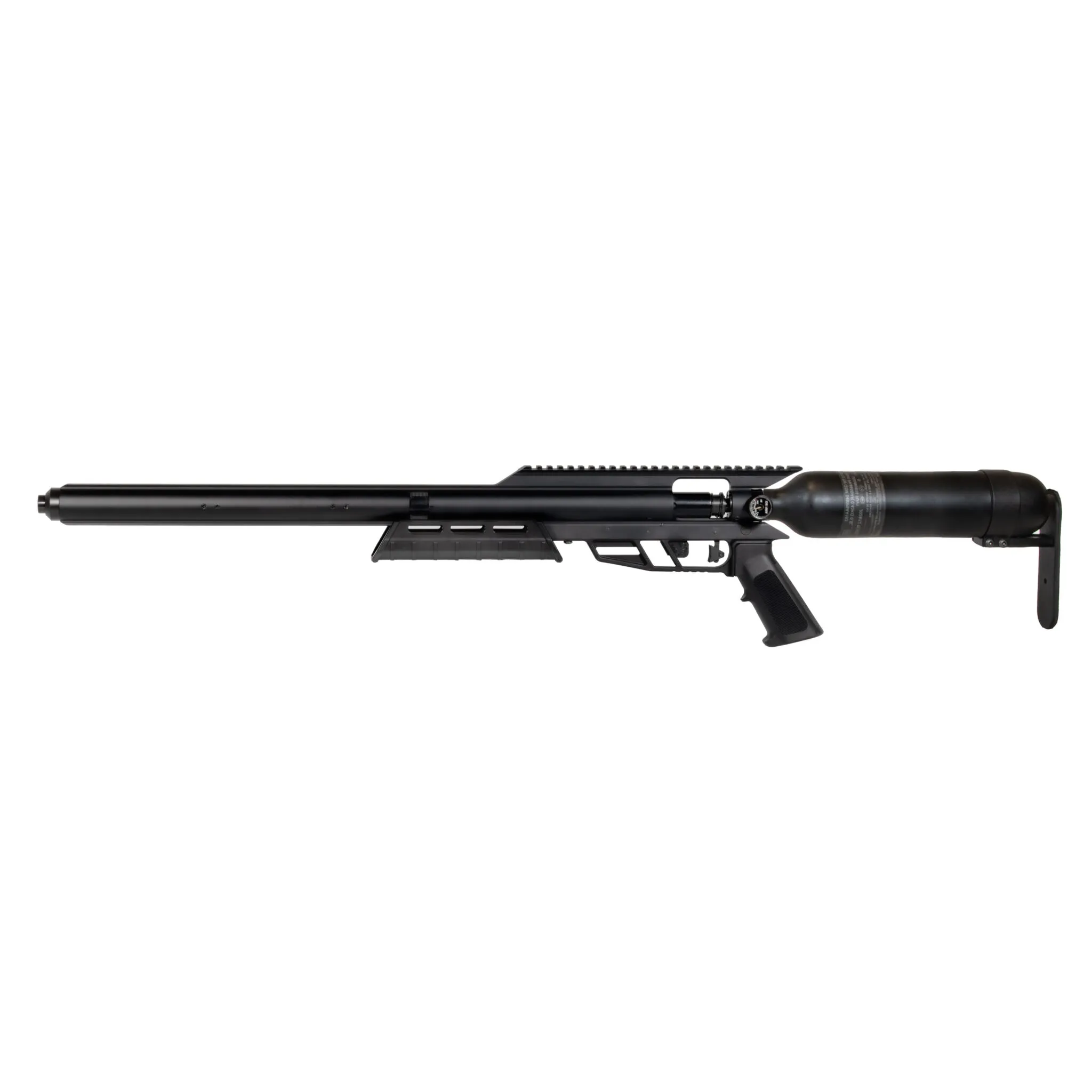
Texan® Carbine .510 CALIBER
$890.00
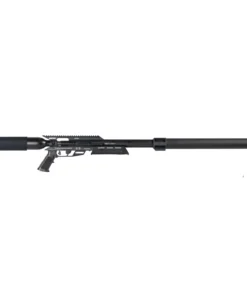
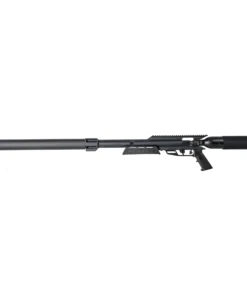
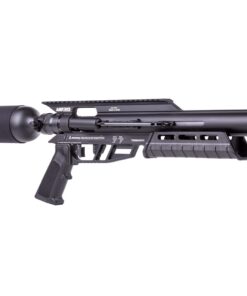
The AirForce Texan® Carbine .510 Big Bore Air Rifle represents a compact and formidable solution tailored for hunters seeking enhanced maneuverability without sacrificing power. Featuring a precisely engineered 24.5-inch Lothar Walther barrel, this high powered airgun strikes an optimal balance between agility and ballistic performance, and its lightweight construction and well-balanced design enable hunters to maintain control and stability, even in the most demanding hunting scenarios.
Its streamlined profile ensures quick shouldering for rapid target acquisition in dense foliage or hunting blinds as well. Like all our Texan rifles, the Texan Carbine is built to withstand rugged terrain, and its durable construction promises years of reliable use. Finished with AirForces’ distinctive black coating, the Texan Carbine seamlessly merges style with functionality. With its exceptional performance and portability, the Texan® Carbine .510 caliber exemplifies the pinnacle of excellence in hunting weaponry, delivering unparalleled precision and versatility to hunters worldwide.
All the power and accuracy, but in a more compact package for easy maneuvering in heavy brush and hunting blinds.
AirForce Texan® Carbine .510 Big Bore Air Rifle
- Action: Single Shot
- Air Tank Volume: 500cc
- Barrel: 24.75 inches
- Energy: up to 500 foot pounds*
- Length: 39 inches
- Max Fill Pressure: 3,000 PSI / 206 Bar (Only use compressed air or dry nitrogen)
- Safety: Manual
- Sights: Open or Optic may be installed
- Trigger: 2 Stage Adjustable for position
- Velocity: Up to 930 feet per second
- Warranty: Limited Lifetime
- Weight: 7.5 lbs.
Texan® Carbine .510 Caliber
Texan® Carbine .510 Caliber Overview, Design, Operation, and Important Information
What Is the Texan® Carbine .510 Caliber?
The Texan® Carbine .510 Caliber is a large-bore PCP air rifle built around a compact carbine configuration. Produced within the AirForce platform, it belongs to the category of big-bore pneumatic airguns and is designed around compressed air rather than conventional firearm cartridges.
The Texan® Carbine .510 Caliber combines the substantial bore diameter of a .510-caliber projectile with a shorter, more compact configuration than a full-length rifle. Consequently, the platform can appeal to experienced airgun users who value a substantial bore while preferring a more manageable overall format.
The product should be understood as an airgun rather than a conventional firearm. Nevertheless, because large-bore PCP systems can produce considerable projectile energy, applicable laws, age requirements, transportation rules, and permitted uses should always be checked before ownership or operation.
AirForce and the Texan Platform
The AirForce brand is associated with PCP airguns, including the broader Texan family. Search terms such as airforce airguns, airforce texan, airforce texan air rifle, and AirForce big bore airgun commonly refer to this family of large-caliber pneumatic platforms.
The Texan® Carbine .510 Caliber occupies the big-bore end of the airgun market. Its configuration is distinct from smaller platforms such as the airforce talon p and other compact AirForce models.
The Texan platform is also frequently discussed alongside terms such as AirForce Tex-Rex PCP rifle, Tex-Rex Brush Gun air rifle, and AirForce Tex-Rex air rifle. These references should not be treated as interchangeable model names, however. The Texan Carbine and Tex-Rex are distinct products and should be described according to their actual specifications.
How Does a PCP Air Rifle Work?
A PCP air rifle stores compressed air in a reservoir. When the trigger is activated, the firing mechanism releases a controlled quantity of compressed air behind the projectile.
This differs from a pellet gun that may use a spring-piston or gas-ram mechanism.
The basic principle explains what is an air rifle: an air-powered projectile system in which compressed gas or another pneumatic mechanism provides the propulsion.
A suitable air gun pump or other compatible filling equipment may be used to charge a PCP reservoir, depending on the manufacturer’s specified filling method. Proper pressure limits must always be followed.
Why the .510 Caliber Matters
The .510 caliber represents a large projectile diameter compared with common small-bore air rifles.
The larger bore is one of the defining characteristics of the Texan® Carbine .510 Caliber and is central to its big-bore identity.
It should not, however, be confused with smaller platforms such as a .30 cal air rifle or other conventional pellet calibers.
Similarly, claims surrounding high powered air rifles 4000 fps should not automatically be associated with this model. Velocity, projectile mass, pressure, and energy are separate technical characteristics, and responsible product information should rely on verified specifications rather than generalized internet claims.
Carbine Configuration
The carbine format is intended to provide a more compact package than a full-length rifle.
This can influence handling, storage, transportation, and overall balance.
For users already familiar with PCP systems, the Texan® Carbine .510 Caliber provides a large-bore configuration while retaining the more compact character associated with a carbine.
The configuration may therefore be relevant to lawful target shooting and other activities permitted under local regulations.
Where Can It Be Used?
The appropriate environment depends on local law, land permissions, range rules, and the specific activity.
For example, someone searching for an airgun shooting range near me should confirm that the facility specifically permits large-bore PCP airguns before attending.
Similarly, air guns for target shooting must always be used with an appropriate backstop and within the rules of the shooting facility.
The Texan® Carbine .510 Caliber should never be discharged where projectile travel could endanger people, animals, buildings, vehicles, or surrounding property.
Sporting and Recreational Applications
A large-bore PCP airgun can be used for lawful sporting applications where permitted.
Target shooting provides an appropriate context for evaluating characteristics such as consistency, ergonomics, sighting equipment, and user technique.
The Texan® Carbine .510 Caliber should be used only for activities permitted by local law.
Search terms such as 50 caliber air rifle for deer hunting are associated with the broader big-bore airgun market, but hunting laws vary substantially by jurisdiction. A product description should therefore not imply that this particular rifle is automatically lawful or suitable for hunting in every location.
Related AirForce Models
The AirForce product family includes several platforms with different configurations and intended applications.
The airforce talon p, airforce condor, air force talon, air force texan lss, and airforce texan ss should not be treated as identical products.
Likewise, references such as AirForce brush gun, AirForce big bore air rifle, and brush gun PCP air rifle can describe related product categories or search terminology rather than the exact configuration of the Texan Carbine.
For accurate purchasing information, the exact model name, caliber, configuration, and manufacturer specifications should always be confirmed.
Important Ownership Considerations
Because the Texan® Carbine .510 Caliber is a large-bore, high-energy airgun, responsible ownership is particularly important.
Before purchasing or using it, the owner should verify:
- Local airgun classification
- Minimum age requirements
- Licensing or registration requirements
- Transportation restrictions
- Approved shooting locations
- Range restrictions
- Storage requirements
- Applicable hunting regulations
- Projectile and caliber restrictions
These requirements can differ significantly between countries, states, provinces, and municipalities.
Overall Product Character
The Texan® Carbine .510 Caliber is best characterized as a compact big-bore PCP air rifle rather than an ordinary recreational pellet gun.
Its .510-caliber platform, pneumatic operating system, and carbine configuration give it a distinctive position within the AirForce product family.
For appropriately trained and legally authorized users, it can provide a specialized platform for permitted sporting and target-shooting applications.
The key considerations are therefore not simply bore size or power, but also correct air-system management, safe handling, suitable shooting facilities, responsible storage, and compliance with the laws governing large-bore airguns in the user’s location.
Section 2: Construction, Handling, PCP System, Accuracy, Maintenance, and Practical Ownership
The Texan® Carbine .510 Caliber is built around the characteristics expected from a large-bore pre-charged pneumatic platform while retaining the more compact proportions associated with a carbine. Its overall concept is centered on providing a substantial-caliber airgun in a format that can be handled more easily than some longer big-bore configurations.
For an experienced and legally authorized airgun owner, understanding the construction and operating characteristics of the platform is important before deciding whether it fits a particular sporting or recreational application. The large caliber should not be viewed in isolation. Handling characteristics, air management, ergonomics, maintenance, storage, local regulations, and the intended shooting environment all contribute to the ownership experience.
Carbine Design and Handling
The carbine configuration is one of the most noticeable characteristics of the rifle. Compared with a longer rifle configuration, a carbine can feel more compact when it is carried, positioned, or stored.
This compact character can be useful when equipment needs to be managed in a confined shooting environment. It can also make transportation more convenient where transportation is lawful and properly controlled.
At the same time, the substantial caliber remains an important consideration. A compact configuration does not make a large-bore airgun equivalent to a lightweight recreational air rifle. Appropriate handling practices should therefore always be maintained.
The rifle should be handled deliberately, with the muzzle kept in a safe direction and the action treated as potentially ready to fire until its condition has been positively established.
Understanding the PCP System
The pneumatic system is fundamental to the operation of the rifle.
A pre-charged pneumatic platform stores compressed air in a dedicated reservoir. During operation, a controlled quantity of that stored air is used to propel the projectile.
This operating principle provides several characteristics that distinguish the rifle from spring-powered or gas-ram airguns.
Because the propulsion source is stored compressed air, the condition of the air reservoir becomes an important part of normal equipment management. The owner should understand the manufacturer’s specified filling requirements and should never exceed the pressure limits established for the particular model.
Air Management
Air management is an important part of PCP ownership.
The owner needs to know how the reservoir is intended to be filled, what equipment is approved for that purpose, and which pressure limits apply.
A compatible high-pressure filling system may be required, depending on the manufacturer’s configuration. Filling equipment can include dedicated compressors or appropriate high-pressure cylinders.
The exact equipment should be selected according to the manufacturer’s specifications rather than by relying on generic PCP equipment assumptions.
Pressure should never be estimated or exceeded casually.
Why Correct Pressure Matters
Compressed air contains stored energy.
Consequently, pressure management is not simply a performance consideration. It is also a safety consideration.
The reservoir, valve system, filling equipment, and associated components are designed to operate within specified limits.
For this reason, the owner should follow the manufacturer’s pressure specifications and inspection recommendations.
Improvised filling equipment or unsuitable components should not be used.
Consistency and Air Supply
A stable air supply can contribute to consistent operation.
As with other PCP systems, the amount of available air can influence how the rifle behaves over a shooting session.
The owner should therefore understand the manufacturer’s recommended operating range and recognize that the number of usable shots is influenced by factors such as reservoir capacity, pressure, projectile characteristics, and configuration.
Exact performance should always be confirmed against the specifications for the particular rifle rather than assumed from another model.
Trigger and User Interface
The trigger is an important part of the overall shooting experience.
A properly maintained trigger system should provide predictable operation.
However, users should avoid unauthorized modifications intended to make a trigger excessively light or otherwise alter the manufacturer’s safety characteristics.
The safest approach is to preserve the factory configuration unless servicing or adjustment is specifically supported by the manufacturer.
A predictable trigger contributes to controlled operation and helps the user maintain consistent handling habits.
Bolt and Loading System
The action is another central component.
The user should become familiar with the manufacturer’s intended loading and safety procedure before operating the rifle.
Loading should take place only when the rifle is pointed in a safe direction and the user has established that the surrounding area is suitable.
The exact loading procedure should be taken from the manufacturer’s documentation for the specific configuration.
Because this is a large-bore platform, ammunition or projectile compatibility is particularly important.
Only projectiles specified as compatible with the rifle should be used.
Projectile Compatibility
A large-bore airgun should not be treated as compatible with every projectile of approximately the same diameter.
Projectile design, weight, dimensions, and construction can influence how the airgun operates.
Using an inappropriate projectile can result in poor performance or potentially damage the equipment.
The owner should therefore follow the manufacturer’s recommendations and avoid experimental combinations that have not been established as suitable.
Barrel Considerations
The barrel is central to the rifle’s accuracy potential.
A clean, properly maintained barrel can contribute to consistent performance.
However, excessive cleaning or inappropriate cleaning methods can be counterproductive.
The owner should use the maintenance procedure specified for the rifle and avoid inserting unsuitable objects into the barrel.
The barrel should also be treated as loaded or potentially hazardous until its condition has been positively verified.
Accuracy and Precision
Precision is one of the characteristics that many experienced airgun users consider when evaluating a large-bore platform.
Accuracy, however, is not produced by the rifle alone.
The result can be influenced by projectile consistency, shooting technique, optics, environmental conditions, barrel condition, air pressure, and mechanical condition.
Therefore, published accuracy claims should be understood as controlled-test results rather than a guarantee of identical performance for every user.
A stable shooting position and consistent technique can help the owner evaluate the rifle fairly.
Evaluating Accuracy Responsibly
When evaluating a rifle, it is useful to separate the performance of the equipment from the performance of the shooter.
A controlled target environment provides a better basis for comparison than informal shooting.
The target should be positioned at a distance appropriate for the range and local rules.
A proper backstop must be used.
The owner can then assess consistency without unnecessarily increasing the risks associated with unsuitable shooting environments.
Optics and Sighting Equipment
Optical equipment can be useful for target shooting, but it should be selected according to the rifle’s specifications and intended use.
The mounting system must be compatible with the rifle.
The optic should be installed securely and checked before use.
The owner should also understand that an optic does not automatically increase the inherent mechanical accuracy of the rifle. It primarily provides a means of aiming and observing the target.
Target Shooting
Target shooting provides one of the clearest environments in which the rifle’s characteristics can be evaluated.
A suitable range should have an appropriate backstop and rules permitting the caliber and energy level involved.
The shooter should maintain a safe firing direction and ensure that the area behind the target is controlled.
Large-bore airguns should never be treated casually simply because they use compressed air rather than conventional firearm cartridges.
Range Selection
A suitable shooting location should be selected carefully.
The range should specifically permit the equipment being used.
The owner should verify the facility’s rules before arriving.
This becomes particularly important for large-bore airguns because some facilities that accept ordinary pellet rifles may not permit substantially larger calibers.
Private land may also be subject to local restrictions.
Permission to access land does not necessarily mean that shooting is legally permitted there.
Environmental Conditions
Outdoor conditions can affect the shooting experience.
Wind is particularly relevant to large projectiles because external ballistics can vary according to projectile characteristics and atmospheric conditions.
Temperature and humidity can also influence equipment and the general shooting environment.
For responsible target shooting, the user should select conditions that allow the equipment to be operated safely.
Storage
Proper storage is essential for any powerful airgun.
The rifle should be stored in a secure location where unauthorized individuals cannot access it.
Where required by local law, additional locking or storage requirements should be followed.
The rifle should also be stored in a manner that protects it from excessive moisture, heat, and physical damage.
A suitable protective case can help prevent scratches and impacts during transportation and storage.
Transportation
Transportation requirements vary between jurisdictions.
The owner should verify the applicable rules before moving the rifle between locations.
During transportation, the rifle should be secured against movement and unauthorized access.
It should not be left unattended in circumstances where another person could gain access to it.
Local regulations may also specify how an airgun must be packaged or transported.
Routine Inspection
Regular inspection can identify problems before they become more significant.
The owner should examine the rifle for obvious signs of damage, loose components, corrosion, or other unusual conditions.
The air reservoir and associated components deserve particular attention because they are exposed to stored pressure.
Any component showing signs of damage should be evaluated by a qualified professional rather than being modified casually.
Reservoir Inspection
The pressure reservoir is a critical component.
It should be maintained according to the manufacturer’s inspection and service requirements.
The owner should never attempt unauthorized repairs to pressure-bearing components.
If the reservoir, valve assembly, or filling connection develops a problem, professional service should be obtained.
Stored-pressure equipment should always be treated with appropriate respect.
Cleaning
Routine cleaning should be performed according to the manufacturer’s recommendations.
The exterior can generally be kept clean with appropriate materials that will not damage the finish.
The barrel should only be cleaned using an approved procedure.
Aggressive solvents, unsuitable rods, abrasive materials, or improvised cleaning tools can damage components.
More cleaning is not necessarily better. The objective is to maintain the rifle without creating unnecessary wear.
Lubrication
Lubrication requirements vary between PCP designs.
Only lubricants approved or recommended by the manufacturer should be used in the appropriate locations.
Incorrect lubricants can damage seals or create unsafe conditions around high-pressure systems.
In particular, users should not experiment with petroleum-based products in areas where the manufacturer specifies a different lubricant.
Following the official maintenance schedule is the safer approach.
O-Rings and Seals
Seals play an important role in pneumatic equipment.
A damaged or deteriorated seal can contribute to air leakage or inconsistent operation.
The owner should monitor the rifle for unusual loss of stored pressure or other symptoms that could indicate a seal problem.
Internal seal replacement should be performed according to the manufacturer’s service procedure.
Unqualified disassembly of a pressure system should be avoided.
Recognizing Air Leakage
A noticeable or unusual loss of pressure can indicate a problem.
The owner should not attempt to solve an unexplained leak by randomly tightening components or opening the pressure system.
Instead, the rifle should be made safe and assessed according to the manufacturer’s instructions.
Professional servicing may be appropriate when a pressure-related fault is suspected.
Weather Protection
Moisture can cause corrosion and may also affect certain mechanical and electronic accessories.
After outdoor use in damp conditions, the rifle should be inspected and dried appropriately.
It should not be stored wet inside a closed case.
A dry storage environment helps protect the finish and mechanical components.
Long-Term Ownership
A high-quality airgun can provide many years of service when it is maintained correctly.
The owner should keep records of relevant maintenance and service work.
This can make it easier to identify changes in performance over time.
A gradual decline in consistency can sometimes indicate a maintenance issue rather than an inherent limitation of the platform.
Understanding Performance Changes
Performance can change for several reasons.
Possible factors include:
Air pressure
Projectile variation
Seal condition
Barrel condition
Environmental conditions
Optical alignment
Mechanical wear
Shooter technique
When performance changes unexpectedly, the owner should investigate methodically rather than immediately modifying the rifle.
Why Factory Configuration Matters
The factory configuration represents the manufacturer’s intended operating arrangement.
Unapproved modifications can alter reliability, pressure behavior, trigger characteristics, or other mechanical properties.
For this reason, owners should avoid modifications that are not explicitly supported by the manufacturer.
Maintaining the original configuration can also make future servicing easier.
Responsible Use
The large-bore nature of the Texan® Carbine .510 Caliber makes responsible use particularly important.
The rifle should only be used where discharge is lawful and appropriate.
A suitable backstop must always be present.
The owner should know what lies beyond the target.
Shooting should never take place toward roads, homes, populated areas, or locations where a projectile could travel beyond the controlled shooting zone.
Storage Around Other People
Special care should be taken where children, visitors, or other unauthorized individuals may be present.
The rifle should remain inaccessible when not in use.
A locked storage arrangement may be required depending on local law.
The same principle applies to compressed-air equipment and projectiles.
Legal Considerations
The legal classification of large-bore airguns differs substantially around the world.
Some jurisdictions treat powerful airguns similarly to firearms for particular purposes, while others have separate airgun categories.
The .510 caliber can also trigger additional restrictions depending on the location.
Before purchasing or importing the rifle, the owner should verify local laws governing:
Ownership
Importation
Possession
Transportation
Storage
Shooting locations
Hunting
Sale or transfer
Age restrictions
The seller’s description should never be treated as a substitute for local legal advice.
Practical Ownership Experience
For an experienced user, the Texan® Carbine .510 Caliber offers a distinctive combination of substantial bore size and compact carbine proportions.
The PCP system provides a different shooting experience from spring-powered airguns.
The carbine format can make the platform more manageable in suitable environments.
At the same time, its large bore means that the owner must approach the rifle with a level of care appropriate to its capabilities.
Who Is It Best Suited For?
The platform is most appropriate for experienced users who understand PCP airgun operation and applicable regulations.
It may appeal to someone looking for a specialized large-bore airgun for lawful target shooting or another permitted sporting application.
It is less appropriate for someone seeking a simple introductory pellet rifle.
The combination of compressed-air management, large caliber, and regulatory considerations makes familiarity with airgun safety particularly important.
When Should It Be Used?
The rifle should be used only when the owner has confirmed that the location, activity, equipment, and legal circumstances are appropriate.
Before every session, the user should inspect the rifle and verify its condition.
The shooting area should be controlled.
The appropriate protective equipment should be used.
The owner should also confirm that the selected activity complies with local rules.
Overall Assessment
The Texan® Carbine .510 Caliber occupies a specialized position within the PCP airgun market.
Its carbine configuration provides a compact alternative within the large-bore category, while its pneumatic operating system offers the characteristics associated with pre-charged air platforms.
Its substantial caliber requires responsible ownership, appropriate equipment management, and careful attention to legal requirements.
For an experienced and properly authorized user, the platform can serve as a specialized sporting and target-shooting airgun where permitted.
The strongest ownership experience will come from treating the rifle as a precision mechanical system rather than simply as a recreational pellet gun. Proper air management, careful maintenance, appropriate storage, controlled shooting conditions, compatible accessories, and responsible handling all contribute to dependable long-term use.
Most importantly, the owner should follow the manufacturer’s instructions and local regulations throughout the rifle’s service life.
Section 3: Build Quality, Ergonomics, Reliability, Maintenance, and Long-Term Ownership
The Texan® Carbine .510 Caliber is designed for users who want a substantial air-powered platform in a comparatively compact configuration. Its identity is defined by the combination of a large bore, pneumatic operation, carbine proportions, and a purpose-built mechanical design. Consequently, the overall ownership experience involves more than simply evaluating power or caliber. Handling, construction, maintenance, storage, reliability, and responsible use are equally important.
Purpose-Built Carbine Configuration
The carbine format gives this platform a distinctive character. Its comparatively compact configuration can make the rifle easier to manage in suitable environments while retaining the substantial presence associated with a large-bore pneumatic system.
For an experienced owner, this can provide a useful balance between physical size and the characteristics expected from a larger airgun. The shorter configuration can also simplify storage and transportation when those activities are permitted.
However, compact dimensions should never be interpreted as meaning that the equipment can be handled casually. A large-bore airgun should always be treated as a potentially dangerous projectile-launching device.
Mechanical Construction
The mechanical construction is intended to support repeated operation within the manufacturer’s specified conditions. A well-maintained airgun should provide consistent interaction between its principal mechanical components.
The action, barrel, trigger mechanism, air reservoir, valves, seals, stock, and mounting surfaces all contribute to the overall experience.
Each component performs a different function, yet reliability depends upon those components working together correctly.
For this reason, maintenance should focus on preserving the original condition of the system rather than attempting unnecessary modifications.
Balance and Handling
Balance can have a significant effect on how a rifle feels during target shooting.
A carbine configuration can distribute its mass differently from a longer platform. Depending on the user’s build, shooting position, and accessory configuration, this can influence how naturally the rifle can be held.
The best assessment is therefore personal and practical.
A prospective owner should consider whether the overall dimensions and weight are appropriate for the intended use rather than relying exclusively on photographs or generalized descriptions.
Ergonomic Considerations
Ergonomics include the relationship between the stock, grip, controls, trigger, sighting equipment, and the shooter’s position.
A well-designed arrangement allows the user to maintain a consistent and comfortable position.
Consistency matters because changes in body position can influence target-shooting results.
The user should avoid forcing an uncomfortable position simply because it appears appropriate in photographs. A suitable shooting posture should remain stable, controlled, and consistent.
Stock and Exterior Finish
The stock is an important part of the physical interface between the rifle and the user.
Its shape influences how the rifle is held, shouldered, and transported.
The exterior finish also contributes to long-term appearance and protection.
Scratches, moisture, dirt, and impacts can gradually affect the exterior if the rifle is not cared for appropriately.
After use, the exterior should therefore be inspected and cleaned using materials compatible with the manufacturer’s recommendations.
Barrel Care
The barrel deserves particular attention because it is directly associated with projectile alignment.
Unnecessary contamination can affect consistency, while inappropriate cleaning methods can cause damage.
The owner should therefore follow the manufacturer’s recommended cleaning procedure.
Improvised tools should not be inserted into the barrel.
Similarly, aggressive cleaning should be avoided when it is not required.
The objective should be preservation rather than excessive intervention.
Air Reservoir Care
The air reservoir is one of the most important components of a PCP platform.
It stores compressed air and is therefore subject to significant internal pressure.
For this reason, the reservoir should be treated as a pressure-bearing component rather than an ordinary mechanical tube.
The owner should follow all manufacturer requirements concerning inspection, pressure limits, service intervals, and filling equipment.
Unauthorized modification of pressure-bearing components should never be attempted.
Importance of Seals
Seals are essential to pneumatic operation.
A properly functioning seal helps maintain the pressure required for consistent operation.
Over time, seals can naturally wear or deteriorate.
Changes in stored-air retention, unusual leakage, or unexpected pressure loss may indicate that professional inspection is appropriate.
The user should not attempt to resolve an unexplained pressure problem by randomly opening or modifying the system.
Detecting Changes in Condition
Experienced owners often become familiar with how their equipment normally behaves.
This makes unusual changes easier to identify.
Potential warning signs can include:
Unexpected pressure loss
Unusual sounds
Visible damage
Changes in mechanical operation
Loose components
Corrosion
Unexpected changes in consistency
Any significant change should be investigated before continued use.
Trigger System
The trigger is an important interface between the user and the mechanical system.
Predictable operation is preferable to unnecessary modification.
The owner should become familiar with the factory trigger characteristics before considering whether any adjustment is genuinely necessary.
Unauthorized modifications can alter safety characteristics and may also create reliability problems.
Professional servicing is preferable when the trigger develops an abnormal condition.
Controls and Familiarity
Every control should be understood before the rifle is used.
A user should know the purpose of the safety mechanism, action controls, and other external interfaces.
This familiarity should be established while the rifle is unloaded and in a controlled environment.
The objective is to prevent uncertainty during actual operation.
Sighting Equipment
Optical equipment can complement the rifle when used for lawful target shooting.
The selected sight should be compatible with the mounting system and appropriate for the intended range.
A sight should be securely installed and periodically checked.
However, an optic cannot compensate for poor mechanical condition or inconsistent shooting technique.
The rifle and sight should therefore be evaluated as separate components within the overall system.
Target Shooting Environment
A controlled range is the preferred environment for evaluating a large-bore airgun.
The range should permit the caliber and energy level involved.
A suitable backstop must be present, and the area behind the target should be controlled.
The shooter should follow all range rules and instructions.
Outdoor shooting should only occur where lawful and where the projectile’s potential travel path is adequately controlled.
Environmental Factors
Outdoor conditions can influence shooting results.
Wind can affect projectile flight.
Temperature can influence equipment and the general shooting environment.
Humidity can affect exterior surfaces and storage requirements.
The user should therefore understand that target results obtained on one day may not necessarily be reproduced under different conditions.
Consistency Testing
When evaluating a rifle, consistency is generally more useful than concentrating on one exceptional shot.
A controlled test environment allows the owner to observe whether the rifle produces repeatable results.
The same equipment configuration should be maintained during a comparison.
Changes in projectile type, sighting equipment, shooting position, or environmental conditions can make comparisons less meaningful.
Understanding Precision
Precision is a combination of mechanical consistency and user technique.
The rifle contributes through its barrel, action, pneumatic system, and overall construction.
The shooter contributes through position, trigger control, sight alignment, and consistency.
The environment contributes through wind, temperature, and other conditions.
Consequently, a product should not be judged solely by theoretical specifications.
Actual performance should be evaluated responsibly under controlled conditions.
Long-Term Maintenance
Long-term maintenance should be preventative rather than reactive.
The rifle should be inspected periodically rather than waiting until a serious fault appears.
External surfaces should be maintained.
Pressure-related components should be monitored.
The manufacturer’s recommended service requirements should be followed.
Records can also be useful.
Keeping track of inspections and professional service can make it easier to recognize changes over time.
Professional Servicing
Professional service should be considered when a problem involves internal pressure systems or unfamiliar mechanical faults.
A qualified technician can assess the condition of components without requiring the owner to experiment with potentially hazardous modifications.
This is particularly important for pressure-bearing systems.
The owner should avoid disassembling components simply to investigate a problem.
Storage Conditions
The rifle should be stored securely and away from unauthorized access.
A suitable storage environment should be dry, reasonably stable, and protected from unnecessary physical impact.
Moisture is particularly undesirable because it can contribute to corrosion.
Extreme temperature exposure should also be avoided where possible.
The rifle should not be stored loosely beneath heavy equipment.
Secure Ownership
Responsible storage is especially important in households or facilities where other people may have access to equipment.
Children and unauthorized users should not be permitted access.
Where local law specifies particular storage requirements, those requirements should be followed.
The owner is responsible for knowing and complying with the applicable rules.
Transportation
Transportation should be planned before leaving the shooting location.
The rifle should be secured so that it cannot move unnecessarily during transport.
It should not be left unattended in circumstances where unauthorized people could access it.
Local regulations may specify additional requirements for transportation.
These should be checked before moving the equipment across jurisdictions.
Protecting the Exterior
A protective case can help prevent unnecessary scratches and impacts.
The rifle should be placed securely inside the case rather than allowed to move freely.
Other equipment should not be positioned in a way that places excessive pressure on the barrel, controls, or stock.
Careful transportation can preserve both appearance and mechanical condition.
Moisture Management
If the rifle has been exposed to damp conditions, it should be dried appropriately before storage.
A damp rifle should not simply be placed inside a sealed case and forgotten.
Condensation can create problems over time.
A clean, dry storage environment can help preserve the external finish and mechanical components.
Corrosion Prevention
Metal components should be inspected periodically for signs of corrosion.
Early detection is preferable to allowing corrosion to spread.
The appropriate protective treatment should be used according to the manufacturer’s recommendations.
Harsh chemicals should be avoided unless specifically approved.
Accessories
Accessories can alter the balance and handling of the platform.
An owner should therefore consider whether each accessory is genuinely useful.
Additional equipment should not interfere with controls, maintenance, transportation, or safe handling.
Accessories should also be installed securely.
Maintaining the Original Configuration
The factory configuration should generally be preserved unless an adjustment is explicitly supported by the manufacturer.
Unapproved modifications can create several problems.
They may affect reliability, mechanical behavior, serviceability, and safety.
They can also make troubleshooting more difficult.
For long-term ownership, maintaining a documented and recognizable configuration can be advantageous.
Understanding Wear
Mechanical equipment naturally experiences wear.
Wear does not necessarily indicate poor quality.
The important consideration is whether components remain within their intended operating condition.
Regular inspection can help identify normal wear before it develops into a more serious problem.
Professional service can then be arranged when appropriate.
Recognizing Unusual Operation
Any unexpected change should be treated seriously.
If the rifle develops unusual mechanical behavior, unexpected pressure loss, or visible damage, continued use should be reconsidered.
The equipment should be made safe and evaluated.
Trying to overcome a mechanical problem through repeated operation is not a suitable maintenance strategy.
Responsible Range Practices
Good range behavior contributes significantly to safe ownership.
The rifle should remain pointed toward the approved shooting direction.
The firing area should remain controlled.
The shooter should follow the range’s commands and procedures.
The equipment should be handled deliberately between shooting sessions.
These habits are particularly important when dealing with a large-bore platform.
Protective Equipment
Appropriate eye protection should be used whenever required by the range or shooting environment.
Other protective equipment may also be appropriate depending on the location and activity.
The owner should follow the range’s safety requirements rather than assuming that an airgun presents no significant hazard.
Legal Responsibility
The owner remains responsible for understanding local regulations.
The classification of large-bore airguns can vary significantly.
Some jurisdictions may impose additional requirements because of caliber, projectile energy, hunting use, transportation, or other characteristics.
A product description cannot establish legal status for every location.
The appropriate authority should be consulted before purchase or use.
Hunting Considerations
Large-bore airguns are sometimes marketed or discussed in relation to hunting.
However, hunting laws are highly jurisdiction-specific.
A species that may be legally hunted with an airgun in one location may be protected or subject to different equipment restrictions elsewhere.
Therefore, the Texan® Carbine .510 Caliber should only be used for hunting where the specific activity, equipment, caliber, season, land, and species are all legally permitted.
Target-Shooting Applications
Target shooting provides a controlled environment for understanding the platform.
It allows the user to evaluate handling, consistency, optics, and general mechanical behavior without introducing the additional variables associated with field use.
A properly constructed target range also provides a controlled projectile path and suitable backstop.
For many owners, this is the most straightforward way to become familiar with the rifle.
Ownership Experience
The ownership experience of a large-bore PCP rifle is different from that of a simple recreational airgun.
The equipment requires greater attention to compressed-air management, storage, maintenance, and applicable regulations.
In return, the platform provides a distinctive shooting experience centered around its large caliber and pneumatic architecture.
The owner should therefore approach the rifle as specialized sporting equipment rather than as an ordinary low-power pellet rifle.
Who Should Consider It?
The platform is most appropriate for an experienced and legally authorized adult who understands PCP equipment and responsible airgun handling.
Someone completely unfamiliar with airguns may be better served by first developing fundamental knowledge with appropriate instruction.
A large-bore system should not be selected simply because it appears powerful.
The equipment should have a clear and lawful purpose.
Why Build Quality Matters
Build quality becomes increasingly important as equipment becomes more specialized.
A large-bore PCP system requires reliable interaction between the pressure system, action, barrel, trigger, and external components.
Consistent manufacturing and proper maintenance support dependable operation.
Nevertheless, even well-made equipment requires appropriate care.
Long-Term Value
Long-term value depends on how the rifle is maintained and how responsibly it is used.
A well-cared-for platform can remain useful for many years.
Protecting the exterior, maintaining the pressure system appropriately, storing the rifle securely, and using compatible components can all contribute to longevity.
The owner should also retain relevant documentation and service records.
Final Assessment
The Texan® Carbine .510 Caliber is a specialized large-bore PCP platform intended for experienced users who understand its mechanical characteristics and legal responsibilities.
Its carbine configuration provides a distinctive combination of substantial caliber and comparatively compact proportions.
Its pneumatic architecture requires careful attention to pressure management.
Its precision potential depends upon the mechanical condition of the rifle, compatible projectiles, suitable optics, shooting technique, and environmental conditions.
Its long-term reliability depends heavily on responsible maintenance.
Most importantly, the rifle should always be treated with the seriousness appropriate to a large-bore projectile-launching device. Secure storage, controlled shooting locations, appropriate protective equipment, regular inspection, professional servicing when necessary, and compliance with local law should remain central to ownership.
When these principles are followed, the platform can provide an experienced owner with a distinctive and highly specialized airgun experience while preserving the reliability and condition of the equipment over the long term Texan® Carbine.510 CALIBERTexan® Carbine.510 CALIBERTexan® Carbine.510 CALIBERTexan® Carbine.510 CALIBERTexan® Carbine.510 CALIBERTexan® Carbine.510 CALIBER Texan® Carbine.510 CALIBERTexan® Carbine.510 CALIBERTexan® Carbine.510 CALIBERTexan® Carbine.510 CALIBERTexan® Carbine.510 CALIBERTexan® Carbine.510 CALIBERTexan® Carbine.510 CALIBER Texan® Carbine.510 CALIBERTexan® Carbine.510 CALIBER.
Be the first to review “Texan® Carbine .510 CALIBER”
Related products
AirForce
AirForce
AIR GUN RIFLES
AirForce
AIR GUN RIFLES
AirForce
Reviews
There are no reviews yet.