
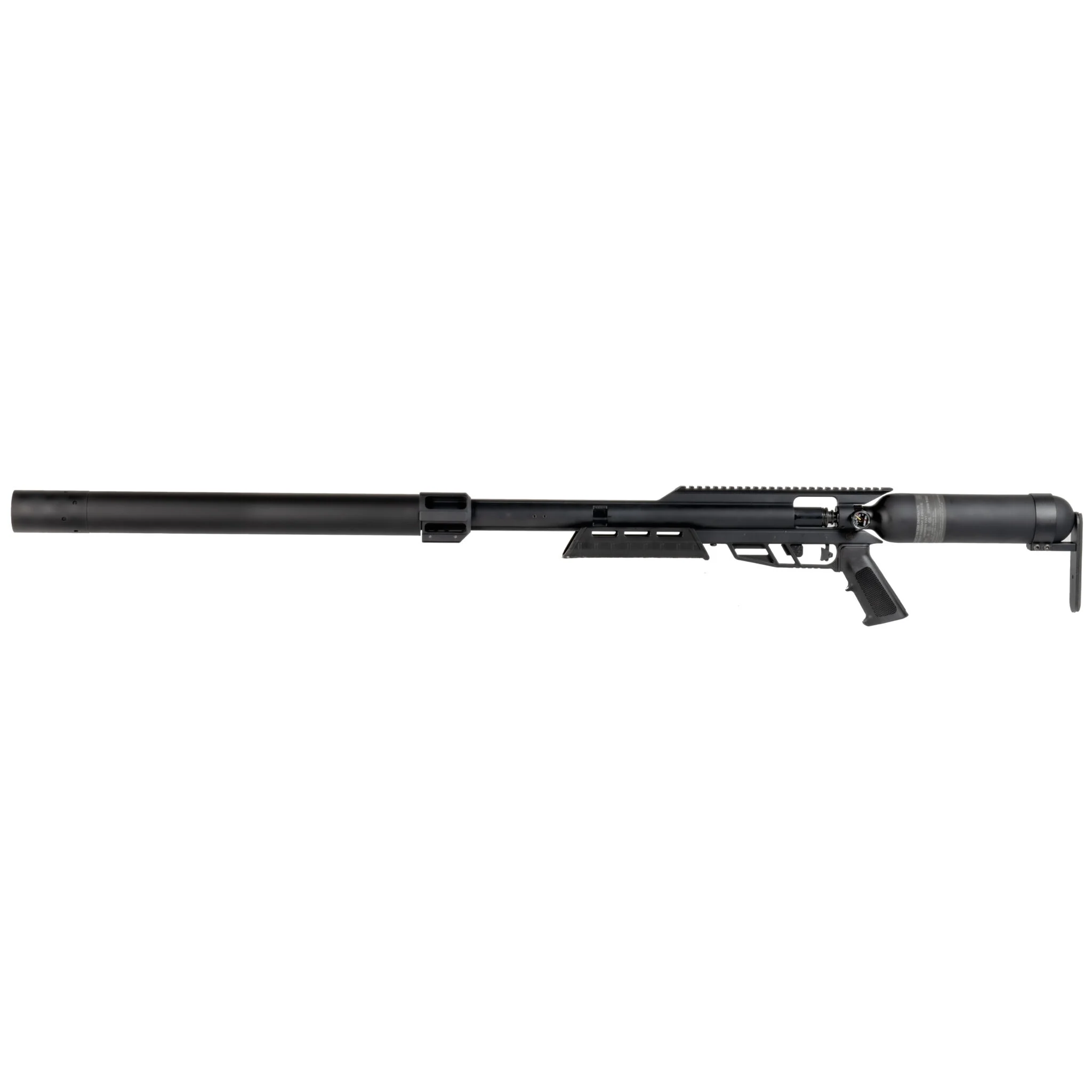
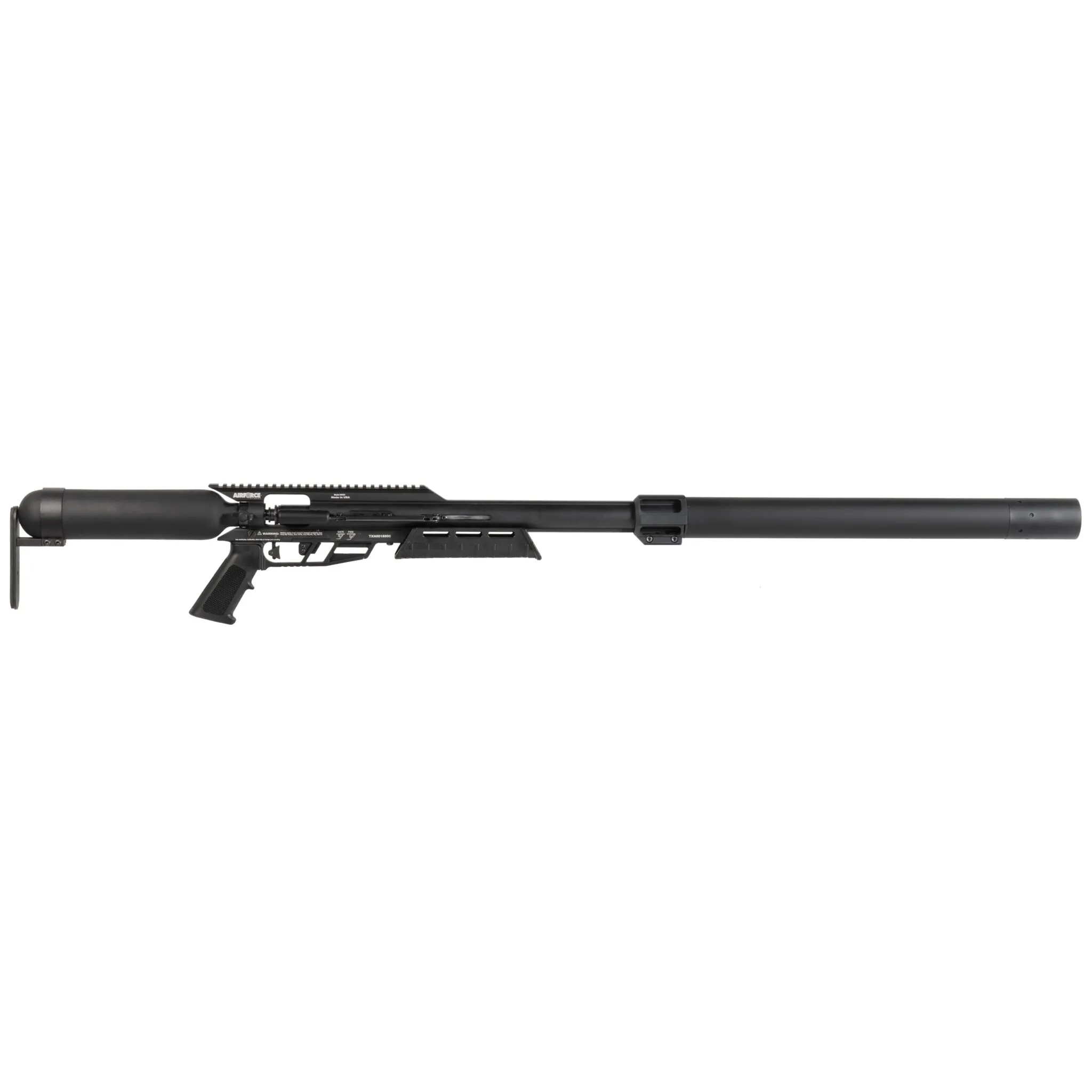
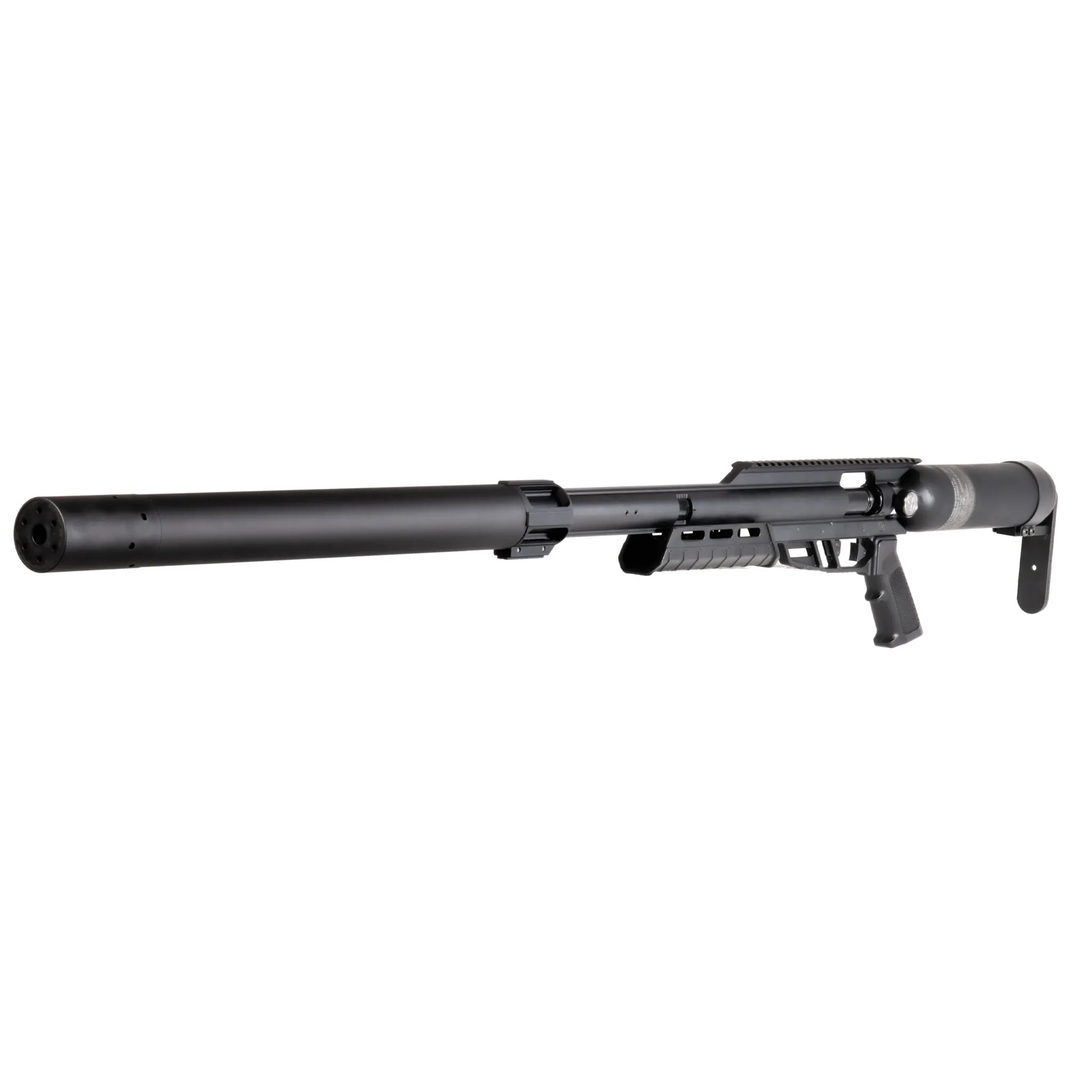
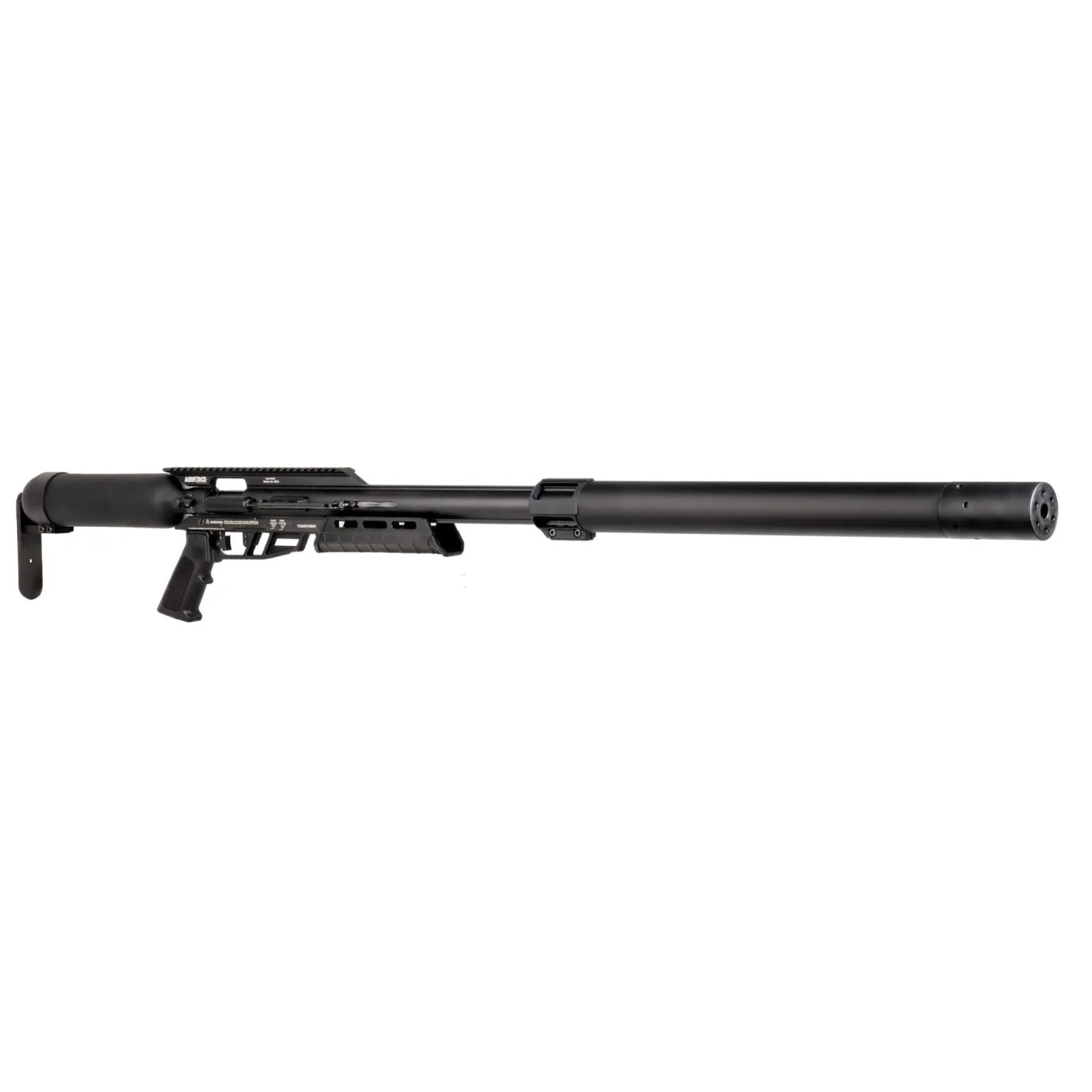
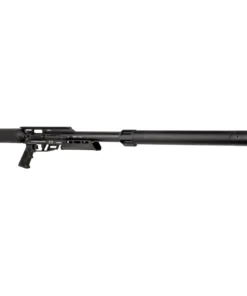
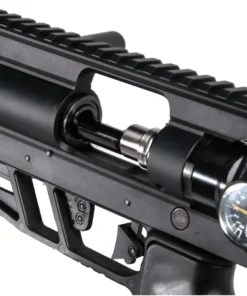
Texan LSS .457 – CF Series
$1,200.00
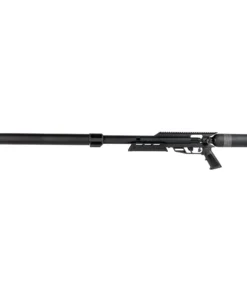
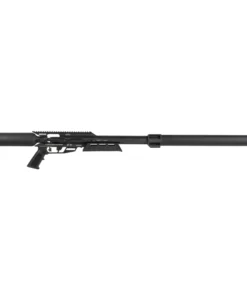
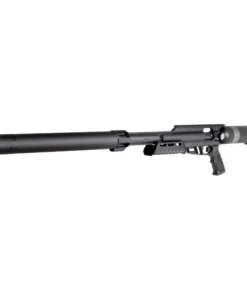
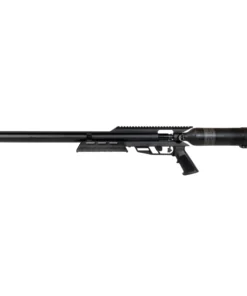
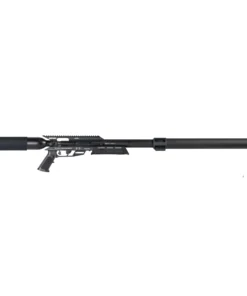
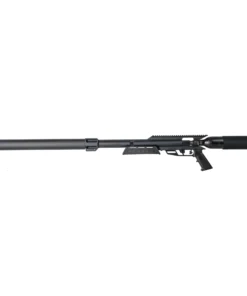
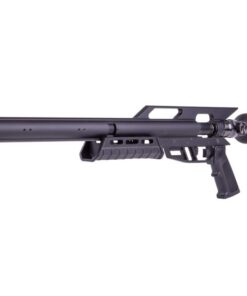
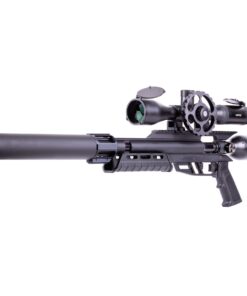
The Texan LSS – CF Series leads the industry in quiet big-bore performance. Powered by AirForce’s patented Sound-Loc® suppression system, the LSS significantly reduces muzzle report while maintaining full big-bore energy. The result is a rifle that delivers commanding power with a remarkably low acoustic footprint—ideal for hunters who value discretion in the field.
Texan LSS — The Quietest Big-Bore Air Rifle on the Market
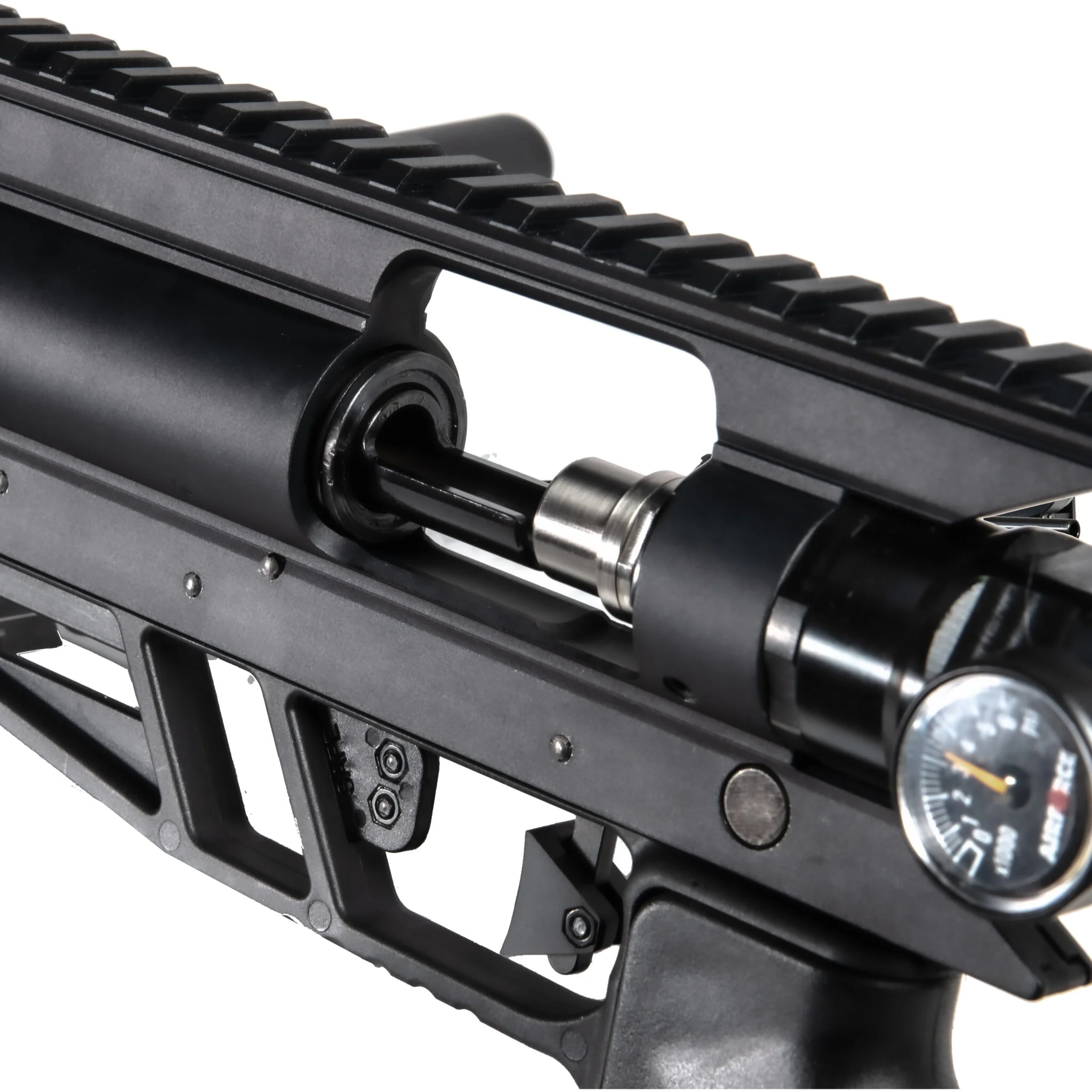
Texan rifles equipped with the 500cc carbon-fiber bottle unlock the full potential of the platform with a 250 BAR (3,625 PSI) fill pressure.
-
With the carbon-fiber bottle, it exceeds 800 FPE, offering a meaningful increase in energy, consistency, and downrange performance.
A Trusted Platform with Global Field Experience
Since its introduction, the Texan series has earned a reputation for reliability, repeatable accuracy, straightforward operation, and real-world effectiveness. Texan rifles have been used successfully around the world on a wide range of game, establishing the platform as one of the most proven big-bore airgun systems available.
What’s New in the Latest Texan Platform
Upgraded Air System
A redesigned 500cc carbon-fiber bottle offers improved air capacity and more stable pressure curves, supporting consistent big-bore performance.
More Versatile Mounting Options
A full-length Picatinny scope rail, paired with upper and lower 11mm dovetail accessory rails, expands compatibility with modern optics, bipods, lasers, and field-use accessories.
Refined Handling and Safety
A newly added manual safety provides secure, intuitive operation without complicating the rifle’s simple, rugged design.
Quiet Strength, Built for Serious Work
From its industry-leading Sound-Loc® suppression to its upgraded air system and mounting options, the Texan LSS continues to demonstrate why it remains one of the most capable and respected big-bore air rifles on the market.
Texan LSS .457 – CF Series Specifications
| ACTION: SINGLE SHOT |
| AIR TANK VOLUME: 500CC Carbon Fiber |
| BARREL: 34 INCH LOTHAR WALTHER |
| CALIBER: .457 |
| ENERGY: 750+ FPE * |
| LENGTH: 54.25 INCHES |
| MAX FILL PRESSURE: 3625 PSI /250 BAR (ONLY USE COMPRESSED AIR OR DRY NITROGEN) |
| RAILS: PICATINNY SCOPE RAIL; DOVETAIL UPPER AND LOWER ACCESSORY RAIL |
| SAFETY: MANUAL |
| SIGHTS: OPEN OR OPTICAL MAY BE iNSTALLED |
| TRIGGER: 2 STAGE, ADJUSTABLE FOR POSITION |
| TWIST: 1-30 IN .457 CAL |
| VELOCITY: UP TO 1110+ FEET PER SECOND* |
| WEIGHT: 8 LBS |
| WARRANTY: LIMITED LIFE TIME |
| PROUDLY MADE IN TEXAS, USA |
| DISCLAIMER * DEPENDING ON CALIBER, AMMO WEIGHT, AND POWER SETTING. SHOWN WITH OPTIONAL ACCESSORIES |
Texan LSS .457 – CF Series
AirForce Texan LSS .457 – CF Series Big Bore PCP Air Rifle
AirForce Texan LSS .457 CF Series Overview
The AirForce Texan LSS .457 – CF Series combines serious big-bore performance, precision engineering, high-pressure carbon-fiber technology, and AirForce’s Sound-Loc® suppression system in one purpose-built PCP platform. For shooters researching AirForce, airforce airguns, air force guns, airforce texan, airforcetexan, or an airforce texan air rifle, this model represents one of the most capable configurations in the Texan family.
AirForce currently specifies a 34-inch Lothar Walther barrel, 500cc carbon-fiber bottle, 250 BAR / 3,625 PSI maximum fill pressure, single-shot action, adjustable two-stage trigger, manual safety, full-length Picatinny scope rail, and upper and lower accessory rails. The .457 version is rated at approximately 750+ foot-pounds of energy and up to 1,110+ fps, depending on projectile weight and power setting.
34-Inch Precision Barrel and .457 Big-Bore Performance
The long Lothar Walther barrel is central to the performance of the air force texan lss. Its 34-inch length gives expanding compressed air more time to accelerate the projectile while the 1:30 twist rate supports .457-caliber projectile stabilization.
This puts the rifle far beyond an ordinary pellet gun, basic air rifle and air pistol, or recreational air guns platform.
Likewise, searches such as high powered air rifles 4000 fps should not be interpreted literally for this rifle. The Texan LSS does not produce 4,000 fps. Its performance comes from combining large projectiles with substantial muzzle energy.
For buyers comparing a .30 cal air rifle, airforce 25, airforce talon p, air force talon p, airforce condor, or air force talon, the .457 Texan LSS belongs to a substantially heavier big-bore performance category.
500cc Carbon-Fiber Air System
The CF Series uses a 500cc carbon-fiber bottle rated for a maximum fill pressure of 3,625 PSI / 250 BAR. AirForce states that the upgraded system offers greater air capacity and a more stable pressure curve for high-energy shooting.
A suitable high-pressure filling source is required. Therefore, anyone considering an air gun pump should ensure that the charging equipment is specifically rated for the pressure required by this rifle.
For someone asking what is an air rifle, a PCP system works differently from a spring-powered design. High-pressure air is stored in the reservoir and released in a controlled amount when the rifle fires.
Sound-Loc Suppression System
The defining feature of the LSS configuration is AirForce’s Sound-Loc® suppression system.
AirForce designed the system to reduce muzzle report while retaining the full-length barrel and substantial energy associated with the Texan platform.
This distinguishes the LSS from the shorter airforce texan ss and airforce texanss variants while maintaining the long-barrel architecture that many shooters prefer.
The rifle is still a high-energy big-bore platform, so “suppressed” should not be interpreted as silent.
Single-Shot Action and Precision Control
Unlike conventional bolt action air rifles, the Texan LSS uses a single-shot operating system.
Each projectile is loaded individually, making the platform particularly suitable for deliberate shooting where accuracy matters more than rapid fire.
The two-stage trigger can be adjusted for position, while the manual safety provides straightforward operational control.
A full-length Picatinny rail gives the shooter room to mount a suitable optic, while additional accessory rails increase flexibility for supported range or field setups.
Texan LSS Versus Tex-Rex and Brush Gun Platforms
Searches for Tex-Rex AirForce brush gun, Brush Gun, tex-rex, air force tex rex, AirForce Tex-Rex PCP rifle, Tex-Rex Brush Gun air rifle, AirForce Tex-Rex air rifle, AirForce Tex-Rex hunting rifle, brush gun PCP air rifle, AirForce Texan Brush Gun, AirForce brush gun, and AirForce big bore airgun refer to related AirForce big-bore products rather than this exact LSS configuration.
For example, the current Tex-Rex .457 uses a 500cc carbon-fiber bottle at up to 4,500 PSI and can exceed 1,000 FPE, whereas the Texan LSS .457 CF is specified around a 3,625 PSI system with 750+ FPE performance and integrated Sound-Loc suppression.
The LSS is therefore designed around a different balance of power, sound reduction, barrel length, and field usability.
Hunting and Target Applications
Search phrases such as 50 caliber air rifle for deer hunting often bring buyers into the big-bore category, although this particular model is .457 caliber rather than .50/.510.
Where legally permitted, the rifle’s energy class may make it suitable for certain hunting applications. However, hunters must verify local regulations governing species, caliber, energy, seasons, projectile requirements, and land access.
Likewise, anyone searching for air guns for target shooting or an airgun shooting range near me should make sure the range allows high-energy big-bore PCP rifles and provides a suitable backstop.
The rifle’s power places it far beyond ordinary recreational target equipment.
AirForce Compared With FX PCP Platforms
Premium PCP buyers may also compare this rifle with FX airguns, fxairguns, fx airguns sverige, fx airguns sweden, FX Airguns USA, FX Panthera MkII, fx panthera, FX Impact M4, fx impact m4, impact m4 air rifle, impact m4 500mm, fx m4, FX Impact M3, fx impact m3 air rifle, f x impact m3, fx impact, f x impact, FX DRS Tactical, fx drs, fx drs classic, fx drs pro, fx leopard, fx leopard airgun, fx wildcat, fx king, fx air rifle, fx chronograph, fx outdoors, fx dynamics, and other pcp airguns.
Those rifles occupy overlapping premium PCP search territory, but many are optimized around magazine-fed precision shooting and smaller calibers. The Texan LSS .457 instead focuses on big-bore single-shot energy, heavy-projectile capability, and simplified operation.
Why Choose the Texan LSS .457 CF Series?
The strongest reason to consider the Texan LSS .457 CF Series is its balance of 750+ FPE capability, a 34-inch precision barrel, 500cc carbon-fiber air reservoir, 250-BAR fill pressure, integrated Sound-Loc system, adjustable two-stage trigger, modern optics rail, and rugged single-shot architecture.
It delivers substantially more energy than typical recreational air rifles while retaining the straightforward operation that has defined the Texan family.
For the experienced adult shooter seeking an AirForce big bore air rifle, the Texan LSS .457 CF Series provides a technically mature platform designed around precision, high-pressure efficiency, substantial projectile energy, and controlled big-bore performance.
Performance, Air System, Accuracy, Handling, and Ownership
The .457 CF configuration is built for experienced shooters who want a high-energy pneumatic rifle with a long barrel, large air reservoir, reduced report, and straightforward single-shot operation. Rather than depending on rapid follow-up shots or a complicated feeding system, the platform places emphasis on deliberate loading, controlled trigger use, consistent pressure management, and accurate shot placement.
Its performance comes from the interaction between the barrel, reservoir, valve system, projectile, trigger, optic, and shooter. Therefore, maximum published power figures tell only part of the story. Real-world performance depends on how carefully the rifle is set up, maintained, filled, and used.
Carbon-Fiber Air System
The carbon-fiber reservoir is one of the most important elements of this configuration.
Its high-pressure capability allows the rifle to store a substantial volume of compressed air while helping control overall weight. Compared with a traditional metal reservoir of similar capacity, carbon-fiber construction can provide a favorable combination of strength and reduced mass.
Because the rifle operates at high pressure, the filling system deserves careful attention.
A suitable compressor, charging cylinder, or other compatible source should be rated for the required operating pressure. Hoses, fittings, connectors, and gauges should also be designed for high-pressure pneumatic use.
The reservoir should never be filled beyond its specified maximum.
Overfilling does not provide a worthwhile performance advantage and can create unnecessary risk.
Understanding Shot Count
Large-caliber rifles consume considerably more air per shot than smaller sporting models.
Therefore, owners should expect a relatively limited number of full-power shots before a refill is required.
This is normal for equipment designed around heavy projectiles and substantial energy.
The shooter should monitor the pressure gauge during use and learn the rifle’s most consistent operating range.
As pressure drops, velocity and point of impact can eventually change.
For repeatable results, it is generally better to refill before performance falls noticeably rather than attempting to extract every possible shot from one charge.
Accuracy and Consistency
A long precision barrel provides a strong mechanical foundation for accuracy, but the barrel alone cannot guarantee good results.
Projectile quality, projectile fit, reservoir pressure, optic stability, trigger control, and shooting technique all contribute to the final group.
During initial testing, the rifle should be fired from a stable supported position.
This allows the owner to establish a baseline and determine which variables affect performance.
Several carefully fired groups are more useful than one unusually good group.
Once consistent results are achieved, the shooter can begin evaluating performance from more realistic positions.
Projectile Selection
Different projectile weights can produce noticeably different performance.
Lighter projectiles may produce higher velocity, while heavier designs may retain more momentum and follow a different trajectory.
The best choice is not necessarily the fastest or heaviest option.
Instead, the owner should identify a projectile that fits the barrel properly and produces consistent accuracy.
Whenever projectile weight or design changes, the point of impact should be checked again.
A rifle that is correctly zeroed with one projectile may shoot noticeably higher or lower with another.
Testing should therefore be performed carefully at an appropriate range.
Trigger Control
The adjustable two-stage trigger allows the shooter to establish a predictable firing sequence.
A controlled first stage followed by a clean break can help reduce unwanted movement immediately before the shot.
However, trigger adjustment should always preserve safe operation.
An extremely light setting is not automatically better.
A predictable trigger combined with good technique is generally more valuable than a trigger that is simply as light as possible.
The shooter should apply pressure smoothly and maintain the sight picture throughout the firing process.
Optic Setup
The long upper rail gives the owner flexibility when positioning an optic.
Correct eye relief is important, particularly when using larger scopes.
The optic should sit at a height that allows the shooter to establish a comfortable and repeatable head position.
Mounting hardware should be tightened correctly and checked periodically.
After transportation, a fall, or any significant impact, the zero should be verified.
A shifted mount can create substantial accuracy problems even when the rifle itself is operating normally.
Sound Reduction
The integrated sound-reduction system helps moderate the muzzle report compared with an unsuppressed configuration.
However, the rifle still operates at a very high energy level.
Reduced sound should never be confused with silence.
The shooter should remain considerate of surrounding properties, range rules, and local regulations.
Hearing protection may also remain appropriate depending on the shooting environment.
Handling and Balance
The long barrel gives the rifle substantial overall length.
From a bench or supported position, that length can contribute to a stable feel.
However, unsupported shooting may require more effort because the front of the rifle extends considerably forward.
The carbon-fiber reservoir helps manage overall weight, but balance still depends on the optic and accessories installed.
A heavy scope can noticeably change the way the rifle feels.
For this reason, accessory selection should focus on practical usefulness rather than adding unnecessary weight.
Supported and Unsupported Shooting
A supported position is generally the best choice when testing accuracy.
A stable rest reduces movement and allows the shooter to evaluate the rifle and projectile combination more objectively.
Field positions present a different challenge.
Standing, kneeling, seated, or improvised supported positions require more shooter control.
Practice from these positions can help establish realistic personal limits.
A distance that feels easy from a bench may be much more demanding without a solid rest.
Pressure Consistency
Consistency is more important than chasing the highest possible velocity.
A stable pressure range can produce more predictable point of impact and better group consistency.
Owners who want to understand the rifle more precisely can record pressure and shot results during several sessions.
A chronograph may also be useful for measuring velocity variation.
These records can reveal where the system performs most consistently.
They may also help identify developing maintenance problems.
Air Leak Monitoring
The reservoir should hold pressure without unexplained rapid loss.
If the gauge drops significantly while the rifle is stored, the system should be checked for leakage.
An audible hiss may identify an obvious problem, but some leaks can be slow and difficult to detect.
Seals and fittings can wear over time.
High-pressure internal repairs should not be attempted casually.
When the cause is unclear, qualified service is the safer approach.
Safe Range Requirements
The energy produced by this platform requires an appropriate shooting environment.
Lightweight traps intended for recreational pellets may be inadequate.
The target area should use a backstop capable of safely containing large, high-energy projectiles.
The shooter should also understand what lies beyond the target.
Safe shooting requires planning for both direct hits and missed shots.
A professionally managed range that accepts equipment in this power class is often the most practical environment for testing and regular practice.
Cleaning and Maintenance
Routine care should focus on preserving reliability without unnecessary disassembly.
External surfaces should be kept clean and dry.
The filling connection should remain free from contamination.
Moving parts should operate smoothly.
Fasteners should be checked periodically.
The barrel should be cleaned only when necessary and with suitable equipment.
Aggressive cleaning can damage a precision bore if inappropriate tools or abrasive materials are used.
A noticeable decline in accuracy may justify inspection and cleaning, but cleaning after every short shooting session is generally unnecessary.
Storage
Secure storage is essential.
The rifle should be kept where unauthorized users cannot access it.
The storage area should remain dry and reasonably temperature stable.
Excessive heat, moisture, corrosive chemicals, and direct sunlight should be avoided.
The optic should also be protected from impact.
Filling equipment and projectiles should be stored responsibly and kept organized.
Transportation
A strong padded or rigid case is particularly useful because of the rifle’s overall length.
The barrel and optic should not be allowed to move freely inside the case.
Before traveling, applicable transportation rules should be checked because high-powered pneumatic equipment may be regulated differently between jurisdictions.
After long-distance transportation, the rifle should be visually inspected and the optic zero confirmed before serious use.
Long-Term Ownership
Long-term reliability depends on consistent maintenance and sensible operating habits.
The owner should monitor pressure retention, trigger feel, loading operation, accuracy, fasteners, reservoir condition, and optic stability.
Any noticeable change should be investigated rather than ignored.
Preventive maintenance is usually easier than repairing equipment after a minor problem becomes more serious.
With appropriate filling equipment, careful projectile selection, reliable optics, secure storage, and access to a suitable shooting environment, this platform can provide dependable performance for an owner who understands the responsibilities associated with a high-energy pneumatic rifle.
Real-World Use, Field Handling, Accuracy Development, Maintenance, and Long-Term Reliability
The .457 CF configuration is designed for deliberate, controlled shooting where consistency matters more than rapid fire. Its large-caliber format, long barrel, high-pressure reservoir, and single-shot action create a very different ownership experience from a lightweight recreational air rifle. Because of that, the user should approach the rifle as a complete shooting system rather than focusing only on power.
Practical performance depends on the relationship between the rifle, projectile, optic, air pressure, shooting position, and the person behind the trigger. A technically capable rifle will only perform well when those elements are managed consistently.
Understanding Real-World Performance
Published velocity and energy figures provide a useful reference, but they do not represent the exact result of every shot.
Projectile weight, reservoir pressure, temperature, barrel condition, and individual setup can all affect performance.
A heavier projectile may produce lower velocity while retaining strong momentum. A lighter projectile may travel faster but behave differently over distance.
For that reason, the owner should test the rifle methodically rather than selecting ammunition based only on advertised speed.
A controlled range session can help establish a realistic performance baseline.
Establishing an Accuracy Baseline
The best way to evaluate the rifle initially is from a stable supported position.
This reduces unnecessary movement and makes it easier to identify whether changes in group size are caused by the shooter, ammunition, pressure, or optic setup.
Several groups should be fired using the same projectile and similar reservoir pressure.
That creates a more useful picture than judging accuracy from one group.
Once consistent results are established, the owner can begin experimenting with other suitable projectile weights and designs.
Only one variable should ideally be changed at a time.
This makes it easier to understand what is actually improving or reducing accuracy.
Projectile Consistency
Projectile quality can have a major effect on practical precision.
Even small differences in diameter, weight, or shape can influence how a large-caliber projectile engages the barrel.
The owner should avoid mixing different projectile types during accuracy testing.
Projectiles should also be inspected for visible damage or deformation before loading.
A damaged projectile may not travel consistently.
Once a preferred option is found, using the same type can help maintain repeatable results across future sessions.
Air Pressure Management
The rifle’s high-pressure system requires disciplined monitoring.
Large projectiles consume substantial amounts of air, so the useful shot count per fill is naturally lower than with small-caliber platforms.
The owner should learn how the rifle behaves as reservoir pressure falls.
At some point, velocity and point of impact may begin to change.
Rather than continuing to fire until pressure becomes very low, the shooter should establish a practical refill point.
Keeping a simple record of starting pressure, shot count, and accuracy can help identify the most consistent operating range.
Filling the Rifle Correctly
Filling equipment should always match the pressure requirements of the system.
The compressor, cylinder, hose, fittings, and gauge should all be rated appropriately.
Connections should remain clean and undamaged.
The reservoir should be filled in a controlled manner and never beyond its rated maximum.
A damaged hose or fitting should be replaced rather than reused.
High-pressure air stores significant energy, so filling should be treated as an important part of normal operation rather than a casual task.
Monitoring for Pressure Loss
A properly functioning reservoir should retain pressure without unexplained rapid loss.
If the gauge drops noticeably while the rifle is stored, there may be a leak.
Some leaks are easy to hear, while others develop slowly.
Possible areas include seals, fittings, valves, or connection points.
The owner should avoid disassembling high-pressure components without appropriate knowledge.
When the source of a leak is unclear, professional service is preferable.
Trigger Technique
The adjustable two-stage trigger can support accurate shooting when used consistently.
The first stage allows the shooter to prepare for the shot, while the second stage provides the final release.
The trigger should be pressed smoothly rather than pulled suddenly.
A sudden movement can disturb the sight picture.
The shooter should also maintain follow-through.
Keeping the head, shoulder, and trigger hand stable for a moment after firing can improve consistency.
Trigger adjustments should always preserve safe engagement and predictable operation.
Optic Selection
The optic should suit the intended shooting environment.
A very high magnification level is not always necessary.
Field of view, eye relief, clarity, adjustment range, and reticle design may be just as important as maximum magnification.
Mounting hardware should be installed carefully.
Loose mounts can create a wandering point of impact even when the rifle itself is performing correctly.
The owner should check the mounts periodically and confirm zero after transport or impact.
Rifle Balance and Handling
The long barrel contributes to the overall stability of the rifle when used from a supported position.
At the same time, the overall length can make unsupported handling more demanding.
A heavy optic or unnecessary accessories can shift the balance further.
For that reason, the owner should keep the setup practical.
Accessories should serve a clear purpose rather than simply adding weight.
A well-balanced configuration can feel easier to control during extended shooting sessions.
Supported Shooting
From a bench or stable rest, the rifle can be evaluated with fewer variables.
This is the ideal environment for testing new projectiles, confirming zero, or checking whether maintenance has changed performance.
The rest should support the rifle securely without placing unnecessary pressure on sensitive areas.
The shooter should maintain the same shoulder position and grip for each shot.
Consistency in setup helps reveal the rifle’s true performance.
Unsupported Shooting
Field conditions are often less stable.
Standing, kneeling, seated, or improvised supported positions can all reduce practical accuracy.
The owner should practice from realistic positions if the rifle will be used outside a bench environment.
Personal limits should be based on what can be achieved consistently under those conditions.
A distance that produces excellent results from a bench may not be appropriate from an unsupported position.
Wind and Environmental Conditions
Large projectiles are still affected by wind.
As distance increases, even moderate crosswinds can shift point of impact.
Temperature changes can also influence pressure behavior.
The owner should therefore avoid assuming that a zero established under one set of conditions will remain identical in every environment.
When conditions change significantly, a verification group can help confirm point of impact.
Sound Management
The integrated sound-reduction system moderates the muzzle report, but the rifle still produces substantial energy.
It should not be considered silent.
The shooting environment should remain appropriate for the sound level.
Hearing protection may still be advisable.
The owner should also remain mindful of nearby properties, range rules, and local restrictions.
Barrel Maintenance
A precision barrel should be maintained carefully.
Cleaning is appropriate when accuracy begins to decline or when visible contamination is present.
However, aggressive cleaning after every short shooting session is generally unnecessary.
Suitable cleaning materials should be used.
Abrasive tools can damage the bore.
The owner should avoid pushing unsuitable objects through the barrel or using harsh chemicals without a specific reason.
Exterior Maintenance
External surfaces should be wiped down after use, especially if the rifle has been exposed to moisture.
Dust and dirt should not be allowed to build up around moving parts or filling connections.
Fasteners should be checked periodically.
Loose screws can affect the optic, stock alignment, or accessory mounting.
Any sudden change in operating feel should be investigated.
Seal and O-Ring Care
The pneumatic system depends heavily on seals.
Over time, these components can wear.
Pressure loss, unusual sounds, or inconsistent operation may indicate a problem.
Only compatible lubricants should be used.
Improper petroleum-based products can be unsuitable for high-pressure air systems.
If replacement is needed, the correct seals should be installed rather than improvised alternatives.
Safe Storage
The rifle should be stored securely and protected from unauthorized access.
A locked cabinet or secure case can help provide both safety and physical protection.
The storage location should remain dry and reasonably stable in temperature.
Excessive heat, moisture, direct sunlight, and corrosive chemicals should be avoided.
The optic should also be protected from impact.
Long-Term Storage
For extended storage periods, the owner should follow manufacturer guidance regarding reservoir pressure.
The system should not automatically be left completely full or completely empty without understanding the recommended procedure.
Before returning the rifle to service after long storage, the owner should inspect the reservoir, fittings, seals, optic, and action.
A short range session can then confirm normal operation.
Transportation
A rigid or well-padded case is strongly recommended because of the rifle’s overall length.
The barrel and optic should be supported so they cannot move freely.
The rifle should also be protected from tools, heavy objects, or liquids during transport.
After a long trip, zero should be checked again before serious use.
Transportation laws should also be reviewed because regulations can vary between locations.
Recognizing When Service Is Needed
A sudden loss of accuracy, pressure retention problems, irregular trigger behavior, difficult loading, or unusual mechanical resistance can all indicate that service is required.
The owner should not force components that suddenly become difficult to operate.
Early attention can prevent more serious problems.
Professional support is particularly appropriate when the issue involves the reservoir, valve system, or other high-pressure components.
Long-Term Reliability
The platform can provide strong long-term reliability when maintained correctly.
Its single-shot design reduces feeding complexity, while the large reservoir and long barrel support its intended performance.
However, reliable ownership depends on regular inspection.
Seals, fittings, fasteners, the trigger, barrel, optic mounts, and air system should all be monitored.
Small changes should be addressed early.
Practical Ownership Perspective
The rifle is best suited to someone who understands that high-energy pneumatic equipment requires planning.
A suitable filling system, appropriate projectiles, secure storage, dependable optics, maintenance supplies, and access to a safe shooting location should all be considered part of the complete setup.
Its strongest qualities are deliberate operation, substantial performance, and mechanical simplicity.
When pressure is managed carefully, ammunition is selected intelligently, maintenance is performed consistently, and the shooter works within realistic accuracy limits, the system can deliver reliable performance over many years.
Buyer Evaluation, Setup Planning, Efficiency, Storage, Service, and Long-Term Ownership
The .457 carbon-fiber configuration is a specialized high-energy pneumatic platform, so a prospective owner should evaluate more than power figures before deciding whether it suits their needs. The rifle requires an appropriate compressed-air source, compatible projectiles, dependable optics, a safe shooting environment, secure storage, and ongoing maintenance. When these requirements are planned correctly, ownership becomes considerably easier and the rifle can deliver consistent performance over an extended period.
A careful buyer should think about how often the rifle will be used, where it will be operated, how it will be filled, and what level of maintenance they are comfortable performing. These practical considerations often have a greater impact on long-term satisfaction than headline performance numbers alone.
Evaluating the Rifle Before Regular Use
Before beginning regular shooting, the owner should inspect the complete rifle carefully.
The barrel, action, air reservoir, filling connection, pressure gauge, trigger, safety, rails, optic mounts, and visible fasteners should all be checked.
Any unusual damage, looseness, or signs of pressure loss should be investigated before the rifle is fired.
This initial inspection is especially important after shipping or long-distance transportation.
The optic may also require confirmation because transportation can sometimes change mounting alignment even when no external damage is visible.
A short controlled range session is an effective way to establish a baseline for future comparison.
Planning the Filling System
A dependable filling solution is essential.
Because the rifle operates at high pressure and uses a relatively large reservoir, filling should be treated as part of the complete ownership setup rather than an afterthought.
A suitable compressor or charging cylinder can make regular use much more convenient.
All filling equipment should be rated for the required pressure.
Hoses, fittings, gauges, and adapters should remain clean and free from visible damage.
Connections should never be forced.
If a fitting does not engage correctly, the cause should be identified before pressure is introduced.
The reservoir should always remain within the specified pressure limit.
Understanding Air Consumption
Large projectiles require substantial volumes of compressed air.
Therefore, the rifle will naturally provide fewer useful shots from each fill than a smaller-caliber platform.
This is not a design weakness.
It is simply the result of producing substantially higher projectile energy.
The shooter should learn how many consistent shots are normally available before velocity and point of impact begin changing.
Keeping a simple shooting log can be useful.
Recording starting pressure, number of shots, projectile type, and group results can reveal the rifle’s most efficient operating range.
Developing a Consistent Shooting Routine
Repeatability begins before the trigger is pressed.
The owner should use a consistent sequence when preparing the rifle.
Reservoir pressure should be checked first.
The optic should be examined.
The barrel and action should be confirmed clear.
The shooting area and backstop should also be assessed before loading.
During shooting, shoulder position, grip, head placement, and trigger movement should remain as consistent as possible.
Changing several elements at the same time makes it difficult to understand what caused a change in accuracy.
Establishing a Reliable Zero
A stable zero is essential for accurate shooting.
The rifle should initially be zeroed from a supported position at an appropriate range.
Once a dependable point of impact is established, the shooter can confirm performance at additional distances.
Changing projectile weight or design may require the zero to be checked again.
The same applies after removing the optic, changing mounts, or transporting the rifle over a long distance.
A rifle should never be assumed to remain perfectly zeroed simply because the optic has not visibly moved.
Choosing a Practical Optic
The best optic is not necessarily the largest or most powerful model.
The choice should reflect the distances and shooting positions the owner expects to use most often.
Clear glass, dependable adjustments, appropriate eye relief, useful magnification, and a practical reticle can be more valuable than excessive magnification.
Weight should also be considered.
A large optic can noticeably affect balance on a long rifle.
A well-selected optic should complement the rifle rather than make it unnecessarily difficult to handle.
Managing Rifle Balance
The long barrel provides useful stability when the rifle is supported, but overall balance can change significantly depending on accessories.
Heavy optics, mounts, bipods, and additional equipment can shift the center of gravity.
The shooter should therefore add only accessories that provide clear practical value.
From a bench or supported position, additional weight may not be a major concern.
During extended carrying or unsupported shooting, however, unnecessary weight becomes much more noticeable.
A balanced setup is generally easier to control consistently.
Projectile Testing
Projectile selection should be systematic.
The owner can begin with several appropriate options and test each one separately.
Groups should be fired under similar pressure and environmental conditions.
The best-performing projectile is the one that provides repeatable accuracy and suitable performance for the intended lawful use.
Maximum velocity should not be the only deciding factor.
A slightly slower projectile that produces tighter groups may be a better practical choice.
Once a preferred projectile is identified, buying from consistent batches can help maintain repeatable results.
Range and Backstop Requirements
The shooting environment needs to match the rifle’s energy level.
Lightweight backyard traps designed for ordinary recreational pellets may not be appropriate.
A substantial backstop capable of safely stopping large-caliber projectiles is required.
The area beyond the target should also be considered.
Even a well-designed target should never be treated as the only safety barrier.
The shooter should know what lies behind the shooting area and maintain a safe direction at all times.
A professionally operated range that permits high-energy pneumatic rifles is often ideal.
Managing Sound Responsibly
The integrated sound-reduction system helps moderate the report, but substantial noise can still remain.
The rifle should not be treated as silent.
Local noise restrictions, nearby properties, and range rules should all be considered.
Hearing protection may still be appropriate depending on the shooting environment.
Using the rifle responsibly includes considering not only projectile safety but also the impact of repeated sound.
Routine Cleaning
The rifle should be kept clean, but unnecessary aggressive cleaning should be avoided.
External surfaces can be wiped after use to remove dust, moisture, fingerprints, and other contamination.
The barrel should be cleaned when accuracy begins to decline or when inspection shows that cleaning is necessary.
Suitable materials should be used to protect the bore.
Abrasive tools and harsh chemicals can cause unnecessary damage.
Cleaning should preserve the rifle rather than create additional wear.
Monitoring Seals and Pressure Retention
Seals play a major role in pneumatic reliability.
The owner should periodically observe reservoir pressure during storage.
Unexpected pressure loss may indicate a leak.
Some leaks can be heard immediately, while others develop gradually.
If a problem appears, the rifle should be inspected before continued use.
Internal high-pressure work should only be performed by someone who understands the system.
Improvised repairs are not appropriate for components that contain significant stored pressure.
Trigger and Safety Checks
The trigger should continue to feel predictable.
Any noticeable change in pull, engagement, or reset should be investigated.
The safety should also operate correctly.
Adjustments should never compromise secure operation.
A lighter trigger is not automatically more accurate.
Predictability and safe engagement are more important.
The owner should test any adjustment cautiously before returning to normal shooting.
Storage Between Sessions
Secure storage protects both the rifle and other people.
The rifle should be kept where unauthorized users cannot access it.
A locked cabinet or secured case is a practical option.
The storage location should remain dry and away from excessive heat, moisture, corrosive chemicals, or direct sunlight.
The optic should be protected from impact.
Filling equipment and projectiles should also be stored responsibly.
Long-Term Storage
Extended storage deserves additional preparation.
The owner should follow manufacturer guidance regarding reservoir pressure.
Before returning the rifle to service after a long break, the reservoir, filling connection, seals, optic, fasteners, trigger, and action should be inspected.
A controlled test session can then confirm that the rifle is operating normally.
This is preferable to immediately returning to demanding shooting conditions after months of storage.
Transportation and Protection
The rifle’s length makes a supportive case particularly valuable.
The barrel and optic should be cushioned and prevented from moving freely during transport.
Heavy equipment should not be placed directly on top of the rifle.
After travel, the owner should inspect the system and confirm zero before serious use.
Transportation rules should also be checked whenever crossing into a different jurisdiction.
Knowing When Professional Service Is Appropriate
Some maintenance tasks are straightforward, while others should be left to experienced technicians.
High-pressure valve problems, reservoir issues, persistent leaks, unusual trigger behavior, or internal mechanical faults may require professional attention.
Forcing a component that no longer operates normally can increase damage.
Early professional inspection is usually more economical than repairing a larger failure later.
Long-Term Ownership Value
The strongest long-term value of this platform comes from its combination of substantial performance, carbon-fiber air storage, long-barrel stability, straightforward single-shot operation, and reduced report.
However, reliable ownership depends on consistent care.
Air pressure should be managed correctly, projectiles should be selected carefully, the optic should remain secure, and maintenance should be performed before small problems become serious.
For an experienced owner who has access to suitable filling equipment and an appropriate shooting environment, the rifle can provide a distinctive combination of precision, power, mechanical simplicity, and dependable long-term performance.
Be the first to review “Texan LSS .457 – CF Series”
Related products
AirForce
AirForce
AirForce
AirForce
AIR GUN RIFLES
AIR GUN RIFLES
AirForce
Reviews
There are no reviews yet.