
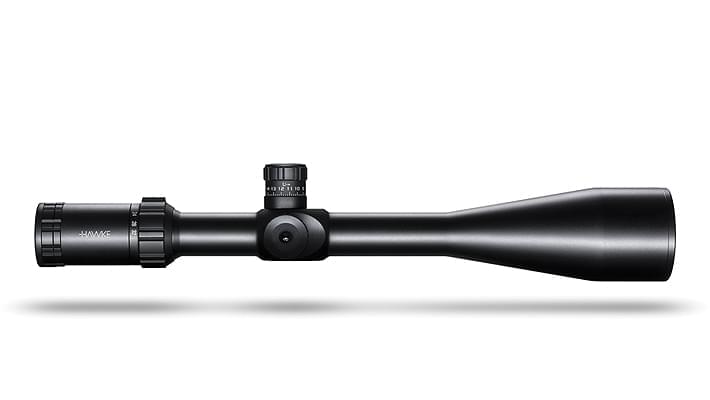
Hawke Sidewinder IR 8-32×56 SR Pro II
$490.00
- High Precision Long Range Optical Systems
- 18 Layer Fully Multi-Coated Optics For Superior Clarity
- Side Focus Control For Parallax Adjustment To Infinity
- 30mm Mono-Tube Chassis For Superior Strength
- Glass Etched Reticle With Red And Green Illumination
- Rheostat On Saddle Offers 5 Levels Of Brightness
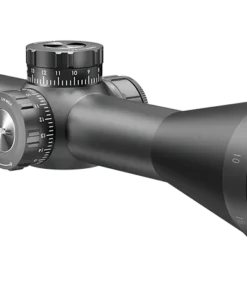
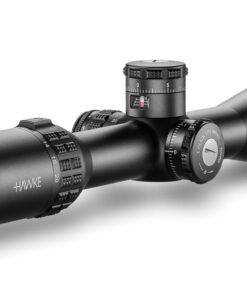
- 1/4 MOA Exposed, Locking And Resettable Turrets
- Locking Ocular And High Torque Zoom Ring
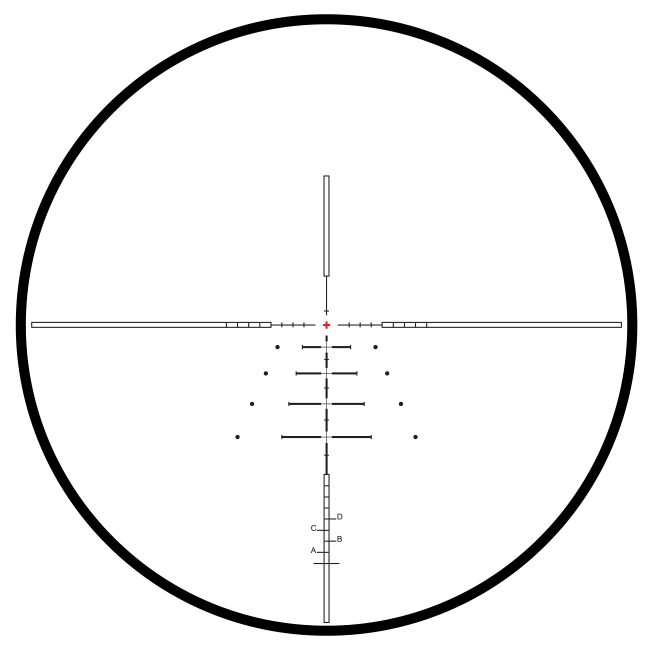
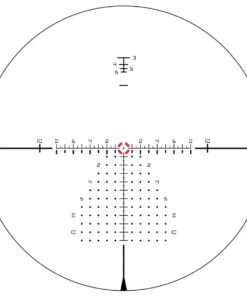
SR Pro Reticle
Working with your bullet’s trajectory the SR Pro reticle, exclusively from Hawke, is guaranteed to provide usable aim points whatever your caliber. Simply input the ballistic profile into the Hawke X-ACT software and all the aim points are calculated.
The reticle features hollow posts, range finding brackets, illuminated central aim point and hold over aim points with windage bars and dots.
A premium design suited to extreme shooting.
Hawke Sidewinder IR 8-32×56 SR Pro II — 30mm High-Magnification Scope with Illuminated Reticle, Side Focus, Locking Turrets, and Precision MRAD Adjustments
Hawke Sidewinder IR 8-32×56 SR Pro II Optical Performance, Reticle Design, Parallax Control, Turrets, and Precision
The Hawke Sidewinder IR 8-32×56 SR Pro II is a high-magnification optical scope designed around precise adjustment, extended-range target visibility, side-focus parallax correction, and an illuminated second-focal-plane reticle. Hawke identifies model 17271 with an 8-32× magnification range, 56mm objective, 30mm mono-tube, 1/10 MRAD elevation and windage clicks, and approximately 16 MRAD of adjustment range.
Its side-focus system adjusts from approximately 10 yards / 9 metres to infinity, while the 56mm objective and 18-layer fully multi-coated lenses are designed to provide strong light transmission and contrast. The scope measures about 394mm / 15.5 inches, weighs approximately 775g / 27.3oz, and provides roughly 102mm / 4 inches of eye relief.
The SR Pro II reticle provides an illuminated central aiming area, holdover references, windage markings, hollow posts, and range-estimation brackets. Illumination is red with six brightness levels and intermediate off positions. Because it is a second-focal-plane reticle, its apparent size remains constant while magnification changes.
Sniper Hider
The phrase sniper hider is not a technical feature of this scope. The Sidewinder is an optical aiming and observation system rather than a concealment device.
Optics Warehouse
Optics Warehouse is associated with optics retail and scope research rather than a feature of the Hawke design.
Red Dot UK
A red dot UK search usually concerns low-magnification reflex sights. By contrast, this optic provides variable 8-32× magnification for more detailed target observation.
Picatinny
A Picatinny rail is a standardized mounting interface frequently used with compatible scope rings. The scope itself uses a 30mm main tube, so suitable 30mm rings are required for the chosen rail system.
Bipod for Rifle
A bipod for rifle can provide a stable support platform during lawful range shooting, although it is independent of the optical system.
IR Illuminator
An IR illuminator is normally used with digital or image-intensified night-vision devices. It is not required for this conventional optical scope.
Minotaur 10-50×60
The Minotaur 10-50×60 belongs to another high-magnification optics family and should not be treated as another designation for the Hawke model.
Picatinny Dimensions
Picatinny dimensions follow the MIL-STD-1913 rail standard. Correctly matched rings are important because the optic’s 30mm tube must be mounted securely and evenly.
Scope Mount
A scope mount connects the optic to the rail or receiver. Correct ring diameter, spacing, height, and alignment help preserve optical stability.
Zero Stop Scope
A zero stop scope uses a mechanical reference that prevents the elevation turret from moving below a preset zero. This Sidewinder instead emphasizes exposed locking turrets with a witness window.
Sniper Hider
The repeated phrase sniper hider remains unrelated to the scope’s optical or mechanical specifications.
Optic Warehouse
An optic warehouse search generally concerns retailers or optics comparison resources.
What Is a Picatinny Rail
For what is a Picatinny rail, it is a standardized mounting rail with regularly spaced transverse slots designed to accept compatible rings and accessories.
Parker Hale Scope Rings for Sale
Parker Hale scope rings for sale concerns a separate mounting product. Any rings used here must match the 30mm tube and the firearm or air-rifle mounting interface.
SWFA SS 10×42
The SWFA SS 10×42 is a fixed-power optic and differs substantially from an 8-32× variable magnification design.
Delta Stryker
Delta Stryker scopes belong to another optics family and should be compared independently according to magnification, reticle, turret design, and optical quality.
PRS Spotting Scope Setups
PRS spotting scope setups are generally used for external observation and shot spotting, whereas this optic is designed as a mounted riflescope.
1913 Rail
A 1913 rail is another name commonly used for the MIL-STD-1913 Picatinny mounting standard.
What Is Zero Stop on a Scope
For what is zero stop on a scope, it is a turret feature that allows the elevation adjustment to return to a preset mechanical zero without moving significantly below it.
Difference Between Weaver and Picatinny Rail
The difference between Weaver and Picatinny rail primarily concerns slot dimensions and spacing standards. Some accessories fit both, but compatibility should always be confirmed rather than assumed.
Scope Illumination
Scope illumination improves reticle visibility against dark or complex backgrounds. This model provides red illumination with six brightness levels and off positions between settings.
What Is Parallax in Optics
For what is parallax in optics, parallax occurs when the apparent position of the reticle shifts relative to the target as the viewer’s eye moves.
The side-focus system is designed to reduce this error at selected distances.
Ballistic Solver
A ballistic solver calculates predicted projectile trajectory using inputs such as velocity, projectile characteristics, range, and atmospheric conditions. It is external to this conventional optical scope.
What Is Parallax in Optics
The repeated what is parallax in optics phrase remains important because high magnification makes parallax errors more noticeable.
Delta Optics
Delta Optics is another optics manufacturer and does not form part of the Sidewinder system.
Element Optics
Element Optics produces competing scopes and sighting products but is unrelated to Hawke’s internal design.
Schmidt and Bender Scopes
Schmidt and Bender scopes belong to a separate premium optics range and should be evaluated on their own specifications.
Best Rifle Bipod for Long Range Shooting
The best rifle bipod for long range shooting depends on shooting platform, surface, stability requirements, and legal sporting application rather than the scope alone.
Chrony Chronograph
A Chrony chronograph measures projectile velocity. Such data can be useful for understanding ballistic behavior, but the device is separate from the optic.
Hikmicro Stellar SX60L Thermal Scope
The Hikmicro Stellar SX60L thermal scope uses thermal imaging technology, whereas the Sidewinder is a conventional optical riflescope.
Best Digital Night Vision Scope
The best digital night vision scope belongs to a different technology category. This optic relies on visible light rather than digital night imaging.
March Riflescope Adjustments Argon Filled D42HV56WFML G2
The phrase march riflescope adjustments argon filled d42hv56wfml g2 concerns another high-end optic and is unrelated to this model’s mechanical system.
DNT Optics Review
A DNT optics review generally concerns digital, thermal, or multispectral optics rather than this traditional optical scope.
Falcon Optics
Falcon Optics belongs to another scope manufacturer and should be compared separately.
Best Night Vision Scope
The best night vision scope is not directly comparable because night-vision scopes use digital or intensifier technology.
What Is Parallax in a Scope
For what is parallax in a scope, it is an apparent shift between the target image and reticle when the eye moves away from the optical axis.
This model provides side-focus correction from around 10 yards to infinity.
ZCO Optics
ZCO Optics refers to Zero Compromise Optic, another manufacturer of precision riflescopes.
What Is Parallax in a Rifle Scope
For what is parallax in a rifle scope, proper adjustment becomes especially important at high magnification because small alignment errors can become much more noticeable.
TNC225R Review
A TNC225R review concerns another digital or thermal optical system rather than this conventional glass optic.
Tactical Rail
A tactical rail generally refers to an accessory mounting interface such as Picatinny.
SWFA Scope Review
An SWFA scope review concerns competing optical products and should not be confused with the Hawke Sidewinder specifications.
Scope Torque Wrench
A scope torque wrench can help ensure ring and base fasteners are tightened according to the mounting manufacturer’s specifications.
Excessive torque can damage rings, threads, or the scope tube.
TPO Scopes
TPO scopes belong to another optics category or manufacturer depending on the market.
Best Scope for Air Rifle
The best scope for air rifle depends on recoil characteristics, intended distance, magnification requirements, weight, and parallax range.
A major advantage of this optic for precision air-rifle use is its side-focus capability beginning around 10 yards.
What Is the MOA of a Scope
For what is the MOA of a scope, MOA means minute of angle and is an angular measurement commonly used for scope adjustments.
This particular model instead uses 1/10 MRAD clicks, making its turret system metric-radian based.
Optics Planet
Optics Planet is an optics retailer and has published specification data for the Sidewinder range, including the model 17271.
DNT Thermal Scope Review
A DNT thermal scope review concerns thermal imaging optics and belongs to a different technology class.
Picatinny Dimensions
The repeated picatinny dimensions phrase relates to standardized rail geometry and compatible mounting hardware.
Vector Minotaur 10 50×60
The Vector Minotaur 10 50×60 is another high-magnification scope platform. It should be evaluated independently rather than assuming identical optical or turret performance.
Picatinny Scope Base
A Picatinny scope base can provide the mounting interface for suitable 30mm rings and this optic when the host platform is compatible.
Why the 8-32× Magnification Range Matters
The wide magnification range allows the user to move from a comparatively broad view at 8× to detailed target observation at 32×.
At maximum magnification, the field of view narrows considerably, so lower settings are often more comfortable for locating targets before increasing power.
The published field of view is approximately 5.3 to 1.3 metres at 100 metres across the magnification range.
Why the 56mm Objective Is Important
The 56mm objective provides a large light-gathering aperture.
Combined with Hawke’s 18-layer fully multi-coated lenses, it is designed to produce good contrast and brightness, particularly when magnification and ambient light conditions become demanding.
How the SR Pro II Reticle Supports Precision
The SR Pro II uses an illuminated central aim point together with holdover references, windage bars, dots, and range-estimation markings.
Because the reticle is second focal plane, the subtension relationship changes relative to the target as magnification changes. Therefore, users should follow Hawke’s reticle documentation when interpreting its reference markings.
Why Side Focus Is Important
Parallax becomes increasingly noticeable at higher magnification.
The side-focus adjustment allows the optical system to be focused and parallax corrected from approximately 10 yards to infinity, making the scope useful across both relatively close and longer target distances.
How Good Are the Turret Adjustments?
The scope uses 1/10 MRAD clicks with approximately 16 MRAD total elevation and windage adjustment range, along with exposed locking turrets and a witness window showing turret position relative to zero.
Consistent turret behavior is important when repeatable corrections are required.
Where the Scope Works Best
The optic is best suited to lawful target shooting, precision air-rifle use, range work, and other controlled sporting environments where high magnification and precise parallax control are useful.
Its size and approximately 775g weight mean it is more naturally suited to supported precision platforms than lightweight walk-around setups.
When High Magnification Becomes Useful
Higher magnification becomes valuable when fine aiming detail or target inspection is needed.
However, maximum magnification also reduces field of view and exit pupil.
At 8×, the exit pupil is approximately 7mm, while at 32× it falls to around 1.8mm.
Therefore, image brightness and eye-position tolerance naturally become more demanding at the upper end.
How Precise Is the Scope?
Precision is supported by the 30mm mono-tube, side parallax adjustment, locking 1/10 MRAD turrets, second-focal-plane SR Pro II reticle, and long 102mm eye relief.
Actual aiming repeatability still depends on mount quality, ring alignment, correct torque, stable eye position, parallax adjustment, and the mechanical consistency of the platform beneath the optic.
Important Information About the Scope
The Sidewinder uses a CR2032 battery for reticle illumination and includes a removable side wheel, removable magnification throw lever, lens covers, and screw-on sunshade in common retail configurations.
The nitrogen-filled aluminum construction is designed to resist fogging and environmental exposure, while Hawke documentation describes the Sidewinder family as waterproof, shockproof, and recoil rated.
For long-term reliability, the lenses should remain protected, the turrets should not be forced against their adjustment limits, mounting hardware should be checked periodically, and the tube should never be crushed through excessive ring torque.
Overall, the Hawke Sidewinder IR 8-32×56 SR Pro II combines high magnification, a large 56mm objective, illuminated SR Pro II reticle, 10-yard-to-infinity side focus, precise MRAD adjustments, locking turrets, generous eye relief, and robust optical construction into a capable precision-oriented scope for controlled sporting and target applications.
Optical Clarity, Parallax Control, Reticle Visibility, Turret Consistency, and Practical Reliability
Optical Clarity
Optical clarity depends on lens quality, coatings, focus, magnification, lighting conditions, and correct eye position.
A high-magnification scope should produce an image that remains usable across a wide adjustment range rather than appearing sharp only at one setting.
At lower magnification, the field of view is broader and eye placement is generally easier.
As magnification increases, image brightness can reduce and eye position becomes more critical.
For that reason, maximum magnification should be used when the additional detail is genuinely useful rather than automatically selected for every situation.
Why Lens Coatings Matter
Multi-coated lenses help reduce internal reflections and improve light transmission.
This can support better contrast, particularly when viewing small details against complex backgrounds.
However, coatings should be protected carefully because scratches, aggressive cleaning, and chemical exposure can reduce their effectiveness.
The lenses should be kept clean, but unnecessary wiping should be avoided.
Loose dust should be removed before any direct contact is made with the glass.
Objective Lens Performance
A large objective lens allows more light to enter the optical system.
This can be useful at higher magnification, where the exit pupil naturally becomes smaller.
However, a large objective also increases overall size and usually requires higher mounting rings.
The mounting height should remain practical so the shooter can maintain a natural head position.
A poorly positioned scope can reduce comfort even when the optical performance itself is excellent.
Magnification Control
The magnification ring should rotate smoothly through its full range.
It should not feel excessively loose or unusually stiff.
If a throw lever is installed, it should remain secure and should not interfere with other controls.
The user should become familiar with how the field of view changes across the magnification range.
Starting at a lower setting and increasing magnification after locating the target is generally more comfortable than searching at maximum power.
High-Magnification Stability
At high magnification, small movements appear much larger through the optic.
This means platform stability becomes increasingly important.
Movement from the shooter, support system, or mounting hardware can make the image appear unstable.
A solid rest or stable shooting position can therefore help reveal the actual optical performance.
High magnification does not create mechanical precision by itself; instead, it makes both strengths and weaknesses easier to see.
Parallax Adjustment
The side-focus system should be adjusted according to the approximate target distance.
Correct parallax adjustment helps reduce apparent reticle movement when the eye shifts slightly behind the scope.
This becomes increasingly important at higher magnification.
The adjustment should move smoothly and should not be forced against its limits.
If the distance markings do not exactly match the observed target, the visual result should take priority because atmospheric conditions and individual eyesight can influence the practical setting.
Understanding Parallax Error
Parallax error occurs when the target image and reticle do not appear on the same optical plane.
If the eye moves sideways and the reticle seems to shift across the target, parallax has not been fully corrected.
The effect can introduce aiming inconsistency even when the rifle remains mechanically still.
Maintaining a repeatable eye position remains important because no adjustment completely replaces good alignment.
Side Wheel Use
A large side wheel can make fine parallax adjustment easier.
However, the wheel should not be used as a carrying handle or levered against surrounding equipment.
Its mounting screw should remain secure without being overtightened.
If the wheel begins to wobble or the adjustment feels inconsistent, the attachment should be inspected.
Clean handling helps maintain smooth and predictable control.
Reticle Visibility
The reticle should remain clear and easy to distinguish across different backgrounds.
Illumination can help when the central aiming area becomes difficult to see against dark or visually complex scenes.
Brightness should be set only as high as necessary.
Excessive illumination can cause blooming or reduce the apparent sharpness of fine reticle details.
In bright conditions, illumination may not be required at all.
Illumination Control
The illumination dial should operate smoothly through its brightness positions.
If the reticle flickers, the battery and battery contacts should be checked.
The battery compartment should remain clean and dry.
When the scope is stored for long periods, battery condition should be monitored to reduce the risk of leakage.
A fresh battery should fit correctly without forcing the compartment cap.
Second-Focal-Plane Behavior
A second-focal-plane reticle remains visually the same size as magnification changes.
However, the target image becomes larger or smaller behind it.
This means reticle subtensions correspond accurately only at the magnification value specified for the reticle design.
Users should therefore understand how the reticle references behave before relying on them for measurement or holdover.
Consistent magnification settings make reticle interpretation easier.
Turret Feel
Elevation and windage turrets should produce clear, consistent clicks.
The adjustment should not feel vague or inconsistent.
A good turret should allow the user to identify each click by touch or sound.
If the mechanism suddenly becomes unusually stiff or loose, the turret should be inspected.
Forcing the adjustment can damage internal components.
Locking Turret Function
Locking turrets help reduce accidental adjustment.
The lock should engage securely without requiring excessive force.
When unlocked, the turret should rotate normally.
The user should confirm that both elevation and windage controls return to their intended settings after adjustment.
Keeping the mechanism free from dirt and impact helps preserve consistent operation.
Tracking Consistency
Tracking describes whether the internal adjustment system moves the reticle predictably when turret corrections are made.
Consistent tracking is important for repeatable range use.
However, mounting problems can sometimes appear to be turret problems.
If zero changes unexpectedly, the rings, base, fasteners, and platform should all be checked before the internal mechanism is blamed.
Return-to-Zero Behavior
A precision optic should return consistently to the original setting after adjustments are reversed.
If the point of impact changes unexpectedly after dialing and returning, the entire system should be inspected.
Loose rings, unstable bases, inconsistent support, or parallax error can all contribute.
Mechanical diagnosis should therefore begin with simple external checks.
Tube Alignment
The main tube should sit evenly inside the rings.
Misaligned rings can place stress on the tube and interfere with internal adjustment.
The scope should not be forced into mounts that do not line up correctly.
Proper ring alignment helps protect the optic and supports reliable adjustment.
Any visible crushing or ring marks around the tube should be evaluated.
Ring Torque
Ring screws should be tightened according to the mount manufacturer’s recommendations.
Excessive torque can damage the tube, distort internal components, or interfere with adjustment.
Uneven tightening can also place unnecessary stress on the optic.
A suitable torque tool can help maintain consistent installation.
The screws should be tightened gradually and evenly rather than one side being fully tightened first.
Base Security
The base or rail should remain firmly attached to the platform.
A loose base can create zero shifts that are easily mistaken for optical failure.
Fasteners should be checked periodically, especially after transport.
The rail surface should remain clean and free from debris before mounts are installed.
A stable base is essential for meaningful precision testing.
Eye Relief
The scope should be positioned so the full image is visible while the shooter maintains a natural posture.
If the head must stretch forward or backward, the mount position should be adjusted.
Consistent eye relief helps reduce fatigue and improves repeatable alignment.
The shooter should avoid positioning the optic so close that normal movement risks contact with the eyepiece.
Diopter Adjustment
The diopter should be used to make the reticle appear sharp to the individual user.
It should be adjusted while looking at a neutral background rather than trying to focus on a distant target.
Once the reticle appears clear, the setting generally requires little further adjustment.
The side-focus control should then be used for target focus and parallax correction.
Field of View
Field of view becomes narrower as magnification increases.
A broad field of view makes it easier to locate a target and maintain awareness of the surrounding area.
At high power, the user may need more time to find the same point.
For practical use, beginning at moderate magnification often improves efficiency.
The magnification can then be increased after the target is centered.
Exit Pupil
The exit pupil becomes smaller as magnification increases.
A smaller exit pupil requires more precise eye position and can make the image appear dimmer in poor light.
This is normal optical behavior rather than a defect.
Users should understand that maximum magnification places greater demands on both lighting and eye alignment.
Low-Light Performance
Low-light performance depends on objective size, lens coatings, magnification, and ambient light.
Reducing magnification can increase the effective exit pupil and make the image easier to use.
For this reason, the highest power may not always provide the best viewing experience near dusk or in darker conditions.
Sunshade Use
A sunshade can reduce glare and stray light entering the objective.
It can be particularly useful when bright light approaches from the front or side.
The sunshade should thread on smoothly and should not be forced.
It should also be removed carefully during transport if its additional length increases the risk of impact.
External Surface Care
The exterior should be kept clean and dry.
Dust and moisture can accumulate around turret bases, adjustment controls, and ring interfaces.
A soft cloth is generally suitable for routine cleaning.
Harsh chemicals should be avoided because they may affect finishes, seals, or markings.
Moisture Protection
Although the optic is designed for outdoor use, it should still be dried after exposure to rain.
Water should not remain trapped around turret caps, ring interfaces, or adjustment controls.
The scope should not be placed immediately into a sealed case while wet.
Allowing it to dry first helps reduce condensation and long-term corrosion around external hardware.
Temperature Changes
Rapid movement between cold and warm environments can cause condensation on the lenses.
The optic should be allowed to acclimate gradually where possible.
Aggressive wiping of wet lenses should be avoided if dirt or grit is present.
Once the temperature stabilizes, the glass can be cleaned carefully if necessary.
Transport Protection
A padded case should protect the scope and the platform from impact and vibration.
Heavy objects should not press directly against the turrets or objective bell.
After a long journey, ring screws, base fasteners, turret settings, and lens condition should be checked.
Transport protection helps preserve both optical alignment and mechanical reliability.
Storage Conditions
The optic should be stored in a dry environment away from excessive heat.
Lens caps should be fitted when practical.
If the scope will not be used for an extended period, battery condition should be checked.
The device should not be stored beneath heavy equipment that can place pressure on the tube or controls.
Long-Term Practical Reliability
Long-term reliability depends on clean lenses, secure mounting, correct torque, smooth adjustments, stable parallax control, and careful environmental protection.
The turrets, side-focus mechanism, magnification ring, illumination system, tube, objective, eyepiece, and mounting hardware should all be monitored over time.
Changes in tracking, focus behavior, illumination, zero retention, or adjustment feel should not be ignored.
When the scope is mounted correctly, protected from impact, cleaned carefully, stored dry, and operated within its intended adjustment range, it is more likely to maintain clear imaging, repeatable corrections, stable reticle alignment, and dependable precision over extended use.
Focus Precision, Magnification Control, Reticle Interpretation, Zero Retention, and Long-Term Optical Care
Understanding Focus Precision
Accurate focus is essential when using a high-magnification optic because even a small focusing error becomes more noticeable as magnification increases.
The target image should appear clear without forcing the eye to compensate.
If the image looks soft, the side-focus control should be checked before assuming the lenses or reticle are responsible.
Correct focus improves detail recognition and reduces eye strain during longer sessions.
Magnification and Image Stability
Higher magnification enlarges both useful detail and unwanted movement.
At maximum power, vibration from the platform, support system, or shooter becomes much easier to see.
For this reason, high magnification is most useful when the platform is stable.
Lower magnification can provide a wider field of view and more forgiving eye placement.
The best setting depends on distance, lighting, support, and how much target detail is actually needed.
Why Maximum Power Is Not Always Best
Maximum magnification can make fine details easier to see, but it also narrows the field of view and reduces exit pupil size.
As a result, the image can appear dimmer and eye alignment becomes more demanding.
In poor light or unstable conditions, a moderate setting can produce a more usable image.
The goal should be clear, repeatable aiming rather than simply using the highest number available on the magnification ring.
Side-Focus Accuracy
The side-focus mechanism should be adjusted carefully until the target image appears sharp and apparent reticle movement is minimized.
Distance markings can provide useful guidance, but the visual result should take priority.
Atmospheric conditions, eyesight, and exact target distance can all influence the final setting.
Fine adjustment is especially important at high magnification because small parallax errors become more noticeable.
Checking for Parallax
Parallax can be checked by keeping the platform still while moving the eye slightly behind the eyepiece.
If the reticle appears to shift relative to the target, further adjustment may be required.
A properly focused image is helpful, but sharpness alone does not always mean parallax has been fully corrected.
Consistent eye placement remains important even after the side-focus setting has been optimized.
Reticle Interpretation
A detailed reticle can provide multiple reference points, but those markings should be understood before they are used.
Second-focal-plane reticles maintain the same apparent size as magnification changes.
Therefore, the angular relationship between the reticle marks and target changes unless the optic is set to the magnification specified for calibration.
Consistent magnification makes reticle interpretation more predictable.
Central Aim Point Visibility
The center of the reticle should remain easy to identify without becoming visually distracting.
In bright conditions, illumination may be unnecessary.
In darker or visually complex scenes, a low illumination setting can improve visibility.
The brightness should be kept only as high as needed.
Excessive illumination can make fine reticle detail look less precise and may increase eye fatigue.
Reticle Illumination Battery Care
The illumination system depends on a small battery, so battery condition should be checked periodically.
The battery compartment should remain dry and clean.
If the illuminated reticle flickers or becomes inconsistent, the battery and contacts should be examined first.
For extended storage, the battery should be monitored according to manufacturer guidance to reduce the risk of leakage.
Turret Click Consistency
Elevation and windage adjustments should feel consistent throughout their normal range.
Each click should be distinct and predictable.
If the mechanism suddenly becomes vague, unusually stiff, or inconsistent, the turret should not be forced.
Dirt, impact, or internal wear may need to be considered.
A consistent turret feel makes it easier to recognize when something has changed mechanically.
Tracking Reliability
Tracking refers to whether the internal adjustment system moves the point of aim consistently when the turrets are adjusted.
A precision optic should respond predictably and return to the original setting when adjustments are reversed.
However, external problems can imitate poor tracking.
Loose rings, an unstable base, or movement in the platform should always be checked before assuming an internal fault.
Zero Retention
Zero retention depends on the entire mounting system as well as the optic itself.
If the point of impact changes unexpectedly, the base, rings, tube position, fasteners, and adjustment controls should all be inspected.
A stable optic cannot maintain zero if the mounting system moves.
Regular inspection is especially important after transport, vibration, or accidental impact.
Ring Position
The rings should support the tube evenly without interfering with the turret housing, magnification control, or objective bell.
They should also be positioned so the scope remains comfortable for the user’s natural eye position.
If the rings are too close together or misaligned, unnecessary stress can be placed on the tube.
Correct spacing supports stability and protects the optic.
Ring Alignment
Misaligned rings can twist or compress the tube.
This can affect internal movement and may leave visible mounting marks.
The scope should sit naturally in the rings without being forced.
If the upper ring halves do not close evenly, alignment should be checked before tightening.
Proper alignment contributes to long-term mechanical reliability.
Torque Consistency
Mounting screws should be tightened gradually and evenly.
One screw should not be fully tightened while the others remain loose.
A suitable torque tool can help keep installation within the mount manufacturer’s recommendations.
Excessive force can deform the tube or damage threads.
Under-tightening can allow movement.
Balanced torque is therefore important for both protection and zero retention.
Rail and Base Inspection
The mounting rail or base should remain straight, clean, and secure.
Loose base screws can create problems that appear to come from the optic.
The interface should be checked periodically, especially after rough transport.
Dust, grit, and oil should not accumulate between mounting surfaces.
A stable base provides the foundation for reliable optical alignment.
Eye Position Consistency
Repeatable eye position helps reduce aiming variation.
The user should be able to establish the same cheek position and eye distance naturally.
If the full image is difficult to see, the scope position may need to be reconsidered.
A setup that forces the head forward or backward can increase fatigue and make consistent alignment harder.
Diopter Stability
Once adjusted correctly, the diopter should make the reticle appear sharp.
It normally requires little additional adjustment unless the user changes.
If the reticle becomes difficult to see clearly, the diopter should be checked before altering other controls.
Target focus and reticle focus are separate functions and should not be confused.
Field of View Awareness
A wider field of view makes target acquisition easier.
As magnification increases, the visible area becomes narrower.
This is normal optical behavior.
For practical use, it can be helpful to locate the target at a lower setting and then increase magnification for closer inspection.
Trying to locate a small target at maximum power can be unnecessarily slow.
Exit Pupil and Lighting
The effective exit pupil becomes smaller as magnification rises.
This means eye position becomes more critical and the image may appear dimmer.
In lower light, reducing magnification can improve the viewing experience.
The large objective helps gather light, but it cannot eliminate the basic optical relationship between magnification and exit pupil.
Glare Management
Bright light entering the objective can reduce contrast.
A sunshade can help limit stray light and improve the image in some conditions.
The objective and eyepiece should also remain free from oily fingerprints because these can create additional glare.
When the sunshade is fitted, it should remain properly threaded and protected from impact.
Lens Surface Protection
The lenses are among the most sensitive components of the optic.
Protective caps should be used during storage and transport.
Loose dust should be removed before wiping.
A lens brush, blower, or suitable optical cloth is preferable to ordinary clothing.
Scratches cannot easily be corrected, so prevention is more effective than aggressive cleaning.
Objective Bell Protection
The large objective bell should be protected from impact and side pressure.
Because of its size, it can be vulnerable during transport if the platform is packed poorly.
Heavy equipment should not rest against it.
If the objective receives a significant impact, image clarity and mechanical alignment should be checked before further demanding use.
Eyepiece Protection
The eyepiece should remain clean and free from cracks or looseness.
If the rubber surround is damaged, viewing comfort may be reduced.
The scope should not be carried by the eyepiece.
A protective case should prevent other equipment from striking the rear portion of the optic.
Turret Protection
Exposed turrets provide convenient adjustment, but they also deserve protection during transport.
Heavy objects should not press against the turret caps or locking mechanisms.
Before use, the user should confirm that both turrets remain at their intended settings.
A case with adequate clearance around the controls can help prevent accidental movement.
Side-Focus Wheel Protection
A large side wheel improves fine adjustment but can also create additional leverage if it is struck.
The wheel should not be used as a carrying point.
If removed for transport, the mounting area should remain clean.
If left installed, the case should provide enough space so the wheel is not compressed.
Moisture and Fog Prevention
The optic should be dried after rain or heavy humidity.
Water should not remain around turret bases, ring interfaces, or moving controls.
The scope should not be sealed inside a case while wet.
Allowing it to dry first reduces the chance of trapped moisture.
Rapid temperature changes can also create external condensation, so gradual acclimatization is useful.
Cleaning After Outdoor Use
Dust, mud, or debris should be removed carefully after use.
The exterior can be wiped with a soft cloth once loose particles have been removed.
Harsh solvents should be avoided because they may affect finishes or seals.
Cleaning also provides an opportunity to inspect the tube, rings, controls, and lenses for damage.
Transport Checks
After a long journey, the scope should be checked before precision use.
Ring screws, base fasteners, turret settings, parallax control, magnification ring, and lens condition should all be inspected.
Transport vibration can reveal hardware that was beginning to loosen.
A brief check can prevent unnecessary confusion later.
Storage Environment
The optic should be stored in a dry location away from excessive heat and direct sunlight.
Lens covers should be installed when practical.
Heavy objects should not be stacked on the scope.
The storage case should provide enough clearance to prevent constant pressure on the turrets, side wheel, or objective bell.
Periodic Function Checks
Even if the scope is not used regularly, its major controls should be checked periodically.
The magnification ring, side focus, turrets, illumination, and diopter can all be operated briefly.
This helps identify stiffness, battery issues, or hardware changes before the optic is needed again.
Long-Term Optical Reliability
Long-term reliability depends on stable mounting, correct torque, clean lenses, smooth controls, consistent parallax adjustment, and careful environmental protection.
The tube, rings, base, turrets, side-focus mechanism, illumination system, objective, and eyepiece should all be monitored over time.
Changes in focus, tracking, zero retention, illumination, or adjustment feel should not be ignored.
When the scope is mounted correctly, protected during transport, stored dry, and maintained carefully, it is more likely to preserve clear optical performance, repeatable adjustment, stable reticle alignment, and dependable precision over extended use.
Be the first to review “Hawke Sidewinder IR 8-32×56 SR Pro II”
Related products
Reviews
There are no reviews yet.