
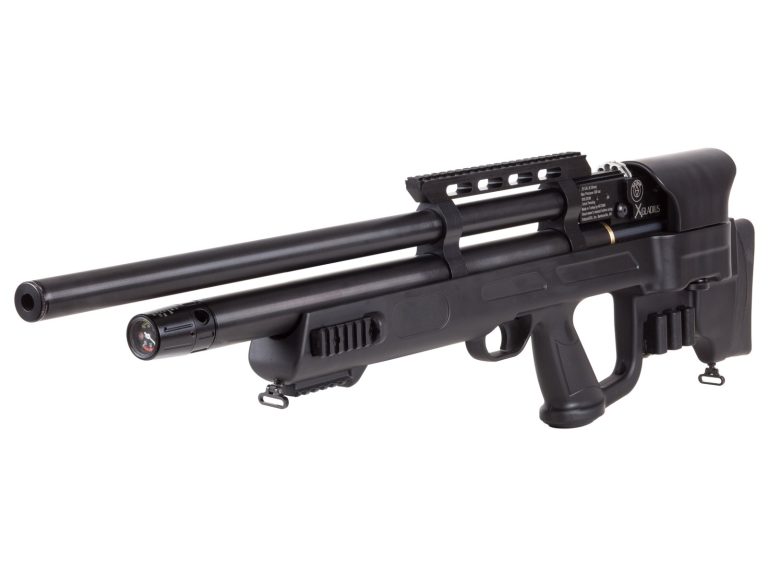
Hatsan Gladius
$700.00
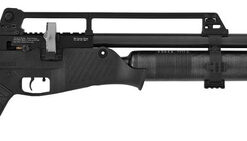
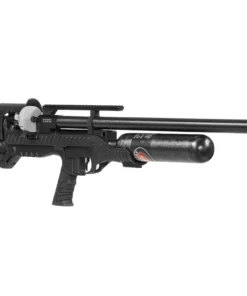
The Hatsan Gladius is a bullpup PCP repeater that comes ready to work right out of the box. Both Gladius variants are in .22 cal — the standard produces 970 fps and the Long version extends the barrel for 1,070 fps along with added accuracy and downrange energy. Each rifle ships with a hard plastic case, four magazines, and a custom sling, so you’re genuinely set up from day one.
- Bullpup PCP repeater in .22 cal — compact and well-balanced
- Standard version at 970 fps; Long version at 1,070 fps with extended barrel
- Includes hard plastic case, 4 magazines, and custom sling (scope sold separately)
- Multi-shot magazine-fed action for fast follow-up shots
The Gladius is one of those complete packages that’s hard to beat for the money — case, mags, and sling included means you’re not chasing accessories after the purchase.
| Caliber | 0.22″, 0.22″ (H-GLADL22) |
|---|---|
| Brand | Hatsan |
Hatsan Gladius – Technical Bullpup PCP Air Rifle
Gladius Engineering, Bullpup PCP Architecture, Precision Factors, and Related Hatsan Terminology
Hatsan
hatsan manufactures a broad catalog of spring-powered, PCP, semi-automatic, bullpup, pistol, and specialty airguns. The Gladius belongs specifically to the company’s bullpup PCP family.
Hatsan Air Rifle
The phrase hatsan air rifle covers many distinct operating systems. The Gladius should therefore be described from its own specifications rather than borrowing data from unrelated models.
Hatsan USA
hatsan usa and hatsanusa refer to Hatsan’s U.S. operation, which currently maintains product manuals and technical support for the Gladius and BullBoss family.
Bullpup Architecture
The bullpup layout positions major action components farther rearward than a conventional rifle configuration. This allows the Gladius to retain a 19.4-inch barrel while keeping overall length to approximately 34.4 inches.
Side-Lever Action
The Gladius uses a manually operated side-lever repeating action. This architecture works with a rotary magazine and remains mechanically distinct from bolt-action or semi-automatic PCP systems.
Detachable 255 cc Air Cylinder
The rifle uses a 255 cc detachable air cylinder rated to a maximum fill pressure of 200 BAR. Hatsan’s manual confirms the same cylinder volume and pressure specification.
Six-Position Power Adjustment
One of the platform’s defining features is its six-position power adjustment dial. Hatsan describes this feature as a way to vary output and manage shot count within the intended operating envelope.
QuietEnergy Shrouded Barrel
The Gladius incorporates Hatsan’s QuietEnergy technology with a fully shrouded barrel and integrated sound-moderating architecture. This is a core factory feature of the platform.
Quattro Trigger
Hatsan lists a fully adjustable two-stage Quattro trigger on the Gladius. Trigger consistency contributes to predictable control, although internal adjustment should remain within manufacturer guidance.
Rotary Magazine
Magazine capacity is 10 shots in .177 and .22 and 9 shots in .25. Hatsan’s current accessories page confirms that the same magazine family fits the Gladius, BullBoss, BT65, Nova, and related models.
Precision Considerations
Practical precision depends on more than barrel design or velocity. Projectile uniformity, barrel condition, sight stability, pressure behavior, trigger consistency, environmental conditions, and mechanical health all influence repeatability.
CARABINA HATSAN PCP BT65 SB ELITE
CARABINA HATSAN PCP BT65 SB ELITE refers to the BT65 family rather than the Gladius. Although both are PCP platforms, their overall layout, handling, dimensions, and stock architecture differ.
Hatsan BT65.25 Specifications
The phrase hatsan bt65.25 specifications concerns the .25-caliber BT65 platform. It should not be substituted for Gladius technical data.
Hatsan Sortie
The hatsan sortie belongs to Hatsan’s semi-automatic PCP family and uses a different operating architecture.
Hatsan Sortie Tact
The hatsan sortie tact is a tactical variation of the Sortie family and should remain separate from Gladius specifications.
Hatsan Sortie Tact Semi-Auto PCP
The phrase hatsan sortie tact semi-auto pcp describes a semi-automatic system, while the Gladius uses a manually operated side-lever action.
Hatsan Sortie Threaded Adapter
The phrase hatsan sortie threaded adapter concerns an accessory for a different platform and is not a defining Gladius feature.
Hatsan Velox
The hatsan velox is a semi-automatic PCP pistol platform rather than a bullpup rifle.
Hatsan Jet
The hatsan jet belongs to Hatsan’s compact PCP family.
Hatsan Jet 2
The hatsan jet 2 is another compact PCP platform and is supported separately from the Gladius in HatsanUSA documentation.
Hatsan Jet I PCP .22 Caliber Pellet Rifle Kit
The phrase hatsan jet i pcp .22 caliber pellet rifle kit refers to a compact .22 PCP configuration and should not be treated as Gladius technical information.
Hatsan Flash
The hatsan flash belongs to Hatsan’s lightweight PCP family.
Hatsan FlashPup QE
The hatsan flashpup qe is another compact bullpup PCP, but its reservoir, weight, magazine, and barrel configuration differ substantially from the Gladius.
Hatsan BullBoss
The hatsan bullboss is closely related enough that Hatsan publishes a combined Gladius and BullBoss manual. Even so, individual specifications should still be checked by exact model.
Hatsan Hercules
The hatsan hercules belongs to Hatsan’s larger-capacity PCP family rather than the compact Gladius platform.
Hatsan Hercules Bully
The hatsan hercules bully is another bullpup-oriented PCP but uses different reservoir and magazine architecture.
Hercules Bully Air Rifle
The phrase hercules bully air rifle therefore refers to a separate PCP model family.
Hatsan Piledriver
The hatsan piledriver is a big-bore, single-shot PCP platform and is mechanically very different from the repeating Gladius.
Hatsan Harpoon
The hatsan harpoon is an arrow-launching PCP system rather than a conventional pellet rifle.
Hatsan Invader
The hatsan invader belongs to Hatsan’s semi-automatic PCP family.
Hatsan Neutron Star
The hatsan neutron star is another PCP model family and should not be presented as a Gladius variant.
Hassan Blitz
hassan blitz is a common misspelling of Hatsan Blitz. The Blitz uses a semi/full-automatic magazine-fed architecture rather than the Gladius side-lever system.
Hatsan Model 95
The hatsan model 95, hatsan 95, hatsan mod 95, and model 95 describe Hatsan’s spring-powered break-barrel family rather than a PCP bullpup.
Hatsan 135
The hatsan 135 is another spring-powered platform and does not use an onboard compressed-air reservoir.
Hatsan AirTact Air Rifle
The hatsan airtact air rifle belongs to the break-barrel category rather than the PCP family.
Hatsan Mod 25
The hatsan mod 25 belongs to Hatsan’s air-pistol line and is supported separately in the manufacturer’s manuals.
Hatsan Refurbished
The phrase hatsan refurbished describes condition rather than model architecture. A refurbished Gladius should be assessed for reservoir condition, seals, barrel integrity, stock mounting, magazine reliability, and service history.
Air Pellet Gun
The phrase air pellet gun broadly describes pellet-firing airguns. The Gladius is more precisely categorized as a magazine-fed bullpup PCP.
CO2 Pellet Rifle
A co2 pellet rifle uses carbon dioxide rather than the Gladius’s compressed-air reservoir. The two systems differ significantly in pressure source and temperature behavior.
H&N Field Target Trophy
h&n field target trophy refers to an airgun pellet family rather than a Hatsan model. Projectile suitability should correspond to the exact caliber and manufacturer recommendations.
Adjustable Cheek Rest
The Gladius uses an elevation-adjustable cheek rest, allowing the stock interface to be adapted to the chosen sighting arrangement.
Adjustable Butt Pad
The butt pad can be adjusted for elevation and fit angle, contributing to ergonomic flexibility.
Anti-Knock System
Hatsan lists an anti-knock mechanism designed to reduce the possibility of unintended valve discharge following impact.
Combination Optics Rail
The receiver incorporates a combination rail designed for 11 mm dovetail and 22 mm mounts.
Accessory Rails
Three Picatinny rails are mounted on the fore-end, providing dedicated accessory interfaces separate from the primary optics rail.
Why the Bullpup Layout Matters
The compact bullpup arrangement allows a full-length barrel to be retained while reducing overall length. This changes balance and handling compared with conventional rifle layouts.
Why the Power Adjustment Matters
The six-position adjustment provides a factory-designed method of altering output within the system’s operating range. It also affects air consumption and therefore the number of useful shots available from a fill.
Why Pressure-System Condition Matters
A 200 BAR pneumatic system contains substantial stored energy. Reservoir damage, persistent leakage, damaged gauges, or suspected valve problems should receive qualified professional attention rather than improvised repair.
Why Precision Depends on More Than Velocity
Manufacturer velocity figures are useful references, but they do not independently determine precision. Barrel condition, projectile quality, stable sights, pressure consistency, trigger behavior, and environmental conditions all contribute.
Overall Technical Perspective
The Hatsan Gladius is best understood as a compact bullpup PCP with a side-lever repeating action, detachable 255 cc air cylinder, 200 BAR fill pressure, six-position power adjustment, 10-shot magazines in .177 and .22, 9-shot magazine in .25, QuietEnergy shrouded barrel, Quattro trigger, adjustable stock components, and combination 11 mm/22 mm optics rail.
Its technical identity should remain clearly separate from Hatsan’s spring-powered, semi-automatic, pistol, arrow-launching, big-bore, and other PCP families. The most meaningful neutral technical considerations are verified manufacturer specifications, reservoir integrity, barrel condition, magazine reliability, seal health, trigger consistency, sight stability, stock condition, and professional servicing of pressure-bearing components.
Engineering Quality, Pneumatic Performance, Precision, Handling, Reliability, and Long-Term Care
A compact bullpup pneumatic platform combines several mechanical systems within a relatively short overall configuration. Its pressure vessel, barrel, receiver, loading assembly, trigger, stock, sighting interface, seals, valves, and external controls must operate together consistently for dependable recreational performance. Unlike traditional spring-driven equipment, compressed-air propulsion does not rely on a large piston accelerating through the action during discharge. As a result, the mechanical cycle can remain comparatively smooth. However, this architecture also makes pressure-system integrity, correct maintenance, and appropriate storage particularly important throughout long-term ownership.
High-Pressure Pneumatic Engineering
The propulsion system stores compressed air within an onboard pressure vessel.
Internal components regulate the controlled release of that stored energy.
Because substantial pressure is involved, the condition of the reservoir and associated components should always receive appropriate attention.
Detachable Reservoir Design
A removable pressure vessel can simplify certain aspects of maintenance and inspection.
However, detachable construction does not reduce the importance of structural integrity.
Threads, seals, connection points, and the vessel itself should remain free from significant damage.
Pressure Management
Predictable operation depends on the pressure system functioning correctly.
The reservoir, valve, gauge, seals, and associated interfaces work together as one pneumatic assembly.
A problem affecting one component can influence overall consistency.
Pressure Monitoring
An integrated indicator provides information about the available air supply.
The gauge should remain readable and physically intact.
Unexpected behavior or visible damage should receive qualified technical assessment.
Pneumatic Consistency
A properly functioning pneumatic system should provide reasonably predictable behavior throughout its intended operating range.
However, changes in pressure can influence performance.
Results should therefore be evaluated under comparable conditions whenever possible.
Smooth Mechanical Character
One notable characteristic of compressed-air propulsion is reduced internal reciprocating movement.
Without a large spring-driven piston accelerating through the action, the firing cycle can remain relatively smooth.
This provides a stable mechanical foundation for controlled recreational target activities.
Bullpup Architecture
A bullpup configuration places major action components farther toward the rear.
This arrangement allows a useful barrel length to be incorporated without requiring the same overall dimensions as a conventional layout.
The resulting balance can feel noticeably different.
Compact Handling
Reduced overall length can make a bullpup configuration easier to manage within controlled environments where available space is limited.
Nevertheless, compact dimensions do not necessarily mean low weight.
Overall handling depends on both dimensions and mass distribution.
Weight Distribution
The position of the pressure vessel, barrel, receiver, and stock determines the center of gravity.
A rearward action changes how weight is distributed compared with traditional layouts.
Individual users may perceive this balance differently.
Synthetic Stock Construction
Synthetic furniture provides structural support while requiring relatively straightforward maintenance.
It generally tolerates ordinary humidity changes effectively.
However, extreme temperatures, aggressive chemicals, and significant physical impact should still be avoided.
Adjustable Cheek Support
An adjustable cheek interface can help accommodate differences in body proportions and sighting configurations.
Once positioned, it should remain mechanically secure.
Developing looseness can reduce comfort and stability.
Adjustable Shoulder Support
An adjustable rear contact point can help improve fit.
Secure positioning remains important after any adjustment.
Adjustment mechanisms should be periodically inspected for unusual movement or wear.
Grip Ergonomics
Grip geometry influences how naturally the platform can be supported.
A comfortable position can reduce unnecessary muscular tension during longer recreational sessions.
Individual hand size and preference naturally affect perceived comfort.
Side-Lever Operation
A side-mounted operating mechanism provides the mechanical interface for cycling the repeating action.
Movement should remain predictable and smooth.
Unexpected resistance or scraping can indicate contamination, wear, or another mechanical concern.
Loading-System Reliability
A repeating platform depends on correct alignment between several components.
The loading mechanism should operate consistently without excessive force.
Changes in mechanical behavior should prompt inspection rather than continued forced operation.
Magazine Condition
A rotary feeding component should remain clean, structurally sound, and correctly aligned.
Damage or contamination can interfere with reliable operation.
Replacement components should correspond to the exact mechanical configuration.
Barrel Engineering
A precision-rifled barrel provides rotational stabilization to an appropriate projectile.
However, manufacturing quality represents only one factor in practical performance.
Barrel condition, ammunition consistency, sight stability, and mechanical alignment also contribute.
Barrel Stability
The barrel should remain securely positioned.
Substantial impact can potentially affect alignment or surrounding components.
A protective case helps reduce accidental damage during transportation.
Bore Preservation
The internal bore should remain free from obstruction and significant corrosion.
Cleaning should respond to actual need.
Excessively aggressive maintenance can introduce unnecessary wear.
Muzzle Protection
The muzzle deserves careful protection because physical damage can influence consistency.
Equipment should not be positioned where the muzzle can easily contact hard surfaces.
Transportation should provide appropriate protection.
Practical Precision
Precision is produced by several interacting variables rather than one headline specification.
Barrel integrity, projectile uniformity, pressure behavior, trigger consistency, sight alignment, environmental conditions, and user technique all influence repeatability.
Repeatable Performance
Consistent results under similar conditions provide a more meaningful indication of mechanical quality than isolated exceptional results.
Large unexplained changes deserve investigation.
Simple external causes should be considered before assuming an internal problem.
Ammunition Uniformity
Correctly sized and consistently manufactured projectiles provide a dependable basis for evaluating performance.
Damaged or contaminated ammunition introduces additional variables.
Appropriate storage helps preserve physical condition.
Trigger Characteristics
A predictable two-stage trigger system can provide clear mechanical feedback.
The trigger should maintain familiar movement throughout normal ownership.
Unexpected changes can indicate that inspection is appropriate.
Safety Mechanisms
Mechanical safeguards provide additional protection but should never replace responsible handling.
The equipment should always be treated according to appropriate safety practices.
Any suspected malfunction deserves attention before continued recreational use.
Power Management
Factory-designed adjustment can influence pneumatic consumption and overall operating characteristics.
Different settings may therefore produce different levels of air usage.
Any adjustment should remain within the intended manufacturer-designed operating system.
Sound Management
A shrouded barrel surrounds part or all of the barrel structure.
This arrangement can influence the acoustic character of discharge while also protecting internal barrel components.
Local regulations should always be respected.
Sight Stability
Sighting equipment should remain securely mounted.
Loose components can create inconsistent alignment even when the barrel and pneumatic system remain healthy.
Routine inspection can identify these relatively straightforward problems.
Mounting Interfaces
Accessory mounting surfaces should remain structurally sound.
Compatible hardware should fit correctly without excessive force.
Overtightening or unsuitable components can damage mounting interfaces.
Seal Condition
Seals retain compressed air at critical points throughout the system.
Age, pressure cycles, temperature, contamination, and storage conditions can gradually affect them.
Persistent leakage can indicate that servicing is required.
Valve Reliability
Internal valves regulate compressed-air movement.
Their condition contributes directly to predictable pneumatic operation.
Significant internal problems should receive qualified technical attention.
Exterior Maintenance
Routine maintenance should emphasize preservation rather than unnecessary disassembly.
Exterior surfaces can be kept clean and dry using materials appropriate for their construction.
Aggressive chemicals should generally be avoided.
Corrosion Prevention
Metal components can gradually deteriorate when exposed to persistent moisture.
Equipment should therefore remain dry during storage.
Early surface deterioration is easier to address than advanced corrosion.
Routine Inspection
Periodic inspection can identify developing problems without requiring complete disassembly.
The barrel, stock, reservoir exterior, gauge, magazine, loading mechanism, sights, and mounting hardware can all be visually assessed.
Storage Environment
Secure, dry, temperature-stable storage supports long-term preservation.
The equipment should remain protected from unauthorized access and significant environmental extremes.
Pressure-system storage procedures should follow manufacturer guidance.
Transportation Care
A suitable protective case can reduce scratches, vibration, and accidental impact.
The equipment should remain appropriately secured during transportation.
Applicable transportation requirements should always be followed.
Professional Servicing
High-pressure pneumatic equipment requires specialized technical knowledge.
Reservoir concerns, significant leakage, damaged gauges, valve problems, or other internal pressure-system issues should receive qualified professional attention.
Improvised repairs can introduce serious hazards.
Overall Engineering Assessment
A well-maintained bullpup pneumatic platform can provide compact dimensions, stable construction, smooth mechanical operation, repeating functionality, adjustable ergonomics, and predictable recreational performance. Its compressed-air architecture minimizes the substantial reciprocating movement associated with traditional spring-driven systems, while its rearward action arrangement allows useful barrel length to be retained within a relatively compact overall format.
Long-term reliability ultimately depends on maintaining the complete mechanical system. Reservoir integrity, healthy seals, consistent valve operation, barrel condition, magazine reliability, trigger predictability, secure sights, stable furniture, suitable ammunition, careful transportation, and appropriate storage all contribute. Routine inspection can identify developing concerns early, while qualified professional servicing provides the appropriate response whenever pressure-bearing or complex internal components require attention.
Engineering Quality, Pneumatic Performance, Precision, Handling, Reliability, and Long-Term Care
A compact bullpup pneumatic platform combines several mechanical systems within a relatively short overall configuration. Its pressure vessel, barrel, receiver, loading assembly, trigger, stock, sighting interface, seals, valves, and external controls must operate together consistently for dependable recreational performance. Unlike traditional spring-driven equipment, compressed-air propulsion does not rely on a large piston accelerating through the action during discharge. As a result, the mechanical cycle can remain comparatively smooth. However, this architecture also makes pressure-system integrity, correct maintenance, and appropriate storage particularly important throughout long-term ownership.
High-Pressure Pneumatic Engineering
The propulsion system stores compressed air within an onboard pressure vessel.
Internal components regulate the controlled release of that stored energy.
Because substantial pressure is involved, the condition of the reservoir and associated components should always receive appropriate attention.
Detachable Reservoir Design
A removable pressure vessel can simplify certain aspects of maintenance and inspection.
However, detachable construction does not reduce the importance of structural integrity.
Threads, seals, connection points, and the vessel itself should remain free from significant damage.
Pressure Management
Predictable operation depends on the pressure system functioning correctly.
The reservoir, valve, gauge, seals, and associated interfaces work together as one pneumatic assembly.
A problem affecting one component can influence overall consistency.
Pressure Monitoring
An integrated indicator provides information about the available air supply.
The gauge should remain readable and physically intact.
Unexpected behavior or visible damage should receive qualified technical assessment.
Pneumatic Consistency
A properly functioning pneumatic system should provide reasonably predictable behavior throughout its intended operating range.
However, changes in pressure can influence performance.
Results should therefore be evaluated under comparable conditions whenever possible.
Smooth Mechanical Character
One notable characteristic of compressed-air propulsion is reduced internal reciprocating movement.
Without a large spring-driven piston accelerating through the action, the firing cycle can remain relatively smooth.
This provides a stable mechanical foundation for controlled recreational target activities.
Bullpup Architecture
A bullpup configuration places major action components farther toward the rear.
This arrangement allows a useful barrel length to be incorporated without requiring the same overall dimensions as a conventional layout.
The resulting balance can feel noticeably different.
Compact Handling
Reduced overall length can make a bullpup configuration easier to manage within controlled environments where available space is limited.
Nevertheless, compact dimensions do not necessarily mean low weight.
Overall handling depends on both dimensions and mass distribution.
Weight Distribution
The position of the pressure vessel, barrel, receiver, and stock determines the center of gravity.
A rearward action changes how weight is distributed compared with traditional layouts.
Individual users may perceive this balance differently.
Synthetic Stock Construction
Synthetic furniture provides structural support while requiring relatively straightforward maintenance.
It generally tolerates ordinary humidity changes effectively.
However, extreme temperatures, aggressive chemicals, and significant physical impact should still be avoided.
Adjustable Cheek Support
An adjustable cheek interface can help accommodate differences in body proportions and sighting configurations.
Once positioned, it should remain mechanically secure.
Developing looseness can reduce comfort and stability.
Adjustable Shoulder Support
An adjustable rear contact point can help improve fit.
Secure positioning remains important after any adjustment.
Adjustment mechanisms should be periodically inspected for unusual movement or wear.
Grip Ergonomics
Grip geometry influences how naturally the platform can be supported.
A comfortable position can reduce unnecessary muscular tension during longer recreational sessions.
Individual hand size and preference naturally affect perceived comfort.
Side-Lever Operation
A side-mounted operating mechanism provides the mechanical interface for cycling the repeating action.
Movement should remain predictable and smooth.
Unexpected resistance or scraping can indicate contamination, wear, or another mechanical concern.
Loading-System Reliability
A repeating platform depends on correct alignment between several components.
The loading mechanism should operate consistently without excessive force.
Changes in mechanical behavior should prompt inspection rather than continued forced operation.
Magazine Condition
A rotary feeding component should remain clean, structurally sound, and correctly aligned.
Damage or contamination can interfere with reliable operation.
Replacement components should correspond to the exact mechanical configuration.
Barrel Engineering
A precision-rifled barrel provides rotational stabilization to an appropriate projectile.
However, manufacturing quality represents only one factor in practical performance.
Barrel condition, ammunition consistency, sight stability, and mechanical alignment also contribute.
Barrel Stability
The barrel should remain securely positioned.
Substantial impact can potentially affect alignment or surrounding components.
A protective case helps reduce accidental damage during transportation.
Bore Preservation
The internal bore should remain free from obstruction and significant corrosion.
Cleaning should respond to actual need.
Excessively aggressive maintenance can introduce unnecessary wear.
Muzzle Protection
The muzzle deserves careful protection because physical damage can influence consistency.
Equipment should not be positioned where the muzzle can easily contact hard surfaces.
Transportation should provide appropriate protection.
Practical Precision
Precision is produced by several interacting variables rather than one headline specification.
Barrel integrity, projectile uniformity, pressure behavior, trigger consistency, sight alignment, environmental conditions, and user technique all influence repeatability.
Repeatable Performance
Consistent results under similar conditions provide a more meaningful indication of mechanical quality than isolated exceptional results.
Large unexplained changes deserve investigation.
Simple external causes should be considered before assuming an internal problem.
Ammunition Uniformity
Correctly sized and consistently manufactured projectiles provide a dependable basis for evaluating performance.
Damaged or contaminated ammunition introduces additional variables.
Appropriate storage helps preserve physical condition.
Trigger Characteristics
A predictable two-stage trigger system can provide clear mechanical feedback.
The trigger should maintain familiar movement throughout normal ownership.
Unexpected changes can indicate that inspection is appropriate.
Safety Mechanisms
Mechanical safeguards provide additional protection but should never replace responsible handling.
The equipment should always be treated according to appropriate safety practices.
Any suspected malfunction deserves attention before continued recreational use.
Power Management
Factory-designed adjustment can influence pneumatic consumption and overall operating characteristics.
Different settings may therefore produce different levels of air usage.
Any adjustment should remain within the intended manufacturer-designed operating system.
Sound Management
A shrouded barrel surrounds part or all of the barrel structure.
This arrangement can influence the acoustic character of discharge while also protecting internal barrel components.
Local regulations should always be respected.
Sight Stability
Sighting equipment should remain securely mounted.
Loose components can create inconsistent alignment even when the barrel and pneumatic system remain healthy.
Routine inspection can identify these relatively straightforward problems.
Mounting Interfaces
Accessory mounting surfaces should remain structurally sound.
Compatible hardware should fit correctly without excessive force.
Overtightening or unsuitable components can damage mounting interfaces.
Seal Condition
Seals retain compressed air at critical points throughout the system.
Age, pressure cycles, temperature, contamination, and storage conditions can gradually affect them.
Persistent leakage can indicate that servicing is required.
Valve Reliability
Internal valves regulate compressed-air movement.
Their condition contributes directly to predictable pneumatic operation.
Significant internal problems should receive qualified technical attention.
Exterior Maintenance
Routine maintenance should emphasize preservation rather than unnecessary disassembly.
Exterior surfaces can be kept clean and dry using materials appropriate for their construction.
Aggressive chemicals should generally be avoided.
Corrosion Prevention
Metal components can gradually deteriorate when exposed to persistent moisture.
Equipment should therefore remain dry during storage.
Early surface deterioration is easier to address than advanced corrosion.
Routine Inspection
Periodic inspection can identify developing problems without requiring complete disassembly.
The barrel, stock, reservoir exterior, gauge, magazine, loading mechanism, sights, and mounting hardware can all be visually assessed.
Storage Environment
Secure, dry, temperature-stable storage supports long-term preservation.
The equipment should remain protected from unauthorized access and significant environmental extremes.
Pressure-system storage procedures should follow manufacturer guidance.
Transportation Care
A suitable protective case can reduce scratches, vibration, and accidental impact.
The equipment should remain appropriately secured during transportation.
Applicable transportation requirements should always be followed.
Professional Servicing
High-pressure pneumatic equipment requires specialized technical knowledge.
Reservoir concerns, significant leakage, damaged gauges, valve problems, or other internal pressure-system issues should receive qualified professional attention.
Improvised repairs can introduce serious hazards.
Overall Engineering Assessment
A well-maintained bullpup pneumatic platform can provide compact dimensions, stable construction, smooth mechanical operation, repeating functionality, adjustable ergonomics, and predictable recreational performance. Its compressed-air architecture minimizes the substantial reciprocating movement associated with traditional spring-driven systems, while its rearward action arrangement allows useful barrel length to be retained within a relatively compact overall format.
Long-term reliability ultimately depends on maintaining the complete mechanical system. Reservoir integrity, healthy seals, consistent valve operation, barrel condition, magazine reliability, trigger predictability, secure sights, stable furniture, suitable ammunition, careful transportation, and appropriate storage all contribute. Routine inspection can identify developing concerns early, while qualified professional servicing provides the appropriate response whenever pressure-bearing or complex internal components require attention.
Be the first to review “Hatsan Gladius”
Related products
Hatsan
Hatsan
Reviews
There are no reviews yet.