
SPA Mercury AP9000 Compact Bottle
$300.00
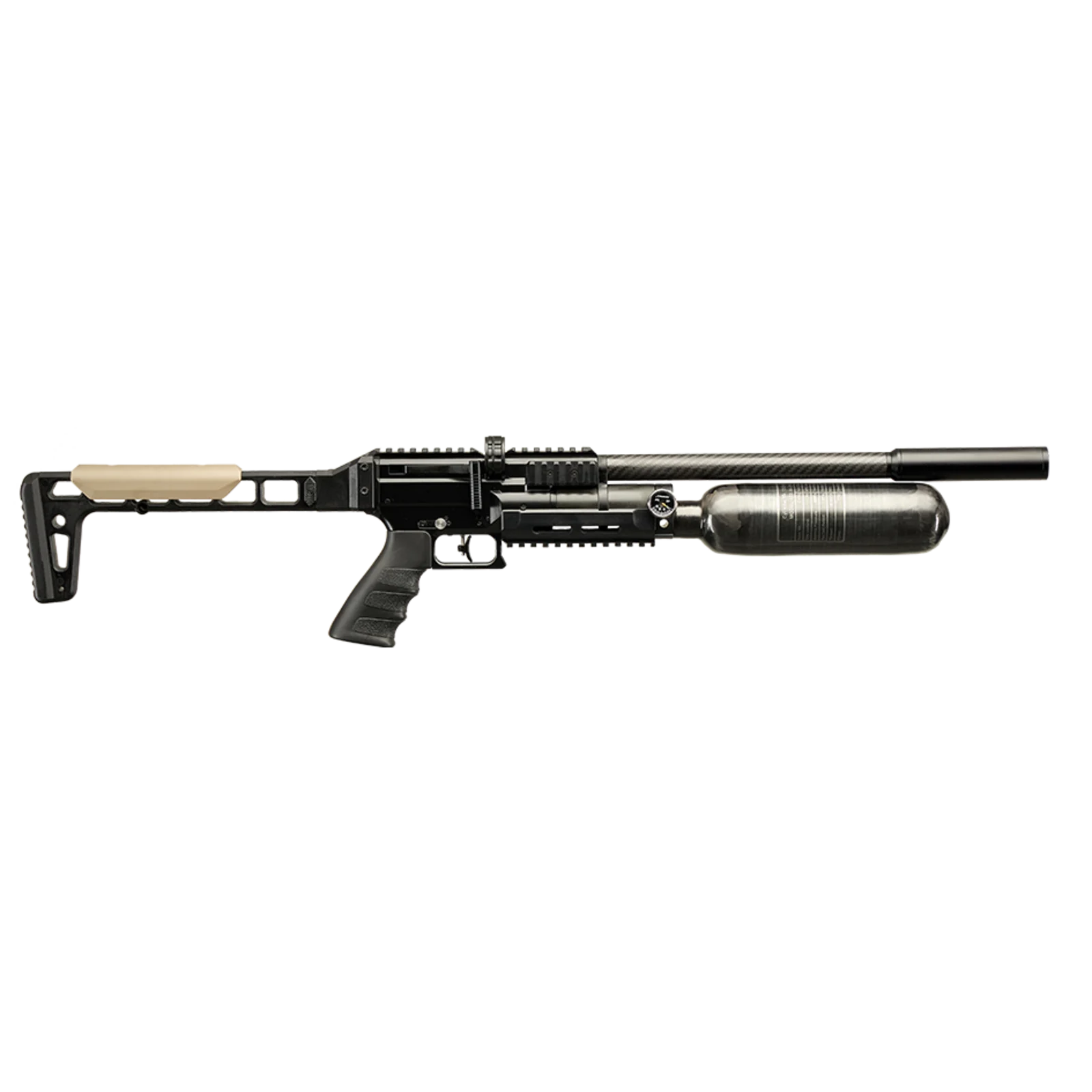
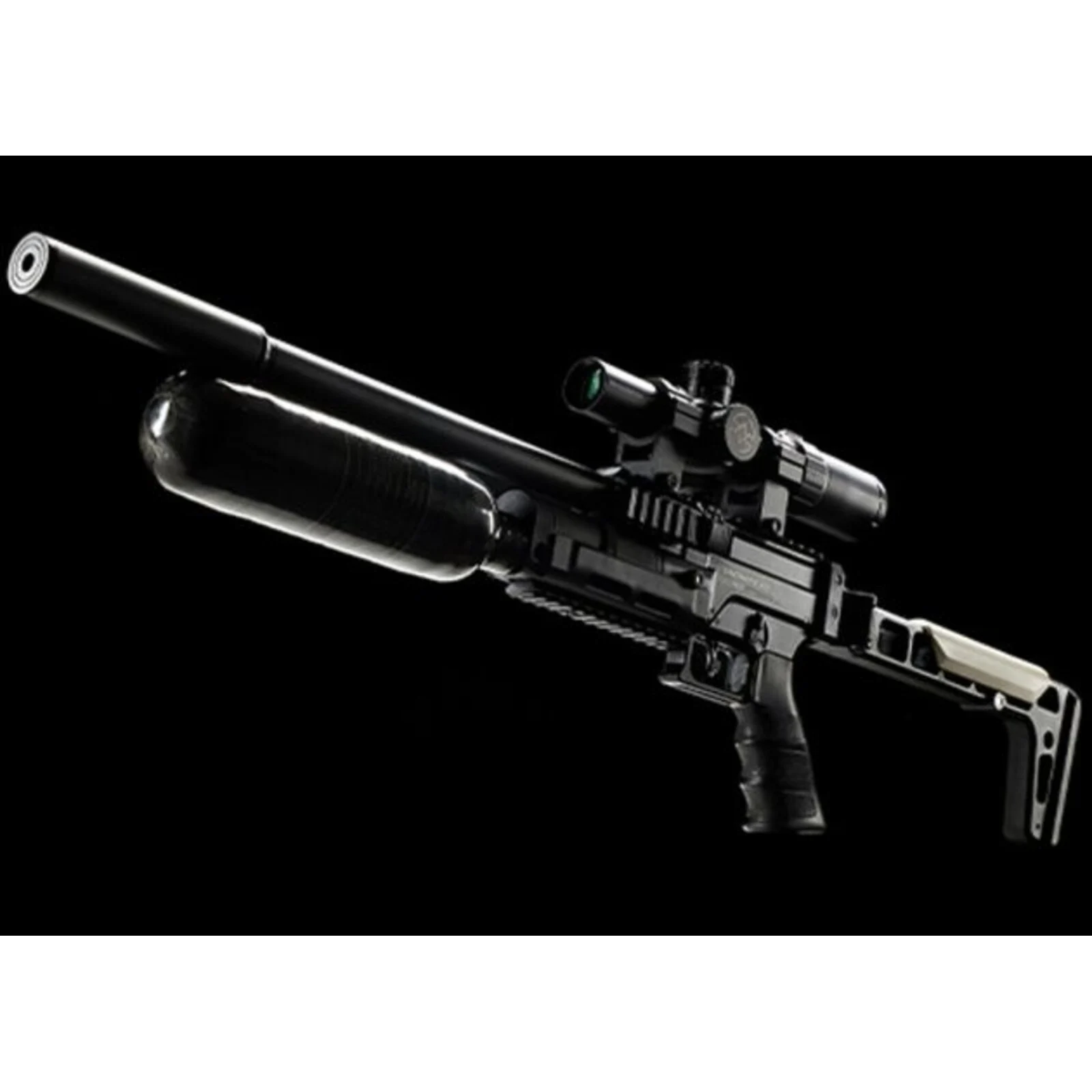
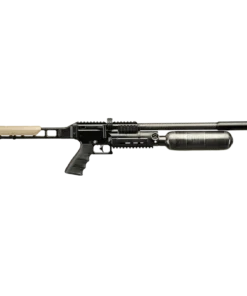
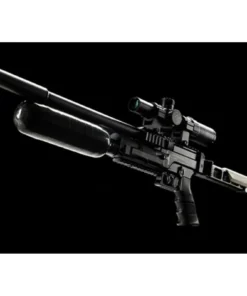
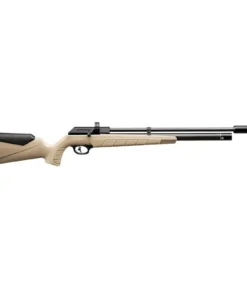
The Snowpeak Mercury (previously announced as the AP900/AP100) is a PCP air rifle that excels in versatility.
This version, featuring a 310mm barrel and a 350cc air reservoir, offers optimal power and maximum shots per fill!
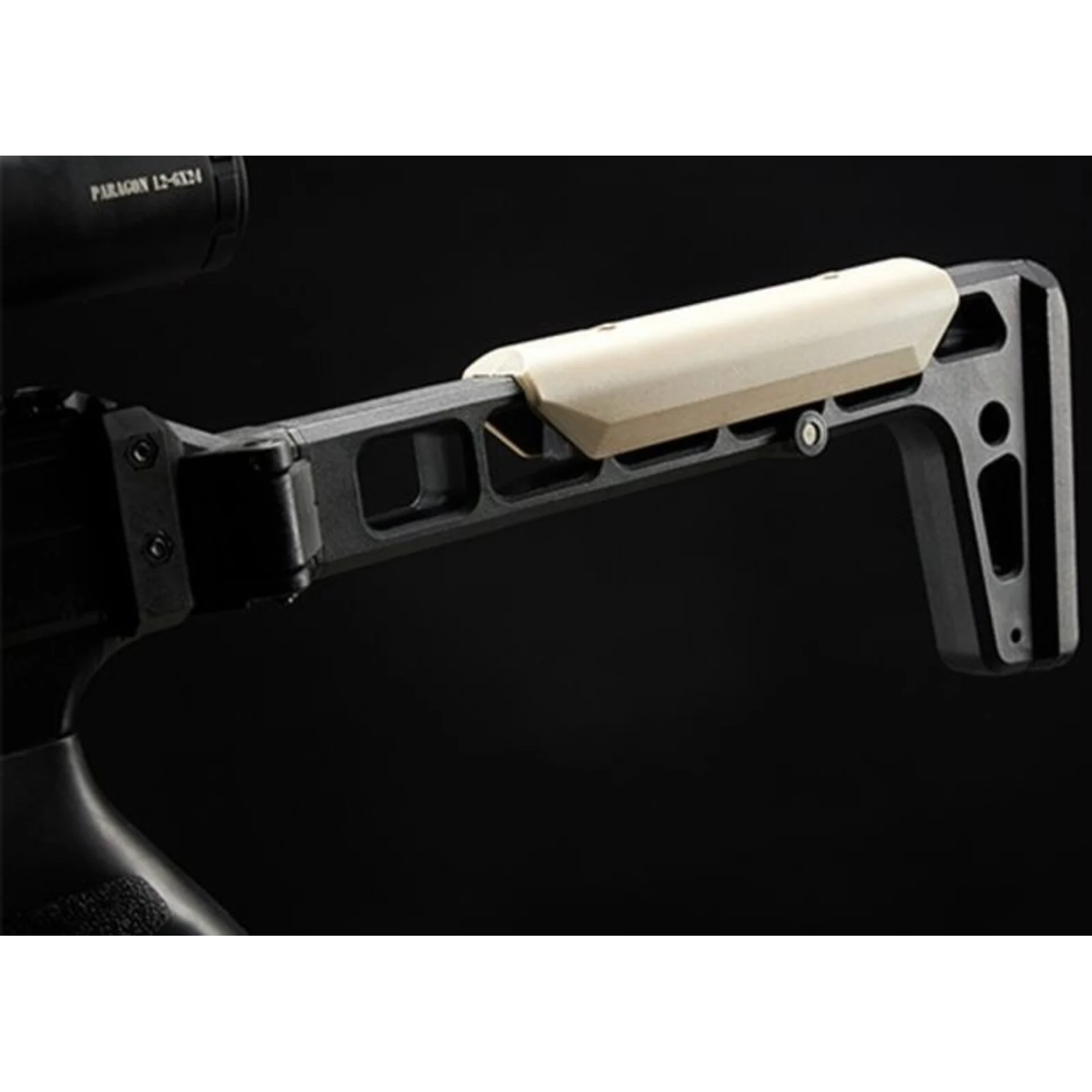
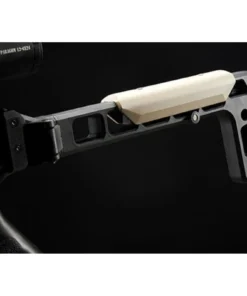
The folding stock allows the overall length to be reduced from 875mm to just 610mm, making transport and storage significantly easier.
With a weight of approximately 1.6kg, this carbine combines easy handling with a robust construction.
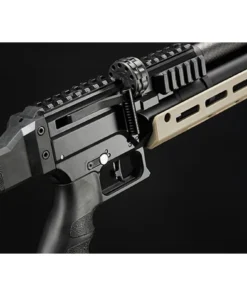
The trigger is adjustable to suit personal preference, and the manual safety contributes to controlled and secure operation.
Thanks to its built-in regulator, the Mercury delivers consistent pressure with every shot, resulting in excellent accuracy.
Accessories
The Mercury can be easily expanded with accessories and optics thanks to its modular design.
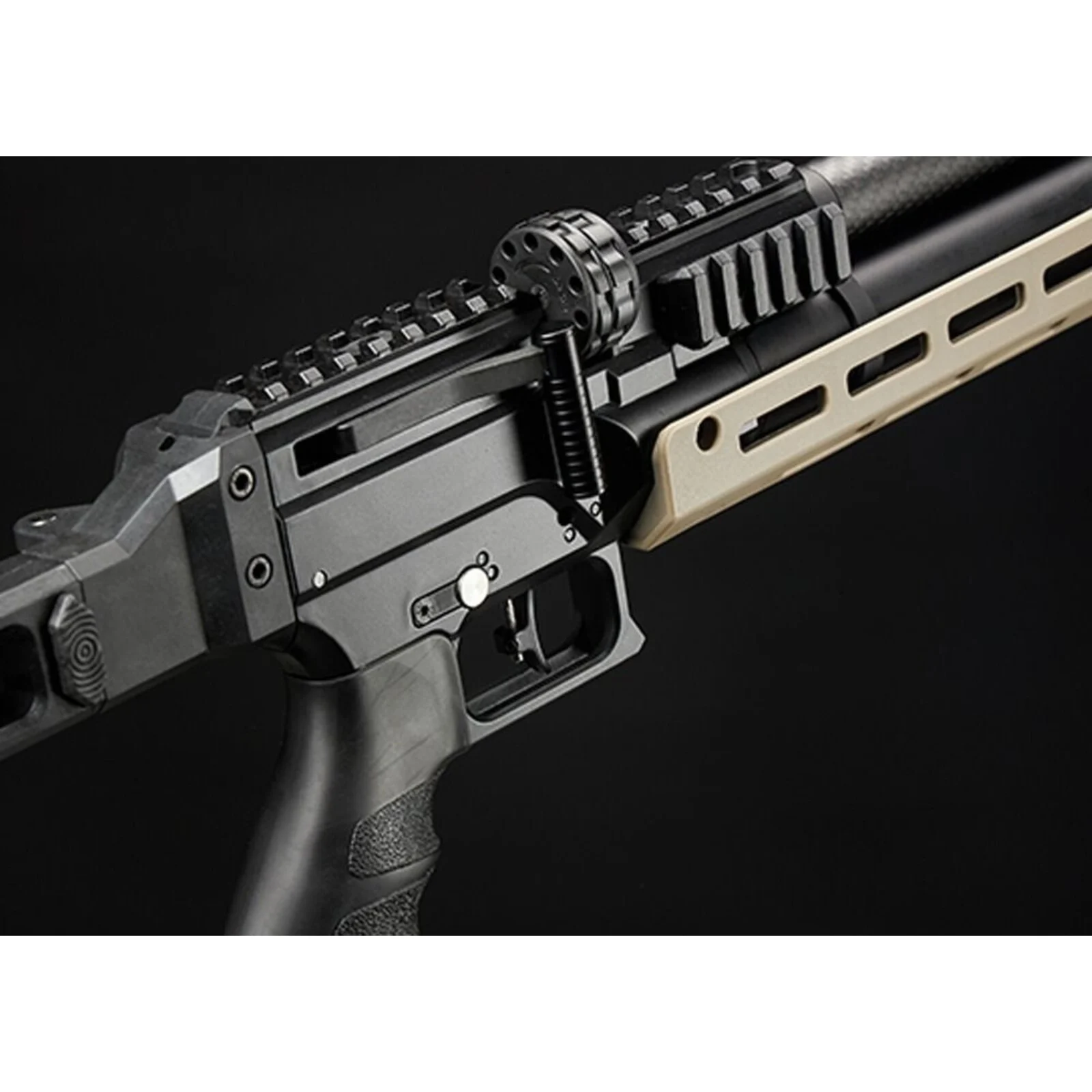
A Picatinny/Weaver rail on top allows for mounting optics such as a good scope.
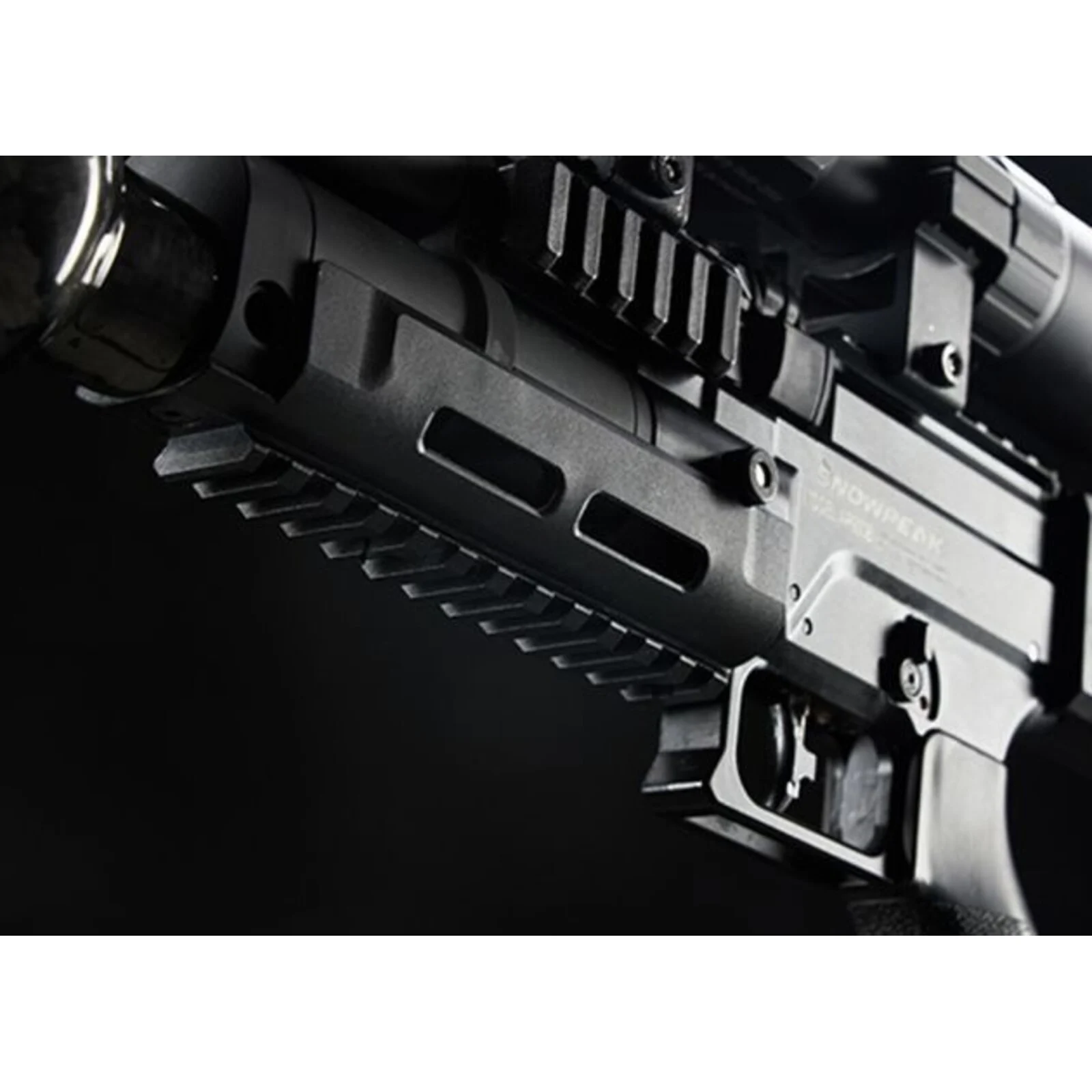
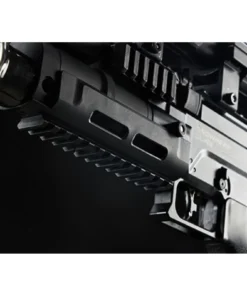
The forend features M-LOK slots on the bottom and sides for attaching bipods, lights, lasers, or grips.
The stock is mounted on a Picatinny/1913 rail, allowing it to be swapped for other stocks that use the same mounting system.
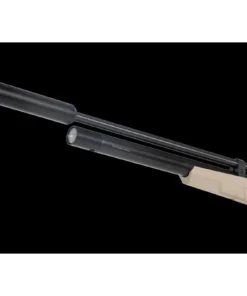
A suppressor is fitted to the barrel, and the Mercury accepts any suppressor with a 1/2×20 UNF thread.
Filling the Mercury
The Mercury is supplied with a fill probe compatible with a female Foster quick‑connect coupling (not included).
This PCP air rifle can be filled up to 250 bar using a high‑pressure air tank or compressor.
| Power source: | Pre compressed pneumatic (PCP) |
| Caliber: | 4.5mm (.177) | 5.5mm (.22) | 6.35mm (.25) |
| Muzzle energy: | 20 | 31 | 38 joules |
| Fill pressure: | 250 bar |
| Air capacity: | 350cc |
| Regulator: | Yes |
| Operating system: | Sidelever |
| Magazine: | 10 | 8 shots |
| Max. projectile length: | 10.9mm |
| Optic mounting: | Picatinny/weaver |
| Weight: | 2.15kg |
| Length: | 875mm |
| Barrel length: | 310mm |
| Muzzle: | 1/2×20 UNF threaded |
| Accessories: | 2x magazine, fill probe (foster) |
SPA Mercury AP9000 Compact Bottle – Compact PCP Power, Regulated Precision and Tactical Versatility
SPA Mercury AP9000 Compact Bottle Overview
Compact PCP Engineering for Practical Performance
The SPA Mercury AP9000 Compact Bottle combines a short 310 mm barrel with a 350 cc bottle reservoir, creating a manoeuvrable platform with useful air capacity. The compact configuration is designed for shooters who value controlled handling, smooth side-lever operation and consistent pneumatic performance without the length of a full-size rifle. Current retailer information lists the compact bottle model primarily in 6.35 mm, although calibre and regional availability should always be confirmed before purchase.
This model should not be confused with the longer AP1000. The AP900 family uses the shorter barrel, while AP1000 variants use a 500 mm barrel. Published Mercury range information also distinguishes tube and bottle configurations, with the bottle version offering greater air capacity.
What Is a PCP Airgun?
For shoppers asking what is a pcp airgun, PCP means pre-charged pneumatic. Compressed air is stored inside the onboard bottle before shooting begins. When the trigger releases the firing valve, a measured volume of air propels the pellet through the barrel.
This operating method gives the pcp pellet rifle a smooth firing cycle with minimal mechanical recoil. Therefore, the shooter can maintain a steadier sight picture and achieve more consistent follow-through. The regulator further controls the pressure supplied to the valve, helping the rifle maintain predictable velocity across its useful pressure range.
Snowpeak Airguns and SPA Manufacturing
SPA, Artemis and snowpeak airguns names often appear across different international markets. The official manufacturer states that Snowpeak began producing shooting equipment in 1976 and now offers spring-powered, PCP and CO₂ platforms.
Searches involving snowpeak sports, snowpeaks, snow peak equipment, snow peak customer service and snow peak brand origin may therefore lead to different distributors. Buyers should contact the authorised airgun retailer in their country for warranty service, replacement components and regional power specifications.
The manufacturer must not be confused with the Japanese outdoor company that sells camping products under a similar name.
Snowpeak AP900 and AP900B PCP Air Rifle
The snowpeak ap900 name relates directly to the shorter Mercury platform. The ap900b pcp air rifle description generally identifies the compact bottle version, which combines the short barrel with a larger bottle rather than the smaller tube reservoir.
Compared with the full-size model, the compact configuration is easier to transport and manoeuvre. However, the reduced barrel length may produce different velocity and air-efficiency characteristics. Buyers should compare calibre, reservoir construction, magazine capacity, pressure rating and included accessories before ordering.
Snowpeak PP750 and PP750L PCP Air Pistol
The snowpeak pp750, pp750, snow peak pp750, Snowpeak PP750L and Snowpeak PP750L PCP Air Pistol belong to a compact pistol-carbine category. These models offer a different grip, stock and barrel arrangement from the Mercury.
A Snowpeak Air Pistol, PCP Pistol, Airgun Pistol or High power PCP air pistol may appeal to shooters who prioritise very compact dimensions. Customers searching Snowpeak PP750L PCP Air Pistol for sale should understand that the AP9000 provides a larger bottle, rifle-style handguard and more stable shoulder-supported configuration.
Snow Peak PP20 and Regional Pistol Models
The terms snow peak pp20 and snowpeak pp20 identify another pistol-oriented platform. Likewise, pistolet pcp arcea-snowpeak onix sport reflects regional naming used by some European distributors.
Although these products share pneumatic technology, they differ in reservoir capacity, ergonomics, barrel length and intended shooting posture. Therefore, magazines, seals and other parts should never be assumed interchangeable.
Snowpeak P35 and P35X Comparisons
The snowpeak p35, p35, snowpeak p35x, p35x, p35x pcp and pcp p 35 belong to Snowpeak’s bullpup range. Their rearward action placement reduces overall length without using the same folding-stock architecture as the Mercury.
A snowpeak p35 vs p35x comparison usually examines upgrades in stock design, adjustment and handling. In contrast, the AP9000 uses tactical furniture and an exposed bottle layout. Consequently, it may appeal more strongly to shooters who prefer adjustable stock geometry and modular accessory placement.
PR900 Gen 3 and Lightweight Sporting Alternatives
The pr900 gen 3 offers a lighter and more traditional sporting profile. It generally suits users who prefer a slim cylinder, straightforward stock and familiar rifle balance.
The AP9000 Compact Bottle is more tactical in appearance and offers substantially greater onboard air volume. Therefore, it is better suited to buyers who prioritise shot capacity and modular handling over minimal weight.
Snowpeak M25 and M50 Rifle Options
The snowpeak m25, m25 rifle, m25 weapon and m50 rifle search phrases refer to separate models within the larger catalogue. Although the word “weapon” is sometimes used online, the Mercury should be marketed and operated as regulated sporting equipment under local law.
Different models may use incompatible magazines, fill probes, stocks and internal components. Exact model identification is essential when ordering replacement parts.
Snowpeak M60 and M60B
The snowpeak m60 and snowpeak m60b are separate pneumatic platforms. The question how much did the m60 weigh may also return information about an unrelated military firearm. Buyers should therefore include the Snowpeak name and full model designation when searching.
The compact Mercury is designed around manageable overall dimensions, a folding stock and a relatively short barrel rather than the architecture of the other M-series products.
Snowpeak Max and Price Research
The snowpeak max and snowpeak max 1 price phrases are commonly used by shoppers comparing high-capacity models. However, purchase decisions should consider more than initial cost.
Bottle volume, regulator consistency, barrel length, calibre, magazine quantity, included fill probe and warranty support all affect long-term value. The AP9000 stands out by combining a compact action with a larger reservoir.
HP300 and T Rex 6000 Filling Searches
The terms hp300 and t rex 6000 may identify compressors or unrelated products depending on the market. Any compressor connected to the rifle must deliver clean, dry air at the correct pressure.
The filling hose, probe, filter and bleed valve must also match the rifle. Ordinary workshop compressors and oxygen cylinders are unsafe and unsuitable.
Pellet 9mm and Correct Ammunition
The phrase pellet 9mm refers to large-bore ammunition and should not automatically be associated with this model. The compact bottle listing currently identifies a 6.35 mm version, while the wider Mercury range may be offered in other calibres.
Only ammunition matching the marked barrel calibre should be loaded. Pellet weight and head design should then be tested at a controlled range to determine which option produces the best groups.
Air Gun Accessories
Useful air gun accessories include a compatible optic, secure rail mounts, spare magazines, a certified charging source, approved pellets and a protective case.
Accessories should remain lightweight so they do not compromise the rifle’s compact balance. Nothing should obstruct the folding stock, side lever, magazine or pressure bottle.
Snowfall Gun Search Clarification
The phrase snowfall gun appears to be an unrelated or mistaken search term. Using the complete SPA Mercury AP9000 Compact Bottle designation will produce more relevant results for specifications, magazines, fill probes and service parts.
Why Choose the SPA Mercury AP9000 Compact Bottle?
The strongest reasons to select this model are its short barrel, useful bottle capacity, regulated air delivery, folding stock and smooth multi-shot action. It provides the manoeuvrability of a compact carbine while retaining enough stored air for productive shooting sessions.
It should be used only at an authorised range or on private property where shooting is lawful and a secure backstop is installed. With suitable ammunition, clean compressed air, correct optic setup and responsible maintenance, the SPA Mercury AP9000 Compact Bottle can provide stable handling, efficient operation and dependable sporting precision.
Design, Performance, Handling and Practical Ownership
Compact Bottle Configuration
The compact bottle arrangement gives the platform a practical balance between stored air capacity and manageable overall dimensions. Instead of using a long front cylinder, the design places a larger reservoir beneath the action, helping the rifle remain comparatively short while still supporting extended shooting sessions.
This configuration is useful for shooters who value portability, efficient storage and easy movement around benches or authorised field positions. However, the bottle adds weight beneath the front section, so the supporting hand should rest where the rifle feels naturally balanced.
The bottle should be inspected before every session. Deep scratches, impact marks, looseness or visible damage require professional examination before filling.
Folding and Adjustable Stock
The folding stock reduces the rifle’s storage length and makes transportation more convenient. When unfolded, it provides a stable shoulder contact point that supports better sight alignment and trigger control.
Before firing, the stock must be fully extended and locked securely. Any movement at the hinge or adjustment mechanism can affect accuracy and safe handling.
Length adjustment allows the shooter to create a comfortable distance between the shoulder and trigger. The correct position should permit natural trigger-finger placement without forcing the wrist, elbow or neck into an uncomfortable angle.
Short-Barrel Handling
The shorter barrel supports quick movement and helps prevent the front of the rifle from feeling excessively long. This makes the platform easier to manage from seated, standing or supported positions.
A shorter barrel does not automatically reduce accuracy. Precision depends on barrel manufacturing, pellet compatibility, pressure consistency, optic alignment and shooting technique.
The muzzle must remain protected from impact because damage near the crown can disturb pellet flight. The rifle should never be rested directly on the muzzle or carried by the barrel assembly.
Regulated Air Delivery
The regulator controls the pressure supplied to the firing valve. As a result, the rifle can produce more consistent shot behaviour through the useful portion of the reservoir’s charge.
Consistent pressure supports predictable velocity and helps reduce vertical movement within shot groups. This is especially important when shooting at changing distances, where small velocity differences can alter the point of impact.
The regulator should not be adjusted casually. Incorrect internal changes may reduce efficiency, create unstable performance or place unnecessary stress on components.
Filling the Reservoir Safely
Only clean, dry compressed air should be introduced into the reservoir. Suitable filling methods may include a certified cylinder, high-pressure manual pump or purpose-built compressor.
Before connection, the probe, hose and filling port should be inspected for dirt, moisture and damaged seals. Contamination can enter the internal system and interfere with valves or pressure-control components.
Air should be introduced slowly while the gauge is monitored. Rapid filling creates heat, which may produce a temporary pressure reading that changes after cooling.
The approved maximum pressure must never be exceeded.
Bleeding and Disconnecting
After filling is complete, pressure trapped inside the charging hose must be released through the bleed valve.
The valve should be opened carefully. A brief release of air is expected, but the shooter should keep hands and face away from the connector.
Once the line has been depressurised, the probe can be removed gently. Pulling against a pressurised connection may damage seals or cause sudden movement.
The probe should then be stored in a clean container or protective cover.
Monitoring Pressure During Use
The gauge should be checked before shooting and periodically throughout the session.
A gradual reduction is normal as shots are fired. However, a sudden drop may indicate a leak, valve issue or damaged seal.
The owner should record the starting pressure and number of accurate shots obtained before performance begins to decline. After several sessions, this information will reveal the rifle’s most efficient operating range.
Continuing to fire at very low pressure may cause unstable velocity or weak shots.
Side-Lever Operation
The side lever provides a smooth and efficient loading process. It should be pulled fully rearward and returned completely forward during each cycle.
Partial movement may prevent the magazine from indexing or leave the action incompletely cocked. Therefore, every loading movement should be deliberate.
If resistance is encountered, the lever must not be forced. The magazine may be misaligned, a pellet may be damaged, or an obstruction may be present.
The rifle should remain pointed toward a safe backstop while the issue is inspected.
Multi-Shot Magazine
The magazine reduces loading interruptions and supports a steady shooting rhythm.
Each pellet should be examined before insertion. Bent skirts, irregular heads and contamination may affect feeding or accuracy.
Pellets should be seated evenly without being crushed. The magazine must then be inserted in the correct orientation and pushed fully into position.
The shooter should count shots to avoid unnecessary cycling and reduce uncertainty about whether the chamber contains a pellet.
Preventing Double Loading
Double loading can occur when the action is cycled twice without firing.
Two pellets in the barrel may create an obstruction, weak performance or an unpredictable impact point.
If the shooter is unsure whether a pellet has already been chambered, the session should stop. The rifle must remain pointed safely while the chamber condition is checked according to the manufacturer’s guidance.
Another shot should never be used to clear a suspected blockage.
Trigger Characteristics
A predictable trigger allows the shooter to release the shot without disturbing the sight picture.
The finger should contact the blade consistently and apply pressure straight toward the rear. Sideways pressure can move the muzzle away from the aiming point.
The shooting hand should remain relaxed. Tightening the grip during release is a common cause of horizontal group movement.
Any permitted trigger adjustment should remain within the approved range. An excessively light setting may become unsafe.
Grip and Support-Hand Placement
The rear hand should control the grip without excessive tension. The thumb should rest naturally rather than pressing strongly against the stock.
The supporting hand should remain in the same position during every shot. Moving it forward or backward changes the rifle’s balance and may affect the point of impact.
A relaxed, repeatable hold is generally more effective than attempting to restrain the rifle with force.
Cheek Contact and Eye Alignment
The shooter’s cheek should meet the stock at the same point during every firing sequence.
Consistent contact helps centre the eye behind the optic and reduces alignment errors.
If the head must be stretched forward or lowered excessively, the optic position or stock length may require adjustment.
The rifle should be brought naturally toward the shoulder and face rather than forcing the body into an uncomfortable posture.
Optic Selection
A compact or medium-sized optic normally complements the rifle’s short configuration.
Large, heavy scopes may disturb the balance and reduce the advantages of the compact layout.
The selected optic should provide clear glass, suitable eye relief and enough magnification for the intended distance.
Ring height should allow the objective lens to clear the action while preserving comfortable cheek alignment.
Mounting and Zeroing
Mounting surfaces should be clean before the rings are installed.
Screws should be tightened gradually and evenly. Excessive force can damage threads or distort the optic tube.
Initial zeroing should begin at a short distance with a large paper target and secure backstop.
The shooter should fire a small group before making adjustments. Once the group is centred, the result should be confirmed at the normal working distance.
Ammunition Testing
Several suitable pellet types should be tested from a stable rest.
The same pressure range, distance and support position should be used for each comparison.
One excellent group is not enough to determine compatibility. Repeated results provide a more reliable measure.
The preferred pellet should feed smoothly, produce consistent groups and show predictable performance at different distances.
Bench and Unsupported Shooting
A padded bench rest is useful for technical testing. The support should contact the stock or handguard rather than the barrel or bottle.
The rear stock may also receive light support, but the rifle should not be clamped rigidly.
For standing use, the shooter should keep the feet balanced and place the supporting elbow beneath the rifle.
Kneeling and seated positions provide more stability when a bench is unavailable.
Routine Care
After each session, the magazine should be removed and the rifle confirmed unloaded.
The exterior should be wiped to remove fingerprints, dust and moisture. The lever, stock hinge, optic mounts and filling port should be checked regularly.
The barrel does not require cleaning after every use. Cleaning is most appropriate when accuracy declines or contamination is present.
A soft pull-through system is generally preferable to an abrasive rod.
Storage and Transportation
The rifle should be stored unloaded inside a locked cabinet or secure container.
The stock may be folded for storage, provided no pressure is placed against the optic or controls.
During transportation, the rifle should remain inside a padded case. The bottle, stock hinge, lever and muzzle must be protected from impact.
It should never be left unattended inside a hot vehicle.
Overall Practical Assessment
The compact configuration offers a strong combination of manoeuvrability, useful air capacity and adjustable ergonomics.
Its regulated system and low-recoil behaviour support precision, while the multi-shot action allows efficient range use.
With compatible ammunition, correct pressure management and disciplined handling, the rifle can provide dependable performance for lawful target practice and other authorised sporting activities.
Advanced Accuracy, Troubleshooting, Safety and Long-Term Reliability
Establishing a Consistent Shooting Routine
Consistent performance begins with a disciplined routine. Before every session, inspect the stock, bottle, pressure gauge, side lever, magazine, optic mounts and muzzle. Keep the rifle pointed toward a safe backstop, and always leave the trigger finger outside the guard until the sights are aligned.
Check pressure, load the magazine carefully, cycle the action once, establish a stable position, breathe naturally and apply smooth trigger pressure. Following the same order for every shot reduces uncertainty and helps identify errors when performance changes.
Confirming a Safe and Clear Condition
Before cleaning, adjustment, transport or storage, remove the magazine and confirm that the chamber is clear. Removing the magazine does not guarantee that the barrel is empty because a pellet may already have been chambered.
If there is uncertainty, keep the muzzle directed toward the backstop and follow the approved inspection procedure. Do not cycle the action repeatedly. A suspected obstruction should never be cleared by firing another shot.
Developing Natural Point of Aim
Natural point of aim is where the rifle settles without muscular force. Assume the intended position, close the eyes briefly, relax and reopen them. If the reticle rests beside the target, reposition the feet, knees or torso rather than forcing the muzzle sideways.
Improving Bench-Rest Testing
A padded bench rest helps evaluate ammunition, optic alignment and mechanical consistency. Place the handguard or stock on the front support without pressing against the barrel or bottle. Light rear support may be used, but the rifle should not be clamped rigidly.
Maintain the same grip, shoulder pressure and cheek position for each shot. Fire several groups before judging performance. Repeated results reveal genuine consistency more reliably than one excellent group.
Measuring and Recording Accuracy
Measure groups between the two widest pellet holes. Compare several groups rather than relying on one result. Accurate records make it easier to identify pressure changes, ammunition preferences and developing mechanical problems.
Understanding Pressure Behaviour
The reservoir gradually loses pressure as shots are fired. The most consistent performance usually occurs within a specific range. Record the starting pressure and note when sound or point of impact begins to change.
After several sessions, establish a dependable refill point. Continuing to fire at very low pressure may produce weak shots or unstable velocity.
Responding to a Weak or Unusual Shot
A weak discharge may indicate low pressure, damaged ammunition, valve inconsistency or an obstruction. Stop immediately and inspect the gauge. Do not load another pellet until the bore has been confirmed clear.
Detecting Air Leakage
A slow leak may appear as gradual pressure loss over several hours or days. Compare readings under similar temperature conditions because cooling can reduce the displayed pressure.
Continued loss may indicate a worn seal, fill-valve problem, gauge fault or internal leakage. Do not dismantle the bottle, regulator or valve while pressurised.
Maintaining the Magazine and Side Lever
Keep the magazine clean, dry and protected from impact. Dirt or damaged indexing parts may deform pellets or interrupt feeding. Use a soft brush or cloth and avoid aggressive solvents.
The side lever should move smoothly without grinding, looseness or sudden resistance. If movement changes noticeably, stop using the rifle. Forcing the lever may damage the probe, magazine or action.
Managing Optic Reliability
After transport, fire a confirmation group before making major adjustments. If the group remains tight but has moved, the optic may require correction. If it has enlarged, inspect mounts, ammunition and hardware.
Cleaning and Protecting the Barrel
The barrel does not require cleaning after every session. Clean it when accuracy declines or contamination is suspected. A soft pull-through system is generally safer than a rigid rod.
Protect the muzzle crown from impact and cleaning damage. Never stand the rifle on its muzzle. After cleaning, several settling shots may be required before normal accuracy returns.
Safe Filling Equipment Use
Inspect the hose, probe, seals, filter and bleed valve before filling. A compressor should provide moisture filtration and cooling. A manual pump should be operated slowly with pauses to reduce heat and moisture.
Storage, Transportation and Long-Term Care
Store the rifle unloaded in a locked cabinet or secure container. Remove the magazine and control access to pellets, filling equipment and keys. Keep the storage area dry and temperature-stable.
During transport, use a padded case that protects the bottle, stock hinge, optic, lever and muzzle. Do not leave the rifle unattended inside a hot vehicle.
Retain manuals, receipts and service records. Avoid unapproved internal modifications because they may reduce reliability, invalidate warranty protection or change legal classification. With clean air, suitable ammunition, regular inspection and professional servicing when required, the rifle can remain accurate and dependable for many years.
Be the first to review “SPA Mercury AP9000 Compact Bottle”
Related products
Snowpeak Airguns
Snowpeak Airguns
Snowpeak Airguns
Snowpeak Airguns
Snowpeak Airguns
Snowpeak Airguns
Snowpeak Airguns
Snowpeak Airguns
Reviews
There are no reviews yet.