
Hatsan Blitz 777 Semi- & Fully-Automatic PCP Airgun
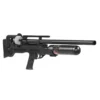
$1,000.00
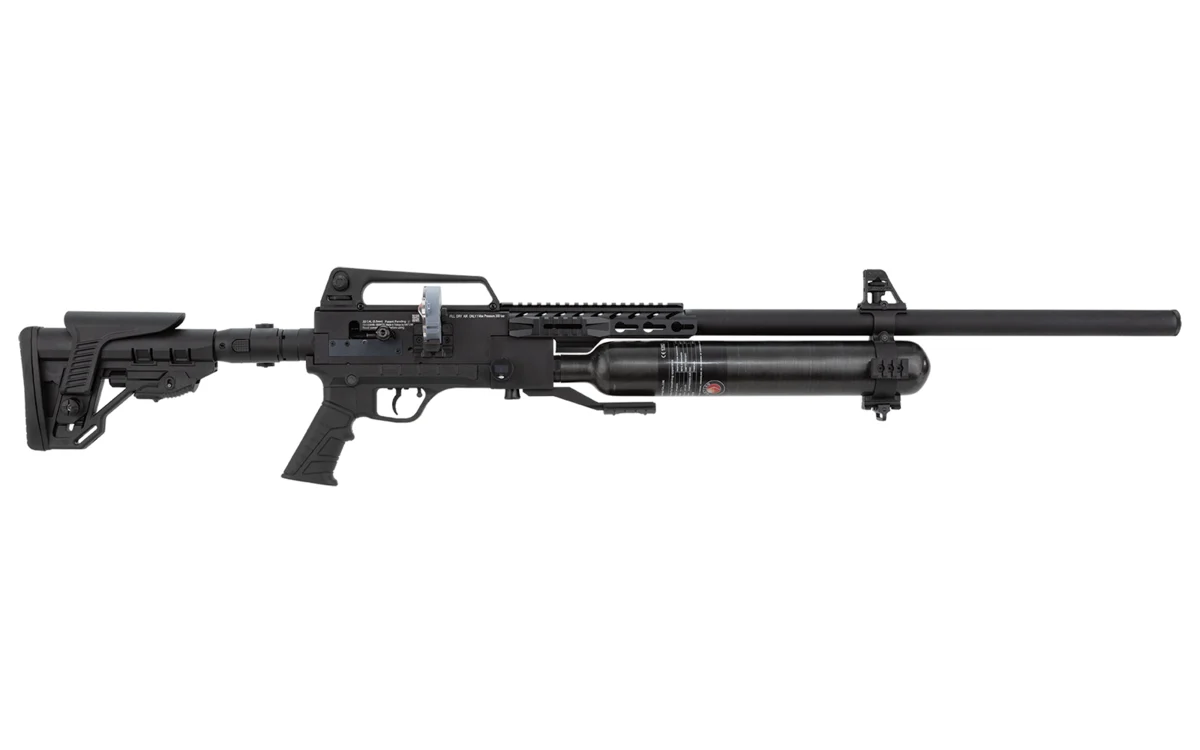
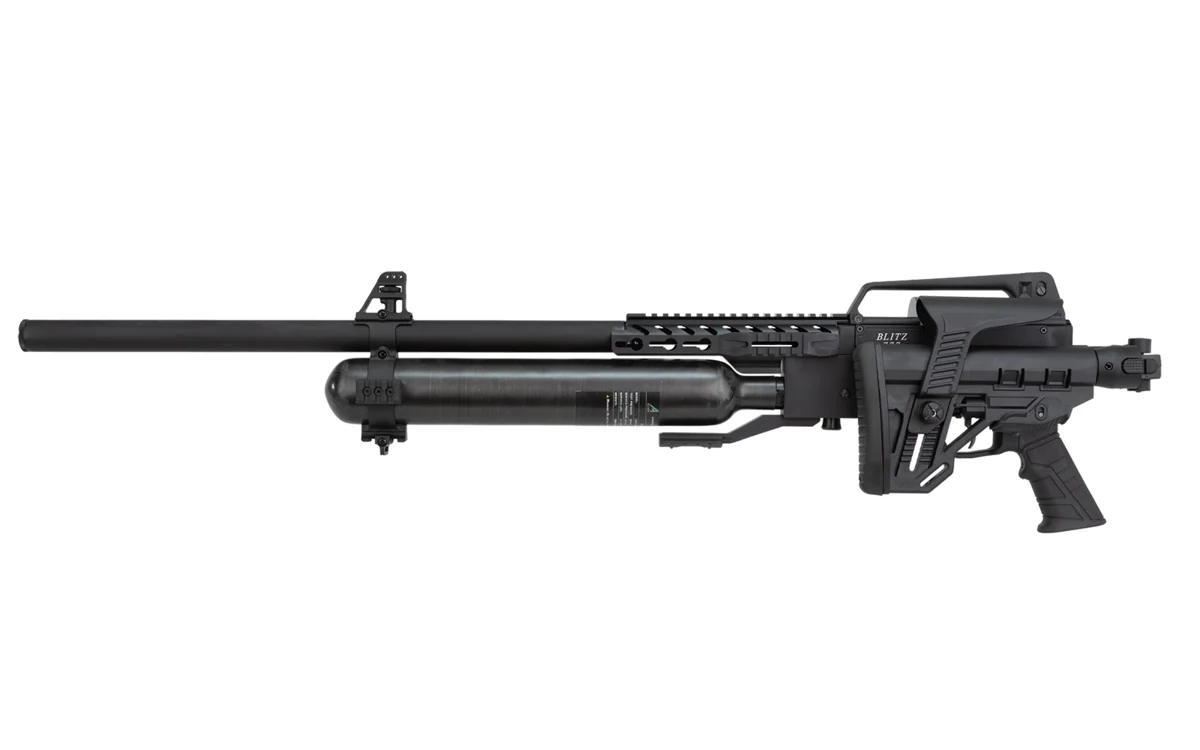
The Hatsan Blitz is a powerful PCP air rifle that has both a semi- and fully-automatic firing mode!
This robust rifle is equipped with a large air supply of up to 700cc and has a fill pressure of up to 300 bar!
The Hatsan Blitz 777 is a powerful, automatic compressed air rifle that is made to shoot quickly and dynamically thanks to its semi- and fully automatic firing modes.
This robust machineis equipped with a large air supply of 700cc and has a filling pressure of up to 300 bar!
Automatic PCP Rifle
The Blitz 777 is an automatic PCP rifle. This means that this rifle automatically loads new ammunition after each shot.
In semi-automatic mode, the Blitz 777 can fire as fast as the shooter can pull the trigger.
On the side is the fire-selector switch with which the Blitz continues to fire fully automatically as long as the trigger is pressed and there is ammunition in the magazine.
Design and accessories
This robust rifle has a tactical design with enough space for accessories.
The stock can be folded and is adjustable in length. The cheek piece is also adjustable in height for optimal alignment with your optics.
There is a barrel band around the barrel and bottle with picatinny accessory rails for mounting accessories such as lights, lasers or a sturdy bipod.
Optics
On top of the Blitz 777 there is a carry handle with a well-adjustable rear sight that aligns with the front sight on the barrel band.
If you want to install other optics, they are both removable.
Under the carry handle there is both an 11mm dovetail and a 22mm picatinny/weaver.
This allows you to easily mount your favorite red dot, LPVO or rifle scope!
The rails beyond the carry handle are picatinny/weaver.
Hatsan’s Blitz 777
Hatsan has once again brought an absolute beast to the market with the Blitz 777!
There is nothing more fun than full-auto mag dumping on target. And for the precise shooter, the semi-automatic mode is perfect!
This robust device is quite long at 131cm, but is still easy to store and transport thanks to the folding stock.
| Power source: | Pre compressed pneumatic (PCP) |
| Caliber: | 5.5mm (.22 | 6.35mm (.25) | 7.62mm (.30) |
| Muzzle energy: | 55 | 61 | 80 joule |
| Fill pressure: | 300 bar |
| Air capacity: | 700cc |
| Regulator: | No |
| Operating system: | automatic |
| Magazine: | 21 | 19 | 16 shots |
| Max. projectile length: | 12mm |
| Optic mounting: | 11mm dovetail & 22mm picatinny/weaver |
| Weight: | 4.9kg |
| Length: | 1232 – 1308mm |
| Barrel length: | 660mm |
| Muzzle: | Not threaded |
| Accessories: | 2 magazines |
Hatsan Blitz 777 Semi- & Fully-Automatic PCP Airgun: High-Capacity Select-Fire Power and Precision
Why Choose the Hatsan Blitz 777?
The main reason to choose this hatsan air rifle is its combination of high air capacity, selectable operation, substantial energy, and rapid follow-up capability. Unlike manually cycled platforms, the air-operated mechanism chambers the next pellet automatically after each discharge.
This feature allows the shooter to maintain a stable position and concentrate on target acquisition. Semi-automatic operation is particularly useful when accuracy and ammunition control are priorities, whereas fully automatic operation creates a fast-paced experience on approved reactive-target ranges.
Buyers searching through hatsanusa or hatsan usa should verify regional availability and local compliance because regulations covering automatic pneumatic rifles, power output, magazine capacity, storage, and transportation vary considerably.
Searches for hassan blitz generally refer to the same product family, although the correct manufacturer spelling is hatsan.
How Powerful Is the Blitz 777?
Official manufacturer figures list maximum velocities of approximately 1,120 fps in .22, 1,020 fps in .25, and 760 fps in .30. Corresponding energy levels are approximately 41 foot-pounds, 45 foot-pounds, and 59 foot-pounds. Results may vary according to pellet design, weight, temperature, elevation, pressure level, and individual rifle condition.
Therefore, buyers should not evaluate this platform only as a high-velocity air pellet gun. Consistent energy delivery, magazine reliability, pressure management, barrel quality, and practical accuracy are equally important.
It also operates differently from a co2 pellet rifle, which depends on disposable carbon-dioxide cartridges. This platform requires a high-pressure pump, compressor, or suitable charging cylinder capable of safely reaching the required pressure.
How Good Is Its Precision?
A precision-rifled barrel stabilizes each pellet by applying rotational spin before it exits the muzzle. Stable projectile rotation improves trajectory consistency and helps reduce unpredictable deviation.
Accuracy also depends on secure optic installation, ammunition selection, controlled trigger pressure, stable body positioning, and consistent follow-through. Some shooters may test h&n field target trophy pellets during accuracy evaluation, although the ideal projectile will vary according to caliber and the preferences of each individual barrel.
Fully automatic fire emphasizes speed rather than minimum group size. Consequently, deliberate semi-automatic fire is normally the better choice for precision target work, zeroing, and evaluating ammunition.
Where and When Should It Be Used?
This rifle is best suited to authorized outdoor ranges, controlled private shooting areas, and other lawful locations with a substantial backstop.
Because several pellets can be discharged rapidly, the target area must safely contain the entire firing sequence. The shooter must confirm that no people, animals, buildings, vehicles, or valuable property are located beyond the target.
Eye protection should always be used, and hearing protection may be appropriate depending on the environment. The rifle should remain unloaded during transportation and should be secured against unauthorized access whenever it is not in use.
Comparison with Other Hatsan PCP Platforms
The CARABINA HATSAN PCP BT65 SB ELITE is a powerful manually operated platform. Buyers researching hatsan bt65.25 specifications may appreciate its traditional configuration and substantial energy, but it does not provide the same selectable automatic operation.
The hatsan sortie, hatsan sortie tact, and hatsan sortie tact semi-auto pcp focus on compact semi-automatic shooting. A hatsan sortie threaded adapter belongs to that separate product family and should not be assumed compatible with the Blitz 777.
The hatsan velox offers pistol-style ergonomics, while the hatsan jet, hatsan jet 2, and hatsan jet i pcp .22 caliber pellet rifle kit emphasize lightweight modular handling.
The hatsan flash, hatsan flashpup qe, and hatsan bullboss provide manually cycled alternatives. Meanwhile, the hatsan invader offers semi-automatic operation without the same fully automatic capability.
Comparison with High-Power Models
The hatsan hercules, hatsan hercules bully, and hercules bully air rifle emphasize high-pressure capacity and strong field performance.
The hatsan piledriver belongs to a specialized big-bore category intended for substantially heavier projectiles and more demanding lawful applications.
The hatsan harpoon is an arrow-launching platform rather than a conventional pellet rifle. Therefore, its ammunition, trajectory, loading method, and intended use differ completely.
The phrase hatsan neutron star may appear in online searches, but buyers should verify the exact official product name before placing an order.
Comparison with Break-Barrel Platforms
The hatsan model 95, hatsan mod 95, hatsan 95, and model 95 refer to traditional single-shot break-barrel designs.
Similarly, the hatsan 135, hatsan airtact air rifle, and hatsan mod 25 use self-contained powerplants rather than high-pressure reservoirs.
These options require less filling equipment, but they cannot provide the Blitz 777’s magazine capacity, rapid cycling, or selectable firing modes.
Maintenance and Buying Importance
Only clean, dry compressed air should be introduced into the reservoir. The pressure gauge, fill connection, seals, magazines, sights, barrel, stock, and selector should be inspected regularly.
A hatsan refurbished example may reduce the initial purchase price. However, buyers should confirm its reservoir condition, service history, warranty, included magazines, seal integrity, and seller authorization.
Ultimately, the Hatsan Blitz 777 stands apart through its 700cc reservoir, 300 BAR operating pressure, substantial shot capacity, semi-automatic precision, fully automatic capability, folding tactical stock, and strong caliber options. For experienced shooters who understand high-pressure equipment and responsible operation, it delivers a distinctive combination of power, speed, adjustability, and practical performance.
Engineering Excellence, Operational Performance, and Practical Accuracy
Designed for Efficient Handling
An intelligently engineered layout provides a balance between power, control, and user comfort. Every major component is positioned to improve weight distribution while reducing unnecessary strain during prolonged shooting sessions.
Balanced construction allows the rifle to feel stable whether it is fired from a bench rest, bipod, tripod, or unsupported standing position. This stability helps shooters maintain better target alignment while reducing fatigue during extended practice.
The overall design also promotes smoother movement between multiple targets, making it suitable for dynamic shooting exercises where quick target acquisition is important.
Advanced Pneumatic Operating System
The rifle operates using a pre-charged pneumatic system that stores highly compressed air inside a large-capacity reservoir.
Instead of relying on springs or gas cartridges, compressed air supplies consistent energy for each shot. This operating principle reduces recoil while providing smoother firing characteristics and improved consistency.
As air pressure decreases gradually throughout a shooting session, the valve system carefully meters airflow to maintain dependable performance across the recommended operating range.
Proper pressure management not only improves consistency but also contributes to longer component life.
Smooth Self-Loading Action
A self-loading operating system significantly improves shooting efficiency by automatically preparing the next shot after each discharge.
This mechanism minimizes interruptions, allowing shooters to remain focused on their sight picture instead of manually cycling the action.
The result is a more fluid shooting rhythm that supports both deliberate precision shooting and faster follow-up shots when appropriate.
Because the action cycles automatically, the shooter can maintain a stable body position while concentrating entirely on accuracy and trigger control.
Precision Barrel Technology
Barrel quality remains one of the most important contributors to consistent accuracy.
The internal rifling stabilizes each projectile by applying rotational spin as it travels toward the muzzle. Uniform machining throughout the bore helps reduce inconsistencies that could negatively affect accuracy.
Careful manufacturing tolerances also contribute to predictable projectile behavior over varying shooting distances.
When combined with quality ammunition and disciplined shooting technique, the barrel delivers repeatable accuracy suitable for recreational, sporting, and competitive applications.
Ergonomic Comfort During Extended Shooting
Comfort directly influences shooting performance.
An adjustable stock allows shooters to customize length of pull and cheek support according to their individual body dimensions and preferred shooting position.
A textured pistol grip provides secure handling in both dry and damp conditions, while a well-shaped fore-end offers stable support during prone, bench, or standing positions.
These ergonomic features reduce muscle fatigue while helping shooters maintain consistent body alignment throughout longer shooting sessions.
Optimizing Accuracy with Proper Optics
Selecting an appropriate optic greatly enhances practical shooting performance.
After installation, the optic should be carefully zeroed at the intended shooting distance. Consistent cheek placement behind the scope ensures repeatable eye alignment and minimizes aiming errors.
Mounting hardware should be inspected periodically to ensure nothing has shifted during repeated use.
Proper optic setup allows shooters to fully utilize the rifle’s mechanical accuracy while increasing confidence during every shot.
Understanding External Ballistics
Every projectile is influenced by environmental conditions once it leaves the barrel.
Wind remains the primary factor affecting horizontal movement, particularly at longer distances.
Temperature, humidity, altitude, and atmospheric pressure also influence projectile flight characteristics to varying degrees.
Experienced shooters observe vegetation, dust movement, or dedicated wind indicators before firing, making small corrections when necessary rather than relying entirely on equipment adjustments.
Understanding these environmental effects leads to greater consistency and improved long-range performance.
Building Reliable Shooting Fundamentals
Excellent equipment performs best when paired with disciplined shooting technique.
Key principles include:
- Maintaining a stable shooting position.
- Applying smooth trigger pressure.
- Controlling breathing before each shot.
- Following through after discharge.
- Keeping consistent body alignment.
- Maintaining identical head position behind the optic.
- Evaluating environmental conditions before firing.
Practicing these fundamentals repeatedly produces gradual but measurable improvements in accuracy, confidence, and overall shooting performance.
Efficient Use of Air Supply
Careful pressure management maximizes the number of consistent shots available during each fill.
Rather than firing continuously until pressure becomes too low, experienced shooters monitor the pressure gauge and refill within the recommended operating range.
Maintaining proper reservoir pressure helps preserve consistent projectile velocity while ensuring reliable cycling throughout the shooting session.
Developing this habit also contributes to improved long-term component durability.
Engineered for Long-Term Dependability
Precision machining, durable construction materials, and carefully designed internal components provide a strong foundation for long-term reliability.
Routine inspections, proper cleaning, responsible handling, and appropriate storage significantly reduce unnecessary wear while preserving consistent operation.
With regular maintenance and thoughtful ownership, the rifle continues delivering dependable performance across years of recreational shooting, target practice, skill development, and other lawful sporting activities.
Maintenance, Storage, Safety, and Long-Term Performance
Establishing a Preventive Maintenance Routine
Proper maintenance is essential for preserving accuracy, reliability, and mechanical efficiency throughout the rifle’s service life. Although modern pneumatic systems are designed with durable components, regular care minimizes unnecessary wear and helps maintain consistent performance over thousands of shots.
After every shooting session, inspect the rifle for dust, moisture, fingerprints, and residue. Wipe all exterior surfaces with a soft microfiber cloth to remove contaminants before storing the equipment.
Metal surfaces should receive a light protective coating of suitable oil to help prevent corrosion. Excess lubricant should always be removed because heavy oil accumulation attracts dust and debris that may interfere with moving parts.
Developing a consistent maintenance routine greatly improves long-term reliability.
Barrel Care for Consistent Accuracy
The barrel should be cleaned only when accuracy begins to decline or after extended periods of regular use.
Unlike firearms, pneumatic rifles produce relatively little fouling, so excessive cleaning is unnecessary and may temporarily affect accuracy until the barrel becomes properly conditioned again.
Use cleaning tools specifically designed for air rifles, including pull-through systems or coated cleaning rods that protect the rifling.
Avoid steel brushes, harsh solvents, or excessive force, as these may damage the barrel’s internal finish and reduce long-term precision.
Routine inspection also helps identify any obstructions before shooting begins.
Caring for the Air System
The compressed air system requires careful attention to maintain safe and dependable operation.
Only clean, dry compressed air should be used during filling. Moisture entering the reservoir may contribute to internal corrosion or premature seal deterioration over time.
Fill the reservoir slowly to minimize unnecessary heat generation while allowing internal pressure to stabilize evenly.
Never exceed the manufacturer’s recommended maximum fill pressure.
Regularly inspect the fill connection, pressure gauge, and surrounding components for signs of wear, damage, or leakage before every shooting session.
Seal Inspection and Replacement
Internal seals play an important role in maintaining air pressure and overall efficiency.
Although these components are designed for long service life, normal wear eventually occurs through repeated use.
Potential indicators of worn seals include:
- Gradual pressure loss during storage.
- Inconsistent projectile velocity.
- Audible air leakage.
- Reduced operating efficiency.
- Changes in normal firing characteristics.
Replacing worn seals promptly restores reliable performance while preventing unnecessary stress on other internal components.
Whenever internal servicing is required, qualified technicians should perform the repairs using appropriate replacement parts.
Magazine Maintenance
Reliable feeding depends on clean, properly functioning magazines.
Inspect magazines regularly for accumulated dust, dirt, or foreign material that could interfere with smooth operation.
Projectiles should be loaded carefully to avoid deformation before entering the chamber.
If cleaning becomes necessary, use compressed air or a dry cloth rather than excessive lubrication.
Keeping magazines clean significantly improves feeding reliability throughout extended shooting sessions.
Protecting Exterior Components
The exterior finish should be protected from excessive moisture, prolonged sunlight, and harsh environmental conditions.
Following outdoor use, especially in humid or rainy weather, dry every exposed surface thoroughly before storage.
Inspect all visible fasteners periodically and tighten them according to manufacturer recommendations if necessary.
Promptly addressing minor cosmetic damage helps preserve both appearance and long-term durability.
Safe Storage Practices
Proper storage protects the rifle from unnecessary wear while enhancing safety.
Always store the rifle unloaded inside a secure cabinet, safe, or protective case that prevents unauthorized access.
Choose a clean, dry environment with stable temperature and humidity levels to minimize corrosion and material deterioration.
If the rifle will remain unused for an extended period, inspect it periodically to verify that seals, pressure levels, and visible components remain in good condition.
Appropriate storage significantly extends service life while preserving dependable performance.
Maintaining Consistent Accuracy
Long-term accuracy depends on more than mechanical quality alone.
Projectiles should be kept clean, undamaged, and stored in sealed containers to prevent contamination.
Optics should be checked regularly to ensure mounting hardware remains secure and correctly aligned.
Environmental conditions—including wind, lighting, humidity, and temperature—should always be considered when evaluating shooting performance because each can influence projectile flight.
Maintaining detailed shooting records helps identify the combinations of distance, environmental conditions, and ammunition that consistently produce the best results.
Pre-Use Inspection Checklist
Before each shooting session, perform a brief inspection to ensure safe and reliable operation.
Recommended checks include:
- Confirm all visible fasteners remain secure.
- Verify optic alignment.
- Inspect the barrel for obstructions.
- Check reservoir pressure.
- Ensure controls operate smoothly.
- Verify proper safety function.
- Examine the stock for visible damage.
- Confirm overall cleanliness.
Completing these inspections requires only a few minutes but greatly reduces the likelihood of unexpected issues during use.
Safe Maintenance Practices
Every maintenance procedure should begin with a complete safety check.
Always confirm that the rifle is unloaded before cleaning or inspection.
Keep the muzzle pointed in a safe direction throughout the maintenance process.
Wear appropriate eye protection whenever working around pressurized systems or mechanical assemblies.
Never attempt repairs beyond your level of experience, and discontinue use immediately if damaged or worn components are discovered.
Responsible maintenance protects both the equipment and the user.
Long-Term Ownership Benefits
Consistent maintenance, proper storage, and careful handling preserve mechanical integrity while minimizing long-term operating costs.
Owners who perform routine inspections and address minor issues promptly often experience greater reliability, improved accuracy, fewer unexpected repairs, and a longer overall service life.
With responsible care and disciplined maintenance habits, the rifle can continue delivering dependable performance for many years of recreational target shooting, precision practice, competitive training, and other lawful sporting activities.
Buying Guide, Shooting Applications, and Final Ownership Insights
Choosing the Right Configuration
Selecting the right air rifle involves more than comparing specifications. The ideal choice depends on the shooter’s intended application, experience level, preferred shooting distance, and long-term goals.
Those primarily interested in recreational target shooting often prioritize consistency, ease of handling, and comfortable ergonomics. Competitive shooters typically focus on repeatable accuracy, reliable operation, and compatibility with quality optics. Others may value rapid follow-up capability for dynamic target exercises conducted in safe, controlled environments.
Before making a purchase, consider the availability of filling equipment, accessories, replacement parts, and appropriate storage solutions. Planning ahead ensures a smoother ownership experience and reduces future operating costs.
Understanding Your Shooting Objectives
Every shooter has different expectations.
Some enjoy refining marksmanship through slow, deliberate practice, while others prefer interactive shooting sessions that emphasize speed, coordination, and target transitions.
Identifying your primary objective helps determine the most appropriate setup, optic selection, and practice routine.
Regardless of experience level, establishing realistic performance goals encourages steady improvement while making each range session more productive.
Developing Strong Shooting Skills
Skill development is an ongoing process built through consistency rather than volume alone.
Each practice session should have a clear objective, such as improving trigger control, reducing group size, enhancing breathing technique, or increasing shooting stability.
Useful training exercises include:
- Practicing different shooting positions.
- Refining breathing control.
- Improving trigger discipline.
- Evaluating follow-through.
- Recording group sizes.
- Monitoring consistency over multiple sessions.
- Assessing performance under different environmental conditions.
- Reviewing previous practice notes.
Tracking progress allows shooters to identify strengths while recognizing areas that benefit from additional attention.
Maximizing Long-Term Accuracy
Consistent accuracy is achieved by combining quality equipment with disciplined shooting habits.
Maintaining identical body position, cheek placement, grip pressure, and sight alignment from shot to shot reduces unnecessary variation.
Environmental awareness also plays an important role. Wind direction, lighting conditions, humidity, temperature, and shooting distance all influence projectile flight and should be considered before every shot.
Routine practice under varying conditions helps shooters develop confidence while improving real-world performance.
Responsible Equipment Ownership
Owning high-quality shooting equipment carries important responsibilities.
The rifle should always be transported safely, stored securely, and used only in locations where shooting activities are lawful and appropriate.
Before every session, verify that the surrounding area provides a safe backstop capable of containing every projectile.
Maintaining awareness of nearby people, animals, buildings, and property helps prevent unnecessary risks.
Responsible ownership protects both the shooter and the wider community while promoting positive shooting practices.
Protecting Your Investment
Proper care extends the service life of any precision equipment.
Routine inspections, careful cleaning, appropriate lubrication, and secure storage all contribute to dependable long-term performance.
Protective cases help prevent accidental impacts during transportation, while climate-controlled storage reduces the risk of corrosion and material deterioration.
Addressing minor maintenance needs promptly often prevents larger repairs later, preserving both reliability and overall value.
Building Confidence Through Regular Practice
Confidence develops through repetition and experience.
Frequent practice strengthens muscle memory, improves target acquisition, and enhances overall shooting efficiency.
Rather than focusing solely on speed, experienced shooters emphasize consistency, precision, and disciplined execution of fundamental techniques.
Gradual improvement achieved through structured training often produces more reliable long-term results than attempting advanced techniques too early.
Factors That Influence Performance
Several external variables affect every shooting session.
These include:
- Wind speed and direction.
- Temperature changes.
- Humidity.
- Atmospheric pressure.
- Lighting conditions.
- Shooting position.
- Target distance.
- Shooter consistency.
Understanding how these factors interact allows for more informed adjustments and better decision-making while shooting.
Recording observations after each session creates valuable reference material for future practice.
A Practical Choice for Dedicated Enthusiasts
This platform is well suited to experienced users seeking advanced engineering, dependable reliability, and versatile shooting performance.
Its combination of modern design, efficient operation, comfortable ergonomics, and precision-focused construction supports a wide variety of recreational and sporting activities.
Whether used for improving marksmanship, practicing at established ranges, or participating in organized shooting events, it offers an enjoyable and rewarding ownership experience when handled responsibly.
Final Thoughts
Selecting a premium pneumatic rifle is an investment in both equipment and personal skill development. Long-term satisfaction comes from reliable operation, consistent accuracy, thoughtful maintenance, and responsible ownership rather than technical specifications alone.
With regular practice, careful maintenance, and attention to safe handling procedures, owners can expect dependable performance over many years. By combining sound shooting fundamentals with preventive care and continuous learning, the rifle remains a reliable companion for recreational target shooting, precision practice, competitive training, and other lawful sporting applications while delivering an engaging and consistent shooting experience.
Be the first to review “Hatsan Blitz 777 Semi- & Fully-Automatic PCP Airgun”
Related products
Hatsan
Hatsan
Hatsan
Reviews
There are no reviews yet.