
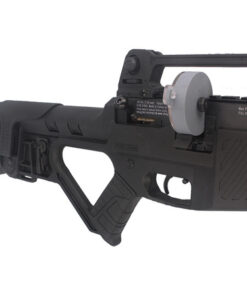
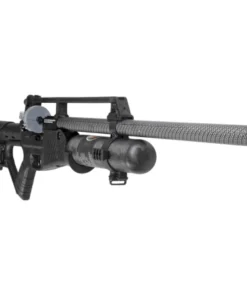
Hatsan Blitz 7.62 mm PCP Air Rifle
$650.00
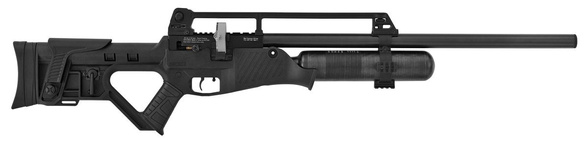
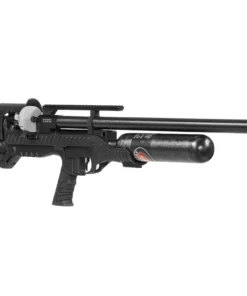
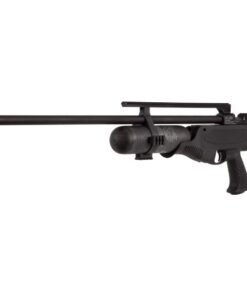
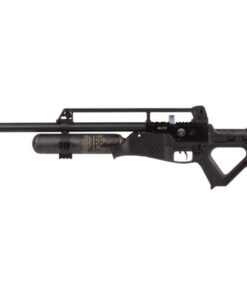
BLITZ, multi-shot air rifle PCP companies Hatsan Arms equipped with a switch type of fire (fire selector) Full / Semi. Fully automatic FullAuto (continuous fire) and semi-automatic SemiAutoAction (short series). BLITZ ensures automatic reloading every time the trigger tongue is pressed (version only FAC*) and rapid firing of accurate shots at considerable distances without the need to change / correction aiming line. Available in calibers: .177 (.177), .22 (5.5 mm), .25 (6.35 mm) and .30 (7.62 mm).
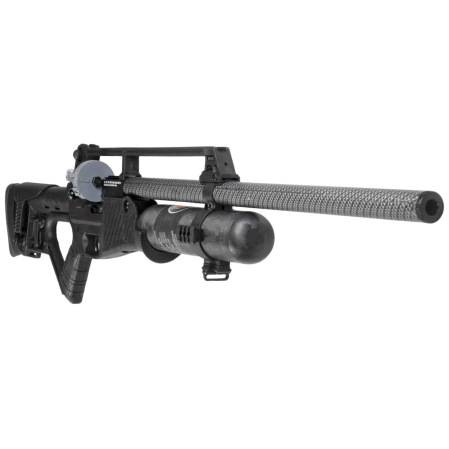
Barrel – covered with a fully metal shield, precision threaded Hatsan Arms about 23″ (585 mm). The constriction at the exit of the barrel called the forehead improves focus. The workmanship of the barrel is one of the most important parts of any weapon/wind gun. Affects the accuracy of the rifle, especially when shooting at long distances.
Power supply – fixed compressed air reservoir made of carbon fiber capacity 580 cc (air tube bottle). A fully charged cartridge allows you to shoot from 100 to 130 effective shots depending on the caliber of the airgun (data for version FAC*). The pressure gauge allows you to constantly monitor the pressure in the tank, and thus the degree of its charge. 130 bar the minimum working pressure in the cartridge necessary for proper operation of a windcheater with the system Full Auto i Semi Auto Action recommended by the manufacturer. Due to its large capacity, loading the cartridge only from a technical or diving cylinder (300 bar).
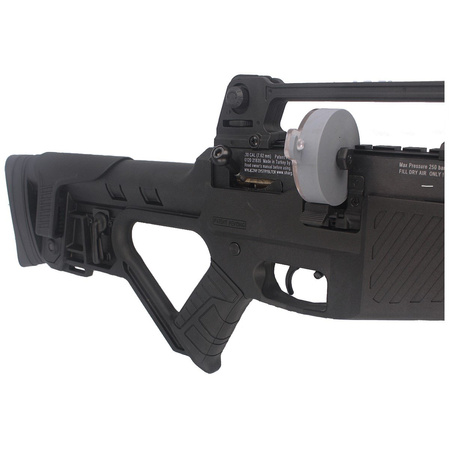
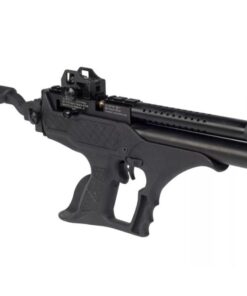
Settlement – tactical with thumb hole TH (Thumb Hole). Inserts made of soft rubber at pistol grip and fluted mid-bed for better control and feel. Flask suitable for right and left-handed people finished with rubber foot absorbs recoil energy after a shot is fired. Adjustment feet w vertical (top / bottom) and for height baki. Thanks to the adjustability, the process of configuring the air rifle according to your preferences as well as your shooting style is quick and uncomplicated.
Mounting rail – double 11 mm / 22 mm, allows mounting of any optical sight. Compliant with MIL-STD 1913 standard (called picatinny or weaver). Additional three rails picatinny.
Targeting instruments – mechanical, head-up display. Integrated with transport handle, rail-mounted picatinny. Height adjustable midge and vertically and horizontally adjustable jaw.
Magazines – Clip Magazine-F with capacities from 16 to 21 shotgun shells depending on the caliber of the wind gun. Included three magazines and a key to tighten the magazine spring after charging (carried on the flask).
Oxide – all finished with oxidized blue finish. The lock chamber anoded black.
Accessory equipment – nozzle Quick-Fill to quickly fill the tank with air using pCP pumps (Hatsan Hand Pump) or technical / diving cylinder (300 bar). Allen wrench, set of o-rings, silicone seals. Buckles for attaching tactical suspensions.
Windmill Blitz is equipped with solutions to improve comfort and safety of use:
For each wind gun not exceeding 17J, the manufacturer includes a unique Energy Limit Certificate 17 J. The certificate is a document stating the compliance of the product features, and thus the legality of the windcheater with Polish regulations. Legally imported windcheaters for the Polish market have an engraved website address exclusive distributor of Sharg.
General technical parameters:
Model: Blitz
Type: PCP air rifle
Initial energy: up to 17 J
Overall length: 1150.0 mm / 45.2″
Barrel length: 585.0 mm / 23″
Weight: 4.0 kg / 8.8 lbs
Cartridge capacity: 580 cc
Manufacturer: Hatsan Arms, Turkey
Detailed technical data for FAC (*): 4.5 mm caliber / .177
Maximum discharge speed (**): 350 m/s / 1155 fps
Energy: 34.7 J / 25.5 ft. lbs
Magazine capacity: 24 pcs.
Number of shots: 140
Number of effective shots: 140
Detailed technical data for FAC (*): 5.5 mm caliber / .22
Maximum discharge speed (**): 320 m/s / 1050 fps
Energy: 49.0 J / 36 ft. lbs
Magazine capacity: 21 pcs.
Number of shots: 130
Number of effective shots: 130
Detailed technical data for FAC (*): 6.35 mm caliber / .25
Maximum discharge speed (**): 295 m/s / 970 fps
Energy: 56.0 J / 41.0 ft. lbs
Magazine capacity: 19 pcs.
Number of shots: 110
Number of effective shots: 110
Detailed technical data for FAC (*): 7.62 mm caliber / .30
Maximum discharge speed (**): 221 m/s / 730 fps
Energy: 71.8 J / 53.0 ft. lbs
Magazine capacity: 16 pcs.
Number of shots: 100
Number of effective shots: 100
Hatsan Blitz 7.62 mm PCP Air Rifle – Technical .30 Caliber Overview
Hatsan Blitz Engineering, PCP Architecture, Related Models, Precision Factors, and Brand Terminology
Hatsan
hatsan is the broader manufacturer behind multiple PCP, spring-powered, semi-automatic, and pistol platforms. Specifications should always remain tied to the exact model rather than being transferred across the entire catalog.
Hatsan Air Rifle
The phrase hatsan air rifle covers several operating architectures. The Blitz belongs specifically to the manufacturer’s PCP semi/full-automatic category. HatsanUSA separately categorizes products such as the Blitz, Sortie, Invader Auto, and Velox within its semi-automatic PCP documentation.
Hatsan USA
hatsan usa and hatsanusa refer to Hatsan’s U.S. support operation, which publishes product manuals, exploded diagrams, and support materials for the Blitz and other models.
Hassan Blitz
hassan blitz is a common spelling variation of Hatsan Blitz. The correct manufacturer designation is Hatsan Blitz.
7.62 mm PCP Architecture
The defining characteristic of this version is its 7.62 mm/.30-caliber PCP configuration. Instead of a spring-piston mechanism or CO₂ cartridge, energy is stored as compressed air within the onboard reservoir.
580 cc Air Bottle
The standard current Blitz specification uses a 580 cc carbon-fiber air bottle mounted beneath the forearm.
250 BAR System
Hatsan specifies a maximum working/fill pressure of 250 BAR for the Blitz. Because this is a high-pressure system, reservoir integrity, gauges, seals, and related components require appropriate maintenance.
16-Shot Magazine
The .30-caliber version uses a 16-shot detachable magazine. Hatsan currently states that the rifle is supplied with three magazines.
Rifled and Choked Barrel
Hatsan describes the Blitz barrel as fully shrouded, precision rifled, and choked for accuracy. The barrel measures approximately 585 mm/23 inches.
Precision Considerations
Real-world precision depends on more than barrel construction. Pellet consistency, sight stability, pressure behavior, barrel condition, environmental conditions, and mechanical health can all influence repeatability.
Air Pellet Gun
The phrase air pellet gun broadly describes pellet-firing pneumatic or spring-powered equipment. The Blitz is specifically a PCP platform rather than a generic spring-driven design.
CO2 Pellet Rifle
A co2 pellet rifle uses replaceable or refillable carbon-dioxide power rather than the Blitz’s compressed-air reservoir, making the two propulsion systems mechanically distinct.
CARABINA HATSAN PCP BT65 SB ELITE
CARABINA HATSAN PCP BT65 SB ELITE refers to the BT65 family rather than the Blitz. HatsanUSA maintains separate BT65 documentation, confirming that the platforms should be treated independently.
Hatsan BT65.25 Specifications
The phrase hatsan bt65.25 specifications concerns the .25-caliber BT65 configuration, not the 7.62 mm Blitz. Barrel, reservoir, action, and overall dimensions should therefore not be transferred between the models.
Hatsan Sortie
The hatsan sortie belongs to Hatsan’s semi-automatic PCP family.
Hatsan Sortie Tact
The hatsan sortie tact is a tactical variation in that separate product family.
Hatsan Sortie Tact Semi-Auto PCP
The phrase hatsan sortie tact semi-auto pcp accurately describes a different semi-automatic platform and should not be treated as another name for the Blitz.
Hatsan Sortie Threaded Adapter
The phrase hatsan sortie threaded adapter relates to an accessory for the Sortie platform and is not a core Blitz specification.
Hatsan Velox
The hatsan velox belongs to Hatsan’s semi-automatic PCP pistol family and is documented separately from the Blitz.
Hatsan Jet
The hatsan jet is a compact PCP platform rather than a full-size Blitz.
Hatsan Jet 2
The hatsan jet 2 is another distinct PCP model. HatsanUSA publishes dedicated JET 1 and JET 2 documentation.
Hatsan Jet I PCP .22 Caliber Pellet Rifle Kit
The phrase hatsan jet i pcp .22 caliber pellet rifle kit refers to a .22-caliber Jet configuration rather than the .30-caliber Blitz.
Hatsan Flash
The hatsan flash belongs to a separate lightweight PCP platform family.
Hatsan FlashPup QE
The hatsan flashpup qe uses a bullpup configuration and differs substantially in dimensions and architecture from the Blitz.
Hatsan BullBoss
The hatsan bullboss is another bullpup PCP rifle and should be evaluated using its own specifications.
Hatsan Invader
The hatsan invader belongs to Hatsan’s semi-automatic PCP lineup and is supported separately in manufacturer documentation.
Hatsan Neutron Star
The hatsan neutron star is another PCP platform and appears separately within HatsanUSA’s support listings.
Hatsan Hercules
The hatsan hercules belongs to Hatsan’s high-capacity PCP family rather than the Blitz.
Hatsan Hercules Bully
The hatsan hercules bully is a bullpup-oriented derivative within the Hercules family.
Hercules Bully Air Rifle
The phrase hercules bully air rifle therefore refers to a different PCP architecture.
Hatsan PileDriver
The hatsan piledriver belongs to Hatsan’s large-bore PCP category and should not be confused with the Blitz’s magazine-fed design.
Hatsan Harpoon
The hatsan harpoon is an arrow-launching PCP platform rather than a conventional pellet rifle. HatsanUSA lists the Harpoon separately within its PCP manuals.
Hatsan Model 95
The hatsan model 95, hatsan 95, hatsan mod 95, and model 95 refer to Hatsan’s spring-powered break-barrel family rather than the Blitz.
Hatsan 135
The hatsan 135 is another spring-powered platform. It should not be compared mechanically with the pneumatic Blitz merely because both can appear in larger calibers.
Hatsan Mod 25
The hatsan mod 25 belongs to Hatsan’s air-pistol range and is supported under spring/Vortex-powered pistols.
Hatsan AirTact Air Rifle
The hatsan airtact air rifle is a break-barrel platform and operates fundamentally differently from a PCP reservoir system.
Hatsan Refurbished
The phrase hatsan refurbished describes condition rather than model architecture. Any refurbished pressure-based airgun should be evaluated according to its actual service history and mechanical condition.
H&N Field Target Trophy
h&n field target trophy refers to an airgun pellet family rather than a Hatsan model. Ammunition compatibility should always match the correct caliber and manufacturer recommendations.
Hatsan Blitz Magazine Capacity
For the 7.62 mm version, the published magazine capacity is 16 pellets. The .22 and .25 versions use larger-capacity magazines because of their smaller projectile diameters.
Hatsan Blitz Dimensions
The standard Blitz measures approximately 45.2 inches overall, with a 23-inch barrel, and weighs approximately 8.8 pounds.
Tactical Synthetic Stock
The rifle uses an ambidextrous tactical polymer stock with an adjustable cheek rest, textured grip surfaces, and an adjustable rubber butt pad.
Pressure Gauge
A built-in gauge allows reservoir pressure to be monitored. Damage, leakage, or inaccurate behavior around any pressure-system component should receive qualified technical attention.
Anti-Knock System
Hatsan identifies a patented anti-knock mechanism intended to help prevent discharge when the rifle receives an impact or bounce.
Manual Safety
A manual safety is incorporated into the design. It remains a secondary mechanical safeguard rather than a substitute for responsible handling.
Fiber-Optic Sights
The detachable carry handle incorporates adjustable fiber-optic sights, giving the rifle a factory sighting arrangement in addition to its optic-mounting interface.
Optic Mounting Interface
The receiver supports both 11 mm and 22 mm scope-mount formats according to Hatsan’s current specifications.
Overall Technical Perspective
The Hatsan Blitz 7.62 mm PCP Air Rifle is fundamentally a .30-caliber, magazine-fed, high-pressure pneumatic platform with a 580 cc carbon-fiber bottle, 250 BAR fill specification, 16-shot magazine, 23-inch shrouded rifled barrel, tactical synthetic stock, pressure gauge, adjustable sights, and selectable operating modes. Hatsan publishes approximately 730 fps and 53 ft-lb as maximum figures for the 7.62 mm configuration, while noting that pellet design and environmental conditions can materially influence velocity.
Its technical identity should remain separate from Hatsan’s break-barrel, pistol, arrow-launching, bullpup, CO₂, and other PCP families. For neutral product information, the most meaningful considerations are verified manufacturer specifications, reservoir condition, barrel integrity, magazine condition, pressure-system health, sight stability, and professional maintenance of high-pressure components.
Engineering Quality, Pneumatic Performance, Precision, Handling, Reliability, and Practical Design
A high-pressure pneumatic platform combines stored compressed-air technology with a precision barrel, magazine-fed action, tactical furniture, pressure-management components, and an integrated sighting arrangement. Unlike spring-powered equipment, its operation does not depend on a heavy piston rapidly moving through a compression chamber. Consequently, the firing cycle contains comparatively little internal mechanical movement. This characteristic contributes to smooth operation, although overall consistency still depends on reservoir pressure, ammunition uniformity, barrel condition, mechanical health, temperature, and maintenance.
High-Pressure Pneumatic Engineering
The propulsion system stores compressed air inside an onboard pressure vessel.
This stored energy is controlled by internal components designed to provide predictable operation throughout the usable pressure range.
Because substantial pressure is involved, the integrity of the complete system remains extremely important.
Reservoir Construction
The reservoir forms a central part of the pneumatic architecture.
Its condition should be considered alongside valves, seals, pressure-monitoring components, and connection points.
Visible damage or suspected deterioration deserves professional assessment.
Pressure Management
Predictable operation depends on appropriate pressure management.
Changes in reservoir pressure can influence performance characteristics during extended recreational sessions.
Therefore, consistency should be evaluated across the complete operating cycle rather than from one isolated result.
Smooth Operating Character
One important characteristic of pneumatic propulsion is the absence of a large spring-driven piston.
Reduced internal movement creates a comparatively smooth firing cycle.
This can provide a stable mechanical foundation for controlled recreational target activities.
Mechanical Stability
Mechanical stability depends on the relationship between the barrel, receiver, stock, magazine system, controls, and sighting equipment.
These components should remain securely positioned.
Unexpected movement can affect consistency and should receive attention.
Barrel Engineering
A precision-rifled barrel provides rotational stabilization to the appropriate projectile.
However, manufacturing quality represents only the starting point.
Physical condition, cleanliness, alignment, ammunition consistency, and sight stability also influence practical results.
Barrel Protection
The barrel should remain protected from significant impact.
Improper transportation can expose the muzzle or surrounding structure to unnecessary damage.
A suitable protective case can reduce this risk.
Bore Condition
The internal bore should remain unobstructed and free from serious corrosion.
Cleaning should respond to actual need rather than being performed excessively.
Appropriate maintenance materials should always be used.
Muzzle Integrity
The muzzle represents an important final interface before the projectile leaves the barrel.
Physical damage can potentially influence consistency.
Careful handling during storage and transportation therefore remains worthwhile.
Practical Precision
Precision cannot be explained by velocity alone.
Barrel quality, ammunition uniformity, pressure behavior, sight alignment, environmental conditions, trigger consistency, and user technique all interact.
Repeatability provides a more useful measure than an occasional exceptional result.
Ammunition Consistency
Correctly sized and consistently manufactured ammunition provides a better foundation for evaluating mechanical performance.
Deformed or contaminated projectiles introduce additional variables.
Ammunition should remain clean, dry, and protected during storage.
Magazine Reliability
A magazine-fed system depends on correct alignment and sound component condition.
The magazine should remain clean and free from substantial deformation.
Damage can interfere with reliable mechanical operation.
Loading-System Condition
The loading assembly should maintain predictable movement.
Unexpected resistance, scraping, or excessive looseness can indicate contamination, wear, or mechanical damage.
Abnormal components should not simply be forced.
Trigger Characteristics
A predictable trigger provides consistent mechanical feedback.
Unexpected changes in movement or resistance can indicate that inspection is necessary.
Unnecessary internal alteration should be avoided.
Safety System
A mechanical safety provides an additional safeguard.
Nevertheless, responsible handling practices remain essential regardless of the safety’s position.
No mechanical system should be considered incapable of malfunction.
Anti-Impact Protection
Additional mechanical safeguards can help reduce the possibility of unintended operation following an impact.
However, protective mechanisms do not make careless handling acceptable.
The equipment should still be protected from drops and substantial physical shocks.
Stock Construction
Tactical synthetic furniture provides structural support while offering practical resistance to ordinary environmental changes.
Synthetic materials generally require relatively straightforward exterior maintenance.
However, excessive heat, aggressive chemicals, and significant impact should still be avoided.
Adjustable Ergonomics
Adjustable contact points can help accommodate differences in body proportions and equipment positioning.
A comfortable configuration can reduce unnecessary muscular tension.
Individual preference remains important when evaluating overall fit.
Grip Design
Grip geometry influences how naturally the equipment can be supported.
Textured contact surfaces can improve handling stability.
Comfort should be considered alongside structural durability.
Shoulder Support
A stable shoulder interface contributes to predictable positioning.
Adjustment features can help accommodate different users and equipment configurations.
Any adjustable component should remain mechanically secure during use.
Overall Balance
Total weight alone does not completely describe handling.
The distribution of mass between the barrel, receiver, reservoir, and stock can significantly influence perceived balance.
A stable platform can feel manageable even when its overall construction is substantial.
Sighting Arrangement
A secure sighting system is essential for consistent alignment.
Loose components can create performance changes that may incorrectly appear to originate from the barrel or pneumatic system.
Routine visual inspection can identify these problems.
Accessory Mounting
Integrated mounting interfaces provide flexibility for compatible sighting equipment.
Hardware should fit correctly without requiring excessive force.
Improvised installation can damage mounting surfaces or compromise alignment.
Pressure Monitoring
An integrated pressure indicator provides information about reservoir condition.
Any damaged or questionable pressure-related component should receive qualified inspection.
Pressure-system components should never be treated as ordinary cosmetic hardware.
Seal Condition
Seals contribute to maintaining compressed air throughout the system.
Age, repeated use, contamination, and storage conditions can gradually influence their performance.
Persistent leakage may indicate that servicing is required.
Valve Reliability
Internal valves control the movement of compressed air.
Their condition contributes directly to consistent pneumatic operation.
Significant valve problems should be addressed by appropriately qualified personnel.
Temperature Considerations
Environmental temperature can influence pneumatic behavior, although compressed-air systems respond differently from carbon-dioxide-powered equipment.
Extreme conditions should still be avoided.
Moderate storage conditions generally support component longevity.
Exterior Maintenance
Routine maintenance should emphasize preservation rather than unnecessary disassembly.
External surfaces can be kept clean and dry.
Cleaning products should be compatible with the materials involved.
Corrosion Prevention
Metal components can gradually deteriorate when exposed to persistent moisture.
Equipment should therefore be dry before long-term storage.
Early surface deterioration is generally easier to manage than extensive corrosion.
Routine Inspection
Periodic visual inspection can identify developing concerns before they become substantial.
The stock, barrel, magazine, sights, mounting hardware, external controls, and accessible pressure-system components can all be observed.
Complete internal disassembly is unnecessary for routine checks.
Storage
Long-term storage should take place in a secure, dry, temperature-stable environment.
The equipment should remain appropriately secured and protected from unauthorized access.
Manufacturer guidance should determine pressure-system storage procedures.
Transportation
A protective case can reduce impact, scratching, and accidental damage during transportation.
The equipment should remain secured according to applicable requirements.
Pressure-system components should also be protected from unnecessary physical shock.
Professional Servicing
High-pressure pneumatic equipment contains components that require specialized technical knowledge.
Major reservoir, valve, gauge, seal, or internal pressure-system concerns should therefore receive qualified professional attention.
Improvised pressure-system repairs can create serious hazards.
Long-Term Reliability
Reliability depends on original engineering combined with appropriate ownership.
A protected barrel, healthy seals, consistent valves, sound magazines, secure sights, stable furniture, and appropriate environmental protection all contribute to service life.
Overall Engineering Assessment
A well-maintained high-pressure pneumatic platform can provide smooth mechanical operation, stable handling, magazine-fed convenience, adjustable ergonomics, and consistent recreational performance. Reduced internal movement distinguishes its firing character from traditional spring-driven systems, while the onboard pressure vessel provides stored pneumatic energy without relying on disposable gas cartridges.
Long-term quality ultimately depends on the complete system remaining mechanically and structurally healthy. Barrel integrity, reservoir condition, seal performance, valve reliability, magazine alignment, sight stability, ammunition consistency, secure mounting hardware, and appropriate maintenance all contribute. Careful transportation, dry storage, routine inspection, and qualified servicing of pressure-related components can help preserve dependable operation throughout an extended service life.
Construction Durability, Performance Consistency, Ergonomics, Maintenance, Storage, and Long-Term Ownership
A high-pressure pneumatic platform should be evaluated according to the complete relationship between its mechanical, structural, and pressure-bearing components. While initial performance figures can provide useful reference points, long-term ownership depends more heavily on consistency, component condition, appropriate maintenance, and careful storage. The barrel, reservoir, seals, valves, magazine system, trigger assembly, stock, sights, mounting surfaces, and external controls all contribute to overall serviceability. When these components remain properly maintained, the equipment can preserve its smooth operating character and predictable recreational performance over an extended period.
Construction Durability
Durability begins with appropriate materials and secure component fit.
Metal components provide structural strength, while synthetic furniture offers resistance to many ordinary environmental conditions.
However, neither material type is completely immune to wear, impact, moisture, or improper storage.
Structural Condition
The main structural components should remain free from significant deformation or cracking.
Small cosmetic marks may develop during normal ownership.
Nevertheless, substantial physical damage deserves appropriate inspection because it can influence mechanical stability.
Receiver Integrity
The receiver supports several important mechanical components.
Its relationship with the barrel, magazine system, mounting interface, and stock should remain stable.
Unexpected looseness can indicate that maintenance is necessary.
Barrel Stability
The barrel should remain securely positioned.
Impact damage or inappropriate handling can potentially affect alignment.
Any suspected structural problem should receive professional evaluation rather than improvised correction.
Bore Preservation
Internal barrel condition contributes to consistent performance.
The bore should remain free from obstruction, serious contamination, and significant corrosion.
However, unnecessary aggressive cleaning should be avoided.
Muzzle Protection
The muzzle should be protected from accidental impact during handling and transportation.
Physical damage in this area can potentially influence consistency.
A suitable protective case can provide useful protection.
Pneumatic-System Integrity
The pressure system represents one of the most important areas of long-term ownership.
The reservoir, valves, seals, gauge, and related interfaces must maintain appropriate structural condition.
Pressure-related damage should never be treated as merely cosmetic.
Reservoir Condition
The pressure vessel should receive appropriate care throughout its service life.
Significant impact, visible damage, unusual deformation, or suspected deterioration deserves qualified assessment.
Manufacturer guidance should determine inspection and servicing requirements.
Seal Longevity
Seals naturally age.
Temperature, contamination, storage conditions, repeated pressure cycles, and time can gradually influence their condition.
Persistent leakage may indicate that professional servicing is required.
Valve Consistency
Valves regulate the controlled movement of compressed air through the system.
Reliable valve behavior contributes to predictable operation.
Internal valve problems require appropriate technical knowledge to diagnose correctly.
Pressure-Gauge Condition
The pressure indicator provides useful information about reservoir status.
It should remain physically undamaged and readable.
A questionable gauge should receive professional attention because pressure information should remain dependable.
Mechanical Consistency
Moving components should develop a familiar operating feel.
Unexpected resistance, scraping, looseness, or irregular movement can provide early indications of developing wear.
Changes should be investigated rather than ignored.
Magazine Condition
The magazine should remain clean and structurally sound.
Damage or contamination can interfere with correct alignment.
Replacement components should match the intended mechanical configuration.
Loading-System Reliability
The loading assembly should maintain predictable movement.
Forcing a component that suddenly becomes difficult to operate can increase wear or damage.
Inspection is more appropriate when mechanical behavior changes unexpectedly.
Trigger Condition
A consistent trigger provides predictable mechanical feedback.
Unexpected changes in resistance or movement can indicate wear or another mechanical concern.
Internal alteration should not substitute for proper servicing.
Safety-System Reliability
Mechanical safeguards should remain fully functional.
However, they should always be regarded as secondary protection.
Responsible handling remains necessary regardless of the position of any safety mechanism.
Stock Durability
Synthetic furniture generally requires relatively little maintenance.
It tolerates ordinary humidity changes well compared with many unfinished natural materials.
Nevertheless, extreme heat, substantial impact, and unsuitable chemicals can cause deterioration.
Stock Mounting
The stock should provide stable support for the mechanical assembly.
Mounting areas should remain secure and free from cracking.
Excessive tightening of hardware should be avoided.
Adjustable Components
Adjustable ergonomic components should move correctly when intentionally repositioned and remain secure afterward.
Excessive play can reduce stability.
Adjustment mechanisms should be inspected periodically for damage or unusual wear.
Grip Comfort
Grip geometry influences overall handling.
A comfortable position can reduce unnecessary hand and wrist tension during controlled recreational sessions.
Individual proportions naturally influence perceived fit.
Shoulder Interface
A stable shoulder position contributes to consistent equipment placement.
Adjustability can improve comfort for different users.
Mechanical security remains important after any ergonomic adjustment.
Weight Distribution
Balance depends on where the equipment’s mass is concentrated.
The barrel, receiver, reservoir, and stock collectively determine weight distribution.
A balanced configuration can feel more stable than total weight alone might suggest.
Extended Recreational Sessions
Comfort becomes increasingly noticeable during longer sessions.
Grip geometry, shoulder positioning, overall balance, and predictable mechanical controls all contribute.
Fatigue should never be allowed to reduce responsible handling standards.
Practical Consistency
Performance should be judged through repeated results under comparable conditions.
One unusually strong or weak result provides limited information.
Mechanical condition, ammunition uniformity, environmental factors, and sight stability should all be considered.
Ammunition Condition
Appropriate ammunition should remain clean and free from significant deformation.
Manufacturing variation can influence consistency.
Correctly stored ammunition provides a more dependable basis for evaluating equipment condition.
Sight Stability
Sighting components should remain firmly installed.
Loose hardware can create inconsistent alignment even when the barrel and pressure system remain healthy.
Routine inspection can identify this relatively straightforward issue.
Mounting-Surface Integrity
Accessory mounting surfaces should remain undamaged.
Compatible hardware should fit correctly without excessive force.
Improper installation can create alignment problems or physical deterioration.
Exterior Surface Care
Handling residue, moisture, and environmental contamination should not remain indefinitely on metal surfaces.
Simple exterior preservation can help protect finishes.
Aggressive cleaning products should be avoided unless they are specifically appropriate.
Corrosion Prevention
Persistent moisture can gradually damage metal components.
Equipment should therefore be dry before long-term storage.
Early signs of corrosion should receive attention before deterioration progresses.
Routine Inspection
Regular visual inspection is one of the simplest long-term maintenance practices.
The barrel, stock, reservoir exterior, gauge, magazine, sights, mounting hardware, and accessible controls can all be observed.
Internal disassembly is unnecessary for ordinary inspection.
Maintenance Philosophy
Maintenance should respond to actual equipment condition.
Frequent unnecessary disassembly can introduce additional wear or alignment problems.
Complex internal work should be reserved for genuine servicing requirements.
Storage Environment
Secure, dry, reasonably temperature-stable storage supports long-term preservation.
The equipment should be protected from unauthorized access and significant environmental extremes.
Pressure-system storage should follow manufacturer guidance.
Protective Case Use
A protective case can reduce accidental impact during transportation.
However, enclosed cases can retain moisture.
Equipment should be dry before prolonged enclosure.
Long Periods of Inactivity
Infrequent use does not prevent components from aging.
Seals can deteriorate over time, while metal surfaces can be affected by poor storage conditions.
Inspection is therefore sensible after extended inactivity.
Transportation Care
Transportation exposes equipment to vibration and possible impact.
Secure positioning inside a suitable protective case can reduce unnecessary damage.
Applicable transportation requirements should always be respected.
Recognizing Developing Problems
Changes in mechanical movement, gas retention, pressure indication, component stability, or general operating feel can provide useful warning signs.
Understanding normal behavior makes unusual changes easier to recognize.
Developing concerns should receive timely attention.
Replacement Components
Replacement parts should correspond to the exact configuration.
Visual similarity does not guarantee mechanical compatibility.
Correct components help preserve intended reliability.
Professional Servicing
High-pressure pneumatic systems require specialized technical knowledge.
Reservoir concerns, valve problems, significant seal replacement, gauge issues, and other internal pressure-related work should receive qualified professional attention.
Improvised repair can introduce serious hazards.
Maintenance Records
Service documentation can become valuable during extended ownership.
Professional inspections, replacement components, pressure-system work, and significant repairs can be recorded.
A clear maintenance history also simplifies future condition assessment.
Long-Term Serviceability
Service life depends on both original construction and subsequent care.
Good engineering provides the foundation, while appropriate maintenance preserves it.
Poor storage can accelerate deterioration even when equipment is rarely used.
Overall Long-Term Assessment
A properly maintained high-pressure pneumatic platform can retain smooth mechanical operation, stable handling, reliable magazine functionality, comfortable ergonomics, and predictable recreational performance over an extended period. Its relatively low internal mechanical movement provides a different operating character from traditional spring-driven systems, while the pressure reservoir introduces its own inspection and maintenance responsibilities.
Long-term reliability ultimately depends on maintaining the complete system. Reservoir integrity, healthy seals, consistent valve operation, barrel condition, magazine reliability, secure sights, stable furniture, appropriate ammunition, and suitable environmental protection all contribute. Dry storage, careful transportation, routine inspection, compatible replacement components, and qualified servicing of pressure-related parts can preserve mechanical condition and dependable serviceability throughout long-term ownership.
Mechanical Integrity, Pressure-System Care, Handling Quality, Reliability, Inspection, and Service Life
Long-term performance from a high-pressure pneumatic platform depends on the condition of the complete mechanical system rather than any individual specification. The pressure vessel, barrel, receiver, seals, valves, magazine assembly, trigger, stock, sights, and mounting hardware must continue operating together correctly. As ownership progresses, normal wear, environmental exposure, pressure cycles, transportation, and storage can gradually affect these components. Therefore, periodic inspection and appropriate maintenance are essential for preserving dependable recreational operation. High-pressure components deserve particular attention because damage affecting them may require professional assessment even when the exterior of the equipment otherwise appears normal.
Mechanical Integrity
Mechanical integrity describes how effectively the major components maintain their intended relationship.
The barrel, receiver, stock, loading system, and external controls should remain securely positioned.
Unexpected looseness, resistance, or movement can indicate that inspection is appropriate.
Structural Stability
Structural components should remain free from substantial cracking, deformation, or impact damage.
Minor cosmetic wear may develop during ordinary ownership.
However, structural deterioration should never be dismissed simply because the equipment continues to operate.
Receiver Condition
The receiver provides structural support for several important mechanical assemblies.
Its mounting points and interfaces should remain stable.
Visible damage or significant movement deserves appropriate assessment.
Barrel Security
The barrel should remain securely positioned and protected from unnecessary impact.
Physical damage can potentially affect alignment and consistency.
A suitable case provides useful protection during transportation.
Internal Barrel Condition
The bore should remain free from obstruction and significant corrosion.
Routine care can help preserve internal surfaces.
However, unnecessary aggressive cleaning should be avoided because maintenance should respond to actual condition.
Muzzle Protection
The muzzle represents an important part of the barrel assembly.
Accidental impact can potentially influence consistency.
Careful storage and transportation can reduce the possibility of physical damage.
Pressure-Vessel Integrity
The pressure vessel is one of the most important structural components in the pneumatic system.
Its exterior should remain protected from severe impact, unusual deformation, and other visible damage.
Suspected pressure-vessel problems require qualified professional evaluation.
Pressure-System Monitoring
The condition of the pressure system should be considered as a whole.
The vessel, gauge, valves, seals, and connection points all contribute to reliable operation.
A problem affecting one component can influence the behavior of the entire system.
Gauge Condition
The pressure indicator should remain physically intact and readable.
Unexpected behavior or visible damage should receive professional attention.
Pressure information should not be relied upon when the monitoring component itself appears questionable.
Seal Performance
Seals maintain compressed air at critical interfaces.
Repeated pressure cycles, age, contamination, temperature, and storage conditions can gradually influence their condition.
Persistent leakage may indicate that servicing is necessary.
Valve Reliability
Internal valves regulate compressed-air movement.
Consistent valve behavior contributes to predictable operation.
Because these components operate within a pressure-bearing system, substantial internal servicing should remain a professional procedure.
Pneumatic Efficiency
Efficiency depends on the interaction between reservoir condition, seals, valves, and other internal components.
Gradual changes can occur as equipment ages.
Significant unexplained changes should therefore receive appropriate inspection.
Mechanical Smoothness
Moving assemblies should develop a predictable operating character.
Unexpected scraping, stiffness, or looseness can indicate contamination, wear, or alignment problems.
Abnormal movement should not simply be overcome through excessive force.
Magazine Condition
The magazine should remain structurally sound and free from heavy contamination.
Correct alignment is important for reliable operation.
Damaged components should be replaced with properly compatible alternatives.
Loading-System Reliability
The loading assembly should maintain smooth and familiar movement.
A sudden change in mechanical behavior can provide an early warning of developing wear.
Inspection is preferable to forcing a component that no longer operates normally.
Trigger Consistency
A predictable trigger contributes to consistent mechanical feedback.
Unexpected changes in movement or resistance should be investigated.
Improvised internal modification should not replace appropriate maintenance.
Safety Mechanism
The mechanical safety should remain functional throughout the service life of the equipment.
However, responsible handling remains the primary safeguard.
Mechanical systems should never be assumed to be completely incapable of failure.
Additional Safeguards
Protective mechanical systems can reduce certain unintended operating risks.
Nevertheless, they should always be considered secondary safeguards.
Careful handling, secure storage, and controlled recreational environments remain essential.
Stock Construction
Synthetic furniture provides structural support while requiring relatively straightforward exterior maintenance.
It generally tolerates ordinary humidity variation effectively.
However, extreme heat, aggressive chemicals, and substantial impact can still cause deterioration.
Stock Stability
The stock should continue supporting the mechanical action securely.
Mounting areas deserve periodic inspection.
Cracks, deformation, or unusual movement can affect overall structural stability.
Ergonomic Adjustment
Adjustable contact points can improve comfort for different body proportions.
Once positioned, these components should remain mechanically secure.
Developing looseness may indicate wear within an adjustment mechanism.
Grip Comfort
Grip geometry contributes to overall handling quality.
A natural position can reduce unnecessary muscular tension.
Individual hand size and personal preference naturally affect perceived comfort.
Shoulder Support
A stable shoulder interface can improve general handling comfort.
Adjustable components can accommodate different users.
Mechanical security remains important after adjustments are made.
Weight Distribution
Overall mass represents only one part of handling quality.
The location of that mass influences balance and perceived stability.
The relationship between the barrel, receiver, reservoir, and stock determines the overall feel.
Practical Precision
Precision results from multiple interacting variables.
Barrel condition, ammunition consistency, pressure behavior, sight alignment, trigger predictability, environmental conditions, and user technique all contribute.
Therefore, isolated results should not define overall mechanical quality.
Repeatability
Consistent results under comparable conditions provide a more meaningful indication of performance.
Unexpected variation can originate from several sources.
A systematic condition assessment is more useful than immediately assuming one component is responsible.
Ammunition Condition
Correct ammunition should remain clean, dry, and free from substantial deformation.
Physical variation can influence consistency.
Appropriate storage helps preserve ammunition condition.
Sight Security
Sighting components should remain firmly mounted.
Loose hardware can create alignment changes even when the underlying barrel and pressure system remain healthy.
Routine inspection can identify these relatively simple concerns.
Mounting Interfaces
Accessory mounting surfaces should remain structurally sound.
Compatible hardware should fit correctly without excessive force.
Improvised installation can damage interfaces or compromise alignment.
Exterior Maintenance
Routine exterior maintenance should emphasize preservation.
Dust, moisture, and handling residue can be removed using products appropriate for the materials involved.
Aggressive solvents should generally be avoided.
Corrosion Prevention
Metal surfaces can gradually deteriorate when repeatedly exposed to moisture.
Equipment should therefore remain dry during storage.
Early surface corrosion should receive attention before deterioration progresses.
Routine Inspection
Periodic inspection can identify developing concerns without requiring complete disassembly.
The barrel, stock, reservoir exterior, gauge, magazine, sights, mounting hardware, and accessible controls can all be visually assessed.
Internal pressure-system work should remain separate from routine inspection.
Storage Environment
A secure, dry, reasonably temperature-stable environment supports long-term preservation.
Equipment should remain protected from unauthorized access and severe environmental conditions.
Pressure-system storage should follow manufacturer recommendations.
Protective Case
A suitable case can protect against accidental impact and surface damage.
However, cases can retain moisture.
Equipment should therefore be dry before extended enclosure.
Transportation
Transportation can expose equipment to vibration and impact.
Secure positioning inside an appropriate protective case helps preserve structural and external components.
Applicable transportation requirements should always be followed.
Extended Inactivity
Long periods without use do not stop components from aging.
Seals can deteriorate while metal surfaces can be affected by unsuitable storage conditions.
Inspection is appropriate before returning equipment to normal recreational operation.
Recognizing Wear
Developing problems may become noticeable through changes in gas retention, pressure indication, mechanical movement, component stability, or general operating feel.
Recognizing these changes early can prevent additional deterioration.
Professional Inspection
High-pressure systems require specialized technical knowledge.
Reservoir concerns, significant seal problems, damaged gauges, valve issues, or other internal pressure-related faults should receive qualified professional attention.
Replacement Components
Replacement parts should correspond to the exact mechanical configuration.
Visual similarity alone does not establish compatibility.
Correct components help maintain intended reliability and structural integrity.
Avoiding Unnecessary Modification
The original design coordinates pressure management, valve behavior, mechanical dimensions, and structural components.
Unnecessary alteration can disturb this relationship.
Preserving the intended configuration also simplifies future servicing.
Maintenance Documentation
Basic maintenance records can become valuable during long-term ownership.
Professional inspections, replacement components, pressure-system servicing, and significant repairs can be documented.
This history helps future condition assessment.
Long-Term Serviceability
Service life depends on both construction quality and subsequent care.
Strong engineering establishes the foundation, while responsible ownership preserves it.
Poor storage or neglected maintenance can accelerate deterioration regardless of initial quality.
Overall Ownership Perspective
A properly maintained high-pressure pneumatic platform can retain smooth operation, stable handling, reliable magazine functionality, comfortable ergonomics, and predictable recreational performance throughout an extended service life. Its pressure-based propulsion architecture reduces the large internal mechanical movement associated with traditional spring-driven systems while introducing additional responsibilities surrounding reservoir condition and pressure-system maintenance.
Long-term reliability ultimately depends on maintaining the complete platform. Reservoir integrity, healthy seals, consistent valve operation, barrel condition, reliable mechanical components, secure sights, stable furniture, appropriate ammunition, and sensible environmental protection all contribute. Routine inspection, dry storage, careful transportation, compatible replacement components, and qualified professional servicing of pressure-related parts can preserve structural condition and dependable operation for long-term ownership.
Be the first to review “Hatsan Blitz 7.62 mm PCP Air Rifle”
Related products
Hatsan
Hatsan
Reviews
There are no reviews yet.