
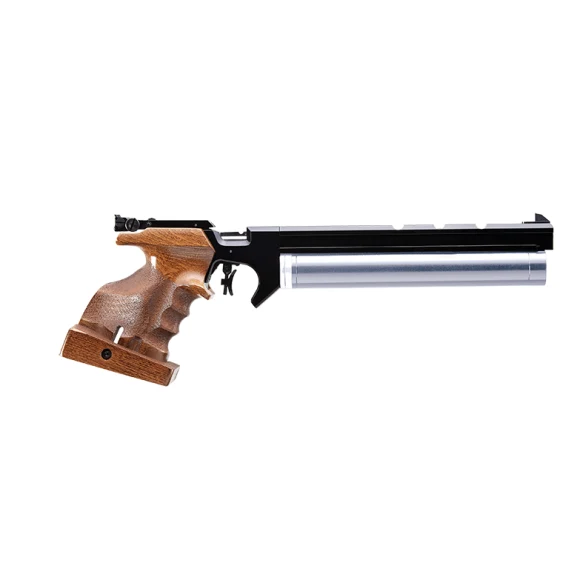
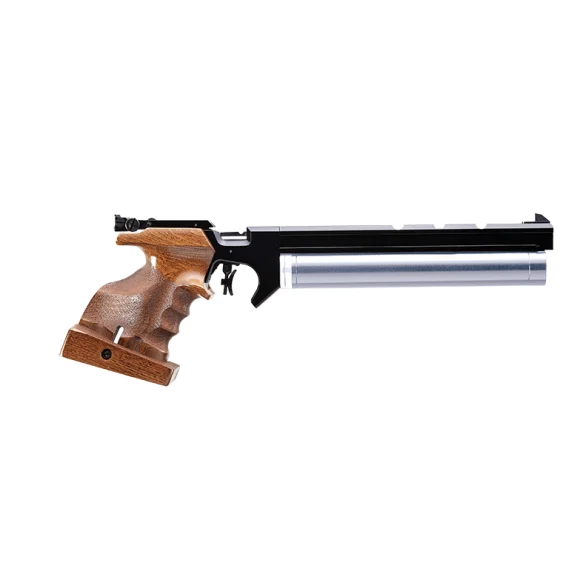
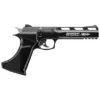
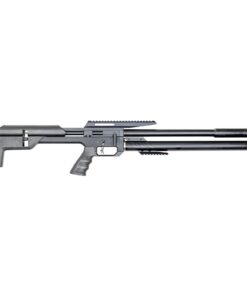
Snowpeak PP20 PCP Air Pistol
$600.00
| Action | SINGLE SHOT |
|---|---|
| Calibre | .177 (4.5mm) |
| Type | PCP |
| Stock | Beech hardwood |
| Trigger | Adjustable |
| Length (total) | 42.5cm |
| Length (barrel) | 24cm |
| Weight | 1.1kg |
Snowpeak PP20 PCP Air Pistol – Regulated Match Precision, Fully Adjustable Trigger and Beech Competition Grip
The Snowpeak PP20 PCP Air Pistol is a precision-focused pneumatic pistol created primarily for controlled target shooting. Snowpeak officially classifies the PP20 as an entry-level match PCP pistol and equips it with a regulator, fully adjustable match trigger, competition-style beech grip and 240mm barrel. The current manufacturer specification lists a 4.5mm calibre, approximately 560fps muzzle velocity, 1.1kg weight and compact overall dimensions of 420 × 145 × 50mm.
Unlike larger sporting rifles, the PP20 concentrates on balance, deliberate single-shot shooting and trigger control. Consequently, it offers a very different experience from a conventional pcp pellet rifle or full-size pneumatic rifle.
Regulated PCP System for Consistent Performance
The PP20 uses a regulated pneumatic system.
A regulator helps control the air delivered to the firing mechanism, improving consistency throughout the useful portion of the air supply. Snowpeak specifically identifies regulation as one of the PP20’s primary characteristics.
For anyone asking what is a pcp airgun, the concept is straightforward: compressed air is stored before shooting and then released in a controlled amount to propel the projectile.
Because the PP20 is intended for match-style shooting, consistency is more valuable than excessive output.
4.5mm Match Configuration
The current PP20 is officially specified in 4.5mm calibre and approximately 560fps.
This specification emphasizes controlled target performance rather than maximum power.
Therefore, search terms such as High power PCP air pistol should not be interpreted as describing the standard PP20. Its design priorities are accuracy, balance and repeatable shooting.
Fully Adjustable Match Trigger
One of the pistol’s most important features is its match trigger.
Snowpeak lists an adjustable trigger-pull range of approximately 0.1 to 2 lbf.
A properly adjusted match trigger helps reduce unnecessary hand movement during release.
For precision shooting, this matters because even small disturbances can move the sights away from the intended point of aim.
Beech Match Grip and Ergonomics
The pistol uses a beech match grip designed to provide a stable relationship between the hand, wrist and trigger.
Snowpeak describes this grip as being intended for a precise fit.
The wooden grip also gives the pistol a traditional competition appearance.
Because grip consistency strongly influences pistol accuracy, the shooter’s hand should settle naturally into the same position for each shot.
Compact 240mm Barrel and 1.1kg Weight
The barrel measures 240mm, while overall weight is approximately 1.1kg. The manufacturer lists total dimensions of roughly 420mm long, 145mm high and 50mm wide.
This compact architecture helps the pistol remain manageable during target sessions while still providing enough mass for a stable sight picture.
Snowpeak PP750L Comparison
Searches for Snowpeak PP750L PCP Air Pistol, Snowpeak PP750L, Snowpeak Air Pistol, PCP Pistol, Airgun Pistol, Snowpeak PP750L PCP Air Pistol for sale, snowpeak pp750, pp750, and snow peak pp750 often appear alongside PP20 research.
However, the PP750 family represents a different type of pneumatic pistol.
The PP20 is designed around entry-level match shooting, whereas other compact pneumatic pistols may emphasize portability, magazine operation or sporting use.
Specifications should therefore not be mixed between models.
Snowpeak P35, P35X and Rifle Comparisons
Broader research may include snowpeak p35, p35, snowpeak p35x, p35x, p35x pcp, pcp p 35, and snowpeak p35 vs p35x.
These refer to larger rifle-format platforms.
Other searches such as snowpeak m25, m25 rifle, m25 weapon, snowpeak m60, snowpeak m60b, m50 rifle, ap900b pcp air rifle, pr900 gen 3, snowpeak ap900, snowpeak max, snowpeak max 1 price, hp300, pellet 9mm, how much did the m60 weigh, and t rex 6000 also represent separate models or broader product searches.
For example, Snowpeak’s M60 is a full-size multi-calibre PCP rifle with a detachable magazine, adjustable regulator and much larger air system, making it fundamentally different from the compact PP20 match pistol.
Snow Peak PP20 Search Context
The phrases snow peak pp20 and snowpeak pp20 refer directly to this match-oriented pistol.
Searches for snowpeak airguns, snowpeak sports, snowpeaks, snow peak equipment, snowfall gun, snow peak customer service, and snow peak brand origin are broader searches connected with the manufacturer or general product research.
The PP20 itself should always be evaluated according to its own technical specification rather than information from unrelated models.
Accessories and Equipment
Buyers may also search for air gun accessories, air gun pc, air gun suppressor, and airgun moderator.
Accessory compatibility should be verified specifically for the PP20 before anything is fitted.
Because the pistol is designed around match-style balance, unnecessary accessories can also change weight distribution and handling.
Related Snowpeak Sporting Searches
The phrase pistolet pcp arcea-snowpeak onix sport may appear during broader pneumatic pistol research.
However, it does not describe the PP20 specification.
Likewise, searches involving larger sporting rifles or unrelated equipment should be treated separately.
Daystate Comparison Searches
Premium pneumatic research may also include Daystate Delta Wolf Performance, daystate blackwolf, delta wolf, huntsman daystate, day state, daystate delta wolf, daystate alpha wolf, daystate, alpha red wolf, daystate wolverine sapphire, day wolf, and what is a delta wolf.
Terms such as puddy bottle cover and black snood may also appear in wider accessory searches.
These products belong to a completely different premium rifle ecosystem and their electronic systems, magazines, reservoirs and performance characteristics should not be confused with the mechanically straightforward PP20.
Why Choose the Snowpeak PP20?
The strongest reason to choose the PP20 is its clear focus on disciplined target shooting.
The regulated system supports consistent air delivery.
The fully adjustable match trigger allows precise control.
The beech grip provides a stable and traditional competition-style interface.
The 240mm barrel gives the projectile a precision-oriented platform.
The compact dimensions make the pistol manageable.
The 1.1kg weight provides enough mass to support stability without making the pistol unnecessarily cumbersome.
Therefore, the PP20 is best suited to shooters who value careful trigger technique, repeatable hand placement, deliberate single-shot practice and consistent target performance.
Rather than chasing maximum velocity or high-capacity operation, the design concentrates on the fundamentals that matter most in precision pistol shooting: balance, control, consistency and repeatability.
Practical Accuracy, Match Ergonomics, Air Management and Everyday Performance
Built for Deliberate Target Shooting
This pistol is designed around control rather than speed.
Its strongest qualities become clear when the shooter takes time to build a consistent position, align the sights carefully, manage breathing, and apply smooth trigger pressure. Because the platform is intended for precision-oriented use, every part of the shooting process matters.
The grip matters.
The trigger matters.
The sight picture matters.
The air system matters.
The shooter’s stance also matters.
When these elements remain consistent, the pistol becomes much easier to understand and much easier to shoot well.
Why Repeatability Matters
One accurate shot proves very little.
A series of accurate shots provides much more useful information.
Precision shooting is built around repeatability. The shooter should be able to return the hand to the same position, align the sights in the same way, control breathing similarly, and apply trigger pressure without disturbing the pistol.
When the same process is repeated correctly, group size usually becomes more predictable.
That consistency is more important than chasing one unusually good target.
Establishing a Reliable Baseline
A baseline should be created before significant changes are made.
One suitable projectile should be selected.
The pistol should begin from a consistent fill condition.
The sights should remain unchanged.
Several groups should be fired from the same distance and position.
The results can then be compared.
This gives the shooter a dependable reference.
If performance improves after a change, the difference becomes easier to identify.
If performance becomes worse, the original setup can be restored.
Change One Variable at a Time
Changing several things together makes testing difficult.
If the shooter changes ammunition, grip pressure, sight settings, and fill pressure during the same session, it becomes difficult to identify what caused the result.
A better method is simple.
Change one factor.
Test again.
Compare the result.
Then decide whether another change is needed.
This method creates more useful information and reduces unnecessary adjustment.
Projectile Selection
Ammunition choice has a significant influence on accuracy.
Weight matters.
Diameter matters.
Shape matters.
Manufacturing consistency matters.
Two projectiles with similar advertised specifications may still perform differently.
For this reason, several suitable options should be tested before one is selected for regular target work.
Repeating Ammunition Tests
One unusually tight group should not determine the final choice.
Chance can produce an excellent result.
Several groups should be fired with each option.
Repeated performance matters more than one exceptional target.
If one projectile consistently produces smaller and more predictable groups, confidence in that choice increases.
Inspecting Ammunition
Damaged ammunition can create misleading results.
Dents, deformation, contamination, or inconsistent shape may affect flight.
For careful target work, projectiles should be inspected before loading.
Damaged pieces should be removed.
This reduces one source of unnecessary variation.
Single-Shot Discipline
A single-shot target pistol naturally encourages a slower rhythm.
Each projectile is loaded individually.
This gives the shooter time to reset the grip, breathing, stance, and sight alignment before the next shot.
That slower rhythm can be an advantage.
Instead of encouraging rapid shooting, it reinforces a deliberate process.
For precision practice, this can help develop better habits.
Why a Slower Shooting Rhythm Helps
Speed can hide technical mistakes.
A slower sequence makes them easier to identify.
The shooter can notice whether grip pressure changed.
The sight picture can be evaluated.
Trigger movement can be observed.
Breathing can be reset.
The wrist can return to the same angle.
These small details become easier to manage when the shooter is not rushing.
Understanding the Regulated Air System
A regulated pneumatic system is designed to control the air pressure delivered to the firing mechanism.
This helps reduce velocity variation through much of the useful fill.
More consistent velocity supports a more predictable point of impact.
This is especially important in precision target shooting, where even small variations can influence group size.
A regulator does not remove every variable, but it can reduce one important source of inconsistency.
Why Regulation Matters
Stable air delivery improves predictability.
However, the regulator is only one part of the complete system.
Projectile quality still matters.
Temperature still matters.
Sight alignment still matters.
Trigger technique still matters.
The shooter still matters.
The regulator simply helps create a more stable mechanical foundation.
Fill Consistency
Starting each serious test from a similar pressure improves comparison.
If one group is fired near the top of the fill and another much lower, the results may not be directly comparable.
Using a repeatable filling routine removes one unnecessary variable.
Monitoring Air Pressure
The shooter should become familiar with how the pistol behaves as reservoir pressure decreases.
The goal is not simply to fire until the reservoir is almost empty.
The goal is to remain within the useful pressure range where performance stays predictable.
Once that range becomes familiar, refill timing becomes easier.
Useful Shot Count
The useful number of shots depends on several factors.
Projectile weight matters.
Temperature matters.
Power level matters.
The condition of the pistol matters.
The most useful figure is not the theoretical maximum number of shots.
The important figure is the number of shots that remain consistent.
Recognizing the End of the Useful Fill
As reservoir pressure falls, the pistol may eventually reach a point where performance begins to change.
Velocity can decrease.
The report may sound different.
The point of impact can move.
The shooter should learn where this transition occurs.
Once performance becomes less predictable, refilling is usually more useful than continuing.
Safe Filling Practice
Only suitable high-pressure filling equipment should be used.
Connections should remain clean.
The filling process should be controlled rather than rushed.
Rapid filling can create heat.
After the system cools, the gauge may show a slightly lower pressure.
This is normal.
The approved maximum pressure should never be exceeded.
Clean and Dry Air
Clean, dry compressed air helps protect the internal system.
Moisture can create long-term problems.
Dust and debris can damage seals.
Fill fittings should remain protected when they are not in use.
Hoses and connectors should also be inspected periodically.
Match Grip Ergonomics
The wooden match grip is one of the most important parts of the pistol.
Its purpose is to help the hand return to a stable and repeatable position.
A good grip should support the palm without forcing the wrist into an uncomfortable angle.
The fingers should settle naturally.
The thumb should rest without excessive pressure.
The trigger finger should remain free to move independently.
Grip Consistency
Grip pressure should remain similar from shot to shot.
Too much tension can cause shaking.
Too little pressure can reduce stability.
The goal is a controlled grip that remains firm enough to support the pistol while still allowing the trigger finger to move freely.
Consistency is more important than force.
Wrist Position
The wrist should remain stable.
If the wrist angle changes from one shot to another, sight alignment can also change.
The shooter should find a position that feels natural and can be repeated easily.
A stable wrist helps the sights return to the same relationship.
Finger Placement
The fingers should wrap around the grip naturally.
Excessive squeezing can create sideways pressure.
The trigger finger should remain independent from the rest of the hand.
This is especially important because small changes in hand tension can move the muzzle.
Trigger Control
Trigger control is one of the most important skills in target pistol shooting.
Pressure should be applied smoothly.
The shooter should avoid a sudden pull.
The finger should move mainly rearward.
The pistol should remain stable as the trigger reaches the release point.
A clean trigger press helps preserve sight alignment.
Trigger Finger Position
Too much finger can pull the pistol sideways.
Too little contact can reduce control.
The ideal position varies between shooters.
The important goal is repeatability.
The finger should contact the trigger naturally and move without disturbing the rest of the hand.
Trigger Weight and Feel
A match trigger may offer a wide adjustment range.
However, the lightest possible setting is not automatically the best.
The trigger should remain predictable.
The shooter should feel confident about where the release point occurs.
A slightly heavier but cleaner setting may provide better control for some users.
Stance
A consistent stance creates the foundation for good pistol shooting.
The shooter should stand in a balanced position.
Body weight should be distributed comfortably.
The shoulders should remain relaxed.
The shooting arm should extend naturally.
Excessive muscular tension should be avoided.
A stable stance is easier to repeat than a forced one.
Foot Position
Foot placement should feel natural.
Small changes can affect upper-body alignment.
Once a comfortable stance is found, the same foot position should be repeated.
This helps the body settle into the same orientation toward the target.
Upper-Body Alignment
The shoulders should remain relaxed.
The torso should not be twisted excessively.
If the body feels strained, the stance may be difficult to repeat.
A natural alignment helps reduce fatigue during longer sessions.
Arm Position
The shooting arm should extend in a controlled manner.
The elbow should remain stable.
Excessive locking or muscular tension can increase shaking.
The goal is a firm but comfortable position.
Sight Alignment
Sight alignment is critical.
The front and rear sights must remain correctly positioned relative to each other.
Even a small alignment error can create a noticeable shift on the target.
The shooter should focus strongly on the relationship between the sights.
Front-Sight Focus
In traditional pistol shooting, the front sight usually deserves the greatest visual attention.
The target may appear slightly less sharp.
That is normal.
The front sight provides the most useful reference for maintaining alignment.
Sight Picture
Sight picture describes how the aligned sights are positioned relative to the target.
The shooter should use the same visual relationship every time.
Changing the aiming reference can create vertical or horizontal movement in the group.
Natural Movement
The pistol will move.
The shooter should not expect the sights to remain perfectly motionless.
Trying to force the sights completely still often increases tension.
Instead, the shooter should learn to accept a small natural movement area.
The trigger should be operated smoothly while the sight picture remains controlled.
Breathing Control
Breathing naturally moves the upper body.
Many shooters use the comfortable pause after exhaling to complete the shot.
The pause should remain natural.
If the shot is not ready, breathing should resume.
Long breath holds can create tension and reduce visual focus.
Follow-Through
The shooting process continues after the trigger releases.
The sights should remain observed.
The wrist should stay stable.
The arm should remain extended.
The pistol should not be lowered immediately.
Good follow-through helps reveal whether the shot was executed correctly.
Calling the Shot
Calling the shot means predicting where the projectile likely landed based on what the shooter observed during the release.
If the sights moved at the moment the trigger broke, the shooter may be able to predict the direction of the error.
This helps separate technique problems from equipment problems.
Target Distance
Target distance should be appropriate for the shooting discipline and the shooter’s experience.
A shorter distance can be useful for learning basic technique.
Once consistency improves, the shooter can work at the full intended distance.
Distance should not be increased simply to make shooting more difficult.
The goal is to build repeatable technique.
Indoor Target Use
A precision pneumatic pistol is particularly suited to controlled indoor target environments where suitable facilities and lawful use are available.
Indoor conditions remove many environmental variables.
There is little or no wind.
Lighting can be kept consistent.
Target distance can be standardized.
This makes technical practice easier.
Outdoor Target Use
Outdoor shooting introduces additional variables.
Wind can influence projectile flight.
Lighting conditions can change.
Temperature can affect air pressure.
These factors should be considered when comparing results from different sessions.
Wind Effects
At shorter target-pistol distances, wind may have less influence than it does with longer-range rifle shooting.
However, outdoor air movement can still affect small projectiles.
Strong or inconsistent wind can make accuracy testing more difficult.
If conditions are unstable, results should be interpreted carefully.
Temperature Effects
Compressed air pressure changes with temperature.
A pistol filled in warm conditions may show a lower pressure after cooling.
This does not automatically indicate a leak.
For careful testing, the pistol should be allowed to stabilize in the environment where it will be used.
Chronograph Testing
A chronograph can provide useful information about shot-to-shot consistency.
Several shots should be measured.
Average velocity provides a reference.
Variation between shots can also be observed.
The data should be interpreted as a pattern rather than by focusing on one unusual reading.
Extreme Spread
Extreme spread is the difference between the fastest and slowest measured shots.
A smaller spread generally indicates more consistent velocity.
This can help support tighter vertical grouping.
However, good velocity consistency does not automatically guarantee excellent accuracy.
Ammunition and shooting technique still matter.
Standard Deviation
Standard deviation shows how closely velocity readings cluster around the average.
Lower values can be useful when evaluating consistency.
However, small numerical improvements should not be overvalued if actual target groups do not improve.
Regulator Behavior
The regulator should help maintain stable performance through the useful portion of the fill.
If velocity changes unexpectedly while reservoir pressure remains adequate, further investigation may be appropriate.
However, ammunition, temperature, sight movement, or technique can create similar symptoms.
Troubleshooting should remain systematic.
Air Efficiency
Efficiency means obtaining reliable performance without wasting compressed air.
A well-balanced setup should produce stable velocity, predictable shot count, and consistent accuracy.
There is little reason to change a working system simply to increase air consumption.
Recognizing an Efficient Setup
A good setup generally produces stable groups and predictable behavior.
If further changes provide little measurable improvement, the pistol may already be near its practical optimum.
Additional adjustment may provide no meaningful benefit.
Keeping Detailed Records
A shooting log can save considerable time.
The shooter can record projectile type, fill pressure, velocity, group size, target distance, sight settings, and environmental conditions.
This creates a useful performance history.
If something changes later, previous results provide a reference.
Accuracy Troubleshooting
Accuracy problems should be investigated systematically.
Start with the sights.
Check ammunition.
Review air pressure.
Review grip consistency.
Review trigger technique.
Review stance.
Only after these basic factors have been checked should more complex mechanical causes be considered.
Tight Groups That Move
If groups remain tight but shift to another part of the target, the pistol may still be mechanically accurate.
Possible causes include sight movement, grip changes, lighting conditions, or changes in stance.
A shifted group is different from a larger group.
Groups That Become Larger
If group size increases significantly, ammunition, pressure variation, grip consistency, trigger technique, or visual focus may be responsible.
Returning to the known baseline can help identify the cause.
Barrel Cleaning
Cleaning should be based on performance.
If the pistol continues to group well, frequent cleaning may not be necessary.
If accuracy declines unexpectedly, barrel condition can be investigated.
Suitable cleaning materials should be used.
Aggressive methods should be avoided.
Conditioning After Cleaning
The first shots after cleaning may behave differently.
The barrel may require a short conditioning period.
The shooter should allow performance to stabilize before drawing conclusions.
Wooden Grip Care
The wooden grip should be kept clean and dry.
Perspiration can accumulate during extended sessions.
A soft cloth can be used after shooting.
Harsh chemicals should be avoided.
The grip should also be inspected periodically for cracks or unusual wear.
Preserving Grip Fit
The match grip should remain stable.
If screws or adjustment points become loose, the fit can change.
Even small changes may affect hand position.
The shooter should periodically confirm that the grip remains secure.
Exterior Metal Care
Metal surfaces should be kept clean and dry.
Fingerprints and moisture should be wiped away after use.
A suitable protective product can be applied where appropriate.
Excess lubricant should not be allowed to migrate into areas where it does not belong.
Detecting Air Loss
A gradual pressure decrease is not always evidence of a leak.
Cooling can reduce pressure.
However, repeated pressure loss under stable conditions deserves attention.
The source should be identified before components are replaced.
Seal Maintenance
Seals are normal wear components.
Their lifespan depends on pressure, cleanliness, temperature, and use.
Correct replacement parts should always be used.
Improvised components can create further problems.
Avoiding Unnecessary Disassembly
A pistol that performs correctly does not need constant internal work.
Repeated disassembly can introduce new problems.
Routine external inspection, sensible cleaning, pressure monitoring, and correct storage are usually sufficient.
Internal high-pressure work should be left to properly qualified technicians.
Professional Servicing
Regulator work, valve repair, seal replacement, and other internal servicing require suitable knowledge and tools.
If the owner is not qualified, professional servicing is the sensible option.
Correct servicing supports reliability, consistency, and safety.
Transport
The pistol should be transported unloaded.
A suitable case can protect the grip, sights, barrel, and metalwork.
Hard impacts should be avoided.
Applicable transport requirements should always be followed.
Storage
The pistol should be stored in a dry and secure location.
Unauthorized persons should not have access.
Humidity should be controlled where possible.
The air system should be maintained according to appropriate guidance.
Long-Term Reliability
Reliability comes from sensible maintenance.
The filling system should remain clean.
The barrel should be cleaned only when necessary.
The sights should remain secure.
The grip should remain stable.
The air system should be monitored for unusual pressure loss.
These basic habits help preserve performance.
Why the Match Grip Matters
The grip is one of the strongest features of the pistol.
A well-shaped match grip helps the hand return to the same position.
It supports a stable wrist.
It allows the trigger finger to move more independently.
It also reduces the need for excessive hand tension.
For precision shooting, these benefits are significant.
Why the Adjustable Trigger Matters
The trigger directly influences how much movement is introduced at the moment of release.
A predictable trigger allows pressure to build smoothly.
It reduces the temptation to jerk or rush the shot.
For target-oriented shooting, this can make a substantial difference.
Why Regulation Adds Confidence
A regulated system helps keep air delivery predictable.
Predictable air delivery supports stable velocity.
Stable velocity supports more consistent point of impact.
This creates a more useful foundation for evaluating shooter technique.
Why Compact Size Matters
A compact pistol is easier to transport.
It is easy to use on a dedicated target range.
It requires less storage space than a full-size rifle.
The compact format also keeps attention focused on hand, wrist, and trigger technique.
Why Low-Recoil Operation Matters
Pneumatic operation produces very little traditional recoil.
This allows the shooter to focus more closely on sight alignment and trigger control.
It also makes technical mistakes easier to observe.
If a shot moves away from the group, the shooter can concentrate on technique rather than managing a heavy recoil cycle.
Why Simplicity Helps Improvement
A simple single-shot format makes practice straightforward.
There is no need to manage a magazine.
There is no need to rush.
Each shot can be treated as a separate technical exercise.
For shooters who want to improve precision fundamentals, this can be extremely useful.
Who Will Appreciate This Configuration
This platform is particularly suitable for shooters who value controlled target practice, match-style ergonomics, regulated air delivery, a predictable trigger, and deliberate single-shot operation.
It appeals to users who want to develop precision pistol technique rather than rapid-fire capability.
It also suits shooters who prefer a mechanically straightforward target platform.
Final Practical Assessment
The overall strength of this pistol comes from its focus on precision fundamentals.
The regulated pneumatic system supports consistent air delivery.
The match grip helps create repeatable hand placement.
The adjustable trigger provides refined control.
The single-shot format encourages deliberate technique.
The compact dimensions make the pistol easy to manage.
The low-recoil firing cycle helps the shooter concentrate on sight alignment and trigger movement.
Together, these features create a focused platform for structured target practice.
However, the best results still depend on disciplined use.
Suitable ammunition should be selected through repeated testing.
A reliable baseline should be established.
The grip should be kept consistent.
The sights should be checked before mechanical problems are assumed.
Air pressure should be monitored.
The trigger should be used smoothly.
Maintenance should remain sensible.
When these habits are combined with stable technique, the pistol can provide excellent repeatability, predictable pneumatic performance, refined handling, and strong long-term value for precision-focused shooters.
For users who want a compact regulated target pistol that emphasizes balance, trigger control, hand placement, and methodical practice, this configuration offers a strong combination of consistency, simplicity, and practical precision.
Section 3 – Advanced Precision, Match Consistency, Reliability and Long-Term Ownership
Precision Is Built Through Repetition
A match-oriented pneumatic pistol should be judged by how consistently it performs over many sessions rather than by one unusually good group.
One excellent target can be encouraging, but repeated results reveal far more about the relationship between the pistol, ammunition, sights, air system, grip, and shooter.
Several elements need to remain stable.
The barrel should behave consistently.
The regulator should deliver air predictably.
The trigger should release cleanly.
The grip should return the hand to the same position.
The sights must remain aligned.
The shooter must also repeat stance, wrist position, breathing, and follow-through.
When these variables remain controlled, accuracy becomes easier to understand and easier to reproduce.
Establishing a Reliable Baseline
A dependable baseline should be created before major changes are made.
One suitable projectile should be selected.
The pistol should begin from a similar fill condition.
The sights should remain unchanged.
Several groups should be fired from the same distance and stance.
Velocity information can also be recorded if suitable equipment is available.
This gives the shooter a reference.
If performance improves after a change, the difference becomes easier to identify.
If performance becomes worse, the original setup can be restored.
Mechanical Accuracy Versus Shooter Accuracy
Mechanical accuracy describes what the pistol can achieve when human movement is minimized.
A stable support, consistent ammunition, secure sights, and controlled air pressure help reveal this.
Shooter accuracy describes what can be achieved while holding the pistol normally.
The two are not always identical.
A pistol may group very well from a rest and produce larger groups when fired one-handed.
That does not automatically indicate a mechanical issue.
The unsupported position simply introduces more movement.
Reading Group Patterns
Group shape can provide useful information.
Vertical movement may suggest one kind of inconsistency.
Horizontal movement may suggest another.
Scattered groups may involve several causes.
However, one target should not be treated as final proof.
Several groups should be compared.
Repeated patterns are far more useful than isolated results.
Vertical Dispersion
Vertical spread can be influenced by velocity variation.
If one projectile leaves the barrel faster than another, their points of impact may differ slightly.
At short target-pistol distances, this effect may be modest, but it can still appear.
Vertical movement can also come from breathing, changing wrist angle, changing sight picture, or lowering the pistol too early.
Several possible causes should therefore be considered.
Horizontal Dispersion
Horizontal spread is often associated with grip pressure or trigger movement.
If the trigger finger pulls sideways, the sights may shift during release.
Uneven pressure from the fingers can create a similar effect.
Body alignment can also influence horizontal consistency.
For this reason, the shooter should investigate technique before assuming a mechanical fault.
Sight Alignment Remains Critical
In precision pistol shooting, sight alignment is one of the most important factors.
A small error between the front and rear sights can create a noticeable shift on the target.
The shooter should therefore pay close attention to the front sight.
The relationship between front and rear sights should remain consistent.
The target itself does not need to appear perfectly sharp.
Front-Sight Discipline
The front sight should receive most of the shooter’s visual attention.
This allows alignment errors to be noticed more easily.
If attention moves entirely to the target, the sight relationship can become less precise.
Good shooters learn to trust the aligned sights.
That discipline often improves group consistency.
Consistent Sight Picture
Sight picture describes where the aligned sights are placed relative to the target.
The shooter should use the same reference for every shot.
Changing that reference can shift the group vertically or horizontally.
A repeatable sight picture is therefore essential.
Natural Movement
The sights will move.
No shooter can hold the pistol perfectly still.
Trying to eliminate all movement often creates excessive muscular tension.
That tension can make the movement worse.
A better approach is to accept a small natural movement area and apply trigger pressure smoothly while the sights remain controlled.
Trigger Control Under Pressure
Trigger control becomes more difficult when the shooter tries too hard to produce a perfect shot.
The finger may hesitate.
Pressure may stop and start.
The final release may become abrupt.
A better approach is a smooth and continuous increase in pressure.
The trigger should release without disturbing the sight relationship.
Trigger Finger Independence
The trigger finger should move independently from the rest of the hand.
If the entire hand tightens during the trigger press, the muzzle can move.
The grip should remain stable while the trigger finger works separately.
Developing this independence takes practice.
Trigger Weight and Predictability
A very light trigger is not automatically superior.
The trigger should be predictable.
The shooter should understand where the release point occurs.
A slightly heavier but cleaner trigger can feel more controllable than one that is extremely light and difficult to predict.
The best setting is the one that supports safe and repeatable release.
Grip Pressure
Grip pressure should remain consistent.
Excessive tension can cause shaking.
Too little pressure can reduce stability.
The shooter should aim for a firm but relaxed grip.
The same pressure should be applied every time.
Grip Pressure Distribution
Not all fingers need to squeeze equally.
The hand should support the pistol without twisting it.
Uneven finger pressure can move the muzzle sideways.
The shooter should pay attention to how the grip feels before each shot.
Wrist Stability
The wrist should remain stable throughout the firing cycle.
Changing wrist angle changes the relationship between the bore and sights.
That can shift point of impact.
A natural wrist position is easier to repeat than one that is forced.
Hand Placement
The hand should settle into the grip in the same way each time.
The palm should contact the grip consistently.
The fingers should return to familiar positions.
The trigger finger should reach the trigger naturally.
If hand placement changes, sight alignment can change with it.
Stance Consistency
The stance provides the foundation for the entire shot.
The feet should be placed comfortably.
Body weight should remain balanced.
The shoulders should stay relaxed.
The shooting arm should extend naturally.
A forced stance is difficult to repeat.
Natural Point of Aim
Natural point of aim refers to where the pistol tends to settle when the body is relaxed.
The shooter should adjust foot position rather than forcing the upper body to hold the sights on target.
A natural alignment reduces muscular effort.
Reduced effort improves consistency.
Arm Position
The shooting arm should remain stable without excessive tension.
The elbow should not be forced unnecessarily.
The shoulder should remain relaxed.
The pistol should feel supported by body structure rather than constant muscular effort.
One-Handed Practice
One-handed shooting demands greater stability and discipline.
The grip becomes more important.
Wrist position becomes more important.
Trigger control becomes more important.
For target-focused users, one-handed practice can develop strong technical fundamentals.
Two-Handed Practice
A two-handed hold can provide additional stability.
However, it should not become a substitute for good trigger technique.
The supporting hand should assist without introducing uneven pressure.
The pistol should remain aligned naturally.
Breathing Control
Breathing moves the upper body.
Many shooters complete the shot during the comfortable pause after exhaling.
The pause should not be forced.
If the shot is not ready, breathing should resume.
Long breath holds can create tension and reduce visual clarity.
Timing the Shot
A shot should not be held indefinitely.
As the arm tires, movement usually increases.
Visual focus may also decrease.
If the shot does not develop naturally, the pistol should be lowered and the sequence restarted.
This is better than forcing a poor release.
Follow-Through
Follow-through is essential.
The shooter should keep the arm extended after the trigger releases.
The sights should remain observed.
The wrist should stay stable.
The pistol should not be lowered immediately.
This helps reveal whether the shot was executed correctly.
Calling the Shot
Calling the shot means predicting where the projectile landed based on the sight picture at the moment of release.
This skill is extremely useful.
If the shooter predicts a left-side impact and the target confirms it, the cause may be technical rather than mechanical.
Over time, shot calling improves awareness.
Developing a Consistent Shot Routine
A fixed routine can improve performance.
The shooter may begin with stance.
Then grip.
Then breathing.
Then sight alignment.
Then trigger pressure.
Then follow-through.
The exact sequence can vary, but it should remain consistent.
A repeatable routine reduces unnecessary mental decisions.
Mental Focus
Precision pistol shooting requires concentration.
The shooter should focus on the process rather than the result.
Thinking about the score before the shot is completed can create tension.
Attention should remain on sight alignment and smooth trigger movement.
The score is simply the result of the process.
Managing Fatigue
Fatigue can reduce accuracy.
The arm may begin to shake.
The wrist may become less stable.
Trigger movement may become abrupt.
Long sessions should therefore include breaks.
Short, focused practice can be more productive than continuing after technique begins to deteriorate.
Visual Fatigue
The eyes can also become tired.
Front-sight focus may become more difficult.
The shooter may begin shifting attention to the target.
Short visual breaks can help restore clarity.
Good lighting also improves consistency.
Indoor Target Conditions
Indoor conditions provide a controlled environment.
Wind is removed.
Lighting can remain stable.
Target distance can be standardized.
This makes it easier to evaluate technique.
Indoor practice is particularly useful when developing basic precision skills.
Outdoor Target Conditions
Outdoor shooting introduces more variables.
Wind can influence projectiles.
Lighting can change.
Temperature can affect pressure.
The shooter should therefore interpret outdoor groups with these conditions in mind.
Lighting Effects
Lighting can change how the sights appear.
Strong light may create glare.
Low light can make the sight edges less distinct.
Changing lighting conditions can affect sight picture.
Consistent lighting is therefore valuable during serious testing.
Temperature Effects
Compressed air pressure changes with temperature.
A pistol filled in warm conditions may show lower pressure after cooling.
This does not automatically indicate a leak.
The pistol should be allowed to stabilize before serious testing.
Regulator Consistency
The regulator helps maintain controlled air delivery through the useful portion of the fill.
This supports more stable velocity.
Stable velocity supports more predictable point of impact.
For a target pistol, this consistency is especially valuable because the goal is to reduce mechanical variation as much as possible.
Understanding the Useful Pressure Window
Even a regulated system has a practical operating range.
Once reservoir pressure becomes too low, the regulator may no longer maintain the same working pressure.
Velocity can begin to change.
The point of impact may shift.
The shooter should learn when this transition occurs.
Chronograph Interpretation
Chronograph data should be evaluated as a pattern.
Average velocity provides a useful reference.
Extreme spread and standard deviation provide additional information.
However, one unusual reading should not dominate the analysis.
The target remains the final measure.
Extreme Spread
Extreme spread is the difference between the fastest and slowest measured shots.
A smaller spread generally suggests better velocity consistency.
This can help reduce vertical variation.
However, ammunition compatibility and shooter technique still matter.
Standard Deviation
Standard deviation shows how closely velocity readings cluster around the average.
Lower values can be useful when evaluating consistency.
However, small numerical improvements should not be overvalued if actual groups do not improve.
Projectile Consistency
Ammunition should be visually consistent.
Damaged pieces should be removed.
For serious target work, the shooter may prefer ammunition that performs consistently rather than simply choosing the lightest or fastest option.
Accuracy should remain the priority.
Repeated Ammunition Testing
Several groups should be fired with each candidate projectile.
One excellent group is not enough.
Repeated performance provides better evidence.
The same distance, stance, fill condition, and sight settings should be used when possible.
Loading Consistency
Every projectile should be loaded carefully.
The loading movement should be smooth.
Damaging the projectile can affect accuracy.
The shooter should avoid rushing this part of the sequence.
Barrel Condition
The barrel should be monitored through performance.
If accuracy remains stable, frequent cleaning may not be necessary.
If group size deteriorates unexpectedly, barrel condition can be investigated.
Cleaning should remain gentle and appropriate.
Conditioning After Cleaning
A freshly cleaned barrel may behave differently.
The first few shots can produce a slightly different point of impact.
The shooter should allow performance to stabilize before evaluating accuracy.
Sight Security
The sights should remain secure.
If the point of impact changes unexpectedly, sight movement should be considered.
Adjustment screws should not be changed casually.
A known zero should be preserved unless there is a clear reason to alter it.
Sight Adjustments
Sight changes should be made only after a consistent group has been established.
Adjusting after every single shot can lead to confusion.
A group reveals the average point of impact.
Once that pattern is clear, the sights can be corrected.
Keeping Records
A shooting log can be extremely useful.
The shooter can record ammunition, fill pressure, group size, target distance, sight settings, temperature, and any changes made.
This creates a performance history.
Patterns become easier to recognize over time.
Troubleshooting Accuracy Changes
Accuracy problems should be investigated systematically.
Check the sights.
Check ammunition.
Review grip.
Review stance.
Review wrist position.
Review trigger control.
Review air pressure.
Only after these factors have been examined should more complicated mechanical causes be considered.
Tight Groups That Shift
If groups remain tight but move to another part of the target, the pistol may still be mechanically accurate.
Possible causes include sight movement, lighting, grip changes, or stance changes.
A shifted group is different from a larger group.
Groups That Become Larger
If group size increases, the cause may involve ammunition, pressure variation, grip consistency, fatigue, trigger technique, or visual focus.
Returning to the known baseline can help isolate the issue.
Detecting Air Loss
A slow pressure reduction is not always evidence of a leak.
Cooling can reduce pressure.
However, repeated pressure loss under stable temperature conditions deserves attention.
The source should be identified before parts are replaced.
Seal Maintenance
Seals are normal wear components.
Their lifespan depends on pressure, cleanliness, temperature, and use.
Correct replacement parts should always be used.
Improvised components can create further problems.
Regulator and Valve Servicing
Regulators and valves operate within a high-pressure system.
Internal work requires suitable knowledge and tools Snowpeak PP20 PCP Air PistolSnowpeak PP20 PCP Air PistolSnowpeak PP20 PCP Air PistolSnowpeak PP20 PCP Air Pistol.
If the owner is not qualified, professional servicing is the sensible option.
Correct servicing supports safety and reliability Snowpeak PP20 PCP Air PistolSnowpeak PP20 PCP Air PistolSnowpeak PP20 PCP Air Pistol.
Wooden Grip Care
The wooden grip deserves regular but simple care.
Perspiration should be wiped away after use.
Dust should be removed with a soft cloth Snowpeak PP20 PCP Air PistolSnowpeak PP20 PCP Air PistolSnowpeak PP20 PCP Air Pistol.
Harsh chemicals should be avoided.
The grip should also be inspected for cracks or unusual wear.
Preserving the Grip Surface
The grip surface should remain clean and comfortable.
Aggressive polishing can make the surface too smooth.
A match grip needs enough texture to provide secure contact.
Care should therefore remain conservative.
Grip Screw Inspection
Grip fasteners should remain secure.
A loose grip can change hand position.
Even a small movement can affect sight alignment.
The shooter should periodically confirm that the grip remains stable.
Exterior Metal Care
Metal surfaces should be kept clean and dry.
Fingerprints and moisture should be wiped away after use.
A suitable protective product can be applied where appropriate.
Excess lubricant should not be allowed to migrate into areas where it does not belong.
Transport
The pistol should be transported unloaded.
A suitable case should protect the sights, grip, barrel, and metalwork.
Hard impacts should be avoided.
Applicable transport requirements should always be followed.
Storage
The pistol should be stored in a dry and secure location.
Unauthorized persons should not have access.
Humidity should be controlled where possible.
The air system should be maintained according to appropriate guidance.
Long-Term Reliability
Reliability comes from sensible maintenance.
The filling system should remain clean.
The sights should remain secure.
The grip should stay stable.
The barrel should be cleaned only when necessary.
The air system should be monitored for unusual pressure loss.
These basic habits help preserve performance.
Avoiding Unnecessary Disassembly
A pistol that performs correctly does not need constant internal work.
Repeated disassembly can introduce new problems.
Routine external inspection, sensible cleaning, pressure monitoring, and correct storage are usually sufficient.
Internal high-pressure work should be left to properly qualified technicians Snowpeak PP20 PCP Air PistolSnowpeak PP20 PCP Air PistolSnowpeak PP20 PCP Air PistolSnowpeak PP20 PCP Air Pistol.
Professional Servicing
Regulator work, valve repair, seal replacement, and other internal servicing require suitable knowledge and tools.
If the owner is not qualified, professional servicing is the appropriate choice.
Correct servicing supports reliability, consistency, and safety.
Buying a Used Example
A used pistol should be inspected carefully.
The air system should retain pressure.
The trigger should feel predictable.
The sights should remain secure.
The wooden grip should be checked for cracks or poor repairs.
The barrel and exterior should also be inspected.
Service History
A known service history can provide useful information.
Records of regulator servicing, seal replacement, or other maintenance can help the buyer understand condition.
A lack of records does not automatically indicate a problem, but inspection becomes more important.
Cosmetic Condition Versus Mechanical Condition
Cosmetic appearance should not be confused with mechanical condition.
A pistol may show normal handling marks while performing extremely well.
Likewise, a visually perfect pistol may still require servicing.
Mechanical function matters more.
Long-Term Ownership
The strongest ownership experience often comes from learning the pistol rather than constantly changing it.
Once suitable ammunition and dependable sight settings are established, the shooter can focus on technique.
The grip becomes familiar.
The trigger becomes predictable.
The stance becomes natural.
The sight picture becomes easier to repeat.
The pistol becomes easier to shoot consistently.
Why the Match Grip Matters Long Term
The grip is not simply decorative.
It defines the relationship between hand, wrist, trigger, and sights.
A consistent grip reduces variation.
For precision shooters, this can be one of the most important aspects of the platform.
Why Regulation Matters Long Term
A regulated system provides a predictable mechanical foundation.
The shooter can focus on technique without constantly questioning whether every small variation came from air pressure.
That confidence can make practice more productive.
Why Single-Shot Simplicity Matters
The single-shot format removes magazine-related complexity.
Every shot is deliberate.
Every projectile can be inspected.
Every firing sequence can be treated as a separate technical exercise.
For precision-focused users, that simplicity can be an advantage.
Why Compact Dimensions Matter
A compact pistol is easy to transport and store.
It is convenient for structured range practice.
Its size keeps the shooter focused on grip, wrist, sight alignment, and trigger technique.
That makes it particularly suitable for methodical precision work.
Why Low Recoil Helps Training
A mild firing cycle allows the shooter to observe mistakes more clearly.
There is less movement to mask poor trigger technique.
If the sights move during release, the shooter can identify that movement more easily.
This makes the pistol a useful platform for technical development.
Who Will Appreciate This Configuration
This platform is particularly suitable for shooters who value regulated consistency, match-style ergonomics, deliberate single-shot operation, trigger control, and structured target practice.
It appeals to users who want to improve precision fundamentals.
It also suits shooters who prefer mechanical simplicity over rapid-fire capability.
Final Advanced Assessment
The strongest quality of this pistol is its focus.
The regulated pneumatic system supports controlled air delivery.
The match grip helps create repeatable hand placement.
The adjustable trigger provides refined input.
The single-shot layout encourages deliberate technique.
The compact architecture keeps handling manageable.
The low-recoil firing cycle helps the shooter concentrate on sight alignment and trigger control.
Together, these elements create a disciplined target platform with a clear precision-oriented purpose.
However, dependable results still depend on good shooting habits.
Suitable ammunition should be selected through repeated testing.
A reliable baseline should be established.
Grip pressure should remain consistent.
Sight settings should be protected once confirmed.
Air pressure should be monitored.
Trigger technique should remain smooth.
Fatigue should be managed.
Maintenance should remain sensible.
When these habits are combined with structured practice, the pistol can provide excellent repeatability, predictable pneumatic performance, refined handling, and strong long-term value.
For shooters who want a compact regulated target pistol built around balance, trigger control, consistent hand placement, and methodical precision practice, this configuration offers a strong combination of accuracy, simplicity, reliability, and long-term usability.
Be the first to review “Snowpeak PP20 PCP Air Pistol”
Related products
Snowpeak Airguns
Snowpeak Airguns
Snowpeak Airguns
Snowpeak Airguns
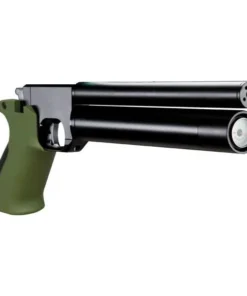
Snowpeak Airguns
Snowpeak Airguns
Snowpeak Airguns
Snowpeak Airguns
Reviews
There are no reviews yet.