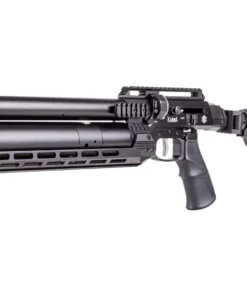
Karma SLS PCP Air Rifle
$900.00
Description
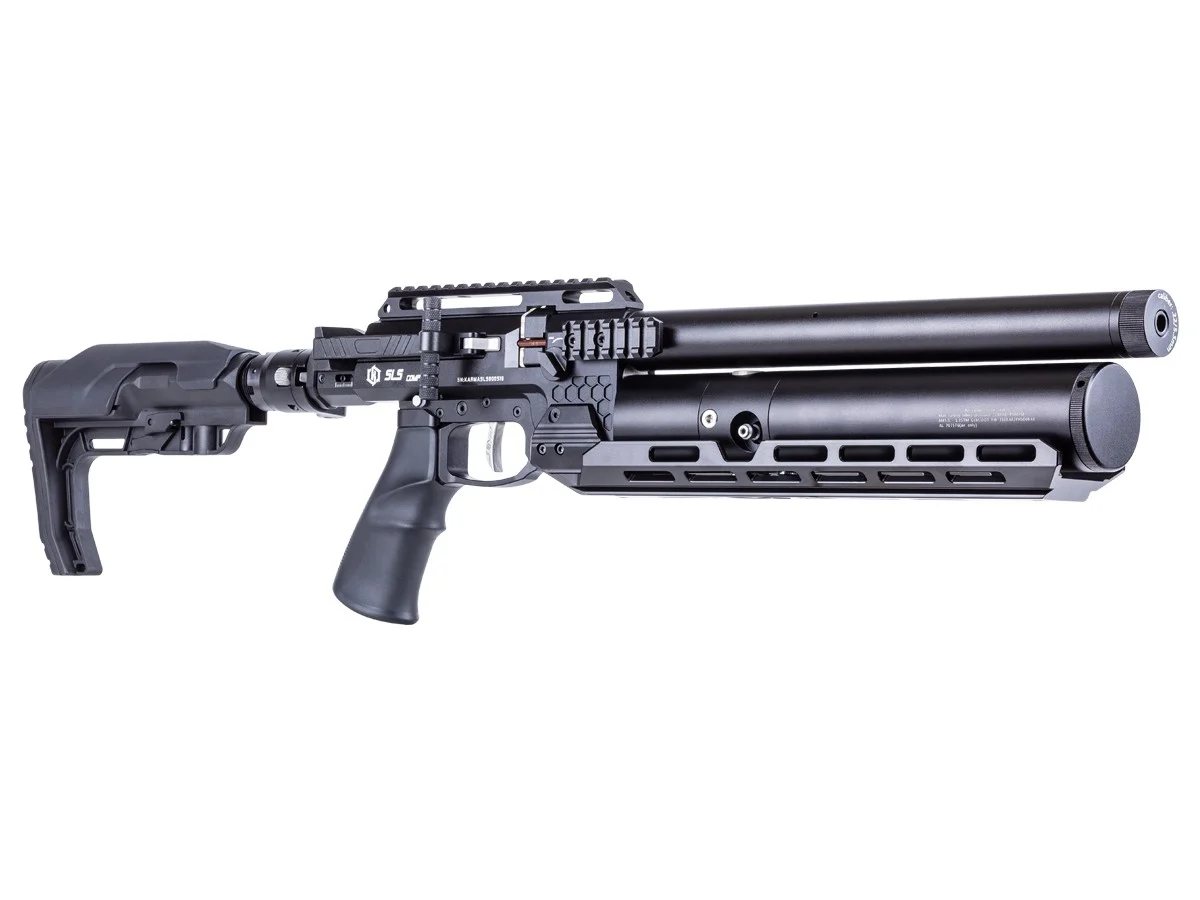
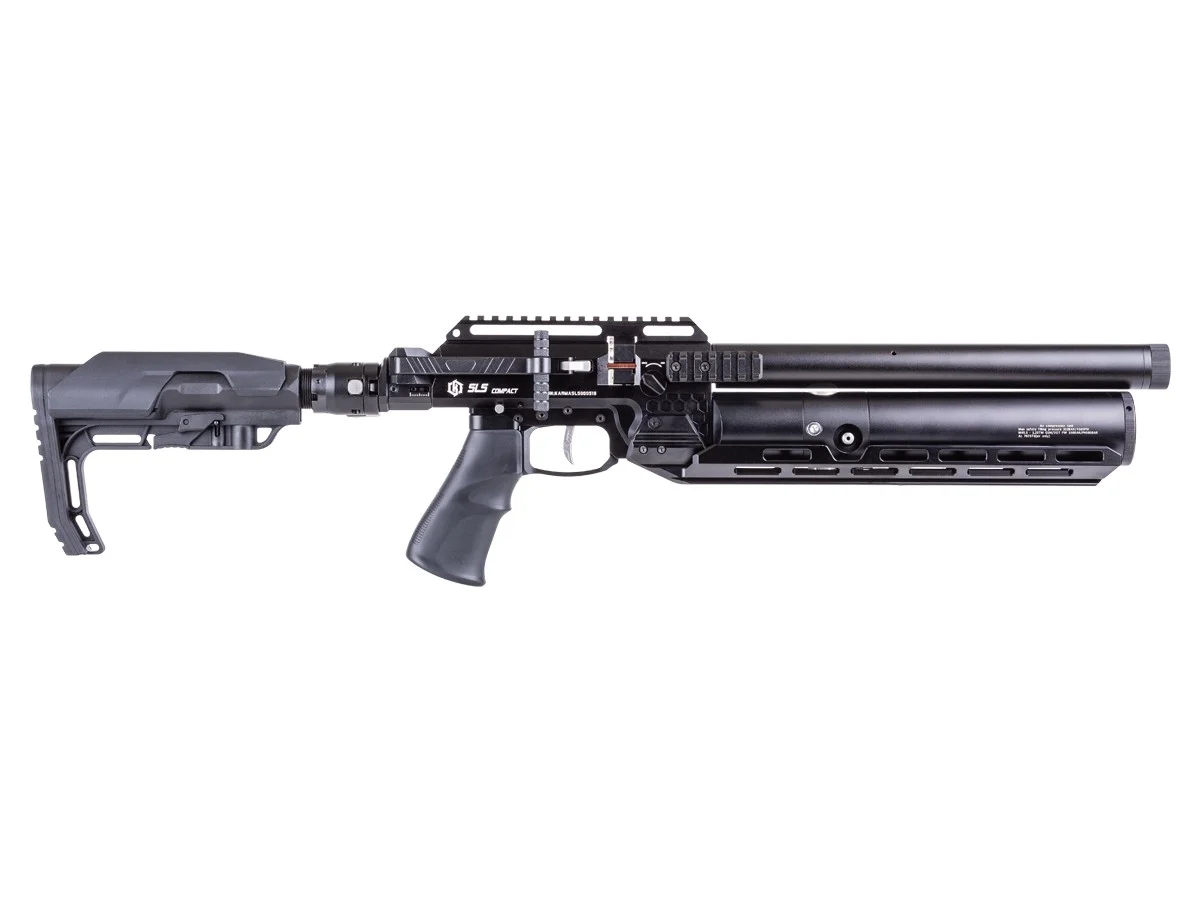
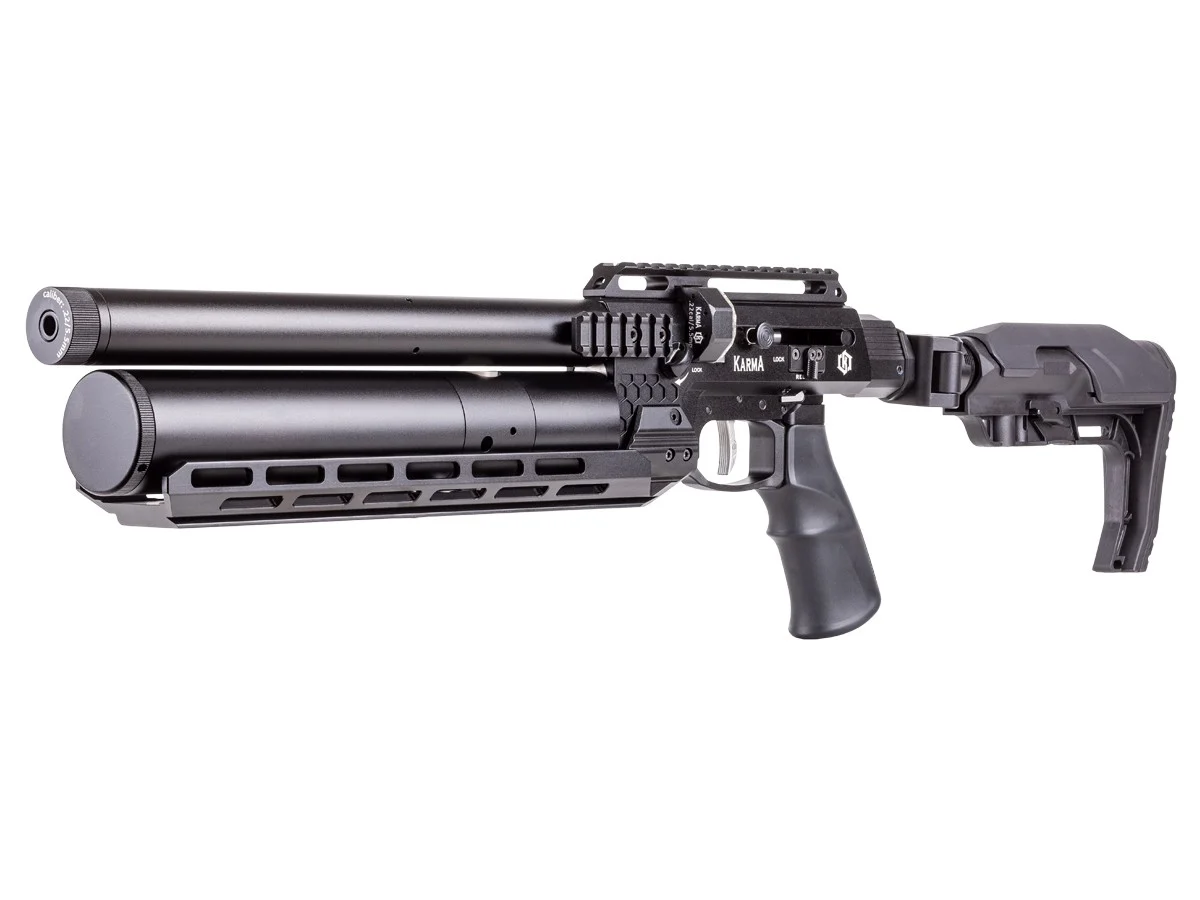
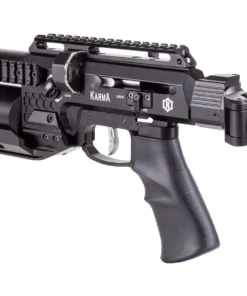
The Karma SLS PCP Air Rifle is a unique air gun that delivers ease of use with convenient features and the ability to quickly shift between standard sidelever action and semi-auto action. With a variety of adjustable options and engineered for adaptability, it provides the power and accuracy for any type of shooting, from plinking, to pest control, target shooting, and small-game hunting.
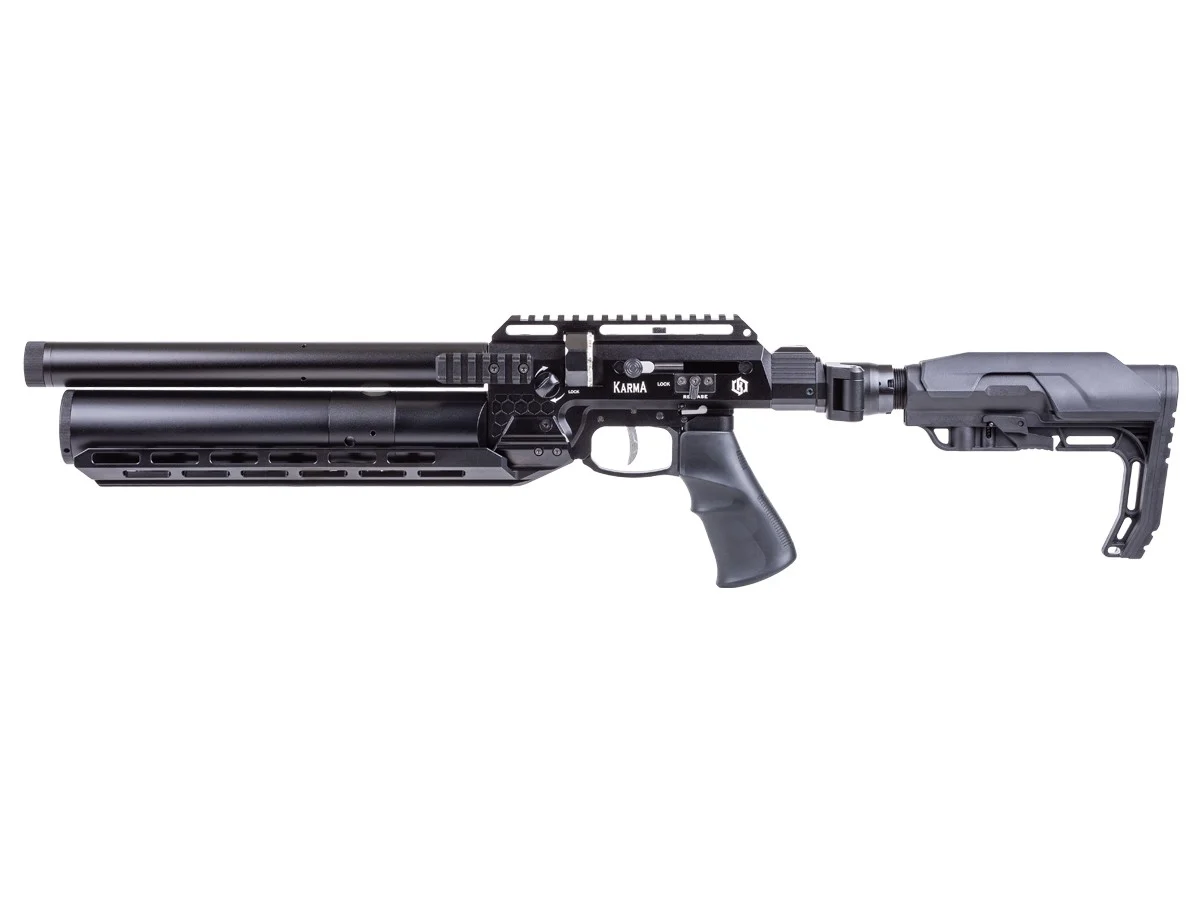
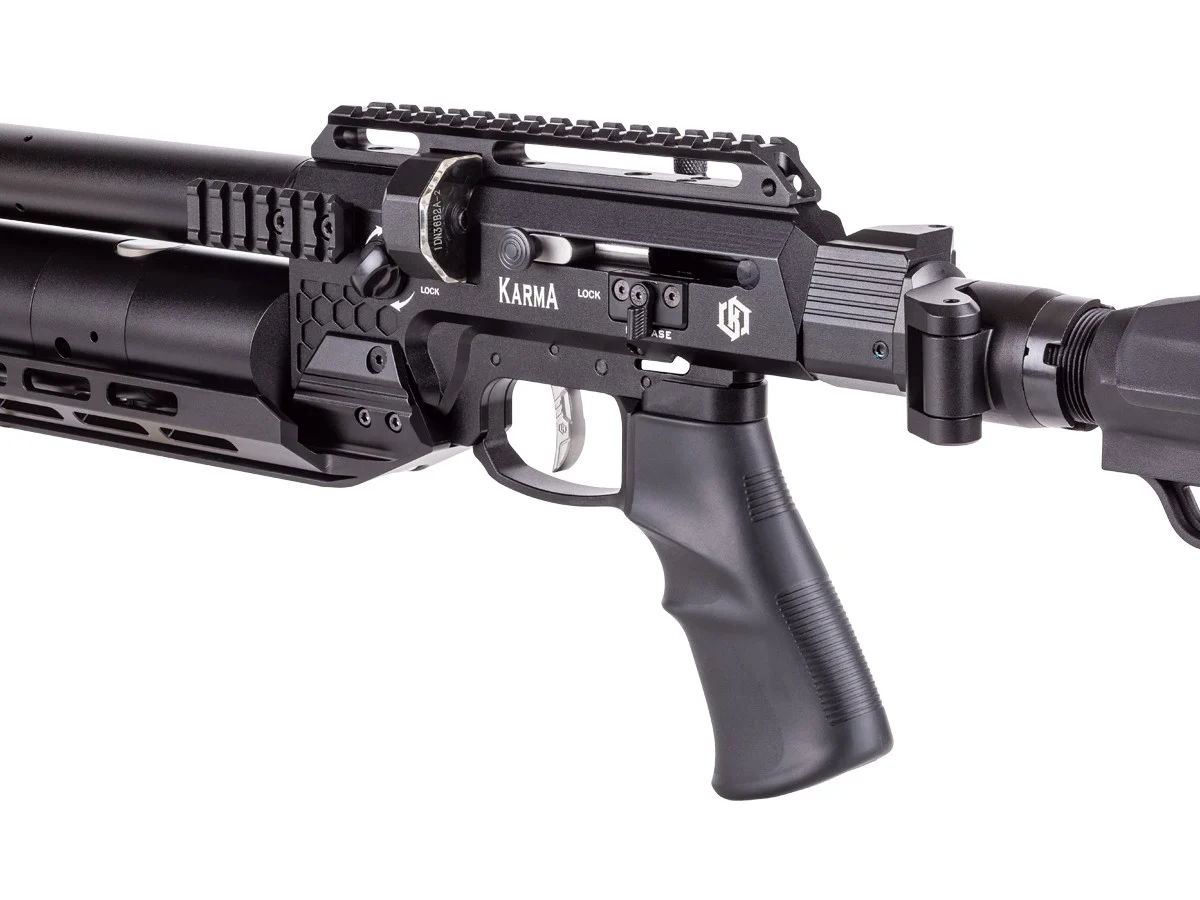
The main feature of this air rifle that makes it different from others is the knob on the left side of the stock that allows it to switch between sidelever cocking and semi-auto action. Simply pull out on the knob to activate semi-auto mode, which uses air pressure to cycle the magazine and allows shots to leave the barrel as fast as the shooter can pull the trigger, and push down on the knob for sidelever mode for quieter traditional operation that uses the sidelever to cycle the magazine.
The Karma SLS has a variety of adjustable features that allow for performance tuning of the air rifle, including the externally-adjustable regulator, the tool-free externally-adjustable transfer port knob, and the tool-free externally-adjustable hammer spring knob. These features help shooters fine-tune the air gun for consistency and use for different types of shooting and various types of ammo.
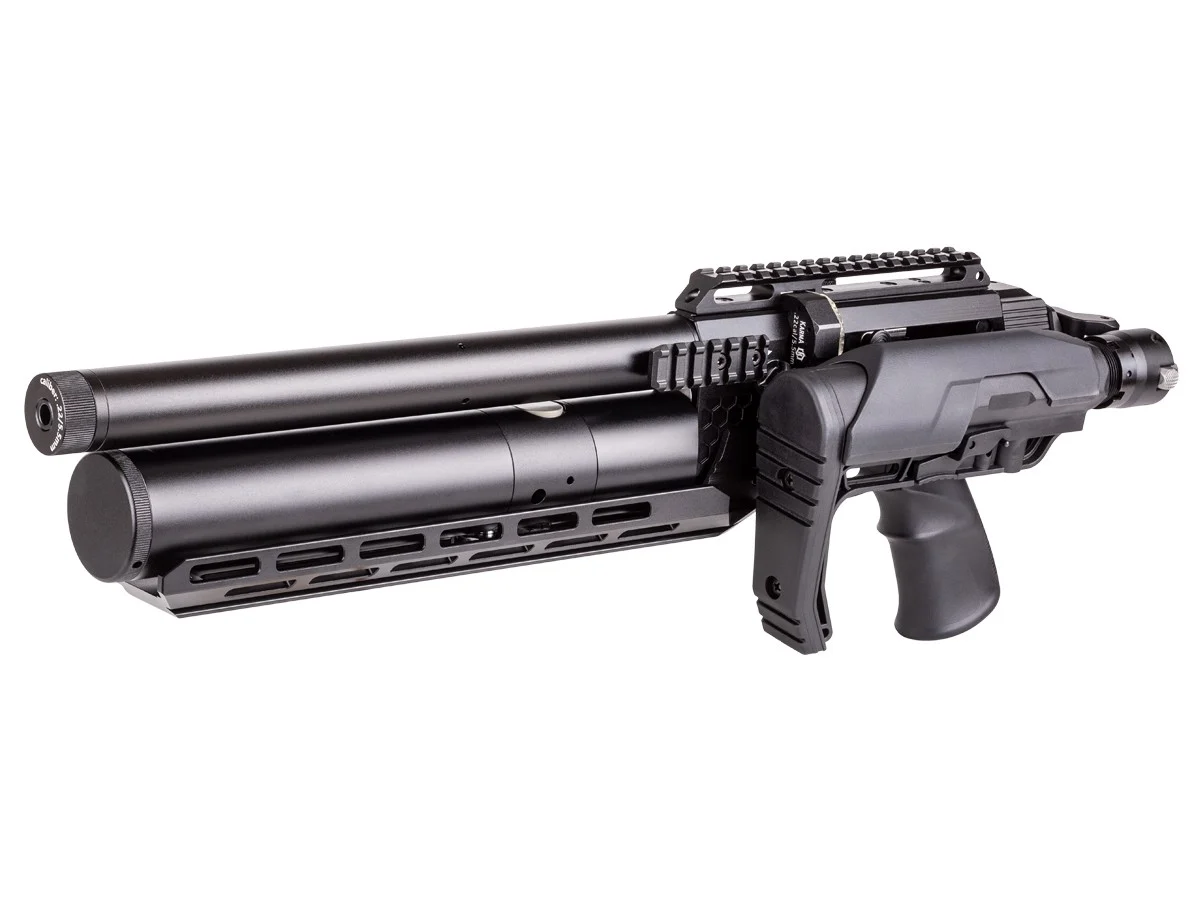
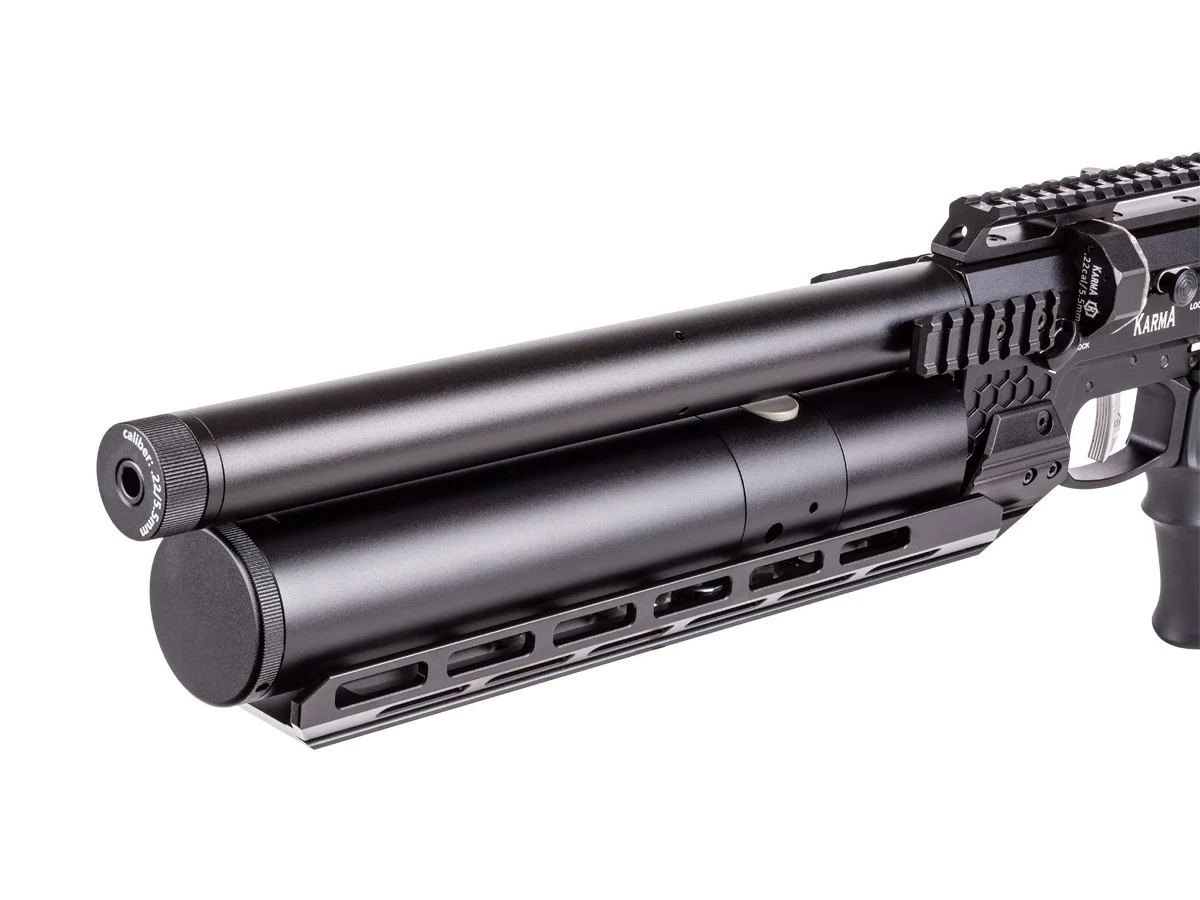
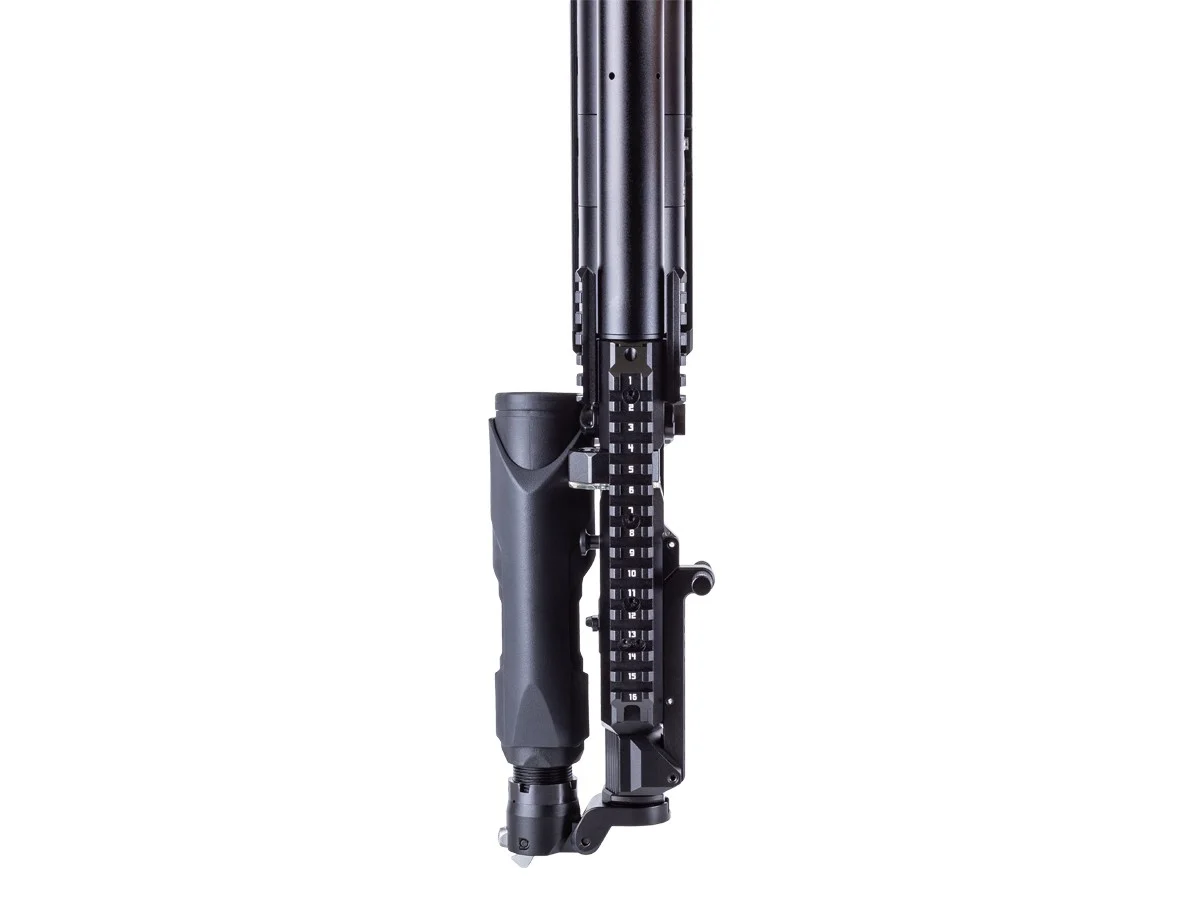
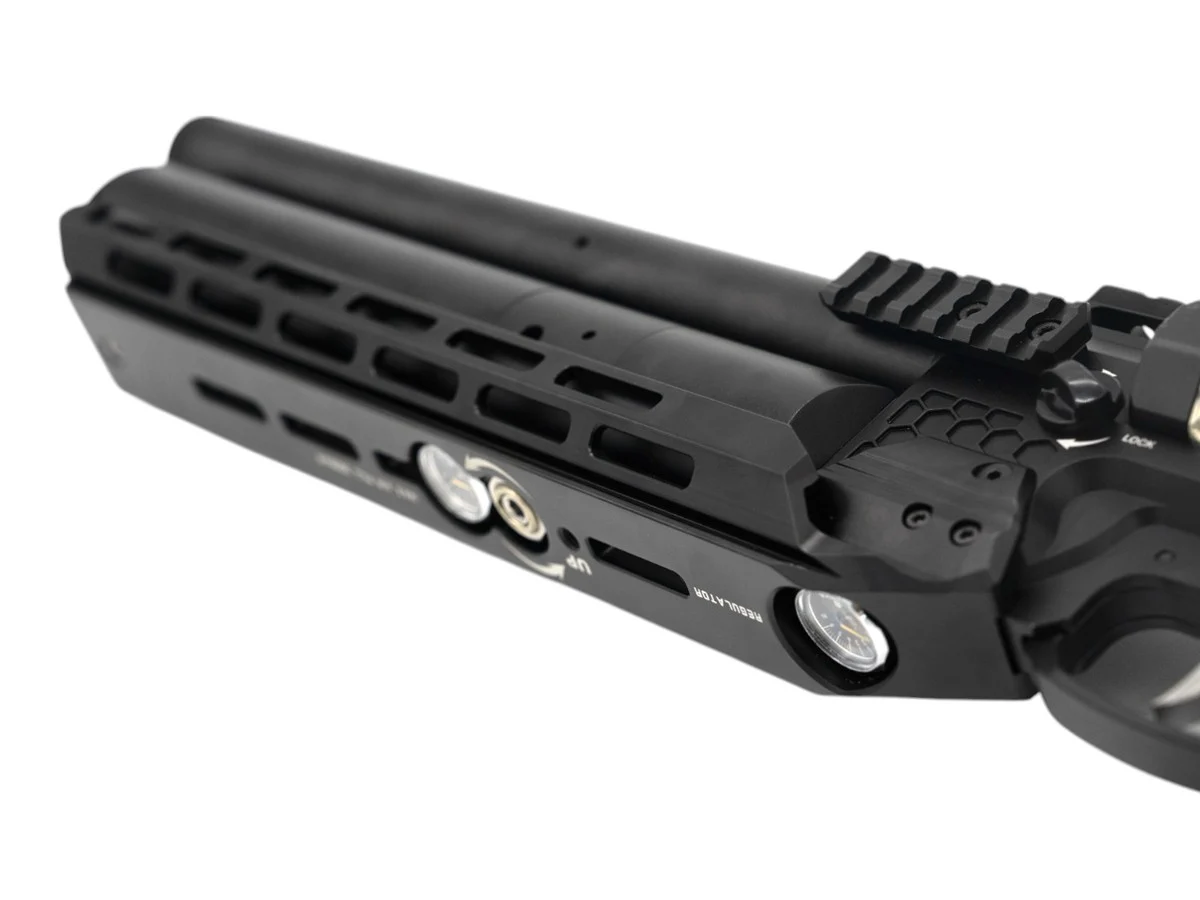
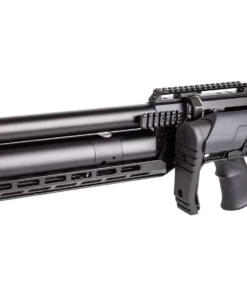
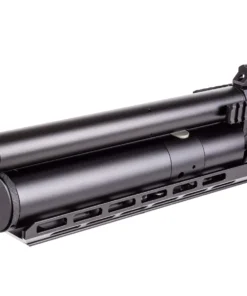
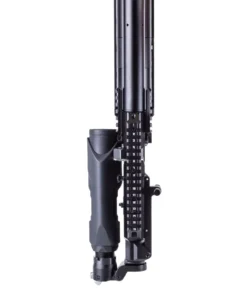
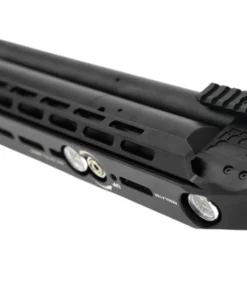
This air rifle comes with a Picatinny optics rail with a bubble level and a 20 MOA angle to improve long-range accuracy, as well as Picatinny accessory rails on both sides of the stock under the optics rail, M-LOK accessory rails on the sides below the air cylinder, and an Arca-Swiss rail underneath the air cylinder, which all combine to provide maximum flexibility for adding accessories such as lasers, lights, shooting weights, and bipods.
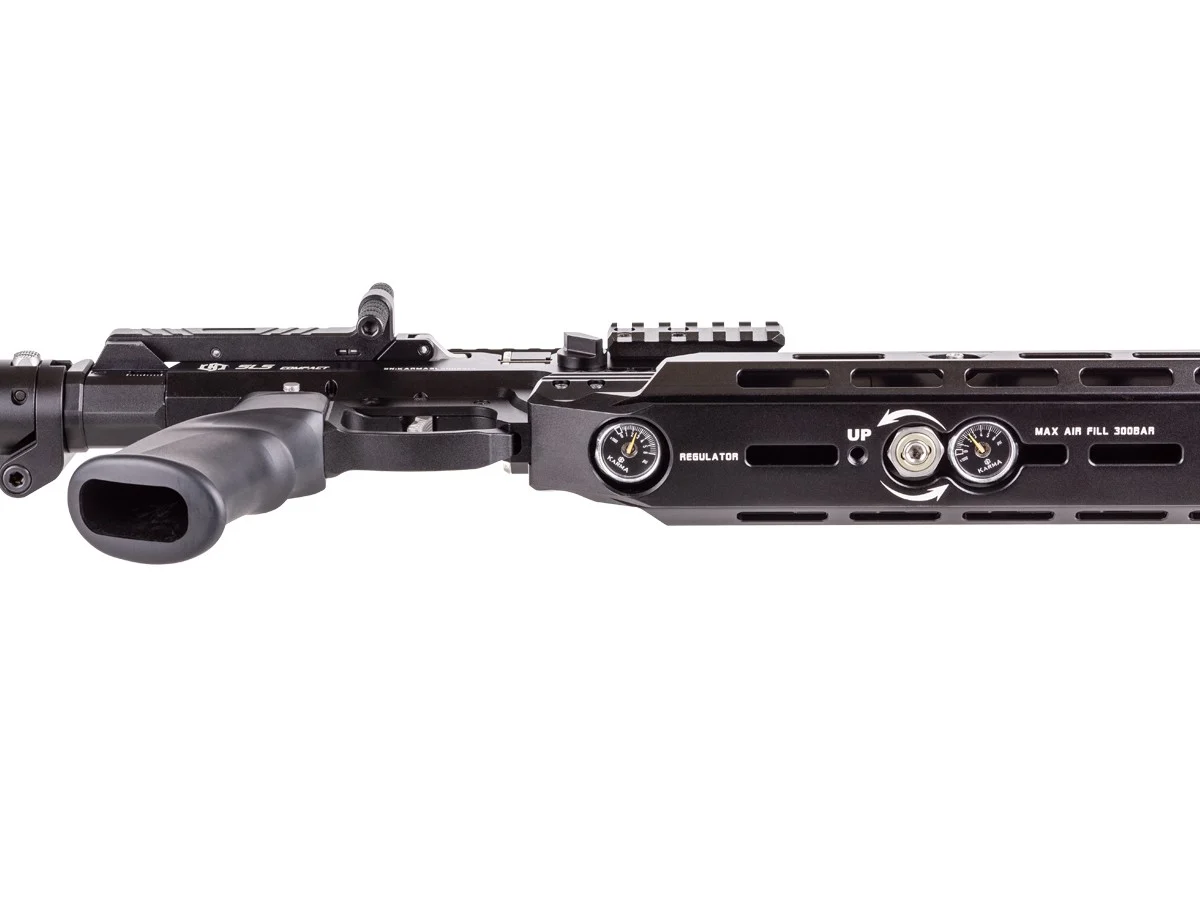
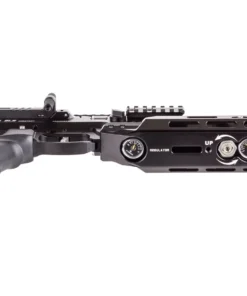
The stock on this air rifle is a Mil-Spec folding adjustable stock that helps the shooter customize the fit, the barrel shroud is baffled to reduce the noise of each shot, and the muzzle end has 1/2×20 UNF threads to enable adding a moderator to further lower the noise and has a thread protector for those not using a moderator. Two pressure gauges allow easy monitoring of both the fill pressure and the regulator pressure.
To get an air gun with the ability to easily change from semi-auto action to sidelever action and back for small-game hunting, target shooting, pest control, and plinking, buy the Karma SLS PCP Air Rifle from Pyramyd AIR today.
Karma SLS PCP Air Rifle
- Precharged pneumatic
- Sidelever or semi-auto action
- Aluminum air cylinder: 350cc (Standard), 250cc (Compact)
- 70cc plenum
- Fill pressure: 310 BAR/4,496 PSI
- Baffled barrel shroud
- 1/2×20 UNF threaded muzzle with thread protector
- Average energy with base tune (Standard): 45 FPE (.22), 48 FPE (.25)
- Average energy with base tune (Compact): 31 FPE (.22), 44 FPE (.25)
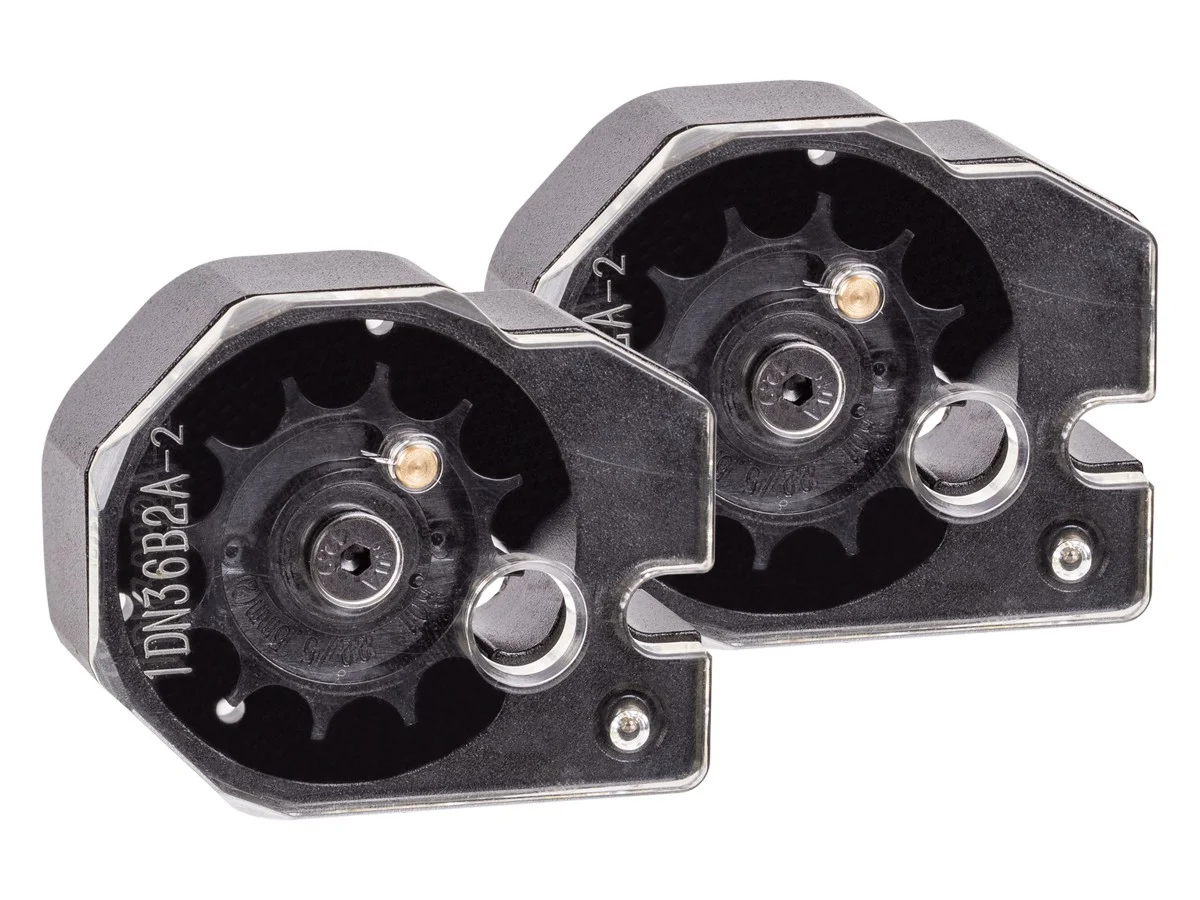
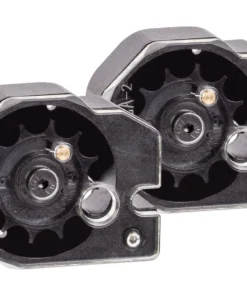
- Magazine capacity: 12 (.22), 10 (.25)
- Max. shots per fill (Standard)*: 48 (.22), 60 (.25)
- Max. shots per fill (Compact)**: 36 (.22), 20 (.25)
- Barrel twist rate: 1/17.7
- Externally-adjustable regulator
- Tool-free externally-adjustable hammer spring
- Tool-free externally-adjustable transfer port
- Two manometers: regulator pressure gauge and fill pressure gauge
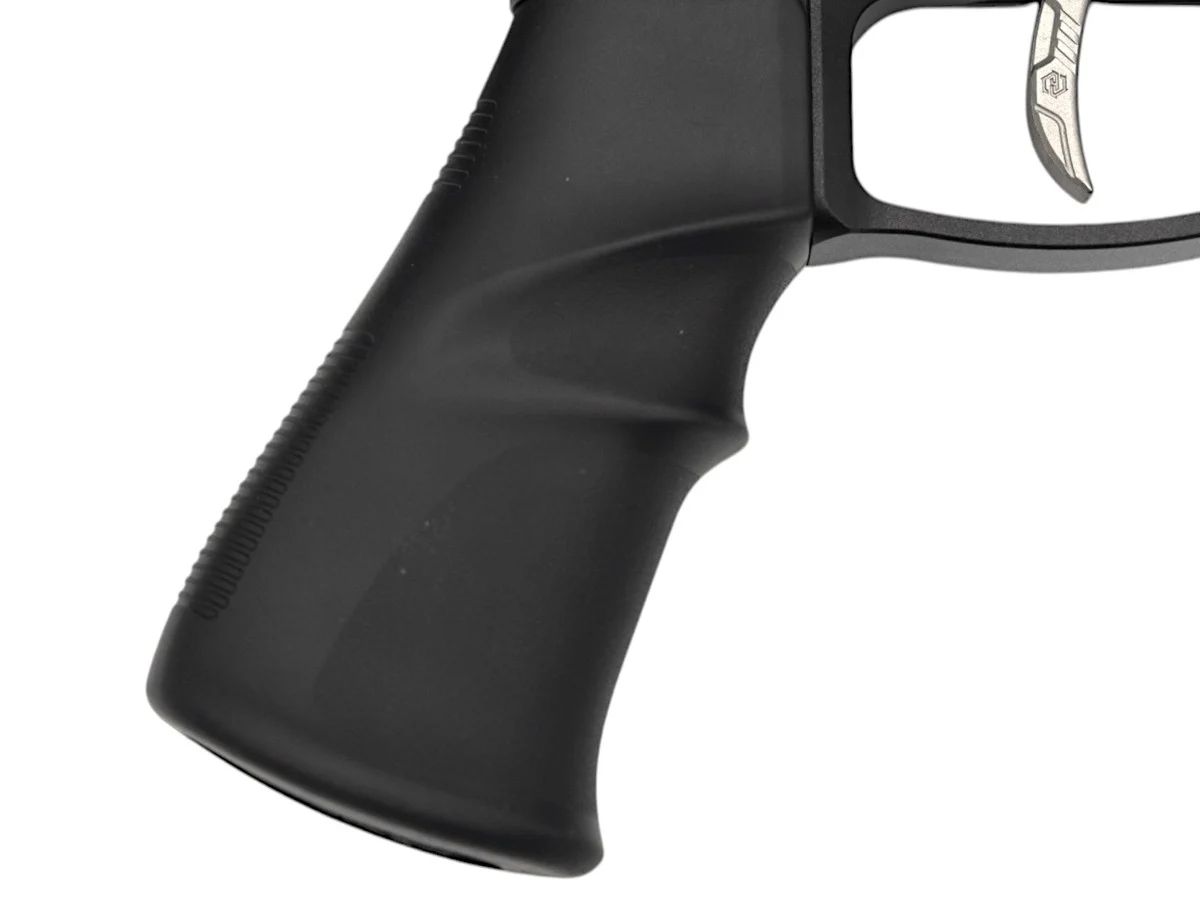
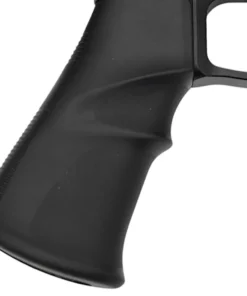
- AR-style ergonomic pistol grip
- Picatinny optics rail with 20 MOA cant
- Picatinny and M-LOK accessory rails
- Arca-Swiss bottom rail
- Manual push button safety
- Mil-Spec adjustable folding stock
- Barrel length: 16″ (Standard), 12″ (Compact)
- Overall length: 36.2″ (Standard), 31.5″ (Compact)
- Weight: 9 lbs. (Standard), 8.15 lbs. (Compact)
* – maximum shots per fill using 25gr pellets, at 898 FPS (.22), 918 FPS (.25)
** – maximum shots per fill using 18.13gr pellets at 881 FPS (.22), 25gr pellets at 886 FPS (.25)
Karma SLS PCP Air Rifle – Compact Semi-Auto Performance, Adjustable PCP Engineering, and Precision-Focused Design
The Karma SLS PCP Air Rifle combines compact handling, regulated PCP engineering, versatile operation, and precision-focused construction in one modern platform. The name SLS refers to its Side Lever/Semi-Auto operating concept, and Karma currently offers both Compact and Standard configurations in .22 and .25 caliber. The Compact uses a 12-inch barrel and 250cc cylinder, while the Standard increases barrel length to 18 inches and air capacity to 350cc. Both formats use a 70cc plenum and a 20 MOA Picatinny optics rail.
For shooters researching karma airguns, Karma SLS air rifle, Karma Airguns PCP rifle, Karma Airguns PCP, or Karma SLS semi-auto air rifle, the defining advantage is versatility. The platform allows the shooter to select either conventional side-lever operation or the semi-automatic mode provided by the SLS system. Karma even publishes a dedicated manufacturer guide explaining use of the semi-auto feature.
Why Choose the Karma SLS PCP Air Rifle?
One major reason to consider the SLS is its combination of compact dimensions and adjustable PCP performance. The Karma SLS Compact PCP rifle measures about 800 mm overall and weighs approximately 8.15 pounds in current .22 and .25 configurations. It also incorporates a folding adjustable stock where permitted, making the .22 Karma SLS Compact Folding Stock especially appealing to users who prioritize manageable dimensions and configurable ergonomics.
Meanwhile, the Karma SLS Standard extends overall length to approximately 920 mm, uses an 18-inch barrel, and increases air capacity to 350cc. Karma currently lists approximately 48 shots per fill for the .22 Standard and 60 for the .25 configuration under its published base specifications.
Searches such as karma sis, karma sis compact, and air karma often appear when users are attempting to find information about the SLS family, although “SLS” is the correct designation for the rifle.
How Good Is the SLS for Precision?
Precision comes from the interaction between the barrel, regulator, projectile quality, optics, mechanical consistency, and shooter technique. Karma specifies a 1:17.7 barrel twist for both current .22 and .25 SLS Compact and Standard configurations, while an externally adjustable regulator allows users to manage the pressure system according to the manufacturer’s intended settings.
In .22 Compact specification, Karma lists an 18.13-grain reference projectile at approximately 881 fps and 31 FPE, alongside a 12-round magazine. Its .25 Compact listing uses a 25-grain reference projectile at approximately 886 fps and 44 FPE with a 10-round magazine. Actual results can vary with configuration, projectile, atmospheric conditions, and tune.
Karma SLS Versus the Karma EQ
Shooters comparing the SLS with karma eq, karma eq air rifle, eq air, Karma EQ PCP air rifle, Karma Airguns EQ, Karma EQ bullpup, Karma EQ sidelever bullpup, Karma EQ large plenum, or searching Karma EQ PCP air rifle for sale should recognize that the EQ belongs to a different product family.
Karma currently positions the EQ as a highly adjustable, higher-output PCP available in .22, .25, and .30 calibers, with tuning flexibility for both pellets and slugs.
Terms such as Karma EQ .25 caliber review, 25 karma, eq magazine, and high power PCP air rifle Karma therefore commonly relate to the EQ rather than the SLS.
The SLS focuses more strongly on compact handling and its dual side-lever/semi-auto operating system, while the EQ emphasizes broader power adjustment and long-range versatility.
SLS Versus the Red Panda Precision Platform
The karma red panda, Karma Red Panda air rifle, Karma Airguns Red Panda .30, and general panda gun searches point toward Karma’s competition-oriented Red Panda platform.
The manufacturer describes the current Red Panda as a precision system developed around competition performance, and reports extensive podium use plus a professional benchrest world-record score of 240 with 8 Xs during its development history.
Therefore, the Red Panda and SLS serve different priorities. The Red Panda concentrates heavily on competition precision, while the SLS emphasizes compact versatility, practical shot capacity, adjustable regulation, and selectable operating modes.
Magazine Capacity and Practical Operation
Magazine capacity varies by caliber. Karma lists 12 rounds for the current .22 SLS configurations and 10 rounds for .25 versions.
The combination of magazine-fed operation, adjustable regulation, a baffled shroud, 1/2 x 20 UNF muzzle threading, push-button safety, and an optics-ready rail creates a feature set intended to support convenient target and recreational use.
Where to Buy and Dealer Considerations
Buyers searching kaarma dealer or Karma Airguns USA can consult Karma’s current dealer network. The manufacturer presently lists authorized sellers throughout North America and several international markets.
Buyers should always verify the exact caliber, Compact or Standard configuration, stock type, local availability, and applicable airgun laws before ordering.
Finally, karma air conditioning is unrelated to Karma’s rifle products and should not be confused with the manufacturer.
Why the Karma SLS Deserves Consideration
The strongest reason to choose the Karma SLS is its balance of modern PCP engineering and practical versatility. Its switchable action, Compact and Standard formats, adjustable regulator, 70cc plenum, high-capacity magazine system, optics-ready rail, and multiple caliber choices make it a distinctive alternative within Karma’s lineup.
Whether comparing it with the EQ, evaluating the Red Panda, or specifically looking for a compact semi-automatic PCP platform, the SLS provides a focused combination of precision, configurable ergonomics, shot capacity, and mechanical versatility.
Design Philosophy, Performance Characteristics, and Practical Advantages
Engineered for Consistent Performance
Modern precision platforms are developed with consistency as a primary objective. Designers carefully evaluate every component because even the smallest variation can influence overall performance. Weight distribution, internal tolerances, airflow efficiency, and structural rigidity all contribute to the final result.
This careful approach allows the platform to deliver dependable performance throughout extended periods of use. Rather than emphasizing only speed or power, engineers focus on creating balance, stability, and repeatability.
Consequently, users benefit from greater confidence and a more predictable shooting experience.
The Importance of Barrel Construction
Barrel construction plays an essential role in determining overall accuracy. Manufacturers devote considerable attention to the production process because the smallest imperfections can influence projectile stability.
Several factors contribute directly to improved performance:
- Internal surface quality.
- Material selection.
- Manufacturing tolerances.
- Rifling consistency.
- Harmonic stability.
- Proper alignment.
Together, these elements help establish the conditions necessary for greater precision.
Airflow Management and Efficiency
Airflow management has become increasingly important as manufacturing technology continues to advance. Modern systems are designed to maintain pressure consistency while maximizing efficiency and reliability.
Manufacturers frequently focus on the following areas:
- Stable internal pressure control.
- Consistent airflow distribution.
- Durable sealing systems.
- Optimized valve operation.
- Reduced mechanical variation.
- Improved long-term reliability.
As a result, performance remains more consistent under changing conditions.
Ergonomic Design and User Comfort
Comfort influences performance because stable positioning helps reduce fatigue while improving concentration. Designers therefore invest substantial effort in refining balance, dimensions, and handling characteristics.
A well-designed platform should feel natural during use while allowing smooth and controlled operation. These characteristics become particularly important during extended shooting sessions because physical comfort contributes directly to consistency.
Even seemingly minor improvements can create a significantly better overall experience.
Adaptability in Different Conditions
Environmental conditions continually influence performance. Wind, humidity, temperature, and elevation can all affect results. Consequently, experienced users carefully monitor their surroundings and make adjustments whenever necessary.
Adaptability remains an important advantage because it allows individuals to maintain reliable performance despite changing circumstances.
This flexibility helps create a more dependable and enjoyable experience.
Building Confidence Through Experience
Confidence develops gradually through practice and observation. Every session provides an opportunity to strengthen existing skills while developing a deeper understanding of environmental influences and equipment behavior.
Several habits contribute to steady improvement:
- Maintaining a consistent routine.
- Recording observations carefully.
- Inspecting equipment regularly.
- Monitoring environmental conditions.
- Practicing patiently.
- Continuing to refine techniques.
Over time, these practices help establish a solid foundation for continued growth.
Reliability and Durability
Durability remains one of the defining characteristics of premium equipment. High-quality materials, careful manufacturing procedures, and extensive testing contribute to greater reliability and improved long-term value.
Owners who perform routine maintenance often discover that their equipment continues operating efficiently for many years.
This commitment to durability provides reassurance while enhancing overall ownership satisfaction.
Practical Benefits of Modern Engineering
Advances in manufacturing have transformed the industry considerably during recent years. Improved materials, more precise machining methods, and enhanced quality-control procedures have contributed to greater consistency and reliability.
As technology continues to evolve, users benefit from increasingly refined designs that emphasize comfort, efficiency, precision, and long-term performance.
These improvements demonstrate how thoughtful engineering continues to shape the future of precision equipment.
Precision Engineering, Handling Characteristics, and Ownership Experience
Designed for Balance and Control
Balance plays an essential role in overall performance because it affects comfort, stability, and confidence simultaneously. Designers devote considerable attention to weight distribution so that every movement feels natural and controlled.
A balanced platform allows users to maintain a steady position more easily, particularly during longer sessions. Consequently, fatigue is reduced, concentration is improved, and overall consistency becomes easier to maintain.
This combination of comfort and control contributes significantly to the ownership experience.
The Relationship Between Accuracy and Consistency
Accuracy and consistency are closely connected because exceptional results rarely occur by chance. Instead, dependable performance is usually the result of thoughtful engineering, disciplined preparation, and repeated practice.
Several factors contribute directly to consistent operation:
- Stable internal pressure.
- High-quality materials.
- Precise manufacturing tolerances.
- Reliable component alignment.
- Proper maintenance procedures.
- Suitable environmental conditions.
Together, these elements create a solid foundation for dependable performance.
Understanding Environmental Influences
Environmental conditions should never be overlooked because they can influence results considerably. Wind direction, humidity, temperature changes, and elevation all affect overall performance.
For this reason, experienced users frequently monitor weather conditions before beginning a session. This habit allows adjustments to be made whenever necessary while reducing the possibility of unexpected variations.
Patience and preparation often prove just as valuable as technical specifications.
Developing Effective Techniques
Successful performance depends upon the development of sound habits and repeatable techniques. Individuals who approach practice systematically often discover improvements more quickly because they are able to identify patterns and refine their methods accordingly.
A productive routine generally includes the following steps:
- Inspecting equipment before use.
- Establishing a stable position.
- Maintaining proper focus.
- Monitoring surrounding conditions.
- Recording observations consistently.
- Reviewing performance after each session.
These practices encourage steady progress while strengthening confidence.
Ergonomics and Long-Term Comfort
Comfort remains one of the most important considerations for individuals who spend long periods practicing or competing. Poor balance or uncomfortable positioning may gradually reduce concentration and increase fatigue.
Manufacturers therefore invest considerable effort in refining dimensions, improving balance, and creating more natural handling characteristics.
These refinements not only improve comfort but also contribute directly to more consistent performance.
The Importance of Responsible Ownership
Responsible ownership extends far beyond simple operation. Proper storage, routine maintenance, and careful transportation all play important roles in preserving performance and reliability.
Many experienced owners follow several simple guidelines:
- Protect equipment from moisture.
- Clean exposed surfaces regularly.
- Inspect moving components carefully.
- Store accessories securely.
- Replace worn components promptly.
- Follow maintenance schedules consistently.
Although these tasks require relatively little time, they often produce significant long-term benefits.
Building Experience Through Practice
Experience develops gradually through repetition, observation, and continuous learning. Every session provides new information that can be used to refine existing techniques and improve overall performance.
As knowledge increases, confidence naturally follows. Eventually, these experiences become valuable sources of practical understanding that support continual growth and improvement.
Appreciating Quality Construction
Quality construction reflects the combined efforts of designers, engineers, and manufacturing specialists who devote considerable attention to every stage of development.
Careful material selection, precise machining techniques, and rigorous testing procedures all contribute to dependable performance. These qualities ultimately distinguish premium equipment from more ordinary alternatives.
Looking Ahead
Manufacturing technologies continue to advance, and modern engineering methods continue to evolve. Nevertheless, the principles that define excellence remain unchanged.
Consistency, reliability, durability, comfort, and disciplined practice continue to provide the foundation upon which long-term success is built.
Maintenance, Durability, and Long-Term Performance
The Importance of Routine Maintenance
Routine maintenance remains one of the most effective ways to preserve performance and extend operational life. Although modern engineering has significantly improved reliability, every mechanical system benefits from regular inspection and proper care.
Consistent maintenance allows owners to identify minor concerns before they develop into larger problems. Consequently, long-term ownership becomes more convenient, economical, and enjoyable.
Establishing a regular maintenance routine also promotes greater confidence because equipment remains prepared for use whenever it is needed.
Creating an Effective Maintenance Schedule
A structured maintenance schedule helps ensure that important tasks are completed consistently. Furthermore, it reduces the possibility that critical components will be overlooked during inspections.
Many experienced owners recommend the following practices:
- Remove dust and debris after every session.
- Inspect moving components carefully.
- Verify that fasteners remain secure.
- Monitor seals and connection points.
- Store accessories properly.
- Maintain a clean storage environment.
These simple habits contribute significantly to long-term reliability.
Protecting Equipment From Environmental Exposure
Environmental conditions influence performance in many different ways. Moisture, extreme temperatures, direct sunlight, and excessive dust may gradually affect mechanical components over time.
Proper storage therefore becomes an essential responsibility. Equipment should always be protected from unnecessary exposure whenever possible.
Owners who adopt these practices often discover that performance remains stable for much longer periods.
Durability and Material Selection
Durability depends largely upon material quality and manufacturing precision. Engineers carefully select materials that provide strength, stability, and resistance to wear while maintaining practical weight characteristics.
Several factors influence long-term durability:
- Structural integrity.
- Manufacturing quality.
- Surface protection.
- Internal component design.
- Mechanical efficiency.
- Routine maintenance procedures.
Together, these characteristics contribute to a dependable ownership experience.
Maintaining Consistency Over Time
Consistency is achieved through preparation, patience, and attention to detail. Equipment that performs predictably under a variety of conditions often provides greater long-term value than equipment that delivers inconsistent results.
For this reason, experienced users frequently maintain detailed records of performance observations. This practice allows them to identify patterns, refine techniques, and make adjustments whenever necessary.
Gradually, these habits contribute to increased confidence and improved results.
Transportation and Safe Storage
Transportation presents unique challenges because equipment may be exposed to vibration, accidental impacts, and changing environmental conditions. Appropriate protective measures therefore remain essential.
A comprehensive storage routine should include the following considerations:
- Store equipment in a cool, dry location.
- Protect surfaces from excessive moisture.
- Organize accessories carefully.
- Inspect protective equipment regularly.
- Minimize exposure to dust and debris.
- Maintain a consistent storage environment.
These precautions help preserve both appearance and functionality.
Building Experience and Confidence
Experience remains one of the most valuable resources available to any enthusiast. Through consistent practice, individuals gain a deeper understanding of both environmental influences and equipment characteristics.
This process encourages continual learning while strengthening discipline and patience. Meaningful progress often occurs gradually, yet persistent effort generally produces lasting improvements.
Looking Toward the Future
Technological innovation continues to transform manufacturing processes, material science, and engineering techniques. Nevertheless, the fundamental principles of quality remain unchanged.
Careful design, responsible ownership, consistent maintenance, and disciplined practice continue to define dependable long-term performance.
These principles ensure that well-designed equipment remains valuable for many years.
Frequently Asked Questions and Ownership Guide
How often should maintenance be performed?
Maintenance intervals depend largely upon usage frequency, storage conditions, and the environment in which the equipment is used. Individuals who practice regularly generally perform inspections more frequently because consistent attention helps preserve reliability and overall performance.
Even simple procedures completed at regular intervals can make a significant difference over the long term.
What is the best way to store equipment?
Proper storage practices protect important components from unnecessary wear and environmental damage. A cool, dry location is usually recommended because excessive humidity and rapid temperature changes may gradually influence performance.
Many experienced owners follow several basic guidelines:
- Keep equipment clean after use.
- Protect surfaces from moisture.
- Avoid prolonged exposure to direct sunlight.
- Store accessories in an organized manner.
- Inspect components regularly.
- Replace worn parts whenever necessary.
These habits help support long-term durability and dependable operation.
Why is consistency so important?
Consistency provides a reliable foundation for improvement. Equipment that performs predictably allows users to focus on refining their techniques instead of compensating for unexpected variations.
Several factors contribute directly to greater consistency:
- Regular practice.
- Proper maintenance.
- Careful preparation.
- Stable environmental conditions.
- Thoughtful observation.
- Repetition of effective techniques.
Over time, these practices help establish confidence and encourage continual improvement.
How can accuracy be improved?
Accuracy develops gradually through experience and disciplined preparation. Individuals who maintain a consistent routine often discover that progress becomes easier to measure and evaluate.
Improvement usually involves several important steps:
- Establishing a comfortable position.
- Maintaining proper concentration.
- Monitoring environmental conditions.
- Recording performance observations.
- Practicing regularly.
- Refining techniques patiently.
Although progress may occur slowly, consistent effort often produces excellent long-term results.
How important is ergonomics?
Ergonomics influence comfort, stability, and overall performance. Poor positioning may lead to fatigue, whereas balanced construction and thoughtful design encourage greater control and improved concentration.
Manufacturers therefore invest considerable effort in refining dimensions, adjusting weight distribution, and enhancing handling characteristics.
These refinements contribute significantly to a more satisfying ownership experience.
What role do environmental conditions play?
Environmental factors influence performance continuously. Wind conditions, temperature changes, humidity levels, and elevation all contribute to variations that experienced users learn to recognize and manage.
Understanding these influences allows individuals to make informed adjustments while improving overall consistency.
Consequently, environmental awareness becomes an essential part of skill development.
What should first-time buyers consider?
First-time buyers should evaluate their requirements carefully before making a decision. Intended use, maintenance expectations, compatibility with accessories, and long-term ownership considerations all deserve attention.
It is also wise to establish realistic expectations because experience develops progressively over time.
Patience, preparation, and commitment remain valuable qualities throughout the learning process.
How does long-term ownership become more rewarding?
Long-term ownership becomes increasingly rewarding when consistent care and responsible maintenance become established habits. Equipment that receives proper attention often maintains its performance characteristics for many years.
This approach not only protects valuable components but also contributes to greater confidence and satisfaction.
Final Considerations
Selecting quality equipment represents an investment in reliability, consistency, and long-term performance. Although specifications remain important, true value is often determined by durability, comfort, ease of maintenance, and dependable operation.
These qualities continue to define exceptional ownership experiences while supporting continual growth and improvement over time.
Final Evaluation and Long-Term Ownership Experience
A Commitment to Quality and Precision
High-quality equipment is rarely created by accident. Instead, it is developed through years of engineering experience, repeated testing procedures, careful material selection, and continual refinement. Every component contributes to the overall experience, which is why attention to detail remains essential throughout the manufacturing process.
Although technological advances continue to reshape the industry, the fundamental principles of reliability, durability, and consistency remain unchanged.
These principles continue to define the highest standards of performance.
The Importance of Patience and Discipline
Developing strong skills requires time, dedication, and continuous practice. While technological improvements can enhance overall performance, they cannot replace patience, discipline, and careful observation.
Individuals who establish effective habits often experience steady improvement because they create conditions that encourage consistency.
These habits generally include the following practices:
- Performing routine inspections.
- Monitoring environmental conditions.
- Maintaining a structured routine.
- Recording observations regularly.
- Practicing consistently.
- Refining techniques gradually.
Together, these habits establish the foundation for long-term progress.
Understanding the Value of Experience
Experience is one of the most valuable resources available because it transforms knowledge into practical understanding. Every practice session presents an opportunity to learn something new while strengthening existing skills.
Over time, these experiences help individuals identify patterns, recognize environmental influences, and improve their overall approach.
As confidence grows, performance frequently becomes more consistent and predictable.
Building Long-Term Reliability
Reliability develops through the combination of thoughtful engineering and responsible ownership. Even the most carefully designed equipment benefits from proper care because routine maintenance helps preserve efficiency and reduce unnecessary wear.
Several elements contribute directly to long-term reliability:
- High-quality construction.
- Precise manufacturing methods.
- Careful storage procedures.
- Regular maintenance.
- Consistent handling practices.
- Continued attention to detail.
These factors work together to support dependable performance over many years.
Storage and Transportation Considerations
Protecting equipment during transportation and storage remains an important responsibility. Moisture, dust, excessive heat, and accidental impacts may gradually affect performance if appropriate precautions are not taken.
Experienced owners often recommend the following measures:
- Use protective storage equipment whenever possible.
- Keep all components organized.
- Avoid unnecessary environmental exposure.
- Inspect equipment regularly.
- Replace worn components promptly Karma SLS PCP Air Rifle.
- Maintain a clean storage environment.
These practices help preserve both appearance and functionality.
The Relationship Between Comfort and Performance
Comfort influences performance because fatigue often reduces concentration and consistency. Balanced construction and thoughtful design help create a more natural experience while reducing unnecessary physical strain.
Consequently, users are often able to maintain focus more effectively during longer sessions Karma SLS PCP Air Rifle.
This combination of comfort and control contributes substantially to long-term satisfaction.
Looking Toward Future Developments
Manufacturing methods continue to evolve, and improvements in engineering technology continue to influence product development. New materials, advanced machining techniques, and improved testing procedures have already transformed modern equipment.
Nevertheless, the qualities that define excellence remain remarkably consistent Karma SLS PCP Air Rifle.
Reliability, durability, precision, comfort, and responsible ownership continue to provide the foundation for exceptional long-term performance Karma SLS PCP Air Rifle.
Final Thoughts Karma SLS PCP Air Rifle
Long-term satisfaction depends upon much more than technical specifications alone. Careful maintenance, disciplined practice, thoughtful preparation, and responsible ownership all contribute to a rewarding experience.
When these principles are applied consistently, they support continual improvement while preserving performance, reliability, and confidence for many years to come.
Be the first to review “Karma SLS PCP Air Rifle”
Related products
karma air rifles
karma air rifles
karma air rifles
Reviews
There are no reviews yet.