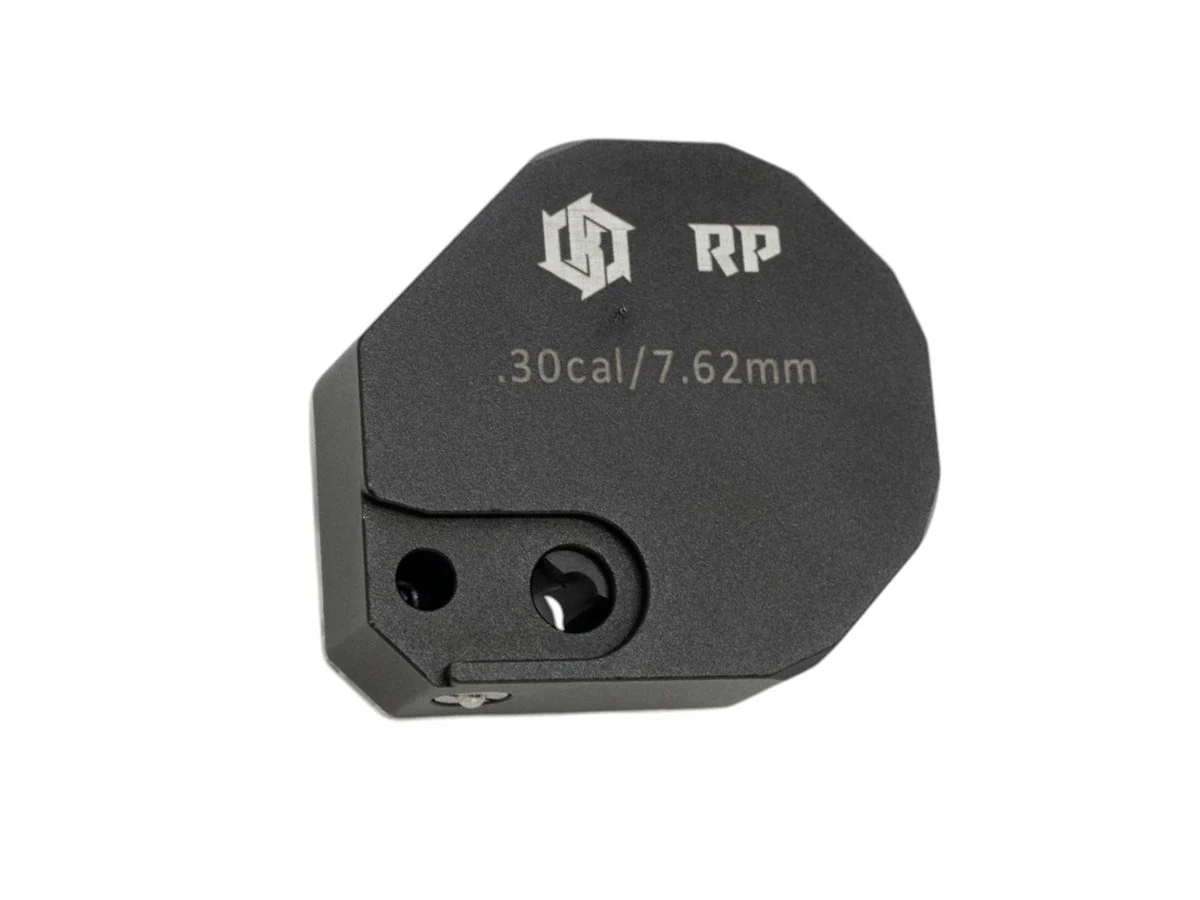


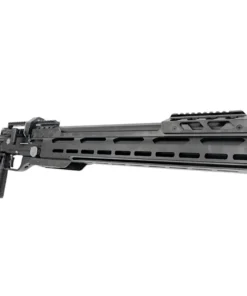
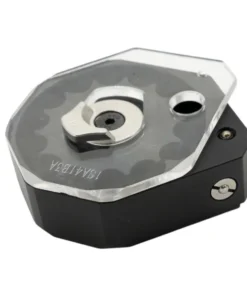
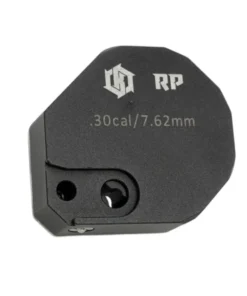
Karma Red Panda Bench PCP Air Rifle
$1,850.00
Description
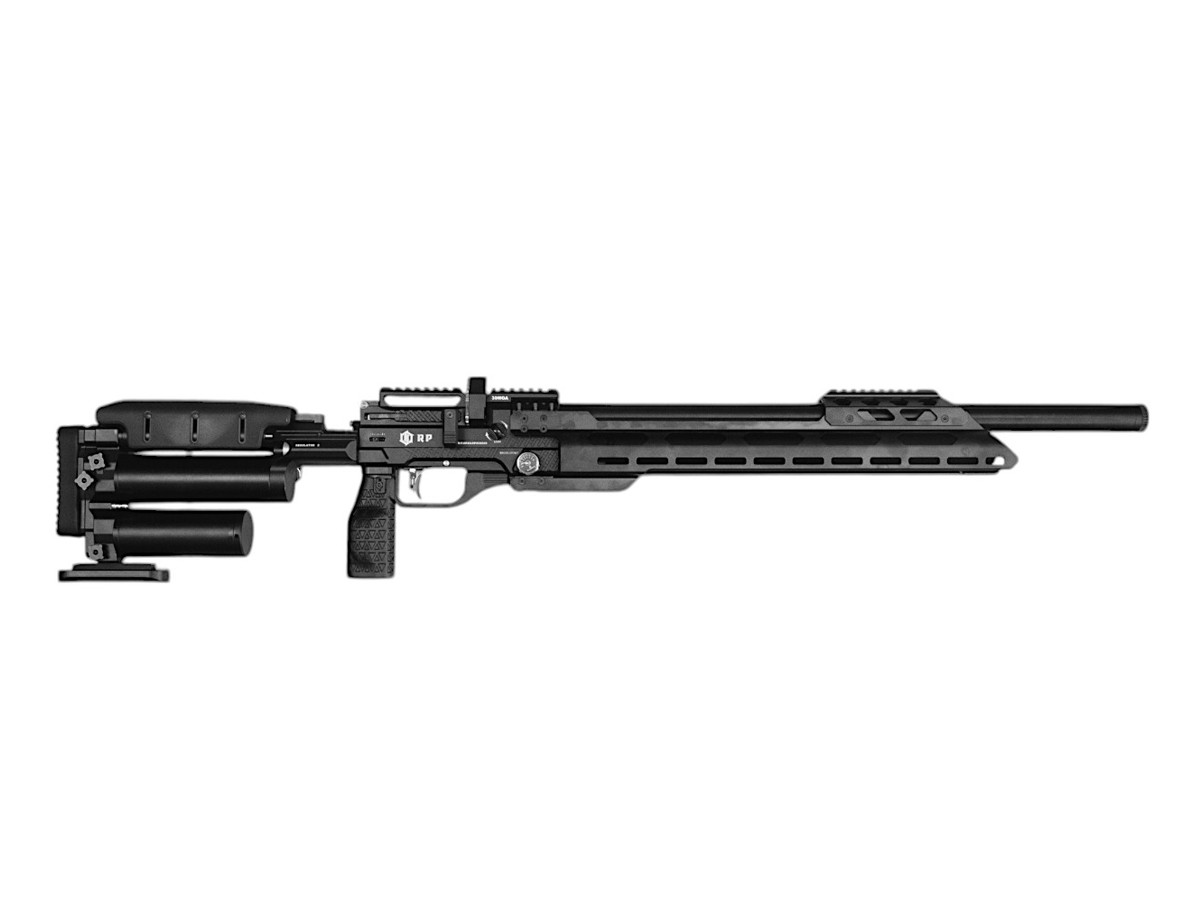
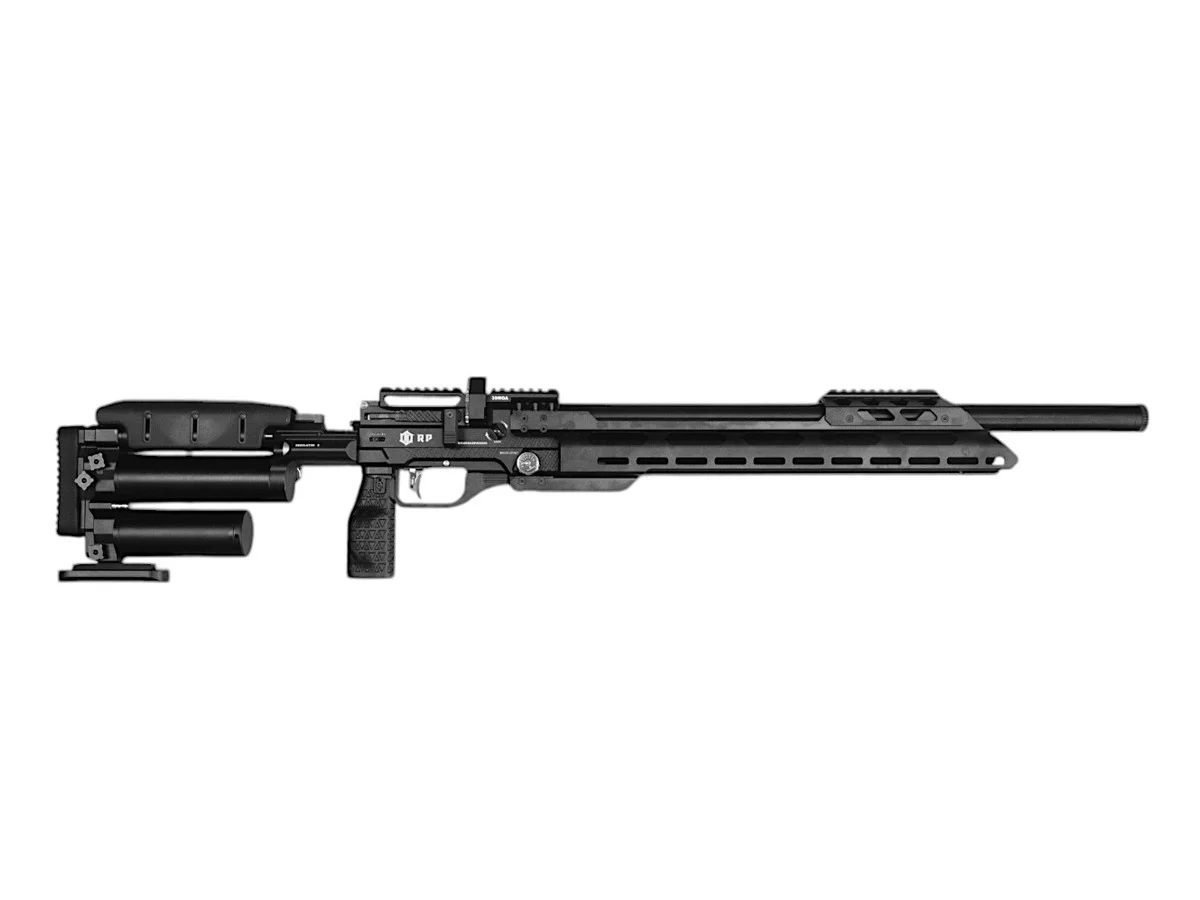
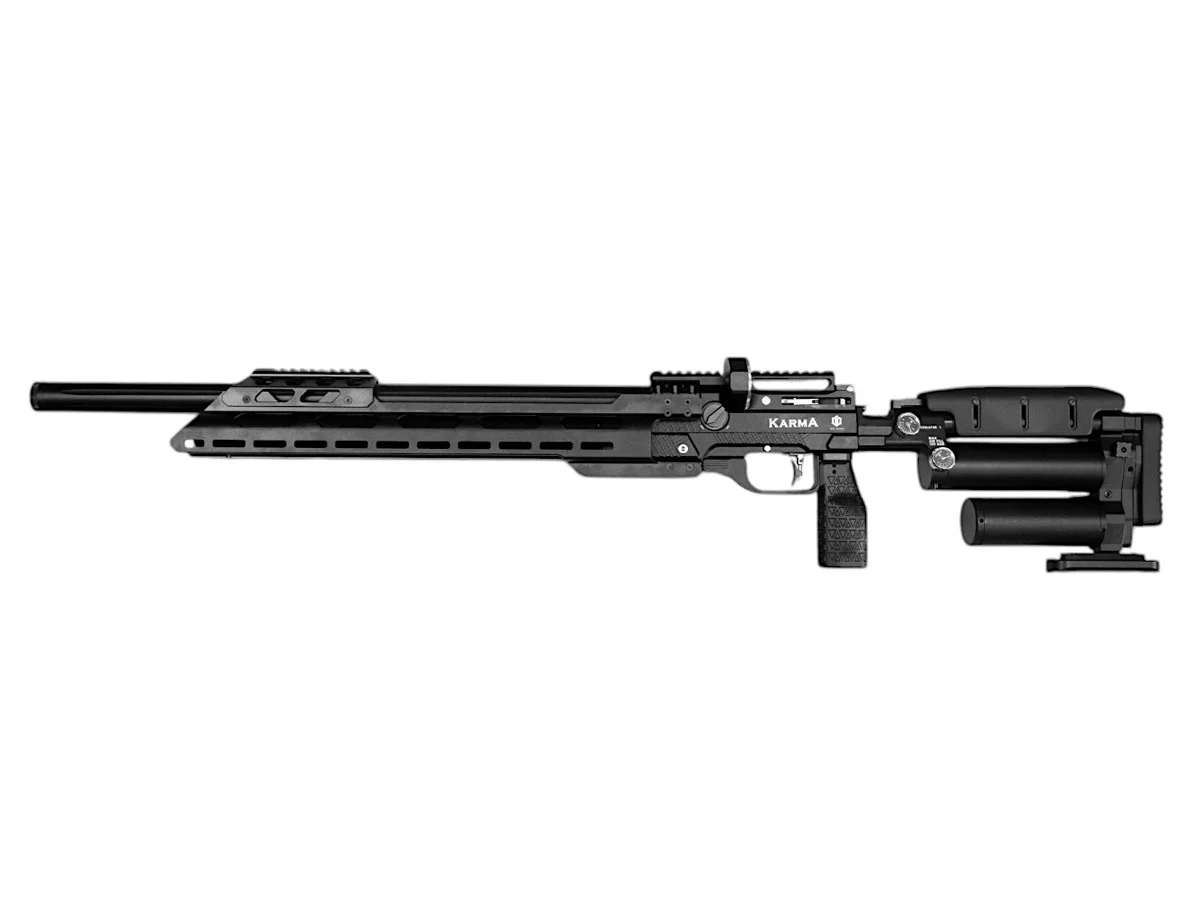
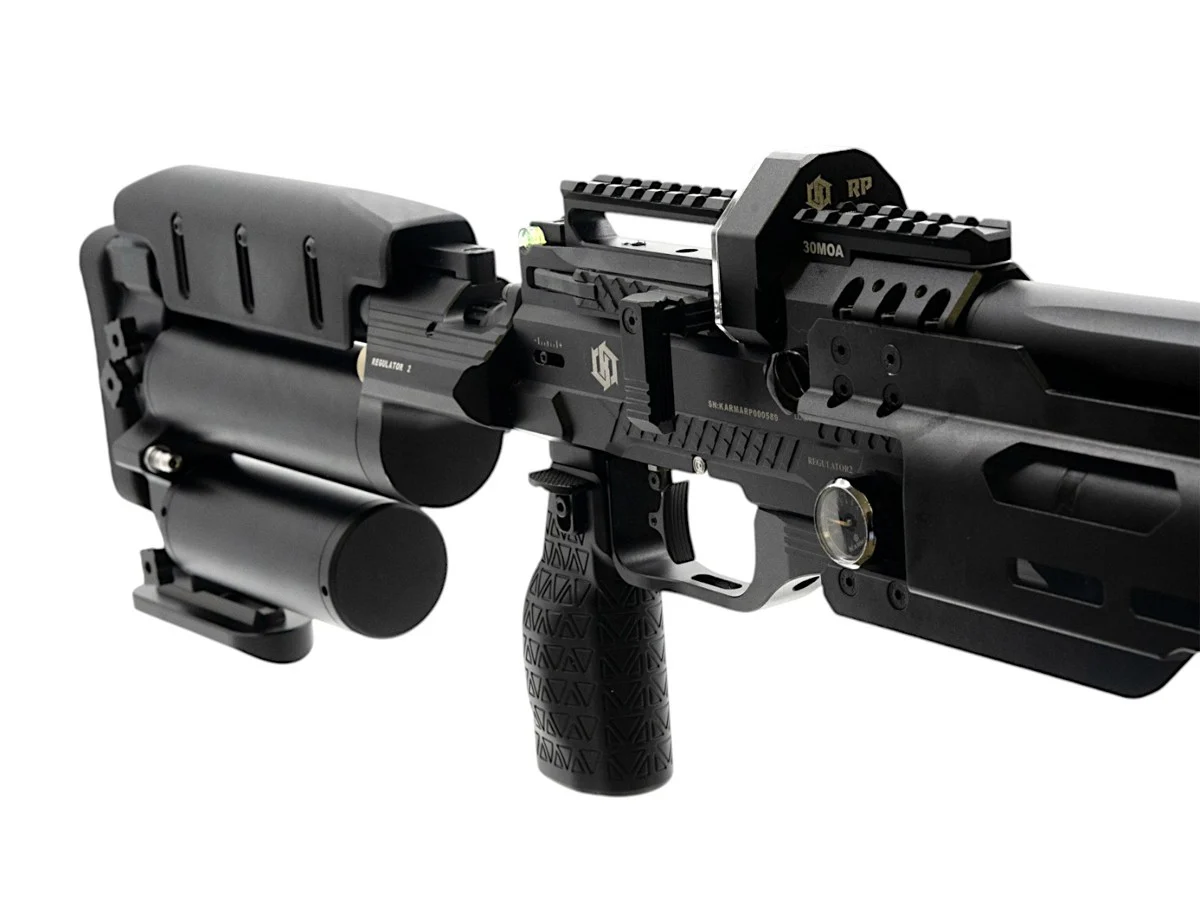
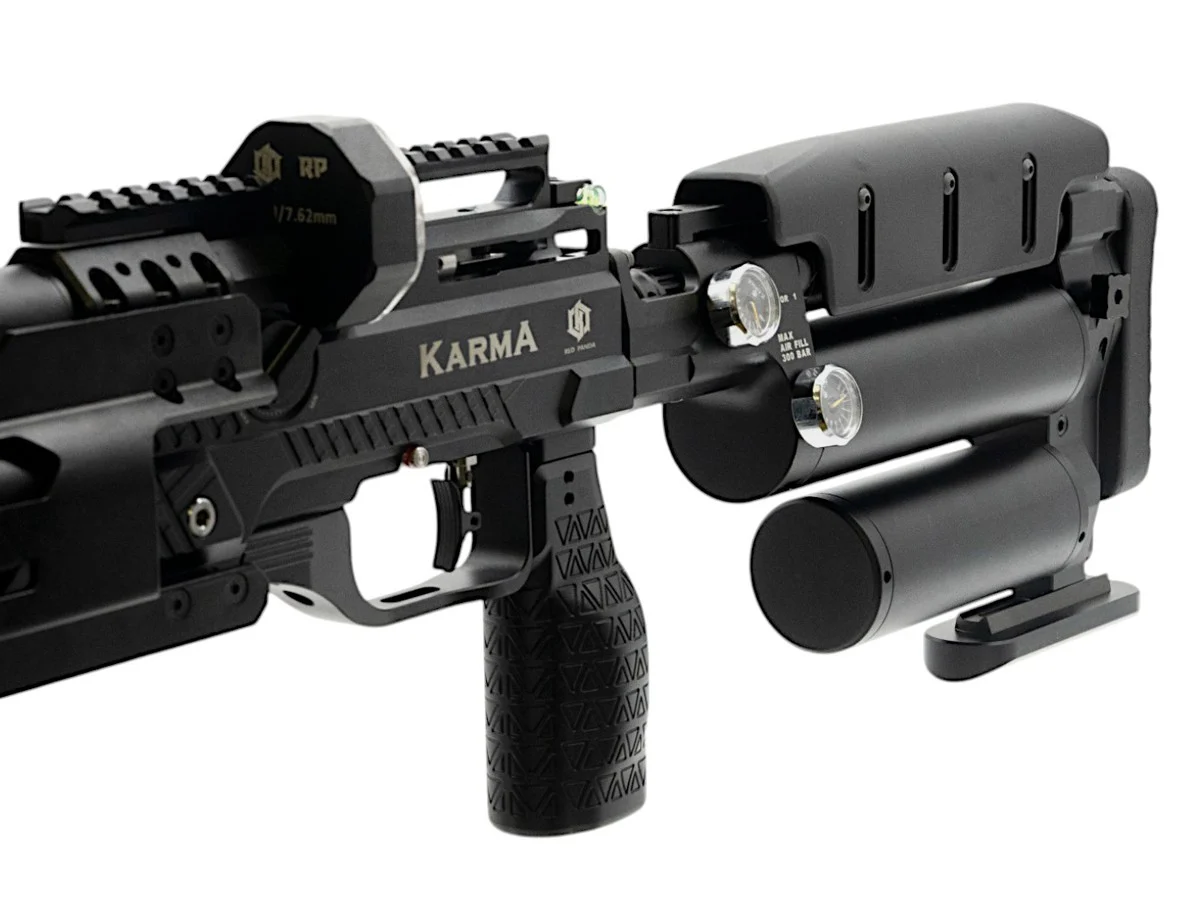
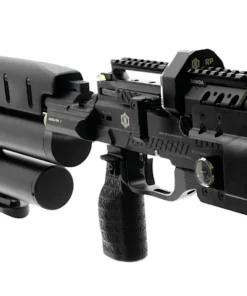
The Karma Red Panda Bench PCP Air Rifle is engineered from the very beginning to deliver superior accuracy and power for benchrest dominance. Following success on a level never seen before, with three first place finishes in 2023 for Thayne Simmons (including the Pyramyd Cup) using a prototype of the air rifle, this final version incorporates extensive engineering enhancements.
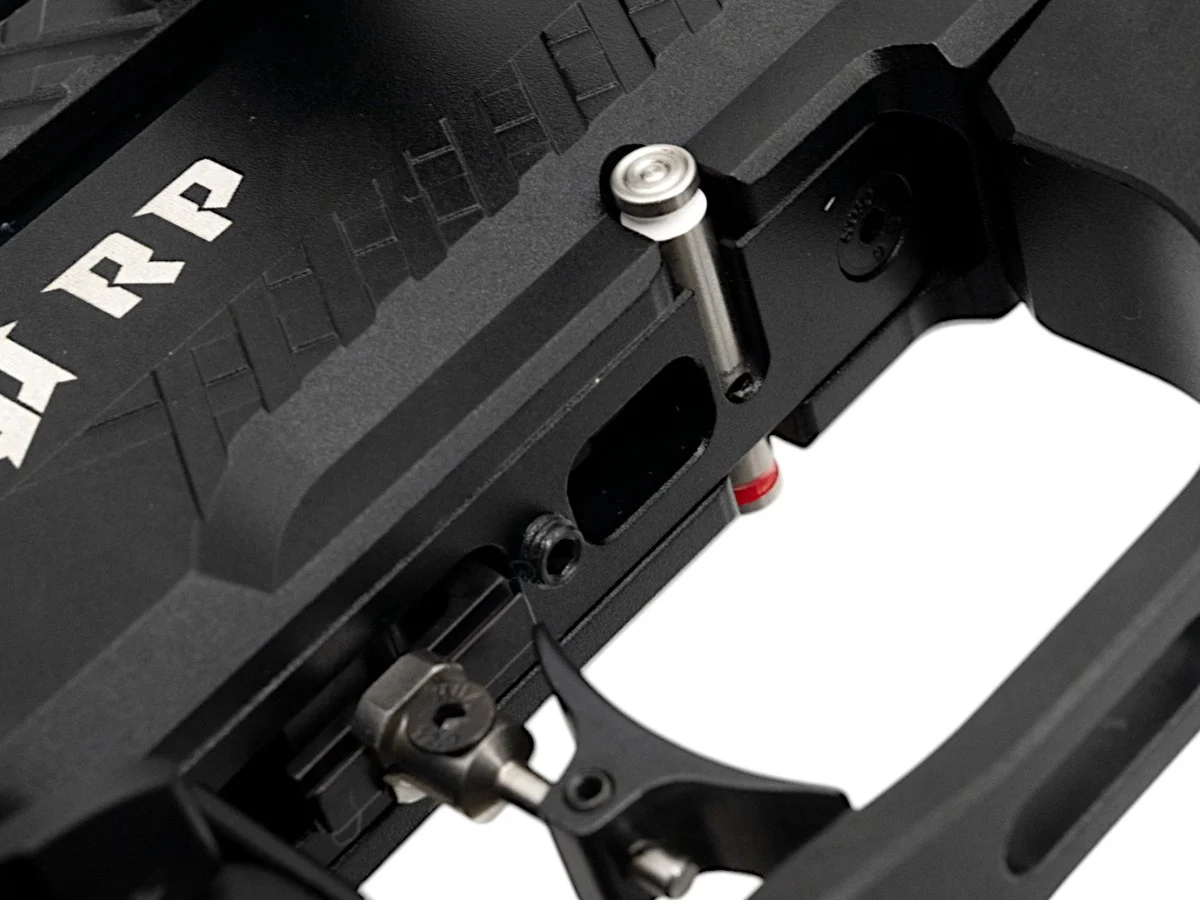
Part of the secret to this air rifle’s extreme accuracy is the custom-made bull barrel that has a configuration and twist rate optimized for pellets. This combines with the dual stainless steel externally-adjustable regulators to result in shot-to-shot performance with incredible stability. Furthering the predictability is the two-stage adjustable match trigger that allows precision shooting, with a light pull weight that can be adjusted as desired.
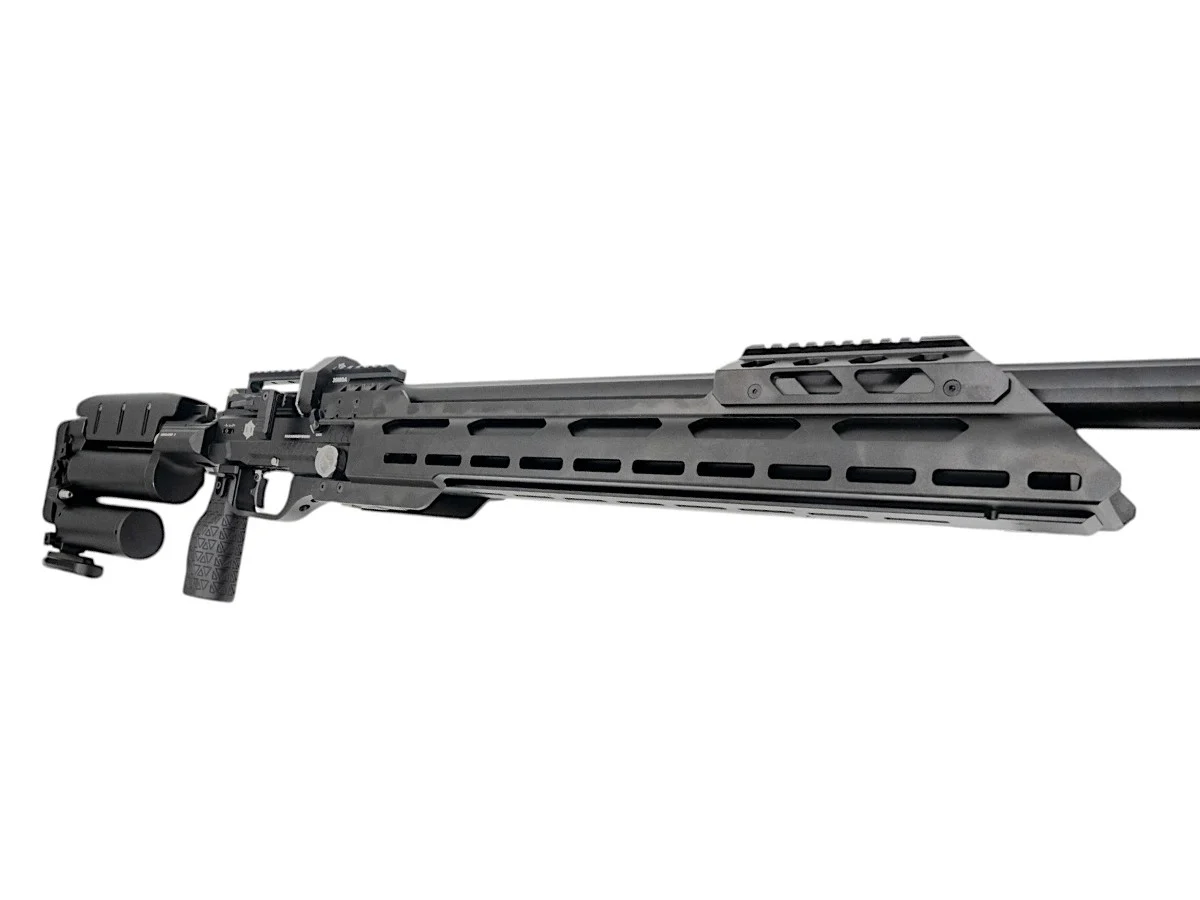
The Karma Red Panda Bench has a host of adjustable features that competitive shooters need, including a tool-free externally-adjustable transfer port and an externally-adjustable hammer spring, both for customized tuning. In addition, the stock offers an adjustable cheekpiece and an adjustable shoulder pad, so shooters can get optimal eye alignment and a comfortable length of pull to help them shoot their best.
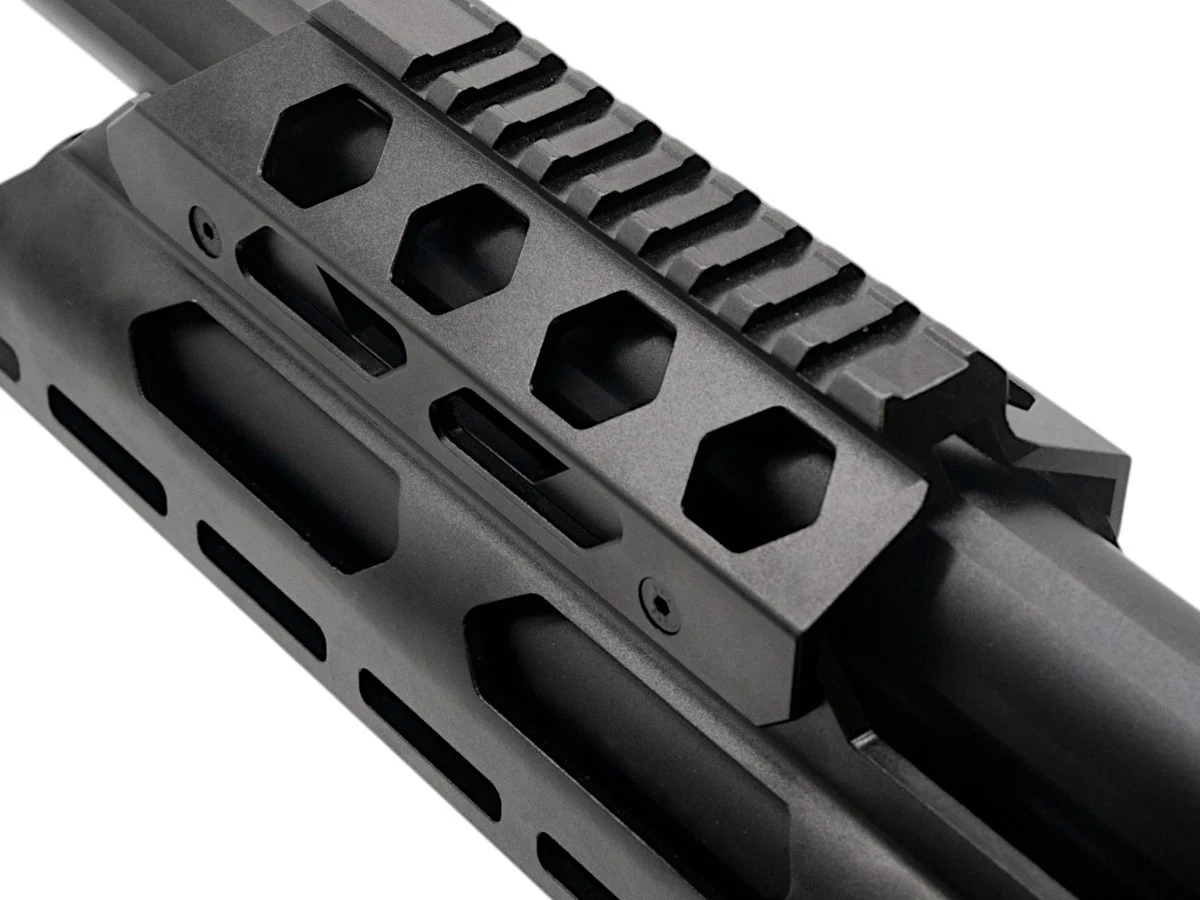
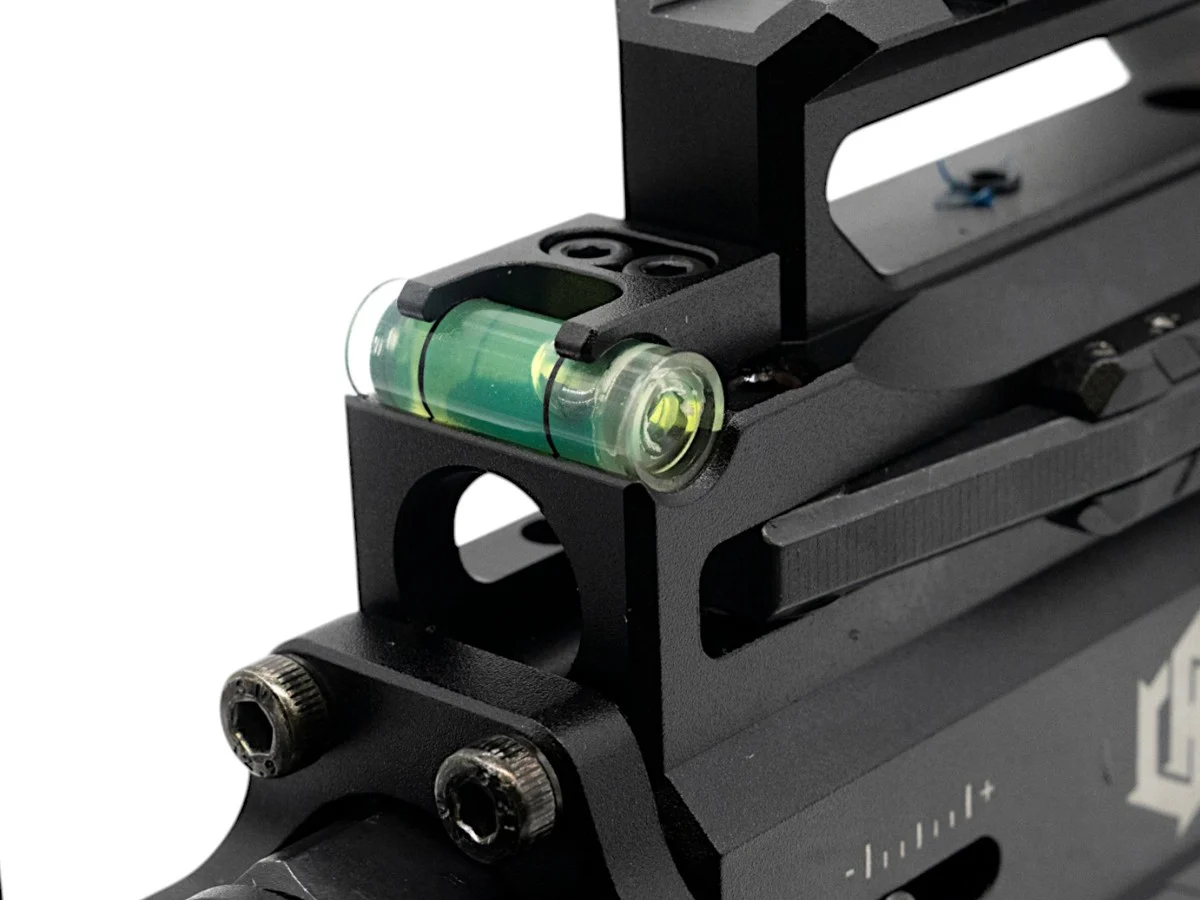
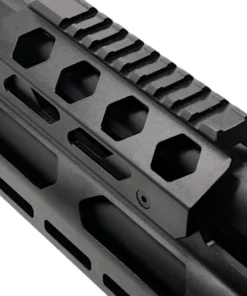
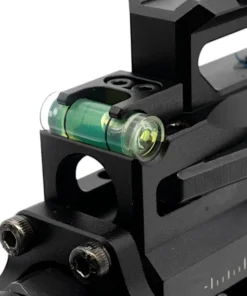
For added accuracy at long distances, the Picatinny optics rail on this competition air rifle has a 30 MOA cant, with a bubble level at the rear to ensure repeatable precision. In addition, the forearm features long M-LOK accessory rails for adding items such as shooting weights, bipods, and more. The Karma Red Panda Bench PCP Air Rifle is an excellent choice for hunting small game such as rabbits, pest control such as ground hogs, and hunting deer-sized game in the larger calibers.
The aluminum air cylinder in this air rifle has an impressive capacity of 700cc and fills to 310 BAR (approximately 4,500 PSI), which provides ample power. To get a competition air rifle with cutting-edge technology for supremacy in the benchrest discipline, buy the Karma Red Panda Bench from Pyramyd AIR today.
Karma Red Panda PCP Air Rifle, Bench
- Precharged pneumatic
- Custom Supergrade chromoly bull-barrel
- 700cc aluminum air cylinder
- 200cc plenum
- Fill pressure: 310 BAR/4,496 PSI
- Max. energy: 48 FPE (.22), 62 FPE (.25), 82 FPE (.30), 135 FPE (.35)
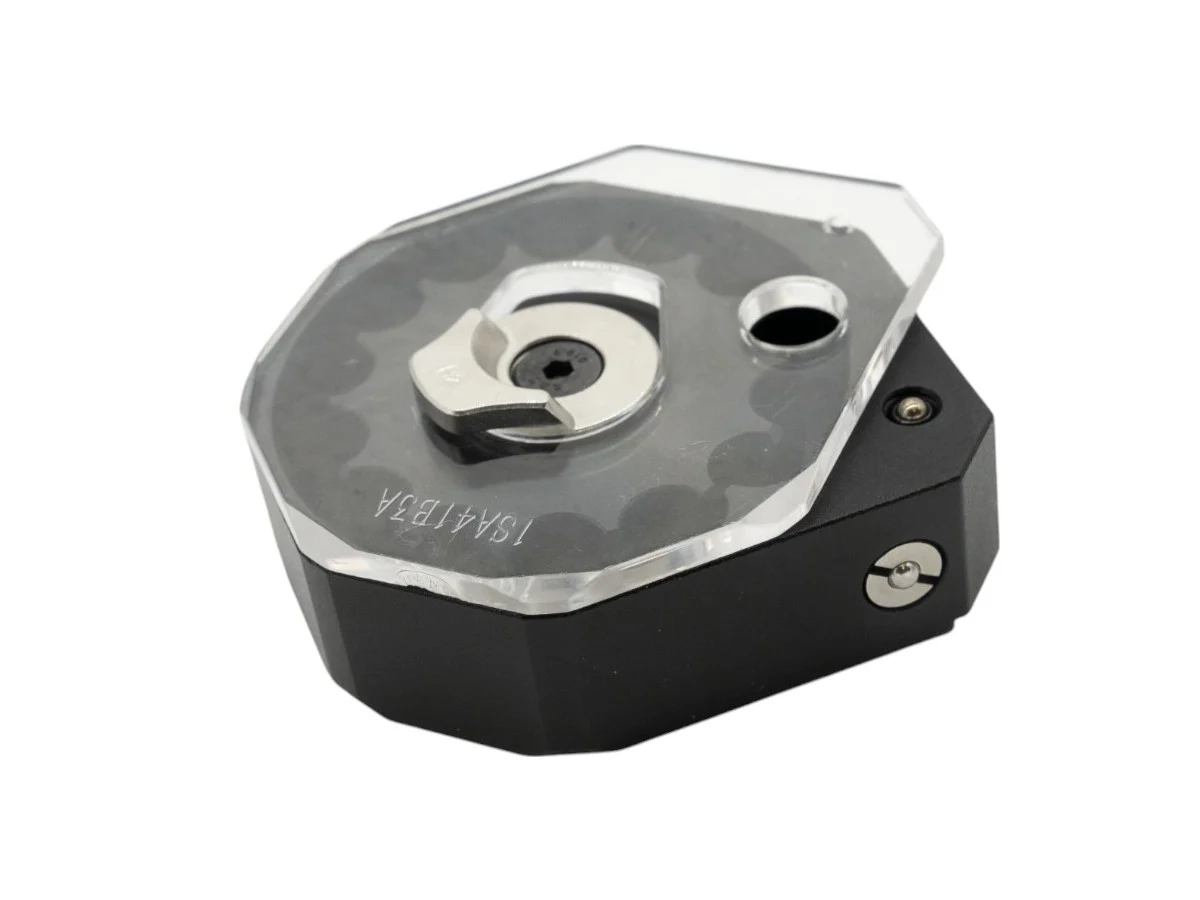
- Magazine capacity: 18 (.22), 16 (.25), 13 (.30), 11 (.35)
- Max. shots per fill*: 36 (.22), 48 (.25), 30 (.30), 30 (.35)
- Barrel twist rates: 1/17.7 (.22/.25), 1/24 (.30), 1/27.4 (.35)
- Dual stainless steel externally-adjustable regulators
- Externally-adjustable hammer spring
- Tool-free externally-adjustable transfer port
- Two-stage adjustable match trigger
- Picatinny optics rail with 30 MOA cant
- M-LOK accessory rails
- Full length ARCA rail
- 90-degree textured pistol grip
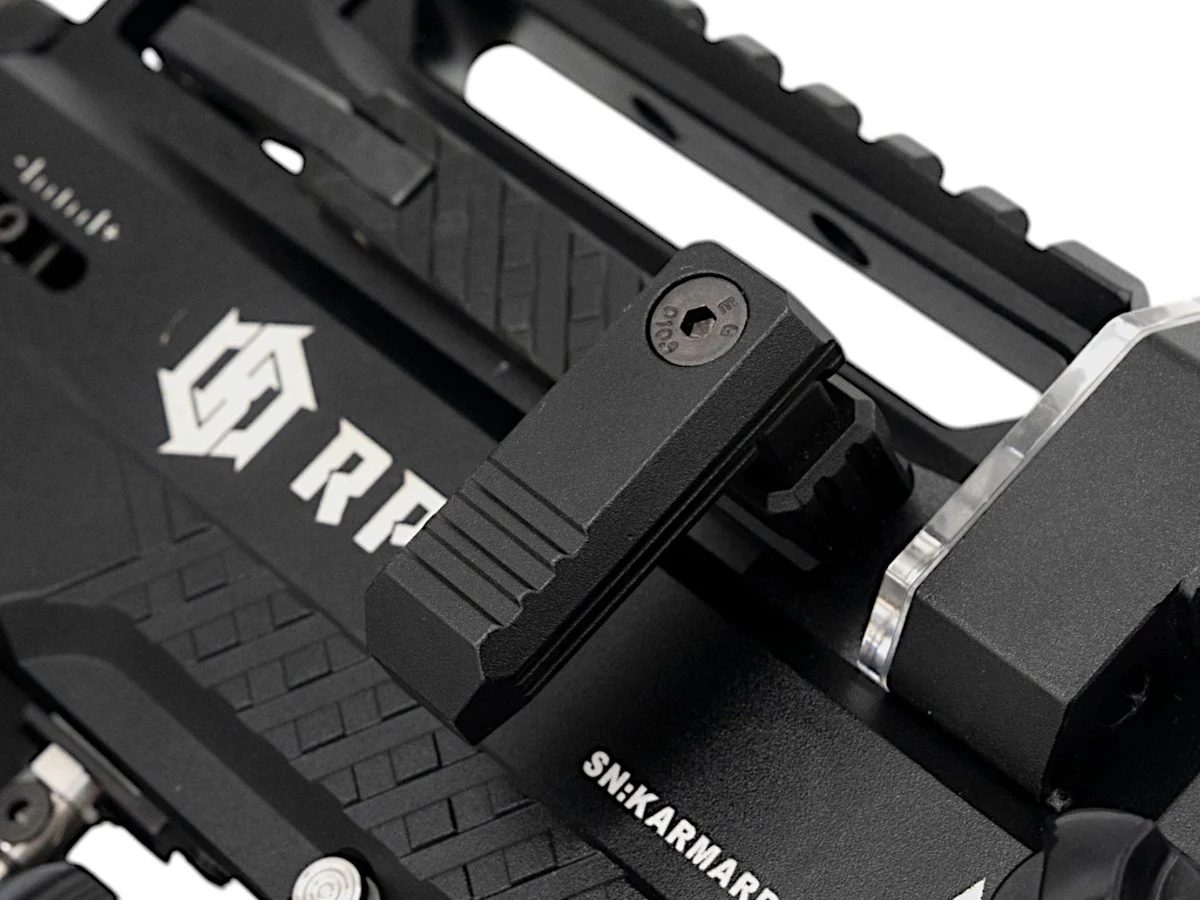
- Manual resettable safety
- Adjustable shoulder pad
- Adjustable cheekpiece
- M18 threaded muzzle
- Barrel length: 28″
- Overall length: 42″
- Weight: 16.8 lbs.
Specifications
BrandCaliber.357 (9mm)Max Velocity866 fps Muzzle Energy135 ft/lbsSuggested forCompetitionPowerplantPre-charged pneumaticLoudness4-Medium-HighWeight16.8 lbsFunctionRepeaterMax Shots per Fill30Cylinder Size700 ccActionSideleverFixed/adj. powerMultiple settingsScopeableWeaver/PicatinnyFront SightsnoneRear SightsnoneSafetyManualTriggerTwo-stage adjustableBarrelRifledBarrel Length28.0″Overall Length42.0″Capacity11 round(s)Body TypeRifleStockSyntheticButtplateAdjustableColorBlackOperating Pressure4500 PSI / 310 BARGrip OrientationAmbidextrousRegulatedYesBarrel Twist Rate1/27.4 TwistIs Safe To Dry FireYes
Karma Red Panda Bench PCP Air Rifle – Competition Precision, Benchrest Engineering, and Advanced PCP Performance
The Karma Red Panda Bench PCP Air Rifle is a purpose-built precision platform developed for shooters who prioritize repeatability, competition performance, and refined PCP engineering. Karma states that the current Red Panda platform was developed from extensive competition experience and redesigned to support both long-range benchrest and positional shooting disciplines. The manufacturer also reports that prototype and production versions achieved major podium results, including a professional benchrest world-record score of 240 with 8 Xs.
For buyers researching karma airguns, karma red panda, Karma Red Panda air rifle, Karma Airguns PCP rifle, Karma Airguns PCP, or even the broader phrase panda gun, the Red Panda stands apart because it was engineered specifically around precision rather than simply adapted from a general-purpose hunting platform.
Why Choose the Karma Red Panda Bench?
The main reason to choose the Red Panda is its competition-oriented design philosophy. Karma explains that the current platform uses an upgraded barrel system with a proprietary rifling profile designed to perform well with both pellets and slugs. At the same time, the front rail and plenum area were vertically reduced by nearly an inch compared with the earlier version, improving balance and handling for positional use.
This dual-purpose approach makes the rifle relevant to shooters who want one platform capable of supporting both benchrest and positional competition rather than maintaining separate rifles for each discipline.
Precision Barrel and Competition Performance
The Red Panda’s barrel system is one of its most important features. Karma states that the barrel profile and rifling were engineered specifically to provide high precision with both pellets and slugs.
That focus on projectile flexibility is particularly important for experienced shooters who test different ammunition types to determine which combination produces the tightest groups.
When comparing the Red Panda with products such as the Karma EQ PCP air rifle, Karma Airguns EQ, karma eq, karma eq air rifle, eq air, or eq magazine, it is important to recognize that the EQ is positioned differently. Karma describes the EQ as a high-power precision PCP with a large plenum, adjustable regulator, 24-inch barrel, and 500cc air tank, making it suitable for long-range target shooting and higher-energy applications.
Red Panda Versus Karma EQ
The Karma EQ PCP air rifle for sale, Karma EQ .25 caliber review, Karma EQ bullpup, Karma EQ sidelever bullpup, Karma EQ large plenum, and high power PCP air rifle Karma searches generally relate to buyers looking for the EQ rather than the Red Panda.
The EQ platform uses a 70cc plenum, externally adjustable regulator, high-capacity magazine, 24-inch barrel, and 500cc 310-bar air tank.
By contrast, the Red Panda is more explicitly competition-driven, with its development centered on benchrest accuracy and positional performance. Buyers should therefore choose according to discipline rather than assuming both platforms serve exactly the same purpose.
How the Red Panda Compares With the Karma SLS
The broader Karma lineup also includes the Karma SLS air rifle, Karma SLS Standard, Karma SLS Compact PCP rifle, Karma SLS semi-auto air rifle, karma sis, karma sis compact, and .22 Karma SLS Compact Folding Stock.
Karma’s SLS Compact uses a switchable side-lever or semi-automatic action, externally adjustable regulator, folding adjustable stock in applicable markets, and a compact 12-inch barrel. In .22 caliber, Karma lists a 12-shot magazine, 250cc cylinder, 70cc plenum, 310-bar fill pressure, and approximately 31 FPE at its base tune.
The SLS therefore emphasizes compact versatility, while the Red Panda concentrates more heavily on extreme precision.
Caliber and Platform Options
Buyers researching 25 karma, Karma Airguns Red Panda .30, or broader high-caliber configurations should verify the exact Red Panda specification being offered because caliber availability and competition setup can vary.
Likewise, the phrase kaarma dealer usually reflects buyers searching for an authorized Karma retailer. Karma maintains a global dealer network with retailers across North America, Europe, Canada, South Africa, Kuwait, Puerto Rico, Argentina, and other regions.
Why Precision Matters
Precision is more than simply producing one impressive group. A true competition platform must repeat its performance across multiple strings and changing conditions.
That is where the Red Panda’s engineering philosophy becomes particularly important. Karma reports that more than a dozen finalists used the original platform during the 2024 benchrest season, while the current version incorporates further engineering changes based on those competition results.
This combination of real-world competition development and production refinement provides strong technical credibility.
Important Buying Considerations
PCP rifles require more maintenance than basic spring-powered platforms because they contain high-pressure components, seals, regulators, valves, and additional moving parts. Karma itself notes that PCP systems require routine maintenance over time, including replacement of certain seals and O-rings.
Potential buyers should therefore consider filling equipment, maintenance access, ammunition testing, optics, and long-term servicing before purchasing.
Search phrases such as karma air conditioning and air karma are unrelated to the actual rifle platform and should not be confused with Karma’s PCP product range.
Why the Karma Red Panda Bench Deserves Consideration
For competition-focused shooters, the Red Panda offers something highly specific: a PCP platform developed around measurable precision results. Its refined barrel system, reduced vertical profile, competition-proven pedigree, and dual-purpose benchrest and positional capability give it a distinct position within the Karma lineup.
Compared with the more power-oriented EQ or the compact, switchable-action SLS family, the Red Panda is the model that most clearly targets shooters who place precision, repeatability, and competition performance at the top of their priorities.
Engineering, Accuracy, and Performance Characteristics
Built Around Precision
Competition-oriented equipment is designed with one primary objective in mind: consistency. Every component must work together harmoniously so that performance remains predictable from one shot to the next. Designers therefore devote considerable attention to balance, structural rigidity, airflow efficiency, and mechanical reliability.
This approach helps create a platform capable of delivering dependable results over long periods of use. Rather than focusing exclusively on raw power, engineers concentrate on reducing unnecessary variables that might influence performance.
As a result, users benefit from improved stability, greater confidence, and more repeatable outcomes.
Barrel Design and Accuracy Potential
The barrel is often considered one of the most important components of any precision platform. Even the finest trigger system and the most advanced optics cannot compensate for inconsistencies within the barrel assembly.
Several factors influence accuracy:
- Internal barrel dimensions.
- Rifling design.
- Material quality.
- Manufacturing tolerances.
- Harmonic stability.
- Projectile compatibility.
When these elements work together effectively, they create the conditions necessary for exceptional precision.
Environmental conditions, however, continue to play an important role. Wind speed, temperature, humidity, and air pressure can all influence performance, which is why experienced shooters carefully monitor changing conditions throughout every session.
The Importance of Balance and Stability
Balance is an essential characteristic of any competition platform because it directly influences control and consistency. Equipment that feels unstable may require additional effort to maintain proper positioning, whereas a balanced system encourages smoother movement and improved control.
Manufacturers often refine weight distribution repeatedly before a design reaches production. This process helps ensure that the finished product provides a comfortable shooting experience while maintaining structural integrity.
Over time, these refinements contribute significantly to improved confidence and greater overall consistency.
Trigger Performance and Control
Trigger performance has a direct influence on accuracy because even slight disturbances can affect projectile placement. For this reason, precision-focused designs emphasize smooth operation, predictable engagement, and consistent break characteristics.
Experienced competitors frequently spend considerable time refining their techniques because proper trigger control remains one of the most important elements of successful shooting.
Patience, concentration, and repetition all contribute to improvement.
Air Management and Efficiency
Efficient air management contributes to consistency and reliability. Modern engineering techniques allow manufacturers to optimize airflow while improving pressure stability and reducing unnecessary variations.
This process generally involves careful attention to several important areas:
- Regulator performance.
- Valve operation.
- Airflow consistency.
- Pressure control.
- Internal component tolerances.
- Mechanical efficiency.
Together, these elements establish the foundation for dependable long-term performance.
Ergonomics and User Comfort
Comfort plays a greater role in performance than many individuals initially realize. Fatigue, discomfort, and poor positioning may gradually reduce concentration, especially during extended sessions.
Manufacturers address these concerns by carefully considering grip design, stock geometry, balance, and overall handling characteristics. These refinements help create a more natural shooting position while reducing unnecessary strain.
Even relatively minor improvements can produce significant long-term benefits.
The Role of Optics and Accessories
Precision equipment is often complemented by carefully selected accessories. Optical systems, support equipment, and maintenance tools all contribute to the overall experience.
Many experienced users place particular emphasis on the following factors:
- Clear sight pictures.
- Reliable adjustment mechanisms.
- Stable mounting systems.
- Consistent projectile selection.
- Appropriate maintenance equipment.
- Protective storage solutions.
Choosing compatible accessories helps maximize the potential of the entire system.
Developing Effective Habits
Long-term success depends upon discipline and consistency. Establishing a structured routine encourages careful preparation while reducing the likelihood of unnecessary errors.
A reliable routine often includes inspecting equipment, monitoring environmental conditions, organizing accessories, and verifying that all components are functioning correctly.
These simple habits create a strong foundation for dependable performance and continued improvement over time.
Building Confidence Through Experience
Experience remains one of the most valuable resources available to any enthusiast. Each practice session provides an opportunity to refine existing techniques while gaining a deeper understanding of both equipment and environmental influences.
As knowledge increases, confidence naturally develops. This gradual progression allows individuals to appreciate the importance of careful preparation, thoughtful engineering, and consistent practice. Ultimately, these qualities contribute to a more rewarding and successful experience.
Practical Use, Maintenance, and Long-Term Reliability
Understanding Real-World Performance
Performance should always be evaluated under realistic conditions rather than in ideal environments alone. Temperature, humidity, wind conditions, and variations in handling techniques all influence consistency. Consequently, experienced users place considerable importance on preparation and regular practice.
Even the most carefully engineered platform benefits from a disciplined approach. Proper maintenance, consistent handling procedures, and careful observation help ensure dependable operation over extended periods of use.
This combination of engineering and responsibility ultimately determines long-term success.
Establishing a Reliable Maintenance Routine
Routine maintenance helps preserve efficiency while protecting important components from unnecessary wear. Regular inspections allow small concerns to be identified early, thereby reducing the possibility of more significant problems later.
A complete maintenance routine often includes the following tasks:
- Cleaning external surfaces after use.
- Inspecting all visible components carefully.
- Verifying that moving parts operate correctly.
- Checking fasteners for secure positioning.
- Monitoring seals and pressure-related components.
- Following manufacturer recommendations consistently.
These practices help maintain reliability while supporting long-term performance.
Managing Environmental Conditions
Environmental conditions influence every mechanical system. Moisture, dust, heat, and rapid temperature changes can gradually affect performance and durability.
For this reason, appropriate storage procedures remain essential. Equipment should be protected from direct sunlight, excessive humidity, and unnecessary impacts whenever possible.
Owners who adopt these habits early often discover that their equipment remains dependable for considerably longer periods.
The Importance of Consistency
Consistency is frequently more important than raw performance figures. A platform capable of producing predictable results repeatedly often proves more valuable than one that delivers impressive results only occasionally.
Several factors contribute directly to consistent operation:
- Stable mechanical performance.
- Proper maintenance procedures.
- Suitable storage conditions.
- Careful preparation.
- Attention to detail.
- Continued practice and observation.
When these factors work together effectively, confidence naturally increases.
Ergonomics and Extended Use
Extended sessions place additional demands upon both the user and the equipment. Therefore, comfort becomes increasingly important as experience levels increase.
Balanced construction, thoughtful design, and efficient weight distribution all contribute to reduced fatigue and improved control. This allows users to maintain concentration more effectively while preserving consistent performance throughout longer periods of activity.
These characteristics often distinguish premium equipment from more conventional alternatives.
Transportation and Storage Considerations
Transportation introduces additional risks because equipment may be exposed to vibration, dust, moisture, and accidental impacts. Appropriate protective measures therefore remain essential.
Many experienced owners follow several simple recommendations:
- Store equipment in a cool, dry location.
- Protect it from excessive heat and moisture.
- Inspect all components regularly.
- Keep accessories organized and secure.
- Clean surfaces after each session.
- Replace worn parts whenever necessary.
These habits contribute significantly to long-term durability.
Building Knowledge Through Experience
Every practice session provides an opportunity to strengthen existing skills and develop a deeper understanding of performance characteristics. Over time, this experience helps individuals refine their techniques while improving efficiency and confidence.
Patience remains essential because meaningful progress occurs gradually. Individuals who remain committed to continual improvement often discover that consistency ultimately becomes their greatest advantage.
Balancing Innovation and Tradition
Modern manufacturing techniques continue to introduce improvements in materials, engineering methods, and production standards. Nevertheless, many of the fundamental principles of precision remain unchanged.
Attention to detail, disciplined preparation, responsible maintenance, and consistent practice continue to form the foundation of dependable performance.
These principles have remained effective for generations, and they continue to guide experienced users today.
Final Perspective
Long-term satisfaction depends upon much more than initial specifications. Reliability, durability, consistency, comfort, and careful maintenance all contribute to the overall ownership experience.
When these elements are combined successfully, users benefit from equipment capable of delivering dependable performance year after year while continuing to support growth, learning, and improvement.
Advanced Features, Ownership Experience, and Long-Term Value
Understanding the Importance of Mechanical Consistency
Mechanical consistency remains one of the defining characteristics of any precision platform. Every component must operate in harmony because even the smallest variation may influence overall performance.
Engineers carefully refine dimensions, tolerances, and operating mechanisms to achieve repeatable results. This attention to detail helps ensure that performance remains predictable throughout extended periods of use.
As a result, users are able to concentrate more effectively on technique, observation, and environmental conditions.
Refining Technique Through Practice
Skill development is a gradual process that requires patience, discipline, and consistency. Each training session provides an opportunity to strengthen existing techniques while identifying areas that require additional attention.
Several principles contribute significantly to continued improvement:
- Maintain a consistent shooting position.
- Develop a repeatable routine.
- Monitor environmental conditions carefully.
- Inspect equipment regularly.
- Record performance observations.
- Practice patiently and consistently.
These habits help establish a strong foundation for long-term progress.
The Relationship Between Comfort and Performance
Comfort influences performance more than many individuals initially realize. Fatigue, discomfort, and unnecessary movement may gradually affect concentration, particularly during lengthy sessions.
Designers therefore devote considerable effort to improving ergonomics and creating balanced platforms that feel natural during use. Thoughtful engineering helps reduce strain while promoting greater stability and control.
Over time, these refinements contribute directly to improved confidence and more consistent results.
Air System Efficiency
Efficient air management plays a vital role in maintaining stable performance. Modern systems rely upon carefully engineered components that regulate airflow while preserving pressure consistency throughout repeated use.
Several elements contribute to overall efficiency:
- Stable internal pressure regulation.
- Consistent airflow management.
- Precise component alignment.
- Reliable sealing systems.
- Durable construction methods.
- Careful manufacturing procedures.
Together, these elements create the conditions necessary for dependable long-term performance.
Maintaining Accuracy Over Time
Preserving accuracy requires regular attention and responsible ownership. Consistent maintenance procedures help ensure that every component continues functioning according to its intended specifications.
A recommended maintenance routine often includes the following steps:
- Cleaning exposed surfaces carefully.
- Inspecting all visible components.
- Monitoring seals and moving parts.
- Protecting equipment from excessive moisture.
- Storing equipment appropriately.
- Following manufacturer recommendations.
These simple procedures help preserve both reliability and performance.
The Importance of Responsible Storage
Proper storage practices protect equipment from unnecessary environmental exposure. Dust, humidity, temperature fluctuations, and accidental impacts can gradually influence performance if adequate precautions are not taken.
Many experienced owners prefer controlled storage environments because they provide additional protection against avoidable damage.
This approach helps preserve both appearance and mechanical integrity.
Transportation and Equipment Protection
Transportation introduces additional challenges because equipment may encounter vibration, impacts, and changing environmental conditions. Consequently, appropriate protective measures remain essential.
Protective storage systems offer several advantages:
- Improved organization.
- Greater protection during transportation.
- Reduced exposure to moisture and dust.
- Easier maintenance procedures.
- Enhanced long-term durability.
- Increased convenience.
These benefits contribute significantly to a more dependable ownership experience.
Building Confidence Through Experience
Experience gradually transforms knowledge into confidence. As familiarity increases, users develop a deeper understanding of both their equipment and the environmental factors that influence performance.
This process encourages continuous improvement while strengthening discipline and attention to detail. Meaningful progress requires time, but consistent effort often produces remarkable results.
Over the years, these experiences become invaluable sources of knowledge.
Appreciating Thoughtful Engineering
Exceptional products rarely achieve their reputation by chance. Instead, they emerge through extensive research, careful development, repeated testing, and continual refinement.
Every component serves a specific purpose, and every design decision contributes to the overall experience. This commitment to quality ultimately distinguishes premium equipment from more conventional alternatives.
Looking Toward the Future
Innovation continues to shape manufacturing techniques, materials, and engineering methods. Nevertheless, the principles of reliability, consistency, precision, and responsible ownership remain unchanged.
These principles continue to guide experienced enthusiasts while ensuring that carefully engineered equipment remains capable of delivering dependable performance for many years.
Frequently Asked Questions, Care Guidelines, and Final Buying Considerations
Who is this type of platform designed for?
This type of precision platform is designed for individuals who value consistency, reliability, and exceptional attention to detail. Beginners can appreciate its smooth operation and carefully engineered construction, while experienced users often benefit from the additional refinement, adjustability, and long-term performance potential.
Because different users have different objectives, selecting the appropriate configuration is always an important step.
How long does it take to become proficient?
Learning any new skill requires patience and repetition. Some individuals develop confidence quickly, whereas others prefer to progress gradually while refining their techniques over time.
Several factors influence the learning process:
- Previous experience.
- Practice frequency.
- Environmental conditions.
- Equipment familiarity.
- Personal preferences.
- Commitment to continuous improvement.
Steady practice usually produces the best long-term results.
How should equipment be stored?
Proper storage protects important components from unnecessary wear and environmental exposure. Consequently, experienced owners often establish a routine that remains consistent throughout the entire ownership experience.
The following recommendations are generally considered beneficial:
- Keep equipment clean and dry.
- Avoid prolonged exposure to moisture.
- Protect surfaces from excessive heat.
- Inspect components regularly.
- Store accessories in an organized manner.
- Follow all manufacturer guidelines.
These simple habits often extend operational life considerably.
Why is regular maintenance so important?
Regular maintenance helps preserve efficiency while reducing the possibility of unexpected problems. Furthermore, consistent inspections allow owners to identify minor concerns before they become more significant.
Preventive care offers several advantages:
- Greater reliability.
- Improved consistency.
- Reduced wear.
- Enhanced durability.
- Better long-term performance.
- Increased confidence during operation.
These benefits demonstrate why maintenance should always remain a priority.
What role does environmental exposure play?
Environmental conditions influence mechanical performance in many different ways. Dust, moisture, temperature changes, and prolonged exposure to direct sunlight can all affect long-term durability.
Therefore, experienced users carefully evaluate their surroundings before each session. This practice helps reduce unnecessary stress while preserving overall performance.
Even relatively small precautions can provide substantial long-term benefits.
How can consistency be improved?
Consistency develops through a combination of preparation, observation, patience, and repetition. Individuals who maintain disciplined routines often achieve more dependable results because they eliminate unnecessary variables from their processes.
Several practices contribute to improved consistency:
- Establishing repeatable procedures.
- Recording observations carefully.
- Monitoring environmental conditions.
- Inspecting equipment frequently.
- Practicing regularly.
- Maintaining appropriate storage conditions.
These habits support continual improvement while strengthening confidence.
What should first-time buyers consider?
First-time buyers should carefully evaluate their objectives before making a purchase. Features, ergonomics, maintenance requirements, compatibility, and long-term support all deserve careful consideration.
It is also wise to think about future requirements because a carefully chosen platform may continue meeting expectations for many years.
Taking additional time during the decision-making process often leads to greater satisfaction later.
How important is overall build quality?
Build quality influences durability, reliability, comfort, and performance simultaneously. Superior engineering and careful manufacturing practices contribute directly to the overall ownership experience.
This attention to detail becomes increasingly apparent after months or even years of regular use. Consequently, experienced owners frequently emphasize the importance of selecting equipment that has been designed with longevity in mind.
Final Thoughts
Long-term satisfaction rarely depends upon a single feature alone. Instead, reliability, consistency, comfort, durability, and responsible ownership work together to create a rewarding experience.
When these qualities are combined successfully, users gain access to equipment capable of delivering dependable performance while supporting continued growth, learning, and refinement.
Ultimately, careful preparation, thoughtful engineering, and disciplined practice remain the foundations of long-term success.
Be the first to review “Karma Red Panda Bench PCP Air Rifle”
Related products
karma air rifles
karma air rifles
karma air rifles
Reviews
There are no reviews yet.