Karma EQ PCP Air Rifle
$700.00
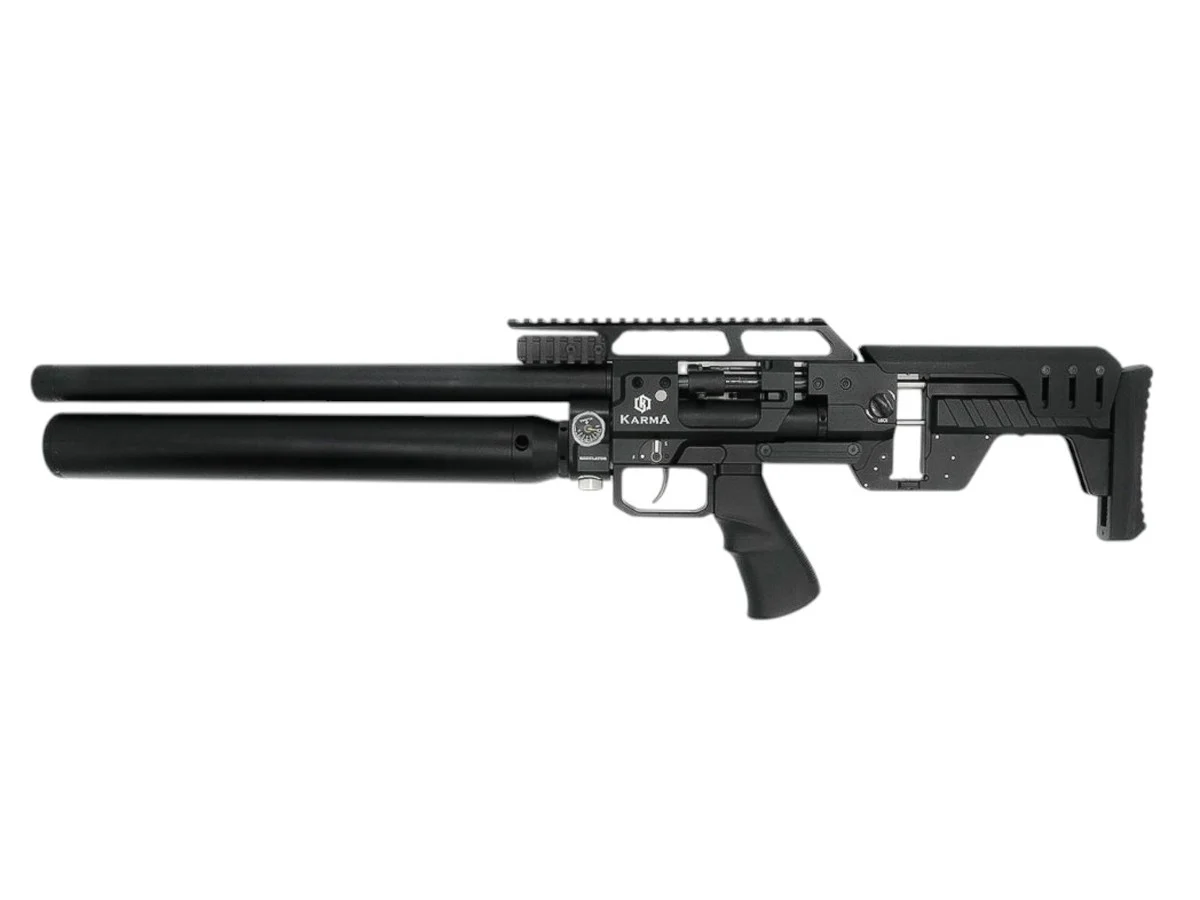
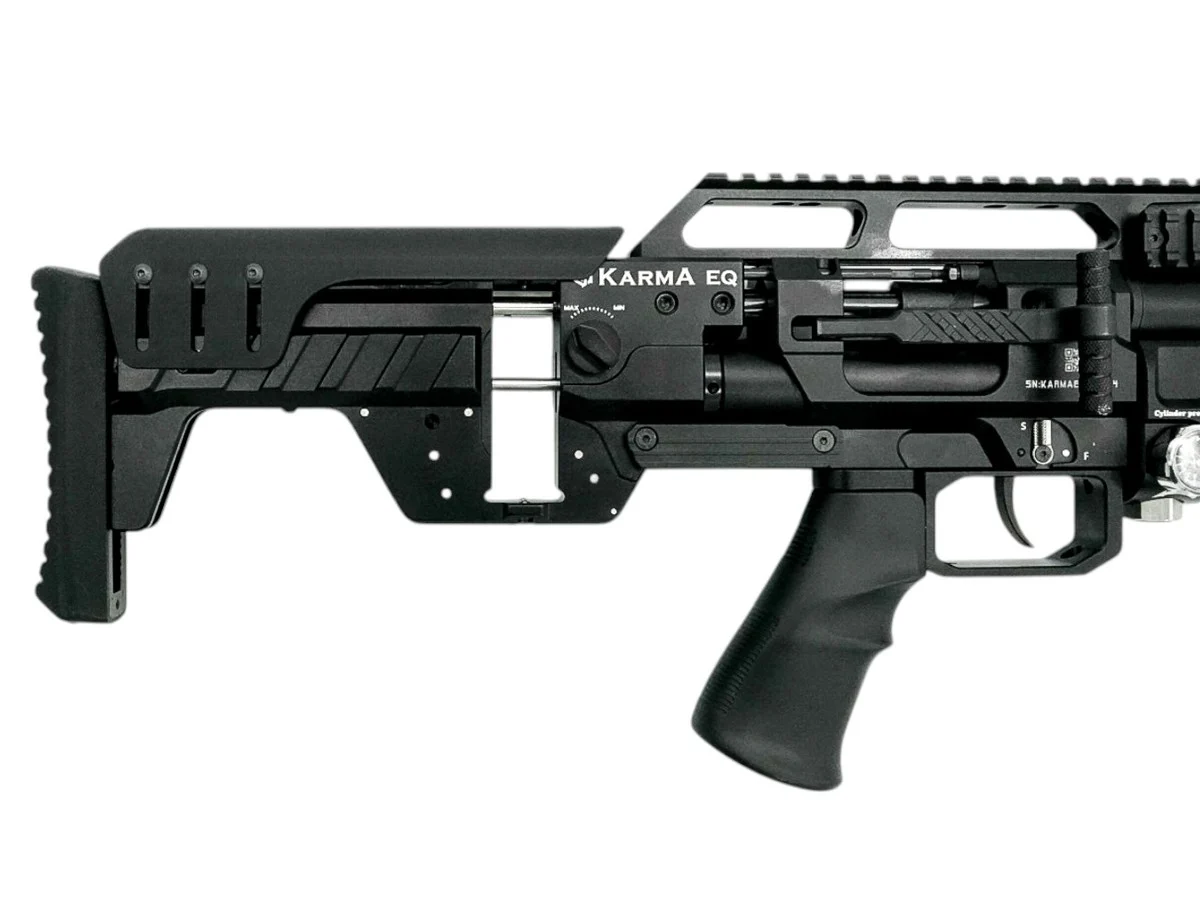
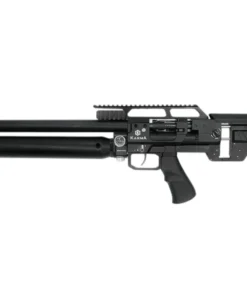
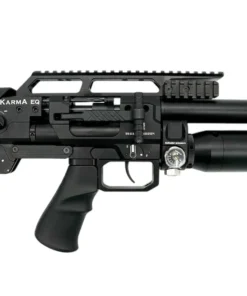
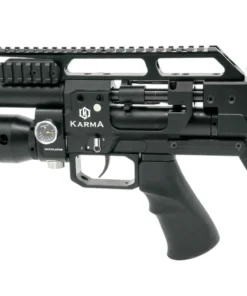
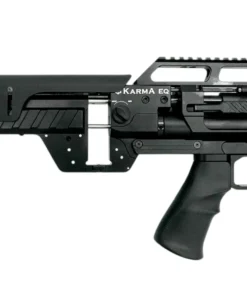
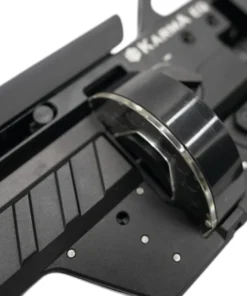
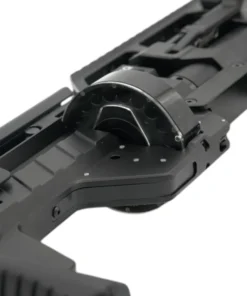
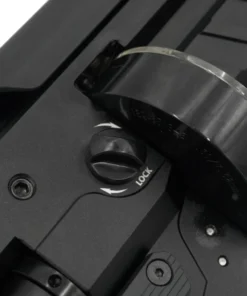
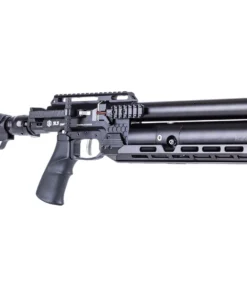
The Karma EQ is a bullpup PCP air rifle with a large plenum that helps it deliver the accuracy and power needed for pest control and hunting of medium sized game such as possums and coyotes, and competitive shooting. It is engineered for durability and reliability, and designed to offer the optimal blend of accurate performance and adjustability at a reasonable price for what it provides.
This air rifle combines a fully solid barrel system with a 360-degree radial transfer port to deliver shots from a stable platform that leave the barrel with consistent accuracy because of the circular air pattern at the base of the ammo. The stability of the barrel is enhanced by the 8-bolt barrel mounting system that provides extreme resistance to changes in performance from external shocks such as being dropped or bumped.
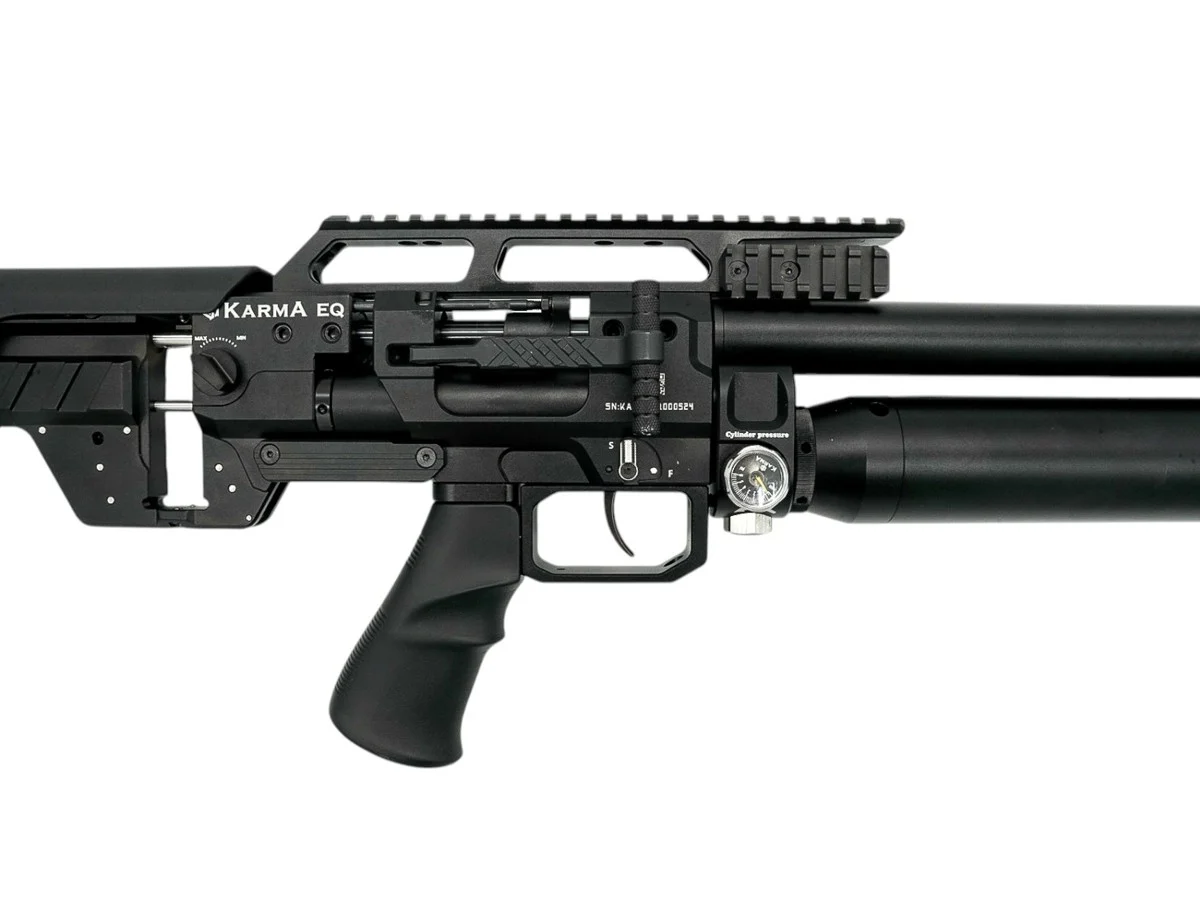
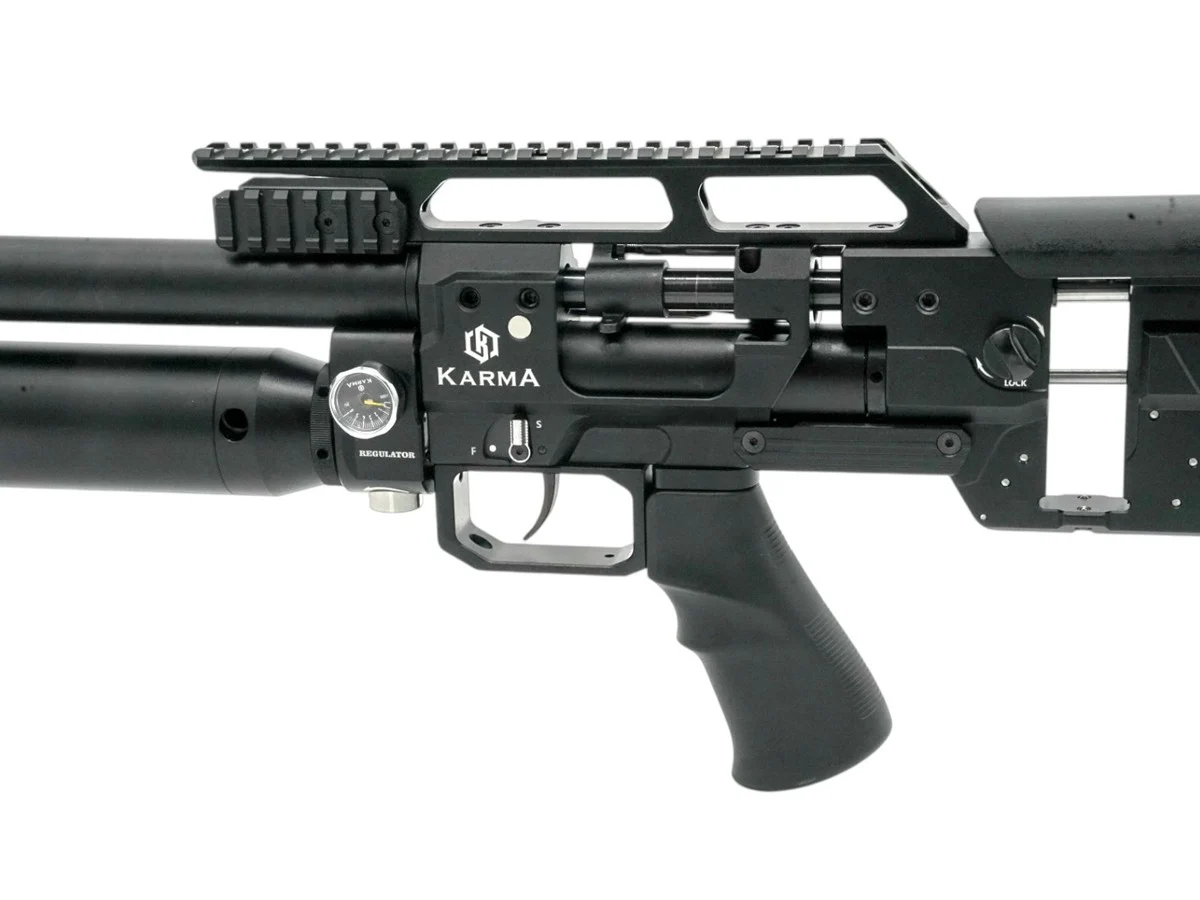
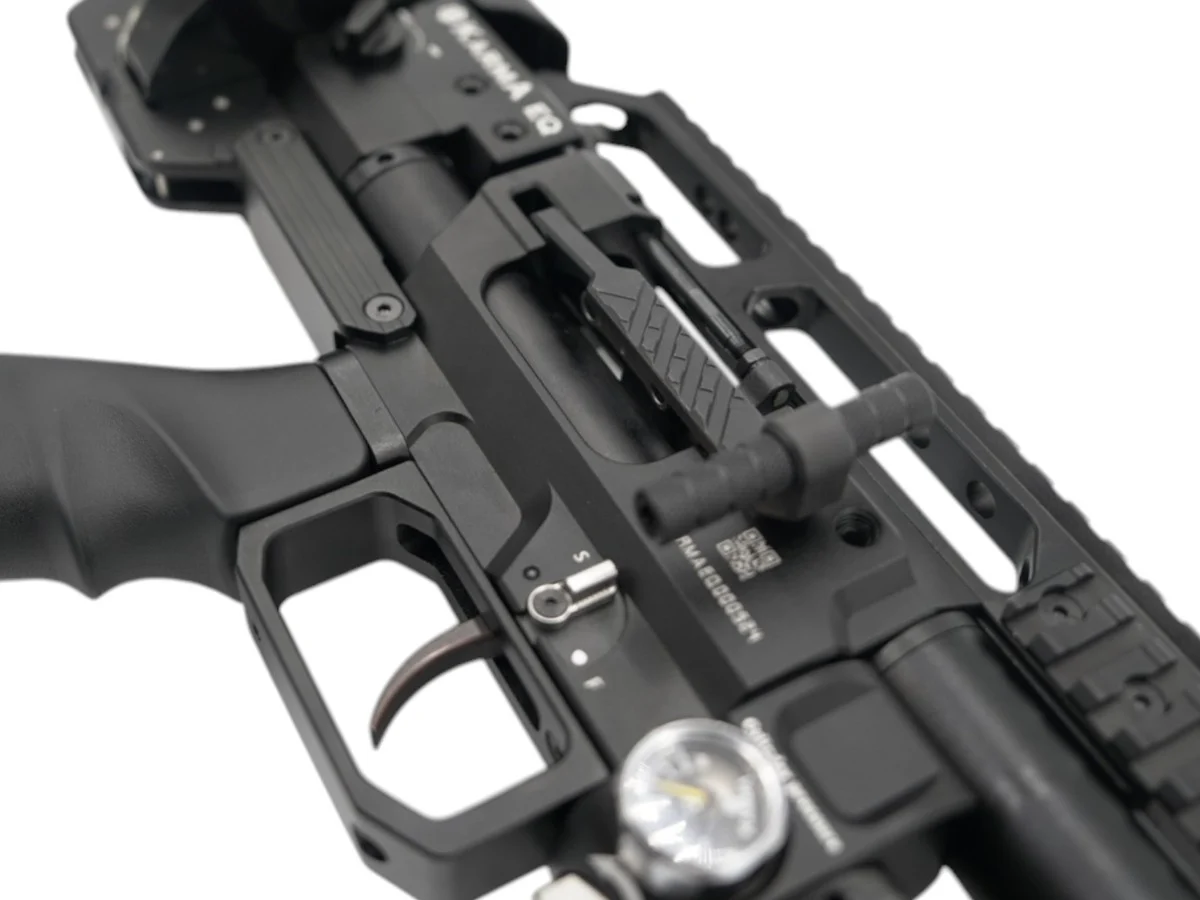
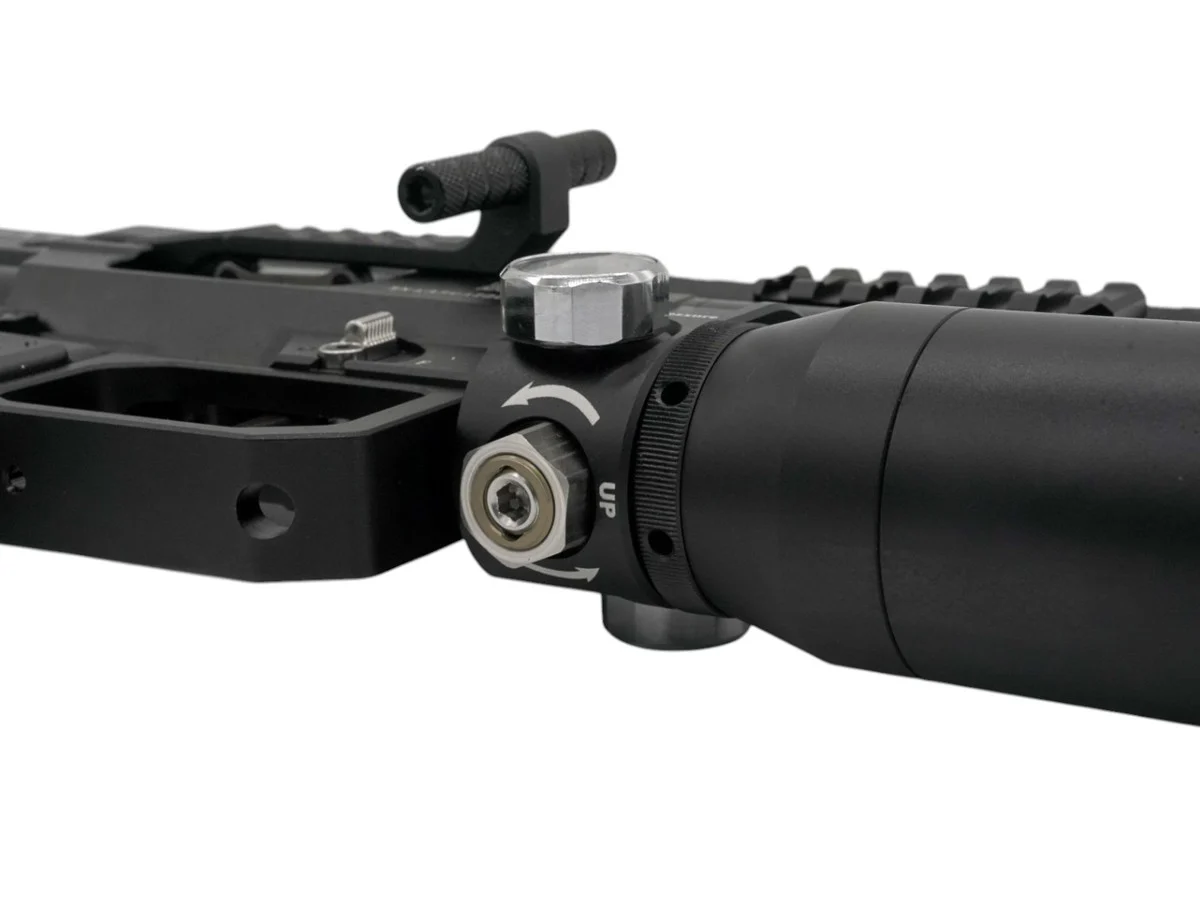
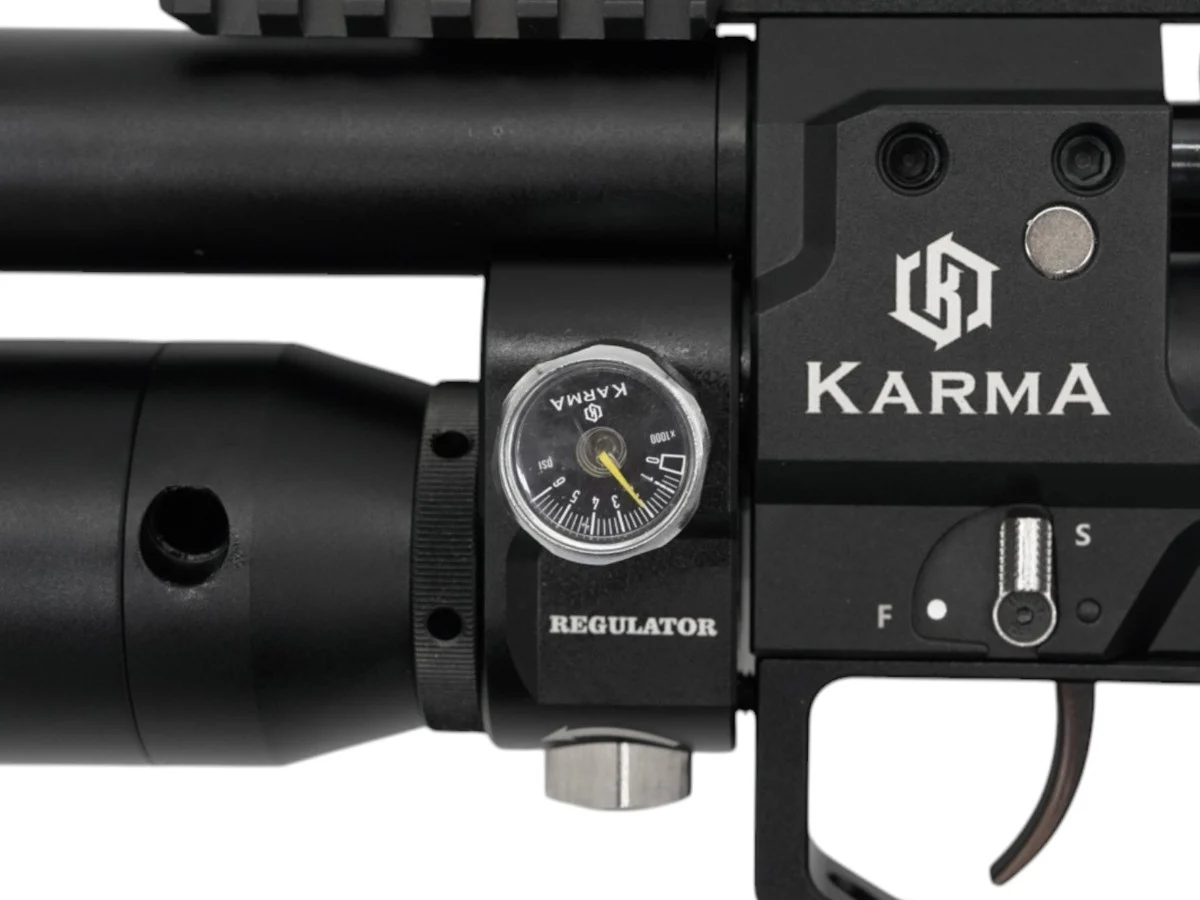
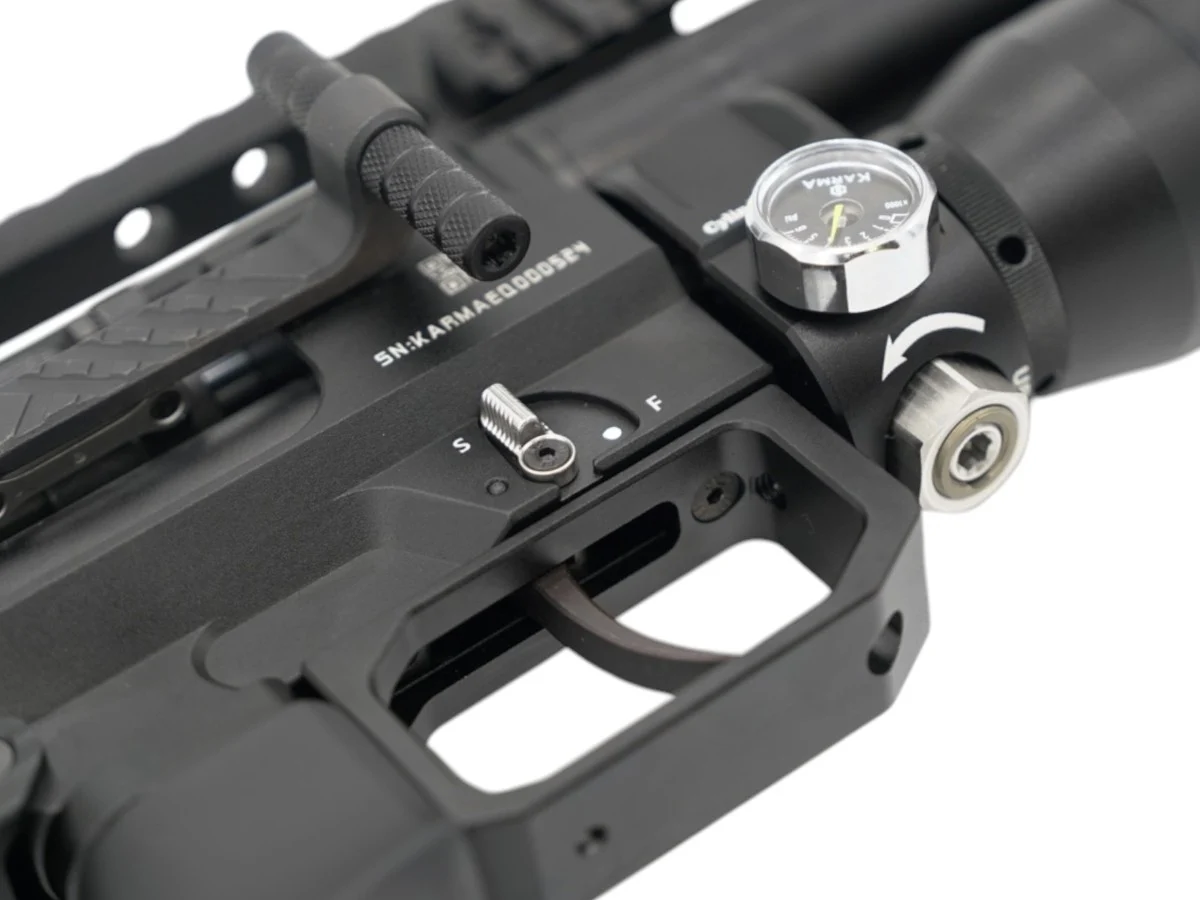
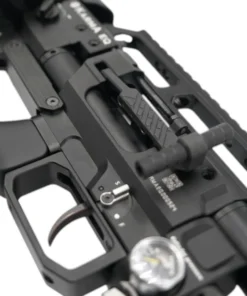
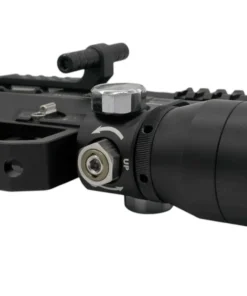
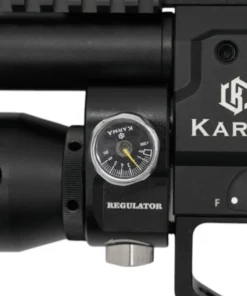
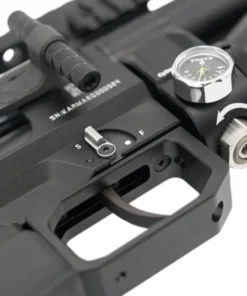
The Karma EQ allows shooters to customize the tune of the air rifle with adjustable features that include an externally-adjustable regulator that yields shots with consistent velocity for predictable performance, an externally-adjustable hammer spring tensioner to fine-tune performance for different ammo and uses, an adjustable transfer port, and a two-stage adjustable trigger.
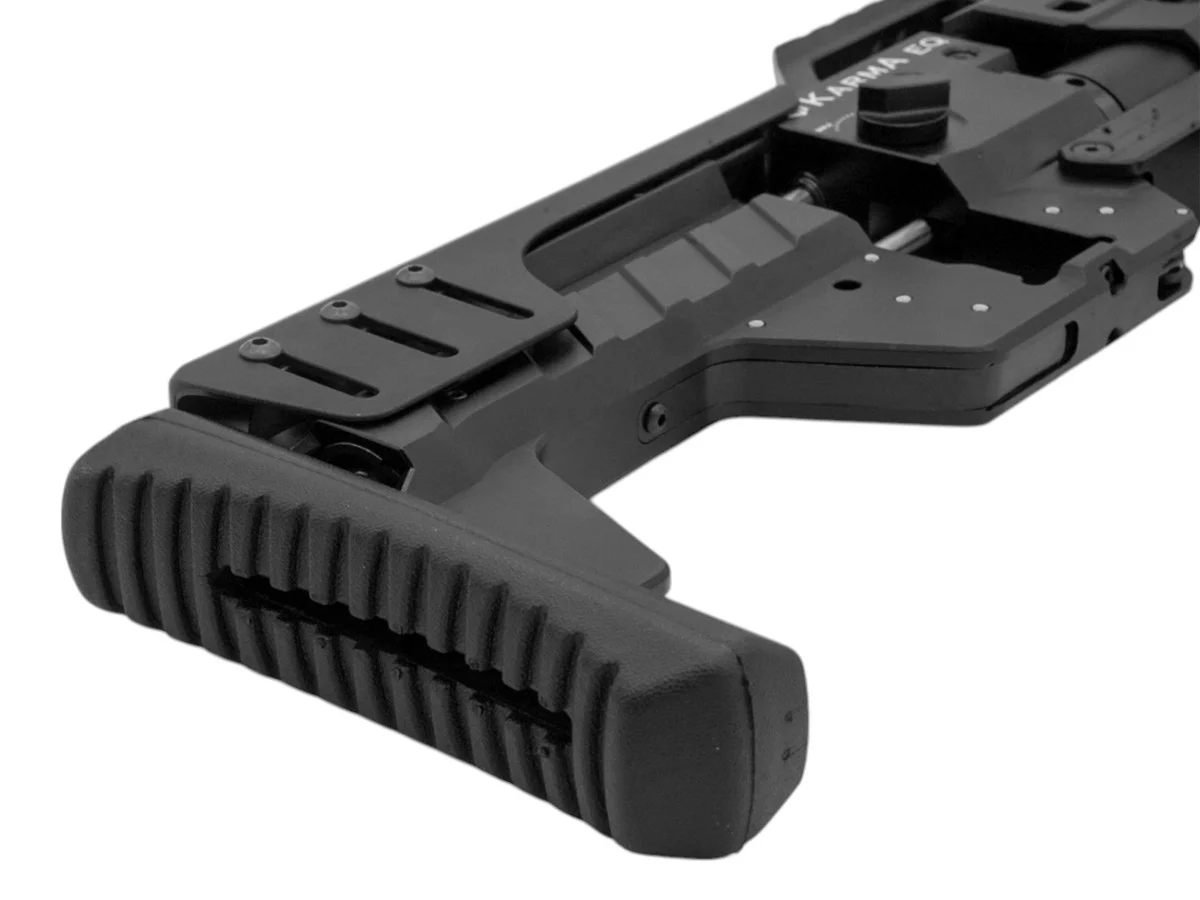
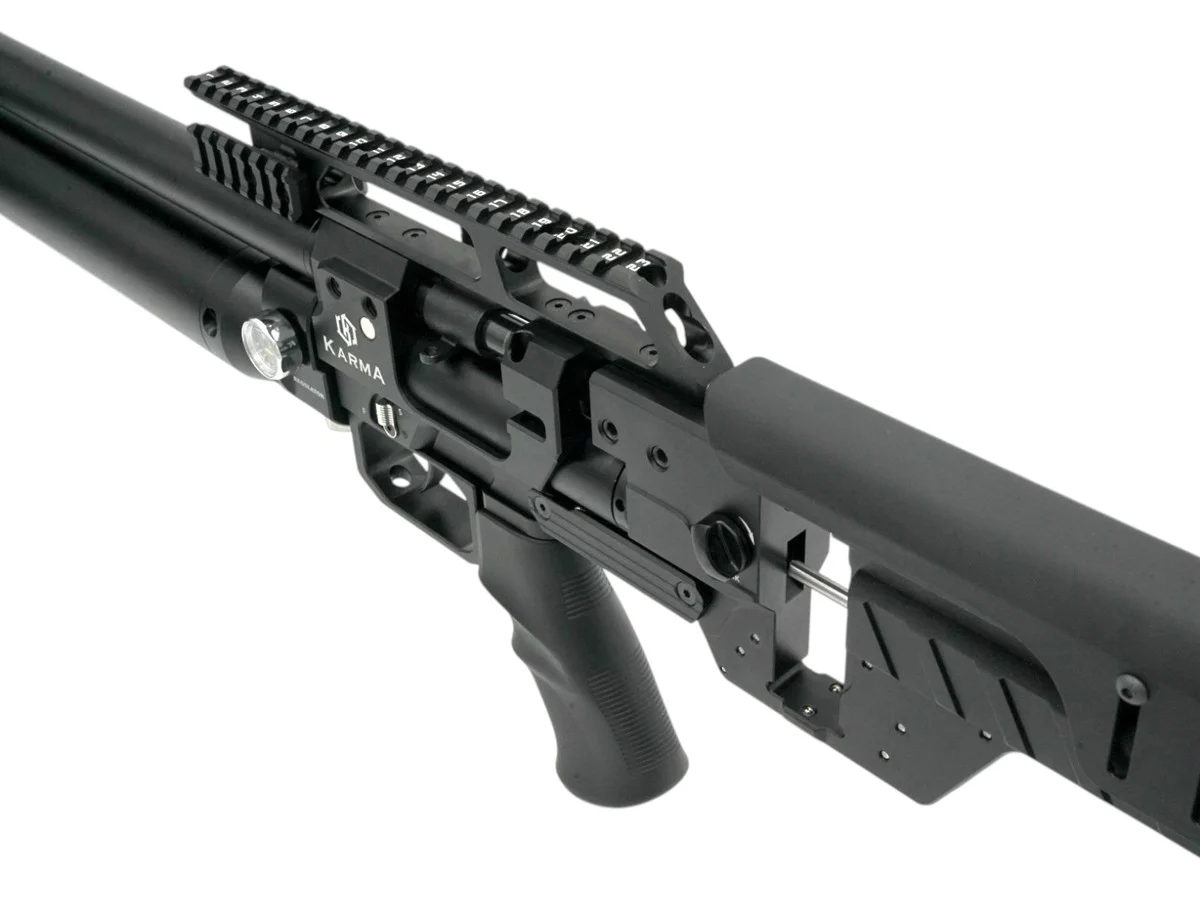
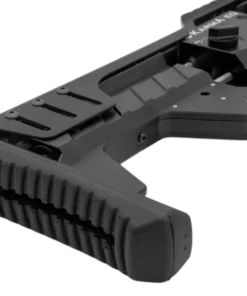
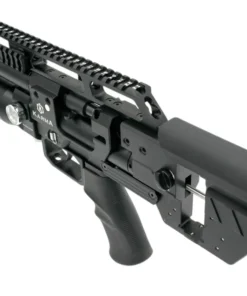
The air rifle has a long Picatinny optics rail with a 20 MOA angle that helps improve accuracy at longer distances, and it also has Picatinny accessory rails at the front of both sides of the optics rail to accommodate items such as laser, shooting weights, and lights that enhance accuracy and functionality. This air rifle offers an AR-style ergonomic pistol grip stock, a height-adjustable cheekpiece, and a ridged rubber buttpad.
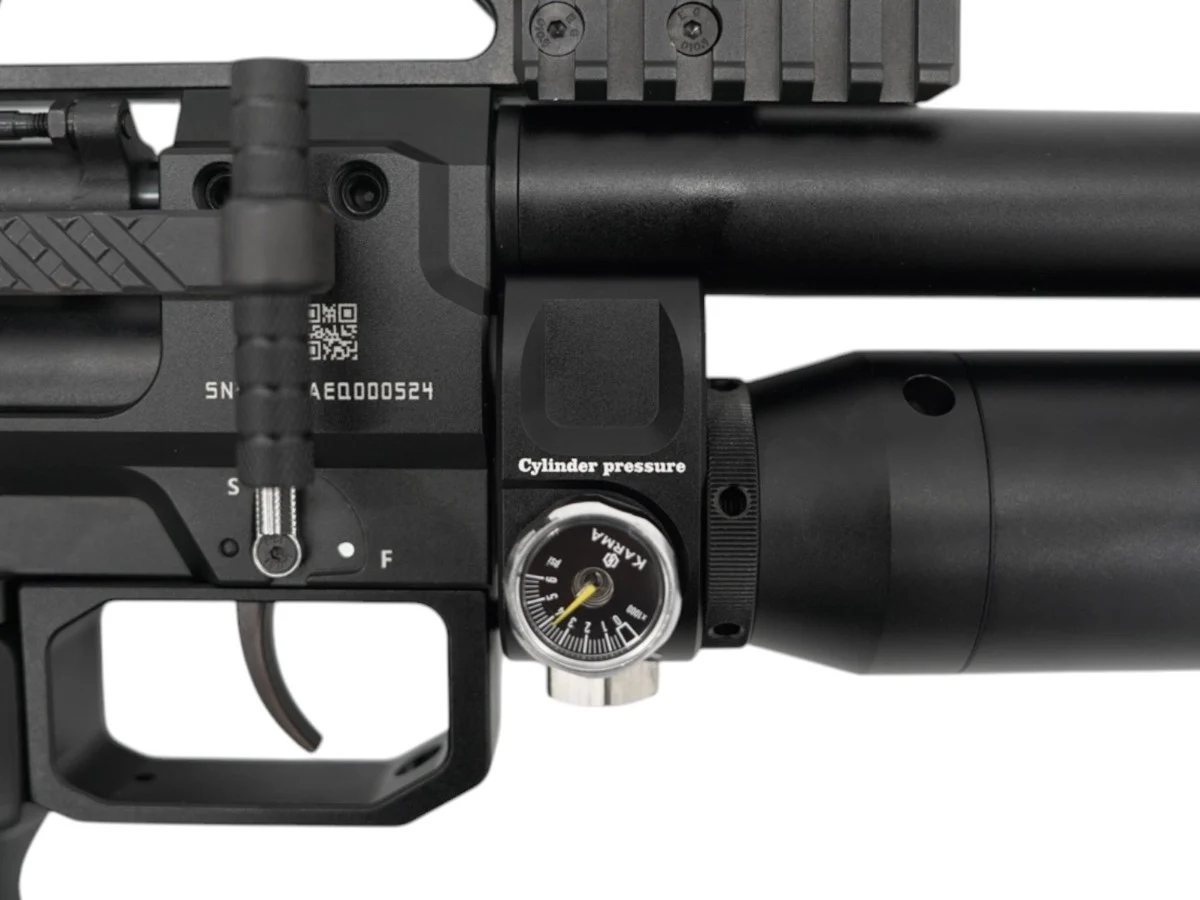
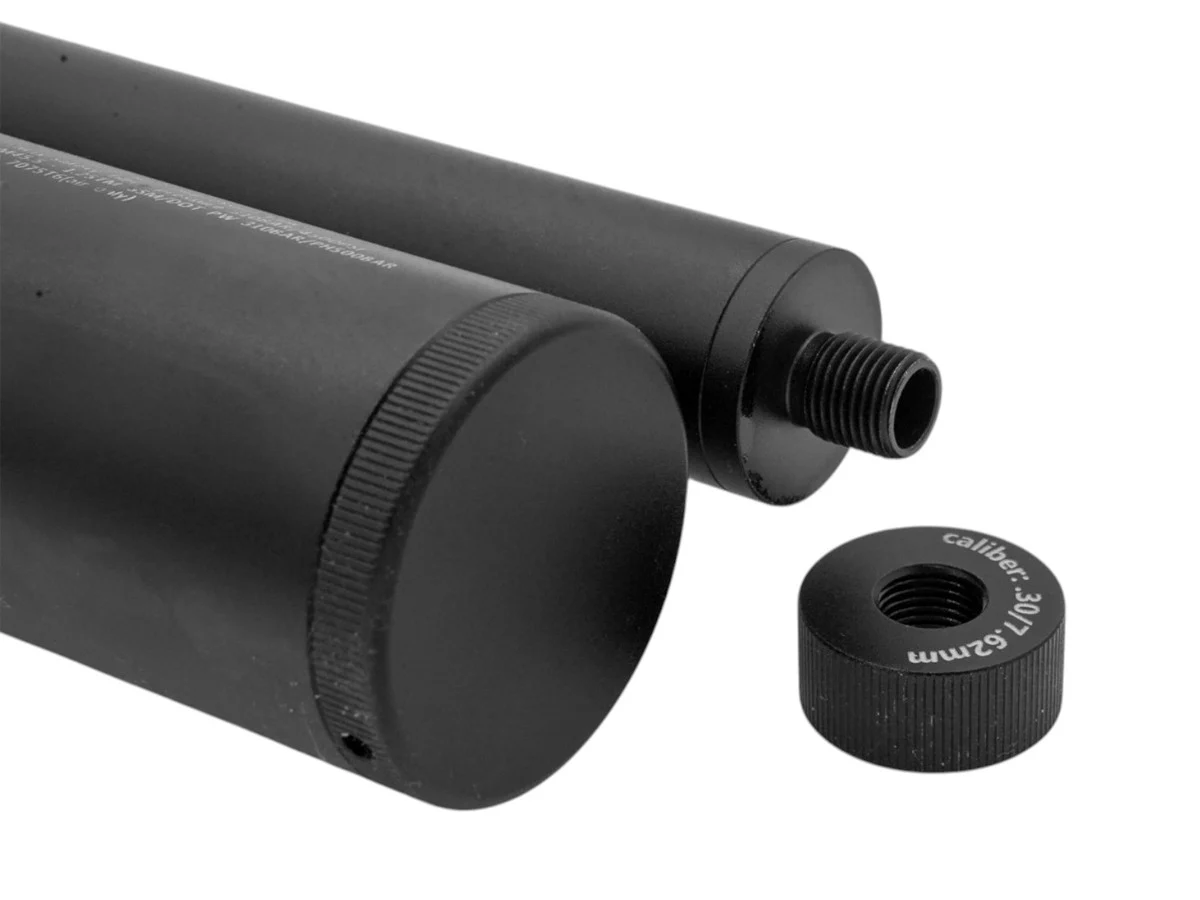
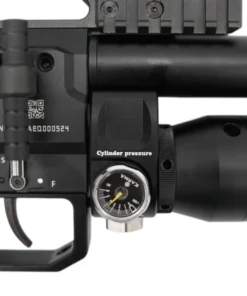
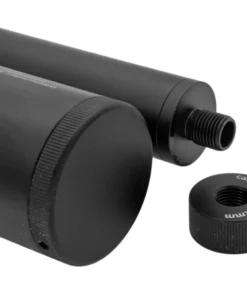
For monitoring the performance of each shot and when a refill is needed, this air gun has a pressure gauge for the regulator pressure, as well as a pressure gauge for the cylinder pressure. In addition, the barrel shroud has a 1/2×20 UNF threaded end that allows the attachment of a moderator to reduce the noise generated from a shot.
To get a bullpup air gun with adjustable features and innovative technology for accurate long-range hunting, pest control, and competitive shooting, buy the Karma EQ PCP Air Rifle today from Pyramyd AIR.
Karma EQ PCP Air Rifle
- Precharged pneumatic
- Sidelever
- 500cc aluminum air cylinder
- 70cc plenum
- Fill pressure: 310 BAR/4,496 PSI
- Solid barrel system with 360° radial transfer port
- 8-bolt barrel mounting system
- Shrouded barrel
- 1/2×20 UNF threaded muzzle with thread protector
- Average velocity with base tune*: 908 FPS (.22), 904 FPS (.25), 882 FPS (.30)
- Average energy with base tune*: 45 FPE (.22), 61 FPE (.25), 77 FPE (.30)
- Magazine capacity: 28 (.22), 26 (.25), 22 (.30)
- Max. shots per fill: 160 (.22), 110 (.25), 50 (.30)
- Shots per fill with base tune: 56 (.22), 78 (.25), 40 (.30)
- Max Energy: 75 FPE (.22), 78 FPE (.25), 102 FPE (.30)
- Barrel twist rate: 1:17.7 (.22, .25), 1:16 (.30)
- Externally-adjustable regulator
- Externally-adjustable hammer spring
- Adjustable transfer port
- Two-stage adjustable trigger
- Two manometers: regulator pressure gauge and cylinder pressure gauge
- AR-style ergonomic pistol grip
- Height-adjustable cheekpiece
- Ridged rubber buttpad
- Picatinny optics rail with 20 MOA cant
- Picatinny accessory rails
- Manual ambidextrous lever safety
- Barrel length: 24″
- Overall length: 33″
- Weight: 9.3 lbs.
* – Base tune measured from 4000 PSI fill at 78°F, 44% humidity, 60’ above sea level. Using: 25gr pellet, 2/7 on HS, transfer port -5 from max (.22), 33.9gr pellet, 1/7 on HS, transfer port max (.25), 44.9gr pellet, 1/7 on HS, transfer port max (.30)
Specifications

Karma EQ PCP Air Rifle – High-Power Precision, Adjustable PCP Engineering, and Long-Range Versatility
The Karma EQ PCP Air Rifle is built for shooters who want serious power, broad adjustability, and long-range precision from a modern pre-charged pneumatic platform. Karma currently offers the EQ in .22, .25, and .30 caliber configurations, each using a 24-inch barrel, 500cc air tank rated to 310 BAR, 70cc plenum, 20 MOA Picatinny optics rail, threaded shroud, and externally adjustable regulator. These features place the karma eq firmly among the more performance-oriented rifles in the current karma airguns lineup.
For buyers researching karma eq air rifle, eq air, Karma EQ PCP air rifle, Karma Airguns EQ, Karma Airguns PCP rifle, or Karma Airguns PCP, the strongest appeal is tunability. Karma explicitly positions the EQ around a wide power-adjustment range and compatibility with both pellets and slugs, which gives experienced shooters significant flexibility when configuring the rifle for lawful target, field, or competitive use.
Why Choose the Karma EQ?
The main reason to choose the EQ is its combination of power and control. The rifle uses an adjustable trigger, external regulator adjustment, high-capacity magazine, large air supply, and high-power valve adjustment. Therefore, it can be configured more precisely than many fixed-output platforms.
Searches such as high power PCP air rifle Karma, Karma EQ bullpup, Karma EQ sidelever bullpup, and Karma EQ large plenum usually come from buyers interested in exactly this kind of performance. The current EQ measures 840 mm overall and weighs about 9.3 lb across its listed caliber options, while its 70cc plenum is designed to support heavier projectiles and higher output.
How Good Is the EQ for Precision?
Precision depends on much more than raw power. Barrel quality, regulator stability, projectile selection, optics, trigger control, and consistent handling all influence results. The EQ uses a 1:17.7 twist rate in .22 and .25, while the .30 version uses a 1:16 twist. All three calibers use a 609 mm, or 24-inch, barrel.
Karma publishes representative base tunes of roughly 45 FPE in .22, 61 FPE in .25, and 77 FPE in .30, with listed maximum energies reaching approximately 75, 78, and 102 FPE respectively depending on caliber and projectile. Actual performance varies with tune, ammunition, pressure, and environmental conditions.
That makes searches such as Karma EQ .25 caliber review and 25 karma particularly relevant to buyers trying to decide which configuration best matches their intended shooting discipline.
Magazine Capacity and Air Supply
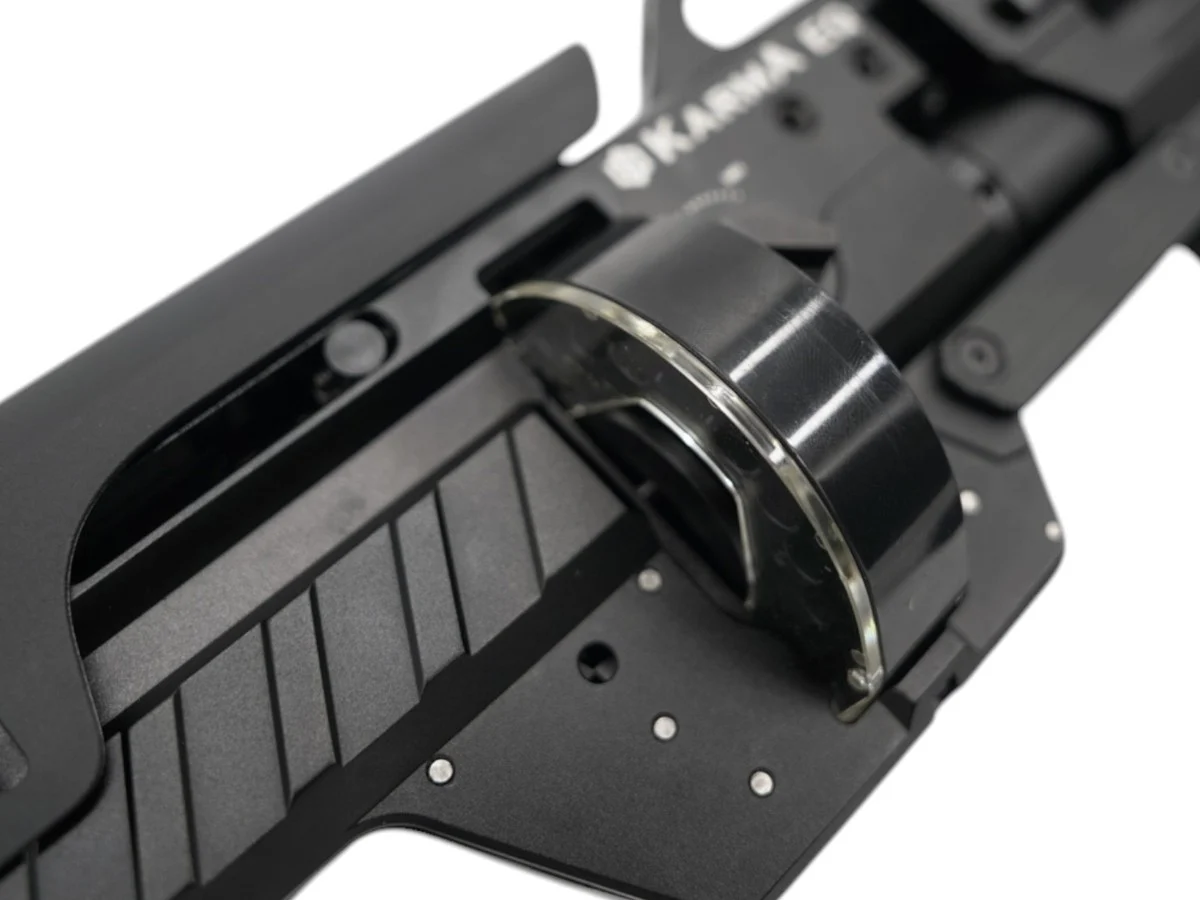
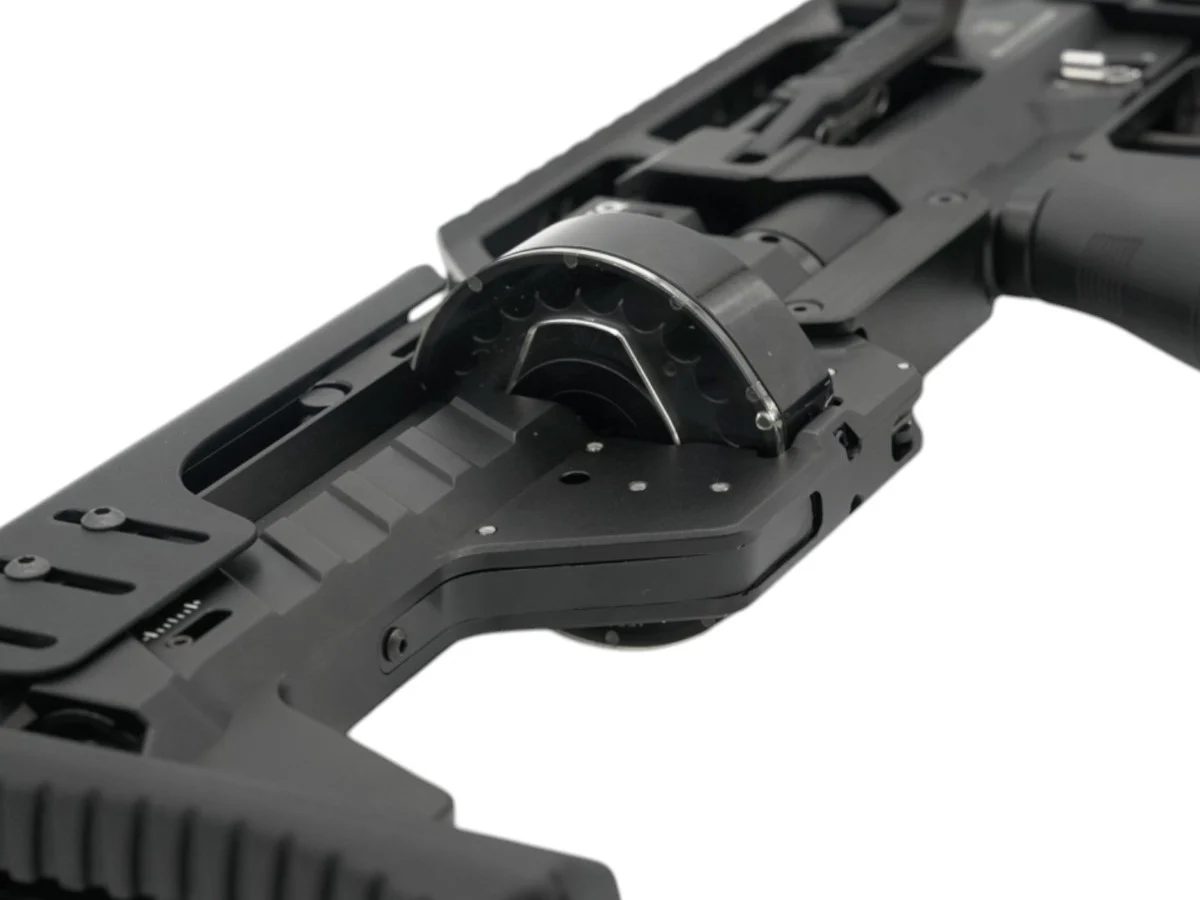
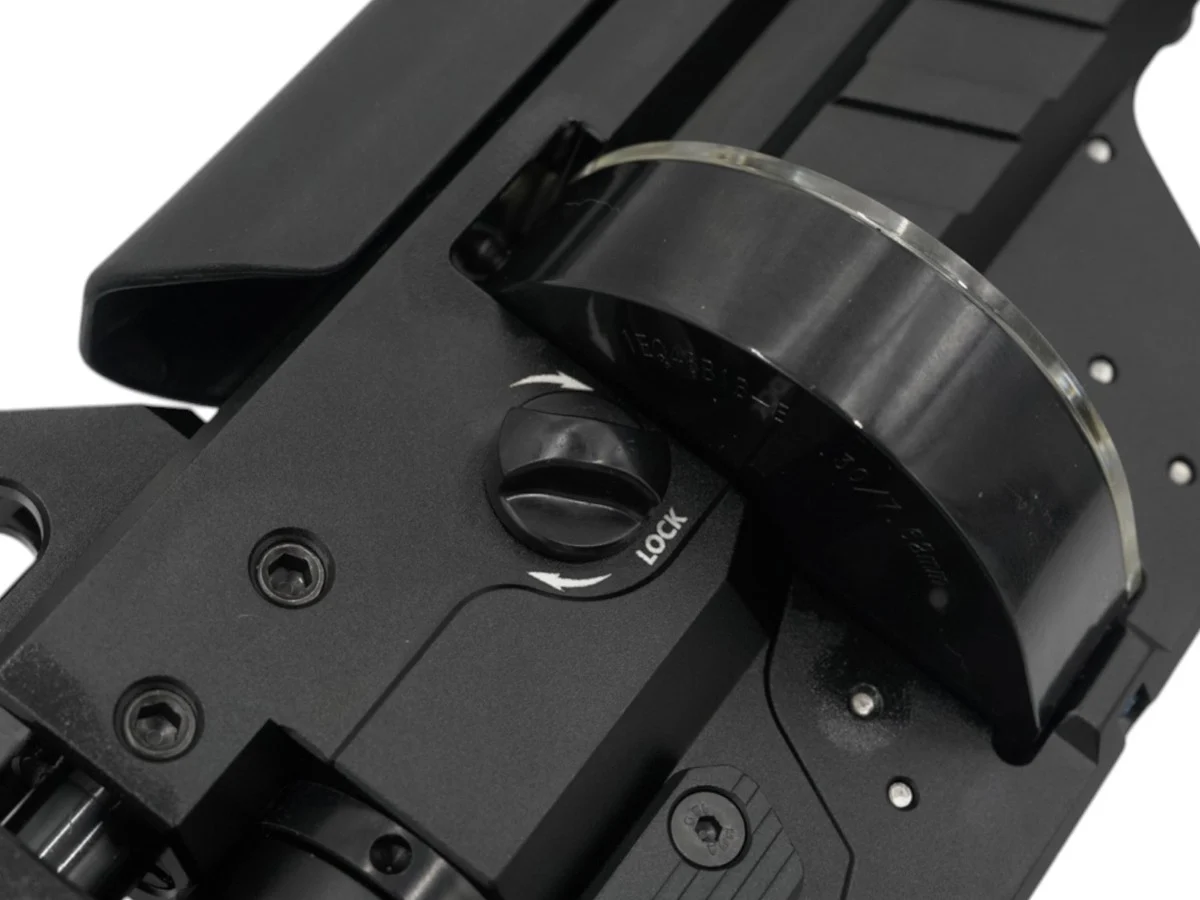
The eq magazine is another strong selling point. Karma lists magazine capacities of 28 rounds in .22, 26 rounds in .25, and 22 rounds in .30. At the same time, the 500cc air tank supports substantial shot counts, with published base figures of 56 shots in .22, 78 in .25, and 40 in .30.
Karma also describes its magazines as being manufactured from lightweight, high-strength materials and tuned for caliber-specific alignment and reliable feeding.
Karma EQ Versus the SLS Family
Shooters comparing the EQ with the Karma SLS air rifle, Karma SLS Standard, Karma SLS Compact PCP rifle, Karma SLS semi-auto air rifle, or .22 Karma SLS Compact Folding Stock should understand that the two platforms serve different priorities.
The SLS Compact emphasizes portability, switchable side-lever/semi-auto operation, and compact dimensions. Its .22 version uses a 12-inch barrel, 250cc air cylinder, 70cc plenum, and 12-round magazine.
By contrast, the EQ prioritizes broader tuning flexibility, longer barrel length, larger air capacity, and greater power potential.
Searches such as karma sis and karma sis compact are commonly misspelled references to the SLS line rather than separate Karma products.
Karma EQ Versus the Red Panda
The karma red panda, Karma Red Panda air rifle, Karma Airguns Red Panda .30, and general panda gun searches point toward Karma’s competition-focused precision platform.
The Red Panda uses a significantly larger 700cc air system and is developed around benchrest and competition-oriented performance, while the EQ is positioned as a more versatile high-power platform with a simpler all-around configuration.
Therefore, the better choice depends on intended use. The Red Panda emphasizes competition specialization, while the EQ emphasizes power, adjustable tuning, projectile flexibility, and practical versatility.
Where to Buy the Karma EQ
Buyers searching Karma EQ PCP air rifle for sale, kaarma dealer, or Karma Airguns USA can consult Karma’s global dealer network. The manufacturer currently lists numerous North American retailers along with international dealers in Canada, Europe, Argentina, South Africa, and other markets.
The terms karma air conditioning and air karma are unrelated searches and should not be confused with the rifle manufacturer.
Why the Karma EQ Deserves Consideration
The EQ stands out because it combines a 24-inch barrel, 70cc plenum, 500cc air supply, externally adjustable regulator, large magazine capacity, ambidextrous safety, and broad caliber availability in one platform.
For experienced shooters who want a highly adjustable PCP capable of handling different projectile weights and power levels, the Karma EQ offers a compelling balance of precision, capacity, versatility, and long-range performance.
Engineering Design, Accuracy, and Real-World Performance
A Modern Approach to Precision Engineering
Precision equipment is developed through careful planning, extensive testing, and continuous refinement. Every component must function efficiently because even the slightest inconsistency can influence overall performance. Designers therefore devote considerable attention to manufacturing tolerances, structural stability, airflow management, and ergonomic balance.
This approach allows the entire system to perform more consistently while supporting long-term reliability. Rather than focusing exclusively on increasing power, engineers work to achieve an ideal combination of efficiency, control, and durability.
As a result, users often experience greater confidence and improved consistency during extended use.
Understanding the Importance of Structural Stability
Structural stability influences performance because movement, vibration, and poor weight distribution may affect accuracy. Manufacturers therefore invest significant effort in refining every aspect of the design process.
Several factors contribute directly to stability:
- Precise manufacturing methods.
- Careful material selection.
- Balanced construction.
- Reliable component integration.
- Improved rigidity.
- Strict quality-control procedures.
Together, these elements help establish a dependable foundation for long-term operation.
Airflow Efficiency and Performance
Efficient airflow remains one of the defining characteristics of modern engineering. Internal systems are designed to regulate pressure carefully while maintaining stable performance throughout repeated operation.
Manufacturers frequently concentrate on improving the following areas:
- Pressure consistency.
- Airflow management.
- Mechanical efficiency.
- Seal durability.
- Valve operation.
- Long-term reliability.
These improvements help reduce unnecessary variation while increasing consistency.
Ergonomics and Handling Characteristics
Comfort influences every aspect of the ownership experience. Poor balance may increase fatigue, whereas effective weight distribution can improve control and reduce unnecessary movement.
Designers continuously evaluate dimensions, grip placement, and overall handling characteristics in an effort to create a more natural and comfortable experience.
These refinements contribute directly to improved stability and greater confidence.
Environmental Conditions and Their Influence
Environmental factors affect performance continuously. Wind conditions, humidity levels, temperature changes, and atmospheric pressure all influence the behavior of precision equipment.
Consequently, experienced users pay close attention to changing conditions before beginning any activity. This awareness allows them to adapt more effectively while maintaining consistent results.
Preparation remains one of the most valuable habits any enthusiast can develop.
Building Confidence Through Practice
Confidence is developed gradually through repetition and observation. Every practice session provides an opportunity to strengthen existing skills while improving overall understanding.
Several habits contribute significantly to long-term progress:
- Establishing a structured routine.
- Practicing consistently.
- Recording observations carefully.
- Monitoring environmental conditions.
- Inspecting equipment regularly.
- Refining techniques continuously.
These habits encourage disciplined development while promoting continual improvement.
Reliability and Long-Term Value
Reliability remains an important consideration because long-term performance depends upon both engineering quality and responsible ownership. Manufacturers continue to refine production methods in order to improve consistency, durability, and efficiency.
Equipment that receives proper care frequently remains dependable for many years, thereby increasing its overall value.
This commitment to quality continues to define modern precision engineering.
Achieving a Balance Between Performance and Practicality
True performance is measured not only by specifications but also by consistency, reliability, and ease of use. Manufacturers therefore strive to create systems that provide a balance between technical capability and practical everyday operation.
This philosophy continues to shape the future of precision equipment while ensuring that users benefit from ongoing innovation and refinement.
Advanced Performance Characteristics and Ownership Experience
Developing Consistency Through Repetition
Consistency is one of the most important factors influencing long-term performance. Although advanced engineering contributes significantly to reliability, regular practice remains essential because experience helps transform knowledge into practical skill.
Individuals who practice consistently often discover that steady improvement becomes easier to achieve over time. Careful observation, patience, and disciplined preparation all contribute to more dependable results.
These habits eventually become an important part of the ownership experience.
Understanding the Importance of Balance
Balance influences stability, comfort, and control simultaneously. Designers therefore devote considerable attention to dimensions, weight distribution, and structural alignment throughout the development process.
A balanced platform helps reduce unnecessary movement while improving handling characteristics. Consequently, users are often able to maintain concentration more effectively during extended sessions.
These improvements support both confidence and consistency.
Refining Technique Through Experience
Every practice session presents an opportunity to learn something new. Environmental conditions change constantly, which means individuals must continually evaluate and refine their techniques.
Several practices frequently contribute to greater consistency:
- Maintaining a stable position.
- Monitoring changing conditions.
- Recording observations carefully.
- Inspecting equipment regularly.
- Maintaining proper focus.
- Following established routines.
Together, these habits establish a strong foundation for continual improvement.
The Importance of Ergonomic Design
Ergonomics play a significant role in long-term performance because comfort influences concentration. Poor positioning may increase fatigue, whereas balanced construction encourages greater stability and control.
Manufacturers continually refine their designs in an effort to create equipment that feels natural and comfortable during prolonged use.
This commitment to user comfort contributes substantially to overall satisfaction.
Environmental Awareness and Adaptability
Environmental influences should always be considered carefully because they can affect performance in numerous ways. Wind direction, humidity, temperature, and atmospheric pressure may all contribute to changing conditions.
Individuals who remain aware of these factors are often better prepared to respond effectively when circumstances change.
This adaptability frequently becomes one of the defining characteristics of experienced users.
Responsible Ownership and Maintenance
Proper maintenance remains essential because routine care protects important components while helping preserve long-term performance. Consistent inspections allow owners to identify potential concerns before they become more serious.
A practical maintenance routine often includes the following tasks:
- Cleaning visible surfaces.
- Examining moving components.
- Monitoring storage conditions.
- Inspecting connection points.
- Organizing accessories carefully.
- Following established maintenance schedules.
These habits help maintain reliability while reducing unnecessary wear.
Durability and Material Quality
Durability is achieved through careful engineering and the selection of high-quality materials. Manufacturers invest significant effort in testing procedures because dependable performance requires consistency at every stage of production.
This attention to detail contributes directly to long-term value while supporting dependable operation under a wide range of conditions.
As a result, owners often enjoy years of reliable service.
Building Confidence Through Knowledge
Experience gradually builds confidence because familiarity improves understanding. Over time, individuals become increasingly aware of the factors that influence performance and develop more effective methods for achieving consistent results.
This process requires dedication, yet the benefits often become increasingly apparent with continued practice.
Knowledge, patience, and preparation remain essential elements of long-term success.
Looking Ahead
Innovation continues to shape the future of modern engineering. Nevertheless, the principles that define exceptional performance remain unchanged.
Reliability, consistency, durability, comfort, and responsible ownership continue to provide the foundation for lasting satisfaction and dependable long-term performance.
Maintenance, Care, and Long-Term Ownership
Establishing a Consistent Maintenance Routine
Regular maintenance remains essential because it helps preserve efficiency, reliability, and overall performance. Even the most carefully engineered equipment benefits from consistent attention because routine inspections can reveal small concerns before they develop into larger problems.
Owners who follow an organized maintenance schedule often experience fewer interruptions while enjoying greater confidence in long-term performance.
This approach also helps protect important components from unnecessary wear.
Creating Effective Maintenance Habits
Maintenance does not need to be complicated to be effective. In many cases, a few simple practices performed consistently provide significant long-term advantages.
The following recommendations are frequently considered helpful:
- Remove dust and debris after use.
- Inspect visible components carefully.
- Verify that moving parts operate correctly.
- Protect surfaces from moisture and dirt.
- Store accessories in an organized manner.
- Follow all recommended procedures.
These habits help support dependable operation over extended periods of time.
The Influence of Environmental Conditions
Environmental conditions affect performance continuously. Moisture, humidity, temperature fluctuations, and prolonged exposure to direct sunlight may all influence long-term durability.
Consequently, careful storage practices should always be considered a priority. Appropriate protection reduces the likelihood of avoidable damage while preserving the appearance and functionality of important components.
Small preventive measures often provide substantial benefits.
Durability and Material Selection
Durability depends upon careful engineering and precise manufacturing. Designers carefully select materials that offer strength, reliability, and resistance to wear while maintaining practical weight characteristics.
Several factors contribute directly to long-term durability:
- Structural stability.
- Material quality.
- Precise manufacturing standards.
- Reliable component integration.
- Effective protective finishes.
- Consistent maintenance procedures.
Together, these elements help create a dependable ownership experience.
Safe Transportation and Storage
Transportation presents unique challenges because equipment may be exposed to vibration, accidental impacts, and changing environmental conditions. Protective storage methods therefore remain extremely important.
Experienced owners frequently recommend the following precautions:
- Store equipment in a cool environment.
- Minimize exposure to excessive humidity.
- Protect surfaces from dust and debris.
- Keep components organized properly.
- Inspect protective equipment regularly.
- Maintain consistent storage conditions.
These practices help preserve reliability and appearance simultaneously.
Building Long-Term Confidence
Confidence develops gradually through experience, observation, and continuous learning. Every session offers an opportunity to refine existing skills while improving overall understanding.
As familiarity increases, individuals often become more capable of recognizing subtle patterns and making appropriate adjustments.
This gradual process contributes significantly to long-term improvement.
Responsible Ownership Practices
Responsible ownership extends beyond maintenance procedures alone. Patience, preparation, discipline, and consistency all contribute directly to a rewarding experience.
Individuals who establish strong habits often benefit from improved reliability, greater efficiency, and enhanced overall satisfaction.
These advantages become increasingly apparent as experience grows.
Looking Toward Continued Innovation
Manufacturing techniques continue to evolve rapidly, leading to improvements in engineering methods, material science, and quality-control standards. Nevertheless, the principles that define excellence remain remarkably consistent.
Attention to detail, careful preparation, disciplined practice, and responsible ownership continue to form the foundation of dependable long-term performance.
Frequently Asked Questions and Long-Term Ownership Considerations
How important is regular maintenance?
Regular maintenance remains one of the most important responsibilities associated with long-term ownership. Although modern engineering techniques have improved reliability considerably, consistent care continues to play a vital role in preserving performance.
Routine inspections help identify potential concerns before they become more serious. Consequently, owners are often able to avoid unnecessary repairs while maintaining dependable operation over many years.
A disciplined approach usually produces the most reliable results.
What factors influence long-term performance?
Long-term performance is influenced by a combination of mechanical condition, environmental exposure, storage practices, and user experience. These factors work together continuously, which is why careful preparation remains so valuable.
Several important elements contribute directly to reliable operation:
- Consistent maintenance procedures.
- Appropriate storage conditions.
- Proper handling techniques.
- Routine inspections.
- Attention to environmental changes.
- Continued practice and observation.
Together, these factors help preserve reliability and improve overall satisfaction.
Why does comfort matter so much?
Comfort plays an essential role because concentration often becomes more difficult as fatigue increases. Manufacturers therefore devote considerable attention to ergonomics, balance, and overall handling characteristics.
Improved comfort frequently provides several advantages:
- Greater stability.
- Reduced physical strain.
- Better control.
- Increased confidence.
- Improved concentration.
- More consistent results.
These benefits contribute directly to a more rewarding experience.
How can consistency be improved?
Consistency develops gradually through repetition, patience, and discipline. Individuals who establish structured routines often discover that performance becomes increasingly dependable over time.
Several practices are frequently recommended:
- Practice regularly.
- Monitor environmental conditions carefully.
- Record observations consistently.
- Maintain proper storage procedures.
- Inspect components thoroughly.
- Refine techniques continuously.
These habits encourage continual improvement while strengthening confidence.
What role do environmental conditions play?
Environmental conditions affect performance in numerous ways. Temperature changes, humidity levels, wind conditions, and airborne dust may all influence long-term results.
For this reason, experienced owners frequently evaluate surrounding conditions before every session. This habit allows them to make informed decisions while adapting more effectively to changing circumstances.
Preparation remains an essential element of success.
What should first-time owners know?
First-time owners should remember that experience develops gradually. Patience, consistency, and careful preparation often prove more valuable than attempting to achieve immediate results.
It is equally important to establish effective habits from the very beginning. Organized maintenance procedures, appropriate storage practices, and regular inspections help create a strong foundation for long-term ownership.
These practices support reliability while encouraging continual progress.
Why is durability so valuable?
Durability influences reliability, performance, and long-term value simultaneously. Equipment that maintains its performance characteristics over extended periods often provides a much more satisfying ownership experience.
Careful engineering, quality materials, and responsible ownership all contribute directly to greater durability.
Consequently, durability should always remain an important consideration during the selection process.
Final Thoughts
Successful ownership depends upon preparation, discipline, maintenance, and continuous learning. Although specifications remain important, long-term satisfaction is often determined by consistency, reliability, comfort, and ease of use.
When these elements work together effectively, they create an experience that continues to deliver value, confidence, and dependable performance for many years.
Conclusion and Final Ownership Insights
The Importance of Long-Term Reliability
Long-term reliability is one of the qualities that owners appreciate most because dependable performance creates confidence and improves the overall experience. Although technological advances continue to improve engineering standards, proper care remains essential throughout the life of any piece of equipment.
Consistent maintenance, careful handling, and thoughtful preparation all contribute directly to dependable operation. Consequently, owners who establish strong habits often benefit from improved efficiency and fewer unexpected problems.
These advantages frequently become more apparent over time.
Developing Skills Through Experience
Experience remains one of the most valuable resources available because it transforms knowledge into practical understanding. Every practice session creates an opportunity to improve existing skills while developing a deeper awareness of environmental conditions and equipment characteristics.
Several habits often support continual progress:
- Establishing structured routines.
- Monitoring changing conditions.
- Recording observations carefully.
- Maintaining equipment consistently.
- Refining techniques patiently.
- Continuing to learn through experience.
Together, these habits encourage steady improvement while strengthening confidence.
The Relationship Between Comfort and Performance
Comfort influences concentration, stability, and control. Designers therefore invest considerable effort in improving balance, reducing unnecessary strain, and creating more natural handling characteristics.
These refinements help individuals maintain focus during extended sessions while improving overall consistency.
Even small improvements frequently produce significant long-term benefits.
Responsible Ownership Practices
Responsible ownership extends beyond simple operation because careful maintenance helps preserve both appearance and performance. Routine inspections, organized storage procedures, and proper handling techniques all contribute directly to long-term durability.
Many experienced owners recommend several basic practices:
- Protect equipment from excessive moisture.
- Keep all components clean and organized.
- Inspect moving parts regularly.
- Maintain a consistent storage environment.
- Replace worn components whenever necessary.
- Follow recommended maintenance procedures.
These practices support dependable operation while reducing unnecessary wear.
Appreciating Quality Construction
Quality construction reflects the combined efforts of engineers, designers, and manufacturing specialists. Careful material selection, precise machining methods, and extensive testing procedures all contribute to long-term reliability.
This commitment to excellence often distinguishes premium products from more conventional alternatives while creating a more satisfying ownership experience.
Attention to detail remains an essential element of exceptional engineering.
Adapting to Changing Conditions
Environmental conditions continuously influence performance. Wind, humidity, temperature changes, and elevation differences may all require thoughtful adjustments.
Individuals who understand these influences often become more effective because they can respond appropriately when circumstances change.
Adaptability therefore remains an important characteristic of long-term success.
Looking Toward Future Developments
Modern engineering continues to evolve as manufacturers introduce new materials, improved manufacturing techniques, and increasingly sophisticated technologies. Nevertheless, the principles that define excellence remain remarkably consistent.
Reliability, durability, comfort, precision, and responsible ownership continue to establish the standards by which quality is measured.
These principles will undoubtedly remain important for many years to come.
Final Evaluation
A rewarding ownership experience depends upon much more than impressive specifications. Consistent maintenance, disciplined preparation, careful observation, and continual learning all contribute to long-term satisfaction.
When these principles are applied consistently, they support reliability, strengthen confidence, and encourage continual improvement throughout the entire ownership journey Karma SLS semi-auto air rifle.
Be the first to review “Karma EQ PCP Air Rifle”
Related products
karma air rifles
karma air rifles
karma air rifles
Reviews
There are no reviews yet.