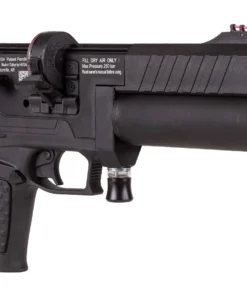
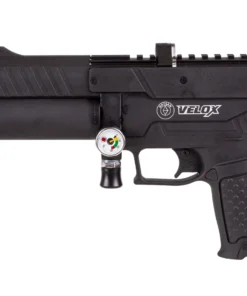
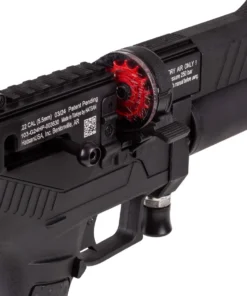
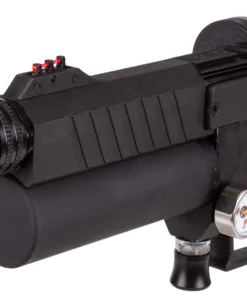
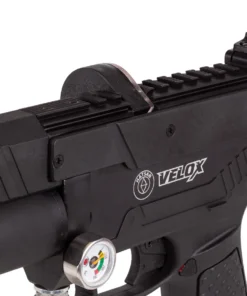
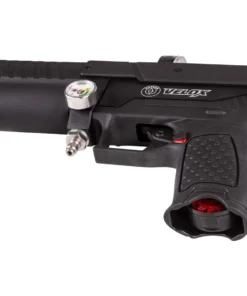
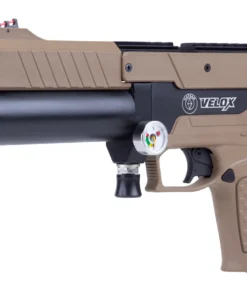
Hatsan Velox PCP Pistol
$200.00
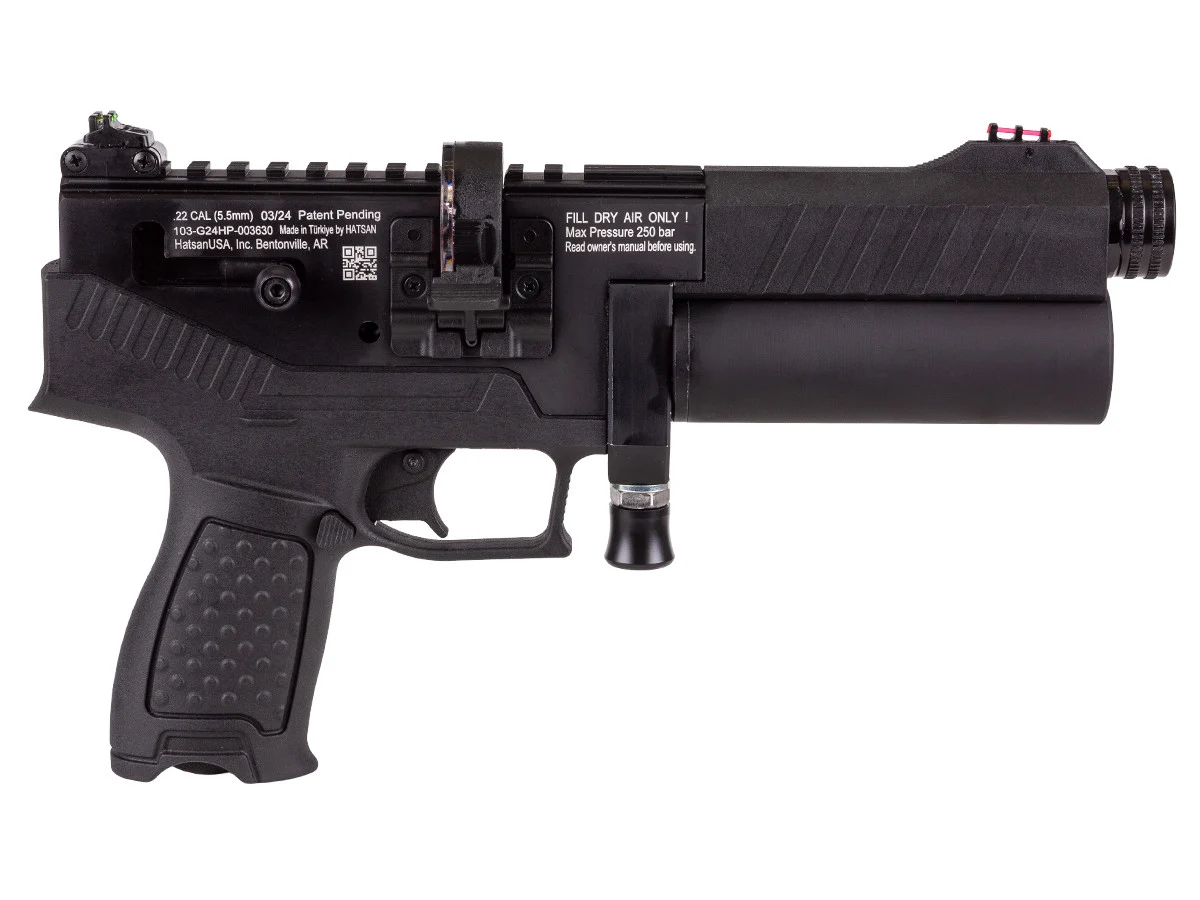
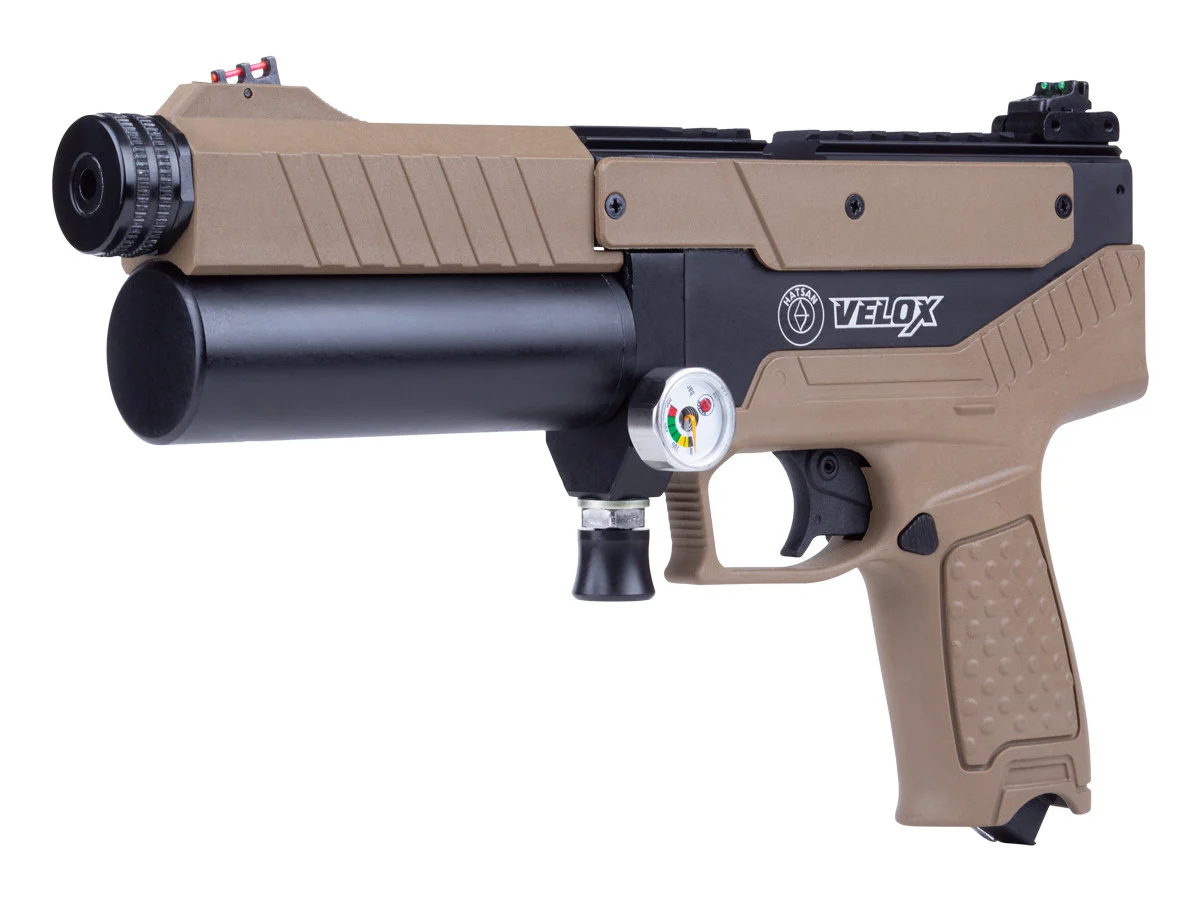
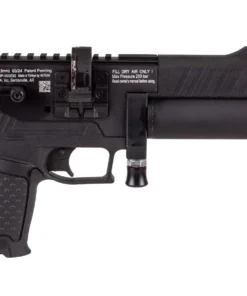
The Hatsan Velox PCP Pistol is an airgun with semi-auto operation designed for reliability and performance in a lightweight and compact format. With lead pellet velocities of up to 620 FPS in .22 and 580 FPS in .25, and power up to 12.6 FPE in .22 and 15 FPE in .25, this air pistol provides accurate shots for plinking and target practice.
One of the most noticeable improvements on this airgun is the improved trigger system that results in a remarkably smooth and consistent pull with an incredibly crisp and pleasing break every time. In addition, this is a semi-auto air pistol, meaning the time it takes to empty the magazine is limited only by the speed with which the shooter can pull the trigger.
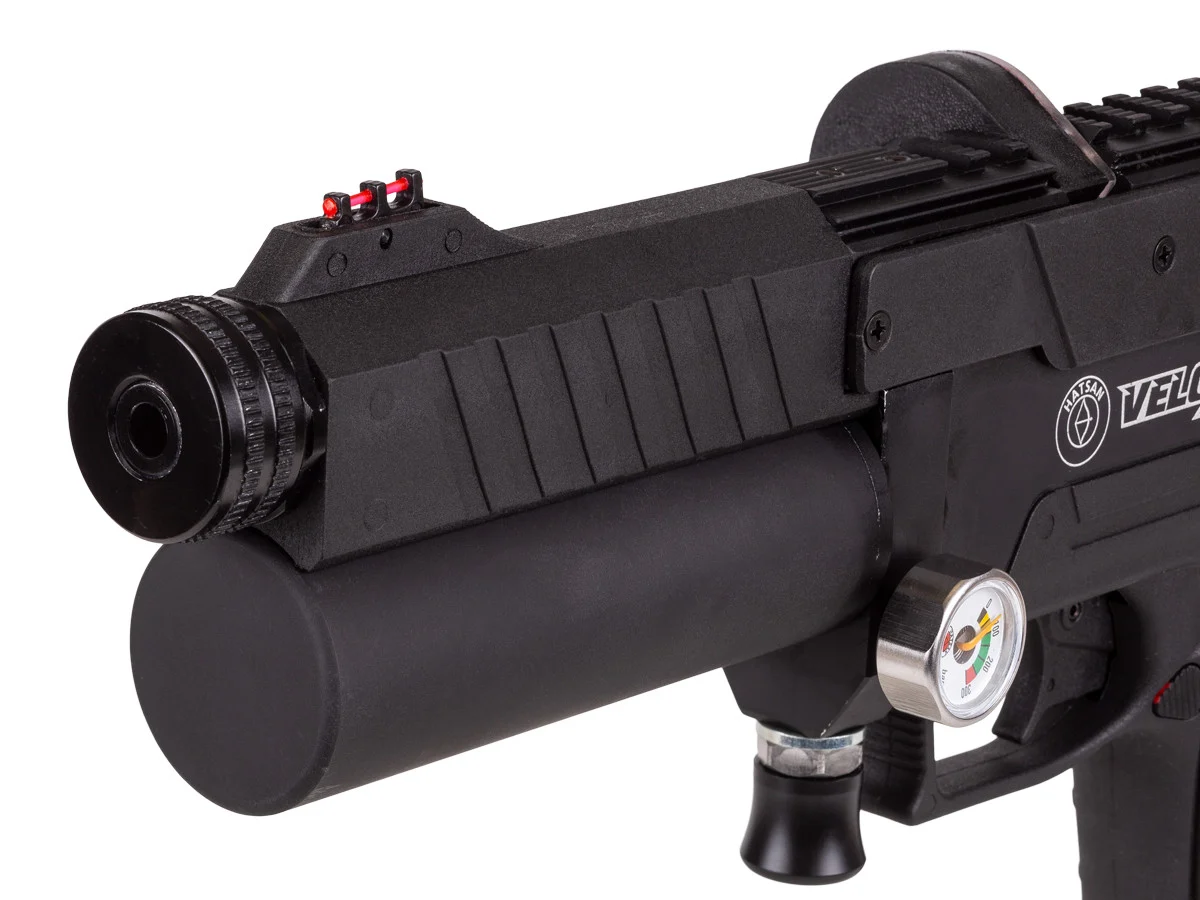
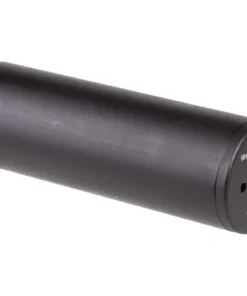
The accuracy of the Hatsan Velox is enabled in part by the precision rifled and choked German steel barrel that is shrouded to reduce the noise of each shot and increase the steadiness of the barrel for consistent performance. It also includes a 1/2 UNF threaded muzzle that allows shooters to attach an external moderator to further lower the sound produced by a shot. The Hatsan Velox PCP Air Pistol is great for target practice and honing your shooting skills.
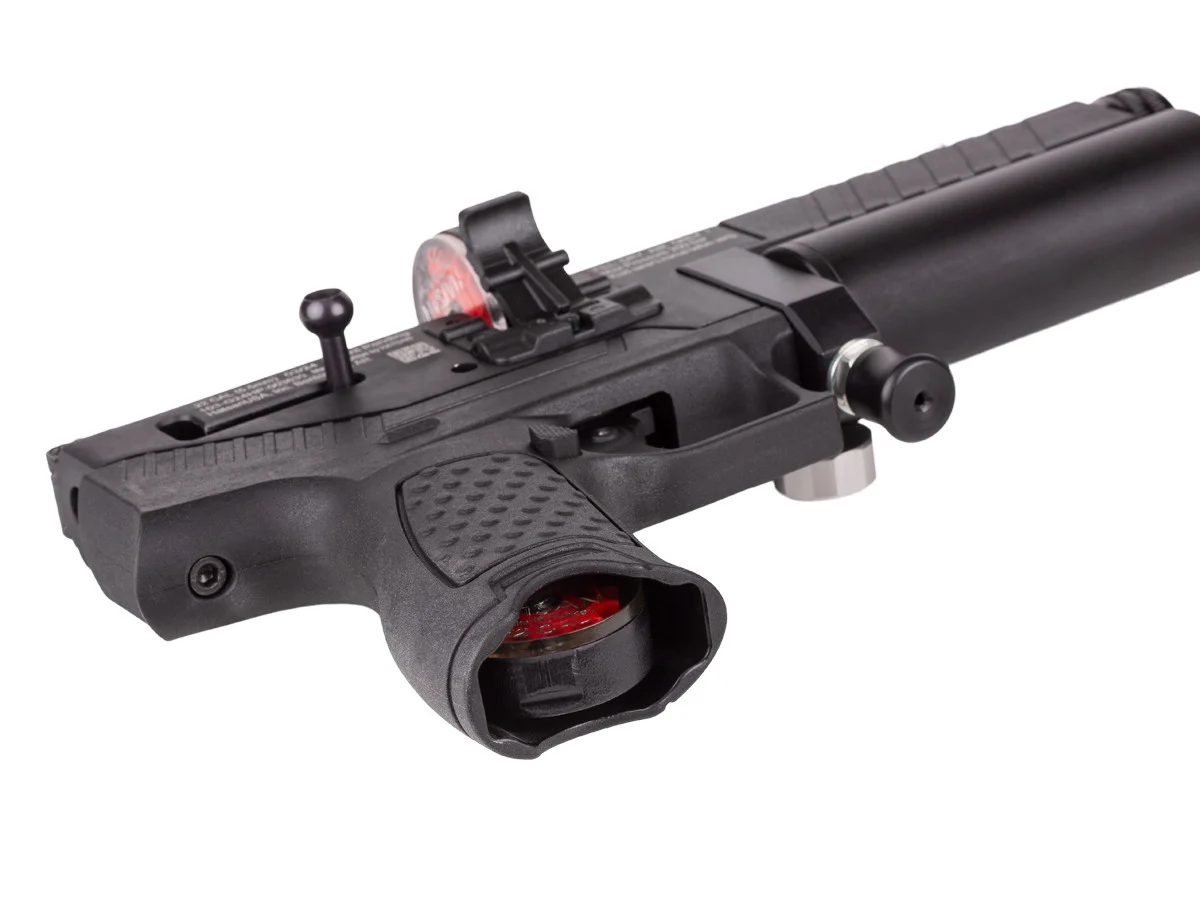
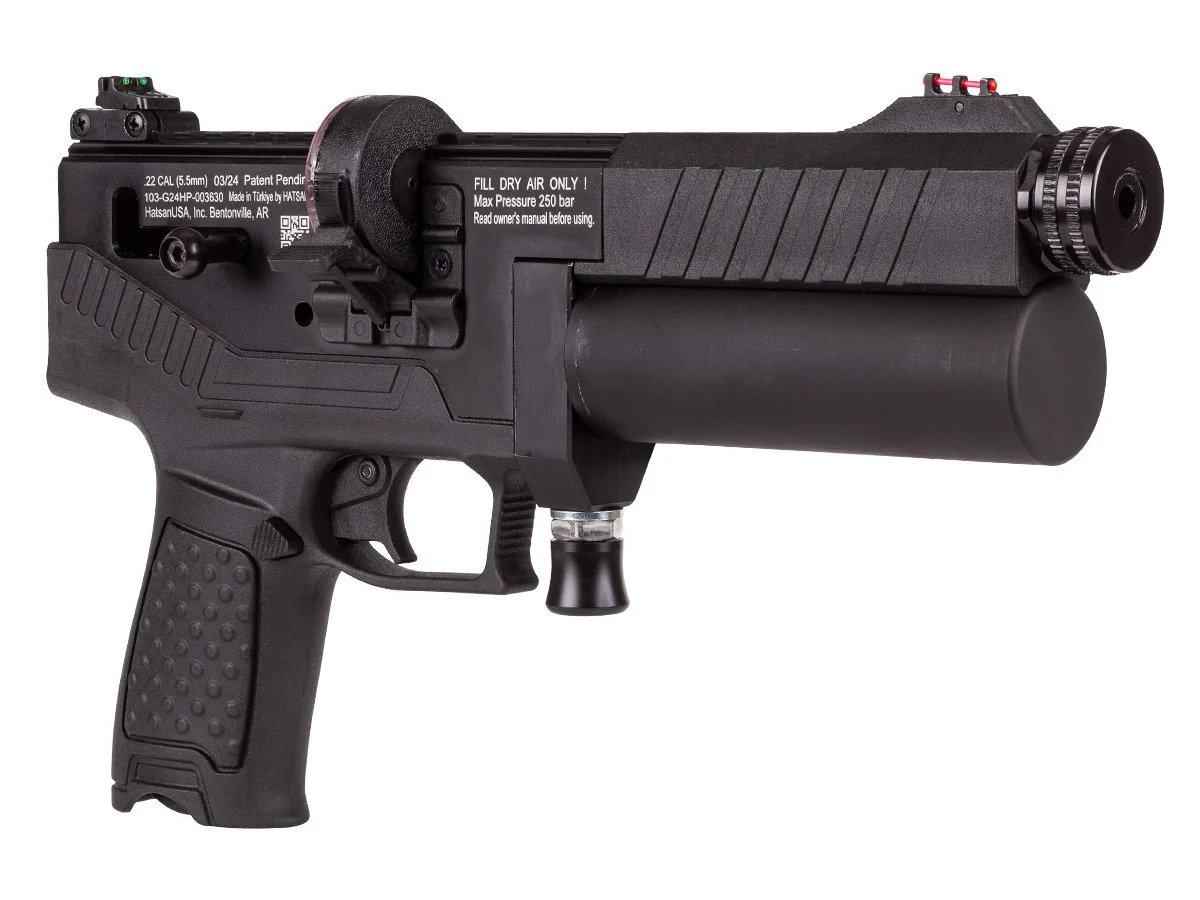
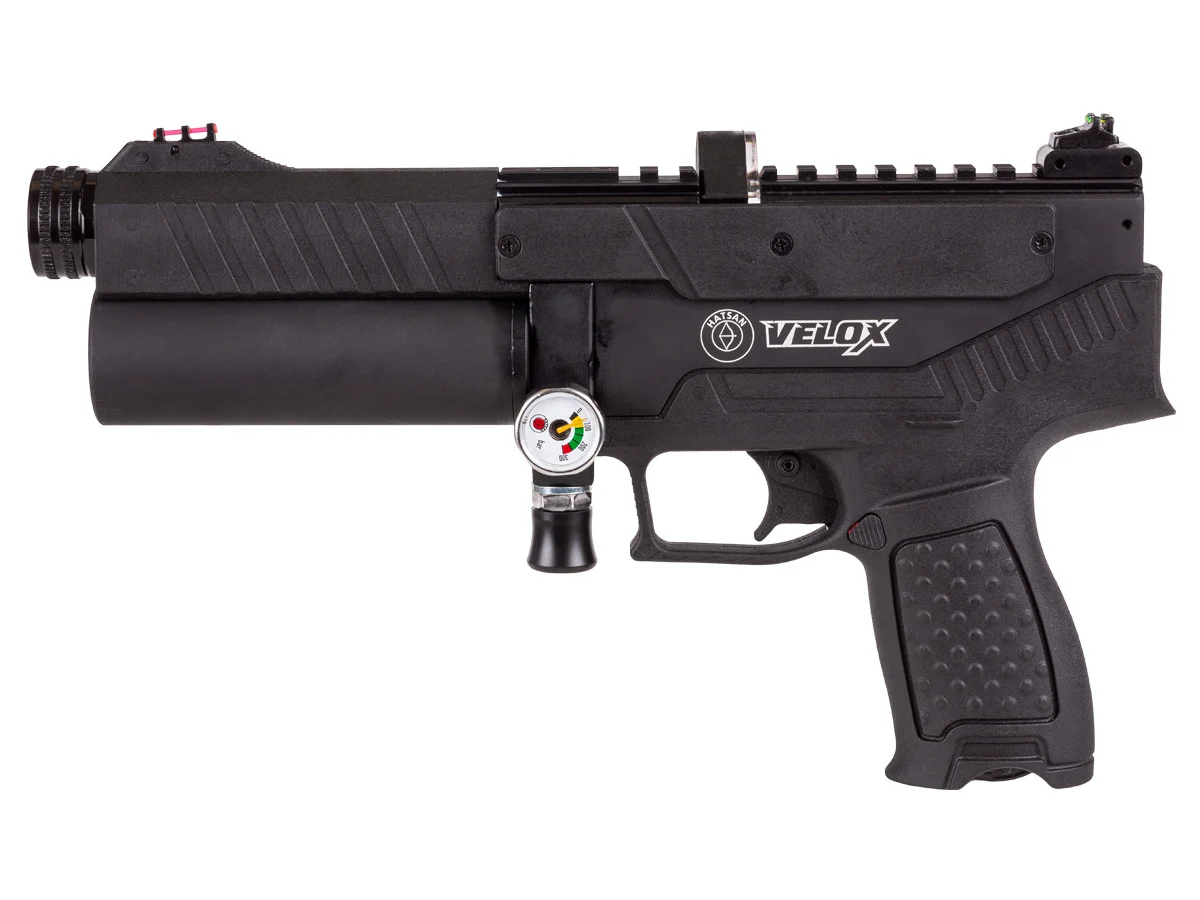
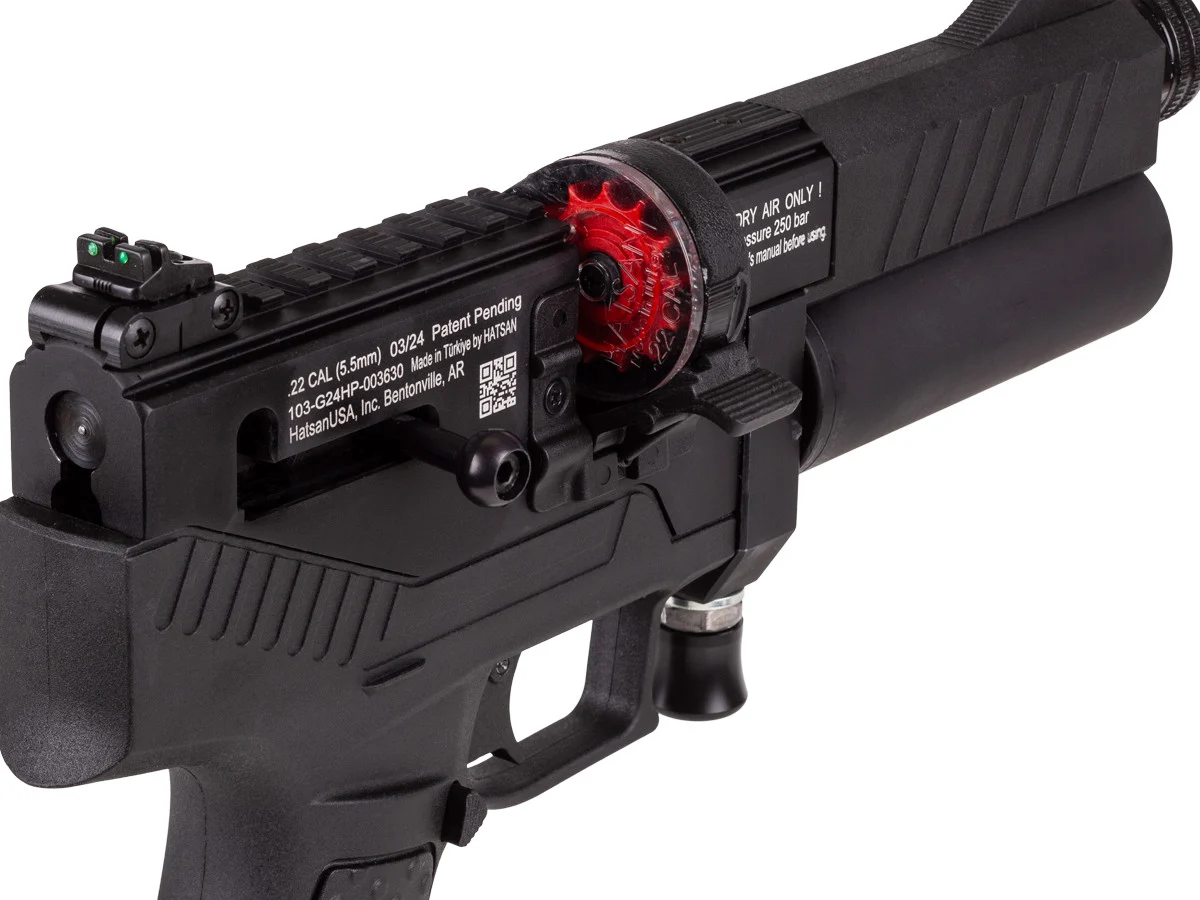
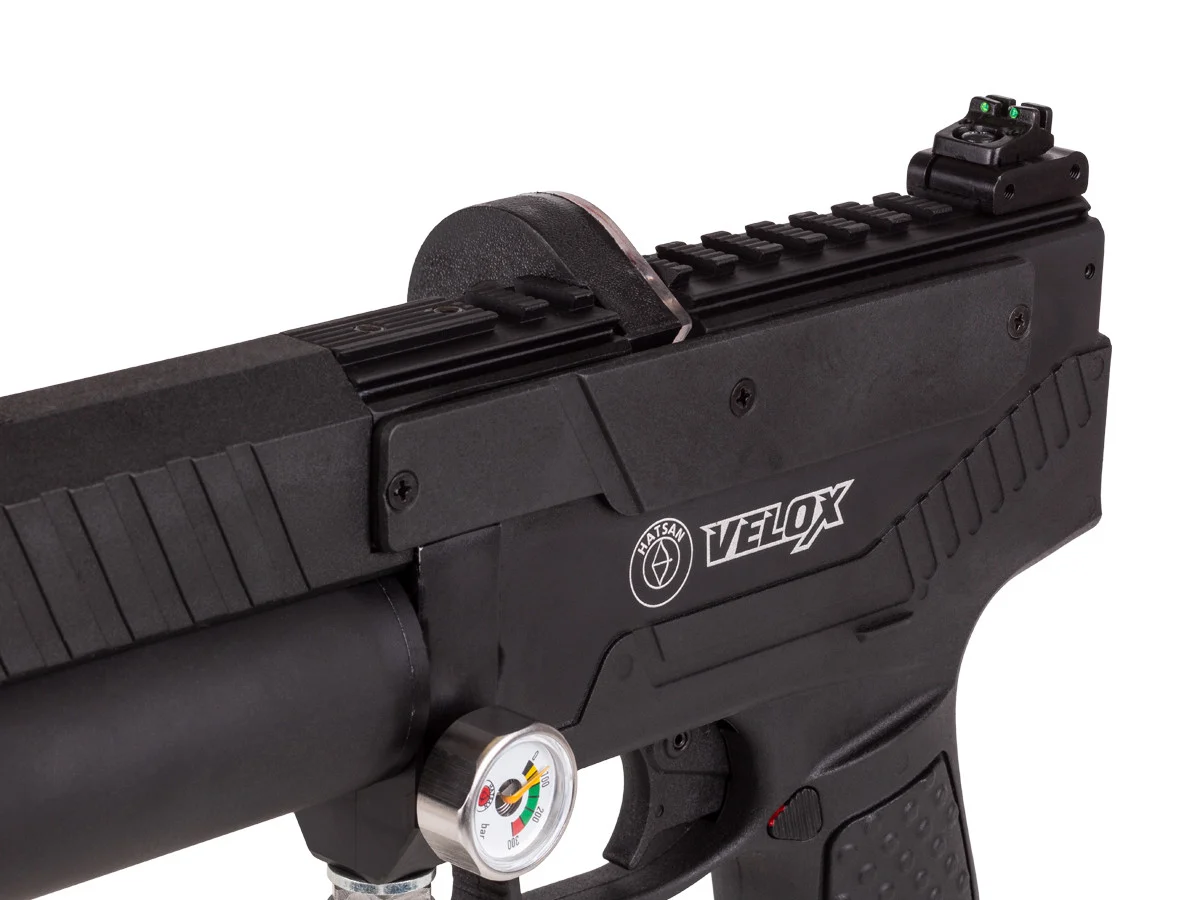
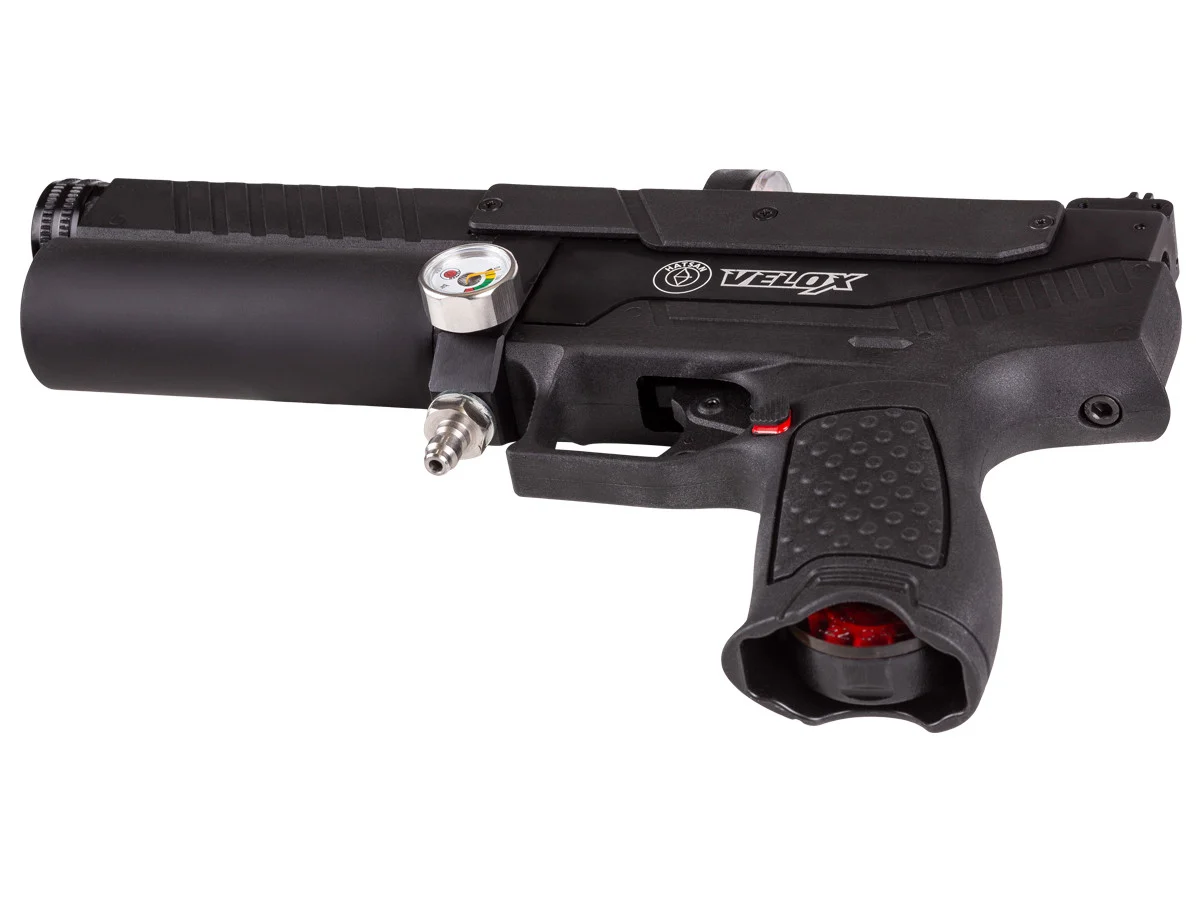
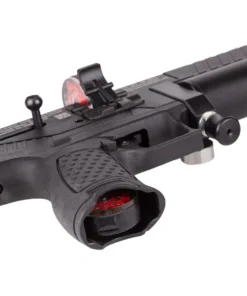
This air pistol provides a red fiber optic front sight and a removable and adjustable green fiber optic rear sight, as well as a combination 11mm Dovetail and Weaver optics rail. It also has a grip with texturing to offer a comfortable and slip-free hold, in addition to storage for the extra magazine in the bottom.
Hatsan Velox PCP Pistol
- Semi-auto side bolt action
- Precharged pneumatic
- Improved trigger system
- Precision rifled and choked shrouded German steel barrel
- Steel upper receiver
- 1/2 UNF threaded muzzle
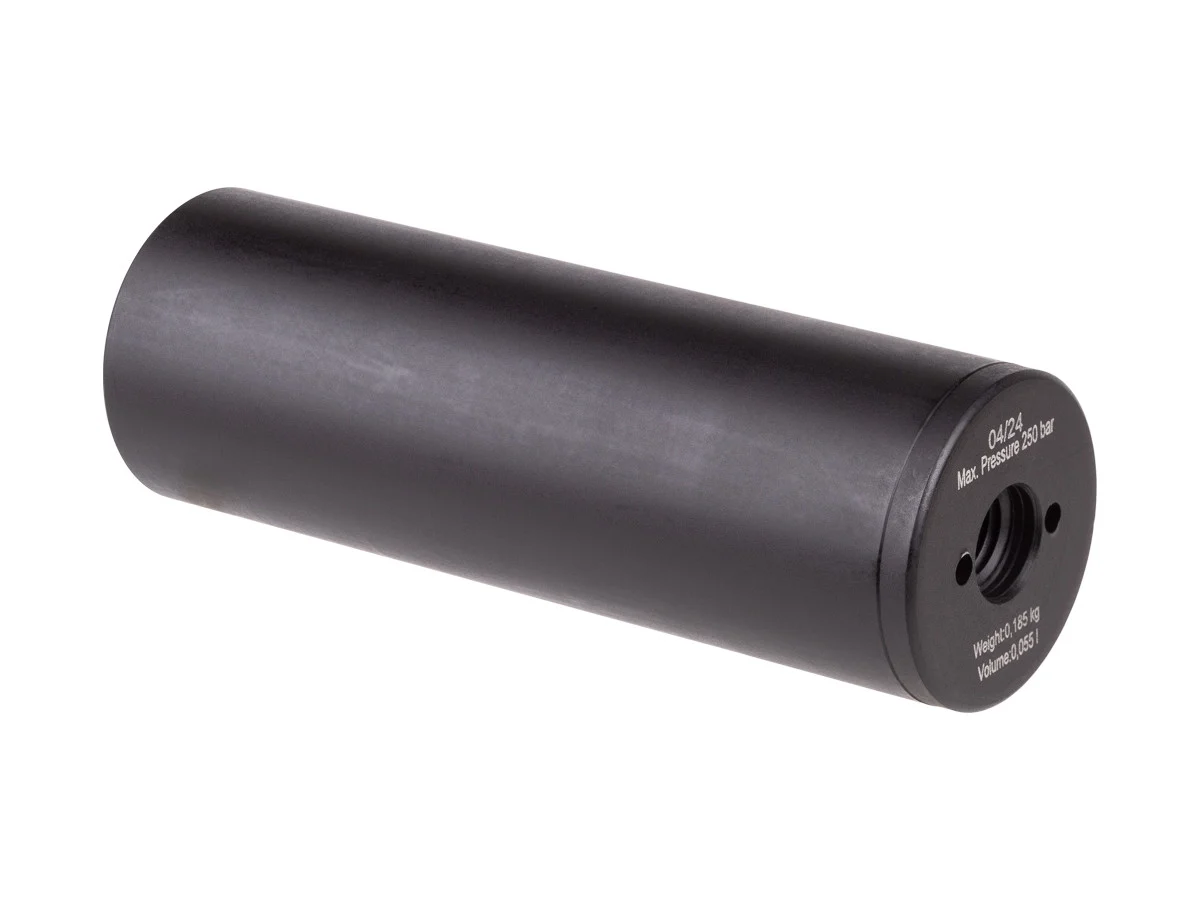
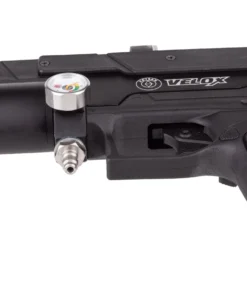
- Detachable 55cc air cylinder fills to 3,625 PSI/250 BAR (can be removed under pressure)
- Shots at optimal velocity*: 20 (.22), 19 (.25)
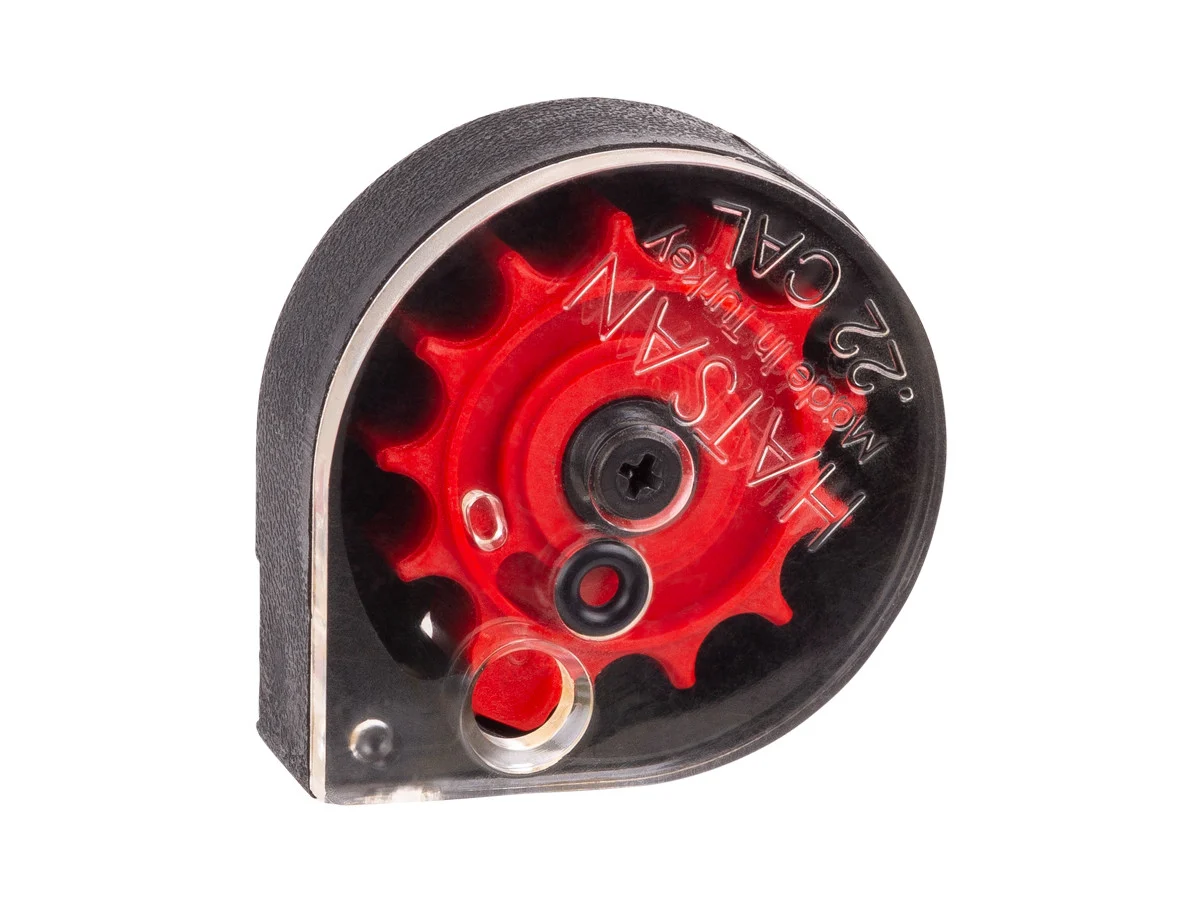
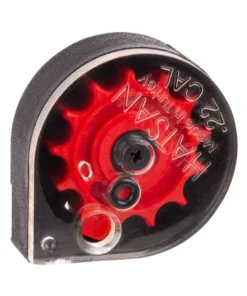
- Magazine capacity: 12 rounds (.22), 10 rounds (.25)
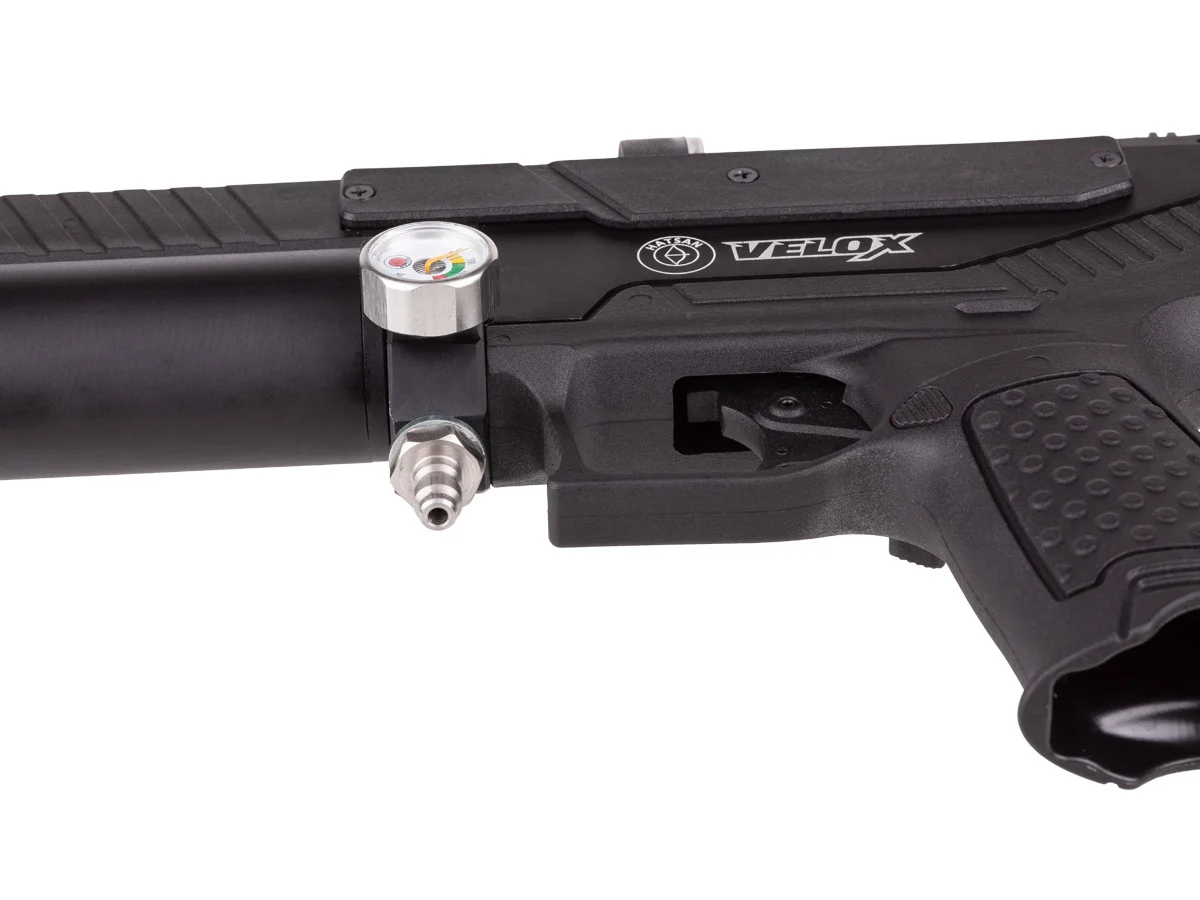
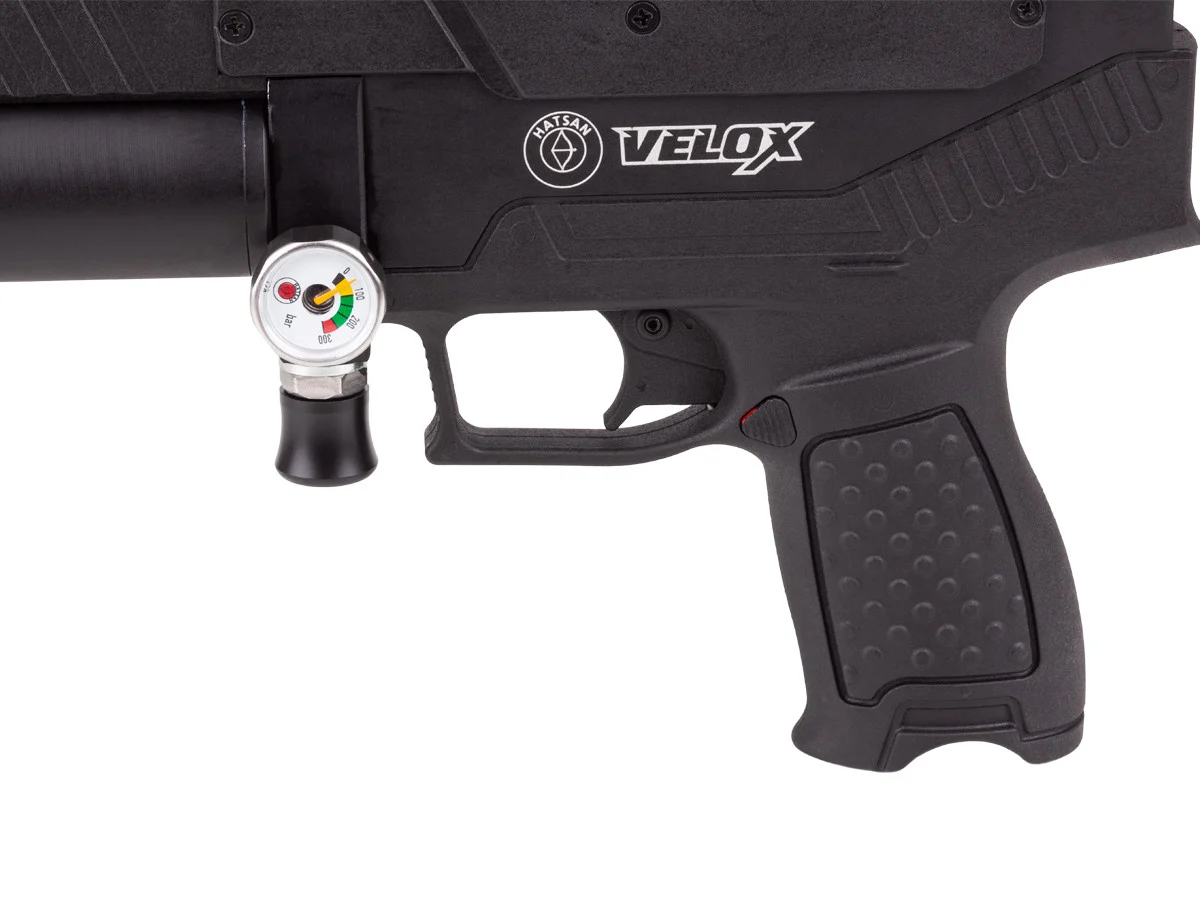
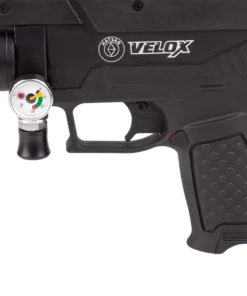
- Integrated pressure gauge
- Max. velocity (lead): 620 FPS (.22), 580 FPS (.25)
- Max. energy: 12.6 FPE (.22), 15 FPE (.25)
- Textured grip with onboard magazine storage
- Red fiber optic front sight
- Adjustable and removable green fiber optic rear sight
- Combination 11mm Dovetail/Weaver optics rail**
- Manual push button safety
- Foster quick-disconnect fill fitting
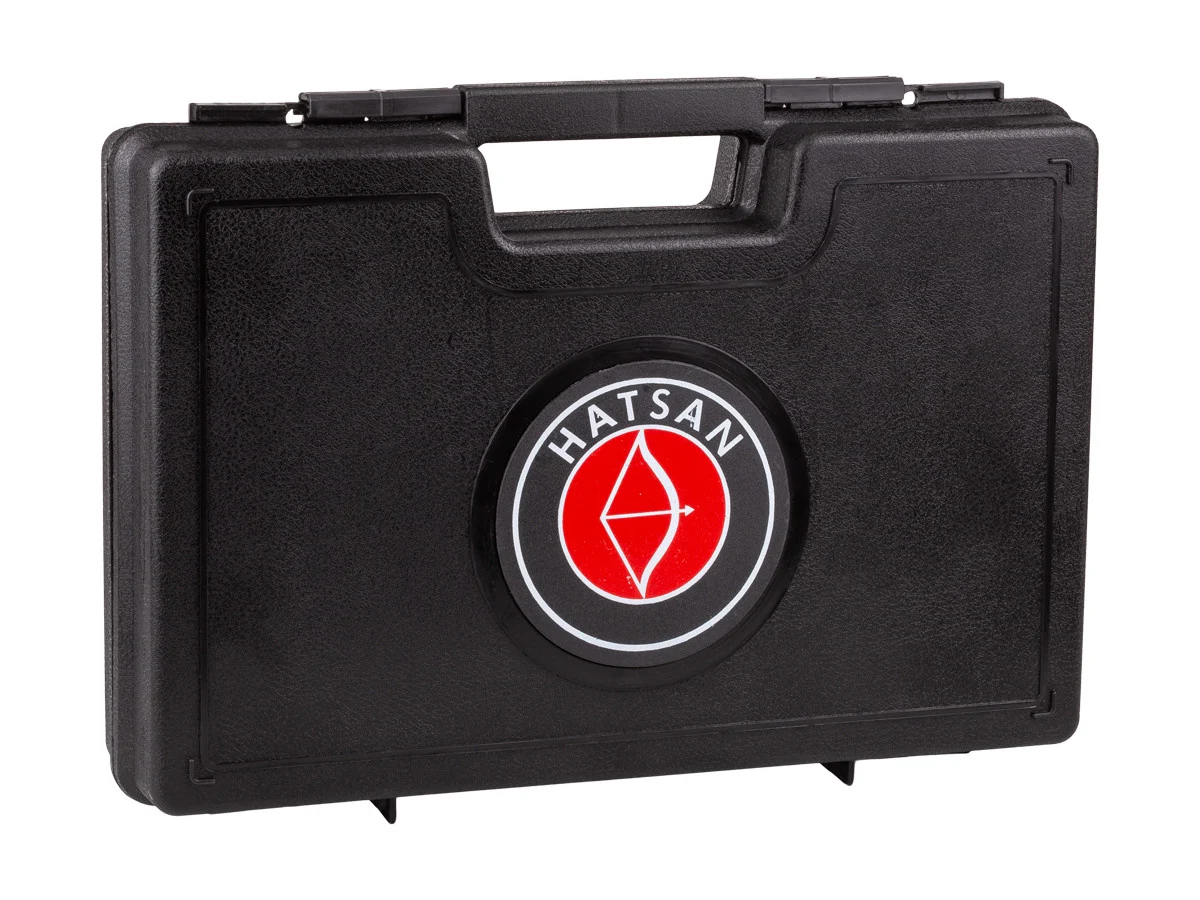
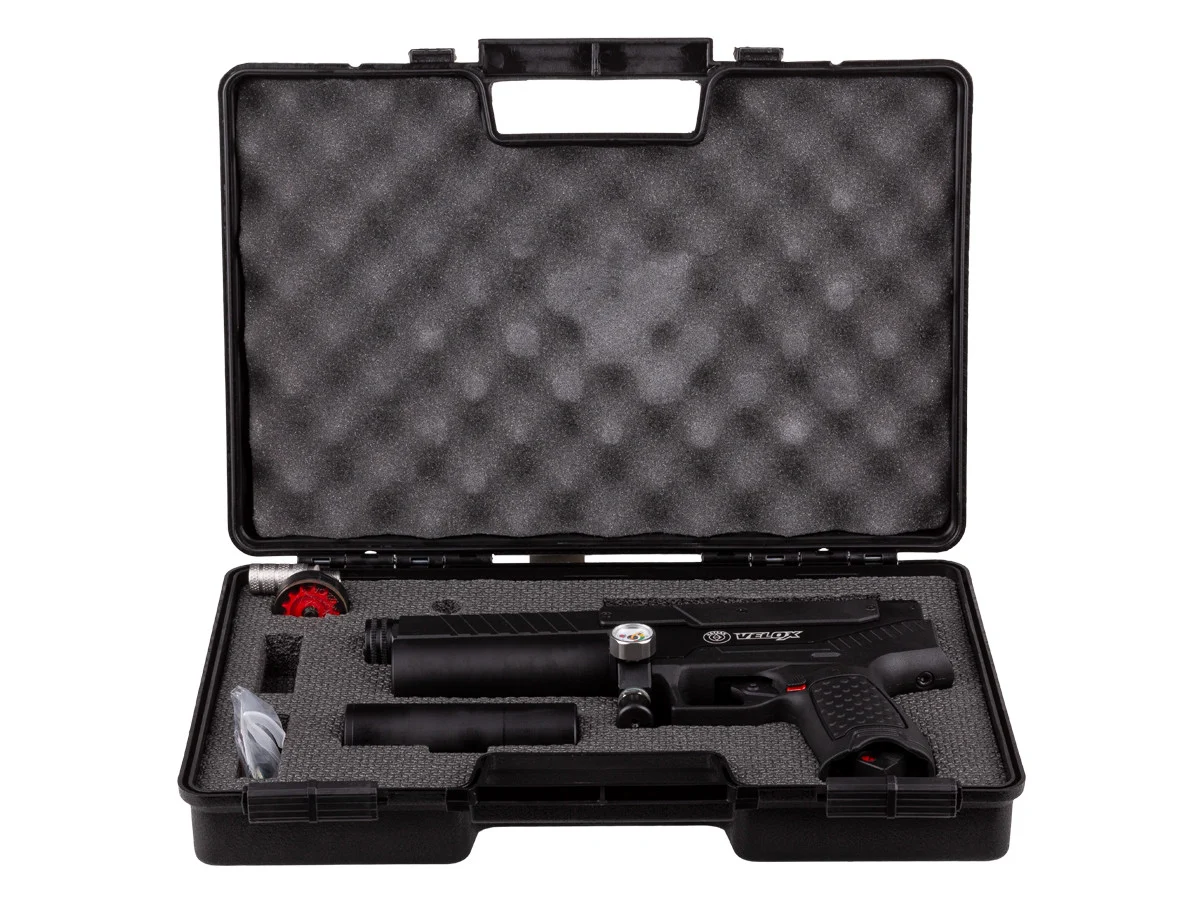
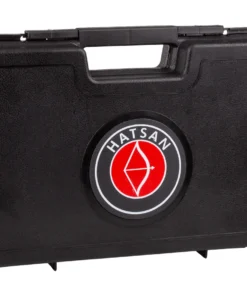
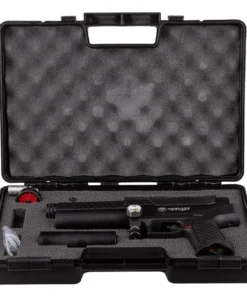
- Includes two S/Roto index magazines, two air cylinders, and custom molded hardcase
- Available in Black and FDE (flat dark earth)
- Barrel length: 5.5″
- Overall length): 11.4″
- Overall weight: 2.15 lbs.
Hatsan Velox PCP Pistol – Semi-Automatic Air Pistol, Precision Engineering, Compact Construction and Technical Specifications
Hatsan Velox PCP Pistol – Product Description, Mechanical Engineering, Technical Specifications and Manufacturing Quality
1.1 Introduction: Understanding the Hatsan Velox PCP Pistol
The Hatsan Velox PCP Pistol represents a modern approach to compact pneumatic engineering, combining a semi-automatic operating mechanism with contemporary materials and specialized compressed-air technology.
Developed within the hatsan sporting-equipment family, the model incorporates a detachable pressure cylinder, rifled steel barrel, textured grip and integrated mechanical safety.
Furthermore, its compact proportions distinguish it from the manufacturer’s full-length sporting platforms.
The hatsan velox also features a detachable magazine system and contemporary exterior construction.
However, sophisticated compressed-air equipment requires appropriate pressure-system maintenance, secure storage and compliance with applicable legislation.
Consequently, prospective owners should verify the exact factory configuration and manufacturer’s documentation.
1.2 Hatsan Manufacturing Heritage and Product Identity
Hatsan produces a wide range of mechanical and pneumatic sporting equipment.
Common brand searches include hatsan air rifle, hatsanusa, hatsan usa, and hatsan refurbished.
Related products include hatsan sortie, hatsan sortie tact, and hatsan sortie tact semi-auto pcp.
Furthermore, hatsan jet, hatsan jet 2, and hatsan jet i pcp .22 caliber pellet rifle kit describe separate compact pneumatic platforms.
Although these models share a manufacturer, their mechanical configurations and replacement components may differ.
1.3 Technical Specifications and Factory Construction
Published manufacturer specifications identify the following characteristics:
- Operating system: Pre-charged pneumatic
- Action: Semi-automatic, side-bolt design
- Calibres: 5.5mm (.22) and 6.35mm (.25)
- Magazine capacity: 12 rounds (.22), 10 rounds (.25)
- Air reservoir: Detachable 55cc cylinder
- Maximum rated fill pressure: 250 bar
- Barrel: Rifled, shrouded steel
- Barrel length: Approximately 140mm
- Overall length: Approximately 290mm
- Weight: Approximately 1.25kg, depending on configuration
- Sights: Adjustable fibre-optic front and rear sights
- Optics interface: Combined 11mm dovetail and 22mm Weaver-style rail
- Safety: Manual push-button mechanism
- Grip: Textured polymer construction with spare-magazine storage
- Factory equipment: Two magazines and a protective case
The US manufacturer’s listing also identifies a threaded muzzle and a quick-disconnect air-filling interface.
However, included accessories vary between retailer packages.
1.4 Understanding Precision Manufacturing and Compact Engineering
The compact structural arrangement incorporates specialized metallic components and engineered synthetic materials.
Furthermore, its detachable pressure reservoir contributes to the complete pneumatic architecture.
The manufacturer combines these assemblies within a distinctive handgun-format design.
However, sophisticated construction does not independently guarantee exceptional accuracy.
Verified precision claims require documented testing conditions, component identification and reliable supporting evidence.
Consequently, professional maintenance and original manufacturer documentation remain essential.
1.5 Hatsan Model 95, Flash and Other Sporting Platforms
The wider catalogue includes hatsan model 95, hatsan mod 95, hatsan 95, and model 95.
Other recognized products include hatsan flash, hatsan flashpup qe, hatsan airtact air rifle, hatsan mod 25, and hatsan 135.
Larger pneumatic platforms include hatsan hercules, hatsan hercules bully, hercules bully air rifle, hatsan piledriver, and hatsan bullboss.
Additional searches include hatsan neutron star, hatsan harpoon, CARABINA HATSAN PCP BT65 SB ELITE, hatsan bt65.25 specifications, and hassan blitz.
These products belong to different mechanical families and should not be treated as technically interchangeable.
1.6 Sporting Equipment, Accessories and Related Terminology
General industry searches include air pellet gun, co2 pellet rifle, hatsan sortie threaded adapter, and h&n field target trophy.
However, these expressions describe different operating technologies, components or ammunition products.
A compressed-air platform differs mechanically from a CO₂-powered design.
Furthermore, accessory compatibility requires verification against the exact factory specification.
1.7 BinTac T9, M50, T50 and MCAR Product Comparisons
Other industry names include bintac, bin tac, bintaclic, bintac lIc, bintac t9, and bintac t9 price.
Related products include bintac m50, bintac t50, bintac t 50, bintac mcar, bintac mcar air rifle, and bintac mcar 457.
Commercial searches include bintac m50 for sale, bintac t50 for sale, and bintac s45 for sale.
Meanwhile, bintac s45 aea, b&w m50, and bintac t9 full auto concern distinct products or naming conventions.
These comparisons provide broader catalogue context without implying component compatibility.
1.8 AEA Harpoon, Megalodon and Defender Comparisons
The pneumatic sporting-equipment industry also includes aea airguns, aea harpoon, aea harpoon price, and bintac aea harpoon.
Other searches include harpoon for sale, aea harpoon magnum, aea megalodon, and megalodon air rifle.
Related terminology includes aea megalodon 58 cal, aea megalodon 50 cal price, and aea megalodon 58 cal bintac m50.
Additional models include aea defender, aea defender 2, and AEA Zeus MKII (Bullpup) Standard 18 Big Bore.
However, these names identify separate equipment families with different technical specifications.
The general term pistol describes the physical category of the featured equipment but does not establish mechanical compatibility with other models.
1.9 Why Engineering Quality, Authenticity and Responsible Ownership Matter
The principal characteristics of this compact pneumatic platform include its semi-automatic architecture, removable pressure cylinder, rifled steel barrel and detachable magazine system.
Furthermore, its contemporary construction incorporates several specialized mechanical assemblies within a compact structural framework.
However, prospective owners should verify the correct production version, legal classification, warranty arrangements and professional servicing availability.
Pressure-containing components require appropriate inspection and careful handling.
Ultimately, the Hatsan Velox PCP Pistol represents a distinctive example of modern pneumatic engineering whose technical value is best assessed through authentic specifications, responsible ownership and dependable manufacturer support.
Advanced Pneumatic Engineering, Precision Manufacturing, Mechanical Innovation, Structural Durability, Practical Ownership, and Long-Term Reliability
2.1 Understanding the Engineering Philosophy Behind Modern Pneumatic Technology
Modern pneumatic sporting equipment represents a combination of advanced mechanical engineering, precision manufacturing, carefully selected materials, and contemporary industrial design. Each component contributes to the completed assembly, while the relationship between individual systems influences structural integrity, mechanical consistency, and long-term serviceability.
This compact sporting platform demonstrates how specialized mechanical components can be integrated into a relatively small structural framework. Its construction incorporates metallic assemblies, engineered synthetic materials, and a dedicated compressed-air system.
Furthermore, the manufacturer must consider dimensional accuracy, material compatibility, mechanical durability, and professional maintenance requirements throughout the development process.
However, sophisticated construction does not automatically guarantee exceptional accuracy, superior reliability, or universal suitability.
Actual product quality depends on manufacturing standards, component condition, environmental exposure, and maintenance history.
Consequently, prospective owners should evaluate authentic technical documentation rather than rely exclusively on promotional descriptions.
Ultimately, dependable engineering combines appropriate materials, manufacturing consistency, professional servicing, and responsible ownership throughout the equipment’s intended lifespan.
2.2 Advanced Compressed-Air Engineering and Mechanical Innovation
Compressed-air technology represents an established field of mechanical engineering involving pressure-containing assemblies, specialized sealing materials, and carefully manufactured structural components.
The operating architecture incorporates several interconnected systems developed according to the manufacturer’s original specifications.
Furthermore, these components require appropriate material compatibility and accurate manufacturing tolerances.
Unlike traditional mechanically powered equipment, this design incorporates a dedicated reservoir that forms part of the complete pneumatic assembly.
However, advanced compressed-air construction introduces important maintenance responsibilities.
Pressure-containing components require appropriate inspection because material deterioration, accidental impact, and environmental exposure may affect their condition.
Consequently, owners should follow official manufacturer documentation rather than depend on generalized technical advice.
Unauthorized internal modifications can compromise the original engineering arrangement and create serious hazards.
Therefore, qualified professionals should perform specialized inspections and repairs.
Additionally, genuine replacement components support continued compatibility with the original design.
Ultimately, contemporary pneumatic engineering offers sophisticated mechanical construction while reinforcing the importance of appropriate storage, pressure-system safety, and dependable professional support.
2.3 Understanding Semi-Automatic Mechanical Architecture
The semi-automatic operating system represents an important characteristic of the equipment’s overall mechanical design.
Its construction incorporates specialized moving components manufactured to interact within a coordinated structural framework.
From an engineering perspective, these assemblies require accurate dimensional relationships, suitable materials, and appropriate mechanical support.
Furthermore, the mechanism must remain compatible with surrounding components throughout its intended service life.
However, sophisticated mechanical construction does not independently establish exceptional reliability.
Moving interfaces may experience ordinary wear, while environmental contamination and unsuitable maintenance can influence component condition.
Consequently, unusual resistance, visible deterioration, or suspected malfunction should prompt professional assessment.
Unauthorized alterations may compromise the manufacturer’s original design and introduce safety concerns.
Additionally, replacement components should correspond with approved specifications.
Different production generations may incorporate technical revisions that affect compatibility.
Ultimately, the engineering significance of this operating architecture lies in its coordinated construction, manufacturing quality, and responsible long-term maintenance.
2.4 Precision Steel Barrel Construction and Manufacturing Quality
The barrel represents an important example of specialized mechanical manufacturing.
Its construction requires careful consideration of material properties, dimensional accuracy, internal geometry, and compatibility with adjoining mechanical components.
Modern manufacturing methods allow producers to create accurately defined metallic surfaces and consistent component dimensions.
Furthermore, appropriate quality-control procedures contribute to production standards.
However, sophisticated barrel construction does not independently guarantee a particular accuracy measurement.
Verified performance claims require documented testing conditions and reliable technical evidence.
Environmental circumstances, component condition, and manufacturing variation may influence measured results.
Consequently, customers should distinguish verified specifications from unsupported promotional promises.
Maintenance also influences the preservation of precision-manufactured components.
Improper cleaning materials and unauthorized mechanical intervention can damage delicate surfaces.
Therefore, owners should follow official manufacturer recommendations.
Where specialized inspection or replacement becomes necessary, qualified technicians should perform the work.
Ultimately, precision barrel manufacturing demonstrates the importance of material quality, dimensional consistency, and appropriate integration within the complete mechanical system.
2.5 Removable Pressure Cylinder and Structural Integrity
The removable pressure-containing assembly represents an important element of the equipment’s pneumatic architecture.
Its construction requires appropriate materials, accurate manufacturing, and compatibility with the original factory configuration.
Furthermore, the pressure vessel must satisfy the manufacturer’s approved structural requirements.
However, a removable arrangement does not eliminate the need for careful inspection and professional maintenance.
Pressure-containing components may deteriorate through accidental impact, corrosion, material aging, or unsuitable environmental exposure.
Consequently, visible damage, suspected leakage, unusual deformation, or other signs of deterioration should prompt professional evaluation.
Owners should never attempt improvised repairs on damaged pressure vessels.
Additionally, replacement assemblies must correspond with documented factory specifications.
Production revisions may introduce differences between components that appear identical.
Therefore, external appearance alone cannot establish compatibility.
Qualified technicians can determine whether further inspection or replacement is necessary.
Ultimately, responsible pressure-cylinder ownership depends on verified technical information, structural integrity, suitable environmental conditions, and dependable professional assistance.
2.6 Premium Metallic Construction and Material Durability
Metallic components play an important role in the construction of sophisticated mechanical equipment.
Carefully selected alloys can provide useful strength, dimensional stability, and resistance to deformation under intended operating conditions.
Furthermore, modern machining technology allows manufacturers to produce detailed structural surfaces and accurately defined mechanical interfaces.
However, premium materials do not automatically guarantee exceptional durability.
Material composition, manufacturing tolerances, protective finishing, and assembly quality all contribute to structural integrity.
Environmental exposure can also influence metallic components.
Moisture, abrasive contamination, inappropriate chemicals, and accidental impact may produce corrosion or cosmetic deterioration.
Consequently, appropriate storage and preservation remain important.
Owners should follow manufacturer-approved maintenance recommendations.
Where structural damage becomes apparent, professional inspection provides the appropriate response.
Ultimately, high-quality metallic construction offers meaningful long-term value when suitable materials are combined with precise manufacturing and responsible ownership.
2.7 Modern Polymer Construction and Industrial Design
Engineered polymers have become important materials in contemporary mechanical manufacturing.
Their properties allow manufacturers to produce complex exterior shapes while maintaining consistent production dimensions.
Furthermore, suitable formulations may offer resistance to certain environmental conditions that affect traditional materials differently.
However, synthetic construction does not automatically establish exceptional durability.
Material composition, reinforcement, manufacturing methods, and structural integration all influence long-term quality.
The exterior housing must remain compatible with adjoining metallic components.
Additionally, its carefully developed surfaces contribute to the product’s recognizable industrial appearance.
Environmental preservation remains necessary despite the use of modern materials.
Excessive heat, prolonged ultraviolet exposure, harsh chemicals, and accidental impact may cause deterioration.
Consequently, owners should observe official storage recommendations.
Ultimately, polymer construction provides practical engineering benefits when carefully selected materials are combined with accurate manufacturing, structural consistency, and appropriate maintenance.
2.8 Compact Structural Engineering and Mechanical Organization
Compact mechanical engineering requires careful coordination between physical dimensions and internal component placement.
The manufacturer must organize specialized assemblies within a relatively limited structural framework while maintaining appropriate material compatibility.
Furthermore, component placement influences the overall physical characteristics of the completed equipment.
However, reduced dimensions do not necessarily indicate simpler engineering.
Compact products may incorporate sophisticated internal assemblies requiring specialized manufacturing and professional servicing.
Additionally, tightly organized structures can create unique maintenance considerations.
Consequently, owners should rely on qualified technicians rather than attempt unauthorized internal repairs.
The overall dimensions also influence protective storage requirements.
A properly fitted case should accommodate the complete assembly without placing unnecessary pressure on external components.
Nevertheless, compact construction does not alter legal classification or eliminate secure-storage responsibilities.
Ultimately, coordinated structural engineering demonstrates how modern manufacturing can integrate multiple mechanical systems within a distinctive physical design.
2.9 Ergonomic Grip Construction and Individual Suitability
Ergonomic engineering examines the relationship between equipment dimensions and the physical characteristics of individual users.
People differ in hand size, strength, mobility, and comfort preferences.
Consequently, no single sporting-equipment design can guarantee universal suitability.
The exterior grip incorporates contemporary synthetic materials and carefully developed surface textures.
Furthermore, material selection and structural geometry contribute to the product’s physical identity.
However, ergonomic suitability should not be determined exclusively through promotional photographs.
Prospective owners may benefit from physical inspection through an authorized retailer or appropriately supervised sporting facility.
The quality of exterior surfaces also deserves consideration.
Synthetic components may experience ordinary cosmetic wear throughout their service life.
Additionally, unauthorized structural modifications can compromise the original factory arrangement.
Ultimately, thoughtful ergonomic engineering combines accurate manufacturing, suitable materials, individual requirements, and responsible long-term maintenance.
2.10 Detachable Magazine Construction and Mechanical Compatibility
The detachable magazine represents another specialized component within the complete mechanical assembly.
Its construction requires appropriate material selection, dimensional accuracy, and compatibility with the manufacturer’s approved configuration.
Furthermore, manufacturing consistency contributes to the relationship between adjoining mechanical components.
However, magazines from different production versions may not be interchangeable.
Visually similar assemblies can incorporate different dimensions or structural arrangements.
Consequently, owners should consult official documentation before obtaining replacement components.
Unauthorized alterations may compromise the original design.
Visible deformation, unusual wear, or suspected damage should prompt professional evaluation.
Appropriate storage also contributes to maintaining component condition.
Moisture, dust, accidental impact, and unsuitable chemicals can affect exposed surfaces.
Additionally, genuine manufacturer-approved replacements support compatibility with the original equipment.
Ultimately, reliable component identification and responsible maintenance contribute significantly to long-term serviceability.
2.11 Precision Manufacturing and Dimensional Accuracy
Manufacturing tolerances describe the permitted differences between intended component dimensions and actual production measurements.
Sophisticated mechanical equipment depends on controlled tolerances because several assemblies must interact according to defined engineering specifications.
Modern production facilities may incorporate computer-controlled machinery, specialized measuring instruments, and documented inspection procedures.
Furthermore, manufacturing consistency requires coordination between material preparation, machining, protective finishing, and final assembly.
However, advanced production machinery alone does not guarantee exceptional quality.
Material verification, competent personnel, component inspection, and accurate technical documentation remain equally important.
Complex mechanical products may require multiple manufacturing stages.
Each stage introduces opportunities for dimensional variation.
Consequently, effective quality-control systems help identify manufacturing inconsistencies.
Buyers should nevertheless avoid assuming that particular inspection standards apply unless supporting documentation exists.
Ultimately, precision manufacturing contributes to structural integrity, component compatibility, mechanical reliability, and dependable long-term serviceability.
2.12 Understanding Quality-Control Procedures and Production Standards
Quality control plays an important role in the manufacture of advanced mechanical equipment.
Manufacturers must consider material consistency, dimensional accuracy, structural alignment, and assembly quality.
Furthermore, systematic inspection can help identify production irregularities before the completed product reaches customers.
However, quality control involves more than specialized measuring instruments.
Qualified personnel, reliable documentation, and consistent manufacturing practices remain essential.
Different components may require distinct production techniques and inspection procedures.
Consequently, coordination between manufacturing stages contributes to the overall quality of the finished equipment.
Manufacturers may introduce technical revisions throughout a product’s commercial lifespan.
These revisions can influence component compatibility and professional servicing requirements.
Therefore, owners should identify the correct production generation when requesting technical assistance.
Ultimately, effective quality control supports structural integrity, manufacturing consistency, product authenticity, and reliable long-term support.
2.13 Structural Weight Distribution and Physical Balance
Weight distribution represents an important consideration in mechanical design.
Although total mass provides a useful numerical specification, it does not completely describe the physical characteristics of a finished product.
The barrel, pressure cylinder, internal mechanism, synthetic housing, and supporting components all contribute to overall weight.
Furthermore, their relative positions influence the complete assembly’s physical balance.
Products with similar total mass may feel different because their components occupy different locations.
Consequently, prospective owners should examine verified manufacturer measurements rather than rely exclusively on photographs.
Production revisions may also introduce variations in materials or dimensions.
Physical specifications become particularly important when selecting suitable protective storage equipment.
A properly fitted case should accommodate the complete product without placing unnecessary pressure on exposed components.
Ultimately, thoughtful weight distribution reflects coordinated engineering and careful consideration of structural organization.
2.14 Modern Exterior Finishing and Visual Appearance
Exterior appearance contributes significantly to the identity of specialized mechanical equipment.
The combination of metallic surfaces, engineered synthetic materials, and carefully defined structural elements creates a recognizable industrial design.
Furthermore, protective finishes contribute to visual consistency and may help preserve selected materials against ordinary environmental exposure.
However, attractive styling does not independently establish superior mechanical quality.
An impressive exterior cannot confirm internal component condition, manufacturing tolerances, or long-term reliability.
Consequently, buyers should evaluate authentic documentation alongside visible product characteristics.
Retail photographs may show optional accessories or different production configurations.
Transparent product descriptions should therefore distinguish included components from additional equipment.
Protective finishes also require appropriate preservation.
Moisture, abrasion, unsuitable chemicals, and accidental impact can affect exterior surfaces.
Ultimately, contemporary styling contributes to product identity, while genuine quality depends on documented manufacturing standards and responsible care.
2.15 Understanding Mechanical Consistency and Precision Claims
Mechanical consistency describes the extent to which equipment maintains its intended characteristics under comparable conditions.
However, consistency must be demonstrated through appropriate measurements rather than assumed from promotional descriptions.
Sophisticated pneumatic systems incorporate several interacting assemblies that influence overall mechanical behavior.
Material properties, manufacturing tolerances, component condition, and environmental exposure contribute to the completed system.
Furthermore, maintenance history may influence individual assemblies.
Equipment receiving suitable professional care may preserve its intended characteristics more reliably than products exposed to inappropriate storage or unauthorized modifications.
Nevertheless, ordinary wear can influence mechanical systems throughout their service life.
Consequently, claims promising exceptional accuracy or guaranteed performance require reliable supporting evidence.
Independent evaluations may provide useful context, although findings do not necessarily apply to every production version.
Ultimately, realistic expectations begin with verified specifications, documented testing conditions, and responsible interpretation of technical information.
2.16 Practical Ownership Within Authorized Sporting Environments
Specialized pneumatic equipment may form part of organized recreational activities when possession and use comply with applicable legislation.
Authorized sporting facilities provide structured environments with established safety procedures and professional supervision.
However, equipment eligibility varies between organizations and jurisdictions.
Some facilities restrict particular categories, while others require additional documentation.
Consequently, prospective participants should verify applicable requirements before attending.
Furthermore, organized sporting disciplines may follow regulations established by recognized governing bodies.
Equipment permitted in one activity may not qualify for another.
Therefore, owners should review the requirements governing their intended participation.
Qualified instructors can explain facility procedures, legal responsibilities, and general safety requirements.
Importantly, advanced equipment does not eliminate the need for appropriate instruction.
New owners should familiarize themselves with official safety documentation.
Ultimately, responsible sporting participation depends on lawful ownership, authorized facilities, qualified supervision, and compliance with established procedures.
2.17 Environmental Resistance and Equipment Preservation
Environmental exposure can influence both appearance and mechanical condition.
Humidity, airborne dust, temperature fluctuations, and prolonged sunlight introduce different preservation challenges.
For example, excessive moisture may encourage corrosion on susceptible metallic surfaces.
Similarly, abrasive particles may damage protective finishes and exposed mechanical interfaces.
Although contemporary materials resist certain environmental influences, they cannot prevent every form of deterioration.
Consequently, suitable storage remains essential.
Temperature management deserves particular attention because the equipment incorporates pressure-containing assemblies.
Owners should observe manufacturer-approved environmental limits.
Furthermore, sudden temperature changes may encourage condensation when equipment moves between different surroundings.
This moisture can introduce additional preservation concerns.
Protective cases may reduce ordinary contact damage during lawful transportation.
However, enclosed cases are not automatically suitable for prolonged storage in humid environments.
Ultimately, responsible environmental care helps protect structural components, preserve exterior finishes, and reduce avoidable maintenance requirements.
2.18 Understanding Routine Maintenance and Professional Servicing
Long-term ownership requires appropriate maintenance according to official manufacturer documentation.
Even carefully manufactured mechanical equipment contains components that may experience ordinary wear.
Sealing materials, protective finishes, moving interfaces, and pressure-containing assemblies deserve attention throughout the service life.
However, maintenance requirements vary according to factory configuration and production generation.
Generic recommendations cannot account for every technical difference.
Consequently, owners should consult instructions associated with their exact equipment.
Visible damage, suspected leakage, unusual mechanical behavior, or accidental impact should prompt professional evaluation.
Internal pneumatic assemblies require particular caution.
Unauthorized disassembly may create serious pressure-related hazards.
Furthermore, incompatible replacement components can compromise the original engineering design.
Qualified technicians should therefore perform specialized inspections and repairs.
Owners may also benefit from retaining professional service records.
Ultimately, responsible maintenance combines appropriate preservation, genuine components, professional inspection, and dependable technical assistance.
2.19 Long-Term Mechanical Durability and Structural Reliability
Durability describes the ability of equipment to withstand intended conditions throughout its service life.
However, long-term durability depends on several interacting factors.
Material quality, manufacturing standards, assembly procedures, environmental exposure, and maintenance contribute to structural reliability.
Different components may experience different forms of deterioration.
Metallic surfaces can develop corrosion or cosmetic wear, while sealing materials may deteriorate with age.
Furthermore, moving mechanical interfaces may experience gradual wear during normal service.
Such changes do not automatically indicate manufacturing defects.
Nevertheless, unexpected damage or irregular mechanical behavior should receive professional attention.
Manufacturers may establish inspection schedules or recommend replacement of particular components.
Owners should follow those instructions rather than assume that sophisticated equipment requires no maintenance.
Additionally, genuine replacement-part availability influences long-term serviceability.
Ultimately, dependable ownership combines sound engineering, suitable preservation, realistic expectations, and qualified professional support.
2.20 Genuine Replacement Components and Technical Compatibility
Replacement-part availability represents an important consideration for long-term ownership.
Sophisticated mechanical equipment may incorporate proprietary assemblies requiring exact dimensional compatibility.
Consequently, replacement components should correspond with manufacturer-approved specifications.
Visually similar parts may differ in materials, dimensions, or production generation.
Therefore, compatibility should never be assumed solely from appearance.
Authorized technicians can consult official technical documentation to identify suitable components.
Furthermore, accurate product identification simplifies professional maintenance inquiries.
Owners should retain purchase records, identification information, and relevant service documentation.
These records can help establish the original factory configuration.
Unauthorized replacement components may introduce mechanical problems and potentially affect warranty eligibility.
Ultimately, genuine parts and dependable manufacturer support contribute significantly to mechanical preservation, professional servicing, and long-term equipment reliability.
2.21 Product Authenticity and Manufacturer Documentation
Authenticity represents an essential consideration when purchasing specialized sporting equipment.
Genuine products should correspond with manufacturer identification details and official technical documentation.
However, professional-looking packaging alone does not establish authenticity.
Buyers should verify seller credibility and product provenance through reliable channels.
Authorized distributors may provide confirmation of factory specifications and warranty arrangements.
Furthermore, production revisions can create differences between visually similar examples.
Accurate identification helps prevent misunderstandings concerning included components and technical characteristics.
Customers should retain purchase receipts, warranty information, and professional service documentation.
Such records support legitimate ownership inquiries.
Transparent retailers should provide accurate photographs and clearly identify the equipment being supplied.
Any differences between promotional images and the actual product should be explained.
Ultimately, genuine manufacture, reliable documentation, and transparent commercial information contribute substantially to purchasing confidence.
2.22 Warranty Protection and After-Sales Technical Support
Warranty coverage represents an important part of the ownership experience.
A manufacturer’s warranty may provide defined protection against eligible defects under specified conditions.
However, coverage varies according to the equipment, distributor, jurisdiction, and purchasing circumstances.
Consequently, buyers should examine warranty documentation before completing a transaction.
Important considerations include coverage duration, exclusions, authorized servicing requirements, and procedures for obtaining assistance.
Furthermore, unauthorized modifications may affect warranty eligibility.
Accidental damage and improper maintenance may also fall outside standard coverage.
Customers should retain original purchase receipts and identification information.
These documents can simplify legitimate service inquiries.
Authorized retailers may help coordinate manufacturer support.
However, buyers should distinguish retailer promises from official warranty obligations.
Ultimately, clear warranty terms and accessible technical assistance provide greater reassurance than unsupported guarantees of lifetime reliability.
2.23 Comparing Modern Pneumatic Engineering With Traditional Alternatives
Contemporary compressed-air equipment offers a different engineering approach from traditional spring-operated systems.
The principal distinction concerns the underlying mechanical architecture and associated ownership requirements.
Pressure-reservoir platforms incorporate specialized pneumatic assemblies and pressure-containing components.
Traditional systems use different internal mechanical arrangements.
However, neither approach automatically establishes universal superiority.
Different technologies involve distinct maintenance responsibilities, structural characteristics, and supporting equipment requirements.
Some owners may prefer contemporary pneumatic construction.
Others may value traditional mechanical simplicity.
The appropriate choice depends on legal eligibility, individual suitability, intended sporting environment, and professional maintenance availability.
Furthermore, manufacturing quality varies between individual products and production generations.
Consequently, comparisons should rely on documented specifications rather than generalized assumptions.
Ultimately, suitable equipment is defined by compatibility with the owner’s lawful requirements, personal preferences, and realistic expectations.
2.24 Legal Classification, Secure Storage, and Responsible Ownership
Legal classification represents an essential consideration when purchasing regulated sporting equipment.
Requirements differ significantly between countries and sometimes within national jurisdictions.
A particular factory configuration may be legally available under one classification while requiring additional authorization elsewhere.
Consequently, prospective owners should verify applicable legislation before purchasing, importing, transporting, or possessing the equipment.
Manufacturer specifications do not replace local legal requirements.
Furthermore, international transportation may involve customs procedures, licensing obligations, and carrier restrictions.
Customers should confirm these requirements with relevant authorities.
Responsible storage remains equally important.
Appropriate security helps prevent unauthorized access and may be required by law.
Importantly, compact construction and advanced materials do not reduce these responsibilities.
Ultimately, lawful ownership depends on accurate information, appropriate authorization, secure storage, and continued compliance with applicable regulations.
2.25 Total Ownership Costs and Financial Considerations
The initial purchase price represents only one part of the financial commitment associated with specialized sporting equipment.
Additional expenses may include secure storage, professional servicing, authorized inspections, replacement components, and applicable licensing requirements.
Furthermore, regional technical support availability can influence maintenance costs.
Specialized assemblies may require professional evaluation or replacement through approved distribution channels.
Consequently, prospective owners should investigate servicing arrangements before purchasing.
Warranty coverage also deserves consideration.
Terms may vary according to distributor, jurisdiction, and purchasing circumstances.
Customers should examine exclusions involving unauthorized modifications, accidental damage, and improper maintenance.
Long-term value depends partly on equipment condition and continued manufacturer support.
However, resale prices cannot be guaranteed.
Market demand, regulatory changes, and production revisions may influence future value.
Ultimately, realistic financial planning supports informed ownership decisions and reduces unexpected responsibilities.
2.26 Why Engineering Quality and Responsible Ownership Matter
The principal technical distinction of this compact sporting platform lies in its integration of contemporary pneumatic technology with specialized mechanical construction.
Its synthetic framework, precision-manufactured metallic components, pressure-containing assemblies, and coordinated internal architecture create a recognizable engineering identity.
Furthermore, the manufacturer must consider dimensional accuracy, material compatibility, structural integrity, and maintenance accessibility.
However, sophisticated construction should be evaluated through verified information rather than unsupported promotional claims.
Prospective owners should consider authenticity, legal classification, individual suitability, maintenance responsibilities, and manufacturer support.
The condition and documentation of an individual example are equally important.
A genuine product supported by qualified maintenance and reliable technical assistance may provide a more predictable ownership experience than equipment with an uncertain history.
Ultimately, long-term value depends on manufacturing quality, responsible maintenance, legal compliance, and dependable professional support.
2.27 Final Assessment: Advanced Engineering, Structural Quality, and Long-Term Ownership
This contemporary sporting platform demonstrates how precision manufacturing, specialized materials, and compressed-air engineering can be integrated into a distinctive mechanical product.
Its technical identity extends beyond exterior appearance.
The combination of compact structural construction, removable pressure-containing assemblies, semi-automatic mechanical architecture, and carefully manufactured components reflects a coordinated engineering philosophy.
Furthermore, the integration of these systems illustrates the importance of dimensional accuracy, material compatibility, manufacturing consistency, and professional technical support.
Nevertheless, long-term satisfaction depends on more than the manufacturer’s original construction.
Appropriate storage, authentic product identification, qualified servicing, and compliance with applicable legislation remain essential.
Prospective owners should maintain realistic expectations regarding mechanical performance and recognize that specifications may differ between production configurations.
Ultimately, this equipment represents a distinctive example of modern pneumatic engineering whose ownership value is best understood through verified technical documentation, responsible maintenance, structural preservation, legal compliance, and dependable manufacturer support.
Be the first to review “Hatsan Velox PCP Pistol”
Related products
Hatsan
Hatsan
Hatsan
Reviews
There are no reviews yet.