
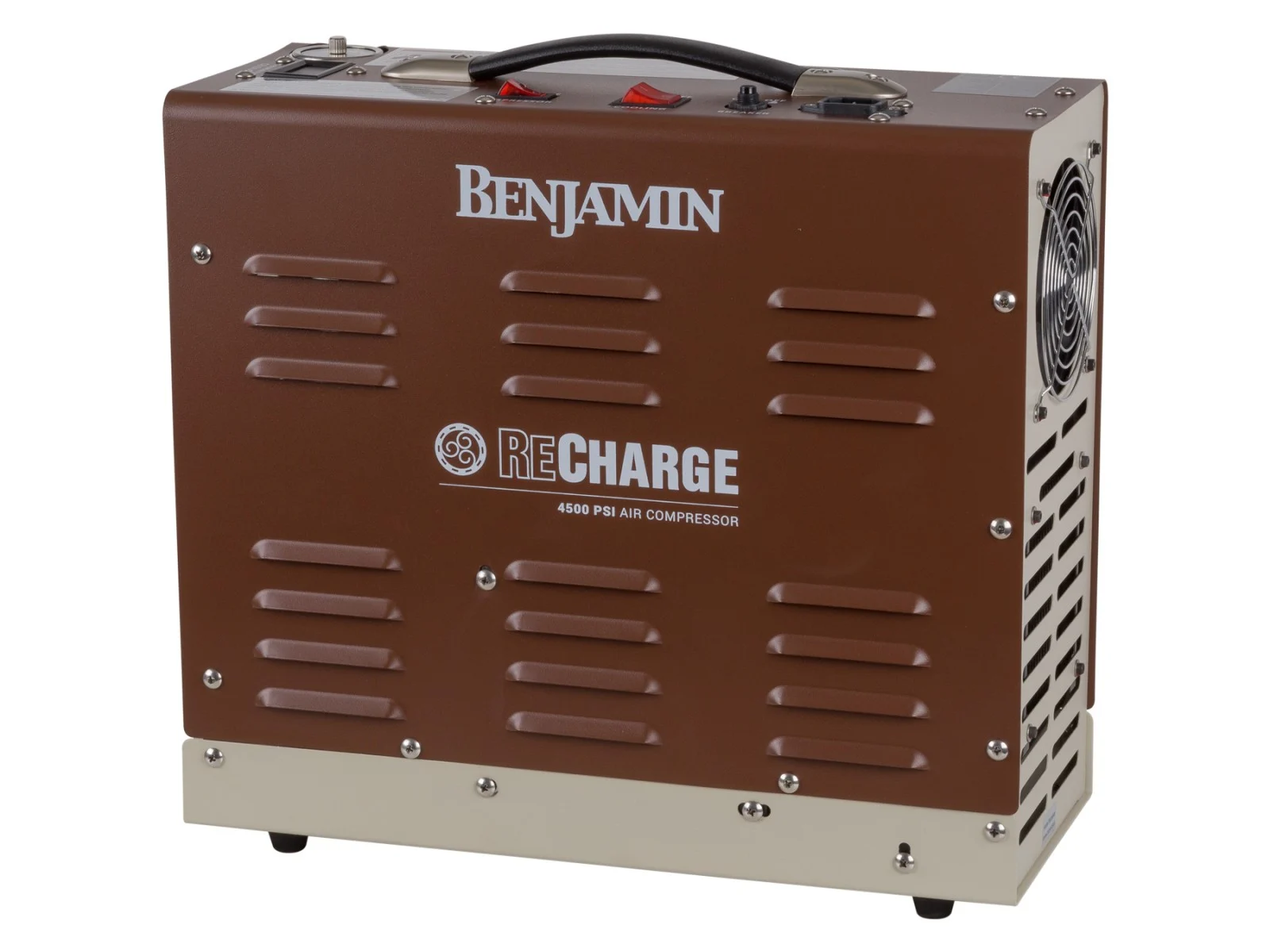
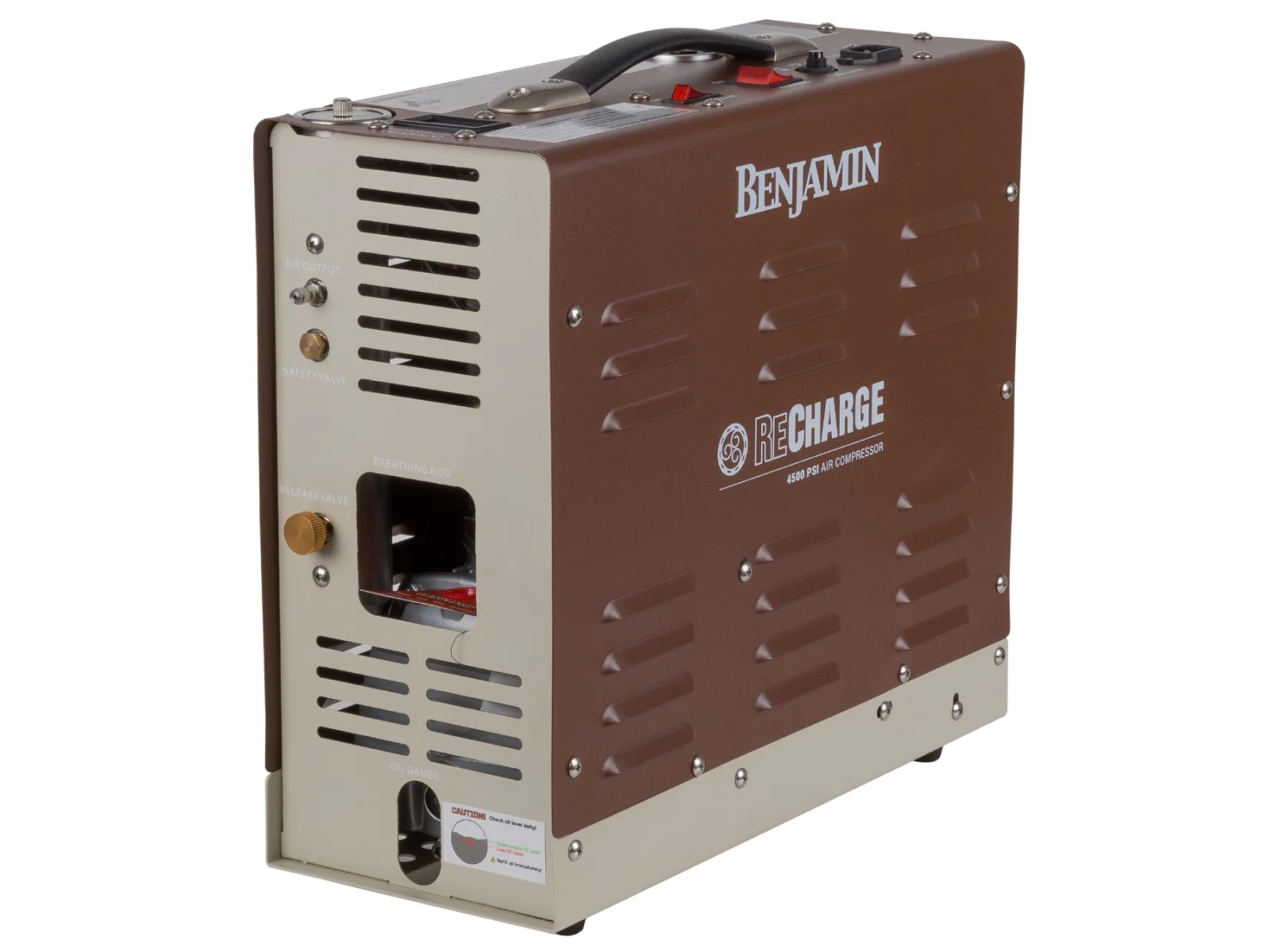
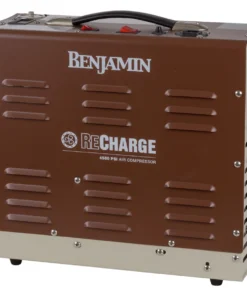
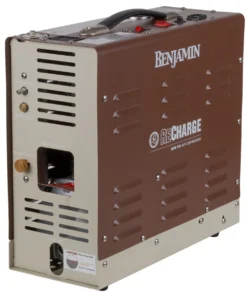

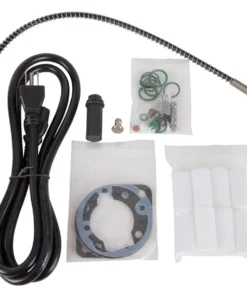
Benjamin Recharge HPA Compressor, 4500 PSI, 110V
$1,500.00
Description
Hey PCP airgunners – stop slaving over an unwieldy manual pump or driving all the way to the SCUBA shop already!
With Benjamin’s Recharge high-pressure air compressor, you’ll have all the air you need at your fingertips, whether to recharge an airgun directly or fill up a tank or two to use in the field. Using a standard U.S. 3-prong plug for 110v outlets, the Recharge is ready to do just that right out of the box in the convenience of your own home or wherever your airgunning travels take you.
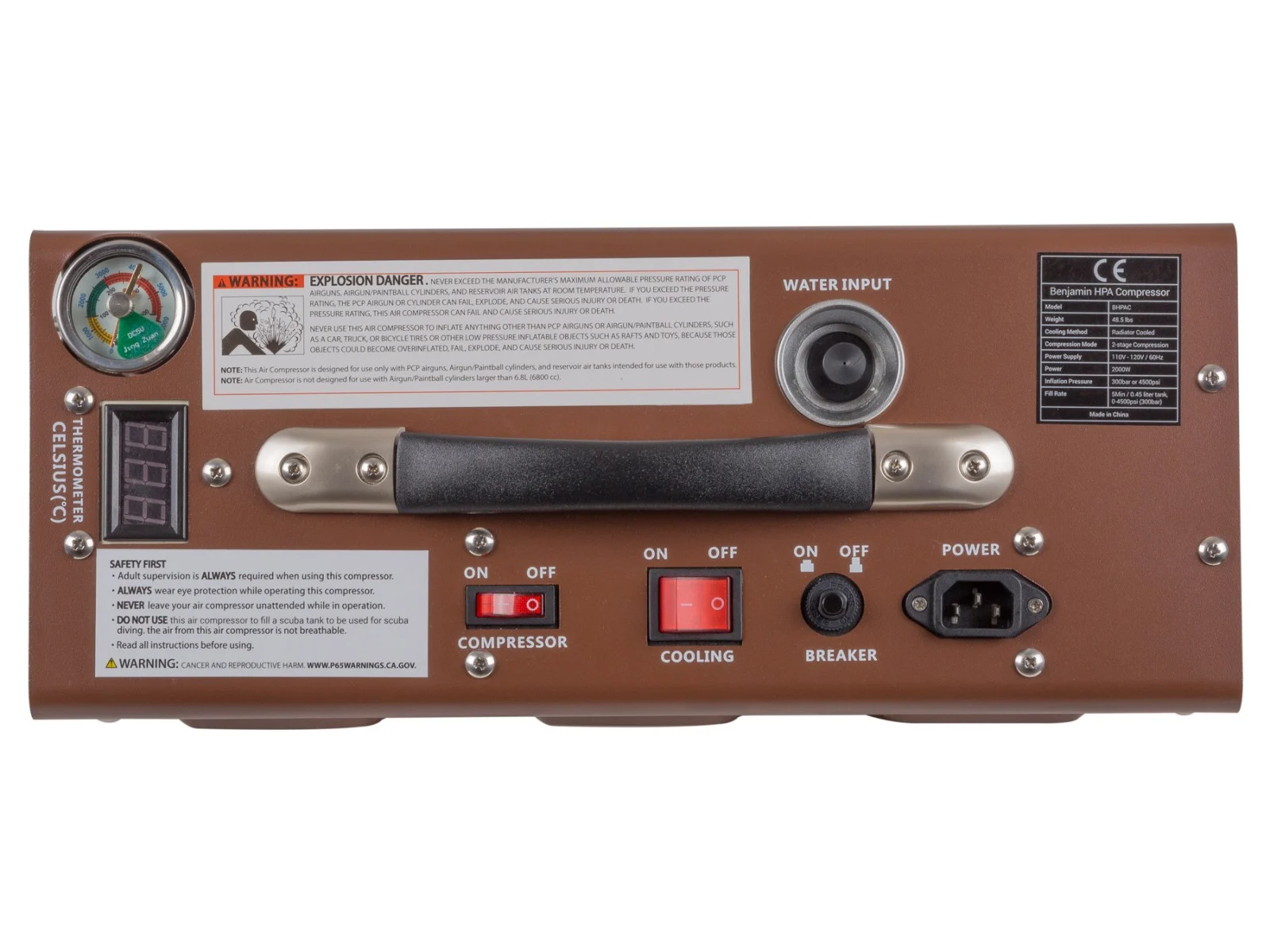
There’s no need to worry about overfilling and damaging your valuable airguns. Its built-in automatic shutoff function stops the compressor at a set pressure. It also shuts off automatically after 30 minutes of runtime and it features a safety burst disc to prevent dangerous excess pressure. It is air and water cooled, reaches a maximum fill pressure of 4,500 psi and is for airguns, paintball cylinders and tanks up to 6.8 liters.
So, check out Benjamin’s Recharge high-pressure air compressor today, and give your shoulders and your odometer a well-deserved rest.
Helpful resources:
- Tips for buying a pcp compressor
Benjamin Recharge HPA Compressor
- Max fill 4500 psi
- For Airgun/Paintball Cylinders and tanks only (less than 6.8L)
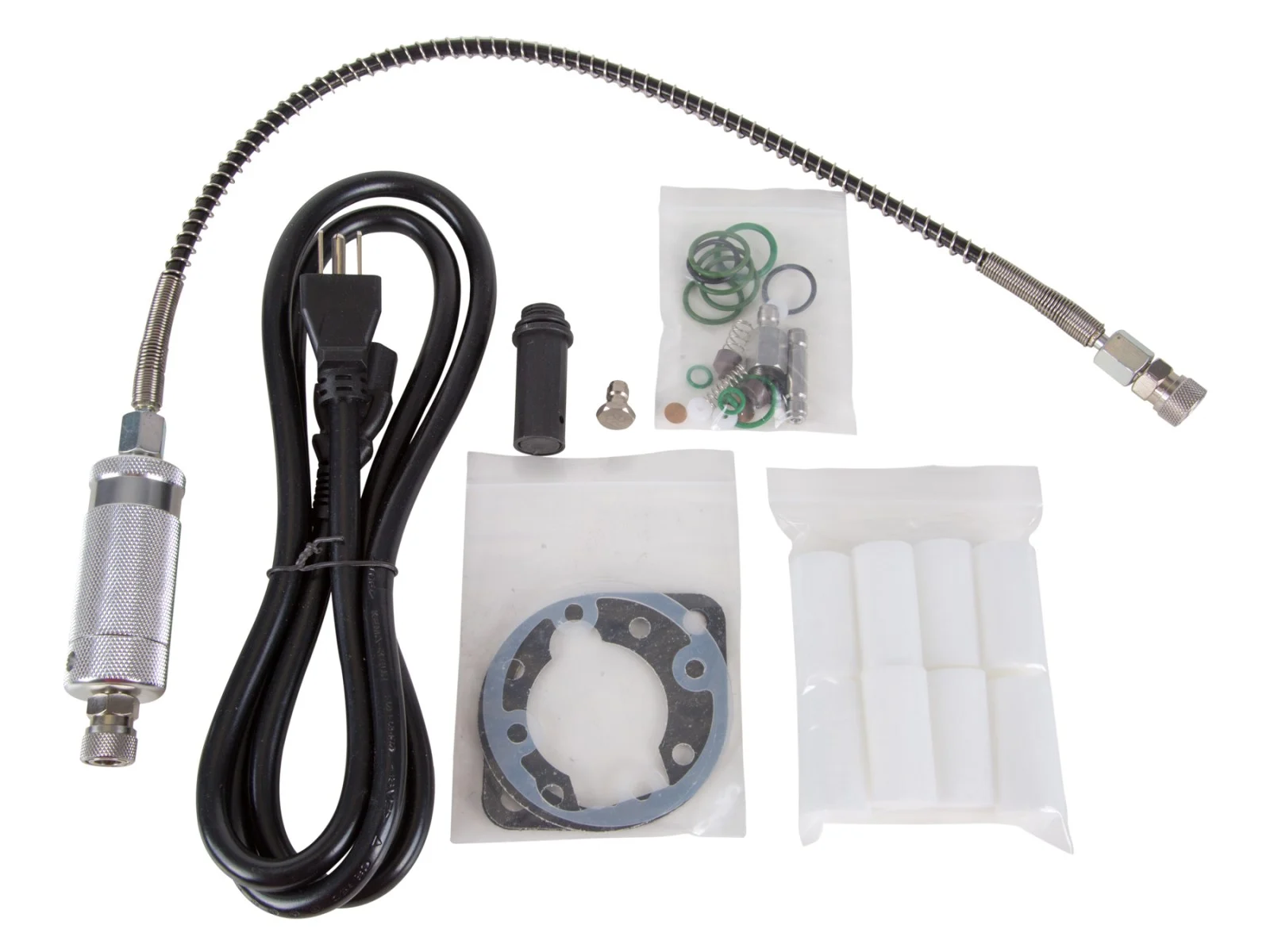
- 110V with standard US 3 prong plug
- Automatic Pressure shutoff- stops at set pressure
- Automatic shut off after 30 minutes of continuous run time
- Air and water cooled
- Safety burst disk
- Female Quick Disconnect Fitting on end of hose
- Weight: 44 lbs.
- Dimensions: 17.52″Lx7.36″Wx15.95″H
- Fills a Discovery/ Maximus 0 – 2,000psi in 45 seconds
- Fills a Armada/Marauder 0 – 3,000psi in 1 mins 40 seconds
- Fills a 90Cu in buddy bottle 0 – 4,500psi in 14 mins
Specifications
BrandWeight44.0 lbsOperating Pressure4500 PSI / 310 BARRecommended To FillGuns & Air TanksAuto Shut OffYesInput Voltage AC120 vPower Source110V Only
Benjamin Recharge HPA Compressor, 4500 PSI, 110V – High-Pressure Filling for PCP Airguns and Air Tanks
Benjamin Recharge HPA Compressor Overview
The Benjamin Recharge HPA Compressor, 4500 PSI, 110V is a high-pressure filling solution designed for shooters who want dependable access to compressed air at home, in a workshop, or at a dedicated shooting setup. The compressor delivers up to 4,500 PSI, uses a standard 110V power connection, and supports airguns, paintball cylinders, and air tanks up to 6.8 liters. It also combines air and water cooling, adjustable automatic pressure shutoff, a safety burst disc, and a female quick-disconnect fitting for practical filling convenience.
Why Choose the Benjamin Recharge HPA Compressor?
The main reason to choose this compressor is convenience.
Instead of relying on manual pumping or repeated trips to an external filling station, the user can maintain a high-pressure air supply at home. Benjamin lists fill times of approximately 45 seconds for a compatible reservoir from empty to 2,000 PSI and around 1 minute 40 seconds for a larger compatible reservoir from empty to 3,000 PSI. A 90 cubic-inch buddy bottle can reach 4,500 PSI in about 14 minutes under the listed conditions.
For owners of pcp airguns and pcp air rifles, this makes the compressor particularly useful when frequent refilling is required.
How Does the Compressor Work?
The compressor draws in atmospheric air and compresses it in stages until the selected pressure is reached.
The user adds the required cooling water and compressor oil, connects the fill line, selects the appropriate pressure, and starts the machine. The automatic pressure shutoff stops the fill at the chosen pressure, while the timed safety shutoff provides an additional layer of protection.
Because high-pressure compression produces substantial heat, both air and water cooling are used to manage operating temperature.
Why Is 4500 PSI Important?
Many modern high-pressure pneumatic systems use fill pressures considerably above those of traditional low-pressure equipment.
A 4,500 PSI compressor provides enough overhead for many compatible bottles and high-pressure air reservoirs.
However, the receiving cylinder’s own pressure rating always determines the correct stopping point.
The compressor’s maximum output should never be treated as the required fill pressure for every connected system.
Air Venturi Alpha and Other PCP Platforms
Owners researching Air Venturi Alpha, Air Venturi Alpha PCP Rifle, Air Venturi Alpha Air Rifle, Air Venturi Alpha Hunting Rifle, Air Venturi Alpha Tactical PCP, Air Venturi Alpha Regulated PCP, Air Venturi Alpha Multi Shot Rifle, or Air Venturi Alpha Precision Air Rifle may also be looking for a dependable high-pressure filling system.
The Benjamin compressor can serve the same general role as an air rifle compressor for compatible pneumatic reservoirs, provided the correct pressure rating and connector are used.
Comparing Air Venturi Filling Equipment
Buyers may also encounter air venturi, airventuri, venturi air, air venturi compressor, air venturi air compressor, ventur air compressor, and air venturi pcp compressor while comparing filling equipment.
Products such as the air venturi rovair 4500 portable compressor and air venturi rovair emphasize portability, while the Benjamin Recharge is a heavier 110V unit intended more for home or workshop use.
The Benjamin weighs approximately 44 lb, so it is transportable but is not designed like a lightweight field compressor.
Air Tanks and Larger Reservoirs
Owners using an air venturi tank or air venturi air tank may prefer a compressor capable of filling larger storage cylinders rather than only filling an airgun directly.
The Benjamin unit is rated for tanks up to 6.8 liters.
This makes it useful for users who want to fill a storage tank first and then use that tank as a portable air source.
Air Venturi Avenger and Related PCP Searches
Shooters researching air venturi avenger, air venturi avenger, air venturi avenge, air ventur avenge, air venturi avenger 25, or avenger price are often building a complete PCP setup rather than purchasing only the rifle.
A compressor becomes part of that wider equipment system because the rifle needs a reliable source of high-pressure air.
Likewise, searches involving air venturi microstrike and air venturi omnistorm reflect interest in other pneumatic platforms that may require compatible filling equipment.
Seneca and Big-Bore PCP Applications
The same broader filling considerations apply to shooters researching dragon claw, seneca dragon claw, seneca air rifles, air bolt gun, 50 caliber dragon, or claw air gun.
Larger pneumatic platforms can consume significant air, so an efficient filling solution becomes increasingly valuable.
Compatibility, maximum fill pressure, reservoir volume, and fitting type should always be checked before connecting any airgun to the compressor.
Air Rifle and Air Pistol Filling
The compressor can be useful for owners who regularly shoot both air rifle and air pistol platforms that use refillable high-pressure reservoirs.
Instead of maintaining separate manual pumps, a compatible high-pressure compressor can provide a centralized filling solution.
This becomes particularly convenient for shooters who own several pneumatic platforms.
Automatic Shutoff and Safety Features
The adjustable automatic pressure shutoff is one of the strongest practical features.
The user selects the desired pressure, and the compressor stops when that point is reached.
In addition, Benjamin incorporates a timed automatic shutdown and a safety burst disc designed to help protect against excessive pressure.
These systems provide useful safeguards, although the compressor should still be supervised during operation.
Where Should the Compressor Be Used?
The Benjamin Recharge is best suited to a stable, ventilated workspace with a suitable 110V electrical supply.
It can work well in a garage, workshop, club, or dedicated home filling station.
Because it uses water cooling and has significant weight, it is less convenient for frequent field movement than smaller portable compressors.
When Should You Choose This Compressor?
Choose the Benjamin Recharge when you regularly fill pneumatic rifles, pistols, or storage tanks and want a higher-capacity home filling solution.
It is particularly useful when manual pumping has become inconvenient or when repeated visits to an external filling station are no longer practical.
For owners of multiple pcp airguns or pcp air rifles, the combination of 4,500 PSI capability, automatic pressure control, water cooling, and support for tanks up to 6.8 liters makes the compressor a practical long-term filling platform.
Ultimately, the Benjamin Recharge HPA Compressor, 4500 PSI, 110V combines high-pressure capability, automatic shutoff, cooling, quick-connect convenience, and broad compatibility into one substantial home or workshop filling system.
Filling Performance, Cooling Efficiency, Pressure Control, Setup, and Everyday Operation
The Benjamin Recharge HPA Compressor, 4500 PSI, 110V is designed to make high-pressure filling more practical for users who regularly maintain pneumatic equipment and storage cylinders. Maximum pressure is only one part of the ownership experience. Reliable operation also depends on correct setup, cooling, moisture management, hose condition, pressure monitoring, and a consistent filling routine. When these elements are handled carefully, the compressor can provide a convenient and repeatable way to manage compressed-air equipment at home or in a workshop.
Preparing the Compressor Before Operation
A proper setup should always begin before the compressor is switched on.
The unit should be placed on a stable, level surface with enough surrounding space for ventilation and access to the hose, controls, and cooling system.
The power source should be suitable for the compressor’s electrical requirements.
Before connecting a cylinder, the user should inspect the hose, fittings, power cord, cooling components, and pressure controls.
A short inspection can help identify loose connections or visible damage before pressure is introduced.
Understanding High-Pressure Filling
High-pressure filling should be treated as a controlled process.
As the receiving cylinder fills, pressure increases and heat is generated.
The operator should therefore monitor both pressure and temperature throughout the cycle.
The correct target pressure must always come from the receiving equipment specification.
The compressor’s maximum output should never be assumed to be appropriate for every cylinder.
This is one of the most important principles of safe operation.
Automatic Pressure Shutoff
The adjustable automatic shutoff can make filling more convenient.
Once the desired pressure is selected, the machine can stop when that pressure is reached.
This reduces the need for constant manual interruption.
However, automatic shutoff should not replace supervision.
The operator should remain nearby and continue watching pressure, temperature, sound, and overall behavior.
High-pressure equipment should never be treated as completely unattended machinery.
Timed Safety Shutdown
The timed shutdown provides another layer of protection.
If a fill cycle continues longer than expected, the safety timer can stop operation automatically.
This can be useful during larger or more demanding fills.
Even so, the operator should not rely on the timer as the primary control method.
The best practice is to monitor the fill directly and use automatic protections as backup systems.
Water Cooling
Water cooling helps manage heat produced during compression.
Before operation, the cooling circuit should be checked carefully.
The user should confirm that the required water level is present and that circulation is functioning properly.
Restricted or ineffective cooling can cause temperatures to rise more quickly.
If cooling flow appears abnormal, filling should be stopped until the problem is identified.
Operating a high-pressure compressor without effective cooling can shorten component life.
Air Cooling
Air movement also contributes to temperature control.
Ventilation openings should remain unobstructed.
The compressor should not be pressed tightly against walls, boxes, or other equipment that prevents heat from escaping.
Good surrounding airflow supports the water-cooling system and helps keep electrical and mechanical components within a more manageable temperature range.
A clean operating area is therefore preferable to a confined space.
Monitoring Temperature
Temperature can provide valuable information about compressor condition.
A short fill may generate less sustained heat than a large-cylinder fill.
Longer run times require greater attention.
If the compressor begins running hotter than usual during similar filling conditions, cooling performance, airflow, electrical supply, or internal condition should be investigated.
Repeated overheating should not be ignored.
Connecting the Fill Hose
The hose should be connected carefully and without force.
Threads and quick-connect fittings should remain clean.
Dust or debris can damage seals or create leakage.
If a connection does not seat correctly, the operator should stop and inspect it rather than forcing the parts together.
The hose should also be positioned where it will not be bent sharply, stepped on, or trapped under equipment.
Filling Smaller Reservoirs
Smaller reservoirs may reach target pressure relatively quickly.
This can make them convenient to fill, but rapid pressure increase also means the operator should watch the gauge carefully.
The same safety checks still apply.
Cooling, hose condition, fitting security, and pressure control remain important regardless of cylinder size.
A small reservoir does not justify rushing the process.
Filling Larger Cylinders
Larger cylinders demand more operating time and produce more cumulative heat.
The operator should monitor temperature more closely during these fills.
Long fills may also place greater demand on electrical supply and cooling.
If operating temperature rises excessively, a controlled pause may be appropriate.
The receiving cylinder should always be confirmed as suitable for the intended pressure before filling begins.
Pressure Gauge Monitoring
The pressure gauge should remain visible throughout operation.
Filling time alone should never be used to estimate pressure.
Two cylinders of different size can take very different amounts of time to reach the same pressure.
Likewise, starting pressure changes the required fill time.
The gauge provides direct information and should always be treated as the main pressure reference.
Avoiding Overfilling
Overfilling can damage equipment and create serious risk.
The target pressure should be set conservatively and confirmed against the receiving cylinder specification.
The automatic shutoff provides useful assistance, but the user should still watch the gauge.
A high-capacity compressor offers flexibility, but that capability must be matched with disciplined operation.
More available pressure does not mean more pressure should always be used.
Heat in the Receiving Cylinder
The cylinder itself can become warm while filling.
This is normal because compressed air generates heat.
After filling, the pressure may change slightly as the air cools.
For this reason, the stabilized pressure after cooling can differ from the reading seen immediately at shutdown.
Allowing the cylinder to cool before making any final evaluation can provide a more realistic pressure reading.
Bleeding the Fill Line
The fill hose should never be disconnected while it remains pressurized.
After shutdown, residual pressure in the line should be released through the appropriate bleed mechanism.
Only when the line has been depressurized should the connector be removed.
This protects the fittings and reduces the risk of sudden hose movement.
Bleeding should become a standard part of every filling routine.
Moisture Management
Compressed air can contain moisture, especially in humid environments.
The operator should pay attention to moisture filtration and any drainage points in the system.
Water should not be allowed to accumulate unnecessarily.
Cleaner, drier air is better for both the compressor and the equipment being filled.
Humidity may also increase how frequently filters require attention.
Electrical Supply
A stable electrical connection is important for reliable operation.
Damaged cords, loose plugs, and unsuitable extension leads should be avoided.
If the compressor repeatedly trips a breaker, the electrical supply should be investigated.
Repeatedly resetting the breaker without identifying the cause is not good practice.
A reliable power source helps the motor operate efficiently and consistently.
Monitoring Sound and Vibration
The operator should become familiar with the compressor’s normal sound and vibration.
Changes can provide early warning of a developing problem.
New knocking, scraping, or excessive vibration should not be ignored.
The compressor should be stopped and inspected before continued use.
Catching abnormal behavior early can help prevent more serious mechanical damage.
Post-Fill Inspection
After the fill is complete, the compressor should be allowed to cool.
The hose, fittings, cooling system, and surrounding area can then be checked for leaks or unusual moisture.
Any abnormal smell, temperature, or noise noticed during the fill should be investigated before the next use.
A short post-operation inspection can improve reliability and simplify future maintenance.
Building a Repeatable Routine
The most efficient way to use the compressor is to follow the same sequence every time.
Inspect the equipment.
Confirm cooling.
Connect the hose.
Set the correct pressure.
Start the compressor.
Monitor temperature and pressure.
Stop at the correct level.
Bleed the line.
Disconnect safely.
Allow the system to cool.
This routine reduces mistakes and makes unusual behavior easier to detect.
Practical Everyday Performance
The Benjamin Recharge HPA Compressor, 4500 PSI, 110V performs best when convenience is combined with disciplined operation.
Automatic shutoff improves filling control.
Water and air cooling help manage heat.
Careful hose handling protects high-pressure connections.
Pressure monitoring prevents overfilling.
Proper bleeding supports safe disconnection.
Regular inspection improves long-term reliability.
When these habits are followed consistently, the compressor can provide an efficient and dependable high-pressure filling experience for repeated home and workshop use.
Maintenance, Cooling-System Care, Hose Inspection, Reliability, Storage, and Long-Term Ownership
The Benjamin Recharge HPA Compressor, 4500 PSI, 110V is designed for repeated high-pressure filling, but dependable long-term performance depends heavily on how well the unit is maintained. Compressing air to very high pressure places substantial demands on seals, fittings, hoses, cooling components, electrical parts, gauges, and internal mechanical systems. Because of this, maintenance should be treated as part of normal ownership rather than something performed only after a problem appears.
Building a Consistent Maintenance Routine
A simple routine after every filling session can help preserve reliability.
The compressor should be inspected for loose fittings, moisture accumulation, damaged hoses, unusual vibration, and abnormal heat.
The operator does not need to disassemble the machine after normal use.
Instead, attention should be given to components that can be inspected safely from the outside.
Repeating the same checks makes gradual changes easier to notice.
Over time, the owner becomes familiar with how the compressor should normally sound, feel, and operate.
Keeping the Exterior Clean
Dust, dirt, and oil residue should not be allowed to build up around the exterior.
Ventilation openings need to remain clear so heat can escape effectively.
The housing can be wiped with a clean, soft cloth once the compressor is powered off and has cooled.
Water should never be sprayed directly onto electrical components.
A clean exterior also makes it easier to identify leaks, loose fasteners, or damage that might otherwise remain hidden beneath dirt.
Cooling-System Inspection
The cooling system is one of the most important areas to maintain.
High-pressure compression generates significant heat.
Before operation, the water level and circulation should be checked.
Tubing should remain properly connected and free from sharp bends.
If circulation appears weaker than normal, the compressor should not simply be run harder.
The cooling issue should be corrected first.
Effective cooling reduces thermal stress and can help extend the life of internal components.
Managing Cooling Water
Cooling water should remain reasonably clean.
Dirty or contaminated water may reduce circulation efficiency over time.
The cooling circuit should be inspected periodically for residue or buildup.
If the unit will remain unused for an extended period, the cooling system should be prepared according to the manufacturer’s recommended storage procedure.
Leaving old water in a system indefinitely may contribute to contamination.
Careful coolant management supports more predictable temperature control.
Monitoring Operating Temperature
The user should become familiar with normal operating temperature behavior.
A compressor may naturally run warmer during a long fill than during a short one.
However, repeated increases in temperature under similar conditions can signal a developing issue.
Restricted water circulation, blocked airflow, high ambient temperature, or internal mechanical resistance may all contribute.
If the compressor begins running noticeably hotter than before, operation should stop so the cause can be investigated.
Inspecting the High-Pressure Hose
The filling hose should be inspected regularly.
Look for cracking, abrasion, cuts, swelling, stiffness, or damaged fittings.
A hose should not continue to be used simply because it has not failed yet.
High-pressure lines store significant energy.
Any hose showing visible deterioration should be replaced with a properly rated component Benjamin Recharge HPA Compressor 4500 PSI 110V.
The hose should also be stored without tight bends or heavy objects resting on it.
Caring for Fittings and Connectors
Connectors should remain clean and protected Benjamin Recharge HPA Compressor 4500 PSI 110V.
Dust, oil, and debris can affect sealing surfaces Benjamin Recharge HPA Compressor 4500 PSI 110V.
Protective caps can help prevent contamination when the compressor is not being used.
If a fitting begins leaking repeatedly, the connection should be inspected rather than continually tightened.
Overtightening can damage threads and sealing surfaces Benjamin Recharge HPA Compressor 4500 PSI 110V.
Clean, correctly matched fittings support both convenience and safer operation.
Checking for Air Leaks
Leaks can often be identified through sound or pressure behavior Benjamin Recharge HPA Compressor 4500 PSI 110V.
A faint hiss, slower-than-normal filling, or unexpected pressure loss may indicate escaping air.
The system should always be depressurized before fittings are inspected or adjusted Benjamin Recharge HPA Compressor 4500 PSI 110V.
Pressurized connections should not be tightened by hand Benjamin Recharge HPA Compressor 4500 PSI 110V.
If the leak cannot be located safely from external components, qualified service may be necessary.
High-pressure internal repairs should not be improvised.
Pressure Gauge Condition
The pressure gauge is a critical monitoring component.
It should remain easy to read and should respond smoothly as pressure increases and decreases.
If the needle sticks, behaves erratically, or gives readings that appear inconsistent, the compressor should not be used until the issue is checked.
Reliable pressure information is essential because the operator needs to know exactly when the receiving cylinder is approaching its maximum rated pressure.
Automatic Shutoff Inspection
The automatic shutoff should also be observed periodically.
The operator should confirm that the compressor stops at the selected pressure.
If it begins overshooting or failing to stop reliably, the system should be serviced.
Automatic controls are useful, but they should never replace direct supervision.
The pressure gauge should still be monitored throughout the filling process.
Electrical System Care
The power cord and plug should remain in good condition.
Cuts, crushed insulation, exposed conductors, loose plugs, or overheating should be taken seriously.
The electrical supply should match the compressor’s requirements.
Repeated breaker trips may indicate an unsuitable circuit or a developing electrical problem.
The cause should be identified rather than repeatedly restarting the unit.
Stable electrical supply contributes to efficient motor performance and long-term reliability.
Listening for Mechanical Changes
Sound can reveal mechanical changes before performance drops significantly.
The operator should become familiar with the normal operating rhythm.
New knocking, scraping, grinding, or unusually loud vibration should not be ignored.
The compressor should be shut down if its sound changes suddenly.
Continuing to operate damaged mechanical components may turn a minor service issue into a larger repair.
Managing Vibration
Some vibration is normal during compression.
However, excessive vibration can stress hoses, wiring, fittings, and mounting points.
The compressor should remain on a firm, level surface.
Visible screws and brackets should be checked periodically.
If vibration increases, loose hardware or an unstable operating surface may be responsible.
Correcting these issues early can reduce wear.
Moisture Management
Moisture control remains important during long-term ownership.
Humid environments can cause more water to collect during compression.
Filters, separators, and drainage points should therefore receive regular attention.
Moisture should not be allowed to accumulate indefinitely.
Cleaner and drier compressed air helps protect both the compressor and the receiving equipment.
Maintenance intervals may need to be shorter in humid climates.
Filter Service
Filters gradually become saturated or restricted.
Their condition should be monitored rather than assumed to remain effective forever.
A filter that has collected significant moisture may perform less efficiently.
Restricted airflow can also increase compressor workload.
Frequent users may need to replace filter material more often than occasional users.
Keeping spare service components available can reduce downtime.
Proper Shutdown
After use, the compressor should be shut down correctly.
Pressure remaining inside the filling hose should be bled safely before disconnection.
The unit should then be allowed to cool.
Hoses should not be detached while still pressurized.
Correct shutdown reduces unnecessary stress on fittings and makes the compressor safer to handle and store.
Storage Between Uses
The compressor should be stored in a dry, protected environment.
It should not remain exposed to rain, direct sunlight, heavy dust, or excessive humidity.
The hose should be stored without sharp bends.
The power cable should not be tightly wrapped around hot components.
Heavy objects should not be placed on top of the machine.
A stable storage environment helps preserve both mechanical and electrical components.
Long-Term Storage
If the compressor will not be used for an extended period, additional preparation is sensible.
The machine should be cleaned, depressurized, cooled, and inspected.
The cooling system and filters should be handled according to the recommended storage procedure.
Before the compressor is returned to service, all major connections, hoses, electrical parts, and controls should be checked again.
Keeping Maintenance Records
Basic maintenance records can be valuable.
The owner can record operating hours, filter replacements, hose changes, cooling-system service, and unusual temperature events.
These notes make servicing easier to plan.
They can also reveal whether fill performance has been changing gradually over time.
A simple maintenance history is especially useful for compressors that are used frequently.
Long-Term Reliability
The Benjamin Recharge HPA Compressor, 4500 PSI, 110V delivers its best long-term performance when maintenance is treated as part of normal operation.
Clean connectors protect the air path.
Reliable cooling controls heat.
Healthy hoses protect the pressure system.
Accurate gauges support proper filling.
Electrical inspection protects the motor.
Moisture control improves air quality.
With regular inspection, correct shutdown, proper storage, and timely service, the compressor can remain a dependable high-pressure filling system across many years of home or workshop use.
Practical Filling Workflow, Pressure Management, Tank Handling, Workspace Setup, and Performance Optimization
The Benjamin Recharge HPA Compressor, 4500 PSI, 110V performs best when the operator follows a consistent and disciplined filling process. High-pressure compression involves more than simply connecting a hose and waiting for a gauge to rise. Reliable operation depends on correct setup, proper cooling, accurate pressure monitoring, secure fittings, careful shutdown, and a clean working environment. When these steps are repeated consistently, the compressor becomes easier to manage and more predictable during both short and extended filling sessions.
Preparing the Workspace
A dedicated filling area can improve both convenience and safety Benjamin Recharge HPA Compressor 4500 PSI 110V.
The compressor should be placed on a level, stable surface with enough room around it for ventilation, hose access, and cooling-system management.
The area should remain dry and uncluttered.
Loose tools, cables, or other objects should not interfere with the cooling system or fill hose.
Good workspace organization also makes it easier to inspect fittings and detect leaks before the compressor is started.
Checking the Receiving Cylinder
Before every fill, the receiving cylinder should be examined carefully Benjamin Recharge HPA Compressor 4500 PSI 110V.
The rated working pressure must be known before pressure is introduced Benjamin Recharge HPA Compressor 4500 PSI 110V.
The operator should also check the overall condition of the cylinder and its valve.
Dents, corrosion, damaged threads, or questionable fittings should be investigated before filling.
A cylinder should never be filled simply because the connector appears to fit Benjamin Recharge HPA Compressor 4500 PSI 110V.
Pressure compatibility is essential Benjamin Recharge HPA Compressor 4500 PSI 110V.
Verifying the Fill Connection
The fill fitting should be clean and properly matched to the receiving equipment.
Dust, oil, and debris should be removed before connection.
The fitting should lock into place smoothly. Benjamin Recharge HPA Compressor 4500 PSI 110V
If resistance is encountered, the operator should stop and inspect the connection rather than forcing it.
A damaged seal or poorly seated connector can create leakage and may reduce filling efficiency.
Correct connection is one of the most important steps in the entire process.
Confirming Cooling Before Starting
The cooling system should be checked before the compressor is placed under load.
Water circulation should be established and tubing should remain secure.
The operator should confirm that airflow around the machine is not restricted Benjamin Recharge HPA Compressor 4500 PSI 110V.
Benjamin Recharge HPA Compressor 4500 PSI 110VBoth water and air cooling contribute to temperature control.
If cooling is weak or interrupted, the compressor should not be used until the issue is corrected.
Starting the Fill Gradually
Once the equipment has been inspected and connected, the fill can begin Benjamin Recharge HPA Compressor 4500 PSI 110V.
The pressure gauge should be observed immediately. Benjamin Recharge HPA Compressor 4500 PSI 110V
Pressure should rise in a steady and predictable manner.
If the gauge does not move, rises unusually quickly, or behaves erratically, the operator should stop the process.
Unexpected pressure behavior can indicate an incorrect valve position, poor connection, or another problem that should be addressed before continuing.
Setting the Correct Pressure
The target pressure must always be based on the receiving cylinder’s specifications.
The compressor is capable of producing high pressure, but that does not mean every connected system should be filled to the maximum.
The operator should select the proper shutoff level before beginning the fill.
This setting should then be confirmed against the pressure gauge during operation.
Automatic control is useful, but direct monitoring should continue Benjamin Recharge HPA Compressor 4500 PSI 110V.
Monitoring Temperature During Operation
Temperature is one of the most important indicators of compressor workload.
A small reservoir may fill quickly and generate less sustained heat Benjamin Recharge HPA Compressor 4500 PSI 110V.
A larger cylinder can require a much longer run time.
The operator should therefore pay closer attention during large fills.
If the machine begins running hotter than expected, operation should be paused.
Continuing to run a hot compressor can increase stress on seals and internal components.
Managing Longer Fill Cycles
Extended fills should be approached conservatively Benjamin Recharge HPA Compressor 4500 PSI 110V.
The operator should not assume that the compressor can run continuously without attention.
Temperature, sound, pressure, and cooling performance should be checked throughout the cycle.
If conditions remain stable, the fill can continue.
If the temperature rises too quickly or the sound changes, a controlled pause is appropriate.
A slower, well-managed fill is often better than pushing the equipment continuously.
Allowing Cooling Breaks
Cooling breaks can help reduce thermal stress.
When a long fill is paused, the compressor and receiving cylinder have time to release some heat.
Restarting should only occur once temperature has returned to a reasonable level.
This becomes especially important during repeated filling sessions Benjamin Recharge HPA Compressor 4500 PSI 110V.
Multiple long cycles performed back-to-back can generate significant cumulative heat.
Managing Cylinder Temperature
The receiving cylinder can also become warm during filling.
This is normal because compressed air generates heat.
However, the final pressure may change slightly as the air cools Benjamin Recharge HPA Compressor 4500 PSI 110V.
For this reason, the operator should allow the cylinder to stabilize before deciding whether a small additional fill is necessary.
Repeatedly topping off a hot cylinder without waiting for it to cool can lead to unnecessary overfilling.
Watching Fill Time
Fill time can provide useful information about system performance Benjamin Recharge HPA Compressor 4500 PSI 110V.
When the same cylinder is filled from a similar starting pressure, the required time should remain reasonably consistent.
If a familiar fill suddenly takes much longer, the operator should investigate possible causes.
A small leak, restricted filter, cooling problem, or electrical issue may be responsible.
Tracking approximate fill times can help identify gradual performance changes.
Preventing Hose Stress
The fill hose should remain positioned carefully during operation.
It should not be twisted, sharply bent, trapped under equipment, or stretched unnecessarily.
The hose should also be kept away from hot surfaces.
Repeated mechanical stress can shorten hose life.
A relaxed hose position reduces strain on both the hose and the connector.
Avoiding Connector Wear
Quick-connect fittings experience repeated attachment and removal.
The operator should avoid pulling or twisting them unnecessarily.
After the fill is complete, pressure must be released before the connector is removed.
Forcing a pressurized connection can damage the fitting and create a serious hazard.
Correct bleeding should always occur first.
Bleeding the Line
After the compressor stops, pressure remains inside the fill hose.
The operator should use the appropriate bleed system to release that pressure.
A brief release of air is normal during this step.
Once the line pressure has been removed, the connector can be detached safely.
Bleeding should never be skipped.
It protects both the operator and the equipment.
Checking for Leaks
Leaks can sometimes be detected by sound.
A continuous hiss or slower-than-normal pressure rise may indicate escaping air.
If leakage is suspected, the compressor should be stopped and the system depressurized.
Connections should only be inspected once pressure has been removed.
Trying to tighten fittings while the line is still pressurized should be avoided.
Managing Electrical Demand
The compressor should be connected to a stable electrical supply Benjamin Recharge HPA Compressor 4500 PSI 110V.
Loose outlets and damaged power cords should not be used.
If an extension lead is necessary, it should be properly rated for the electrical load Benjamin Recharge HPA Compressor 4500 PSI 110V.
Long or undersized extension cables can contribute to voltage drop and heat Benjamin Recharge HPA Compressor 4500 PSI 110V.
Repeated breaker trips should be investigated rather than ignored.
Reliable electrical supply helps the motor operate consistently.
Using the Compressor in Humid Conditions
Humid environments increase the importance of moisture control.
Filters and separators may collect water more quickly.
The operator should inspect moisture-management components more frequently in these conditions.
Air quality should remain a priority because moisture introduced into the receiving system can contribute to long-term internal problems.
Operating in Cooler Conditions
Cool environments create different challenges Benjamin Recharge HPA Compressor 4500 PSI 110V.
Temperature changes can cause condensation Benjamin Recharge HPA Compressor 4500 PSI 110V.
The compressor should be allowed to stabilize if it has been moved between significantly different environments.
The operator should also inspect hoses and seals because some materials can feel stiffer when cold Benjamin Recharge HPA Compressor 4500 PSI 110V.
A short pre-operation check becomes particularly valuable under changing conditions.
Post-Fill Inspection
After the fill is complete and the line has been depressurized, the system should be inspected.
The operator should look for unusual moisture, loose fittings, damaged hoses, or abnormal heat.
The compressor should then be allowed to cool naturally Benjamin Recharge HPA Compressor 4500 PSI 110V.
Covering or storing the unit while it is still hot should be avoided Benjamin Recharge HPA Compressor 4500 PSI 110V.
Creating a Repeatable Operating Sequence
A consistent sequence helps reduce mistakes Benjamin Recharge HPA Compressor 4500 PSI 110V.
The operator should inspect the compressor, verify cooling, check the cylinder rating, connect the fill hose, set the target pressure, start the unit, monitor pressure and temperature, stop at the correct level, bleed the line, disconnect safely, and allow the machine to cool.
Repeating this process every time makes unusual behavior easier to identify Benjamin Recharge HPA Compressor 4500 PSI 110V.
Practical Performance Optimization
The Benjamin Recharge HPA Compressor, 4500 PSI, 110V delivers its best practical performance when pressure control, cooling, clean connections, electrical stability, and careful operation are treated as one complete system.
Accurate pressure management prevents overfilling Benjamin Recharge HPA Compressor 4500 PSI 110V.
Effective cooling reduces thermal stress Benjamin Recharge HPA Compressor 4500 PSI 110V.
Clean fittings improve sealing.
Proper bleeding protects connectors.
Regular observation makes mechanical changes easier to detect.
With a disciplined filling routine and consistent workspace habits, the compressor can provide dependable, efficient high-pressure filling across repeated home and workshop sessions Benjamin Recharge HPA Compressor 4500 PSI 110V.
Be the first to review “Benjamin Recharge HPA Compressor, 4500 PSI, 110V”
Related products
compressor
compressor
compressor
compressor
compressor
compressor
Reviews
There are no reviews yet.