
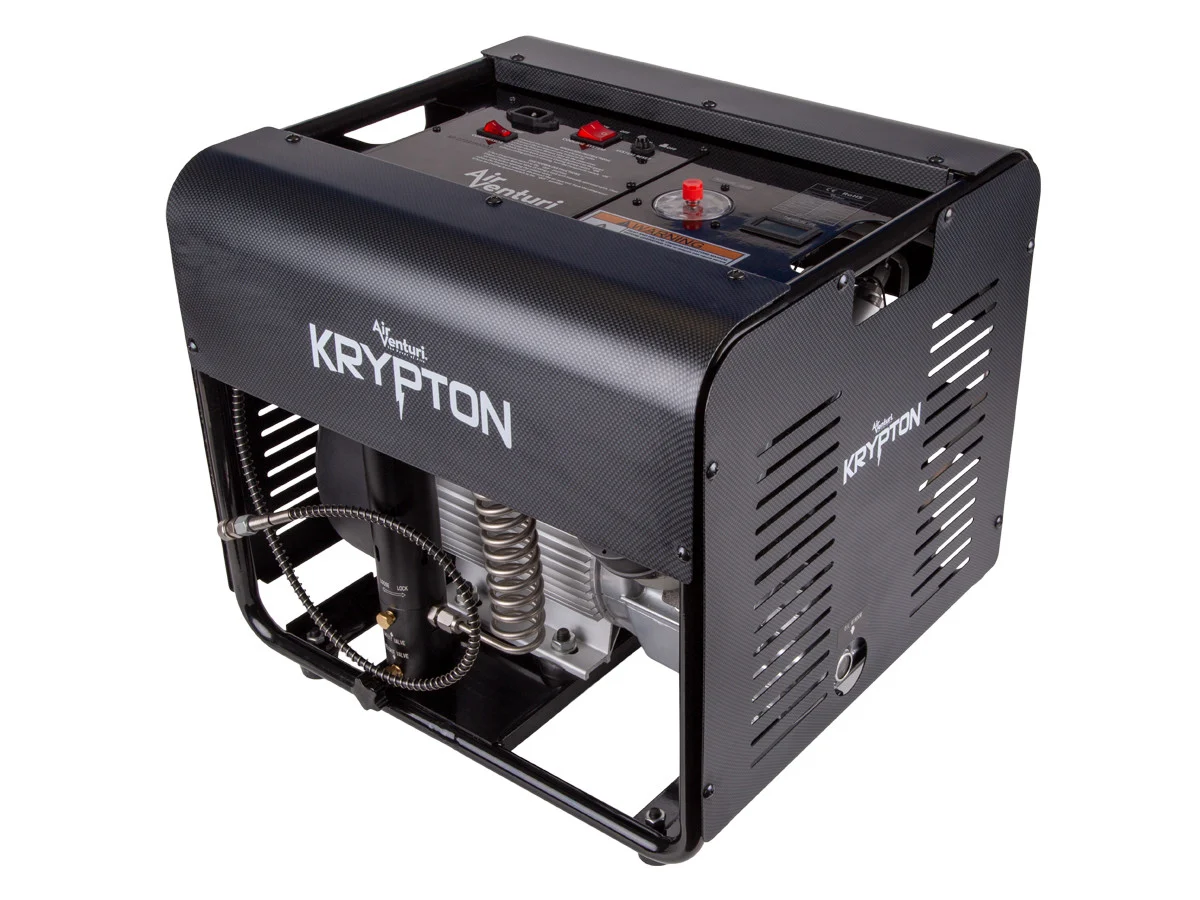
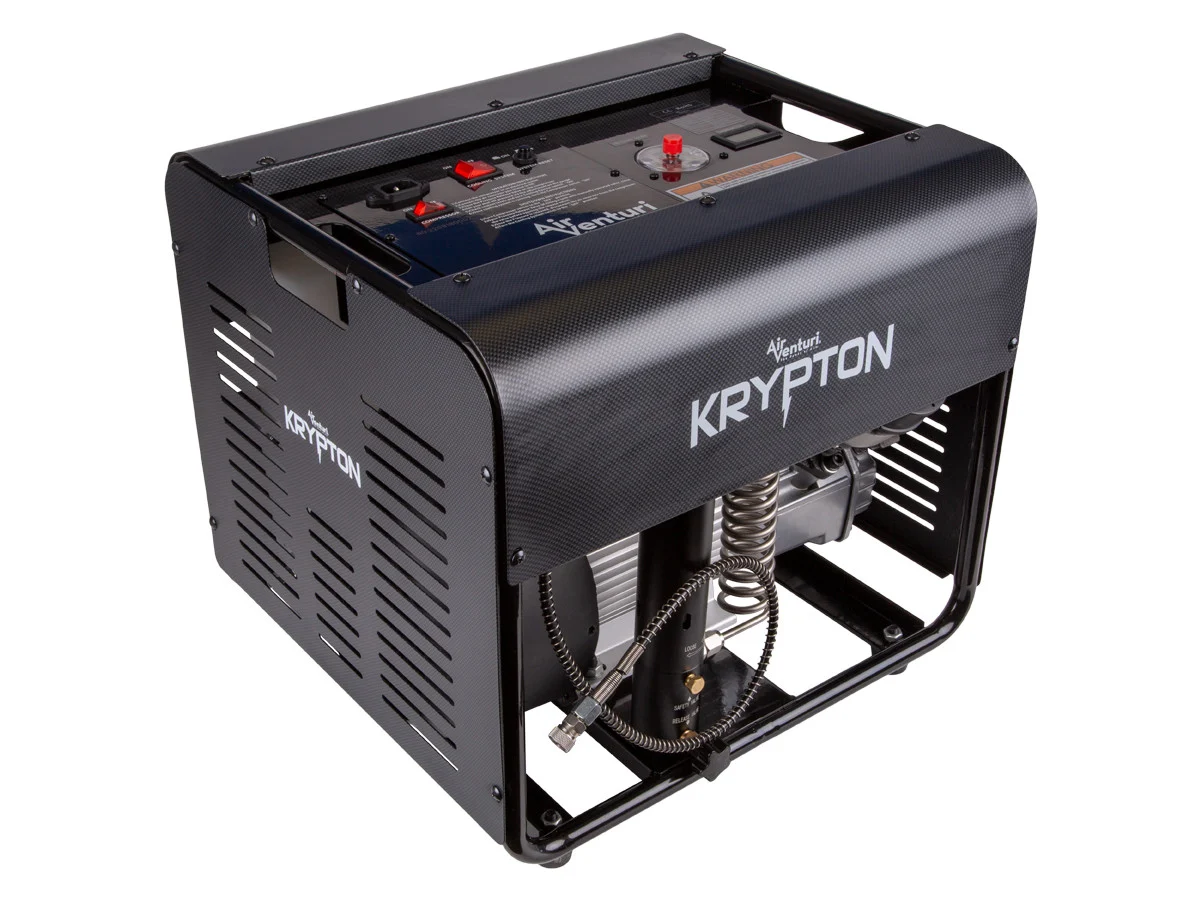
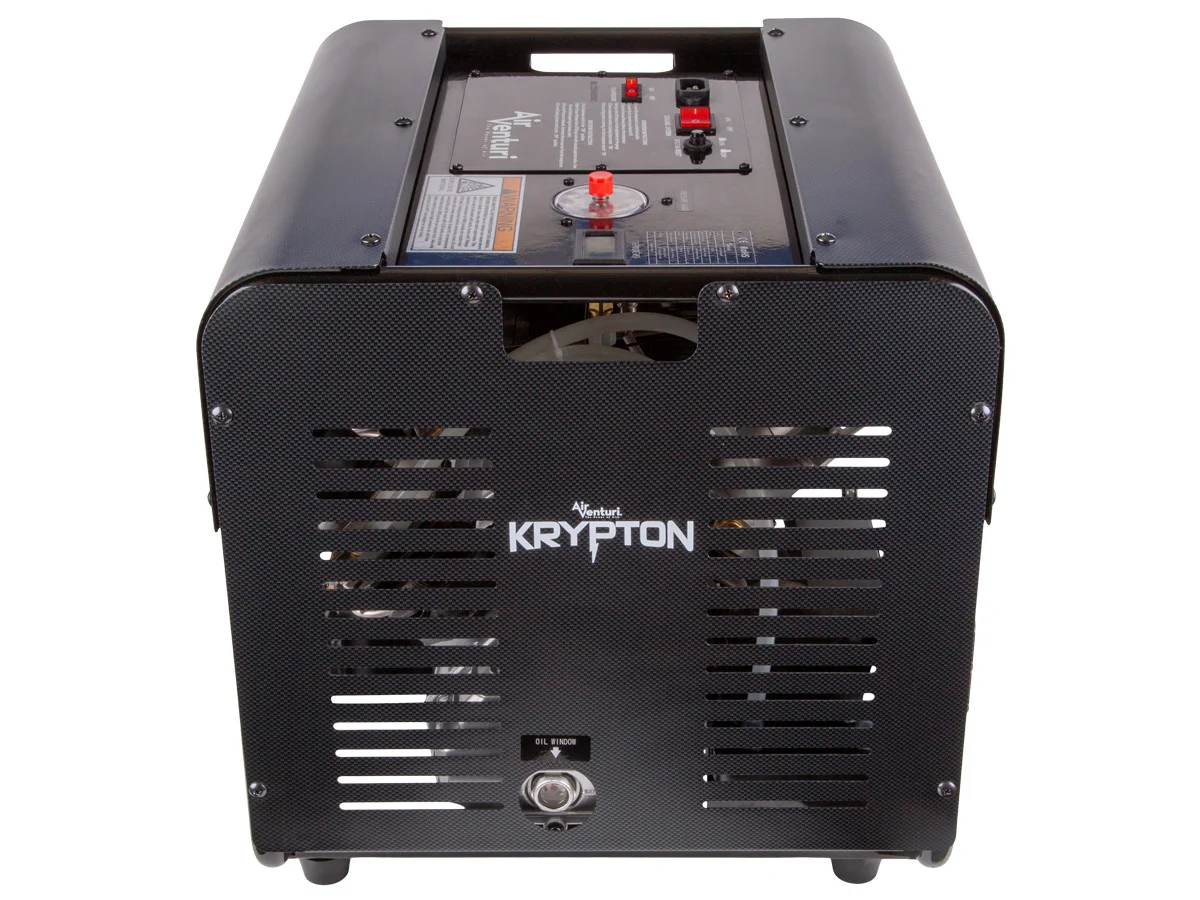

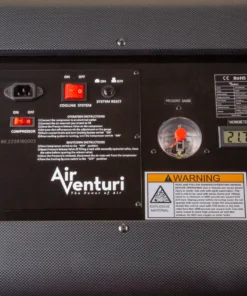
Air Venturi Krypton 4500 PSI Compressor
$1,250.00
Description
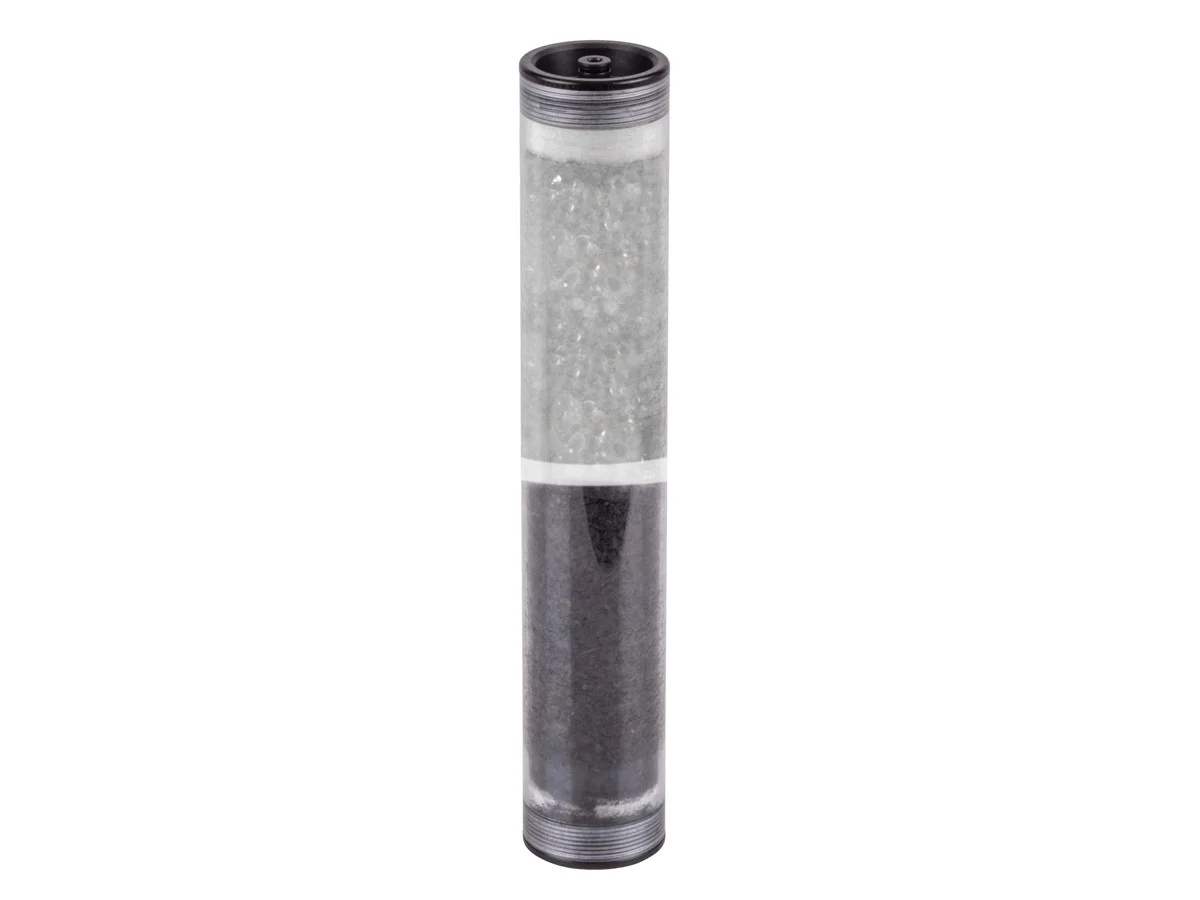
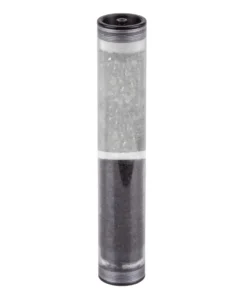
The Air Venturi Krypton 4500 PSI Compressor improves on the previous version because it features 15% faster fill times than the previous version and an upgraded filter system that removes even more moisture from the air it outputs. Shooters no longer have to worry about the source of air for airguns, paintball guns, or aluminum and carbon fiber bottles and tanks.
The updated technology included in this compressor yields the same great dependability as before, with the advantage that shooters can now spend less time waiting for airguns and bottles to fill, so they can get back to shooting. In addition, the filter system on this model has been improved so that it has increased moisture removal capabilities, resulting in drier, high-quality fill air.
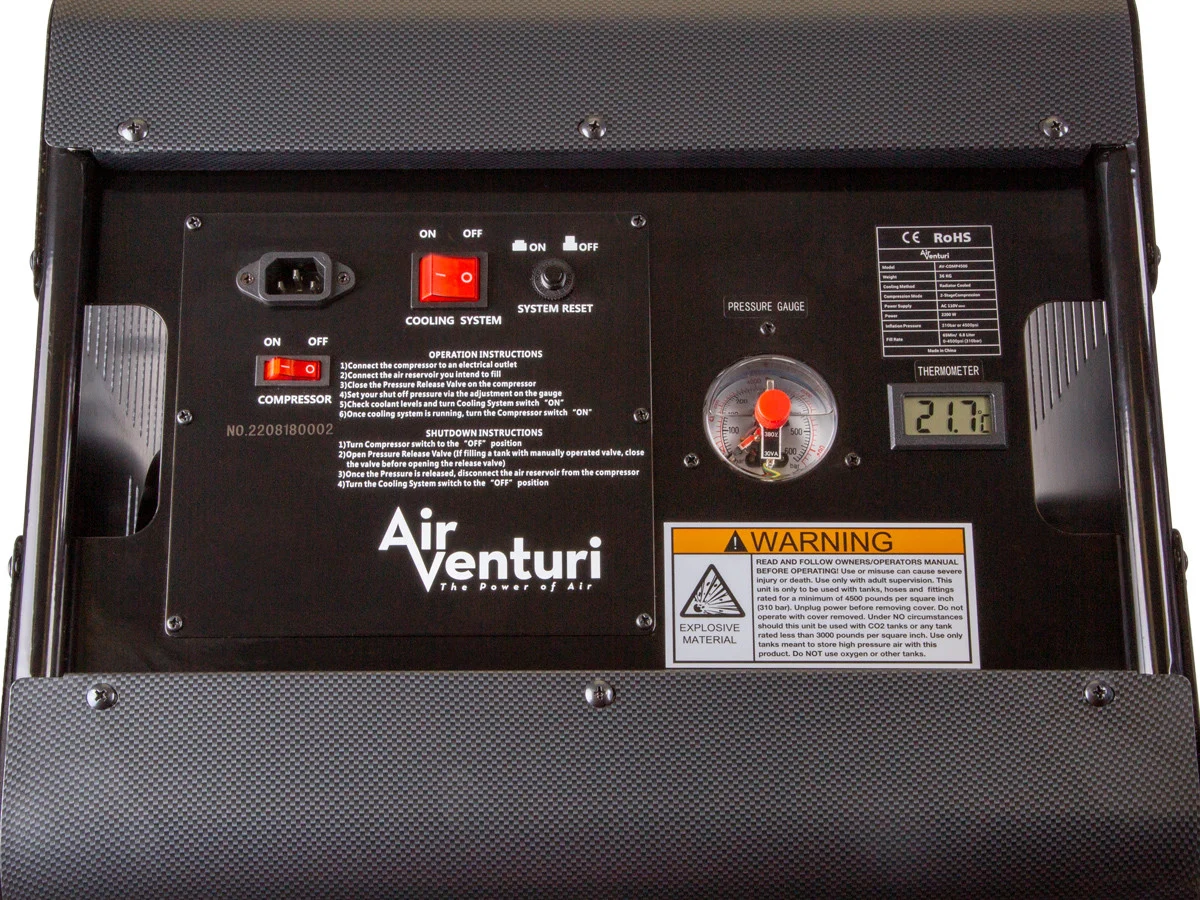
The Air Venturi Krypton features an automatic shutoff setting that can be adjusted for pressures up to 4500 PSI and allows the unit to stop filling once the correct pressure has been reached, reducing the risk of damage from overfilling a bottle or airgun. The compressor is internally water cooled for maximum efficiency and heat dissipation with less wear and tear on the motor.
This compressor is capable of operating off of a standard 110V outlet and has a digital temperature gauge and includes a fill hose with female quick-disconnect fitting, and a kit with additional O-rings and seals. To get an upgraded model of a powerful and versatile compressor for filling anything from a PCP airgun to a SCUBA tank, buy an Air Venturi Krypton 4500 PSI Compressor from Pyramyd AIR today.
Helpful resources:
Air Venturi Krypton 4500 PSI Compressor
- Max. fill pressure: 4500 PSI
- 15% faster fill times than prior models
- Adjustable automatic shutoff feature
- Improved moisture filtration
- Internally water-cooled
- Digital temperature gauge
- Uses 110V outlet
- For PCP airguns, airsoft, and paintball tanks
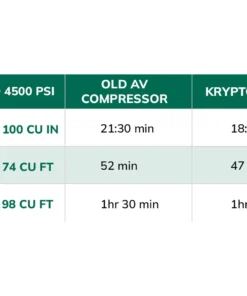
Approximate fill times:
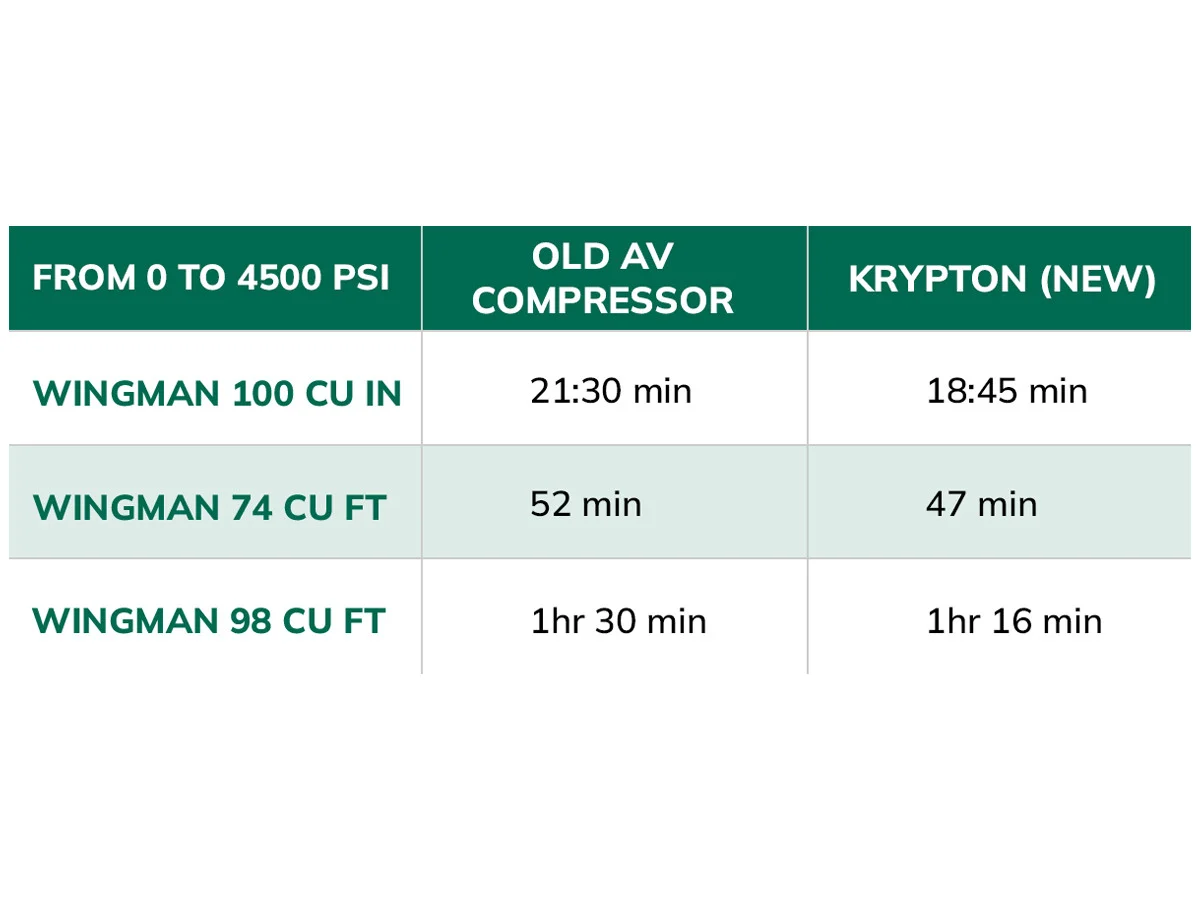
- 100 cu in tank from 0 – 4500 psi in 18:45 min
- 74 cu ft tank from 0 – 4500 psi in 47 min
- 98 cu ft tank from 0 – 4500 psi in 1 hr 16 min
-
Specifications
BrandAir Venturi
91.0 lbsOperating Pressure4500 PSI / 310 BARRecommended To FillGuns & Air TanksAuto Shut OffYesInput Voltage AC120 vMax Amperage20 ARunning Amperage15 APower Source110V Only
Air Venturi Krypton 4500 PSI Compressor – High-Pressure Filling Power for PCP Airguns and Air Tanks
Air Venturi Krypton 4500 PSI Compressor Overview
The Air Venturi Krypton 4500 PSI Compressor is a heavy-duty high-pressure filling system designed for shooters who want fast, repeatable, and convenient access to compressed air. With a maximum operating pressure of 4500 PSI / 310 BAR, adjustable automatic shutoff, internal water cooling, upgraded moisture filtration, and standard 120V AC operation, the Krypton is built for filling PCP airguns, paintball tanks, and larger compressed-air cylinders. Air Venturi states that the current version delivers approximately 15% faster fill times than the previous model.
For anyone researching air venturi, airventuri, venturi air, air venturi compressor, air venturi air compressor, ventur air compressor, air venturi pcp compressor, or an air rifle compressor, the Krypton represents Air Venturi’s larger stationary filling solution rather than a lightweight field compressor.
Why Choose the Air Venturi Krypton 4500 PSI Compressor?
The main reason to choose the Krypton is its combination of high pressure, large-tank capability, cooling efficiency, and automatic operation.
The compressor can be adjusted to stop automatically at a selected pressure up to 4500 PSI. This helps prevent unnecessary overfilling when the correct target pressure has been set. Air Venturi also uses an improved moisture filtration system to produce cleaner, drier compressed air, which is particularly important for protecting pneumatic equipment over time.
The compressor is rated at 91 lb and operates from 120V AC power with approximately 15 amps running current.
How Fast Is the Krypton Compressor?
Air Venturi provides approximate fill times that demonstrate the Krypton’s higher-capacity role.
A 100 cu in tank can be filled from empty to 4500 PSI in about 18 minutes 45 seconds. A 74 cu ft tank takes about 47 minutes, while a 98 cu ft tank takes roughly 1 hour 16 minutes under the listed test conditions.
These capabilities make it useful for owners of pcp airguns and pcp air rifles who prefer to maintain their own high-pressure air supply.
How Does It Compare With Portable Compressors?
Buyers considering the air venturi rovair 4500 portable compressor or air venturi rovair should understand that the Krypton serves a different purpose.
The RovAir weighs about 19 lb and can operate from either AC power or a 12V battery, making it much easier to transport. The Krypton, by comparison, is considerably heavier and is better suited to a workshop, garage, club, or dedicated filling station.
Therefore, portability is the main advantage of the RovAir, while higher-capacity stationary filling is where the Krypton makes more sense.
Where Can the Krypton Compressor Be Used?
The unit is best suited to a stable indoor workspace with appropriate electrical supply, ventilation, and room for cooling components.
It can support owners using an air venturi tank, air venturi air tank, or other compatible high-pressure cylinders.
Air Venturi specifically lists PCP airguns and tanks among its intended filling applications.
When Should You Choose a Large Compressor?
A larger compressor becomes especially useful when you own several pneumatic rifles, regularly refill larger bottles, or want to reduce dependence on commercial fill stations.
Someone using an Air Venturi Alpha, Air Venturi Alpha PCP Rifle, Air Venturi Alpha Air Rifle, Air Venturi Alpha Hunting Rifle, Air Venturi Alpha Tactical PCP, Air Venturi Alpha Regulated PCP, Air Venturi Alpha Multi Shot Rifle, or Air Venturi Alpha Precision Air Rifle may benefit from having a reliable filling solution at home if the rifle’s pressure requirements are compatible.
Likewise, owners researching air venturi avenger, air venturi avenger, air venturi avenge, air ventur avenge, air venturi avenger 25, or avenger price are often comparing complete PCP setups rather than only the rifle itself.
Why Moisture Control Matters
Compressed air can contain moisture, and repeated introduction of damp air into a pneumatic system is undesirable.
The Krypton’s upgraded filtration system is specifically intended to increase moisture removal and improve air quality.
This becomes especially important for people using high-pressure equipment frequently.
Internal Water Cooling and Temperature Management
The compressor uses internal water cooling to manage heat during operation.
Air Venturi also includes a digital temperature gauge, allowing the user to monitor operating temperature more easily.
Cooling is particularly important during larger fills because compressing air to very high pressure generates significant heat.
Compatible Airgun Applications
The Krypton can support a broad range of compressed-air equipment, including air rifle and air pistol platforms that use refillable high-pressure reservoirs.
Searches involving air venturi microstrike, air venturi omnistorm, dragon claw, seneca dragon claw, seneca air rifles, air bolt gun, 50 caliber dragon, and claw air gun all reflect the wider pneumatic and big-bore ecosystem in which high-pressure filling equipment may be required.
Compatibility should always be confirmed using the maximum pressure rating of the specific airgun or cylinder.
Important Safety Information
The compressor must never be set above the maximum rated pressure of the cylinder being filled.
Air Venturi specifically warns users not to exceed 4500 PSI and not to overfill compressed-air cylinders or airgun tanks.
The correct fill pressure of the receiving cylinder always takes priority over the compressor’s maximum capability.
Why the Krypton Makes Sense for Serious PCP Owners
The Air Venturi Krypton 4500 PSI Compressor combines high-pressure capability, automatic shutoff, internal water cooling, improved moisture filtration, faster fill performance, and the ability to handle both airguns and larger air-storage tanks.
For shooters maintaining multiple pcp airguns or pcp air rifles, it provides a more permanent filling solution than smaller portable compressors.
Its strongest advantage is convenience: instead of repeatedly transporting an air venturi tank for commercial filling, users can maintain their own high-pressure air supply at home while following proper operating and cylinder-safety procedures.
Filling Performance, Cooling Efficiency, Moisture Control, Setup, and Practical Everyday Operation
The Air Venturi Krypton 4500 PSI Compressor is designed to make high-pressure filling more convenient for users who regularly work with pneumatic equipment and storage cylinders. Its value comes from more than maximum pressure alone. Reliable operation depends on cooling, moisture management, correct setup, proper hose handling, controlled filling, and careful monitoring throughout the compression cycle. When these factors are managed correctly, the compressor can provide a practical and repeatable filling routine for home, workshop, or club use.
Preparing the Compressor Before Use
A proper setup should always begin before the compressor is switched on.
The unit should be placed on a stable, level surface with enough surrounding space for ventilation and hose access. The electrical supply should match the compressor’s requirements, and extension cables should be avoided unless they are suitable for the electrical load.
The cooling system should also be checked before operation.
All hoses, fittings, and connectors should be inspected visually for damage, contamination, or looseness.
A few minutes of preparation can help reduce unnecessary stress on the compressor and receiving cylinder.
Understanding the Filling Process
High-pressure filling should be treated as a gradual process rather than a simple on-and-off task.
As the compressor runs, air pressure increases inside the receiving reservoir.
At the same time, compression generates heat.
The user should monitor pressure and temperature throughout the fill.
The target pressure should be determined from the receiving cylinder or equipment manufacturer’s specification.
The compressor’s maximum capability should never be treated as the correct fill pressure for every connected item.
Automatic Shutoff Convenience
Automatic shutoff can make filling more convenient.
Once the desired pressure is selected correctly, the compressor can stop when that pressure is reached.
This reduces the need for constant manual interruption.
However, automatic operation does not mean the compressor should be left unattended.
Pressure, temperature, sound, and hose condition should still be monitored during the fill cycle.
The user should remain close enough to stop operation if anything unusual occurs.
Cooling Performance
Heat management is extremely important during high-pressure compression.
Air becomes hot as it is compressed, and internal components also absorb some of that heat.
The cooling system helps keep operating temperatures within a manageable range.
Adequate cooling can reduce thermal stress on seals, valves, and other components.
The user should make sure that the cooling system is functioning correctly before beginning a long fill.
If temperature rises abnormally, operation should be stopped and the cause investigated.
Why Temperature Monitoring Matters
Temperature provides useful information about how hard the compressor is working.
A short fill of a small reservoir may generate less sustained heat than a long fill of a large cylinder.
Longer compression cycles therefore require greater attention.
Excessive temperature can shorten component life and increase maintenance requirements.
The user should avoid repeatedly pushing the compressor through long cycles without allowing reasonable cooling periods.
A controlled operating rhythm can help improve long-term reliability.
Moisture Management
Compressed air naturally contains moisture unless steps are taken to remove it.
As air is compressed, moisture can become more concentrated.
For this reason, moisture filtration is an important part of a high-pressure filling system.
Cleaner and drier air helps protect the receiving equipment from unnecessary internal contamination.
The filtration system should be inspected and maintained according to the manufacturer’s recommendations.
Ignoring moisture control can gradually reduce the quality of the air being delivered.
Filter Maintenance
Filters do not remain effective forever.
Over time, moisture, oil residue, or debris may accumulate.
A saturated or neglected filter may become less effective and may also restrict airflow.
The user should inspect filter components periodically and replace service items when necessary.
The condition of the filter can be especially important in humid environments.
A regular maintenance schedule is easier to manage than waiting for obvious performance problems.
Hose and Fitting Inspection
The high-pressure hose is a critical part of the filling system.
It should be inspected for cracking, abrasion, cuts, unusual swelling, or damaged fittings.
Connections should be secure before pressure is introduced.
The hose should never be bent sharply or trapped under heavy equipment.
During filling, it should remain positioned so it cannot whip around if a connection fails.
Careful hose handling contributes directly to safer operation.
Connecting a Cylinder Correctly
The receiving cylinder should be compatible with the compressor and filling hardware.
The fitting should be attached securely before compression begins.
Threads and connectors should remain clean.
If resistance is encountered during connection, the fitting should not be forced.
The user should confirm that the correct adapter is being used.
A clean and properly seated connection helps reduce the risk of leakage and damage.
Controlled Pressure Increase
Rapid pressure changes can create additional heat.
A controlled fill allows the user to monitor how both the compressor and receiving cylinder respond.
The pressure gauge should be observed throughout the process.
If the pressure rises unusually quickly or fails to increase as expected, operation should be stopped.
Unexpected behavior may indicate a leak, incorrect valve position, blocked connection, or another issue that needs attention.
Monitoring for Leaks
Leaks may sometimes be detected through sound or unexpected pressure behavior.
A faint hiss can indicate escaping air.
Pressure that fails to rise despite compressor operation may also suggest a poor connection.
The user should not attempt to tighten pressurized fittings.
The system should first be depressurized safely.
Only then should the connection be inspected.
This approach avoids unnecessary risk.
Filling Small Reservoirs
Smaller reservoirs can often be filled relatively quickly.
Because the total air volume is lower, the compressor may reach the target pressure in a shorter time.
Even so, the same safety routine should be followed.
Cooling, pressure, fittings, and moisture control remain important.
The user should resist the temptation to rush simply because the reservoir is small.
Proper filling habits should remain consistent regardless of capacity.
Filling Larger Cylinders
Larger cylinders demand more from the compressor.
Longer run times generate more heat and place greater demand on cooling.
The user should monitor temperature more closely during these fills.
Breaks may be appropriate if the operating temperature becomes too high.
A larger tank should never be filled simply by setting the compressor to maximum pressure without confirming the tank’s rating.
The cylinder’s own pressure limit remains the controlling specification.
Using the Compressor at Home
For home use, the compressor should be placed in a stable area with good ventilation.
Noise, vibration, and electrical load should be considered.
The unit should not be operated where children or unauthorized users can interfere with it.
The surrounding area should remain dry and free from clutter.
A dedicated workspace can make regular filling more convenient and organized.
Workshop and Club Use
In a workshop or club environment, the compressor may be used more frequently.
A written maintenance schedule can be helpful in this situation.
Filters, cooling components, hoses, fittings, and service intervals should be tracked.
Frequent users should also agree on consistent operating procedures.
Shared equipment tends to last longer when everyone follows the same filling and shutdown process.
Proper Shutdown Procedure
After the target pressure is reached, the system should be shut down according to the recommended procedure.
Pressure remaining inside the filling line should be released safely before the hose is disconnected.
A pressurized connector should never be removed forcibly.
Once pressure has been relieved, the fitting can be detached carefully.
The hose can then be stored where it will not be damaged.
Post-Use Inspection
A short inspection after use can identify developing problems early.
The user should check for unusual heat, leakage, loose fittings, damaged hoses, or moisture accumulation.
The compressor should also be allowed to cool before being stored or covered.
If anything sounded or felt unusual during operation, it should be investigated before the next use.
This routine can help prevent small issues from becoming larger failures.
Long-Term Operational Efficiency
The strongest performance comes from consistent operating habits.
Correct setup supports stable operation.
Proper cooling protects internal components.
Moisture filtration improves air quality.
Careful hose handling protects connections.
Controlled pressure monitoring reduces filling errors.
Regular inspection helps identify wear early.
When these practices are followed consistently, the Air Venturi Krypton 4500 PSI Compressor can provide a dependable and efficient high-pressure filling solution for repeated use while supporting cleaner air delivery, safer operation, and better long-term equipment care.
Maintenance, Reliability, Cooling-System Care, Filter Service, Storage, and Long-Term Ownership
The Air Venturi Krypton 4500 PSI Compressor is designed for repeated high-pressure filling, but dependable long-term performance depends on consistent maintenance and careful ownership. A compressor working at very high pressure places significant demands on seals, hoses, fittings, cooling components, filters, electrical parts, and internal compression stages. For that reason, routine inspection is not just about keeping the unit clean. It helps preserve filling efficiency, supports safer operation, and makes performance changes easier to identify before they become larger problems.
Building a Regular Maintenance Routine
A simple maintenance routine should be followed after normal use.
The compressor should be inspected for loose fittings, unusual sounds, damaged hoses, moisture accumulation, and changes in operating temperature.
The user does not need to disassemble the unit after every session.
Instead, attention should focus on components that can be checked externally and safely.
Performing the same inspection regularly creates a useful baseline.
Once the user knows how the compressor normally sounds, feels, and behaves, unusual changes become much easier to notice.
Keeping the Exterior Clean
Dust and debris should not be allowed to accumulate around ventilation areas or cooling components.
A clean exterior helps airflow and makes inspection easier.
The compressor should be wiped with a soft cloth after use if dust, oil residue, or moisture is present.
Water should not be sprayed directly onto electrical components.
Cleaning should always be performed when the compressor is disconnected from power and no pressure remains in the filling line.
Good exterior care also helps prevent contamination from entering fittings during future use.
Cooling-System Maintenance
Cooling is one of the most important systems to maintain.
Compression generates substantial heat, especially during long fills.
The cooling system should therefore be checked before operation and monitored during use.
Water level, circulation, tubing condition, and visible leaks should all be inspected where applicable.
If coolant flow appears restricted, operation should stop until the problem is identified.
Running the compressor without effective cooling can place excessive stress on internal components.
Monitoring Operating Temperature
Temperature should be treated as an important diagnostic indicator.
If the compressor suddenly begins running hotter than usual during a similar fill, something may have changed.
The cause could involve reduced cooling efficiency, blocked airflow, increased operating load, or internal wear.
The user should not ignore repeated temperature increases.
A controlled shutdown and inspection is preferable to continuing operation until a protective limit is reached.
Temperature patterns can reveal developing issues before obvious failure occurs.
Managing Moisture
High-pressure compression concentrates moisture from incoming air.
This is why moisture control plays such an important role in long-term operation.
The filtration system should be checked regularly, especially in humid environments.
Moisture that accumulates in filters or separators should be managed according to the recommended service procedure.
Neglected moisture can reduce air quality and may contribute to corrosion or contamination inside connected equipment.
Dryer compressed air benefits both the compressor and the receiving system.
Filter Service
Filters gradually become saturated or restricted.
Their condition should be monitored rather than assumed to remain unchanged.
A filter that has absorbed significant moisture may become less effective.
Likewise, excessive contamination can restrict airflow and increase operating stress.
Replacement intervals will depend on usage frequency and environmental conditions.
Heavy users may need to service filters more often than occasional users.
Keeping spare service items available can reduce unnecessary downtime.
Inspecting High-Pressure Hoses
The high-pressure hose deserves careful inspection.
It should be checked for cracking, cuts, abrasion, flattening, damaged outer covering, or unusual swelling.
Connections at both ends should remain secure.
A damaged hose should not be used simply because it still holds pressure.
High-pressure systems store significant energy.
Any component showing visible deterioration should be replaced with a properly rated part before continued use.
Protecting Fittings and Connectors
Fittings should remain clean and protected from dirt.
Dust introduced into a connection may damage sealing surfaces or enter the air path.
Protective caps can help keep unused fittings clean.
The user should avoid dragging hoses or connectors across dirty floors.
If a connection becomes difficult to attach, it should not be forced.
The threads, seals, and adapter compatibility should be checked first.
Clean connections improve reliability and reduce the risk of leakage.
Checking for Air Leaks
Air leaks may develop gradually.
Common signs include unexpected hissing, slower filling, pressure loss, or reduced efficiency.
If a leak is suspected, the system should first be shut down and depressurized safely.
Pressurized fittings should never be tightened casually.
Once pressure is removed, visible connections can be inspected.
If the source cannot be identified externally, professional servicing may be appropriate.
High-pressure internal repairs should not be attempted without proper knowledge and equipment.
Electrical System Care
Electrical components should remain dry and protected.
The power cord should be inspected for cuts, damaged insulation, or loose plugs.
The compressor should be connected to an appropriate power source.
Undersized extension cords can create voltage drop and heat.
If an extension cord must be used, it should be rated for the required electrical load and kept as short as practical.
Any unusual electrical smell, sparking, or repeated breaker tripping should be treated seriously.
Monitoring Sound and Vibration
Changes in sound can provide early warning of mechanical problems.
A compressor that suddenly becomes louder, develops knocking sounds, or vibrates differently should be inspected.
Normal operation creates noise and vibration, but the user should become familiar with the standard pattern.
Unexpected changes should not be dismissed.
Continuing operation with an abnormal mechanical sound may increase damage.
Stopping early can sometimes prevent a smaller issue from becoming a major repair.
Checking Fasteners and Mounting Points
Repeated vibration can gradually loosen hardware.
Visible screws, brackets, and mounting points should be checked periodically.
Loose components may create additional vibration or noise.
Fasteners should be tightened correctly, not excessively.
Overtightening can damage threads or components.
A stable frame and secure mounting points help preserve smooth operation.
Safe Pressure-Gauge Monitoring
The pressure gauge should remain readable and undamaged.
If the gauge appears inaccurate, sticks, or behaves unpredictably, it should be checked before further use.
Reliable pressure information is essential during filling.
The user should never rely solely on guesswork or filling time.
Pressure should always be confirmed directly.
A faulty gauge can create unnecessary risk because the operator may not know the actual pressure inside the connected system.
Maintaining the Automatic Shutoff System
The automatic shutoff feature should be treated as a convenience rather than a substitute for supervision.
Its operation should be observed regularly.
If the compressor fails to stop at the selected pressure, use should be discontinued until the issue is resolved.
The user should continue monitoring the gauge even when automatic shutoff is enabled.
Redundant awareness is valuable when working with high-pressure systems.
Draining and Depressurizing
Residual pressure should be released according to the proper shutdown procedure.
The filling line should not remain pressurized unnecessarily.
Before disconnecting any hose or cylinder, pressure in the line should be safely relieved.
The compressor should also be allowed to cool before storage.
These steps reduce strain on fittings and make the unit safer to handle after use.
Storage Between Filling Sessions
The compressor should be stored in a dry, clean, and protected area.
It should not be left where rain, direct sunlight, excessive humidity, or heavy dust can affect it.
The hose should be stored without sharp bends.
Connectors should be capped if appropriate.
Heavy objects should not be placed on the compressor or cooling components.
A stable storage environment helps preserve seals, electrical parts, filters, and external hardware.
Long-Term Storage
If the compressor will not be used for an extended period, additional preparation is worthwhile.
The system should be cleaned, dried, depressurized, and inspected before storage.
Cooling components should be handled according to the manufacturer’s guidance.
Filters should be checked so saturated material is not left installed unnecessarily.
The power cord and hose should be stored carefully.
Before the compressor returns to service, all major systems should be inspected again.
Keeping Maintenance Records
Basic maintenance records can be extremely useful.
The owner can note operating hours, filter changes, hose replacement, unusual temperature events, and service work.
This information makes maintenance easier to plan.
It can also help identify patterns.
For example, if fill times gradually increase, earlier records can show whether the change developed slowly or appeared suddenly.
Maintenance history is especially valuable for frequently used equipment.
Recognizing Reduced Performance
Longer fill times can indicate that something has changed.
The cause might involve air leakage, filter restriction, cooling problems, electrical supply, or internal wear.
A slower fill does not automatically mean the compressor is failing, but repeated changes deserve investigation.
Performance should be compared under similar conditions whenever possible.
Cylinder size, starting pressure, target pressure, and ambient temperature all affect fill time.
Avoiding Unnecessary Continuous Operation
The compressor should not be pushed through repeated long fills without considering heat.
Even with effective cooling, high-pressure compression creates significant thermal load.
Allowing reasonable cooling periods can reduce stress on internal components.
The exact operating cycle should follow manufacturer guidance.
More continuous operation is not always better.
A controlled workload can support longer component life and more consistent performance.
Long-Term Ownership Reliability
The Air Venturi Krypton 4500 PSI Compressor delivers its best long-term performance when maintenance is treated as part of normal ownership.
Clean fittings protect the air path.
Healthy filters improve moisture control.
Effective cooling manages temperature.
Sound hoses protect the pressure system.
Reliable gauges support accurate filling.
Dry storage protects electrical and mechanical components.
Regular inspections help identify wear before it becomes serious.
With disciplined maintenance, careful operation, proper shutdown, and sensible storage, the compressor can remain a dependable high-pressure filling solution for repeated use while continuing to deliver efficient performance and cleaner compressed air over the long term.
Real-World Filling Workflow, Tank Management, Workshop Setup, Operating Discipline, and Performance Optimization
The Air Venturi Krypton 4500 PSI Compressor is most useful when it is integrated into a consistent filling routine. High-pressure compression is not only about reaching a target number on a gauge. Efficient operation also depends on how the workspace is prepared, how cylinders are connected, how temperature is controlled, how long fills are managed, and how the operator responds to pressure, sound, and heat. A careful routine improves both convenience and equipment longevity.
Setting Up a Dedicated Filling Area
A dedicated filling area can make regular operation much easier.
The compressor should sit on a stable, level surface with enough surrounding space for cooling and ventilation.
The power cable, cooling components, hose, and receiving cylinder should all be arranged so they are easy to inspect.
Clutter should be kept away from the unit.
A clean setup reduces the chance of hoses being kinked, fittings being contaminated, or tools being placed where they can interfere with operation.
Preparing the Receiving Cylinder
Before any fill begins, the receiving cylinder should be checked.
The user should confirm the rated working pressure and make sure the cylinder is in suitable condition.
Damage, corrosion, expired inspection requirements, or questionable fittings should be addressed before filling.
The target pressure should come from the receiving equipment specification.
The compressor’s maximum capability is not automatically the correct pressure for every bottle or reservoir.
Connecting the Fill Hose
The fill hose should be connected carefully and without force.
Threads and fittings should be clean.
The connector should seat properly before pressure is introduced.
If the fitting does not engage smoothly, the operator should stop and inspect the connection.
Trying to force incompatible or contaminated fittings can damage seals and threads.
Once connected, the hose should be positioned where it cannot be stepped on, pinched, or pulled sharply.
Starting the Cooling System
Cooling should be established before the compressor is placed under heavy load.
The operator should confirm that the cooling circuit is functioning normally.
Visible flow, proper water level, and secure tubing should all be checked.
Starting a long fill without effective cooling can lead to unnecessary heat buildup.
If cooling behavior changes during operation, the compressor should be stopped so the cause can be investigated.
Beginning the Fill
The fill should begin in a controlled manner.
The operator should watch the pressure gauge from the start.
This provides an early indication that the system is connected correctly and pressure is rising as expected.
A normal fill should show steady progress.
If pressure rises unusually fast, fails to rise, or behaves erratically, the process should be stopped.
Unexpected behavior should always be investigated before continuing.
Managing Long Fill Cycles
Large cylinders require more time and create more heat than small reservoirs.
For this reason, longer fills should receive closer temperature monitoring.
The compressor should not simply be allowed to run indefinitely without attention.
The operator should observe temperature, sound, vibration, and pressure throughout the cycle.
If the unit approaches an undesirable temperature range or begins behaving differently, a controlled pause may be appropriate.
Using Cooling Breaks
Cooling breaks can reduce thermal stress during demanding sessions.
A pause allows internal components and the receiving cylinder to shed some heat.
This can be especially useful when filling from a very low starting pressure.
The operator should avoid restarting immediately if the unit remains excessively hot.
Allowing reasonable cooling time can help maintain more consistent performance over repeated filling sessions.
Monitoring Pressure Accurately
Pressure should be confirmed continuously rather than estimated from time.
Different starting pressures and cylinder sizes produce different fill times.
The gauge provides the most useful direct information.
The operator should also remain aware that pressure can change slightly as the compressed air cools after filling.
For this reason, the final stabilized pressure may differ somewhat from the reading observed immediately at shutdown.
Avoiding Overfilling
Overfilling should always be avoided.
The receiving cylinder has its own maximum pressure rating, and that limit must be respected.
Setting the automatic shutoff correctly is helpful, but manual supervision should continue.
The operator should not rely entirely on one control system.
Watching the pressure gauge provides an additional layer of protection.
A high-capacity compressor should be treated with greater care, not less.
Managing Heat in the Receiving Tank
The receiving tank can become warm during filling.
This is normal because compressed air generates heat.
However, excessive heat should not be ignored.
Very rapid filling can raise temperature significantly.
After filling, allowing the cylinder to cool before evaluating final pressure can provide a more realistic reading.
The operator should avoid handling very hot components unnecessarily.
Bleeding the Line Correctly
Once the target pressure has been reached, the fill line should be depressurized properly.
The hose should never be disconnected while it remains under pressure.
Residual air should be released through the appropriate bleed system.
Only after the line pressure has been removed should the connector be detached.
This simple procedure protects both the operator and the fittings.
Filling Smaller Air Reservoirs
Smaller reservoirs usually require shorter run times.
This can make them convenient for routine use.
However, the same setup and safety checks still apply.
A smaller volume does not eliminate the need for clean fittings, proper cooling, and careful pressure monitoring.
Because pressure can rise more quickly in a small reservoir, the operator should pay close attention during the final part of the fill.
Filling Larger Storage Cylinders
Large storage cylinders place greater demand on the compressor.
They require more compressed air and therefore more operating time.
The cooling system becomes especially important during these fills.
The operator should also make sure the compressor is supplied by a suitable electrical circuit.
Long fills can place greater load on the power system.
Stable electrical supply supports more consistent operation.
Managing Electrical Load
The compressor should be connected to a power source that can handle its operating demand.
Loose outlets, damaged cords, or undersized extensions can create heat and voltage drop.
The power connection should remain secure.
If the breaker trips repeatedly, the electrical supply should be investigated rather than repeatedly reset.
Electrical problems can affect both performance and safety.
Noise and Vibration Awareness
Every compressor has a normal operating sound.
The user should become familiar with it.
Changes in vibration, rhythm, or mechanical noise can signal a problem.
A new knocking sound or strong vibration should not be ignored.
The unit should be stopped and inspected.
Early recognition of abnormal behavior can help prevent more extensive damage.
Workshop Ventilation
A workshop should provide sufficient ventilation around the compressor.
The unit should not be enclosed tightly while operating.
Heat must be able to dissipate.
Ventilation also helps keep electrical components cooler.
The compressor should not be positioned directly against walls, boxes, or other equipment if this blocks airflow.
A clean, open operating area is preferable.
Humid Climate Operation
Humidity increases the importance of moisture control.
In warm, humid environments, the filtration system may collect moisture more quickly.
Filters should be checked more frequently under these conditions.
The operator should not assume that service intervals will be identical in every climate.
Environmental conditions can significantly influence maintenance needs.
Cold-Weather Operation
Cold environments create different challenges.
Condensation can form when equipment is moved between warm and cold areas.
The compressor should be allowed to stabilize before heavy use if temperatures have changed significantly.
Cold hoses and seals may also behave differently.
A careful inspection before operation is worthwhile.
Repeated Daily Use
Frequent users should pay particular attention to maintenance intervals.
Several fills in one day create more cumulative heat, vibration, and moisture than occasional use.
Filters, cooling components, and hoses may therefore require more frequent checks.
A written log can help track use.
Recording operating hours, service dates, and unusual events can simplify maintenance planning.
Maintaining Consistent Fill Times
Fill time can be a useful performance indicator.
If a familiar cylinder suddenly takes much longer to reach the same pressure from a similar starting point, the compressor may deserve inspection.
Possible causes include leakage, restricted filtration, cooling issues, electrical supply problems, or internal wear.
Comparing similar fills over time can reveal gradual changes that might otherwise be overlooked.
Preventing Contamination
The fill area should remain clean.
Connectors should not be placed on dirty floors.
Dust and oil should be kept away from the air path.
High-pressure systems benefit from clean handling.
Contamination can damage seals or reduce air quality.
Simple habits such as capping unused fittings and wiping connectors before use can make a meaningful difference.
Post-Fill Cooling
After a demanding fill, the compressor should be allowed to cool.
It should not be packed away immediately while hot.
Cooling water, filters, and hoses can also be inspected at this stage.
Any unusual moisture accumulation, odor, or leak should be investigated.
A short post-use check helps prepare the system for the next session.
Building an Efficient Routine
Efficiency comes from repetition.
The operator should follow the same sequence each time: inspect, connect, confirm cooling, start filling, monitor temperature and pressure, stop at the correct level, bleed the line, disconnect, and inspect again.
A consistent process reduces mistakes.
It also makes abnormal behavior easier to identify.
Practical Long-Term Performance
The Air Venturi Krypton 4500 PSI Compressor performs best when power, cooling, pressure control, filtration, and operator discipline work together.
Proper setup supports reliable filling.
Temperature monitoring protects internal components.
Moisture control improves air quality.
Correct bleeding protects fittings.
Electrical awareness supports stable operation.
Regular inspection reduces unexpected problems.
When these habits become part of the normal filling routine, the compressor becomes more efficient, more predictable, and easier to maintain across both occasional and frequent high-pressure use.
Be the first to review “Air Venturi Krypton 4500 PSI Compressor”
Related products
compressor
compressor
compressor
compressor
compressor

Reviews
There are no reviews yet.