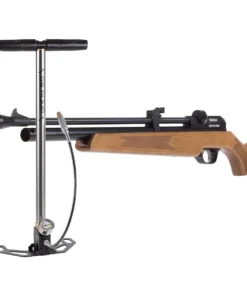
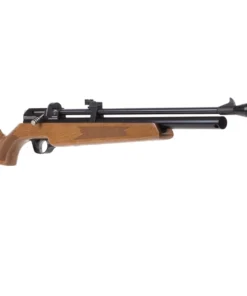
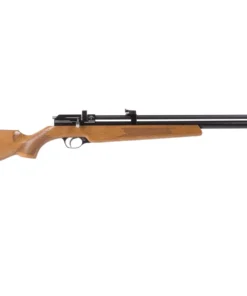
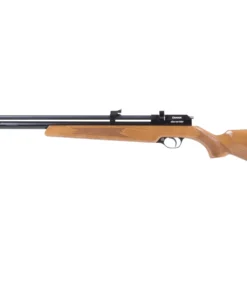
Diana 54 Airking Pro Air Rifle, Beech
$625.00
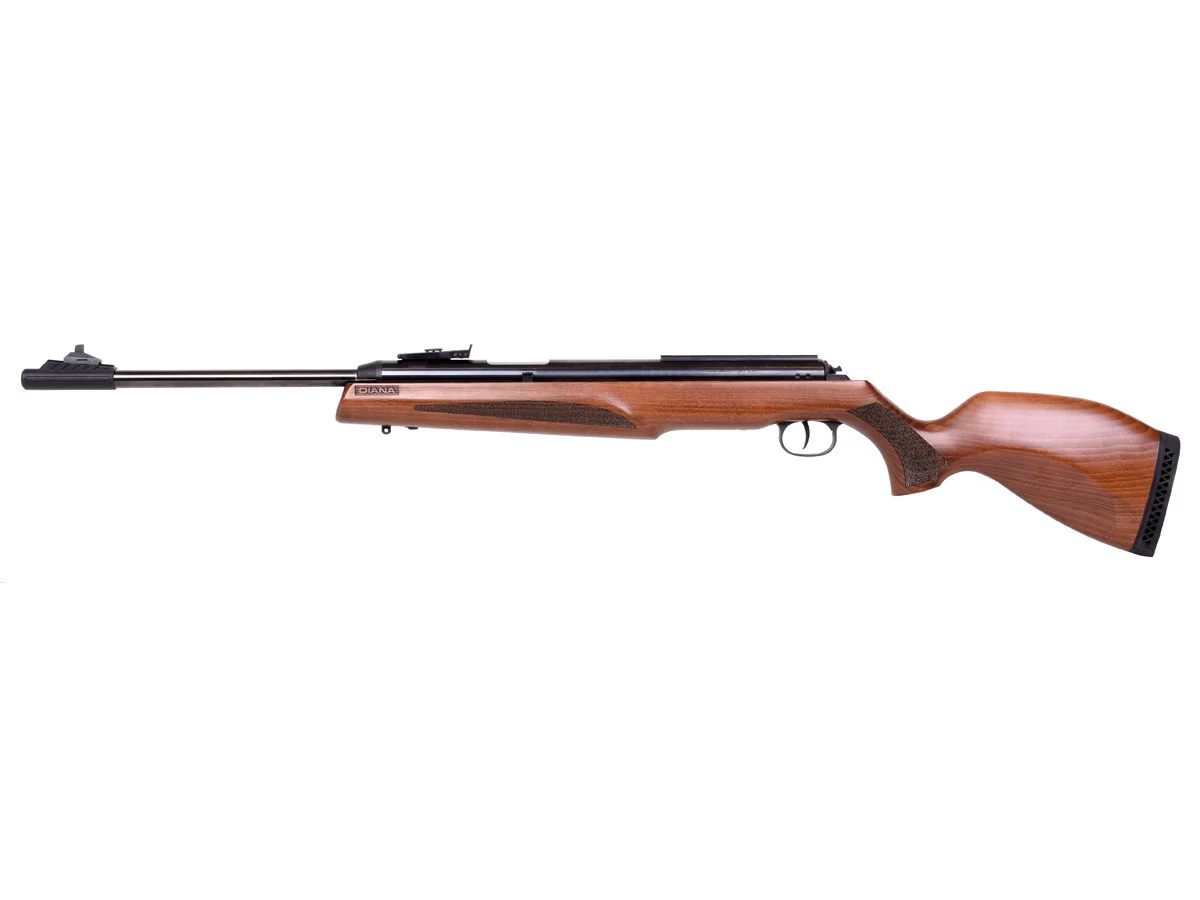
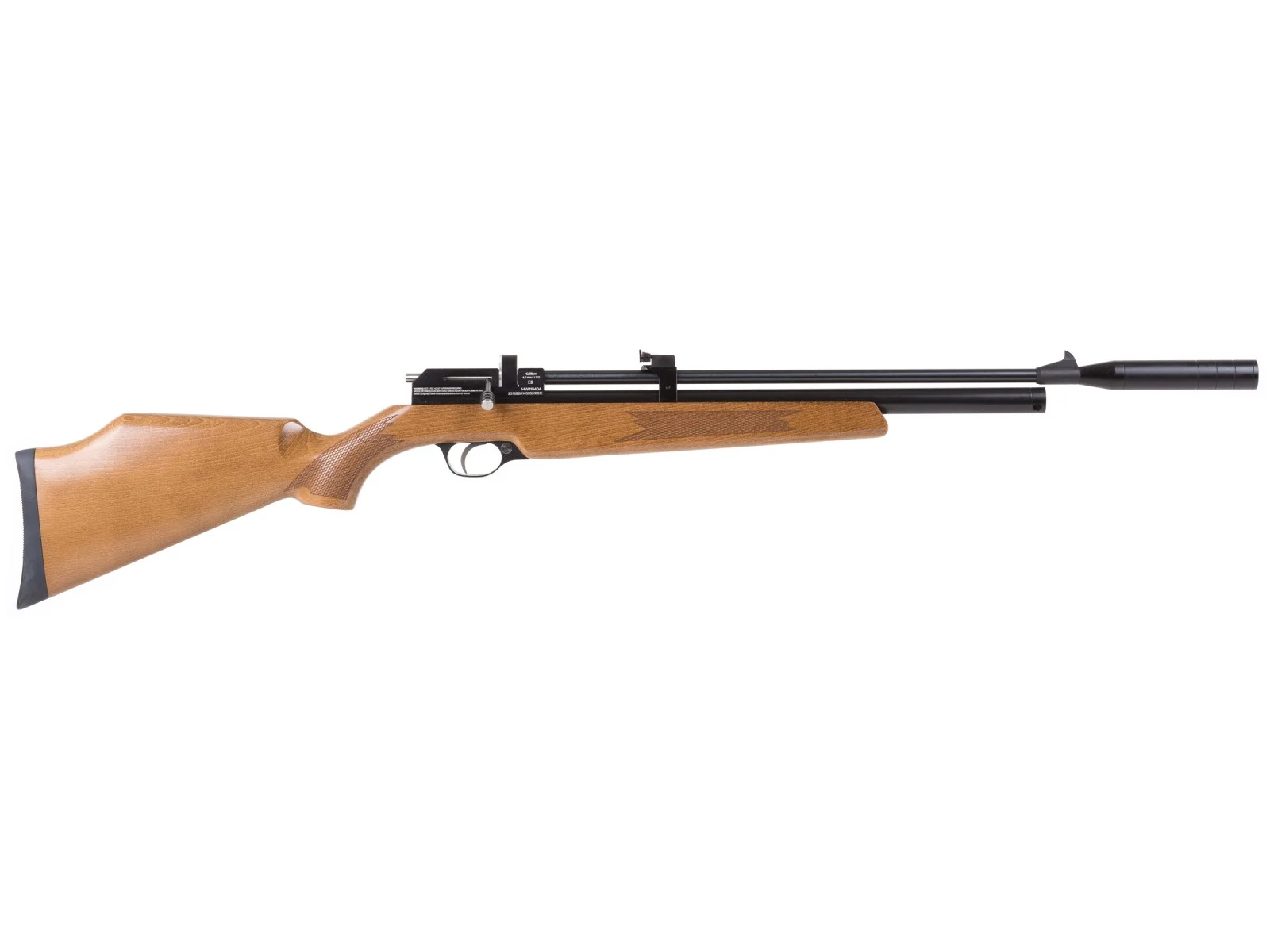
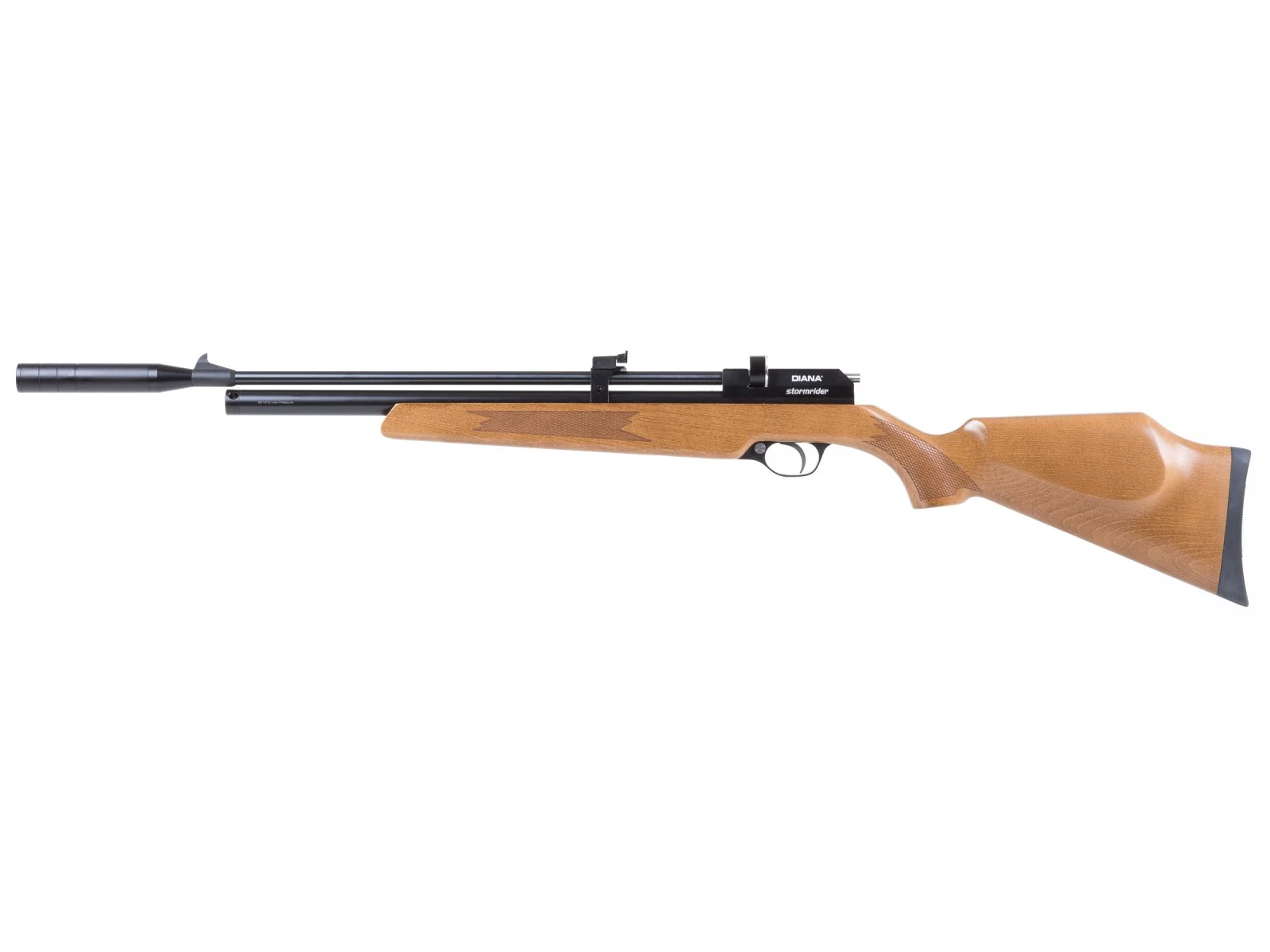
The Diana 54 Airking Pro Air Rifle with beech stock continues the tradition of fine craftsmanship fans of this German legacy brand expect. Capable of velocities up to 1100 FPS in .177 and 900 FPS in .22, this air rifle has the control and accuracy needed for a variety of tasks. The Diana 54 Airking Pro excels at hunting small game, such as squirrels and rabbits, as well as plinking.
The feature shooters have come to rely on is the recoilless action that improves hold sensitivity and comfort by virtually eliminating vibration, which leads to stunning accuracy. Instead of the shooter absorbing the recoil of the rifle, the action rides on a sled system within the stock, so the stock absorbs the vibration and movement without transferring the recoil to the shooter.
For added accuracy, users can add a scope via the 11mm dovetail optics rail on top of the barrel, or use the included front sight blade and fully adjustable rear sight. Further precision is unlocked with the two-stage adjustable T06 trigger, and the smooth sidelever action adds to the consistent and easy shooting experience.
Additional stability can be gained through the new forearm stud that allows for the attachment of a bipod. In addition to the rubber buttpad, the stock also features checkering on the forearm and grip, allowing for a sturdy and repeatable hold and a comfortable fit.
Diana Air Rifle 54 Airking Pro Air Rifle, Beech
- Single-shot
- Sidelever action
- Spring-piston
- Recoilless action
- Beech stock
- Forearm stud to attach bipod
- Max. velocity: 1100 FPS (.177), 900 FPS (.22)
- Two-stage adjustable T06 trigger
- 11mm dovetail optics rail
- Adjustable barrel weight comes installed
- Elevation adjustable front sight included
- Windage and elevation adjustable rear sight
- Rubber buttpad
- Checkered grip and forearm
- Barrel length: 17.3″
- Overall length: 44″
- Weight: 9.9 lbs.
Specifications
Diana 54 Airking Pro Air Rifle, Beech – German Precision, Patented Recoil Compensation, Power, Performance, Features & Complete Product Guide
Diana 54 Airking Pro Air Rifle, Beech – Complete Product Description, Engineering, Technical Specifications, Accuracy, and SEO Keywords
Diana 54 Airking Pro Air Rifle, Beech – Premium German Engineering and Precision Performance
The Diana 54 Airking Pro Air Rifle, Beech combines traditional German manufacturing, an advanced spring-piston operating mechanism, a patented recoil-compensating action, and an elegant hardwood stock. Developed for enthusiasts who appreciate precision engineering and mechanical refinement, this premium sporting rifle offers a fixed rifled barrel, side-lever cocking mechanism, adjustable T06 trigger, and a distinctive recoil-management system.
Unlike conventional spring-piston rifles, which transfer substantial mechanical movement directly to the stock, the Diana 54 Airking Pro Air Rifle, Beech uses a sliding-action arrangement to reduce the recoil impulse experienced by the shooter. Consequently, its operating characteristics differ noticeably from standard break-barrel and fixed-action alternatives.
Furthermore, the rifle incorporates a precision-rifled steel barrel measuring approximately 17.3 inches. Because the barrel remains fixed during the cocking cycle, it does not rely on a conventional break-barrel pivot for repeated barrel alignment.
The patented recoil-compensating mechanism is particularly important. During the firing cycle, the internal spring-piston assembly generates mechanical forces. The sliding arrangement permits controlled movement of the action relative to the stock, reducing the direct transfer of those forces to the shooter.
Nevertheless, the term recoilless should be understood as the manufacturer’s description of its recoil-reduction technology, not a claim that all internal movement disappears.
The Diana 54 Airking Pro Air Rifle, Beech also features a premium beechwood stock with checkered gripping surfaces, a rubber buttpad, and a distinctive sporting profile. These details provide a traditional appearance while supporting comfortable interaction with the equipment.
Additionally, the rifle includes adjustable open sights, an 11mm optics mounting rail, a bipod attachment stud, and an adjustable barrel weight.
The manufacturer identifies the rifle as part of its German-made Performance Line, emphasizing traditional mechanical construction and precision-oriented features.
For buyers seeking a premium spring-piston platform without the requirement for compressed-air charging equipment, the Diana 54 Airking Pro Air Rifle, Beech presents an interesting combination of mechanical sophistication, substantial weight, classic design, and manufacturer-supported engineering.
Diana 54 Airking Pro Air Rifle, Beech – Technical Specifications and Product Features
The following specifications reflect the manufacturer’s published product information and catalog documentation. Regional configurations may differ.
Manufacturer and construction
-
Brand: DIANA
-
Model: 54 Airking Pro
-
Stock configuration: Beechwood
-
Manufacturing origin: Germany
-
Operating system: Spring-piston
-
Action: Fixed-barrel side-lever
-
Loading system: Single-shot
-
Barrel: Rifled steel
-
Barrel length: 440mm / 17.3 inches
-
Overall length: 1,120mm / approximately 44 inches
-
Manufacturer-listed weight: 4,700g / approximately 10.4 pounds
-
Recoil management: Patented sliding-action compensation system
-
Trigger: Adjustable T06 precision trigger
-
Safety: Automatic
-
Front sight: Adjustable sighting assembly
-
Rear sight: Adjustable for windage and elevation
-
Optics mounting: 11mm dovetail rail
-
Barrel accessory: Adjustable barrel weight
-
Bipod connection: Attachment stud included
-
Stock: Checkered beechwood
-
Buttpad: Rubber
-
Power source: Mechanical spring-piston system
Caliber-dependent manufacturer specifications
| Feature | .177 caliber | .22 caliber |
|---|---|---|
| Nominal diameter | 4.5mm | 5.5mm |
| Maximum published velocity | 295 m/s / 975 FPS | 225 m/s / 740 FPS |
| Maximum published energy | 24 joules / 17.8 FPE | 26 joules / 19.2 FPE |
| Capacity | Single-shot | Single-shot |
| Operating system | Spring-piston | Spring-piston |
| Barrel length | 17.3 inches | 17.3 inches |
The manufacturer’s 2023 catalog documents both calibers, while the 2025–2026 catalog emphasizes the .22 configuration. Certain US retailers advertise higher maximum velocities under their own test conditions. Therefore, the exact caliber, market configuration, and measurement method should be verified before publishing performance guarantees.
5403041+3
Why the Diana 54 Airking Pro Air Rifle, Beech Stands Out
The Diana 54 Airking Pro Air Rifle, Beech is distinguished primarily by its recoil-compensating mechanical system.
Traditional spring-piston designs contain a powerful internal spring and piston that move during the firing cycle. Those movements generate recoil and vibration that can influence how the rifle feels.
By contrast, the patented sliding mechanism allows the action to move relative to the stock, reducing the recoil impulse transferred directly to the user.
Consequently, the rifle offers a different mechanical experience from conventional fixed-action spring-powered products.
Another important distinction is its fixed-barrel arrangement. Instead of using a barrel that pivots for cocking, the rifle incorporates a separate side lever.
Furthermore, the adjustable T06 trigger provides a sophisticated mechanical interface.
The beechwood stock creates another point of differentiation. Natural wood grain, checkered surfaces, and a traditional sporting profile provide an appearance that contrasts with modern polymer-dominated designs.
Additionally, the included adjustable barrel weight and bipod stud demonstrate the manufacturer’s attention to balance and accessory compatibility.
However, buyers should consider the substantial overall weight. This model is relatively heavy compared with many recreational alternatives.
Ultimately, the Diana 54 Airking Pro Air Rifle, Beech appeals to enthusiasts who value technical refinement, traditional materials, and the distinctive operating characteristics of recoil-compensated spring-piston technology.
Patented Recoil Compensation – The Defining Engineering Feature
The recoil-compensation system forms the technical centerpiece of the Diana 54 Airking Pro Air Rifle, Beech.
Conventional spring-piston rifles generate mechanical movement when the internal piston accelerates and changes direction during the firing cycle.
The resulting forces can produce noticeable recoil and vibration.
However, this model incorporates a specialized sliding-action arrangement.
The system allows the mechanical action to move relative to the stock, reducing the direct transmission of recoil forces.
Consequently, the shooter experiences different recoil characteristics from those of a conventional fixed-action spring-powered rifle.
This design is especially interesting because it attempts to preserve the advantages of a mechanically self-contained spring-piston powerplant while addressing one of its characteristic handling limitations.
Nevertheless, the recoil-compensation mechanism does not eliminate every internal force.
The piston continues to move, and the action experiences its intended mechanical travel.
Therefore, the system should be evaluated as a recoil-management technology rather than a guarantee of completely motionless operation.
Additionally, specialized sliding components introduce maintenance considerations.
Owners should follow manufacturer instructions and avoid unauthorized changes that could interfere with the mechanism.
The Diana 54 Airking Pro Air Rifle, Beech is particularly recognizable because this engineering feature forms an essential part of its identity.
Fixed-Barrel Side-Lever Design – Mechanical Construction and Consistency
The fixed barrel is another significant feature.
In a traditional break-barrel design, the barrel pivots during the cocking process.
By comparison, a fixed-barrel side-lever system uses a separate lever mechanism while maintaining a stationary barrel assembly.
This arrangement eliminates the repeated barrel-pivot movement associated with conventional break-barrel designs.
Consequently, the mechanical construction offers a different approach to barrel alignment and action design.
However, fixed-barrel construction alone does not guarantee exceptional accuracy.
Barrel manufacturing quality, projectile consistency, internal mechanical condition, and environmental factors all influence practical results.
The side-lever mechanism also contributes to the rifle’s distinctive appearance.
Nevertheless, spring-powered side-lever systems involve substantial mechanical forces, and their operation requires strict adherence to the manufacturer’s safety instructions.
The automatic safety provides an additional protective feature, but it cannot replace responsible handling.
For technically knowledgeable buyers, the fixed-barrel construction represents an important engineering difference worth considering alongside recoil compensation and trigger quality.
Precision-Rifled Steel Barrel – Quality and Accuracy Potential
The Diana 54 Airking Pro Air Rifle, Beech incorporates a 440mm rifled steel barrel.
Rifling introduces rotational motion to compatible pellets, supporting their aerodynamic stability during flight.
The consistency of the internal bore is important because dimensional variations can influence projectile behavior.
Furthermore, barrel material, manufacturing quality, and maintenance affect long-term condition.
A precision-oriented barrel should therefore be evaluated through the quality of its construction rather than its length alone.
The fixed-barrel design also distinguishes the rifle from conventional pivoting-barrel alternatives.
However, repeatable precision depends on the complete system.
The trigger mechanism, spring-piston assembly, recoil-compensation components, and projectile characteristics all contribute.
The manufacturer also includes an adjustable barrel weight, which influences the exterior configuration and balance characteristics.
Nevertheless, the presence of an adjustable weight should not be interpreted as proof of a particular accuracy improvement.
Such claims require controlled testing.
For buyers researching Diana air rifle accuracy, the most useful information includes official barrel specifications, repeatable accuracy testing, and an understanding of the mechanical design.
T06 Precision Trigger – Advanced Mechanical Refinement
The T06 trigger is a recognizable feature of premium models from the manufacturer.
It uses an adjustable two-stage arrangement designed to provide a defined mechanical trigger experience.
The first stage and subsequent release stage create a distinctive tactile sequence.
However, trigger characteristics depend on component condition, manufacturing consistency, and factory settings.
Consequently, the presence of an adjustable trigger does not automatically guarantee superior accuracy.
Mechanical adjustment should always remain within the manufacturer’s approved instructions.
Unauthorized changes can affect safety and reliability.
Furthermore, the trigger should be evaluated as part of the complete action rather than as an isolated component.
The Diana 54 Airking Pro Air Rifle, Beech combines this trigger system with its recoil-compensating mechanism and fixed barrel.
Together, these features create an engineering package intended for precision-oriented sporting use.
Premium Beechwood Stock – Traditional Appearance and Practical Construction
The beechwood stock gives the Diana 54 Airking Pro Air Rifle, Beech its classic appearance.
Natural wood introduces distinctive grain patterns and subtle color variations.
Furthermore, the sculpted stock profile reflects the traditional design language associated with German sporting equipment.
Checkered surfaces appear along the pistol grip and forearm.
These textured areas provide a distinct tactile finish while contributing to the overall appearance.
Additionally, the rubber buttpad offers another contact surface.
However, wood is a natural material and requires appropriate maintenance.
Humidity, temperature fluctuations, accidental impacts, and unsuitable cleaning products can influence its condition.
Consequently, owners should protect the finish and follow manufacturer-approved care recommendations.
The stock’s substantial construction also contributes to the overall weight.
For buyers who appreciate natural materials, the beechwood version provides a different aesthetic from the laminated alternative.
Adjustable Barrel Weight and Bipod Attachment Stud
Two distinctive exterior features contribute to the rifle’s accessory configuration.
The adjustable barrel weight provides a means of changing the external mass distribution within the manufacturer’s intended design.
However, the effect on individual comfort and handling depends on the complete equipment configuration.
The inclusion of the bipod attachment stud also provides a designated mounting point for suitable supporting equipment.
Nevertheless, a bipod itself should not be assumed to be included unless the retailer explicitly lists it.
Mounting compatibility must be verified against the manufacturer’s specifications.
Furthermore, additional accessories contribute to the total assembled weight.
These features should therefore be evaluated according to the intended lawful sporting activity and individual physical requirements.
Adjustable Open Sights and 11mm Optics Rail
The rifle includes factory sighting equipment.
The rear sight provides adjustment for windage and elevation, while the front sight incorporates a manufacturer-defined adjustable arrangement.
Consequently, the product offers a sighting system without requiring an immediate optical purchase.
Additionally, the 11mm dovetail rail provides a mounting interface for compatible optics.
However, powerful spring-piston systems impose distinctive mechanical forces on optical equipment.
Therefore, buyers should verify that any chosen optic and mounting hardware are specifically suitable for spring-piston operation.
The manufacturer also recommends a dedicated recoil-management mounting system in its catalog.
A scope should not be represented as included unless the precise retail package identifies one.
Diana Air Rifle Heritage and German Manufacturing
The diana air rifle brand has an established history in pneumatic sporting equipment.
Founded in 1890, the manufacturer has developed numerous mechanical designs associated with traditional spring-piston and modern compressed-air technology.
Customers searching for air rifle diana, diana air rifles, or rws diana air rifle often encounter a mixture of historic products, international distribution names, and current models.
The diana pellet gun category includes multiple action types, stock designs, and caliber options.
However, products from the same manufacturer should not be assumed to share identical internal mechanisms.
The Diana 54 Airking Pro Air Rifle, Beech belongs to the manufacturer’s premium spring-piston category.
Its recoil-compensating system, side-lever construction, and beechwood stock distinguish it from simpler alternatives.
Diana 34, Diana 34 EMS, and Traditional Break-Barrel Models
The diana 34 and diana 34 air rifle are associated with traditional break-barrel sporting equipment.
The Diana 34 air rifle remains a recognizable model name among enthusiasts researching established spring-powered designs.
Meanwhile, the diana 34 ems introduces a more modular approach.
Searches for diana 34 ems fiber optic sights often concern the model’s sighting equipment and interchangeable components.
The term diana r34 may appear in related searches, although buyers should confirm the exact model designation.
A Diana break barrel air rifle differs from a fixed-barrel side-lever design because the barrel itself forms part of the cocking arrangement.
Consequently, these products should be compared according to mechanical construction, weight, ergonomics, and manufacturer specifications rather than brand identity alone.
Diana 48, Diana 460 Magnum, and Fixed-Barrel Comparisons
The diana 48 and diana mod 48 are relevant to buyers researching fixed-barrel spring-powered designs.
These models demonstrate alternative approaches within the manufacturer’s established sporting catalog.
Similarly, the diana rws 460 magnum represents another notable fixed-barrel product family.
However, the operating arrangement and recoil characteristics differ between models.
The Diana 54 Airking Pro Air Rifle, Beech is especially distinctive because of its patented sliding-action mechanism.
Consequently, buyers comparing these products should consider the specific mechanical architecture rather than treating all fixed-barrel rifles as equivalent.
Diana 350 Magnum, Diana 250, and Other Sporting Models
The diana 350 magnum and diana 350 magnum air rifle occupy another traditional spring-powered category.
Meanwhile, the diana 250 air rifle, diana 250, and diana two fifty refer to more compact or differently configured products.
Searches involving Diana springer air rifle generally concern the manufacturer’s spring-piston technology.
However, mechanical complexity and operating characteristics vary.
The diana r22 also represents a separate product designation.
Buyers should verify actual specifications rather than assuming that similarly named products contain interchangeable components.
Diana Air Pistols, LP8, and Chaser Accessories
The manufacturer also offers pistol-style sporting equipment.
Searches for diana air pistol and lp8 diana commonly concern compact recreational products rather than full-length rifles.
Similarly, diana chaser parts and diana chaser accessories identify components associated with a different product family.
These categories are relevant for understanding the manufacturer’s wider catalog, but they do not establish compatibility with the main rifle described here.
Furthermore, the operating systems and safety requirements can differ substantially.
Owners should always use exact model information when researching replacement components.
Diana Air Rifle .177 and Diana Air Rifle .22 – Caliber Comparisons
Buyers researching Diana air rifle .177 and Diana air rifle .22 will encounter different projectile diameters and published performance specifications.
The manufacturer has documented both caliber configurations for this model family.
However, the current regional catalog may emphasize one configuration over another.
Consequently, buyers should confirm exact availability before ordering.
Caliber alone does not determine precision.
Projectile construction, barrel quality, operating conditions, and maintenance remain important.
Similarly, maximum velocity does not independently establish suitability for every lawful sporting application.
Diana Air Rifle Hunting and Responsible Sporting Use
Searches for Diana air rifle hunting often concern the legal suitability of different pneumatic products.
However, a product’s marketing description does not establish permission for hunting in every jurisdiction.
Local laws may specify minimum energy requirements, permitted species, seasons, licensing, and approved locations.
Consequently, prospective owners should consult the relevant wildlife authorities.
The Diana 54 Airking Pro Air Rifle, Beech is also associated with recreational target shooting and plinking.
Nevertheless, every activity requires appropriate protective infrastructure, safe handling, and compliance with local regulations.
Buy Diana Air Rifle – What Buyers Should Consider
Customers searching for Buy Diana air rifle should evaluate the complete ownership requirements.
The manufacturer’s specifications provide an important starting point.
However, the purchase decision should also consider physical weight, service support, caliber availability, appropriate facilities, and warranty coverage.
The substantial weight of this model may appeal to some enthusiasts while limiting portability for others.
Furthermore, its advanced spring-piston mechanism requires appropriate maintenance.
A reputable retailer should clearly identify the exact configuration and included accessories.
Umarex Airguns and Umarex Air Rifles – Competing Product Families
The broader umarex catalog includes pneumatic products with substantially different operating mechanisms.
Searches for umarex usa, umarexusa, and the misspelling umerex may lead buyers toward the manufacturer’s extensive product range.
The umarex notos and umarex zelos belong to modern PCP categories.
Meanwhile, umarex gauntlet and umarex gauntlet 2 represent additional compressed-air alternatives.
The umarex hammer belongs to a larger-caliber performance category.
Other models include umarex fusion 2 and umarex komplete.
These products should not be described as mechanically equivalent to the Diana 54 Airking Pro Air Rifle, Beech.
For buyers researching umarex airguns, umarex air rifles, and general air guns, the most important comparisons involve operating system, pressure requirements, weight, maintenance, and applicable regulations.
Umarex Glock BB Guns, Licensed Replicas, and Airsoft
The manufacturer’s replica pistol range generates significant search interest.
Common terms include umarex glock, umarex glock 17, umarex glock 19, and umarex glock 17 gen 5.
Other popular searches include glock bb gun, glock 19 bb gun, bb gun glock, and metal bb gun.
Meanwhile, umarex airsoft, airsoft glock, and glock 19 airsoft refer to a different recreational product category.
These products generally use different projectiles and operating systems.
Consequently, their specifications should not be mixed with those of traditional spring-piston pellet rifles.
Umarex T4E, TR50, HDR 50, and Related Products
The umarex t4e family includes specialized launcher products.
Relevant search terms include umarex tr50, umarex hdr 50, and umarex t4e smith.
The question umarex p2p dr50 how many joules concerns a different product’s energy rating.
Similarly, umarex smith, umarex hk heckler, and umarex h may appear in broader manufacturer searches.
These terms do not describe features of the main product.
They should be addressed only within appropriate model-specific comparisons.
Airgun Pistols and Air Rifle Product Comparisons
The broad air rifle category includes spring-powered, pneumatic, and other mechanically distinct products.
Likewise, searches for airgun pistol, air pistol, airgun pistol and rifle, and air rifles and pistols cover numerous configurations.
Consumers researching best airgun pistol, airgun pistol review, or air pistol for beginners may be interested in compact sporting equipment.
Other searches include airgun pistol .177, air rifle .22, PCP airgun pistol, airgun pistol accuracy, and air pistol for plinking.
The phrase best air rifle for hunting should be approached cautiously because legal suitability and humane standards depend on jurisdiction and intended use.
A premium spring-piston rifle cannot be directly compared with every compact pistol simply because both use pneumatic projectiles.
Weihrauch, Benjamin, Crosman, and Alternative Sporting Pistols
Buyers comparing compact sporting products may encounter Weihrauch HW44, Crosman 1377, and Benjamin Marauder Pistol.
These models represent different operating mechanisms and performance categories.
Other search terms include AirForce TalonP, Gamo PT85, and Steyr LP10.
The Umarex Beretta M9, Sig Sauer P320, and Umarex Legends P08 are also associated with recognizable replica-style product categories.
However, individual versions may use different power sources and projectiles.
The FX Maverick Pistol search term should be verified against the specific manufacturer configuration rather than assumed to identify a current standard production model.
For technical comparisons, accurate model identification remains essential.
Karma Airguns and Compact Folding-Stock Comparisons
Searches involving karma airguns and .22 Karma SLS Compact Folding Stock lead to another category of modern sporting pneumatic equipment.
These products differ considerably from traditional spring-piston rifles in operating principles and external design.
A compact folding-stock arrangement changes physical dimensions and portability characteristics.
However, it does not automatically provide superior precision or performance.
Consequently, comparisons should focus on verified specifications, mechanical construction, servicing requirements, and lawful suitability.
Final Section 1 Product Overview
The Diana 54 Airking Pro Air Rifle, Beech combines premium German spring-piston engineering with a patented recoil-compensating mechanism, fixed rifled barrel, side-lever action, adjustable T06 trigger, and traditional hardwood stock.
Its distinctive design offers a different mechanical experience from conventional break-barrel alternatives.
Furthermore, adjustable open sights, an 11mm dovetail rail, an included bipod attachment stud, and an adjustable barrel weight contribute to its equipment configuration.
However, the substantial weight and specialized action should be considered carefully.
For experienced enthusiasts who appreciate traditional materials and sophisticated mechanical construction, the Diana 54 Airking Pro Air Rifle, Beech represents an established precision-oriented sporting design.
SECTION 2: Advanced Mechanical Engineering, Recoil Management, Precision Evaluation, Real-World Usability, Maintenance, Long-Term Reliability, and Detailed FAQs
Understanding the Engineering Philosophy Behind Premium Spring-Piston Technology
Premium spring-piston technology represents a distinctive branch of mechanical sporting equipment. Rather than relying on an external compressed-gas supply, the system stores mechanical energy within a spring assembly and converts that energy into compressed air during the firing cycle. Consequently, the mechanism combines several forms of energy transfer inside a relatively self-contained platform.
The engineering challenge involves managing these forces while preserving mechanical reliability, consistent operation, and appropriate safety characteristics.
A typical spring-powered mechanism includes a piston, compression spring, cylinder, trigger assembly, and supporting mechanical components. Each part contributes to the operating sequence, while the quality of the complete system determines how consistently the mechanism performs.
Furthermore, the internal components must withstand repeated mechanical stress. Spring movement, piston acceleration, and changes in direction generate forces that influence both durability and the user’s physical experience.
For this reason, premium designs may incorporate specialized mechanisms intended to manage vibration and movement.
However, advanced construction does not eliminate the need for maintenance.
Mechanical components experience wear, while lubrication and environmental exposure can influence long-term condition.
Consequently, a well-designed system requires suitable manufacturing materials, precise assembly, and clearly documented servicing requirements.
The most useful measure of engineering quality is not simply maximum advertised performance. Instead, it is the relationship between reliable construction, repeatable behavior, practical ergonomics, and long-term serviceability.
Why Mechanical Recoil Compensation Is Important
Spring-powered systems generate mechanical movement during operation.
The internal piston accelerates through the compression chamber, creating forces that move through the surrounding structure.
Consequently, the user may experience a combination of vibration and recoil.
A specialized compensation mechanism changes how those forces travel through the equipment.
By allowing controlled movement between selected structural assemblies, the design can reduce the amount of recoil directly transmitted to the user.
However, the term recoilless should not be interpreted literally.
Internal movement continues, and mechanical forces remain present.
The principal distinction lies in how the mechanism manages those forces.
Furthermore, compensation systems introduce additional engineering requirements.
Sliding surfaces, mechanical guides, and supporting components must maintain appropriate alignment and condition.
Their performance depends on manufacturing precision and suitable maintenance.
For buyers, the most important advantage is the different mechanical experience provided by this arrangement.
Nevertheless, the effectiveness of any compensation system should be evaluated through documented testing rather than unsupported guarantees of perfect precision.
How Sliding-Action Construction Changes the Operating Experience
A sliding-action mechanism allows controlled movement between the main mechanical assembly and the surrounding stock.
This differs from a conventional fixed-action arrangement, where the mechanical assembly transfers more of its movement directly into the external structure.
Consequently, the user may experience a different recoil impulse.
However, the sliding assembly introduces additional moving interfaces.
These surfaces require appropriate manufacturing tolerances and mechanical alignment.
Furthermore, external damage or contamination can affect how moving components function.
The manufacturer’s maintenance instructions should therefore guide cleaning and inspection.
Unauthorized modifications may alter the intended behavior of the compensation system.
For this reason, internal servicing should be performed only by appropriately qualified personnel.
A specialized recoil-management system provides a technically interesting solution to a longstanding mechanical challenge.
However, its long-term value depends on reliability as well as its immediate operating characteristics.
The Difference Between Recoil Reduction and Recoil Elimination
Recoil reduction and recoil elimination are not equivalent concepts.
A spring-piston system contains moving internal mass.
When the piston accelerates and changes direction, forces arise inside the mechanism.
A compensation system can alter how those forces reach the user, but it cannot eliminate the fundamental physics of the operating cycle.
Consequently, marketing terms should be understood within their intended technical context.
A reduced perceived recoil impulse may create a more comfortable mechanical experience.
However, the degree of improvement depends on the particular design and testing conditions.
Furthermore, vibration and recoil are not identical.
A system may reduce one characteristic more effectively than another.
For a meaningful assessment, independent tests should distinguish mechanical movement, perceived recoil, and repeatable performance.
The combination of these measurements provides a more complete understanding than a single promotional description.
Fixed-Barrel Engineering and Structural Consistency
A fixed-barrel construction maintains the barrel’s position relative to the main action during the cocking cycle.
Unlike conventional pivoting-barrel arrangements, the barrel does not function as the primary cocking lever.
This approach creates a different mechanical architecture.
However, the absence of a barrel pivot does not automatically guarantee perfect alignment or superior precision.
Manufacturing tolerances, component condition, and overall construction quality remain important.
Furthermore, the supporting action must maintain appropriate structural integrity.
A well-engineered fixed-barrel system depends on accurate machining and reliable assembly.
Environmental exposure and mechanical wear can also influence long-term condition.
Consequently, routine inspection and manufacturer-supported servicing remain relevant.
The main advantage of fixed-barrel construction is its distinct mechanical arrangement, which can be evaluated alongside the complete system.
Why Side-Lever Mechanisms Require Careful Design
Side-lever systems use a separate mechanical lever to operate the spring-powered action.
This arrangement creates different engineering requirements from pivoting-barrel designs.
The lever and connected internal components must withstand repeated mechanical loads.
Consequently, material quality, structural strength, and accurate alignment are important.
Furthermore, the mechanism may incorporate protective features intended to reduce the risk of unintended movement.
However, mechanical safeguards cannot replace correct handling procedures.
Users should follow the official instructions and avoid improvised operation.
Damage, unusual resistance, or irregular movement may indicate a mechanical problem requiring inspection.
Internal modifications should not be attempted without manufacturer authorization.
For long-term ownership, dependable action construction matters more than the appearance of the external lever.
Precision Manufacturing and Dimensional Tolerances
Manufacturing tolerances describe the allowable variation between intended and actual component dimensions.
In complex mechanical equipment, small differences can influence fit and movement.
Consequently, production consistency plays an important role in reliability.
A well-manufactured assembly should maintain appropriate relationships between moving components.
The piston, cylinder, guides, trigger, and supporting structures must operate within their intended limits.
Furthermore, surface finishing can influence friction and wear.
However, a polished appearance does not necessarily establish superior internal precision.
Reliable quality control requires appropriate inspection and measurement.
Buyers should therefore consider manufacturer reputation alongside documented technical information and independent testing.
Mechanical consistency is best established through evidence rather than visual impressions alone.
The Importance of Spring Quality
The compression spring is a major energy-storage component.
Its material, dimensions, and mechanical characteristics influence how it performs under repeated loading.
Consequently, suitable manufacturing processes are essential.
Spring material must accommodate repeated cycles without unacceptable deterioration.
However, all mechanical springs are subject to fatigue and wear.
Long-term behavior depends on design, operating conditions, and maintenance.
Environmental exposure and inappropriate modification may also influence service life.
Furthermore, changes to spring characteristics can alter the intended operating behavior.
Unauthorized replacement or modification should therefore be avoided.
Professional servicing helps ensure that replacement components meet manufacturer specifications.
Piston Movement and Mechanical Energy Transfer
The piston plays a central role in generating compressed air.
Its movement within the cylinder compresses the air needed by the system.
However, this process involves rapidly changing mechanical forces.
Consequently, piston alignment, sealing, and component condition are important.
A damaged seal or worn guide can influence the behavior of the mechanism.
Furthermore, inappropriate lubrication may affect performance and create safety concerns.
The manufacturer’s servicing instructions should determine approved materials and maintenance procedures.
Internal repairs require appropriate technical knowledge.
A reliable operating system depends on the coordinated performance of these components rather than the piston alone.
Why Vibration Management Matters
Vibration can arise from the rapid movement of internal mechanical components.
Its characteristics depend on spring design, component alignment, structural rigidity, and other factors.
Consequently, vibration management is part of the engineering challenge.
However, reduced vibration does not automatically establish greater accuracy.
Mechanical consistency and projectile characteristics remain important.
Furthermore, vibration can influence how equipment feels during operation.
Different users may interpret these characteristics differently.
For credible comparisons, testing should distinguish objective mechanical behavior from subjective comfort.
A technically advanced design aims to manage vibration without compromising reliability.
The Relationship Between Mechanical Consistency and Precision
Precision involves repeatability.
A mechanical system must perform consistently if it is to produce repeatable results.
However, consistency depends on several interacting components.
Spring behavior, piston movement, sealing condition, barrel quality, and projectile characteristics all influence the complete operating cycle.
Furthermore, environmental conditions introduce additional variables.
Consequently, one premium component cannot guarantee outstanding results independently.
A meaningful precision assessment should rely on documented testing under controlled conditions.
The methodology matters as much as the final reported result.
Single exceptional measurements should not be interpreted as universal performance guarantees.
Barrel Material and Internal Geometry
A rifled steel barrel provides a mechanically durable structure when properly manufactured and maintained.
Its internal geometry influences how compatible projectiles behave during discharge.
Rifling introduces rotational movement, supporting aerodynamic stabilization.
However, material selection alone does not guarantee superior precision.
Bore consistency, finishing quality, and dimensional tolerances remain important.
Furthermore, internal surfaces can experience wear or damage through inappropriate maintenance.
Owners should therefore avoid unsuitable abrasive tools or cleaning chemicals.
The manufacturer’s documentation provides the appropriate reference for care.
A well-maintained barrel contributes to reliable ownership, but its practical performance must still be evaluated through testing.
Why Projectile Compatibility Is Essential
Projectile compatibility involves more than nominal diameter.
Manufacturing tolerances, materials, and physical geometry can vary between products.
Consequently, similarly labeled projectiles may behave differently within the same mechanical system.
The manufacturer’s approved specifications should guide selection.
Furthermore, damaged or unsuitable projectiles can create mechanical problems.
Accuracy testing should identify the characteristics of the projectiles involved.
Without this information, performance comparisons may be misleading.
A responsible evaluation considers projectile consistency as part of the complete mechanical system.
Understanding Published Velocity Figures
Maximum velocity is a frequently advertised specification.
However, it generally reflects a result achieved under particular conditions.
Projectile characteristics, mechanical configuration, and testing methodology can influence the measurement.
Consequently, maximum published velocity should not be confused with an average result.
Different publications may also report different values.
For buyers, the manufacturer’s documentation associated with the exact configuration provides the strongest starting point.
Independent testing can supplement that information when its methodology is transparent.
A high maximum figure does not automatically establish superior quality or precision.
Understanding Energy and Projectile Mass
Muzzle energy is a measurement of kinetic energy.
It depends on projectile mass and velocity.
Consequently, different projectile weights can produce different energy figures.
This relationship explains why maximum velocity and maximum energy may come from separate tests.
However, these measurements should not be combined without reviewing their testing conditions.
Energy also has important safety implications.
Powerful projectiles can remain hazardous beyond the immediate shooting area.
Appropriate backstops, protective equipment, and legal compliance are therefore essential.
A responsible product evaluation explains energy without exaggerating its practical meaning.
Why Independent Testing Matters
Independent testing provides additional information beyond manufacturer advertising.
However, not every test offers the same level of reliability.
Controlled conditions, appropriate measuring equipment, and clearly documented procedures improve confidence in the results.
Furthermore, repeated measurements are more informative than one favorable outcome.
Environmental variables should also be acknowledged.
Wind, temperature, and other conditions can influence outdoor testing.
Consequently, buyers should consider both results and methodology.
Unsupported claims of exceptional precision should be approached cautiously.
Transparent evaluation provides a stronger foundation for purchasing decisions.
Trigger Mechanisms and Mechanical Feedback
The trigger is a critical interface within the operating system.
Its movement influences the user’s perception of the mechanical firing process.
A two-stage arrangement offers distinct phases of movement.
However, the quality of the mechanism depends on manufacturing precision and condition.
Furthermore, factory settings establish important safety parameters.
Unauthorized changes can compromise reliability.
Consequently, adjustment and servicing must follow manufacturer guidance.
The trigger should always be evaluated as part of the complete system.
Automatic Safety and Responsible Handling
An automatic safety provides an additional protective function.
However, mechanical safeties can fail or be used incorrectly.
Consequently, safe handling must remain the primary protective measure.
The equipment should always be treated as potentially loaded until its condition has been verified according to the manufacturer’s instructions.
Secure storage is equally important.
Unauthorized access should be prevented through appropriate physical security.
Furthermore, owners should follow local laws and facility rules.
Mechanical safety systems supplement responsible behavior; they do not replace it.
Why Beechwood Remains Popular
Beechwood has long been used in traditional sporting equipment.
Its natural appearance, workability, and structural characteristics make it suitable for shaped stock components when properly manufactured.
However, wood is sensitive to environmental conditions.
Humidity and temperature changes can influence its dimensions and finish.
Consequently, appropriate storage and protective maintenance are important.
Natural grain variations contribute to its distinctive appearance.
Furthermore, the quality of the finish influences long-term durability.
A well-maintained wooden stock can preserve its appearance for many years.
Checkering and Exterior Craftsmanship
Checkering adds patterned texture to selected exterior surfaces.
Its quality depends on the manufacturing process and finishing.
Consequently, precise patterning can contribute to the overall impression of craftsmanship.
However, patterned surfaces require suitable cleaning.
Dirt and moisture can accumulate within the grooves.
Aggressive cleaning tools may damage the finish.
The manufacturer’s care instructions should therefore guide maintenance.
The appearance and condition of these details contribute to long-term ownership satisfaction.
Rubber Buttpad Construction and Comfort
A rubber buttpad forms part of the shoulder-contact area.
Its material characteristics can influence comfort and surface grip.
However, its effectiveness depends on the complete stock geometry and individual physical fit.
Rubber components may also deteriorate through age, heat, or chemical exposure.
Consequently, periodic inspection is important.
A damaged or loose component should receive appropriate attention.
Comfort should be assessed alongside weight, balance, and stock dimensions rather than through the buttpad alone.
Why Overall Weight Matters
Weight influences portability and handling.
A substantial platform may feel stable in certain controlled settings, but it can also become inconvenient during transportation.
Furthermore, weight distribution affects the physical experience.
Two products with similar masses may feel different because their components occupy different positions.
Accessories can also increase the assembled weight.
Consequently, prospective owners should evaluate the complete configuration.
Physical suitability depends on individual strength, mobility, and intended lawful activities.
Understanding Balance and Adjustable External Weight
An adjustable external weight changes the distribution of mass.
Its presence provides an additional engineering feature within the manufacturer’s intended configuration.
However, changing balance does not guarantee greater precision.
Individual preferences and the complete equipment arrangement influence the experience.
Furthermore, additional external mass can affect portability.
The feature should therefore be understood as part of the mechanical design rather than a universal performance advantage.
Any adjustment must remain within manufacturer-approved limits.
Open Sights and Optical Compatibility
Factory open sights provide an integrated visual reference system.
Their suitability depends on individual eyesight, lighting, and intended activities.
Optical accessories offer different viewing characteristics.
However, mounting compatibility requires careful consideration.
Mechanical forces generated by spring-powered equipment can be demanding for certain optics.
Consequently, the selected equipment must be appropriate for the intended system.
The manufacturer may recommend specialized mounting hardware.
A standardized rail does not guarantee universal compatibility.
Why Optical Mounting Quality Is Important
The mounting system connects an optical device to the main equipment.
Its mechanical integrity is important because it must maintain the intended connection under normal operating conditions.
However, different mounting products use different materials and locking mechanisms.
Furthermore, compatibility depends on dimensions and construction.
Owners should follow manufacturer specifications rather than assuming that every similarly shaped mount is interchangeable.
A damaged or inappropriate mounting assembly can create reliability and safety concerns.
Correct component identification is therefore essential.
Bipod Attachment and Accessory Considerations
A bipod stud provides a designated interface for compatible supporting accessories.
However, a stud does not mean that every bipod is suitable.
Mounting dimensions and mechanical requirements can vary.
Furthermore, optional accessories contribute to total weight and may change balance.
The product package should clearly identify which components are included.
Buyers should not assume that an accessory shown in promotional photography is supplied as standard.
Transparent package information supports informed purchasing decisions.
Environmental Durability and Long-Term Care
Outdoor sporting equipment may encounter dust, moisture, sunlight, and changing temperatures.
These conditions can influence the long-term condition of both exterior and internal components.
Consequently, regular inspection and suitable cleaning are important.
However, cleaning procedures should follow official instructions.
Aggressive solvents, abrasive tools, and inappropriate lubricants may damage sensitive surfaces.
Furthermore, the equipment should be protected from prolonged exposure to uncontrolled environments.
Proper maintenance helps preserve appearance and functionality.
Maintenance Requirements for Spring-Powered Equipment
Spring-powered systems require a maintenance approach that reflects their internal mechanical construction.
The compression spring, piston, seals, guides, and trigger assembly operate together under substantial mechanical forces.
Consequently, their condition influences long-term reliability.
However, internal servicing should not be confused with ordinary exterior cleaning.
Most owners can perform appropriate external care according to the manufacturer’s instructions.
Specialized internal repairs may require qualified technicians and approved replacement components.
Furthermore, excessive or unsuitable lubrication can create problems.
The manufacturer’s documentation should determine which maintenance activities are appropriate.
A responsible owner should also inspect the equipment for visible damage, unusual operation, and loose exterior components.
Preventive care provides a better long-term approach than waiting for serious mechanical problems to develop.
Why Genuine Replacement Components Matter
Mechanical components must match the manufacturer’s intended specifications.
Replacement parts that appear similar may differ in dimensions, material properties, or mechanical characteristics.
Consequently, unverified substitutions can introduce reliability problems.
This concern is particularly important for critical internal assemblies.
Furthermore, product revisions may introduce changes that are not obvious from exterior photographs.
Owners should therefore identify the exact model and production configuration when requesting components.
Manufacturer-supported parts provide a clearer basis for compatibility.
Where technical servicing is necessary, an appropriately qualified professional should perform the work.
Safe Storage and Transportation
Secure storage helps prevent unauthorized access and accidental misuse.
A lockable cabinet or suitable protective storage arrangement is preferable to leaving equipment accessible.
Furthermore, projectiles and related accessories should receive appropriate protection.
Environmental conditions also matter.
Excessive humidity can affect metallic and wooden components, while heat may influence certain materials.
Consequently, a dry and secure storage environment is important.
Transportation introduces additional considerations.
Local laws, carrier requirements, and facility rules may impose restrictions.
Owners should verify applicable requirements before traveling.
A protective case can reduce physical damage, but it does not replace legal compliance.
The Importance of Approved Sporting Facilities
A professionally managed sporting facility provides a controlled environment for authorized activities.
However, different facilities impose different restrictions.
Some may limit equipment according to energy level, projectile characteristics, or operating system.
Consequently, owners should confirm eligibility before visiting.
Appropriate backstops are essential.
Not every surface or structure can safely contain powerful projectiles.
Furthermore, participants should follow facility rules concerning protective equipment and safe handling.
For inexperienced users, professional instruction offers an important opportunity to understand responsible operation.
Responsible Outdoor Activities
Outdoor activities require attention to public safety, property boundaries, and environmental regulations.
The fact that equipment is marketed for recreational or hunting applications does not establish that those activities are legal everywhere.
Consequently, owners must verify the rules applicable to their location.
Wildlife-related activities may involve additional licensing, species restrictions, and seasonal requirements.
Humane standards also remain essential.
Furthermore, public spaces and residential surroundings may be unsuitable for powerful projectile equipment.
An authorized environment should always be preferred.
Warranty Coverage and Manufacturer Support
Warranty coverage can provide protection against specified manufacturing defects.
However, warranty terms vary by region, retailer, and product condition.
Consequently, buyers should review the applicable documentation before purchase.
Proof of purchase may be necessary when requesting assistance.
Furthermore, unauthorized modifications may affect eligibility for support.
Accessible professional servicing can significantly influence the long-term ownership experience.
Customers should also verify the availability of replacement components.
For specialized mechanical systems, dependable after-sales assistance is an important element of overall value.
Frequently Asked Questions About Precision, Engineering, Reliability, and Ownership
1. What makes the recoil-compensating mechanism distinctive?
The mechanism allows controlled movement between the main action and the external stock. Consequently, it reduces the direct transmission of certain mechanical forces to the user.
However, internal movement remains present. The feature should therefore be understood as recoil management rather than the elimination of all mechanical forces.
2. Does the compensation mechanism guarantee exceptional accuracy?
No. The system changes recoil characteristics, but precision still depends on barrel quality, projectile consistency, mechanical condition, and environmental factors.
Reliable results require controlled testing.
3. Why does fixed-barrel construction matter?
Fixed-barrel construction maintains the barrel’s position during the cocking cycle.
This creates a different mechanical arrangement from pivoting-barrel designs.
However, accurate performance still depends on the complete system.
4. Is spring-piston technology reliable?
It can provide dependable service when properly manufactured and maintained.
Nevertheless, springs, seals, and other moving components experience wear.
Manufacturer-supported maintenance remains important.
5. Does this operating system require a high-pressure compressor?
No. The mechanical powerplant uses an internal spring and piston rather than a separately charged compressed-air reservoir.
However, the equipment still requires appropriate maintenance and responsible operation.
6. Why is the trigger mechanism important?
The trigger provides a critical mechanical interface.
Its movement and consistency influence the operating experience.
However, unauthorized modifications can compromise safety.
7. Does the automatic safety make the equipment completely safe?
No. Mechanical safety devices provide supplementary protection.
Responsible handling, secure storage, and adherence to manufacturer instructions remain essential.
8. Is a heavier design necessarily more stable?
Not necessarily.
Weight can influence handling, but balance and physical fit are also important.
Individual preferences and intended activities affect suitability.
9. Why is natural wood used in premium sporting equipment?
Natural wood provides traditional appearance, distinctive grain, and suitable structural characteristics when properly manufactured.
However, it requires appropriate care.
10. Can humidity damage the stock?
Yes. Prolonged moisture exposure may affect wood and its finish.
Consequently, appropriate environmental protection is important.
11. Are optical sights always included?
No. Some packages include factory open sights without an additional magnified optic.
The exact contents should be verified with the retailer.
12. Can any scope be installed?
No. Compatibility depends on mounting dimensions and suitability for the mechanical forces generated by the operating system.
Manufacturer guidance should determine appropriate equipment.
13. Why are specialized optics mounts sometimes recommended?
Spring-powered mechanisms can produce distinctive mechanical movement.
Consequently, some manufacturers recommend mounting equipment designed to accommodate those conditions.
14. Does barrel length guarantee better precision?
No. Length is only one design characteristic.
Bore quality, mechanical consistency, and projectile compatibility remain important.
15. Why do different calibers produce different energy figures?
Projectile mass and velocity both contribute to kinetic energy.
Consequently, performance figures vary according to the caliber and testing conditions.
16. Is maximum velocity the best indicator of product quality?
No. Velocity describes one aspect of performance.
Construction quality, reliability, precision, service support, and safety also matter.
17. Can damaged projectiles affect the mechanism?
Yes. Unsuitable or damaged projectiles may create mechanical problems.
The manufacturer’s compatibility instructions should be followed.
18. How important is regular inspection?
Inspection helps identify visible damage, unusual wear, and loose components.
However, it does not replace specialized servicing when required.
19. Can the internal spring be replaced by any similar spring?
No. Critical mechanical components must meet the manufacturer’s specifications.
Unverified substitutions may affect reliability and safety.
20. Why is professional servicing important?
Specialized internal assemblies require appropriate knowledge and equipment.
Professional servicing can help preserve the intended mechanical configuration.
21. Can the equipment be used for hunting?
Only where the activity is lawful and the equipment meets the relevant requirements.
Wildlife regulations, humane standards, and local restrictions must be observed.
22. Is residential use appropriate?
It should not be assumed appropriate.
Powerful projectile equipment requires suitable protective infrastructure and compliance with local regulations.
23. Why are approved backstops necessary?
A suitable backstop helps prevent dangerous projectile travel.
However, not every material provides adequate protection.
Authorized facilities should use infrastructure appropriate to the equipment.
24. Is protective eyewear important?
Yes. Suitable protective eyewear helps reduce injury risks during authorized sporting activities.
25. How should the equipment be stored?
A secure, lockable storage arrangement is preferable.
Environmental conditions should also meet manufacturer recommendations.
26. Can the equipment be transported internationally?
Transportation depends on national regulations, customs requirements, and carrier policies.
Requirements should be verified before travel.
27. Does a premium product require less maintenance?
Not automatically.
Premium construction may provide useful durability characteristics, but moving components still require appropriate care.
28. What should happen if unusual mechanical movement occurs?
Operation should stop until the equipment has received appropriate inspection.
Unauthorized internal repairs should be avoided.
29. Are all accessories interchangeable between models?
No. Mechanical dimensions and product revisions vary.
Compatibility should be confirmed using official manufacturer documentation.
30. Does the adjustable external weight guarantee better accuracy?
No. It changes the exterior mass distribution but does not independently establish precision.
31. What determines the quality of the wooden finish?
Material selection, surface preparation, finishing products, and manufacturing workmanship all contribute.
Proper maintenance also affects long-term appearance.
32. Why do performance figures differ between countries?
Regional legal restrictions, testing conditions, and product configurations may influence published figures.
The exact market version should be identified before comparisons are made.
33. Can independent reviews establish reliability?
Reviews can provide useful evidence, particularly when testing methods are transparent.
However, isolated experiences should not be treated as universal guarantees.
34. What contributes to long-term durability?
Material quality, manufacturing consistency, correct maintenance, and appropriate storage all contribute.
35. Does the product require special cleaning equipment?
Maintenance requirements depend on the manufacturer’s instructions.
Unsuitable abrasive tools, chemicals, or lubricants should be avoided.
36. Can unauthorized modifications affect warranty coverage?
Yes. Alterations may invalidate certain warranty protections and introduce safety risks.
37. Why is the manufacturer’s manual important?
It defines approved operating procedures, maintenance requirements, and safety precautions.
The manual should remain accessible throughout ownership.
38. What should buyers inspect before accepting delivery?
Visible shipping damage, product identification, included components, and documentation should be checked.
Any suspected defect should receive appropriate assessment before use.
39. What additional ownership costs should buyers expect?
Potential costs include projectiles, protective equipment, secure storage, compatible accessories, and professional servicing.
40. What determines overall value for money?
Overall value depends on construction quality, technical features, reliability, long-term maintenance requirements, and after-sales support.
The initial purchase price should not be the only consideration.
Final Product Assessment: Mechanical Excellence, Precision, and Long-Term Value
This premium spring-powered sporting platform combines traditional craftsmanship with a sophisticated mechanical recoil-management system.
Its principal engineering characteristics include a fixed rifled barrel, specialized sliding-action construction, adjustable trigger, and an integrated sighting arrangement.
Furthermore, the natural wooden stock contributes a distinctive classic appearance.
However, the substantial weight and specialized mechanical system should be considered carefully.
The design offers an interesting alternative to conventional fixed-action spring-powered equipment, but precision should always be evaluated through reliable testing.
Long-term ownership also requires appropriate maintenance, secure storage, and access to qualified technical support.
Owners should follow manufacturer instructions and avoid unauthorized mechanical modifications.
For enthusiasts who appreciate traditional materials, precision manufacturing, and distinctive mechanical engineering, this category offers a compelling combination of technical heritage and practical sporting features.
Ultimately, a responsible purchasing decision should be based on verified specifications, lawful suitability, dependable after-sales support, and a clear understanding of the equipment’s maintenance and safety requirements.
Be the first to review “Diana 54 Airking Pro Air Rifle, Beech”
Related products
Diana Air Rifle
Diana Air Rifle
Diana Air Rifle
Diana Air Rifle
Diana Air Rifle
Diana Air Rifle
Reviews
There are no reviews yet.