
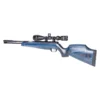
Weihrauch HW98 Adjustable – Precision Break-Barrel Air Rifle with Adjustable Cheekpiece, Rekord Trigger, and Scope-Focused German Engineering
Design, Adjustable Stock, Engineering, Accuracy, Handling, and Precision Performance
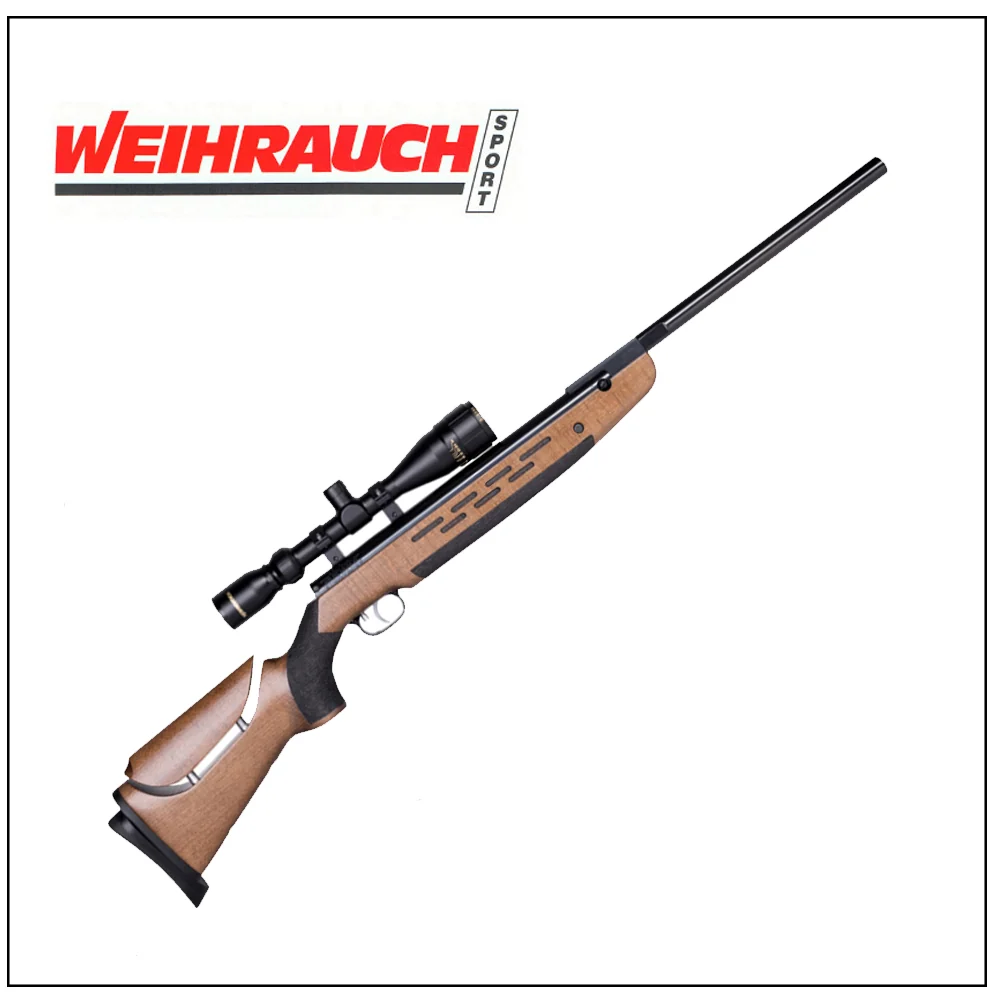
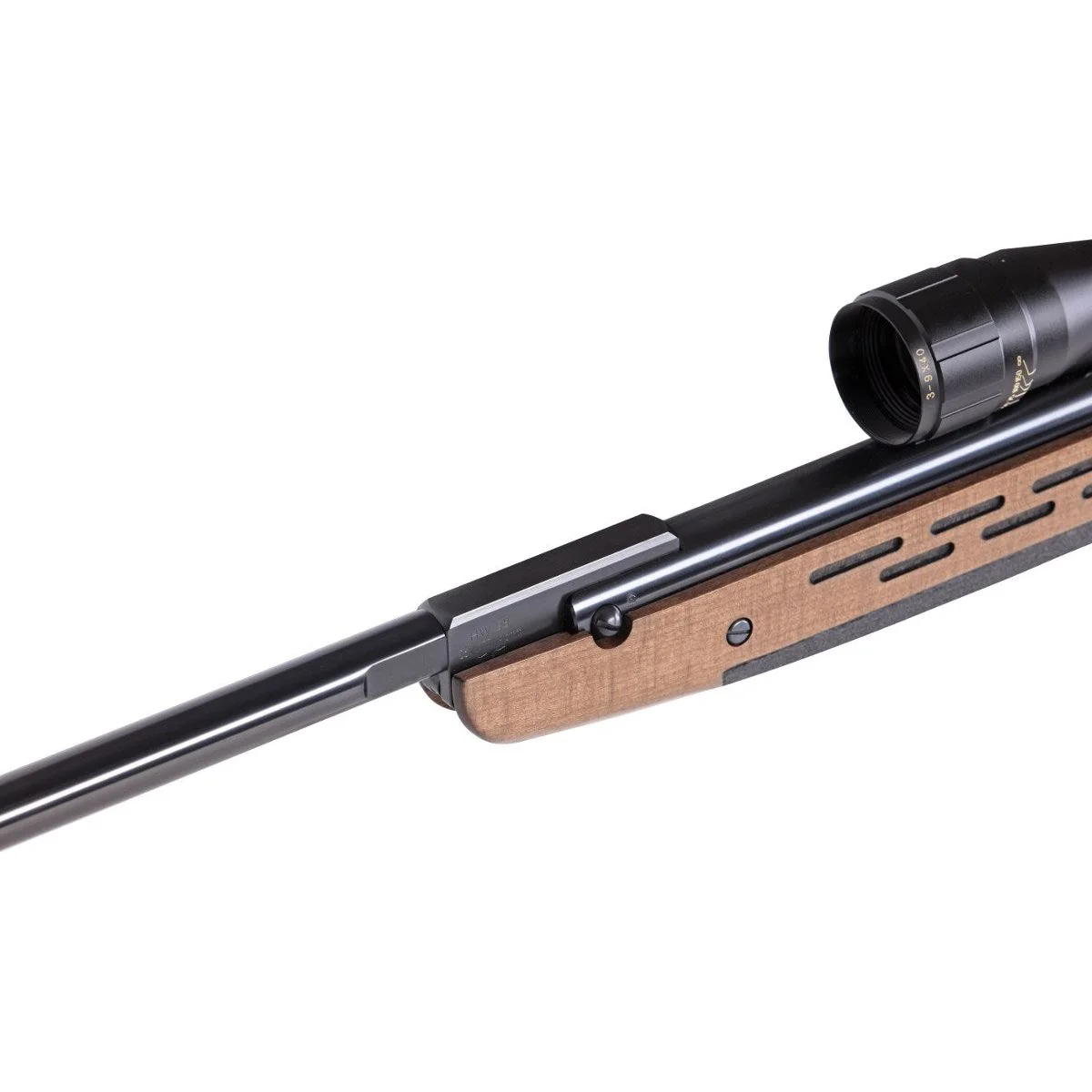
The Weihrauch HW98 Adjustable is a precision-oriented spring-piston break-barrel rifle designed specifically for scope shooting. Unlike a conventional fixed-stock sporter, it gives the shooter far more control over fit through an individually adjustable cheekpiece and an adjustable buttplate that can be moved vertically and laterally.
Current factory specifications list approximately 3.5 kg weight, 1,045 mm overall length, a 310 mm barrel, spring-piston operation, single-shot loading, a two-stage Rekord match trigger, a heavy barrel sleeve, and a threaded barrel. Weihrauch also describes the rifle as well-balanced with a smooth and comparatively easy cocking cycle.
Weihrauch HW90
The Weihrauch HW90 belongs to a different powerplant family and uses gas-ram operation rather than a conventional coiled spring.
weihrauch
weihrauch is widely associated with German sporting air rifles and pistols known for robust engineering, refined trigger systems, and traditional mechanical construction.
weihrauch
A second search for weihrauch may include spring rifles, gas-ram models, underlevers, PCP platforms, pistols, and specialized target-focused configurations.
hw 30
The hw 30 is a lighter break-barrel model designed around easier handling and lower overall weight.
weihrauch hw45
The weihrauch hw45 is a spring-powered air pistol and serves a completely different role from a full-size rifle.
weihrauch hw100
The weihrauch hw100 is a pre-charged pneumatic rifle that uses stored compressed air instead of a mechanical spring.
weihrauch hw 95
The weihrauch hw 95 is another break-barrel rifle but uses a more conventional sporting stock arrangement.
weihrauch hw44
The weihrauch hw44 is a compact PCP pistol and should be evaluated separately.
german air rifle
As a german air rifle, the HW98 reflects the manufacturer’s emphasis on careful machining, substantial steel construction, and precision trigger design.
air rifles
Among precision-focused air rifles, the HW98 stands out because its stock can be fitted more closely to the individual shooter.
weihrauch hw95 hw100 airgun air pistols
The phrase weihrauch hw95 hw100 airgun air pistols spans several completely different platforms, including spring rifles, PCP rifles, and handguns.
hw100 airgun
A hw100 airgun uses pneumatic operation and repeating capability rather than spring-powered single-shot operation.
air pistols
air pistols prioritize compactness and handgun ergonomics, whereas this rifle provides full shoulder support.
rifles de aire
The phrase rifles de aire broadly covers spring, gas-ram, and pneumatic air-rifle platforms.
hw50
The hw50 is a lighter spring-powered break-barrel with different stock dimensions and handling characteristics.
what are air pistols
For buyers asking what are air pistols, they are compact air-powered platforms designed around pistol-style ergonomics rather than a shoulder stock.
weihrauch hw50
The weihrauch hw50 offers a lighter traditional alternative within the spring-rifle range.
sk x rifles
The phrase sk x rifles does not identify an official model within this product family.
air shot gun
An air shot gun belongs to a separate equipment category and should not be confused with a rifled pellet platform.
air rifle makes
Among established air rifle makes, Weihrauch is especially recognized for spring-powered rifles, underlever designs, and precision PCP platforms.
weihrauch hw97k
The weihrauch hw97k is a fixed-barrel underlever rifle rather than a break-barrel.
compressed air rifles
compressed air rifles usually refer to PCP systems using stored compressed air, whereas this rifle relies on spring-piston power.
hw97
The hw97 family is designed around fixed-barrel precision and underlever cocking.
weihrauch hw50s
The weihrauch hw50s offers a lighter break-barrel platform with simpler stock adjustment.
weihrauch englisch
The phrase weihrauch englisch is commonly used by buyers looking for English-language product information.
hw50 s
The hw50 s remains a separate lighter spring-powered model.
hw35 air rifle
The hw35 air rifle is a classic break-barrel design with a long production history.
hw 97k
The hw 97k belongs to the manufacturer’s heavier fixed-barrel target-oriented family.
weihrauch hw80
The weihrauch hw80 is a larger break-barrel platform with its own weight, dimensions, and handling character.
weihrauch hw30
The weihrauch hw30 is considerably lighter and more compact.
hw35e for sale
The phrase hw35e for sale reflects buyer intent for another traditional spring-powered model.
hw97k
The hw97k provides a fixed-barrel alternative for shooters who prefer underlever operation.
accurate air rifles
When comparing accurate air rifles, stock fit, sight alignment, trigger quality, barrel consistency, ammunition selection, and shooter technique all matter.
hw35
The hw35 belongs to the classic break-barrel range.
weihrauch revolvers
weihrauch revolvers belong to a separate handgun category and are unrelated to this precision rifle.
hw 50
The hw 50 provides another lightweight break-barrel option.
hw 100 bullpup
The phrase hw 100 bullpup refers to a compact pneumatic configuration rather than a spring-powered break-barrel rifle.
hw75
The hw75 is a precision air pistol with different ergonomics and intended use.
hw95
The hw95 is another spring-powered break-barrel model with a more traditional sporting configuration.
weirauch
The term weirauch is a common misspelling of the manufacturer’s name.
weihrauch hw30s
The weihrauch hw30s focuses on low weight and easy handling.
hw50s
The hw50s is another lighter break-barrel option for recreational shooting.
Weihrauch HW90 air rifle
The Weihrauch HW90 air rifle uses gas-ram technology rather than a conventional spring.
HW90 gas ram air rifle
An HW90 gas ram air rifle stores energy using compressed gas instead of a coiled mainspring.
Weihrauch gas ram rifle
A Weihrauch gas ram rifle generally refers to the manufacturer’s gas-ram platform rather than this model.
Weihrauch pellet gun
The phrase Weihrauch pellet gun can describe many different rifles and pistols produced by the manufacturer.
Weihrauch air rifles
Weihrauch air rifles include break-barrel, underlever, gas-ram, and PCP configurations.
Weihrauch HW50 S
The Weihrauch HW50 S provides a lighter traditional break-barrel alternative.
HW95 S
The HW95 S is another conventional spring-piston break-barrel rifle.
HW80 K
The HW80 K is a shorter-barrel version of a larger break-barrel platform.
HW97 KT
The HW97 KT uses fixed-barrel underlever architecture and a different stock configuration.
Adjustable Cheekpiece
The adjustable cheekpiece is one of the rifle’s most important features.
Its height can be altered to help the shooter establish a more natural relationship between the eye and scope. A better head position can reduce unnecessary neck movement and improve sight-picture consistency.
Adjustable Buttplate
The buttplate can be adjusted vertically and laterally.
This allows the shooter to alter shoulder contact and improve overall fit. Weihrauch specifically lists both height and lateral adjustment in the current factory specification.
Scope-Focused Stock Design
The special stock uses a long fore-end and stippling around the pistol grip and fore-end.
Because the rifle is intended specifically for optic use, its stock geometry is designed to create a more stable and repeatable scope position.
Heavy Barrel Sleeve
The heavy barrel sleeve contributes to the rifle’s distinctive balance and substantial feel.
It also gives the front end additional mass, which can help reduce small aiming movements when the rifle is held steadily.
Threaded Barrel
Current factory documentation lists a threaded barrel.
Any muzzle accessory should be legal in the user’s jurisdiction and compatible with the manufacturer’s specifications. Weihrauch lists specific accessories for the HW98 and advises users to comply with local laws.
Rekord Match Trigger
The rifle uses the manufacturer’s two-stage Rekord match trigger.
A predictable first stage allows the shooter to prepare the trigger carefully, while the second stage gives a defined release point.
This supports controlled shooting without requiring abrupt trigger movement.
Break-Barrel Operation
The barrel itself is used as the cocking lever.
This makes the rifle completely self-contained during normal operation, with no external charging bottle, pump, or compressor required.
Smooth Cocking Cycle
Weihrauch describes the cocking cycle as particularly easy and smooth.
This can improve comfort during longer shooting sessions and contributes to the rifle’s refined mechanical character.
Single-Shot Loading
The rifle is a single-shot platform.
Each pellet is loaded individually, which naturally slows the shooting process and encourages deliberate preparation.
Why Choose the HW98 Adjustable?
The main reasons include adjustable stock fit, excellent trigger quality, self-contained spring-piston operation, balanced handling, robust construction, and scope-focused ergonomics.
For shooters who struggle to achieve a comfortable scope position with fixed stocks, the adjustability can be especially valuable.
How Good Is the Precision?
Published testing of the HW98 has reported very consistent performance, including a test rifle averaging 11.5 ft-lb with only a 6 fps spread across ten shots. Practical precision still depends on ammunition selection, optic setup, hold consistency, and shooter technique.
Where Is It Best Used?
The rifle is particularly suitable for lawful recreational target shooting, training, and controlled range use.
Its adjustable stock and scope-focused geometry make it especially useful where repeatable positioning matters.
When Does It Make Sense?
This rifle makes sense when the shooter wants a traditional spring-powered platform but also values a level of stock adjustment normally associated with more specialized target equipment.
It is particularly useful for shooters who want to fine-tune cheek height and shoulder position.
How Good Is the Handling?
At approximately 3.5 kg before an optic is added, the rifle feels substantial but remains lighter than many heavy underlever platforms.
Its balance, long fore-end, and adjustable stock help create a stable shooting position.
Precision and Consistency
Strong practical consistency comes from combining correct stock adjustment, suitable ammunition, secure scope mounting, smooth trigger control, and disciplined follow-through.
Because spring-powered rifles react to changes in hold, repeatable technique remains essential.
Important Technical Information
Current factory specifications list approximately 3.5 kg weight, 1,045 mm overall length, 310 mm barrel, spring-piston operation, single-shot loading, two-stage Rekord trigger, adjustable cheekpiece, vertically and laterally adjustable buttplate, heavy barrel sleeve, threaded barrel, and ambidextrous stock. Factory caliber listings include .177, .20, and .22, while velocity and legal power configurations vary by market.
Engineering Design, Adjustable Fit, Scope Setup, Handling, and Precision Performance
Engineering Design
The rifle combines traditional spring-powered operation with a stock system designed to improve fit and consistency.
Its break-barrel action keeps the operating process straightforward, while the adjustable cheekpiece and buttplate allow the shooter to refine head position and shoulder contact.
This combination gives the platform a more specialized feel than a standard fixed-stock sporter.
Break-Barrel Operation
The barrel is used as the cocking lever before each shot.
This design keeps the rifle mechanically self-contained because no external charging equipment is required.
Once cocked, a pellet is loaded directly before the barrel is returned to the firing position.
Spring-Piston Power System
The rifle uses a mechanical spring and piston to generate the air pressure needed for each shot.
When the action is cocked, energy is stored in the spring.
Once the trigger is released, the piston moves forward and compresses air behind the pellet.
Adjustable Cheekpiece
The height-adjustable cheekpiece is one of the most important ergonomic features.
It allows the shooter to raise or lower the point of cheek contact until the eye lines up naturally with the optic.
A better head position can improve comfort and make the sight picture easier to repeat.
Adjustable Buttplate
The buttplate can be repositioned vertically and laterally.
This helps the shooter refine how the rifle sits against the shoulder.
A more natural shoulder position can reduce unnecessary tension and improve stability during longer sessions.
Individual Fit
Stock adjustment allows the rifle to accommodate a wider range of body sizes and shooting preferences.
Instead of forcing the shooter to adapt completely to a fixed stock, the setup can be tuned to create a more comfortable and repeatable position.
This is especially useful when shooting through a scope.
Scope-Focused Ergonomics
The rifle is designed around optic use.
Once the cheekpiece has been adjusted correctly, the shooter should be able to obtain a clear sight picture without lifting or twisting the head.
Natural alignment helps reduce fatigue and supports more consistent technique.
Scope Positioning
The optic should be mounted with suitable eye relief.
The shooter should be able to shoulder the rifle and see a full sight picture without unnecessary movement.
Correct positioning also helps maintain the same head placement from shot to shot.
Scope Mount Stability
Spring-powered recoil places unusual forces on scope mounts.
The mounting system should remain secure and suitable for this type of firing cycle.
Even slight movement can affect point of impact.
Heavy Barrel Profile
The heavier front section contributes to a solid and planted feel.
Additional forward mass can help reduce small aiming movements when the rifle is supported correctly.
However, balance should still feel natural rather than front-heavy.
Overall Balance
The rifle’s weight is distributed to support stable aiming.
A balanced setup makes it easier to maintain position without excessive muscular effort.
This becomes especially important during longer recreational sessions.
Trigger Characteristics
The two-stage trigger allows the shooter to prepare the shot gradually.
The first stage can be taken up while maintaining aim, while the second stage provides a defined release point.
Predictability is one of the most valuable qualities in a precision-oriented trigger.
Trigger Control Technique
Trigger pressure should be applied smoothly.
A sudden pull can disturb the sight picture before the pellet leaves the barrel.
The shooter should aim to release the shot without changing grip or shoulder pressure.
Recoil Behavior
The rifle produces the characteristic forward-and-rearward movement of a spring-powered action.
This firing cycle is different from the simpler recoil behavior of many pneumatic systems.
A consistent hold helps the rifle react in the same way from shot to shot.
Hold Sensitivity
Changes in grip pressure can affect practical accuracy.
A relaxed and repeatable hold generally performs better than excessive tension.
The goal is not to prevent movement completely, but to allow the rifle to move consistently.
Shoulder Position
The adjustable buttplate can help establish a more natural contact point.
Once a comfortable position is found, it should be repeated as closely as possible.
Consistent shoulder pressure contributes to predictable handling.
Head Position
Head position should remain stable after the stock has been adjusted.
The cheek should settle naturally onto the comb.
If the shooter has to stretch or lift the head, the stock or optic position may need further adjustment.
Fore-End Support
The support hand should remain in a similar position from shot to shot.
Changing support location can alter the rifle’s balance and recoil response.
A stable hand position helps reduce unnecessary variation.
Supported Shooting
A stable rest can help during initial scope setup and ammunition testing.
However, the rifle should not be clamped rigidly.
Spring-powered systems usually perform more consistently when allowed to recoil naturally.
Unsupported Shooting
When shooting without a rest, good posture becomes more important.
The shooter must manage the rifle’s weight, shoulder position, support-hand location, and breathing.
A well-adjusted stock can make unsupported shooting more comfortable.
Ammunition Selection
Different pellets can produce noticeably different groups.
Weight, shape, head size, and manufacturing consistency all influence performance.
Testing several suitable options under similar conditions helps identify the best match.
Group Evaluation
Shot groups provide useful feedback about the entire setup.
Tight groups suggest that ammunition, scope setup, stock adjustment, and technique are working together effectively.
Irregular groups may indicate that one of these factors needs attention.
Breathing Control
Breathing affects both body movement and sight stability.
Many shooters release the shot during a natural pause.
Relaxed breathing is usually more effective than trying to hold the body completely rigid.
Follow-Through
The shooter should remain in position briefly after the trigger releases.
This allows the internal firing cycle to complete naturally.
Moving too early can reduce consistency.
Environmental Conditions
Outdoor performance can be affected by wind, temperature, humidity, and light.
These factors should be considered when comparing groups between sessions.
Stable conditions provide the most useful baseline.
Wind Awareness
Lightweight pellets can be influenced by crosswinds.
Even moderate wind may shift the point of impact.
Observing direction and strength helps explain group movement.
Temperature Influence
Temperature can slightly affect lubricants, seals, and spring behavior.
Very hot or cold conditions may change the feel of the rifle.
Comparisons are most meaningful when testing is carried out under similar conditions.
Mechanical Consistency
The spring, piston, trigger, barrel, stock hardware, and scope mounts all contribute to overall performance.
Routine inspection helps ensure that these components continue to behave predictably.
Consistency is the main objective.
Maintenance Simplicity
Routine care should focus on external cleaning, stock protection, hardware checks, scope inspection, and secure storage.
Complex internal work should be handled by a qualified technician.
Unnecessary disassembly should be avoided.
Long-Term Ownership
A well-maintained spring-powered rifle can remain dependable for many years.
Its self-contained operating system reduces dependence on external equipment.
Careful handling and regular inspection help preserve both mechanical and cosmetic condition.
Overall Section Summary
The rifle combines adjustable stock fit, break-barrel simplicity, spring-piston operation, scope-focused ergonomics, and refined trigger control.
Its design rewards correct setup, careful hold, suitable ammunition, disciplined breathing, and proper follow-through.
For shooters who value individualized fit and deliberate precision shooting, it provides a stable and satisfying platform for long-term recreational use.
Practical Shooting Experience, Accuracy Development, Scope Use, and Real-World Performance
Practical Shooting Experience
The rifle delivers a controlled and deliberate shooting experience that rewards consistency.
Its adjustable stock, scope-focused layout, substantial build, and spring-powered action encourage the shooter to establish a repeatable position before every shot.
Because the rifle is mechanically self-contained, the user can focus on technique without managing external air equipment.
Accuracy Development
Practical accuracy depends on several factors working together.
Ammunition quality, optic setup, stock adjustment, trigger control, body position, and follow-through all influence the final result.
The rifle provides a strong foundation, but the shooter still plays an important role in achieving repeatable groups.
Establishing the Correct Stock Fit
Proper stock adjustment should be completed before serious accuracy testing begins.
The cheekpiece should support a natural head position, while the buttplate should meet the shoulder comfortably.
Once a good position is established, the shooter should avoid unnecessary changes between sessions.
Scope Alignment
The optic should align naturally with the shooter’s eye.
The shooter should be able to shoulder the rifle and obtain a clear sight picture without lifting or twisting the head.
Good alignment reduces fatigue and supports repeatable aiming.
Eye Relief
Correct eye relief is important for comfort and consistency.
The optic should be positioned so the full sight picture appears naturally.
If the shooter repeatedly moves the head forward or backward, the scope position may need adjustment.
Cheek Position
A repeatable cheek position helps maintain the same relationship between the eye and optic.
The adjustable comb allows the shooter to refine this contact point.
Once established, the cheek should settle into place naturally.
Shoulder Placement
The buttplate should sit consistently against the shoulder.
Adjustability allows the contact point to be refined until the rifle feels stable.
A natural shoulder position can reduce unnecessary muscular tension.
Grip Consistency
Grip pressure should remain relaxed and similar from shot to shot.
Holding too tightly can change the way the rifle reacts during the firing cycle.
A consistent grip supports better repeatability.
Fore-End Support
The support hand should remain in a similar position beneath the stock.
Moving the hand significantly can alter balance and recoil behavior.
A stable support point helps the rifle react more predictably.
Trigger Technique
The trigger should be pressed smoothly and progressively.
Sudden movement can disturb the sight picture before the shot is released.
Good trigger technique becomes easier when the shooter understands the two-stage feel.
Breathing Control
Breathing affects body movement and sight stability.
Many shooters find that a natural pause provides the best moment for releasing the shot.
Relaxed breathing generally produces better results than excessive tension.
Follow-Through
The shooter should remain in position after the trigger releases.
This allows the internal firing cycle to complete naturally.
Moving too early can introduce inconsistency.
Recoil Management
Spring-powered recoil should be allowed to occur naturally.
Trying to restrain the rifle aggressively can change its behavior.
A relaxed and repeatable hold often produces better results.
Supported Shooting
A stable rest can be useful for ammunition testing and scope adjustment.
However, the rifle should not be clamped rigidly.
Allowing some natural movement usually provides more realistic and repeatable results.
Unsupported Shooting
Unsupported shooting requires more control from the shooter.
Balance, posture, shoulder placement, grip, and breathing all become more important.
A correctly adjusted stock can make unsupported use more comfortable.
Ammunition Testing
Different pellets can produce different levels of accuracy.
Weight, shape, head size, and manufacturing consistency all influence performance.
Testing several suitable options under similar conditions helps identify the most reliable choice.
Group Evaluation
Shot groups provide valuable feedback.
Tight, repeatable groups suggest that the rifle, ammunition, optic, and shooter are working together effectively.
Irregular groups may indicate that one or more variables require attention.
Scope Adjustment
Scope adjustments should be made gradually.
The shooter should fire controlled groups before changing the settings.
Large changes can make it difficult to understand how each adjustment affects point of impact.
Range Practice
Regular range practice helps the shooter become familiar with the rifle’s balance, trigger, stock position, recoil behavior, and preferred ammunition.
Over time, the shooting process becomes easier to repeat.
Familiarity can improve both confidence and practical consistency.
Skill Development
The platform can help develop strong fundamentals.
It encourages careful trigger control, disciplined follow-through, consistent body position, and correct sight alignment.
These skills remain useful across many precision-oriented shooting platforms.
Outdoor Shooting
Outdoor conditions introduce additional variables.
Wind, temperature, humidity, and changing light can influence results.
Understanding these factors helps the shooter interpret group movement more accurately.
Wind Influence
Lightweight pellets can be influenced by crosswinds.
Even moderate wind may move the point of impact.
Observing wind direction and strength helps explain changes in grouping.
Temperature Influence
Temperature can slightly affect lubricants, seals, and spring behavior.
Very hot or cold conditions may change the feel of the rifle.
Comparisons are most meaningful when testing is performed under similar conditions.
Light Conditions
Changing light can influence how clearly the target appears through the optic.
Bright glare, deep shade, and low light may affect aiming comfort.
Consistent lighting provides the best environment for testing.
Comfort During Longer Sessions
Comfort becomes increasingly important during extended practice.
A correctly adjusted stock can help reduce neck, shoulder, and wrist strain.
Regular breaks also help preserve technique and concentration.
Long Shooting Sessions
Long sessions can expose small setup problems.
If the cheekpiece, buttplate, or scope position is incorrect, discomfort may become more noticeable over time.
A well-fitted setup helps the shooter remain consistent.
Recreational Value
For recreational target shooting, the rifle offers a strong combination of mechanical involvement and precision-oriented ergonomics.
The cocking, loading, aiming, and firing process creates a deliberate experience.
This can make each session feel more focused.
Transport Considerations
The rifle should be transported in a protective case.
This helps protect the stock, barrel, optic, and adjustment hardware from accidental impact.
Careful transport also preserves cosmetic condition.
Storage Between Sessions
The rifle should be stored in a dry, secure, and stable environment.
Moisture, extreme heat, and accidental contact should be avoided.
Good storage habits support long-term reliability.
Routine Inspection
Before and after shooting, the owner should check for loose fasteners, scope movement, stock adjustment changes, unusual sounds, or changes in cocking effort.
Small problems are easier to address when discovered early.
Routine inspection helps maintain confidence in the rifle.
Confidence Through Familiarity
Repeated use allows the shooter to understand how the rifle reacts.
Knowing the preferred stock settings, trigger feel, balance, and optic position makes operation more predictable.
This familiarity often improves practical accuracy.
Practical Ownership Experience
The rifle offers a balanced combination of adjustable ergonomics, spring-powered independence, scope-focused handling, and precision-oriented performance.
It rewards careful setup and disciplined technique.
For shooters who enjoy deliberate target practice, this can create a satisfying ownership experience.
Overall Practical Value
Practical value comes from adjustable fit, durable mechanical operation, and strong accuracy potential.
The rifle remains self-contained during normal use and does not depend on external charging equipment.
This simplifies long-term ownership.
Final Performance Summary
In real-world use, the rifle provides stable handling, adjustable stock fit, refined trigger control, and strong precision potential.
Its spring-powered firing cycle requires consistent technique, but the adjustable ergonomics can make that technique easier to repeat.
With suitable ammunition, correct scope setup, careful maintenance, and regular practice, it can provide dependable recreational performance across many future shooting sessions.
Maintenance, Storage, Protection, and Long-Term Reliability
Importance of Regular Maintenance
Routine maintenance helps preserve reliable operation, consistent performance, safe handling, and long-term value.
A spring-powered rifle contains a mainspring, piston, seals, trigger components, barrel assembly, stock hardware, cocking joints, and sighting equipment that all benefit from periodic inspection.
Good maintenance does not require constant disassembly. Instead, careful cleaning, proper storage, and sensible handling usually provide the best long-term results.
Pre-Use Inspection
Before each shooting session, the rifle should be checked for visible damage or unusual mechanical changes.
The owner should inspect the stock, barrel, trigger, safety, scope mounts, adjustment hardware, and major fasteners.
Any unexpected looseness, stiffness, or unusual sound should be investigated before normal use continues.
Post-Use Inspection
After shooting, another brief inspection is useful.
Dust, fingerprints, moisture, and small amounts of debris can collect around the action, stock, barrel, and mounting system.
Removing these contaminants before storage helps preserve condition and makes future inspection easier.
Exterior Cleaning
External surfaces should be wiped with a clean, soft cloth.
Harsh chemicals and abrasive materials should be avoided unless they are specifically suitable for the finish.
Gentle cleaning helps protect both metal and wood surfaces.
Stock Care
The stock should be protected from prolonged moisture, excessive heat, and sudden environmental changes.
After use in damp conditions, the stock should be dried carefully.
Compatible wood-care products may be applied sparingly when appropriate.
Adjustable Cheekpiece Care
The adjustable cheekpiece should move smoothly and remain secure once set.
Adjustment hardware should be checked periodically for looseness.
If the cheekpiece begins shifting during use, the mounting points should be inspected before the rifle is used again.
Buttplate Adjustment Care
The buttplate mechanism should remain secure and stable.
The owner should verify that vertical and lateral adjustments remain in the intended position.
Loose adjustment hardware can reduce comfort and make the shooting position less repeatable.
Barrel Care
The barrel should be cleaned only when necessary.
Excessive cleaning can create unnecessary wear, particularly if unsuitable rods or abrasive materials are used.
A careful and minimal approach is generally preferable.
Muzzle Protection
The muzzle area should be protected from impacts.
Damage around the crown can affect consistency.
A padded case helps reduce the risk of accidental contact during transport and storage.
Break-Barrel Joint Inspection
The pivot area should be inspected periodically.
The barrel should move smoothly during cocking and return to a secure closed position.
Any noticeable side movement, looseness, or abnormal resistance should be investigated.
Lock-Up Consistency
A consistent lock-up is important for repeatable performance.
The barrel should return to the same closed position after every loading cycle.
Changes in lock-up feel may indicate that servicing is required.
Trigger Protection
The trigger mechanism should remain clean and dry.
Unnecessary internal adjustment should be avoided unless carried out by someone with suitable experience.
A predictable trigger depends on correct condition and proper setup.
Safety Mechanism
The safety should be checked periodically for normal operation.
However, it should never be treated as the only safety measure.
Correct muzzle direction and responsible handling remain essential.
Fastener Inspection
Stock screws, mount screws, and other hardware should be checked regularly.
Spring-powered recoil can gradually loosen fasteners over time.
Even slight movement may affect handling or point of impact.
Avoiding Over-Tightening
Fasteners should be secure without excessive force.
Over-tightening can damage threads or place unnecessary stress on the stock and action.
Controlled tightening helps preserve the rifle.
Scope Mount Inspection
The scope mounting system should be checked frequently.
Spring-powered recoil creates forward and rearward forces that can loosen unsuitable mounts.
Any movement can affect consistency.
Scope Protection
The optic should be protected from moisture, impacts, and rough handling.
Lens covers can help protect the glass during transport and storage.
The mounting position should also be checked after extended use.
Spring and Piston Care
The internal spring and piston should not be dismantled casually.
These parts can store significant mechanical energy and require proper tools and experience for safe servicing.
Complex internal work should be left to a qualified technician.
Seal Condition
Internal seals help maintain compression and consistent performance.
Changes in sound, cocking feel, or shooting behavior may indicate wear.
Persistent changes should be investigated rather than ignored.
Correct Lubrication
Only suitable lubricants should be used where recommended.
Incorrect oils or greases may damage seals or affect normal operation.
Excessive lubrication can also create residue and inconsistent performance.
Avoiding Excess Lubrication
More lubricant does not necessarily improve reliability.
Heavy application may attract dirt and create unwanted buildup.
A minimal and appropriate approach is usually best.
Moisture Management
Moisture is one of the main long-term threats to both metal and wood.
After use in damp conditions, the rifle should be dried before storage.
Areas around screws, joints, and mounts should not be overlooked.
Corrosion Prevention
Regular wiping and dry storage help reduce the risk of corrosion.
Any early signs of rust should be addressed carefully before they spread.
Protective products should be compatible with the original finish.
Temperature Management
The rifle should not be stored in locations exposed to extreme heat or rapid temperature changes.
Vehicles and damp storage spaces are poor long-term choices.
A stable indoor environment is preferable.
Transportation Protection
A padded case is recommended during transport.
It helps protect the barrel, stock, optic, trigger area, and adjustment hardware.
The rifle should also be secured so that it cannot move excessively inside the case.
Safe Storage
The rifle should be stored securely and in accordance with local regulations.
Unauthorized access should be prevented.
A dry and stable environment helps preserve both mechanical reliability and cosmetic condition.
Storage Position
The rifle should be supported so that it cannot fall.
Heavy objects should not rest against the stock, barrel, scope, cheekpiece, or buttplate.
A stable storage position reduces unnecessary stress.
Monitoring Performance Changes
Changes in accuracy, trigger feel, cocking effort, recoil behavior, or sound can provide early warning of a developing issue.
Owners who understand the rifle’s normal behavior are more likely to notice these changes quickly.
Professional Servicing
Complex work involving the spring, piston, trigger unit, compression chamber, or pivot assembly should be handled by a qualified technician.
Professional servicing helps preserve safe operation and long-term reliability.
Avoiding Unauthorized Modifications
Unapproved internal changes can affect consistency, reliability, and legal compliance.
The rifle is best maintained within its intended design parameters.
Responsible ownership focuses on preserving dependable operation.
Developing a Maintenance Routine
A simple maintenance routine can be highly effective.
Inspect before use, wipe the rifle afterward, check the scope and adjustment hardware, monitor the break-barrel joint, protect the stock, and store the rifle correctly.
These habits require little time but provide meaningful long-term benefits.
Long-Term Reliability
A well-maintained spring-powered rifle can provide dependable service for many years.
Mechanical simplicity, strong construction, careful storage, and proper handling all contribute to durability.
The owner’s maintenance habits have a direct effect on long-term condition.
Final Maintenance Summary
Long-term reliability depends on careful inspection, sensible cleaning, protected transport, proper storage, and respect for the rifle’s mechanical system.
Protecting the stock, barrel, optic, adjustable cheekpiece, buttplate, trigger, spring, piston, seals, and hardware helps preserve consistent performance.
With responsible care and qualified servicing when necessary, the rifle can remain reliable, accurate, and enjoyable across many future shooting sessions.
Final Evaluation, Ownership Experience, Practical Benefits, and Overall Performance
Final Evaluation
The rifle offers a refined combination of adjustable ergonomics, spring-powered independence, deliberate single-shot operation, and precision-oriented handling.
Its strongest advantage is the ability to adapt the stock more closely to the shooter. Because cheek height and shoulder position can be adjusted, the rifle can be configured for a more natural and repeatable shooting position.
That adjustability makes it particularly appealing to users who value comfort, consistency, and careful scope-based target work.
Overall Shooting Character
The rifle has a controlled and purposeful shooting character.
Every shot involves a clear sequence of cocking, loading, establishing position, confirming the sight picture, and releasing the trigger smoothly.
This naturally encourages patience and discourages rushed shooting.
Precision-Oriented Performance
The rifle is designed to support accurate recreational shooting when used with suitable ammunition and correct technique.
Its stock adjustment, refined trigger, substantial barrel assembly, and scope-focused layout all contribute to a stable shooting platform.
However, final accuracy still depends heavily on the shooter’s consistency.
Adjustable Fit Advantage
The ability to alter cheek height and buttplate position can significantly improve comfort.
A correctly fitted stock helps the eye align naturally with the optic and allows the shoulder to support the rifle without unnecessary tension.
This can make longer sessions more consistent.
Scope-Focused Ergonomics
The rifle is designed around optic use rather than traditional open-sight shooting.
The stock geometry allows the shooter to position the head in a way that supports a clear and repeatable sight picture.
Correct scope placement remains essential.
Shoulder Position
The adjustable buttplate can help create a more natural shoulder contact point.
Once the preferred setting is found, it should remain consistent.
A stable shoulder position supports better control during the firing cycle.
Cheek Position
The adjustable cheekpiece allows the shooter to refine head height.
This can reduce the need to lift or lower the head while looking through the scope.
A natural cheek position also improves comfort during extended shooting.
Break-Barrel Simplicity
The break-barrel design keeps the operating process straightforward.
There is no need for external charging equipment.
For many owners, this mechanical independence simplifies both storage and regular use.
Spring-Powered Independence
The rifle operates entirely through its internal spring system.
This means normal shooting does not depend on compressed-air cylinders, pumps, or charging stations.
That simplicity can be a major benefit for long-term recreational ownership.
Single-Shot Discipline
Single-shot operation encourages a deliberate rhythm.
After each shot, the shooter must reload and rebuild the shooting position.
This pause provides time to reset breathing, grip, shoulder pressure, and visual alignment.
Trigger Familiarity
The two-stage trigger becomes easier to use as the shooter gains experience.
The first stage allows careful preparation, while the second stage provides a more defined release point.
A predictable trigger can improve confidence and reduce sudden movement.
Skill Development
The rifle can help develop important shooting fundamentals.
Grip control, body position, breathing, trigger technique, sight alignment, and follow-through all play major roles.
Regular practice can improve the shooter’s ability to repeat these fundamentals consistently.
Ammunition Familiarity
Ammunition choice can strongly influence performance.
Different pellet weights, profiles, and head sizes may produce different group sizes.
Testing suitable options under similar conditions helps identify which combination performs most reliably.
Group Evaluation
Shot groups provide useful feedback about both the rifle and the shooter.
Tight and consistent groups suggest that the scope, ammunition, stock settings, and technique are working well together.
Irregular results may indicate that one of these variables needs attention.
Recoil Understanding
Spring-powered rifles produce a distinctive firing cycle.
The shooter should allow the rifle to react naturally rather than trying to restrain it with excessive force.
A relaxed and repeatable hold usually produces better consistency.
Follow-Through Value
Follow-through remains important after the trigger releases.
The shooter should maintain position until the internal firing cycle has completed.
Moving too early can disturb the shot.
Range Experience
At the range, the rifle works best with a steady and structured approach.
Its adjustable stock and scope-focused design make it particularly suitable for carefully prepared target sessions.
The platform rewards attention to detail.
Recreational Value
For recreational shooting, the rifle offers a satisfying combination of mechanical involvement and ergonomic refinement.
The cocking, loading, aiming, and firing process makes each shot feel deliberate.
For many users, this adds to the overall enjoyment.
Comfort During Longer Sessions
The adjustable stock can make a noticeable difference during long sessions.
A correctly positioned cheekpiece and buttplate reduce strain on the neck and shoulder.
Regular breaks still help maintain good technique.
Transport Convenience
The rifle should be transported in a padded case.
This helps protect the stock, optic, barrel, and adjustment hardware from accidental damage.
The rifle should also be secured so that it does not move excessively inside the case.
Storage Requirements
Storage should be dry, secure, and stable.
The rifle should not be exposed to excessive moisture, extreme heat, or accidental impact.
Good storage supports both mechanical reliability and cosmetic condition.
Maintenance Requirements
Routine maintenance is generally straightforward.
External cleaning, hardware inspection, scope checks, stock adjustment checks, and monitoring the barrel joint are usually sufficient for normal ownership.
Complex internal servicing should be handled professionally.
Responsible Ownership
Responsible ownership includes safe handling, secure storage, suitable targets, and compliance with local regulations.
Mechanical safety features are useful, but correct muzzle awareness remains essential.
Good habits should remain consistent at all times.
Long-Term Reliability
A well-maintained spring-powered rifle can provide dependable service for many years.
Its self-contained mechanical system contributes to long-term durability.
Careful storage and routine inspection help preserve that advantage.
Practical Ownership Value
Practical value comes from adjustable fit, strong mechanical construction, precision potential, and independence from external charging equipment.
The rifle provides a specialized experience without requiring a complicated support system.
This can make long-term ownership relatively straightforward.
Suitable User Profile
The rifle is best suited to shooters who value precision, individual fit, and traditional spring-powered operation.
It may especially appeal to users who prefer scope-based target shooting and who want more stock adjustment than a standard sporting rifle provides.
Confidence Through Familiarity
Confidence grows as the shooter learns the preferred stock settings, trigger feel, recoil behavior, balance, and ammunition choice.
Once these factors become familiar, the rifle becomes easier to use consistently.
This can improve practical accuracy.
Final Ownership Perspective
As a long-term recreational platform, the rifle offers a strong blend of traditional mechanical operation and adjustable ergonomics.
It requires patience and careful technique, but those qualities are part of the appeal.
For shooters who value individualized fit, the ownership experience can be especially satisfying.
Final Performance Summary
Overall, the rifle combines adjustable stock geometry, spring-piston operation, break-barrel simplicity, refined trigger control, and scope-focused handling.
Its design rewards careful ammunition selection, correct stock setup, a consistent hold, disciplined breathing, and proper follow-through.
With sensible maintenance, secure storage, and regular practice, it can provide dependable recreational performance and a rewarding long-term shooting experience.
Be the first to review “Weihrauch HW98 Adjustable”
Related products
WEIHRAUCH
Uncategorized
WEIHRAUCH
WEIHRAUCH
WEIHRAUCH
WEIHRAUCH
WEIHRAUCH
Reviews
There are no reviews yet.