
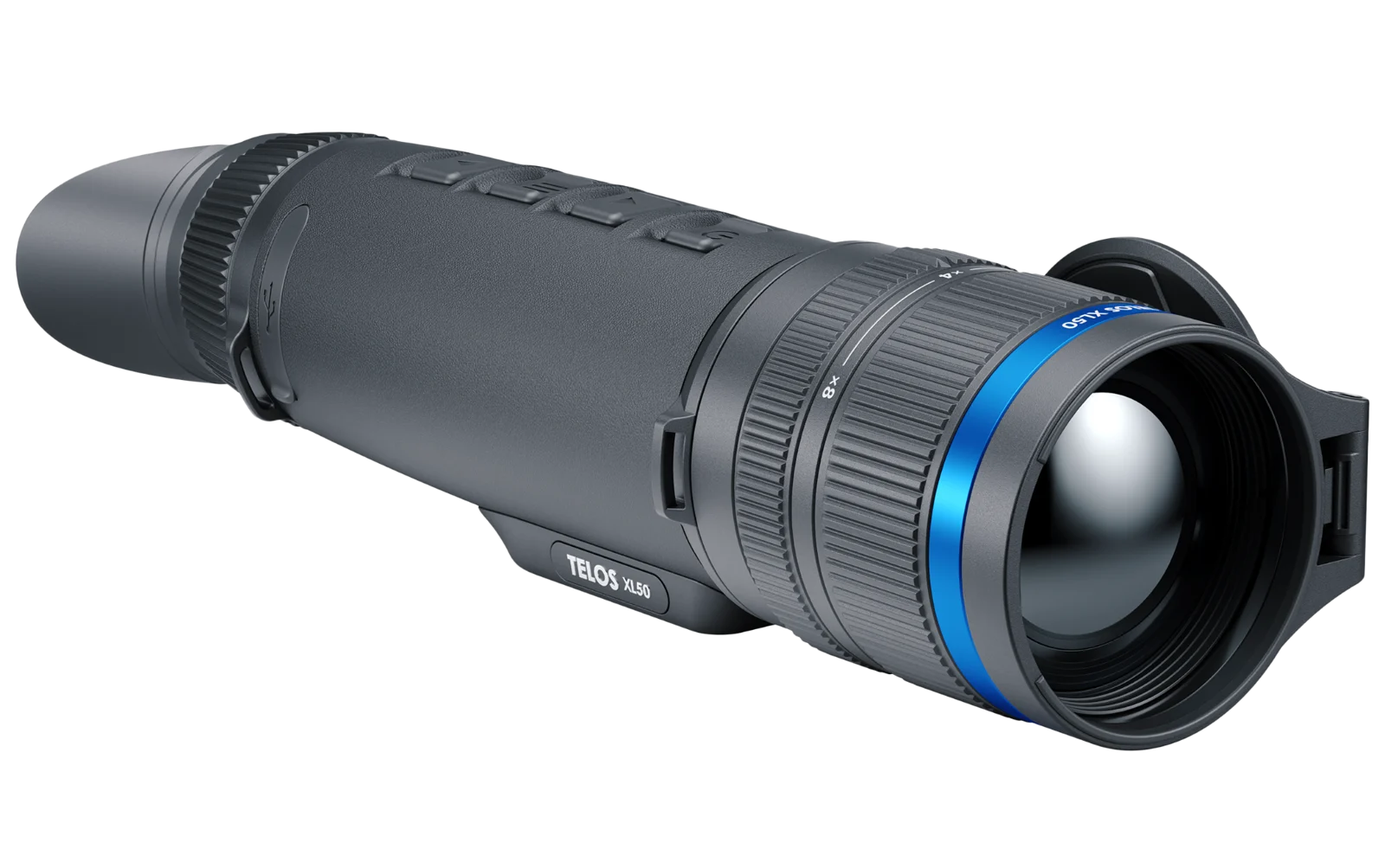
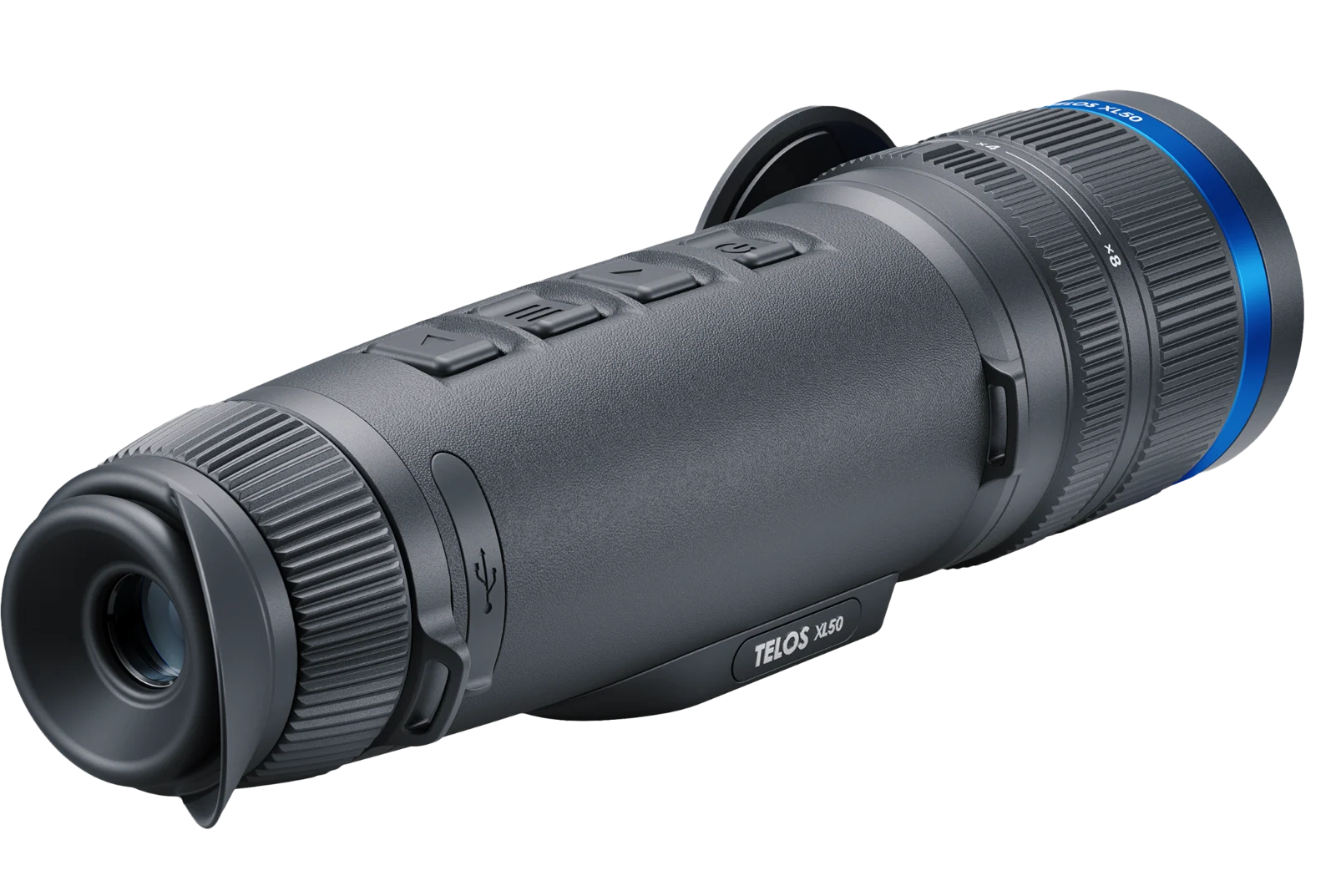
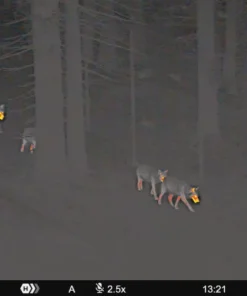
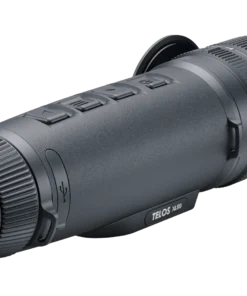
Pulsar Telos XL50 Thermal Monocular
$4,500.00
Description
- Magnification: 2.5-20x
- Color: Black Rubber Armor
- Material: Aluminum
- Wireless Capable: Yes
- Field of View: 14 x 10.50 Degrees
- Resolution: 1024×768, 12 Microns, 50 Hz
- Objective: 50mm
- Rechargeable: Yes
- Eye Relief: 14mm
Specifications
BrandWeight1.5 lbsObjective Size50 mmDisplay TypeAMOLEDProduct Width2.83 inProduct Height2.44 inProduct Length9.57 inSensor Frame Rate50 Hz
PL77516 Telos XL50 Thermal Monocular Black Rubber Armor 2.5-20x50mm, 1024x768, 50Hz Resolution Zoom Digital 8x
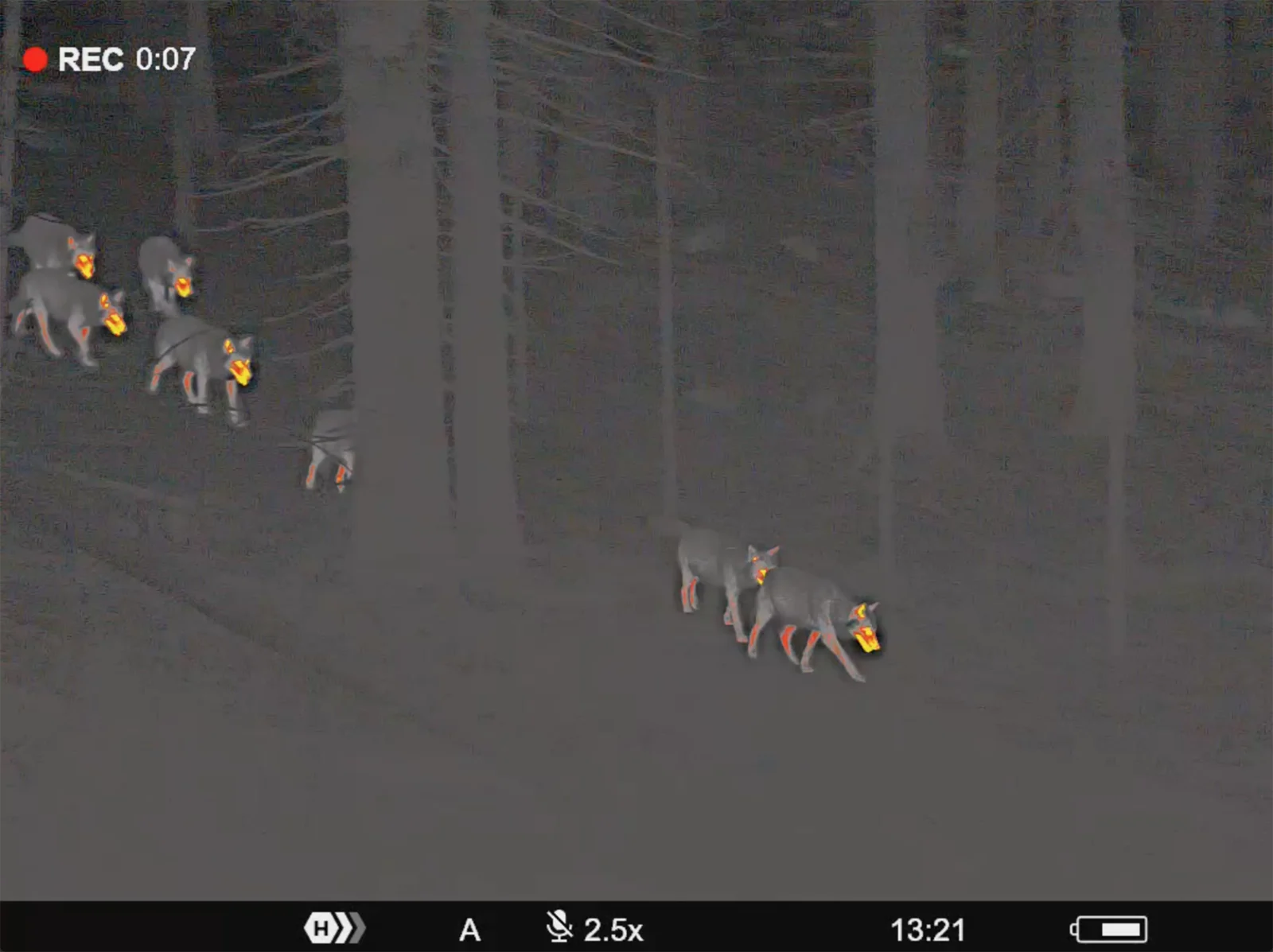
Telos thermal imaging monoculars are designed for use both at night-time and during the day and provide exceptional image quality even in adverse weather conditions (fog, smog, rain) and beyond obstacles like branches, tall grass, dense foliage, etc. known to hinder target detection. Unlike night-vision devices based on electron-optical converters, thermal imaging devices do not need an external light source and are resistant to bright light. Telos thermal imagers are designed for various applications including hunting, observation, security, terrain orientation, search and rescue operations, etc. IPX7 waterproof. Additional features include Battery Size: IPS7 Li-ion Battery Pack, Zoom: Digital 8x, Length: 9.57", Proofs: Water / Weatherproof, and Modes: Black, Red, White Hot / Monochrome / Rainbow / Sepia / Ultramarine / Violet. It also features Power Source: USB-C, Battery Life: 7 hrs, Compatible With: Stream Vision 2 App, Height: 2.44", Scope Type: Monocular, and Width: 2.83". Furthermore, it includes Weight: 23.97 oz, Display: 1024x768 AMOLED, Memory: 64GB, and Picture or Video: Photo / Video.
Pulsar Telos XL50 Thermal Imaging Monocular – 1024 × 768 HD Sensor, 50mm F1.0 Lens, AMOLED Display
Pulsar Telos XL50 – Advanced Thermal Imaging Technology, Optical Performance and Premium Construction
1. Introduction to the Pulsar Telos XL50
The Pulsar Telos XL50 Thermal Monocular represents an advanced development in portable thermal imaging technology. Manufactured by Pulsar, this premium observation instrument combines a high-resolution infrared detector, sophisticated image processing, an AMOLED display and a durable ergonomic housing.
Designed for demanding outdoor observation and professional thermal imaging applications, the Telos XL50 provides a combination of detailed thermal information and convenient digital functionality.
One of its most important characteristics is its 1024 × 768 thermal sensor resolution. Furthermore, its 50mm F1.0 objective lens contributes to the collection of infrared information, while the integrated AMOLED display provides a detailed electronic viewing experience.
Additionally, its adjustable magnification, internal recording system and rechargeable battery contribute to its overall versatility.
2. Technical Specifications
- Brand: Pulsar
- Model: Telos XL50
- Product type: Thermal imaging monocular
- Thermal sensor: Uncooled microbolometer
- Sensor resolution: 1024 × 768 pixels
- Pixel pitch: 12μm
- Sensor thermal sensitivity: Less than 40mK
- System thermal sensitivity: Less than 20mK
- Frame rate: 50Hz
- Objective lens: 50mm F1.0
- Optical magnification: 2.5x
- Digital magnification: Up to 20x
- Magnification with Zoom Boost: Up to 30x
- Display: AMOLED
- Display resolution: 1024 × 768 pixels
- Field of view: 14° × 10.5°
- Detection distance: Up to 2,300 metres for a deer-sized object under specified conditions
- Internal storage: 64GB
- Recording formats: MP4 and JPG
- Connectivity: Wi-Fi and Bluetooth
- Battery: Pulsar LPS 7i rechargeable lithium-ion battery
- Battery capacity: 6,400mAh
- Operating time: Up to 7 hours under specified conditions
- Water protection: IPX7
- Operating temperature: -25°C to +40°C
- Weight: Approximately 680g including battery
- Dimensions: 243 × 72 × 62mm
3. High-Definition Thermal Sensor Technology
The 1024 × 768 thermal detector is one of the defining characteristics of this instrument.
With more than 786,000 detector pixels, the imaging system provides detailed infrared information for electronic processing.
Furthermore, its 12μm pixel pitch contributes to the compact detector architecture.
The uncooled microbolometer technology detects infrared radiation without requiring a conventional visible-light camera system.
4. Advanced 50mm F1.0 Optical System
The 50mm F1.0 objective lens forms an important part of the optical assembly.
Its aperture characteristics contribute to infrared energy collection.
Furthermore, the optical design works alongside the detector and image-processing system to produce the final displayed image.
5. AMOLED Display and Digital Image Quality
The integrated 1024 × 768 AMOLED display provides a detailed viewing experience.
AMOLED technology is appreciated for its contrast characteristics and individually illuminated pixels.
Additionally, the display presents electronically processed thermal information in a convenient viewing format.
6. Image Processing and Digital Functions
The Telos XL50 incorporates several electronic imaging functions, including image enhancement, adjustable viewing settings and digital recording.
Furthermore, its 64GB internal memory provides storage for supported photographs and video recordings.
Wireless connectivity also supports compatibility with Pulsar’s Stream Vision 2 application.
7. Construction, Protection and Portability
The compact housing measures approximately 243 × 72 × 62mm.
At approximately 680g, including its battery, the instrument provides a portable format for outdoor observation.
Furthermore, its IPX7 protection rating indicates suitability for specified temporary water immersion conditions.
8. Battery Performance and Ownership
The rechargeable LPS 7i lithium-ion battery has a capacity of 6,400mAh.
Up to seven hours of operating time is specified under the manufacturer’s testing conditions at approximately 22°C.
Actual operating duration may vary according to temperature, wireless connectivity and recording activity.
9. Why Choose the Pulsar Telos XL50?
The combination of HD thermal detection, a 50mm objective lens, AMOLED display, digital recording and rechargeable power makes this instrument an interesting option for customers seeking premium thermal observation technology.
Its upgradeable Telos platform is another important consideration, since Pulsar offers hardware upgrade possibilities for eligible models through its upgrade programme.
Consequently, customers can investigate available future hardware improvements rather than automatically replacing the entire instrument.
Advanced Imaging Performance, Display Quality, Construction, Durability, Maintenance and Frequently Asked Questions
10. Understanding the Complete Imaging Experience
Modern thermal imaging equipment combines several sophisticated technologies to produce electronic representations of surrounding environments. The detector, optical assembly, internal processor and display must work together to deliver a consistent viewing experience.
Consequently, overall performance should never be judged by a single specification. Detector resolution, thermal sensitivity, image processing, display quality and environmental conditions all contribute to the final result.
The quality of an electronic image also depends on the stability of the internal components. Furthermore, manufacturing precision, material selection and software development influence long-term consistency.
A well-designed imaging instrument should provide a balanced combination of electronic reliability, comfortable viewing and convenient handling.
11. Understanding Infrared Detection
Infrared radiation is a form of electromagnetic energy that exists beyond the visible red portion of the electromagnetic spectrum.
Although human eyes cannot normally detect it, specialized electronic sensors can register infrared radiation and convert the information into digital signals.
Thermal imaging equipment uses this principle to produce visual representations of differences in infrared energy.
The Difference Between Thermal and Conventional Images
Conventional photography records reflected visible light. Thermal imaging, on the other hand, detects infrared radiation.
Consequently, the resulting images represent different types of information.
A conventional photograph generally presents familiar colours and visible surface details. A thermal image presents variations in detected infrared energy.
This distinction is important because thermal images should not be interpreted as ordinary photographs or precise temperature measurements.
Understanding Temperature Differences
Different materials and surfaces can emit and reflect infrared energy differently.
Furthermore, surrounding environmental conditions can influence the information received by an electronic detector.
For example, humidity, rain, surface composition and atmospheric conditions may influence image appearance.
Consequently, thermal imaging should be understood as a specialized observation technology rather than a direct substitute for conventional photography.
Understanding Thermal Sensitivity
Thermal sensitivity describes how effectively a detector can distinguish relatively small differences in infrared radiation.
It is normally expressed in millikelvin.
A lower numerical value generally indicates greater sensitivity under specified testing conditions.
However, thermal sensitivity alone cannot establish the overall quality of an imaging instrument.
Detector resolution, optical transmission, image processing and display characteristics must also be considered.
12. Image Resolution and Electronic Detail
Resolution describes the number of individual pixels used to create an electronic image.
Each pixel contributes information to the final presentation.
A higher resolution can provide more image information, although the complete imaging system determines how effectively that information is displayed.
Understanding Pixel Density
Pixel density describes how closely individual pixels are arranged within a display or sensor.
A greater density can support finer image presentation.
Nevertheless, pixel density should not be confused with detector sensitivity.
Both characteristics describe different aspects of electronic imaging.
The Importance of Image Consistency
Consistent image presentation is important when evaluating electronic equipment.
Unwanted variations can make visual information difficult to interpret.
Furthermore, image consistency depends on the relationship between the detector, processor and display.
Manufacturing quality and software development also contribute.
Digital Image Processing
Digital image processing converts electronic information into a visual representation.
The process may involve several operations, including:
-
Brightness management.
-
Contrast adjustment.
-
Electronic noise reduction.
-
Image enhancement.
-
Digital display correction.
-
Colour presentation.
-
Image stabilization.
These processes help make electronic information more accessible to the observer.
However, processing cannot recreate information that the detector has not captured.
13. Understanding Image Contrast
Contrast describes differences between brighter and darker portions of an image.
Good contrast can make individual image characteristics easier to distinguish.
However, excessive contrast may remove subtle information.
Consequently, a balanced display presentation is important.
Brightness and Contrast
Brightness determines the overall intensity of the displayed image.
Contrast influences the separation between different brightness levels.
Both characteristics contribute to viewing comfort.
Furthermore, appropriate display settings can help reduce unnecessary visual fatigue.
Colour Presentation
Electronic imaging systems may provide different colour presentation options.
These options change how detected information appears on the display.
However, colour presentation should not be confused with actual object colour.
A displayed colour represents processed electronic information rather than necessarily showing the natural appearance of the observed subject.
Understanding Image Noise
Image noise refers to unwanted variations within electronic information.
It can originate from detector characteristics, electronic interference and environmental conditions.
Furthermore, image noise may become more noticeable in particular viewing circumstances.
Digital processing can help reduce its appearance, although complete elimination cannot be guaranteed.
14. AMOLED Display Technology and Viewing Comfort
An AMOLED display uses individually controlled light-emitting pixels.
This differs from traditional LCD technology, which generally relies on a separate backlighting system.
Consequently, AMOLED displays can provide strong contrast and deep black levels.
Display Resolution
Display resolution determines the number of pixels available for presenting information.
A higher resolution can contribute to a detailed electronic viewing experience.
However, the quality of the original image also matters.
A display cannot create genuine additional detector information simply by having more pixels.
Display Brightness
Display brightness influences visibility under different ambient lighting conditions.
Nevertheless, excessively bright settings may cause discomfort.
Furthermore, individual viewing preferences vary.
A comfortable brightness level should be selected in accordance with the manufacturer’s recommendations.
Eye Comfort
Extended electronic viewing can contribute to eye fatigue.
Regular breaks are therefore recommended.
Additionally, maintaining a comfortable viewing position can improve the overall experience.
Users should avoid unnecessary exposure to excessive display brightness.
Display Protection
The viewing surface should be protected against scratches and accidental impacts.
Furthermore, unsuitable cleaning materials may damage protective coatings.
A suitable protective case can help preserve the external condition during transportation and storage.
15. Understanding the Optical Assembly
The optical assembly is responsible for receiving incoming infrared information and directing it towards the detector.
Its design influences the overall imaging characteristics.
Furthermore, manufacturing precision and optical alignment contribute to consistency.
Optical Material Quality
Optical materials are selected according to their transmission characteristics and intended application.
Different materials provide different infrared transmission properties.
Consequently, optical material selection is an important part of thermal imaging design.
Lens Construction
Lens construction involves the selection and arrangement of optical elements.
The quality of the finished assembly depends on material properties, surface accuracy and manufacturing tolerances.
Furthermore, appropriate coatings may contribute to optical performance.
Protecting Optical Surfaces
Optical surfaces are among the components requiring the greatest care.
Dust, grease and scratches may influence the quality of the incoming information.
Consequently, cleaning should be performed carefully.
Loose particles should be removed before any contact cleaning takes place.
16. Digital Recording and Media Management
Electronic recording provides an opportunity to retain supported photographs and videos.
This functionality can be useful for general documentation, equipment assessment and reviewing previously recorded observations.
Understanding Image Files
Photographs are generally stored as individual image files.
Video recordings contain sequences of image information.
Furthermore, file size depends on recording resolution, duration and compression.
Internal Storage Management
Available storage capacity should be monitored regularly.
When storage becomes limited, unnecessary files can be transferred or deleted.
However, important recordings should always be backed up before deletion.
Organizing Recorded Information
A simple file-management system can make stored information easier to locate.
Descriptive filenames and organized folders are useful.
Furthermore, maintaining separate backup copies can reduce the risk of accidental data loss.
Wireless Connectivity
Wireless communication allows compatible devices to exchange supported information.
Connection quality depends on distance, interference and device compatibility.
Furthermore, mobile operating systems and application versions may influence available functions.
Software Compatibility
Electronic products may receive software updates throughout their service life.
Updates can address compatibility issues or introduce improvements.
Nevertheless, installation should follow the manufacturer’s official instructions.
Unofficial software should be avoided because it may compromise stability or product functionality.
17. Construction Quality and Material Selection
The quality of an electronic instrument depends partly on the materials used in its construction.
The housing must protect sensitive components while maintaining manageable dimensions and weight.
Furthermore, manufacturing consistency influences how well individual components fit together.
External Housing
The external housing protects internal electronic assemblies.
It also provides structural support for the optical and display systems.
Consequently, housing quality contributes to the overall durability of the instrument.
Internal Component Protection
Inside an electronic imaging instrument, several sensitive components work together.
These may include:
-
Infrared detector assemblies.
-
Electronic processing boards.
-
Display components.
-
Battery connections.
-
Data communication components.
-
Optical assemblies.
These components require suitable protection against contamination and physical damage.
Manufacturing Precision
Manufacturing precision refers to the accuracy with which individual components are produced.
Consistent manufacturing tolerances help ensure that components fit together correctly.
Furthermore, appropriate quality-control procedures can reduce unwanted variation between products.
Exterior Finishing
Exterior finishing contributes to appearance and protection.
It may also influence resistance to ordinary handling and surface contamination.
However, aggressive chemicals and abrasive cleaning materials should be avoided.
18. Environmental Protection and Weather Resistance
Outdoor electronic equipment may encounter changing environmental conditions.
These include dust, moisture, rain, humidity and temperature variations.
Consequently, protection ratings and manufacturer operating limits should be considered before purchase.
Understanding Water Protection
Water protection ratings describe resistance under standardized testing conditions.
They should not be interpreted as permission for unrestricted exposure to water.
Furthermore, protective seals and connector covers should remain in good condition.
Dust Resistance
Dust can accumulate around external components and connectors.
Regular inspection can help identify contamination.
Furthermore, suitable protective storage can reduce unnecessary exposure.
Humidity
High humidity can contribute to moisture accumulation.
Condensation may also develop when equipment moves rapidly between environments with different temperatures.
Consequently, equipment should be allowed to adjust gradually where appropriate.
Cold Conditions
Low temperatures can influence electronic displays and rechargeable batteries.
Battery capacity may temporarily decrease.
Furthermore, moisture may accumulate when cold equipment is moved into a warm environment.
Appropriate storage and handling practices help reduce these problems.
Warm Conditions
Excessive heat may affect electronic components and battery longevity.
Equipment should not be left inside vehicles exposed to intense sunlight.
Furthermore, long-term storage in excessively warm environments should be avoided.
Coastal Environments
Coastal environments can expose external surfaces to salt deposits.
These deposits may affect metal components and exterior finishes.
Consequently, appropriate cleaning after exposure is important.
19. Rechargeable Battery Technology
Rechargeable lithium-ion batteries provide portable electrical energy for many modern electronic devices.
They combine relatively high energy density with convenient recharging.
Nevertheless, their performance depends on temperature, age and charging conditions.
Understanding Battery Capacity
Battery capacity represents the amount of electrical energy a battery can store.
However, the actual operating time also depends on the electrical consumption of the equipment.
Display brightness, recording, wireless connectivity and environmental conditions can influence operating duration.
Battery Temperature
Temperature influences battery performance.
Cold environments can temporarily reduce available capacity.
Conversely, excessive heat can accelerate battery deterioration.
Consequently, recommended storage and charging temperatures should be respected.
Safe Charging
Rechargeable batteries should only be charged using suitable equipment.
Damaged batteries should not be used.
Furthermore, charging should take place in an appropriate environment.
Batteries should not be exposed to open flames, excessive heat or physical deformation.
Long-Term Battery Storage
When equipment will remain unused for an extended period, battery storage instructions should be followed.
The manufacturer may specify a recommended charge level.
Furthermore, removable battery packs may need to be stored separately.
Recognizing Battery Problems
Potential signs of battery deterioration include:
-
Unusually short operating duration.
-
Inconsistent charging.
-
Unexpected shutdowns.
-
Excessive heating.
-
Physical swelling.
-
Visible leakage.
A damaged battery should be removed from service and handled according to appropriate disposal requirements.
20. Maintenance and Long-Term Care
Regular maintenance helps preserve the external condition and functionality of electronic equipment.
A simple inspection routine can identify potential problems before they become more serious.
Routine Inspection
Before use, inspect the external housing for cracks or deformation.
The optical surfaces should be checked for visible contamination.
Furthermore, connectors and controls should be examined for damage.
Any unusual condition should be investigated.
Cleaning the Exterior
A soft cotton cloth is suitable for ordinary external cleaning.
Abrasive materials should be avoided.
Furthermore, solvents and chemically aggressive cleaning products may damage protective finishes.
Cleaning Optical Surfaces
Optical surfaces require specialized cleaning materials.
Loose dust should be removed using an appropriate non-contact method.
Afterwards, suitable optical cleaning products may be used according to the manufacturer’s instructions.
Maintaining Electrical Contacts
Electrical contacts should remain clean and free from contamination.
Oxidation, moisture and accumulated debris can contribute to connection problems.
Furthermore, damaged connectors should be inspected professionally.
Storage
A suitable carrying case provides protection during storage and transportation.
The storage environment should be clean, dry and free from excessive heat.
For long-term storage, removable batteries should be handled according to the manufacturer’s recommendations.
Professional Servicing
Internal electronic components should not be disassembled without appropriate technical knowledge.
Unauthorized repairs may cause additional damage.
Furthermore, professional servicing is preferable when persistent electronic faults are suspected.
21. Product Ownership and Purchasing Considerations
Purchasing specialized electronic equipment involves more than comparing specifications.
Customers should consider product authenticity, condition, accessories, warranty and servicing availability.
Verifying Authenticity
The manufacturer’s identification and model information should be checked.
Furthermore, serial numbers and original purchase documentation may assist with verification.
Customers should be cautious when dealing with sellers who cannot provide reliable product information.
Understanding Product Condition
Previously owned equipment should be inspected carefully.
The exterior should be checked for scratches, cracks and deformation.
Furthermore, the condition of the optical surfaces, battery and charging connections should be disclosed.
Package Contents
Package contents can vary according to the retailer and product version.
Consequently, customers should request confirmation of all included components.
Promotional photographs should not automatically be interpreted as a complete inventory.
Warranty
Warranty conditions depend on the manufacturer, distributor and seller.
The applicable warranty period should be confirmed before purchase.
Furthermore, international purchases may involve different servicing arrangements.
Long-Term Value
Long-term ownership value depends on several factors.
These include product condition, servicing availability, battery condition and continued software compatibility.
Furthermore, responsible storage and regular maintenance can help preserve the instrument’s appearance.
22. Responsible Observation and Privacy
Electronic observation equipment should always be used responsibly.
Privacy laws and local regulations should be respected.
Furthermore, observations should not interfere with the safety or privacy of other people.
Environmental Responsibility
Natural environments should be treated respectfully.
Litter should be removed, vegetation should not be damaged unnecessarily, and restricted areas should be avoided.
Furthermore, wildlife habitats should be protected.
General Equipment Safety
Electronic equipment should be kept away from unauthorized handling.
Damaged batteries, connectors and charging cables should not be used.
Furthermore, manufacturer instructions should be followed throughout ownership.
23. Frequently Asked Questions
1. What is the Pulsar Telos XL50 primarily designed for?
It is a portable thermal imaging monocular designed for electronic observation and general thermal imaging applications.
2. What is thermal imaging?
Thermal imaging detects infrared radiation and converts differences in detected energy into visible electronic images.
3. Does thermal imaging depend on visible light?
No. It detects infrared radiation rather than relying on ordinary visible illumination.
4. What is a microbolometer?
A microbolometer is a type of thermal detector that responds to infrared radiation and converts the detected information into electrical signals.
5. What does thermal sensitivity mean?
It describes the ability of a detector to distinguish relatively small differences in infrared energy.
6. What does NETD mean?
NETD stands for Noise Equivalent Temperature Difference. It is a measurement associated with the thermal sensitivity of an imaging detector.
7. What does pixel pitch mean?
Pixel pitch describes the distance between the centres of neighbouring detector pixels.
8. Does higher resolution always produce better images?
Not automatically. Optical characteristics, processing quality and environmental conditions also influence the final result.
9. What is the purpose of an AMOLED display?
It provides electronic image presentation with individually illuminated pixels and strong contrast characteristics.
10. What is the difference between thermal and conventional photography?
Conventional photography records visible light, while thermal imaging detects infrared radiation.
11. Can thermal images provide exact temperature readings?
Not necessarily. An imaging system designed for observation should not automatically be treated as a calibrated temperature-measurement instrument.
12. Why is image contrast important?
Contrast helps distinguish different brightness levels within an image.
13. What causes electronic image noise?
Noise can result from detector characteristics, electronic interference and environmental conditions.
14. What is digital image processing?
It is the conversion and refinement of electronic information into a visual presentation.
15. What is the purpose of internal storage?
Internal storage allows supported digital photographs and recordings to be retained.
16. Why is wireless connectivity useful?
It allows compatible electronic devices to communicate and exchange supported information.
17. Can wireless connectivity work at every distance?
No. Distance, obstacles and interference can affect connection quality.
18. Does temperature influence battery performance?
Yes. Cold conditions can temporarily reduce battery capacity, while excessive heat may accelerate deterioration.
19. How should rechargeable batteries be stored?
They should be stored according to manufacturer recommendations and protected from excessive temperatures and physical damage.
20. Can damaged batteries be reused?
Damaged, swollen or leaking batteries should be removed from service.
21. What is the purpose of an environmental protection rating?
It provides information about resistance to specified environmental conditions.
22. Does water resistance mean unrestricted underwater operation?
No. Protection ratings apply to defined testing conditions.
23. Why is regular cleaning important?
Cleaning helps prevent dust, grease and other contaminants from accumulating on important external surfaces.
24. Can household solvents be used for cleaning?
They should not be used unless specifically approved by the manufacturer.
25. How should optical surfaces be cleaned?
Suitable optical cleaning materials should be used after loose particles have been removed.
26. Why is protective storage important?
A suitable carrying case helps reduce dust accumulation, accidental impacts and cosmetic damage.
27. What should be checked before purchasing previously owned equipment?
Buyers should inspect the exterior, optical surfaces, battery condition, charging connections and included accessories.
28. Can internal electronic components be repaired?
Some faults can be addressed by qualified technicians, depending on the nature of the problem.
29. Why should firmware updates come from official sources?
Official updates help reduce compatibility problems and the risk of installing unauthorized software.
30. What contributes to long-term ownership satisfaction?
Appropriate handling, regular inspection, safe charging, suitable storage and access to professional servicing all contribute.
24. Final Product Assessment
The Pulsar Telos XL50 combines advanced infrared detection, electronic image processing, a high-resolution display and portable rechargeable power.
Its construction brings together several important technologies within a compact observation instrument.
Furthermore, its digital recording, wireless connectivity and environmental protection contribute to the overall ownership experience.
Customers should verify the exact model, package contents, warranty conditions and physical condition before completing a purchase.
Ultimately, appropriate maintenance, responsible handling and adherence to manufacturer instructions will help preserve the instrument throughout its service life.
Manufacturer reference: The maintenance recommendations and storage guidance above are based on the official Pulsar Telos XL50 operating manual Pulsar Telos XL50 Thermal Monocular Telos XL50 Thermal Monocularar Telos XL50 Thermal MonocularPulsar Telos XL50 Thermal MonocularPulsar Telos XL50 Thermal MonocularPulsar Telos XL50 Thermal MonocularPulsar Telos XL50 Thermal MonocularPulsar Telos XL50 Thermal MonocularPulsar Telos XL50 Thermal MonocularPulsar Telos XL50 Thermal MonocularPulsar Telos XL50 Thermal MonocularPulsar Telos XL50 Thermal MonocularPulsar Telos XL50 Thermal MonocularPulsar Telos XL50 Thermal Monocular
Pulsar Telos XL50 Thermal Monocular Pulsar Telos XL50 Thermal MonocularPulsar Telos XL50 Thermal MonocularPulsar Telos XL50 Thermal MonocularPulsar Telos XL50 Thermal MonocularPulsar Telos XL50 Thermal MonocularPulsar Telos XL50 Thermal MonocularPulsar Telos XL50 Thermal MonocularPulsar Telos XL50 Thermal MonocularPulsar Telos XL50 Thermal MonocularPulsar Telos XL50 Thermal MonocularPulsar Telos XL50 Thermal MonocularPulsar Telos XL50 Thermal MonocularPulsar Telos XL50 Thermal MonocularPulsar Telos XL50 Thermal Monocular
Pulsar Telos XL50 Thermal MonocularPulsar Telos XL50 Thermal MonocularPulsar Telos XL50 Thermal MonocularPulsar Telos XL50 Thermal MonocularPulsar Telos XL50 Thermal MonocularPulsar Telos XL50 Thermal MonocularPulsar Telos XL50 Thermal MonocularPulsar Telos XL50 Thermal MonocularPulsar Telos XL50 Thermal MonocularPulsar Telos XL50 Thermal MonocularPulsar Telos XL50 Thermal Monocular.
Be the first to review “Pulsar Telos XL50 Thermal Monocular”
Related products
Reviews
There are no reviews yet.