
Hatsan Blitz Full Auto PCP
$900.00
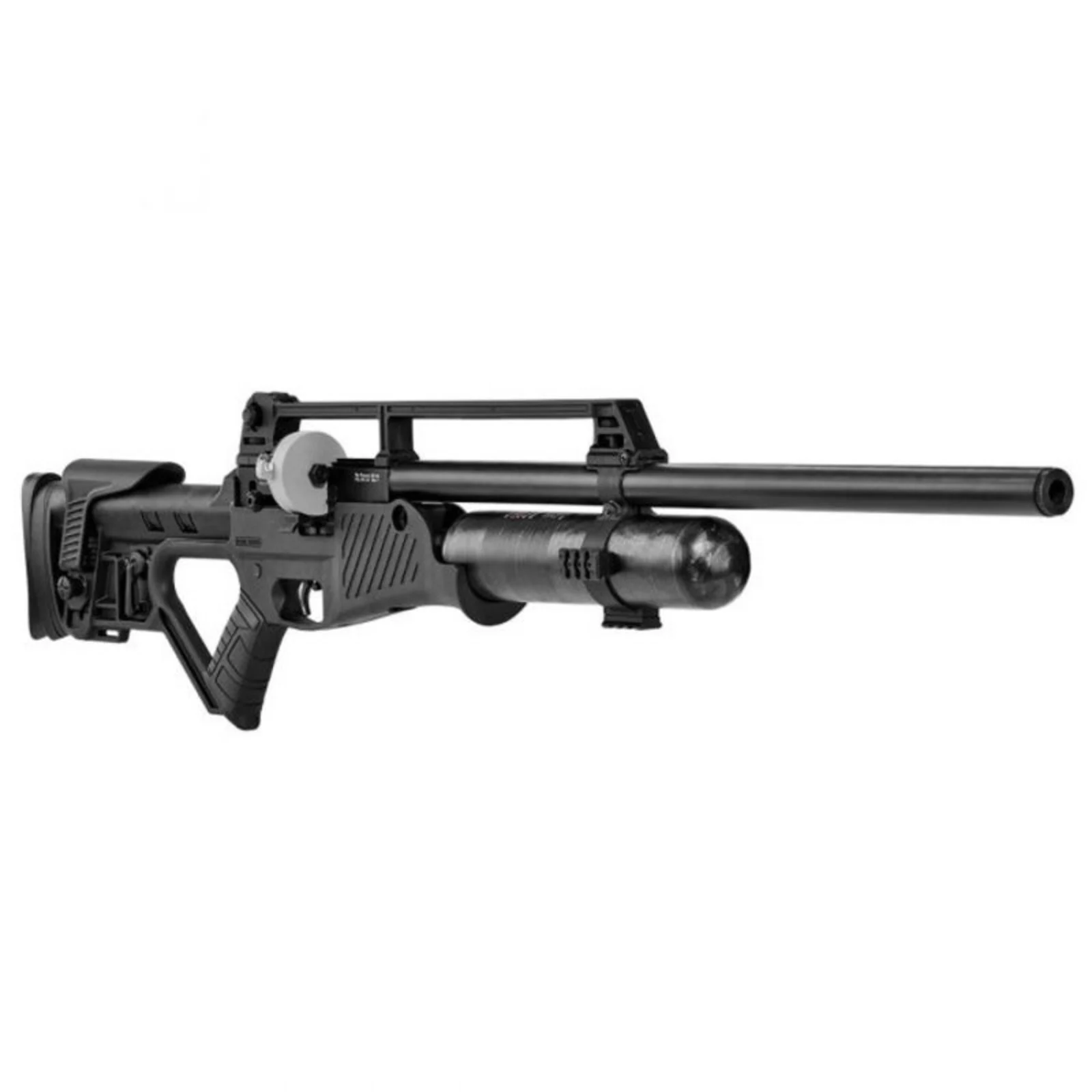
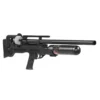
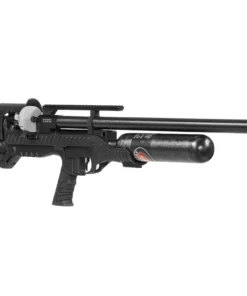
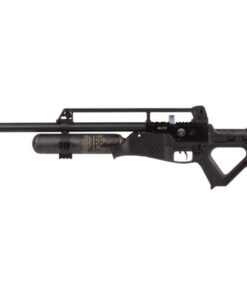
With both semi- and fully automatic firemodes, the Hatsan Blitz is unique in the world of airguns!
It combines power and precision with dynamic shooting.
The Hatsan Blitz is unique in the world of shooting sports because it combines power and precision with dynamic shooting.
This compressed air rifle has the ability to fire both semi-automatically and fully automatic.
Automatic PCP rifle
The Blitz uses a piston system inside the barrel shroud to load a new pellet after every shot.
This shroud also functions as a protective layer for the barrel.
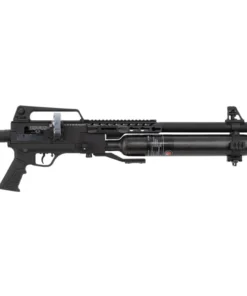
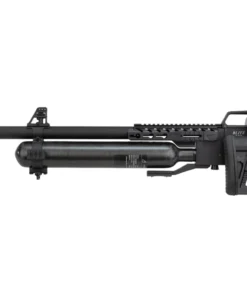
Furthermore, the Blitz is equipped with Hatsan’s “double rails”.
This allows optics with both 11mm and 22mm mounts.
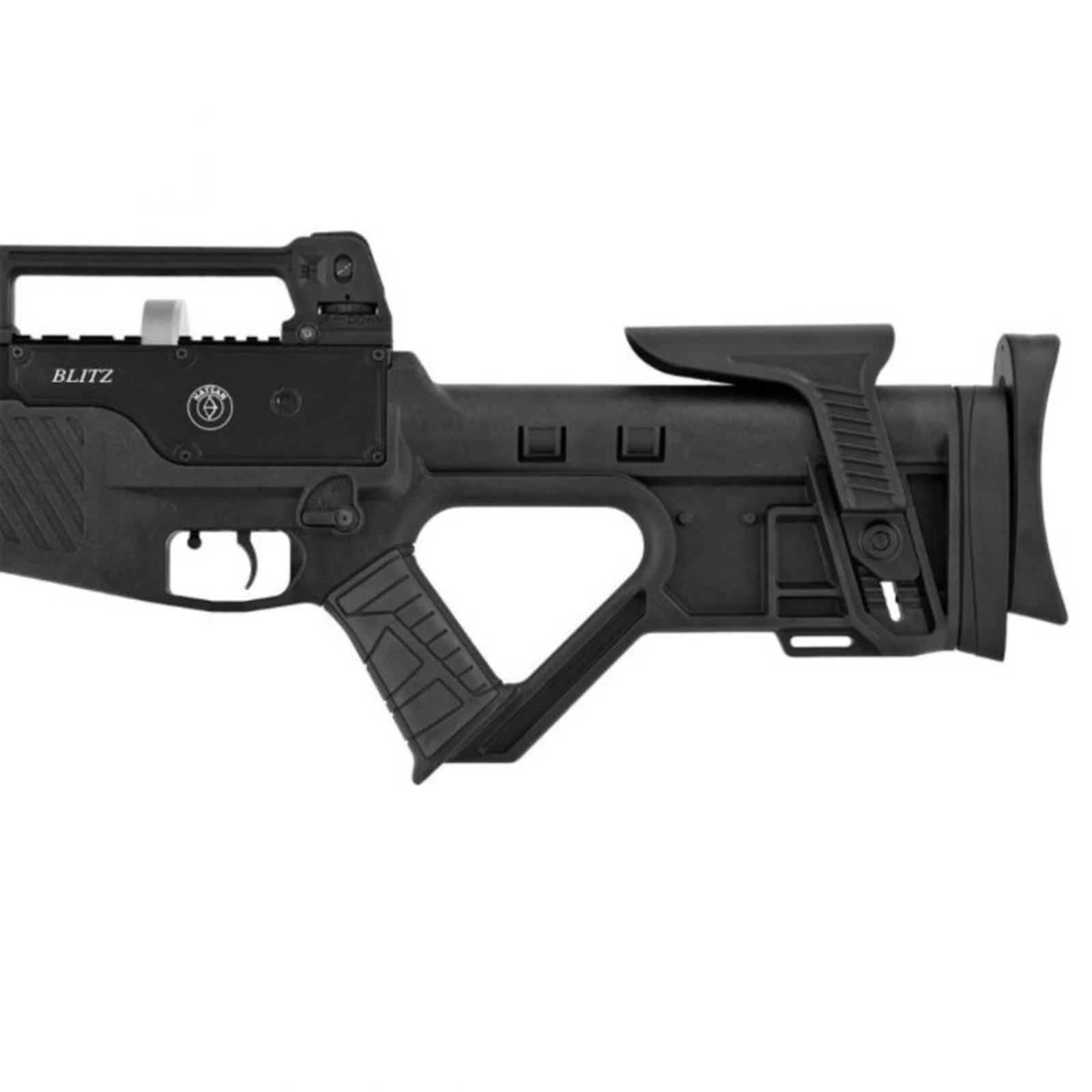
The stock has a “tactical” appearance and the cheek piece is adjustable in height.
Thanks to the 4 connection points for 22mm rails, there is enough space for all kinds of accessories such as bipods, laser, lamps and more.
The Blitz comes along with 2 magazines.
These magazines accept ammunition up to 12mm in length.
Questions about this rifle? Also look at the specifications or feel free to contact us for advice.
| Power source: | Pre compressed pneumatic (PCP) |
| Caliber: | 5.5mm (.22) | 6.35 (.25) | 7.62 (.30) |
| Muzzle energy: | 49 | 56 | 72 joules |
| Fill pressure: | 250 bar |
| Air capacity: | 580cc |
| Regulator: | No |
| Operating system: | Semi-/full-auto (approx. 1000 rpm) |
| Magazine: | 21 | 19 | 16 shots |
| Max. projectile length: | 12mm |
| Optic mounting: | 9-11mm dovetail | 22mm Picatinny |
| Weight: | |
| Length: | 1150mm |
| Barrel length: | 585mm |
| Muzzle: | Non threaded |
| Accessories: | 2 magazines, fill-probe |
Hatsan Blitz Full Auto PCP Air Rifle: Select-Fire Power, High Capacity, and Tactical Precision
Why Choose the Hatsan Blitz Full Auto PCP?
The main reason to choose this hatsan air rifle is its combination of rapid fire, large air capacity, interchangeable magazines, and practical tactical controls. Consequently, it supports reactive target shooting and recreational range use without requiring the shooter to operate a bolt or sidelever after every shot.
The platform also includes a fully shrouded, precision-rifled and choked barrel, an ambidextrous polymer stock, an adjustable cheek rest, a soft rubber pistol grip, an adjustable recoil pad, and three accessory rails around the forearm. Its overall length is approximately 45.2 inches, the barrel measures 23 inches, and average weight is about 8.8 pounds.
Buyers searching for hassan blitz should note that the correct brand spelling is Hatsan. Products distributed through hatsanusa and hatsan usa may differ in availability, configuration, warranty coverage, and local compliance, so regional product information should always be checked before purchase.
How Does the Select-Fire System Work?
Before operation, clean and dry compressed air is introduced into the bottle through compatible high-pressure filling equipment. After a loaded magazine is installed, the selector determines whether one pellet or a sequence of pellets is discharged with each trigger activation.
This system separates the Blitz from an ordinary air pellet gun or co2 pellet rifle. Carbon-dioxide platforms rely on disposable or refillable gas cartridges, whereas this design uses a large high-pressure reservoir. Because the action depends on compressed air, shot count naturally changes according to caliber and firing style. Hatsan lists approximately 130 optimal-velocity shots in .22, 110 in .25, and 100 in .30 under suitable conditions.
How Good Is Its Precision?
Rapid operation is only useful when supported by reliable barrel engineering. Therefore, a precision-rifled and choked barrel is used to stabilize the pellet and promote repeatable flight. The full-length shroud also surrounds the barrel while contributing to a cleaner tactical profile.
Accuracy still depends on pellet selection, stable optic mounting, controlled trigger pressure, consistent bottle pressure, and disciplined follow-through. Many shooters test designs such as h&n field target trophy to determine whether the individual barrel produces acceptable groups. However, no single pellet is guaranteed to perform best in every rifle or caliber.
Full-automatic fire is most appropriate for close-range reactive targets where legally permitted. In contrast, deliberate semi-automatic fire generally provides greater ammunition efficiency and tighter groups.
Where and When Should It Be Used?
The rifle is best suited to authorized outdoor ranges, controlled private shooting areas, and lawful recreational applications with a secure backstop. Local regulations must be checked carefully because fully automatic airgun ownership, power limits, magazine capacity, transportation, and permitted shooting locations vary significantly between jurisdictions.
The platform should never be discharged without knowing what lies beyond the target. Moreover, eye protection, hearing protection where appropriate, safe muzzle discipline, secure storage, and adult supervision are essential.
Comparison with Other Hatsan PCP Platforms
The Hatsan lineup includes many platforms created for different shooting priorities. The CARABINA HATSAN PCP BT65 SB ELITE and searches for hatsan bt65.25 specifications generally relate to a powerful manually operated pneumatic rifle rather than a select-fire design.
The hatsan sortie, hatsan sortie tact, and hatsan sortie tact semi-auto pcp emphasize compact semi-automatic operation. The hatsan velox offers pistol-style handling, while the hatsan jet and hatsan jet 2 provide modular compact configurations. Buyers searching for a hatsan jet i pcp .22 caliber pellet rifle kit should recognize that the Jet family differs substantially in reservoir size, overall output, magazine arrangement, and intended use.
The hatsan flash, hatsan flashpup qe, and hatsan bullboss provide manually cycled alternatives. In addition, the hatsan invader uses semi-automatic operation and is available in .22 and .25 calibers, but it does not provide the same full-auto capability.
Comparison with High-Power and Big-Bore Models
The hatsan hercules, hatsan hercules bully, and hercules bully air rifle are designed around high-capacity PCP performance. Meanwhile, the hatsan piledriver is a specialized big-bore platform offered in several large calibers with substantially greater muzzle energy and different lawful hunting applications.
The hatsan harpoon launches arrows rather than pellets, so its ammunition and intended applications are entirely different. Likewise, the phrase hatsan neutron star may be used informally or incorrectly in product searches; buyers should verify the exact official model before ordering.
Comparison with Break-Barrel Models
The hatsan model 95, hatsan mod 95, hatsan 95, and model 95 refer to traditional single-shot break-barrel platforms. Similarly, the hatsan 135, hatsan airtact air rifle, and hatsan mod 25 use different powerplants and loading procedures.
These models do not require an external high-pressure filling source, but they cannot provide the same rapid magazine-fed operation. Therefore, customers comparing them should consider operating cost, firing speed, power requirements, maintenance, and intended shooting distance rather than focusing on velocity alone.
Accessories, Maintenance, and Buying Importance
The rifle requires clean compressed air, correctly sized pellets, compatible filling equipment, and careful magazine handling. A hatsan sortie threaded adapter is intended for another product family and should not automatically be assumed compatible with this platform.
A hatsan refurbished rifle may offer lower upfront cost, although buyers should verify its service history, bottle condition, seals, magazine function, warranty, and authorized seller status.
Ultimately, hatsan created the Blitz for shooters who prioritize select-fire operation, high-capacity air storage, rapid follow-up shots, and tactical handling. Its large bottle, caliber options, adjustable stock components, precision barrel, and included magazines make it a distinctive choice within the modern pneumatic market.
Advanced Engineering, Select-Fire Performance, and Real-World Accuracy
Innovative Operating System
Modern pneumatic engineering has advanced significantly over the past decade, and this rifle showcases how those improvements can transform the overall shooting experience. Every major internal component has been carefully designed to work together, providing smooth cycling, dependable reliability, and impressive consistency throughout extended shooting sessions.
Instead of requiring manual cycling after every shot, the action automatically chambers the next projectile while sufficient air pressure remains available. This operating principle allows the shooter to remain focused on target acquisition without interrupting shooting rhythm.
The result is faster engagement, smoother operation, and a more enjoyable experience during recreational or competitive use.
Benefits of a High-Capacity Air Reservoir
A large air reservoir provides more than extended shooting time.
Greater stored air volume allows the system to maintain stable operating pressure across a larger number of shots before refilling becomes necessary.
This offers several practical advantages:
- Reduced interruptions during practice.
- Longer shooting sessions.
- Improved operational efficiency.
- Better consistency throughout the usable shot string.
- Increased convenience when shooting away from filling equipment.
Proper pressure management also helps maintain reliable cycling while preserving overall mechanical performance.
Consistent Air Delivery
Stable air delivery is essential for dependable accuracy.
Rather than relying on inconsistent pressure changes, the firing system has been engineered to release controlled bursts of compressed air during each firing cycle.
Although velocity naturally changes as reservoir pressure decreases, efficient valve design helps maintain predictable performance throughout the optimal operating range.
This consistency allows shooters to spend more time refining technique instead of making frequent sight adjustments.
Rapid Follow-Up Capability
One of the platform’s defining characteristics is its ability to deliver extremely fast follow-up shots.
During recreational shooting, rapid cycling allows multiple targets to be engaged efficiently while maintaining a steady shooting position.
When slower, deliberate shooting is preferred, careful trigger control encourages more precise shot placement and improved ammunition management.
This flexibility allows the shooter to adapt firing speed according to the intended activity instead of being limited to a single operating style.
Precision Barrel Design
Accuracy begins with a well-manufactured barrel.
Precision rifling stabilizes the projectile by imparting controlled rotational spin as it travels toward the muzzle.
Consistent internal dimensions contribute to repeatable projectile engagement while minimizing unnecessary variation between shots.
Selecting quality ammunition that matches the barrel’s individual preferences further enhances overall precision.
Many experienced shooters evaluate several projectile designs before determining which consistently produces the smallest group sizes.
Ergonomics Designed for Stability
Comfort directly influences shooting performance.
An adjustable stock allows shooters to achieve proper shoulder positioning while maintaining comfortable eye alignment behind the optic.
The textured grip improves control under a variety of weather conditions, while the fore-end provides multiple support options depending on shooting position.
Balanced weight distribution also helps reduce fatigue during extended shooting sessions.
These ergonomic features allow the shooter to maintain consistent body positioning while improving overall handling.
Optimizing Optical Performance
A quality optic performs best when mounted securely and properly adjusted.
Before each shooting session, mounting hardware should be inspected to confirm that all fasteners remain tight.
Once zeroed, maintaining consistent cheek placement behind the optic helps preserve repeatable eye alignment and reduces aiming errors.
Parallax adjustment, magnification selection, and careful focus all contribute to improved target identification across varying distances.
Routine inspection ensures that the optic continues performing reliably after extended use.
Environmental Factors and Practical Accuracy
Outdoor shooting conditions constantly influence projectile flight.
Wind remains the most significant environmental factor affecting accuracy, particularly as shooting distance increases.
Temperature, humidity, atmospheric pressure, and lighting conditions also contribute to subtle variations in trajectory.
Learning to recognize these influences allows shooters to make informed adjustments before firing rather than relying solely on equipment corrections.
Experience gained under varying conditions gradually develops stronger practical shooting skills.
Building Consistent Marksmanship
Mechanical quality provides an excellent foundation, but disciplined technique ultimately determines real-world performance.
Successful shooters concentrate on:
- Stable body positioning.
- Controlled breathing.
- Smooth trigger pressure.
- Consistent follow-through.
- Proper sight alignment.
- Careful observation of environmental conditions.
- Maintaining identical shooting form for every shot.
Developing these habits through regular practice produces measurable improvements over time.
Engineered for Long-Term Reliability
Reliable performance depends on thoughtful engineering combined with responsible ownership.
Durable materials, precision manufacturing, and robust internal components contribute to dependable operation throughout thousands of shooting cycles.
Routine inspections, careful handling, proper storage, and scheduled maintenance further preserve mechanical integrity while reducing long-term wear.
With consistent care and disciplined shooting practices, the platform continues delivering reliable accuracy, smooth cycling, and dependable performance across many years of recreational shooting and organized range use.
Maintenance, Care, and Long-Term Reliability
Establishing a Consistent Maintenance Routine
Routine maintenance is one of the most important factors in preserving long-term performance, accuracy, and reliability. Although modern pneumatic rifles are engineered for durability, regular care helps prevent unnecessary wear while ensuring every component continues to function as intended.
After each shooting session, wipe the exterior with a clean microfiber cloth to remove dust, fingerprints, moisture, and other contaminants. Exposed metal surfaces should receive a light coating of protective oil designed for sporting equipment. Excess lubricant should always be removed because accumulated oil can attract dirt and debris.
Developing a simple maintenance routine after every use helps maintain both appearance and dependable mechanical operation.
Barrel Maintenance
The barrel has a direct influence on long-range precision and should receive careful attention throughout the rifle’s service life.
Unlike powder-burning firearms, pneumatic rifles generate relatively little fouling. As a result, frequent aggressive cleaning is unnecessary and may temporarily reduce accuracy until the barrel becomes properly conditioned again.
Cleaning should generally be performed only after extended use or when noticeable changes in group size occur.
Use only non-abrasive cleaning equipment intended for precision airgun barrels. Pull-through cleaning systems or coated cleaning rods help protect the rifling while removing accumulated residue.
Avoid harsh solvents, steel brushes, or excessive force that could damage the barrel’s internal finish.
Caring for the Air System
Reliable operation depends on maintaining a clean and properly functioning high-pressure air system.
Only clean, dry compressed air from dependable filling equipment should be introduced into the reservoir. Moisture entering the system may eventually contribute to corrosion or premature seal deterioration.
Filling should always be performed gradually to minimize heat buildup while allowing pressure to stabilize naturally.
The recommended maximum fill pressure should never be exceeded. Following proper filling procedures improves safety while helping preserve long-term performance.
Regular inspection of the fill connection, pressure gauge, and surrounding components helps identify developing issues before they become significant.
Protecting Internal Seals
Internal seals play a vital role in maintaining consistent pressure throughout the firing cycle.
Although manufactured for extended service life, seals naturally experience gradual wear after repeated filling and shooting cycles.
Possible signs of wear include:
- Slow pressure loss during storage.
- Reduced shot consistency.
- Audible air leakage.
- Lower operating efficiency.
- Irregular firing behavior.
Addressing these issues promptly helps restore normal operation while preventing unnecessary wear on other mechanical components.
Whenever internal servicing becomes necessary, qualified technicians should perform the work using appropriate replacement parts.
Magazine Maintenance
Reliable feeding begins with a clean magazine.
Dust, dirt, and small particles may gradually interfere with smooth operation if maintenance is neglected.
After extended shooting sessions, magazines should be inspected for debris and cleaned carefully using compressed air or a dry cloth.
Projectiles should always be loaded gently to prevent deformation before they enter the chamber.
Proper magazine care contributes to dependable feeding and improved shooting consistency.
Stock and Exterior Protection
The stock and external components deserve the same level of care as the internal mechanism.
Avoid prolonged exposure to excessive moisture, direct sunlight, or extreme temperature changes.
After shooting in damp conditions, every exposed surface should be dried thoroughly before storage.
Minor surface marks can often be minimized using maintenance products formulated for sporting equipment, while deeper damage should be repaired before it worsens.
Routine inspection also helps preserve the rifle’s appearance throughout years of ownership.
Safe Storage Practices
Correct storage conditions significantly influence long-term durability.
The rifle should always be stored unloaded inside a secure location that prevents unauthorized access.
A cool, dry environment provides the best protection against corrosion, excessive humidity, and unnecessary deterioration of seals and external materials.
Protective cases, lockable cabinets, or dedicated safes reduce the likelihood of accidental impacts while keeping dust and moisture away from sensitive components.
If long-term storage is planned, periodic inspections should confirm that pressure, seals, and visible components remain in excellent condition.
Maintaining Peak Accuracy
Consistent precision requires attention to both equipment and technique.
High-quality projectiles should be stored carefully to prevent contamination or physical damage.
Optics should be checked periodically to ensure that mounting hardware remains secure and correctly aligned.
Environmental conditions such as wind, humidity, temperature, and lighting should always be considered when evaluating accuracy because each influences projectile flight differently.
Maintaining detailed shooting records allows patterns to emerge, making it easier to identify combinations of distance, ammunition, and weather conditions that consistently produce the best results.
Routine Pre-Shooting Inspection
A brief inspection before every shooting session helps prevent unexpected interruptions.
Recommended inspection steps include:
- Confirm that all visible fasteners remain secure.
- Verify that the optic has maintained its zero.
- Inspect the barrel for obstructions.
- Check the reservoir pressure.
- Ensure all controls operate smoothly.
- Verify proper trigger function.
- Examine the stock for visible damage.
- Confirm overall cleanliness before use.
Completing these checks requires only a few minutes while greatly improving reliability and confidence.
Safe Maintenance Procedures
Safety should remain the highest priority during every maintenance procedure.
Always confirm that the rifle is unloaded before beginning any inspection or cleaning.
Keep the muzzle pointed in a safe direction throughout the maintenance process.
Protective eyewear is recommended whenever working around pressurized components or mechanical assemblies.
Never force moving parts beyond their intended operating range, and discontinue use immediately if damaged components are discovered.
Responsible maintenance protects both the equipment and the shooter.
Long-Term Ownership Benefits
A well-maintained pneumatic rifle can provide many years of dependable service with relatively modest upkeep.
Routine cleaning, careful handling, proper storage, and periodic inspections preserve mechanical integrity while minimizing long-term maintenance costs.
Owners who invest time in preventive care often experience greater reliability, more consistent accuracy, and increased confidence during every shooting session.
Combined with disciplined practice and responsible use, these maintenance habits allow the rifle to remain a dependable companion for recreational shooting, precision target practice, and other lawful sporting applications throughout its service life.
Practical Applications, Buying Considerations, and Ownership Experience
Built for Versatile Shooting Experiences
A high-performance pneumatic rifle should deliver more than impressive specifications on paper. It should provide dependable handling, predictable operation, and the flexibility to perform well across different shooting disciplines. Whether used for recreational target practice, dynamic range sessions, precision shooting, or lawful pest management where regulations permit, versatility remains one of its greatest strengths.
Its advanced operating system allows shooters to adapt their shooting style according to the situation. Deliberate, carefully aimed shots can maximize precision during target work, while faster firing capabilities create an exciting experience during recreational shooting on properly designed ranges.
This adaptability makes the platform suitable for experienced enthusiasts seeking both performance and enjoyment.
Improving Real-World Accuracy
Consistent accuracy is developed through preparation and disciplined shooting habits rather than equipment alone.
Before every session, confirm that the optic remains securely mounted and properly zeroed. Even slight movement can affect point of impact, particularly at extended distances.
Maintaining identical body position, cheek weld, grip pressure, and shoulder placement for each shot helps eliminate unnecessary variables.
Trigger pressure should be applied smoothly without disturbing the sight picture. Proper follow-through after every shot allows the projectile to leave the barrel before any significant movement occurs.
Small improvements in technique often produce greater gains than frequent equipment adjustments.
Choosing Appropriate Shooting Distances
Progressive training builds confidence while improving overall marksmanship.
Short-distance practice allows shooters to verify equipment setup while refining trigger control and breathing technique.
Intermediate distances introduce additional challenges involving projectile trajectory and environmental influences.
Longer distances require greater attention to wind estimation, holdover, and sight adjustments.
Gradually increasing shooting distance encourages steady improvement while helping shooters better understand projectile behavior under varying conditions.
Understanding Environmental Conditions
Outdoor shooting environments constantly change.
Wind speed and direction remain the most significant factors affecting projectile flight. Even light crosswinds can noticeably alter impact location as distance increases.
Temperature, humidity, atmospheric pressure, and lighting conditions also contribute to subtle variations in performance.
Experienced shooters learn to observe surrounding vegetation, dust movement, or lightweight wind indicators before firing.
Developing this awareness allows more accurate corrections while improving consistency during outdoor shooting sessions.
Building Effective Practice Habits
Purposeful practice consistently produces better long-term results than simply firing large numbers of shots.
Each session should focus on a limited number of objectives, allowing skills to improve through repetition and careful evaluation.
Useful training goals include:
- Improving breathing control.
- Refining trigger technique.
- Practicing multiple shooting positions.
- Confirming optic adjustments.
- Measuring group sizes.
- Evaluating different projectile designs.
- Recording environmental conditions.
- Reviewing previous shooting performance.
Maintaining detailed records allows gradual progress to be measured while identifying techniques that consistently deliver the best results.
Equipment Inspection Before Every Session
A thorough inspection before shooting contributes to both safety and reliability.
Important inspection points include:
- Confirm that all visible fasteners remain properly tightened.
- Verify that the optic has maintained its zero.
- Inspect the barrel for obstructions.
- Check the pressure level before shooting.
- Ensure all controls move smoothly.
- Examine the stock for visible damage.
- Verify correct trigger and safety operation.
- Confirm overall cleanliness.
These routine checks require only a few minutes while significantly reducing the likelihood of unexpected problems during use.
Responsible Ownership
Responsible ownership begins with understanding both safety principles and applicable local laws.
The rifle should always remain unloaded whenever it is not actively being used.
Storage should prevent unauthorized access by using secure cabinets, safes, or lockable cases.
Transportation should comply with all local regulations, and every shooting location should provide a safe backstop capable of completely stopping the projectile.
Respecting property boundaries, observing legal shooting areas, and practicing good sportsmanship help maintain a positive reputation for the shooting community.
Long-Term Value
Quality equipment represents an investment that can provide dependable service for many years.
Routine maintenance, careful handling, and proper storage preserve mechanical performance while reducing long-term repair costs.
Replacing worn components before they fail, maintaining clean operating conditions, and inspecting equipment regularly all contribute to dependable reliability.
These preventive measures also help maintain consistent accuracy throughout the rifle’s service life.
Is This the Right Choice?
This platform is well suited for shooters seeking advanced engineering, reliable operation, and exceptional versatility in a modern pneumatic rifle.
Its combination of rapid operation, high-capacity air storage, ergonomic design, and precision-focused construction allows it to perform effectively across a variety of shooting activities.
Owners willing to invest time in learning proper technique and maintaining their equipment will benefit from dependable performance and continued improvement in shooting ability.
Final Thoughts
Selecting a quality air rifle involves more than comparing specifications. Long-term satisfaction depends on reliability, ease of maintenance, practical performance, and the owner’s commitment to responsible use.
With disciplined practice, regular maintenance, and careful attention to environmental conditions, shooters can achieve excellent consistency while extending the lifespan of their equipment.
When supported by proper care and sound shooting fundamentals, this rifle provides years of dependable operation, rewarding accuracy, and an enjoyable ownership experience for recreational shooters, target enthusiasts, and responsible field users.
Be the first to review “Hatsan Blitz Full Auto PCP”
Related products
Hatsan
Hatsan
Reviews
There are no reviews yet.