
FX Dreamline Tacticle

$1,100.00
FX Dreamline Tactical
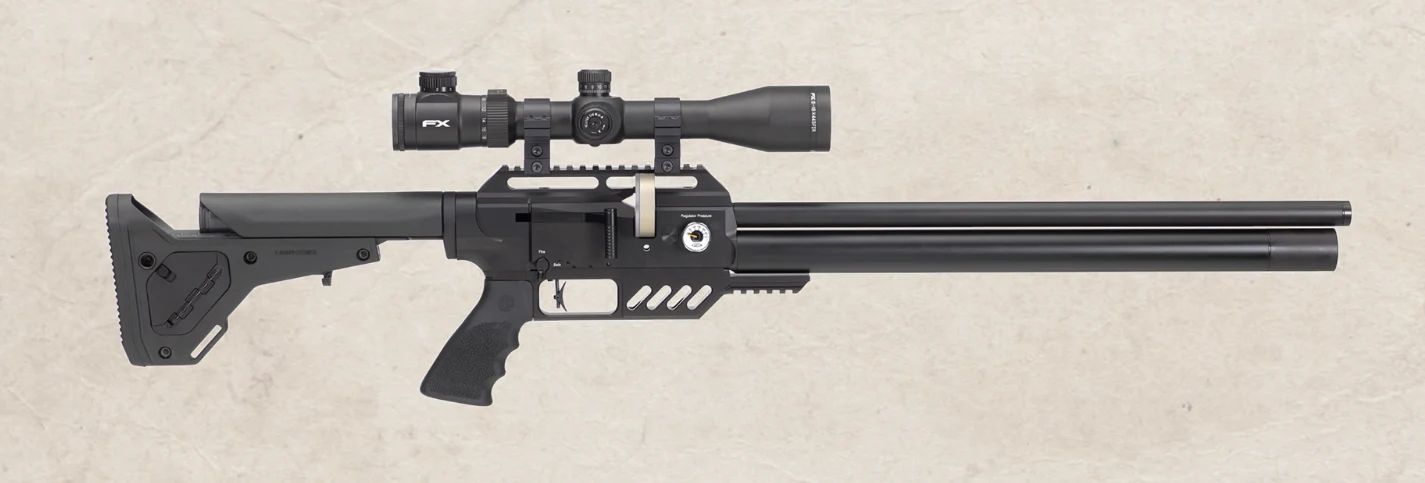
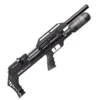
The FX Dreamline Tactical is most suited to the user who likes a very tactical looking air rifle Featuring a picatiny rail on the top for mounting a scope and another rail included on the underside of the gun for a Bi-pod, a Hogue style AR pistol grip is included as standard.
Furthermore there are four different rear stocks you can have, the rear stocks are adjustable in length and height as to suit your style of shooting, please note that the FX Dreamline Tactical will not come with a rear stock as standard, this will have to be ordered as extra. The stock options you can have are an AR style Hogue stock in either black or FDE, the other stock option is a Magpul stock UBR Gen 2 or a Magpul Carbine Stock.
FX Dreamline Tactical – Modular Swedish PCP Precision With AR-Style Ergonomics
The FX Dreamline Tactical is one of the most adaptable rifles in the Dreamline family, combining regulated PCP performance with an AR-inspired chassis layout and extensive modularity. FX developed the Dreamline platform as a fully modular airgun system, allowing the same basic action to be converted between multiple configurations. In Tactical form, the rifle uses a sidelever cocking system, Picatinny optics rail, adjustable match trigger, externally adjustable AMP regulator, high-capacity rotary magazine, and AR15-ready stock interface. Historical FX specifications also list 230-bar fill pressure and approximately 2.1 kg weight without the stock.
FX Airguns Sverige and Swedish Modular Engineering
Searches for fx airguns sverige, fx airguns sweden, fx airguns, fxairguns, fx, fx usa, fx airguns usa, and fx outdoors naturally connect with the Swedish manufacturer behind this platform.
For shooters researching an fx air rifle, fx air guns, air rifle, air guns, air gun, pellet gun, pcp airguns, pcp air gun, fx pcp, luftgevær, or other high end air rifles, the Dreamline Tactical stands out because it combines traditional pneumatic accuracy with a highly configurable chassis concept FX Dreamline Tacticle.
Smooth Twist X Barrel System
The rifle uses FX’s Smooth Twist X Match Grade barrel system. FX describes the Dreamline barrel as free-floating and equipped with an interchangeable liner architecture, allowing different barrel liners and twist configurations to be fitted for different projectile requirements.
Historical Tactical specifications list 500mm barrels in .177 and .22, while .25 and .30 versions were listed with 600mm barrels.
This makes projectile testing especially important.
Shooters evaluating fx pellets or fx halo slugs should always match ammunition to the exact calibre and liner installed in the rifle.
AMP Regulator and Adjustable Performance
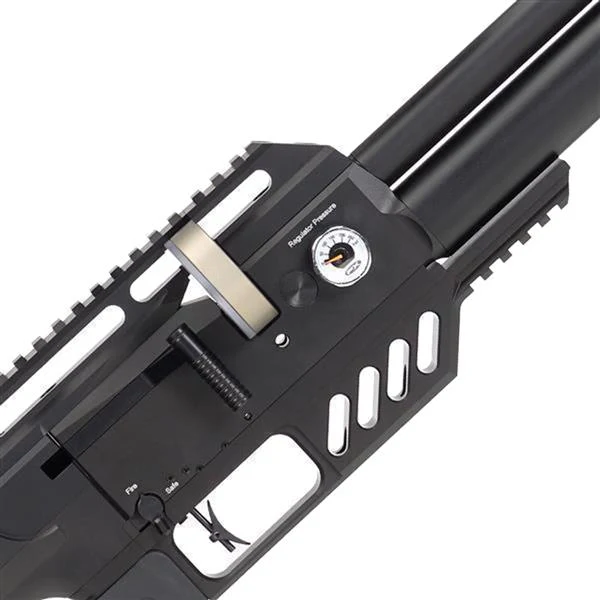
The Dreamline platform uses an externally adjustable AMP regulator. FX states that regulator pressure, hammer tension, and valve flow can all be fine-tuned, allowing the rifle to be balanced around the selected calibre and projectile.
For users who want measured performance rather than estimates, an fx chronograph or fx pocket chronograph can be useful for checking velocity consistency.
AR-Style Tactical Configuration
The Tactical version differs from a traditional sporter because it is designed around AR-style furniture.
Historical specifications list the rifle as AR15 Ready, with a Hogue-style pistol grip included while the shoulder stock itself was not included in the original basic Tactical specification.
This gives the shooter greater flexibility when choosing stock geometry, cheek position, and overall fit.
High-Capacity Magazine and Sidelever Action
The Tactical uses a removable high-capacity rotary magazine indexed by a smooth sidelever.
FX’s 2019 specifications list capacities of 22 shots in .177, 18 in .22, 16 in .25, and 13 in .30.
This combination supports extended target sessions while keeping operation straightforward.
FX Dreamline and Dreamline Classic Comparison
Searches for fx dreamline and fx dreamline classic often come from users comparing different members of the same modular family.
The Classic uses more conventional sporting furniture.
The Tactical uses AR-style ergonomics and Picatinny mounting.
The important point is that both share the same core modular Dreamline concept.
FX explicitly describes the system as capable of being changed between multiple Dreamline configurations.
FX Impact M4 Comparison
Modern buyers may also compare the rifle with fx impact m4, fx m4, impact m4, impact m4 500mm, impact m4 air rifle, impact m4 ballistic coefficient, and fx impact m4 for sale.
The newer Impact platform is more advanced in its external adjustment systems and compact bullpup-style architecture.
The Dreamline Tactical is simpler and more conventional in layout while still offering regulator, hammer, and valve adjustment.
FX Impact M3 and Earlier Impact Models
Searches for fx impact m3, f x impact m3, fx m3, fx m3 airgun, fx impact m3 air rifle, fx impact m3 .22cal air rifle, fx impact m3 .22cal air rifle. 600mm barrel, fx impact, f x impact, and fx impact air rifle represent another common comparison path.
The Dreamline shares some design philosophy with these rifles, particularly modular barrel technology and adjustable air management, but it remains mechanically and ergonomically distinct.
FX Panthera MkII and Competition Platforms
The FX Panthera MkII, fx panthera, and fxpanthera represent a more competition-oriented approach.
Those rifles emphasize extended chassis support, positional shooting, and highly specialized precision setups.
The Dreamline Tactical offers a more general-purpose modular configuration.
FX DRS Tactical, DRS Classic and DRS Pro
The fx drs, fx drs classic, fx drs tactical, fx drs pro, and fx drs air rifle represent a newer generation of FX designs.
The DRS family uses a different air-cylinder arrangement and a slimmer rifle profile.
The Dreamline Tactical instead centers on its modular receiver and AR-style furniture compatibility.
FX Leopard, Wildcat, Maverick, Crown and King Comparisons
Other related searches include fx leopard, fx leopard airgun, fx leopard air rifle, fx wildcat, fx wildcat mk3, fx maverick, fx king, fx dynamic, fx dynamics, fx crown, fx crown mk2, fx crown mkii, and fx crown mkll.
Each platform approaches portability, air capacity, stock design, tuning, and shooting position differently.
The Dreamline Tactical is notable because it combines modularity with relatively straightforward mechanical controls.
Fill Pressure, Air Capacity and Practical Use
FX’s historical Tactical specification lists a maximum fill pressure of 230 bar.
The specification also lists 220cc air capacity for .177 and .22 versions and 290cc for .25 and .30 configurations, with dual gauges showing airtube and regulator pressure.
These details make it easier for the shooter to monitor the air system and maintain consistent performance across a useful shot string.
Reximex Lyra K and Alternative PCP Comparisons
Buyers researching competing rifles may also search for Reximex Lyra K, reximex, reximex airguns, reximex throne gen2, reximex throne gen 2, reximex гр, reximex mito, reximex mitos, reximex rра, reximex lieva, reximex accura pcp air rifle, Reximex Lyra-K PCP air rifle, Reximex Lyra-K airgun, and Reximex Lyra-K review.
These are different platforms with their own regulators, stocks, magazine systems, and internal architecture and should not be treated as specification equivalents.
Energy and Velocity Research
Search terms such as tps to joules calculator, Tps joule calculator, fps to ft Ibs, and airgun joules calculator are commonly used when comparing projectile energy.
Broader product-research terms such as gunseek, roxy max, and mx rex may also appear during general PCP research.
Actual energy should always be calculated from measured velocity and verified projectile weight rather than from a generic figure copied from another calibre.
Why Choose the FX Dreamline Tactical?
The strongest reason to choose the Dreamline Tactical is flexibility.
The Smooth Twist X barrel architecture allows calibre and liner changes. The externally adjustable regulator, hammer system, and valve control provide useful performance adjustment. The sidelever action makes cycling smooth. The high-capacity magazine reduces interruptions during extended sessions. The Picatinny rail simplifies optics mounting, while AR-style furniture compatibility gives the shooter more freedom to tailor fit and ergonomics.
Its combination of modularity, manageable weight, traditional rifle-length ergonomics, adjustable pneumatic performance, and Swedish engineering makes it particularly attractive to shooters who want one platform that can be adapted over time rather than replaced whenever their shooting style changes.
For users who value versatility, precision, familiar tactical ergonomics, and a design that can evolve with different accessories and configurations, the FX Dreamline Tactical remains one of the most distinctive modular PCP concepts in the manufacturer’s catalogue.
Practical Accuracy, Adjustable Performance, Handling and Long-Term Use
A Flexible Platform for Different Shooting Styles
One of the strongest qualities of this rifle is its adaptability. The design allows the shooter to configure the platform around different shooting positions, optics, stock preferences, and projectile choices without changing the entire rifle.
This flexibility is especially useful for shooters whose needs may change over time.
A user may begin with general target shooting.
Later, the same platform can be configured for supported precision work, bench shooting, tripod use, or other lawful sporting applications.
Rather than forcing the shooter into one fixed configuration, the design provides a strong mechanical foundation that can be adjusted to suit different preferences.
Why Ergonomics Matter
Good ergonomics help the shooter remain comfortable and consistent.
The rifle should fit the shoulder naturally.
The firing hand should reach the trigger without stretching.
The eye should align easily with the optic.
The cheek position should remain repeatable.
When these elements are correct, the shooter uses less muscular effort.
Reduced tension improves stability.
It also makes longer shooting sessions more comfortable.
Stock Adjustment
The tactical configuration can be paired with compatible stock systems that allow length and cheek position to be tailored to the shooter.
Length should be adjusted so the trigger can be reached naturally.
The shoulder should not feel compressed.
The shooter should not have to stretch forward.
A comfortable stock position makes it easier to maintain consistent contact from shot to shot.
Pistol Grip Position
The pistol grip encourages a relatively vertical firing-hand position.
This can reduce wrist strain.
It also makes it easier for the trigger finger to move independently.
A relaxed wrist contributes to better trigger control.
The grip should be held firmly enough for control but not squeezed aggressively.
Excessive tension can move the rifle during the shot.
Balance
Balance affects how the rifle behaves before the trigger is touched.
A rifle that is too front-heavy can become tiring.
A rifle that is too rear-heavy may feel unstable when supported.
The position of the optic, stock, moderator, bipod, and other accessories can all influence the center of gravity.
The shooter should therefore configure the rifle for practical balance.
A well-balanced setup settles more naturally.
Barrel Stability
A stable barrel supports consistent point of impact.
The barrel should not be subjected to unnecessary external pressure.
Support should be applied through the stock, chassis, or proper mounting points rather than directly against the barrel.
Keeping the barrel free from unwanted contact helps maintain repeatability.
Understanding Barrel Length
Different barrel lengths create different handling characteristics.
A shorter barrel produces a more compact rifle.
A longer barrel provides more distance for air to accelerate the projectile.
The best choice depends on the intended use.
For general shooting, a middle-length configuration often provides a useful balance between maneuverability and efficiency.
Projectile Selection
Projectile choice has a major effect on accuracy.
Two projectiles of the same calibre can behave very differently.
Weight matters.
However, diameter, shape, length, material consistency, and manufacturing quality also influence performance.
Testing is therefore essential.
The shooter should compare several suitable options before deciding which works best.
Testing Ammunition Fairly
Ammunition should be tested under consistent conditions.
The same distance should be used.
The same support position should be maintained.
Fill pressure should remain similar.
The optic should not be adjusted between samples unless necessary.
Several groups should be fired with each option.
Repeated results are more useful than one unusually small group.
Inspecting Projectiles
Damaged ammunition should be removed from serious testing.
Bent skirts, deformed noses, contamination, or visible defects can influence flight.
Careful inspection helps reduce unnecessary variation.
This is especially important when the shooter is trying to determine whether a problem comes from the rifle or the ammunition.
Regulated Air Delivery
A regulated system helps maintain more consistent working pressure.
As reservoir pressure falls, the regulator continues providing a controlled pressure to the firing system.
This supports stable velocity.
Stable velocity helps keep trajectory predictable.
At short distances, small velocity changes may be difficult to notice.
At longer distances, they can create visible vertical spread.
Understanding Pressure
The shooter should understand the difference between reservoir pressure and regulated pressure.
The main reservoir stores compressed air.
The regulator meters air for each shot.
Higher pressure does not automatically mean better performance.
The air system works together with hammer energy, valve timing, barrel length, and projectile resistance.
A balanced setup is more important than simply maximizing pressure.
Hammer Adjustment
Hammer energy influences how the valve opens.
Too little energy may prevent the valve from opening fully.
Too much can keep it open longer than necessary.
This wastes air.
An efficient configuration uses only the hammer energy required for the desired performance.
Once additional adjustment stops producing meaningful improvement, further increases may reduce efficiency.
Valve Control
Valve timing determines how long compressed air is released.
An efficient firing cycle allows enough air to accelerate the projectile and then closes promptly.
If the valve remains open too long, air may continue escaping after most useful acceleration has already occurred.
This reduces shot count.
It can also increase sound.
Why Maximum Output Is Not Always Best
The highest possible velocity is not automatically the most accurate.
Some projectiles become less stable when driven too fast.
Higher power also consumes more air.
A slightly lower setting may produce smaller groups while providing more shots per fill.
For precision use, actual target performance should guide the final setup.
Air Efficiency
Air efficiency means obtaining useful projectile performance without wasting compressed air.
An efficient configuration provides consistent velocity with reasonable shot count.
An inefficient setup may consume significantly more air for very little additional performance.
This makes the rifle less practical during longer sessions.
Chronograph Testing
A chronograph provides valuable information.
Several shots can be measured.
Average velocity provides a useful reference.
The difference between the fastest and slowest shots shows how much variation is present.
This data should be compared with group size.
Velocity numbers alone do not define accuracy.
Extreme Spread
Extreme spread is the difference between the highest and lowest velocity in a shot string.
A smaller spread generally indicates better consistency.
This can help reduce vertical dispersion.
However, a low spread does not guarantee tight groups.
The projectile still needs to suit the barrel.
Standard Deviation
Standard deviation shows how closely individual velocities cluster around the average.
Lower values can be useful for longer-range shooting.
However, the shooter should avoid chasing numbers without considering practical results.
The target should remain the final reference.
Establishing a Baseline
Before changing settings, the shooter should establish a known baseline.
One projectile should be selected.
The rifle should be filled consistently.
The optic should remain unchanged.
Several groups should be fired.
Velocity data can also be recorded.
This creates a reference point.
If a later adjustment improves performance, the difference becomes easier to identify.
Change One Variable at a Time
Changing several settings at once creates confusion.
If the shooter changes regulator pressure, hammer setting, ammunition, and optic position together, it becomes difficult to know what caused the result.
A better method is simple.
Change one variable.
Test the rifle.
Record the result.
Then decide whether another adjustment is necessary.
This method is slower, but far more reliable.
Keep a Shooting Log
A shooting log can save considerable time.
The shooter may record projectile type, weight, fill pressure, velocity, group size, distance, temperature, and wind.
Over time, this creates a useful performance history.
A successful setup can also be restored later if the rifle is reconfigured.
Trigger Control
The trigger is a critical connection between the shooter and the rifle.
A predictable trigger allows pressure to be applied gradually.
A sudden or inconsistent break can disturb the sight picture.
The goal is not necessarily the lightest possible trigger.
The best setup is the one that feels predictable and safe.
Trigger Finger Placement
The trigger finger should move mainly rearward.
Too much finger can pull the rifle sideways.
Too little contact may reduce control.
The exact position depends on the shooter.
Consistency matters more than copying someone else’s technique.
Grip Pressure
Grip pressure should remain controlled.
A very tight grip can create tension in the hand, wrist, and forearm.
That tension may move the rifle.
A relaxed grip allows the trigger finger to move more independently.
The same pressure should be used from shot to shot.
Shoulder Contact
The stock should contact the shoulder in a repeatable location.
Different amounts of pressure can change how the rifle settles.
Although pneumatic rifles produce limited recoil, internal movement still occurs.
Consistent shoulder pressure helps keep the firing cycle predictable.
Cheek Position
The cheek should return to the same place for every shot.
This keeps the eye aligned with the optic.
If the shooter needs to move the head around to find the full sight picture, the stock or scope position may need adjustment.
A natural position improves comfort and repeatability.
Scope Mounting
The optic should be mounted carefully.
Eye relief should be set while the shooter is in a natural firing position.
The full image should appear without stretching the neck.
Once the position is correct, the rings should be tightened evenly.
Loose mounts can create unpredictable point-of-impact changes.
Overtightening should also be avoided.
Parallax Control
Parallax can create aiming error.
If the shooter’s eye moves and the reticle appears to shift across the target, parallax is present.
The scope should be adjusted for the target distance.
This becomes especially important at higher magnification.
Correct parallax adjustment reduces errors caused by small head-position changes.
Magnification Choice
Higher magnification can make small targets easier to see.
However, it also makes natural movement appear larger.
This can cause the shooter to overcorrect.
Moderate magnification may provide better practical control.
Higher settings are most useful when the rifle is supported securely.
Zeroing
Zeroing should be performed from a stable position.
The shooter should fire groups rather than adjusting the optic after every shot.
A group shows the average point of impact.
Once the group is consistent, the optic can be adjusted.
Another group should confirm the final zero.
Confirming Zero
Zero should be checked periodically.
Transport, environmental conditions, maintenance, or accidental contact can sometimes shift the point of impact.
A short confirmation session before important shooting can prevent surprises.
Bench Shooting
A bench provides one of the best environments for evaluating mechanical performance.
The rifle should be supported consistently.
A front rest or bipod can reduce movement.
A rear bag can provide fine elevation control.
The rifle should sit naturally.
Excessive clamping should be avoided.
Front Support Position
The same support point should be used from shot to shot.
Changing the position can alter balance and pressure.
This may change how the rifle settles.
Consistency makes results easier to compare.
Rear Bag Technique
A rear bag allows precise elevation control.
Gentle squeezing raises or lowers the aiming point.
The shooter should use similar pressure for each shot.
Large changes can alter the rifle’s position.
Practice improves repeatability.
Bipod Use
A bipod can provide excellent support.
The shooter should apply consistent forward pressure.
Too much pressure can change the way the rifle settles.
Too little can allow unnecessary movement.
The same technique should be repeated for every shot.
Tripod Use
A tripod can provide strong support from standing or uneven terrain.
The rifle should be balanced carefully.
The shooter should avoid forcing the system sideways.
Tripod shooting requires a different technique from bench shooting.
Practice is important.
Standing Position
Standing is one of the least stable shooting positions.
The rifle will move naturally.
The shooter should not try to eliminate all movement.
Instead, a balanced stance and relaxed upper body should be used.
The shot can be released during the most stable part of the natural movement.
Kneeling Position
Kneeling provides more stability.
The shooter can use body structure rather than relying entirely on muscle.
The position should feel comfortable.
A strained posture is difficult to repeat.
Sitting Position
Sitting can provide excellent support.
The arms can be supported against the legs.
Different positions may be tested.
The shooter should choose the arrangement that offers the best balance between comfort and stability.
Breathing Technique
Breathing naturally moves the upper body.
Many shooters release the shot during the pause after exhaling.
The pause should remain comfortable.
If the shot is not ready, the shooter should breathe normally and restart.
Long breath holds create tension.
Follow-Through
The firing sequence continues after the trigger breaks.
The shooter should keep the eye behind the optic.
Cheek position should remain stable.
Shoulder pressure should remain unchanged.
Moving immediately after the shot can reduce consistency.
Calling the Shot
Experienced shooters often know when a shot was poorly executed.
If the reticle moved during the trigger break, the shooter may predict the direction of the error.
This is known as calling the shot.
It helps distinguish shooter mistakes from equipment problems.
Wind Effects
Wind becomes increasingly important as distance increases.
A crosswind can move the projectile sideways.
The shooter should observe grass, leaves, flags, dust, and vegetation.
Conditions may differ between the firing point and target.
Wind reading improves with experience.
Range Measurement
Accurate distance information improves precision.
A rangefinder can help.
Known-distance target practice is also useful.
Once the true range is known, trajectory corrections become easier to verify.
Trajectory Verification
Ballistic software can provide useful estimates.
Measured velocity, projectile weight, sight height, and zero distance can be entered.
However, calculated information should always be confirmed on actual targets.
Real impacts provide the most reliable reference.
Temperature Effects
Compressed air pressure changes with temperature.
A rifle filled in warm conditions may display lower pressure after cooling.
This does not automatically indicate a leak.
For precise testing, the rifle should be allowed to stabilize before measurements are taken.
Shot Count
Shot count depends on projectile weight, calibre, pressure, and tune.
Higher output generally consumes more air.
The shooter should focus on the number of consistent shots rather than the maximum number possible.
Once performance begins to change, the reservoir should be refilled.
Useful Pressure Range
As reservoir pressure falls, the regulator eventually reaches a point where it can no longer maintain the selected working pressure.
Velocity may begin to decrease.
The sound may change.
The point of impact can also shift.
The shooter should learn where this transition occurs.
Safe Filling
The rifle should be filled using appropriate high-pressure equipment.
Connections must remain clean.
The process should be controlled.
Rapid filling creates heat.
After cooling, the indicated pressure may settle slightly lower.
This is normal.
The approved maximum pressure should never be exceeded.
Clean Air Supply
Clean, dry air supports long-term reliability.
Moisture, oil, and debris should be kept away from the fill system.
Hoses and connectors should be inspected regularly.
Damaged equipment should be replaced.
Magazine Loading
The magazine should be loaded carefully.
Projectiles should sit correctly.
Damaged ammunition should not be forced into the chambers.
The magazine should rotate smoothly.
Keeping the mechanism clean helps maintain reliable feeding.
Sidelever Operation
The sidelever should cycle smoothly.
Aggressive movement is unnecessary.
If resistance suddenly increases, the shooter should stop.
Possible causes include magazine alignment, projectile deformation, debris, or mechanical wear.
Forcing the action can create additional problems.
Barrel Cleaning
The barrel should be cleaned when performance indicates that cleaning is needed.
Constant cleaning may not improve accuracy.
If groups begin to deteriorate unexpectedly, barrel condition can be investigated.
Suitable cleaning materials should be used.
Aggressive methods should be avoided.
Conditioning After Cleaning
The first few shots after cleaning may behave differently.
The barrel may need a short conditioning period.
The shooter should allow performance to stabilize before making tuning decisions.
Seal Monitoring
The high-pressure system depends on seals.
If pressure drops continuously during storage, a seal may require attention.
Temperature changes should first be considered.
If a leak is confirmed, the correct replacement components should be used.
Troubleshooting Accuracy Problems
Accuracy issues should be investigated systematically.
First, check the optic.
Then inspect the mounts.
Confirm the ammunition.
Check barrel condition.
Measure velocity.
Review shooter technique.
Only after these steps should major internal adjustments be considered.
Tight Groups That Move
If groups remain tight but move to another point, the rifle may still be accurate.
Possible causes include wind, optic movement, temperature, support changes, or zero shift.
A moved group is different from a larger group.
Groups That Open Up
If group size increases significantly, the cause may involve ammunition, barrel condition, pressure consistency, optic stability, or technique.
Returning to the known baseline can help identify the problem.
Transport
A suitable case should protect the rifle during transport.
The rifle should be unloaded.
The optic should be protected.
Accessories should be secured.
Applicable transport requirements should always be followed.
Storage
The rifle should be stored in a dry, secure location.
Unauthorized persons should not have access.
Humidity should be controlled where possible.
The air system should be maintained according to appropriate manufacturer guidance.
Long-Term Ownership
A modular platform can remain useful as the shooter’s interests develop.
A user may begin with basic target shooting.
Later, the same rifle can be adapted for supported precision work, tripod use, or another lawful shooting discipline.
This flexibility provides strong long-term value.
Professional Servicing
Internal high-pressure components require knowledge and proper tools.
Regulator work, valve service, and other internal repairs should be handled by trained personnel when the owner is not qualified.
Correct servicing protects reliability and safety.
Who Will Benefit Most
This rifle is especially suitable for shooters who value modularity, conventional rifle-length ergonomics, adjustable performance, and practical precision.
It rewards users who are willing to test ammunition, establish a baseline, and understand the relationship between air delivery and projectile behavior.
Shooters who prefer one simple fixed configuration can still benefit from the platform, while more experienced users can take advantage of the additional adjustment.
Why Modularity Matters
Modularity allows the rifle to evolve rather than become obsolete when the shooter’s needs change.
The stock can be changed.
Different optics can be fitted.
Barrel and projectile preferences can evolve.
The rifle can be configured around different support systems.
This makes the platform especially appealing to shooters who enjoy developing one rifle over time.
Final Practical Assessment
The strength of this design comes from balance.
The barrel provides the foundation for accuracy.
The regulator supports consistent air delivery.
The trigger provides controlled input.
The magazine supports extended shooting.
The sidelever makes operation smooth.
The tactical furniture allows the rifle to be tailored to the shooter.
The modular architecture gives the platform flexibility.
Together, these features create a capable and adaptable precision rifle.
However, the best results still depend on disciplined use.
Suitable ammunition should be selected through repeated testing.
A reliable baseline should be established.
Changes should be made one at a time.
Chronograph data should be compared with actual target performance.
The optic should be verified before the rifle is blamed.
Wind and environmental conditions should be considered.
Maintenance should be performed sensibly.
When these habits are combined with stable technique, the rifle can provide excellent repeatability, efficient air use, smooth handling, and confidence-inspiring accuracy.
Its combination of modular design, adjustable performance, tactical ergonomics, regulated consistency, and practical handling gives it strong long-term appeal for shooters who want one platform that can adapt as their experience and shooting preferences develop.
Advanced Precision, Long-Range Consistency, Reliability and Ownership
Precision Is Built Through Repeatable Performance
The true value of a precision rifle is not defined by one unusually small group. A more meaningful measure is whether the rifle can produce similar results repeatedly under comparable conditions.
Repeatability depends on the entire system.
The barrel must remain stable. The regulator must deliver air consistently. The trigger should break predictably. The optic must hold zero. The magazine needs to feed correctly. The shooter also needs to maintain a stable grip, cheek position, shoulder contact, and trigger technique.
When these elements remain consistent, the rifle becomes easier to understand.
That understanding creates confidence.
A shooter who knows what normal performance looks like can quickly recognize when something has changed.
Establishing a Reliable Baseline
Before making advanced adjustments, the shooter should create a known baseline.
One projectile should be selected.
The same filling routine should be followed.
The optic should remain unchanged.
Several groups should be fired from a stable support.
Velocity data can also be recorded if available.
This baseline becomes the reference point for future testing.
If a change improves performance, the difference becomes easier to identify.
If performance becomes worse, the original configuration can be restored.
Without a baseline, advanced tuning can quickly become confusing.
Mechanical Accuracy and Practical Accuracy
Mechanical accuracy describes what the rifle can produce when shooter movement is minimized.
A stable bench, consistent ammunition, secure optic, and controlled support help reveal this.
Practical accuracy describes what the shooter can achieve from real positions.
A rifle may produce excellent groups from a bench and larger groups while standing or kneeling.
That does not necessarily indicate a problem.
The practical position simply introduces more movement.
Understanding this difference prevents unnecessary mechanical changes.
Reading Group Patterns
Group shape can provide useful information.
Vertical spread may indicate one type of inconsistency.
Horizontal spread may suggest another.
Random dispersion may involve several possible causes.
However, one group should never be treated as final evidence.
Several groups should be compared.
Repeated patterns provide far more useful information.
Vertical Dispersion
Vertical spread can be influenced by changes in velocity.
If one projectile leaves the barrel faster than another, the two may follow slightly different trajectories.
At short range, the difference may be difficult to see.
At longer distances, it becomes more obvious.
However, vertical movement can also be caused by inconsistent breathing, changing shoulder pressure, rear support pressure, or head position.
The shooter should therefore investigate carefully.
Horizontal Dispersion
Horizontal spread is often influenced by wind.
A crosswind can move the projectile sideways.
Sideways trigger pressure can create a similar effect.
Grip tension, rifle cant, and support position can also contribute.
This is why environmental and technique-related causes should be considered before internal adjustments are made.
Long-Range Performance
Long-range precision requires much more than high velocity.
As distance increases, small errors become larger.
Velocity variation becomes more visible.
Wind has more time to influence the projectile.
Distance estimation becomes more important.
Aiming errors become magnified.
For this reason, long-range performance depends on reliable data and consistent technique.
The rifle provides the mechanical foundation.
The shooter still needs to manage environmental conditions and execution.
Projectile Stability
Every projectile has a performance range.
Weight, diameter, length, shape, and material consistency all influence stability.
A projectile may group very well at moderate distance but become less predictable farther away.
This is why testing should continue beyond the initial zero distance.
The shooter should evaluate performance progressively.
If groups remain consistent, confidence in the projectile improves.
If accuracy deteriorates sharply, another option may perform better.
Aerodynamic Efficiency
A projectile with good aerodynamic efficiency may retain velocity better.
It may also resist wind more effectively.
However, theoretical performance does not guarantee practical accuracy.
The projectile still needs to suit the barrel.
A design with excellent published numbers may still produce disappointing groups.
Actual target results should remain the final reference.
Building Verified Ballistic Data
Ballistic software can provide useful predictions.
Measured velocity, projectile weight, sight height, zero distance, and environmental information can be entered.
The software can then estimate trajectory.
This information is useful as a starting point.
However, it should always be confirmed on real targets.
The most reliable ballistic data combines calculation with actual impacts.
Creating a Personal Range Chart
Once the shooter has confirmed the point of impact at several distances, a personal reference can be created.
This may include holdover points or elevation adjustments.
The information should be based on the actual rifle and chosen ammunition.
Generic charts are less reliable because every setup can behave differently.
A personal range chart reduces guesswork.
Accurate Distance Measurement
Distance errors become increasingly important as range increases.
A small estimation mistake may have limited effect at short range.
Farther away, the same mistake can produce noticeable vertical error.
A rangefinder can reduce uncertainty.
Known-distance practice is also valuable.
Once the shooter knows the true range, trajectory corrections become easier to verify.
Wind Reading
Wind is one of the most difficult variables to manage.
Its speed can change quickly.
Its direction can change.
Conditions near the shooter may not match conditions near the target.
The projectile may pass through several different air movements during one flight.
The shooter should observe visible indicators.
Grass, flags, vegetation, dust, and leaves can all provide useful information.
Wind reading improves mainly through experience.
Crosswind and Angled Wind
A direct crosswind usually creates more sideways movement than an angled wind.
A headwind or tailwind generally produces less lateral drift.
Understanding the difference helps the shooter estimate corrections.
However, the correction should always be verified by actual impacts.
Waiting for Better Conditions
Highly variable wind can make accuracy testing misleading.
The shooter may believe that the rifle or ammunition is inconsistent when the real cause is changing air movement.
If conditions become unstable, waiting for a calmer period can produce more useful information.
This is especially important when comparing ammunition.
Temperature Effects
Compressed air pressure changes with temperature.
A rifle filled in warm conditions may show lower pressure after cooling.
Likewise, pressure may rise as the rifle becomes warmer.
This does not automatically indicate a leak.
For precise testing, the rifle should be allowed to stabilize in the environment where it will be used.
Atmospheric Conditions
Air density, temperature, humidity, and altitude can influence projectile behavior.
For many practical distances, wind remains the dominant factor.
However, advanced shooters may record environmental conditions.
This can help explain small changes between sessions.
Scope Reliability
A precision rifle depends heavily on a reliable optic.
The scope must hold zero.
The internal mechanism should remain stable.
The turrets should track correctly.
The mounts should remain secure.
If point of impact changes unexpectedly, the optic should always be considered.
A mechanically accurate rifle can appear unreliable when the scope is moving.
Scope Mount Inspection
Mounting screws should be checked periodically.
Loose rings can allow movement.
Overtightened rings can also damage the optic.
Suitable tools should be used.
If the mount manufacturer provides torque recommendations, they should be followed.
Turret Tracking
Shooters who dial elevation regularly should verify turret tracking.
A known adjustment should move the point of impact by the expected amount.
Returning the turret to zero should also return the rifle to the original point of impact.
Tracking errors can create confusing long-range problems.
Reticle Holds
Reticle reference marks can provide a faster alternative to dialing.
The shooter can use known holds for different distances.
However, these hold points must be verified.
Depending on the optic design, magnification may affect reticle values.
Understanding the scope is essential.
Controlling Rifle Cant
Cant occurs when the rifle is tilted sideways.
At short range, a small amount may have limited effect.
At longer range, the error becomes more noticeable.
The shooter should try to keep the rifle upright.
A level can help.
With practice, correct alignment becomes increasingly natural.
Benchrest Technique
A bench provides one of the best environments for detailed testing.
The rifle should be supported consistently at the front and rear.
The support should stabilize the rifle without forcing it.
The same contact points should be used for every shot.
Consistency matters more than extreme rigidity.
Rear Bag Control
A rear bag provides fine elevation control.
Gentle pressure can move the aiming point.
The shooter should apply similar pressure from shot to shot.
Inconsistent squeezing can change the rifle’s orientation.
Practice improves repeatability.
Bipod Position
The bipod should be placed where the rifle feels balanced.
A farther-forward position can increase stability.
A more rearward position may improve maneuverability.
The ideal location depends on the shooting style and support surface.
Bipod Loading
The shooter should apply consistent forward pressure.
Too much pressure can change the way the rifle settles.
Too little can allow unnecessary movement.
The same technique should be repeated for every shot.
Tripod Shooting
A tripod can provide strong support during standing or uneven terrain.
The rifle should be balanced carefully.
The shooter should avoid forcing the system sideways.
Tripod shooting requires a different technique from bench shooting.
Practice is important.
Barricade Use
The tactical configuration is well suited to supported positional shooting.
A stable bag can improve contact with a barricade.
The rifle should rest naturally.
Excessive downward or sideways pressure can create instability.
The shooter should practice on different support heights.
Position Transitions
Some shooting disciplines require movement between positions.
The shooter may move from standing to kneeling, then to a tripod or barricade.
A well-balanced rifle makes these transitions easier.
However, speed should develop gradually.
Smooth movement is more valuable than rushed movement.
Standing Technique
Standing is one of the least stable positions.
The rifle will move naturally.
The shooter should not try to eliminate all movement.
A balanced stance and relaxed upper body help.
The shot should be released during the most stable part of the natural movement.
Kneeling Technique
Kneeling provides greater stability.
The shooter can use body structure instead of relying entirely on muscle.
The position should feel comfortable.
A strained posture is difficult to repeat.
Sitting Technique
Sitting can provide excellent support.
The arms can be supported against the legs.
Different positions can be tested.
The best arrangement is the one that provides stability without excessive tension.
Trigger Control
The trigger should be pressed smoothly.
The finger should move mainly rearward.
A sudden jerk can disturb the sight picture.
Pressure should increase gradually until the shot releases.
A predictable trigger makes this easier.
Trigger Weight
A light trigger can reduce the amount of physical input required.
However, lighter is not always better.
The trigger should remain predictable and safe.
A slightly heavier setting with a clean break may provide better practical control.
Grip Consistency
Grip pressure should remain similar from shot to shot.
The firing hand should guide the rifle without squeezing aggressively.
Excessive tension can influence the sight picture.
The trigger finger should remain independent.
Shoulder Contact
The rear of the rifle should meet the shoulder in the same general location.
Too much pressure can create tension.
Too little may reduce stability.
A natural, repeatable position is ideal.
Cheek Position
The eye should return to the same location behind the optic.
The cheek should settle naturally.
If the shooter needs to move the head to find the sight picture, the optic or stock position may need adjustment.
A repeatable cheek position improves precision.
Breathing Control
Breathing naturally moves the body.
Many shooters release the shot during the pause after exhaling.
The pause should remain comfortable.
If the shot is not ready, the shooter should breathe normally and restart.
Long breath holds create tension.
Follow-Through
The shooter should maintain position after the trigger breaks.
The eye stays behind the optic.
The cheek remains in place.
Shoulder pressure stays stable.
The rifle should not be moved immediately.
This helps preserve consistency through the firing cycle.
Calling the Shot
Calling the shot means recognizing where the projectile probably went based on what the shooter observed.
If the reticle moved at the moment of release, the shooter may predict the direction of the error.
This skill helps separate human error from equipment problems.
Chronograph Interpretation
Chronograph data should be evaluated as a pattern.
Average velocity provides a useful reference.
Extreme spread and standard deviation provide additional information.
However, one unusual reading should not dominate the analysis.
The target remains the final measure.
Extreme Spread
Extreme spread is the difference between the fastest and slowest shot.
A smaller spread generally suggests more consistent velocity.
This can reduce vertical dispersion.
However, ammunition compatibility remains equally important.
Standard Deviation
Standard deviation shows how closely individual velocities cluster around the average.
Lower values can be useful for longer-distance work.
However, small numerical improvements should not be overvalued if the groups do not improve.
Efficient Air Use
Efficiency means achieving the required performance without wasting compressed air.
An inefficient setup may use much more air for very little additional velocity.
This reduces shot count.
It can also increase sound.
A balanced setup is generally more practical.
Recognizing an Efficient Setup
A good configuration usually produces stable velocity, consistent groups, reasonable air consumption, and predictable behavior.
If additional adjustment produces very little improvement, the system may already be near its practical optimum.
Further changes may provide no meaningful benefit.
Managing Shot Count
The shooter should understand how many consistent shots are available from a fill.
This can be established through testing.
Once velocity begins to fall or regulated operation becomes less stable, the reservoir should be refilled.
Maintaining the rifle within its useful pressure range improves predictability.
Regulator Behavior
The regulator should provide stable pressure through the useful portion of the fill.
If velocity changes unexpectedly while reservoir pressure remains adequate, the regulator may deserve investigation.
However, ammunition, temperature, and valve behavior can produce similar symptoms.
Troubleshooting should remain systematic.
Regulator Settling
After a significant adjustment, the regulator may require several shots to stabilize.
The first readings should not always be treated as final.
A short settling period can produce more reliable data.
Avoiding Constant Adjustment
The ability to tune does not mean the rifle should be adjusted constantly.
Once a reliable configuration has been found, leaving it alone can improve long-term consistency.
Adjustments should have a clear purpose.
Random changes can make a good setup difficult to understand.
Keeping Detailed Records
A shooting log can save considerable time.
The shooter can record projectile type, weight, fill pressure, velocity, group size, distance, weather, and optic settings.
This creates a useful performance history.
If the setup is changed later, a successful configuration can be restored.
Magazine Reliability
The magazine should operate smoothly.
Projectiles should be loaded correctly.
Damaged ammunition should be avoided.
Dust and debris should be removed.
Reliable feeding helps maintain a consistent shooting rhythm.
Sidelever Feel
The sidelever should move smoothly and consistently.
If resistance suddenly increases, the shooter should stop.
Possible causes include magazine alignment, projectile deformation, debris, or wear.
Forcing the lever can create unnecessary damage.
Clean Air Supply
The rifle should be filled with clean, dry compressed air.
Moisture, oil, and debris should be kept away from the fill system.
Hoses and connectors should be inspected regularly.
Damaged high-pressure equipment should be replaced.
Detecting Leaks
A slow leak may appear as gradual pressure loss.
Temperature changes should first be considered.
If pressure continues falling under stable conditions, a seal may require attention.
The source should be identified before parts are replaced.
Seal Maintenance
Seals are normal wear components.
Their lifespan depends on pressure, temperature, cleanliness, and use.
Correct replacement parts should always be used.
Improvised components can create further problems.
Barrel Cleaning
Cleaning should be based on performance.
If the rifle is grouping well, frequent cleaning may not be necessary.
If accuracy declines unexpectedly, barrel condition can be investigated.
Suitable cleaning materials should be used.
Aggressive methods should be avoided.
Conditioning After Cleaning
The first shots after cleaning may behave differently.
The barrel may require a short conditioning period.
The shooter should allow performance to stabilize before making major adjustments.
Troubleshooting Accuracy Changes
Accuracy problems should be investigated systematically.
Start with the optic.
Check the mounts.
Confirm the ammunition.
Inspect barrel condition.
Measure velocity.
Review support and technique.
Only after these checks should more complex mechanical causes be considered.
Tight Groups That Move
If groups remain tight but shift position, the rifle may still be mechanically accurate.
Possible causes include wind, optic movement, temperature, support changes, or zero shift.
A moved group is different from a larger group.
Groups That Become Larger
If group size increases significantly, the cause may involve ammunition, barrel condition, pressure consistency, optic stability, or shooter technique.
Returning to the known baseline can help isolate the problem.
Transport
A suitable case should protect the rifle during transport.
The rifle should be unloaded.
The optic should be protected.
Accessories should be secured.
Applicable local transport requirements should always be followed.
Storage
The rifle should be stored in a dry, secure environment.
Unauthorized persons should not have access.
Humidity should be controlled where possible.
The air system should be maintained according to appropriate manufacturer guidance.
Long-Term Ownership Value
A modular platform can remain useful as the shooter’s interests develop.
A user may begin with basic target shooting.
Later, the same rifle may be adapted for supported precision work, tripod use, or another lawful shooting discipline.
The ability to evolve gives the platform strong long-term value.
Learning Before Changing
New owners should first learn how the rifle behaves in one stable configuration.
The trigger, balance, magazine, trajectory, and support positions should become familiar.
Only after this understanding develops should advanced adjustment be considered.
This reduces unnecessary confusion.
Professional Servicing
Internal high-pressure components require proper knowledge and tools.
Regulator service, valve repair, and other internal work should be performed by trained personnel when the owner is not qualified.
Correct servicing helps protect both reliability and safety.
Who Will Appreciate This Platform Most
This platform is especially suitable for shooters who value modularity, tactical ergonomics, adjustable performance, and practical precision.
It rewards users who are willing to test ammunition, verify trajectory, keep records, and understand how environmental conditions affect performance.
It also suits shooters who want a platform that can change as their interests develop.
Why Modularity Remains Valuable
Modularity allows the rifle to evolve instead of becoming obsolete when the shooter’s needs change.
Stock configuration can be altered.
Optics can be changed.
Support accessories can be added.
Barrel preferences can evolve.
The rifle can therefore be adapted around different shooting styles without replacing the entire platform.
Final Advanced Assessment
The strongest quality of this platform is the balance between adjustability and practical usability.
The barrel provides the mechanical foundation for accuracy.
The regulator supports consistent air delivery.
The trigger provides controlled input.
The magazine supports extended shooting.
The sidelever allows smooth operation.
The tactical furniture allows the rifle to be tailored to the shooter.
The modular architecture gives the system long-term flexibility.
However, advanced equipment performs best when the shooter uses a disciplined approach.
Suitable ammunition should be selected through repeated testing.
A reliable baseline should be established.
Changes should be made one at a time.
Chronograph information should be compared with actual target performance.
The optic should be verified before mechanical problems are assumed.
Wind and temperature should be considered.
Maintenance should be performed sensibly.
Once these practices become routine, the rifle can provide excellent repeatability, efficient air use, comfortable handling, and confidence-inspiring precision.
For shooters who value adaptable ergonomics, regulated consistency, practical accuracy, and a platform that can grow with their experience, this design offers a highly flexible foundation for long-term precision shooting.
Be the first to review “FX Dreamline Tacticle”
Related products
FX Air Gun
FX Air Gun
FX Air Gun
FX Air Gun
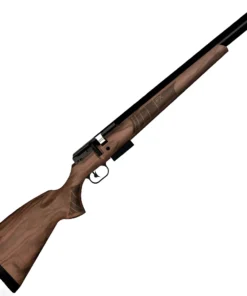
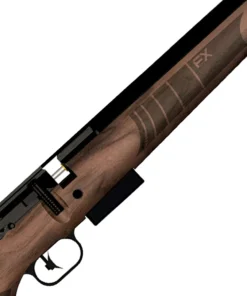
FX Air Gun
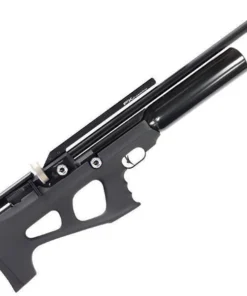
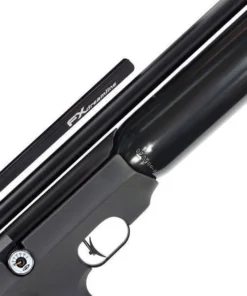
FX Air Gun
FX Air Gun
FX Air Gun
Reviews
There are no reviews yet.