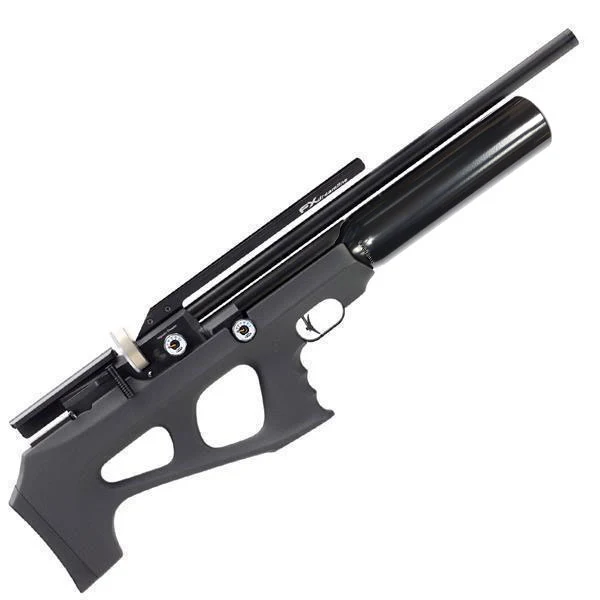
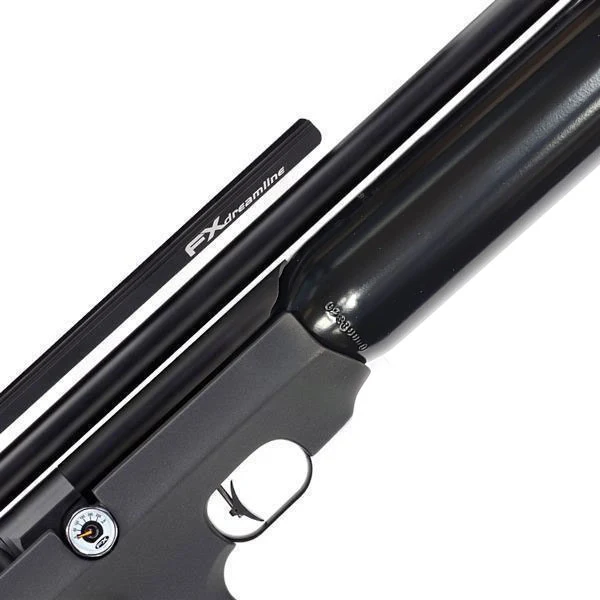
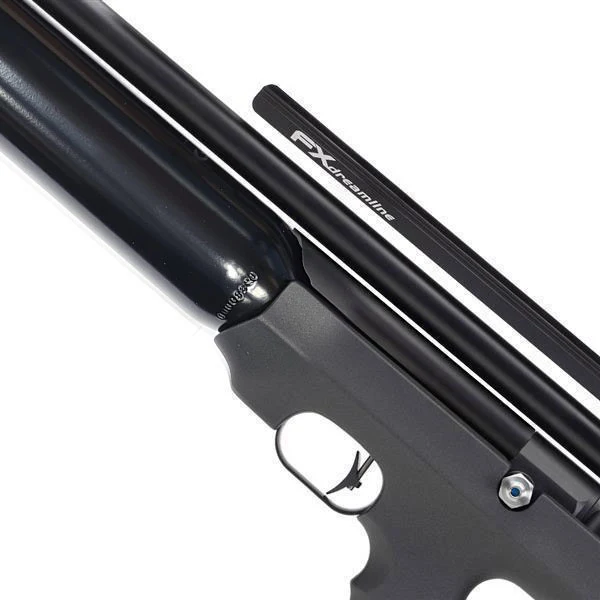
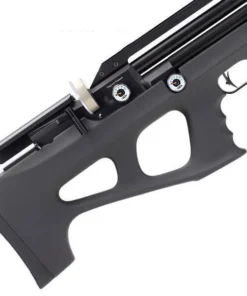
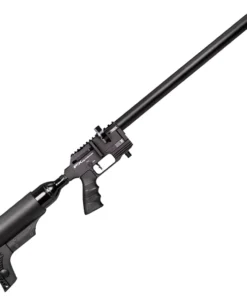
FX Dreamline Bullpup Bottle
$1,400.00
Dreamline Bullpup Bottle
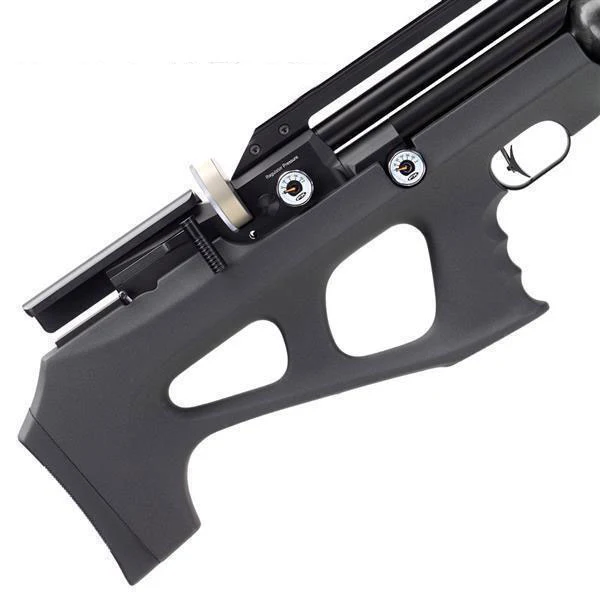
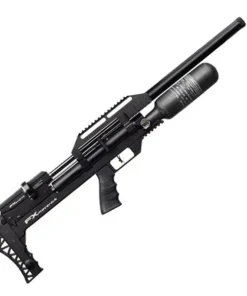
The Dreamline Bullpup takes the same Dreamline internals of the other models but fits it into a bullpup configuration to shorten the overall. Yet retaining all the adjustability and still utilizing the high capacity magazine of the standard Dreamline.
Dreamline Concept
With the arrival of the FX Dreamline, innovation that was previously only dreamed about, is now a reality. The FX Dreamline is the first fully modular airgun system in the world. The modular design allows the rifle to change to any of the Dreamline configurations. Today’s hunting bullpup can be converted for the weekend field target match. The classic sporter rifle can be switched out to house all your favorite AR furniture and accessories. Whatever you can imagine is possible with the FX Dreamline.
The beauty of the FX Dreamline starts with the revolutionary world class FX Smooth Twist X barrel (STX). This is the same barrel housing and liner system as found on other elite rifles such as the FX Impact, FX Crown and FX Wildcat. The STX barrel allows the Dreamline the unique ability of changing both the caliber of the gun as well as the inner liner of the barrel to allow for different twist rates and other bore specifications. This provides a tailored barrel to meet the vast array of projectiles available today.
The Dreamline also includes the new AMP Regulator (Adjustable Match Precision Regulator). This robust regulator is revolutionary in that it can be adjusted externally either to higher or lower pressures without the need to remove pressure from the gun. The AMP regulator also uses the latest in high performance parts to provide precision accuracy that holds up over time.
The FX Dreamline features the same adjustability as found on other premium FX rifles. All adjustments can be fine tuned including valve flow, hammer tension, and regulator pressure. These adjustments are done quickly and easily allowing the shooter find harmonic balance and maximize the performance and accuracy of the Dreamline.
All FX Dreamline models utilize a large capacity rotary magazine. This is the same magazine used in the FX Crown and is indexed with the smooth cocking side lever. This newly designed side lever takes the ease of cocking a rifle to a whole new level as it is nearly effortless to cock.
Being a bottle variant this rifle has a larger air capacity therefore increasing the shot count as well. The ½” UNF threads on the barrel allow for the optional addition of a moderator. The FX Dreamline also features the world-famous FX match grade trigger, set at 15 ounces from the factory.
- Compact and Lightweight
- Smaller Design but Same Big Capacity
| COCKING SYSTEM | Sidelever |
|---|---|
| MAGAZINE TYPE | Removable high capacity22 shot when Cal .177
18 shot when Cal .22 16 shot when Cal .25 13 shot when Cal .30 |
| STOCK | Synthetic |
| CALIBER | 4,5 (.177)5,5 (.22)
6,35 (.25) 7,62 (.30) |
| BARREL | FX Smooth twist XMatch grade
Free floating Length 4,5 (.177): 500 mm Length 5,5 (.22): 500 mm Length 6,35 (.25): 600 mm Length 7,62 (.30): 600 mm |
| FILL PRESSURE | 230 Bar • 3300 Psi |
| SAFETY | Manual |
| OPTICS | 11 mm dovetail scope mount |
| MUZZLE | ½” UNF |
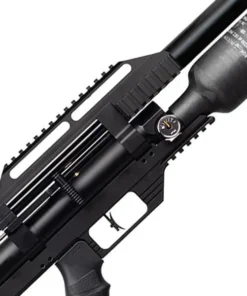
| PRESSURE GAUGE | One for airtube pressureOne for regulator pressure |
| TRIGGER | Adjustable match trigger |
| VELOCITY | 4,5 (.177): 295 m/s • 940 ft/s5,5 (.22): 280 m/s • 920 ft/s
6,35 (.25): 270 m/s • 890 ft/s 7,62 (.30) TBA |
| ENERGY | 4,5 (.177): 24 J • 18 ft/lbs5,5 (.22): 41 J • 30 ft/lbs
6,35 (.25): 60 J • 45 ft/lbs 7,62 (.30) TBA |
| AIR CAPACITY | 4,5 (.177) 220 cc5,5 (.22) 220 cc
6,35 (.25) 290 cc 7,62 (.30) 290 cc |
| LENGTH | 4,5 (.177): 720 mm5,5 (.22): 720 mm
6,35 (.25): 835 mm 7,62 (.30): 835 mm |
| WEIGHT | Synthetic: 2,4 kg |
| CHARGING | Quick charge system |
| MORE FEATURES | Interchangeable Barrel Liner System (with changeable core barrel liner to obtain various twist rates).AMP Externally adjustable pressure regulator. |
FX Dreamline Bullpup Bottle – Premium Swedish PCP Air Rifle | Precision Engineering, Advanced Features and Technical Overview
FX Dreamline Bullpup Bottle – Product Description, Swedish Engineering, Precision Technology and Mechanical Innovation
1.1 Introduction: Discover the FX Dreamline Bullpup Bottle
The FX Dreamline Bullpup Bottle combines Swedish pneumatic engineering, contemporary construction and distinctive compact styling within a premium sporting platform.
Developed by fx airguns, this advanced fx air rifle incorporates the manufacturer’s Smooth Twist X barrel architecture, AMP regulator and bottle-style compressed-air reservoir.
Furthermore, its bullpup configuration places the principal action toward the rear, reducing overall length compared with many traditional designs.
Unlike a basic pellet gun, this sophisticated pcp air gun incorporates specialized pneumatic assemblies, a removable magazine and an adjustable match trigger.
Its compact appearance and modular construction distinguish it within the broader pcp airguns market.
1.2 FX Airguns Sweden: Manufacturing Heritage and International Recognition
The manufacturer has developed an international reputation for specialized pneumatic equipment.
Customers researching its heritage frequently encounter fx airguns sverige, fx airguns sweden, fxairguns, fx air guns and fx outdoors.
Meanwhile, fx airguns usa and fx usa reflect its international market presence.
The company’s engineering philosophy emphasizes modular architecture, proprietary components and precision manufacturing.
Consequently, the fx dreamline family occupies a distinctive position among high end air rifles.
1.3 Smooth Twist X Barrel, AMP Regulator and Mechanical Features
The proprietary Smooth Twist X barrel system represents an important characteristic of the platform.
Its interchangeable liner architecture distinguishes the design from many conventional fixed-barrel constructions.
Additionally, the AMP regulator forms part of the internal pneumatic system.
The model incorporates a synthetic stock, sidelever action, removable magazine, manual safety and pressure-monitoring gauges.
Furthermore, the bottle-equipped arrangement provides a different reservoir configuration from the standard tubular version.
However, factory specifications vary by calibre and production generation.
The original Bottle edition should also be distinguished from the later Power Pup configurations, which incorporate different pneumatic arrangements.
1.4 FX Impact M4, Impact M3 and Other Premium Comparisons
Customers researching premium Swedish equipment frequently encounter the fx impact, f x impact, fx impact air rifle, fx impact m3, f x impact m3, fx impact m3 air rifle, fx m3 and fx m3 airgun.
Additional comparisons include fx impact m4, fx m4, impact m4, impact m4 air rifle, impact m4 500mm, impact m4 ballistic coefficient and fx impact m4 for sale.
Meanwhile, fx impact m3 .22cal air rifle and fx impact m3 .22cal air rifle. 600mm barrel describe separate configurations within another product family.
Although these models share a manufacturer, their construction and factory specifications differ.
1.5 FX Panthera, Wildcat, Crown, Maverick and DRS Families
The wider fx catalogue includes fx panthera, fxpanthera, FX Panthera MkII, fx dreamline classic, fx wildcat and fx wildcat mk3.
Other recognized products include fx maverick, fx crown, fx crown mk2, fx crown mkii and fx crown mkll.
Furthermore, fx drs, fx drs classic, fx drs pro, fx drs tactical and fx drs air rifle represent another distinctive product family.
Additional names include fx dynamic, fx dynamics, fx king, fx leopard, fx leopard airgun and fx leopard air rifle.
Each reflects different aspects of the manufacturer’s engineering development.
1.6 Understanding Pneumatic Equipment and Related Accessories
Common terminology includes air gun, air guns, air rifle, fx pcp, air rifle and air pistol and the Scandinavian term luftgevær.
For readers asking what is an air rifle, pneumatic equipment uses compressed air or another gas-powered system rather than conventional firearm propellant.
Related equipment searches include fx chronograph, fx pocket chronograph, fx pellets, fx halo slugs and air gun pump.
However, accessories should only be associated with a particular model when compatibility has been verified.
1.7 AirForce Airguns and Broader Industry Comparisons
Another established manufacturer is AirForce, commonly searched as airforce airguns and air force guns.
Its separate product families include airforce texan, airforce texan air rifle, airforce texan ss, air force texan lss, airforce talon p, air force talon and airforce condor.
Additional search expressions include airforce texanss, airforce 25, texas air force rifle, tex-rex, air force tex rex, airforce tex rex, Tex-Rex AirForce brush gun, Brush Gun and AirForce Tex-Rex PCP rifle.
The combined phrase airforce condorair force talon refers to two different product names.
Broader industry terms include bolt action air rifles, high powered air rifles 4000 fps, 50 caliber air rifle for deer hunting, air guns for target shooting and airgun shooting range near me.
These searches concern other equipment categories or sporting interests rather than verified specifications for this model.
1.8 Why the FX Dreamline Bullpup Bottle Deserves Technical Consideration
The principal engineering appeal of this platform lies in its compact bullpup construction, modular barrel architecture and bottle-style pneumatic reservoir.
Its proprietary regulator, synthetic exterior and contemporary structural arrangement create a recognizable technical identity.
Furthermore, the manufacturer’s modular design philosophy distinguishes the platform within the premium sporting-equipment industry.
Prospective owners should verify the exact calibre, reservoir capacity, legal classification, included components and warranty arrangements before purchase.
Ultimately, the FX Dreamline Bullpup Bottle represents a sophisticated example of Swedish pneumatic engineering, combining specialized mechanical construction with modern industrial design and long-term ownership considerations.
Advanced Engineering, Precision Manufacturing, Premium Construction, Mechanical Innovation, Practical Benefits, and Long-Term Ownership
2.1 Understanding the Engineering Philosophy Behind This Advanced Design
Modern precision sporting equipment reflects the integration of mechanical engineering, material science, manufacturing accuracy, and structural design. Every major component contributes to the overall construction, while the relationship between individual assemblies determines the mechanical integrity and functional consistency of the completed product.
This sophisticated platform demonstrates a contemporary approach to engineering through its compact architecture, specialized pneumatic components, and carefully organized structural framework. Rather than depending entirely on conventional construction methods, the manufacturer incorporates innovative mechanical solutions that distinguish the equipment from simpler alternatives.
Furthermore, the design emphasizes modularity, component compatibility, and practical industrial construction. These characteristics establish a foundation for technical sophistication and long-term serviceability.
The internal mechanical assemblies operate within a coordinated structural arrangement. Meanwhile, the exterior housing provides support, protection, and a recognizable visual identity.
Precision manufacturing plays an important role in maintaining these relationships. Carefully controlled machining processes help manufacturers produce components that correspond with their intended dimensional specifications.
Additionally, material selection influences structural strength, resistance to wear, and the overall ownership experience.
However, advanced engineering does not automatically guarantee exceptional performance under every condition. Environmental influences, component deterioration, manufacturing variations, and maintenance history may affect mechanical behavior.
Consequently, prospective owners should examine verified technical information rather than relying exclusively on promotional descriptions.
Ultimately, the greatest engineering value lies in the combination of thoughtful design, appropriate materials, manufacturing consistency, and dependable manufacturer support.
2.2 Compact Bullpup Architecture and Structural Organization
The compact mechanical arrangement represents one of the most recognizable characteristics of this design. Its rearward action placement creates a distinctive structural profile compared with conventional full-length sporting equipment.
From an industrial engineering perspective, this architecture demonstrates how component positioning can influence overall dimensions without requiring a completely different mechanical foundation.
Furthermore, the compact configuration requires careful coordination between internal assemblies and surrounding structural components.
The manufacturer must maintain appropriate dimensional relationships while accommodating the intended mechanical arrangement.
However, compact construction does not automatically establish lower weight, improved accuracy, or universal ergonomic suitability.
The final physical characteristics depend on factory specifications, component placement, and material selection.
Additionally, the arrangement introduces different considerations for storage and transportation.
An appropriately sized protective case can help prevent ordinary contact damage during lawful transportation.
Nevertheless, reduced dimensions do not change legal classification or eliminate secure-storage requirements.
The design should therefore be evaluated through verified physical specifications and individual suitability rather than assumptions based on appearance.
Ultimately, compact structural engineering provides a distinctive approach to organizing sophisticated mechanical assemblies within a carefully developed framework.
2.3 Premium Synthetic Stock Construction and Material Durability
The exterior stock represents an important element of the equipment’s structural identity.
Its synthetic construction reflects the widespread use of engineered materials in contemporary mechanical products.
Modern synthetic materials can provide consistent manufactured shapes and useful resistance to certain environmental conditions.
Furthermore, carefully selected polymer compositions allow manufacturers to develop complex external geometries without relying exclusively on traditional natural materials.
However, material quality depends on more than the general designation of synthetic construction.
Manufacturing methods, reinforcement, surface finishing, and component integration all contribute to structural durability.
A properly manufactured stock should maintain its intended shape and provide appropriate support for adjoining assemblies.
Additionally, its exterior surfaces require protection against excessive heat, harsh chemicals, abrasion, and unnecessary mechanical impact.
Although synthetic materials may resist certain environmental influences, they are not immune to damage.
Consequently, manufacturer-approved cleaning and storage procedures remain important.
The external design also contributes to the equipment’s contemporary appearance.
Its organized proportions and distinctive surface geometry create a recognizable industrial character.
Nevertheless, visual sophistication should not replace evaluation of genuine construction quality.
Buyers should examine product authenticity, physical condition, and official manufacturer specifications.
Ultimately, premium synthetic construction provides value when appropriate materials are combined with accurate manufacturing and responsible long-term maintenance.
2.4 Advanced Pneumatic Architecture and Mechanical Integration
The pneumatic system represents a central element of the equipment’s technical identity.
Its construction incorporates several specialized assemblies designed to operate within the manufacturer’s approved configuration.
These include pressure-containing components, sealing elements, regulating mechanisms, and associated internal structures.
Each assembly performs a defined role within the complete mechanical system.
Furthermore, the interaction between these components requires careful manufacturing and appropriate material compatibility.
Accurate dimensional tolerances contribute to reliable component integration.
However, sophisticated pneumatic construction does not eliminate the possibility of ordinary wear.
Temperature fluctuations, aging sealing materials, environmental exposure, and maintenance history can influence the condition of individual assemblies.
Consequently, owners should follow official inspection and servicing recommendations.
Pressure-containing components require particular caution.
Unauthorized disassembly, incompatible replacement parts, and improvised repairs can introduce serious safety hazards.
Therefore, qualified professionals should perform specialized maintenance.
Buyers should also confirm the availability of authorized technical assistance before purchasing.
The engineering value of this pneumatic architecture lies in its carefully coordinated construction, documented specifications, and professional maintenance support.
2.5 Understanding the Bottle-Style Reservoir System
The bottle-style reservoir represents a distinctive characteristic of the equipment’s overall design.
Unlike certain traditional tubular arrangements, this configuration incorporates a separate pressure-containing structure with its own manufacturing and inspection requirements.
Its construction must satisfy the manufacturer’s approved pressure-containment specifications.
Furthermore, the reservoir must integrate correctly with adjoining pneumatic components.
Material compatibility, connection interfaces, sealing integrity, and structural condition all contribute to safe operation.
However, reservoir dimensions alone do not establish actual capacity or approved pressure ratings.
Different production versions may incorporate distinct specifications.
Consequently, buyers should consult official documentation for the exact factory configuration.
The reservoir also contributes to the equipment’s external appearance and weight distribution.
Its shape creates a recognizable profile within the contemporary mechanical design.
Nevertheless, pressure-containing components require careful handling throughout their service life.
Visible damage, suspected leakage, severe impact, or unusual deterioration should prompt professional assessment.
Owners should never attempt improvised repairs to pressure vessels.
Ultimately, the reservoir demonstrates how specialized pressure engineering and industrial design can be incorporated into one coordinated mechanical platform.
2.6 Precision Barrel Construction and Manufacturing Quality
The barrel assembly represents an important example of specialized mechanical manufacturing.
Its construction requires careful attention to material properties, dimensional accuracy, internal geometry, and compatibility with adjoining assemblies.
The manufacturer’s proprietary liner-based architecture reflects a broader commitment to modular engineering.
Furthermore, specialized production processes contribute to the technical identity of the finished equipment.
However, advanced barrel construction does not automatically guarantee particular accuracy measurements.
Verified performance depends on appropriate testing conditions and clearly identified factory configurations.
Environmental influences, material condition, and manufacturing variation can affect measured results.
Consequently, buyers should distinguish documented specifications from unsupported promotional statements.
Maintenance also plays an important role in preserving component condition.
Improper cleaning materials or unauthorized mechanical intervention may damage precision-manufactured surfaces.
Therefore, owners should follow official maintenance instructions.
Where specialized inspection or component replacement becomes necessary, qualified professionals should perform the work.
Additionally, replacement components must correspond with the exact production version.
The engineering significance of this assembly lies in its carefully developed construction, manufacturing consistency, and integration within the complete mechanical platform.
2.7 Pressure Regulation and Mechanical Consistency
Pressure regulation forms an important part of sophisticated pneumatic engineering.
A regulating assembly contributes to the manufacturer’s broader pressure-management system.
Its construction requires compatible materials, accurately manufactured components, and reliable sealing interfaces.
Furthermore, the regulator must correspond with the surrounding pneumatic architecture.
However, the presence of regulation technology does not independently establish a particular level of mechanical consistency.
Temperature, component condition, manufacturing tolerances, and maintenance history may influence system behavior.
Consequently, technical performance claims should be supported by appropriately documented testing.
The regulating assembly also introduces important servicing requirements.
Unauthorized adjustments or modifications can compromise the original engineering specification.
Therefore, specialized maintenance should remain the responsibility of qualified professionals.
Genuine replacement parts help preserve compatibility with the factory design.
Additionally, owners should retain relevant service records.
Professional documentation can assist future inspections and warranty inquiries.
Ultimately, pressure-regulation technology demonstrates the manufacturer’s interest in sophisticated mechanical systems while reinforcing the importance of responsible maintenance.
2.8 Manufacturing Tolerances and Quality-Control Standards
Manufacturing tolerances describe the permitted variation between intended component measurements and finished physical dimensions.
Precision mechanical equipment relies on carefully controlled tolerances because adjoining assemblies must interact according to defined engineering requirements.
Modern production methods may incorporate computer-controlled machining, specialized measuring instruments, and systematic quality-control procedures.
However, manufacturing machinery alone does not guarantee exceptional construction quality.
Material verification, assembly discipline, component inspection, and accurate documentation remain equally important.
Furthermore, complex products often require coordination between several manufacturing stages.
Individual components may undergo machining, finishing, inspection, and assembly before becoming part of the completed system.
Each stage introduces opportunities for variation.
Consequently, effective quality-control procedures help identify manufacturing irregularities.
Buyers should nevertheless avoid assuming that specific inspection methods apply unless the manufacturer has documented them.
Authentic technical information provides a stronger foundation for evaluating manufacturing standards than generalized advertising claims.
Additionally, accurate product identification supports replacement-part compatibility and professional servicing.
Ultimately, manufacturing precision contributes significantly to mechanical integrity, structural consistency, and long-term serviceability.
2.9 Ergonomic Design and Individual Physical Comfort
Ergonomic engineering considers the relationship between equipment design and the physical characteristics of individual users.
Different individuals have different body proportions, mobility requirements, and personal comfort preferences.
Consequently, sophisticated sporting equipment should be evaluated according to physical suitability rather than appearance alone.
The compact structural arrangement introduces distinctive ergonomic characteristics.
However, individual comfort depends on several factors, including height, arm length, strength, and preferred equipment dimensions.
Furthermore, overall weight distribution may influence perceived comfort.
Two products with similar total mass may feel different because their components occupy different positions.
Prospective owners should therefore consider physical inspection through an authorized retailer or supervised sporting facility.
The condition of exterior surfaces also deserves attention.
Manufacturing quality, surface texture, and structural dimensions contribute to the overall ownership experience.
However, no single design can guarantee universal comfort.
Ultimately, thoughtful ergonomic engineering provides value when equipment dimensions correspond with individual physical requirements and the manufacturer’s intended configuration.
2.10 Understanding Weight Distribution and Structural Balance
Weight distribution represents an important consideration in mechanical design.
Although total mass can be measured numerically, the location of individual components influences the physical characteristics of the completed equipment.
The structural housing, pneumatic reservoir, central mechanical assembly, and exterior components all contribute to the overall arrangement.
Consequently, two products with identical total weight may feel noticeably different.
Furthermore, factory variations can affect overall dimensions and weight distribution.
Optional accessories may also alter the original configuration.
Buyers should therefore distinguish published manufacturer measurements from figures associated with modified examples.
Verified physical specifications become particularly important when selecting suitable storage and transportation arrangements.
A properly fitted protective case should accommodate the complete equipment without placing unnecessary pressure on delicate exterior components.
However, compact dimensions do not remove legal obligations concerning transportation and secure storage.
Applicable regulations may prescribe specific security arrangements or supporting documentation.
Ultimately, structural balance reflects coordinated engineering rather than a simple effort to minimize total weight.
2.11 Modern Exterior Styling and Premium Visual Design
Visual design contributes significantly to the identity of contemporary mechanical equipment.
This sophisticated platform features a compact industrial appearance characterized by carefully organized structural surfaces and distinctive mechanical components.
Its synthetic exterior and prominent reservoir arrangement create a recognizable profile.
Furthermore, the combination of different materials reinforces the equipment’s modern engineering identity.
However, visual sophistication should remain separate from verified manufacturing quality.
An attractive appearance does not independently establish greater reliability, superior durability, or exceptional performance.
Buyers should examine external finishing, component alignment, and physical condition when evaluating individual examples.
Original product photographs should also correspond with the equipment being offered.
Retail images may feature optional accessories or represent different production configurations.
Consequently, transparent product descriptions should distinguish standard components from additional equipment.
Accurate representation improves customer understanding and reduces purchasing misunderstandings.
Ultimately, premium styling contributes to product identity, while authentic engineering quality depends on documented manufacturing standards and reliable technical support.
2.12 Practical Applications in Authorized Sporting Environments
Specialized sporting equipment may form part of organized recreational activities when its possession and use comply with applicable legislation.
Authorized facilities can provide structured environments with established safety procedures and professional supervision.
However, equipment eligibility varies between organizations and jurisdictions.
Some facilities restrict particular categories, while others require additional documentation.
Consequently, prospective participants should confirm relevant requirements before attending.
Furthermore, organized sporting disciplines may follow regulations established by national or international governing bodies.
A product suitable for one recreational environment may not qualify for another.
Therefore, owners should examine the rules applicable to their intended activity.
Appropriate instruction also contributes to responsible participation.
Qualified professionals can explain facility procedures, lawful handling requirements, and general safety obligations.
Importantly, sophisticated equipment does not eliminate the need for training.
New owners should familiarize themselves with official safety documentation before participating in organized activities.
Ultimately, responsible practical use depends on legal eligibility, facility authorization, appropriate supervision, and respect for established sporting rules.
2.13 Understanding Mechanical Consistency and Performance Expectations
Mechanical consistency describes the extent to which equipment maintains its intended characteristics under comparable conditions.
However, consistency must be established through appropriate measurements rather than assumed from technical descriptions.
Sophisticated pneumatic systems incorporate multiple interacting assemblies that influence mechanical behavior.
Manufacturing tolerances, material properties, component condition, and environmental factors contribute to the complete system.
Furthermore, maintenance history can affect individual components.
Equipment receiving appropriate professional care may retain its intended characteristics more reliably than products exposed to unsuitable storage or unauthorized modifications.
Nevertheless, no complex mechanical system remains entirely unaffected by ordinary wear.
Performance claims should therefore identify the relevant factory configuration and testing conditions.
Statements promising guaranteed accuracy or exceptional consistency deserve careful examination when supporting evidence is absent.
Independent technical reviews may provide useful context, although their findings do not necessarily apply to every production version.
Customers should also consider whether reviewed examples contain original factory components.
Ultimately, realistic expectations begin with transparent specifications and responsible interpretation of available evidence.
2.14 Environmental Conditions and Equipment Preservation
Environmental exposure can influence both the appearance and condition of sophisticated mechanical equipment.
Humidity, airborne dust, temperature fluctuations, and prolonged sunlight introduce different preservation challenges.
For example, excessive moisture may encourage corrosion on susceptible metallic components.
Similarly, abrasive particles can damage protective finishes and exposed mechanical interfaces.
Although modern materials provide resistance against certain environmental conditions, they cannot prevent every form of deterioration.
Consequently, suitable storage practices remain important.
Temperature management deserves particular attention because the equipment incorporates pressure-containing assemblies.
Owners should observe the manufacturer’s approved environmental limits.
Furthermore, sudden temperature changes may encourage condensation when equipment moves between different indoor and outdoor environments.
This moisture can create additional preservation concerns.
Protective cases may reduce ordinary contact damage during lawful transportation.
However, enclosed cases are not automatically suitable for prolonged storage in humid conditions.
Owners should follow official recommendations regarding cleanliness, ventilation, and environmental protection.
Harsh solvents and abrasive cleaning products should not be used without manufacturer approval.
Responsible environmental care helps preserve exterior appearance and reduce avoidable maintenance requirements.
2.15 Maintenance Requirements and Professional Technical Support
Long-term ownership involves maintaining equipment according to official manufacturer guidance.
Even carefully manufactured mechanical products contain components that may experience ordinary wear.
Sealing elements, protective finishes, mechanical interfaces, and pressure-containing assemblies deserve attention throughout the service life.
However, maintenance requirements vary according to factory configuration and production generation.
Generic recommendations cannot account for every technical difference.
Consequently, owners should consult official documentation rather than relying on unsupported instructions.
Visible damage, suspected leakage, unusual mechanical behavior, or accidental impact should prompt professional evaluation.
Internal pneumatic components require particular caution.
Unauthorized disassembly may create serious pressure-related hazards.
Furthermore, incompatible replacement parts can compromise the original engineering design.
Qualified technicians should perform specialized repairs and inspections.
Owners may also benefit from retaining professional service records.
Documented maintenance can support warranty inquiries and establish the product’s ownership history.
Ultimately, responsible care combines environmental protection, periodic observation, genuine components, and authorized technical assistance.
2.16 Long-Term Durability and Mechanical Reliability
Durability describes the ability of mechanical equipment to withstand intended conditions throughout its service life.
However, durability depends on several interacting factors.
Material quality, manufacturing standards, assembly procedures, environmental exposure, and maintenance all contribute to long-term reliability.
The structural housing and internal assemblies may experience different forms of ordinary wear.
For example, external finishes can develop cosmetic marks, while sealing materials may change with age.
Mechanical interfaces can also experience gradual deterioration through repeated normal use.
Such changes do not automatically indicate manufacturing defects.
Nevertheless, unexpected damage or irregular mechanical behavior should receive professional attention.
Furthermore, manufacturers may establish inspection or replacement requirements for particular components.
Owners should follow those instructions rather than assuming that premium equipment requires no maintenance.
The availability of genuine replacement parts also influences long-term serviceability.
A mechanically sound product may become difficult to maintain if appropriate components are unavailable.
Consequently, manufacturer support should form part of the purchasing decision.
Ultimately, dependable ownership combines sound engineering with responsible care and professional maintenance.
2.17 Genuine Replacement Components and Technical Compatibility
The availability of appropriate replacement components represents an important consideration for long-term ownership.
Sophisticated mechanical equipment may incorporate proprietary assemblies that require precise dimensional compatibility.
Consequently, replacement parts should correspond with manufacturer-approved specifications.
Visually similar components may differ in materials, dimensions, or production generation.
Therefore, compatibility should never be assumed based solely on appearance.
Authorized technicians can consult official documentation to identify suitable replacement assemblies.
Furthermore, accurate product identification helps simplify maintenance inquiries.
Owners should retain purchase information, identification details, and professional service records.
These documents can help establish the original factory configuration.
Unauthorized replacement components may create mechanical problems and potentially affect warranty eligibility.
Consequently, genuine manufacturer-approved parts provide the appropriate reference for qualified servicing.
Ultimately, reliable component availability contributes to long-term serviceability, ownership confidence, and mechanical preservation.
2.18 Product Authenticity, Documentation, and Warranty Protection
Authenticity represents an essential consideration when purchasing specialized premium equipment.
Genuine products should correspond with manufacturer identification information and official technical documentation.
However, professional-looking packaging alone does not establish authenticity.
Buyers should verify seller credibility and product provenance through reliable channels.
Authorized distributors may provide confirmation of factory specifications and warranty arrangements.
Furthermore, production revisions can create differences between visually similar examples.
Accurate identification therefore helps prevent misunderstandings regarding components and technical characteristics.
Customers should retain purchase records, including invoices, warranty information, and professional service documentation.
Such records can support future ownership inquiries.
Transparent sellers should provide accurate photographs and clearly identify included accessories.
Any differences between promotional images and supplied equipment should be explained.
Warranty conditions also deserve careful review.
Coverage may vary according to country, distributor, and purchasing circumstances.
Ultimately, genuine manufacture, reliable documentation, and transparent commercial information contribute substantially to purchasing confidence.
2.19 Comparing Premium Engineering With Conventional Alternatives
Premium mechanical equipment often incorporates specialized materials, contemporary structural arrangements, and proprietary technical systems.
These characteristics may distinguish it from simpler alternatives.
However, greater complexity does not automatically establish universal superiority.
Some buyers may prefer equipment with fewer maintenance requirements and conventional construction.
Others may value sophisticated engineering, distinctive styling, and specialized mechanical architecture.
The appropriate choice depends on legal eligibility, individual suitability, intended sporting environment, and available technical support.
Furthermore, advanced components may introduce different servicing requirements.
Buyers should evaluate those responsibilities alongside the initial purchase price.
A balanced comparison considers verified specifications, construction quality, maintenance obligations, and manufacturer support.
Brand reputation provides useful context, but it should not replace direct evaluation of the exact product.
Similarly, independent reviews should be interpreted according to their testing conditions.
Ultimately, premium engineering provides meaningful value when its documented characteristics correspond with the purchaser’s genuine requirements.
2.20 Legal Classification, Secure Storage, and Responsible Ownership
Legal classification represents an essential consideration when purchasing regulated sporting equipment.
Requirements vary significantly between countries and sometimes within national jurisdictions.
A particular factory configuration may be legally available under one classification while requiring additional authorization elsewhere.
Consequently, buyers should verify the exact legal status before purchasing, importing, transporting, or possessing the equipment.
Manufacturer specifications do not replace applicable legislation.
Furthermore, international shipping may involve customs procedures, licensing obligations, and additional documentation requirements.
Customers should confirm these conditions with relevant authorities before arranging cross-border transactions.
Responsible storage is equally important.
Appropriate security helps prevent unauthorized access and may be required by law.
Transportation must also comply with applicable regulations and carrier restrictions.
Importantly, compact construction and sophisticated engineering do not reduce these responsibilities.
Responsible ownership combines accurate information, lawful purchasing, secure storage, and continued compliance with local requirements.
2.21 Total Ownership Costs and Long-Term Financial Value
The initial purchase price represents only one part of the financial commitment associated with premium mechanical equipment.
Additional expenses may include secure storage, professional servicing, authorized inspections, and applicable licensing requirements.
Furthermore, regional technical support availability can influence maintenance costs.
Specialized components may require qualified professional attention or replacement through approved distribution channels.
Consequently, prospective owners should investigate support arrangements before purchasing.
Warranty coverage also deserves careful consideration.
Terms may vary by country, distributor, and purchasing circumstances.
Customers should review exclusions involving unauthorized modifications, accidental damage, and improper maintenance.
Long-term value depends partly on product condition and continued manufacturer support.
However, resale prices cannot be guaranteed.
Market demand, regulatory changes, production updates, and individual equipment condition may influence future value.
Maintaining accurate documentation can help establish ownership history.
A realistic assessment of total ownership costs supports informed purchasing decisions and reduces unexpected financial obligations.
2.22 Why This Advanced Design Deserves Consideration
The principal appeal of this sophisticated platform lies in the relationship between contemporary structural engineering and specialized pneumatic technology.
Its compact mechanical architecture, synthetic exterior, bottle-style reservoir, and precision-manufactured components create a distinctive technical identity.
Furthermore, the manufacturer’s modular approach reflects a commitment to mechanical innovation and coordinated industrial development.
However, technical sophistication should be evaluated through verified information rather than unsupported performance promises.
Prospective owners should consider authenticity, legal classification, physical suitability, maintenance obligations, and manufacturer support.
The condition and documentation of an individual product are equally important.
A genuine example supported by professional maintenance and reliable technical assistance may provide a more predictable long-term ownership experience than equipment with an uncertain history.
Ultimately, the value of this design depends on its engineering characteristics, manufacturing quality, and the owner’s ability to meet the responsibilities associated with specialized sporting equipment.
2.23 Final Assessment: Engineering Excellence, Mechanical Innovation, and Long-Term Ownership Benefits
This sophisticated mechanical platform demonstrates how modern manufacturing methods, specialized materials, and advanced pneumatic technology can be integrated into a compact sporting product.
Its engineering identity extends beyond external appearance.
The combination of a contemporary synthetic structure, proprietary barrel architecture, bottle-style reservoir, and precision-manufactured components reflects an ambitious design philosophy.
Furthermore, the integration of these systems illustrates the importance of coordinated mechanical development.
Nevertheless, long-term satisfaction depends on more than the manufacturer’s original design.
Proper storage, verified authenticity, professional maintenance, and compliance with applicable legislation remain essential.
Buyers should maintain realistic expectations about performance and recognize that individual production configurations may differ.
Ultimately, this equipment represents a sophisticated example of modern precision engineering whose long-term value is best understood through authentic technical information, responsible ownership, and dependable manufacturer support.
Be the first to review “FX Dreamline Bullpup Bottle”
Related products
FX Air Gun
FX Air Gun
FX Air Gun
FX Air Gun
FX Air Gun
FX Air Gun
FX Air Gun
FX Air Gun
Reviews
There are no reviews yet.