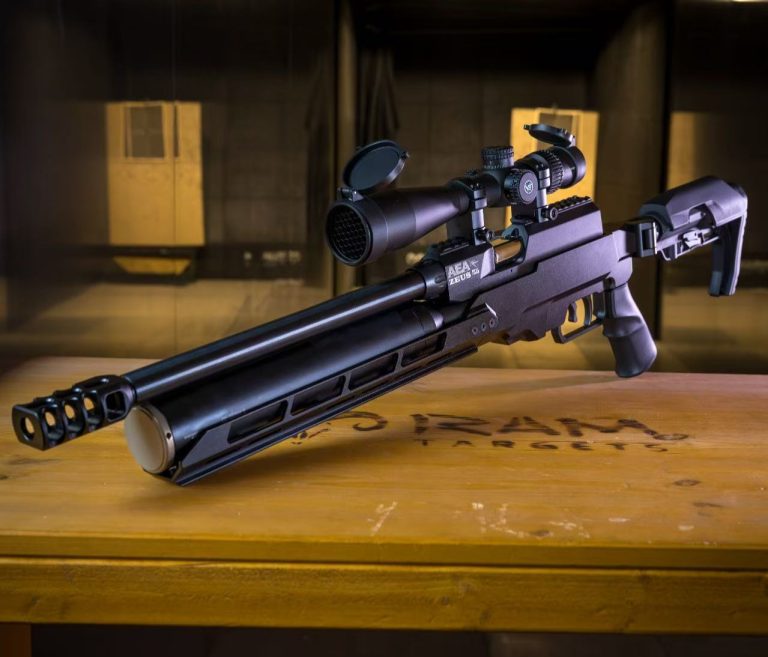
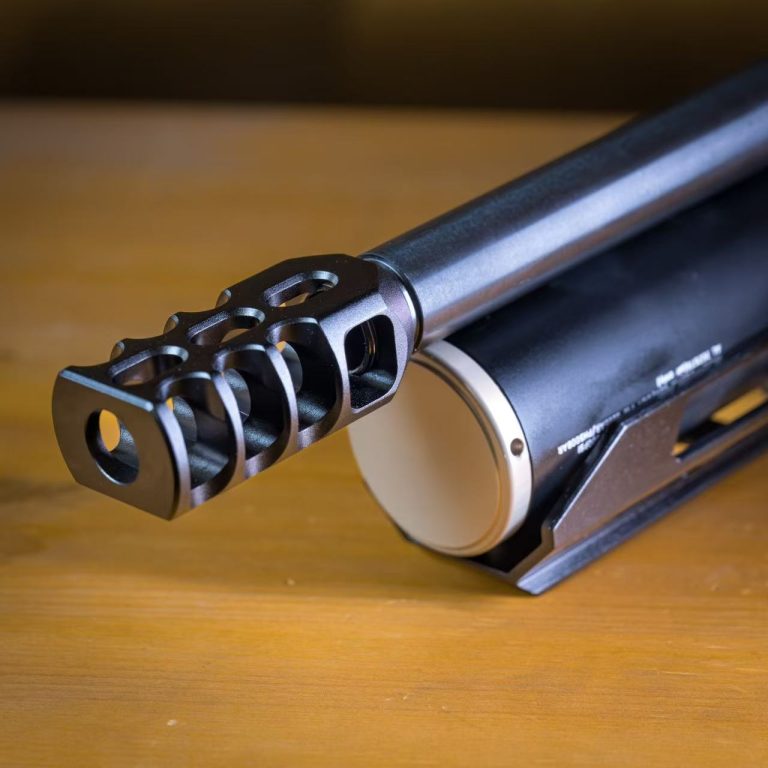
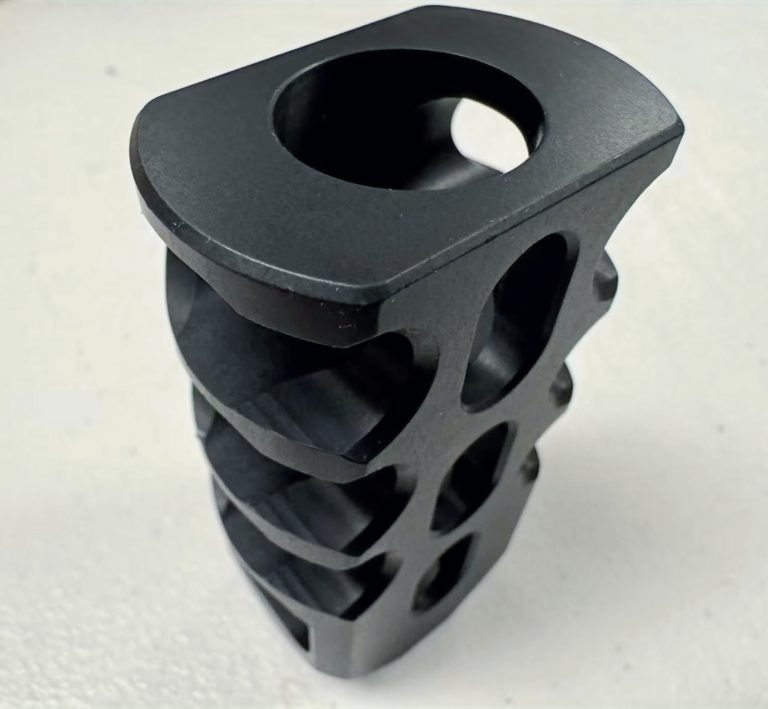
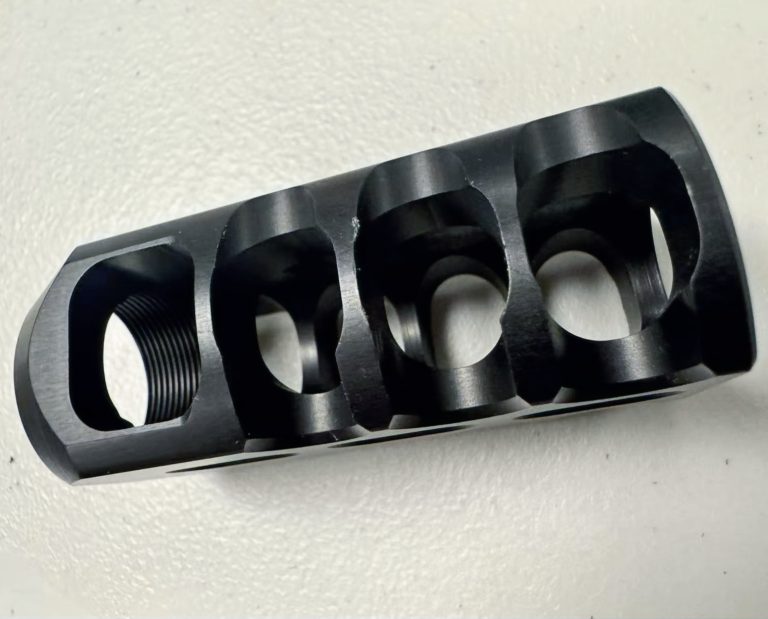
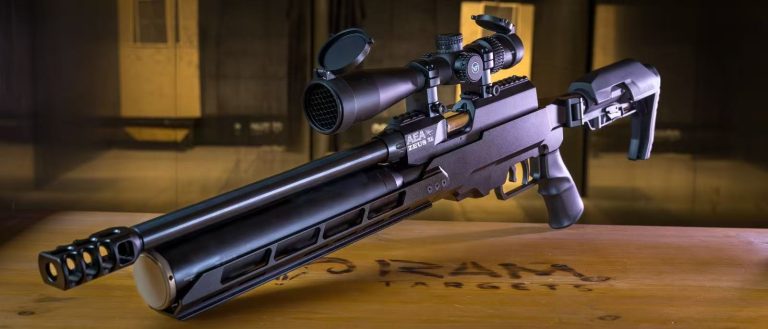
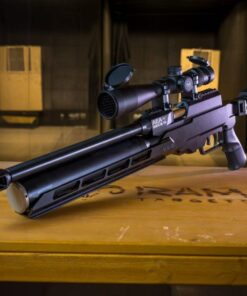
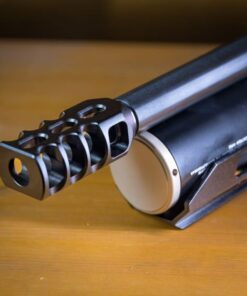
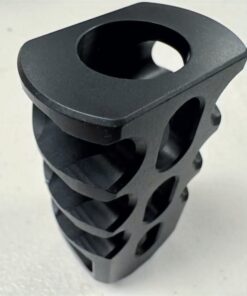
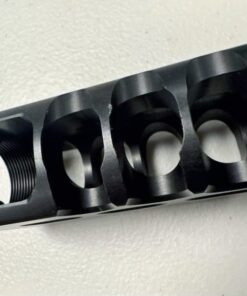
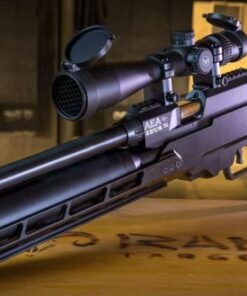
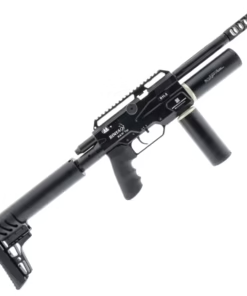
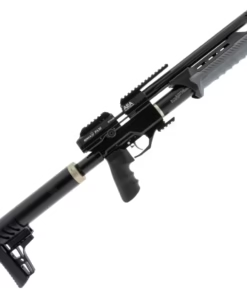
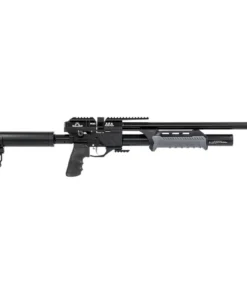
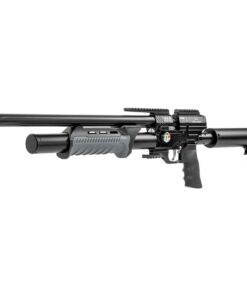
BinTac Zeus Tactical With Muzzel Break
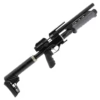
$1,200.00
TopGun-Airguns carries the BinTac Zeus Tactical With Muzzel Break as part of our full BinTac inventory. We ship from California, accept all major payment methods, and answer the phone when you have questions — call (714) 907-0067 to talk to a real airgunner.
About the BinTac Zeus Tactical With Muzzel Break
BinTac Zeus Tactical 58cal 16 inches
Muzzle Velocity:
- .58 CAL 690Gr FPS700 740 FPE
Air Tube Capacity:350CC Total
Air Filling Pressure: 4500 PSI
SHOTS PER FILL: 58 CAL 3Good Shots
Barrel Length: 16”
Overall Length:30 Inches with Rear Stock
BinTac Zeus Tactical 58cal 24 inches
Muzzle Velocity:
- .58 CAL 690Gr FPS770 950 FPE
Air Tube Capacity:500CC Total
Air Filling Pressure: 4500 PSI
SHOTS PER FILL: 58 CAL 4 Good Shots
Barrel Length:24”
Overall Length:38 Inches with Rear Stock
BinTac Zeus Tactical 58cal 32 inches
Muzzle Velocity:
- .58 CAL 690Gr 900FPS 1250FPE
Air Tube Capacity:700CC Total
Air Filling Pressure: 4500 PSI
SHOTS PER FILL: 58 CAL 5 Good Shots
Barrel Length:32”
Overall Length:36 Inches with Rear Stock
BinTac Zeus Tactical 72cal 16 inches
Muzzle Velocity:
- .72 CAL 550Gr FPS820 FPE850
Air Tube Capacity:3500CC Total
Air Filling Pressure: 4500 PSI
SHOTS PER FILL: 72 CAL 3+ Good Shots
Barrel Length:16”
Overall Length:28 Inches with Rear Stock
BinTac Zeus Tactical 72cal 24 inches
Muzzle Velocity:
- .72 CAL 860Gr FPS820 FPE1200
Air Tube Capacity:500CC Total
Air Filling Pressure: 4500 PSI
SHOTS PER FILL: 72 CAL 3+ Good Shots
Barrel Length:24”
Overall Length:38 Inches with Rear Stock
BinTac Zeus Tactical 72cal 32 inches
Muzzle Velocity:
- .72 CAL 1092Gr FPS780 FPE1500
Air Tube Capacity:700CC Total
Air Filling Pressure: 4500 PSI
SHOTS PER FILL: 72CAL 4Good Shots
Barrel Length:32”
Overall Length:48 Inches with Rear Stock
SHOTS PER FILL: 72 CAL 3+ Good Shots
BinTac Zeus Tactical With Muzzle Brake – Big-Bore PCP Air Rifle with Tactical Chassis, High-Pressure Reservoir, and Heavy-Duty Sidelever Action
BinTac Zeus Tactical With Muzzle Brake Overview
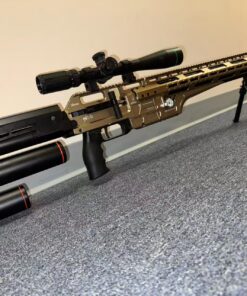
The BinTac Zeus Tactical With Muzzle Brake is a specialized big-bore pre-charged pneumatic rifle built around a heavy-duty tactical chassis, sidelever action, high-pressure reservoir, and large-caliber barrel system. Current BinTac listings offer the tactical platform in .58 and .72 caliber, with 16-inch, 24-inch, and 32-inch barrel configurations. Reservoir capacity increases with barrel length, ranging from about 350cc to 700cc, while the working pressure is listed at 4500 PSI.
The muzzle brake helps manage the strong shot impulse associated with this class of large-bore pneumatic rifle while giving the front end a distinctive tactical appearance. Because this platform uses substantial air volume per shot, it should be viewed as a specialized sporting system rather than a high-shot-count plinking rifle.
Why Choose the BinTac Zeus Tactical?
The strongest reason to choose this platform is its combination of large caliber, robust construction, modular barrel lengths, substantial onboard air capacity, and tactical ergonomics.
The 16-inch version emphasizes compactness. Meanwhile, the 24-inch configuration offers a middle ground between portability and barrel length, while the 32-inch version provides the largest reservoir and longest overall platform. BinTac lists approximately three to five useful shots per fill depending on caliber and configuration.
.58 and .72 Caliber Options
Current factory listings show both .58 and .72 caliber choices.
The .58-caliber configurations use substantial projectiles while retaining somewhat lower air demand than the largest chambering.
The .72-caliber configuration represents the largest option and is aimed at experienced big-bore users.
For buyers searching zeus 72 cal air rifle price, current BinTac pricing varies by region and retailer, so exact purchase cost should always be confirmed at the time of ordering. The manufacturer’s U.S. listing currently displays a base price of $1,499 for the tactical model, while European dealer pricing can differ significantly.
16-Inch Tactical Configuration
The shorter configuration uses a 16-inch barrel and approximately 350cc air capacity.
Its reduced overall length makes it easier to transport and handle than the longer variants.
In .58 caliber, BinTac lists an overall length of approximately 30 inches with the rear stock, while the .72 version is listed at approximately 28 inches.
24-Inch Configuration
The 24-inch version increases air capacity to approximately 500cc.
Its longer barrel provides additional internal volume while the tactical chassis maintains a compact, purpose-built appearance.
This version is suited to users who want more barrel length without moving to the largest 32-inch format.
32-Inch Configuration
The 32-inch model uses the largest reservoir in the family at approximately 700cc.
It is physically larger and better suited to supported shooting positions.
Because of its dimensions and air requirements, the 32-inch configuration is most practical from a bench, tripod, or other stable support.
High-Pressure Air System
The tactical platform operates at a listed maximum fill pressure of 4500 PSI.
That pressure level demands suitable high-pressure filling equipment and careful adherence to manufacturer instructions.
Search terms such as air tank for pep airguns often refer to PCP filling tanks; users should always select equipment explicitly rated for the required pressure.
Likewise, anti air tanks is not the correct term for this application. The appropriate equipment is a high-pressure PCP air tank or compressor rated for the rifle’s specified working pressure.
Muzzle Brake Design
The supplied muzzle brake is one of the defining features of this configuration.
It adds weight and structure at the muzzle while helping manage the rifle’s strong discharge characteristics.
Because this is a high-output big-bore platform, hearing protection and an appropriate shooting environment are essential.
Tactical Chassis
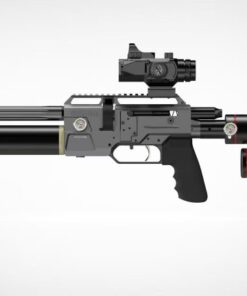
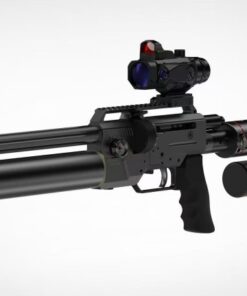
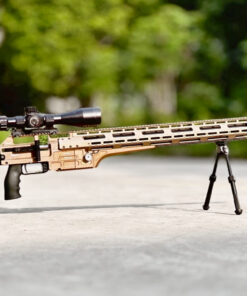
The tactical chassis provides a rigid mounting platform for optics and support equipment.
Current dealer descriptions identify full-length Picatinny mounting surfaces and accessory rails intended for optics and bipods.
The AR-style grip and adjustable-stock architecture also distinguish the tactical version from more traditionally stocked large-bore rifles.
Heavy-Duty Sidelever Action
The rifle uses a substantial sidelever system.
The mechanism is designed around the high-pressure valve system and heavy hammer architecture required by this class of large-bore PCP.
Smooth operation should be maintained through proper cleaning and correct maintenance rather than forcing the lever when resistance is felt.
BinTac Brand and Model Family
Searches for bintac, bin tac, bintac lIc, and bintaclic generally refer to the same BinTac brand and dealer ecosystem.
The company’s wider catalog includes models associated with terms such as bintac t9, bintac m50, bintac t 50, bintac t50, bintac mcar, and other specialized pneumatic platforms.
BinTac T9 Comparison
The bintac t9 belongs to a different part of the product family.
Search phrases such as bintac t9 price, bintac t9 full auto, and bintac t9 amazon usually relate to buyers comparing compact repeating models rather than the Zeus big-bore platform.
The tactical Zeus should therefore not be confused with the T9.
BinTac M50 Comparison
The bintac m50 is another commonly searched model.
Buyers using phrases such as bintac m50 for sale, bintac m50 pump action, b&w m50, or aea megalodon 58 cal bintac m50 may be comparing alternative large-caliber pneumatic designs.
The Zeus differs significantly in reservoir architecture, action type, barrel options, and overall intended use.
BinTac T50 and T50 Extreme
Searches for bintac t50, bintac t50 for sale, bintac t50 extreme, and aea bintac t50 extreme relate to another branch of high-output pneumatic rifles.
The Zeus Tactical remains distinct because of its very large .58 and .72 caliber configurations.
BinTac MCAR Platform
The bintac mcar air rifle and bintac mcar 457 represent additional tactical-style options.
These models use different calibers and layouts.
Consequently, someone comparing bintac mcar with the Zeus should focus on caliber, reservoir size, dimensions, and intended sporting use.
BinTac S45
The bintac s45 aea and bintac s45 for sale search phrases relate to another compact pneumatic platform.
Again, these products should not be confused with the much larger Zeus.
AEA Zeus MKII Comparison
The AEA Zeus MKII (Bullpup) Standard 18 Big Bore represents a newer Zeus-family configuration.
Current BinTac information lists .58 and .72 caliber options, multiple barrel lengths, sidelever operation, Picatinny optics mounting, and 4500 PSI maximum fill pressure.
However, the MKII should be treated as a separate product generation rather than assumed to share every specification with the tactical model described here.
AEA Airguns and BinTac Relationship
Search terms such as aea airguns, aea guns, and BinTac often appear together because BinTac distributes and supports several AEA-associated products.
Therefore, buyers may encounter both names while researching the Zeus family.
AEA Harpoon Comparison
The aea harpoon, aea harpoon price, bintac aea harpoon, harpoon for sale, aea harpoon magnum, aea harpoon gun, aea harpoon cartridge, aea .50 harpoon, aea harpoon air gun, and harpoon air gun searches refer to a very different compact large-caliber pneumatic platform.
Although they occupy the same broad big-bore category, the Zeus Tactical uses a rifle-format chassis and substantially longer barrel options.
AEA Megalodon Comparison
The aea megalodon, aea megalodon 58 cal, aea megalodon 50 cal price, megalodon air rifle, aea megalodon air rifle, and aea megalodon 50 caliber searches relate to another large-bore pneumatic family.
The Megalodon uses a different action and overall layout, so buyers should not treat its specifications as interchangeable with the Zeus.
AEA Defender Family
The aea defender, aea defender 2, and aea defender 3 are also separate products.
These models occupy a different size and operating category.
Similarly, the broad term pistol may appear in searches around compact pneumatic products but does not accurately describe the full-size Zeus Tactical.
AEA Terminator Family
The aea terminator and aea terminator gen 3 belong to another AEA platform family.
Their magazine systems, reservoir layouts, and caliber options differ from the Zeus.
Airgun Shotgun Comparison
Searches for airgun shotgun usually relate to pneumatic guns designed around shot-shell or multi-projectile concepts.
The Zeus Tactical is instead a large-bore rifle platform.
Therefore, its ammunition format and intended range use are fundamentally different.
Bee Bee Gun Rifle Comparison
The phrase bee bee gun rifle generally refers to BB-firing recreational airguns.
The Zeus Tactical is not a BB rifle.
Its large-bore projectiles, high-pressure air system, and specialized construction place it in an entirely different category.
Precision and Practical Use
Despite the emphasis on size and air capacity, precision still depends on stable support, consistent projectiles, correct optic mounting, controlled trigger technique, and repeatable fill conditions.
The longer configurations are particularly well suited to supported range use because their size and weight are easier to manage from a bench or tripod.
When Should You Choose It?
Choose this platform when you specifically want a specialized big-bore pneumatic rifle with large-caliber capability, substantial air storage, tactical ergonomics, and multiple barrel-length options.
The 16-inch version favors portability.
The 24-inch version offers a balanced middle configuration.
The 32-inch model favors supported shooting and maximum reservoir capacity.
Overall BinTac Zeus Tactical With Muzzle Brake Performance
The BinTac Zeus Tactical With Muzzle Brake combines .58 or .72 caliber options, 16-, 24-, or 32-inch barrels, approximately 350cc to 700cc air capacity, 4500 PSI working pressure, sidelever operation, tactical rails, rear stock architecture, and a factory muzzle brake.
For experienced users comparing large-bore pneumatic platforms, it stands apart through its substantial construction, broad barrel-length selection, high-pressure air system, and purpose-built tactical format.
Precision Performance, Air Management, Recoil Control, Handling Balance, Trigger Discipline, and Real-World Shooting Use
This large-bore pneumatic platform is designed around substantial projectile energy, a high-pressure air system, a rigid tactical frame, and a heavy-duty firing cycle. In practical use, it should be approached very differently from a lightweight recreational air rifle. Its size, air demand, projectile mass, and shot impulse make stability, safe backstop selection, careful handling, and consistent shooting technique especially important. The platform performs best when the shooter uses a controlled position, reliable optics, appropriate hearing protection, and a disciplined maintenance routine.
Large-Bore Shooting Character
The shooting experience is defined by projectile mass and air volume.
Each shot uses a significant amount of compressed air.
As a result, the firing cycle feels more substantial than that of smaller-caliber pneumatic rifles.
This makes deliberate shooting more important than rapid firing.
Why Stability Matters
A heavy projectile demands a stable launching platform.
Even small changes in shoulder pressure, grip tension, or support position can influence point of impact.
Therefore, the rifle should be supported consistently whenever accuracy is being evaluated.
Benchrest Use
A solid bench is one of the most practical environments for this type of rifle.
The added stability helps the shooter manage weight and shot impulse.
It also makes it easier to evaluate mechanical consistency.
Tripod Support
A strong tripod can also provide excellent support.
The mounting system should be secure.
The rifle should remain balanced rather than being allowed to tip forward or backward.
Prone Shooting
Prone shooting can provide good stability.
However, the rifle’s overall size and front-end weight should be considered.
The shooter should remain naturally aligned behind the rifle.
Standing Position
Standing is more demanding.
The weight of the rifle becomes much more noticeable without support.
Shorter aiming periods can help reduce fatigue.
Kneeling Position
Kneeling offers a useful compromise between mobility and support.
The forward hand or support surface should remain stable.
The shooter should avoid excessive muscle tension.
Shoulder Contact
The rear stock should meet the shoulder consistently.
Too much pressure can create tension.
Too little contact can reduce control.
A firm but relaxed position is usually best.
Grip Pressure
The firing hand should remain controlled but relaxed.
Excessive grip pressure can shift the rifle during the shot.
The goal is to guide the rifle rather than squeeze it tightly.
Trigger Control
A smooth trigger press is essential.
Large-bore platforms can exaggerate shooter-induced movement.
The trigger should be pressed straight to the rear without sudden movement.
Follow-Through
The shooter should remain behind the rifle after firing.
Good follow-through helps preserve alignment.
It also makes it easier to evaluate shot placement and technique.
Managing Shot Impulse
The front device and rifle mass help moderate the physical feel of the firing cycle.
However, they do not eliminate movement.
A stable position and consistent shoulder contact remain essential.
Air Reservoir Management
The rifle uses substantial air per shot.
Because of this, fill pressure should be monitored carefully.
The shooter should understand the useful operating range rather than simply waiting until the reservoir is nearly empty.
Controlled Filling
Filling should be gradual and performed with properly rated equipment.
The pressure gauge should be watched throughout the process.
Overfilling should never occur.
High-Pressure Safety
The reservoir stores compressed air at very high pressure.
Any visible damage, damaged threads, or unusual leakage should be taken seriously.
The rifle should not be filled if the air-storage system appears compromised.
Clean Air Supply
Only clean and dry compressed air should be used.
Moisture or contamination can damage internal components.
A properly maintained filling source is essential.
Pressure Consistency
Stable pressure helps produce more predictable velocity.
If pressure drops too far, shot behavior may begin to change.
A consistent refill point improves repeatability.
Shot Count Awareness
This type of rifle is not designed primarily around high shot count.
Instead, each fill supports a relatively limited number of powerful shots.
That means the shooter should plan sessions around deliberate firing rather than volume shooting.
Projectile Consistency
Large projectiles should be inspected carefully.
Visible damage, inconsistent shape, or irregular surfaces can affect accuracy.
Careful handling helps preserve consistency.
Ammunition Storage
Projectiles should be stored in a clean and dry container.
Dust and deformation should be avoided.
Consistent storage helps preserve condition.
Barrel Condition
The bore should remain clean enough for consistent projectile travel.
Aggressive cleaning is unnecessary.
Cleaning should be performed only when needed and with suitable tools.
Muzzle Protection
The muzzle area should remain free from impact damage.
A damaged exit surface can affect projectile release.
Transport and cleaning should therefore be carried out carefully.
Optic Mounting
A secure optic is important.
Loose rings or rail hardware can cause major point-of-impact shifts.
Mounting hardware should be checked periodically.
Eye Relief
The optic should be positioned so the shooter does not need to move the head excessively.
A comfortable head position supports repeatable alignment.
Magnification Choice
High magnification can help with precise aiming.
However, too much magnification can exaggerate visible movement.
The most useful setting balances detail and stability.
Parallax Adjustment
Parallax should be set correctly for the shooting distance.
Improper adjustment can make the reticle appear to move when the shooter changes head position.
This can reduce precision.
Establishing a Zero
Zero should be confirmed under controlled conditions.
A stable bench and consistent ammunition help establish a reliable reference.
After transport or maintenance, zero should be rechecked.
Group Testing
Accuracy should be evaluated using repeated groups.
One good shot is not enough.
Several groups provide a more reliable picture of performance.
Horizontal Spread
Horizontal dispersion can result from wind, trigger movement, support pressure, or optic issues.
Patterns should be evaluated over several shots.
Vertical Spread
Vertical variation may come from pressure changes, breathing, or inconsistent shoulder contact.
Repeated testing helps identify the likely cause.
Wind Effects
Wind can significantly affect large projectiles.
Changing wind direction can make groups appear inconsistent.
Calmer conditions are preferable when evaluating mechanical accuracy.
Temperature Effects
Compressed air responds to temperature changes.
Very hot or cold conditions can influence pressure.
Allowing the rifle to acclimate can improve consistency.
Indoor Range Use
Indoor use removes wind from the equation.
This can help when checking basic consistency.
However, suitable backstops, ventilation, range approval, and noise control are especially important.
Outdoor Range Use
Outdoor shooting requires careful attention to wind and safe impact areas.
A substantial backstop is essential.
The shooting environment should be selected with projectile energy in mind.
Safe Backstop Selection
The backstop must be capable of safely stopping the projectile.
Lightweight recreational traps are not appropriate.
The shooter should use a range or impact area designed for this type of energy.
Hearing Protection
Large-bore pneumatic rifles can be loud.
Hearing protection is strongly recommended.
Other people nearby should also be protected.
Eye Protection
Eye protection is equally important.
Compressed air systems, projectiles, and mechanical components can all create hazards if something fails.
Accessory Balance
Heavy optics, bipods, and other equipment change balance.
Accessories should be added only when useful.
Too much weight can make unsupported shooting difficult.
Transport Preparation
The rifle should be unloaded and depressurized only as recommended by the manufacturer.
During transport, it should be secured in a padded case according to local law.
Setup After Transport
After arriving at the shooting location, inspect the optic, bottle, mounting hardware, and action.
A short inspection can identify problems before firing.
Shooter Fatigue
Large-bore rifles can become tiring during long sessions.
Fatigue often leads to harder grip pressure, poor trigger control, and inconsistent head position.
Short breaks can improve performance.
Pre-Session Inspection
Before use, check air pressure, reservoir condition, barrel, optic mounts, trigger operation, and external hardware.
Any unusual leak or mechanical resistance should be investigated.
Post-Session Review
After shooting, check pressure retention and inspect the rifle for fresh damage or loose components.
Changes in function should be addressed before the next session.
Overall Real-World Performance
This platform is best suited to deliberate, supported shooting where stability, safe range setup, consistent projectiles, secure optics, and careful pressure management can all be maintained.
Its heavy-duty construction supports demanding large-bore use.
Its tactical chassis provides strong mounting options.
Its high-pressure air system delivers substantial performance, but also demands greater attention to safety and maintenance.
When used responsibly with a suitable backstop, stable support, clean air supply, and disciplined technique, the rifle can provide a controlled and highly capable large-bore shooting experience.
Build Quality, Reservoir Care, Barrel Protection, Seal Condition, Hardware Inspection, Maintenance, and Long-Term Reliability
A large-bore pneumatic rifle places significant mechanical demand on its air-storage system, valve assembly, barrel, stock or chassis, trigger, and mounting hardware. Because every component contributes to reliable operation, long-term performance depends on careful inspection, correct filling practices, clean storage, and timely servicing. Cosmetic appearance alone is never enough to judge condition. A rifle may look excellent externally while still suffering from air leakage, worn seals, damaged threads, loose screws, or internal pressure problems.
Overall Structural Condition
The main frame should remain rigid and free from cracks, bending, or unusual movement.
Any looseness between major structural components can affect alignment and consistency.
Minor scratches are normally less important than movement between the action, barrel, or stock.
Chassis Inspection
The chassis should remain straight and secure.
Mounting screws should be checked periodically.
A loose chassis connection can change how the rifle behaves under support.
Barrel Protection
The barrel should be protected carefully during transport and storage.
Longer barrels are especially vulnerable to side impacts.
The barrel should never be used as a carrying handle or support point.
Barrel Alignment
The barrel should appear straight and properly centered.
If the rifle has been dropped or knocked, alignment should be inspected before further use.
A sudden accuracy change after impact is a reason to stop and investigate.
Bore Care
The bore does not require aggressive cleaning after every session.
Cleaning should only be performed when needed.
Suitable tools and materials should be used to avoid damaging the internal surface.
Muzzle Condition
The muzzle should remain free from dents and scratches.
Damage at the projectile exit point can affect consistency.
Cleaning tools should never be forced against this area.
Muzzle Device Inspection
The front-mounted brake or compensating device should remain tight and properly aligned.
Any looseness should be corrected before use.
If it appears damaged or misaligned, the rifle should not be fired until inspected.
Reservoir Condition
The air reservoir is one of the most important safety components.
Its exterior should be checked for deep scratches, dents, impact marks, or damaged threads.
Any structural damage should be taken seriously.
High-Pressure Safety
The reservoir stores compressed air at very high pressure.
Visible damage should never be ignored.
A damaged air cylinder should be evaluated by a qualified technician before filling.
Fill Port Cleanliness
The fill connection should remain protected from dust and moisture.
Contamination introduced during filling can damage internal seals and valves.
A protective cap should remain fitted whenever possible.
Clean, Dry Air
Only clean, dry compressed air should be used.
Moisture can lead to internal corrosion.
Dirty air can also affect regulator and valve performance.
Controlled Filling
The reservoir should be filled gradually.
Very rapid filling can generate unnecessary heat.
The pressure gauge should be monitored throughout the process.
Pressure Limit
The approved fill pressure should never be exceeded.
Overfilling places unnecessary stress on seals and pressure-bearing components.
Always follow the manufacturer’s specifications.
Pressure Gauge Condition
The gauge should remain clear and readable.
Fogging, cracked lenses, or unusual readings should be investigated.
If the gauge appears unreliable, filling should stop.
Air Retention
A healthy system should hold pressure consistently.
If pressure drops during storage, the loss should be monitored.
Persistent leakage is a sign that seals or fittings may need attention.
Seal Condition
O-rings and seals wear over time.
Temperature changes, age, and contamination can accelerate deterioration.
Replacement seals should match the correct specification.
Correct Lubrication
Only lubricants approved for high-pressure pneumatic systems should be used.
Too much lubricant can attract dirt.
Incorrect oils may damage seals or create safety risks.
Valve Health
The firing valve should operate consistently.
Changes in sound, air consumption, or shot behavior may indicate a service issue.
Internal valve work is best left to qualified technicians.
Action Operation
The loading mechanism should cycle smoothly.
If resistance suddenly increases, the mechanism should not be forced.
Dirt, damaged ammunition, or mechanical wear may be responsible.
Breech Cleanliness
The breech area should remain free from debris.
Dust and fragments can interfere with loading.
Gentle cleaning is normally sufficient.
Trigger Mechanism
The trigger should remain predictable and secure.
A sudden change in feel should be investigated.
Adjustment screws should remain locked once a preferred setting has been established.
Safety Mechanism
The safety should engage and disengage positively.
If it becomes loose, stiff, or unreliable, use should stop until the issue is corrected.
Mechanical safeties never replace safe handling.
Grip Condition
The grip should remain firmly mounted.
Loose grip hardware can alter trigger-hand position.
Mounting screws should be checked occasionally.
Rear Stock Condition
The rear support should remain secure.
Any adjustable parts should lock firmly.
Movement during shooting can reduce consistency.
Optics Rail Stability
The optics rail should remain tightly mounted.
Loose rail hardware can cause point-of-impact changes.
This should be checked before assuming an accuracy problem is internal.
Scope Ring Inspection
Scope rings should remain secure.
Uneven or excessive tightening can damage hardware.
Correct torque is preferable to excessive force.
Accessory Mounting
Mounted accessories should remain secure.
Loose equipment can create vibration, balance changes, and inconsistent support.
Accessory screws should be checked periodically.
Bipod Inspection
If a bipod is fitted, the attachment point should remain solid.
Hinges and locking mechanisms should operate smoothly.
Loose supports can affect stability.
Exterior Cleaning
The rifle should be wiped after use.
Sweat, dust, and moisture can collect around joints and screws.
A soft, dry cloth is usually enough.
Moisture Protection
Rain or high humidity can leave water in small recesses.
The rifle should be fully dried before storage.
Storing it damp can encourage corrosion.
Case Storage
A padded case protects the rifle from impact.
However, foam can trap moisture.
Both the rifle and case should be dry before long-term storage.
Heat Exposure
Extreme heat should be avoided.
A closed vehicle in direct sunlight can become very hot.
Higher temperature increases internal air pressure.
Cold Conditions
Cold temperatures can affect seal flexibility and pressure behavior.
Moving rapidly from cold to warm conditions may also create condensation.
Gradual temperature changes are preferable.
Long-Term Storage
For extended storage, the rifle should remain clean, dry, secure, and protected from impact.
The storage environment should be stable.
Pressure condition should follow manufacturer guidance.
Pre-Session Inspection
Before use, inspect the reservoir, pressure gauge, barrel, action, trigger, optics, and external hardware.
A short inspection can reveal problems early.
Post-Session Inspection
After shooting, look for new marks, loose screws, air loss, or changes in mechanical feel.
Problems are easier to diagnose while the session is still recent.
Monitoring Pressure Loss
If the rifle loses pressure while stored, record how quickly it happens.
A persistent leak should be repaired rather than repeatedly refilled.
Monitoring Accuracy Changes
Unexpected accuracy changes should first prompt simple checks.
Inspect the optic mounts, barrel condition, ammunition, and support setup.
Internal adjustment should not be the first response.
Monitoring Cycling
The loading action should remain smooth.
Rough movement can indicate contamination or wear.
Any sudden change deserves inspection.
Used-Rifle Inspection
A second-hand example should be evaluated primarily by mechanical condition.
Reservoir health, air retention, barrel condition, trigger feel, action smoothness, and mounting integrity matter more than cosmetic finish.
Service History
Maintenance records can provide useful information.
Previous seal replacement, valve work, or pressure-system servicing can help establish how well the rifle has been maintained.
Cosmetic Wear Versus Mechanical Wear
Small scratches usually affect appearance more than function.
Leaks, damaged threads, rough cycling, and unstable pressure behavior are much more important.
Professional Servicing
Complex internal repairs should be handled by technicians familiar with high-pressure pneumatic systems.
Incorrect disassembly can damage parts and create serious safety risks.
Preserving Long-Term Value
Good maintenance protects both performance and resale value.
Use clean air.
Protect the reservoir.
Keep the barrel safe.
Inspect seals.
Store the rifle dry.
Address faults early.
Overall Long-Term Reliability
A well-maintained large-bore pneumatic platform can remain dependable for many years. Clean air protects the internal system, healthy seals preserve pressure, a protected barrel maintains alignment, and secure hardware supports repeatable precision. Regular inspection, careful filling, dry storage, safe transport, and qualified servicing when required all contribute to smooth operation, stable pressure behavior, and long-term mechanical reliability.
Be the first to review “BinTac Zeus Tactical With Muzzel Break”
Related products
AEA Air Gun
AEA Air Gun
AEA Air Gun
AEA Air Gun
AEA Air Gun
AEA Air Gun
AEA Air Gun
Reviews
There are no reviews yet.