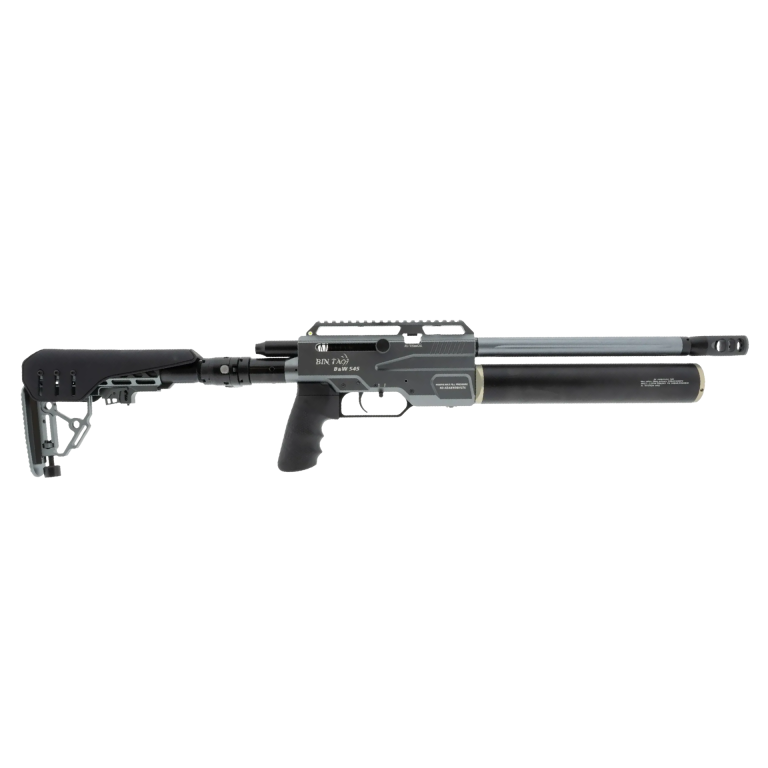
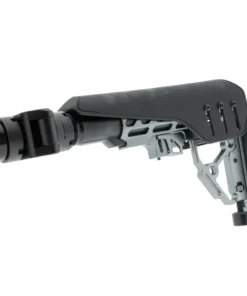
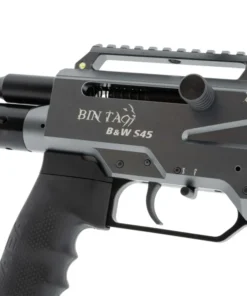
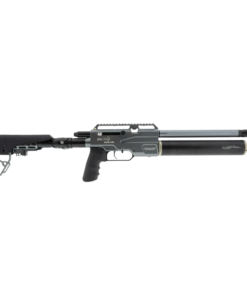
BinTac/AEA S45 .45 Cal Semi-Auto
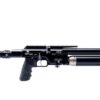
Price range: $1,100.00 through $1,500.00
Semi-Auto. Integrated Shroud. Available in 4,500 PSI and 7,000 PSI.
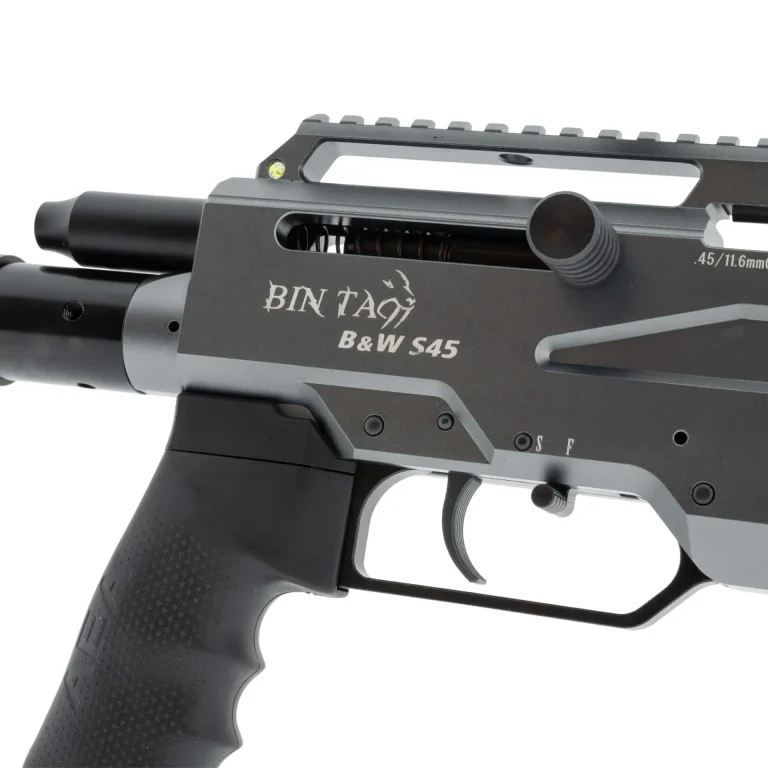
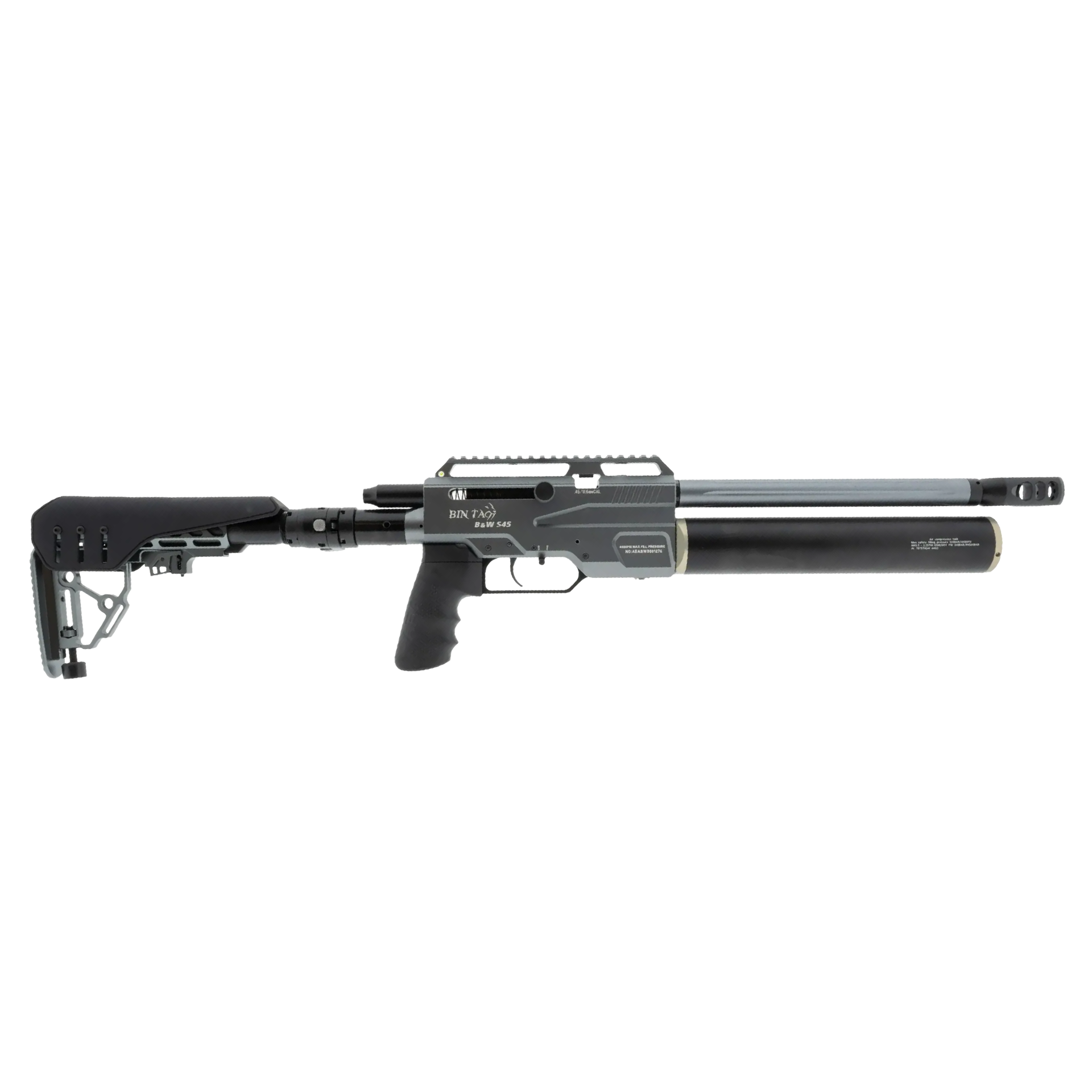
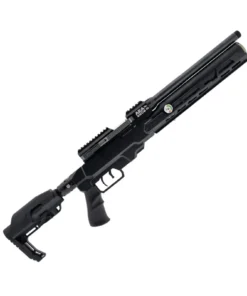
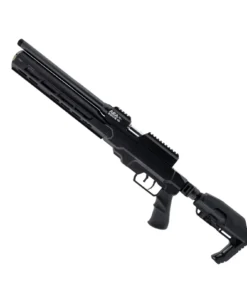
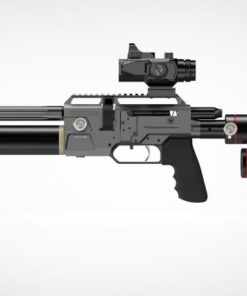
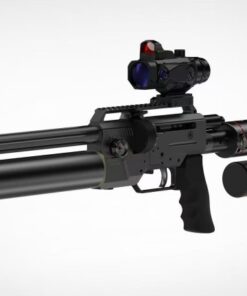
The BinTac S45 is a very hard-hitting semi-automatic .45 caliber big bore PCP air rifle delivering between 300–350+ FPE — matching or exceeding standard .45 ACP ballistics in an air-powered platform. Featuring gas-operated semi-automatic cycling, dual-tank air configuration, integrated shroud silencer and muzzle brake, and Picatinny rail for optics.
Available in two configurations: the 4,500 PSI long-barrel version for maximum shot count and velocity with heavy slugs, and the 7,000 PSI compact version for shooters who want the same big bore performance in a shorter, more maneuverable package.
Overview:
The S45’s gas-operated semi-automatic action delivers rapid-fire big bore shooting capability with the 6-shot CNC detachable magazine, and the dual-tank front and rear bottle setup manages the heavy air consumption demanded by the .45 caliber platform. The integrated shroud silencer and muzzle brake mitigate extreme muzzle blast and recoil for improved control and comfort during extended shooting sessions.
The 4,500 PSI version features a 24″ barrel and 850–950cc dual-tank system for maximum velocity with 235-grain slugs at 800+ FPS and 18+ effective shots per fill. The 7,000 PSI version trades barrel length for a more compact 36″ overall length — using an inline 4,500 PSI rear tank regulator to ensure consistent shot-to-shot velocities across the high-pressure system, delivering 800+ FPS with 200-grain slugs for 12+ effective shots per fill.
Key Features:
- Gas-operated semi-automatic action for rapid-fire big bore shooting
- 300–350+ FPE — matches or exceeds standard .45 ACP ballistics
- Dual-tank configuration — front and rear air bottles
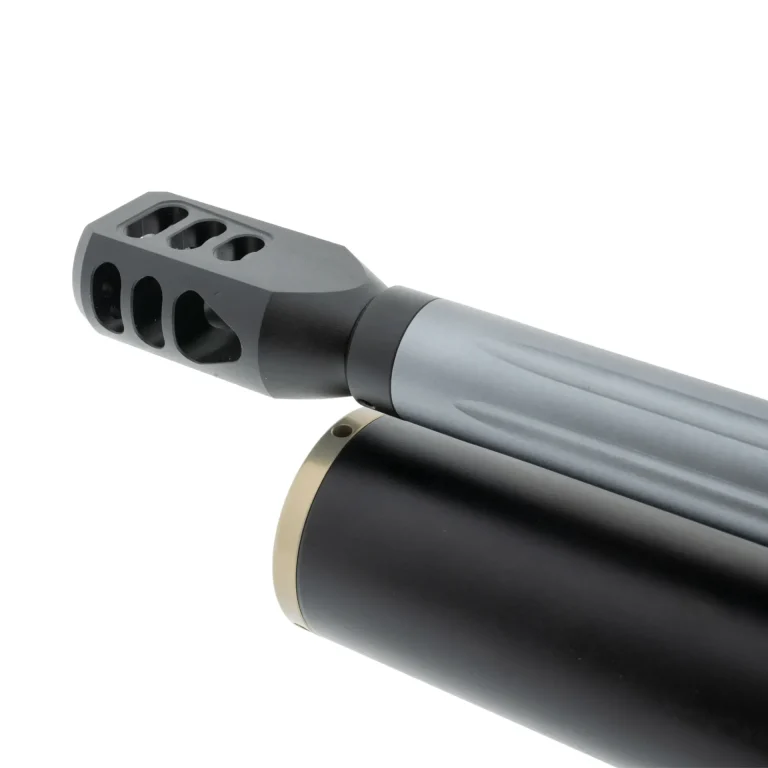
- Integrated shroud silencer for reduced muzzle blast
- Integrated muzzle brake for recoil mitigation
- Top-mounted Picatinny/Weaver rail for scopes and red dots
- 6-shot CNC detachable magazine
- 7,000 PSI version features inline 4,500 PSI rear tank regulator for consistent velocities
- Available in 4,500 PSI and 7,000 PSI configurations
Specifications per Pressure Variant
| Spec | 4,500 PSI | 7,000 PSI |
|---|---|---|
| Overall Length | 36 inches | 36 inches |
| Weight | ~8 lbs | 10.5–11 lbs |
| Barrel Length | 13-14 inches | 13-14 inches |
| Air Capacity | 350–800cc | 800cc max |
| Fill Pressure | 4,500 PSI | 7,000 PSI (regulated to 4,500 PSI) |
| Muzzle Velocity | 800+ fps (200gr slugs) | 800+ fps (235gr slugs) |
| Shots Per Fill | 12+ effective shots | 18+ effective shots |
Shared Specifications
| Spec | Value |
|---|---|
| Caliber | .45 |
| Action | Gas-operated semi-automatic |
| Magazine Capacity | 6 rounds |
| Max Energy | 300–350+ FPE |
| Optics Rail | Picatinny/Weaver |
| Sound Management | Integrated shroud silencer + muzzle brake |
What’s Included
- BinTac S45 .45 Cal Air Rifle
- Dual air tanks (pre-installed — sizing varies by configuration)
- 2x CNC detachable 6-round magazines
- Fill probe / charging adapter
- Manufacturer’s user manual
BinTac/AEA S45 .45 Cal Semi-Auto – Big-Bore PCP Air Rifle, Advanced Pneumatic Engineering, Precision Construction and Modern Semi-Automatic Technology
BinTac/AEA S45 .45 Cal Semi-Auto – Advanced Big-Bore Pneumatic Engineering
The BinTac/AEA S45 .45 Cal Semi-Auto combines contemporary compressed-air engineering, precision manufacturing, and specialized mechanical construction within a distinctive big-bore sporting platform.
Developed for experienced adult enthusiasts, this configuration incorporates a gas-operated semi-automatic mechanism, detachable six-round magazine, precision-manufactured barrel, and synthetic supporting furniture.
Furthermore, its relatively compact construction distinguishes it from conventional full-length sporting equipment.
The standard S45 Regular configuration features a 13-inch barrel, approximately 350cc of compressed-air capacity, and a maximum specified filling pressure of 4,500 PSI.
Additionally, its manufacturer-listed overall length reaches approximately 36 inches, with a folded length of about 26 inches.
The equipment weighs approximately eight pounds, although individual production versions may differ.
Consequently, prospective owners should distinguish the original configuration from later high-pressure models before comparing specifications.
However, performance figures do not guarantee identical accuracy under every circumstance. Actual results depend on equipment condition, approved ammunition, and manufacturer testing conditions.
Advanced Semi-Automatic Mechanical Construction
The specialized operating mechanism contributes to the equipment’s distinctive technical identity.
Furthermore, the detachable magazine integrates with the surrounding pneumatic action through carefully manufactured components.
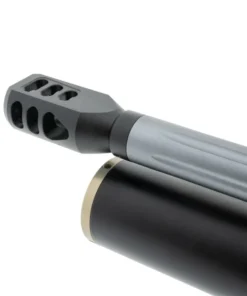
The barrel assembly incorporates an integral muzzle brake, while the upper mounting surface accommodates appropriately compatible sporting optics.
However, the high-pressure system requires qualified servicing, genuine replacement components, and approved supporting equipment.
Unauthorized modifications may compromise mechanical integrity and create serious hazards.
AEA Airguns and Related High-Power Sporting Platforms
The wider aea airguns and aea guns collections include different pneumatic systems and product generations.
Relevant searches include aea megalodon, aea megalodon air rifle, megalodon air rifle, aea megalodon 50 caliber, aea megalodon 50 cal price, aea megalodon 58 cal, and aea megalodon 58 cal bintac m50.
Additional comparisons include AEA Zeus MKII (Bullpup) Standard 18 Big Bore and aea terminator gen 3.
These products incorporate different mechanical arrangements and should not be confused with the featured model.
BinTac T9, M50 and T50 Model Comparisons
Related searches include bintac, bin tac, bintac t9, bintac t9 price, bintac t9 full auto, bintac t9 amazon, bintac lIc, and bintaclic.
Additional terms include bintac m50, bintac m50 for sale, b&w m50, bintac t 50, bintac t50, bintac t50 for sale, bintac t50 extreme, aea bintac t50 extreme, and bintac m5.
However, these expressions concern different sporting products, versions, and retailer listings.
Their technical specifications should therefore be evaluated independently.
S45, MCAR and Alternative Sporting Configurations
Customers may encounter searches including bintac s45 aea, bintac s45 for sale, bintac mcar, bintac mcar air rifle, and bintac mcar 457.
Additional research includes pistol and other compact sporting equipment categories.
However, physical similarities do not establish identical specifications or mechanical compatibility.
Consequently, customers should confirm the exact production model before purchasing replacement components.
Harpoon and Defender Equipment Comparisons
Alternative searches include aea harpoon, aea harpoon price, aea harpoon magnum, aea harpoon gun, aea harpoon cartridge, aea .50 harpoon, bintac aea harpoon, and harpoon for sale.
Other expressions include aea defender and aea defender 2.
These products incorporate different physical configurations and engineering characteristics.
Therefore, their components and accessories should not be represented as standard equipment for the featured platform.
Karma Airguns and Alternative Precision Sporting Equipment
Related search phrases include karma airguns, karma red panda, karma sis compact, karma sis, karma eq, karma eq air rifle, Karma EQ PCP air rifle, and Karma Airguns EQ.
Other expressions include Karma SLS air rifle, .22 Karma SLS Compact Folding Stock, 25 karma, eq magazine, panda gun, and kaarma dealer.
Broader variations include karma air conditioning, air karma, and eq air.
However, these terms do not describe the featured equipment’s factory specifications.
BinTac/AEA S45 .45 Cal Semi-Auto – Technical Specifications
Standard S45 Regular Configuration
- Manufacturer: BinTac / AEA
- Model: S45 Semi-Auto Regular
- Category: Big-bore pneumatic air rifle
- Operating system: Pre-charged pneumatic
- Action: Semi-automatic
- Caliber: .45 / approximately 11.43mm
- Barrel length: 13 inches / approximately 330mm
- Overall length: Approximately 36 inches
- Folded length: Approximately 26 inches
- Weight: Approximately 8 pounds
- Magazine capacity: Six rounds
- Front reservoir: Approximately 350cc aluminum
- Maximum filling pressure: 4,500 PSI / approximately 310 bar
- Advertised velocity: Above 800 FPS with the listed 200-grain reference projectile
- Advertised energy: Approximately 300+ FPE
- Optics mounting: Weaver/Picatinny interface
- Muzzle equipment: Integral muzzle brake
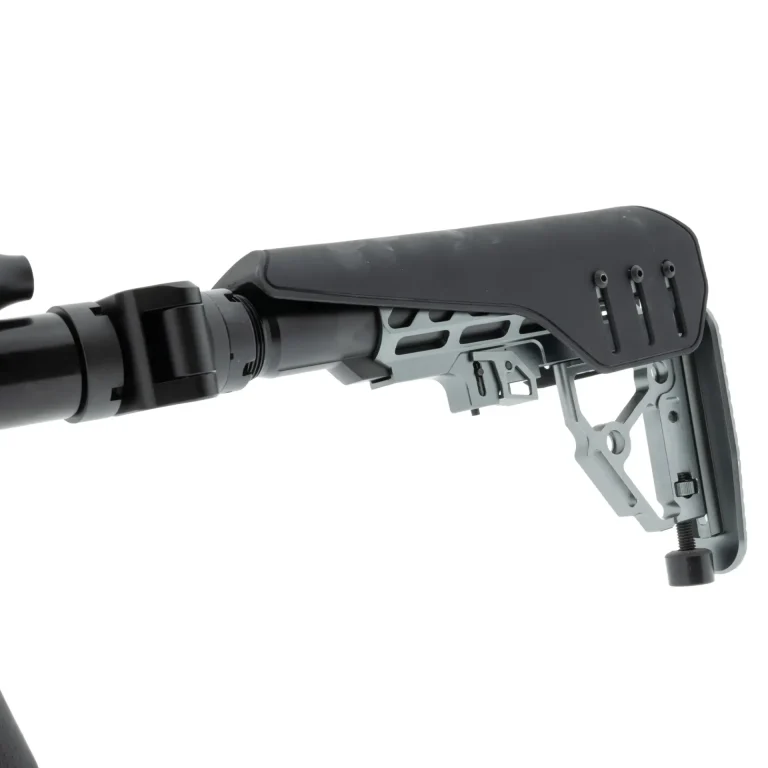
- Furniture: Synthetic, folding configuration
- Included accessories: Magazine and filling probe on documented standard packages
Updated High-Pressure Configuration
Certain updated versions incorporate a substantially different pneumatic arrangement.
- Maximum filling pressure: 7,000 PSI
- Front reservoir: Approximately 350cc
- Rear reservoir: Approximately 450cc
- Total reservoir capacity: Approximately 800cc
- Rear pressure regulation: Listed 4,500 PSI inline regulator
- Barrel length: Approximately 14 inches
- Overall length: Approximately 36 inches
- Weight: Approximately 10.5 pounds
- Magazine capacity: Six rounds
- Included accessories: Two detachable magazines and filling probe on a documented 2026 package
These figures describe separate configurations and should not be combined into one unqualified specification.
Why Consider the BinTac/AEA S45 .45 Cal Semi-Auto?
The platform combines specialized pneumatic engineering, semi-automatic mechanical construction, and modern synthetic furniture within a distinctive sporting configuration.
Furthermore, the detachable magazine, dedicated optical mounting interface, and compact structural arrangement contribute to its technical identity.
Different production versions offer substantially different pressure-management systems and physical characteristics.
However, buyers should prioritize correct product identification, qualified servicing, genuine accessories, secure storage, and compliance with applicable legislation.
For experienced enthusiasts evaluating modern pneumatic equipment, these considerations remain essential to responsible long-term ownership.
Ultimately, the design reflects contemporary industrial manufacturing, specialized mechanical engineering, and the development of high-pressure sporting technology.
Advanced Pneumatic Engineering, Modern Mechanical Construction, Precision Manufacturing, Ergonomic Design and Long-Term Ownership
2.1 Modern Engineering and Contemporary Sporting Innovation
Modern sporting equipment manufacturing combines established mechanical principles with advanced industrial materials, precision machining, and sophisticated production technologies. As a result, contemporary compressed-air platforms incorporate engineering features that distinguish them from conventional recreational equipment.
The featured configuration reflects this technological development through its specialized pneumatic operating system, repeating mechanical action, substantial pressure reservoir, and modern supporting furniture.
Furthermore, the integration of these components demonstrates how contemporary manufacturing can combine different engineering disciplines within one coordinated structure.
Manufacturing quality depends on accurate dimensions, suitable material selection, carefully controlled assembly procedures, and consistent inspection standards.
However, sophisticated production does not eliminate ordinary maintenance responsibilities.
Environmental exposure, mechanical wear, accidental damage, and unsuitable servicing can influence long-term equipment condition.
Consequently, prospective owners should consider authentic technical documentation, replacement-part availability, warranty provisions, and access to qualified professional assistance.
These considerations contribute to responsible purchasing decisions and realistic ownership expectations.
2.2 Advanced Semi-Automatic Operating Architecture
The semi-automatic operating mechanism represents a defining characteristic of this sporting platform. Its construction incorporates specialized pneumatic components, accurately manufactured moving assemblies, and an integrated repeating system.
Furthermore, the arrangement differs from conventional manually repeating mechanisms through its dedicated internal operating architecture.
The complete system requires appropriate manufacturing tolerances because several mechanical components must maintain correct relationships during normal operation.
However, sophisticated operating technology does not guarantee identical reliability under every circumstance.
Environmental contamination, component wear, accidental impacts, and inappropriate maintenance can influence mechanical condition.
Consequently, periodic inspection remains important.
Unexpected resistance, unusual mechanical behavior, or visible deterioration should receive qualified professional assessment.
Improvised adjustments may compromise the original design and introduce unnecessary hazards.
The operating mechanism demonstrates how modern pneumatic engineering can complement established sporting equipment construction while maintaining the importance of responsible handling and servicing.
2.3 High-Pressure Pneumatic Technology and Industrial Design
The compressed-air operating system forms the foundation of the equipment’s mechanical construction. Instead of relying on a conventional coiled mainspring, the platform incorporates dedicated pressure-containing components and specialized internal pneumatic assemblies.
Furthermore, carefully manufactured valves, seals, and connecting structures contribute to the complete operating arrangement.
These components require suitable materials, accurate dimensions, and appropriate manufacturing standards.
However, advanced pneumatic technology introduces maintenance responsibilities that differ from those associated with traditional spring-powered equipment.
Internal seals may gradually deteriorate, while pressure-containing components require suitable inspection throughout ownership.
Consequently, unauthorized modifications and improvised repairs should be avoided.
Manufacturer-approved operating limits must always be respected.
The technology demonstrates how established principles of fluid mechanics contribute to modern recreational sporting equipment.
Its sophisticated construction reflects industrial innovation while emphasizing the importance of qualified technical support.
2.4 Pressure Reservoir Construction and Structural Integrity
The compressed-air reservoir represents a critical component of the mechanical architecture.
Its construction requires suitable pressure-rated materials, reliable structural engineering, and carefully manufactured connections.
Furthermore, the reservoir must integrate correctly with the surrounding pneumatic mechanism and supporting assemblies.
These components experience substantial mechanical stresses throughout their intended service life.
Consequently, manufacturing consistency and appropriate inspection procedures remain essential.
However, reservoir capacity alone cannot establish identical operating characteristics under every condition.
Temperature changes, component wear, and factory testing procedures may influence actual results.
Excessive heat, accidental impacts, unauthorized alterations, and unsuitable repairs can compromise structural integrity.
Any evidence of leakage, visible deformation, or abnormal pressure behavior requires professional assessment.
Responsible ownership involves preserving the manufacturer’s approved configuration and following official maintenance recommendations.
2.5 Standard and Updated Pressure-System Configurations
The broader product family includes different pressure-system configurations that should be evaluated separately.
Earlier versions incorporate a more conventional reservoir arrangement, while certain updated models feature additional compressed-air capacity and specialized pressure-management components.
Furthermore, these differences may affect external dimensions, weight, servicing requirements, and compatible accessories.
However, similar exterior appearances do not establish mechanical interchangeability.
A component suitable for one production version may not meet the pressure rating or dimensional requirements of another.
Consequently, accurate model identification remains important before purchasing replacement parts.
Owners should also distinguish documented factory specifications from optional retailer modifications.
Unauthorized changes may compromise mechanical integrity and applicable warranty protection.
The existence of different configurations demonstrates how manufacturers revise specialized sporting equipment as production technologies develop.
2.6 Advanced Pressure Regulation and Technical Consistency
Certain updated configurations incorporate specialized regulation systems intended to manage compressed-air delivery within approved factory specifications.
These components form part of the surrounding pneumatic architecture and require appropriate structural integration.
Furthermore, pressure regulation demonstrates how modern industrial engineering applies specialized control technology to sporting equipment.
However, regulated construction should not be interpreted as a guarantee of identical performance under every circumstance.
Environmental temperature, component condition, and manufacturer testing procedures may influence observed characteristics.
Consequently, published figures should be interpreted according to their documented conditions.
Internal pressure-management components require professional servicing whenever suspected malfunction develops.
Unauthorized adjustments may compromise reliability and introduce serious hazards.
For responsible owners, preserving the original factory configuration remains more important than pursuing unsupported performance claims.
The arrangement illustrates the relationship between sophisticated pressure engineering, manufacturing consistency, and technical maintenance.
2.7 Precision Barrel Construction and Manufacturing Quality
The precision-manufactured barrel contributes significantly to the equipment’s mechanical structure.
Its production requires suitable metallic materials, carefully controlled internal dimensions, and consistent industrial machining procedures.
Furthermore, the barrel must integrate correctly with the surrounding action and supporting components.
Manufacturing consistency contributes to structural integrity and the manufacturer’s intended design characteristics.
However, the presence of a precision-manufactured barrel does not guarantee identical accuracy results under every circumstance.
Actual recreational performance depends on mechanical condition, approved ammunition, environmental factors, and individual experience.
Consequently, technical descriptions should distinguish verified engineering characteristics from unsupported precision promises.
Sensitive internal surfaces also require appropriate maintenance.
Aggressive cleaning methods, unsuitable chemicals, and unauthorized alterations may compromise their condition.
Qualified professional inspection remains advisable whenever suspected damage develops.
The barrel demonstrates how established metalworking expertise continues to contribute to modern compressed-air sporting equipment.
2.8 Compact Barrel Architecture and Structural Integration
The relatively compact barrel assembly contributes to the equipment’s distinctive external proportions.
Its construction reflects the relationship between the barrel, surrounding pneumatic action, supporting frame, and mechanical furniture.
Furthermore, the arrangement demonstrates how manufacturers coordinate several specialized components within a limited overall structure.
However, compact barrel dimensions do not automatically establish universal suitability for every recreational activity.
Individual requirements, applicable regulations, and factory specifications remain important.
Consequently, prospective owners should evaluate the complete configuration rather than focus exclusively on barrel length.
The assembly also requires protection against accidental impacts and inappropriate maintenance.
Visible damage or suspected mechanical deterioration should receive qualified assessment.
The construction illustrates how modern industrial design can accommodate specialized pneumatic systems while maintaining recognizable sporting equipment proportions.
2.9 Detachable Magazine and Mechanical Compatibility
The detachable magazine forms an important part of the equipment’s repeating operating architecture.
Its manufacture requires appropriate materials, accurate dimensions, and consistent assembly procedures.
Furthermore, the magazine must integrate correctly with the surrounding mechanical action.
However, visual similarity does not guarantee compatibility between different sporting configurations.
Magazine specifications may vary according to production version, caliber, or manufacturer revision.
Consequently, replacement components should match official technical documentation.
Improvised substitutions may compromise mechanical function and create unnecessary safety concerns.
Routine inspection helps identify visible damage, environmental contamination, or abnormal movement.
Appropriate storage also contributes to preserving structural integrity.
The magazine demonstrates how compact mechanical assemblies can incorporate sophisticated engineering requirements.
Accurate compatibility information supports responsible purchasing decisions and helps prevent unnecessary equipment damage.
2.10 Modern Folding Stock and Exterior Construction
The folding rear furniture contributes significantly to the equipment’s recognizable sporting appearance.
Its construction incorporates manufactured structural components, dedicated attachment hardware, and contemporary exterior materials.
Furthermore, the arrangement reflects modern industrial design principles.
However, folding furniture does not eliminate the need for careful handling or suitable storage.
Attachment points and moving components remain susceptible to ordinary wear.
Consequently, periodic visual inspection helps identify looseness, visible deterioration, or unusual movement.
Improvised repairs may compromise mechanical integrity and should be avoided.
The supporting stock also influences the equipment’s overall dimensions and physical characteristics.
Individual preferences vary, making ergonomic suitability subjective.
The design demonstrates how modern sporting equipment can incorporate adaptable furniture while preserving the importance of manufacturer-approved maintenance.
2.11 Contemporary Synthetic Materials and Surface Durability
Synthetic materials contribute to the platform’s distinctive exterior design and structural construction.
Modern polymers allow manufacturers to produce consistent shapes, specialized textures, and contemporary industrial finishes.
Furthermore, these materials can complement metallic assemblies within a coordinated sporting platform.
However, synthetic construction should not be considered completely resistant to environmental deterioration.
Excessive heat, prolonged sunlight exposure, aggressive chemicals, and severe impacts may influence material condition.
Consequently, appropriate storage remains important.
Routine inspection helps identify cracks, deformation, or deterioration around mechanical attachment points.
The combination of synthetic and metallic materials demonstrates how contemporary manufacturing incorporates different structural characteristics within a single product.
Long-term condition nevertheless depends on responsible handling, environmental protection, and suitable maintenance.
2.12 Ergonomic Grip and Individual Physical Suitability
The pistol-style grip contributes to the equipment’s recognizable exterior appearance.
Its construction incorporates shaped materials intended to complement the surrounding mechanical assemblies.
Furthermore, modern manufacturing methods allow consistent exterior dimensions and specialized ergonomic surfaces.
However, physical comfort remains subjective.
Individual hand proportions, personal preferences, and recreational requirements differ considerably.
Consequently, no single grip configuration guarantees identical suitability for every owner.
The component also requires appropriate maintenance.
Accidental impacts, unsuitable chemicals, and excessive environmental exposure may influence its condition.
Periodic inspection helps identify cracking, deformation, or visible deterioration.
The grip illustrates how contemporary industrial design combines ergonomic considerations with specialized mechanical construction.
Its contribution extends beyond appearance because structural integrity and material condition remain important throughout ownership.
2.13 Mechanical Trigger Assembly and Manufacturing Refinement
The trigger assembly contributes to the equipment’s specialized mechanical architecture.
Its construction requires carefully manufactured components that maintain appropriate relationships with the surrounding action.
Furthermore, reliable production standards support the intended characteristics of the complete mechanism.
However, trigger components remain safety-critical assemblies.
Unauthorized adjustments or modifications may compromise their function and create serious hazards.
Consequently, professional servicing should follow manufacturer-approved procedures.
Unexpected resistance, abnormal movement, or suspected malfunction requires qualified technical assessment.
Individual impressions of trigger quality may also vary.
Therefore, responsible evaluation should emphasize authentic specifications, suitable mechanical condition, and safe operation.
The assembly demonstrates how contemporary sporting equipment integrates specialized mechanical controls while preserving the importance of appropriate maintenance and responsible handling.
2.14 Integrated Muzzle Components and Structural Protection
The forward barrel assembly incorporates manufacturer-designed components that contribute to the platform’s distinctive mechanical appearance.
Its construction requires appropriate materials, accurate dimensions, and consistent structural integration.
Furthermore, the completed arrangement forms part of the equipment’s approved factory configuration.
However, the presence of specialized muzzle components should not be interpreted as evidence of complete sound elimination.
Actual acoustic characteristics depend on mechanical design and environmental conditions.
Consequently, exaggerated claims concerning silent operation should be avoided.
The forward assembly also requires suitable protection against accidental damage.
Unauthorized replacement components may introduce compatibility concerns or violate applicable regulations.
Visible deterioration should receive professional assessment.
The design illustrates how contemporary sporting equipment incorporates specialized external components while maintaining the importance of structural integrity.
2.15 Optical Mounting Interface and Accessory Compatibility
The equipment incorporates dedicated mounting surfaces intended for compatible sporting optical accessories.
Their construction requires suitable metallic materials, accurate dimensions, and appropriate structural support.
Furthermore, the mounting interface integrates with the surrounding action and frame.
However, standardized attachment systems do not guarantee compatibility with every aftermarket product.
Different accessories may incorporate variations in dimensions, fastening requirements, or structural characteristics.
Consequently, customers should verify compatibility using official manufacturer documentation.
Improperly fitted components may damage supporting surfaces or create unnecessary mechanical concerns.
Routine inspection helps identify visible deterioration or insecure hardware.
The mounting system demonstrates how contemporary sporting equipment incorporates modular design principles while preserving a recognizable external appearance.
Optional accessories should only be described as included when the exact product package confirms their presence.
2.16 Pressure Monitoring and Technical Instrumentation
An integrated monitoring instrument contributes to the equipment’s technical identity by providing information concerning the compressed-air system.
Its construction incorporates specialized measurement components intended to operate within the manufacturer’s approved specifications.
Furthermore, pressure-monitoring technology reflects established industrial engineering principles.
However, an instrument does not replace professional inspection.
Its accuracy depends on mechanical condition, appropriate calibration, and the integrity of surrounding assemblies.
Consequently, inconsistent indications or suspected malfunction require qualified assessment.
Unauthorized repairs may compromise pressure-system safety.
The monitoring arrangement illustrates how contemporary pneumatic equipment integrates specialized instrumentation into its mechanical architecture.
Responsible owners should understand that monitoring devices provide information rather than guaranteeing the absence of mechanical hazards.
Official documentation remains the appropriate reference for operating limitations.
2.17 Exterior Finishes and Corrosion Protection
Protective exterior finishes contribute to preserving the appearance of metallic components.
Depending on their composition, suitable treatments may provide resistance against certain forms of ordinary environmental deterioration.
Furthermore, consistent exterior finishing supports the equipment’s cohesive industrial appearance.
However, no coating guarantees complete resistance to scratches, abrasion, moisture, or aggressive chemicals.
Consequently, appropriate cleaning and storage remain important.
Different materials may require different maintenance products.
A substance suitable for synthetic furniture may not be appropriate for sensitive metallic surfaces.
Routine visual inspection helps identify deterioration before it becomes more extensive.
The combination of structural materials and protective finishes demonstrates how industrial manufacturing contributes to both product presentation and long-term maintenance considerations.
2.18 Environmental Conditions and Material Stability
Environmental conditions influence metallic components, synthetic furniture, internal seals, and compressed gas.
Temperature changes may affect pneumatic pressure, while prolonged humidity can contribute to surface deterioration.
Furthermore, excessive heat and ultraviolet exposure may influence certain polymer materials.
Appropriate storage therefore deserves careful consideration.
The equipment should not remain inside enclosed vehicles exposed to extreme temperatures.
Similarly, prolonged dampness may affect vulnerable mechanical assemblies.
However, suitability for ordinary outdoor recreational activities does not automatically establish waterproof construction.
Specific environmental resistance claims should be supported by manufacturer documentation.
Responsible storage contributes to preserving structural integrity and exterior appearance.
Periodic inspection remains valuable following exposure to unsuitable environmental conditions.
The different materials incorporated into the complete assembly may require distinct maintenance procedures.
2.19 Routine Cleaning and Exterior Preservation
Routine exterior maintenance helps preserve the equipment’s appearance and structural condition.
Dust, fingerprints, moisture residue, and ordinary environmental contamination may accumulate on metallic and synthetic surfaces.
Furthermore, different materials require appropriate cleaning products.
Consequently, manufacturer-approved guidance should direct maintenance.
Aggressive solvents, abrasive tools, and excessive force may cause unnecessary deterioration.
A cleaning product suitable for synthetic furniture may not be appropriate for every metallic component.
Light surface contamination should be removed with suitable nonabrasive materials.
However, suspected internal damage requires qualified assessment rather than improvised servicing.
Regular inspection also helps identify external concerns that may require professional attention.
Appropriate care contributes to preserving the original appearance while reducing avoidable deterioration throughout ownership.
2.20 Mechanical Reliability and Preventive Inspection
Mechanical reliability depends on the condition of several interconnected assemblies.
The pressure reservoir, operating mechanism, magazine interface, trigger components, and supporting frame must remain within their intended mechanical specifications.
Furthermore, manufacturing quality provides only part of the foundation for dependable ownership.
Ordinary wear, accidental impacts, environmental contamination, and unsuitable maintenance may influence component condition.
Consequently, periodic visual inspection remains valuable.
Owners should remain attentive to unexpected resistance, unusual movement, visible deterioration, or abnormal behavior.
However, internal inspection should not involve unauthorized dismantling of pressurized components.
Qualified professional assistance remains appropriate whenever suspected malfunction develops.
Responsible maintenance contributes to preserving the manufacturer’s intended mechanical characteristics.
2.21 High-Pressure Filling Equipment and Supporting Systems
The pneumatic operating system requires an external source of suitable compressed air.
This introduces additional ownership considerations compared with conventional spring-powered sporting equipment.
Furthermore, filling arrangements involve specialized connectors, pressure-rated components, and manufacturer-approved specifications.
However, not every compressor, cylinder, or filling adapter is compatible.
Equipment that appears physically similar may possess different engineering characteristics.
Consequently, prospective owners should consult official documentation and qualified suppliers before selecting supporting equipment.
High-pressure components must never undergo improvised repairs or unauthorized modifications.
Visible damage, suspected leakage, or abnormal operation requires professional assessment.
The availability of suitable supporting equipment contributes to the broader ownership experience.
A complete purchasing decision should consider maintenance requirements, storage provisions, and access to professional technical support.
2.22 Professional Servicing and Genuine Replacement Components
Specialized pneumatic equipment may eventually require replacement components or professional technical assistance.
Consequently, access to qualified servicing should form part of the purchasing decision.
Genuine manufacturer-approved parts help preserve mechanical compatibility.
Furthermore, authorized technicians possess relevant expertise in evaluating specialized internal assemblies.
However, visually similar replacement components may not possess identical dimensions, pressure ratings, or material specifications.
Improvised substitutions may create serious mechanical hazards.
Therefore, replacement components should match the exact production version.
Unauthorized modifications may also affect warranty protection.
Maintaining accurate servicing records contributes to responsible ownership.
Professional support helps preserve the intended factory configuration and provides an appropriate response whenever suspected malfunction develops.
2.23 High-Pressure Safety and Structural Responsibility
Pressure-containing components require particular attention because they operate under substantial mechanical stress.
Their construction depends on suitable materials, reliable connections, and appropriate engineering tolerances.
Furthermore, all assemblies should remain within established manufacturer operating limits.
However, improper maintenance may compromise structural integrity.
Pressure vessels should never be drilled, heated, modified, or repaired through improvised procedures.
Replacement components must meet the relevant pressure and compatibility requirements.
Consequently, qualified professional servicing remains essential whenever suspected damage develops.
Visible cracking, leakage, or abnormal behavior should receive immediate technical assessment.
The sophisticated pneumatic architecture demonstrates how responsible ownership and professional maintenance contribute to safe long-term use.
Official documentation provides the appropriate foundation for understanding technical limitations.
2.24 Secure Storage and Responsible Transportation
Secure storage forms an important part of responsible sporting equipment ownership.
The product should remain inaccessible to unauthorized individuals whenever it is not in use.
A suitable locked cabinet or another legally compliant storage arrangement may help meet this requirement.
Furthermore, protective cases can reduce accidental damage during transportation.
However, specialized high-energy sporting equipment may face additional legal restrictions.
Regional regulations can address possession, licensing, storage, transportation, and approved recreational activities.
Consequently, owners should verify applicable legislation before purchasing or moving the equipment.
International transportation may involve further documentation or permits.
Responsible ownership combines physical security, legal compliance, and appropriate environmental protection.
Detachable components and optical accessories should also receive suitable care during storage.
2.25 Manufacturer Documentation and Warranty Considerations
Official manufacturer documentation contributes significantly to the long-term ownership experience.
The instruction manual provides information concerning approved maintenance, operating limits, safety responsibilities, and professional servicing requirements.
Furthermore, genuine replacement components may become necessary as equipment ages.
Access to qualified technical support therefore deserves consideration.
Warranty provisions also require careful review.
Coverage may vary according to distributor, production version, purchase location, and the nature of the reported concern.
Unauthorized modifications, accidental damage, or unsuitable maintenance may fall outside applicable protection.
Consequently, owners should retain purchasing records and consult authorized support channels whenever necessary.
Accurate documentation also helps distinguish standard factory equipment from optional retailer accessories.
These considerations support informed purchasing decisions and responsible long-term maintenance.
2.26 Understanding Production Versions and Technical Differences
Manufacturers may revise sporting equipment as engineering methods and production technologies develop.
These changes can involve internal pneumatic components, reservoir arrangements, furniture, operating mechanisms, or accessory interfaces.
Furthermore, visually similar products may incorporate substantially different technical specifications.
However, exterior resemblance cannot establish mechanical interchangeability.
Consequently, buyers should verify the exact model designation and production version before selecting replacement components.
Accessories developed for an earlier configuration may be unsuitable for updated equipment.
The condition of previously owned products also deserves attention.
Earlier servicing, unauthorized alterations, and storage history may influence long-term reliability.
Accurate identification reduces purchasing uncertainty and helps prevent compatibility problems.
The existence of multiple versions illustrates how specialized sporting equipment evolves through continuing industrial development.
2.27 Practical Recreational Sporting Applications
The contemporary pneumatic architecture, repeating mechanical system, and compact supporting furniture contribute to a distinctive recreational sporting platform.
Its documented features reflect an emphasis on precision manufacturing, advanced materials, and specialized industrial engineering.
Furthermore, the dedicated magazine and pressure-monitoring systems contribute to its recognizable technical identity.
However, suitability for particular sporting activities depends on applicable legislation, manufacturer specifications, physical requirements, and responsible handling practices.
High-energy equipment requires particular attention to suitable facilities and legal restrictions.
The product should only be used in lawful environments with appropriate safety controls.
Consequently, purchasing decisions should consider more than external appearance or advertised performance figures.
Maintenance obligations, warranty coverage, and professional servicing availability remain important ownership considerations.
2.28 Ownership Costs and Long-Term Practical Value
The initial purchase price represents only part of the overall ownership experience.
Specialized pneumatic equipment may require compatible filling accessories, approved ammunition, secure storage, and periodic professional maintenance.
Furthermore, replacement components can introduce additional expenses as equipment ages.
However, these requirements vary according to the exact configuration and local market conditions.
Consequently, prospective owners should evaluate the complete ownership arrangement before purchasing.
Warranty coverage and qualified servicing availability also influence long-term value.
Genuine components may differ in price from generic alternatives, but mechanical compatibility remains essential.
Responsible purchasing involves balancing initial construction quality with continuing maintenance obligations.
The platform’s overall value therefore extends beyond any single performance measurement or accessory.
2.29 Final Assessment of Engineering Quality and Sporting Craftsmanship
This platform combines sophisticated compressed-air technology, contemporary semi-automatic construction, and modern supporting furniture within a distinctive sporting design.
Its specialized pneumatic assemblies, precision-manufactured barrel, detachable magazine, and integrated pressure-monitoring equipment reflect an emphasis on carefully coordinated industrial engineering.
Furthermore, the availability of different production configurations demonstrates the importance of accurate technical identification.
However, responsible ownership remains essential.
High-pressure assemblies require qualified servicing, compatible replacement parts must match the selected version, and applicable legislation must always be respected.
For experienced enthusiasts interested in contemporary pneumatic systems, precision manufacturing, and specialized sporting equipment, this configuration represents a distinctive combination of engineering characteristics and practical ownership considerations.
Ultimately, its appeal lies in modern materials, coordinated mechanical assemblies, verified technical specifications, and responsible long-term equipment care.
Be the first to review “BinTac/AEA S45 .45 Cal Semi-Auto”
Related products
AEA Air Gun
AEA Air Gun
AEA Air Gun
AEA Air Gun
AEA Air Gun
AEA Air Gun
Reviews
There are no reviews yet.