

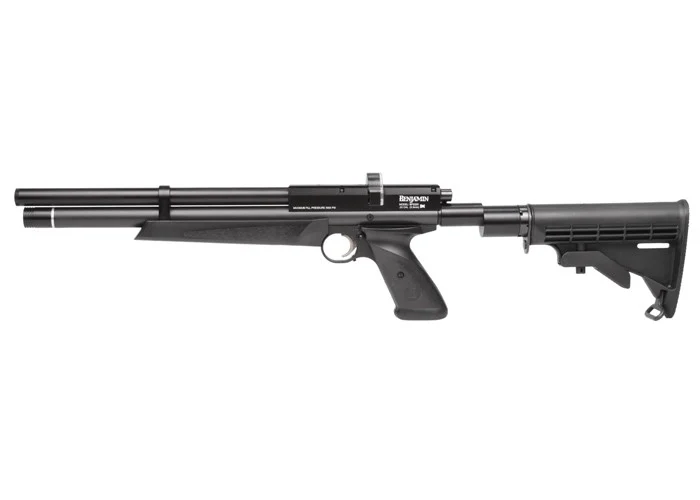

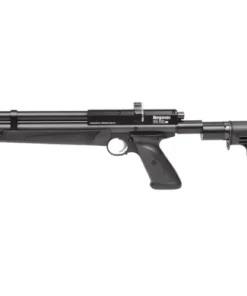
Benjamin Marauder Air Pistol, AR15 Stock


$430.00
Description
The Marauder pistol cannot be filled with CO2. Use only high-pressure air.
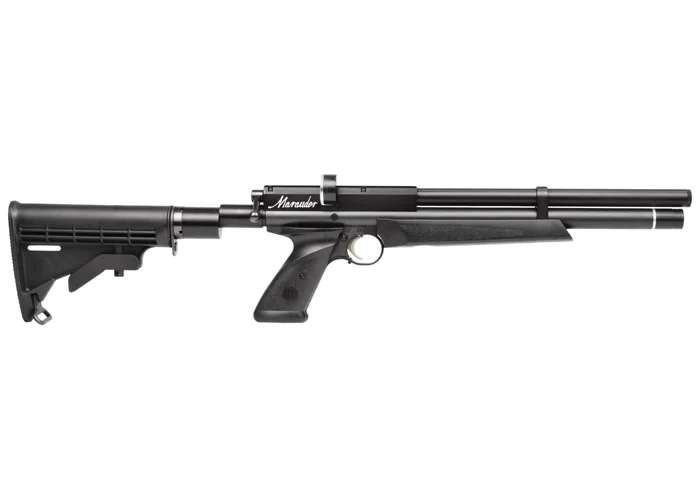
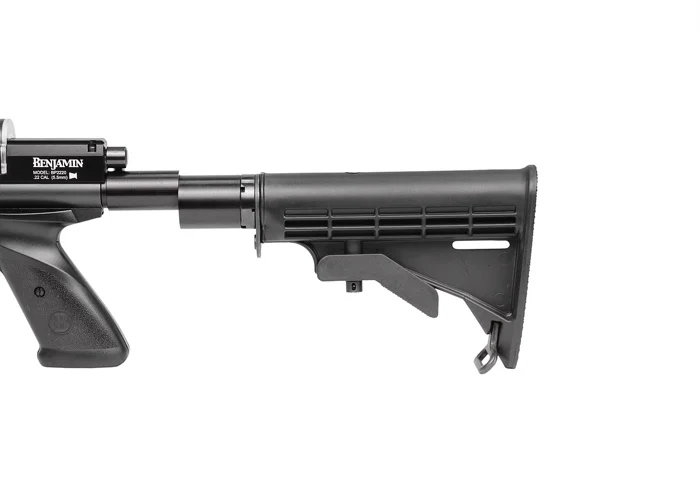
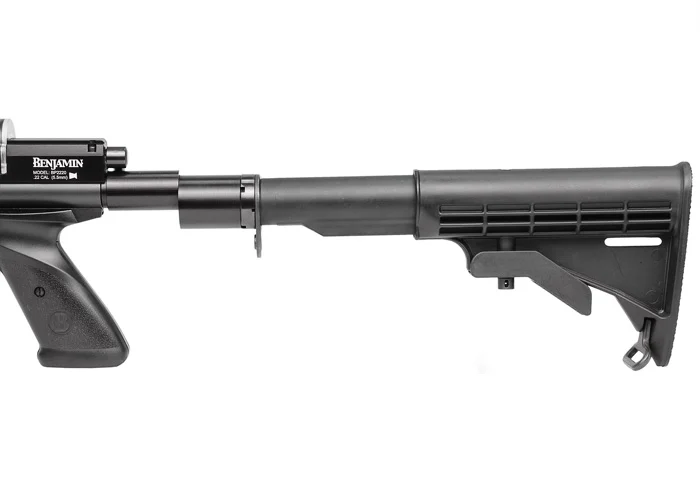
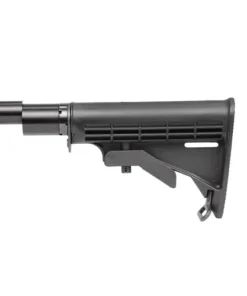
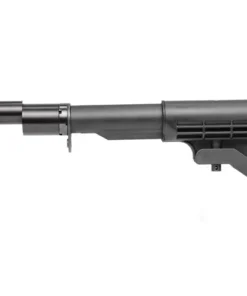
If you’re tired of lugging heavy guns into the field — or even into the backyard, maybe it’s time you got a Benjamin Marauder pistol with our special adapter and your choice of AR15-style stock (Pro/mil-spec version or basic version).
You get the same great action from your pistol but with the convenience of a shoulder stock.
What makes this setup different and better than the standard Marauder shoulder stock is the adapter that gives you adjustability for cast on, cast off, vertical adjustments and horizontal adjustments.
Your gun will easily accommodate right-handed and left-handed shooters, big shooters, little shooters — and every size in between. In fact, the resulting carbine is under 4 lbs. and makes an excellent gun for youngsters or anyone who can’t handle a full-size air rifle.
Your Benjamin Marauder will feel like a custom-made carbine without the expense of buying a full-size rifle.
We’ve taken a fantastic pistol and turned it into a fantastic carbine. Of course, you can quickly remove the adapter and buttstock to shoot this as a pistol One gun for everyone!
- Shop related categories: pellet guns, pellet pistols
- Benjamin Marauder pistol
- Precharged pneumatic (PCP)
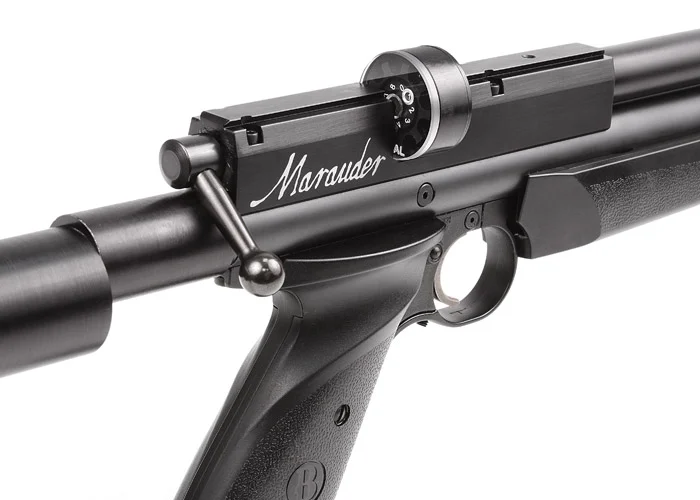
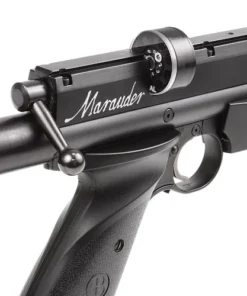
- Bolt-action
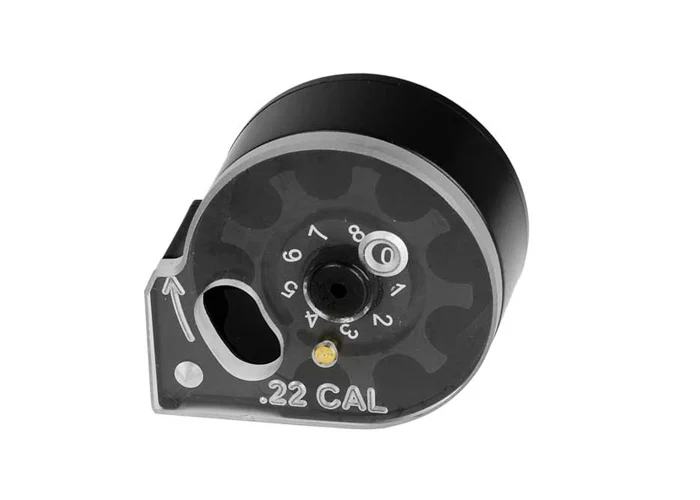
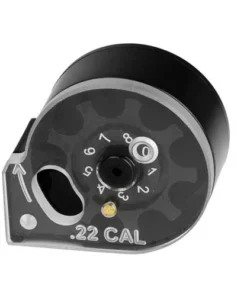
- 8-rd circular mag with auto-indexing
- 11mm dovetail
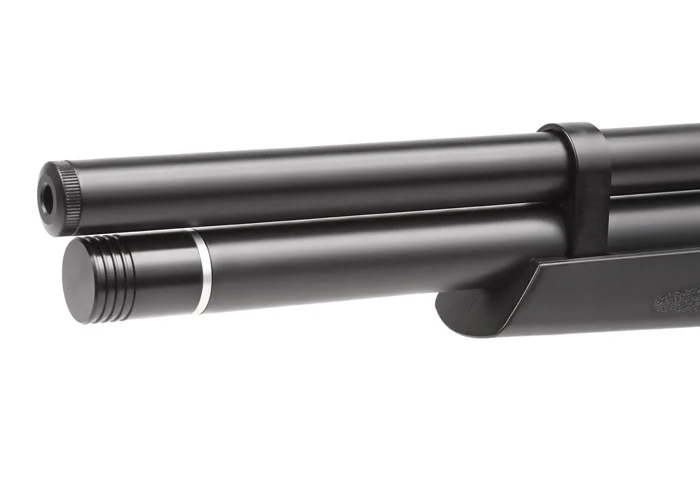
- Integral shroud makes this a VERY quiet gun
- 12″ choked barrel delivers superior accuracy
- Raised aluminum breech for easier loading of the clip
- 2-stage adjustable match trigger…and the trigger is heat-treated metal!
- 1.53 lbs. trigger-pull
- 27.875″ to 31.625″ overall length with tactical stock
- 14″ to 17.75″ length of pull with tactical stock
- 29.75″ overall length with factory-issued stock
- 18″ overall length without stock
- 15.75″ length of pull with factory-issued stock
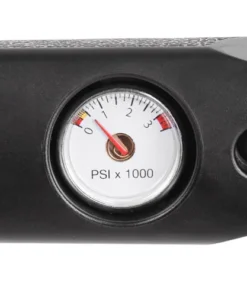
- Uses 2,900 psi compressed air
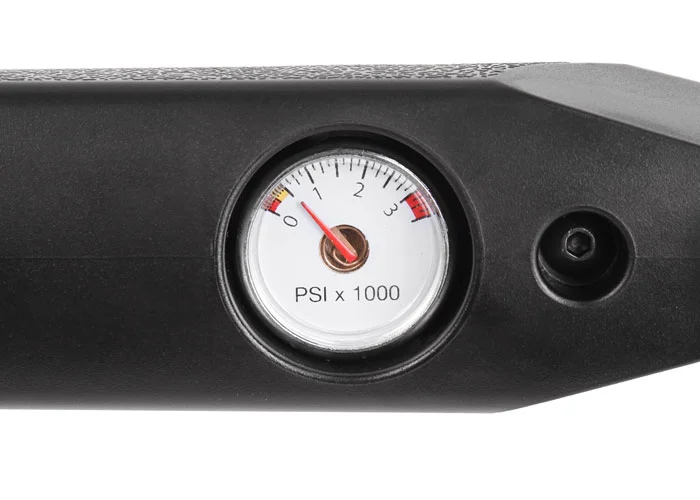
- Built-in pressure gauge
- Air tank has a quick-disconnect male Foster fitting
- 65cc (4 cu in) reservoir
- Reversible bolt — switch from right to left side (with our special service)
- Choose from our Pro/mil-spec AR15-style stock or the basic version
- Ideal for hunting small quarry up to 33 yds away
- No open sights, so you’ll need a scope or dot sight
- Does NOT include the degassing tool
- Marauder pistol clips are not interchangeable with the Marauder rifle clipsand vice versa
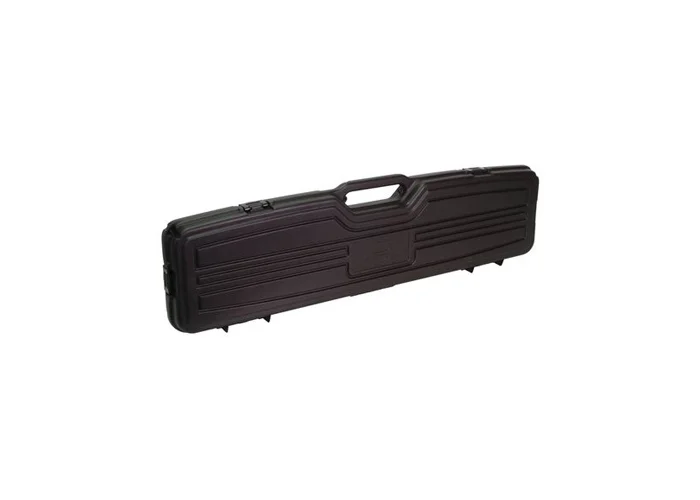
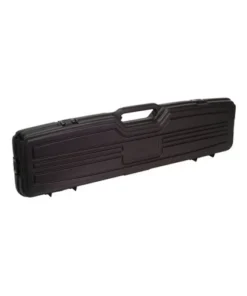
- Includes one mag, AR15-style extendable shoulder stock (Pro/mil-spec version or basic version), stock adapter and hard case
-
BrandCaliber.22 (5.5mm)Max Velocity700 fpsSuggested forSmall game hunting/target practicePowerplantPre-charged pneumaticLoudness2-Low-MediumWeight3.0 lbsFunctionRepeaterCylinder Size65 ccActionBolt-actionFixed/adj. powerMultiple settingsScopeable11mm dovetailFront SightsnoneRear SightsnoneSafetyManualTriggerTwo-stage adjustableTrigger Pull1.53 lbsBarrelRifledBarrel Length12.0″Overall Length31.63″Capacity8 round(s)Body TypePistolStockSyntheticButtplatePlasticGripAmbiColorBlackOperating Pressure2900 PSI / 200 BARGrip OrientationAmbidextrousIs Safe To Dry FireYes
Benjamin Marauder Air Pistol, AR15 Stock
Benjamin Marauder Air Pistol, AR15 Stock Overview
Compact Benjamin Air Pistol With Carbine-Style Handling
The Benjamin Marauder Air Pistol, AR15 Stock combines the portability of a compact benjamin air pistol with the control and shoulder support associated with a lightweight carbine. Its pre-charged pneumatic powerplant, bolt action and removable stock create a versatile platform for lawful target shooting, recreational practice and permitted small-game applications.
The standard benjamin marauder pistol is chambered in .22 calibre and uses an eight-shot rotary magazine. According to Benjamin, its shrouded rifled barrel can produce velocities up to 800 feet per second, while the reservoir may provide up to 30 shots per fill. The official model includes a removable synthetic shoulder stock, although customers considering a listing described as an AR15-stock version should verify the exact stock, adapter and included components before ordering.
Benjamin Marauder PCP Power and Precision
The benjamin marauder pcp system stores compressed air inside an onboard reservoir. When the trigger releases the firing valve, a controlled quantity of air drives the pellet through the barrel. Therefore, the platform avoids the spring movement of a conventional break-barrel design.
This operating system helps the pcp benjamin marauder produce smooth shot behaviour and dependable precision. Its two-stage trigger supports a controlled release, while the shrouded barrel reduces muzzle report and protects the rifled barrel assembly. The pistol also weighs approximately 2.7 pounds and measures about 18 inches without the shoulder stock, making it convenient to carry and position.
The benjamin marauder pcp air rifle family uses similar pneumatic principles, although the full-sized rifles offer longer stocks, larger reservoirs and additional calibre choices. The broader benjamin marauder range includes .177, .22 and .25 rifle configurations, whereas the current pistol is specifically listed in .22 calibre.
Air Rifle and Air Pistol Versatility
The phrase air rifle and air pistol accurately describes the Marauder pistol’s adaptable character. With the stock removed, it retains a compact pistol configuration. Once an approved shoulder stock is installed, the platform offers a steadier carbine-style hold.
This flexibility distinguishes it from a traditional pneumatic gun bb gun rifle because it is engineered for pellets rather than ordinary steel BBs. It should also not be confused with co2 pellet guns, which use replaceable carbon-dioxide cartridges. The Marauder requires clean, dry compressed air and should never be filled with oxygen or another unsuitable gas. The owner’s manual sets a maximum reservoir pressure of 3,000 psi.
Benjamin Pellet Gun 22 Cal Performance
As a benjamin pellet gun 22 cal, this model uses heavier ammunition than a 177 pellet gun firing cal .177 pellets. The larger projectile can provide useful stability and retained energy for approved sporting purposes. However, users must select ammunition that fits the magazine correctly and complies with local regulations.
The term benjamin pellet covers several ammunition types developed for different platforms. Pellet weight, head shape and manufacturing consistency influence grouping, velocity and impact behaviour. Therefore, owners should test several suitable options from a stable position before selecting their preferred load.
A shooter seeking a general benjamin 22 air rifle may prefer a full-length model. However, the compact Marauder provides a more portable alternative while retaining the smooth operation associated with PCP technology.
Benjamin Marauder .25 and Full-Sized Rifle Options
The phrase benjamin marauder .25 refers to a full-sized rifle configuration rather than the pistol reviewed here. The .25 rifle uses an eight-shot magazine and can produce velocities up to 900 feet per second in its standard synthetic-stock configuration. Meanwhile, the .177 and .22 rifles use ten-shot magazines.
Buyers comparing the pistol with a full-sized benjamin air rifle should consider overall length, reservoir capacity, calibre, shot count and intended shooting distance. The pistol prioritises portability, while larger benjamin air rifles provide additional power and stability.
Benjamin Armada and Tactical Configuration
The benjamin armada is another PCP platform designed around modular furniture. Unlike the Marauder pistol’s compact frame, the Armada uses a full-length tactical layout and is compatible with Mil-Spec AR-15 stocks and grips. It also includes a rotary magazine, rifled shrouded barrel and machined optics rail.
Therefore, shooters specifically seeking factory AR-style compatibility may wish to compare both designs. The Marauder pistol remains lighter and more compact, while the Armada offers greater modularity in a conventional rifle configuration.
Benjamin Bulldog Magnum Series Bullpup Comparison
The Benjamin Bulldog Magnum Series Bullpup belongs to Benjamin’s large-bore hunting range. The current benjamin bulldog M357 uses a compact 36-inch bullpup configuration and can produce up to 300 foot-pounds of energy. Therefore, it differs dramatically from the lower-powered Marauder pistol.
Searches for benjamin marauder air rifle bulldog 357 often combine two separate product families. The Marauder focuses on refined small-bore PCP performance, while the Bulldog is a specialised large-bore platform.
Likewise, the benjamin bulldog 457 is a separate .457-calibre bullpup. The phrase benjamin bulldog 457 20 joules may describe a legally restricted market version, but buyers should verify local specifications because the standard model is designed as a powerful large-bore system.
Benjamin Break-Barrel Alternatives
The terms benjamin break, brake barrel bb gun and benjamin air rifle 22 break barrel relate to spring or gas-piston models rather than the Marauder. A break-barrel rifle stores mechanical energy when the barrel is cocked, whereas the Marauder uses compressed air.
The benjamin prowler, benjamin vaporizer and benjamibenjamin nitro piston 22 air rifle for hunting search phrase generally refer to alternative gas-piston or break-barrel products. Similarly, a pellet rifle 1500 fps description usually relates to a high-velocity break-barrel platform and should not be applied to this pistol.
Benjamin Airbow and Arrow-Powered Platforms
The benjamin airbow, benjamin bow, benjamin air bow, benjamin pioneer airbow and benjamin airbow m600 use compressed air to launch full-length arrows rather than pellets. The air bows pellet rifle phrase combines two different ammunition systems and should not be treated as one product category.
The M600 uses a hollow-core arrow placed over a specialised rest before compressed air launches it. Therefore, an arrow gun for deer hunting must be evaluated under hunting and archery regulations that may differ from ordinary pellet-equipment rules.
Air Guns for Hunting and Responsible Use
Although air guns for hunting can be lawful in certain locations, calibre, energy, species and season restrictions vary. The Marauder pistol is marketed for small game and pest applications, not large game. Users must confirm that both the equipment and intended quarry are legal before entering the field.
Benjamin Air Rifle Repair and Maintenance
Professional benjamin air rifle repair may be required when the reservoir leaks, the valve locks, the magazine fails to index or accuracy changes unexpectedly. Owners should not dismantle pressurised components without proper training.
Correct filling equipment is also essential. Benjamin offers a three-stage hand pump capable of up to 3,600 psi, although the pistol itself must not be filled above its specified maximum.
Ultimately, the Benjamin Marauder Air Pistol, AR15 Stock offers compact dimensions, smooth PCP operation, multi-shot convenience and impressive practical accuracy. Its best qualities are realised through correct filling, suitable pellets, a secure stock installation, responsible storage and use within all applicable laws.
Design, Performance, Handling and Practical Use
Compact Carbine-Style Configuration
The removable shoulder stock transforms the platform from a compact handgun-style setup into a lightweight carbine configuration. This change gives the shooter an additional point of contact, which can improve stability, sight alignment and comfort during longer sessions.
With the stock installed, the platform can be held against the shoulder while the supporting hand controls the front section. This arrangement may reduce movement caused by hand fatigue and make the system easier to manage from standing, seated or supported positions.
The stock should always be attached securely before use. Any adapter, fastening screw or mounting point should be inspected regularly because loose furniture can affect accuracy and safe handling.
Lightweight Construction
The compact receiver and synthetic components help keep overall weight manageable. A lighter platform is easier to carry between shooting positions and may be less tiring during prolonged recreational use.
However, low weight also means the shooter must apply disciplined technique. Heavier equipment can naturally resist small movements, while a lighter platform responds more quickly to changes in grip pressure and trigger input.
The supporting hand should remain relaxed. Excessive pressure may introduce unwanted movement, particularly when the shot is released.
Pre-Charged Pneumatic Operation
The onboard reservoir stores compressed air before the shooting session begins. Once the reservoir has been filled correctly, the shooter can fire several controlled shots without manually cocking a spring for each discharge.
The firing valve releases a measured quantity of air behind the pellet. This process creates a smooth firing cycle with minimal mechanical movement.
Because there is no heavy spring or piston travelling through the action, the shooter experiences less disturbance than with many conventional designs. This characteristic supports stable sight alignment and makes the platform more forgiving when used with a scope.
Filling the Air Reservoir
The reservoir should be charged only with compatible high-pressure equipment. A suitable hand pump, certified cylinder or purpose-built compressor may be used according to the manufacturer’s instructions.
The filling connection must remain clean and dry. Dust, oil and moisture can damage seals or contaminate internal components.
Air should be introduced gradually. Rapid filling may generate heat, which can affect pressure readings and place unnecessary stress on the system.
The gauge should be monitored throughout the process. The maximum approved pressure must never be exceeded.
After filling, the hose should be depressurised through the equipment’s bleed valve before it is disconnected.
Shot Count and Pressure Management
The number of useful shots depends on the starting pressure, internal adjustment, pellet weight, temperature and condition of the seals.
A full charge does not mean every shot will perform identically until the reservoir becomes empty. The most consistent results are usually produced within a specific pressure range.
The shooter should observe the gauge and record how many accurate shots are obtained before performance begins to decline. This information helps establish a dependable refilling routine.
Continuing to fire at very low pressure may cause unstable velocity and an unpredictable point of impact.
Multi-Shot Magazine System
The rotary magazine allows several pellets to be prepared before the shooting sequence begins. This feature reduces loading interruptions and supports efficient range practice.
Each pellet should be inspected before it is inserted. Damaged skirts, flattened heads or visible contamination may reduce accuracy or cause feeding problems.
The magazine should be loaded according to the correct direction and sequence. Forcing pellets into the chamber may damage the ammunition or indexing mechanism.
An empty magazine should not be assumed automatically. The shooter should maintain awareness of the number of shots fired and inspect the system whenever there is uncertainty.
Bolt-Action Loading
The bolt is used to cock the action and guide a pellet from the magazine into the barrel.
A smooth, deliberate movement is preferable to rapid operation. The bolt should be drawn fully rearward and then moved forward until it closes securely.
Partial operation may prevent proper loading or create uncertainty about whether a pellet has entered the barrel.
The shooter should never force the bolt. Resistance may indicate a damaged pellet, incorrectly positioned magazine or mechanical obstruction.
Shrouded Barrel Design
The barrel assembly includes a surrounding shroud that helps manage the sound produced during firing.
This feature can make the platform more comfortable for controlled recreational use, particularly in locations where sound reduction is beneficial and legally permitted.
The shroud also provides an external layer of protection around the barrel. Nevertheless, the muzzle must still be protected from impact, dirt and moisture.
Actual sound levels vary according to pellet weight, pressure, surroundings and configuration. Enclosed areas may make the shot appear louder because sound reflects from hard surfaces.
Rifled Barrel and Precision Potential
The internal rifling gives the pellet rotational stability as it travels through the barrel. This rotation helps maintain predictable flight when suitable ammunition is used.
Precision depends on more than barrel quality. Pellet consistency, sight setup, pressure level, trigger control and environmental conditions all influence the final result.
Several pellet types should be tested from a stable rest. The shooter should compare repeated groups rather than selecting ammunition based on one unusually good result.
The preferred pellet should feed smoothly, fit consistently and produce reliable grouping across several sessions.
Adjustable Trigger System
The trigger is designed to provide a controlled release. A predictable trigger helps the shooter fire without disturbing the sight picture.
The first stage prepares the trigger movement, while the second stage provides a more defined release point.
Adjustments should be made cautiously and only according to the manufacturer’s instructions. An excessively light trigger can create an unsafe condition.
The trigger finger should move independently from the rest of the hand. Pressure should be applied straight toward the rear instead of pulling sideways.
Grip and Hand Placement
The grip should remain firm enough to control the platform but relaxed enough to avoid muscular tension.
The shooting hand should not squeeze harder as the trigger is released. This common mistake can shift the muzzle away from the intended point of aim.
The supporting hand should rest in the same position for every shot. Changing hand placement may alter balance and point of impact.
With the shoulder stock installed, the butt should contact the same area of the shoulder during each firing sequence.
Cheek Position and Sight Alignment
A consistent cheek position improves alignment with the optic or sights.
The shooter should bring the platform toward the face rather than lowering the head excessively. A natural posture reduces strain and helps maintain a clear sight picture.
If the stock or optic height forces an uncomfortable position, the mounting arrangement may require adjustment.
Changing cheek pressure between shots can cause inconsistent alignment. Therefore, the same contact point should be used throughout the session.
Optic Mounting
A compact optic can complement the platform’s light and portable design.
Mounting rings should match both the rail and the optic tube. The objective lens must clear the barrel assembly without requiring an excessively high mounting position.
Screws should be tightened evenly. Excessive force may damage the optic, threads or mounting hardware.
Eye relief must be checked from the normal shooting position. The shooter should see a complete sight picture without moving the head forward or backward unnaturally.
Zeroing the Sights
The first zeroing session should take place at a controlled range with a reliable backstop.
A large target should be used initially so that the first shots can be located easily. Starting at a shorter distance reduces the risk of missing the target board.
The shooter should fire a small group before making adjustments. A group gives more useful information than a single shot.
Once the centre of the group has been identified, the optic can be adjusted gradually.
The zero should then be confirmed at the distance most commonly used during practice.
Understanding Pellet Trajectory
A pellet begins to drop as soon as it leaves the barrel. The apparent relationship between the sights and the pellet path changes at different distances.
After zeroing, the impact point should be tested at several measured ranges.
The shooter may need to aim slightly above or below the target centre depending on distance. These corrections should be learned through controlled testing rather than estimation.
A written chart can be created to record the expected point of impact.
Breathing Control
Natural breathing causes movement in the chest, shoulders and arms.
The shooter should inhale normally, exhale comfortably and release the shot during a brief natural pause.
Holding the breath for too long may create tension, visual disturbance and shaking.
The entire process should remain smooth and unforced. If the shot cannot be completed comfortably, the shooter should lower the platform, breathe and begin again.
Trigger Release and Follow-Through
Pressure should increase gradually until the trigger releases.
The shooter should not attempt to predict the exact moment of discharge. Anticipation can cause flinching or sudden movement.
After the shot, the platform should remain in position briefly. The cheek, hands and shoulder should not move until the pellet has left the barrel.
This continuation of technique helps maintain consistency and allows the shooter to observe the sight picture during release.
Bench-Rest Accuracy Testing
A bench rest is useful for evaluating ammunition and checking sight adjustments.
The front section should be supported on a padded bag or rest. The barrel and air reservoir should not be placed directly on a hard surface.
The rear of the stock may also be supported, although the platform should not be clamped rigidly.
The same grip, shoulder pressure and cheek contact should be maintained for every shot.
Several groups should be fired before conclusions are made.
Standing Use
Standing provides greater mobility but less stability than supported shooting.
The feet should remain comfortably apart, and body weight should be balanced.
The supporting elbow may be positioned beneath the platform to transfer weight through the body structure rather than relying entirely on muscle strength.
If the sights naturally settle beside the target, the shooter should adjust foot position instead of forcing the arms sideways.
Short practice periods are preferable because fatigue can quickly reduce stability.
Seated and Kneeling Positions
A seated position can provide excellent stability when the elbows or arms receive support from the legs.
Kneeling offers a balance between mobility and control. The supporting elbow should rest on a stable part of the leg rather than directly on the kneecap.
Both positions should remain comfortable. Pain or excessive tension will increase movement.
A mat or padded surface can improve comfort during outdoor practice.
Temperature Effects
Temperature changes can affect pressure and seal behaviour.
A reservoir filled in a cool environment may display a higher pressure after warming. Conversely, pressure may appear lower when the equipment becomes cold.
The platform should not be left in direct sunlight or inside a hot vehicle.
When it is moved from a cold environment into a warm room, condensation may form. The exterior should be dried before storage.
Wind and Outdoor Accuracy
Wind can move a pellet significantly, especially at longer distances.
The shooter should observe range flags, grass, leaves and other indicators before firing.
Wind may vary between the firing point and the target. Therefore, conditions near the shooter may not represent the entire flight path.
Beginners should practise in calm conditions before attempting advanced wind corrections.
Shooting should stop when conditions become too unpredictable.
Magazine Maintenance
The magazine should be kept clean, dry and protected from impact.
Dust and damaged components may prevent smooth indexing. Cleaning should be gentle and should not involve aggressive solvents.
Pellets should never be forced into a dirty or damaged magazine.
A spare magazine may be useful during organised practice, but each one should be tested for reliable feeding before regular use.
Barrel Cleaning
The barrel does not need to be cleaned after every session.
Cleaning becomes appropriate when accuracy declines, visible contamination appears or unsuitable material enters the bore.
A soft pull-through system is generally safer than an abrasive rod.
Only products designed for this type of equipment should be used. Petroleum-based substances should not be allowed to enter high-pressure areas.
After cleaning, several shots may be needed before accuracy settles again.
Exterior Maintenance
The exterior should be wiped after handling to remove moisture, fingerprints and dirt.
A soft cloth is normally sufficient for routine care. Harsh chemicals may damage synthetic components, seals or finishes.
The filling port, bolt and magazine area should remain clean.
Mounting screws and stock hardware should be inspected periodically. Loose components can affect both accuracy and safe handling.
Leak Detection
A pressure loss may indicate a damaged seal, contaminated valve or loose connection.
The gauge should be checked after filling and again after a period of storage. A small change caused by temperature should not automatically be mistaken for a leak.
A continuous drop requires professional assessment.
The owner should never dismantle pressurised components or apply heat in an attempt to locate a problem.
Mechanical Warning Signs
Unusual sounds, rough bolt movement, inconsistent velocity or difficulty filling may indicate a mechanical issue.
The platform should not be used when its behaviour changes significantly.
Continuing to operate damaged equipment may worsen the fault or create a safety risk.
Internal valve, regulator and reservoir work should be completed by a qualified technician.
Safe Storage
The platform should be stored unloaded and secured in a locked cabinet or approved container.
The magazine should be removed, and pellets should be controlled separately when required.
The storage area should remain dry and stable. Damp garages and outdoor sheds may encourage corrosion.
Children, visitors and unauthorised individuals must not have access to the equipment or charging system.
Transportation benjamin airbow airgun
Before transport, the platform should be unloaded and placed inside a padded case.
The magazine should be removed, and the air connection should be protected from dirt and impact.
The case should support the stock, receiver and optic without pressing heavily against adjustment controls.
The equipment should remain out of public view and should never be left unattended in a vehicle.
Local transport and licensing requirements must always be followed.
Suitable Use Environments
The platform is best suited to an authorised range or private property where its use is specifically permitted.
A reliable backstop must be present. Thin wood, glass, water, stone and unprotected metal surfaces are unsuitable because they may allow penetration or ricochet.
The entire area behind the target must remain clear.
The shooter should stop immediately if a person, animal or vehicle enters the surrounding area.
Who This Platform Suits
This model is well suited to shooters who value portability, smooth pneumatic operation and carbine-style control.
It may appeal to recreational users who want a compact system for organised target sessions.
It can also suit experienced owners seeking a lightweight secondary platform that does not require a full-length rifle configuration.
New shooters should receive formal instruction and direct supervision before handling it.
Long-Term Ownership Value
Long-term reliability depends on correct filling, clean air, suitable ammunition and responsible maintenance.
Service records, manuals and original accessories should be retained.
Unapproved modifications may reduce reliability, affect warranty coverage or change legal classification.
Performance should be improved through careful ammunition testing, optic setup and shooting technique rather than unsafe internal alteration.
Overall Performance Assessment
The Benjamin Marauder Air Pistol with AR15-style stock offers a practical combination of compact size, multi-shot operation and stable shoulder-supported handling.
Its pneumatic system creates a smooth firing cycle, while the rifled barrel and adjustable trigger support precision-focused practice.
The removable stock increases flexibility, allowing the owner to select a compact or carbine-style setup according to lawful use.
With disciplined technique, correct pressure management and regular maintenance, the platform can provide dependable performance for controlled recreational and sporting sessions.
Benjamin Marauder Air Pistol AR15 Stock
Be the first to review “Benjamin Marauder Air Pistol, AR15 Stock”
Related products
Benjamin


Benjamin

Benjamin

Benjamin
Reviews
There are no reviews yet.