

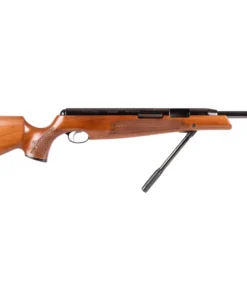
Air Arms TX200 HC Hunter Carbine
Price range: $800.00 through $900.00
Description
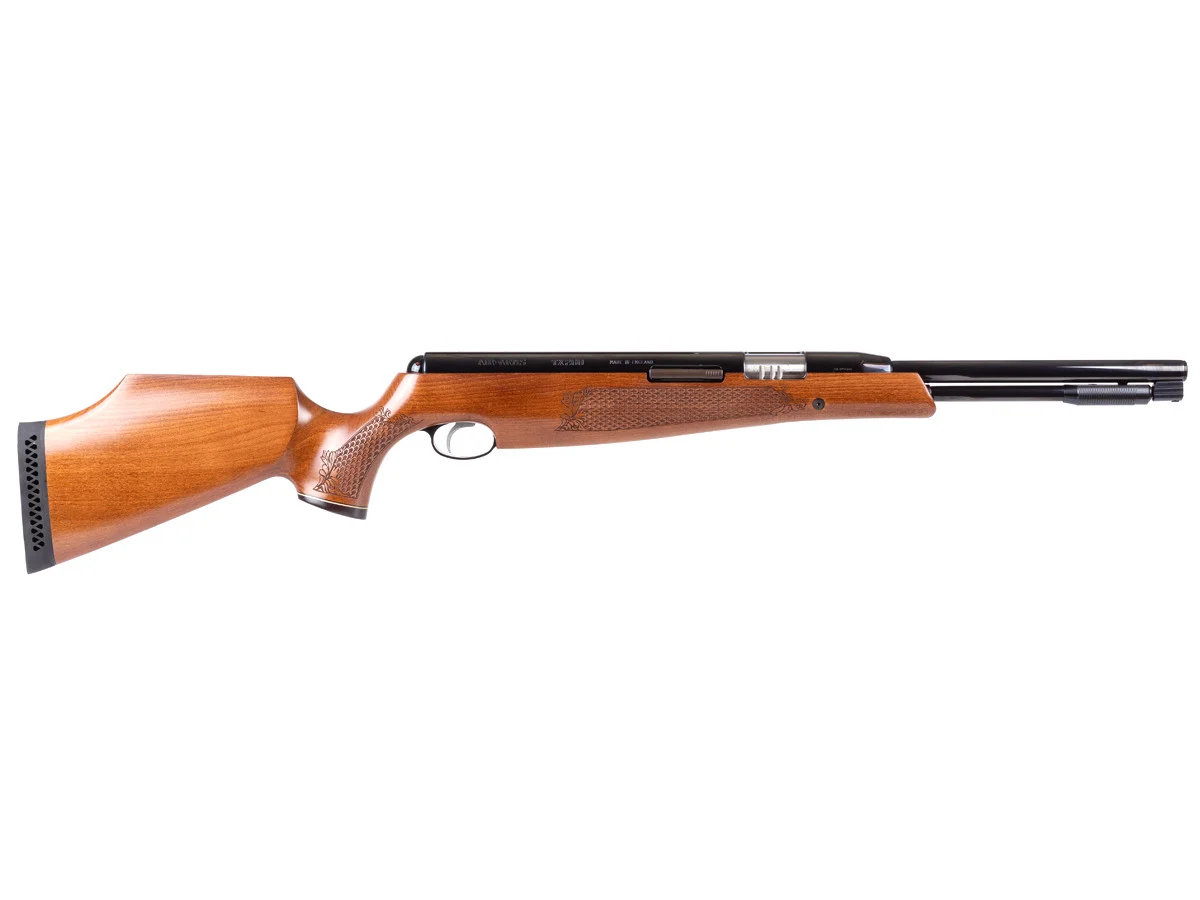
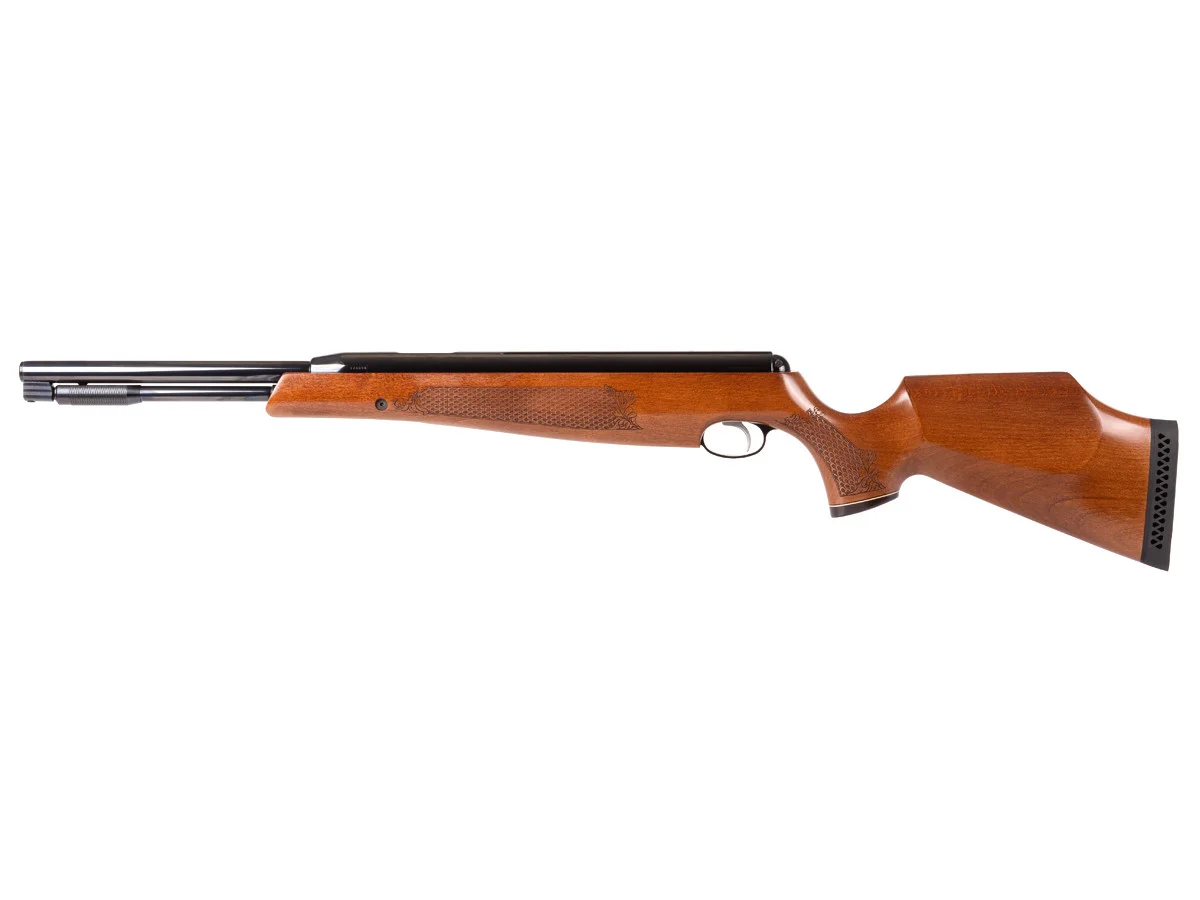
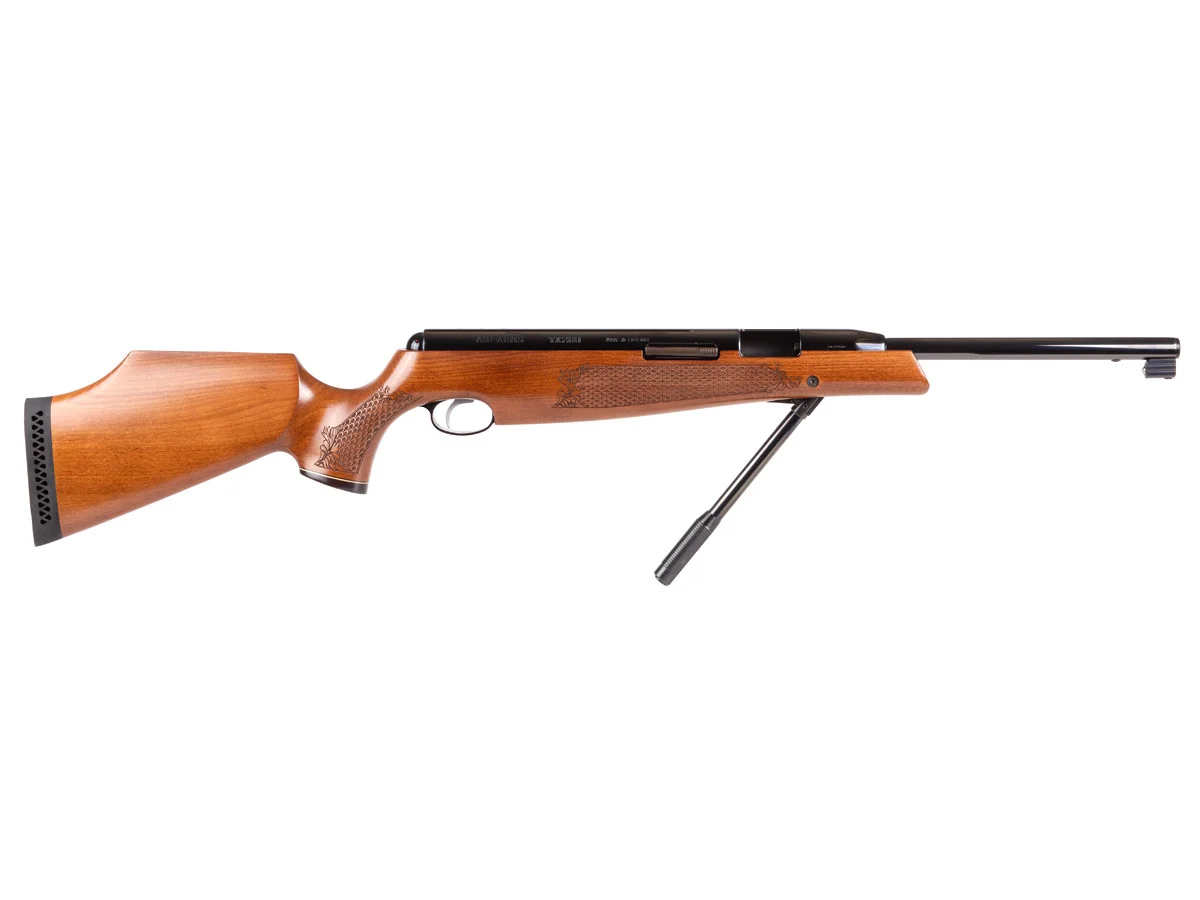
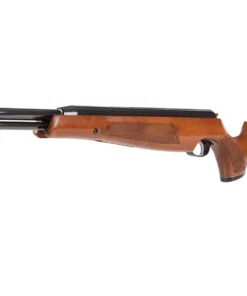
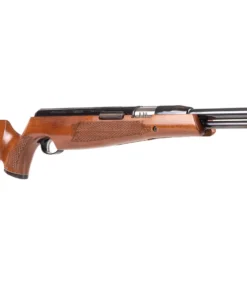
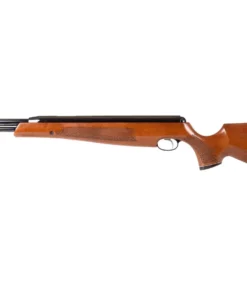
The Air Arms Hunter Carbine is a short version of the renowned TX200. The HC shares the standard TX200 Mk III internals. Externally, it looks the same as previous models but is a shorter, carbine version which, according to Air Arms, was a popular customer request.
“When customers asked for a shorter, carbine version of the TX 200, we gave them what they wanted,” the manufacturer writes on its website. “The result was the TX200 HC – Hunter Carbine, which rapidly became a best seller.”
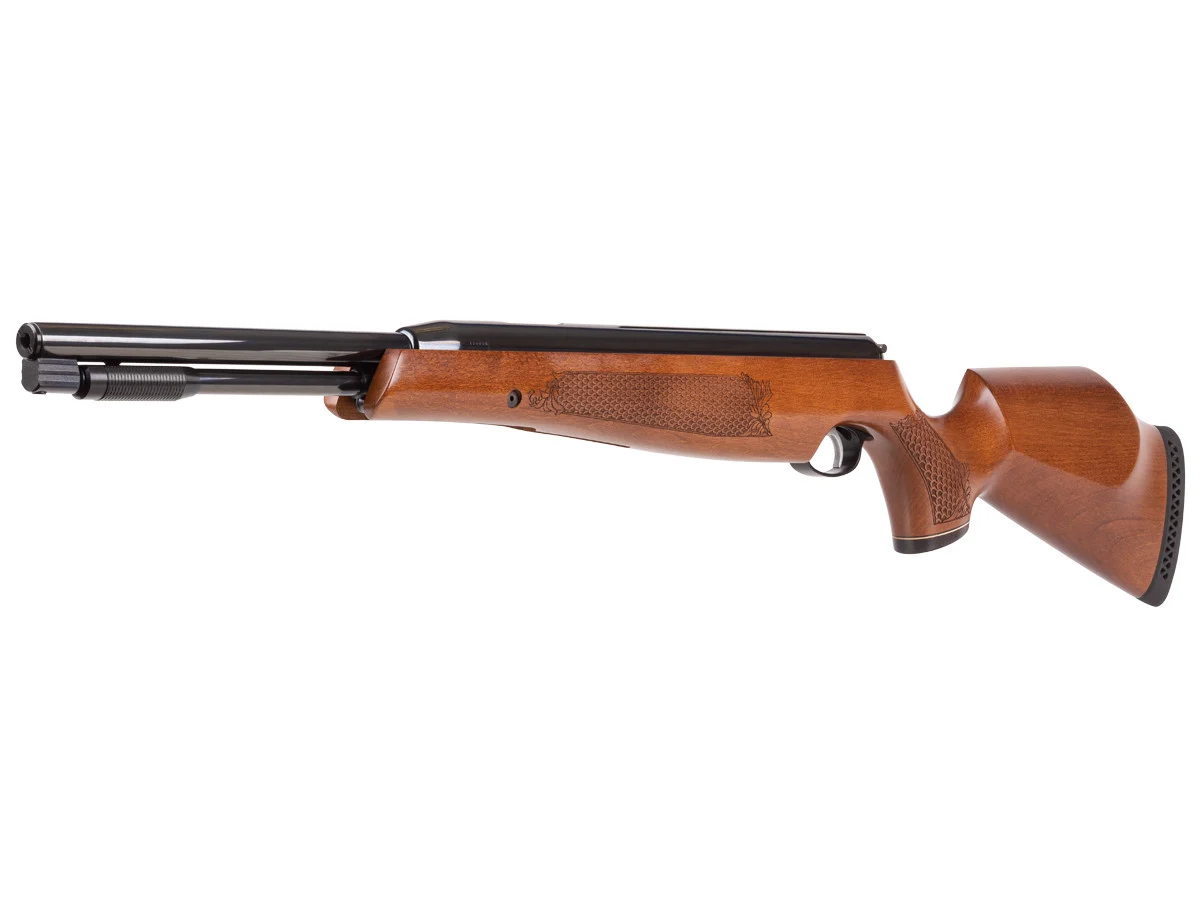
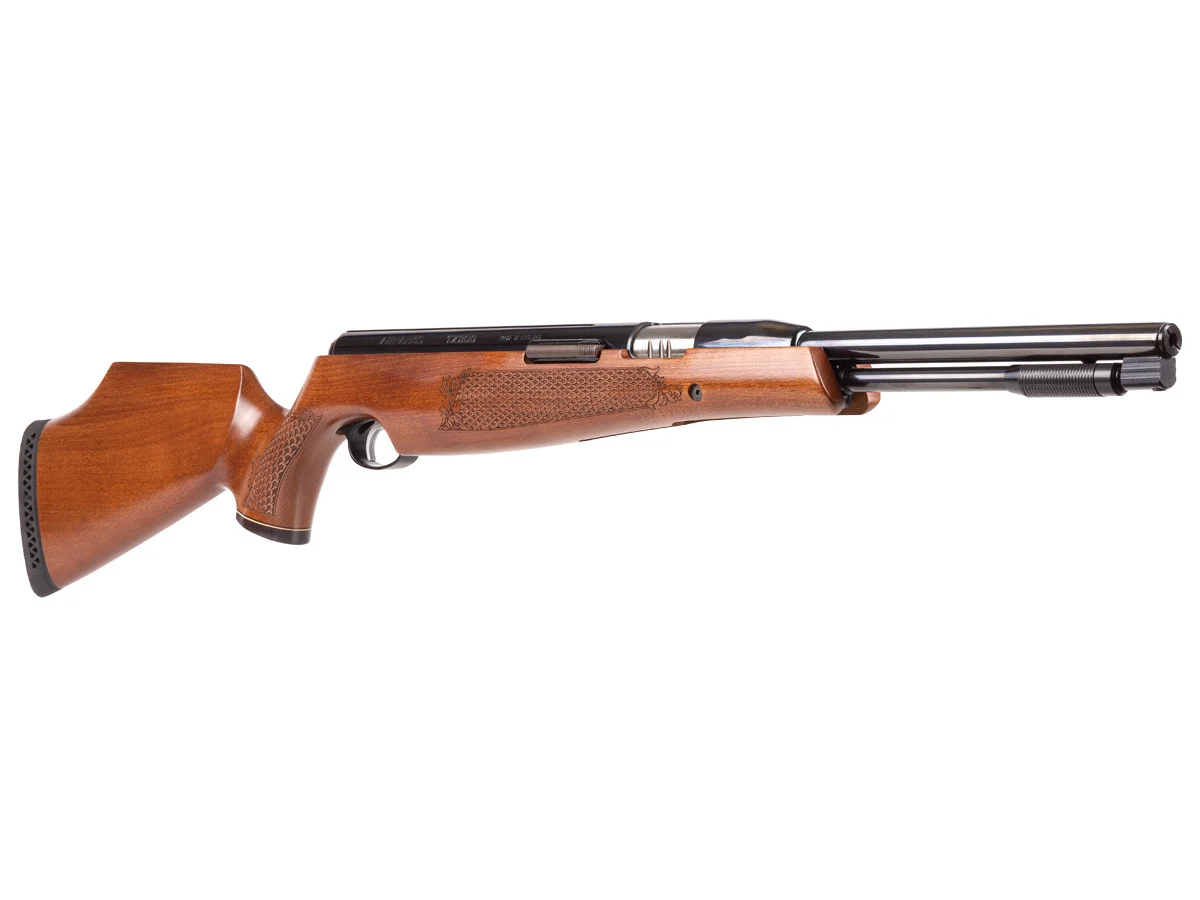
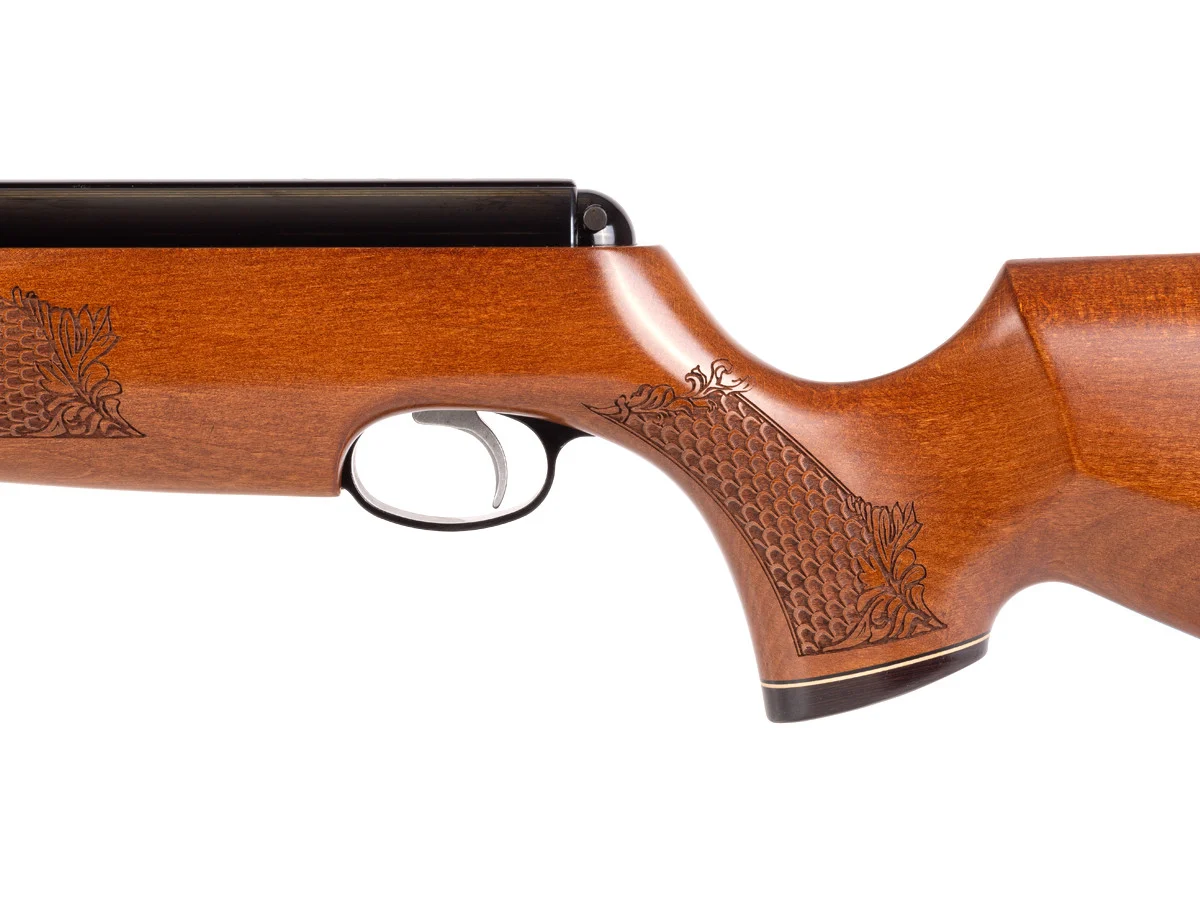
Some highlights of this shorter-model TX200 include a Lothar Walther barrel, built-in moderator, adjustable two-stage trigger, handsome Minelli stock available in right- and left-hand variations, a Monte Carlo cheek piece and a ventilated, rubber butt pad. Because this is a carbine, the cocking lever is shorter, increasing the cocking effort.
Although it’s shorter in length than the TX200, the HC is anything but short on performance. “Everything that makes the TX200 the best in its class is contained in the carbine-length HC, including those ‘factory tuned’ internal components, the elegant stock design and, of course, that impeccable metalwork,” Air Arms writes. “It’s all there, ready to produce the performance that took the TX200 to World Championship level.”
If you’re the kind of serious airgunner who demands the highest performance, unwavering consistency, reliability and pinpoint accuracy for which Air Arms is internationally known, the TX200 HC – Hunter Carbine might be the ideal springer air rifle for you.
Helpful resources:
- Learn about hunting with air rifles
- Tips for picking the right airgun for hunting game & pests
- Learn about airgun hunting laws in your state
- Shop related categories: pellet guns, pellet rifles
Air Arms TX200 HC (Hunter Carbine) Spring Piston Air Rifle
- Short action for improved handling
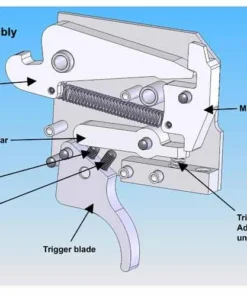
- Adjustable 2-stage trigger
- Built-in moderator
- Optional external moderator
- Deep-cut laser checkering in fish-scale format for superb grip
- Automatic safety on trigger unit
- Secondary bear-trap safety
- Lothar Walther barrel
- Minelli stock
- Muzzle energy: 14 FPE (.177), 17 FPE (.22)
- Velocity: 875 FPS (.177), 700 FPS (.22)
- Choice of beech and walnut stocks in right-hand version; walnut only in left-hand version
- Limited lifetime warranty
Specifications
BrandCaliber.22 (5.5mm)Max Velocity739 fps Suggested forSmall game hunting/target practicePowerplantSpring-pistonLoudness3-MediumWeight8.5 lbsFunctionSingle-shotActionUnderleverFixed/adj. powerFixedScopeable11mm dovetailFront SightsnoneRear SightsnoneSafetyAutomaticTriggerTwo-stage adjustableBarrelRifledBarrel Length13.0″Overall Length39.25″Capacity1 round(s)Cocking Effort34 lbsBody TypeRifleStockWalnutButtplateVentilated rubberColorBrownGrip OrientationRight
Air Arms TX200 HC – Hunter Carbine | Precision Spring-Piston Air Rifle, Premium British Engineering & Exceptional Accuracy
Air Arms TX200 HC – Hunter Carbine Overview, Precision, Features and Performance
1.1 Air Arms TX200 HC – Hunter Carbine: British Engineering and Sporting Heritage
The Air Arms TX200 HC – Hunter Carbine represents the engineering heritage of British spring-piston airgun manufacturing. Its compact underlever action, precision-rifled barrel, adjustable two-stage trigger and traditionally styled wooden stock create a refined sporting platform for recreational target shooting and lawful field activities.
Unlike a break barrel pellet gun, the Hunter Carbine uses a fixed-barrel underlever mechanism. Consequently, the barrel remains stationary during its operating cycle, while a separate lever compresses the internal mainspring.
Within the competitive market for air rifles, pellet guns and premium airguns, this design offers distinctive mechanical characteristics.
Furthermore, air arms has established an extensive history of manufacturing accurate sporting equipment. The air arms tx200 family remains particularly associated with spring-powered precision shooting.
1.2 Why Choose the Hunter Carbine for Precision Shooting?
Accuracy matters when evaluating any quality air rifle or air gun. Therefore, the TX200 HC combines several carefully developed components that support repeatable performance.
Its Lothar Walther rifled barrel provides the internal geometry necessary for stabilising compatible pellets. Meanwhile, the CD adjustable two-stage trigger offers a defined mechanical release.
Additionally, the compact action gives this particular Air Arms air rifle a shorter overall profile than the standard TX200.
The rifle incorporates a built-in sound moderator, an automatic safety and a secondary anti-beartrap mechanism.
For enthusiasts interested in target air rifle shooting or organised air riflery, these engineering features contribute to its reputation.
Nevertheless, consistent results depend on shooter experience, ammunition quality, equipment condition and environmental factors.
1.3 Air Rifle Calibers: .177 and .22 Explained
The Hunter Carbine is available in two established air rifle calibers: .177 (4.5 mm) and .22 (5.5 mm).
Searches for cal .177 pellets, 177 caliber, 177 air rifle and .22 air rifle commonly reflect interest in calibre differences and ammunition compatibility.
In particular, the comparison 177 pellet vs.22 pellet concerns projectile diameter, typical mass and ballistic behaviour.
Likewise, 177 caliber vs 22 is an important research topic for newcomers choosing between common sporting airgun formats.
Ammunition must always match the rifle’s marked calibre and the manufacturer’s recommendations.
1.4 How Do Air Guns Work? Understanding Spring-Piston Engineering
New enthusiasts often ask, what is an air rifle, how do air guns work or what is break barrel air rifle?
Essentially, an air rifle uses compressed gas to propel a projectile. However, different designs generate or store that pressure in different ways.
The Hunter Carbine uses a mechanical spring-piston powerplant, rather than an external compressed-air reservoir.
As a result, this model does not require the charging arrangements associated with an air compressor rifle or pcp hand pump.
Similarly, searches involving air pisto, airgins and air arm may lead buyers toward broader airgun categories, but those terms do not describe the TX200 HC’s precise operating mechanism.
1.5 Comparing Air Arms Spring Rifles and PCP Models
The manufacturer offers several distinct product families, including the air arms s510, air arms s410 and prosport air arms.
Unlike the spring-powered Hunter Carbine, the S510 and S410 families employ pre-charged pneumatic systems.
For example, the Air Arms S510 XS Ultimate Sporter FAC, Air Arms S510 XS Ultimate Sporter and Air Arms S510 FAC represent different PCP configurations.
The Air Arms S510 XS Ultimate Sporter FAC Walnut Stock further distinguishes itself through its sporting stock construction.
Meanwhile, the Air Arms S510 XS FAC PCP Air Rifle and air arms s510 ultimate sporter .177 sub 12 refer to configurations with different specifications and power classifications.
These products should not be confused with the TX200 HC, which requires no external compressed-air filling.
1.6 Where and When Is the Hunter Carbine Suitable?
The rifle is suited to authorised sporting ranges, supervised training environments and locations where recreational airgun use is lawful.
Anyone searching for an airgun shooting range near me should check local club rules, permitted energy limits and range requirements.
Although searches for air guns for home defense are common, this sporting rifle should not be considered a substitute for appropriate personal safety measures.
Responsible ownership also involves secure storage and regular maintenance.
An appropriate Air rifle cleaning kit, manufacturer-approved materials and professional servicing support the long-term condition of its precision components.
1.7 Key Reasons Its Engineering Deserves Attention
The TX200 HC combines a compact carbine arrangement with the established mechanical characteristics of the TX200 platform.
Its fixed-barrel configuration, quality metalwork, conventional wooden stock and adjustable trigger make it relevant to knowledgeable airgun enthusiasts.
Moreover, the automatic safety and anti-beartrap mechanism reflect attention to handling considerations, although neither replaces safe operating practices.
Ultimately, the Hunter Carbine stands apart through its traditional spring-piston architecture, refined construction and longstanding connection with precision sporting airguns.
Advanced Engineering, Barrel Construction, Trigger Performance, Mechanical Reliability, and Exceptional Shooting Precision
2.1 The Engineering Philosophy Behind Outstanding Performance
Exceptional shooting equipment begins with thoughtful engineering, carefully selected materials, and a mechanical system designed to perform consistently over many years. The Hunter Carbine reflects this philosophy through its robust internal construction, refined mechanical components, and traditional approach to precision manufacturing.
Unlike equipment that depends heavily on electronic controls or complicated external systems, this model operates through a self-contained mechanical arrangement. Its design prioritises dependable operation, predictable mechanical behaviour, and the practical advantages of a fixed-barrel construction.
Furthermore, its development demonstrates how established engineering principles can remain relevant even as shooting technology continues to evolve. Instead of relying on unnecessary complexity, the manufacturer concentrates on the relationship between component quality, dimensional consistency, and the overall shooting experience.
The action incorporates carefully manufactured internal parts that work together through a controlled mechanical cycle. Consequently, the quality of these components matters just as much as the external appearance of the finished product.
Precision machining contributes to the relationship between moving components, while suitable materials help resist the effects of ordinary mechanical wear. Additionally, attention to component alignment supports dependable operation throughout the equipment’s intended service life.
The construction also reflects an understanding that genuine quality involves more than impressive specifications. Long-term reliability, comfortable handling, accessible servicing, and dependable manufacturer support all contribute to the ownership experience.
Although individual performance varies according to maintenance, operating conditions, and user proficiency, the underlying engineering provides a strong foundation for recreational sporting use.
Another important consideration involves manufacturing consistency. Equipment produced to controlled specifications offers a more predictable starting point for inspection, maintenance, and routine use.
Ultimately, the engineering philosophy centres on mechanical integrity, established manufacturing practices, and the delivery of a refined sporting instrument rather than unnecessary technological complexity.
2.2 Precision Barrel Construction and Manufacturing Quality
The barrel represents one of the most technically significant components in the entire design. Its internal geometry, manufacturing quality, and structural integrity influence how consistently a projectile travels through the bore.
This model uses a precision-rifled Lothar Walther barrel, a component associated with established specialist barrel manufacturing.
Rifling consists of carefully formed spiral grooves inside the bore. These features impart rotational movement to a suitable projectile as it travels through the barrel. As a result, the projectile develops gyroscopic stability that supports predictable flight.
However, rifling alone does not guarantee excellent results. Bore consistency, manufacturing tolerances, ammunition compatibility, and the overall condition of the equipment also affect performance.
The manufacturer’s fixed-barrel arrangement offers a significant distinction from designs in which the barrel moves during the cocking cycle. Because the barrel remains in its operating position, the system avoids introducing a repeating barrel-pivot movement into its mechanical design.
This characteristic provides a stable structural arrangement, although it does not eliminate every variable that influences shooting accuracy.
Additionally, the shorter barrel associated with the carbine configuration contributes to the model’s compact dimensions.
Some enthusiasts assume that a longer barrel automatically produces greater precision. In reality, barrel length represents only one element within a much broader mechanical and ballistic system.
Manufacturing quality, internal alignment, component condition, and projectile characteristics may prove equally important.
The barrel also sits within a protective outer assembly that contributes to the rifle’s distinctive profile. This construction combines functional considerations with a clean and recognisable sporting appearance.
Furthermore, the integrated moderation arrangement on applicable factory versions contributes to muzzle-report management. Nevertheless, overall sound levels depend on the particular configuration, surroundings, and mechanical operating cycle.
During long-term ownership, maintaining the barrel in accordance with manufacturer guidance helps preserve its condition.
Excessive cleaning, unsuitable chemicals, or inappropriate tools may introduce avoidable damage. Therefore, careful maintenance and adherence to approved procedures remain preferable to unnecessary intervention.
The principal advantage of this barrel construction lies in its combination of established manufacturing expertise, fixed mounting, and compatibility with the rifle’s traditional mechanical architecture.
2.3 The Importance of the Fixed-Barrel Design
A fixed-barrel system provides an important structural characteristic that distinguishes this model from many other traditional sporting designs.
Instead of depending on a moving barrel assembly, the operating system uses a separate mechanical lever and sliding loading arrangement.
Consequently, the barrel retains its position relative to the main action during normal mechanical operation.
This design introduces several practical considerations.
First, it reduces the number of barrel-positioning movements involved in the operating cycle. Second, it allows the manufacturer to concentrate on the alignment between the barrel, receiver, and associated structural components.
Additionally, it creates a distinctive mechanical identity that appeals to enthusiasts interested in traditional precision engineering.
Nevertheless, a fixed barrel does not automatically outperform every alternative system. Manufacturing quality, maintenance, mechanical condition, and user skill remain essential influences.
An additional benefit concerns the relationship between the barrel and sighting equipment. A structurally stable assembly helps provide a consistent mechanical foundation for appropriately mounted optics.
However, the complete system still experiences movement and vibration when operated. Consequently, equipment compatibility and proper professional installation remain important considerations.
The arrangement also influences the external appearance.
Its straight barrel profile and underlever assembly produce an elegant, traditional design. Moreover, the compact front section gives the sporting carbine a distinctive silhouette.
For buyers who appreciate mechanical craftsmanship, this configuration provides an interesting combination of functional engineering and classic styling.
2.4 Internal Spring and Piston Engineering
The internal powerplant relies on a conventional spring-and-piston arrangement developed to convert stored mechanical energy into compressed air.
This system forms an important part of the rifle’s character.
Its operating cycle involves several interacting components, including the mainspring, piston, compression chamber, seals, and associated guiding surfaces.
Each component contributes to the overall mechanical process.
The spring stores mechanical energy, while the piston participates in creating the pressure necessary for the system’s intended operation.
Furthermore, suitable internal support components help guide the movement of the assembly within its designated mechanical path.
The quality of the piston assembly matters because moving mass, component alignment, and mechanical tolerances influence the character of the operating cycle.
Similarly, the compression chamber requires suitable manufacturing consistency to support the system’s designed performance.
Sealing components play another important role. Their materials and condition affect the relationship between internal pressure generation and mechanical efficiency.
Over time, ordinary usage can produce changes in spring characteristics, seal condition, or other wear-related factors.
Therefore, periodic inspection by a suitably qualified technician helps identify deterioration before it causes additional problems.
Unlike systems requiring external charging infrastructure, this arrangement operates independently of pressure cylinders and compressors.
That independence can simplify certain aspects of ownership.
Nevertheless, mechanical independence does not eliminate the need for care. Internal components operate under significant stored energy, and inappropriate disassembly can create serious hazards.
For that reason, internal servicing should remain consistent with the manufacturer’s guidance and the competence of a trained professional.
The resulting system illustrates how traditional mechanical technology can deliver a sophisticated sporting experience when supported by appropriate materials and manufacturing standards.
2.5 Understanding the Mechanical Operating Cycle
Every mechanical sporting platform has a distinctive operating character.
In this model, several physical processes occur within a short interval during discharge. Moving internal components generate pressure while also transmitting forces through the surrounding structure.
These forces contribute to the sensation commonly described as mechanical recoil and vibration.
The experience differs from systems that release previously stored compressed air without the same spring-and-piston movement.
Importantly, the presence of mechanical movement does not necessarily indicate poor construction. Instead, it represents an inherent characteristic of the operating principle.
Manufacturing quality can influence how refined that movement feels, but physical forces remain present.
The mass of the internal components, the rigidity of the action, the stock structure, and the mechanical condition of the assembly all contribute to its perceived operating character.
Moreover, component wear may alter those sensations over time.
Changes in mechanical sound, unusually harsh movement, or unexpected operating behaviour deserve attention rather than dismissal.
An authorised technician can assess whether those changes reflect ordinary wear or a developing maintenance issue.
The manufacturer designed the operating system around a specific combination of components. Consequently, unapproved modifications may undermine reliability, safety, or regulatory compliance.
For recreational enthusiasts, understanding these mechanical characteristics provides a more realistic appreciation of what traditional sporting equipment can offer.
Rather than expecting an entirely vibration-free experience, owners can appreciate the distinctive operation associated with a carefully constructed mechanical powerplant.
2.6 Advanced Two-Stage Trigger Construction
The trigger mechanism forms another significant part of the rifle’s engineering identity.
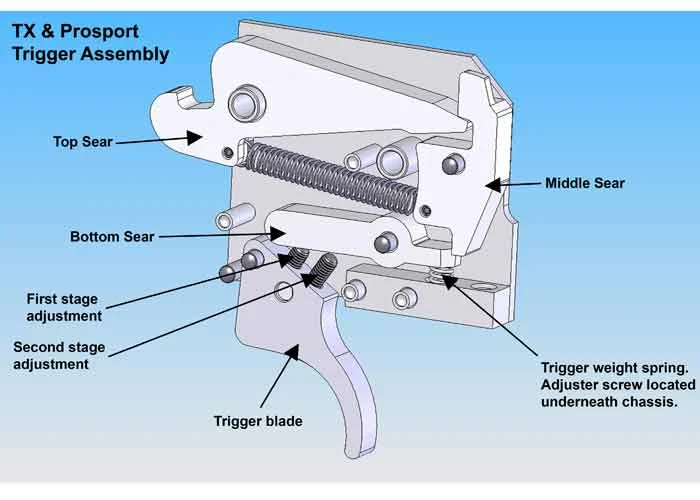
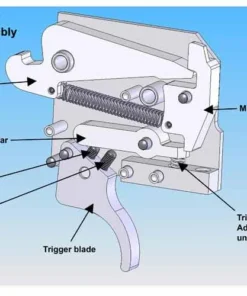
The manufacturer uses its established CD trigger design, which incorporates a two-stage arrangement and provisions for adjustment.
A two-stage mechanism provides two distinct phases of trigger movement before the firing mechanism releases.
This configuration creates a recognisable mechanical feel that differs from many simpler trigger systems.
Furthermore, the mechanism incorporates multiple interacting internal components manufactured to controlled specifications.
Its quality depends on the geometry of these parts, suitable materials, consistent manufacturing, and correct assembly.
A refined trigger mechanism can contribute to the overall perception of mechanical quality because the shooter interacts directly with it during use.
Nevertheless, trigger performance should never be confused with the ability to guarantee a particular shooting result.
The equipment’s condition, the user’s experience, and the surrounding environment remain important.
Another consideration involves long-term durability.
Repeated operation subjects internal contact surfaces and supporting components to normal mechanical stresses.
Accordingly, periodic professional inspection remains appropriate where unusual movement, inconsistent resistance, or other irregularities appear.
Although the trigger provides adjustment features, incorrect changes may compromise safe engagement between internal components.
The manufacturer specifically warns that inexperienced adjustment can make the mechanism unsafe.
Therefore, adjustment and repair should follow official technical guidance and, where appropriate, be carried out by a qualified specialist.
The greatest value of the design lies in its carefully engineered construction and its contribution to the overall mechanical refinement of the finished product.
2.7 Mechanical Safety Systems and Responsible Engineering
Safety represents an essential consideration in the design and ownership of any mechanical shooting device.
This model incorporates an automatic safety mechanism and an additional mechanical anti-beartrap arrangement.
These systems serve different purposes within the equipment’s overall safety architecture.
The automatic safety relates to the firing mechanism, while the secondary device provides a mechanical safeguard associated with the loading system.
Together, they demonstrate the manufacturer’s attention to risks inherent in the operating arrangement.
Nevertheless, no mechanical safety device can replace proper handling procedures.
A safety mechanism may become damaged, incorrectly adjusted, obstructed, or affected by component wear.
Consequently, users should never assume that a mechanical safeguard eliminates every possibility of unintended discharge.
The equipment should always receive the same careful treatment, regardless of the position or apparent condition of its safety devices.
Furthermore, its loading arrangement contains moving components that can present a risk of injury if handled incorrectly.
Manufacturer instructions remain the authoritative reference for safe handling.
The design’s safety provisions also reinforce the importance of keeping the equipment in its original approved configuration.
Unauthorised modifications may interfere with protective mechanisms or alter their intended operation.
Likewise, damage resulting from impacts, poor maintenance, or unsuitable replacement parts can affect mechanical reliability.
Owners should seek professional inspection whenever a safety-related component appears defective.
Ultimately, responsible engineering and responsible ownership must work together. The manufacturer can provide protective features, but safe behaviour remains a continuous obligation.
2.8 Compact Carbine Construction and Structural Balance
One of the distinguishing characteristics of this configuration is its compact overall profile.
The shorter front assembly creates a different physical arrangement from the manufacturer’s full-length sporting version.
However, compact construction does not necessarily mean exceptionally low weight.
The steel action and substantial wooden stock contribute to a solid overall structure.
This combination creates a recognisable sporting character that many enthusiasts associate with traditional mechanical quality.
Furthermore, the relationship between the action and stock influences the way the equipment feels when held.
Weight distribution affects perceived balance, while stock dimensions influence comfort for users with different physical proportions.
Consequently, prospective owners should consider overall dimensions rather than judging suitability by appearance alone.
A shorter design may be easier to accommodate within appropriate storage equipment, although its exact dimensions still need verification.
The compact configuration also retains the substantial internal components necessary for the spring-powered mechanism.
Therefore, buyers should not expect the extremely lightweight characteristics sometimes associated with synthetic-stock sporting equipment.
The construction instead reflects a compromise between compact dimensions, robust materials, and mechanical stability.
Another important consideration is the relationship between visual proportions and practical comfort.
A traditionally shaped stock can appear elegant while still providing suitable support for the action.
However, personal preference varies considerably.
The ideal dimensions for one adult may feel less comfortable to another.
For this reason, supervised handling at a lawful sporting retailer or club can provide more useful information than photographs alone.
The overall design combines a compact front profile with a substantial action and conventional stock geometry, maintaining the recognisable character of the original sporting platform.
2.9 Traditional Wooden Stock Construction
The stock contributes significantly to both the appearance and the practical identity of the finished equipment.
Depending on the specific production version, buyers may encounter beech or walnut options.
These materials offer different visual characteristics, including variations in colour, grain structure, and natural figure.
Walnut often displays more prominent grain patterns, while beech generally presents a more uniform appearance.
Nevertheless, natural wood varies from one individual stock to another.
Two examples of the same model may therefore exhibit noticeable differences in appearance.
The stock does more than provide decoration.
It supports the action, establishes the main handling surfaces, and influences the physical relationship between the user and the equipment.
Its shape incorporates conventional sporting features intended to provide a familiar shoulder-mounted profile.
Additionally, textured gripping areas contribute to the tactile character of the design.
These surfaces also demonstrate the attention given to traditional stock finishing.
The wooden construction requires appropriate care because environmental conditions can influence natural materials.
Prolonged exposure to excessive moisture, extreme dryness, or rapid temperature changes may affect the finish or condition of the wood.
Consequently, careful storage represents an important part of long-term ownership.
A suitable protective case or secure storage cabinet can help reduce unnecessary environmental exposure.
Furthermore, maintaining the original finish preserves the visual character of the stock.
Aggressive cleaning products, abrasive materials, and unsuitable surface treatments should be avoided.
Owners should instead follow the manufacturer’s care recommendations.
The result is a traditional wooden component that combines functional support with an enduring aesthetic appeal.
2.10 Manufacturing Materials, Durability and Long-Term Reliability
Premium mechanical construction depends on more than appearance.
Material quality, surface finishing, manufacturing tolerances, and assembly consistency all contribute to the useful life of the equipment.
The Hunter Carbine employs a substantial metal action designed around the requirements of its spring-powered mechanism.
Its principal components must withstand repeated mechanical loading during ordinary operation.
Therefore, appropriate material selection is essential.
Steel provides strength and rigidity for many structural and internal applications. Meanwhile, engineered polymer components, seals, and other specialised materials perform supporting roles.
Each material serves a particular function within the assembly.
Moreover, surface finishing influences both corrosion resistance and visual presentation.
Well-maintained exterior metalwork can retain its appearance for many years, although exposure to moisture and unsuitable storage conditions may cause deterioration.
Mechanical durability also depends on the condition of internal wear surfaces.
Repeated operation inevitably introduces contact between certain components, even where the design seeks to control friction.
As a result, inspection and professional maintenance remain important elements of responsible ownership.
The manufacturer’s established product history offers another relevant consideration.
Long-running designs often benefit from extensive real-world experience, technical documentation, and an established service network.
However, the availability of replacement components may vary between production generations and geographic markets.
Owners should therefore confirm support for their particular serial-number range before arranging specialist repair work.
Reliability also depends on maintaining the original engineering relationships between components.
An incorrectly fitted part may affect more than the individual component being replaced.
Consequently, authentic replacement parts and qualified servicing provide a more dependable approach than speculative modifications.
A well-maintained example can offer many years of recreational enjoyment, although no mechanical product is immune to wear, damage, or eventual repair requirements.
2.11 Accuracy, Consistency and Realistic Performance Expectations
Precision is frequently discussed as though it represents a single characteristic.
In practice, several different forms of consistency contribute to overall performance.
Mechanical consistency concerns the repeatability of the equipment’s operating cycle.
Manufacturing consistency involves the dimensions and quality of individual components.
Ammunition consistency concerns variations between individual projectiles.
Finally, user consistency introduces the human factors associated with supervised sporting activities.
These variables interact in ways that make universal accuracy claims difficult to justify.
For example, two mechanically identical examples may produce different recorded results when operated under different environmental conditions.
Similarly, variations in ammunition manufacturing can influence measured outcomes even when the equipment remains unchanged.
Wind, temperature, and other external conditions introduce further uncertainty.
Therefore, accuracy should be understood as a measurable characteristic under specified conditions rather than a permanent guarantee.
The manufacturer emphasises the combination of its established barrel technology, refined trigger mechanism, and rigid construction.
These features provide an engineering basis for the product’s sporting reputation.
Nevertheless, responsible product descriptions should avoid promising identical performance for every owner.
Claims involving exact grouping dimensions require controlled testing, clear methodology, and appropriate supporting evidence.
The same principle applies to statements about long-distance performance.
Without verified test conditions, broad numerical guarantees can mislead prospective buyers.
A more informative assessment considers mechanical quality, consistency of manufacture, maintenance requirements, and documented performance from reputable sources.
Ultimately, realistic expectations make the ownership experience more satisfactory and help distinguish technical capability from unsupported marketing language.
2.12 Sound Characteristics and Mechanical Refinement
Sound represents another aspect of the experience that deserves careful explanation.
The total noise produced during operation does not originate from a single source.
Mechanical movement, air discharge, vibration, and the surrounding environment all contribute to the audible result.
Consequently, an integrated moderation feature cannot eliminate every source of sound.
The manufacturer’s applicable factory configurations incorporate moderation within the front assembly.
This feature primarily addresses part of the sound associated with discharge.
However, the spring-and-piston mechanism still generates its own audible characteristics.
These sounds form part of the equipment’s mechanical identity.
Additionally, the environment influences perceived loudness.
Enclosed facilities, hard surfaces, and reflective surroundings may change how sound is experienced.
For that reason, descriptive terms such as quiet or discreet should not be interpreted as guarantees of hearing safety or suitability for unrestricted use.
Shooting facilities may impose specific requirements concerning sound levels and protective equipment.
Furthermore, local regulations can apply to sound-moderating devices and particular configurations.
Owners should verify the rules that govern their location.
From an engineering perspective, the integrated arrangement contributes to a clean external appearance while forming part of the manufacturer’s original design.
Its value should be assessed alongside the complete mechanical system rather than as an isolated feature.
2.13 The Importance of Professional Maintenance
Long-term mechanical performance depends on appropriate maintenance.
Even high-quality equipment requires periodic attention because ordinary use exposes components to wear, contamination, moisture, and environmental changes.
Exterior inspection provides an opportunity to identify visible damage, corrosion, or deterioration.
Similarly, careful examination of the wooden finish may reveal problems associated with unsuitable storage conditions.
However, internal mechanical servicing presents different challenges.
The spring-powered action contains components capable of retaining substantial mechanical energy.
Incorrect disassembly can therefore result in injury or damage.
Consequently, internal repair and replacement work should be assigned to appropriately qualified technicians.
The manufacturer also provides specific warnings concerning cleaning substances and lubrication.
Unsuitable products can damage seals or introduce dangerous conditions within the compression system.
For example, inappropriate lubricant contamination may create an ignition phenomenon commonly described as dieseling.
This possibility reinforces the importance of using approved maintenance materials and following official guidance.
Furthermore, unnecessary intervention can create problems that would not otherwise develop.
A functioning mechanical assembly does not require constant internal alteration simply because adjustments are technically possible.
Instead, routine care should focus on preservation, inspection, and prompt attention to genuine irregularities.
Keeping maintenance records can also benefit long-term owners.
Documentation of professional servicing, replacement parts, and inspection findings provides useful information about the equipment’s history.
Such records may be particularly valuable when assessing a previously owned example.
Ultimately, maintenance should preserve the manufacturer’s intended design rather than introduce unverified changes.
2.14 Evaluating Quality Before Ownership
A knowledgeable buyer should consider several factors before selecting a premium mechanical sporting product.
External appearance offers an initial indication of condition, but it cannot reveal every aspect of mechanical integrity.
The finish, stock surfaces, visible metal components, and general presentation deserve careful examination.
Nevertheless, these observations should form only part of the overall assessment.
Documentation provides additional value.
A genuine manufacturer’s manual, confirmed model identity, and appropriate purchase records help establish the specific version under consideration.
Furthermore, a professional inspection may identify wear or defects that remain invisible during a casual visual examination.
For previously owned equipment, service history becomes especially relevant.
Evidence of authorised maintenance can support a clearer understanding of how the product has been cared for.
However, an absence of visible damage should never be interpreted as proof that every internal component remains in perfect condition.
The buyer should also consider product support.
Availability of authorised servicing, compatible replacement components, and suitable storage arrangements may influence long-term satisfaction.
In addition, the equipment’s weight and dimensions should suit the owner’s intended lawful sporting environment.
Legal requirements represent another essential consideration.
Different jurisdictions impose different rules concerning age restrictions, licensing, transport, storage, and permissible locations of use.
Therefore, buyers should verify applicable requirements before ownership.
A thoughtful assessment combines technical knowledge, genuine documentation, professional inspection, and realistic expectations about future maintenance.
2.15 Why Established Engineering Remains Valuable
Modern product development frequently introduces new materials, electronic systems, and increasingly complicated mechanical arrangements.
Nevertheless, traditional engineering retains considerable value when manufacturers apply it carefully.
The Hunter Carbine demonstrates this principle through its self-contained construction and established mechanical design.
Its major characteristics reflect decades of accumulated experience in precision manufacturing.
The fixed-barrel architecture provides a recognisable structural arrangement, while the internally powered mechanism avoids dependence on external charging equipment.
Additionally, the wooden stock offers the appearance and tactile character associated with classic sporting craftsmanship.
The adjustable trigger and specialised barrel further demonstrate attention to component quality.
However, sophistication should not be confused with complexity.
A thoughtfully designed mechanical system can provide substantial owner satisfaction without requiring unnecessary electronic functionality.
Long-term appeal also involves familiarity.
An established product family allows enthusiasts to draw upon published documentation, experienced technicians, and a history of practical evaluation.
This information can make maintenance planning and ownership decisions more straightforward.
Furthermore, the model’s conventional styling avoids reliance on rapidly changing visual trends.
Its appearance remains closely connected to the engineering principles that shaped the original design.
That continuity helps explain why traditional sporting equipment continues to attract interest alongside more recent technological alternatives.
2.16 Final Assessment of Engineering, Precision and Mechanical Quality
The Hunter Carbine brings together several significant design characteristics within one traditional sporting platform.
Its precision-manufactured barrel, fixed mounting arrangement, adjustable two-stage trigger, substantial steel action, and compact wooden-stock configuration form the basis of its mechanical identity.
Furthermore, the self-contained powerplant offers independence from external charging systems, although it introduces the distinctive movement and maintenance requirements associated with spring-powered equipment.
The safety architecture incorporates multiple protective mechanisms, while the established design benefits from a documented development history.
No individual feature guarantees exceptional results under every condition.
Instead, the overall quality depends on how successfully the manufacturer integrates materials, components, mechanical tolerances, and suitable ergonomic proportions.
Long-term reliability also requires responsible handling, appropriate storage, and professional attention when maintenance becomes necessary.
For enthusiasts who appreciate established mechanical technology, the principal attraction lies in this combination of traditional construction and refined manufacturing.
Equally important, the design offers an opportunity to appreciate the relationship between engineering principles and practical sporting equipment without relying on exaggerated performance claims.
Its enduring appeal therefore rests on more than appearance alone.
The combination of manufacturing heritage, mechanical refinement, documented technical development, and a recognisable sporting configuration provides a credible foundation for its established reputation.
Ultimately, this model illustrates how careful design, quality materials, and responsible ownership can preserve the relevance of traditional precision engineering across generations of sporting equipment.
Comprehensive Guide to Calibre Selection, Power Classifications, Ammunition Quality, Ballistic Characteristics, and Long-Term Performance
3.1 Understanding the Importance of Calibre Selection
Selecting the appropriate calibre represents one of the most important considerations when evaluating a precision sporting platform. Although external appearance, stock construction, and mechanical quality contribute significantly to overall satisfaction, projectile diameter also influences the characteristics of the equipment.
The Hunter Carbine is manufactured in two established calibre configurations, measuring 4.5 mm and 5.5 mm in diameter. Both options share the manufacturer’s underlying engineering philosophy, although they differ in ammunition dimensions, common projectile weights, and associated ballistic characteristics.
Furthermore, choosing between these configurations requires an understanding of individual requirements rather than assuming that one diameter automatically provides superior performance.
Different sporting disciplines may place greater importance on particular characteristics. Some prioritise consistency in controlled target environments, while others place more emphasis on handling comfort, traditional equipment design, and the availability of suitable ammunition.
Consequently, the most appropriate configuration depends on the circumstances in which the equipment will be used.
Manufacturing tolerances introduce another important consideration. Even ammunition products with the same nominal diameter can differ slightly in dimensions, materials, and manufacturing consistency.
These differences reinforce the importance of selecting products specifically approved for the individual model.
Additionally, local availability can influence ownership decisions. A configuration with widely accessible, manufacturer-compatible ammunition may provide a more convenient long-term experience than one requiring specialised imports.
Owners should also consider relevant sporting-club regulations. Certain facilities establish restrictions concerning permissible equipment, ammunition types, and energy classifications.
Therefore, understanding these requirements before purchase can prevent unnecessary complications.
Ultimately, calibre selection should reflect practical compatibility, legal requirements, personal preferences, and the manufacturer’s published recommendations.
3.2 Exploring the Characteristics of the 4.5 mm Configuration
The smaller-diameter configuration has a longstanding association with recreational and formal precision disciplines.
Its popularity reflects a combination of established manufacturing standards, widespread ammunition availability, and compatibility with numerous recognised sporting activities.
One notable characteristic involves the broad selection of commercially manufactured projectiles available for this diameter.
Manufacturers produce variations in mass, construction, and external profile. However, availability differs by country, and not every commercial product is appropriate for every mechanical system.
Furthermore, nominal projectile diameter does not provide a complete description of ammunition quality.
Consistency between individual manufactured pieces, dimensional tolerances, and material characteristics all deserve consideration.
From an ownership perspective, this configuration benefits from its established presence within many organised recreational shooting communities.
Some clubs maintain facilities specifically intended for equipment within particular sporting classifications.
Consequently, prospective owners may find useful information through local associations or authorised retailers.
Another important consideration concerns the relationship between ammunition characteristics and factory performance ratings.
Published specifications often describe performance under particular testing conditions. Nevertheless, actual results can vary when different commercially available ammunition products are involved.
For this reason, manufacturer documentation remains more reliable than broad claims made without supporting measurements.
Additionally, the mechanical operating system contributes to the overall experience regardless of projectile diameter.
The quality of the barrel, trigger assembly, internal components, and stock construction remains relevant across both factory configurations.
Selecting the smaller option therefore does not fundamentally change the traditional character of the platform.
Instead, it provides a different ammunition specification within the same established product family.
3.3 Understanding the 5.5 mm Configuration
The larger-diameter alternative represents another established category within recreational sporting equipment.
It accommodates projectiles with a greater nominal diameter and generally different typical mass ranges.
However, projectile dimensions alone do not determine the quality, accuracy, or suitability of a particular product.
The larger configuration operates within the same general mechanical design as its smaller counterpart, although internal specifications may differ according to the manufacturer’s approved production arrangement.
Furthermore, the range of commercially available ammunition has expanded significantly over the years.
Buyers may encounter products manufactured from different materials and with differing dimensional tolerances.
These variations make it important to distinguish between the printed calibre designation and the complete technical requirements of the specific equipment.
Another consideration concerns ammunition availability.
In some markets, the larger format remains widely stocked by sporting retailers. Elsewhere, fewer suitable products may be available.
Consequently, the local supply network deserves attention before making a purchase decision.
Storage requirements also remain important.
All projectiles should remain in their original labelled packaging whenever practical. This helps owners identify their specifications and reduces the risk of confusing different products.
Additionally, the larger configuration does not eliminate the need for regular inspection or appropriate maintenance.
The same principles of mechanical reliability, safe handling, and adherence to manufacturer instructions continue to apply.
Ultimately, this option offers a recognised alternative for adult sporting enthusiasts whose lawful recreational activities and equipment preferences align with its characteristics.
3.4 Comparing Physical and Mechanical Differences
Although both factory configurations belong to the same product family, their ammunition differs in several measurable ways.
Diameter represents the most obvious distinction, but manufacturing tolerances, projectile mass, and material composition also contribute to their individual characteristics.
Furthermore, these variables influence how manufacturers describe ammunition products and classify their intended sporting applications.
A useful comparison should distinguish between fixed properties and variable properties.
Nominal diameter is established by the calibre designation. By contrast, projectile mass and external shape can vary among products carrying the same nominal designation.
Mechanical compatibility provides another important distinction.
A product manufactured for one calibre must never be substituted for ammunition intended for another.
Even when two products appear visually similar, their dimensional differences can make substitution hazardous.
Additionally, manufacturing batches may contain small variations that remain within accepted commercial tolerances.
These differences form part of the broader discussion surrounding product consistency.
For prospective owners, understanding these fundamentals is more useful than relying on unsupported claims about one configuration being universally superior.
A responsible comparison should also acknowledge the influence of the complete sporting system.
Barrel manufacturing quality, mechanical condition, and authorised servicing matter regardless of the selected diameter.
Ultimately, neither calibre can be evaluated independently of the equipment’s factory specifications and intended lawful sporting environment.
3.5 Understanding Factory Power Ratings
Factory power classification represents another significant subject for prospective owners.
Manufacturers may produce different versions of a sporting model to satisfy the requirements of individual markets.
These versions can differ in approved energy classification, certification requirements, or other technical specifications.
Consequently, a product offered in one country should not automatically be assumed to have identical characteristics to a similarly named version sold elsewhere.
The Hunter Carbine has historically appeared in configurations associated with the United Kingdom’s sub-12-foot-pound category, alongside documentation referring to higher-energy FAC variants.
However, the availability of particular versions depends on production history, distribution arrangements, and market requirements.
A listed product name alone does not establish its actual factory energy rating.
For that reason, owners should examine the manufacturer’s documentation and obtain confirmation from an authorised retailer.
Furthermore, energy classifications carry legal consequences in some jurisdictions.
In Great Britain, the conventional 12-foot-pound threshold is an important distinction in the regulation of air-powered sporting rifles, although different rules apply in Scotland, Northern Ireland, and other jurisdictions.
A more powerful factory classification may therefore require additional authorisation.
Consequently, legal eligibility must be established before acquisition.
The manufacturer’s operating handbook also emphasises that changes in ammunition can affect recorded muzzle-energy measurements.
This means legal compliance should not be assumed solely from the original product description.
Ultimately, factory power ratings provide important technical and regulatory information, but they should always be interpreted within the correct market and legal context.
3.6 The Meaning of FAC Classification
FAC commonly refers to a Firearm Certificate within the British regulatory system.
For applicable higher-energy sporting configurations, the distinction concerns legal authorisation rather than a general guarantee of quality.
A certificate requirement does not automatically mean that a particular model possesses better materials, a more refined stock, or a superior trigger.
Instead, it identifies a relevant legal classification.
Furthermore, the existence of historically documented FAC components does not establish that every retailer currently stocks a corresponding complete factory version.
Production specifications change over time, and regional distributors may offer different selections.
Consequently, prospective owners should seek written confirmation of the exact version under consideration.
An authorised dealer can provide information about market availability, relevant documentation, and applicable purchasing requirements.
Additionally, older examples may differ from more recent production versions.
Serial-number information and manufacturer records can therefore be useful when establishing a particular item’s history.
Importantly, owners should not attempt to alter an existing configuration to enter a different energy category.
Unapproved modifications can create mechanical hazards, invalidate warranties, and introduce serious legal consequences.
Any work affecting factory classification belongs with appropriately qualified professionals operating within the applicable legal framework.
The principal purpose of understanding FAC terminology is therefore to distinguish regulatory status from ordinary product characteristics.
3.7 Why Factory Configuration Matters More Than Advertised Figures
Product listings frequently contain numerical specifications intended to summarise performance.
Although such figures provide useful reference points, they rarely describe every factor influencing actual operation.
For example, manufacturers may measure performance under controlled conditions using designated ammunition.
Different environmental conditions or commercially available projectiles may produce different results.
Furthermore, the age and maintenance history of an individual example can influence its condition.
This becomes especially relevant when evaluating equipment that has experienced several years of regular use.
A previously owned example may no longer reflect every characteristic of a new factory-tested product.
Consequently, buyers should distinguish between original advertised specifications and the current condition of the particular item.
Professional inspection provides a more dependable basis for assessing older equipment.
Additionally, product descriptions should identify whether figures represent manufacturer ratings, independent test findings, or retailer estimates.
Presenting these categories as interchangeable can mislead consumers.
The same principle applies to subjective expressions such as exceptionally powerful, perfectly accurate, or completely silent.
Such claims require appropriate qualifications.
A well-prepared description should explain the conditions under which specifications apply and acknowledge the existence of normal mechanical variation.
Ultimately, credible technical information builds greater confidence than exaggerated numerical promises.
3.8 Ammunition Manufacturing Quality and Consistency
Ammunition quality plays an important role in the broader ownership experience.
Commercial manufacturing involves multiple stages, including material preparation, forming, inspection, packaging, and distribution.
Each stage can influence the final consistency of the product.
Manufacturers aim to maintain their products within specified tolerances, but differences may still occur among individual batches.
Furthermore, handling during transport and storage can affect delicate projectiles.
Damage may not always be obvious from the outside of a container.
Consequently, appropriate packaging and careful handling contribute to maintaining product condition.
Another consideration involves the reputation and technical documentation of the ammunition manufacturer.
Established suppliers generally provide clear labelling, calibre identification, and relevant product information.
Nevertheless, a familiar brand name alone does not establish compatibility with every sporting mechanism.
The equipment manufacturer’s instructions remain essential.
The Hunter Carbine handbook specifically discusses approved pellet use and the relationship between ammunition changes and legal energy compliance.
This reinforces the importance of treating ammunition selection as a technical compatibility issue rather than merely an aesthetic or pricing decision.
Furthermore, ammunition should never be modified outside approved manufacturer procedures.
Damaged, unidentified, or incompatible products present unnecessary risks.
Reliable ownership therefore depends on appropriate products, clearly documented specifications, and responsible storage arrangements.
3.9 Understanding Projectile Shape and Material
Commercial sporting projectiles are available in several recognisable external shapes.
These differences reflect individual manufacturing traditions, sporting classifications, and intended product applications.
However, external shape does not establish universal suitability.
A particular projectile may be manufactured to dimensions that are incompatible with certain equipment, regardless of its nominal calibre.
Consequently, manufacturer approval remains more important than appearance.
Material composition introduces another consideration.
Traditional products commonly use lead-based alloys, while some markets also offer alternatives intended to address environmental or regulatory concerns.
These materials can differ in physical characteristics and manufacturing requirements.
Furthermore, regional regulations may restrict particular ammunition materials in certain sporting environments.
For this reason, owners should confirm both equipment compatibility and local rules.
Material handling also raises health considerations.
Lead-containing products require appropriate hygiene and responsible disposal.
Users should avoid eating or drinking while handling loose lead ammunition and should wash their hands afterward.
Indoor facilities may establish additional requirements relating to ventilation and environmental management.
Moreover, damaged or deformed projectiles should not be treated as acceptable simply because their external dimensions appear approximately correct.
The manufacturer provides the appropriate reference for permitted ammunition categories.
Ultimately, understanding projectile construction supports informed ownership without requiring unsupported assumptions about comparative effectiveness.
3.10 The Relationship Between Mass, Velocity, and Energy
Mass, velocity, and kinetic energy are closely related physical quantities.
Projectile mass describes the amount of matter contained within an individual item.
Velocity describes the rate at which it moves, while kinetic energy describes the energy associated with that motion.
These quantities are connected through established physical principles.
However, their practical interpretation requires appropriate context.
A published velocity figure does not provide a complete description of the sporting equipment’s condition or performance.
Similarly, two products sharing a nominal calibre can have different masses.
Consequently, identical-looking specifications may not represent identical test circumstances Air Arms TX200 HC Hunter CarbineAir Arms TX200 HC Hunter CarbineAir Arms TX200 HC Hunter Carbine.
Manufacturers may use particular commercial ammunition when recording factory measurements.
Furthermore, environmental conditions and normal manufacturing variation can affect test results vAir Arms TX200 HC Hunter Carbine.
The handbook includes technical information explaining the relationship between recorded measurements and legal energy classifications Air Arms TX200 HC Hunter CarbinevAir Arms TX200 HC Hunter CarbineAir Arms TX200 HC Hunter CarbineAir Arms TX200 HC Hunter CarbineAir Arms TX200 HC Hunter CarbineAir Arms TX200 HC Hunter CarbineAir Arms TX200 HC Hunter CarbineAir Arms TX200 HC Hunter CarbineAir Arms TX200 HC Hunter CarbineAir Arms TX200 HC Hunter CarbineAir Arms TX200 HC Hunter CarbineAir Arms TX200 HC Hunter Carbine.
Be the first to review “Air Arms TX200 HC Hunter Carbine”
Related products
Air Arms
Air Arms
Air Arms
Air Arms
Air Arms
Air Arms
Reviews
There are no reviews yet.