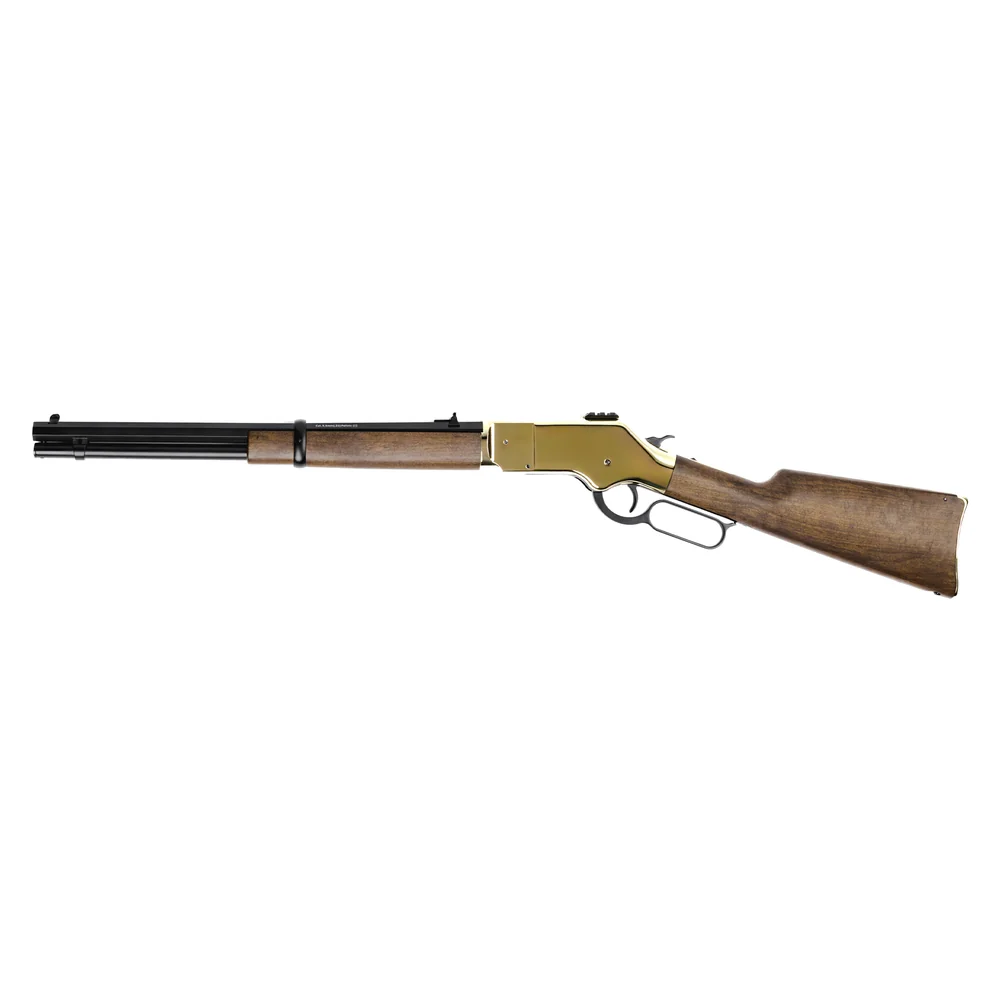
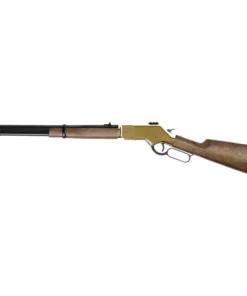
1866 CO2 .177 – Gold
Price range: $110.00 through $150.00
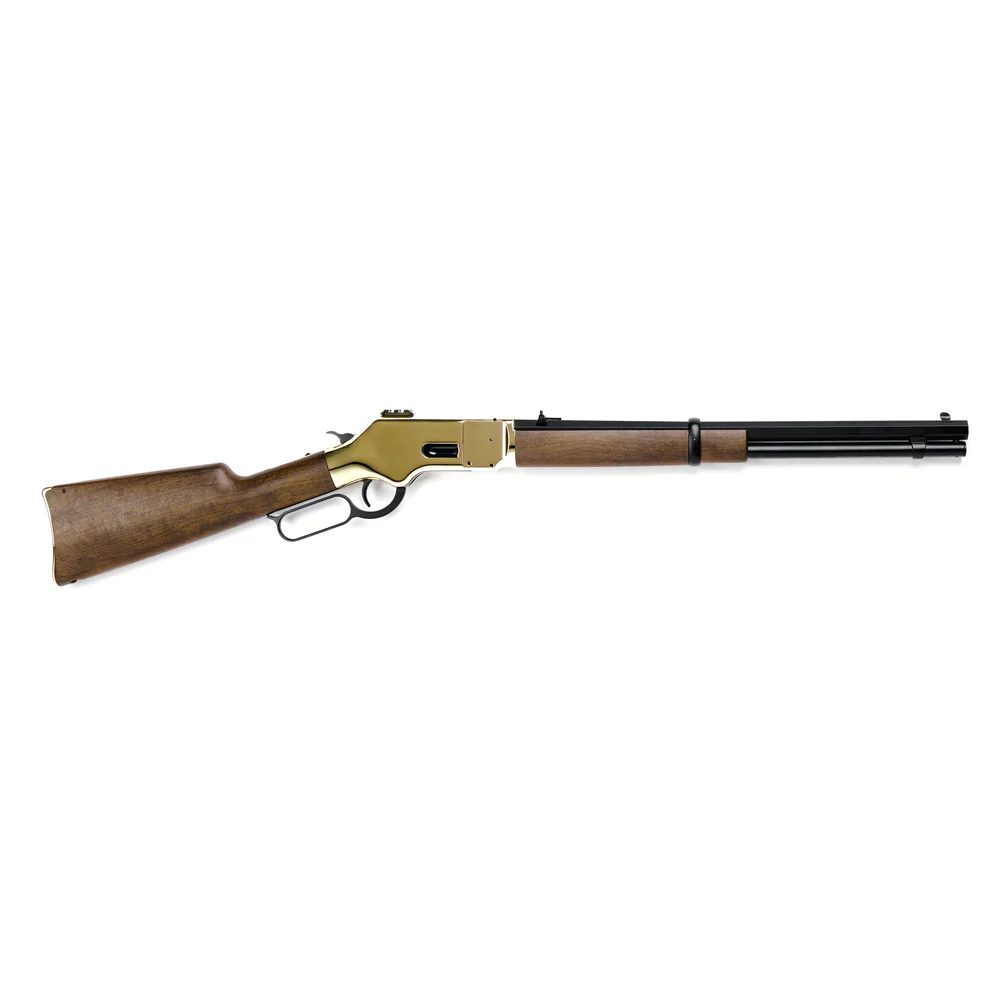
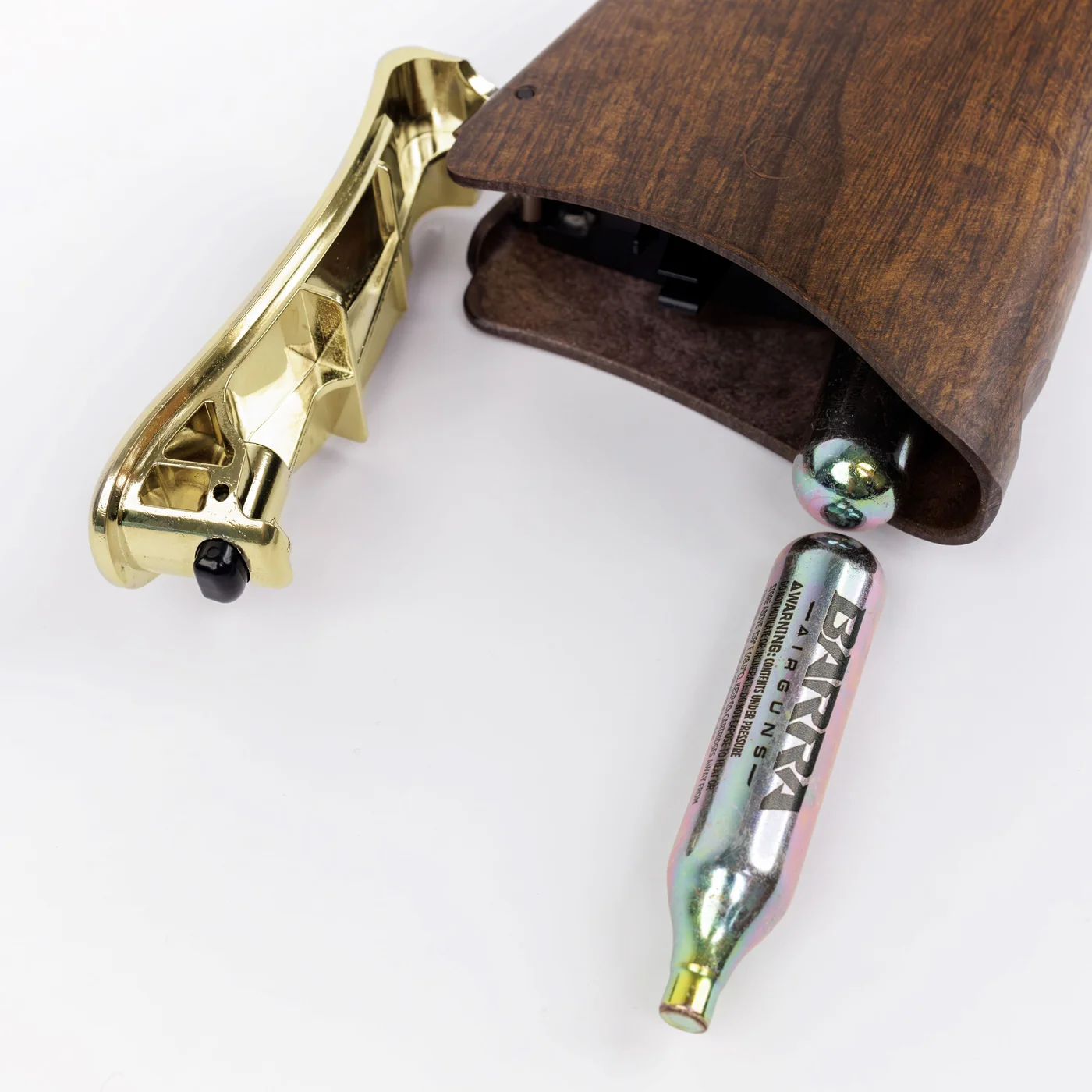
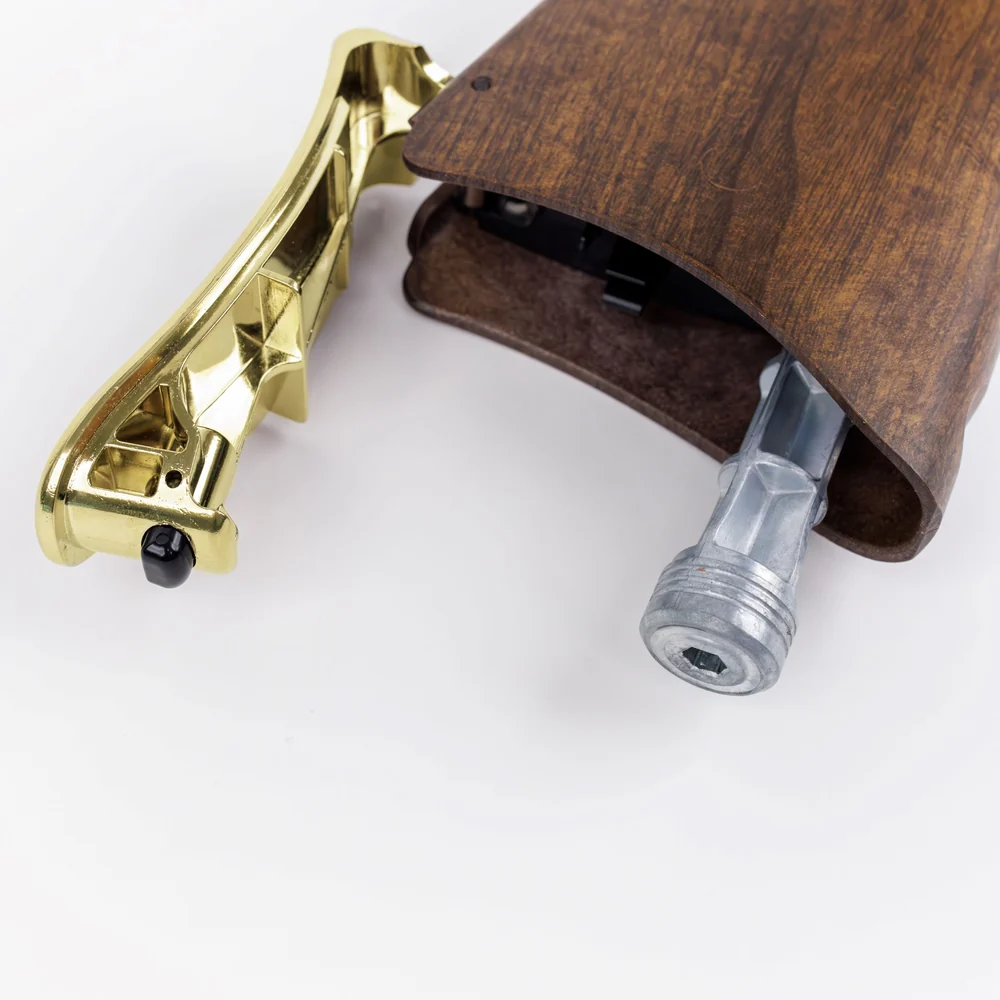
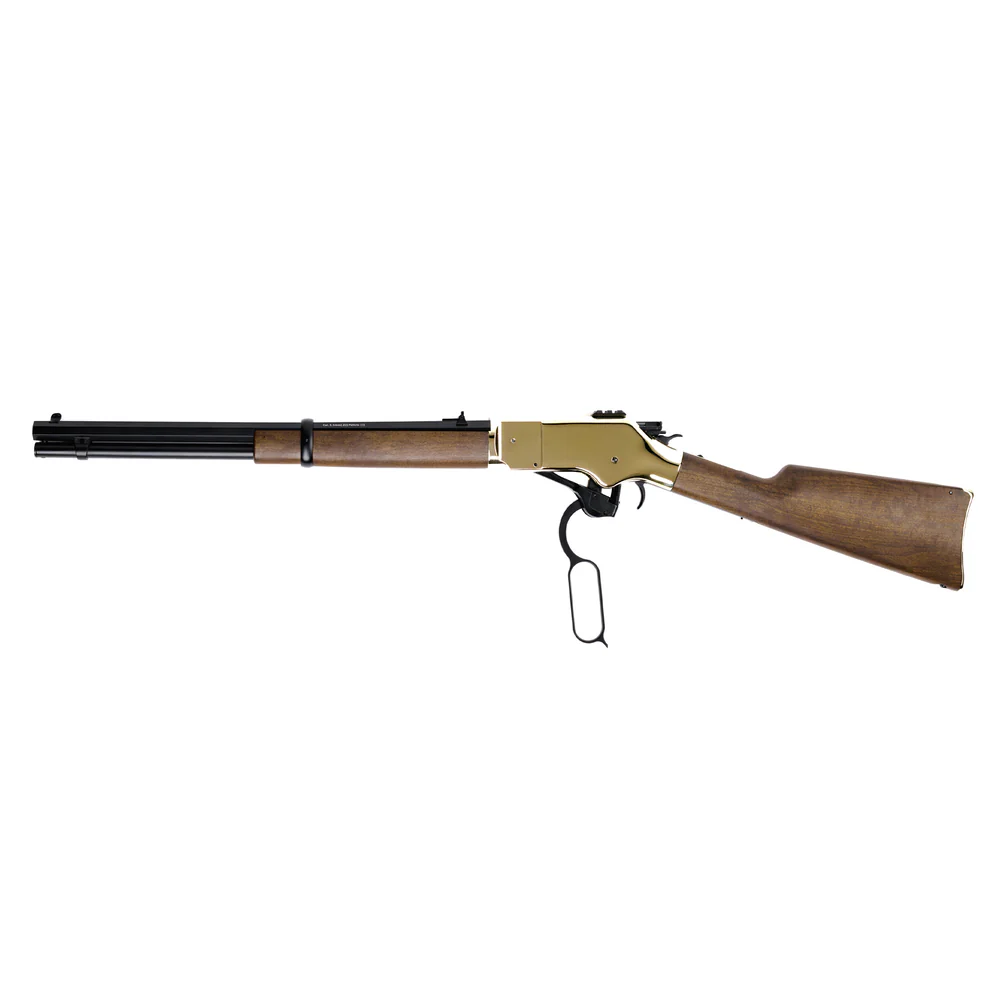
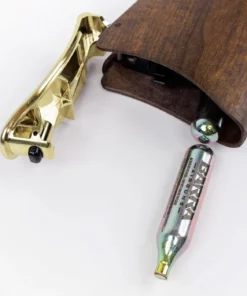
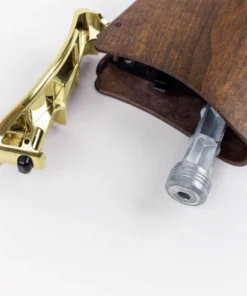
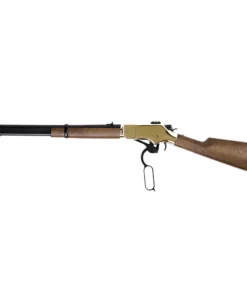
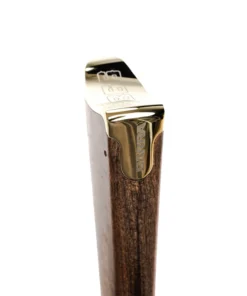
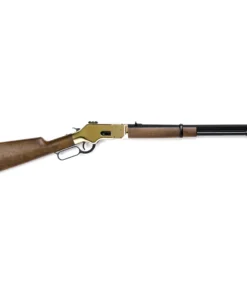
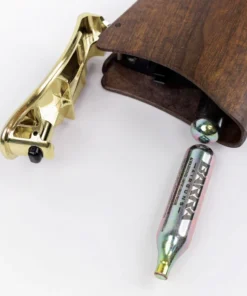
The CO2-powered 1866 brings a blend of historical authenticity and modern performance. Powered by two CO2 cartridges discreetly housed in the buttstock, this rifle offers the capability of firing up to 10 shots with realistic lever-action cycling. Simply load your choice of BBs or pellets into the reusable metal shells and insert them into the rifle’s chamber. After each shot, the lever ejects the spent shell and chambers the next, mimicking the function of a true lever-action rifle.
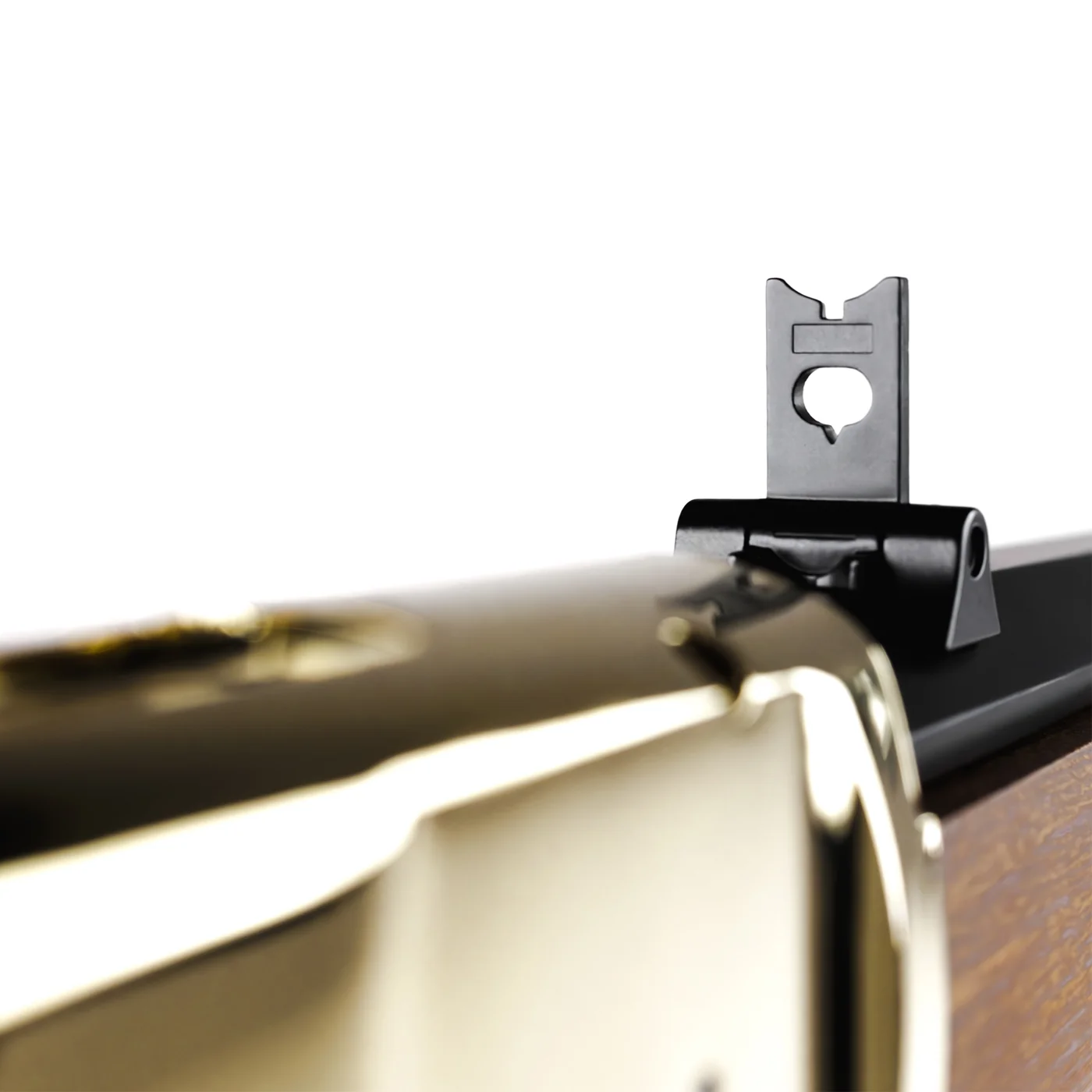
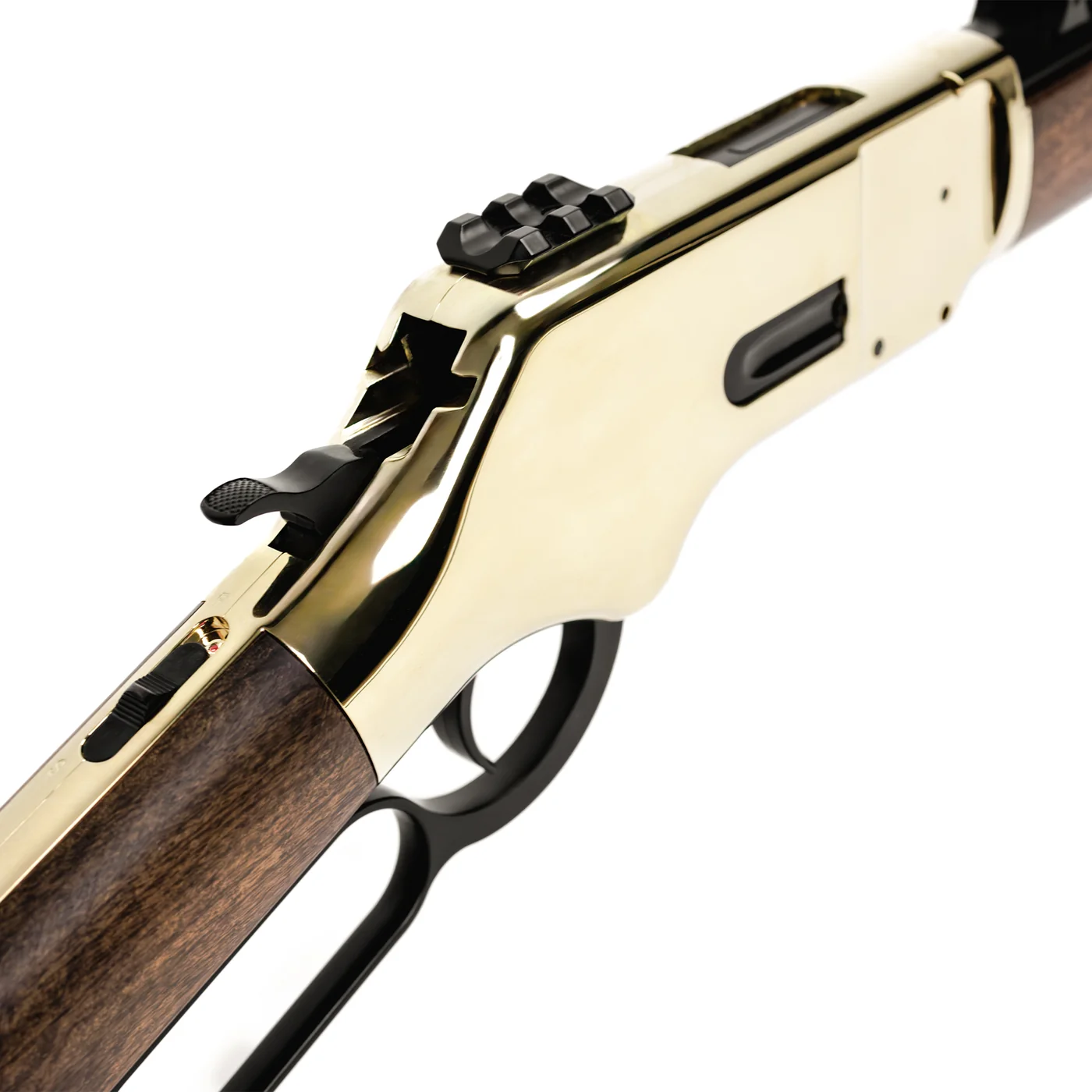
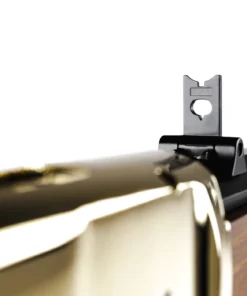
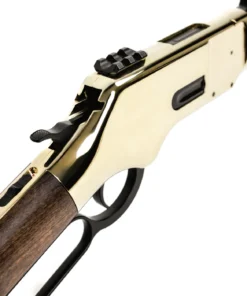
Equipped with a flip-up iron sight for precision at various distances, the CO2 1866 ensures accuracy whether you’re shooting up close or far out. A removable Picatinny rail provides versatility, allowing you to mount a micro red dot for modern targeting, or maintain the rifle’s authentic look by using the traditional iron sights.
For added customization, the CO2 1866 features an interchangeable barrel system. The included smoothbore barrel is perfect for shooting BBs, but if you’re looking for higher pellet accuracy or want to step up to .22 caliber, our optional barrel kits will take your shooting experience to the next level.
Barra 1866 CO2 .177 – Gold Technical Product Guide
Barra 1866 Engineering, CO2 Operation, .177 Ammunition, Lever Action, and Related Barra Platforms
Barra Airguns
barra airguns is the manufacturer behind the 1866 platform and a wider catalog of CO2, electric, multi-pump, and pneumatic airguns. The 1866 has particular historical importance within the brand because Barra identifies it as the first air rifle to carry the Barra name.
B A R R A
The search variation b a r r a refers to the same Barra brand rather than a different manufacturer.
Barra 1866
The barra 1866 combines classic lever-action styling with a modern CO2 powerplant. Its current Gold .177 version uses reusable shell-style cartridges, a metal receiver, a smoothbore barrel, and a faux-wood stock.
Barra 1866 Cowboy Series
The phrase barra 1866 cowboy series reflects the Western-inspired appearance of the platform. Its lever, receiver styling, cartridge-ejection system, and traditional stock profile are designed to evoke historical repeating rifles while remaining an air-powered recreational platform.
Barra 1866 CO2
The Barra 1866 CO2 uses two standard 12-gram CO2 cartridges in the buttstock and can cycle up to 10 reusable shells through the lever-action mechanism.
CO2 Powered Air Rifle
The description co2 powered air rifle accurately applies here. Unlike a refillable compressed-air reservoir, the system uses disposable CO2 cartridges as its pressure source.
CO2 Pellet Guns
The phrase co2 pellet guns describes airguns that use carbon dioxide to propel pellets. The .177 version of this platform can use both compatible pellets and steel BBs.
.177 Ammunition
The rifle is manufacturer-listed for .177 steel BBs and pellets. This dual-ammunition capability differentiates it from the .22 Gold variant, which is configured specifically around pellets.
4.5mm BB
A 4.5mm bb corresponds approximately to the standard .177 steel BB size used by many BB airguns. The manufacturer specifically identifies steel BBs as compatible with this .177 configuration.
Steel BBs
steel bbs are one of the manufacturer-supported ammunition types for this model. They are particularly suited to the included smoothbore barrel configuration.
Metal BB
The phrase metal bb commonly refers to steel spherical BB ammunition. The current .177 Gold is specifically listed for steel BB use.
Metal BB Pellets
The phrase metal bb pellets combines two different projectile categories. BBs are spherical, while pellets have a shaped profile. This model supports both types in .177 caliber.
Smoothbore Barrel
The factory barrel is an 18-inch smoothbore. Barra states that the smoothbore configuration is particularly suitable for BB shooting, while optional rifled barrel kits can be used when higher pellet precision is desired.
Interchangeable Barrel System
One of the defining engineering features is the interchangeable barrel architecture. Barra explicitly states that optional barrel kits can change the configuration, including a rifled pellet-oriented setup or conversion to .22 caliber.
Lever-Action System
The lever performs the mechanical cycling function.
After a shot, operating the lever ejects the used reusable shell and chambers the next one, giving the platform a mechanically realistic repeating action.
Reusable Metal Cartridges
The platform uses 10 reusable metal cartridges for compatible BBs or pellets. These are airgun shell-style holders rather than firearm ammunition.
Metal Receiver
A solid metal receiver is part of the current specification. Barra emphasizes the receiver as one of the features distinguishing the modern 1866 from simpler replica-style constructions.
Faux-Wood Stock
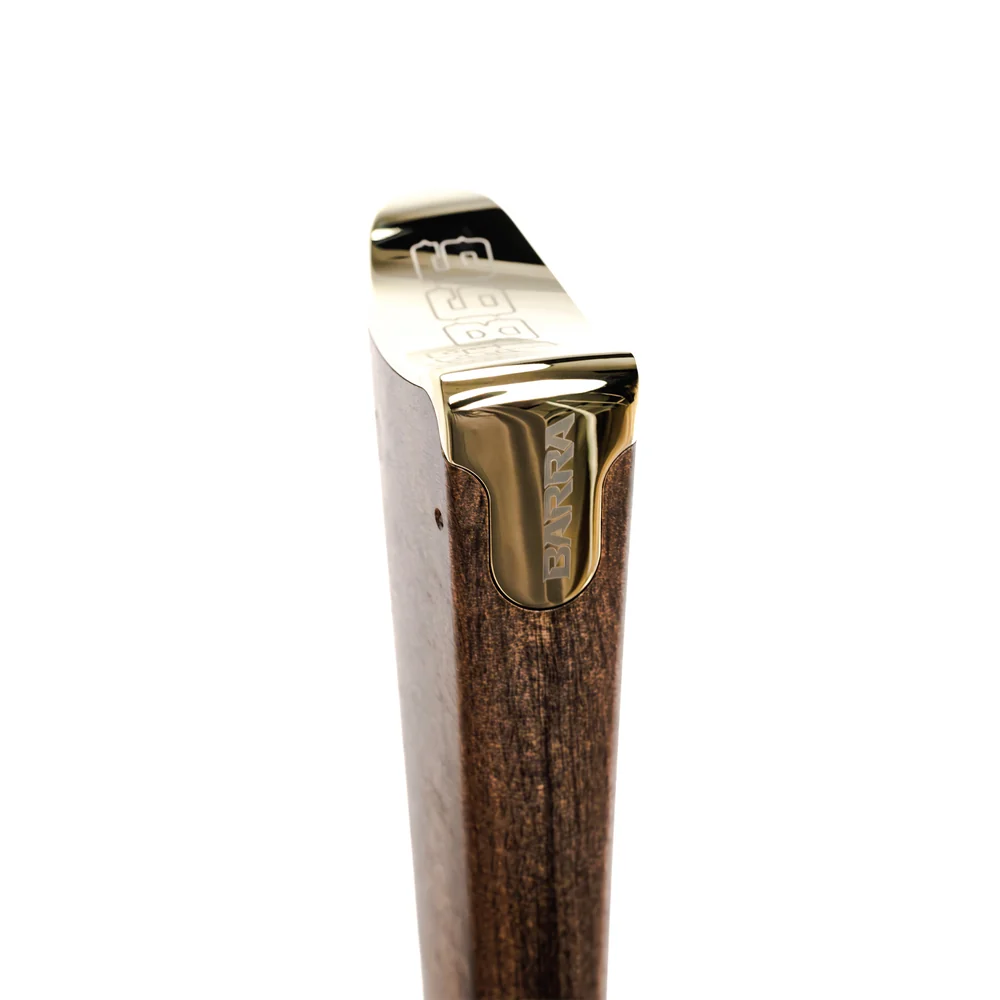
The stock is polymer with a faux-wood appearance. Barra describes this approach as providing the visual character of traditional wood while improving durability and simplifying maintenance.
Gold Finish
The Gold version uses a decorative Western-style finish designed to complement the historical appearance of the platform.
Because decorative finishes can be affected by abrasive cleaning, conservative exterior care is preferable.
Flip-Up Iron Sight
The rifle includes a flip-up iron sight arrangement intended for basic recreational target alignment.
Picatinny Rail
A removable Picatinny rail is also supplied, giving the platform a standardized mounting interface for compatible sighting equipment.
Airgun Scope
The phrase airgun scope refers to separate sighting equipment. Any optic should match the mounting system and remain securely installed.
4×15
The term 4×15 commonly refers to a simple fixed-magnification optic specification. It is not part of the manufacturer-listed standard specifications for this rifle.
1/4×15
The phrase 1/4×15 appears to be a search variation or typographical form rather than an official technical specification.
Barra Gun
The phrase barra gun is broad and can refer to several products across the manufacturer’s catalog.
Barra BB Gun
The phrase barra bb gun applies generally to Barra platforms designed for spherical BB ammunition. The .177 Gold 1866 qualifies because steel BBs are one of its supported projectile types.
BB Gun Rifle
A bb gun rifle describes the general format accurately when this configuration is used with steel BBs.
BB Gun Rifle Pump
The phrase bb gun rifle pump describes pump-powered airguns and does not accurately describe this platform because it is powered by CO2.
Air Gun Pump Action
Likewise, air gun pump action refers to another mechanical or powerplant category rather than this lever-operated CO2 rifle.
Pneumatic Rifle
The phrase pneumatic rifle is broad enough to include gas-powered systems generally, but CO2-powered lever-action air rifle is the more precise description.
Precharged Pneumatic
precharged pneumatic usually refers to a PCP system using a refillable high-pressure air reservoir. This rifle does not use that architecture.
PCP Air Rifle
A pcp air rifle is mechanically different because it is filled with compressed air from a pump, bottle, or compressor rather than disposable CO2 capsules.
Air Rifle Compressed Air
The phrase air rifle compressed air therefore does not precisely describe this powerplant.
Compressed Air Guns
compressed air guns is a broad category, while CO2 air rifle is the more technically specific description here.
Pistola de Aire Comprimido
The phrase pistola de aire comprimido means compressed-air pistol in Spanish. It does not accurately describe this rifle-length lever-action configuration.
Barra 400E
The barra 400e belongs to a separate electrically powered BB platform family rather than the CO2 1866 family.
Barra 400E Gen 2
The barra 400e gen 2 continues that electric architecture and should not be confused with this mechanically cycled CO2 lever-action design.
Barra 400E AEG
The phrase barra 400e aeg refers to an electrically driven platform rather than a CO2-powered system.
Bara 400E
bara 400e is simply a common spelling variation of Barra 400E.
Barra 400E Price
The phrase barra 400e price concerns commercial pricing for a separate platform and does not define any engineering characteristic of the 1866.
Electric BB Gun
An electric bb gun uses an electrically driven mechanism. The 1866 Gold is not electric.
Barra Sportsman 900
The barra sportsman 900 belongs to a separate multi-pump pneumatic family.
Sportsman 900
The sportsman 900 uses a different powerplant, action, and general operating concept.
Barra Sportsman 900 Review
The phrase Barra Sportsman 900 review concerns another product and should not be used to establish specifications for this rifle.
Barra 900 BB Gun
The phrase Barra 900 BB gun generally refers to the Sportsman family rather than the 1866.
Barra 900 Air Rifle
Likewise, Barra 900 air rifle is a different product designation.
Barra Break Barrel
The phrase Barra break barrel concerns a pivoting-barrel airgun architecture. The 1866 does not use a break-barrel powerplant.
Barra PCP Air Rifle
The phrase Barra PCP air rifle describes the manufacturer’s refillable compressed-air models rather than this CO2 configuration.
.25 Cal PCP Air Rifle
A .25 cal pcp air rifle represents a different caliber and power system.
Barra 1100Z
The barra 1100z belongs to Barra’s separate PCP range and is mechanically unrelated to the CO2 lever-action architecture.
Barra 1100Z Gen 2
The barra 1100z gen 2 is likewise a PCP platform rather than a disposable-CO2 system.
Barra 250Z
The barra 250z is another distinct Barra model and should not be treated as an 1866 variation.
Barra 350Z
The barra 350z is likewise separate from the 1866 family.
Barra Schofield
The barra schofield belongs to Barra’s Western-themed revolver family rather than its lever-action rifle family.
Barra Schofield Revolver
The barra schofield revolver shares a historical styling concept with the 1866 but uses a handgun-format revolver architecture.
Schofield Revolver 6in Barrel
The phrase schofield revolver 6in barrel concerns the separate Schofield platform.
ASG Schofield In-Store
The phrase asg schofield in-store concerns availability of another product rather than a technical feature of the 1866.
BB Revolver
A bb revolver uses a revolving cylinder or equivalent cartridge arrangement in a handgun-style frame.
Revolver BB Gun
Likewise, revolver bb gun refers to a different mechanical format.
Air Gun Pellet CO2 Revolver
The phrase air gun pellet co2 revolver describes CO2-powered revolver-style equipment rather than this lever-action rifle.
Chrome 357 Magnum
The phrase chrome 357 magnum is associated with revolver-style replica terminology and does not describe the 1866.
Barra 1858
The barra 1858 belongs to another historical replica-style family.
Barra 1858 Quality
The phrase barra 1858 quality concerns that separate model rather than the 1866.
Barra 1911 Grips
The phrase barra 1911 grips concerns pistol accessories and is unrelated to this rifle’s stock or action.
Barra 100
The barra 100 is a separate Barra model.
Air Gun Accessories
air gun accessories can include suitable cases, sighting equipment, maintenance products, protective equipment, and compatible replacement components.
BB Gun Accessories
The phrase bb gun accessories is broader and should not be interpreted as meaning every BB-gun accessory fits this platform.
BB Guns and Accessories
Likewise, bb guns and accessories covers a large equipment category extending well beyond the 1866.
BB Gun Attachments
The phrase bb gun attachments generally refers to external accessories. Compatibility depends on the actual mounting interface.
Pellet Gun Parts
The phrase pellet gun parts can include seals, cartridge holders, sights, barrel components, and manufacturer-supported replacement parts.
Airsoft BBs
airsoft bbs are usually 6mm plastic projectiles and should not be confused with the .177 steel BBs or pellets used here.
Plastic BBs
The phrase plastic bbs generally refers to airsoft ammunition.
6mm Plastic BBs
6mm plastic bbs are incompatible with the .177 airgun configuration.
Biodegradable Airsoft BBs
biodegradable airsoft bbs are another airsoft projectile category and are unrelated to this platform.
Airsoft BBs 10000
The phrase airsoft bbs 10000 concerns bulk airsoft ammunition rather than compatible .177 projectiles.
Glock BB Gun With Extended Mag
The phrase glock bb gun with extended mag relates to pistol-format BB replicas and has no technical connection with this Western lever-action platform.
BB Guns Sniper
The phrase bb guns sniper is generic search terminology rather than a meaningful description of the 1866.
B&B Gun
The phrase b&b gun does not correspond to an official Barra 1866 specification.
Barra Dual Caliber
The phrase Barra dual caliber is relevant to the 1866 family because Barra offers an interchangeable barrel architecture that can support alternative configurations. The standard Gold .177 model itself ships as a .177 BB-and-pellet platform.
.22 Caliber Air Rifle
The phrase .22 caliber air rifle describes the separate .22 version, not this .177 Gold configuration.
Barra 1866 CO2 Tactical
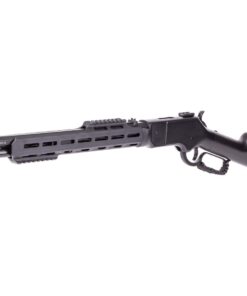
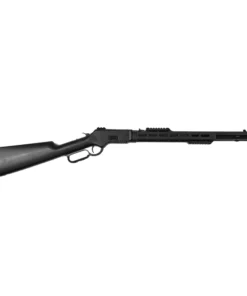
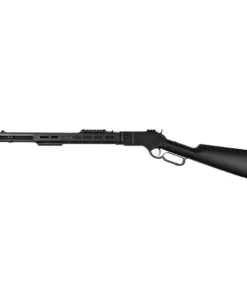
The Barra 1866 CO2 tactical uses the same general lever-action CO2 platform but adds modern tactical styling and an M-LOK-compatible handguard. The .177 Tactical retains the smoothbore barrel, 10-shot system, and manufacturer-listed 600 FPS maximum.
Best Barra Air Rifle for Hunting
The phrase Best Barra air rifle for hunting concerns intended use selection rather than an engineering specification. Whether any airgun is lawful or appropriate for hunting depends on local regulations, caliber, energy, and species.
Why the .177 Configuration Matters
The .177 Gold provides the broadest ammunition compatibility within the current 1866 Gold range because Barra lists it for both steel BBs and pellets. Its included smoothbore barrel favors BB use, while the interchangeable barrel system allows compatible alternative barrel configurations.
Why the Lever System Matters
The lever-and-shell system is central to the platform’s character. Ten reusable metal shells are cycled manually through the action, and each used shell is ejected during lever operation.
Why CO2 Matters
The CO2 powerplant eliminates the need for a high-pressure PCP compressor or hand pump. At the same time, CO2 behavior varies with temperature, so recreational performance can change between hot and cold environments.
Practical Precision
The included smoothbore barrel is optimized more toward BB use than maximum pellet precision. Barra specifically notes that an optional rifled barrel can improve pellet accuracy.
Actual recreational precision also depends on projectile consistency, sight stability, ambient temperature, gas pressure, barrel condition, and user technique.
Overall Technical Perspective
The Barra 1866 CO2 .177 – Gold combines a metal receiver, gold Western-style finish, 18-inch smoothbore barrel, .177 BB-and-pellet compatibility, dual 12-gram CO2 power source, 10 reusable metal cartridges, lever-action shell ejection, faux-wood polymer stock, flip-up sights, removable Picatinny rail, 38.5-inch overall length, approximately 6.5-pound weight, and manufacturer-listed maximum velocity of 600 FPS.
Barra explicitly warns that the airgun is not a toy, should not be displayed or brandished in public because it can be mistaken for a firearm, and should be used and stored in accordance with applicable law.
For responsible ownership, the main considerations are correct .177 ammunition, manufacturer-compatible CO2 cartridges, careful handling of reusable shells, protection of the decorative finish, appropriate eye protection, a controlled recreational target environment with a secure backstop, unloaded secure storage, and compliance with applicable local regulations.
Engineering Design, CO2 Performance, Handling, Precision Factors, and Practical Characteristics
A traditional lever-operated CO2 air rifle combines mechanical styling with a comparatively straightforward gas-powered system. Its practical performance depends on several interconnected elements, including gas pressure, ambient temperature, barrel condition, ammunition consistency, reusable cartridge condition, sight alignment, stock geometry, and mechanical maintenance. Consequently, evaluating the equipment by a single velocity figure provides only a limited understanding of its real-world behavior. A broader assessment considers reliability, ergonomics, consistency, durability, and responsible recreational use.
Traditional Lever-Action Engineering
The lever mechanism creates the distinctive operating character of the platform.
Mechanical movement should remain smooth and predictable throughout its intended range. Binding, grinding, scraping, or unexpectedly heavy resistance may indicate contamination, component wear, or another developing issue.
Force should not be used to overcome abnormal resistance.
Full-Length Configuration
A conventional rifle-length layout provides familiar contact points for the shoulder, supporting hand, grip, and sighting position.
This arrangement can offer comfortable recreational handling when the user’s body position remains natural.
However, comfort varies according to height, arm length, shoulder width, and individual preference.
Weight Distribution
Overall weight does not completely describe handling.
Where that weight is concentrated can substantially influence perceived balance. A rifle that distributes mass evenly may feel different from another platform of similar total weight with more mass concentrated toward the front.
Accessories can also alter this balance.
Stock Geometry
The stock determines much of the relationship between the equipment and the user’s upper body.
Comfortable shoulder contact can reduce unnecessary muscular tension.
Additionally, consistent stock placement supports a more repeatable relationship between the user’s eye and the sighting system.
Supporting-Hand Comfort
The forward hand provides stability during controlled recreational target use.
A natural position generally produces less fatigue than an excessively tense hold.
Consistent support also makes performance comparisons more meaningful because fewer variables change between sessions.
CO2 Pressure Characteristics
Carbon dioxide behaves differently from the compressed air stored in many modern pneumatic systems.
Its pressure varies noticeably with temperature.
Therefore, changes in ambient conditions can produce differences in performance even when the equipment remains mechanically unchanged.
Temperature Sensitivity
Cold conditions can reduce available gas pressure.
Warmer conditions generally produce different pressure characteristics.
Consequently, performance observed during one season should not automatically be expected to match performance recorded under substantially different temperatures.
Cooling During Extended Sessions
Expanding gas absorbs heat.
As a result, repeated operation can temporarily cool parts of the gas system.
This cooling can influence pressure behavior until temperatures stabilize again.
Such changes should be considered before assuming that a mechanical fault has developed.
Gas Capsule Condition
Gas capsules should remain physically sound and free from substantial corrosion or deformation.
Damaged capsules should not be installed.
Storage conditions also matter because excessive heat can create unnecessary risks for pressurized containers.
Manufacturer guidance should always control storage and handling.
Internal Seal Performance
Seals help retain gas and maintain normal pressure behavior.
Over time, ordinary aging, contamination, temperature exposure, and repeated use can affect their condition.
Persistent leakage may indicate that professional inspection or compatible replacement components are required.
Reusable Cartridge System
Reusable shell-style components contribute significantly to the traditional mechanical experience.
However, they also introduce additional parts that require inspection.
Each component should remain clean and free from severe dents, deformation, or other damage that could interfere with normal cycling.
Cartridge Organization
Keeping reusable components organized can reduce accidental loss and damage.
A dedicated storage container prevents them from being crushed by heavier accessories.
It also makes visual inspection easier before recreational use.
Barrel Construction
Barrel condition plays an important role in mechanical consistency.
The exterior should remain protected from corrosion and impact, while the muzzle area deserves particular care.
Physical damage at the front of the barrel can affect repeatability.
Smoothbore Characteristics
A smooth internal barrel differs mechanically from a rifled design because it does not use conventional rifling grooves to impart rotational stabilization.
Therefore, expectations about precision should account for the actual barrel architecture rather than assuming every air rifle behaves identically.
Ammunition Compatibility
Only manufacturer-approved ammunition of the correct caliber and type should be used.
Projectiles that appear damaged, contaminated, significantly deformed, or incorrectly sized should not be forced into reusable components or the action.
Correct compatibility supports normal mechanical operation.
Understanding Practical Precision
Precision depends on multiple variables operating simultaneously.
Barrel condition, projectile consistency, sight stability, temperature, gas pressure, mechanical condition, environmental conditions, and user technique can all influence results.
Therefore, a single unusual result provides limited diagnostic information.
Evaluating Consistency
Repeated observations provide a more useful picture of performance.
Comparisons should ideally be made under reasonably similar environmental conditions.
If a significant change continues across several sessions, the equipment can then be inspected systematically for possible causes.
Sight Alignment
Consistent visual alignment is important when assessing recreational target performance.
Changes in shoulder placement or head position can alter the user’s relationship with the sights.
Comfortable ergonomics therefore contribute indirectly to repeatability.
Sight Stability
Sight components should remain straight and securely attached.
Loose hardware can create apparent precision problems even when the barrel and gas system remain mechanically healthy.
External components should therefore be inspected before internal problems are assumed.
Trigger Consistency
The trigger mechanism should maintain predictable movement and resistance.
A significant unexplained change deserves attention.
Internal alteration should not be used as the first response to abnormal trigger behavior because the underlying cause may require qualified diagnosis.
Mechanical Safety
A mechanical safety provides an additional safeguard but should never replace disciplined handling.
Responsible direction, appropriate eye protection, secure storage, and awareness of the surrounding environment remain necessary regardless of the safety’s position.
Exterior Metal Construction
Metal components contribute to structural feel and durability, but they also require protection from prolonged moisture.
After outdoor recreational use, accessible surfaces should be inspected and dried when necessary.
Persistent moisture can encourage corrosion.
Decorative Surface Care
A decorative metallic finish requires conservative maintenance.
Abrasive materials and aggressive polishing compounds can alter its appearance.
Routine cleaning should focus on removing fingerprints, dust, and ordinary contamination without unnecessarily removing or dulling the surface treatment.
Faux-Wood Furniture
Synthetic furniture with a traditional appearance generally requires less environmental maintenance than unfinished natural wood.
Nevertheless, extreme heat, harsh chemicals, and substantial impacts should still be avoided.
Attachment points should occasionally be checked for cracking or movement.
Environmental Conditions
Outdoor conditions influence both mechanical condition and practical performance.
Wind can affect lightweight projectiles, while humidity can contribute to corrosion.
Temperature can additionally change gas behavior.
These factors should be considered when comparing results between different recreational sessions.
Controlled Recreational Use
A controlled target environment provides appropriate conditions for evaluating mechanical consistency.
Suitable eye protection, a secure backstop, clear surroundings, and compliance with range requirements remain essential.
Local laws and regulations should always be followed.
Pre-Use Inspection
Before use, visually inspect the action, barrel, sights, stock, gas compartment, reusable components, and visible hardware.
Look for corrosion, cracks, leakage, looseness, or unusual mechanical behavior.
Significant abnormalities should be addressed before recreational use continues.
Post-Use Inspection
A short inspection after use can reveal moisture, impact damage, loose components, or developing mechanical wear.
This becomes particularly valuable following outdoor sessions or transportation.
Early identification generally simplifies maintenance.
Transportation
A protective case can reduce scratches, impacts, and contamination.
Reusable components and other hard accessories should be secured separately so they cannot repeatedly strike the equipment during transportation.
Applicable transportation requirements should always be observed.
Storage Conditions
A clean, dry, temperature-stable location provides favorable long-term storage conditions.
Wet equipment should not remain enclosed inside a case.
Likewise, pressurized gas capsules should remain protected from excessive heat and physical damage.
Long-Term Reliability
Long-term reliability depends primarily on preventive care.
Routine inspection, correct ammunition, careful transportation, dry storage, conservative cleaning, and timely professional servicing can help preserve mechanical condition.
Overall Engineering Perspective
A lever-operated CO2 platform combines traditional mechanical characteristics with a modern gas-powered system. Its practical behavior results from the interaction between the action, barrel, sights, reusable components, seals, stock, trigger mechanism, and environmental conditions.
Rather than relying on a single performance figure, long-term quality should be judged through mechanical consistency, component condition, pressure retention, and predictable operation. Persistent gas leakage, severe corrosion, structural damage, abnormal trigger behavior, or unexplained mechanical resistance should result in the equipment being removed from recreational use until its condition has been properly assessed.
Maintenance, Inspection, Cleaning, Storage, CO2-System Care, and Long-Term Reliability
Long-term reliability depends on consistent preventive care rather than frequent mechanical adjustment. A lever-operated CO2 air rifle contains several components that age at different rates, including internal seals, the gas interface, reusable shell-style holders, barrel, lever mechanism, trigger assembly, sights, stock, and external hardware. Environmental exposure also affects condition over time. Consequently, routine inspection should concentrate on detecting changes early, protecting the original finish, maintaining clean components, and obtaining qualified servicing whenever a significant mechanical or gas-system problem appears.
Routine Visual Inspection
A basic external inspection should be performed regularly.
Look for corrosion, cracks, loose hardware, damaged sights, deformation, unusual wear, or anything that differs substantially from the equipment’s normal appearance.
Regular observation makes developing problems easier to identify.
CO2-System Inspection
The gas system should remain free from obvious leakage or physical damage.
Unexpected gas loss may indicate deterioration around a seal, valve, interface, or another internal component.
Persistent leakage should be investigated rather than repeatedly compensated for with replacement capsules.
Seal Condition
Internal seals naturally experience wear.
Age, repeated pressure cycles, contamination, unsuitable chemicals, and environmental conditions can gradually affect sealing performance.
When deterioration becomes apparent, compatible replacement components and appropriate servicing should be used rather than improvised substitutes.
Gas Capsule Condition
Pressurized capsules should be inspected before use.
Severe corrosion, punctures, deformation, or other substantial damage should result in the capsule being removed from service.
Storage should follow the manufacturer’s instructions and keep pressurized containers away from excessive heat.
Gas Compartment Cleanliness
The compartment containing the gas source should remain reasonably clean and dry.
Dust, moisture, and foreign material can accumulate during normal ownership.
Visible contamination should be addressed conservatively without introducing liquids or chemicals into internal areas unnecessarily.
Lever Mechanism Inspection
The lever should maintain a predictable mechanical feel.
New grinding, scraping, binding, excessive looseness, or unexpectedly heavy resistance can indicate wear or contamination.
Additional force should not be used as a solution when the mechanism stops operating normally.
Reusable Shell-Style Components
Reusable holders experience repeated handling and mechanical cycling.
They should therefore be checked for dents, cracks, excessive wear, or deformation.
Damaged components should be separated from service rather than forced through the action.
Keeping Small Components Organized
A dedicated storage container helps protect reusable components from impact and contamination.
Small metal pieces should not remain loose alongside tools or other heavy objects.
Organization also makes it easier to identify missing or damaged components before a recreational session.
Barrel Exterior Maintenance
The barrel exterior should remain clean and dry.
After exposure to humidity or rain, accessible metal surfaces should be inspected for moisture.
Prolonged dampness can encourage corrosion, particularly when equipment is immediately returned to an enclosed case.
Bore Care
Internal barrel maintenance should remain conservative.
Manufacturer-supported cleaning methods are preferable to aggressive brushing or strong chemicals.
Excessive cleaning can create unnecessary wear, so maintenance should respond to actual condition rather than an assumption that the bore requires constant attention.
Muzzle Protection
The front of the barrel deserves protection from hard impacts.
Visible dents, deformation, or significant damage around this area may influence consistency.
After accidental impact, inspection is preferable before recreational use resumes.
Sight Condition
Sight components should remain secure and properly aligned.
Loose hardware can create apparent performance problems even when the barrel and gas system remain mechanically sound.
Visible movement or damage should therefore be corrected before broader mechanical conclusions are reached.
Accessory-Mounting Surface
Any standardized mounting surface should remain straight, clean, and undamaged.
Installed accessories should not move unexpectedly.
Loose mounting hardware can affect consistency and may eventually damage attachment points if left unresolved.
Trigger Inspection
The trigger should retain its normal mechanical behavior.
Unexpected changes in movement, resistance, or engagement deserve attention.
Internal modification should not be used as the first response to a developing trigger problem.
Safety Mechanism
The mechanical safety should function without abnormal binding or excessive looseness.
Nevertheless, it remains only a supplementary safeguard.
Responsible handling and secure storage are necessary regardless of the position of a mechanical safety.
Stock Inspection
Synthetic furniture should periodically be examined around attachment points.
Cracks, substantial movement, or impact damage can develop through accidents or long-term use.
Problems around structural mounting areas deserve more attention than superficial cosmetic marks.
Decorative Finish Care
Decorative surfaces benefit from gentle cleaning.
A soft cloth can remove fingerprints and ordinary surface contamination.
Abrasive pads, aggressive polishing compounds, and harsh solvents should generally be avoided because they can permanently alter the appearance of the finish.
Exterior Metal Protection
Exposed metal components should remain protected from persistent moisture.
After handling or outdoor use, visible contamination can be removed conservatively.
Corrosion prevention is generally easier than attempting to restore heavily deteriorated surfaces later.
Fastener Condition
Visible fasteners should remain secure without being excessively tightened.
Repeated loosening can indicate a deeper mechanical issue.
Overtightening may damage threads or surrounding components, so persistent problems deserve proper assessment.
Moisture Management
Moisture is one of the most important long-term storage concerns.
Wet equipment should not remain sealed inside a case.
The equipment and its storage case should both be allowed to dry appropriately before extended storage.
Humidity Control
Persistent humidity can encourage corrosion even when equipment has not been directly exposed to rain.
A clean, reasonably dry indoor environment is generally preferable for long-term storage.
Periodic inspection becomes especially important in humid climates.
Temperature Protection
Extreme temperatures can affect seals, finishes, polymers, and pressurized gas containers.
Storage inside a vehicle exposed to direct sunlight should therefore be avoided.
Stable indoor temperatures provide more predictable long-term conditions.
Case Maintenance
The storage case itself should remain clean and dry.
Foam and fabric interiors can retain moisture or contamination.
A damp case can create poor storage conditions even when the equipment was initially dry.
Transportation Protection
A padded case helps reduce scratches, vibration, and accidental impacts.
Small metal components should be secured separately so they cannot repeatedly strike the barrel, receiver, stock, or sights during transportation.
Applicable transportation requirements should always be followed.
Secure Storage
When not in use, the equipment should remain unloaded and secured against unauthorized access.
Children and unauthorized individuals should not be able to reach it.
Storage practices should comply with applicable local requirements.
Recognizing Normal Wear
Minor handling marks and gradual cosmetic changes can develop over time.
Such wear should be distinguished from cracks, severe corrosion, substantial deformation, or damage that changes mechanical operation.
Structural deterioration deserves prompt attention.
Recognizing Abnormal Mechanical Wear
New binding, scraping, excessive movement, irregular cycling, or substantial trigger changes may indicate a developing problem.
Continuing to force an abnormal mechanism can worsen existing damage.
Inspection should take priority.
Recognizing Gas-System Problems
Persistent leakage is one of the clearest signs that servicing may be necessary.
Environmental temperature can affect normal gas behavior, but continuous leakage should not be dismissed as ordinary temperature variation.
Avoiding Improvised Repairs
Critical mechanical or gas-system components should not be repaired using makeshift seals, adhesives, modified hardware, or parts of uncertain compatibility.
A component that appears similar may still differ in dimensions, materials, or pressure suitability.
Maintenance Records
A simple service history can improve long-term ownership.
Professional repairs, seal replacements, significant leaks, mechanical faults, and major incidents can be recorded.
These records become useful if the same issue returns later.
Professional Servicing
Persistent gas leakage, structural damage, severe corrosion, abnormal trigger behavior, or significant mechanical resistance should receive qualified technical assessment.
Professional servicing is particularly appropriate when a problem involves internal pressurized components.
Long-Term Care Perspective
Reliable long-term ownership is largely the result of simple preventive habits. Regular inspection, conservative cleaning, dry storage, protection from extreme temperatures, careful transportation, and timely servicing can preserve both mechanical condition and exterior appearance.
The objective should be preservation rather than constant modification. When leakage, structural deterioration, severe corrosion, or unexplained mechanical changes develop, recreational use should stop until the affected equipment has been properly assessed.
Real-World Usability, Performance Evaluation, Ownership Experience, and Important Considerations
Real-world ownership of a traditional CO2-powered lever-action air rifle involves more than its external appearance or published specifications. Practical quality depends on how the complete system behaves during ordinary recreational use and how well its components retain their condition over time. Temperature, ammunition condition, sight stability, gas pressure, ergonomics, maintenance, and storage can all influence the experience. Therefore, understanding these factors provides a more realistic picture of what can be expected from the platform.
Everyday Handling Experience
Traditional rifle proportions provide recognizable contact points for the shoulder, hands, and sighting position.
The overall configuration can feel substantial because several mechanical and metal components contribute to its construction. Nevertheless, perceived weight depends heavily on balance rather than total mass alone.
Traditional Ergonomics
A conventional stock encourages a familiar shoulder position.
Comfort is important because unnecessary muscular tension can make prolonged recreational sessions tiring. Furthermore, a consistent position helps maintain a similar relationship between the user’s eye and the sighting system.
Individual body proportions will naturally affect comfort.
Lever-Action Character
The mechanical lever is central to the platform’s traditional character.
Its movement should remain predictable throughout ordinary operation. Smooth mechanical behavior generally indicates that the interacting components are functioning normally.
Grinding, binding, or unexpectedly heavy resistance should prompt inspection.
Reusable Component Experience
Shell-style reusable components create a distinctive mechanical experience while also introducing additional pieces that require organization.
They should remain clean, undamaged, and stored carefully.
Because these components are repeatedly handled, occasional inspection is worthwhile.
Understanding Practical Performance
Published performance figures should not be interpreted as guaranteed results under every condition.
Environmental temperature, gas condition, ammunition characteristics, mechanical condition, and other variables can influence actual behavior.
Consequently, comparisons are most useful when conditions remain reasonably similar.
CO2 and Temperature
Temperature has a particularly important influence on carbon-dioxide systems.
Gas pressure can vary as environmental conditions change. Therefore, behavior observed during warm weather may differ from what is experienced under significantly colder conditions.
This variation is an inherent characteristic of the power source.
Cooling Effects
Gas expansion can cool parts of the pressure system during use.
Consequently, repeated operation over a relatively short period may temporarily change pressure characteristics.
Allowing conditions to stabilize can help distinguish temporary temperature effects from actual mechanical problems.
Evaluating Consistency
Consistency should be evaluated across multiple observations rather than a single result.
One unexpected result can be influenced by numerous variables.
However, repeated changes under comparable conditions provide stronger evidence that inspection may be necessary.
Factors Affecting Precision
Practical precision depends on the interaction of several elements.
Barrel condition, projectile uniformity, sight alignment, mechanical stability, temperature, gas pressure, environmental conditions, and user consistency all contribute.
No single component determines the complete result.
Barrel Condition
An undamaged barrel provides an important foundation for consistent recreational performance.
The exterior should remain protected from corrosion, while the front portion deserves protection from accidental impact.
Visible damage should be investigated before continued use.
Ammunition Condition
Only compatible ammunition should be used.
Damaged, heavily contaminated, or visibly deformed projectiles can contribute to inconsistent results or mechanical difficulties.
Anything that does not fit normally should never be forced into a reusable holder or mechanism.
Sight Stability
Sighting components should remain secure.
A loose or damaged sight can create apparent performance changes even when the rest of the equipment remains mechanically sound.
Therefore, external sight condition is worth checking whenever unexplained inconsistency develops.
Stock Position
Repeatable stock placement can contribute to consistent visual alignment.
If shoulder or head position changes substantially between attempts, the relationship between the eye and sights can also change.
Comfort and repeatability are therefore closely connected.
Supporting-Hand Comfort
A relaxed supporting position can reduce unnecessary fatigue.
Excessive muscular tension may make stable recreational handling more difficult during extended sessions.
A comfortable position is generally preferable to forcing an unnatural stance.
Trigger Characteristics
The trigger should maintain a predictable feel.
Substantial unexplained changes in resistance, movement, or engagement deserve inspection.
Internal modification should not be used to compensate for abnormal mechanical behavior.
Mechanical Safety
A mechanical safety provides an additional layer of protection but cannot replace responsible handling.
The equipment should always be treated appropriately, regardless of the safety’s position.
Secure storage and controlled recreational use remain essential.
Outdoor Conditions
Outdoor environments introduce variables that are absent indoors.
Wind can influence lightweight projectiles, while humidity can affect exposed metal surfaces. Dust and debris may also accumulate around mechanical areas.
Post-session inspection becomes particularly useful after outdoor use.
Humid Environments
Persistent humidity deserves additional attention because moisture can promote corrosion.
Metal surfaces should be checked periodically, especially around recessed areas where moisture may remain unnoticed.
Storage cases should also remain dry.
Hot Conditions
Excessive heat can affect pressurized gas containers, seals, polymer components, and finishes.
Equipment should not be stored for extended periods in extremely hot enclosed environments.
Manufacturer recommendations for pressurized components should always take priority.
Cold Conditions
Cold weather can alter gas behavior considerably.
A noticeable change in performance during low temperatures does not necessarily mean that the equipment has developed a fault.
Environmental conditions should be considered before mechanical conclusions are reached.
Recreational Target Environment
A controlled environment is appropriate for recreational target activity.
Suitable eye protection, a secure backstop, awareness of surrounding people, and compliance with facility requirements should remain fundamental considerations.
Local regulations should always be observed.
Pre-Session Inspection
A short inspection before use can identify obvious problems.
The barrel, sights, stock, lever, reusable components, gas compartment, and visible hardware should be examined for damage, corrosion, leakage, or abnormal movement.
Post-Session Inspection
Inspection after use can reveal problems that developed during the session.
Moisture, new scratches, loosened components, or unusual mechanical changes may become visible.
Early identification can simplify later maintenance.
Transportation Experience
A padded case can protect the equipment from vibration, impact, and abrasion.
Hard accessories and reusable metal components should be organized separately so they cannot repeatedly contact finished surfaces during transportation.
Applicable transportation requirements should be followed.
Protecting Decorative Surfaces
Decorative finishes often benefit from conservative cleaning.
Soft materials are preferable for routine removal of fingerprints and dust.
Aggressive abrasives or harsh polishing compounds can permanently alter appearance.
Storage Environment
Long-term storage should prioritize dryness, moderate temperature, and security.
Wet equipment should not remain enclosed in a case, while pressurized gas containers should be protected from heat and physical damage.
Secure Storage
The equipment should remain unloaded and secured against unauthorized access when not being used.
Children and unauthorized individuals should not have access.
Any applicable storage requirements should be followed.
Recognizing Normal Aging
Small cosmetic marks may gradually appear through ordinary ownership.
These do not necessarily indicate a mechanical problem.
However, deep corrosion, cracking, severe deformation, or significant component movement should not be treated as normal cosmetic wear.
Recognizing Mechanical Problems
New grinding, binding, irregular cycling, substantial looseness, or unexpected trigger changes can indicate developing mechanical deterioration.
Forcing the mechanism can make an existing problem worse.
Qualified inspection is preferable when abnormal behavior persists.
Recognizing Pressure-System Problems
Persistent leakage deserves attention.
Replacing gas capsules repeatedly without addressing an underlying sealing problem does not correct the fault.
Professional assessment may be necessary when leakage continues.
Long-Term Ownership Value
Long-term reliability is strongly influenced by preventive maintenance.
Clean components, sensible environmental protection, careful transportation, conservative cleaning, and appropriate servicing can preserve both mechanical operation and cosmetic condition.
Overall Practical Assessment
A traditional lever-operated CO2 platform provides a distinctive recreational ownership experience through its combination of conventional rifle ergonomics, mechanical cycling, reusable components, and gas-powered operation. However, its practical quality should be evaluated through consistency, mechanical condition, ergonomics, pressure retention, and durability rather than appearance alone.
Responsible ownership remains equally important. Appropriate protective equipment, controlled recreational environments, secure unloaded storage, compliance with applicable regulations, and timely professional servicing all contribute to safe long-term use. Persistent leakage, severe corrosion, structural damage, or unexplained mechanical resistance should result in the equipment being removed from use until properly assessed.
Be the first to review “1866 CO2 .177 – Gold”
Related products
Barra Air Rifles
Barra Air Rifles
Barra Air Rifles
Barra Air Rifles
Barra Air Rifles
Barra Air Rifles
Barra Air Rifles
Reviews
There are no reviews yet.