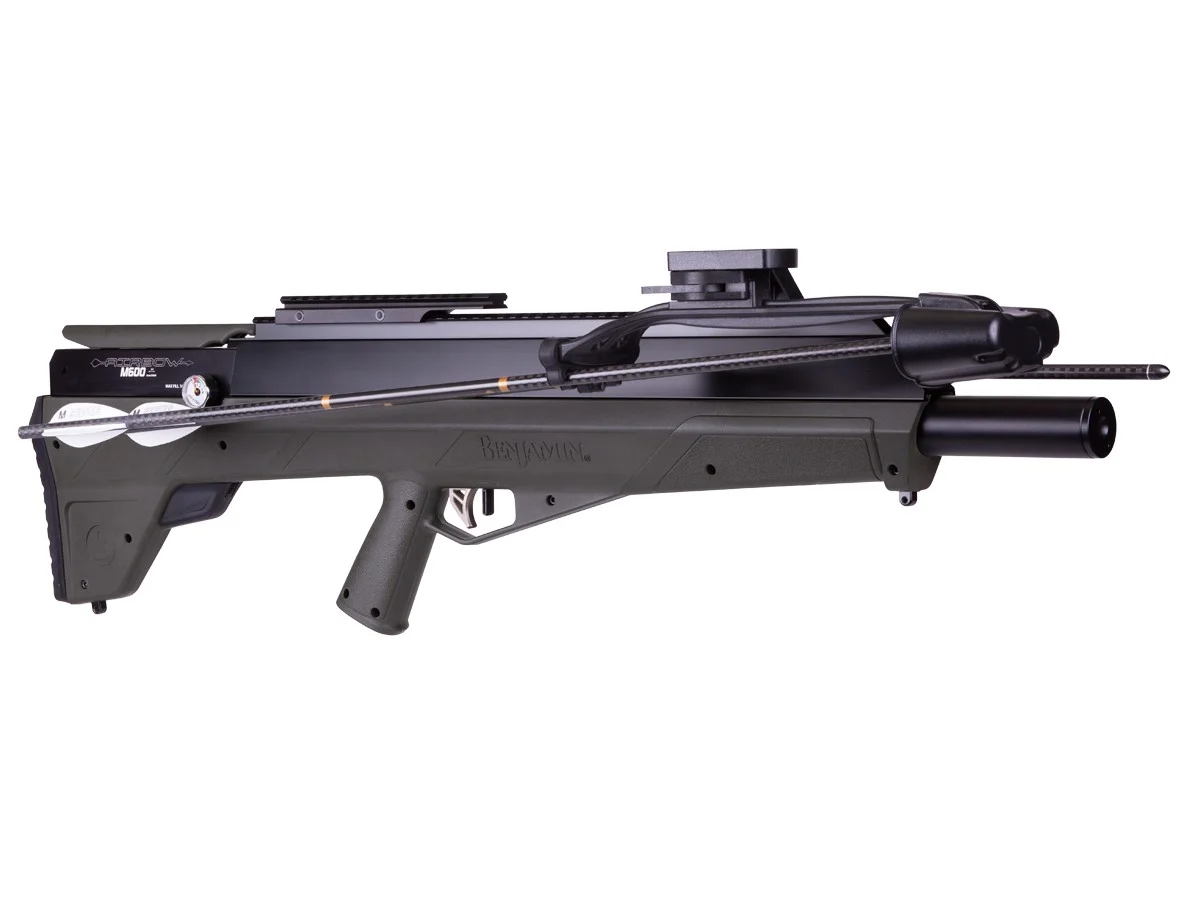
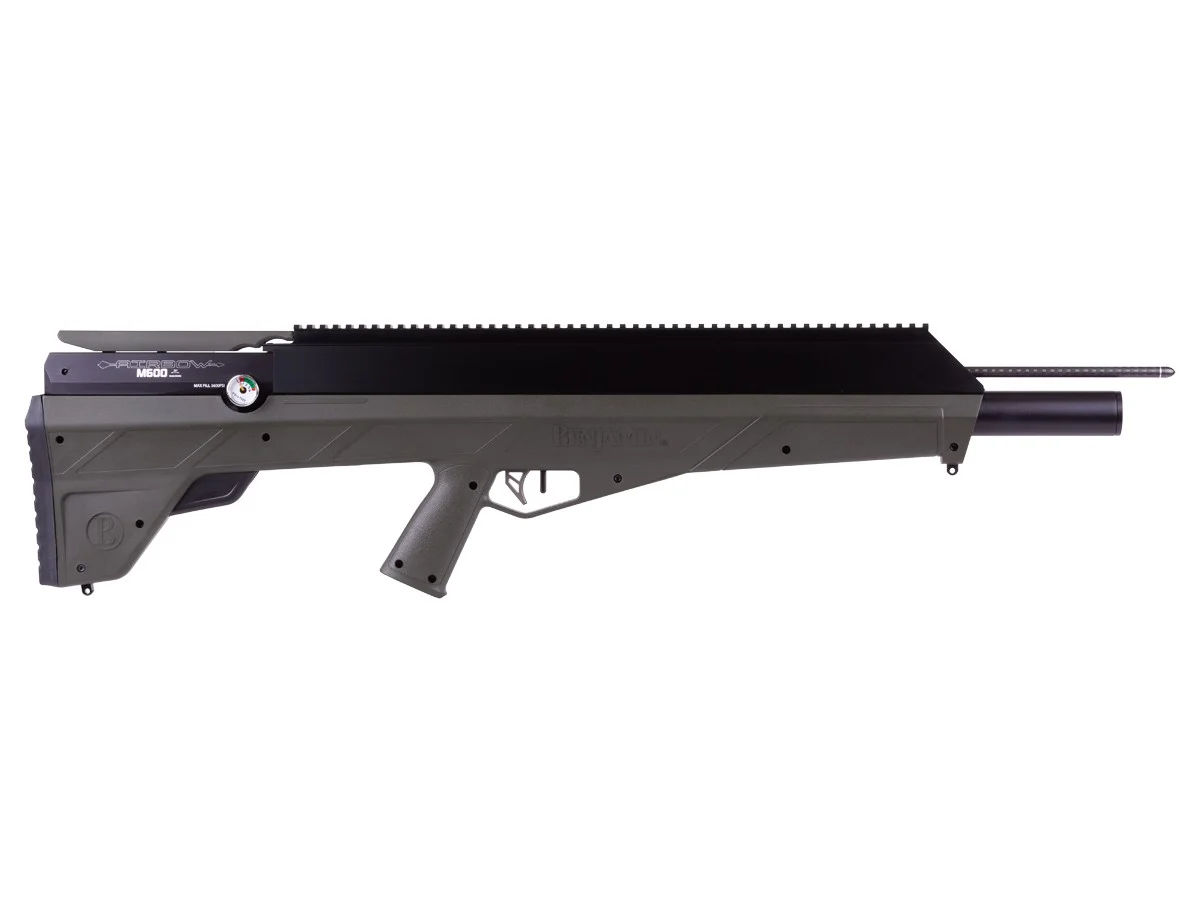
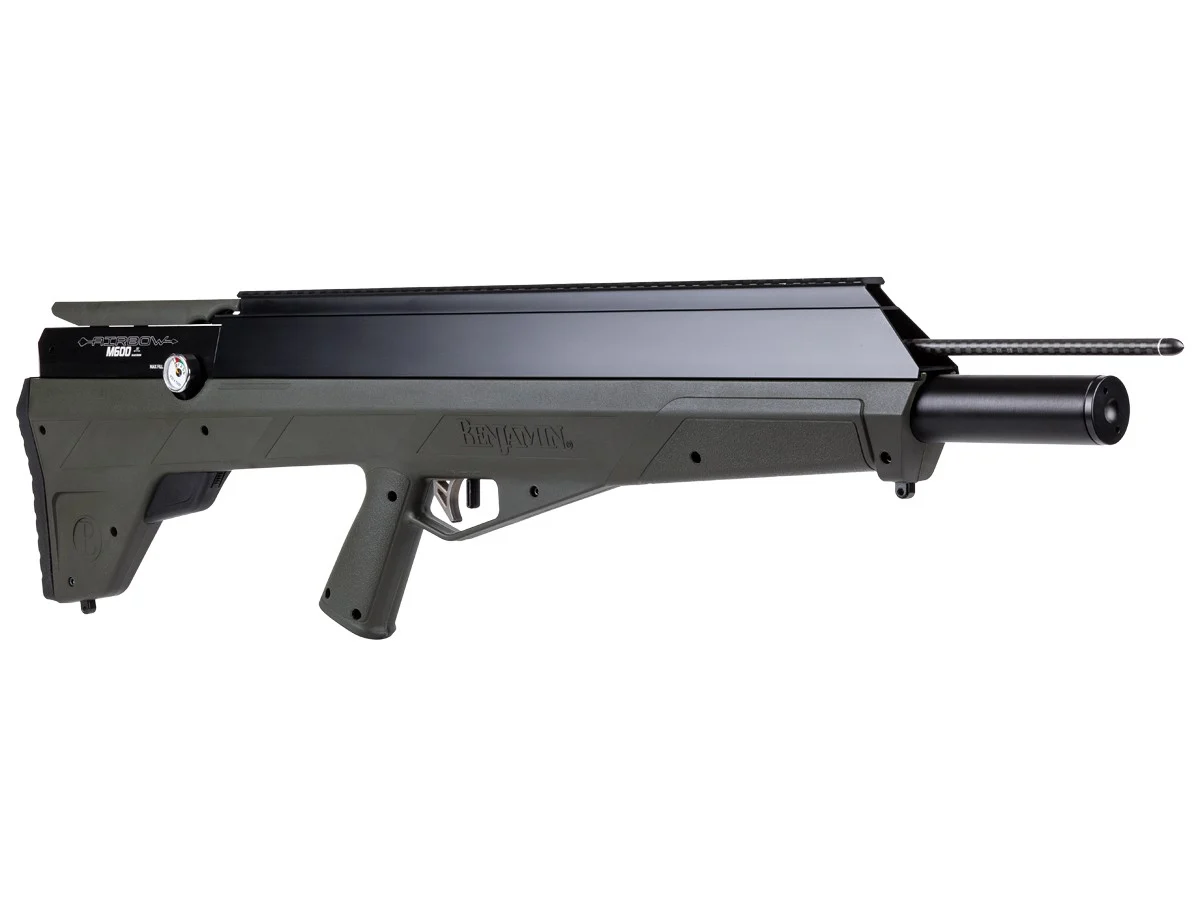
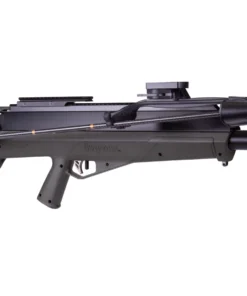
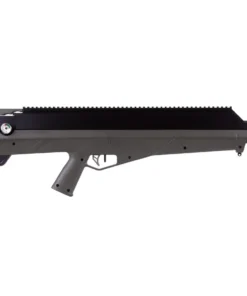
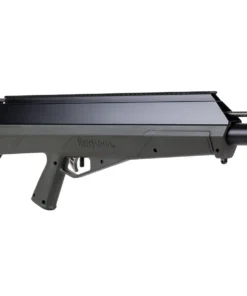
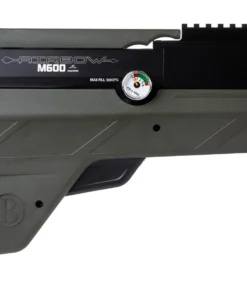
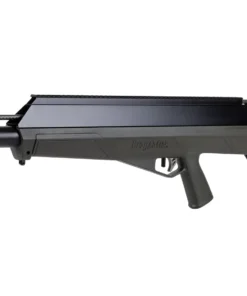
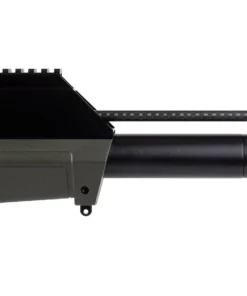
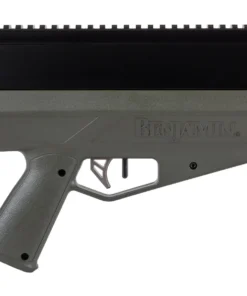
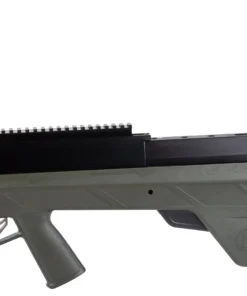
Benjamin Airbow M600 PCP Arrow Launcher
Price range: $700.00 through $900.00
Description
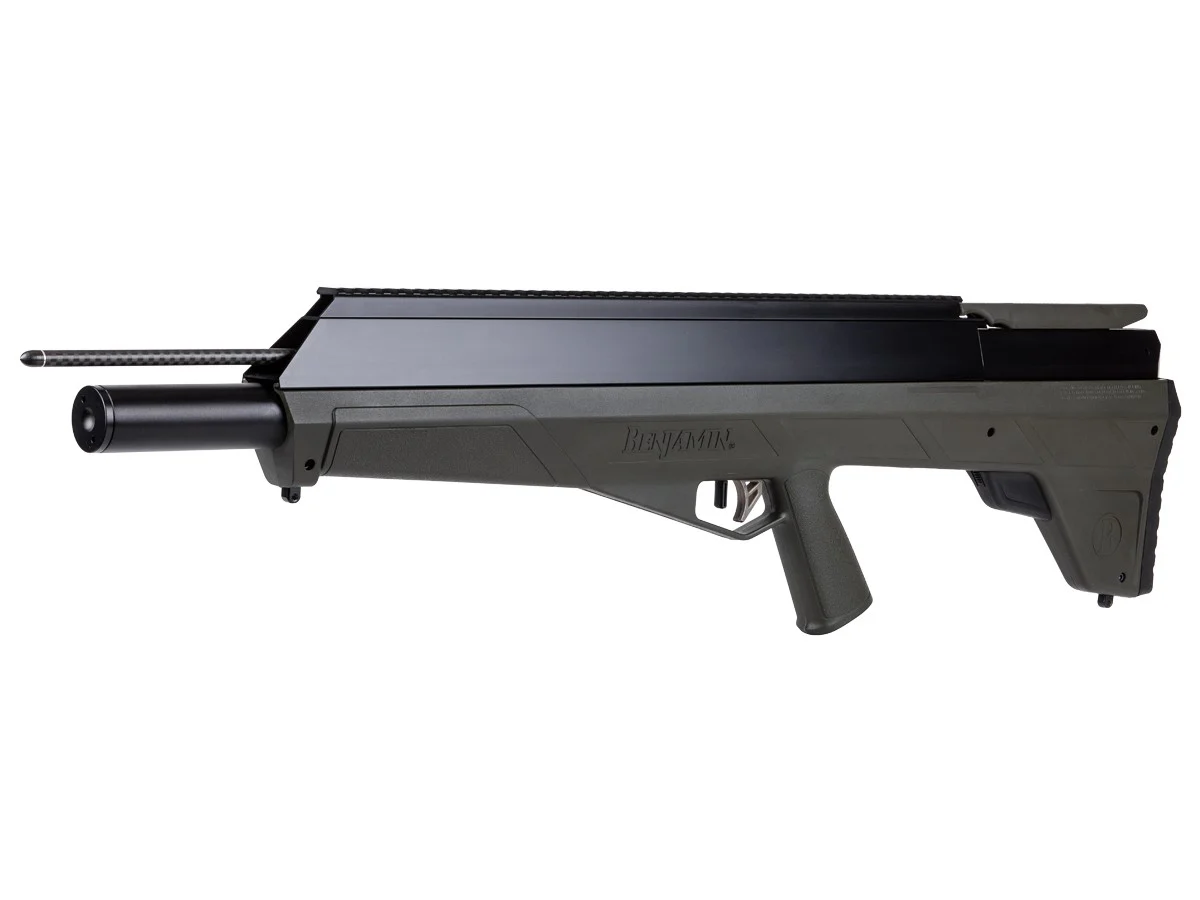
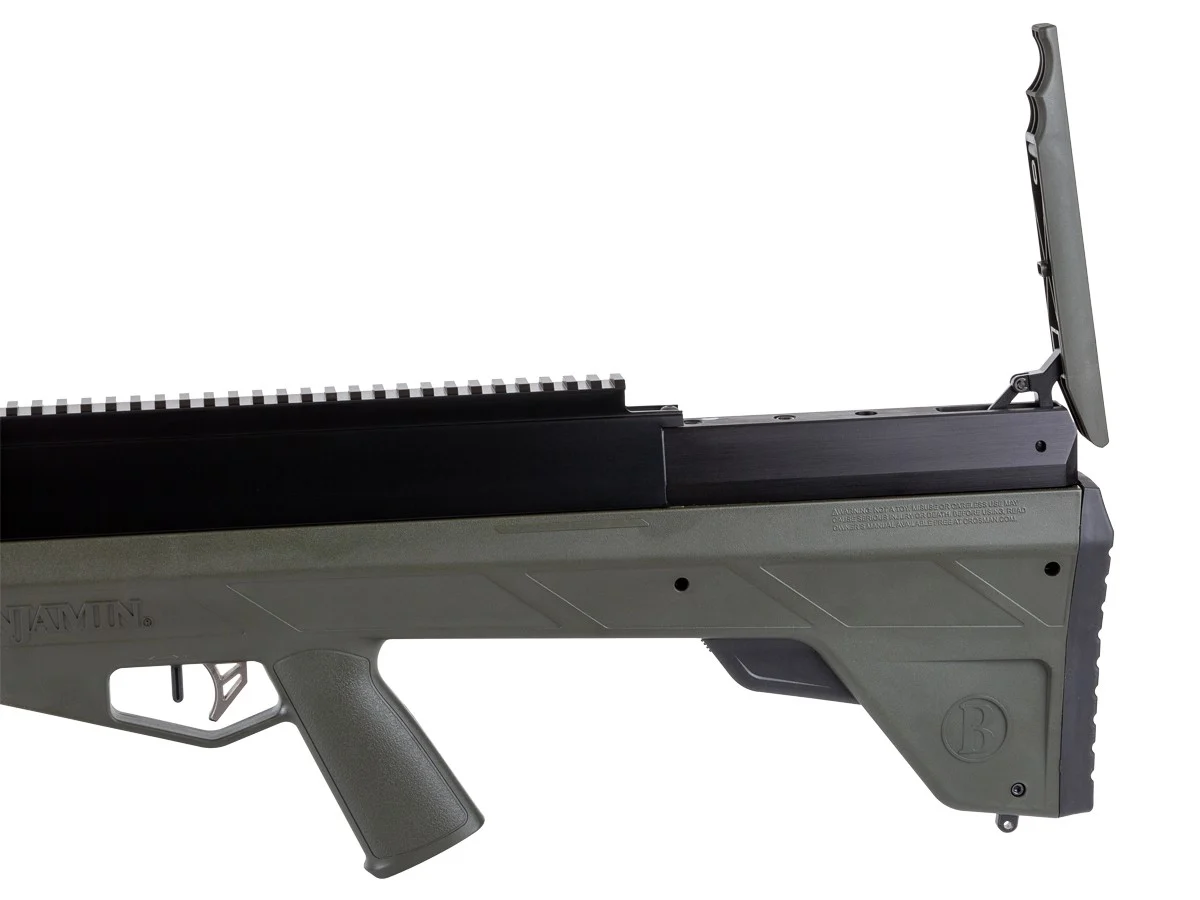
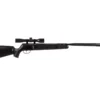
The Benjamin Airbow M600 PCP Arrow Launcher combines the tested and reliable features of the successful original version with improvements that result in remarkable performance. This updated version shoots arrows at velocities up to 600 FPS and with power up to a stunning 300 FPE, delivering overwhelming power for hunting large game.
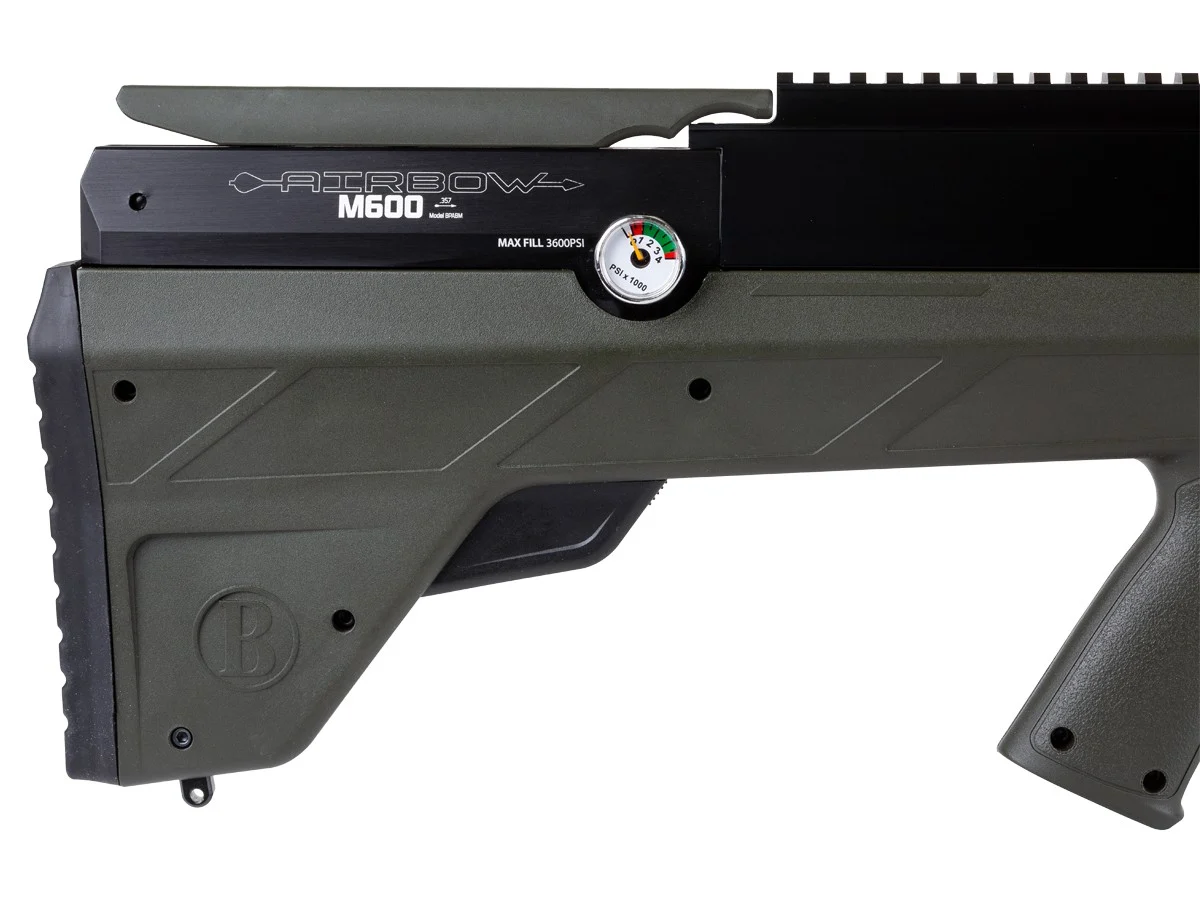
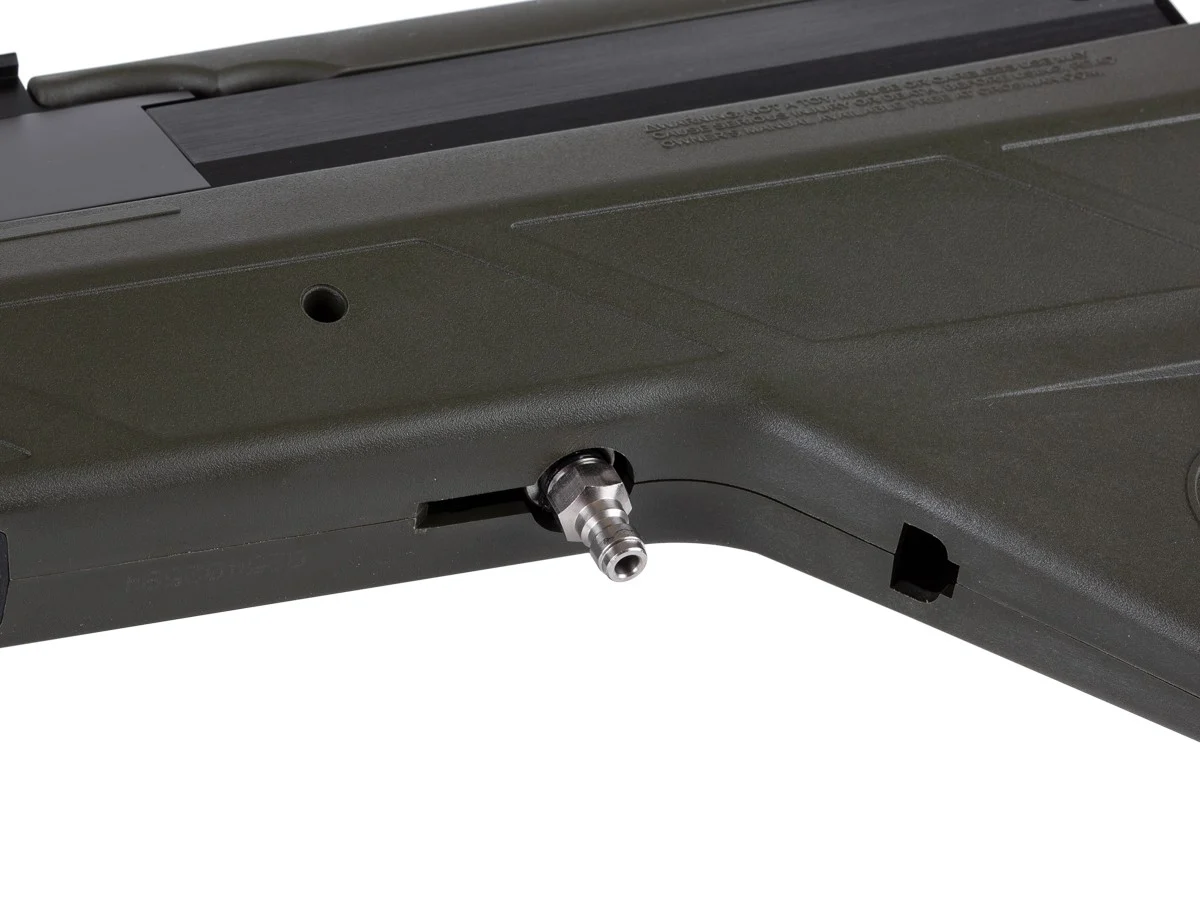
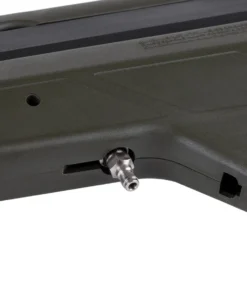
The updated technology on this model of the arrow launcher means hunters receive a surprisingly large increase in both velocity and power, resulting in velocity that is 30% higher and power that is almost an astounding 80% higher than the previous version. Other updates to this model include a pressure gauge that has been repositioned to the side of the breech for convenience, and a standard male Foster fitting.
One of the main differences between the Benjamin Airbow M600 and standard bows or crossbows is that it eliminates the need for dealing with strings, limbs, and their associated maintenance. Big game hunters can now get incredible power, velocity, and accuracy without having to worry about cocking a crossbow in tight areas with restricted space, with a lower cocking effort as well.
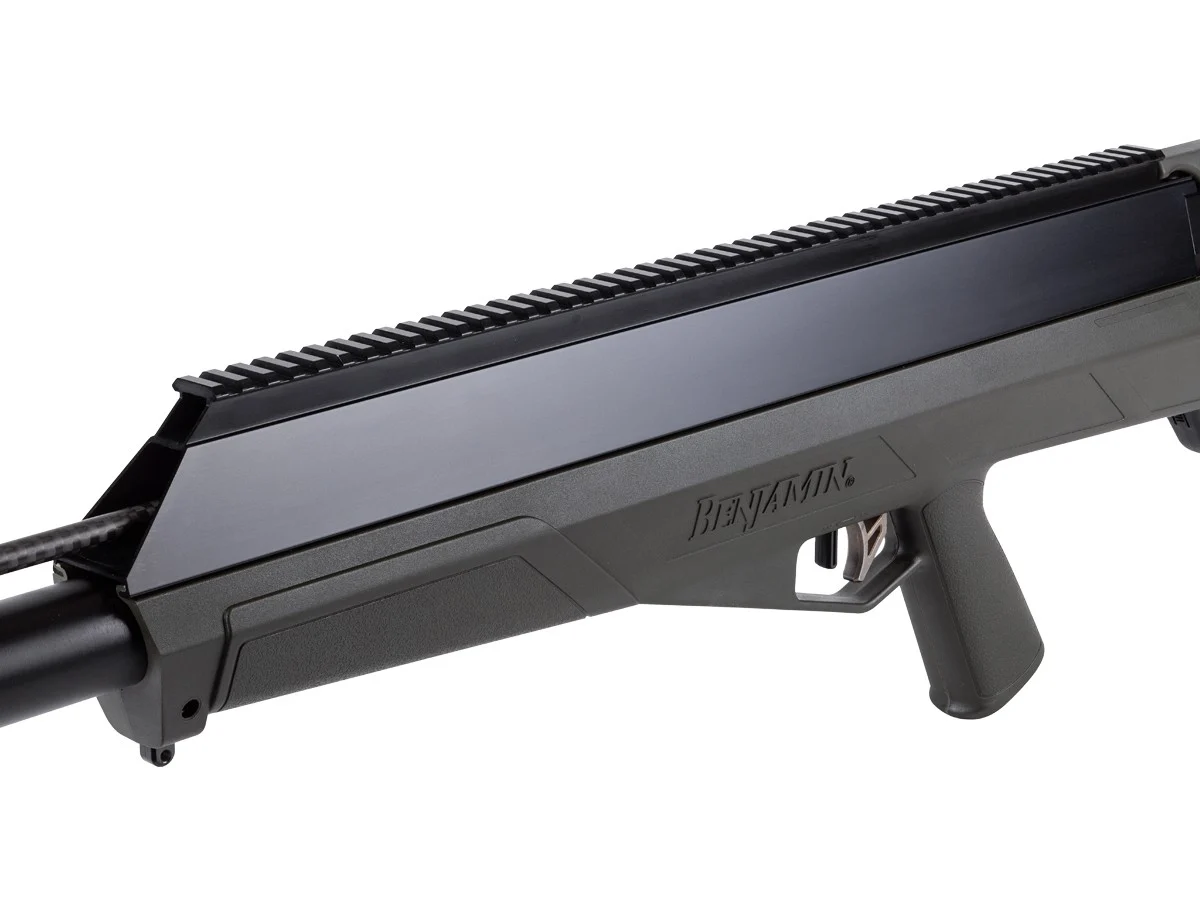
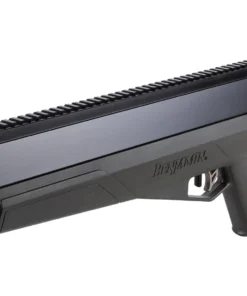
To provide accurate sighting options, this airbow includes a long Picatinny rail on top to accommodate the addition of a scope or other optic, and the synthetic stock is durable and provides all-weather operation.
To get an arrow launcher that provides the benefits of PCP stability and the ability to shoot full-size arrows with broadheads for maximum big game hunting performance, buy the Benjamin Airbow M600 PCP Arrow Launcher at Pyramyd AIR today.
Benjamin Airbow M600 PCP Arrow Launcher
- Precharged pneumatic airbow
- Bullpup
- 3625 PSI / 250 BAR fill pressure
- 3 shots per fill
- Max. velocity: 600 FPS (w/26″ 375gr arrow)
- Max. power: 300 FPE
- Integrated pressure gauge on side of breech
- Synthetic stock
- Extended Picatinny optics rail
- Overall length: 33.375″
- Weight: 7.1 lbs.
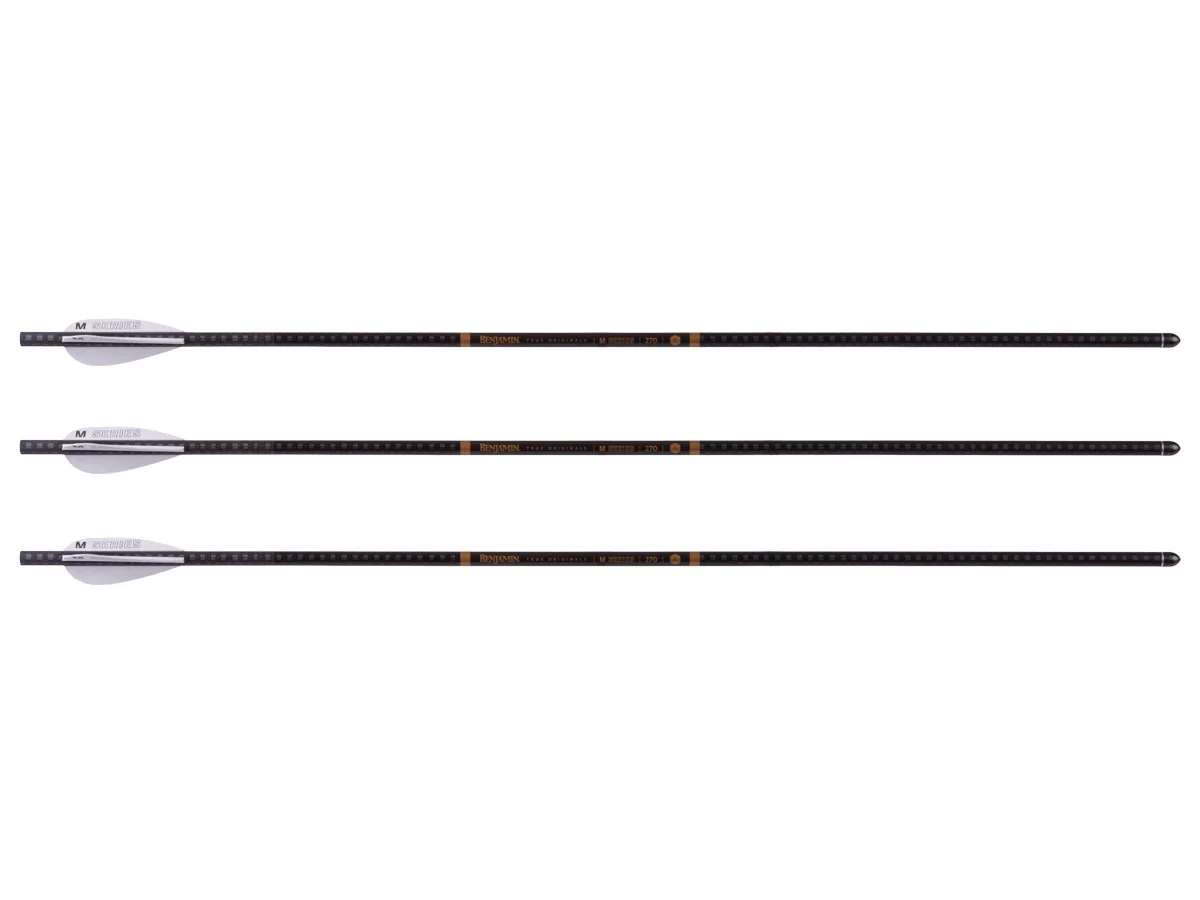
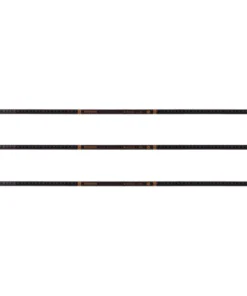
- M600 Includes 3 arrows and a quiver
- M600 Kit Includes 3 Arrows, 6x40mm Scope with MTAG reticle, Canted Picatinny Base with 20MOA of compensation built in, Sling and Quiver
Specifications
BrandBenjamin
Max Velocity600 fps Muzzle Energy300 ft/lbsSuggested forHuntingPowerplantPre-charged pneumaticLoudness4-Medium-HighWeight7.1 lbsFunctionSingle-shotMax Shots per Fill3ActionOverleverFixed/adj. powerFixedScopeableWeaver/PicatinnyFront SightsnoneRear SightsnoneSafetyManualOverall Length33.38″Capacity1 round(s)Body TypeBullpupStockSyntheticButtplateRubberAmmunitionArrowsColorBlackOperating Pressure3625 PSI / 250 BARGrip OrientationAmbidextrousIs Safe To Dry FireYesUpgradesGun Only
Benjamin Airbow M600 PCP Arrow Launcher – Advanced Compressed-Air Technology, Precision Engineering, Compact Bullpup Design and Premium Archery Innovation
Benjamin Airbow M600 PCP Arrow Launcher – Advanced Pneumatic Engineering and Modern Archery Technology
The Benjamin Airbow M600 PCP Arrow Launcher combines American sporting equipment manufacturing, high-pressure pneumatic technology, and contemporary bullpup engineering within an innovative arrow-launching platform.
Unlike traditional spring-powered equipment or conventional crossbows, this model uses compressed air to propel specially designed carbon-fiber arrows.
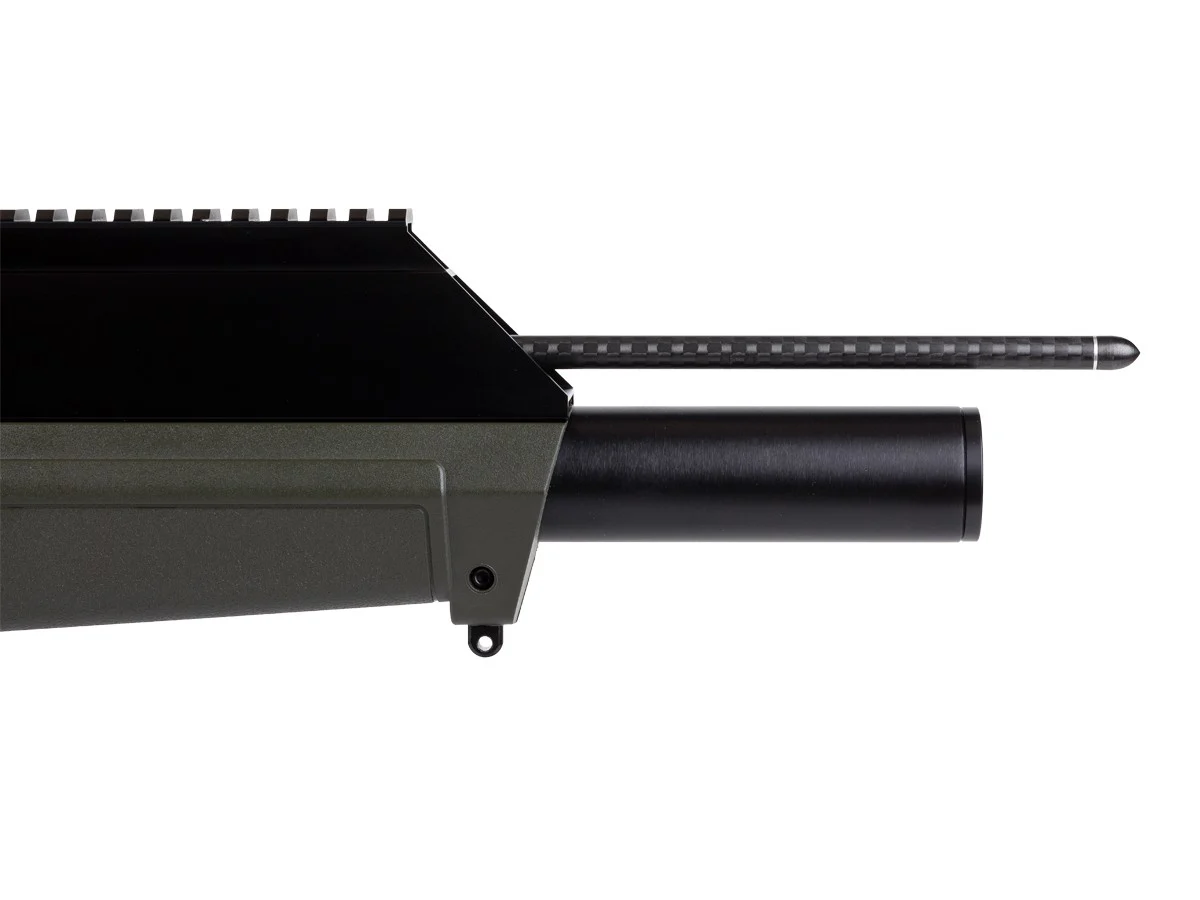
Furthermore, its compact architecture incorporates a free-floating barrel assembly, stabilizing system, synthetic stock, and ambidextrous top-mounted cocking mechanism.
The manufacturer specifies a maximum arrow velocity of approximately 600 feet per second and kinetic energy reaching 300 foot-pounds under documented test conditions.
Additionally, the equipment operates using a high-pressure reservoir with a nominal filling specification of approximately 3,600 PSI.
The manufacturer advertises three full-power discharges from a properly filled reservoir under its stated test conditions.
Consequently, the platform combines specialized compressed-air technology with the distinctive characteristics of modern archery equipment.
Its approximately 33.4-inch overall length reflects the advantages of compact bullpup construction.
However, actual precision and performance depend on equipment condition, approved arrows, environmental circumstances, and responsible operation.
For lawful recreational archery and appropriately regulated sporting activities, the platform represents an alternative to conventional mechanical launching systems.
Advanced Bullpup Construction and Precision Stabilizing Technology
The compact bullpup arrangement accommodates important operating components within a shortened external structure.
Furthermore, the free-floating barrel assembly incorporates a manufacturer-described stabilizing system intended to support consistent arrow flight.
The synthetic stock contributes to the equipment’s modern industrial identity.
Meanwhile, the ambidextrous operating mechanism accommodates different physical preferences.
However, compatibility with conventional crossbow arrows or standard pellets should never be assumed.
The manufacturer specifies dedicated M Series projectiles for this configuration.
Benjamin Air Rifle Heritage and Related Sporting Models
The manufacturer’s wider product range attracts searches including benjamin air rifle, benjamin air rifles, benjamin prowler, benjamin break, benjamin pellet gun, benjamin pellet, and benjamin 22 air rifle.
Other research expressions include benjamin air rifle 22 break barrel, benjamin pellet gun 22 cal, benjamin air rifle repair, benjamin vaporizer, and benjamibenjamin nitro piston 22 air rifle for hunting.
However, these terms concern different products or maintenance topics rather than the specifications of this arrow-launching platform.
Benjamin Bulldog, Marauder and Armada Product Comparisons
Customers researching alternative equipment may encounter Benjamin Bulldog Magnum Series Bullpup, benjamin bulldog, benjamin bulldog 457, benjamin bulldog 457 20 joules, and benjamin marauder air rifle bulldog 357.
Related searches include benjamin marauder, benjamin marauder pcp, benjamin marauder pcp air rifle, pcp benjamin marauder, benjamin marauder .25, benjamin marauder pistol, and benjamin armada.
Although these models share a manufacturer, their operating systems and ammunition requirements differ.
Consequently, specifications should be evaluated independently.
Benjamin Airbow Technology and Arrow-Launching Equipment
Relevant searches include benjamin airbow m600, benjamin airbow, benjamin air bow, benjamin pioneer airbow, benjamin airbow m600, and benjamin bow.
Additional research expressions include air bows pellet rifle, arrow gun for deer hunting, and airgun.
Unlike conventional pellet-firing equipment, the featured platform requires dedicated manufacturer-approved arrows.
Furthermore, legal classifications may differ from those applying to traditional bows or crossbows.
Therefore, customers should confirm applicable sporting and ownership regulations.
Air Pistols, Pellet Calibers and Alternative Operating Systems
Broader research includes air rifle and air pistol, benjamin air pistol, co2 pellet guns, cal .177 pellets, 177 pellet gun, brake barrel bb gun, pellet rifle 1500 fps, air guns for hunting, and pneumatic gun bb gun rifle.
These expressions concern different operating systems or projectile formats.
However, ordinary pellets and BBs are not compatible ammunition for this model.
The distinction is essential when evaluating manufacturer documentation and replacement accessories.
RTI Arms Mora and Alternative Precision Equipment
Related manufacturer comparisons include rti arms mora, rti mora, rti arms mora 22, rti mora sniper, rti mora 22, rti arms, rti mora for sale, rti guns, and rti gun.
These expressions concern alternative pneumatic sporting equipment rather than accessories supplied with the featured launcher.
Consequently, their engineering characteristics should not be attributed to this product.
Sporting Optics and Accessory Research
Accessory searches include vector continental 2-12×44, vector continental 2 12×44, vector 2 12, vector 5 30×56, and scope mounting level kit.
Additional expressions include m lok rail extension, rti rails, silicone grease for o’rings, and predator polymag 1007-01 air gun pellets.
However, these accessories are not automatically compatible with or included in the manufacturer’s standard package.
The premium kit configuration includes a dedicated optical sight and other documented accessories.
Benjamin Airbow M600 PCP Arrow Launcher – Technical Specifications
- Manufacturer: Benjamin / Crosman
- Model: M600
- Manufacturer product code: BPABM
- Premium kit code: BPABMX
- Country of manufacture: United States, with globally sourced components
- Operating system: Pre-charged pneumatic
- Projectile type: Dedicated M Series carbon-fiber arrows
- Configuration: Compact bullpup
- Action: Single-shot, top-mounted cocking mechanism
- Operating controls: Ambidextrous
- Maximum advertised velocity: Up to 600 FPS
- Maximum advertised energy: 300 foot-pounds
- Reference projectile weight: 375 grains
- Reference arrow length: 26 inches
- Compressed-air pressure: Approximately 3,600 PSI; some retailers specify 3,625 PSI / 250 bar
- Advertised shots per fill: Three
- Overall length: Approximately 33.375 inches
- Product weight: Approximately 7.1 pounds
- Barrel material: Steel
- Stock: Black synthetic
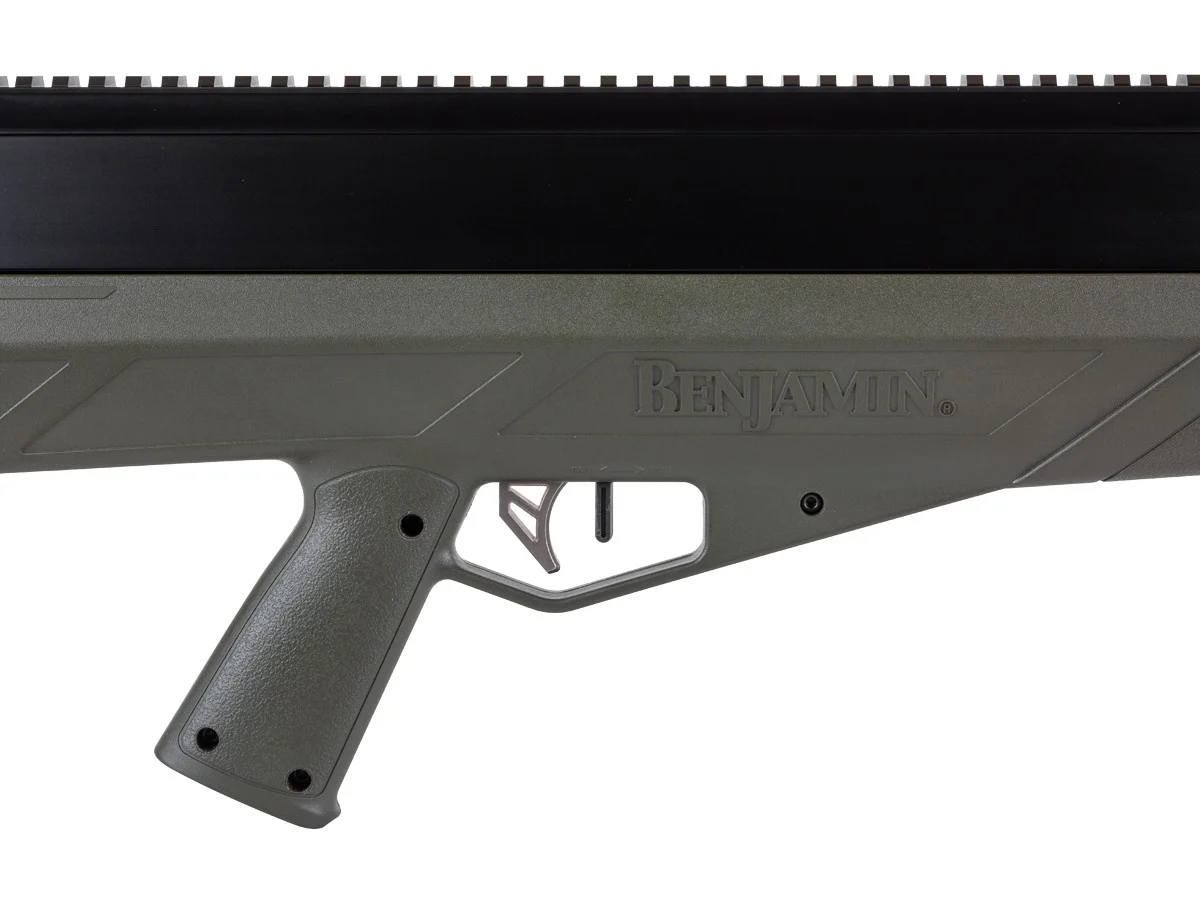
- Trigger: Two-stage
- Safety: Manual lever
- Pressure monitoring: Integrated gauge
- Optics mounting: Picatinny
- Standard package: Three dedicated arrows and quiver, plus the listed mounting base
- Premium kit: Three arrows, quiver, 6×40mm scope, 20 MOA mounting base, and sling
- Warranty: Manufacturer’s five-year limited warranty, subject to terms
Why Consider the Benjamin Airbow M600 PCP Arrow Launcher?
The platform combines sophisticated compressed-air technology, distinctive bullpup architecture, and specialized carbon-fiber projectile engineering.
Furthermore, the integrated pressure gauge, ambidextrous operating mechanism, and dedicated stabilizing system contribute to its technical identity.
Its self-contained pneumatic construction provides an alternative to conventional crossbow mechanisms, although compatible high-pressure filling equipment remains necessary.
For prospective owners, important considerations include approved ammunition, regional legislation, servicing requirements, safety precautions, and package contents.
Ultimately, this configuration combines contemporary American sporting innovation, compact industrial design, and specialized pneumatic engineering within one distinctive arrow-launching platform.
Advanced Pneumatic Engineering, Carbon-Fiber Construction, Mechanical Precision, Ergonomic Design and Long-Term Ownership
2.1 Modern Compressed-Air Engineering and Industrial Innovation
Modern compressed-air technology represents an important development in contemporary sporting equipment. Unlike conventional mechanical launching systems that rely on stored energy within flexible limbs or similar structures, this platform incorporates a specialized high-pressure pneumatic mechanism designed for its manufacturer-approved projectiles.
Furthermore, the equipment combines several carefully manufactured assemblies within a compact structural arrangement. Its pressure reservoir, mechanical action, supporting chassis, and dedicated barrel system contribute to a distinctive engineering identity.
The design reflects developments in material selection, precision metalworking, and industrial manufacturing. Consequently, its construction differs substantially from conventional archery equipment and standard pellet-firing platforms.
However, sophisticated engineering does not eliminate maintenance responsibilities. Internal seals, pressure-containing components, and mechanical controls may experience deterioration throughout ownership.
Therefore, prospective owners should consider manufacturer documentation, genuine replacement-part availability, warranty conditions, and qualified servicing.
For enthusiasts interested in modern sporting technology, this configuration demonstrates how pneumatic engineering can complement established archery principles without relying on the same mechanical construction as traditional bows.
2.2 Compact Bullpup Architecture and Structural Organization
The compact bullpup arrangement represents one of the platform’s defining construction characteristics. Important mechanical components occupy positions farther toward the rear than those of conventional full-length equipment, creating a distinctive profile.
Furthermore, this architecture allows a substantial forward assembly to integrate within comparatively short overall dimensions.
The surrounding stock provides structural support while contributing to the product’s contemporary industrial appearance. However, compact construction requires careful engineering.
Component alignment, material compatibility, manufacturing tolerances, and maintenance accessibility remain important considerations throughout production.
Consequently, sophisticated assembly procedures contribute to maintaining the manufacturer’s intended mechanical relationships.
Physical suitability also depends on individual preferences. Some enthusiasts appreciate compact sporting proportions, whereas others prefer traditional full-length designs.
Additionally, the complete equipment arrangement influences perceived balance and overall handling characteristics.
The architecture illustrates how contemporary manufacturing can combine established mechanical principles with alternative structural organization.
2.3 Precision Manufacturing and Mechanical Integrity
The mechanical action incorporates carefully manufactured components intended to operate within the manufacturer’s approved specifications.
Accurate machining, appropriate material selection, and consistent assembly procedures contribute to the structural integrity of the completed equipment.
Furthermore, the action must integrate correctly with the pressure-containing system, supporting furniture, and dedicated projectile assembly.
However, manufacturing precision does not eliminate ordinary mechanical wear.
Environmental contamination, accidental impacts, and unsuitable maintenance may influence component condition.
Consequently, periodic visual inspection remains valuable.
Unexpected resistance, abnormal movement, or visible deterioration should receive qualified technical assessment.
Improvised repairs may compromise mechanical compatibility and introduce unnecessary hazards.
The action demonstrates how traditional metalworking expertise can complement contemporary pneumatic engineering.
For long-term ownership, genuine manufacturer documentation and access to authorized technical support provide a more reliable foundation than unsupported claims of flawless mechanical operation.
2.4 High-Pressure Reservoir and Pressure Vessel Construction
The compressed-air reservoir forms a central part of the equipment’s operating architecture. Its construction requires specialized pressure-vessel engineering, suitable materials, and carefully manufactured connections.
Furthermore, the reservoir integrates with internal pneumatic components designed to function within approved factory limits.
These assemblies must maintain appropriate structural integrity throughout their intended service life.
However, reservoir capacity alone cannot establish identical operating characteristics under every condition.
Environmental temperature, equipment condition, and manufacturer-specific configurations may influence the system.
Consequently, published technical specifications should always be interpreted according to their documented testing conditions.
High-pressure components require particular care. Excessive heat, accidental impacts, unauthorized alterations, and unsuitable repairs may create serious hazards.
Therefore, suspected leakage, visible structural damage, or abnormal pressure behavior requires qualified professional assessment.
The reservoir illustrates how sophisticated industrial engineering must be accompanied by appropriate safety practices and responsible long-term maintenance.
2.5 Pneumatic Valve Technology and Internal Component Coordination
The internal pneumatic system incorporates specialized valves, seals, and interconnected mechanical assemblies.
These components form part of the manufacturer’s approved pressure-management architecture.
Furthermore, their construction requires accurate dimensions, suitable materials, and consistent manufacturing quality.
However, the behavior of a complete pneumatic system depends on the condition of several interacting assemblies rather than a single component.
Ordinary wear, environmental contamination, or unsuitable maintenance may influence long-term reliability.
Consequently, qualified servicing remains important whenever abnormal behavior develops.
Unauthorized internal modifications should never be regarded as routine maintenance.
Such alterations may compromise structural integrity and introduce serious safety concerns.
The pneumatic mechanism illustrates how fluid dynamics, material science, and mechanical engineering contribute to contemporary sporting equipment.
Appropriate ownership involves preserving the original factory configuration and following approved manufacturer guidance.
2.6 Free-Floating Barrel Architecture and Structural Design
The dedicated barrel assembly contributes significantly to the product’s distinctive technical construction.
Its manufacturer-described free-floating arrangement reflects an engineering approach intended to manage the relationship between the barrel and surrounding supporting components.
Furthermore, the design incorporates specialized structures associated with the equipment’s unique projectile system.
However, the presence of a free-floating assembly does not guarantee a particular accuracy figure.
Actual results depend on equipment condition, approved projectiles, environmental circumstances, and individual experience.
Consequently, engineering descriptions should distinguish verified construction characteristics from unsupported performance promises.
Sensitive internal and external surfaces also require appropriate maintenance.
Aggressive cleaning methods, unsuitable chemicals, and unauthorized modifications may compromise their condition.
Qualified inspection remains appropriate whenever suspected damage becomes apparent.
The barrel architecture demonstrates how specialized sporting platforms incorporate manufacturing principles that differ from those of conventional pellet-firing equipment.
2.7 Integrated Stabilizing System and Mechanical Construction
The manufacturer-described stabilizing system forms part of the specialized projectile-launching architecture.
Its integration reflects attention to the relationship between the barrel assembly, supporting structures, and approved projectile design.
Furthermore, the system contributes to the equipment’s distinctive engineering identity.
However, specialized stabilizing components should not be interpreted as guarantees of identical results under every circumstance.
Mechanical condition, manufacturing consistency, and environmental factors remain important.
Consequently, prospective owners should consider verified product documentation rather than exaggerated technical claims.
The integrated components also require appropriate protection against accidental damage.
Unauthorized dismantling or improvised replacement may compromise the manufacturer’s intended design.
Qualified professional assessment remains preferable whenever unusual deterioration appears.
The stabilizing arrangement illustrates how contemporary engineering can incorporate specialized structures within a compact sporting platform while maintaining the importance of responsible maintenance.
2.8 Dedicated Carbon-Fiber Projectile Construction
The equipment uses manufacturer-specified carbon-fiber projectiles developed for its specialized operating system.
Carbon-fiber composite materials are widely recognized for their combination of low mass, structural stiffness, and engineered material properties.
Furthermore, composite construction allows manufacturers to develop components with carefully controlled physical characteristics.
However, not every carbon-fiber projectile possesses identical dimensions, construction, or compatibility requirements.
Consequently, visual resemblance should never be treated as confirmation that an alternative projectile is suitable.
Damaged composite components may also present serious safety concerns.
Visible cracks, splitting, deformation, or other deterioration require appropriate professional assessment and replacement according to manufacturer guidance.
The dedicated projectile system demonstrates how material science contributes to contemporary sporting equipment engineering.
Responsible ownership includes using only approved components and avoiding unauthorized substitutions.
2.9 Understanding Manufacturer Performance Specifications
Published performance figures provide useful technical information about the manufacturer’s intended product configuration.
However, these figures generally describe results obtained under specified testing conditions.
Differences in equipment condition, environmental circumstances, and approved projectile characteristics may influence observed results.
Consequently, maximum advertised values should not be interpreted as guaranteed outcomes under every circumstance.
Furthermore, numerical performance does not independently establish overall manufacturing quality.
Structural integrity, correct assembly, reliable servicing, and safe operation remain essential considerations.
Prospective owners should evaluate technical information within the context of the complete product.
Unsupported claims of universal performance advantages may create unrealistic expectations.
A more meaningful assessment considers verified engineering characteristics, maintenance requirements, legal suitability, and access to qualified technical support.
2.10 Ambidextrous Operating Controls and Ergonomic Accessibility
The ambidextrous operating arrangement contributes to the equipment’s contemporary ergonomic design.
Its construction acknowledges differences in individual preferences while maintaining the compact external profile.
Furthermore, the mechanism incorporates carefully manufactured components intended to function within approved factory specifications.
However, ambidextrous construction does not guarantee identical suitability for every individual.
Body proportions, physical requirements, and personal preferences may influence comfort.
Consequently, prospective owners should evaluate the complete equipment rather than rely exclusively on one ergonomic feature.
Moving controls also require periodic inspection.
Unexpected resistance, abnormal movement, or visible deterioration should receive qualified technical attention.
The arrangement demonstrates how modern sporting equipment can incorporate adaptable design principles while preserving established manufacturing standards.
2.11 Two-Stage Trigger and Precision Mechanical Construction
The two-stage trigger contributes to the platform’s specialized mechanical architecture.
Its construction incorporates carefully manufactured interacting components intended to function according to the manufacturer’s approved specifications.
Furthermore, consistent production standards contribute to the intended relationship between the trigger assembly and surrounding mechanism.
However, trigger components remain safety-critical parts.
Unauthorized adjustments or modifications may compromise correct operation and create dangerous conditions.
Consequently, maintenance must remain within approved manufacturer procedures.
Unexpected movement, abnormal resistance, or inconsistent mechanical behavior requires qualified inspection.
Subjective impressions of trigger quality may also vary between individuals.
Therefore, objective evaluation should emphasize authentic specifications, appropriate assembly, and safe operation rather than unsupported descriptions of flawless mechanical performance.
2.12 Manual Safety and Responsible Handling Requirements
The manual safety forms an important part of the equipment’s operating architecture.
Its construction incorporates specialized mechanical components intended to function according to approved factory specifications.
Furthermore, the inclusion of a dedicated safety mechanism reflects attention to responsible product design.
However, no mechanical safety can replace correct handling practices.
Owners must follow applicable legislation, prevent unauthorized access, and observe all manufacturer safety instructions.
Mechanical safety components also require periodic inspection.
Unexpected movement, visible deterioration, or suspected malfunction should receive professional attention.
Consequently, responsible ownership extends beyond the presence of a particular safety control.
Secure storage and appropriate supervision remain essential responsibilities.
The manufacturer’s documentation provides the appropriate foundation for understanding approved handling and maintenance procedures.
2.13 Single-Shot Architecture and Specialized Projectile Compatibility
The single-shot design distinguishes this platform from repeating sporting equipment.
Its operating architecture incorporates a specialized mechanical arrangement developed for dedicated projectiles.
Furthermore, the absence of a conventional magazine contributes to its distinctive structural organization.
However, single-shot construction should not be interpreted as proof of universal mechanical simplicity.
The internal pneumatic system still incorporates specialized components requiring appropriate maintenance.
Consequently, compatible replacement parts should be identified through official documentation.
Ordinary ammunition used in unrelated sporting equipment is not automatically suitable for this platform.
Improvised substitutions may create serious mechanical and safety risks.
The design demonstrates how specialized equipment can incorporate established operating principles while differing substantially from conventional sporting categories.
2.14 Premium Synthetic Stock and Contemporary Exterior Design
The synthetic stock contributes to the equipment’s recognizable appearance and compact structural profile.
Its manufactured construction incorporates carefully shaped exterior surfaces and modern polymer materials.
Furthermore, synthetic furniture provides an alternative to traditional wooden sporting stocks.
However, polymer construction should not be considered completely resistant to environmental deterioration.
Excessive heat, prolonged sunlight exposure, unsuitable chemicals, and accidental impacts may affect material condition.
Consequently, appropriate storage remains important.
Routine inspection helps identify cracking, deformation, or deterioration around attachment points.
The stock demonstrates how contemporary materials can support specialized industrial design.
Its appearance also contributes to the equipment’s distinct identity within the wider recreational sporting market.
2.15 Compact Dimensions and Physical Weight Distribution
The overall dimensions reflect the relationship between the rear-positioned action, pressure reservoir, dedicated barrel system, and supporting synthetic furniture.
However, total length alone does not determine physical suitability.
Weight distribution also influences perceived balance and handling characteristics.
Furthermore, optional accessories can change the completed configuration’s overall mass and dimensions.
Consequently, prospective owners should evaluate the complete product rather than rely exclusively on published measurements.
Some enthusiasts appreciate compact proportions, while others prefer conventional full-length sporting equipment.
Individual preferences therefore remain important.
The design illustrates how structural organization and material selection contribute to the overall ownership experience.
Compact construction also requires careful attention to component protection during storage and transportation.
2.16 Integrated Pressure Gauge and Monitoring Features
The incorporated pressure gauge provides a dedicated means of displaying relevant pneumatic system information.
Its presence contributes to the platform’s technical identity.
Furthermore, monitoring instruments illustrate how contemporary sporting equipment incorporates established industrial measurement principles.
However, a pressure gauge does not eliminate the need for professional inspection.
Readings depend on the condition of the instrument and surrounding components.
Consequently, suspected malfunction or abnormal behavior requires qualified assessment.
Visible damage, evidence of leakage, or inconsistent readings should never be ignored.
Unauthorized repairs may compromise pressure-system integrity.
The monitoring arrangement demonstrates how specialized equipment can incorporate dedicated instrumentation while maintaining the importance of responsible maintenance.
2.17 Optical Mounting Interface and Factory Configuration
The equipment incorporates a dedicated optics mounting interface intended for compatible sporting accessories.
Its construction requires suitable materials, dimensional consistency, and appropriate structural support.
Furthermore, the interface integrates with the surrounding mechanical assembly.
However, the presence of a mounting rail does not establish universal accessory compatibility.
Different products may incorporate variations in dimensions, fastening systems, and structural requirements.
Consequently, customers should verify compatibility through official documentation.
Incorrectly fitted components may damage mounting surfaces or introduce unnecessary mechanical concerns.
Factory packages may also contain different accessories depending on the selected version.
Therefore, prospective owners should confirm precisely which components accompany their purchase.
2.18 Standard Package and Premium Kit Differences
The manufacturer offers different package configurations with varying accessory contents.
A standard package may include the essential equipment and dedicated projectile components.
Meanwhile, a premium package may provide additional sporting accessories.
However, included equipment should never be assumed without reviewing the exact product listing.
Distributor bundles may differ by region or production period.
Consequently, buyers should confirm the manufacturer’s product code and documented contents.
Accessory compatibility also deserves attention.
A component offered separately may not automatically match every factory configuration.
The distinction between standard and premium packages illustrates the importance of accurate product descriptions.
Transparent information helps customers understand the equipment supplied without making unsupported claims.
2.19 Understanding High-Pressure Filling Equipment
The platform depends on an external source of suitable compressed air.
This requirement distinguishes it from traditional mechanical launching equipment.
Furthermore, high-pressure systems involve specialized connectors, pressure-rated components, and manufacturer-approved operating limits.
However, not every compressor, cylinder, or filling accessory is compatible.
Equipment that appears physically similar may have different engineering specifications.
Consequently, customers should consult official documentation and qualified suppliers before selecting associated equipment.
High-pressure components should never be modified or repaired through improvised methods.
Suspected leakage, physical damage, or abnormal operation requires professional assessment.
Responsible ownership includes maintaining the integrity of both the sporting platform and its approved supporting equipment.
2.20 Environmental Conditions and Material Stability
Environmental conditions influence the physical behavior of metallic components, synthetic furniture, carbon-fiber materials, and compressed gas.
Temperature changes can affect pressure, while prolonged humidity may influence exposed mechanical surfaces.
Furthermore, excessive heat or ultraviolet exposure may affect certain polymers and composite materials.
Appropriate storage therefore deserves careful consideration.
The equipment should not be left inside enclosed vehicles exposed to extreme temperatures.
Similarly, prolonged dampness may contribute to deterioration of vulnerable components.
However, suitability for ordinary outdoor activities does not automatically establish waterproof construction.
Specific environmental resistance ratings should be supported by manufacturer documentation.
Responsible storage helps preserve mechanical integrity and exterior condition throughout ownership.
2.21 Carbon-Fiber Component Inspection and Replacement
Composite materials require appropriate inspection because certain forms of damage may not resemble deterioration commonly observed in metallic components.
Visible cracks, splitting, deformation, or unusual surface changes may indicate compromised structural integrity.
Furthermore, accidental impacts can affect individual components differently depending on their construction.
Consequently, damaged projectiles should never be regarded as suitable merely because they retain their original general shape.
Manufacturer-approved replacement components remain essential.
Improvised repairs or substitutions may introduce serious hazards.
Qualified technical guidance provides the appropriate foundation for evaluating suspected damage.
The maintenance requirements of composite materials demonstrate how contemporary engineering introduces specialized ownership considerations alongside their distinctive physical properties.
2.22 Mechanical Reliability and Preventive Inspection
Mechanical reliability depends on the condition of several interconnected assemblies.
The pressure reservoir, internal seals, mechanical controls, structural components, and supporting furniture must remain within their intended operating conditions.
Furthermore, manufacturing quality provides only part of the foundation for dependable ownership.
Ordinary wear, environmental exposure, accidental damage, and unsuitable maintenance may influence component condition.
Consequently, periodic visual inspection remains valuable.
Owners should remain attentive to unusual resistance, visible deterioration, or abnormal mechanical behavior.
However, internal inspection should never involve unauthorized dismantling of pressurized assemblies.
Qualified professional assistance remains appropriate whenever suspected malfunction becomes apparent.
Responsible maintenance helps preserve the manufacturer’s intended mechanical characteristics.
2.23 High-Pressure Safety and Qualified Technical Servicing
The pressure-containing system represents an essential safety consideration.
Its reservoir and connecting assemblies operate under substantial mechanical stress.
Therefore, approved manufacturer limits must always be respected.
Furthermore, pressure vessels should never be drilled, heated, structurally modified, or repaired using improvised methods.
Replacement components must meet appropriate pressure and compatibility requirements.
A fitting that appears physically similar may not possess the necessary engineering characteristics.
Consequently, genuine approved parts and qualified professional servicing remain important.
Any indication of leakage, visible damage, or compromised structural integrity requires professional assessment.
Sophisticated pneumatic technology must always be accompanied by responsible ownership.
Official documentation provides the appropriate foundation for understanding approved maintenance responsibilities.
2.24 Secure Storage and Responsible Transportation
Secure storage forms an essential part of responsible sporting equipment ownership.
The product should remain inaccessible to unauthorized individuals whenever it is not in use.
A suitable locked cabinet or another legally compliant arrangement can help meet this requirement.
Furthermore, protective cases may reduce accidental damage during transportation.
However, compact sporting construction does not automatically make transportation legally unrestricted.
Regional requirements may address possession, licensing, age restrictions, storage, and movement between locations.
These conditions vary considerably between jurisdictions.
Consequently, owners should verify applicable legislation before purchasing or transporting the equipment.
International travel may involve additional documentation or restrictions.
Responsible ownership combines physical security, legal compliance, and appropriate care during storage and transportation.
2.25 Manufacturer Documentation and Warranty Considerations
Official documentation contributes significantly to the long-term ownership experience.
The instruction manual provides important information concerning approved maintenance, operating limits, safety responsibilities, and professional servicing requirements.
Furthermore, genuine replacement components may become necessary as equipment ages.
The availability of qualified technical support therefore deserves consideration.
Warranty conditions also require careful review.
Coverage may vary according to distributor, region, purchase date, and the nature of the reported concern.
Unauthorized modifications, accidental damage, or unsuitable maintenance may fall outside applicable protection.
Consequently, owners should retain purchasing records and consult authorized support channels whenever necessary.
A reliable supplier should clearly identify the exact factory configuration and distinguish included equipment from optional accessories.
Accurate documentation supports informed purchasing decisions.
2.26 Practical Recreational Sporting Applications
The compact architecture, specialized projectile system, and sophisticated pneumatic construction contribute to a distinctive sporting platform.
Its documented features reflect an emphasis on mechanical engineering, contemporary materials, and modern archery-related technology.
Furthermore, the dedicated composite projectiles and pressure-management components contribute to its technical identity.
However, suitability for particular sporting activities depends on regional legislation, factory specifications, physical requirements, and responsible handling practices.
The equipment should only be used in lawful environments with appropriate safety controls.
Owners must also understand applicable storage and transportation requirements.
Consequently, product evaluation should include more than exterior appearance or advertised performance figures.
Maintenance responsibilities, warranty coverage, and access to qualified servicing remain important ownership considerations.
2.27 Understanding Engineering Quality Beyond Published Specifications
Published specifications provide useful information, but they cannot fully describe the complete ownership experience.
Two sporting platforms with similar dimensions may differ considerably in material selection, manufacturing procedures, servicing requirements, and component compatibility.
Furthermore, exterior appearance does not independently establish the condition of internal mechanical assemblies.
Consequently, prospective owners should evaluate authentic manufacturer documentation and reputable technical information.
However, higher advertised performance figures do not automatically establish better suitability.
Individual requirements and intended lawful sporting activities should guide purchasing decisions.
A meaningful evaluation combines verified engineering characteristics, physical suitability, maintenance obligations, and access to qualified support.
2.28 Long-Term Ownership Value and Practical Considerations
Long-term ownership value involves more than the initial purchase price.
Material quality, manufacturing consistency, replacement-part availability, and servicing requirements influence the overall experience.
Furthermore, specialized projectiles and supporting pneumatic equipment introduce additional ownership considerations.
However, sophisticated technology does not eliminate ordinary maintenance responsibilities.
Consequently, responsible owners should preserve purchasing records, follow approved servicing procedures, and maintain suitable storage conditions.
Unauthorized modifications may compromise reliability and invalidate applicable warranty protection.
The combination of compact construction and specialized internal engineering creates a distinctive sporting platform.
Nevertheless, actual service life depends on component condition, environmental exposure, appropriate handling, and professional maintenance.
2.29 Final Assessment of Engineering Quality and Craftsmanship
This configuration combines modern compressed-air technology, compact bullpup construction, and specialized carbon-fiber projectile engineering within a distinctive sporting platform.
Its dedicated barrel assembly, integrated stabilizing components, pressure-monitoring equipment, and ambidextrous mechanical controls demonstrate an emphasis on contemporary industrial design.
Furthermore, the synthetic furniture and compact structural organization contribute to its recognizable exterior identity.
The specialized pneumatic system distinguishes the platform from conventional mechanical archery equipment and traditional pellet-firing sporting products.
However, responsible ownership remains essential.
High-pressure assemblies require qualified servicing, approved projectiles must be used, secure storage deserves priority, and applicable legislation must always be respected.
For enthusiasts interested in modern archery-related engineering, composite materials, and sophisticated pneumatic technology, this configuration represents a distinctive combination of industrial craftsmanship and specialized mechanical construction.
Ultimately, its engineering identity reflects the integration of contemporary manufacturing, carefully selected materials, compact architecture, and established pressure-system technology.
Be the first to review “Benjamin Airbow M600 PCP Arrow Launcher”
Related products
Benjamin
Benjamin
Benjamin
Benjamin
Benjamin
Reviews
There are no reviews yet.