
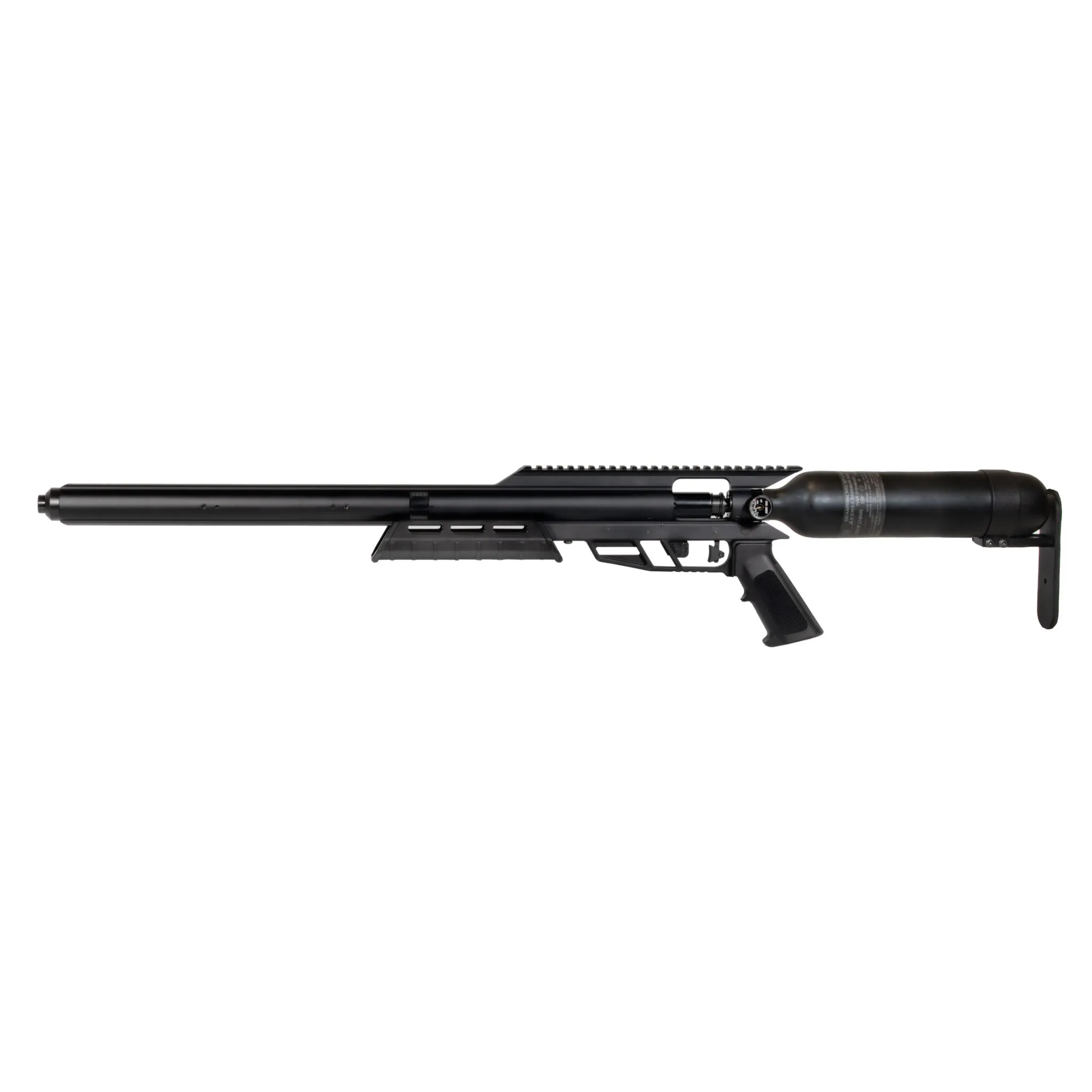
Texan® Carbine .457 Caliber
$890.00
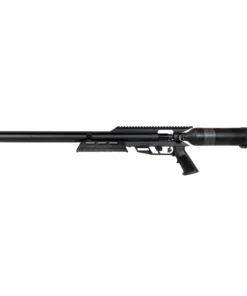
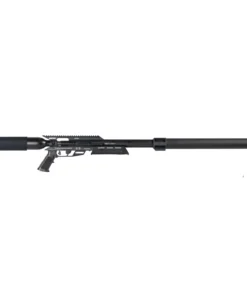
The AirForce Texan® Carbine .457 Big Bore Air Rifle has all the power and accuracy of the original, but in a more compact package for easy maneuvering in heavy brush and hunting blinds.
For more information on velocity and energy, please visit our FAQ Section
The Texan Carbine is available in Original Black. We also offer shooting kits to meet your specific application.
*Depending on caliber, pellet weight, and power setting.
AirForce Texan® Carbine .457 Big Bore Air Rifle
- Action: Single Shot
- Air Tank Volume: 500cc
- Barrel: 24.75 inches
- Energy: up to 500 foot pounds*
- Length: 39 inches
- Max Fill Pressure: 3,000 PSI / 206 Bar (Only use compressed air or dry nitrogen)
- Safety: Manual
- Sights: Open or Optic may be installed
- Trigger: 2 Stage Adjustable for position
- Velocity: Up to 930 feet per second
- Warranty: Limited Lifetime
- Weight: 7.5 lbs.
Texan® Carbine .457 Caliber
Texan® Carbine .457 Caliber Overview, Design, Purpose, and Important Information
What Is the Texan® Carbine .457 Caliber?
The Texan® Carbine .457 Caliber is a large-bore pre-charged pneumatic air rifle designed around a compact carbine configuration. Developed within the AirForce family of PCP airguns, it combines a substantial .457-caliber bore with the handling characteristics associated with a shorter rifle platform.
Unlike a conventional firearm, the system uses compressed air to propel its compatible projectile. Consequently, the operating principle is different from cartridge-based firearms, although its large caliber means that it must still be handled with the seriousness appropriate to a powerful projectile-launching device.
The Texan® Carbine .457 Caliber is therefore intended for experienced and legally authorized users who want a specialized big-bore airgun for permitted sporting and recreational applications.
AirForce and the Texan Family
The AirForce name is associated with PCP airguns and several platforms covering different sizes, configurations, and intended applications. Search terms such as airforce airguns, airforce texan, airforce texan air rifle, air force guns, and airforcetexan are commonly used when researching this product family.
The Texan range is particularly associated with large-bore PCP airguns. However, related names should not automatically be treated as identical models.
For example, AirForce Tex-Rex PCP rifle, Tex-Rex Brush Gun air rifle, AirForce Tex-Rex air rifle, AirForce Tex-Rex hunting rifle, AirForce Texan Brush Gun, and AirForce brush gun refer to related search interests or other products within the broader big-bore airgun category. The Texan® Carbine .457 Caliber should be identified according to its actual model and configuration.
How Does the Rifle Work?
The Texan® Carbine .457 Caliber uses a pre-charged pneumatic system. Air is stored under pressure in the rifle’s reservoir, and a controlled release of that stored air provides the propulsion force.
This explains what is an air rifle and how a PCP system differs from other airgun designs.
A conventional pellet gun may use a spring-piston or gas-ram mechanism, while a PCP platform relies on stored compressed air. The appropriate filling equipment therefore becomes an important part of ownership.
A compatible air gun pump or other approved high-pressure filling system should be selected according to the manufacturer’s requirements.
Why Choose a .457-Caliber Platform?
The .457 caliber gives this platform a substantially larger bore than common small-bore airguns.
That larger bore is central to the character of the rifle. It places the Texan Carbine firmly within the big-bore airgun category rather than the ordinary recreational pellet-rifle market.
It should not be confused with a .30 cal air rifle, smaller-caliber PCP platforms, or conventional low-power airguns.
Likewise, generalized claims concerning high powered air rifles 4000 fps should not be applied automatically to this product. Velocity, projectile weight, energy, and operating pressure are separate specifications, and actual performance should always be established from the manufacturer’s information for the exact configuration.
Compact Carbine Configuration
The carbine configuration provides a comparatively compact format while retaining the substantial bore associated with the Texan family.
This can make the rifle appealing to users who prefer a more manageable overall package.
The shorter configuration can also be convenient for lawful transportation and storage when appropriate procedures are followed.
Nevertheless, compact dimensions do not reduce the importance of responsible handling. The rifle should always be treated as capable of launching a potentially dangerous projectile.
Why Use the Texan® Carbine .457 Caliber?
The primary reason to choose the Texan® Carbine .457 Caliber is its combination of large-bore PCP architecture and carbine-oriented handling.
For an experienced airgun user, this creates a distinctive platform for lawful target shooting and other activities permitted by local regulations.
The rifle can also be relevant to users researching air guns for target shooting who specifically want to explore the characteristics of a big-bore pneumatic platform.
Target use should always take place at an appropriate range or other lawful location with a suitable backstop and controlled projectile path.
Where Should It Be Used?
The appropriate shooting environment depends on local laws and range rules.
Someone searching for an airgun shooting range near me should confirm that the facility specifically permits large-bore PCP airguns before arriving.
Not every airgun range accepts every caliber or energy level.
Private land does not automatically mean that discharge is legal, either. Local restrictions may apply to the type of airgun, projectile energy, proximity to buildings, hunting activity, and other factors.
Airgun and Hunting Regulations
Large-bore airguns are sometimes marketed in connection with hunting. Search phrases such as 50 caliber air rifle for deer hunting demonstrate the interest surrounding big-bore airgun hunting.
However, hunting laws differ substantially between jurisdictions.
The fact that a large-bore airgun is technically capable of launching a substantial projectile does not mean that a particular species may legally be hunted with it.
The Texan® Carbine .457 Caliber should therefore only be used for hunting where the specific species, season, land, equipment, caliber, and method are all legally permitted.
Related AirForce Models
The AirForce range includes several distinct products.
The airforce talon p, air force talon, airforce condor, air force texan lss, airforce texan ss, and other platforms differ in configuration and specifications.
Similarly, references such as AirForce big bore airgun, AirForce big bore air rifle, and brush gun PCP air rifle describe broader product categories and should not be used as substitutes for the exact model name.
This distinction is important when purchasing accessories, replacement components, or service parts.
Understanding PCP Ownership
A PCP air rifle requires more equipment awareness than a basic spring-powered airgun.
The owner needs to understand compressed-air management, filling requirements, pressure limitations, storage, transportation, and routine maintenance.
The Texan® Carbine .457 Caliber should therefore be regarded as specialized sporting equipment rather than an ordinary recreational pellet gun.
Correct filling procedures and manufacturer-specified pressure limits should always be followed.
Precision and Accuracy
Precision is an important consideration for any serious target-shooting platform.
The potential accuracy of a large-bore PCP system depends on multiple factors, including barrel condition, projectile compatibility, air-system consistency, sighting equipment, shooting technique, and environmental conditions.
The rifle should therefore be evaluated under controlled conditions rather than judged from isolated shots or generalized online claims.
A consistent shooting position, suitable target, and controlled environment provide a better basis for evaluating the platform.
What Does PCP Air Rifle Mean?
For users unfamiliar with the terminology, PCP means pre-charged pneumatic.
The rifle’s air reservoir is charged before shooting, and the stored air is subsequently used to propel the projectile.
This is different from a spring-powered rifle, which stores mechanical energy in a spring, and different again from a conventional firearm, which uses cartridge ammunition.
The PCP architecture is one of the defining characteristics of the Texan® Carbine .457 Caliber.
Air Management
Compressed-air equipment should always be treated carefully.
The reservoir should only be filled using equipment and pressures approved for the rifle.
An air gun pump may be suitable in some PCP applications, while other users may use an appropriate high-pressure compressor or cylinder system.
The correct choice depends on the manufacturer’s specifications.
Pressure should never be guessed, and unsuitable filling equipment should never be substituted simply because it appears physically compatible.
Related Search Terms and Product Comparisons
The broader market includes terms such as tex-rex, air force tex rex, air force tex rex, airforce texanss, and airforce 25.
These searches can lead users toward different AirForce platforms or unrelated configurations.
Likewise, terms such as bolt action air rifles describe an action type rather than establishing that every rifle in the category shares identical specifications.
The Texan® Carbine .457 Caliber should always be evaluated according to its exact model configuration.
AirMaks and Other PCP Brands
The broader PCP market also includes manufacturers and products such as AirMaks Arms air rifles, AirMaks Arms PCP air rifles, and AirMaks Arms PCP rifles.
Searches may include airmaks katran, airmaks, airmarks, katran airmaks, air marks, katran, air max krait, and airmaks krait.
These are separate product families and should not be confused with the Texan® Carbine.
The comparison is relevant only when a buyer is researching the wider PCP market.
Pest-Control Applications
Searches such as best pellet gun for pest control, pellet gun for pest control, and air rifle for pest control are common within the airgun market.
However, the suitability and legality of any particular airgun for pest control depend on local laws, property permissions, species regulations, and the specific circumstances.
The Texan® Carbine .457 Caliber should only be used for pest management where that activity is lawful and where the equipment is appropriate.
Important Ownership Information
Before purchasing the Texan® Carbine .457 Caliber, the buyer should verify the regulations governing:
Ownership
Importation
Possession
Transportation
Storage
Range use
Hunting
Pest control
Minimum age
Licensing or registration
These requirements can vary significantly between countries, states, provinces, and municipalities.
A buyer should therefore confirm the rules applicable to their exact location before placing an order.
Overall Product Character
The Texan® Carbine .457 Caliber occupies a specialized position within the PCP airgun market.
Its large .457-caliber bore distinguishes it from ordinary small-bore pellet rifles, while its carbine configuration provides a more compact format.
The PCP operating system provides a modern pneumatic approach to propulsion, while the large-bore platform gives the rifle its distinctive identity.
For experienced and legally authorized users, the platform can provide a specialized option for permitted sporting and target-shooting applications.
Most importantly, the rifle should be selected because its specifications match a legitimate intended purpose rather than simply because it belongs to the high-power airgun category.
Proper air management, responsible storage, controlled shooting conditions, compatible equipment, regular maintenance, and compliance with local regulations should remain central to ownership.
The result is a specialized big-bore PCP platform that combines the established Texan concept with the compact character of a carbine configuration.
Construction, Ergonomics, PCP Operation, Accuracy, Maintenance, and Responsible Ownership
The Texan Carbine .457 Caliber is designed as a substantial pneumatic air rifle for experienced users who understand the requirements associated with large-bore equipment. Its compact carbine configuration gives the platform a distinctive balance between physical size and large-caliber construction. As a result, the ownership experience involves considerably more than simply choosing a caliber. Handling, air management, maintenance, storage, transportation, and responsible use all deserve careful consideration.
Compact Carbine Configuration
The carbine configuration is one of the defining physical characteristics of this platform. Compared with a longer rifle arrangement, the shorter format can be easier to maneuver and store while still providing the substantial presence expected from a large-bore pneumatic system.
This compact format can be particularly convenient when equipment needs to be transported between approved locations. Nevertheless, reduced overall dimensions should never be interpreted as reduced responsibility. The rifle remains capable of launching a projectile with potentially dangerous energy and should therefore be handled accordingly.
A safe direction should be maintained whenever the rifle is being handled, and the user should become thoroughly familiar with its controls before attempting to operate it.
Overall Ergonomics
Ergonomics influence how naturally a rifle can be held and controlled.
The relationship between the stock, grip, trigger, action, barrel, and sighting equipment contributes to the overall feel of the platform. Individual users may experience the balance differently depending on body size, shooting position, and accessory configuration.
For this reason, a prospective owner should consider the complete configuration rather than focusing on one specification.
A rifle that feels comfortable in a controlled shooting position can be easier to use consistently. At the same time, comfort should never encourage careless handling.
Balance and Stability
A stable shooting position is important when evaluating any precision-oriented air rifle.
The carbine format changes the distribution of the rifle’s mass compared with longer configurations. The result can feel more compact and manageable, particularly when the rifle is being positioned for controlled target shooting.
The user should develop a consistent stance or supported shooting position and maintain the same basic technique when comparing groups.
This helps distinguish equipment characteristics from changes caused by inconsistent shooting technique.
Stock Interface
The stock forms the primary physical connection between the shooter and the rifle.
Its geometry influences shoulder placement, hand position, cheek position, and overall stability.
The user should become familiar with the stock while the rifle is unloaded and in a controlled environment.
A consistent position can help reduce unnecessary movement during target shooting.
The stock should also be inspected periodically for cracks, unusual movement, or other physical damage.
Trigger Familiarity
Trigger familiarity is an important part of responsible operation.
The user should understand how the trigger feels and how the safety system functions before beginning live shooting.
Any abnormal resistance, excessive movement, or other unexpected behavior should be investigated before continued use.
Unapproved modifications should be avoided because altering the trigger mechanism can affect the safety characteristics of the rifle.
If servicing becomes necessary, qualified professional assistance should be considered.
Action and Loading
The action should be operated according to the manufacturer’s instructions.
Before handling a projectile, the user should establish that the rifle is pointed in a safe direction and that the surrounding shooting environment is controlled.
Only compatible projectiles should be used.
The loading process should never be improvised.
A user who is unfamiliar with the rifle should study the manufacturer’s operating instructions before using it.
Projectile Compatibility
Large-bore pneumatic rifles require appropriate ammunition or projectiles.
The fact that a projectile appears to fit does not necessarily mean that it is suitable for the rifle.
Projectile dimensions, weight, construction, and compatibility with the barrel and operating system all matter.
The safest approach is to use only projectiles identified by the manufacturer as suitable for the particular rifle.
Experimentation with unsuitable ammunition can create reliability and safety problems.
Pneumatic Operating System
The pre-charged pneumatic system is central to the rifle’s operation.
Air is stored within a pressure reservoir before shooting. During operation, the system releases a controlled quantity of that stored air to propel the compatible projectile.
This means that the air reservoir should always be treated as a pressure-bearing component.
The user should understand the manufacturer’s specified filling procedure and maximum pressure before attempting to charge the rifle.
Filling Equipment
PCP ownership requires suitable filling equipment.
Depending on the manufacturer’s recommendations, this can involve an appropriate high-pressure compressor or another approved source.
The filling equipment should be compatible with the rifle and operated according to its instructions.
Improvised adapters, damaged hoses, unsuitable pressure sources, or unknown components should not be used.
Compressed air contains stored energy, so filling should be treated as a serious maintenance procedure rather than an ordinary accessory task.
Pressure Management
Correct pressure management is essential.
The rifle should only be charged within the manufacturer’s specified operating limits.
Exceeding those limits can place unnecessary stress on pressure-bearing components.
Likewise, attempting to operate the rifle outside its intended pressure range can produce inconsistent behavior.
The user should therefore rely on the manufacturer’s specifications rather than estimates or information intended for another configuration.
Air Supply and Consistency
The condition of the air supply can influence the overall shooting experience.
A consistent operating condition can make it easier to evaluate the rifle’s behavior.
The user should understand the manufacturer’s recommended pressure range and recognize that the available number of shots depends on the specific configuration and operating conditions.
Exact shot counts should not be assumed from another model.
Instead, the owner should use the manufacturer’s specifications and observe the behavior of the individual rifle.
Pressure Reservoir Safety
The pressure reservoir deserves particular respect.
It should not be drilled, modified, heated, cut, or otherwise altered.
The owner should not attempt to repair a pressure-bearing component without the appropriate training and equipment.
If damage, corrosion, unusual pressure loss, or another concern is discovered, the rifle should be removed from service until it has been properly assessed.
Air Leakage
An unexplained pressure loss can indicate a problem.
The owner should pay attention to unusual changes in air retention.
A minor issue can become more significant if ignored.
However, the solution should not involve random tightening or disassembly of pressure-bearing components.
Professional inspection is preferable when the source of a leak is unclear.
Barrel Maintenance
The barrel is a precision component and should be treated accordingly.
Cleaning should follow the manufacturer’s recommendations.
Improper cleaning rods, abrasive materials, aggressive chemicals, or unsuitable tools can damage the bore or other components.
The goal should be appropriate maintenance rather than excessive cleaning.
The barrel should also be kept protected from unnecessary impacts during transportation and storage.
Accuracy Considerations
Accuracy is influenced by several variables.
Mechanical condition is important, but it is only one part of the equation.
Projectile consistency, barrel condition, sight alignment, shooting position, trigger control, air-system condition, and environmental factors can all influence the final result.
Consequently, a single group should not be considered a complete assessment of the rifle.
A controlled testing procedure provides a more meaningful indication of consistency.
Evaluating Precision
A sensible accuracy evaluation should use the same equipment configuration throughout the test.
The sight should remain securely mounted.
The shooting position should remain consistent.
The same compatible projectile type should be used for comparison.
The target should be positioned at an appropriate distance within a controlled range.
This approach allows the user to identify patterns rather than focusing on isolated results.
Environmental Conditions
Outdoor shooting introduces additional variables.
Wind can influence projectile movement.
Temperature can affect equipment and the surrounding environment.
Humidity can influence external metal surfaces and storage requirements.
Consequently, results obtained in one environment may differ from those obtained elsewhere.
This does not necessarily indicate a problem with the rifle.
Instead, it demonstrates why controlled testing is useful when evaluating precision.
Sighting Equipment
A suitable sighting system can make target shooting more practical.
The sight should be compatible with the rifle’s mounting arrangement and appropriate for the intended activity.
It should be installed securely and checked periodically.
The sight should never interfere with the rifle’s controls or safe handling.
The user should also remember that optical equipment does not compensate for mechanical problems or inconsistent shooting technique.
Range Selection
A controlled range is an appropriate environment for becoming familiar with a large-bore air rifle.
Before attending a range, the user should confirm that the facility permits the caliber and equipment.
Range rules should be followed at all times.
The target area must have a suitable backstop capable of safely containing the projectile.
The area beyond the target should also be considered.
Safe Shooting Environment
The shooting environment should be carefully controlled.
People should not be permitted to enter the firing area unexpectedly.
The rifle should remain pointed toward the approved direction.
The user should maintain awareness of the surroundings before loading and firing.
These principles remain important regardless of whether the activity is recreational or competitive.
Maintenance Schedule
Routine maintenance is preferable to waiting until a fault becomes obvious.
The exterior should be inspected periodically.
The pressure system should be monitored.
The action and controls should be checked for unusual behavior.
The manufacturer’s recommended service intervals should be followed.
Keeping a basic maintenance record can also help identify changes over time.
External Cleaning
After use, the exterior should be kept clean and dry.
A suitable soft cloth can be used according to the manufacturer’s recommendations.
Harsh chemicals should be avoided unless specifically approved.
If the rifle has been exposed to moisture, it should be dried appropriately before being placed into long-term storage.
Corrosion Prevention
Metal surfaces should be inspected regularly for signs of corrosion.
Early detection is preferable because corrosion can become more difficult to address once it spreads.
Storage in a dry environment can help protect the rifle.
A protective treatment should only be applied when it is compatible with the manufacturer’s recommendations.
Seal Maintenance
Pneumatic systems rely on seals to retain pressure.
Seals can eventually wear through normal use.
Potential signs of a seal problem may include unexpected pressure loss or changes in normal operation.
Internal seal replacement should be handled according to the manufacturer’s service procedure.
The user should not disassemble pressure-bearing components simply to investigate a suspected seal problem.
Professional Servicing
Professional servicing can be appropriate when a mechanical or pressure-related issue develops.
This is especially important when the problem involves the air reservoir, valve system, or other components that contain stored pressure.
A qualified technician can assess the system using appropriate tools and procedures.
Attempting complicated repairs without the necessary expertise can create additional risks.
Transportation
Transportation should be planned according to local regulations.
The rifle should be secured against movement and unauthorized access.
A suitable protective case can reduce the possibility of impact damage.
The owner should also verify the rules governing transportation between locations.
Requirements can change between jurisdictions, so the regulations applying to one location should not automatically be assumed to apply elsewhere.
Secure Storage
Secure storage is an important part of responsible ownership.
The rifle should be inaccessible to unauthorized people.
Children should never have access to it.
Where required by law, locked storage or other specific measures should be used.
Projectiles and filling equipment should also be managed responsibly.
Long-Term Storage
For extended periods without use, the rifle should be kept in a clean and dry environment.
It should be protected against unnecessary impact, excessive moisture, and extreme environmental conditions.
Before returning it to service, the owner should perform a complete inspection.
The rifle should not simply be removed from storage and immediately used without checking its condition.
Accessory Management
Accessories can affect balance, dimensions, and handling.
Each accessory should therefore have a clear purpose.
Equipment should not obstruct controls or interfere with normal maintenance.
Additional components should be installed securely and checked periodically.
The more equipment attached to a rifle, the more important a structured pre-use inspection becomes.
Protecting the Rifle During Travel
A quality protective case can help preserve the exterior and mechanical components.
The rifle should be positioned securely so that it cannot move excessively inside the case.
Heavy objects should not be placed on top of it.
Sharp tools and other equipment should be separated from the rifle to prevent accidental scratches or impacts.
Weather Exposure
Outdoor use can expose the rifle to moisture, dust, and temperature changes.
After exposure to rain or damp conditions, the rifle should be dried appropriately.
It should not be placed immediately into a closed case while wet.
Long-term exposure to moisture can contribute to corrosion and deterioration of exterior components.
Reliability
Reliability depends on both manufacturing quality and maintenance.
A well-maintained rifle is more likely to provide predictable operation than one that has been neglected.
However, even well-maintained equipment can develop faults.
The owner should therefore remain attentive to changes in normal operation.
Unexpected sounds, unusual pressure loss, physical damage, or changes in the controls should be investigated.
Recognizing Mechanical Changes
An experienced user often becomes familiar with the normal feel and sound of their equipment.
That familiarity can make unusual changes easier to notice.
If something feels different, the user should stop and determine why.
Continuing to operate equipment that may have developed a fault is not an appropriate troubleshooting method.
Responsible Ownership
Responsible ownership means understanding both the capabilities and limitations of the rifle.
The user should know where it can legally be used, how it should be stored, what filling equipment is appropriate, which projectiles are compatible, and when professional service is required.
The rifle should never be treated as a toy.
Its large bore makes careful handling particularly important.
Appropriate Users
The platform is best suited to experienced adult users who understand pneumatic airgun operation and applicable regulations.
Someone completely unfamiliar with PCP systems should first develop basic knowledge and safe-handling habits under appropriate instruction.
The large caliber makes it particularly important that the owner understands the equipment before using it independently.
Practical Target Use
Controlled target shooting provides an effective way to become familiar with the rifle.
It allows the user to assess handling, sighting, trigger characteristics, and general consistency without adding unnecessary variables.
The shooting area should remain controlled throughout the session.
The user should follow all applicable range rules and maintain appropriate safety procedures.
Why Maintenance Matters
Maintenance protects both the equipment and the ownership experience.
A clean exterior preserves appearance.
Proper pressure management protects the pneumatic system.
Appropriate storage reduces environmental damage.
Regular inspection helps identify potential faults before they become more serious.
Together, these practices contribute to dependable long-term use.
Overall Ownership Perspective
The Texan® Carbine .457 Caliber is a specialized large-bore pneumatic rifle rather than an entry-level recreational airgun.
Its compact carbine format gives it a distinctive handling profile, while its pneumatic system requires appropriate knowledge of compressed-air equipment.
The large caliber also makes responsible storage and controlled shooting particularly important.
For the experienced user, the platform can provide a distinctive target-shooting experience when used legally and responsibly.
The most important aspect of ownership is not simply the size of the bore or the potential performance of the platform. Instead, it is the complete system of safe handling, correct air management, compatible equipment, appropriate maintenance, secure storage, and informed use.
When those principles are followed, the rifle can remain a specialized piece of sporting equipment that is maintained carefully and operated within the limits established by its manufacturer and the laws governing its use.
Performance Characteristics, Handling Experience, Reliability, Maintenance, and Practical Ownership
The Texan Carbine .457 Caliber represents a specialized approach to large-bore pneumatic airgun design. Its compact configuration gives it a distinctive physical character, while its pneumatic architecture separates it from conventional spring-powered air rifles. For an experienced owner, understanding how the different parts of the system work together is important because overall performance is influenced by the condition of the equipment, the consistency of the air supply, the selected accessories, environmental conditions, and the user’s technique.
Understanding the Shooting Experience
The shooting experience of a large-bore pneumatic rifle differs from that of a small recreational air rifle. The greater physical scale of the platform gives it a substantial presence, while the carbine format keeps the overall configuration relatively compact.
The rifle is therefore better understood as specialized sporting equipment rather than a casual backyard product.
A controlled shooting environment allows the user to become familiar with the rifle’s handling characteristics without unnecessary distractions. Before attempting any demanding activity, the owner should become comfortable with the controls, loading procedure, safety mechanism, and general handling of the rifle while following the manufacturer’s instructions.
Handling Characteristics
The compact format can influence how the rifle is carried and positioned.
A shorter overall configuration can feel easier to maneuver in a controlled environment than a longer rifle. It can also make storage and transportation more convenient where those activities are legally permitted.
However, the physical dimensions should never be mistaken for an indication that the rifle is harmless or suitable for uncontrolled environments.
The large-bore platform should always be treated as capable of producing a dangerous projectile path.
Shooting Position
A consistent shooting position is useful when evaluating a precision-oriented air rifle.
The user should establish a comfortable and repeatable position appropriate to the shooting activity.
Changes in shoulder position, hand placement, head position, and support can all influence results.
For this reason, a controlled target session should be conducted with a consistent technique whenever the owner wants to understand the mechanical consistency of the rifle.
Supported Shooting
A suitable support can make it easier to evaluate the equipment itself rather than the shooter’s ability to hold the rifle consistently.
The support should be appropriate for the shooting environment and should not interfere with the rifle’s operation.
The objective is to create repeatable conditions.
This makes it easier to identify whether changes in results are related to the equipment, the projectile, environmental conditions, or user technique.
Trigger Familiarity
The trigger is one of the most important interfaces between the shooter and the rifle.
The owner should become familiar with its normal operation before beginning a shooting session.
Unexpected resistance, excessive movement, unusual noise, or other changes should be treated as reasons to stop and investigate.
The trigger should not be modified casually.
Any adjustment that is not specifically supported by the manufacturer can change the mechanical characteristics of the rifle.
Action Familiarity
The action should be understood before the rifle is used.
The owner should know how the rifle is made safe, how the action is operated, and how the manufacturer specifies the loading sequence.
This knowledge should be developed while the rifle is unloaded and in a controlled environment.
Once the user understands the procedure, the same sequence can be followed consistently during normal operation.
Projectile Selection
Projectile compatibility is particularly important with a large-bore platform.
A projectile should not be selected simply because its diameter appears similar to the bore.
Dimensions, weight, shape, construction, and compatibility with the rifle all matter.
Only suitable projectiles identified for the specific platform should be used.
The owner should avoid experimenting with unknown ammunition because inappropriate projectiles can affect reliability and potentially damage the equipment.
Consistency
Consistency is one of the most useful characteristics to evaluate during target shooting.
A rifle that produces repeatable results under controlled conditions can be easier to understand and use responsibly.
However, consistency is affected by more than the mechanical platform.
Projectile uniformity, air condition, barrel condition, temperature, wind, shooting position, and user technique can all contribute.
Consequently, testing should be conducted methodically.
Air-System Behavior
The pneumatic system is central to the operation of the rifle.
Compressed air is stored before shooting and subsequently released through the firing system.
The condition of the air supply therefore becomes an important part of normal operation.
The owner should understand the manufacturer’s specified pressure range and filling requirements.
The pressure reservoir should never be modified or subjected to conditions outside its intended operating limits.
Managing the Air Supply
A PCP rifle requires appropriate planning around its air source.
Depending on the configuration and manufacturer’s instructions, suitable filling equipment may be required before a shooting session.
The owner should ensure that the equipment is compatible and properly maintained.
Filling components should be inspected regularly for visible damage or deterioration.
If a hose, connector, gauge, or other pressure-related component appears damaged, it should not be used until it has been appropriately evaluated.
Pressure Awareness
Pressure is both a performance factor and a safety factor.
Operating within the specified pressure range helps maintain the intended function of the system.
Exceeding the manufacturer’s limits can place unnecessary stress on pressure-bearing components.
Operating outside the recommended range can also affect consistency.
The safest approach is to follow the manufacturer’s published requirements rather than relying on generalized PCP information.
Reservoir Condition
The pressure reservoir should be inspected periodically.
The owner should look for signs of corrosion, physical damage, or other unusual conditions.
The reservoir should never be drilled, welded, cut, heated, or otherwise altered.
Because stored compressed air contains significant energy, pressure-bearing components require appropriate care.
When in doubt, professional inspection is preferable to owner experimentation.
Recognizing Air Loss
A noticeable change in pressure retention may indicate a problem.
If the rifle loses pressure unusually quickly, the user should not simply continue filling it repeatedly without determining the cause.
A leak can potentially involve seals, valves, connectors, or other components.
The appropriate response is to make the rifle safe and follow the manufacturer’s troubleshooting or service recommendations.
Barrel Condition
The barrel should remain in good condition to support consistent operation.
External impacts should be avoided.
The muzzle should be protected during transportation and storage.
The bore should be cleaned only according to the manufacturer’s recommendations.
Excessive or inappropriate cleaning can cause unnecessary wear.
Cleaning Procedure
Cleaning should be treated as routine preventative care.
The exterior can be wiped down using suitable materials.
The barrel should be cleaned using the recommended equipment and procedure.
Aggressive solvents, abrasive materials, or unsuitable tools should not be used unless explicitly approved.
After cleaning, the rifle should be checked to ensure that all components remain in their intended condition.
Lubrication
Lubrication requirements vary between airgun designs.
The owner should use only lubricants recommended by the manufacturer.
Using unsuitable products can damage seals or other components.
Particular caution should be exercised around the pneumatic system.
Lubricants should never be introduced into areas where they could create an unsafe condition.
Seal Condition
Seals are essential to maintaining the pneumatic system.
With normal use, seals can eventually deteriorate.
Potential indicators include unusual air loss, changes in normal operation, or other unexpected behavior.
Internal seal replacement should be conducted using the appropriate service procedure.
The owner should avoid unnecessary disassembly of the pressure system.
Mechanical Wear
All mechanical equipment experiences some degree of wear over time.
Wear should be monitored rather than ignored.
Components that become loose, damaged, or unusually difficult to operate should be inspected.
Regular preventative maintenance can help preserve the rifle’s intended operating characteristics.
Environmental Effects
Outdoor conditions can influence both the rifle and the shooting experience.
Wind can affect projectile flight.
Temperature can influence the equipment and the environment.
Humidity can contribute to corrosion if the rifle is not properly dried and stored.
These variables should be considered when evaluating changes in target performance.
Wind and Target Shooting
Wind can introduce significant variability during outdoor shooting.
The effect depends on projectile characteristics, distance, atmospheric conditions, and the direction and strength of the wind.
A controlled indoor or sheltered environment can reduce some environmental variables when the objective is to assess the rifle itself.
Where outdoor shooting is permitted, the shooter should recognize that changing conditions can produce different results.
Temperature
Temperature can influence equipment behavior and handling.
Cold conditions may also affect seals, lubricants, and other components.
Extremely hot environments can create their own storage and equipment-management challenges.
The rifle should be used and stored within the manufacturer’s specified environmental limits.
Moisture
Moisture should be managed carefully.
After use in damp conditions, the rifle should be inspected and dried appropriately.
It should not be placed wet inside a closed case for an extended period.
A dry storage environment helps reduce corrosion and protects the exterior finish.
Storage
Secure storage is fundamental to responsible ownership.
The rifle should be stored in a location inaccessible to unauthorized people.
Children should not have access.
Where local regulations specify particular storage requirements, those requirements should be followed.
A protective case can also help prevent accidental physical damage.
Long-Term Storage
When the rifle will not be used for an extended period, it should be prepared for storage according to the manufacturer’s recommendations.
The storage environment should be dry and protected from excessive temperature changes.
The rifle should not be placed beneath heavy equipment.
Accessories should be organized so that they do not place unnecessary pressure on the rifle.
Transportation
Transportation requirements differ according to location.
The owner should confirm applicable laws before moving the rifle between properties, ranges, or other locations.
The rifle should be secured against unauthorized access.
A suitable protective case can reduce the risk of impact damage.
The owner should also avoid leaving the rifle unattended in an unsecured vehicle.
Range Preparation
Before attending a shooting range, the user should confirm that the facility permits the rifle’s caliber and configuration.
Large-bore equipment may not be accepted at every facility.
Range procedures should be reviewed in advance.
The owner should follow all instructions issued by range staff.
Backstop Requirements
A suitable backstop is essential.
The target should be positioned so that the projectile can be safely contained.
The area beyond the target should also be considered.
A target should never be placed where a projectile could travel toward roads, buildings, occupied areas, or other uncontrolled locations.
Eye Protection
Appropriate eye protection should be used when required by the range or shooting environment.
Protective equipment should fit securely and remain compatible with the user’s normal shooting position.
The owner should follow the safety requirements established by the shooting facility.
Maintenance Records
Keeping records can make long-term ownership easier.
The owner can document inspections, professional service, cleaning, and other relevant maintenance activities.
This creates a reference point when evaluating changes in the rifle’s behavior.
A maintenance record can also help identify when professional servicing may be due.
Professional Inspection
Professional inspection is appropriate when the owner encounters an unfamiliar mechanical or pressure-related problem.
A qualified technician can evaluate the system using appropriate tools and procedures.
This is preferable to attempting complicated repairs without the necessary expertise.
Pressure-bearing components deserve particular caution.
Recognizing Faults
The user should pay attention to unusual changes.
Possible warning signs include:
Unexpected air loss
Unusual mechanical sounds
Visible cracks
Corrosion
Loose components
Changes in trigger operation
Unexpected action behavior
Any serious abnormality should be investigated before the rifle is returned to service.
Avoiding Unauthorized Modifications
The factory configuration should generally be preserved.
Unauthorized modifications can affect reliability and safety.
They may also make future servicing more complicated.
The owner should only make adjustments that are specifically supported by the manufacturer and understood thoroughly.
Accessories
Accessories can influence the balance and overall dimensions of the rifle.
Each accessory should therefore be selected for a legitimate purpose.
The equipment should remain secure and should not interfere with the rifle’s controls.
Additional accessories can also increase the amount of equipment that must be inspected before each shooting session.
Optical Equipment
An appropriate optical sight can support target shooting.
The sight should be securely mounted and correctly aligned.
The user should periodically verify that the mounting system remains secure.
An optic does not change the mechanical characteristics of the rifle itself. It provides an aiming interface.
Consequently, a high-quality optic cannot compensate for mechanical problems or inconsistent technique.
Evaluating Groups
When evaluating accuracy, the user should focus on repeatability.
Several controlled groups can provide more useful information than a single exceptional result.
The same projectile type and sighting setup should be retained throughout the evaluation.
Changes in shooting position should also be minimized.
This creates a more reliable basis for understanding the platform.
Shooter Technique
The shooter has a major influence on results.
Trigger control, sight alignment, breathing, support, and body position can all affect the point of impact.
A consistent technique makes it easier to determine whether changes in performance originate from the rifle or the user.
For this reason, structured target shooting is more informative than casual shooting.
Practical Ownership
Owning a large-bore PCP platform involves a higher level of equipment awareness than owning a basic recreational airgun.
The owner must understand compressed-air management, projectile compatibility, maintenance, secure storage, transportation, and applicable legal requirements.
This additional responsibility is an important part of the ownership experience.
Who Is It Appropriate For?
The platform is best suited to experienced adult users who understand the characteristics of PCP equipment and who have a legitimate, lawful purpose for owning it.
A new airgun user should first develop basic safety knowledge and handling skills with appropriate instruction.
The large-bore nature of the rifle makes familiarity particularly important.
Responsible Use
Responsible use begins with selecting an appropriate environment.
The rifle should only be discharged where lawful.
The firing area should be controlled.
The backstop should be suitable.
The owner should know what lies beyond the target.
The rifle should remain inaccessible to unauthorized people when not being used.
Legal Responsibilities
Large-bore airgun laws differ significantly between jurisdictions.
Depending on location, requirements may apply to ownership, purchase, importation, registration, transportation, storage, hunting, or discharge.
The owner should verify the rules applying to their exact location.
Information from another country or state should not be assumed to apply locally.
Hunting
Where hunting is legally permitted, additional regulations may govern species, seasons, land, equipment, and projectile characteristics.
The legality of hunting should therefore be confirmed before the rifle is used for that purpose.
A product’s large caliber does not automatically establish legal hunting suitability.
Pest Management
Similarly, pest management laws can vary.
Some species may be protected.
Some locations may prohibit discharge.
Other areas may require specific permissions.
The owner should confirm the relevant requirements before using the rifle for any form of pest-management activity.
Long-Term Reliability
Long-term reliability is influenced by the interaction of manufacturing quality and owner care.
Routine inspection, proper pressure management, appropriate storage, compatible projectiles, and professional service can all contribute to a longer service life.
Neglect, unsuitable modifications, improper storage, and incorrect filling practices can have the opposite effect.
Final Assessment
The Texan Carbine .457 Caliber is a specialized large-bore PCP air rifle that requires informed ownership.
Its carbine configuration provides a comparatively compact physical format, while its pneumatic system requires careful management of stored compressed air.
Its performance should be evaluated under controlled conditions rather than through isolated claims.
Its precision potential depends on the complete system, including mechanical condition, projectile compatibility, sighting equipment, environmental conditions, and shooting technique.
Its reliability depends heavily on appropriate maintenance and responsible handling.
For an experienced owner using the rifle lawfully, the platform can provide a distinctive target-shooting experience and a specialized addition to a carefully maintained airgun collection.
The most important consideration remains responsible ownership. Proper storage, suitable transportation, appropriate maintenance, compatible equipment, controlled shooting conditions, and compliance with applicable regulations should remain central throughout the rifle’s service life.
Be the first to review “Texan® Carbine .457 Caliber”
Related products
AirForce
AirForce
AIR GUN RIFLES
AirForce
AIR GUN RIFLES
AirForce
Reviews
There are no reviews yet.