
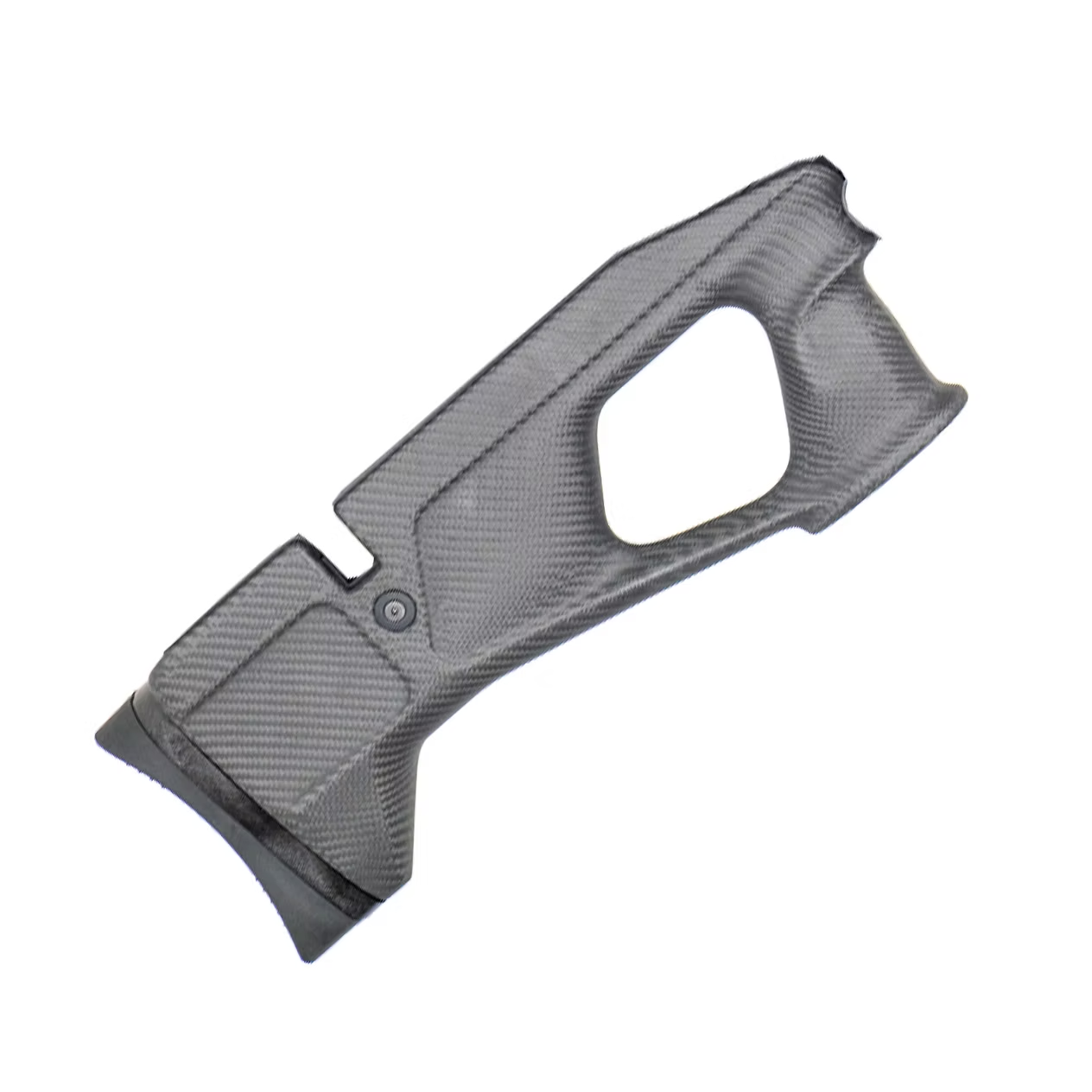
Airgun Technology URAGAN Carbon Fibre Stock
$370.00
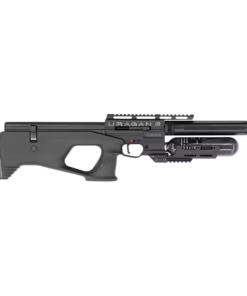
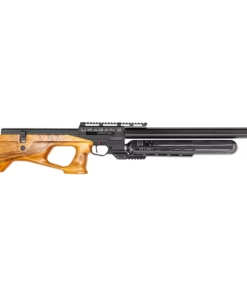
For those who demand cutting-edge materials, the carbon fibre stock brings ultra-lightweight strength and premium styling to your AGN URAGAN 3. Designed with range shooters in mind, it reduces overall rifle weight without sacrificing rigidity, making it easier to handle for extended sessions.
Key Features
- Carbon Fibre Construction – Ultra-light yet exceptionally strong.
- Premium Modern Finish – High-tech aesthetics with performance to match.
- Designed for URAGAN 3 – Includes hardware to fit
-
Range Optimised – Lightweight build ideal for long sessions at the bench or range.
Airgun Technology URAGAN Carbon Fibre Stock – Lightweight Composite Upgrade for the URAGAN Platform
The Airgun Technology URAGAN Carbon Fibre Stock is a lightweight composite stock option developed for compatible rifles within the Czech-built URAGAN family. Current dealer and distributor listings identify carbon fibre as one of several available stock materials alongside synthetic, walnut, and laminate alternatives.
Unlike a complete rifle, this product should be treated primarily as an external structural and ergonomic component. Its main purpose is to provide the supporting interface around the action while reducing unnecessary stock mass and giving the platform a more modern composite appearance.
Carbon fibre is valued for its high stiffness-to-weight ratio. Consequently, a correctly manufactured stock can remain rigid while weighing less than many traditional wooden alternatives.
AGT Uragan Air Rifle
The AGT Uragan air rifle family uses a compact bullpup architecture in which much of the action is positioned behind the trigger.
The carbon stock complements this architecture by keeping the exterior structure relatively light.
AGT Uragan
The AGT Uragan is manufactured within AGN Technology’s Czech product range.
The manufacturer continues to identify URAGAN as one of its established pneumatic platforms.
Uragan Air Rifle
A Uragan air rifle can be configured with different exterior stock materials depending on generation and market.
Carbon fibre therefore changes primarily the exterior ergonomics, mass, appearance, and handling characteristics rather than the fundamental pneumatic operating principle.
AGT Uragan 3
The AGT Uragan 3 has also appeared with dedicated carbon-fibre stock options through current distributors.
A 2026 owner discussion additionally documents users changing existing third-generation rifles from walnut to carbon-fibre furniture.
AGT Uragan Compact
The AGT Uragan Compact uses a shorter overall platform, so compatibility should be confirmed specifically before transferring a stock from one configuration to another.
Action generation, bottle arrangement, mounting geometry, and external dimensions should all match.
AGT Uragan Air Rifle for Sale
The search phrase AGT Uragan air rifle for sale often brings up complete rifles rather than replacement furniture.
A carbon stock alone should therefore be clearly distinguished from a complete pneumatic rifle when describing the product.
Best AGT Uragan Review
A useful Best AGT Uragan review should discuss how stock material changes balance, shoulder contact, surface durability, comfort, and overall weight.
It should not assume that changing the stock automatically increases mechanical accuracy.
AGT Uragan Price
The AGT Uragan price and replacement-stock cost vary considerably according to model generation and region.
For context, one current UK accessories listing shows the separate carbon-fibre stock at £430, compared with lower-priced laminate alternatives.
Buy AGT Uragan Air Rifle
Searches for Buy AGT Uragan air rifle concern complete regulated air rifles rather than this replacement component.
Local ownership, transfer, storage, and power regulations should always be checked separately.
AGT Uragan Hunting
The phrase AGT Uragan hunting relates to lawful field use of the complete rifle.
Changing the stock does not by itself establish suitability for any specific field application.
AGT Uragan .22
An AGT Uragan .22 may use compatible carbon-fibre furniture, but caliber alone does not determine stock compatibility.
The exact action generation and mounting arrangement remain more important.
AGT Uragan .25
The same principle applies to an AGT Uragan .25.
A stock should be matched according to the rifle’s physical platform rather than simply its caliber marking.
AGT Uragan High Power
An AGT Uragan high power configuration may have different legal and mechanical specifications.
The carbon stock itself does not determine muzzle energy.
AGT Uragan PCP Air Rifle
An AGT Uragan PCP air rifle stores compressed air in a separate pneumatic reservoir.
The stock surrounds and supports portions of the external rifle assembly but is not responsible for regulating pressure or controlling valve output.
AGT Uragan Accuracy
AGT Uragan accuracy depends primarily on barrel condition, ammunition compatibility, regulator consistency, optic mounting, trigger control, and shooter technique.
Stock rigidity can contribute to a stable handling interface, but it should not be described as a direct accuracy guarantee.
AGT Uragan vs FX Impact
The phrase AGT Uragan vs FX Impact often appears in broader pneumatic-rifle comparisons.
From a furniture perspective, both platforms can incorporate lightweight modern materials, although their chassis architecture and adjustment systems are substantially different.
AGT Uragan Review 2026
An AGT Uragan review 2026 should account for the growing availability of carbon-fibre furniture on third-generation configurations.
Recent owner reports specifically show carbon-stock conversions being performed on current rifles.
AGT Uragan PCP
The AGT Uragan PCP platform remains pneumatically unchanged in principle when only the stock material is replaced.
The main differences are external weight, feel, appearance, and balance.
Air Venturi Alpha
Air Venturi Alpha belongs to a different manufacturer and product family.
It is included here only as comparative search terminology.
Air Venturi Alpha PCP Rifle
An Air Venturi Alpha PCP Rifle uses its own stock, regulator, action, and reservoir arrangement.
Its furniture should not be assumed compatible.
Air Venturi Alpha Air Rifle
The phrase Air Venturi Alpha Air Rifle represents another pneumatic platform rather than a component of this product.
Air Venturi Alpha Hunting Rifle
An Air Venturi Alpha Hunting Rifle should be assessed separately according to its own chassis and stock geometry.
Air Venturi Alpha Tactical PCP
The Air Venturi Alpha Tactical PCP follows a more tactical external design philosophy than a molded composite bullpup stock.
Air Venturi Alpha Regulated PCP
An Air Venturi Alpha Regulated PCP uses pressure regulation as part of its pneumatic system.
That feature is mechanically separate from stock material.
Air Venturi Alpha Multi Shot Rifle
An Air Venturi Alpha Multi Shot Rifle refers to magazine-fed operation rather than furniture construction.
Air Venturi Alpha Precision Air Rifle
An Air Venturi Alpha Precision Air Rifle comparison should focus on the whole rifle rather than assuming carbon fibre alone determines precision.
Air Venturi
Air Venturi is a separate airgun and pneumatic-accessory brand.
Air Venturi Avenger
The Air Venturi Avenger uses different stock and chassis geometry.
Airventuri
The spelling airventuri generally refers to the same Air Venturi brand.
Air Venturi Avenge
The phrase air venturi avenge is typically a shortened or misspelled reference to the Avenger family.
Air Venturi Compressor
An air venturi compressor is filling equipment and has no direct relationship to stock construction.
Venturi Air
The term venturi air commonly appears in pneumatic-equipment searches.
Air Venturi Air Compressor
An air venturi air compressor supplies high-pressure air to compatible pneumatic equipment and should not be confused with an exterior rifle component.
Air Rifle and Air Pistol
The phrase air rifle and air pistol covers a wide variety of pneumatic and spring-powered designs.
Stock construction differs significantly across these categories.
Air Venturi RovAir 4500 Portable Compressor
The air venturi rovair 4500 portable compressor is a separate high-pressure filling product.
Air Ventur Avenge
The phrase air ventur avenge is another spelling variation associated with the Avenger family.
Air Venturi MicroStrike
The air venturi microstrike belongs to a different product range.
Dragon Claw
The dragon claw belongs to the large-bore pneumatic category and uses completely different furniture and action geometry.
Air Venturi RovAir
The air venturi rovair name refers to filling equipment rather than rifle furniture.
Air Venturi Tank
An air venturi tank is an external compressed-air source.
Air Venturi Air Tank
An air venturi air tank likewise belongs to the filling-equipment category.
Air Venturi OmniStorm
The air venturi omnistorm is a separate pneumatic product and should not be confused with this component.
Air Venturi PCP Compressor
An air venturi pcp compressor provides high-pressure air for compatible pneumatic systems.
Air Venturi Avenger 25
The air venturi avenger 25 represents another .25-caliber pneumatic platform with different furniture and chassis geometry.
Seneca Dragon Claw
The seneca dragon claw is a large-bore pneumatic rifle and is unrelated to the carbon stock described here.
Ventur Air Compressor
A ventur air compressor search generally relates to high-pressure filling equipment.
Seneca Air Rifles
Seneca air rifles include several designs that use their own stocks and action mounting systems.
Air Bolt Gun
An air bolt gun is a specialized pneumatic platform and should not be confused with a conventional replacement stock.
50 Caliber Dragon
The phrase 50 caliber dragon usually refers to large-bore equipment.
Claw Air Gun
A claw air gun search typically concerns the same large-bore family.
Avenger Price
An avenger price search relates to another complete pneumatic rifle and should not be compared directly with the cost of a replacement composite stock.
Air Rifle Compressor
An air rifle compressor is external filling equipment rather than part of the rifle furniture.
PCP Airguns
PCP airguns use stored compressed air and can be built around wooden, synthetic, aluminium, or composite furniture.
PCP Air Rifles
Among modern pcp air rifles, carbon-fibre furniture is increasingly used where manufacturers want to reduce external mass while maintaining a rigid supporting structure.
Why Carbon Fibre Matters
Carbon fibre combines low mass with considerable stiffness.
For an exterior stock, this can reduce the amount of weight concentrated around the action while maintaining a solid supporting shell.
The result may feel noticeably different from walnut or laminate furniture even when the pneumatic action remains unchanged.
Handling and Balance
Changing stock material can alter how quickly the rifle feels when moved between positions.
A lighter stock may shift the perceived balance toward the reservoir, barrel, optic, or other accessories.
The final result therefore depends on the complete setup rather than the stock alone.
Surface Durability
Carbon-fibre composites resist many forms of ordinary moisture-related degradation that can affect traditional unfinished wood.
However, the surface can still be scratched or damaged through hard impact.
Deep structural damage should be distinguished from purely cosmetic marks.
Compatibility
Compatibility should always be verified before installation.
The exact generation, action dimensions, stock mounting points, bottle clearance, trigger area, and fore-end arrangement should match the intended rifle.
A listing that simply says “URAGAN” should not automatically be assumed to fit every generation or Compact configuration.
Maintenance
Ordinary maintenance is relatively simple.
The surface can generally be kept clean using a soft cloth, while aggressive solvents, abrasive cleaners, excessive heat, and hard impacts should be avoided.
Mounting points should also be checked periodically for loosening or unusual wear.
Overall Product Character
The Airgun Technology URAGAN Carbon Fibre Stock is best understood as a lightweight structural and ergonomic option for compatible URAGAN configurations.
Its practical advantages center on reduced external mass, modern composite construction, rigidity, distinctive appearance, and the potential to alter overall balance without changing the rifle’s underlying pneumatic operating system.
Correct compatibility remains the most important consideration before fitting any replacement stock.
Fit, Structural Rigidity, Weight Distribution, Surface Protection, Installation Awareness, and Practical Handling
Understanding the Purpose of the Stock
A replacement composite stock serves several functions at the same time.
It supports the action, provides the primary contact surfaces for the shooter, protects selected mechanical areas, and influences how the complete rifle balances.
Because of this, the stock should not be treated as a purely cosmetic part.
Its dimensions, rigidity, attachment points, and shape all affect the way the rifle feels during use.
Structural Rigidity
One of the main advantages of carbon composite construction is its stiffness relative to weight.
A rigid stock can help the rifle maintain a stable relationship between the action and the shooter’s contact points.
This does not directly create mechanical accuracy, but it can support more repeatable handling.
Excessive flex around mounting points should always be investigated.
Reduced External Weight
Lower stock mass can make the complete setup feel easier to handle.
However, the final result depends on the weight of the optic, barrel assembly, reservoir, moderator, bipod, and other accessories.
A lighter rear section may shift the balance point forward.
For that reason, the effect should be judged with the complete setup assembled.
Balance Changes
Changing from heavier furniture to a lighter composite shell can alter the perceived balance considerably.
Some shooters may notice that the front end feels more prominent.
Others may prefer the faster, lighter feel around the shoulder.
The most useful balance is the one that allows the rifle to settle naturally without requiring excessive muscle tension.
Shoulder Contact
The rear portion of the stock should contact the shoulder consistently.
A stable contact point helps maintain the same relationship between the rifle, head, and optic.
The shooter should not need to pull the rifle aggressively into the body.
A secure but relaxed position generally produces better repeatability.
Cheek Position
The cheek area should allow the head to settle naturally.
If the stock height or shape forces the shooter to stretch the neck or press downward excessively, optic alignment may become inconsistent.
A comfortable cheek position helps the eye return to the same place behind the sight.
This becomes increasingly important at higher magnification.
Grip Shape
The grip should allow the firing hand to remain relaxed.
Excessive tension can influence trigger movement and overall stability.
The hand should sit naturally so the trigger finger can move independently.
If the grip angle feels unfamiliar after changing stocks, some adjustment period may be required.
Trigger Access
A replacement stock should not interfere with the trigger or surrounding controls.
Clearance should remain sufficient throughout the full range of trigger movement.
Any contact between the stock and moving components should be investigated before use.
Forcing parts into position can create unnecessary wear.
Safety Access
The safety should remain easy to operate after installation.
The stock must not restrict movement or obscure the control.
If the safety becomes stiff or difficult to reach, installation should be rechecked.
A component that changes normal control access may not be seated correctly.
Action Seating
The action should sit firmly in the stock without rocking or shifting.
Mounting surfaces should align properly.
If excessive force is required to seat the action, the fit should not be forced.
Incorrect alignment can place stress on the stock, fasteners, or mechanical components.
Mounting Points
All mounting holes and contact areas should align correctly.
Fasteners should thread in smoothly.
Cross-threading should be avoided.
A screw that does not enter normally may indicate misalignment rather than simply requiring more force.
Correct fit should be confirmed before tightening.
Fastener Tension
Mounting screws should be secure but not overtightened.
Excessive torque can damage threads, inserts, or composite surfaces.
Where manufacturer torque specifications are available, they should be followed.
If a fastener repeatedly loosens, the cause should be identified rather than simply tightening it harder.
Thread Condition
Threads should be clean and free from damage.
Dirt or debris can make a fastener feel tighter than it actually is.
Threads should never be forced.
If resistance develops unexpectedly, the screw should be removed and inspected.
Damaged threads should be repaired correctly.
Bottle Clearance
The stock must provide adequate clearance around the reservoir and associated fittings.
No part of the stock should press against a high-pressure component unless the design specifically requires contact.
Unexpected rubbing or pressure marks should be investigated.
Clearance should be checked after final assembly.
Barrel Clearance
The barrel and shroud should remain correctly positioned.
A replacement stock should not press against components that are intended to remain free.
Any new contact point can alter how the complete system behaves.
The barrel area should be inspected carefully after installation.
Optic Alignment
Changing furniture can affect how naturally the shooter aligns with the optic even though the scope itself has not moved.
The new cheek position, shoulder contact, and overall balance may change head placement.
Eye relief and optic height should therefore be rechecked.
Supporting-Hand Position
A lighter stock may change where the supporting hand feels most comfortable.
The shooter should experiment with hand placement until the rifle settles naturally.
The ideal position allows the shoulders to remain relaxed while maintaining stable support.
Once found, the same location should be used consistently.
Bench Use
On a bench, the stock should contact the rest at consistent points.
A lighter composite shell may feel different from heavier wooden furniture.
The rifle should not be clamped rigidly.
The purpose of the support is to reduce movement, not to place excessive pressure on the stock.
Standing Use
During unsupported shooting, lower external weight can reduce fatigue.
However, a lighter setup may also feel more responsive to small movements.
The shooter should avoid trying to hold perfectly still.
A relaxed stance with controlled movement is often more effective.
Seated Use
A seated position can make balance differences easier to notice.
The rifle should settle into the support hand rather than being held entirely by muscle.
If the balance feels dramatically different after the stock change, hand and shoulder position may need to be adjusted.
Surface Finish
Composite finishes are generally durable, but they are not immune to scratches.
Hard edges, metal tools, rough benches, and abrasive dirt can mark the surface.
A padded work area is useful during installation and maintenance.
Minor cosmetic marks should be distinguished from deeper structural damage.
Impact Protection
Carbon composite material is strong, but concentrated impacts can still cause damage.
Dropping the stock onto a hard edge may create cracking or delamination.
Any deep impact mark should be inspected carefully.
A damaged surface does not always mean the structure has failed, but uncertainty should be resolved before continued use.
Delamination Awareness
Delamination refers to separation between layers within a composite structure.
Visible bubbling, lifting, soft areas, or unusual flex can indicate a problem.
These signs should not be ignored.
Professional evaluation may be appropriate if structural damage is suspected.
Moisture Resistance
Composite construction is generally less sensitive to humidity than traditional wood.
Even so, the rifle should still be dried after exposure to rain or damp conditions.
Moisture can affect metal fasteners, internal components, and accessories even when the stock itself remains stable.
Heat Exposure
Excessive heat should be avoided.
A rifle should not be left for long periods inside a very hot vehicle or near direct heat sources.
High temperatures can affect adhesives, finishes, seals, optics, and pressure inside the pneumatic system.
The entire rifle should be treated as one complete assembly.
Chemical Exposure
Strong solvents, fuel, aggressive cleaners, and other chemicals should not contact the composite surface unless specifically approved.
Some products can damage the clear coat, resin, or finish.
A soft cloth and mild cleaning method are generally more appropriate for routine care.
Cleaning the Surface
Dust and light dirt can usually be removed with a soft cloth.
More stubborn contamination should be addressed using a gentle cleaning product suitable for composite materials.
Abrasive pads should be avoided because they can dull or scratch the finish.
Inspecting High-Wear Areas
Areas around mounting points, the grip, cheek contact, shoulder contact, and lower fore-end should be inspected periodically.
These locations experience repeated handling and mechanical stress.
Small changes are easier to identify when the stock is checked regularly.
Checking for Movement
After installation, the action should not move inside the stock.
Any clicking, shifting, or visible movement should be investigated.
Loose mounting hardware can affect handling and eventually damage contact surfaces.
A periodic fastener check is therefore useful.
Rechecking After Initial Use
After the stock has been installed and used for several sessions, mounting points should be inspected again.
Initial settling can sometimes reveal loose hardware or small alignment issues.
Any change should be corrected before it becomes more significant.
Transport Protection
During transport, the stock should be protected from hard impacts and abrasive contact.
A padded case can reduce damage.
Heavy tools or metal accessories should not be allowed to move freely against the rifle.
Transport should also comply with applicable local regulations.
Storage Position
The rifle should be stored securely without unnecessary pressure on the stock.
Heavy objects should not be stacked on top of it.
The storage area should remain cool, dry, and protected from direct sunlight and chemicals.
Long-Term Appearance
The visual condition of composite furniture is influenced by handling habits.
Regular wiping, careful transport, and avoiding abrasive contact can preserve the finish for many years.
Cosmetic care also makes structural inspection easier because new damage becomes more noticeable.
Long-Term Structural Reliability
Long-term reliability depends on correct installation, proper fastener tension, protection from severe impacts, and regular inspection.
The stock should remain rigid and stable throughout normal use.
Any new flex, cracking, movement, or surface separation should be investigated promptly.
Overall Practical Value
A well-fitted carbon composite stock can reduce external weight, modernize handling, resist moisture-related dimensional change, and provide a rigid interface around the action.
Its practical value comes from correct fit and structural consistency rather than appearance alone.
When compatibility, alignment, mounting security, surface condition, balance, and long-term care are all considered together, the stock can provide a durable and lightweight foundation for lawful recreational and precision target use.
Real-World Handling, Balance Refinement, Comfort, Surface Durability, and Long-Term Use
Real-World Handling Characteristics
A lightweight composite stock can noticeably change how the rifle feels once the complete setup is assembled.
The action, reservoir, optic, moderator, mounts, and accessories all contribute to final balance, so the stock should be evaluated as part of the complete system rather than as an isolated component.
In practical use, reduced stock mass can make the rifle feel faster to shoulder and easier to reposition between supported and unsupported shooting positions.
Understanding the New Balance Point
Changing to a lighter shell can move the balance point toward the front of the rifle.
This is not automatically positive or negative.
Some shooters prefer a front-biased feel because it can settle naturally on a support, while others prefer more neutral balance.
The ideal setup is the one that allows stable positioning without unnecessary muscular effort.
Supporting-Hand Placement
The supporting hand may need to move slightly after the stock is changed.
A position that felt natural with heavier furniture may no longer provide the same balance.
The shooter should test several hand positions and identify the point where the rifle feels stable without creating shoulder tension.
Once found, that position should be repeated consistently during accuracy testing.
Shoulder Contact
The rear section should meet the shoulder naturally.
Excessive rearward pressure is unnecessary and may create tension.
A secure but relaxed shoulder position helps the shooter maintain consistent alignment while allowing the rifle to settle naturally.
The same contact point should be used from one shot to the next.
Cheek Position
A stable cheek position supports repeatable optic alignment.
The shooter should not need to force the head downward or stretch forward.
If a complete sight picture does not appear naturally, optic height or fore-and-aft positioning may need to be reconsidered.
Comfort should be assessed with the rifle in the position most commonly used.
Grip Comfort
Grip shape influences how relaxed the firing hand remains.
The wrist should sit naturally without excessive bending.
A relaxed grip reduces unnecessary side pressure on the rifle and allows the trigger finger to move more independently.
If the new stock changes grip angle significantly, some adjustment time may be required.
Trigger Finger Alignment
The trigger finger should reach the blade comfortably.
The shooter should not need to stretch or rotate the hand excessively.
Good alignment allows pressure to be applied more directly to the rear.
If the stock position alters trigger reach, body position and hand placement should be reassessed.
Control Accessibility
All controls should remain easy to reach after installation.
The shooter should verify access to the safety, loading lever, magazine area, and any other regularly used controls.
Nothing should rub against the stock or require unusual force.
If access changes noticeably, fit and alignment should be checked again.
Sight Alignment After Installation
Replacing the stock can change head position even if the optic itself remains unchanged.
Therefore, eye relief should be rechecked.
The shooter should shoulder the rifle naturally and confirm that the full sight picture appears immediately.
Repeated head movement suggests that the optic position or mounting height may need adjustment.
Optic Height Evaluation
A lighter stock can change perceived handling enough that optic height becomes more noticeable.
If the optic is too high, cheek support may feel insufficient.
If it is too low, the shooter may press the head downward.
The correct height allows a natural head position without sacrificing visibility or clearance.
Bench Shooting
On a bench, the lower portion of the stock should contact the support consistently.
The same resting point should be used throughout group testing.
Changing contact locations can slightly alter balance and shooter input.
The rifle should rest naturally rather than being clamped tightly.
Bag Support
When using a soft shooting bag, the stock should settle into the support without excessive compression.
The bag should provide stability while allowing the rifle to remain naturally aligned.
Hard edges or exposed metal should not press directly against the composite surface.
Standing Shooting
A lighter setup can reduce fatigue during standing practice.
However, reduced weight can also make small movements more noticeable.
The shooter should accept a controlled amount of natural movement rather than trying to remain completely motionless.
Smooth trigger control and consistent breathing are more important than forcing the rifle into a rigid hold.
Seated Position
A seated position provides a useful way to evaluate the new balance.
The supporting arm can often rest against the body or leg, reducing muscular effort.
If the rifle settles comfortably and remains stable, the stock and accessory combination is probably close to a useful balance point.
Kneeling Position
Kneeling introduces a different relationship between the support hand, shoulder, and stock.
The shooter should avoid forcing the rifle into position.
Instead, body geometry should be adjusted so the system rests naturally.
Comfort and repeatability should remain the priority.
Carrying Comfort
Reduced stock weight can make the complete setup easier to carry over longer periods.
However, sling position and accessory weight still matter.
A heavy optic or front-mounted accessory can offset much of the weight saved by the stock.
The complete system should therefore be evaluated rather than relying on stock weight alone.
Sling Attachment Awareness
If sling attachment points are present, they should be inspected periodically.
Fasteners should remain secure.
The sling should not place unusual twisting force on the stock.
If movement develops around an attachment point, it should be investigated before continued use.
Surface Feel
Composite finishes can feel different from wood or molded synthetic materials.
Some surfaces are smooth, while others have a textured or matte finish.
The shooter should become familiar with how the stock feels when dry, damp, or when wearing gloves.
A secure grip should not depend on excessive hand pressure.
Using Gloves
Gloves can change how the grip, cheek area, and controls feel.
Thick gloves may slightly reduce trigger feel or access.
Before extended use, the shooter should confirm that all controls remain easy to operate with the chosen gloves.
Moisture Exposure
The stock itself may tolerate damp conditions relatively well, but the complete rifle still contains metal, fasteners, optics, and pressure-related components.
After use in damp weather, all exposed surfaces should be dried carefully.
The rifle should not be placed immediately into a sealed case while wet.
Dust and Dirt
Dust can accumulate around mounting points, grip areas, and accessory interfaces.
A soft cloth can remove most surface contamination.
Compressed debris should not be forced deeper into mechanical areas.
Cleaning should remain gentle and controlled.
Protecting Against Scratches
Carbon composite can still be scratched by tools, rough benches, and hard accessories.
A padded work surface should be used during maintenance.
Loose tools should not be placed directly against the stock.
Small cosmetic marks are generally less important than deep impacts or structural damage.
Checking for Surface Cracks
Any new crack should be inspected carefully.
A superficial finish mark may be cosmetic, while a deeper structural crack could indicate damage to the composite layers.
The affected area should be examined for movement, softness, or separation.
Uncertainty should be resolved before extended use.
Delamination Awareness
Composite structures rely on bonded layers.
Visible lifting, bubbling, unusual flex, or separation can indicate delamination.
These signs should not be ignored.
Even if the rifle remains functional, structural damage should be evaluated properly.
Heat Management
The rifle should not be left inside a hot vehicle or near strong heat sources for extended periods.
Heat can affect adhesives, finishes, seals, optics, and reservoir pressure.
A cool storage environment helps protect the complete system.
Cold-Weather Use
Cold conditions can change how materials and seals feel.
Grip comfort may also change when gloves are worn.
The shooter should allow the rifle to acclimatize and should avoid making immediate mechanical adjustments based solely on temporary temperature effects.
Fastener Monitoring
Mounting screws should be checked periodically.
A stock that feels secure after installation may settle slightly after repeated use.
Loose fasteners can create movement and unusual handling.
They should be tightened correctly rather than excessively.
Avoiding Overtightening
Composite structures can be damaged by unnecessary clamping force.
Fasteners should be secure, but excessive torque can stress inserts, mounting points, or surrounding material.
Manufacturer guidance should be followed where available.
Listening for Unusual Movement
A well-installed stock should not produce clicking, shifting, or creaking under normal handling.
New sounds may indicate loose hardware or movement between components.
They should be investigated rather than ignored.
Post-Session Inspection
After use, the stock should be checked for new scratches, impact marks, loose hardware, or movement.
The grip, cheek area, lower surface, mounting points, and sling interfaces deserve particular attention.
Routine inspection makes developing issues easier to identify.
Transport Considerations
A padded case helps protect both the stock and the rest of the rifle during transportation.
Hard accessories should not be allowed to move freely inside the case.
The rifle should also be secured so it cannot repeatedly strike the case walls.
Storage Environment
Long-term storage should be cool, dry, and secure.
Direct sunlight, moisture, chemicals, and excessive heat should be avoided.
Heavy objects should not be stacked on top of the rifle.
The stock should remain supported without unnecessary pressure.
Long-Term Finish Care
Routine cleaning with a soft cloth is usually enough to preserve the appearance.
Aggressive polish, abrasive compounds, or strong solvents should be avoided unless specifically approved for the finish.
A clean surface also makes new damage easier to detect.
Long-Term Structural Monitoring
The most important long-term checks involve mounting points, high-contact areas, sling interfaces, and any location that receives repeated mechanical stress.
If cracking, unusual flex, movement, or separation develops, the cause should be identified promptly.
Practical Ownership Value
The main practical advantages of a lightweight composite stock are reduced external mass, structural rigidity, moisture resistance, modern ergonomics, and the ability to alter the balance of the complete rifle.
Those benefits are most useful when the stock fits correctly and remains securely mounted.
Overall Real-World Performance
A properly fitted composite stock can make the rifle feel lighter, faster to shoulder, and easier to manage across different shooting positions.
Its real value comes from consistent ergonomics, rigid support, durable construction, and reduced weight rather than appearance alone.
When balance, grip comfort, optic alignment, mounting security, surface protection, and regular inspection are managed carefully, the stock can provide reliable long-term service during lawful recreational and precision target use.
Be the first to review “Airgun Technology URAGAN Carbon Fibre Stock”
Related products
AGT URAGAN
AGT URAGAN
AGT URAGAN


AGT URAGAN
AGT URAGAN
Reviews
There are no reviews yet.