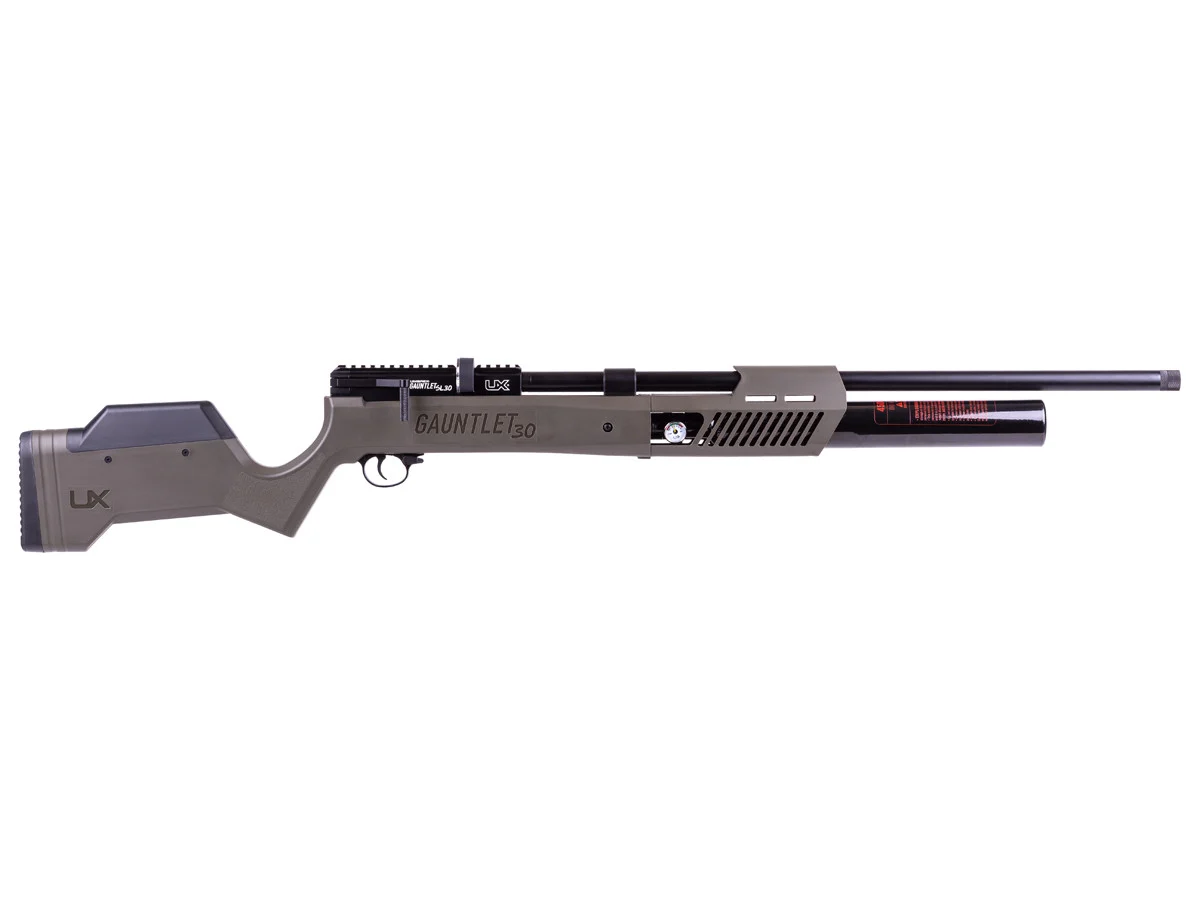
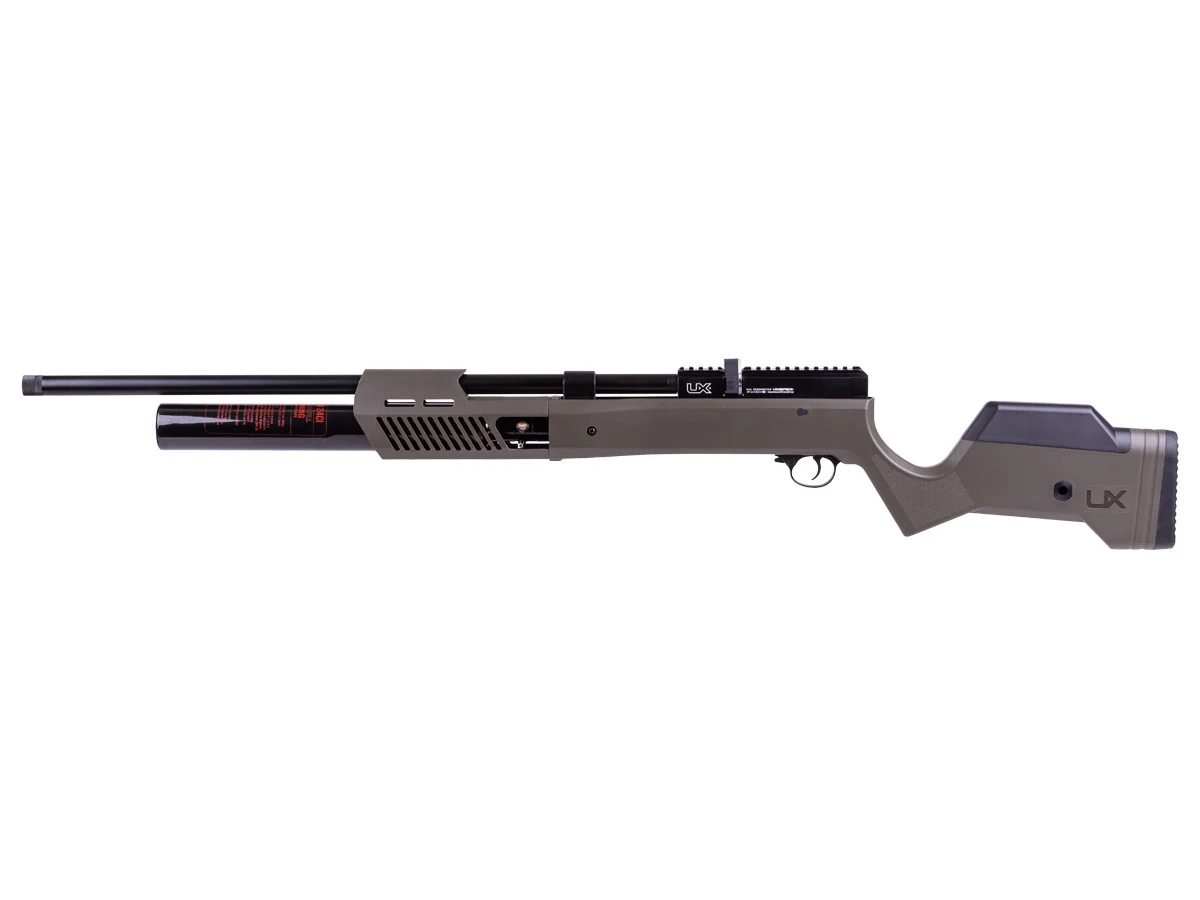
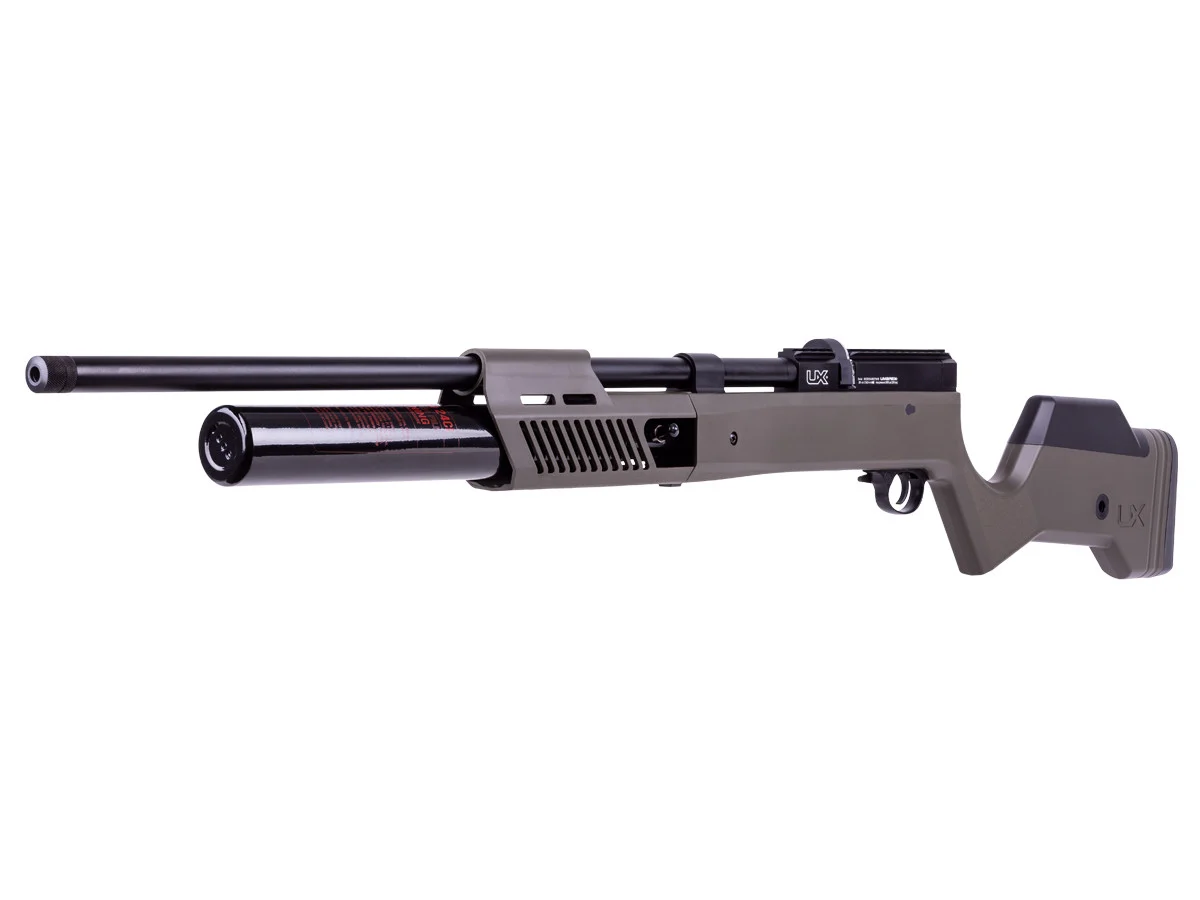
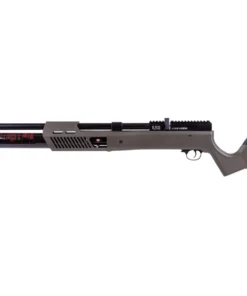
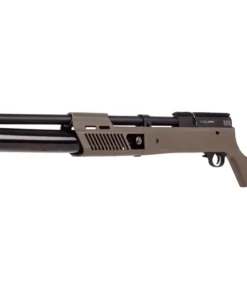
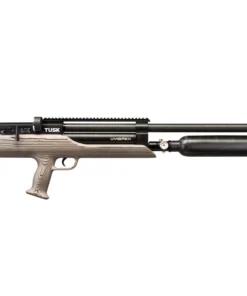
Umarex Gauntlet 2 SL PCP Air Rifle
$300.00
Description
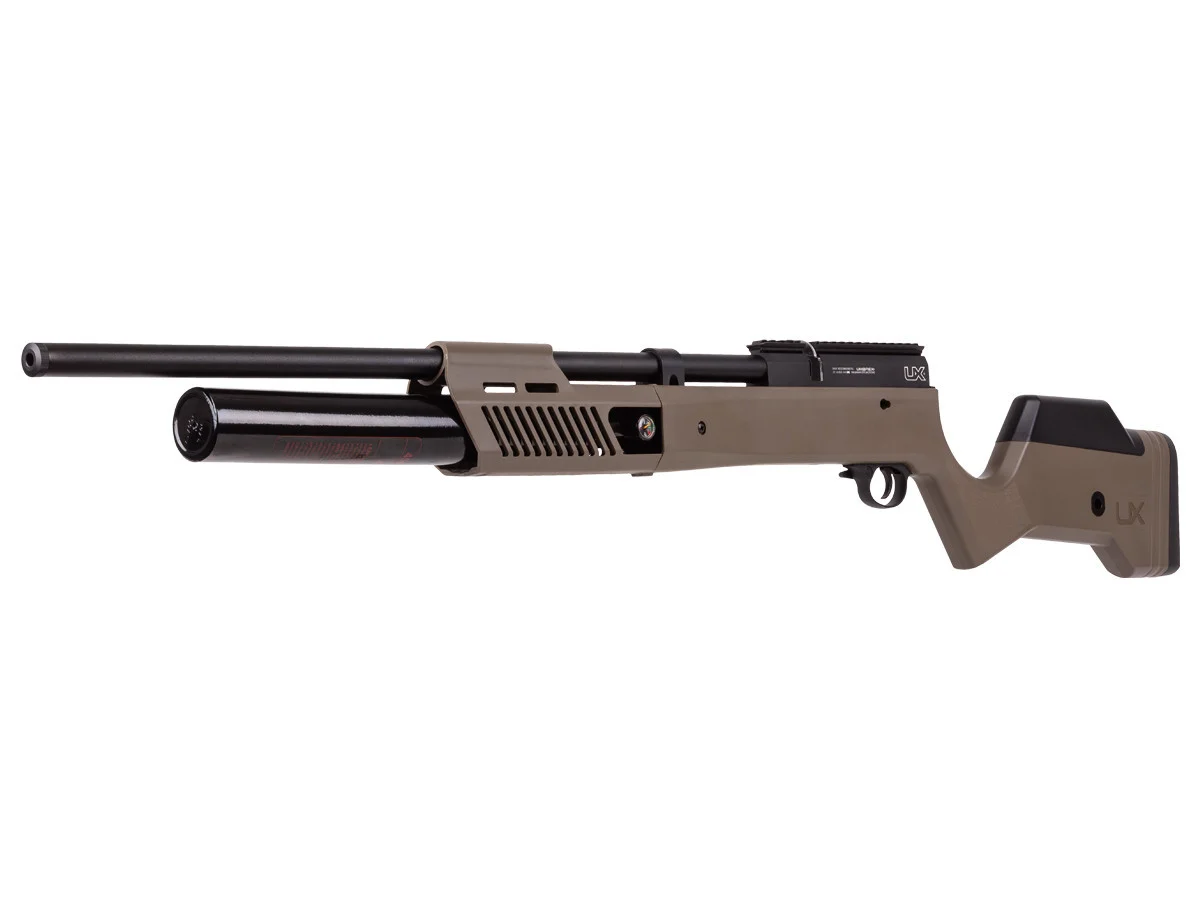
The Umarex Gauntlet SL is a PCP air rifle that has the necessary power for pest control and hunting of small game such as rabbits in lower calibers and medium game such as possums in higher calibers. It is the eagerly-anticipated updated side lever version of the airgun that helped set a new standard for affordable accuracy and power.
The improvement shooters will appreciate the most is the larger air tank, with 24 cubic inches of volume, and higher fill and regulator pressure. These increases lead to more shots and more power compared to the older model.
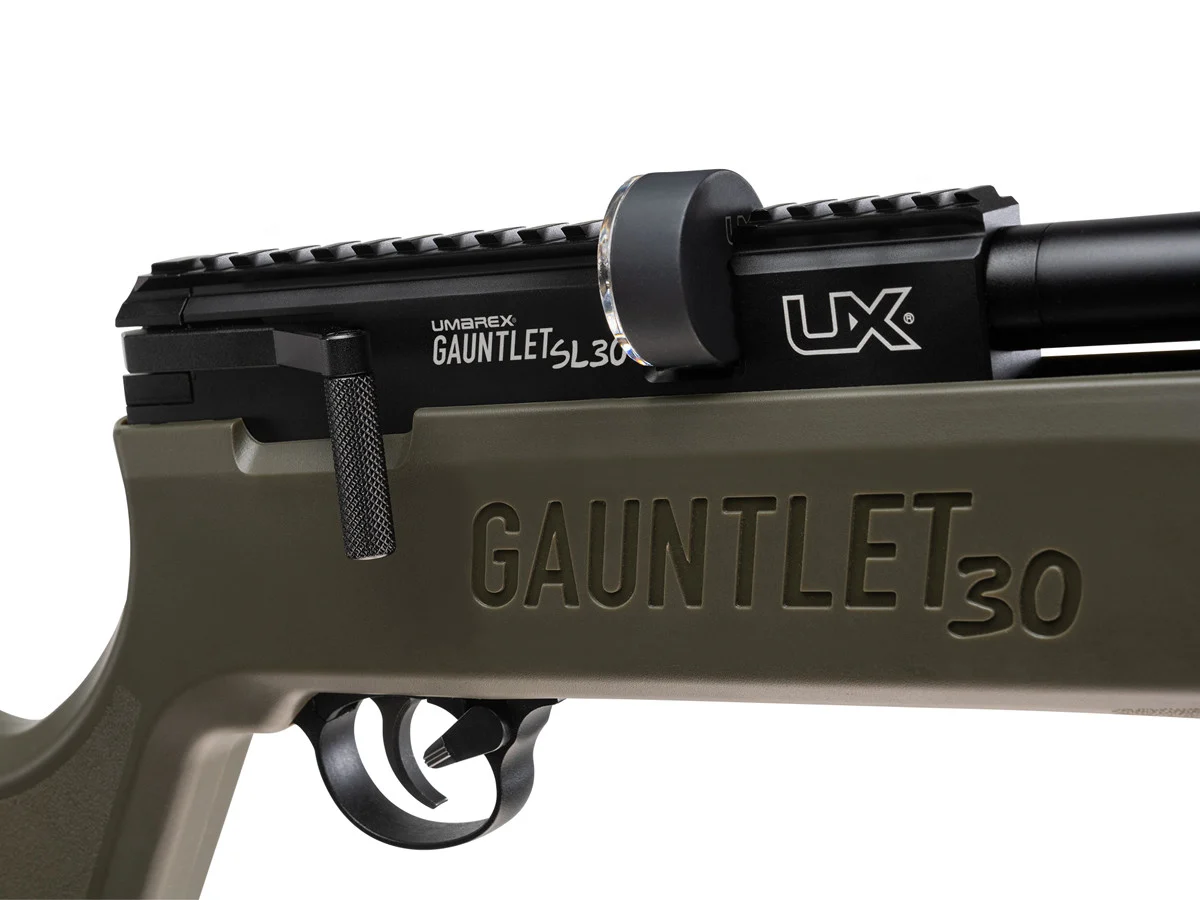
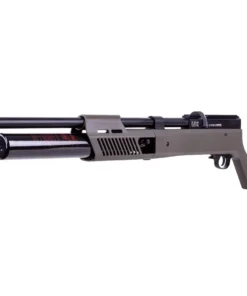
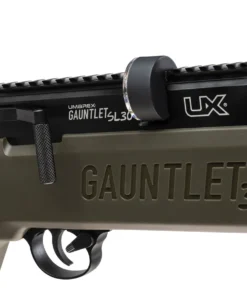
The new sidelever action features a large knurled handle with and makes cocking easier than ever! The all-weather synthetic stock has been redesigned to make it lighter and more compact. Despite the added power and shots, the air rifle is now quieter when shooting due to a four baffle design that reduces the sound of a shot by 8 dB over the original Gauntlet.
Umarex Gauntlet 2 SL PCP Air Rifle
- Precharged pneumatic
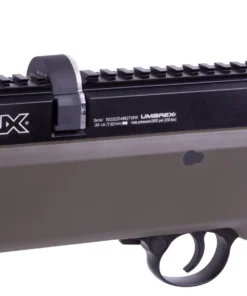
- Sidelever action with knurled drop-down handle
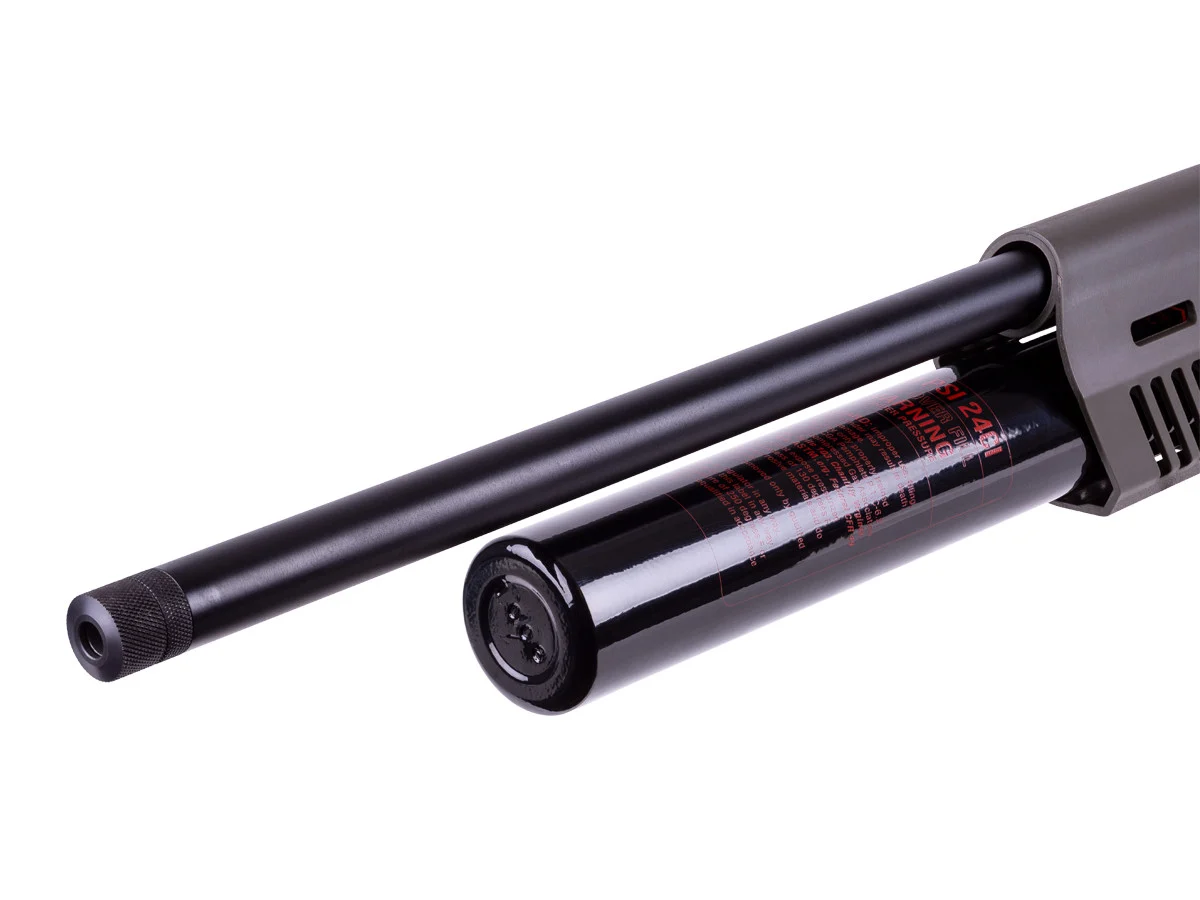
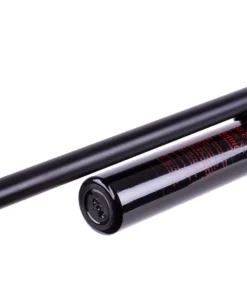
- 24 cu. in. removable aluminum air cylinder
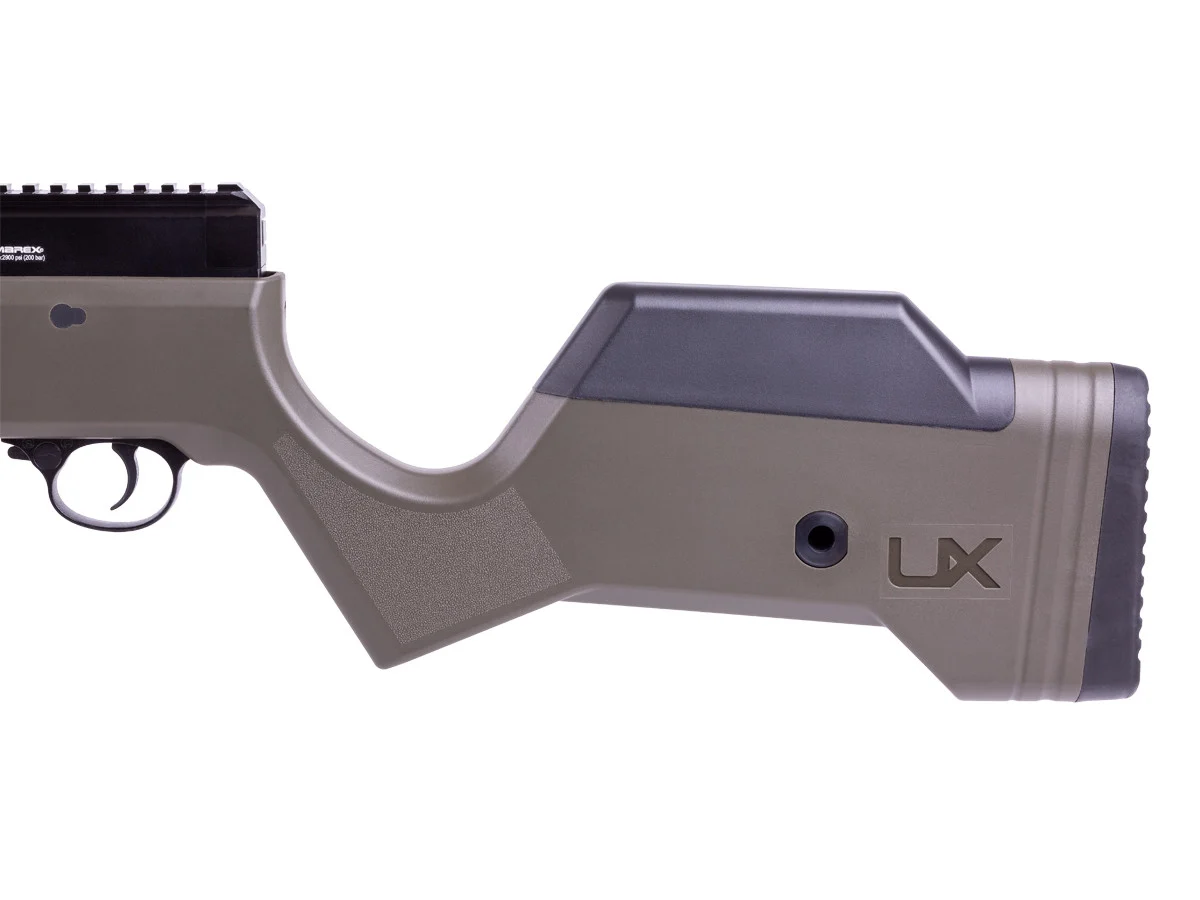
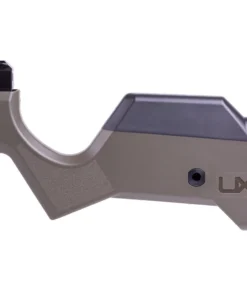
- Improved, precision tactical synthetic stock
- OD Green stock (.30 cal)
- Flat Dark Earth stock (.22 & .25 cal)
- Aircraft-grade aluminum receiver
- 4500 PSI/310 BAR fill pressure
- 1900 PSI regulator (.22 cal), 2100 PSI regulator (.25 cal), 2800 PSI regulator (.30 cal)
- Max. velocity: 1075 FPS (.22 cal), 985 FPS (.25 cal), 1000 FPS (.30 cal w/ 44.75 grain), 950 FPS (.30 cal w/ 50.15 grain)
- Max. power: 33 FPE (.22 cal), 51 FPE (.25 cal), 99 FPE (.30 cal)
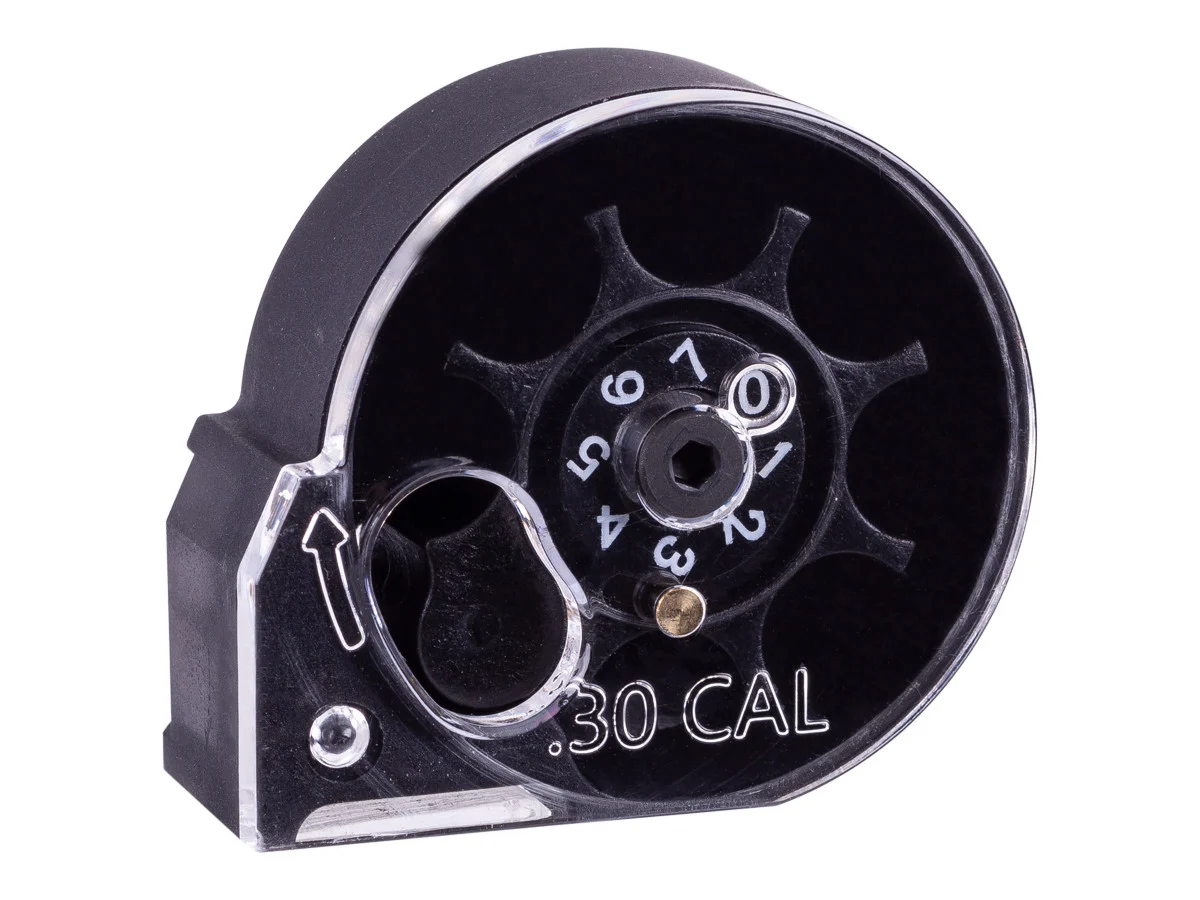
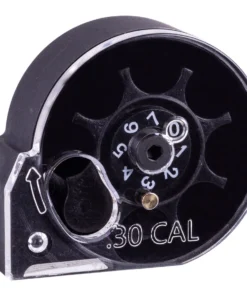
- Magazine capacity: 10 rounds (.22 cal), 8 rounds (.25 cal), 7 rounds (.30 cal)
- Expected shot count: 70+ (.22 cal), 50+ (.25 cal), 25 (.30 cal)
- 4 baffle design, 8 dB sound reduction over original Gauntlet
- 1/2×20 threads with knurled thread protector (.30 cal)
- Single-stage adjustable trigger
- Textured rubber buttpad
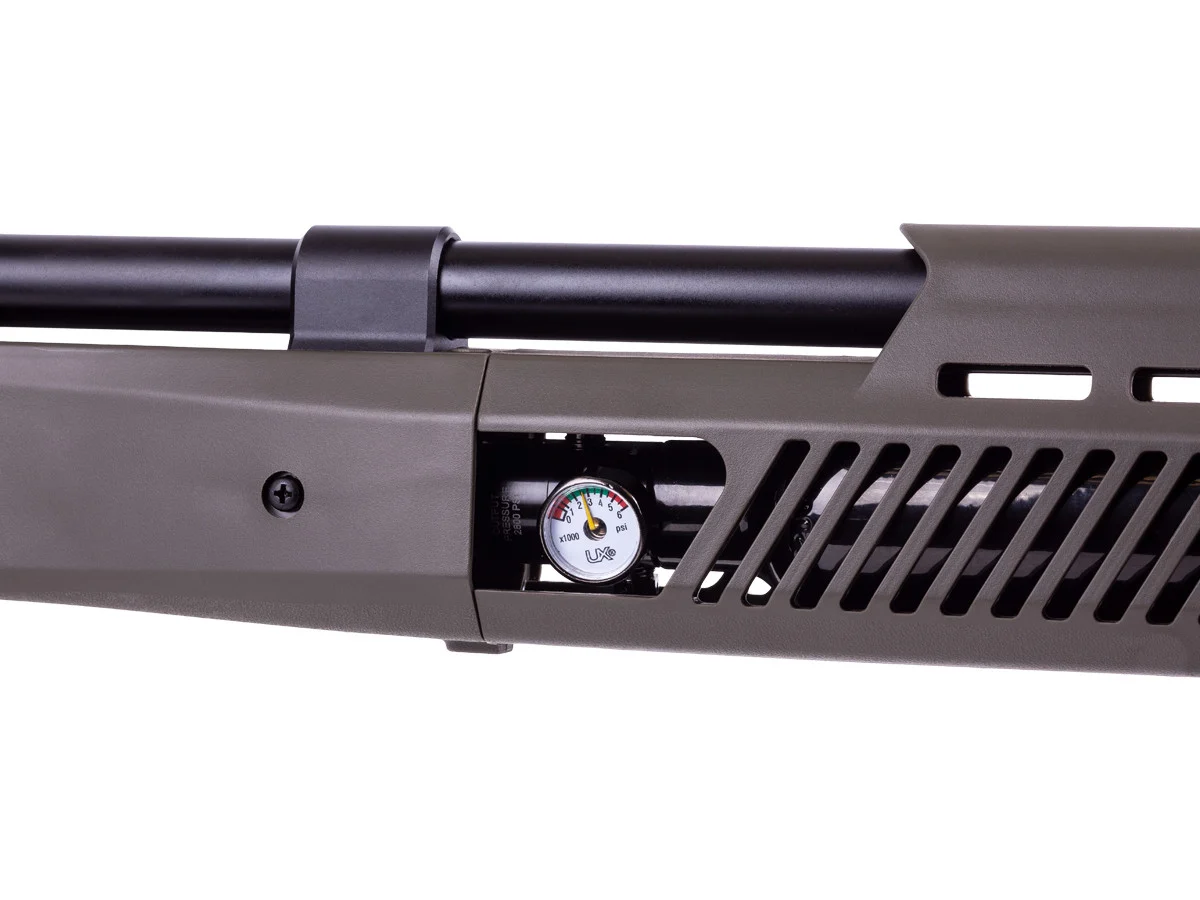
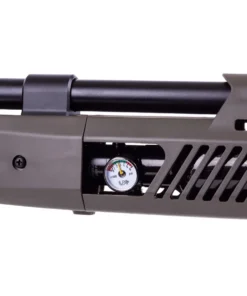
- Integrated manometer
- Height-adjustable cheek comb
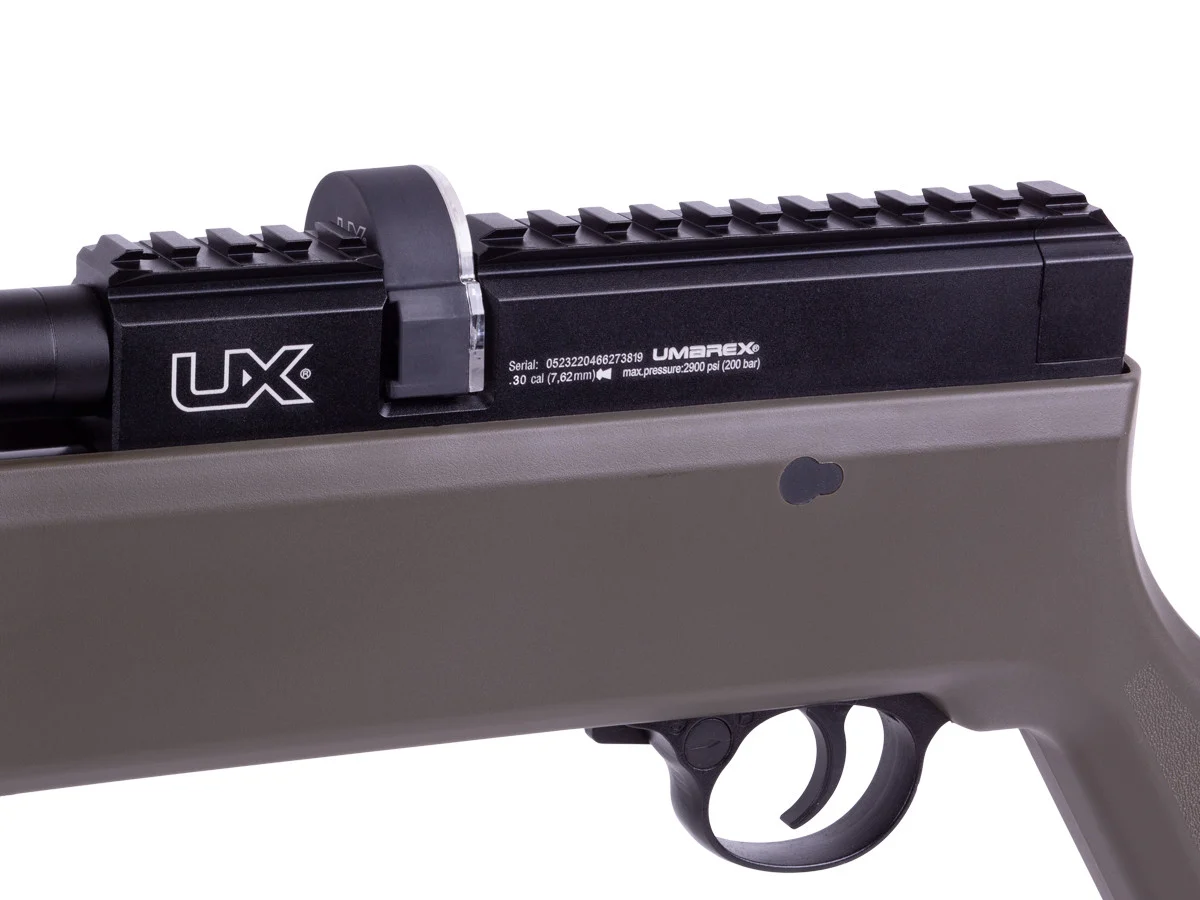
- Picatinny/11mm dovetail optics rail
- M-LOK accessory slots on sides and bottom of forearm
- Foster quick-disconnect fill port
- Weight: 8.5 lbs.
- Barrel length: 28.25″
- Overall length: 47″
- Includes 2 rotary magazines and 1 single shot tray
Specifications
BrandCaliber.22 (5.5mm)Max Velocity1075 fpsMuzzle Energy33 ft/lbsSuggested forSmall game hunting/target practicePowerplantPre-charged pneumaticLoudness4-Medium-HighNoise Level90.6 dB Weight8.5 lbsFunctionRepeaterMax Shots per Fill70Cylinder Size393 ccActionSideleverFixed/adj. powerMultiple settingsShroudedYesScopeableWeaver & 11mm dovetailsFront SightsnoneRear SightsnoneSafetyManualTriggerSingle-stageBarrelRifledBarrel Length28.25″Overall Length47.0″Capacity10 round(s)Body TypeRifleStockSyntheticButtplateRubberOperating Pressure4500 PSI / 310 BARGrip OrientationAmbidextrousRegulatedYesIs Safe To Dry FireYesMagazine Included2
Umarex Gauntlet 2 SL PCP Air Rifle – Premium Side-Lever Precision Air Rifle
Product Introduction, Modern Engineering, Precision and Performance
Introducing the Umarex Gauntlet 2 SL PCP Air Rifle
The Umarex Gauntlet 2 SL PCP Air Rifle represents an important evolution in modern pre-charged pneumatic sporting rifle technology. Combining the established Gauntlet platform with an improved side-lever operating mechanism, regulated compressed-air system and redesigned synthetic stock, this model offers a distinctive combination of mechanical refinement, ergonomic construction and modern sporting performance.
Developed under the internationally recognised Umarex name, the rifle incorporates several features designed to distinguish it from traditional bolt-action PCP platforms. Furthermore, its substantial onboard air reservoir, precision rifled barrel, repeating magazine and adaptable mounting arrangements provide a comprehensive sporting configuration.
The Umarex Gauntlet 2 SL PCP Air Rifle is available in .22 and .25 calibre configurations. Both versions incorporate a side-lever mechanism, a 24-cubic-inch compressed-air reservoir and a regulator designed to maintain controlled operating pressure. However, magazine capacity, regulator pressure and advertised energy differ between calibres.
One of the most important characteristics is the combination of a 4,500 PSI maximum filling pressure and an integrated regulator. This arrangement provides a substantial compressed-air supply while supporting repeatable pneumatic operation.
Additionally, the manufacturer has incorporated a redesigned barrel shroud with internal sound-absorbing baffles. These components contribute to the overall engineering and help distinguish the platform from earlier generations.
The result is a contemporary PCP rifle intended for enthusiasts who appreciate established mechanical engineering, modern materials and a traditional full-length sporting configuration.
The Evolution of the Gauntlet Platform
The original Gauntlet established a recognisable identity within the recreational and sporting PCP market.
Its design focused on providing regulated pneumatic performance through a relatively straightforward mechanical platform.
Subsequently, the second-generation configuration introduced improvements to the external stock, reservoir arrangement and overall pneumatic specifications.
The side-lever version represents another stage in this development.
Rather than retaining the conventional bolt-action arrangement of earlier models, the updated platform incorporates a side lever as its principal external operating control.
This mechanical change represents the defining characteristic of the SL designation.
Furthermore, the updated stock design, adjustable cheek support and improved barrel-shroud arrangement contribute to the evolution of the complete platform.
For customers researching the different generations, the original model, second-generation bolt-action version and updated side-lever configuration should be treated as distinct products.
Modern Side-Lever Engineering
The side-lever mechanism provides one of the most recognisable features of the updated design.
Its external construction differs from the traditional bolt-action arrangement found on earlier generations.
The manufacturer introduced this mechanism to provide a revised operating experience while retaining the established repeating magazine system.
The lever features a textured handle that contributes to the external mechanical appearance.
Additionally, the mechanism is integrated into the receiver assembly, creating a contemporary sporting design.
The development is particularly relevant to customers comparing different PCP operating arrangements.
However, the mechanism should be maintained according to the manufacturer’s instructions. Any unusual resistance, abnormal movement or mechanical damage should be inspected by a qualified technician.
The original safety features must also remain fully functional.
Why the Side-Lever Configuration Matters
A rifle’s operating mechanism contributes to its overall mechanical identity.
Different PCP platforms use different arrangements, including traditional bolt actions and side-lever systems.
The side-lever configuration is an important design distinction because it changes the position and movement of the external operating control.
For owners already familiar with the Gauntlet family, this represents a noticeable update.
Furthermore, the repeating magazine architecture remains part of the design, preserving the multi-shot characteristics associated with the platform.
The combination of an updated lever and established magazine system provides an appealing feature set for enthusiasts comparing modern pneumatic sporting equipment.
Pre-Charged Pneumatic Power System
The Umarex Gauntlet 2 SL PCP Air Rifle operates using compressed air stored inside an onboard reservoir.
Unlike spring-powered air rifles, which rely on a mechanical spring or gas ram, PCP equipment uses an external high-pressure air supply to charge its reservoir.
The stored air then forms the energy source for the pneumatic operating mechanism.
This technology provides a different ownership experience from conventional spring-powered or CO2-powered equipment.
An appropriately rated high-pressure filling system is therefore essential.
Depending on the manufacturer’s compatibility requirements, suitable filling equipment may include a dedicated PCP compressor, a certified high-pressure air cylinder or an approved high-pressure hand pump.
Ordinary workshop compressors should never be used as substitutes for equipment designed specifically for high-pressure airgun systems.
High-Capacity 24-Cubic-Inch Air Reservoir
One of the significant engineering features is the integrated 24-cubic-inch air reservoir.
This capacity is substantially larger than the reservoir found on certain compact PCP platforms.
The increased air-storage volume forms part of the rifle’s full-length sporting configuration.
Furthermore, the reservoir is integrated into the external assembly, contributing to the overall appearance and balance.
The manufacturer specifies a maximum filling pressure of 4,500 PSI, equivalent to approximately 310 bar.
This high-pressure arrangement requires compatible filling equipment and appropriate maintenance procedures.
The reservoir should be inspected according to the manufacturer’s instructions, and its maximum pressure rating must never be exceeded.
Understanding Regulated PCP Technology
An integrated regulator forms an important part of the pneumatic system.
The regulator is designed to control the pressure supplied from the main reservoir to the operating mechanism.
This matters because reservoir pressure changes as compressed air is consumed.
By providing a more controlled operating pressure, the regulator contributes to the consistency of the pneumatic system.
However, regulator settings differ between the available calibre configurations.
The .22 version is specified with a regulator pressure of approximately 1,900 PSI, while the .25 configuration uses approximately 2,100 PSI.
These values should not be confused with the maximum reservoir filling pressure.
The regulator is a precision pressure-management component and should only be serviced according to the manufacturer’s approved procedures.
Umarex USA+1
Understanding the .22 Calibre Configuration
The .22 configuration is one of the principal versions of the range.
This calibre is widely recognised within the sporting airgun market and offers access to numerous commercially manufactured pellet designs.
The manufacturer specifies a ten-shot rotary magazine for this configuration.
Additionally, the published maximum velocity reaches approximately 1,130 feet per second with a lightweight pellet under specified conditions.
The advertised muzzle energy is approximately 48 foot-pounds for the relevant manufacturer configuration.
However, velocity and energy figures depend on ammunition characteristics and the exact testing conditions.
Consequently, advertised maximum values should not be interpreted as guaranteed results with every pellet.
The .22 version also uses a regulator setting of approximately 1,900 PSI.
These characteristics distinguish it from the larger-calibre alternative.
Understanding the .25 Calibre Configuration
The .25 configuration provides a larger projectile diameter.
Its magazine capacity differs from that of the .22 model, with an eight-shot rotary magazine specified.
The manufacturer advertises a maximum velocity of approximately 1,000 feet per second with a suitable pellet.
Additionally, published muzzle energy reaches approximately 55 foot-pounds.
The regulator setting is approximately 2,100 PSI.
The differences between these configurations are important because customers should not assume that every version has identical power, velocity or magazine capacity.
Furthermore, replacement magazines and ammunition must correspond to the exact calibre.
Pellet and Airgun Slug Compatibility
The platform is designed to accommodate compatible pellets and certain purpose-made airgun slugs.
However, compatibility should always be verified against the exact model and manufacturer’s requirements.
Pellets and slugs can differ in dimensions, construction and weight.
Consequently, ammunition selection should not be based on calibre alone.
Manufacturing tolerances and individual barrel characteristics may influence compatibility.
Customers should use only appropriate manufacturer-approved ammunition and avoid damaged or unsuitable projectiles.
Precision Rifled Barrel Construction
The barrel is among the most important components of the complete platform.
Its construction incorporates internal rifling designed to provide rotational stabilisation to compatible projectiles.
The approximate barrel length is 28.25 inches, although published measurements may vary slightly depending on the reference used.
This substantial barrel contributes to the traditional full-length configuration.
Furthermore, the barrel is integrated into a shrouded external assembly designed to provide structural protection and sound management.
Barrel quality, manufacturing consistency and correct ammunition compatibility all contribute to the overall precision potential.
Nevertheless, accuracy depends on the complete system rather than barrel length alone.
Redesigned Barrel Shroud
The redesigned barrel shroud is another important engineering feature.
Its construction incorporates internal baffles intended to reduce operating noise.
The shrouded arrangement also contributes to the distinctive external profile Umarex Gauntlet 2 SL PCP Air RifleUmarex Gauntlet 2 SL PCP Air RifleUmarex Gauntlet 2 SL PCP Air RifleUmarex Gauntlet 2 SL PCP Air RifleUmarex Gauntlet 2 SL PCP Air RifleUmarex Gauntlet 2 SL PCP Air RifleUmarex Gauntlet 2 SL PCP Air RifleUmarex Gauntlet 2 SL PCP Air Rifle.
Furthermore, the updated assembly has been designed around the requirements of the side-lever configuration.
The manufacturer specifies a threaded muzzle arrangement using a 1/2-inch x 20 thread standard Umarex Gauntlet 2 SL PCP Air RifleUmarex Gauntlet 2 SL PCP Air RifleUmarex Gauntlet 2 SL PCP Air RifleUmarex Gauntlet 2 SL PCP Air RifleUmarex Gauntlet 2 SL PCP Air RifleUmarex Gauntlet 2 SL PCP Air RifleUmarex Gauntlet 2 SL PCP Air RifleUmarex Gauntlet 2 SL PCP Air Rifle.
Any compatible accessory must comply with applicable laws and the manufacturer’s requirements.
The original barrel assembly should not be modified to accommodate unsuitable equipment.
Sound-Absorbing Baffle Technology
The internal baffle arrangement contributes to the rifle’s noise-management system.
This is particularly relevant to customers comparing different PCP platforms because pneumatic discharge noise can vary considerably between models.
The manufacturer’s redesigned assembly incorporates sound-absorbing components.
However, reduced noise should never be interpreted as complete silence.
Mechanical sounds and remaining pneumatic discharge noise may still be noticeable.
Appropriate hearing protection and responsible use remain important.
Contemporary Synthetic Stock Design
The Umarex Gauntlet 2 SL PCP Air Rifle incorporates a modern synthetic stock.
The external construction features a Flat Dark Earth finish on the .22 and .25 manufacturer configurations.
The synthetic material provides practical maintenance advantages compared with certain traditional wooden finishes.
Furthermore, the stock design incorporates textured surfaces and modern ergonomic features.
Its overall shape contributes to the distinctive appearance of the second-generation platform.
The stock should be protected from excessive heat, moisture and unnecessary impact.
Suitable cleaning products should also be used to preserve the original finish.
Adjustable Cheek Rest
An adjustable cheek rest is incorporated into the stock.
This provides additional flexibility in the external ergonomic configuration.
Different users may prefer different cheek-support positions depending on their body proportions and the optical equipment installed.
The adjustment mechanism should remain secure and function within the manufacturer’s intended limits.
Furthermore, the cheek rest contributes to the overall contemporary sporting appearance.
Ergonomic Shoulder Support
The rear stock incorporates a textured rubber buttpad.
This component provides a shoulder-contact surface and contributes to the overall comfort characteristics.
The stock’s external dimensions should be evaluated according to individual preferences.
Additionally, the complete weight and balance can change when optical equipment is installed.
The rifle’s published bare weight should therefore be distinguished from its weight with accessories.
Full-Length Sporting Configuration
The overall length is approximately 47 inches.
This creates a full-length sporting-rifle profile rather than the compact arrangement associated with bullpup platforms.
The substantial air reservoir and barrel contribute to the external dimensions.
The published weight is approximately 8.5 pounds, although the final configuration may vary depending on installed equipment.
Consequently, customers should consider storage requirements and handling preferences before purchasing.
Rotary Magazine System
The repeating magazine is an important convenience feature.
The .22 configuration uses a ten-shot magazine, while the .25 version uses an eight-shot magazine.
The manufacturer advertises two magazines with the relevant configurations.
A single-shot loading tray is also included.
This provides different manufacturer-supported ammunition arrangements within the supplied package.
Replacement magazines should always be selected according to the correct calibre and product reference.
Single-Shot Loading Tray
The included single-shot tray provides an additional loading accessory.
Its presence is useful for customers who prefer having the manufacturer’s supported single-shot option available.
The tray must remain compatible with the exact model.
Furthermore, it should be maintained according to the relevant operating instructions.
The inclusion of both magazines and a loading tray contributes to the overall completeness of the manufacturer package.
Adjustable Trigger Assembly
The platform incorporates a single-stage adjustable trigger according to the published technical specifications.
The trigger assembly contributes to the overall mechanical operating characteristics.
Its construction should provide consistent functionality within the original factory specifications.
However, adjustments should only be undertaken according to the manufacturer’s instructions.
Unauthorised modification can compromise the original safety characteristics.
Any unusual movement or mechanical concern should be investigated by a qualified technician.
Manual Safety System
A manual safety forms part of the design.
This provides an additional mechanical safeguard.
Nevertheless, safety mechanisms do not replace responsible handling practices.
The rifle should always be treated as potentially loaded until verified otherwise.
Furthermore, the muzzle should remain pointed in a safe direction, and suitable target backstops should be used.
The safety assembly should never be bypassed or modified.
Aircraft-Grade Aluminium Receiver
The receiver incorporates aluminium construction.
This provides structural support for the principal operating components while contributing to the modern external appearance.
Aluminium is commonly used in sporting equipment because of its balance between mechanical strength and manageable weight.
Manufacturing tolerances and component alignment are important considerations.
The receiver should remain free from visible cracking, deformation or unusual movement.
Any structural concerns should be referred to an authorised technician.
Optical Mounting Compatibility
A combination Picatinny and 11mm dovetail mounting arrangement is incorporated into the design.
This provides compatibility with suitable optical equipment using the corresponding mounting standard.
The mounting surface should remain structurally sound.
Customers should verify ring compatibility and accessory dimensions before purchasing additional equipment.
Furthermore, optical inclusion depends on the particular retailer package and should not be assumed.
M-LOK Accessory Mounting Facilities
The fore-end incorporates M-LOK-compatible mounting slots.
These facilities provide compatibility with selected accessories.
The modular arrangement contributes to the contemporary sporting appearance.
However, additional equipment should be selected according to the manufacturer’s specifications.
Excessive accessory weight can change the overall balance.
Quick-Disconnect Filling Connection
The pneumatic system incorporates a Foster-style quick-disconnect filling port.
This provides a connection interface for suitable high-pressure equipment.
The connection must match the manufacturer’s specifications.
Incorrect fittings and unsuitable pressure-rated components should never be used.
Any suspected damage or leakage should be investigated professionally.
Integrated Pressure Gauge
An onboard pressure gauge provides an indication of the reservoir’s pressure condition.
This is particularly important because the system operates at high pressure.
The gauge should remain in suitable condition and provide a readable indication.
Any abnormal reading or suspected malfunction should be investigated before further operation.
Long-Term Ownership and Maintenance
Long-term ownership involves maintaining both the mechanical and pneumatic assemblies.
The reservoir, receiver, stock, barrel and magazine should be inspected according to the manufacturer’s recommendations.
External components should be cleaned using appropriate products.
Furthermore, pressure-related components should only be serviced by qualified personnel.
Genuine replacement parts should be preferred whenever maintenance becomes necessary.
Why Consider This Model?
The Umarex Gauntlet 2 SL PCP Air Rifle offers several notable engineering characteristics.
Its principal features include:
-
Modern side-lever action.
-
Regulated PCP operating system.
-
24-cubic-inch compressed-air reservoir.
-
4,500 PSI maximum filling pressure.
-
Precision rifled barrel.
-
Redesigned shroud with sound-absorbing baffles.
-
Calibre-specific rotary magazine.
-
Two magazines included in manufacturer packages.
-
Single-shot loading tray.
-
Synthetic Flat Dark Earth stock.
-
Adjustable cheek rest.
-
Aluminium receiver.
-
Combined Picatinny and dovetail optics rail.
-
M-LOK mounting facilities.
-
Integrated pressure gauge.
-
Quick-disconnect filling connection.
-
Manual safety.
Understanding Other Models in the Umarex Product Family
The manufacturer produces several different pneumatic and recreational platforms.
These include the Umarex Notos, Origin, Zelos, Hammer, Fusion 2, Komplete, Air Saber and other sporting products.
However, the Gauntlet family occupies its own category within the wider catalogue.
The original Gauntlet, second-generation Gauntlet and updated side-lever versions should be distinguished from one another.
Similarly, Umarex T4E training platforms, TR50 revolvers, Glock BB guns and airsoft replicas operate through different mechanisms and should not be confused with PCP sporting rifles.
For customers researching the wider Umarex USA catalogue, these distinctions are particularly important when comparing specifications and replacement parts.
Comparison With Other PCP Platforms
The Umarex Notos offers a different compact sporting configuration.
The Umarex Origin incorporates a different air-storage and filling proposition.
Meanwhile, the Umarex Zelos uses a bullpup architecture, distinguishing it from the traditional full-length Gauntlet arrangement.
The Hammer belongs to a substantially different large-calibre product category.
Consequently, customers should compare the exact operating systems and manufacturer specifications rather than relying solely on brand identity.
Where Is This Sporting Rifle Intended to Be Used?
The equipment is intended for appropriate lawful sporting environments.
Suitable locations include properly authorised target ranges and controlled recreational shooting facilities.
Any private shooting location must comply with local laws and provide appropriate safety measures.
The designated area should prevent projectiles from leaving the controlled environment.
Additionally, suitable eye protection and responsible handling practices remain essential.
When Should Buyers Consider This Configuration?
The model may be worth considering when a customer specifically prefers a regulated PCP platform with a substantial onboard air reservoir and a repeating magazine.
It may also interest enthusiasts who appreciate a full-length synthetic stock rather than a compact bullpup configuration.
However, access to suitable high-pressure filling equipment is an important ownership consideration.
Customers should also verify the exact calibre, magazine capacity, regional specifications and applicable legal requirements.
Important Regional and Product Differences
Different calibres and generations may have different specifications.
For example, the .22 and .25 versions use different magazine capacities and regulator settings.
The separate .30-calibre SL30 model also has its own product reference, magazine capacity and regulator specification.
Consequently, these configurations should not be presented as mechanically identical products.
Customers should verify the exact model number before purchasing replacement parts or accessories.
Overall Product Assessment
The Umarex Gauntlet 2 SL PCP Air Rifle brings together a substantial compressed-air reservoir, regulated pneumatic system, updated side-lever mechanism and modern synthetic construction.
Its distinctive combination of full-length sporting-rifle proportions and contemporary mechanical features separates it from compact PCP alternatives.
Furthermore, the repeating magazine, included single-shot tray and adaptable optical mounting system contribute to the overall equipment package.
The redesigned barrel shroud, adjustable cheek rest and modular fore-end provide additional features that distinguish it from earlier generations.
For customers comparing modern sporting PCP rifles, the most important considerations remain the exact calibre, pressure specifications, magazine compatibility, handling dimensions and access to suitable high-pressure filling equipment.
The platform offers a comprehensive combination of modern pneumatic engineering and traditional sporting-rifle construction.
Technical Specifications
| Specification | .22 SL22 | .25 SL25 |
|---|---|---|
| Manufacturer | Umarex | Umarex |
| Operating system | PCP | PCP |
| Action | Side lever | Side lever |
| Calibre | .22 / 5.5mm | .25 / 6.35mm |
| Magazine | 10-shot | 8-shot |
| Maximum fill pressure | 4,500 PSI | 4,500 PSI |
| Regulator | 1,900 PSI | 2,100 PSI |
| Reservoir | 24 cubic inches | 24 cubic inches |
| Advertised velocity | Up to 1,130 FPS | Up to 1,000 FPS |
| Advertised energy | Up to 48 FPE | Up to 55 FPE |
| Stock | Synthetic FDE | Synthetic FDE |
| Cheek rest | Adjustable | Adjustable |
| Safety | Manual | Manual |
| Optical rail | Picatinny / dovetail | Picatinny / dovetail |
| Muzzle thread | 1/2-inch x 20 | 1/2-inch x 20 |
| Manufacturer reference | 2254832 | 2254833 |
UMAREX USA+2
Important: Published retailer velocity and energy figures sometimes differ from the manufacturer’s headline specifications because of ammunition weight and testing methods. The values above represent the manufacturer’s advertised configurations, not guaranteed results for every projectile.
Advanced Mechanical Engineering, Precision Construction, Pneumatic Technology, Ergonomics, Durability and Long-Term Performance
Understanding the Engineering Behind Modern Pneumatic Technology
Modern pre-charged pneumatic technology represents an important development in the engineering of sporting equipment. Unlike conventional spring-powered mechanisms, these systems rely on compressed air stored within a purpose-designed reservoir. Consequently, the operating system incorporates several specialised components that work together to manage pressure, support mechanical operation and maintain the structural integrity of the complete assembly.
The design combines mechanical and pneumatic technologies. Each component performs a distinct function, while the complete system depends on appropriate manufacturing tolerances, material selection and assembly quality.
Furthermore, modern pneumatic equipment requires an understanding of pressure management, mechanical alignment, component compatibility and maintenance requirements. These factors influence long-term reliability and the general ownership experience.
The principal engineering assemblies typically include the receiver, barrel, compressed-air reservoir, regulator, valve system, trigger mechanism, magazine and external stock.
Their integration creates a complete sporting platform in which structural and pneumatic components must function together.
Although individual components can be examined separately, the overall construction should always be evaluated as a complete system.
The Relationship Between Mechanical Design and Pneumatic Operation
Mechanical construction and pneumatic operation are closely connected.
The receiver provides structural support, while the pressure reservoir stores the compressed air required by the system. Meanwhile, the regulator forms part of the pressure-management arrangement.
The valve assembly controls the release of compressed air during the operating cycle.
Additionally, the trigger mechanism provides the external firing control, while the barrel guides the projectile.
These assemblies must maintain their intended relationships to preserve reliable mechanical operation.
The precision of their manufacture is therefore important.
However, no individual component can compensate for significant defects elsewhere in the complete assembly.
Proper maintenance, compatible replacement parts and manufacturer-approved servicing remain essential.
High-Pressure Reservoir Engineering
The compressed-air reservoir is one of the most technically significant components.
Its primary function is to contain air at pressures substantially greater than atmospheric pressure.
This requires a carefully manufactured pressure-bearing structure with appropriate material properties.
The reservoir must withstand the stresses associated with its specified operating pressure while maintaining its intended structural integrity.
Furthermore, its connection to the surrounding pneumatic components must remain secure.
The reservoir’s rated capacity contributes to the complete system’s air-storage characteristics.
However, increased capacity does not eliminate the need for appropriate pressure management or routine inspection.
High-pressure equipment must always be treated with particular care.
Any suspected reservoir damage should be assessed by a qualified technician.
Pressure Vessel Materials and Manufacturing Standards
Pressure vessels require materials capable of meeting demanding mechanical requirements.
The chosen material must provide sufficient strength, dimensional stability and resistance to relevant environmental conditions.
Manufacturing processes are equally important because defects can compromise the integrity of pressure-bearing components.
Consequently, quality control plays a central role in pressure vessel production.
Testing requirements depend on the manufacturer’s design and applicable standards.
The owner should never assume that a pressure vessel remains safe indefinitely.
Instead, manufacturer instructions concerning inspection, service life and replacement must be followed.
Understanding Pressure Ratings
Pressure ratings identify the limits within which a pneumatic assembly is intended to operate.
These ratings should never be confused with ordinary workshop-air specifications.
High-pressure sporting equipment requires compatible filling systems, fittings and hoses.
Every pressure-bearing component must be rated appropriately.
The maximum reservoir pressure must never be exceeded.
Furthermore, equipment should not be operated when a pressure gauge or connection appears damaged.
Any uncertainty about component compatibility should be resolved through the manufacturer or an authorised service provider.
The Importance of Pressure Regulation
A pressure regulator is designed to maintain controlled pressure delivery from the storage reservoir.
As compressed air is consumed, the reservoir’s internal pressure gradually decreases.
A regulator helps manage this variation by separating the higher storage pressure from the intended operating pressure.
This arrangement is a defining characteristic of regulated pneumatic systems.
The regulator contains precision components that require careful manufacturing and appropriate maintenance.
Internal seals, pressure-bearing surfaces and other components must remain in suitable condition.
However, the regulator should not be treated as a user-serviceable adjustment mechanism unless the manufacturer expressly authorises such work.
Unauthorised changes can affect safety, reliability and compliance.
Regulator Stability and Mechanical Consistency
Consistency is an important engineering consideration in regulated equipment.
The regulator must provide the pressure-management characteristics intended by its manufacturer.
Its behaviour may be influenced by component condition, temperature and normal mechanical wear.
Additionally, contamination or deteriorated sealing components may interfere with its intended function.
Such problems should not be corrected through improvised adjustment.
Professional inspection is the appropriate response when regulator malfunction is suspected.
Maintaining the original factory configuration helps preserve the manufacturer’s intended operating characteristics.
Valve Assembly Construction
The valve assembly forms another important part of the pneumatic architecture.
Its function involves controlling compressed-air movement within the system.
Because this assembly operates under pressure, its construction requires appropriate materials and manufacturing tolerances.
The valve housing, sealing surfaces and internal components must remain compatible.
The system should be protected from contamination and physical damage.
Furthermore, replacement components must correspond to the exact manufacturer specification.
Improvised parts can create unacceptable mechanical and pressure-related risks.
Air-Sealing Technology
Seals are essential to the integrity of a compressed-air system.
Their purpose is to prevent unintended air leakage between connected components.
Different sealing materials possess different characteristics, including flexibility, temperature tolerance and resistance to environmental exposure.
Consequently, replacement seals must match the manufacturer’s material and dimensional requirements.
A seal that appears similar may still be unsuitable.
Air leakage should be investigated by an authorised technician.
Owners should never attempt to compensate for leakage by exceeding pressure limits.
High-Pressure Connections and Compatibility
Filling connections must maintain a secure relationship with the pressure reservoir.
The connection arrangement includes several components, potentially including fittings, hoses and sealing surfaces.
Each component must be appropriate for the operating pressure.
Compatibility involves more than physical appearance.
Thread dimensions, pressure ratings, sealing arrangements and manufacturer specifications must all correspond.
Additionally, fittings should remain free from visible cracks, deformation and contamination.
Damaged connections should not be reused.
Pressure Gauge Construction and Interpretation
The pressure gauge provides information about the compressed-air reservoir.
Its design incorporates a measurement mechanism calibrated to the intended pressure range.
A readable gauge allows the user to identify the reservoir’s indicated pressure.
However, the gauge is a measuring instrument rather than a substitute for professional inspection.
An abnormal reading may indicate a problem requiring further assessment.
Furthermore, a damaged gauge should be replaced with an approved compatible component.
The equipment should not be used when the pressure indication cannot be trusted.
Mechanical Receiver Construction
The receiver provides the central structural foundation for several important assemblies.
It supports the operating mechanism and maintains the intended relationship between the barrel, magazine, trigger and surrounding components.
Structural rigidity contributes to the stability of the complete system.
The receiver must also accommodate the relevant mechanical loads associated with normal operation.
Material selection is therefore important.
Aluminium alloys are widely used in sporting equipment because they offer useful strength characteristics while supporting precision machining.
Nevertheless, manufacturing quality is as important as material selection Umarex Gauntlet 2 SL PCP Air RifleUmarex Gauntlet 2 SL PCP Air RifleUmarex Gauntlet 2 SL PCP Air RifleUmarex Gauntlet 2 SL PCP Air Rifle.
Precision Machining and Dimensional Accuracy
Precision machining allows manufacturers to produce components according to specified dimensions.
This is particularly important where multiple mechanical parts interact.
The receiver and associated assemblies must maintain appropriate relationships throughout normal use.
Manufacturing tolerances determine the acceptable dimensional variation.
However, extremely tight tolerances are not automatically desirable in every component.
The correct tolerance depends on the engineering function, material characteristics and intended operating conditions.
The complete assembly must therefore be manufactured according to a coordinated design.
Structural Alignment and Mechanical Integrity
Alignment influences how effectively the major components fit together.
The receiver, barrel and operating mechanism must remain positioned according to the original engineering specifications.
Physical impact, improper maintenance or unsuitable modifications may compromise these relationships.
Consequently, external components should be checked periodically for unusual movement or visible damage.
Any suspected structural misalignment should be assessed professionally.
Attempts to correct alignment through improvised mechanical alteration can introduce additional problems.
Side-Lever Assembly Design
The side-lever system is an important external mechanical feature.
Its construction introduces a distinctive operating arrangement compared with conventional bolt-action systems.
The assembly includes a lever, handle and associated internal mechanical components.
These parts must maintain appropriate alignment and structural integrity.
The handle should remain securely attached, while the external lever assembly should be protected from unnecessary impact.
Furthermore, unusual resistance or mechanical movement should be investigated rather than ignored.
Materials Used in Lever Construction
Operating levers require materials suitable for repeated mechanical movement.
Material selection must account for the stresses encountered during ordinary use.
Manufacturers may use combinations of machined metals, engineered polymers and appropriately finished external surfaces.
The precise material composition depends on the individual assembly.
A textured handle can contribute to the ergonomics of the external control.
Nevertheless, the handle’s visual appearance alone does not establish its mechanical quality.
Mechanical Wear and Component Inspection
Mechanical components experience normal wear during their service life.
Wear characteristics depend on construction, operating conditions and maintenance.
Visible damage, excessive movement and abnormal resistance may indicate the need for inspection.
The relevant components should be maintained according to the manufacturer’s recommendations.
Additionally, original replacement parts should be preferred.
Unauthorised modification may compromise reliability and safety.
Magazine Construction and Mechanical Compatibility
The magazine provides a structured means of holding compatible ammunition.
Its internal geometry must correspond to the dimensions of the intended projectiles.
Magazine construction also requires suitable alignment with the surrounding receiver.
The body may incorporate several interconnected mechanical features.
These components must remain intact and properly assembled.
Furthermore, magazine compatibility depends on the exact model and calibre.
Similar external appearance does not guarantee interchangeability.
Magazine Materials and Manufacturing Quality
Modern magazines may incorporate polymer, metal or composite components.
Each material provides different manufacturing advantages.
Engineered polymers can support precise moulded shapes, while metallic components may be incorporated where additional structural requirements exist.
However, the suitability of a magazine depends on the complete design rather than its material alone.
The magazine should remain free from cracks, deformation and excessive wear.
Damaged magazines should be replaced with appropriate manufacturer-approved components.
Single-Shot Accessory Construction
A single-shot loading accessory provides an alternative ammunition arrangement when supplied by the manufacturer.
Its construction must correspond to the intended receiver geometry.
Dimensional compatibility is essential.
An incompatible accessory may interfere with the surrounding mechanical components.
Therefore, customers should verify the exact product reference before purchasing replacements.
The accessory should also be inspected for physical damage.
Barrel Engineering and Internal Geometry
The barrel is among the most precisely manufactured components.
Its internal geometry must conform to the manufacturer’s specifications.
The bore provides the passage through which a compatible projectile travels.
Rifling consists of spiral features within the bore.
These features are intended to impart rotational movement to suitable projectiles.
The quality of the manufacturing process contributes to the consistency of the finished component.
However, overall precision depends on several interconnected factors.
These include barrel condition, ammunition compatibility, mechanical alignment and the characteristics of the complete system.
Barrel Material Selection
Steel is commonly used for sporting barrels because of its strength and suitability for precision machining.
The material must provide adequate rigidity while maintaining the required internal dimensions.
Manufacturing consistency is important because irregularities can affect the finished component.
External protective finishing may also be incorporated to reduce environmental deterioration.
The barrel should be maintained according to the manufacturer’s instructions.
Furthermore, physical damage should be assessed professionally.
Rifling and Projectile Stabilisation
Rifling forms an important part of conventional sporting barrel design.
Its spiral geometry is intended to provide rotational stabilisation to compatible projectiles.
The relationship between projectile dimensions and the barrel’s intended specifications is important.
Different ammunition types can vary in construction, weight and dimensional tolerances.
Consequently, only compatible manufacturer-approved ammunition should be used.
The internal bore should never be modified through improvised machining or unsuitable cleaning practices.
Barrel Length and Construction Characteristics
Barrel length contributes to the overall physical configuration.
A longer barrel can influence the dimensions, weight distribution and storage requirements of a sporting rifle.
However, length alone does not determine quality or precision.
Manufacturing consistency, internal condition and compatibility with the complete operating system are also important.
Furthermore, the barrel’s external mounting arrangement contributes to the structural configuration.
Any suspected damage should be investigated by an authorised technician.
Shrouded Barrel Architecture
A barrel shroud provides an external enclosure around part of the barrel assembly.
Depending on the original design, it may contribute to protection, appearance or sound management.
The shroud must remain compatible with the barrel and surrounding components.
Its construction should preserve the intended structural relationships.
Additionally, any internal sound-management components should remain in their original manufacturer configuration.
Unapproved alterations should be avoided.
Internal Sound-Management Components
Some sporting pneumatic platforms incorporate internal sound-absorbing components.
These features are intended to influence the sound characteristics of normal operation.
Their effectiveness depends on the overall engineering configuration.
However, reduced sound does not eliminate all mechanical or pneumatic noise.
Responsible use remains necessary.
Owners should also verify applicable legal requirements concerning sound-management accessories.
Trigger Mechanism Engineering
The trigger assembly provides the primary firing control.
Its construction involves precision mechanical components designed to function within the manufacturer’s intended specifications.
The assembly must maintain a reliable relationship with the relevant safety mechanisms.
Material quality and manufacturing tolerances are therefore important.
Any irregular movement or suspected malfunction should be investigated professionally.
Trigger modifications should not be undertaken outside authorised manufacturer procedures.
Understanding Trigger Characteristics
Different trigger systems have different mechanical characteristics.
Some incorporate a single-stage design, while others use multiple stages of movement.
The intended configuration depends on the manufacturer’s engineering decisions.
Trigger performance should be evaluated in relation to its original design rather than through assumptions about particular configurations.
Furthermore, safe and reliable function is more important than subjective preferences concerning mechanical feel.
Manual Safety Construction
The manual safety forms an important part of the complete operating arrangement.
Its function is to provide an additional mechanical safeguard.
However, no safety mechanism can replace responsible handling.
The safety components should remain in suitable mechanical condition.
Any abnormal behaviour should be assessed by an authorised service provider.
The original design should never be bypassed or weakened.
Synthetic Stock Engineering
The synthetic stock contributes to the external structure and ergonomics.
Modern polymer materials can provide useful durability and resistance to certain environmental conditions.
The manufacturing process allows designers to incorporate detailed external shapes and textured surfaces.
Furthermore, synthetic construction can reduce some of the cosmetic maintenance associated with traditional wood.
Nevertheless, polymer components remain vulnerable to excessive heat, unsuitable chemicals and physical damage.
Proper care remains important.
Ergonomic Stock Geometry
Stock geometry influences the general handling characteristics of sporting equipment.
The overall dimensions, cheek-support profile and shoulder-contact surfaces form part of the ergonomic design.
Different users have different physical proportions.
Consequently, no single stock configuration will feel identical to every individual.
The complete geometry should be considered when evaluating suitability.
Additional optical equipment may also alter the perceived balance.
Adjustable Cheek Support
An adjustable cheek-support assembly provides flexibility within the manufacturer’s intended range.
Its construction may incorporate a movable support surface and an associated retention mechanism.
The assembly must remain secure.
Loose or damaged components should be inspected before further use.
Furthermore, adjustment should remain within the manufacturer’s approved limits.
Unauthorised modifications can compromise the structural integrity of the stock.
Shoulder Pad Materials
The shoulder-contact pad is commonly manufactured using rubber or another resilient material.
Its primary function is to provide a suitable contact surface.
Material selection influences durability, flexibility and resistance to environmental deterioration.
Over time, excessive heat or unsuitable storage may damage certain elastomeric materials.
Visible cracking or separation should be addressed through approved replacement components.
Fore-End Construction
The fore-end contributes to the external structure and provides a forward support surface.
Its design must accommodate the surrounding mechanical and pneumatic components.
Textured areas may be incorporated into the external geometry.
Additional mounting facilities can also form part of the design.
However, accessory compatibility should be verified before installation.
Excessive weight or unsuitable components may alter the original handling characteristics.
Modular Accessory Interfaces
Modern sporting equipment often incorporates standardised accessory mounting systems.
These interfaces provide compatibility with equipment designed for the corresponding standard.
However, the presence of a mounting slot does not automatically establish compatibility with every accessory.
Dimensions, attachment requirements and structural limits must be considered.
Manufacturer-approved mounting components should be preferred.
Optical Mounting Construction
The optical mounting surface forms part of the external receiver arrangement.
It must provide stable support for compatible equipment.
Different optical accessories use different mounting standards.
Consequently, customers should verify dimensions before purchasing rings or mounts.
Secure fit and appropriate component selection are important.
However, attempts to alter the receiver or mounting surface through improvised machining should be avoided.
Understanding Optical Equipment Compatibility
Optical equipment can vary in weight, dimensions and mounting requirements.
The correct configuration depends on the manufacturer’s specifications.
For example, the optical tube diameter and ring dimensions must correspond.
The overall weight can also influence the complete equipment balance.
Furthermore, suitable protective storage is important because optical equipment may be vulnerable to impact.
Weight Distribution and Balance
The mass of a sporting rifle is distributed across several major components.
The reservoir, receiver, barrel and stock all contribute to the overall balance.
Additional accessories can change this distribution.
Consequently, the listed bare weight should be distinguished from the fully equipped weight.
The overall length also influences storage requirements.
These considerations matter when evaluating general handling and transport arrangements.
External Surface Finishing
Protective finishing contributes to appearance and resistance to environmental deterioration.
Metal components may receive coatings or surface treatments intended to reduce corrosion.
Synthetic materials may incorporate colour throughout the material or receive an external finish.
However, protective treatments do not make equipment completely immune to damage.
Routine inspection and suitable cleaning remain necessary.
Corrosion Prevention
Corrosion can affect exposed metallic components when moisture and other environmental factors are present.
Suitable storage conditions can help reduce unnecessary deterioration.
The equipment should be protected from prolonged moisture exposure.
Furthermore, exterior metal surfaces should be maintained using manufacturer-approved products.
Aggressive chemicals should be avoided because they may damage protective coatings or nearby polymer components.
Environmental Temperature Considerations
Temperature changes may influence certain mechanical and pneumatic materials.
Seals and polymer components can respond differently to extreme conditions.
High temperatures may also create additional concerns for pressurised equipment.
Consequently, storage environments should remain within the manufacturer’s recommended limits.
Equipment should not be left in locations exposed to excessive heat.
Humidity and Long-Term Storage
Humidity is another important environmental factor.
Prolonged exposure can encourage corrosion and deterioration.
A suitable storage environment should provide appropriate protection from moisture.
However, storage arrangements must also comply with applicable safety and security requirements.
The rifle should remain inaccessible to children and unauthorised individuals.
Transportation and Protective Equipment
Transporting sporting equipment requires appropriate protection and compliance with applicable laws.
A suitable case can help reduce damage from impact and environmental exposure.
The equipment should be secured according to relevant legal requirements.
Additionally, transport conditions may differ between jurisdictions.
Owners should verify local regulations before travelling.
Routine External Inspection
Routine inspection is an important part of responsible ownership.
The external assembly should be checked for visible damage.
Important areas include the receiver, stock, magazine housing, barrel shroud and pressure-related fittings.
Loose or damaged components should be referred for appropriate servicing.
Furthermore, unusual mechanical behaviour should never be ignored.
Professional Maintenance Requirements
Some maintenance activities require specialist knowledge.
High-pressure pneumatic assemblies contain components that must remain within precise engineering specifications.
Unauthorised dismantling can create serious safety risks.
Consequently, internal pressure-system repairs should be performed by qualified personnel.
The manufacturer’s service documentation should guide any authorised maintenance.
Replacement Parts and Authenticity
Replacement components should correspond to the exact model and manufacturer specifications.
Similar-looking parts are not necessarily interchangeable.
This is particularly important for pressure-bearing assemblies, magazines and safety-related mechanisms.
Genuine components provide a clearer basis for compatibility.
However, customers should still verify the correct part number before purchase.
Understanding Normal Mechanical Wear
Mechanical wear occurs as moving components experience repeated use.
The rate of wear depends on materials, manufacturing quality, environmental conditions and maintenance.
Some wear may be expected during the intended service life.
However, abnormal resistance, excessive movement or visible deformation should be investigated.
Continuing to operate damaged equipment may create additional risks.
The Role of Manufacturing Quality Control
Quality control is an important part of modern sporting-equipment production.
Manufacturers must evaluate whether components meet the intended specifications.
This may involve dimensional inspection, material assessment and functional testing.
The exact procedures depend on the manufacturer and product.
Consistent quality control contributes to confidence in the finished assembly.
However, an individual product should still be inspected for damage or missing components upon receipt.
Understanding the Difference Between Accuracy and Precision
Accuracy and precision are related but distinct concepts.
Accuracy describes how closely a result corresponds to an intended reference.
Precision describes the degree of consistency among repeated results.
In sporting equipment, both concepts may be influenced by the mechanical system and environmental conditions.
However, advertised specifications alone cannot establish guaranteed performance.
The condition of the complete assembly, suitable ammunition and responsible use all remain important.
Factors Influencing Mechanical Consistency
Mechanical consistency depends on several interconnected elements.
The regulator, valve assembly, receiver, barrel and ammunition compatibility all contribute to the overall system.
Manufacturing tolerances and maintenance also matter.
Environmental conditions may introduce additional variation.
Consequently, consistent operation should be understood as a characteristic of the complete system rather than a single component.
Product Documentation and Technical Verification
Manufacturer documentation provides an important reference for ownership.
The relevant manual should identify safety requirements, technical specifications and authorised maintenance procedures.
Customers should confirm that the documentation corresponds to the exact product version.
Regional specifications may differ.
Furthermore, replacement-part information should be checked against the appropriate model reference.
Understanding Regional Specifications
Sporting equipment may be offered in different configurations across markets.
These differences can involve energy ratings, dimensions, accessories and regulatory requirements.
Consequently, specifications should not be transferred automatically between regional versions.
The exact manufacturer’s reference should be used when verifying technical information.
This is particularly important for owners purchasing replacement parts.
Responsible Ownership and Legal Considerations
Legal requirements vary according to location.
Different jurisdictions may regulate possession, transportation, storage and permitted use.
Owners are responsible for understanding the laws applicable to their circumstances.
The equipment should only be used in lawful, appropriately controlled environments.
Furthermore, manufacturer safety instructions should always be followed.
Safe Storage Practices
Safe storage protects the equipment and helps prevent unauthorised access.
The rifle should be stored securely and in accordance with applicable laws.
A suitable locking arrangement may be necessary.
Ammunition should also be stored responsibly.
Additionally, the storage environment should protect the equipment against unnecessary moisture, heat and physical damage.
The Importance of Appropriate Protective Equipment
Responsible recreational shooting requires appropriate safety precautions.
Suitable eye protection is an important consideration.
Hearing protection may also be appropriate depending on the environment.
The activity should take place only where a safe shooting area and suitable backstop are available.
All participants should understand the relevant range rules.
Inspection After Accidental Impact
Accidental impact can damage external and internal components.
Visible cracks, deformation or unusual mechanical movement may indicate a problem.
The equipment should not be used if structural integrity is uncertain.
Furthermore, high-pressure components require particular caution.
Professional inspection is recommended after significant impact.
Understanding Product Service Life
The service life of sporting equipment depends on construction, maintenance and operating conditions.
Different components may have different replacement or inspection requirements.
Pressure-bearing components deserve particular attention because their safe service life is governed by manufacturer specifications.
Owners should not assume that all components can remain in service indefinitely.
Routine inspection and appropriate servicing remain essential.
Maintenance Records and Ownership Documentation
Maintaining ownership records can support responsible long-term management.
Useful documents may include purchase records, the manufacturer’s manual, authorised service records and replacement-part information.
These records can help establish the exact product version.
Additionally, documentation may be useful when seeking warranty assistance.
Records should be stored securely.
Understanding Warranty Coverage
Warranty terms depend on the manufacturer, retailer and applicable consumer protection laws.
Coverage may vary according to the type of defect and the conditions of ownership.
Unauthorised modification may affect warranty eligibility.
Therefore, customers should review the applicable warranty documentation.
Any suspected manufacturing defect should be reported through the appropriate authorised support channel.
Evaluating Long-Term Ownership Requirements
Long-term ownership involves more than understanding the original technical specifications.
Owners must also consider storage, inspection, replacement-part availability and access to appropriate servicing.
High-pressure filling equipment introduces additional maintenance requirements.
Furthermore, suitable transport arrangements may be necessary.
These considerations contribute to the total ownership experience.
Comparing Pneumatic and Spring-Powered Systems
Pneumatic and spring-powered systems use different engineering approaches.
A compressed-air system relies on an external filling source and a pressure reservoir.
A spring-powered system stores mechanical energy within an internal spring or gas-ram arrangement.
These differences influence the design of the operating assemblies and the relevant maintenance requirements.
Consequently, customers should compare the complete ownership needs rather than relying solely on headline performance figures.
Comparing Regulated and Unregulated Pneumatic Systems
Regulated pneumatic systems incorporate a pressure-management component between the reservoir and the operating mechanism.
Unregulated systems rely on a different arrangement.
The distinction influences how reservoir pressure is managed.
However, the presence of a regulator does not eliminate the importance of maintenance or suitable operating conditions.
Both systems require appropriate component integrity.
Why Mechanical Simplicity Matters
A well-organised mechanical design can make a product easier to understand and maintain.
However, simplicity should not be confused with a lack of engineering sophistication.
A component may appear straightforward externally while containing precision internal features.
Therefore, mechanical quality should be evaluated through the complete design, materials and manufacturing consistency.
Evaluating Ergonomic Suitability
Ergonomic suitability depends on the user’s individual proportions and preferences.
The stock, cheek support, shoulder pad and overall balance all contribute to the external configuration.
A product that feels comfortable to one person may not provide the same experience to another.
Consequently, dimensional information should be considered alongside personal requirements.
Understanding Accessory Weight
Additional accessories contribute to the overall mass.
Optical equipment, mounting hardware and other approved accessories may alter the weight distribution.
This is relevant because the published bare weight may not represent the final assembled configuration.
Customers should verify accessory compatibility and avoid exceeding the manufacturer’s intended mounting limitations.
Protecting the Exterior Finish
Exterior maintenance contributes to long-term appearance.
Suitable cleaning products should be used on polymer and metallic components.
Harsh solvents may damage certain materials.
Furthermore, abrasive cleaning methods should be avoided unless specifically approved by the manufacturer.
The equipment should be dried appropriately after exposure to moisture.
Manufacturer-Approved Cleaning Procedures
Cleaning requirements depend on the individual assembly.
The barrel, stock, external metal components and optical equipment may require different products.
Consequently, one cleaning method should not automatically be applied to every component.
Manufacturer instructions should take priority.
Internal pneumatic assemblies must not be treated with ordinary household lubricants or cleaning chemicals.
Recognising Potential Mechanical Problems
Certain symptoms may indicate the need for professional attention.
Examples include unusual mechanical resistance, visible damage, abnormal pressure readings or unexpected air leakage.
These observations do not establish a specific diagnosis.
However, they provide reasons to discontinue use and arrange appropriate inspection.
Attempting to compensate for a suspected defect through unapproved adjustment may create additional risks.
Professional Servicing and Technical Support
Qualified service providers can assess mechanical and pneumatic problems using appropriate equipment and technical documentation.
Their work should follow the manufacturer’s specifications.
This is particularly important when pressure-bearing assemblies are involved.
Owners should seek authorised support rather than attempting repairs beyond their competence.
The Importance of Genuine Documentation
Authentic manufacturer documentation provides the most appropriate starting point for technical verification.
Retailer listings may contain incomplete or outdated information.
Consequently, customers should compare specifications against the exact manufacturer reference.
The relevant manual should also be retained for future use.
Long-Term Reliability Considerations
Reliability depends on material quality, manufacturing consistency, correct use and maintenance.
No sporting mechanism is completely immune to wear or environmental effects.
However, appropriate care can help preserve the intended condition.
Owners should treat routine inspection as part of responsible equipment management.
Environmental Responsibility
Responsible ownership includes consideration of the surrounding environment.
Sporting equipment should only be used in authorised areas with appropriate containment measures.
Pellets and related waste materials should be managed responsibly.
Furthermore, local environmental regulations should be observed.
Outdoor areas should never be treated as unrestricted shooting locations.
Practical Ownership in Recreational Environments
A controlled recreational environment provides a setting where appropriate safety procedures can be followed.
Access to a suitable range, secure storage and qualified technical support contributes to responsible ownership.
The equipment should remain within its intended manufacturer configuration.
Additionally, the presence of other people requires strict attention to safe handling and range rules.
Understanding the Complete Engineering System
The complete platform represents the integration of pressure-management technology, mechanical construction and external ergonomics.
The reservoir stores compressed air.
The regulator forms part of the pressure-management system.
The receiver supports important mechanical assemblies.
The barrel provides the intended projectile pathway.
Meanwhile, the stock contributes to external handling and support.
Each component performs a different role, but the complete system depends on their compatibility.
Why Technical Specifications Must Be Verified
Technical specifications provide useful information, but they must correspond to the exact product.
Calibre variations may differ in magazine capacity and pneumatic characteristics.
Regional versions may also have different specifications Umarex Gauntlet 2 SL PCP Air RifleUmarex Gauntlet 2 SL PCP Air RifleUmarex Gauntlet 2 SL PCP Air RifleUmarex Gauntlet 2 SL PCP Air RifleUmarex Gauntlet 2 SL PCP Air RifleUmarex Gauntlet 2 SL PCP Air RifleUmarex Gauntlet 2 SL PCP Air RifleUmarex Gauntlet 2 SL PCP Air RifleUmarex Gauntlet 2 SL PCP Air RifleUmarex Gauntlet 2 SL PCP Air RifleUmarex Gauntlet 2 SL PCP Air Rifle.
Therefore, customers should confirm the exact manufacturer reference.
This helps prevent confusion when purchasing replacement components or consulting technical documentation.
Final Engineering Assessment
The design demonstrates how modern pneumatic sporting equipment combines several specialised engineering disciplines Umarex Gauntlet 2 SL PCP Air RifleUmarex Gauntlet 2 SL PCP Air RifleUmarex Gauntlet 2 SL PCP Air RifleUmarex Gauntlet 2 SL PCP Air RifleUmarex Gauntlet 2 SL PCP Air RifleUmarex Gauntlet 2 SL PCP Air RifleUmarex Gauntlet 2 SL PCP Air RifleUmarex Gauntlet 2 SL PCP Air RifleUmarex Gauntlet 2 SL PCP Air RifleUmarex Gauntlet 2 SL PCP Air Rifle.
Pressure vessel construction, regulation, precision machining, polymer manufacturing and mechanical assembly all contribute to the finished product Umarex Gauntlet 2 SL PCP Air RifleUmarex Gauntlet Umarex Gauntlet 2 SL PCP Air RifleUmarex Gauntlet 2 SL PCP Air RifleUmarex Gauntlet 2 SL PCP Air RifleUmarex Gauntlet 2 S
L PCP Air RifleUmarex Gauntlet 2 SL PCP Air RifleUmarex Gauntlet 2 SL PCP Air Rifle2 SL PCP Air RifleUmarex Gauntlet 2 SL PCP Air RifleUmarex Gauntlet 2 SL PCP Air RifleUmarex Gauntlet 2 SL PCP Air RifleUmarex Gauntlet 2 SL PCP Air RifleUmarex Gauntlet 2 SL PCP Air RifleUmarex Gauntlet 2 SL PCP Air RifleUmarex Gauntlet 2 SL PCP Air RifleUmarex Gauntlet 2 SL PCP Air RifleUmarex Gauntlet 2 SL PCP Air RifleUmarex Gauntlet 2 SL PCP Air RifleUmarex Gauntlet 2 SL PCP Air Rifle.
Furthermore, the external configuration Umarex Gauntlet 2 SL PCP Air RifleUmarex Gauntlet 2 SL PCP Air RifleUmarex Gauntlet 2 SL PCP Air RifleUmarex Gauntlet 2 SL PCP Air RifleUmarex Gauntlet 2 SL PCP Air RifleUmarex Gauntlet 2 SL PCP Air RifleUmarex Gauntlet 2 SL PCP Air RifleUmarex Gauntlet 2 SL PCP Air RifleUmarex Gauntlet 2 SL PCP Air RifleUmarex Gauntlet 2 SL PCP Air Rifle
Be the first to review “Umarex Gauntlet 2 SL PCP Air Rifle”
Related products
umarex AirRifle

umarex AirRifle
umarex AirRifle

umarex AirRifle
umarex AirRifle
Reviews
There are no reviews yet.