
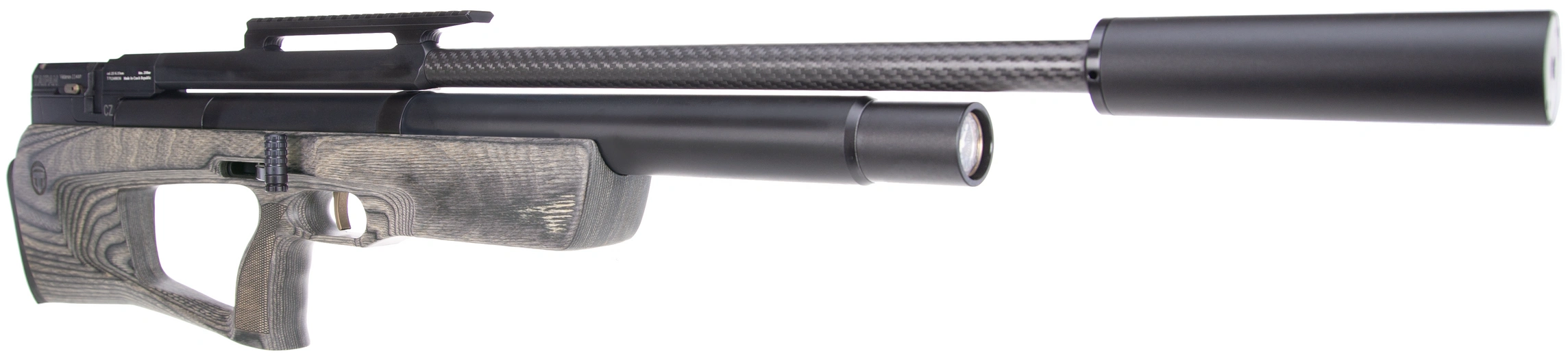
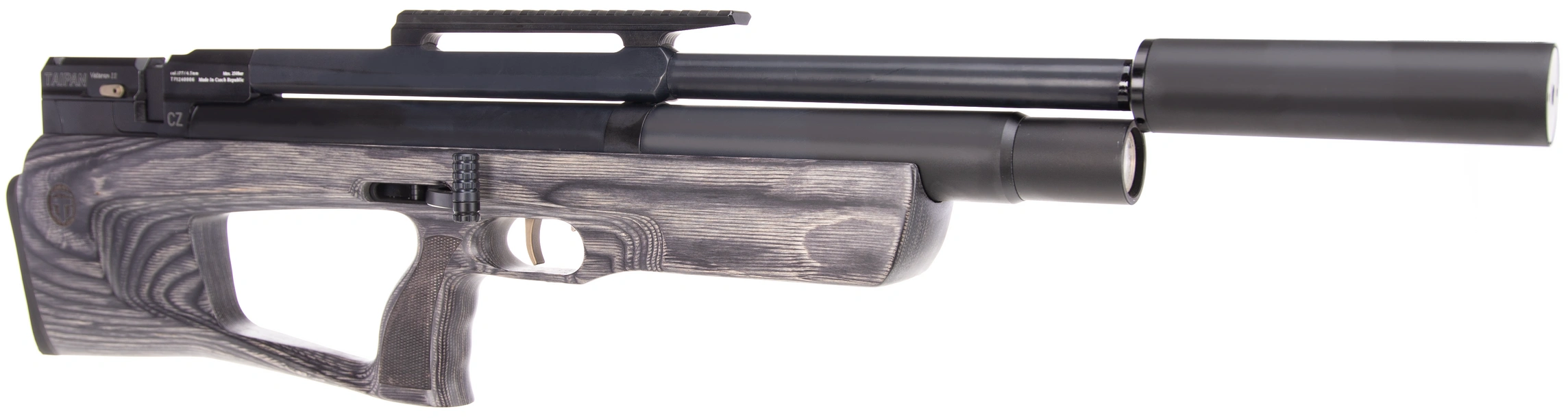
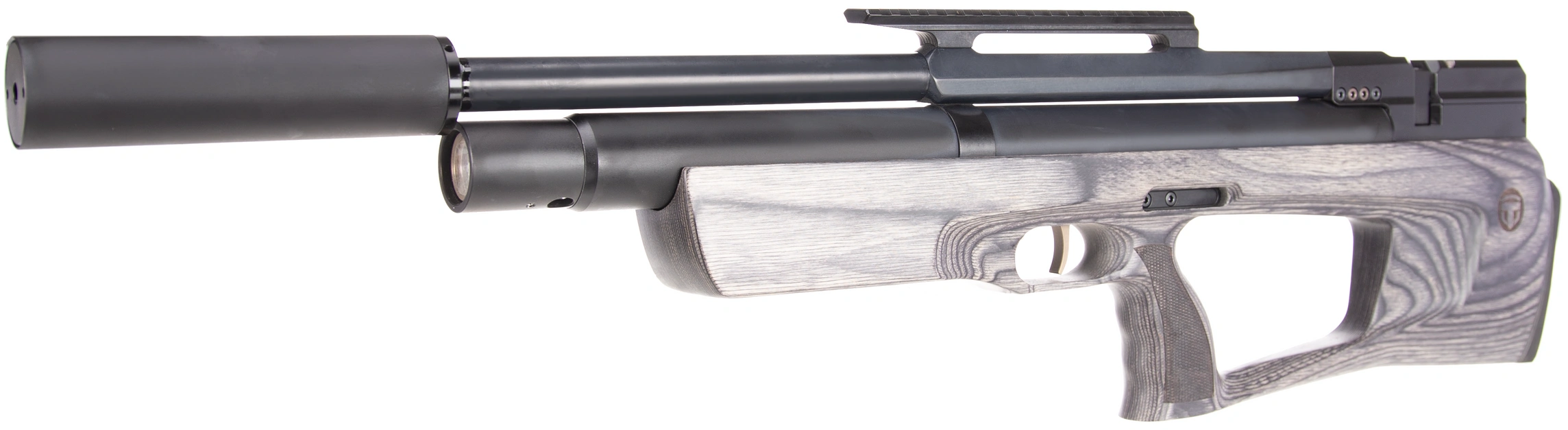
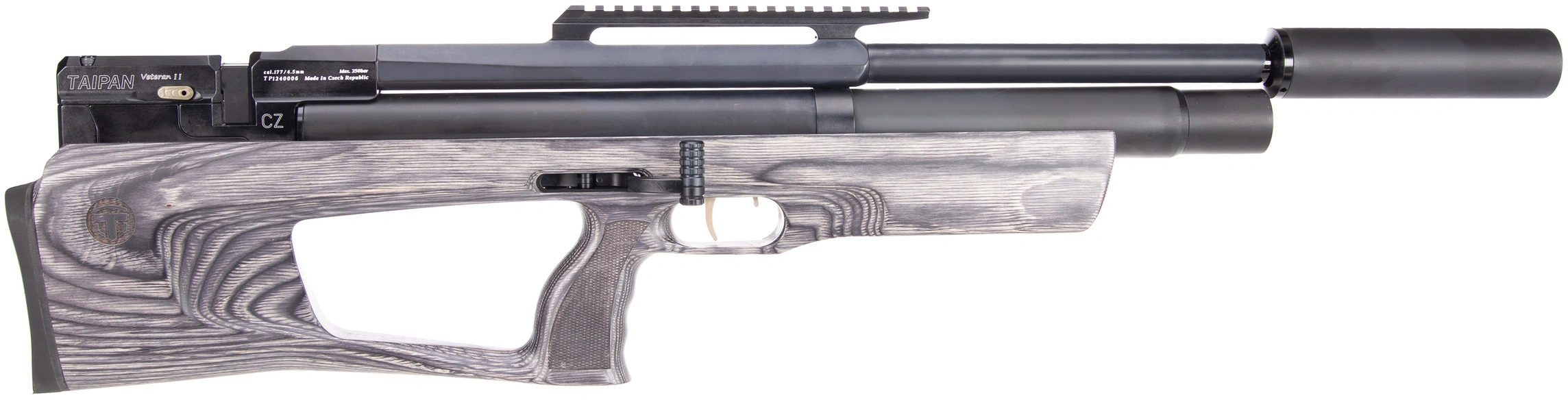
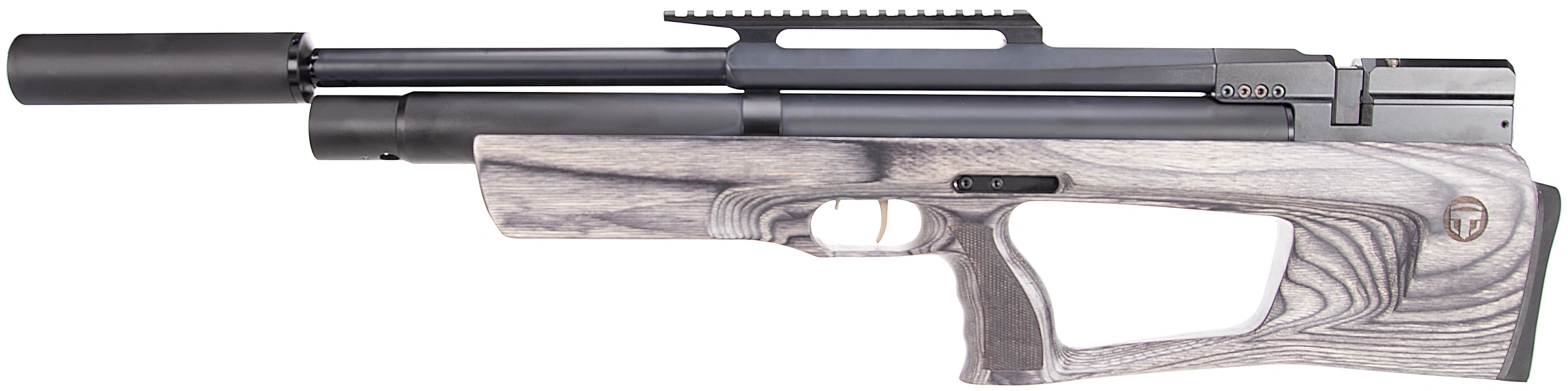
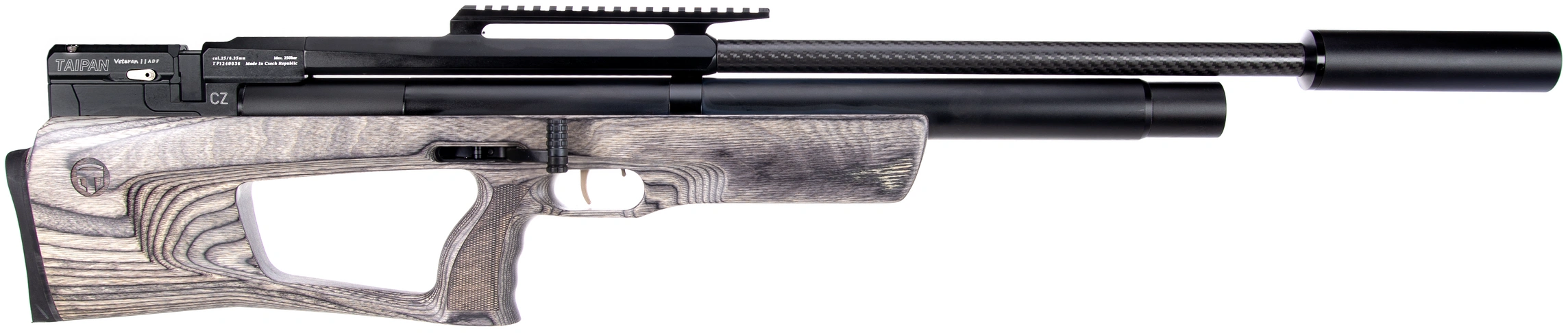
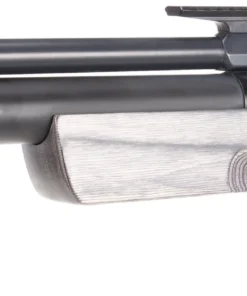
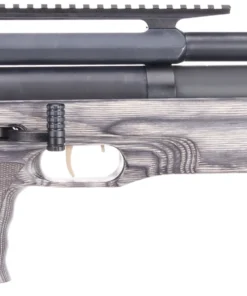
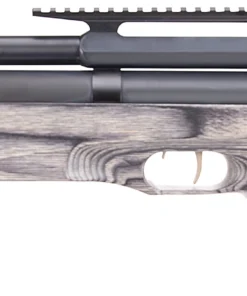
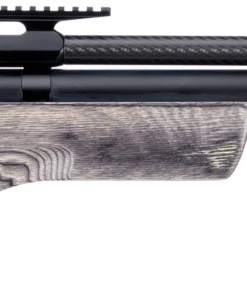
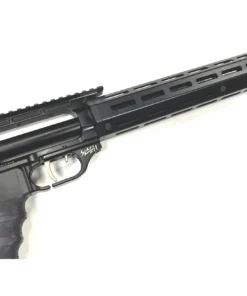
Taipan Veteran II PCP Air Rifle
$1,400.00
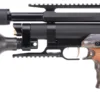
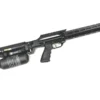
If you have ever shot or handled the Taipan Veteran, you know how well-made and accurate it is. Although we were more than happy with the reception and results the Taipan Veteran received, we didn’t want to rest on our laurels. As time moves on, so do technology and trends in the airgun world.
That is why we got to work and now it is time to introduce to you the latest iteration of the Taipan – the Veteran II. It is so much more than just an upgraded version of the first-gen Veteran. Think of it as a completely new rifle, which builds upon the success of its predecessor and takes it even further. Since 2025, we began producing an updated version of the Veteran II which includes several tweaks.
The modified version is newly equipped with the popular ADF (Anti Double Feed) system, which prevents loading a pellet into the barrel if there is already one inside. Additional changes apply to the side lever handle, which now offers a tactical look with a grooved surface. However, if you prefer the original one, you’ll find it in the package as well.
| Caliber | 5,5mm (.22) | 6,35mm (.25) |
|---|---|---|
| Energy (J) | 65 | 85 |
| Barrel length (mm) | 550/700 | 550/700 |
| Size (mm) | 820 x 50 x 200 (550mm) 970 x 50 x 200 (700mm) |
820 x 50 x 200 (550mm) 970 x 50 x 200 (700mm) |
| Weight (kg) | 3,8 (550mm) 4,0 (700 mm) |
3,8 (550mm) 4,0 (700 mm) |
| Max. fill pressure (bar) | 300 | 300 |
| Air capacity (cc) | 311 | 311 |
| Trigger pull (kgf) | 0,5 – 1,5 | 0,5 – 1,5 |
| Magazine capacity | 10 | 10 |
Taipan Veteran II PCP Air Rifle – Refined Bullpup Engineering, Regulated Precision and Premium Czech Performance
Taipan Veteran II PCP Air Rifle Overview
A Major Evolution of the Original Taipan Veteran
The Taipan Veteran II is a premium pre-charged pneumatic bullpup created for shooters who value mechanical consistency, compact handling and carefully controlled shot placement. Rather than applying minor cosmetic changes to the original taipan veteran, the manufacturer redesigned key operating components, including the cocking system and free-floating barrel arrangement. Taipan describes the second generation as a substantial technical evolution of its established platform.
The standard production rifle is officially listed in 5.5 mm/.22 and 6.35 mm/.25 configurations, with 550 mm and 700 mm barrel choices. The 550 mm version measures approximately 820 mm overall and weighs about 3.8 kg, while the 700 mm configuration measures roughly 970 mm and weighs around 4 kg. Both versions use a 10-shot magazine, a 311 cc air cylinder and a maximum filling pressure of 300 bar.
Why Choose the Taipan Veteran II?
The strongest reasons to choose the taipan veteran 2 are its regulated air delivery, rigid bullpup construction, fully adjustable trigger and manually operated repeating action. Unlike a semi-automatic platform, the side lever must be operated after every shot. Consequently, the shooter receives clear mechanical feedback and complete control over each loading cycle.
The trigger pull can be adjusted within a published range of approximately 0.5 to 1.5 kgf. Therefore, experienced owners can refine the release characteristics while remaining within approved settings. The rifle also uses a 20 MOA-inclined Picatinny optics rail, supporting practical scope adjustment over changing target distances.
Its substantial mass helps it settle firmly from a bench or supported position. However, the rifle may feel heavier than compact recreational models during long unsupported sessions.
Taipan PCP Air Rifle Technology
A Taipan PCP air rifle, Taipan airgun or Taipan PCP stores compressed air inside an onboard reservoir. When the trigger releases the firing valve, regulated pressure propels the pellet through the barrel.
Like other high-quality PCP airguns, the platform produces little mechanical recoil because no heavy spring piston travels through the action. As a result, the optic remains comparatively stable, and the shooter can concentrate on breathing, trigger movement and follow-through.
The regulator helps maintain consistent pressure throughout the useful part of the fill. However, dependable precision still requires suitable ammunition, stable optic mounting and repeatable shooting technique.
Taipan Veteran Specifications
Official Taipan Veteran specifications for the second-generation standard rifle include:
- 5.5 mm/.22 or 6.35 mm/.25 calibre
- 550 mm or 700 mm barrel
- 10-shot rotary magazine
- 311 cc air capacity
- 300-bar maximum fill pressure
- Adjustable trigger
- Approximately 3.8–4 kg weight
- Approximately 820–970 mm overall length
Unrestricted manufacturer figures list energy of up to 65 joules in .22 and 85 joules in .25. However, regional models may be restricted to substantially lower legal limits. Buyers must therefore confirm the power stated by the seller and marked on the rifle.
Taipan Veteran Standard
The Taipan Veteran Standard represents the balanced configuration within the product family. It combines bullpup dimensions with a full-length barrel and a substantial cylindrical reservoir.
This version may suit shooters who want more stability and air capacity than an ultracompact platform without choosing the longest available model. The conventional stock design also provides a more traditional appearance than the Tactical chassis.
Taipan Veteran Long
The Taipan Veteran Long generally refers to the longer-barrel configuration. In the current second-generation range, the 700 mm barrel version measures approximately 970 mm overall and weighs around 4 kg.
The longer barrel can support efficient acceleration and stable projectile guidance when the pneumatic system is correctly tuned. Nevertheless, barrel length alone does not guarantee accuracy. Projectile fit, regulator consistency, barrel condition and shooter technique remain equally important.
Taipan Veteran Compact
The Taipan Veteran Compact name is associated more strongly with earlier-generation configurations and shorter bullpup arrangements. Compact models prioritise manoeuvrability and convenient transport.
The second-generation standard rifle instead begins with a 550 mm barrel option. Therefore, customers should confirm whether a listing describes the original platform or the newer generation before purchasing magazines, stocks or service parts.
Taipan Veteran .25 PCP
The Taipan Veteran .25 PCP uses 6.35 mm projectiles and is officially listed at up to 85 joules in unrestricted configuration. It retains the same 10-shot magazine capacity, 300-bar pressure rating and 311 cc cylinder used by the standard second-generation platform.
This calibre normally appeals to shooters who prefer heavier pellets or compatible slugs. However, it generally consumes more air than smaller-calibre versions and requires a substantial backstop.
The phrase Taipan Veteran .25 PCP appears twice in many keyword lists, but it refers to the same calibre-specific platform rather than two different rifles.
Taipan Veteran .177 PCP
A Taipan Veteran .177 PCP is available through certain regional distributors, particularly in restricted-energy markets. Recent British reviews tested .177 Tactical versions operating at approximately 11.5 ft-lb.
However, the manufacturer’s primary international specification page currently emphasises .22 and .25. Therefore, anyone seeking a .177 version should confirm regional availability, magazine type, barrel configuration and legal power directly with the distributor.
Taipan .177, .22 and .25 Air Rifle Options
A Taipan .177 air rifle uses 4.5 mm ammunition and may suit precision paper-target work or legally restricted markets. A Taipan .22 air rifle uses 5.5 mm ammunition and offers a practical balance between projectile weight, trajectory and air consumption.
A Taipan .25 air rifle uses 6.35 mm ammunition and supports heavier projectiles. However, calibre selection should be based on lawful purpose, local restrictions, shooting distance and available ammunition rather than maximum advertised energy alone.
Taipan Pellet Rifle and Taipan Slug Rifle Capability
The platform can function as a Taipan pellet rifle with conventional diabolo ammunition. Depending on barrel specification, power and magazine fit, it may also be configured as a Taipan slug rifle.
Pellets usually load easily and use compressed air efficiently. Slugs may provide improved aerodynamic performance in a correctly tuned rifle, although they can require greater power and careful sizing.
Before buying ammunition in quantity, the owner should test magazine fit, chambering reliability and repeated grouping.
Taipan Bullpup Air Rifle Design
The term Taipan bullpup air rifle describes the rearward placement of the action and magazine. This arrangement retains a long barrel while reducing overall external length.
For example, the 550 mm-barrel rifle measures only about 820 mm overall. Consequently, it remains relatively compact despite using a substantial barrel and reservoir.
The rearward balance can feel different from a conventional rifle. New owners should practise shouldering the unloaded platform until cheek position, support-hand placement and side-lever access become natural.
Taipan Veteran II Tactical
The Tactical model builds on the same regulated action but introduces a larger Kevlar bottle, modern aluminium chassis, extended moderator and modular ergonomics.
Official specifications list a 480 cc bottle plus an additional 75 cc internal air volume, creating significantly more capacity than the standard rifle. It retains 550 mm and 700 mm barrel choices, 300-bar filling pressure and a 10-shot magazine.
Recent updated versions also feature an anti-double-feed system, which helps prevent another projectile from being loaded when one is already present.
Veterans Tactical and Veteran Tactical Searches
The phrases veterans tactical and veteran tactical commonly refer to the second-generation Tactical variant.
This model suits shooters who prefer an AR-style grip, accessory-compatible chassis and larger air capacity. However, it remains manually cycled. It should not be confused with a semi-automatic rifle simply because of its modern appearance.
Taipan Slash Comparison
The taipan slash, taipan slash airgun and taipan slash tactical represent the company’s semi-automatic product family.
Unlike the Veteran II, the Slash automatically prepares the next round after each discharge. Therefore, the shooter does not need to operate a side lever between shots.
The Veteran II may appeal more strongly to owners who prefer a simpler manually controlled action, while the Slash suits users who value self-loading operation. The two platforms should not be assumed to share magazines, stocks or internal components.
Tactical Air Guns and Practical Purpose
The Veteran II Tactical belongs to the premium category of tactical air guns, although its external styling supports practical functions rather than appearance alone.
Its chassis can accept compatible accessories, while the inclined rail supports optic installation. Nevertheless, unnecessary additions can increase weight and disturb balance.
The standard rifle remains the cleaner choice for buyers who prefer a laminated or synthetic sporting stock.
Taipan Mutant Heritage
The Taipan Mutant is an earlier compact platform associated with the company’s development history. It helped establish the reputation for short bullpup dimensions, refined triggers and quiet regulated operation.
However, the Veteran II incorporates updated engineering, a redesigned cocking system and modern barrel arrangement. Parts compatibility should never be assumed between generations.
Taipan Black and Citadel Taipan Clarification
The phrase taipan black may describe a colour, synthetic stock or retailer-specific finish rather than one distinct mechanical model.
Meanwhile, citadel taipan usually refers to an unrelated firearm product. It is not part of the pneumatic Veteran range.
Using the full manufacturer name, generation, calibre and barrel length will produce more accurate purchasing and service information.
Competition PCP Rifle Potential
The stable action, low recoil, adjustable trigger and precision-focused barrel system can make the rifle appealing as a Competition PCP rifle in suitable disciplines.
Its eligibility will depend on calibre, legal power, rifle weight and governing rules. Therefore, prospective competitors should review event regulations before selecting a particular configuration.
The 550 mm version offers a practical balance between overall length and stability, while the 700 mm rifle provides a longer, heavier setup for supported precision work.
Taipan Air Rifle for Sale and Buyer Considerations
Anyone searching Taipan air rifle for sale, Best Taipan air rifle or Taipan air rifle review should compare exact configurations rather than relying on the family name.
Important considerations include calibre, barrel length, stock material, legal output, included magazines, filling probe, warranty and local service support.
The best version is not automatically the most powerful or expensive. It is the configuration that matches the buyer’s lawful purpose, preferred handling and available filling equipment.
Final Assessment
The Taipan Veteran II combines a regulated pneumatic action, 10-shot magazine, 300-bar fill pressure, 311 cc reservoir and fully adjustable trigger in a refined bullpup platform.
Its main strengths are deliberate manual operation, stable construction, compact overall dimensions and strong precision potential. With clean compressed air, compatible ammunition, secure optic installation and responsible maintenance, it can provide dependable performance for lawful target shooting and advanced sporting ownership.
Engineering, Accuracy, Handling and Practical Ownership
Regulated Pneumatic Operation
The rifle uses stored compressed air to propel each projectile through the barrel. When the trigger is pressed, the firing valve releases a controlled quantity of air from the reservoir. This system avoids the heavy piston movement found in spring-powered designs, so the firing cycle remains smooth and produces little mechanical recoil.
An internal regulator helps maintain stable operating pressure as the reservoir gradually empties. Consequently, velocity can remain more consistent throughout the useful portion of a fill. This supports predictable trajectory, tighter vertical grouping and more dependable sight adjustments.
However, pressure regulation cannot compensate for poor ammunition, loose mounting hardware or inconsistent shooting technique. Mechanical consistency must still be supported by careful preparation.
Bullpup Balance and Handling
The action sits behind the trigger, allowing the rifle to retain a long barrel without becoming excessively long overall. This arrangement supports easier movement around shooting benches, storage areas and controlled firing positions.
Because much of the weight remains close to the shoulder, the balance may feel different from a conventional full-length rifle. Some shooters find the rearward weight comfortable, while others need time to adapt.
Before serious accuracy testing begins, the unloaded rifle should be shouldered repeatedly. This helps the user identify a natural support-hand location, comfortable cheek position and reliable reach to the loading lever.
Stock Fit and Shoulder Contact
The stock should allow the butt to sit firmly against the shoulder without forcing the head downward or stretching the neck forward.
A consistent cheek position is essential because the eye must return to the same location behind the optic for every shot. Changing cheek pressure can alter apparent reticle alignment and shift the point of impact.
The shooting hand should maintain moderate pressure around the grip. Meanwhile, the supporting hand should hold the fore-end lightly enough to avoid unnecessary muscular tension.
Comfortable stock fit reduces fatigue and helps the shooter maintain a stable position throughout longer practice sessions.
Manual Side-Lever Operation
The loading lever gives the shooter direct control over each firing cycle. It should be moved smoothly through its complete rearward and forward travel.
Partial operation may prevent the magazine from indexing correctly or leave the action incompletely prepared. If unusual resistance is felt, the lever should not be forced.
A damaged projectile, incorrectly positioned magazine or contamination inside the loading area may be responsible. The muzzle must remain pointed toward a secure backstop while the issue is inspected.
Smooth, deliberate cycling generally produces better reliability than rapid or aggressive movement.
Magazine Loading and Inspection
The rotary magazine should be loaded only with clean, undamaged projectiles of the correct calibre and length.
Each round should be inspected for deformation, visible debris or damage around the skirt or nose. Poorly formed ammunition can interfere with feeding and reduce accuracy.
Projectiles should be seated evenly without being crushed or forced. The magazine must then be inserted in the correct orientation and pushed fully into position.
If it does not enter smoothly, remove it and inspect the alignment. Forceful installation may damage the magazine or loading mechanism.
Preventing Double Loading
Double loading can occur when the lever is operated more than once without firing the first projectile.
Two rounds inside the barrel may cause reduced velocity, obstruction or unpredictable impact placement. When chamber status is uncertain, shooting must stop immediately.
The magazine should be removed, and the loading area should be inspected according to the manufacturer’s procedure.
Another shot should never be used to clear a suspected blockage. If the obstruction cannot be removed safely, qualified technical assistance should be obtained.
Reservoir Capacity and Shot Planning
The onboard cylinder provides enough compressed air for productive sessions, although actual shot count depends on calibre, power level, projectile weight, temperature and mechanical condition.
A useful approach is to begin with a known fill pressure and count every discharge. At regular intervals, the shooter should record the gauge reading, firing sound and point of impact.
After several sessions, the most reliable pressure range becomes easier to identify. The owner can then refill before accuracy or velocity begins to decline.
Continuing to fire at very low pressure may produce weak shots or unstable valve behaviour.
Safe Filling Procedure
Only clean, dry compressed air should be used. Suitable filling methods may include a certified storage cylinder, purpose-built compressor or compatible manual pump.
Before filling, inspect the hose, connector, gauge, seals and charging port. Dirt, oil and moisture must not enter the pneumatic system because contamination can damage internal valves and sealing surfaces.
Air should be introduced gradually while both pressure gauges are monitored. Rapid filling creates heat and may cause the displayed pressure to fall after cooling.
The approved maximum pressure must never be exceeded. After filling, the hose must be depressurised through the bleed valve before disconnection.
Barrel Performance
The rifled barrel gives the projectile controlled rotation during flight. This rotation supports stability and repeatable grouping when suitable ammunition is used.
Barrel quality alone does not guarantee precision. Projectile dimensions, pressure consistency, optic alignment, environmental conditions and trigger technique all influence the final result.
Several ammunition types should be tested from a stable padded support at a measured distance. Repeated groups provide more meaningful information than one unusually accurate result.
The most suitable option should load smoothly, feed reliably and maintain a consistent point of impact.
Pellet and Slug Testing
Traditional diabolo ammunition often offers efficient air use and smooth magazine operation. Cylindrical projectiles may provide stronger aerodynamic performance in a properly configured rifle.
However, not every design will fit the magazine or barrel correctly. Projectile length, diameter and weight must all be considered.
A small quantity should be tested before purchasing in bulk. The best option should produce dependable feeding, stable velocity and repeated accuracy rather than simply the highest measured speed.
Trigger Control
The trigger finger should contact the blade at the same point during every shot. Pressure should increase smoothly and travel directly toward the rear.
The remaining fingers should hold the grip with moderate, consistent pressure. Tightening the entire hand during release may move the muzzle and widen groups.
After discharge, the trigger should remain pressed briefly before being allowed to reset. This supports follow-through and reduces sudden finger movement.
Any adjustment should remain within the approved range. An excessively light setting may create unsafe handling.
Optic Selection and Mounting
A durable variable-power optic normally complements the rifle’s precision-focused design. The rings must match the rail and optic-tube diameter.
Eye relief should be adjusted from the natural shooting position. The shooter should see a complete image without repeatedly moving the head.
Mounting screws should be tightened gradually and evenly. Excessive force may damage threads or distort the optic body.
After transportation, a confirmation group should be fired to verify that the zero remains unchanged.
Routine Care and Secure Storage
After shooting, remove the magazine and confirm that the chamber is empty. Wipe the exterior to remove moisture, dust and fingerprints.
The barrel does not require cleaning after every session. Cleaning becomes appropriate when accuracy declines or contamination is visible.
Store the rifle unloaded inside a locked cabinet or secure container. During transportation, use a padded case that protects the stock, optic, barrel, gauge and reservoir.
With clean compressed air, suitable ammunition, secure mounting hardware and disciplined technique, the rifle can provide dependable accuracy, efficient operation and strong long-term sporting performance.
Advanced Accuracy, Troubleshooting, Safety and Long-Term Reliability
Establishing a Consistent Pre-Shooting Routine
Reliable performance begins with a structured inspection before every session. Check the reservoir pressure, filling connection, magazine, loading lever, trigger area, safety control, optic mounts, stock and muzzle. Every visible component should appear secure, clean and free from obvious damage.
Keep the muzzle directed toward a dependable backstop throughout preparation. The trigger finger must remain outside the guard until the rifle is shouldered, the target has been positively identified and the decision to fire has been made.
Following the same preparation sequence each time reduces loading mistakes and makes unusual mechanical behaviour easier to recognise.
Confirming an Unloaded Condition
Removing the magazine does not guarantee that the chamber is empty. A projectile may already have entered the barrel before the magazine was removed.
Before cleaning, adjusting, transporting or storing the rifle, inspect the chamber according to the manufacturer’s recommended procedure. Do not operate the loading lever repeatedly when chamber status remains uncertain because another projectile could be introduced.
When there is any doubt, stop handling the controls and confirm that the bore is clear. Another shot must never be used to remove a suspected obstruction.
Developing Natural Point of Aim
Natural point of aim describes where the sights settle when the shooter relaxes. Correct body alignment reduces muscular effort and supports repeatable grouping.
Assume the intended shooting position, close the eyes briefly and allow the upper body to settle. Reopen the eyes and observe where the reticle rests.
If it settles beside the target, reposition the feet, hips or torso instead of forcing the rifle sideways with the arms. Muscular tension may hold the sights temporarily, but it usually produces movement during trigger release.
Improving Supported Accuracy Testing
A padded shooting rest helps separate mechanical performance from shooter movement. Support the stock or lower fore-end without allowing the barrel, reservoir or moderator to contact a hard surface directly.
Use the same support point for every shot. Moving the rifle forward or backward changes its balance and may shift the point of impact.
The rear of the stock may receive light support, although the rifle should not be clamped rigidly. Fire several groups before drawing conclusions because one unusually small group may occur by chance.
Repeated results provide stronger evidence of ammunition suitability and mechanical consistency.
Recording Pressure and Shot Count
A written shooting log helps identify the rifle’s most dependable pressure range.
Begin with a known fill pressure and count every discharge. At regular intervals, record the gauge reading, firing sound, group position and loading behaviour.
After several sessions, a pattern should become clear. The owner can then refill before accuracy, velocity or firing sound begins to change noticeably.
A sudden reduction in usable shot count may indicate air leakage, regulator inconsistency, valve inefficiency or seal deterioration.
Recognising Pressure-Related Changes
Vertical movement on the target may appear when reservoir pressure falls outside the most stable operating range. However, changing cheek contact, loose optic mounts and inconsistent breathing may create similar patterns.
Check simple external causes first. Confirm the pressure, inspect the ammunition and verify that the optic remains securely mounted.
Internal regulator or valve adjustments should not be attempted without appropriate tools and technical knowledge. Incorrect changes may increase air consumption, damage seals or create unsafe operating conditions.
Responding to a Weak Discharge
A noticeably weak shot requires immediate attention.
Stop shooting and inspect the pressure gauge. If the firing sound was unusually soft or the expected impact did not appear, a projectile may remain inside the barrel.
Do not load or fire another round until the bore has been confirmed clear. Low pressure, damaged ammunition, incomplete loading or an obstruction may be responsible.
Repeated weak discharges should be examined by a qualified technician.
Diagnosing Lever Resistance
The loading lever should travel smoothly through its complete operating cycle. Sudden resistance may indicate a deformed projectile, misaligned magazine or contamination inside the loading channel.
Do not force the mechanism. Keep the muzzle pointed toward the backstop and remove the finger from the trigger.
Remove the magazine only when it can be done safely, then inspect the loading path according to the approved procedure.
Continued force may damage seals, deform ammunition or create uncertainty about the chamber condition.
Preventing Double Loading
Double loading may occur when the lever is cycled twice without firing the first projectile.
Two rounds inside the barrel can reduce velocity, create an obstruction or produce an unpredictable point of impact. The risk increases when the shooter loses track of the loading sequence.
When chamber status is uncertain, stop immediately. Remove the magazine and inspect the bore before further use.
Never attempt to solve the problem by firing another shot.
Detecting Air Leakage
A slow leak may cause the pressure reading to fall during storage. Temperature changes also influence displayed pressure, so comparisons should be made under similar environmental conditions.
Record the pressure after filling and check it again later. Continued loss may indicate a damaged seal, filling-valve problem, gauge fault, reservoir connection issue or internal leak Taipan Veteran Compact Taipan air rifles.
Never dismantle the reservoir, regulator or valve while compressed air remains inside. High-pressure repair requires specialist tools and controlled depressurisation.
Maintaining Magazine Reliability
Keep magazines clean, dry and protected from impact. Dirt, wear or damaged indexing parts may interfere with smooth feeding.
Inspect every projectile before loading. Incorrect dimensions, damaged skirts, malformed heads or visible contamination can reduce accuracy and mechanical reliability.
If a magazine becomes difficult to rotate, insert or remove, do not force it. A damaged unit should be serviced or replaced before use continues.
Protecting Optic Zero
Transportation, impact and loose hardware can shift the point of impact.
After travelling, fire a confirmation group before beginning serious target work. If the group remains tight but has moved, a minor optic correction may be required. If it has widened, inspect the rail, rings, stock hardware and ammunition.
Mounting screws should be tightened evenly. Excessive torque may damage threads or distort the optic tube.
Cleaning the Barrel Safely
The barrel does not require cleaning after every session. Cleaning becomes appropriate when accuracy declines, contamination appears or foreign material enters the bore.
A soft pull-through system is generally safer than a rigid metal rod. The rifling and muzzle crown must remain protected from scratches.
Use only products suitable for pneumatic rifle barrels. After cleaning, several settling shots may be required before normal grouping returns.
Safe Storage and Long-Term Care
Store the rifle unloaded inside a locked cabinet or secure container. Remove the magazine and restrict access to ammunition, filling equipment and keys.
The storage area should remain dry and temperature-stable. Excessive heat may increase internal pressure, while damp conditions can encourage corrosion.
Retain the manual, purchase receipt and service records. Avoid unauthorised modifications that may reduce reliability, invalidate warranty coverage or alter legal classification.
With clean compressed air, compatible ammunition, disciplined handling and professional servicing when required, the rifle can remain accurate, efficient and dependable throughout many years of lawful sporting ownership.
Be the first to review “Taipan Veteran II PCP Air Rifle”
Related products
AIR GUN RIFLES
AIR GUN RIFLES
AIR GUN RIFLES
AIR GUN RIFLES
AIR GUN RIFLES
TAIPAN RIFLES
Reviews
There are no reviews yet.