
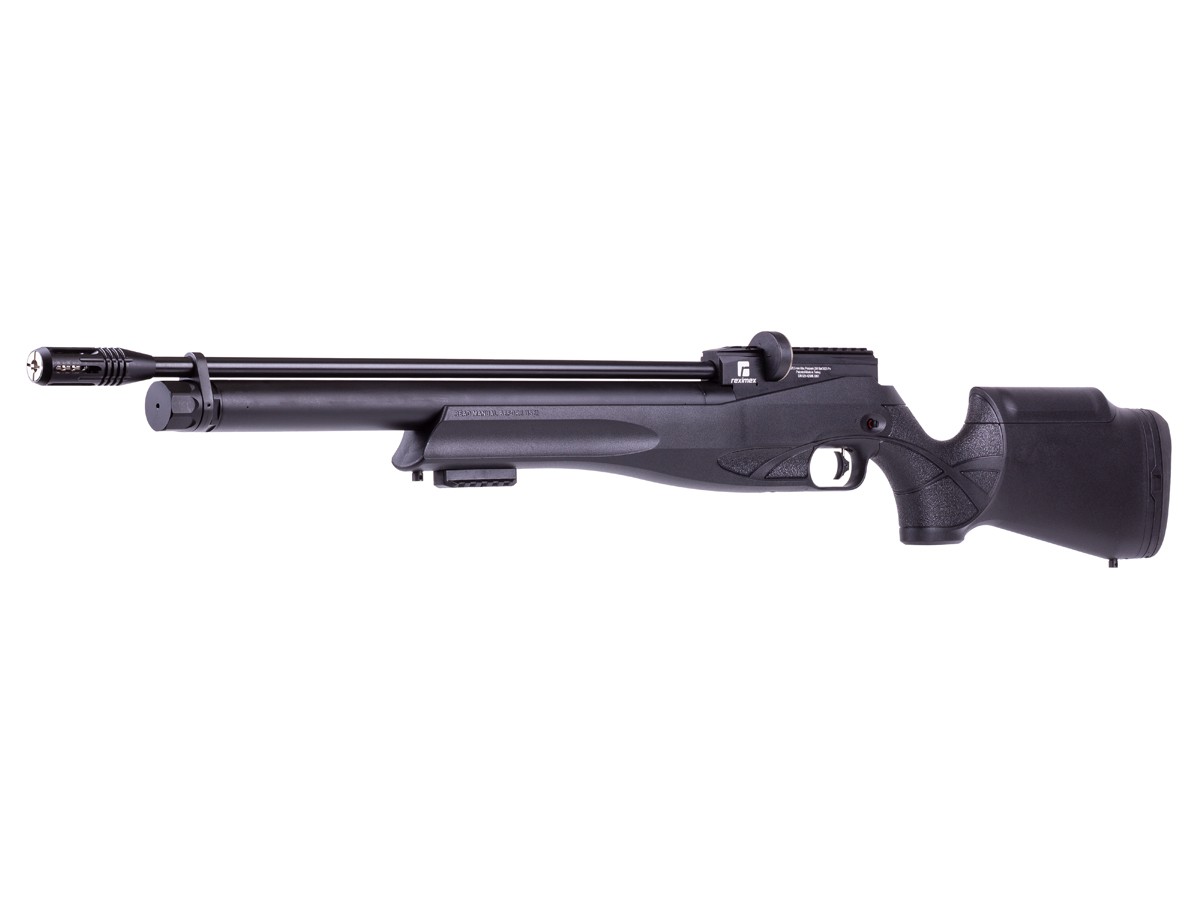
Reximex Daystar PCP Air Rifle
$255.00
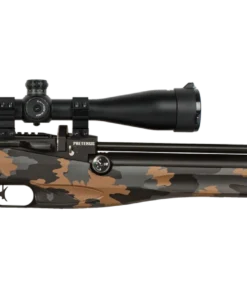
The Reximex Daystar is a Turkish-made regulated PCP air rifle with a genuine Turkish walnut stock — a combination of good looks and practical performance. Available in .22 cal at 950 fps or .25 cal at 850 fps, it’s been tested with JSB pellets (18.13 gr in .22 and 25.39 gr in .25) and performs best at fill pressures between 1,450 and 3,625 PSI (100–250 BAR). The regulator keeps velocity flat across the fill window, which is what serious shooters want.
- .22 cal at 950 fps or .25 cal at 850 fps — both with regulated consistency
- Turkish walnut stock — real wood, attractive grain, comfortable fit
- Regulator-equipped PCP — consistent shots across the usable fill range
- Optimized fill range — 1,450–3,625 PSI (100–250 BAR) for best performance.
Caliber .22 Cal, Ambush, .22 Cal, Black, .22 Cal, Turkish Walnut Stock, .22 Cal, Orange Laminate, .22 Cal, Blue Laminate, .25 Cal, Black, .25 Cal, Turkish Walnut Stock, .25 Cal, Orange Laminate, .25 Cal, Blue Laminate Brand Reximex
Reximex Daystar PCP Air Rifle — Side-Lever PCP Engineering, Adjustable Power, Precision Barrel, and Full-Length Performance
Reximex Daystar PCP Air Rifle Engineering, Precision, Air Capacity, and Technical Overview
The Reximex Daystar PCP Air Rifle combines a traditional full-length rifle profile with modern pre-charged pneumatic engineering. Its current factory configuration includes a manual side-lever action, precision-rifled barrel, adjustable power system, elevation-adjustable cheekpiece, adjustable buttpad, four-way adjustable trigger shoe, manual safety, air stripper, built-in pressure gauge, and an 11/22 mm receiver mounting interface. A regulator is listed as optional, so individual configurations can differ.
Current detailed specifications list a 260cc air reservoir, maximum 250-bar fill pressure, 580 mm barrel, approximately 1,050 mm overall length, and caliber choices of .177, .22, and .25. Magazine capacities are 14, 12, and 10 pellets respectively. The synthetic-stock version weighs approximately 2.8 kg, while the walnut version is around 3.2 kg.
Published reference velocities are approximately 350 m/s or 1,150 fps in .177, 290 m/s or 950 fps in .22, and 260 m/s or 850 fps in .25. Corresponding factory energy figures are 33.6 J, 49.3 J, and 55.2 J. Reximex states that actual results may vary with pellet mass, pellet shape, temperature, elevation, and whether an optional regulator is fitted.
Reximex Lyra K
The Reximex Lyra K belongs to the same manufacturer’s pneumatic range but uses a shorter architecture, different reservoir arrangement, and different stock geometry.
Reximex
Reximex manufactures multiple PCP rifles and pistols across conventional, compact, tactical, and bullpup formats. The Daystar remains part of its current PCP lineup.
Reximex Airguns
Reximex airguns include rifles with different barrel lengths, stock materials, actions, air capacities, and pressure-management systems.
Reximex Throne Gen2
The Reximex Throne Gen2 uses a compact bullpup architecture and differs significantly from the conventional full-length stock arrangement used here.
Reximex гр
The phrase reximex гр appears in multilingual search activity but does not identify a separate factory version of this rifle.
Reximex Throne Gen 2
The Reximex Throne Gen 2 belongs to a separate platform family with different balance, dimensions, regulator architecture, and reservoir design.
Reximex Mito
The Reximex Mito refers to another pneumatic product family and should not be confused with this full-size rifle.
Reximex RPA
The Reximex RPA is a substantially smaller regulated pneumatic platform built around pistol dimensions and a removable reservoir.
Reximex Mitos
Searches for Reximex Mitos generally concern another product family rather than this model.
Reximex Lieva
The Reximex Lieva uses traditional styling with a distinctive lever-operated architecture, making it mechanically different from this side-lever platform.
TPS to Joules Calculator
A tps to joules calculator is not the conventional method for determining projectile energy because projectile mass and measured velocity are both required.
Reximex Accura PCP Air Rifle
The Reximex Accura PCP air rifle belongs to another platform family with different reservoir capacity, dimensions, and stock architecture.
TPS Joule Calculator
A Tps joule calculator should not replace a proper projectile-energy calculation based on measured velocity and known projectile mass.
Roxy Max
Roxy Max is not an official manufacturer designation for this rifle.
MX Rex
The phrase mx rex does not identify a factory configuration of this platform.
FPS to FT IBS
For fps to ft Ibs, projectile velocity alone is insufficient because projectile mass must also be included when calculating energy.
Airgun Joules Calculator
An airgun joules calculator estimates energy when accurate projectile mass and measured velocity figures are provided.
Gunseek
Gunseek is a search-related phrase rather than an engineering characteristic of the rifle.
Reximex Lyra-K PCP Air Rifle
The Reximex Lyra-K PCP air rifle remains a separate pneumatic rifle with different dimensions, reservoir capacity, barrel configuration, and handling characteristics.
Reximex Lyra-K Airgun
A Reximex Lyra-K airgun shares the general compressed-air operating principle but should not be considered mechanically identical to the Daystar.
Reximex Lyra-K Review
A Reximex Lyra-K review may provide useful information about another rifle, although its results cannot directly determine the behavior of a different barrel, stock, valve, or reservoir system.
Reximex Lyra-K PCP Rifle
The Reximex Lyra-K PCP rifle belongs to the wider pneumatic lineup while retaining a separate engineering configuration.
Reximex Lyra-K Regulated PCP
A Reximex Lyra-K regulated PCP illustrates the broader principle of regulator-controlled pressure management found in modern pneumatic systems.
Reximex Lyra-K Compact PCP Rifle
The Reximex Lyra-K compact PCP rifle uses a shorter overall profile, whereas the Daystar measures approximately 1,050 mm and uses a 580 mm barrel.
Reximex Lyra-K Tactical Air Rifle
A Reximex Lyra-K tactical air rifle description concerns another configuration and should not be confused with the more traditional carbine-style profile used here.
Reximex Lyra-K Hunting Rifle
The phrase Reximex Lyra-K hunting rifle describes another model and a regulated use case. Activities involving animals must comply with applicable local laws and animal-welfare requirements.
Buy Reximex Lyra-K Online
The phrase buy Reximex Lyra-K online represents commercial search intent for another product rather than a mechanical characteristic.
Best Price Reximex Lyra-K
Similarly, best price Reximex Lyra-K concerns retail comparison rather than engineering quality, durability, or practical precision.
Reximex Lyra-K Accuracy Test
A Reximex Lyra-K accuracy test cannot directly establish the performance of another barrel, stock, pressure system, trigger, or ammunition combination.
Reximex Lyra-K Scope Package
The phrase Reximex Lyra-K scope package concerns accessory bundling. Reximex specifically notes that a scope is not included as standard equipment with the Daystar.
Reximex Lyra-K Pellet Gun
A Reximex Lyra-K pellet gun remains a separate compressed-air rifle with its own specifications and handling characteristics.
Reximex Lyra-K for Pest Control
The phrase Reximex Lyra-K for pest control describes a regulated activity and should only be considered where lawful and appropriate.
Reximex Lyra-K Small Game Hunting
Likewise, Reximex Lyra-K small game hunting concerns a regulated activity rather than an inherent mechanical characteristic of this rifle.
Why the Full-Length Design Matters
The full-length architecture provides space for a 580 mm precision-rifled barrel while retaining a conventional shoulder-stock arrangement. The adjustable cheekpiece and buttpad allow the stock geometry to be configured for more repeatable head and shoulder positioning, while grip texturing is incorporated for more consistent contact.
The adjustable power system provides factory-designed control over the transfer-port setting, while the air stripper is positioned at the muzzle. The four-way adjustable trigger and manual safety further contribute to the platform’s configurable mechanical design. Any adjustments should remain within manufacturer-approved parameters.
Reximex lists approximately 98 optimal-velocity shots in .177, 84 in .22, and 70 in .25 within its stated working-pressure range. These are manufacturer reference figures rather than guaranteed results for every rifle.
Practical precision ultimately depends on pellet consistency, barrel condition, stable air delivery, magazine alignment, sight security, trigger technique, stock fit, and repeatable shooting position. Because the regulator is optional, pressure behavior can also differ between individual configurations. Finally, the 250-bar air system should only be filled with appropriate high-pressure equipment and operated within manufacturer specifications.
Air Delivery, Reservoir Management, Accuracy Factors, Trigger Control, and Practical Reliability
How the Pneumatic System Works
A pre-charged pneumatic rifle stores compressed air inside its reservoir and releases a controlled quantity during each firing cycle. The valve system meters that air before it reaches the barrel, where the expanding pressure propels the pellet forward.
Because the rifle does not rely on a heavy spring and piston moving during the shot, the firing cycle is generally smoother. Reduced internal movement can make it easier to maintain sight alignment and repeat the same shoulder, cheek, and hand position from one shot to the next.
However, practical consistency still depends on the condition of the reservoir, valve, seals, ammunition, trigger, barrel, and sighting system.
Pressure Control and Consistency
Stable air delivery matters because changes in pressure can influence projectile velocity and grouping.
If a regulating system is fitted, it helps reduce variation during the useful portion of the reservoir cycle. If regulation is not present, pressure behavior can change more noticeably as the reservoir empties.
For that reason, performance should be evaluated across several groups rather than judged from one isolated shot.
A repeated pattern gives more useful information than a single unusually good or poor result.
Reservoir Pressure Management
The reservoir should always be filled within the manufacturer’s stated pressure limit.
Suitable high-pressure filling equipment should be used, and pressure should be monitored carefully throughout the process.
Filling should remain gradual and controlled.
Overfilling can place unnecessary stress on seals and pressure-bearing components.
Likewise, repeatedly operating far below the intended working range may reduce consistency.
If pressure begins falling unexpectedly between sessions, the rifle should be inspected rather than continually topped up.
Correct pressure management supports both reliability and long-term component protection.
Air Capacity and Efficiency
A moderate-capacity reservoir can provide useful endurance during regular target sessions, but efficiency still depends on valve condition, pellet characteristics, pressure level, and environmental conditions.
Shot count should be treated as a reference rather than a fixed guarantee.
Temperature, seal condition, valve behavior, and ammunition can all influence how quickly stored air is consumed.
If the rifle suddenly begins using noticeably more air than usual under similar conditions, the cause should be investigated.
A small leak, worn seal, or valve issue may be responsible.
Gauge Monitoring
The pressure gauge provides useful information about the amount of air remaining inside the reservoir.
It should be checked before and after use.
If the reading begins dropping unexpectedly while the rifle is stored, a sealing issue may be present.
Sudden or irregular changes should not be ignored.
However, diagnosis should remain methodical because pressure loss can originate from several areas.
Routine gauge monitoring can help identify developing problems before they affect reliability more seriously.
Side-Lever Operation
The side lever should operate smoothly and consistently.
Any sudden resistance, grinding, looseness, or unusual movement should be treated as a reason for inspection.
The action should never be forced if a pellet does not feed normally.
A damaged pellet, dirty breech, misaligned magazine, or loading-probe issue may be responsible.
Forcing the lever through resistance can damage the probe, magazine, or surrounding components.
Routine inspection around the breech and magazine interface helps preserve smooth operation.
Magazine Feeding and Alignment
The magazine should index correctly and present each pellet in proper alignment with the loading system.
Pellets should be inserted carefully so that their skirts are not crushed or distorted.
A damaged projectile can affect both feeding and practical accuracy.
If one chamber repeatedly causes resistance, the magazine should be checked for dirt, deformation, or alignment problems.
The magazine should remain clean and dry.
Reliable feeding reduces unnecessary mechanical stress and helps maintain a consistent firing cycle.
Pellet Quality and Practical Accuracy
Pellet condition has a direct influence on grouping.
Small differences in weight, diameter, head shape, or skirt condition can change how consistently each projectile enters the barrel and engages the rifling.
Damaged pellets should be avoided.
For controlled testing, one pellet design should be used across several groups.
Changing ammunition too frequently makes it difficult to determine whether performance differences come from the rifle or the projectile.
Pellets should also be protected from dirt, moisture, and impact during storage.
Consistent ammunition provides a clearer indication of mechanical performance.
Trigger Control and Shot Release
A predictable trigger release helps preserve sight alignment.
Pressure should be applied gradually rather than abruptly.
Consistent finger placement can reduce sideways movement immediately before the shot.
If the trigger becomes unusually heavy, light, rough, or inconsistent, the rifle should be inspected.
Any adjustment should remain within manufacturer-approved limits.
Excessive modification can affect reliability and safe operation.
A stable trigger system supports controlled shooting and reduces unnecessary technique-related variation.
Cheekpiece and Buttpad Adjustment
Adjustable stock components can help the shooter establish a more natural position.
Cheek height, shoulder contact, buttpad position, grip pressure, and support-hand placement should remain consistent once a comfortable setup has been established.
Frequent changes can alter sight alignment and overall balance.
A natural stance generally provides better repeatability than one requiring excessive muscular effort.
During longer sessions, short breaks can help reduce fatigue and preserve posture.
Stable body position makes accuracy evaluation more reliable.
Sight Stability and Mounting Security
The sighting system should remain securely mounted throughout repeated use.
Mounts, rings, rails, and fasteners should be checked periodically.
Loose hardware can create point-of-impact changes that may appear to be pressure or barrel problems.
However, overtightening should also be avoided because excessive force can damage threads, rings, rails, or the optic body.
If zero shifts unexpectedly, the mounting system should be checked before internal components are blamed.
Consistent cheek placement is equally important for maintaining the same sight picture.
Barrel Condition and Cleaning
The barrel should be treated as a precision component.
Cleaning should only be performed when necessary and with suitable equipment.
Aggressive cleaning can damage the rifling or muzzle crown if inappropriate tools are used.
If accuracy begins to decline, pellet condition, sight stability, pressure consistency, magazine feeding, trigger technique, and shooting position should all be checked before assuming that the barrel requires cleaning.
A conservative maintenance routine is generally preferable to frequent unnecessary cleaning.
Stock Material and Surface Care
Whether the rifle uses synthetic or wooden furniture, the stock should remain clean and structurally sound.
Synthetic surfaces should be wiped free of dirt and moisture.
Wooden surfaces should be protected from prolonged damp conditions and aggressive solvents.
Fasteners should remain secure without being overtightened.
Any cracking, swelling, or movement around the stock-to-action connection should be inspected.
Good stock care helps preserve comfort, alignment, and long-term mechanical stability.
Environmental Effects on Performance
Temperature can influence compressed-air behavior and seal performance.
Cold conditions may reduce pneumatic efficiency, while excessive heat can increase reservoir pressure.
The rifle should not be left in direct sunlight or inside a hot vehicle for extended periods.
Humidity can also affect exposed metal surfaces, sights, and mounting hardware.
After use in damp conditions, the rifle should be dried before storage.
Environmental differences should always be considered when comparing performance from separate sessions.
Long-Term Practical Reliability
Long-term reliability depends on careful filling, regular inspection, clean feeding components, stable sights, and correct storage.
Reservoir pressure, valve behavior, seals, magazine function, side-lever movement, trigger feel, stock condition, barrel condition, and mounting hardware should all be monitored over time.
Changes in air consumption, firing sound, pressure retention, feeding resistance, or point of impact can provide early warning that servicing may be required.
High-pressure internal work should be left to appropriately qualified personnel.
When the rifle is kept clean, filled within manufacturer limits, stored correctly, and operated within its intended design parameters, it is more likely to maintain dependable performance, stable precision, and sound mechanical condition over a long service life.
Precision Behavior, Air Efficiency, Feeding Consistency, Sight Stability, and Long-Term Mechanical Care
Understanding Practical Precision
Practical precision depends on the complete rifle operating consistently rather than on one component alone. The barrel, reservoir, valve system, trigger, side lever, magazine, sighting system, stock fit, ammunition, and shooter technique all contribute to the final point of impact.
For meaningful evaluation, the same shooting distance, pellet type, support method, sight setting, and pressure range should be maintained throughout the session.
Several groups should be compared instead of relying on one unusually tight result. Repeated consistency provides a clearer indication of actual mechanical performance.
This method also makes it easier to determine whether changes come from the pneumatic system, ammunition, sighting setup, feeding mechanism, or shooting technique.
Shot-to-Shot Consistency
A well-maintained pneumatic system should deliver air in a reasonably repeatable manner throughout the useful portion of the reservoir cycle.
However, consistency can still be influenced by several factors.
Pellet weight, seal condition, temperature, valve behavior, magazine alignment, and pressure level may all affect performance.
If results begin to change, several shots should be observed before conclusions are made.
A repeated pattern is generally more useful than one isolated abnormal result.
Consistent testing conditions make it easier to identify genuine mechanical changes.
Air Efficiency During Regular Use
Air efficiency describes how effectively the stored compressed air is used during each firing cycle.
Efficient operation depends on valve condition, reservoir pressure, projectile characteristics, sealing quality, and environmental conditions.
If the rifle suddenly begins consuming noticeably more air under similar conditions, the cause should be investigated.
Possible explanations include a small leak, seal wear, valve behavior, or temperature variation.
The reservoir should never be overfilled in an attempt to increase usable shot count.
Remaining within manufacturer limits helps protect pressure-bearing components and supports predictable operation.
Recognizing Pressure Changes
Unexpected pressure loss can indicate that inspection is required.
The pressure gauge should be monitored between sessions if leakage is suspected.
A slow pressure drop may originate from seals, the filling connection, valve area, or another pneumatic interface.
A rapid loss should be treated more seriously.
Repeatedly refilling the reservoir without identifying the cause is not a suitable long-term solution.
High-pressure components should not be disassembled casually.
Persistent pressure loss should be assessed by appropriately qualified personnel.
Side-Lever Feedback
The side lever provides useful mechanical feedback about the loading system.
Its movement should feel smooth and similar from one cycle to the next.
A sudden increase in resistance may indicate a damaged pellet, dirty breech, misaligned magazine, loading-probe issue, or mechanical obstruction.
The lever should never be forced.
Forcing the action through abnormal resistance can damage the probe, magazine, or surrounding components.
If resistance continues, the rifle should be unloaded and inspected before further use.
Smooth operation supports reliable feeding and consistent shot preparation.
Magazine Alignment and Feeding
The magazine should index correctly and present each pellet in proper alignment with the loading system.
If one chamber repeatedly causes resistance, the magazine may require closer inspection.
Dirt, deformation, or incorrect loading can interfere with smooth operation.
Pellets should be inserted carefully so their skirts remain intact.
A deformed projectile can feed poorly and may also affect grouping.
The magazine should remain clean and dry.
Consistent feeding reduces unnecessary variation and helps preserve the loading components.
Pellet Condition and Accuracy
Pellet condition has a direct influence on practical accuracy.
Differences in weight, diameter, head shape, or skirt condition can change how consistently each projectile engages the rifling.
Damaged pellets should be avoided.
For controlled testing, one pellet design should be used across several groups before changes are made.
Frequently switching ammunition makes it difficult to determine whether an improvement or decline comes from the rifle or the projectile.
Pellets should also be stored where they are protected from dirt, moisture, and physical damage.
Trigger Technique and Stability
A predictable trigger release supports better shot control.
Pressure should be applied gradually while the sight picture remains stable.
Abrupt or sideways movement can disturb the rifle immediately before the shot.
Consistent finger placement also helps reduce unnecessary variation.
If trigger behavior changes noticeably, the rifle should be inspected.
Any adjustment should remain within manufacturer-approved limits.
A smooth and predictable trigger contributes to repeatable performance and controlled handling.
Stock Fit and Position Consistency
A traditional stock layout allows the shooter to establish a familiar shoulder and cheek position.
Shoulder contact, cheek placement, grip pressure, buttpad position, and support-hand placement should remain similar from shot to shot.
A natural stance generally provides better repeatability than one requiring excessive muscular effort.
Once a comfortable setup has been established, frequent changes should be avoided unless necessary.
During longer sessions, short breaks can help reduce fatigue and preserve shooting posture.
Stable body position makes accuracy evaluation more reliable.
Sight Stability and Zero Retention
The sighting system should remain securely mounted throughout repeated use.
Mounts, rings, rail interfaces, and fasteners should be checked periodically.
Loose hardware can cause point-of-impact shifts that may appear to be pressure or barrel problems.
However, overtightening should also be avoided because excessive force can damage threads, rails, rings, or the optic body.
If zero changes unexpectedly, the mounting system should be inspected before internal components are blamed.
Consistent head position is equally important for maintaining the same sight picture.
Barrel Condition and Muzzle Protection
The barrel should remain clean enough to function correctly, but frequent aggressive cleaning is unnecessary.
Unsuitable rods or abrasive materials can damage the rifling or muzzle crown.
The muzzle should also be protected from impact.
If accuracy begins to decline, pellet condition, sight stability, pressure behavior, magazine feeding, trigger technique, and shooting position should all be checked before assuming that the barrel requires attention.
A conservative maintenance approach is generally preferable for preserving barrel condition.
Stock Material Care
Stock care depends on the material used.
Synthetic furniture should be kept clean and dry, while wooden surfaces should be protected from prolonged moisture and unsuitable chemicals.
Fasteners should remain secure without being overtightened.
Any cracking, swelling, looseness, or movement around the action should be investigated.
Proper stock care helps preserve comfort, alignment, and structural stability.
A stable stock provides a more consistent relationship between the shooter, trigger, sights, and barrel.
External Component Care
External metal surfaces, rails, adjustment points, and hardware should remain clean and dry.
Dust and moisture can gradually collect around screws and moving components.
A soft cloth is usually suitable for routine cleaning.
Harsh chemicals should be avoided unless they are known to be compatible with the finish and materials.
Fasteners should be checked periodically for movement, but unnecessary tightening should be avoided.
Regular exterior care supports long-term mechanical stability and helps prevent corrosion.
Environmental Effects on Performance
Temperature can influence compressed-air behavior, seals, and overall efficiency.
Cold conditions may reduce pneumatic efficiency, while excessive heat can raise reservoir pressure.
The rifle should not be left in direct sunlight or inside a hot vehicle for extended periods.
Humidity can also affect exposed metal surfaces, sights, and mounting hardware.
After use in damp conditions, the rifle should be dried before storage.
Environmental differences should always be considered when comparing performance from separate sessions.
Storage and Mechanical Protection
The rifle should be stored unloaded, secured, and according to applicable local requirements.
A clean, dry environment helps protect seals, external finishes, sighting equipment, stock components, and pressure-bearing parts.
If a protective case is used, the rifle should be completely dry before being enclosed for a long period.
Moisture trapped inside a closed case can encourage corrosion.
The side lever, muzzle, reservoir, and sighting system should also be protected from impact during transport.
Careful storage helps preserve alignment and reduces unnecessary wear.
Long-Term Mechanical Reliability
Long-term reliability depends on regular inspection and careful handling.
Reservoir pressure retention, valve behavior, side-lever movement, magazine feeding, trigger feel, sight stability, seals, stock condition, and barrel condition should all be monitored over time.
Changes in air consumption, firing sound, pressure retention, feeding resistance, lever feel, or point of impact may provide early warning that maintenance is required.
High-pressure internal repairs should be left to appropriately qualified personnel.
When the rifle is kept clean, filled within manufacturer limits, stored correctly, and operated within its intended design parameters, it is more likely to maintain dependable operation, stable precision, and sound mechanical condition over an extended service life.
Build Quality, Handling Comfort, Maintenance, Storage, and Long-Term Reliability
Construction Quality and Mechanical Stability
A full-length pneumatic rifle depends on precise interaction between the reservoir, valve system, barrel, trigger group, side lever, magazine, stock, sights, and internal sealing components. When these parts remain correctly aligned and securely fitted, the rifle is more likely to maintain predictable mechanical behavior during repeated use.
Routine inspection remains important because filling cycles, transport, vibration, and environmental exposure can gradually affect seals, mounting points, fasteners, and moving components.
Any noticeable change in pressure retention, lever movement, trigger feel, sight alignment, or stock stability should be investigated before continued use.
A mechanically sound platform should feel consistent from one session to another. Small changes are generally easier to address when they are identified early.
Why Handling Comfort Matters
Comfort directly influences repeatability.
Stock length, shoulder contact, cheek placement, grip pressure, buttpad position, support-hand placement, and sight height all affect how naturally the rifle can be controlled.
If the shooter constantly changes head or shoulder position, sight alignment can become inconsistent.
A comfortable setup makes it easier to return to the same position for each shot.
This becomes especially important during longer sessions because fatigue can gradually alter posture, grip pressure, and trigger control.
Comfort should therefore be considered part of practical precision rather than simply an ergonomic benefit.
Balance and Weight Distribution
A full-length platform can provide a stable feel, but balance still depends on how the total weight is distributed.
The reservoir, barrel, stock, sights, mounts, and any fitted accessories all contribute to the center of gravity.
A heavy optic mounted high above the action can make the rifle feel top-heavy.
Likewise, unnecessary front-mounted equipment can increase strain on the support arm.
The setup should remain proportionate so the rifle settles naturally into the shooting position.
Balanced weight distribution helps reduce unnecessary muscular effort and supports consistent handling.
Reservoir Condition
The air reservoir should be treated as an important pressure-bearing component.
Its exterior should remain free from dents, deep scratches, swelling, or obvious impact damage.
Pressure should be monitored before and after use.
If the reservoir begins losing air unexpectedly, the cause should be investigated rather than repeatedly topping it up.
Filling should always remain within the manufacturer’s stated pressure limits.
Suitable high-pressure equipment should be used, and the filling process should remain gradual and controlled.
Any questionable reservoir damage should be professionally assessed before further use.
Fill Port and Connection Care
The filling connection should remain clean and protected from contamination.
Dust and debris can interfere with sealing surfaces and may enter the pneumatic system.
The connector should be inspected before each filling session.
If air leakage is heard during filling, the process should be stopped and the connection checked.
Repeatedly forcing a poor connection can damage seals and sealing surfaces.
The area should also remain free from unsuitable oils, solvents, and aggressive chemicals.
Clean connection points support reliable pressure retention and reduce unnecessary maintenance.
Pressure Monitoring
The pressure gauge provides useful information about reservoir condition and stored-air behavior.
Readings should be checked before and after use.
If the gauge begins dropping unexpectedly while the rifle is stored, a sealing issue may be present.
Sudden or irregular pressure changes should not be ignored.
However, diagnosis should remain methodical because pressure loss can originate from several areas.
Routine monitoring can help identify developing problems before they affect reliability more seriously.
Side-Lever Condition
The side lever should operate smoothly throughout its complete range of movement.
Grinding, stiffness, looseness, or sudden resistance should be treated as a reason for inspection.
The action should never be forced if a pellet does not feed correctly.
A damaged projectile, dirty breech, misaligned magazine, or loading-probe issue may be responsible.
Forcing the mechanism can damage internal components or disturb alignment.
Regular inspection around the breech and magazine interface helps preserve smooth and dependable operation.
Magazine and Feeding Maintenance
The magazine should remain clean, undamaged, and correctly aligned.
Pellets should be inserted carefully so that their skirts are not crushed or distorted.
Damaged ammunition can affect both feeding and practical accuracy.
The magazine should index smoothly without excessive resistance.
If one chamber repeatedly causes difficulty, that area should be checked for dirt, deformation, or alignment problems.
The breech should also remain clean.
Consistent feeding reduces unnecessary mechanical stress and supports predictable operation.
Trigger Condition and Predictability
The trigger should remain smooth and predictable during normal use.
A consistent release helps preserve sight alignment.
If the trigger becomes unusually heavy, light, rough, or inconsistent, the rifle should be inspected.
Any adjustment should remain within manufacturer-approved limits.
Excessive modification can affect safe operation and long-term reliability.
The safety mechanism should also be checked periodically to confirm that it continues to function correctly.
Predictable trigger behavior supports controlled handling and repeatable shooting.
Cheekpiece and Buttpad Stability
Adjustable stock components should remain secure after the preferred position has been established.
Any movement in the cheekpiece or buttpad can alter shoulder contact and sight alignment.
Adjustment mechanisms should move smoothly when intentionally changed but remain firm during use.
Fasteners should remain secure without being overtightened.
If any adjustment point develops looseness, it should be inspected before continued use.
Stable stock geometry helps preserve the relationship between the shooter, trigger, sighting system, and barrel.
Stock Material Care
Stock maintenance depends on the material used.
Synthetic surfaces should be kept clean and dry, while wooden surfaces should be protected from prolonged moisture and aggressive chemicals.
Fasteners should remain secure without being overtightened.
Any cracking, swelling, looseness, or movement around the action should be investigated.
A stable stock supports consistent shoulder contact and preserves mechanical alignment.
Proper care also helps maintain appearance and long-term structural condition.
Sight and Mounting Stability
The sighting system should remain securely mounted.
Rings, mounts, rails, and fasteners should be checked periodically, especially after transport or extended use.
Loose hardware can create point-of-impact changes that may appear to be pressure or barrel problems.
However, overtightening should also be avoided because excessive force can damage threads, rings, rails, or optic bodies.
The sighting system should be positioned so the shooter can maintain a natural head position.
Consistent alignment supports more repeatable results.
Barrel and Muzzle Protection
The barrel should be treated as a precision component.
The muzzle should be protected from impact, dirt, and careless handling.
Cleaning should only be performed when necessary and with suitable equipment.
Aggressive cleaning can damage the rifling or muzzle crown if inappropriate tools are used.
If accuracy begins to decline, pellet condition, sight stability, pressure behavior, magazine feeding, and trigger technique should be checked before assuming the barrel requires cleaning.
A conservative maintenance approach is generally preferable.
External Surface Care
External surfaces should remain clean and dry.
Dust, fingerprints, and moisture can collect around rails, fasteners, and adjustment points.
A soft cloth is normally suitable for routine cleaning.
Harsh chemicals should be avoided unless they are known to be compatible with the materials and finish.
Fasteners should be checked periodically for movement, but unnecessary tightening should be avoided.
Regular surface care helps preserve appearance while supporting long-term mechanical stability.
Environmental Protection
Temperature and humidity can influence both pneumatic performance and long-term condition.
Excessive heat can increase reservoir pressure, while cold conditions may reduce efficiency.
The rifle should not be left inside a hot vehicle or in direct sunlight for extended periods reximex rра.
Humidity can contribute to corrosion on exposed metal surfaces and may affect sights and mounting hardware.
After use in damp conditions, the rifle should be dried before storage.
Environmental differences should also be considered when comparing performance from separate sessions.
Secure Storage
The rifle should be stored unloaded, secured, and according to applicable local requirements.
A clean, dry environment helps protect seals, external metal surfaces, sighting equipment, stock components, and pressure-bearing parts.
If a protective case is used, the rifle should be completely dry before being enclosed for a long period.
Moisture trapped inside a closed case can encourage corrosion.
Extreme heat, direct sunlight, and contact with aggressive chemicals should be avoided.
The pressure system should also be stored according to manufacturer guidance.
Long-Term Maintenance and Reliability
Long-term reliability depends on regular inspection, careful filling, suitable storage, and early attention to mechanical changes.
Reservoir pressure retention, seals, fill connections, side-lever movement, magazine feeding, trigger feel, sight stability, stock condition, and barrel condition should all be monitored over time.
Changes in air consumption, firing sound, pressure retention, feeding resistance, lever feel, or point of impact may provide early warning that servicing is required.
High-pressure internal work should be left to appropriately qualified personnel.
When the rifle is kept clean, filled within manufacturer limits, stored correctly, and operated within its intended design parameters, it is more likely to preserve dependable performance, stable precision, and sound mechanical condition over a long service life.
Be the first to review “Reximex Daystar PCP Air Rifle”
Related products
Reximex

Reximex
Reximex
Reviews
There are no reviews yet.