
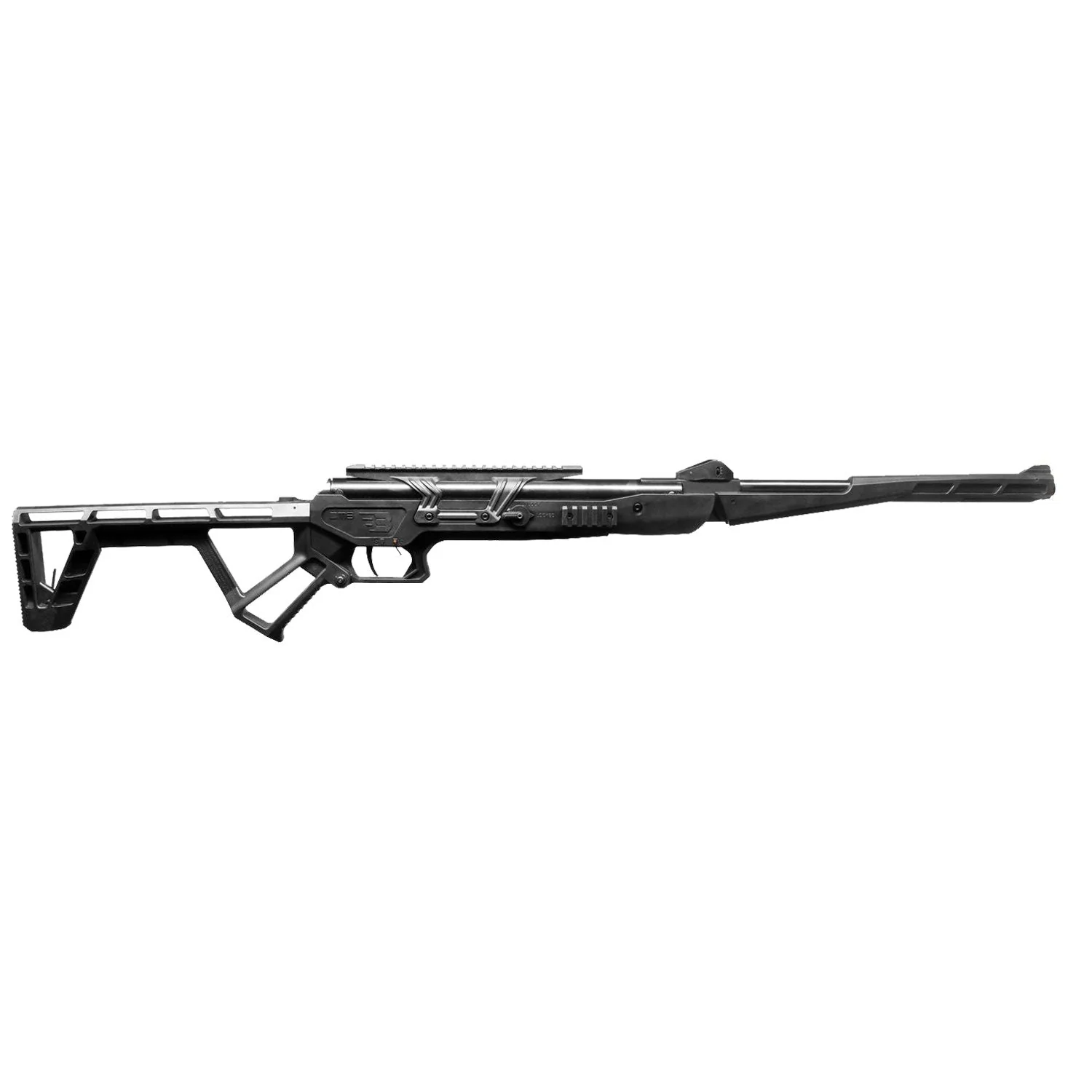
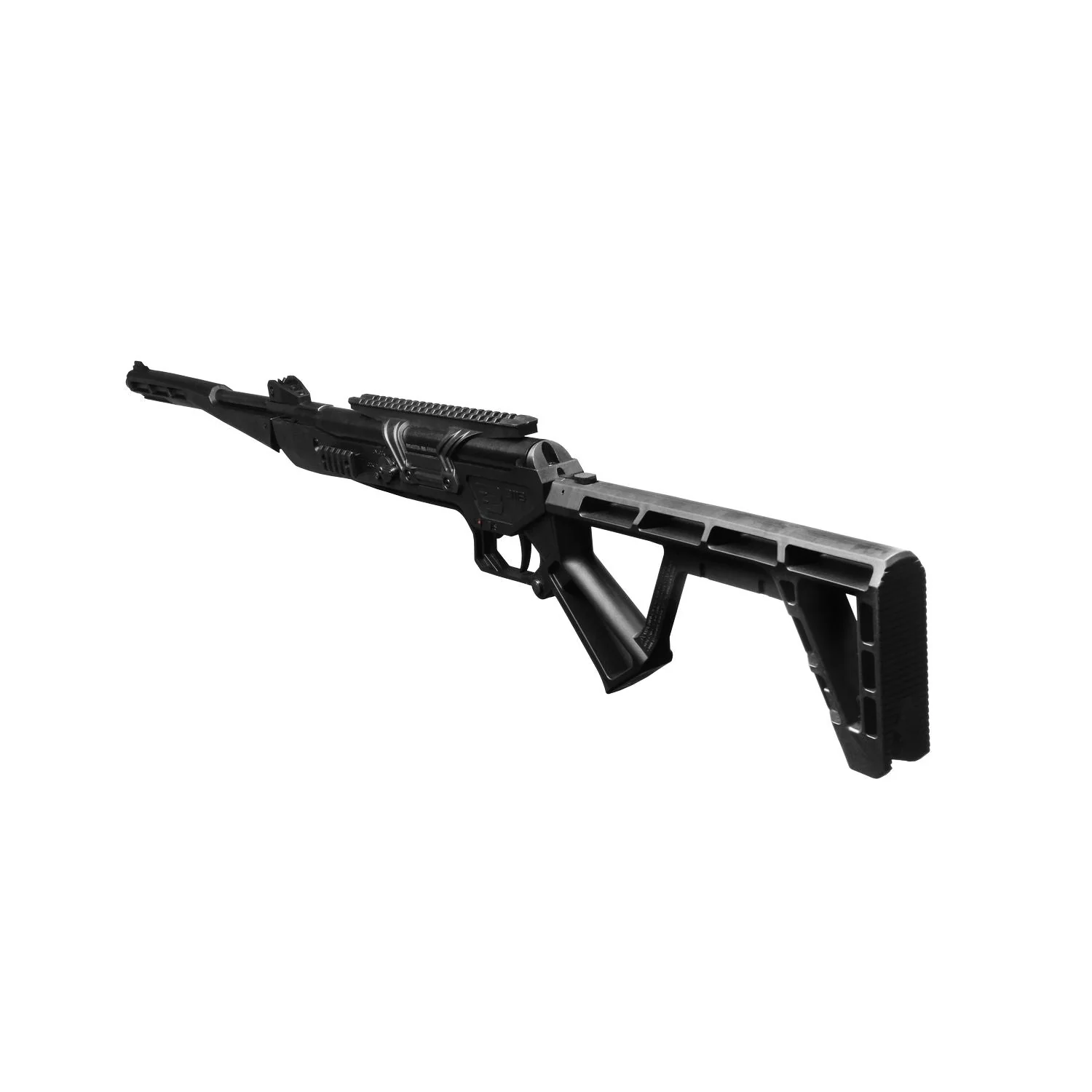
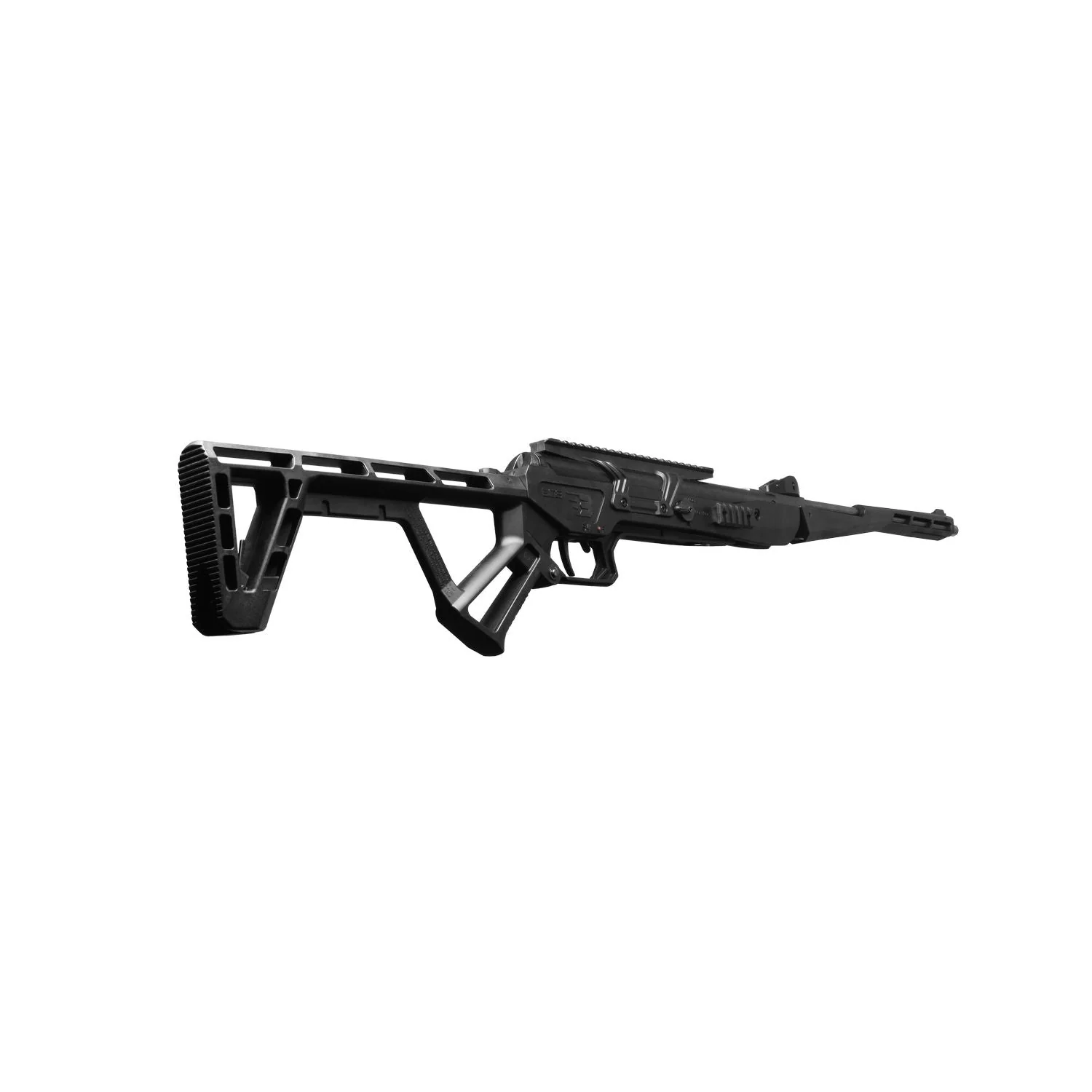
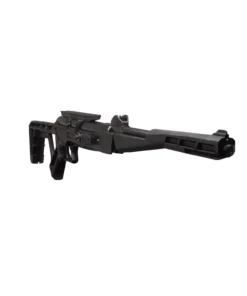
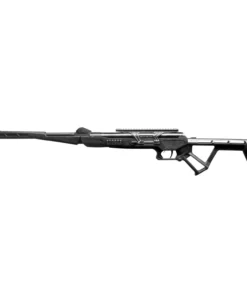
Black Bunker BM8 – Full Black – .22 Cal
$100.00
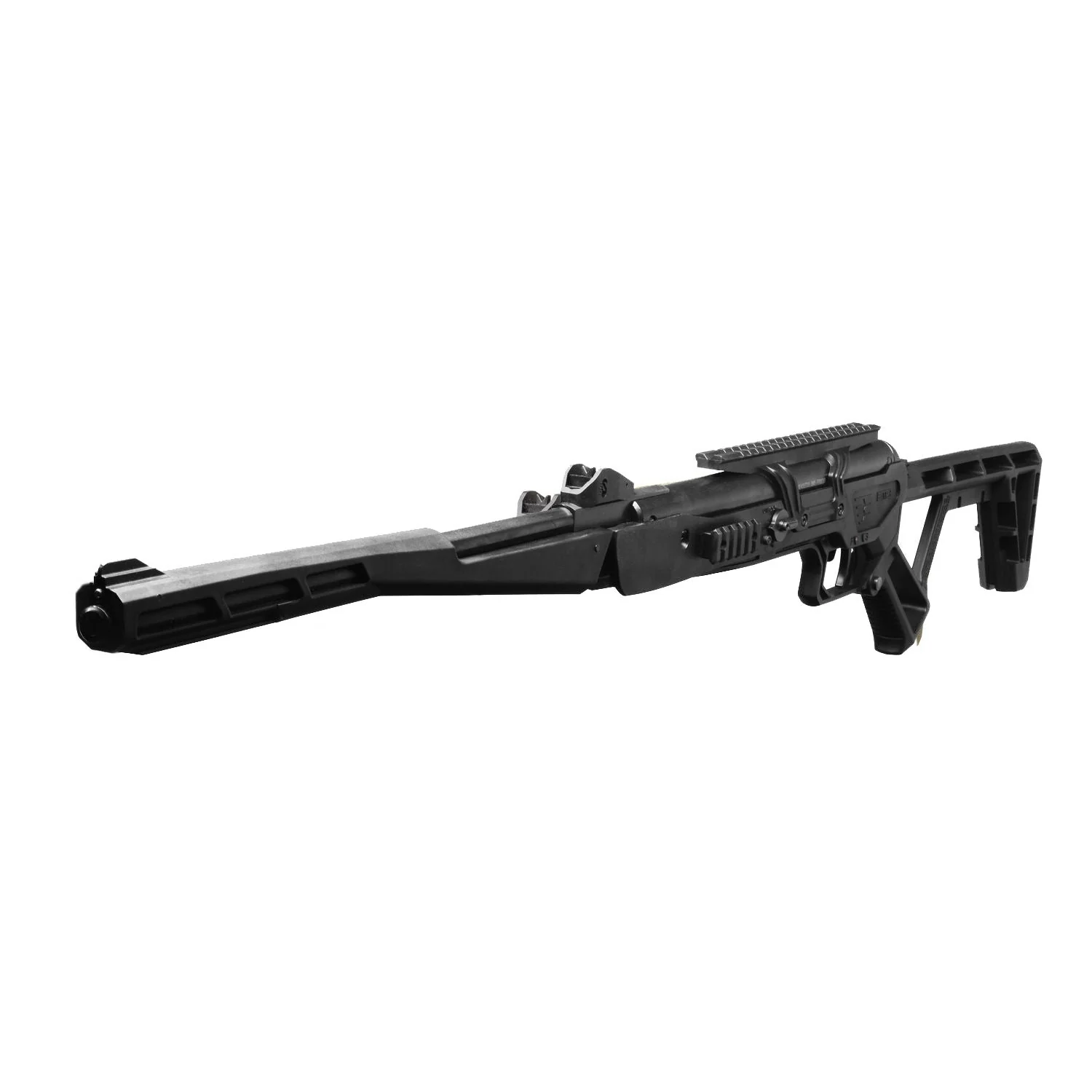
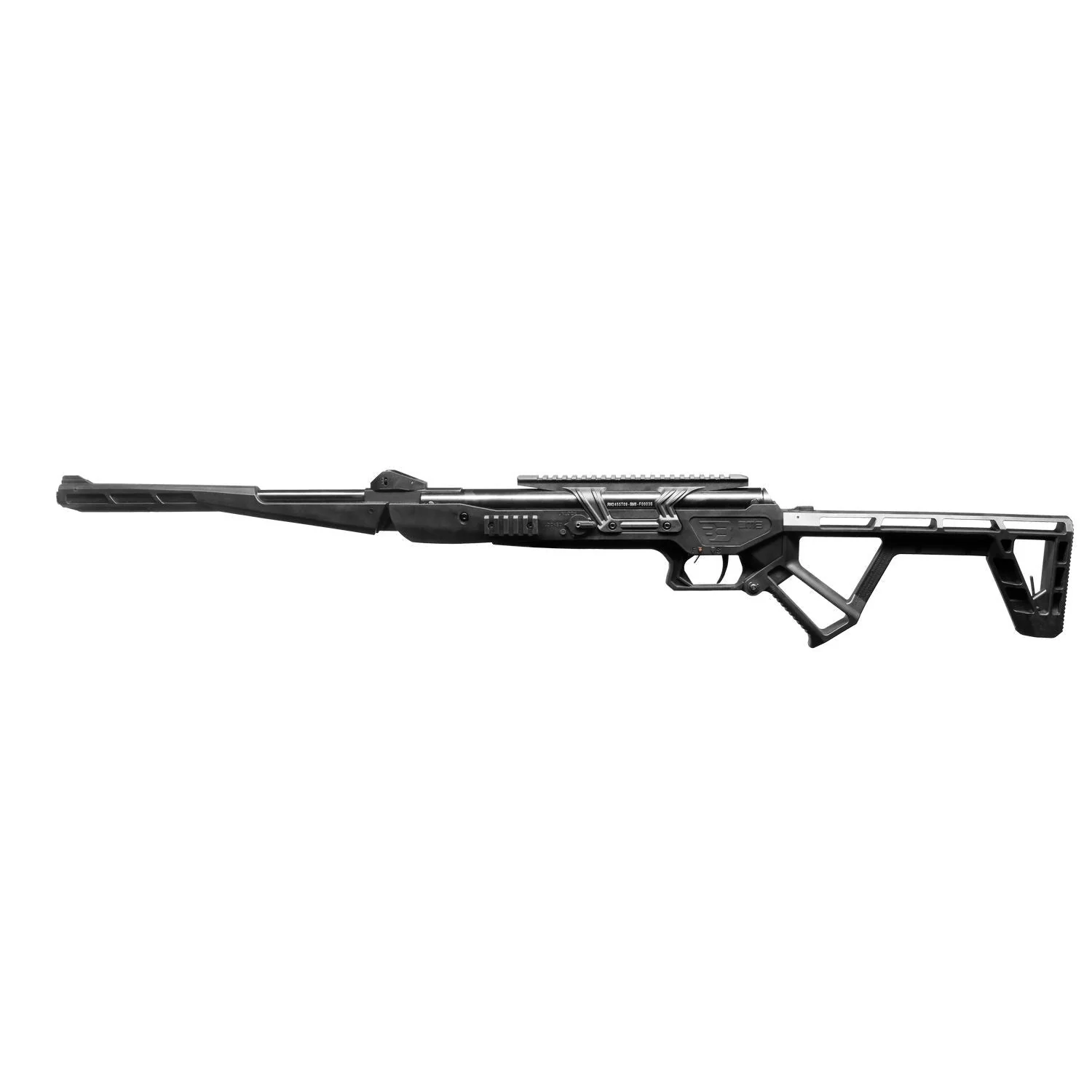
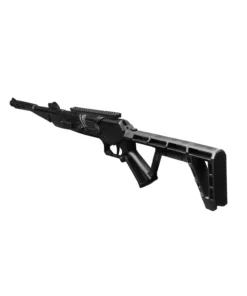
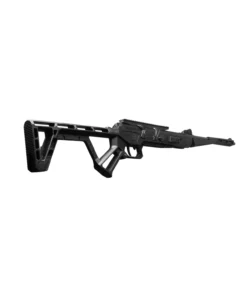
Black Bunker is committed to providing superior tactical survival gear for vigilant citizens in both urban and wilderness environments. Their latest product is the BM8, a foldable break barrel survival air rifle designed to be used indefinitely.
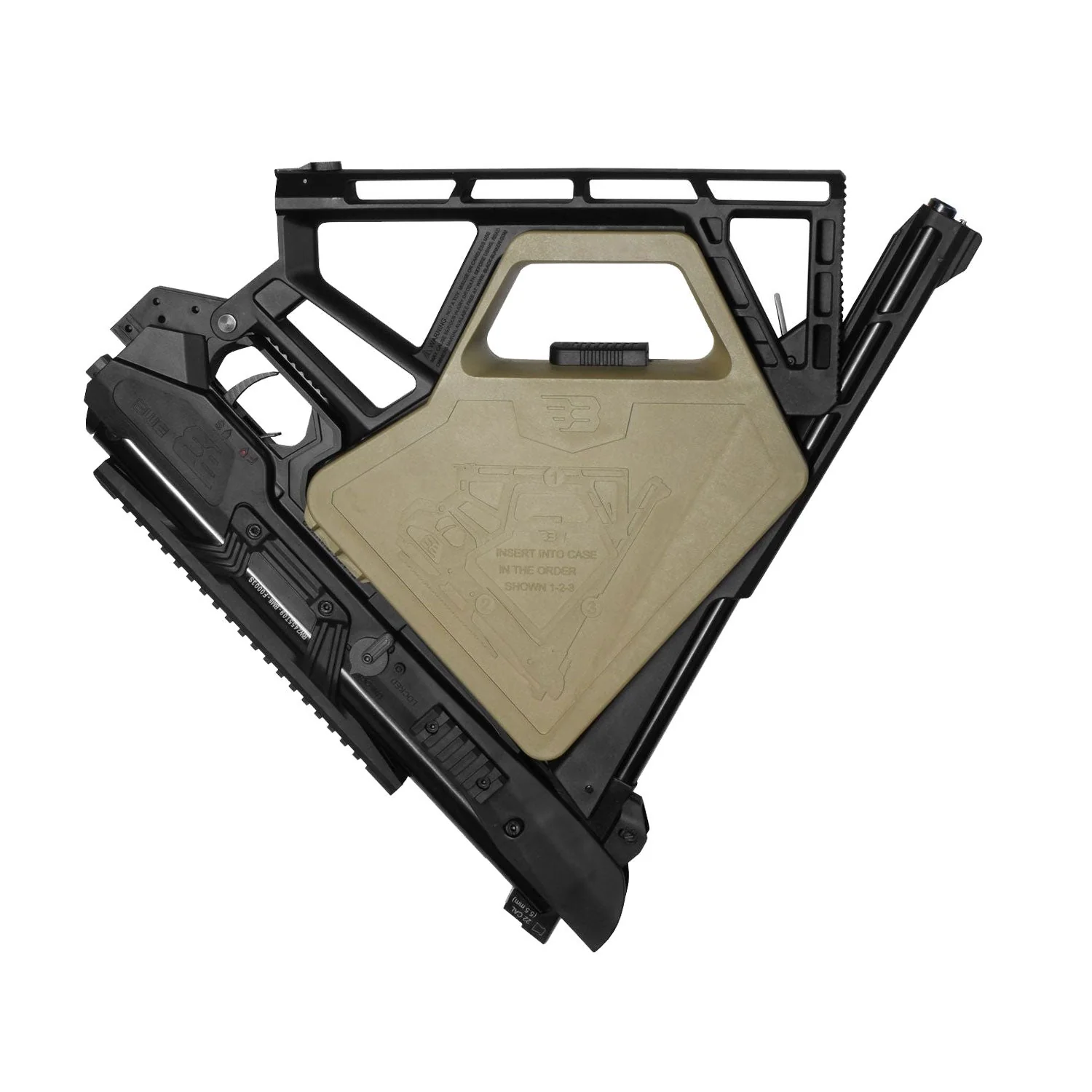
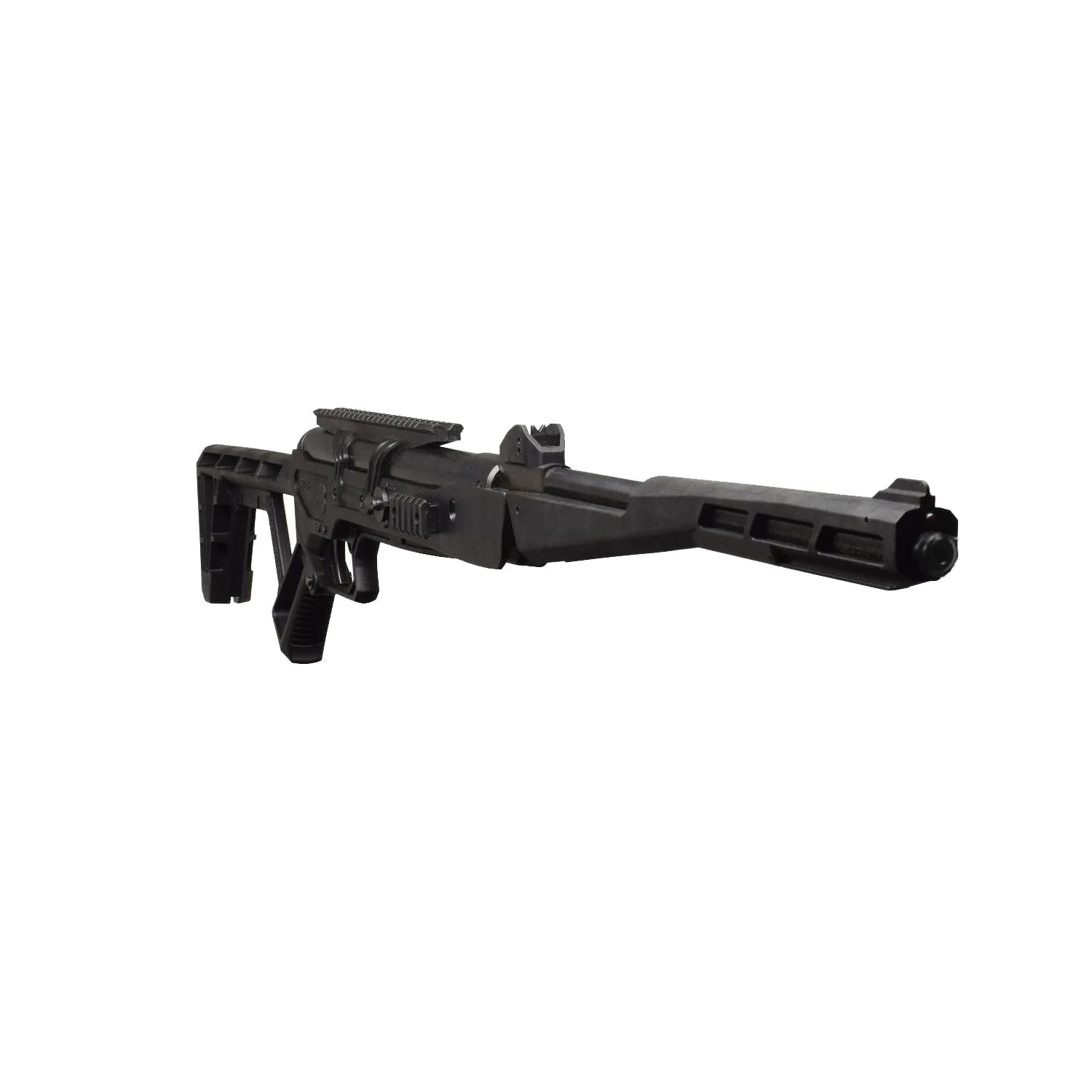
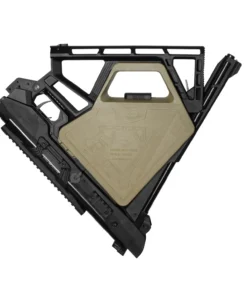
The BM8 stands out with its unique design and innovative features, making it an unprecedented concept. Its compact design allows for easy storage and transportation, fitting in a backpack, car trunk, motorbike storage box, shelf, or mounted on a wall. The triangular water-resistant case with foam provides ample space for a survival kit, knife, multi- tool, pellets, compact optics, and other tools.
The BM8 is powered by a gas ram system, offering several advantages over traditional spring systems, including consistent velocity, less recoil, increased accuracy, reduced noise, less maintenance (no lubrication of spring needed), no spring fatigue, easy cocking, and increased durability.
To ensure user safety and prevent potential damage to the gas ram system, the action of the air rifle can be disengaged by a rapid 2-stage process with a push button and a selector switch, rendering it non-functional.
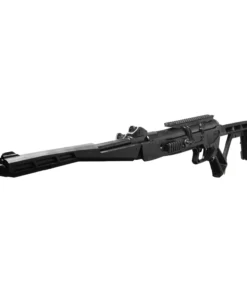
The BM8 comes with a picatinny rail system for scope mounting and picatinny rails on the sides for attaching accessories such as flashlights, lasers, and bipods.
The Black Bunker team is already working on the development of complementary products and next-generation models, which will be introduced continuously. With the BM8, Black Bunker has set a new standard for survival air rifles, combining innovation, durability, and practicality in a single product.
Features:
- The first foldable Survival Air Rifle.
- Ultra compact and easy to store & carry.
- Break barrel technology.
- GAS ram powerplant for increased accuracy, noise reduction, reduced recoil, and increased durability.
- Velocity (full power versions)
- Cal. .22/ 5.5mm: Up to 850 Fps with lead pellets/ Up to 1000 Fps with alloy pellets.
- Available in detuned versions for markets with limitations: 19.9J, • 16J / 12 ft/lbs, 10J, 7.5J.
- 2-stage safety lock system.
- Military grade reinforced polymer stock.
- Textured buttstock for better grip
- Picatinny rails for scope mount – high mount recommended.
- Picatinny rails on sides for additional accessories such as flashlight, laser and bipod.
- Open sights. Rear sight adjustable.
- Includes water resistant case for tools, pellets, and survival kit. (Tools not included)
- Bonus: Includes muzzle break- and breech protection cover.
- Color: Full Black
- Overall length: 42.7 inches/ 106cm
- Weight: 7.5Lbs/ 3.4kg
- Serial number will tell power level, caliber, color, and configuration.
- Patent pending
Black Bunker BM8 Full Black .22 Cal – Folding Design, Specifications, Performance, and Safety Guide
Black Bunker BM8 Full Black .22 Cal Overview
What Is the Black Bunker BM8 Full Black .22 Cal?
The black bunker bm8 Full Black .22 Cal is a single-shot, break-barrel air rifle built around a distinctive folding structure. Instead of using a fixed conventional stock, the barrel, action, and rear section fold into a triangular storage arrangement. Therefore, the black bunker platform is designed to occupy less storage space when it is not operating.
The bm8 uses a gas-ram powerplant and fires .22-caliber, or 5.5 mm, pellets. According to official manufacturer literature, the full-power black .22 version is rated at approximately 24 joules, while regional versions may be detuned to comply with local energy restrictions. The full-length rifle measures about 42.7 inches, or 106 centimetres, and weighs approximately 7.5 pounds, or 3.4 kilograms.
Although it may be described casually as a black gun, it is technically an air-powered pellet rifle rather than a cartridge-firing firearm. Nevertheless, it can cause serious injury and must always be stored and handled responsibly.
Why the Folding Design Matters
The product is frequently described as a collapsible pellet gun, although “foldable air rifle” is more technically accurate. Its three-section design allows the rifle to form a compact triangular configuration for transportation and storage.
This format places the rifle within the broader category of survival airguns. The manufacturer states that the folded platform may be stored in a backpack, vehicle trunk, motorbike storage compartment, shelf, or purpose-built carrying system. It also includes a portable case for pellets and accessories.
Therefore, terms such as Black Bunker foldable airgun, backpack air rifle, compact survival airgun, and foldable airgun describe its storage-focused engineering. However, compact construction does not permit concealed public carrying or transportation contrary to local law.
How the Gas-Ram System Works
The rifle uses break-barrel gas-ram technology. To prepare the action, the barrel is pivoted downward, which compresses the internal gas piston. A single correctly sized pellet is then loaded into the breech before the barrel is returned to its locked position.
The phrase gas ram survival rifle refers to this mechanical power system. Because the action is driven by a compressed gas piston, the rifle is not a battery powered air gun. It requires no external battery, precharged air cylinder, or carbon-dioxide capsule for normal operation.
The manufacturer associates the gas ram with reduced spring fatigue, lower vibration, less maintenance, greater durability, and more consistent velocity than a conventional coiled mainspring. However, actual performance depends on pellet type, rifle condition, temperature, manufacturing tolerance, maintenance, and user technique.
Understanding the .22-Caliber Configuration
The BM8 .22 uses 5.5 mm pellets, so Black Bunker 5.5mm refers to the caliber described on this page. The full-power version is advertised at up to 850 feet per second with lead pellets and up to 1,000 feet per second with lightweight alloy pellets. These are maximum manufacturer claims rather than guaranteed results.
The BM8 .177, also called the Black Bunker 4.5mm, is a separate configuration. It should not be confused with this compact .22 air rifle. Only ammunition matching the caliber stamped on the barrel should be used.
Full-Black Finish and External Construction
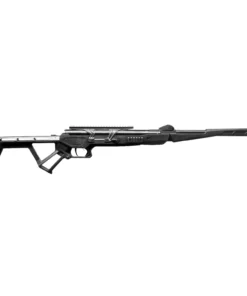
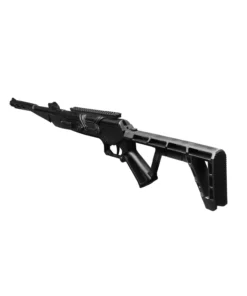
The Full Black version combines a reinforced polymer stock with carbon-steel components. Its textured buttstock is intended to improve grip, while the external finish creates a uniform dark appearance. The rifle also includes open sights, an adjustable rear sight, a top Picatinny rail, and shorter side rails for compatible accessories.
Broad searches such as blackgun, black gun big, and big black gun may lead to unrelated results. The accurate product description remains Black Bunker air rifle or Black Bunker BM8 Full Black .22 Cal.
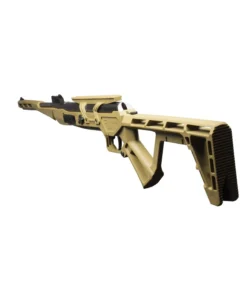
The Black Bunker Coyote Tan is an alternative color version of the same general platform. Color alone does not determine caliber, power level, or barrel configuration.
Where and When It May Be Used
The manufacturer categorizes the platform as a Black Bunker survival rifle. Some stores or users may also describe it as a backpack hunting rifle. However, lawful use depends on local rules covering ownership, minimum age, licensing, hunting species, energy limits, landowner permission, storage, and discharge areas.
It may be suitable for controlled target practice or lawful pest management where such activity is specifically permitted. A reliable pellet-catching backstop, secure shooting direction, eye protection, and full awareness of the area beyond the target are essential.
Manufacturer and Brand Identification
The product was introduced through Kore Outdoor Black Bunker. Kore Outdoor’s official announcement identifies the BM8 as a foldable break-barrel platform offered in .177 and .22 calibers, Full Black and Coyote Tan colors, and standard or threaded barrel configurations.
The term bunkrr.com appears to be a misspelling or unrelated domain phrase and should not automatically be treated as an official website. Similarly, b & r guns & outdoor range does not identify the BM8 manufacturer.
Clarifying Unrelated Search Terms
Several supplied phrases are not verified names, specifications, or components of this product. Black bomb, plank gun, blackberry gun, b c 8, bedbunker, inflatable gun, banair, air bk, and b 8 bomber do not describe the BM8.
Likewise, how to get the black hole sniper rifle appears to concern a fictional or gaming-related item rather than this physical air rifle. These terms should not be used to make technical claims.
Why Responsible Handling Is Essential
The rifle includes a two-stage safety-lock system designed to render the action non-functional during storage and transport. Nevertheless, mechanical safety systems cannot replace careful handling.
The black bunker bm8, black bunker bm8, and black bunker bm8 should always be treated as loaded until personally checked. Keep the muzzle pointed in a safe direction, keep fingers away from the trigger, confirm the target and backstop, and unload the rifle before storage.
When not in use, it should be folded, secured, and stored separately from pellets. Access by children or unauthorized persons must be prevented at all times.
Construction, Accuracy, Maintenance, and Long-Term Reliability
Engineering Philosophy and Design Approach
Modern air rifles are designed to achieve a balance between durability, portability, precision, and ease of operation. Engineers often devote considerable attention to structural strength because the interaction between moving components has a direct influence on performance.
The design process typically focuses on several objectives, including reducing unnecessary weight, increasing reliability, improving stability, and simplifying maintenance procedures. As a result, carefully selected materials are commonly used to withstand repeated mechanical stress while maintaining consistent operation over extended periods.
Furthermore, every component must function as part of a unified system. Consequently, even minor changes in one area may influence overall performance.
Structural Components and Material Selection
Material selection plays an important role in determining the durability and service life of any air rifle. Metal components generally provide strength and rigidity, while reinforced polymer components may help reduce weight and improve resistance to environmental exposure.
Several characteristics are often considered during the manufacturing process:
- Resistance to wear and corrosion
- Structural integrity
- Dimensional stability
- Ease of maintenance
- Long-term reliability
- Environmental durability
These characteristics work together to create a system capable of maintaining consistent performance under a variety of conditions.
Understanding Accuracy and Consistency
Accuracy is influenced by numerous factors rather than a single component. Barrel quality, ammunition selection, environmental conditions, user experience, and maintenance practices all contribute to overall consistency.
Several factors deserve particular attention:
- Target distance
- Shooting position
- Wind conditions
- Lighting conditions
- Trigger control
- Barrel condition
- Sight alignment
Because these variables continuously interact with one another, careful preparation often produces better results than relying solely on equipment specifications.
Trigger Control and Shooting Technique
Proper trigger control remains essential because unnecessary movement immediately before firing can affect accuracy. Therefore, experienced users often emphasize consistency, patience, and discipline during every stage of operation.
Several techniques may help improve control:
- Maintaining a stable position
- Using a comfortable grip
- Applying steady pressure
- Maintaining proper alignment
- Following through after each shot
Over time, repeated practice helps users become more familiar with the characteristics of their equipment.
Maintenance Procedures and Cleaning Practices
Routine maintenance protects components from premature wear while helping preserve long-term reliability. Dirt, dust, moisture, and environmental contaminants may gradually accumulate during normal use. Consequently, regular inspections should become part of every maintenance routine.
A comprehensive maintenance procedure may include the following steps:
- Inspect all visible surfaces.
- Remove dust and debris carefully.
- Examine moving components for wear.
- Verify that attachment points remain secure.
- Return the equipment to an appropriate storage environment.
These simple procedures may substantially increase the useful lifespan of the equipment.
Environmental Conditions and Field Performance
Outdoor environments constantly change. Wind, temperature fluctuations, precipitation, humidity, and airborne particles may all influence overall performance.
Excessive heat may accelerate wear, while prolonged exposure to moisture may encourage corrosion. Likewise, dust and dirt may interfere with moving components if regular maintenance is neglected.
For these reasons, owners should inspect their equipment carefully after every period of outdoor use.
Transportation and Storage Recommendations
Proper transportation and storage methods help preserve both appearance and functionality. Appropriate precautions may also reduce the likelihood of accidental damage.
The following recommendations are especially important:
- Store the equipment in a cool and dry location.
- Protect external surfaces from excessive moisture.
- Avoid unnecessary exposure to direct sunlight.
- Inspect all components regularly.
- Prevent unauthorized access.
By following these recommendations, owners may preserve reliability while minimizing unnecessary wear.
Responsible Ownership and Safety Awareness
Responsible ownership extends beyond simple operation. It also includes continuous maintenance, proper storage, environmental awareness, and compliance with all applicable laws and regulations.
Experience should never replace caution. Instead, every owner should develop consistent habits that encourage safe and responsible operation.
Frequently Asked Questions
Why is routine maintenance important?
Routine maintenance helps identify potential problems before they become serious while improving overall reliability.
Can environmental conditions affect performance?
Yes. Wind, humidity, temperature, and dust can all influence consistency and long-term durability.
Why should inspections be performed regularly?
Regular inspections help identify wear and allow owners to address minor issues before they affect performance.
Why are proper storage procedures important?
Proper storage practices help protect components from unnecessary environmental exposure and premature deterioration.
Performance Factors, Maintenance Procedures, Safe Handling Practices, and Long-Term Ownership
Understanding Mechanical Performance
Mechanical performance depends on the interaction between numerous components working together in a coordinated manner. Although modern manufacturing techniques have significantly improved durability and reliability, consistent performance still depends upon careful operation and routine maintenance.
Every moving component experiences friction, pressure, and repeated stress during normal use. Consequently, regular inspections remain essential because early identification of wear often prevents more serious problems from developing later.
Long-term performance is rarely determined by a single factor. Instead, reliability is usually influenced by a combination of maintenance practices, environmental conditions, operating habits, and overall equipment quality.
Factors That Influence Consistency
Many variables affect performance and accuracy. Even small adjustments can create noticeable differences under certain conditions.
Among the most important factors are:
- Environmental conditions
- Ammunition quality
- Distance to the target
- Shooting posture
- Trigger control
- Barrel cleanliness
- Lighting conditions
Because all these factors work together, consistency often becomes more important than speed.
Developing Proper Shooting Techniques
Strong fundamentals often contribute more to accuracy than advanced equipment alone. Therefore, users should dedicate time to developing effective habits that can be repeated consistently.
Several important principles should always be remembered:
- Maintain a stable body position.
- Establish a comfortable grip.
- Focus carefully on sight alignment.
- Apply smooth and consistent pressure.
- Follow through after every shot.
Although improvements may appear gradually, regular practice often produces significant long-term benefits.
Routine Inspection Procedures
Inspection procedures help ensure that all components continue to function correctly. Furthermore, they allow owners to identify potential concerns before those issues become more serious.
Routine inspections commonly involve the following steps:
- Examine all external surfaces.
- Inspect visible moving components.
- Confirm that mounting points remain secure.
- Identify signs of corrosion or contamination.
- Verify that all controls operate correctly.
These procedures require only a small amount of time, yet they may greatly improve long-term reliability.
Cleaning and Preventive Maintenance
Dirt, dust, moisture, and environmental contaminants can accumulate gradually during regular operation. Consequently, preventive maintenance should be performed consistently rather than only when problems become obvious.
Effective maintenance generally includes:
- Removing visible debris
- Inspecting mechanical components
- Protecting external surfaces
- Maintaining proper storage conditions
- Addressing signs of wear promptly
These practices help preserve both appearance and functionality.
Environmental Conditions and Their Effects
Environmental conditions constantly influence equipment performance. Wind, rain, humidity, dust, and rapid temperature changes can affect mechanical systems in different ways.
For example, prolonged exposure to moisture may accelerate corrosion, while excessive heat can increase the rate of wear. Similarly, airborne particles may accumulate around moving components if regular cleaning procedures are neglected.
Awareness of these conditions allows owners to make informed decisions regarding operation, transportation, and maintenance.
Transportation and Storage Practices
Transportation procedures should always be approached carefully because vibration, impacts, and changing environmental conditions may affect long-term reliability.
Several precautions are strongly recommended:
- Keep the equipment in a secure location.
- Protect components from unnecessary impacts.
- Minimize exposure to moisture.
- Avoid prolonged exposure to direct sunlight.
- Perform a complete inspection after transportation.
Following these recommendations may help preserve performance while reducing the possibility of accidental damage.
Responsible Ownership
Responsible ownership requires continuous attention to safety, maintenance, and proper handling procedures. Experience should strengthen good habits rather than replace them.
Owners should always remain informed about applicable laws, regulations, and manufacturer recommendations. Furthermore, proper storage practices should be maintained at all times.
Frequently Asked Questions
How frequently should inspections be performed?
Inspection intervals depend upon environmental conditions, frequency of use, and storage practices. However, visual inspections should become a regular habit.
Why is preventive maintenance important?
Preventive maintenance allows owners to identify minor concerns before they become more serious mechanical problems.
Can weather conditions influence performance?
Yes. Changes in temperature, humidity, wind, and moisture levels may affect overall reliability and consistency.
Why should transportation procedures be carefully followed?
Careful transportation practices help protect equipment from unnecessary wear and environmental exposure.
Final Thoughts
Consistent maintenance, proper storage, responsible handling, and routine inspections all contribute significantly to long-term performance. By developing these habits, owners can preserve reliability while extending the operational life of their equipment.
Durability, Field Preparation, Storage Practices, and Performance Optimization
Understanding Long-Term Durability
Long-term durability depends upon a combination of material quality, engineering precision, maintenance practices, and environmental protection. Although modern manufacturing methods have improved reliability significantly, regular care remains essential because all mechanical systems experience wear over time.
Repeated use gradually places stress on moving components. Consequently, routine inspections help identify developing problems before they affect overall performance. Owners who establish consistent maintenance habits often experience improved reliability throughout the lifespan of their equipment.
Proper care not only helps maintain functionality but also preserves appearance and structural integrity.
The Importance of Proper Preparation
Preparation begins long before equipment is used. Thorough inspections allow owners to verify that every visible component remains in good condition while ensuring that all moving parts continue to operate correctly.
An effective preparation routine generally includes the following steps:
- Examining external surfaces
- Checking fasteners and mounting points
- Inspecting moving components
- Confirming proper alignment
- Removing dust and debris
- Reviewing storage conditions
These simple procedures often reduce the possibility of unexpected problems during operation.
Environmental Conditions and Their Influence
Outdoor environments change continuously, and these changes may influence performance in numerous ways. Temperature fluctuations, humidity, precipitation, dust, and strong winds can all affect both external surfaces and internal mechanisms.
For example, excessive heat may accelerate wear, while moisture may contribute to corrosion if equipment is not cleaned properly. Similarly, airborne contaminants may accumulate gradually and interfere with normal operation.
Consequently, equipment should always be inspected after prolonged exposure to challenging conditions.
Maintaining Structural Integrity
Every mechanical component contributes to the overall stability of the system. Therefore, maintaining structural integrity remains one of the most important responsibilities of ownership.
Several factors may influence long-term durability:
- Frequency of use
- Storage conditions
- Cleaning procedures
- Exposure to environmental contaminants
- Transportation practices
By addressing these factors consistently, owners may reduce unnecessary wear while improving long-term reliability.
Transportation and Protective Storage
Transportation procedures require careful attention because vibration, movement, and accidental impacts may affect equipment over time. Protective storage systems help reduce exposure to environmental conditions while providing additional security during transportation.
Several recommendations should be considered:
- Store equipment in a cool and dry location.
- Avoid prolonged exposure to direct sunlight.
- Protect components from unnecessary impacts.
- Minimize exposure to moisture and dust.
- Restrict access by unauthorized individuals.
Although these precautions are straightforward, they can significantly improve long-term performance.
Developing Effective Maintenance Habits
Consistent maintenance remains one of the most effective methods of preserving reliability. Rather than waiting for visible signs of wear to appear, owners should establish a regular inspection schedule.
Routine maintenance may include:
- Cleaning visible surfaces.
- Inspecting moving components.
- Verifying that fasteners remain secure.
- Identifying signs of wear.
- Returning equipment to a protected storage environment.
These habits often contribute to more consistent performance while reducing the likelihood of major repairs.
Safety Awareness and Responsible Ownership
Responsible ownership extends beyond ordinary operation. It also includes careful handling, secure storage, continuous maintenance, and ongoing awareness of legal obligations.
Several principles should always be followed:
- Maintain awareness of the surrounding environment.
- Follow all applicable laws and regulations.
- Inspect equipment regularly.
- Store equipment securely.
- Prevent unauthorized access.
Developing these habits promotes both safety and long-term reliability.
Frequently Asked Questions
Why should inspections become part of a routine?
Regular inspections help identify potential problems before they become more serious and expensive to correct.
How do environmental conditions affect durability?
Heat, moisture, dust, and temperature fluctuations may all contribute to gradual wear if appropriate maintenance procedures are not followed.
Why is proper storage so important?
Proper storage protects equipment from environmental damage while helping preserve both appearance and functionality.
How often should cleaning procedures be performed?
Cleaning intervals depend upon environmental conditions, frequency of use, and storage practices. However, regular maintenance should always be encouraged.
Final Assessment
Durability, reliability, and long-term performance depend upon careful preparation, proper maintenance, responsible handling, and effective storage practices. Owners who consistently follow these principles are better equipped to preserve the condition and functionality of their equipment over time.
Ownership Experience, Maintenance Strategies, Environmental Protection, and Long-Term Performance
Establishing a Long-Term Maintenance Routine
A structured maintenance routine helps preserve reliability, improve consistency, and reduce unnecessary wear. Although modern equipment is designed to withstand repeated use, regular care remains essential because moving parts are continuously subjected to pressure, friction, and environmental exposure.
Owners should create a maintenance schedule based on frequency of use, storage conditions, and environmental factors. Furthermore, inspection procedures should become a habit rather than an occasional task.
Consistent maintenance often contributes to improved performance while extending the service life of the equipment.
Understanding the Importance of Proper Handling
Handling techniques influence not only safety but also long-term durability. Every movement should be deliberate and controlled because unnecessary force may place additional stress on critical components.
Several recommendations should always be followed:
- Maintain awareness of the surrounding environment.
- Handle equipment carefully during transportation.
- Avoid unnecessary impacts and sudden movements.
- Inspect components before and after use.
- Follow all applicable regulations and guidelines.
These habits may appear simple; however, they often have a significant effect on overall reliability.
Environmental Factors and Protective Measures
Environmental conditions constantly change, and every change presents a different challenge. Consequently, owners should understand how external conditions may influence mechanical performance.
Several environmental factors deserve careful consideration:
- Temperature fluctuations
- Moisture exposure
- Dust accumulation
- Wind conditions
- Sunlight exposure
- Airborne contaminants
Protective measures help minimize these effects while preserving both appearance and functionality.
Storage Recommendations for Long-Term Preservation
Proper storage remains one of the most effective ways to protect equipment from unnecessary deterioration. In many cases, poor storage conditions contribute more to long-term wear than ordinary use.
The following recommendations may help preserve equipment condition:
- Select a clean and dry location.
- Avoid prolonged exposure to direct sunlight.
- Reduce exposure to moisture whenever possible.
- Protect external surfaces from contamination.
- Prevent unauthorized access.
When these practices are followed consistently, the possibility of avoidable damage may be significantly reduced.
Inspection Procedures and Preventive Maintenance
Routine inspections provide an opportunity to identify developing problems before they affect overall performance. Furthermore, preventive maintenance helps preserve structural integrity while supporting consistent operation.
A complete inspection generally includes the following steps:
- Examine external surfaces carefully.
- Inspect moving components for signs of wear.
- Verify the security of attachment points.
- Remove accumulated debris.
- Confirm that storage conditions remain appropriate.
Preventive maintenance requires only a small investment of time, yet the long-term benefits are often substantial.
Transportation Considerations
Transportation exposes equipment to movement, vibration, changing temperatures, and environmental contaminants. Consequently, protective measures should be implemented whenever equipment is transported from one location to another.
Several precautions are strongly recommended:
- Use an appropriate storage container.
- Secure all movable components.
- Protect surfaces from unnecessary impacts.
- Limit exposure to moisture and excessive heat.
- Perform a complete inspection after transportation.
These practices help reduce wear while promoting long-term reliability.
Responsible Ownership Principles
Responsible ownership requires knowledge, discipline, and continuous attention to detail. Experience should reinforce established safety procedures rather than replace them.
Owners should remain informed regarding maintenance recommendations, transportation requirements, storage practices, and applicable regulations. In addition, every owner should recognize the importance of regular inspections and careful handling procedures.
Frequently Asked Questions
Why is preventive maintenance beneficial?
Preventive maintenance helps identify developing problems before they become more severe while supporting long-term reliability.
Can environmental conditions affect overall performance?
Yes. Heat, moisture, dust, and temperature changes may influence durability, appearance, and mechanical consistency.
Why are storage conditions important?
Appropriate storage methods protect equipment from environmental exposure while helping preserve structural integrity.
How frequently should inspections be performed?
Inspection schedules depend upon environmental conditions, storage methods, and the frequency of use. However, routine inspections should always be encouraged.
Final Thoughts
Long-term performance depends upon consistent maintenance, proper storage, careful handling, and responsible ownership practices. By following these principles regularly, owners may preserve reliability, extend service life, and maintain dependable performance for years to come.
Be the first to review “Black Bunker BM8 – Full Black – .22 Cal”
Related products
Black Bunker
Reviews
There are no reviews yet.