
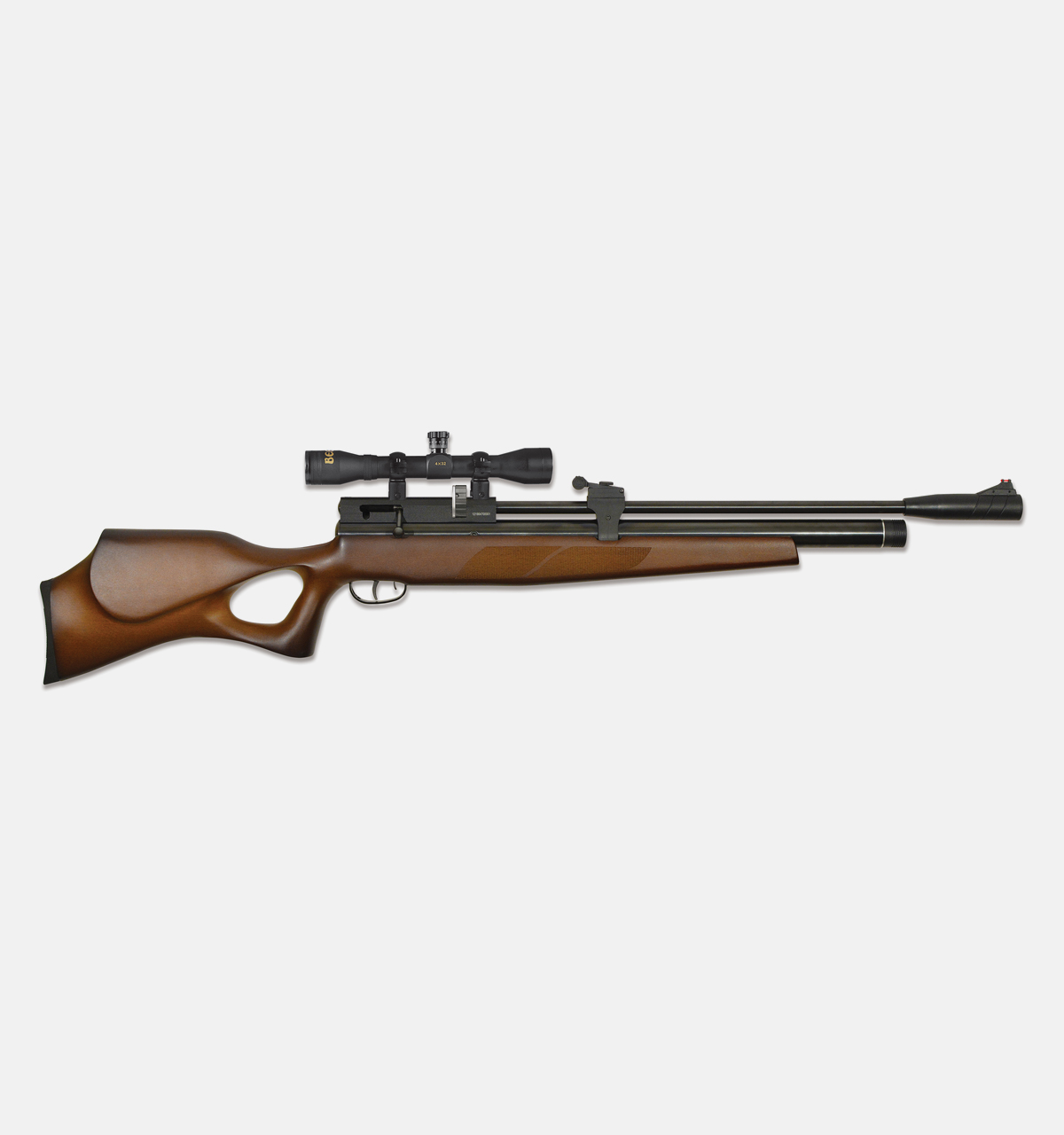
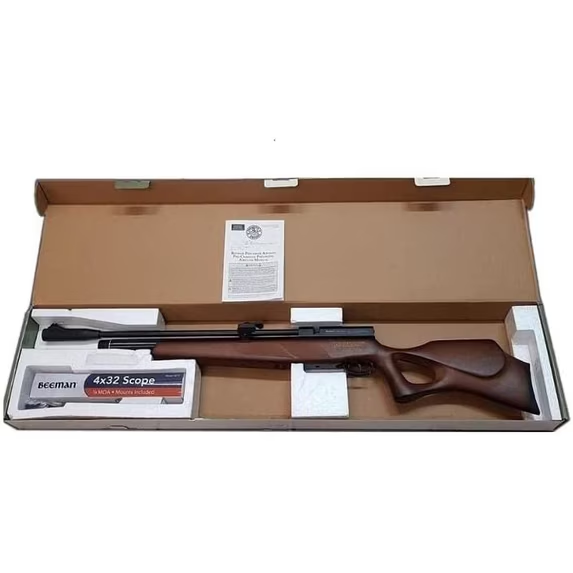



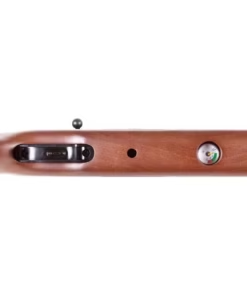
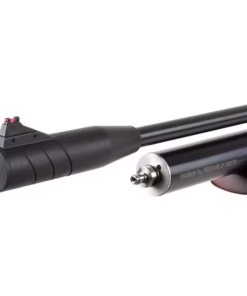



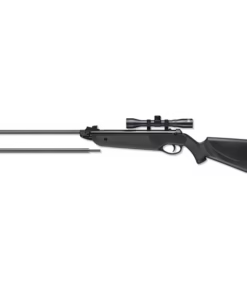
Beeman Commander 1517 – .177 Caliber Air Rifle
$190.00
This quality air rifle is an amazingly affordable alternative to other high-cost PCP air rifles. Using compressed air as its power source, our pre-charged pneumatic air rifle uses no springs making it practically recoilless which makes the air rifle more accurate and much easier to use.
There is no breaking of the barrel, you need only to pull back the bolt, load the pellet and shoot. The Chief PCP air rifles are very versatile, they are a light weight, shorter air rifle, which makes the air rifle much easier to carry around. Beeman is sure you will enjoy the unique shooting experience with our PCP air rifles.
| Model | 1517 |
| Action | Pre-charged Pneumatic |
| AMMO | Pellets |
| Caliber | .177 Caliber |
| Length | 43″ |
| Weight | 8 lbs |
| Velocity | 1,100 fps |
- 10 shot magazine
- Velocity: 1,100 fps in .177 Cal. & 1,000 fps in .22 Cal.
- European hardwood stock
- Manual safety
- Up to 100 shots per fill
- Caliber .177
- 3000 psi
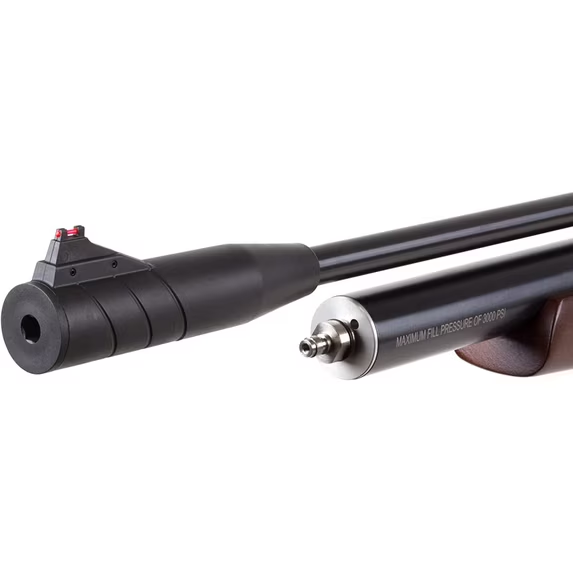
- Noise suppressor
Beeman Commander 1517 – .177 Caliber Air Rifle
Beeman Commander 1517 .177 Caliber Air Rifle
The Beeman Commander 1517 – .177 Caliber Air Rifle combines traditional sporting-rifle ergonomics with a modern pre-charged pneumatic operating system. According to Beeman’s current specifications, model 1517 uses a .177-caliber pellet, measures approximately 43 inches overall, weighs about 8 pounds, and is factory-rated for velocity up to 1,100 fps. It also incorporates a 10-shot magazine, European hardwood stock, manual safety, 3,000 PSI pressure system, integrated noise suppressor, and up to approximately 100 shots per fill under suitable conditions.
Because compressed air provides the propulsion energy, there is no heavy mainspring accelerating through the action. Beeman describes the firing cycle as practically recoilless compared with traditional spring-powered designs. The fixed barrel and bolt-action loading arrangement also eliminate the need to break the barrel between shots.
Beeman
beeman has produced air rifles, air pistols, optics, ammunition, and sporting accessories across several operating-system categories.
Beeman 1521 Scope
A beeman 1521 scope is an optics-related search phrase and should not automatically be assumed to be included with model 1517.
Beeman Company
The beeman company catalog covers pneumatic, spring-powered, gas-ram, CO₂, and other sporting airgun platforms.
Beeman Air Rifles
Among beeman air rifles, model 1517 belongs specifically to the PCP category.
Beeman Jungle M16
The beeman jungle m16 refers to a different product style and does not share this rifle’s traditional hardwood PCP configuration.
Beeman Air Guns
beeman air guns include several powerplant designs, while this rifle relies on stored compressed air.
Beeman RS2
The beeman rs2 belongs to a different sporting rifle family using different mechanics.
Sportsman RS2 Series
The sportsman rs2 series should not be confused with this bolt-operated pneumatic platform.
Marksman Slingshot
A marksman slingshot belongs to a separate recreational product category.
Marksman
marksman products appear alongside the wider Beeman sporting lineup but cover additional equipment categories.
Beeman 66RL Scope
A beeman 66rl scope is an optic-related search term and should be evaluated separately for compatibility.
PCP Air Rifle
A pcp air rifle stores compressed air before firing, reducing the internal movement associated with conventional spring-piston systems.
10613
10613 relates to another model designation and should not be used as a substitute for the 1517 specification.
Beeman PCP Underlever Air Rifle
A beeman pcp underlever air rifle uses a different cocking and loading arrangement from the bolt action used here.
Sportsman RS2 Series Price
sportsman rs2 series price concerns a separate product family rather than this PCP platform.
Beeman Marksman Laserhawk III Slingshot
The beeman marksman laserhawk iii slingshot belongs to the company’s slingshot range rather than its rifle category.
Air Rifle Marksmanship
air rifle marksmanship depends on repeatable positioning, correct sight alignment, consistent ammunition, pressure stability, and responsible target practice.
1019X Gun
The phrase 1019x gun identifies a different product search and should not be mixed with model 1517 specifications.
Beeman Broward
beeman broward is not the official designation for this rifle, so model number 1517 should be used when confirming specifications.
Classic Slingshot
A classic slingshot is mechanically unrelated to a pre-charged pneumatic rifle.
Beeman Chief 2
The beeman chief 2 belongs to another PCP family. Beeman separately lists Chief II and Commander models in its catalog.
Marksman Pistol
A marksman pistol uses handgun-style ergonomics rather than a full-length sporting-rifle layout.
Crosman Slingshot
A crosman slingshot belongs to another manufacturer and product category.
.22 Air Rifle
A .22 air rifle uses a larger bore than this .177 configuration. The related Commander model 1518 fills that role.
Marksman Folding Slingshot
A marksman folding slingshot has no relationship to the pressure system, magazine, or barrel architecture used here.
Precharged Pneumatic
The precharged pneumatic system stores compressed air in advance and therefore does not rely on a conventional mainspring for each firing cycle.
Beeman Sportsman RS2 Series Price
beeman sportsman rs2 series price relates to another product family.
Sportsman RS2 Series Beeman
sportsman rs2 series beeman searches generally concern spring-powered sporting rifles rather than this pneumatic design.
22 Cal Air Rifle 1400 FPS
The phrase 22 cal air rifle 1400 fps does not describe model 1517. This rifle is .177 caliber and Beeman lists its maximum velocity at 1,100 fps.
Beeman RS2 Sportsman Series
The beeman rs2 sportsman series uses a different powerplant and mechanical layout.
Beeman Commander
The beeman commander family includes model 1517 in .177 and model 1518 in .22. Both share the same 43-inch length, 8-pound weight, 10-shot magazine, hardwood stock, 3,000 PSI system, manual safety, and noise suppression according to Beeman’s catalog.
Marksman Rifle
A marksman rifle search generally relates to precision-oriented sporting use where repeatability and sight alignment are important.
Beeman 1783 Silver Bear
The beeman 1783 silver bear is a different product and should not be confused with this PCP platform.
.177 Air Pistol
A .177 air pistol shares the caliber but uses a much more compact handgun-style architecture.
Beeman BP50
The beeman bp50 is another model designation and does not share the same specification set.
PCP Rifle
A pcp rifle uses compressed air stored before firing, which can provide a relatively smooth mechanical cycle.
Beeman Sportsman RS2 Series
The beeman sportsman rs2 series belongs to a separate sporting rifle family.
1783 Silver Bear Beeman
1783 silver bear beeman refers to another model within the wider product catalog.
High Power Pellet Gun
The phrase high power pellet gun is broad. Actual performance should be judged using verified caliber, pressure, velocity, ammunition, and manufacturer specifications.
22 Caliber Pellet Gun
A 22 caliber pellet gun uses a larger projectile diameter than this .177 model.
Beeman Repeater Rifle Sights Magazine
The phrase beeman repeater rifle sights magazine relates broadly to multi-shot equipment. Model 1517 specifically uses a factory-listed 10-shot magazine.
Beeman Underlever
A beeman underlever uses a different loading-control arrangement from the bolt-operated action here.
PCP Air Rifle 22 Cal
A pcp air rifle 22 cal does not describe this specific configuration because model 1517 uses .177 caliber.
Beeman P17
The beeman p17 belongs to the air-pistol category and differs substantially in dimensions, powerplant, and handling.
Beeman QB78
The beeman qb78 is a CO₂-powered bolt-action rifle rather than a PCP. Beeman lists the QB78 in .177 with a 39.75-inch length, 6.5-pound weight, and approximately 650 fps velocity.
Beeman Sportsman RS2
The beeman sportsman rs2 belongs to another sporting rifle family.
Marksman Slingshot Band Replacement
marksman slingshot band replacement concerns maintenance for a completely different recreational product.
Beeman Chief II
The beeman chief ii is another pneumatic rifle family. Beeman’s catalog lists it separately from the Commander series.
Beeman BP50 Black
The beeman bp50 black is a different product search and does not describe this rifle.
22 Cal PCP Air Rifle
A 22 cal pcp air rifle uses the same general compressed-air principle but a different caliber.
Big Bore Air Rifle
A big bore air rifle normally refers to significantly larger calibers, whereas this .177 configuration belongs to the small-bore sporting category.
Beeman Air Rifle
A beeman air rifle may use several different powerplants. Model 1517 specifically uses pre-charged pneumatic operation.
Beeman Airguns
beeman airguns include PCP, CO₂, gas-ram, spring-powered, and other sporting configurations.
Beeman Precision Airguns
beeman precision airguns reflects the manufacturer’s broader emphasis on sporting airgun equipment.
Beeman Pellet Rifle
A beeman pellet rifle fires shaped airgun pellets rather than steel BB ammunition.
Beeman Pellet Gun
A beeman pellet gun is a broad description, while model 1517 identifies this specific .177 configuration.
Beeman PCP Air Rifle
A beeman pcp air rifle stores compressed air in a reservoir so multiple shots can be taken before refilling becomes necessary.
Beeman Gas Ram Air Rifle
A beeman gas ram air rifle uses a sealed gas strut instead of a refillable pressure reservoir.
Beeman Break Barrel Air Rifle
A beeman break barrel air rifle requires the barrel to pivot during cocking, whereas this model uses a fixed barrel and bolt action.
Beeman .177 Air Rifle
A beeman .177 air rifle accurately describes model 1517, which Beeman officially lists as a .177-caliber PCP.
Beeman .22 Air Rifle
A beeman .22 air rifle describes the related 1518 variant rather than this model.
Beeman Air Rifle .177 Caliber
beeman air rifle .177 caliber accurately identifies the bore size of model 1517.
Beeman Air Rifle .22 Caliber
A beeman air rifle .22 caliber does not describe this version because model 1517 is specifically .177.
Beeman Air Rifle Models
Different beeman air rifle models use PCP, CO₂, spring-piston, and gas-ram operating systems.
Beeman Air Rifle Specifications
Official beeman air rifle specifications for this model list .177 caliber, 43-inch overall length, 8-pound weight, PCP action, pellet ammunition, and velocity up to 1,100 fps.
Beeman Air Rifle Review
A useful beeman air rifle review should consider pressure retention, magazine reliability, stock fit, bolt smoothness, optic mounting, trigger feel, and practical consistency rather than focusing only on velocity.
Beeman Air Rifle Accuracy
beeman air rifle accuracy depends on ammunition consistency, stable pressure, barrel condition, secure optics, trigger familiarity, and repeatable technique.
Beeman Air Rifle Accessories
Compatible beeman air rifle accessories should be selected according to the rifle’s actual mounting interfaces and manufacturer specifications.
Beeman Air Rifle Scope
A suitable beeman air rifle scope should provide appropriate eye relief and remain securely mounted during normal use.
Beeman Air Rifle Manual
The beeman air rifle manual should remain the primary reference for filling, loading, maintenance, storage, and safety procedures.
Beeman Air Rifle Parts
Correct beeman air rifle parts should match the exact model designation rather than being assumed interchangeable with visually similar rifles.
Beeman Air Rifle Maintenance
beeman air rifle maintenance should include pressure monitoring, seal inspection, magazine cleanliness, bolt condition, stock care, and secure mounting hardware.
Beeman Air Rifle Comparison
A meaningful beeman air rifle comparison should consider caliber, powerplant, overall length, weight, magazine capacity, pressure requirements, stock design, and intended lawful sporting use.
Beeman Sportsman Air Rifle
A beeman sportsman air rifle may use a spring-powered architecture and therefore provide different firing and handling characteristics.
Beeman Commander Air Rifle
The beeman commander air rifle combines traditional European hardwood furniture with a modern multi-shot pneumatic action.
Beeman Commander .22
The beeman commander .22 identifies the related model 1518. In comparison, the 1517 reviewed here uses .177 caliber and carries the higher factory velocity rating of 1,100 fps.
10-Shot Magazine
A key practical feature is the 10-shot magazine, which reduces the need for manual single loading between every shot. Beeman officially lists this capacity for the model.
European Hardwood Stock
The European hardwood stock gives the rifle traditional sporting proportions and provides substantial surface area for the supporting hand, grip, cheek, and shoulder.
3,000 PSI Air System
The rifle operates around a factory-specified 3,000 PSI fill system. Correct filling equipment, clean compressed air, and careful pressure monitoring are therefore essential.
Up to 100 Shots Per Fill
Beeman advertises up to approximately 100 shots per fill. Actual usable shot count can vary depending on pressure condition, ammunition, temperature, mechanical condition, and what level of consistency the user expects.
Manual Safety
A mechanical manual safety is incorporated into the design. It should remain part of normal responsible handling and should never substitute for keeping the rifle pointed safely and unloaded during storage or transport.
Why the Pneumatic Design Matters
The main advantage of the pneumatic system is the absence of the strong spring movement associated with traditional spring-powered rifles. This can reduce mechanical disturbance during discharge and make consistent handling easier.
How Precision Is Supported
Practical precision depends on several interacting factors, including pressure consistency, pellet quality, barrel condition, optic security, trigger familiarity, stock fit, and repeatable shooting technique.
Therefore, the maximum velocity figure should not be treated as the sole measure of accuracy.
Where It Fits Best
The full-length hardwood stock, multi-shot action, moderate weight, and smooth pneumatic operating cycle make the rifle particularly appropriate for lawful paper-target, bench, recreational, and precision-oriented sporting environments.
When Maintenance Matters
Pressure loss, irregular bolt movement, inconsistent magazine feeding, loose optics, unusual trigger behavior, or noticeable changes in performance should be investigated before extensive further use.
Important Specification Information
Factory data identifies model 1517 as a .177-caliber pre-charged pneumatic rifle using pellets, with a 43-inch overall length, approximately 8-pound weight, velocity up to 1,100 fps, 10-shot magazine, European hardwood stock, manual safety, 3,000 PSI system, noise suppression, and up to approximately 100 shots per fill.
Overall Engineering Character
The rifle combines a traditional sporting profile with modern compressed-air operation. Its principal engineering strengths are the fixed barrel, relatively smooth firing cycle, bolt-operated multi-shot action, substantial shot capacity, hardwood furniture, and straightforward mechanical controls.
When maintained correctly and operated within manufacturer specifications and applicable law, it provides a practical .177-caliber PCP platform focused on repeatability, comfortable target use, and dependable long-term ownership.
Pressure Management, Mechanical Operation, Handling Comfort, Precision Support, and Long-Term Reliability
Pneumatic Operating Character
This rifle relies on stored compressed air rather than a spring-driven firing cycle. As a result, the internal movement during discharge is comparatively limited, which can contribute to a smoother and more predictable feel.
Even so, consistent operation still depends on several factors working together, including reservoir condition, seal integrity, bolt movement, magazine function, barrel stability, optic security, ammunition quality, and correct maintenance.
Reservoir Pressure Management
Reservoir pressure should be checked before longer shooting sessions and periodically during storage.
A gradual pressure reduction during normal use is expected. However, unexpected loss while the rifle is sitting unused may indicate seal deterioration, valve leakage, or another pneumatic issue.
Repeatedly refilling the reservoir without identifying the cause can hide a developing fault.
Controlled Filling
Charging should be performed gradually while pressure is monitored carefully.
Rapid filling can generate unnecessary heat and may temporarily influence gauge readings. Therefore, correctly rated filling equipment should always be used.
The manufacturer’s maximum pressure limit should never be exceeded.
Clean and Dry Air Supply
The quality of the compressed air entering the rifle can affect long-term reliability.
Moisture, oil, dirt, or other contamination can negatively affect sealing surfaces and internal pneumatic components.
Therefore, pumps, compressors, filters, hoses, adapters, and connectors should remain clean and properly maintained.
Pressure Gauge Awareness
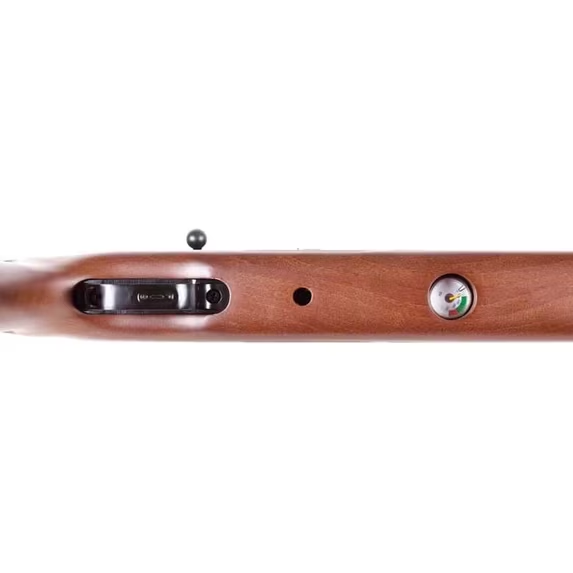
The pressure indicator should remain clear, secure, and easy to read.
Fogging, looseness, impact damage, or unrealistic readings should be investigated before further filling.
A pressure system should never be charged when the user cannot accurately monitor its condition.
Bolt Operation
The bolt should move smoothly through its complete operating cycle.
Grinding, excessive resistance, looseness, or incomplete closure can indicate contamination, wear, or alignment problems.
If resistance suddenly increases, the mechanism should be inspected rather than forced.
Magazine Condition
The rotary magazine should remain clean and free from damaged projectiles, dust, and debris.
Indexing should remain smooth and predictable.
If loading becomes inconsistent, both the magazine and breech area should be inspected before continued use.
Ammunition Condition
Projectiles should be clean, correctly formed, and free from visible deformation.
Bent skirts, damaged heads, dirt, or manufacturing irregularities can affect consistency.
Storing ammunition in a dry and protected container helps maintain uniform condition.
Trigger Familiarity
The trigger should provide predictable mechanical feedback.
Before any adjustment is considered, the existing feel should be understood.
Unnecessary changes can make troubleshooting more difficult, so adjustments should remain within manufacturer-approved limits.
Trigger Reach
The trigger blade should sit naturally beneath the finger.
The wrist should not need to twist excessively, while the hand should remain relaxed.
Correct trigger reach supports comfort and repeatability during longer target sessions.
Manual Safety
The safety should operate clearly and positively.
It should not feel unusually stiff, loose, sticky, or vague.
If its operation changes, the rifle should be unloaded and inspected before further use.
Hardwood Stock Comfort
The traditional wooden stock provides a conventional shoulder-fired layout.
Its shape allows the grip, supporting hand, cheek, and shoulder to establish repeatable contact points.
Because individual body dimensions vary, optic placement should be adjusted to work naturally with the stock.
Cheek Placement
The cheek should settle naturally while allowing the eye to align behind the optic.
If the head must repeatedly move upward, downward, or sideways to obtain a full sight picture, the optic setup may require refinement.
Stable cheek placement helps improve consistency.
Shoulder Contact
The rear section should contact the shoulder comfortably.
Its position influences eye relief, balance, trigger reach, and overall control.
The objective should be repeatable contact without unnecessary muscular tension.
Supporting Hand Position
The forward hand should support the rifle naturally.
A very tight grip can create unnecessary movement and fatigue.
Keeping the support position consistent can help maintain the same balance from shot to shot.
Fixed-Barrel Stability
Because the barrel does not need to pivot for cocking, its relationship with the action and optic remains mechanically straightforward.
However, it should still be protected from impact, bending forces, and careless handling.
Any visible looseness or alignment change should be investigated.
Muzzle Protection
The muzzle deserves careful protection.
Damage around the crown can affect repeatability even when the remainder of the barrel appears normal.
The rifle should never be placed directly on the muzzle during storage or transport.
Optic Mounting
Mounting surfaces should remain clean and undamaged.
Rings and bases should fit correctly and remain firmly secured.
However, excessive tightening can damage threads, mounts, or optic tubes, so proper tightening specifications should be followed.
Eye Relief
The optic should provide a complete sight picture from a natural head position.
Correct eye relief reduces the need for repeated head movement and supports comfortable target use.
Once a good setup is established, unnecessary changes should be avoided.
Precision Support
Practical precision depends on a combination of pressure consistency, ammunition quality, barrel condition, optic security, trigger familiarity, stock fit, and repeatable technique.
Therefore, a high velocity figure alone does not determine real-world consistency.
Monitoring Changes During Use
If behavior changes unexpectedly, the cause should be investigated systematically.
Possible sources include pressure variation, damaged ammunition, loose mounting hardware, seal deterioration, magazine problems, or barrel contamination.
Changing several settings at once should be avoided because it makes diagnosis harder.
Exterior Cleaning
Routine exterior maintenance should remove fingerprints, dust, moisture, and light contamination.
A soft cloth is usually sufficient.
Harsh solvents should not be used around seals, wooden finishes, adhesives, or pressure-related components unless specifically approved.
Moisture Protection
After use in damp conditions, the rifle should be dried before storage.
Water should not remain around screws, the bolt area, filling fittings, stock interfaces, or optic mounts.
Extended moisture exposure can damage both mechanical and cosmetic components.
Fastener Inspection
Normal handling and transport can gradually loosen external hardware.
Visible screws, stock fasteners, and optic mounts should therefore be inspected periodically.
Fasteners should only be tightened to appropriate specifications.
Transport Protection
A padded case helps protect the barrel, stock, optic, reservoir, and external controls.
The rifle should remain unloaded and secured during transport.
Applicable rules concerning compressed-air sporting equipment should always be followed.
Safe Storage
Storage should remain secure, dry, and reasonably temperature stable.
Direct sunlight, excessive heat, high humidity, and chemical vapors should be avoided.
Access should also remain appropriately restricted.
Professional Servicing
Persistent leaks, pressure-system faults, bolt problems, trigger irregularities, or significant mechanical changes should be handled by qualified technicians.
Compressed-air systems require suitable tools, technical knowledge, and correct procedures.
Overall Long-Term Reliability
Reliable long-term ownership depends on stable pressure management, clean compressed air, sound seals, smooth loading, secure optics, consistent ammunition, correct storage, and timely servicing.
When these pneumatic, mechanical, and ergonomic areas are maintained methodically, the rifle remains easier to inspect, more predictable to operate, and dependable throughout responsible and lawful sporting use.
Practical Handling, Setup Consistency, Comfort, Inspection, and Everyday Ownership
Real-World Handling
A full-length pneumatic sporting rifle should feel predictable, balanced, and comfortable during responsible use. Practical handling depends on stock fit, shoulder contact, cheek placement, trigger reach, optic position, supporting-hand location, barrel length, and overall weight distribution.
Because the firing cycle contains less internal movement than many spring-powered systems, the user can focus heavily on repeatable positioning and controlled handling.
Establishing a Consistent Position
Consistency begins with body position.
The shoulder, cheek, supporting hand, and trigger hand should return naturally to approximately the same location during every session.
Excessive muscular tension can make repeatable positioning more difficult. Therefore, the setup should support the body rather than force the user into an awkward posture.
Cheek Placement
The cheek should settle naturally against the stock while placing the eye correctly behind the optic.
If the head must repeatedly be raised, lowered, tilted, or stretched to obtain a complete sight picture, the optic setup may need refinement.
Stable cheek placement supports repeatable visual alignment.
Shoulder Contact
The rear of the stock should contact the shoulder comfortably and consistently.
Its position influences trigger reach, eye relief, balance, and overall control.
The objective should be natural contact rather than excessive pressure.
Grip Comfort
The grip should allow the wrist and hand to remain relaxed.
The trigger finger should reach the blade without unnecessary stretching or twisting.
A comfortable grip can reduce fatigue and make the same position easier to reproduce during longer sessions.
Trigger Familiarity
The trigger should feel predictable before any adjustment is considered.
Users should become familiar with its normal travel and release characteristics.
Unnecessary adjustment should be avoided, while any approved changes should remain within manufacturer guidance.
Bolt Familiarity
The bolt should move smoothly through its complete cycle.
Partial movement can interfere with feeding and loading.
If the action suddenly becomes rough, loose, or unusually resistant, the cause should be investigated rather than overcome with extra force.
Magazine Handling
The magazine should seat properly and index smoothly.
It should remain clean and free from dirt, damaged projectiles, fragments, or other debris.
If feeding becomes irregular, both the magazine and loading area should be inspected before continued use.
Safety Routine
The manual safety should be checked as part of normal handling.
Its movement should remain clear, positive, and predictable.
If it becomes unusually loose, sticky, vague, or difficult to operate, the rifle should be unloaded and inspected before further use.
Pressure Planning
Reservoir pressure should be checked before longer sessions.
Unexpected pressure loss during storage can indicate a seal, valve, or another pneumatic issue.
Repeatedly adding compressed air without identifying the cause can hide a developing fault.
Controlled Filling Routine
Charging should remain gradual and carefully monitored.
Hoses, connectors, adapters, filters, pumps, compressors, and fittings should be correctly rated for the intended pressure.
Damaged filling equipment should never be used under pressure.
Clean Air Management
Clean and dry compressed air helps preserve valves, seals, and internal pneumatic surfaces.
Moisture, oil, or contamination introduced during filling can reduce long-term reliability.
Therefore, filtration equipment should remain properly maintained.
Recognizing Pneumatic Problems
Abnormal pressure loss, unusual filling behavior, or unexpected changes in operation can indicate developing pneumatic faults.
Because stored compressed air contains significant energy, internal pressure-system repairs should not be approached casually.
Persistent problems should be professionally assessed.
Ammunition Condition
Projectiles should remain clean, correctly formed, and free from visible deformation.
Bent skirts, damaged heads, contamination, or inconsistent manufacturing can introduce unnecessary variation.
Proper storage helps preserve condition.
Consistent Ammunition Selection
Using one suitable projectile type during evaluation can make performance differences easier to identify.
Changing ammunition constantly can make it difficult to determine whether a variation comes from the rifle, the optic, pressure behavior, or the ammunition itself.
Consistency in testing helps produce more meaningful observations.
Barrel Stability
The fixed barrel should remain secure and protected from impact.
Visible movement, looseness, or alignment changes should be investigated.
A significant knock to the barrel area should be assessed before the rifle is returned to normal use.
Muzzle Protection
The muzzle should remain protected from dirt, knocks, and careless handling.
Damage around the crown can influence repeatability even when the rest of the barrel appears normal.
It should never be used as a resting point.
Optic Positioning
The optic should provide a complete sight picture without forcing the head or neck into an unnatural position.
Eye relief, cheek placement, and mount location should work together.
Once a comfortable arrangement is established, unnecessary changes should be avoided.
Mount Security
Loose mounting hardware can create apparent precision problems even when the pneumatic system is functioning correctly.
Therefore, rings and mounting screws should be checked periodically.
However, excessive tightening can damage threads, bases, rings, or optic tubes.
Supporting Hand Position
The forward hand should rest naturally beneath the stock.
Excessive gripping pressure can introduce unwanted movement.
A repeatable support point helps maintain balance and reduces fatigue during extended target sessions.
Balance Management
A traditional full-length stock distributes mass differently from compact pneumatic designs.
Optics and accessories can shift that balance considerably.
Accessory choice should therefore consider practical usefulness as well as added weight.
Stock Care
Wooden surfaces should be protected from excessive moisture, strong chemicals, direct sunlight, and extreme heat.
Routine cleaning should remain gentle.
A soft cloth is normally sufficient for removing fingerprints and light dirt.
Exterior Cleaning
Exterior maintenance should remove dust, moisture, and surface contamination.
Strong solvents should be avoided around seals, stock finishes, adhesives, and pressure-related components unless specifically approved.
Keeping surfaces clean also makes inspection easier.
Moisture Protection
After use in damp conditions, the rifle should be dried before storage.
Moisture should not remain around screws, the bolt area, filling fittings, stock interfaces, or optic mounts.
Extended moisture exposure can affect both appearance and mechanical reliability.
Fastener Inspection
Transport and repeated handling can gradually loosen external hardware.
Visible screws, stock fasteners, and optic mounts should therefore be checked periodically.
Correct tightening specifications should be followed.
Case Selection
A padded case should support the rifle without placing excessive pressure on the optic, barrel, or stock.
Internal movement should be minimized.
A correctly fitted case can help protect the equipment during lawful transport and storage.
Transport Preparation
Before transport, the rifle should be unloaded and secured.
Loose accessories should be removed or firmly attached.
Applicable rules concerning compressed-air sporting equipment should always be followed.
Safe Storage
Storage should remain secure, dry, and reasonably temperature stable.
Direct sunlight, excessive heat, high humidity, and chemical vapors should be avoided.
The rifle should remain unloaded and protected from unauthorized access.
Monitoring Performance Changes
A sudden change in consistency can result from loose optics, pressure irregularities, damaged ammunition, seal deterioration, barrel contamination, or magazine problems.
A systematic inspection is usually more effective than immediately changing several settings.
Maintaining Service Records
A simple maintenance record can be useful over long-term ownership.
Reservoir checks, seal replacement, valve servicing, optic changes, and professional repairs can all be documented.
This makes future troubleshooting easier.
Professional Servicing
Persistent leaks, pressure-system faults, bolt problems, trigger irregularities, or significant mechanical changes should be handled by qualified technicians.
Compressed-air systems require appropriate tools, experience, and correct procedures.
Overall Practical Reliability
Reliable everyday ownership depends on stable pressure management, clean compressed air, sound seals, smooth loading, secure optics, consistent ammunition, careful filling, correct storage, and timely professional servicing.
When these pneumatic, mechanical, and ergonomic areas are maintained methodically, the rifle remains easier to inspect, more predictable to operate, and dependable throughout responsible and lawful sporting use.
Preventive Maintenance, Mechanical Care, Storage, and Long-Term Reliability
Preventive Maintenance Routine
Long-term reliability depends on regular inspection rather than waiting for a major fault to appear. A practical maintenance routine should cover the air reservoir, seals, valve system, bolt mechanism, magazine, trigger area, safety system, barrel, stock, optic mounts, external screws, and filling equipment.
Regular inspection makes gradual wear easier to identify before it begins affecting normal operation.
Reservoir Inspection
The air reservoir should be examined periodically for visible damage or unusual changes.
Dents, corrosion, deep scratches, damaged threads, valve-area problems, or deformation should never be ignored.
Because the reservoir stores compressed air under substantial pressure, any suspected structural issue should be assessed by a qualified technician before the system is filled again.
Pressure Retention Monitoring
Unexpected pressure loss during storage can indicate worn seals, valve leakage, or another pneumatic problem.
Repeatedly adding compressed air without identifying the cause can hide a developing issue.
Persistent or unusually rapid pressure loss should therefore be investigated rather than accepted as normal.
Filling Equipment Condition
Hoses, connectors, adapters, filters, pumps, compressors, and charging fittings should remain clean and undamaged.
Cracked hoses, loose connectors, damaged seals, or improvised fittings should never be pressurized.
Every component should be correctly rated for the intended working pressure.
Controlled Charging
Filling should take place gradually while pressure is monitored carefully.
Rapid charging can generate unnecessary heat and may temporarily influence pressure readings.
The manufacturer’s specified pressure limit should never be exceeded.
If the gauge behaves abnormally, charging should stop until the cause has been identified.
Clean and Dry Compressed Air
Clean compressed air helps protect valves, seals, and internal pneumatic surfaces.
Moisture, oil, dirt, or other contamination introduced during charging can reduce long-term reliability.
Therefore, filtration systems should remain properly maintained.
Pressure Gauge Inspection
The pressure indicator should remain clear, secure, and believable.
Fogging, looseness, impact damage, or unrealistic readings should be investigated.
The reservoir should not be filled when pressure cannot be monitored accurately.
Seal Condition
Seals are essential for maintaining stable pneumatic operation.
Age, contamination, unsuitable lubrication, and unnecessary disassembly can contribute to deterioration.
Visible seals should be inspected where appropriate, while internal replacement should follow approved servicing procedures.
Correct Lubrication
Only lubricants suitable for high-pressure pneumatic systems should be used where lubrication is required.
Random workshop oils or unsuitable petroleum-based products should not be introduced into pressure-related areas.
Incorrect lubrication can damage seals and create additional safety concerns.
Valve System Care
The valve should operate consistently without unusual leakage or irregular pressure behavior.
Persistent changes can indicate contamination, wear, or sealing problems.
Internal valve work should be handled according to approved service procedures rather than unnecessary trial-and-error adjustment.
Bolt Mechanism Maintenance
The bolt should move smoothly through its complete cycle.
Grinding, excessive stiffness, looseness, or incomplete closure should be investigated rather than overcome with additional force.
Persistent resistance can indicate dirt, wear, or alignment problems.
Magazine Maintenance
The magazine should remain free from dust, fragments, damaged projectiles, and other debris.
Indexing should remain smooth and predictable.
If feeding becomes unreliable, the magazine and loading area should be inspected before further use.
Trigger Area Care
The trigger area should remain clean and free from contamination.
Unnecessary adjustment should be avoided.
If trigger behavior changes noticeably, the rifle should be unloaded and inspected before use continues.
Any adjustment should remain within approved manufacturer limits.
Safety Inspection
The manual safety should continue to operate positively and consistently.
It should not feel unusually loose, vague, sticky, or excessively stiff.
Any change in behavior should be investigated before the rifle is returned to normal use.
Barrel Exterior Care
The barrel should remain protected from impact, bending forces, and careless handling.
Visible movement, looseness, or alignment changes should be investigated.
External support points should remain secure.
Muzzle Protection
The muzzle should remain protected from knocks, contamination, and poor cleaning practices.
Damage around the crown can influence repeatability even when the rest of the barrel appears normal.
It should never be used as a resting point.
Barrel Cleaning
Barrel cleaning should only be performed when necessary and with equipment suitable for precision pneumatic barrels.
Aggressive rods, abrasive compounds, and unsuitable solvents can damage the bore or crown.
Manufacturer-approved procedures should take priority.
Optic Mount Inspection
The mounting interface should remain clean and undamaged.
Rings, bases, and mounting screws should be checked periodically.
Loose hardware can create apparent precision problems even when the pneumatic system is operating correctly.
Avoiding Overtightening
Mounting hardware should only be tightened to appropriate specifications.
Excessive force can damage threads, mounts, rings, or optic tubes.
More tightening force does not automatically create greater security.
Wooden Stock Care
Wooden surfaces should be protected from prolonged moisture, direct sunlight, harsh chemicals, and excessive heat.
Routine cleaning should remain gentle.
A soft dry or lightly damp cloth is generally sufficient for removing dust and fingerprints.
Grip and Fore-End Care
Frequently handled areas can collect sweat, dust, and surface contamination.
These sections should be cleaned gently after use.
Aggressive scrubbing should be avoided because it can gradually wear protective finishes.
Stock Fastener Inspection
Stock screws and mounting points can loosen gradually through normal handling and transport.
Visible hardware should therefore be checked periodically.
Fasteners should only be tightened to suitable specifications.
Moisture Protection
After use in damp conditions, the rifle should be dried before storage.
Water should not remain around screws, the bolt area, filling fittings, optic mounts, or exposed metal interfaces.
Extended moisture exposure can affect reliability and exterior condition.
Avoiding Excessive Heat
Long periods inside hot vehicles should be avoided.
High temperatures can affect seals, adhesives, optics, pressure behavior, and stock finishes.
Vehicle storage can also create additional security concerns.
Transport Protection
A padded case helps protect the stock, barrel, optic, reservoir, and external controls.
The rifle should remain unloaded and securely positioned during transport.
Applicable rules concerning compressed-air sporting equipment should always be followed.
Long-Term Storage
For extended storage, the rifle should remain clean, dry, unloaded, and secured against unauthorized access.
Manufacturer guidance should be followed regarding stored reservoir pressure.
Direct sunlight, excessive heat, high humidity, and chemical vapors should be avoided.
Periodic Storage Inspection
Equipment that is not used regularly should still be checked occasionally.
Pressure loss, corrosion, seal deterioration, loose hardware, or mounting movement may otherwise remain unnoticed.
Keeping Service Records
Simple service records can be useful over extended ownership.
Reservoir inspections, seal replacement, valve servicing, barrel maintenance, trigger work, optic changes, and professional repairs can all be documented.
This makes future troubleshooting easier.
Professional Servicing
Persistent leaks, valve problems, reservoir concerns, trigger faults, safety issues, or significant mechanical changes should be handled by qualified technicians.
High-pressure pneumatic systems require appropriate tools, experience, and correct servicing procedures.
Long-Term Reliability
Long-term reliability depends on stable pressure management, clean compressed air, sound seals, smooth bolt operation, secure optics, consistent ammunition, careful charging, correct storage, and timely professional servicing.
When preventive maintenance remains consistent, developing problems become easier to identify, helping the rifle remain predictable, serviceable, and dependable throughout responsible and lawful sporting use.
Performance Evaluation, Consistency Monitoring, Ergonomic Refinement, Troubleshooting, and Long-Term Use
Evaluating Overall Performance
Practical performance should be judged through consistency rather than a single isolated result. Pressure behavior, loading smoothness, trigger feel, optic stability, ammunition condition, stock fit, and overall mechanical condition all contribute to how predictable the rifle feels during normal use.
A well-maintained system should behave in a familiar and repeatable way from one session to another.
Establishing a Baseline
Creating a simple performance baseline can make future troubleshooting much easier.
The owner can note normal pressure retention, bolt movement, magazine behavior, trigger feel, optic position, and general handling characteristics.
If something changes later, the difference becomes easier to identify.
Monitoring Pressure Behavior
Pressure should decline in a predictable manner during normal operation.
Unexpected drops, unusually rapid pressure loss during storage, or inconsistent gauge behavior can indicate a pneumatic problem.
Instead of repeatedly refilling the reservoir, the cause should be identified before extended use continues.
Recognizing Seal Wear
Sealing components can deteriorate gradually over time.
Possible signs include slow pressure loss, inconsistent pneumatic behavior, or leakage around connection points.
Because several seals may be involved, persistent symptoms should be professionally diagnosed rather than treated through repeated trial-and-error replacement.
Monitoring Valve Behavior
The valve system should operate consistently without unusual sounds, unexplained pressure loss, or irregular behavior.
Changes can indicate contamination, wear, or internal sealing problems.
Internal valve work should remain within approved servicing procedures.
Bolt Consistency
The bolt should feel similar during repeated operation.
If movement becomes progressively harder, excessively loose, or rough, contamination or mechanical wear may be developing.
Forcing the bolt can worsen the problem, so inspection should come before repeated cycling.
Magazine Consistency
The magazine should load, seat, and index smoothly.
Irregular feeding can result from dirt, damaged projectiles, deformation, or mechanical wear.
Cleaning and careful inspection can often reveal simple causes before more extensive servicing becomes necessary.
Ammunition Inspection
Ammunition condition directly influences practical consistency.
Projectiles with bent skirts, damaged heads, visible contamination, or irregular shapes may behave differently even when the rifle itself is functioning correctly.
Dry, protected storage helps maintain uniform condition.
Consistent Ammunition Selection
Constantly changing projectile types can make troubleshooting difficult.
Using one suitable and consistent type during an evaluation session provides clearer information about pressure behavior, optic stability, and mechanical repeatability.
Any ammunition selected should remain appropriate for the rifle.
Trigger Feel Evaluation
The trigger should maintain a familiar and predictable feel.
Sudden changes in resistance, travel, or release characteristics can indicate contamination, loosened components, or wear.
Any irregularity should be investigated before unnecessary adjustment is attempted.
Grip Position
The shooting hand should return naturally to the same position.
Excessive grip pressure can increase fatigue and introduce unnecessary movement.
A relaxed but controlled grip usually supports more repeatable handling.
Cheek Position
Cheek placement influences eye alignment behind the optic.
The head should settle naturally without repeatedly searching for the sight picture.
If alignment becomes difficult, optic height, mount position, or general stock fit should be examined.
Shoulder Fit
The rear of the stock should contact the shoulder in a predictable position.
Changing shoulder placement can affect eye relief, trigger reach, and overall balance.
Comfortable repeatable contact helps reduce unnecessary variation.
Supporting-Hand Consistency
The forward hand should support the rifle without excessive tension.
Its position should remain approximately the same when evaluating handling consistency.
Large changes in the support point can alter balance and overall feel.
Balance Assessment
Balance can change noticeably after adding a larger optic or other accessories.
Additional equipment should provide a genuine practical benefit.
If the rifle starts to feel excessively front-heavy, top-heavy, or uncomfortable, unnecessary accessories should be reconsidered.
Optic Security Checks
Mounting hardware should be checked whenever unexpected changes appear.
Loose rings or bases can imitate more complicated mechanical problems.
For this reason, a simple optic inspection should be included early in any troubleshooting process.
Sight Picture Consistency
A complete sight picture should be available from a natural head position.
If the user must repeatedly move the head to obtain alignment, the optic setup may not suit the stock position.
Improving ergonomics can support consistency without changing internal mechanics.
Barrel Inspection
The barrel should remain secure and free from obvious external damage.
Visible movement, impact marks, or alignment changes should be investigated.
Unnecessary disassembly should be avoided when no problem is present.
Crown Condition
The muzzle crown should be protected carefully.
Even minor physical damage can influence repeatability.
Cleaning equipment should therefore be used cautiously so the crown is not scratched or struck.
Cleaning Only When Necessary
Excessive cleaning can be counterproductive.
A barrel that is performing consistently does not necessarily require aggressive cleaning after every session.
When cleaning becomes necessary, suitable tools and approved procedures should be used.
Exterior Condition Monitoring
Routine inspection should include the wooden surfaces, exposed metal, screws, filling area, and visible sealing points.
Small changes are easier to recognize when the rifle is kept clean.
This also makes corrosion or moisture damage easier to detect early.
Managing Humidity
Humidity can affect both wooden and metal components.
Storage areas should remain reasonably dry, while damp cases should be allowed to dry completely.
Long periods in moisture-retaining environments should be avoided.
Temperature Stability
Large temperature changes can influence seals, pressure readings, optics, adhesives, and stock finishes.
Therefore, reasonably stable indoor storage conditions are preferable to prolonged exposure to extreme heat or cold.
Transport Inspection
After transport, the rifle should receive a quick inspection.
A padded case provides protection, but vibration can still affect accessories or external hardware.
Checking the optic, stock screws, bolt, magazine, and reservoir area can help reveal movement before the next session.
Troubleshooting One Variable at a Time
When performance changes, several adjustments should not be made simultaneously.
Pressure condition, ammunition, magazine function, optic security, bolt movement, and barrel cleanliness should be evaluated methodically.
This approach makes the actual cause easier to identify.
Avoiding Unnecessary Internal Work
Internal disassembly should not be treated as routine maintenance.
Pressure systems contain components that require specific tools, procedures, and technical knowledge.
If external inspection does not identify the fault, professional service is the more appropriate option.
Periodic Professional Inspection
Even when no obvious fault exists, periodic professional servicing can be useful over extended ownership.
A technician can inspect sealing components, valve behavior, reservoir condition, and mechanical wear that may not be visible externally.
Documenting Changes
Significant repair work, part replacement, pressure-system service, optic changes, and recurring issues can all be recorded.
This creates a useful ownership history and can simplify future diagnosis.
Good records also reduce unnecessary repeat servicing.
Long-Term Consistency
Long-term consistency depends on disciplined maintenance rather than constant adjustment.
Stable pressure, clean filling equipment, healthy seals, secure optics, suitable ammunition, smooth loading, careful storage, and regular inspection all contribute.
When these areas remain controlled, the rifle becomes easier to evaluate, easier to troubleshoot, and more dependable throughout responsible and lawful sporting use.
Long-Term Ownership Strategy, Preventive Checks, Reliability Assessment, and Responsible Use
Building a Long-Term Ownership Routine
A dependable ownership routine should combine regular inspection, careful filling, sensible storage, controlled cleaning, and timely professional servicing.
The objective is not to constantly adjust the rifle. Instead, the goal should be to keep its mechanical and pneumatic systems stable over time.
When routine checks are performed consistently, gradual changes become easier to identify before they develop into larger problems.
Pre-Session Mechanical Check
Before use, the main external components should be inspected quickly.
The bolt, magazine, safety, trigger area, stock, optic mounts, filling connection, pressure indicator, and visible fasteners should all appear secure.
Any unusual movement, leakage, or damage should be investigated before normal use continues.
Pressure Condition Review
Reservoir pressure should be checked before longer sessions.
A reading that is lower than expected can indicate normal previous use, but it may also reveal a slow leak.
Monitoring pressure over several storage periods provides a clearer picture of whether the pneumatic system is retaining air correctly.
Watching for Slow Leaks
Slow leaks can be difficult to notice immediately.
Therefore, pressure should occasionally be compared over several days or weeks when the rifle is stored.
Unexpected loss may indicate seal deterioration, valve leakage, or another internal pneumatic issue.
Persistent leakage should be professionally inspected.
Filling Connection Inspection
The filling connection should remain clean and protected from contamination.
Dust, fibers, grease, or foreign material around the connection can create sealing problems.
Before charging, both the rifle connection and filling equipment should be visually inspected.
Charging Equipment Maintenance
Pumps, compressors, hoses, connectors, filters, and adapters also require care.
A damaged hose or worn connector can become a serious problem under pressure.
Therefore, filling equipment should never be treated as a maintenance-free accessory.
Controlled Pressure Increase
Charging should remain gradual and carefully monitored.
Fast filling can create unnecessary heat and temporarily influence pressure readings.
A slower fill also gives the user more time to notice unusual sounds, leakage, or gauge behavior.
Post-Charging Observation
After filling, the pressure should stabilize normally.
If the reading drops unexpectedly, the connection area and pneumatic system should be inspected.
A repeated pressure drop should not simply be corrected by adding more air.
Bolt Movement Monitoring
The loading mechanism should feel consistent from one session to another.
Increasing resistance, rough movement, looseness, or incomplete closure can indicate contamination, wear, or alignment issues.
Forcing the mechanism can make a minor issue worse.
Magazine Function Monitoring
The magazine should insert, seat, and index normally.
If feeding becomes irregular, the magazine should be cleaned and inspected for damage or debris.
Repeated force should be avoided because damaged projectiles or mechanical parts can create additional problems.
Trigger Behavior Monitoring
The trigger should maintain a familiar feel.
Changes in travel, resistance, or release characteristics deserve attention.
A sudden difference can indicate contamination, loosened components, or wear.
Unnecessary adjustment should not be used as the first troubleshooting step.
Safety Operation
The safety should continue to operate clearly and predictably.
It should not feel sticky, excessively loose, unusually stiff, or vague.
Any change in its operation should be investigated before further use.
Stock Fit Over Time
A wooden stock can remain highly durable when protected from environmental extremes.
However, prolonged moisture, heat, direct sunlight, or harsh cleaning chemicals can gradually affect its finish and dimensional stability.
Regular visual inspection helps preserve its condition.
Checking Stock Hardware
Stock screws and mounting points can gradually loosen through repeated handling.
These components should be checked periodically.
Overtightening should be avoided because excessive force can damage threads or compress surrounding materials.
Optic Position Review
The optic should remain in the same position once a comfortable setup has been established.
Unexpected movement can alter eye relief and sight alignment.
Mounting hardware should therefore be checked if performance seems to change suddenly.
Mounting Hardware Condition
Rings, bases, and screws should remain clean and undamaged.
Loose hardware can create symptoms that resemble barrel or pressure problems.
Before assuming that an internal fault exists, the mounting system should be inspected carefully.
Barrel Protection
The barrel should remain free from impact and unnecessary mechanical stress.
A knock during transport can affect alignment even if obvious external damage is not immediately visible.
Any significant impact should be investigated before normal use resumes.
Muzzle Condition
The muzzle and crown should remain clean and protected.
The rifle should never be stored directly on the muzzle.
Cleaning tools should also be used carefully to avoid accidental contact with the crown.
Cleaning Strategy
Cleaning should be based on actual condition rather than a rigid schedule.
Excessive cleaning may create unnecessary wear.
When cleaning is required, suitable tools and approved procedures should be used.
Exterior Condition Checks
A clean exterior makes developing problems easier to identify.
Dust, fingerprints, moisture, and surface contamination should be removed regularly.
This also makes corrosion, damaged finishes, loose hardware, or cracks easier to notice.
Humidity Management
Storage humidity should remain reasonably controlled.
A damp case can trap moisture around metal and wooden components.
Cases should therefore be allowed to dry completely before long-term storage.
Temperature Management
Excessive heat and large temperature swings should be avoided.
High temperatures can affect seals, adhesives, optics, finishes, and pressure behavior.
A stable indoor environment is generally more suitable for extended storage.
Transport Preparation
Before transport, the rifle should be unloaded and secured.
Loose accessories should be removed or properly tightened.
The protective case should prevent excessive movement and should not place unnecessary pressure on the optic or barrel.
Post-Transport Inspection
Transport can introduce vibration and impact.
After travel, visible screws, mounts, the bolt, magazine, and pressure system should be checked briefly.
This simple habit can identify loosened components before the next session.
Tracking Maintenance History
A written maintenance history can become useful over several years.
Dates of seal replacement, professional inspection, valve servicing, optic changes, stock repairs, and pressure-system work can all be recorded.
These records make recurring problems easier to identify.
Recognizing Wear Patterns
Gradual changes in loading feel, pressure retention, trigger behavior, or mounting stability can indicate developing wear.
Noticing a pattern early allows servicing to be planned before reliability declines significantly.
Avoiding Random Adjustments
Repeatedly changing mechanical settings can make diagnosis more difficult.
When a problem appears, pressure condition, ammunition, magazine function, optic security, and external hardware should be checked systematically.
Only one variable should be changed at a time.
Knowing When to Stop Using the Rifle
Use should stop if significant pressure loss, reservoir damage, abnormal trigger behavior, serious bolt resistance, damaged safety components, or major structural problems are discovered.
Continuing to operate equipment with an unresolved fault can increase the risk of further damage.
Professional Service Planning
Qualified servicing should be considered whenever internal pneumatic or mechanical problems cannot be identified externally.
Specialized pressure systems require appropriate tools and technical experience.
Professional inspection can also help confirm whether aging components require replacement.
Responsible Storage Discipline
The rifle should remain unloaded, secure, dry, and protected from unauthorized access during storage.
Applicable local regulations should always be followed.
Storage discipline is part of long-term maintenance because environmental and security conditions directly affect ownership quality.
Long-Term Reliability Assessment
Long-term reliability should be judged by pressure retention, smooth loading, consistent trigger behavior, secure hardware, clean internal air supply, stable optics, and predictable handling.
When these areas remain consistent, the rifle is easier to maintain and evaluate.
Overall Long-Term Ownership Approach
The most effective ownership strategy is based on prevention rather than repair after failure.
Regular pressure checks, careful filling, clean storage, controlled maintenance, suitable ammunition, secure mounting hardware, and timely professional servicing can significantly support long-term dependability.
With a disciplined maintenance routine, developing problems become easier to identify, unnecessary adjustments can be avoided, and the rifle can remain predictable, serviceable, and reliable throughout responsible and lawful sporting use.
Be the first to review “Beeman Commander 1517 – .177 Caliber Air Rifle”
Related products

beeman air rifle
beeman air rifle

beeman air rifle
Reviews
There are no reviews yet.