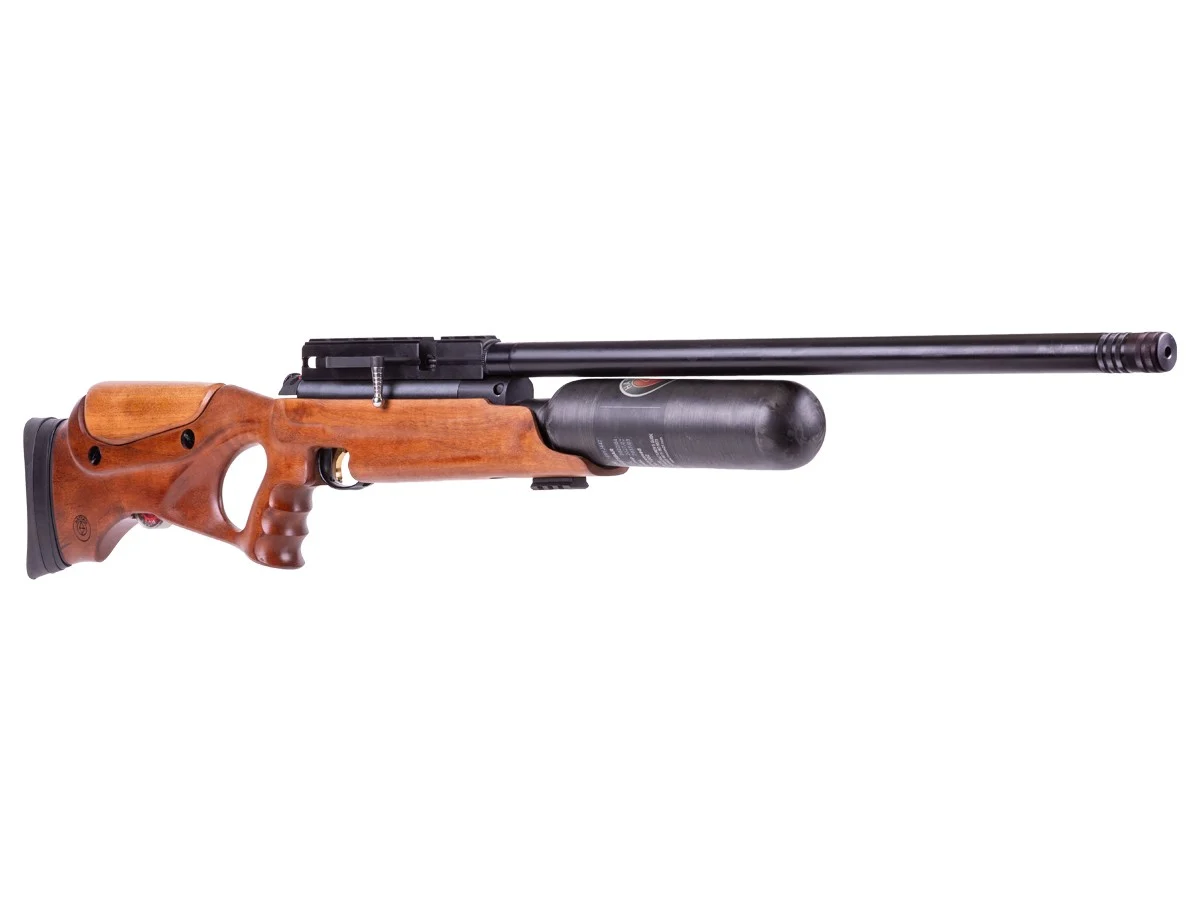
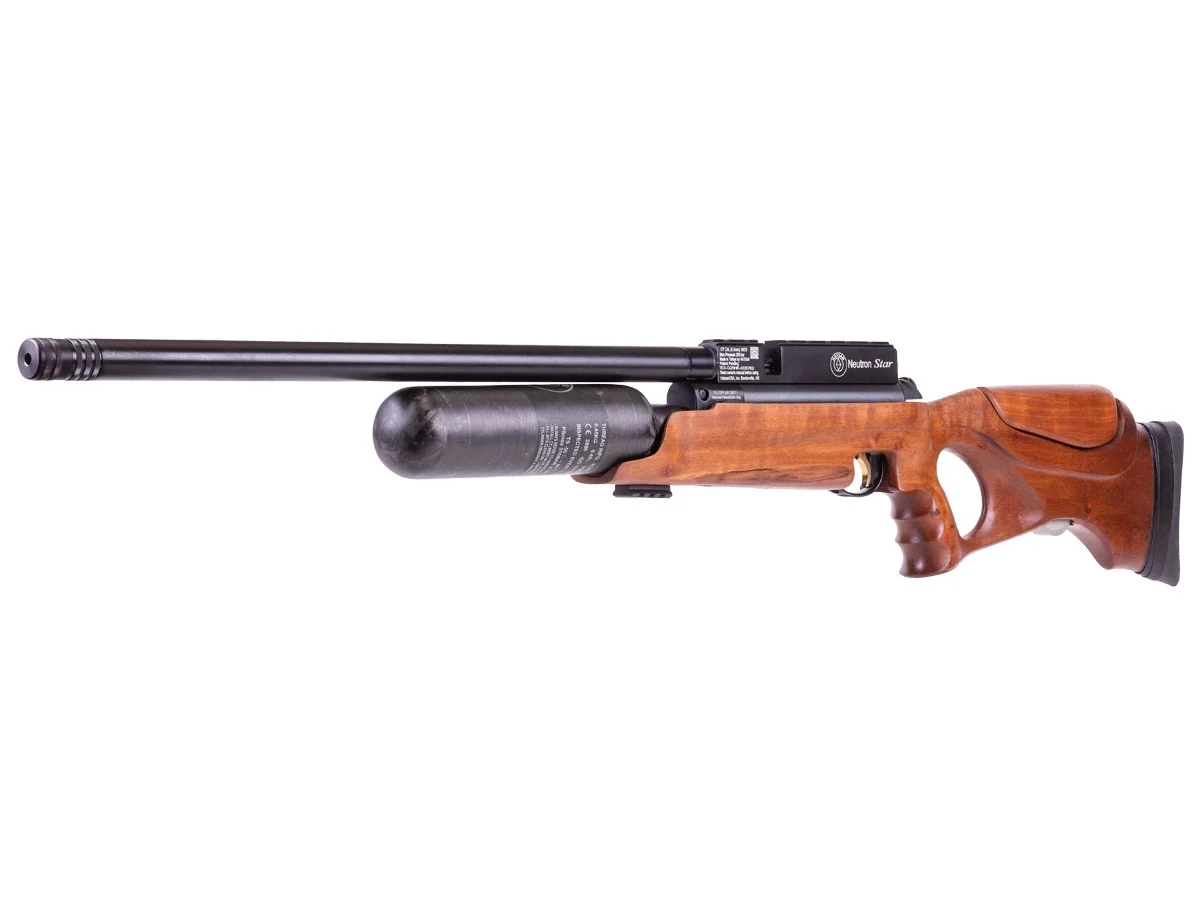
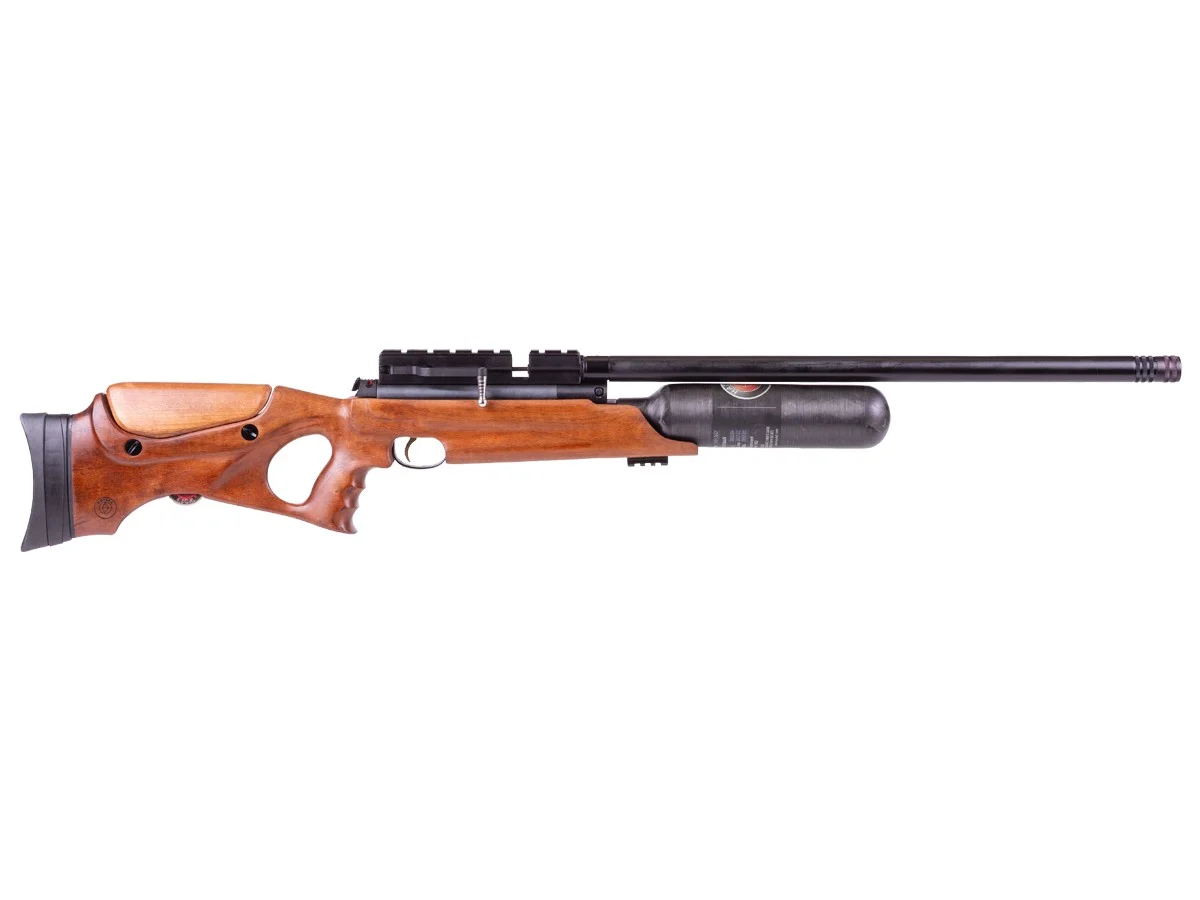
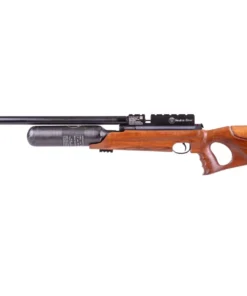
Hatsan NeutronStar Air Rifle
$730.00
Description
Hatsan NovaStar Pre-charged Pneumatic Air Rifle
Hatsan’s newest addition to the Nova platform offers numerous upgrades over its predecessor, including lighter weight, higher velocities and more shots per fill.
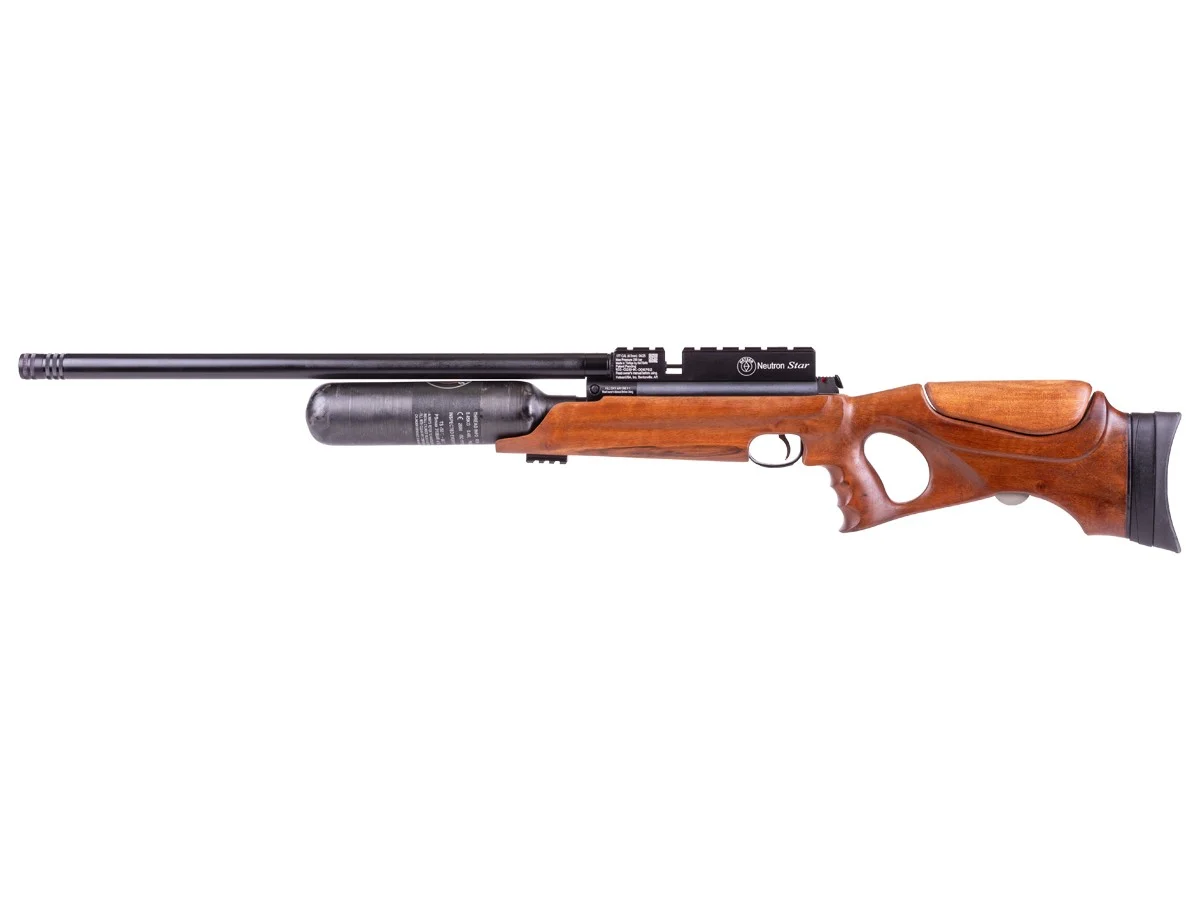
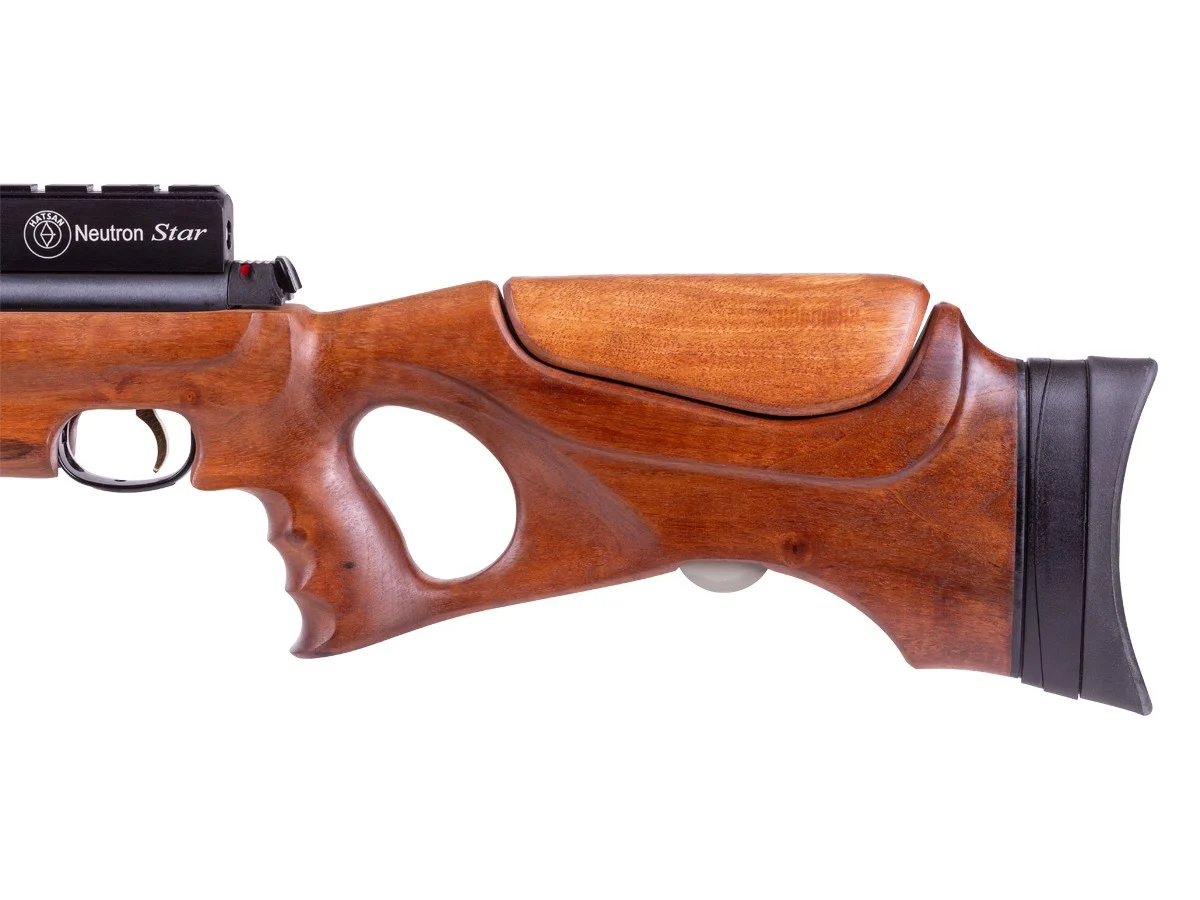
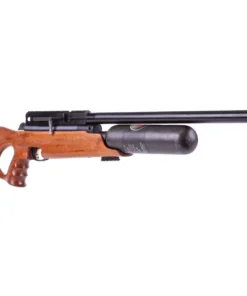
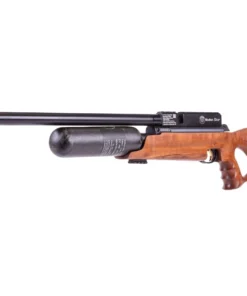
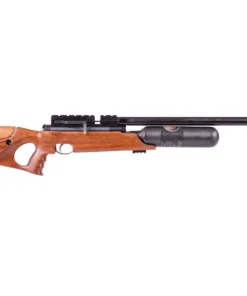
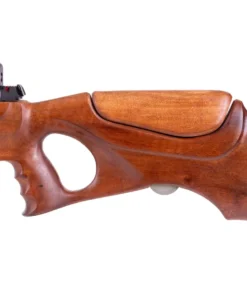
Weighing in at 8.4 lbs., the Hatsan NovaStar is almost a pound and a half lighter than the Nova and features an ergonomic thumbhole stock made of high-quality Turkish maple. It also adds a height-adjustable comb, increased muzzle energies and velocities. According to Hatsan, maximum muzzle velocities of 1300 FPS (.177), 1125 FPS (.22) and 1050 FPS (.25) are achievable, alongside maximum muzzle energies of 37 FPE (.177), 47 FPE (.22) and 54 FPE (.25). With numbers like these, it’s a suitable target shooter, pest eliminator and small game hunter.
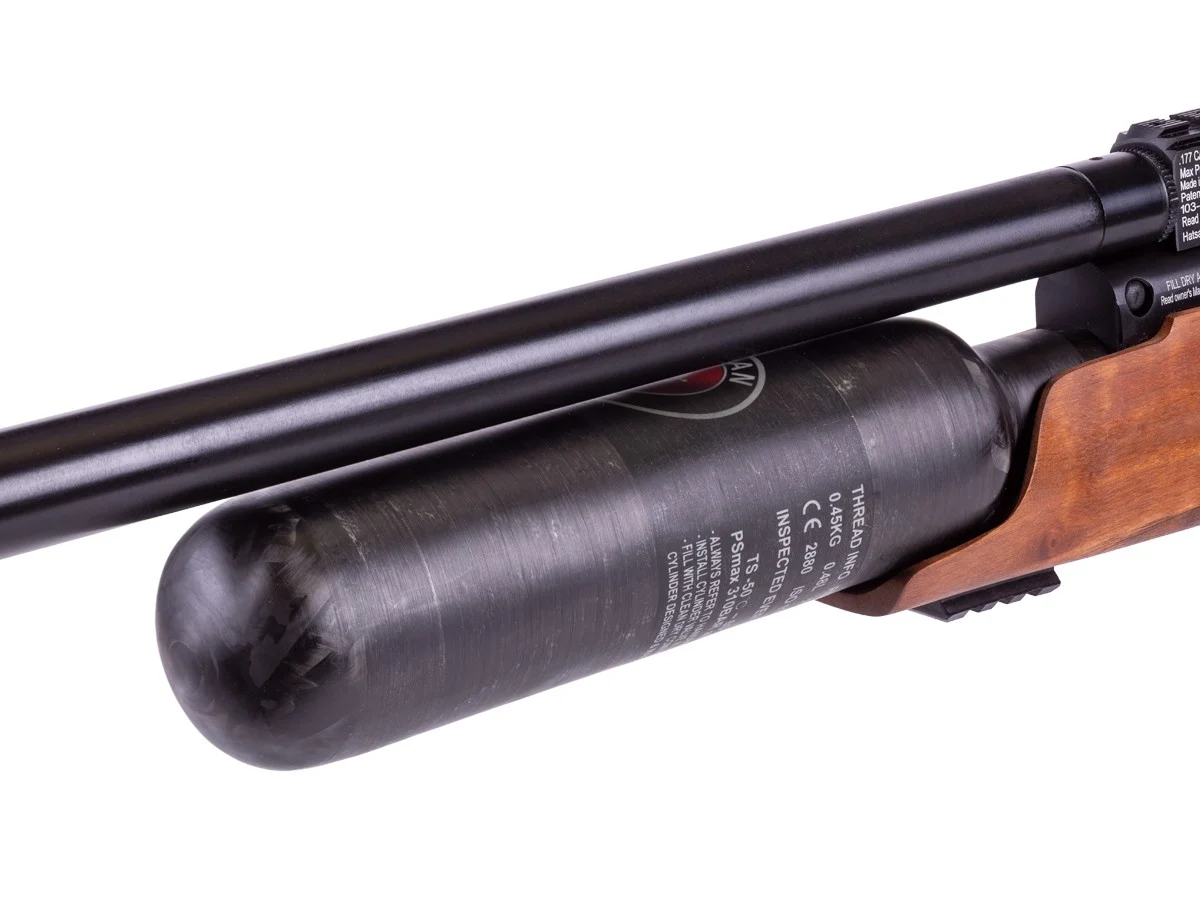
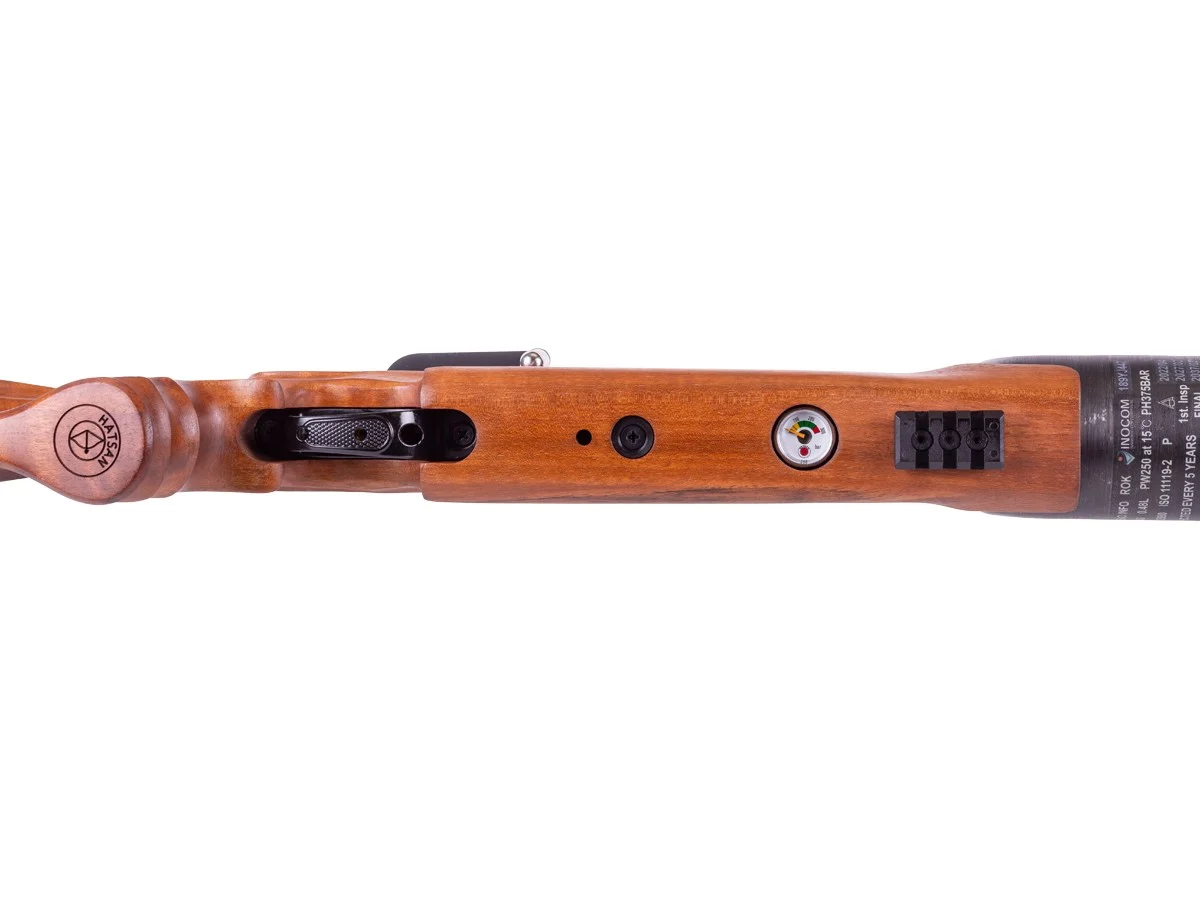
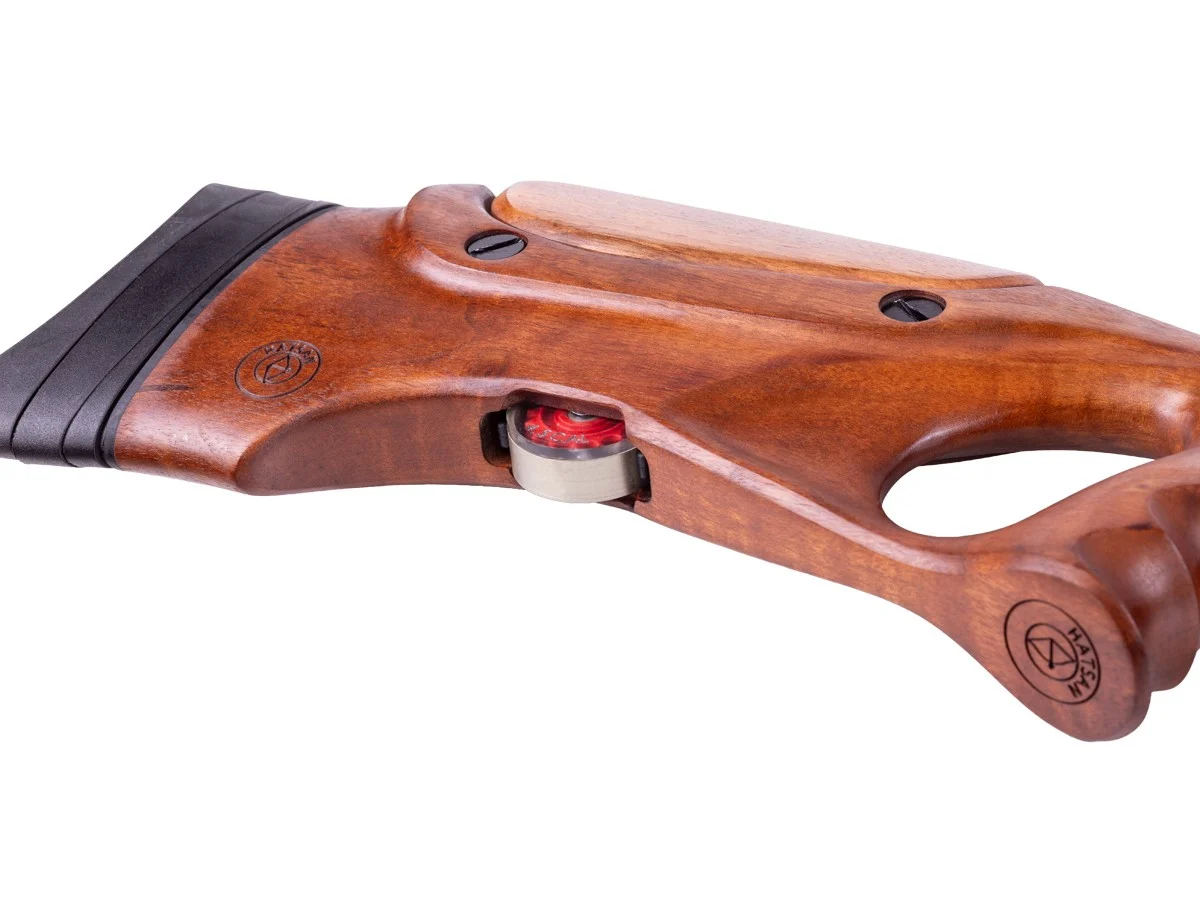
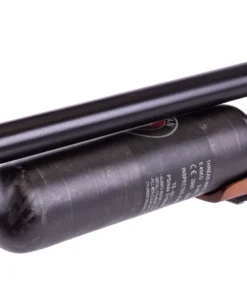
The Hatsan NovaStar PCP air rifle also features an adjustable Quattro Trigger, fully shrouded barrel, a 480cc carbon fiber air cylinder and Hatsan’s patented Anti-Knock System, which helps prevent wasting gas when the rifle is knocked or bounced. It even has a spare magazine storage compartment built into its stock.
Sporting less weight and more features than its older sibling, the Hatsan NovaStar PCP air rifle provides quality, reliability and value all in a moderately priced package. Order yours today and access the power, reliability and versatility normally found in PCP air rifles at much higher price points.
- Pre-charged pneumatic air rifle
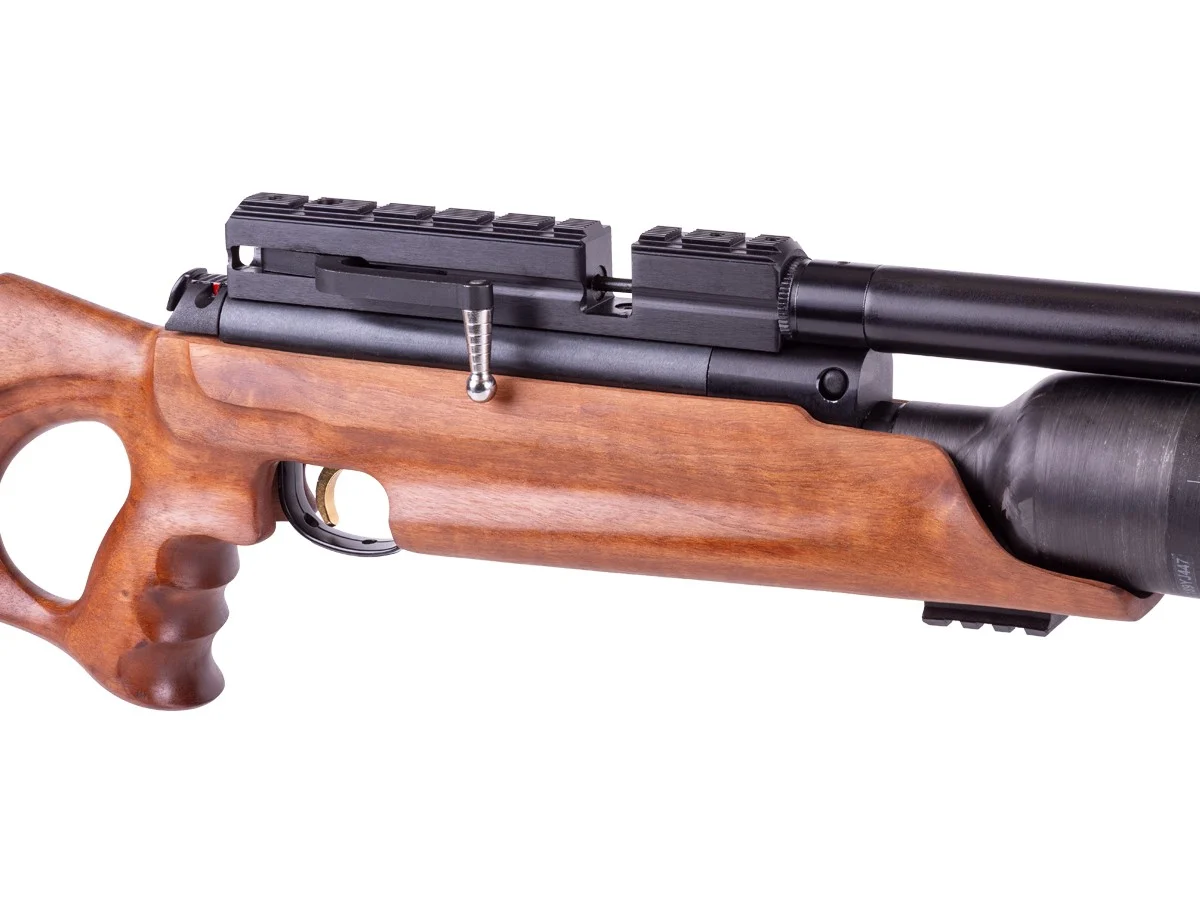
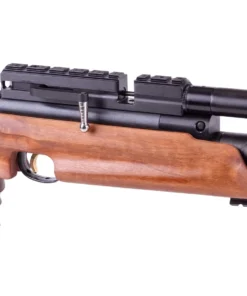
- Enhanced side-lever action
- Precision choked and rifled barrel
- 480 cc carbon fiber air cylinder for up to 110 shots per fill (in .177)
- Ergonomic Turkish walnut thumbhole stock
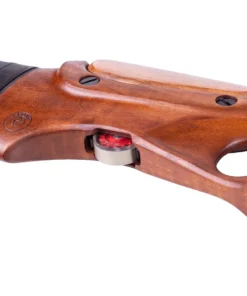
- Elevation-adjustable comb and rubber butt pad
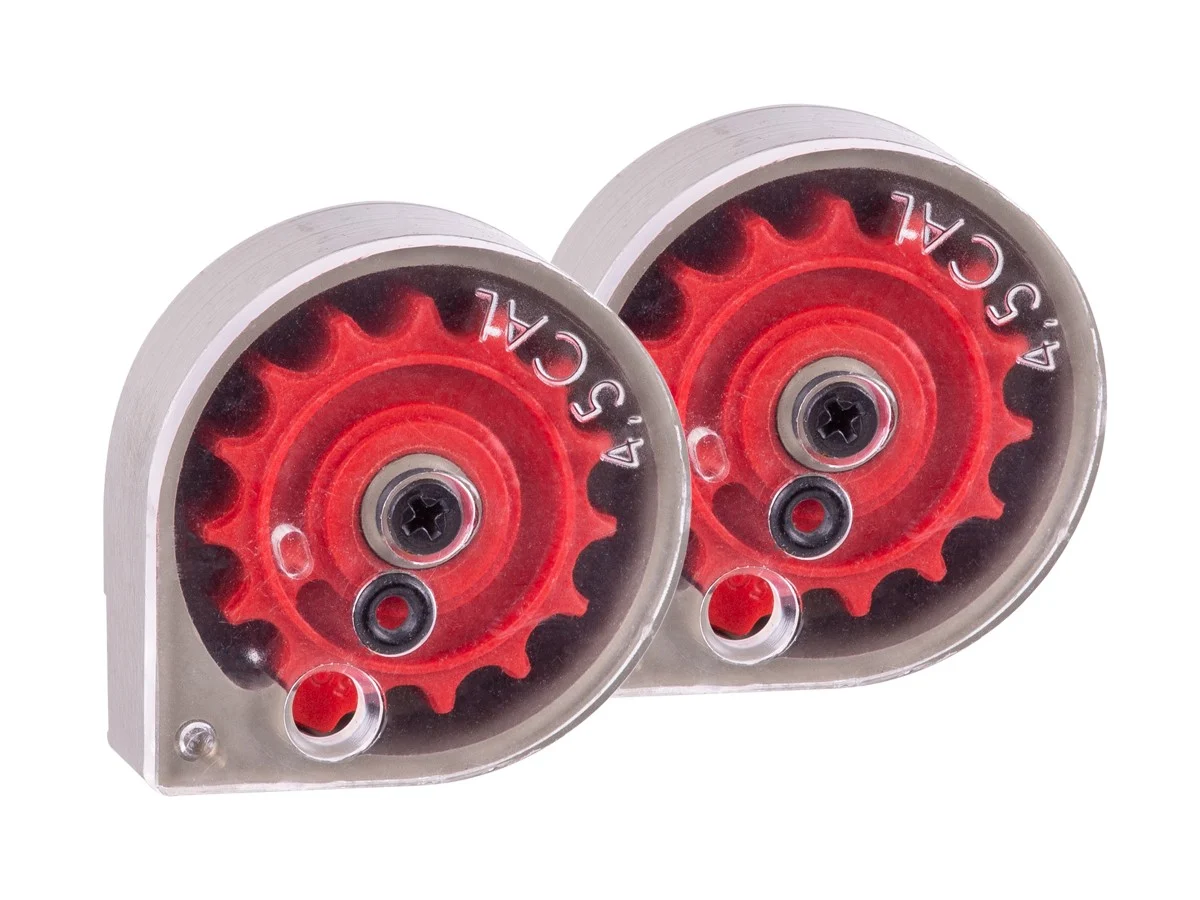
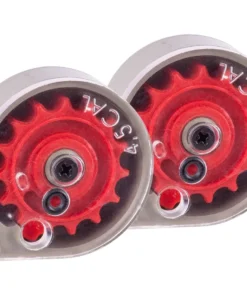
- Detachable Roto-Mag magazine with 14-shot (.177), 12-shot (.22) and 10-shot (.25) capacity
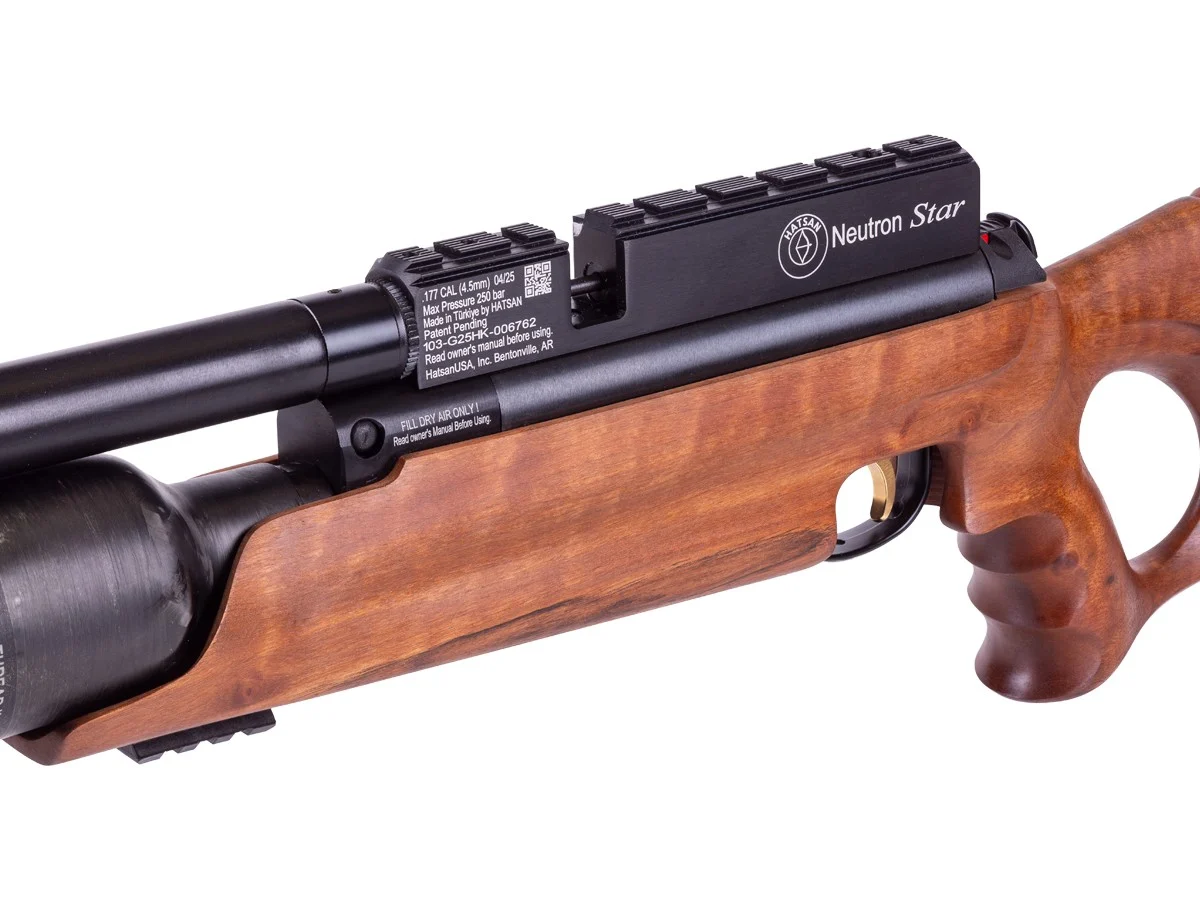
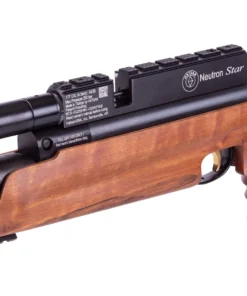
- Combo optics rail accepts both 11mm dovetail and 22mm Weaver mounts.
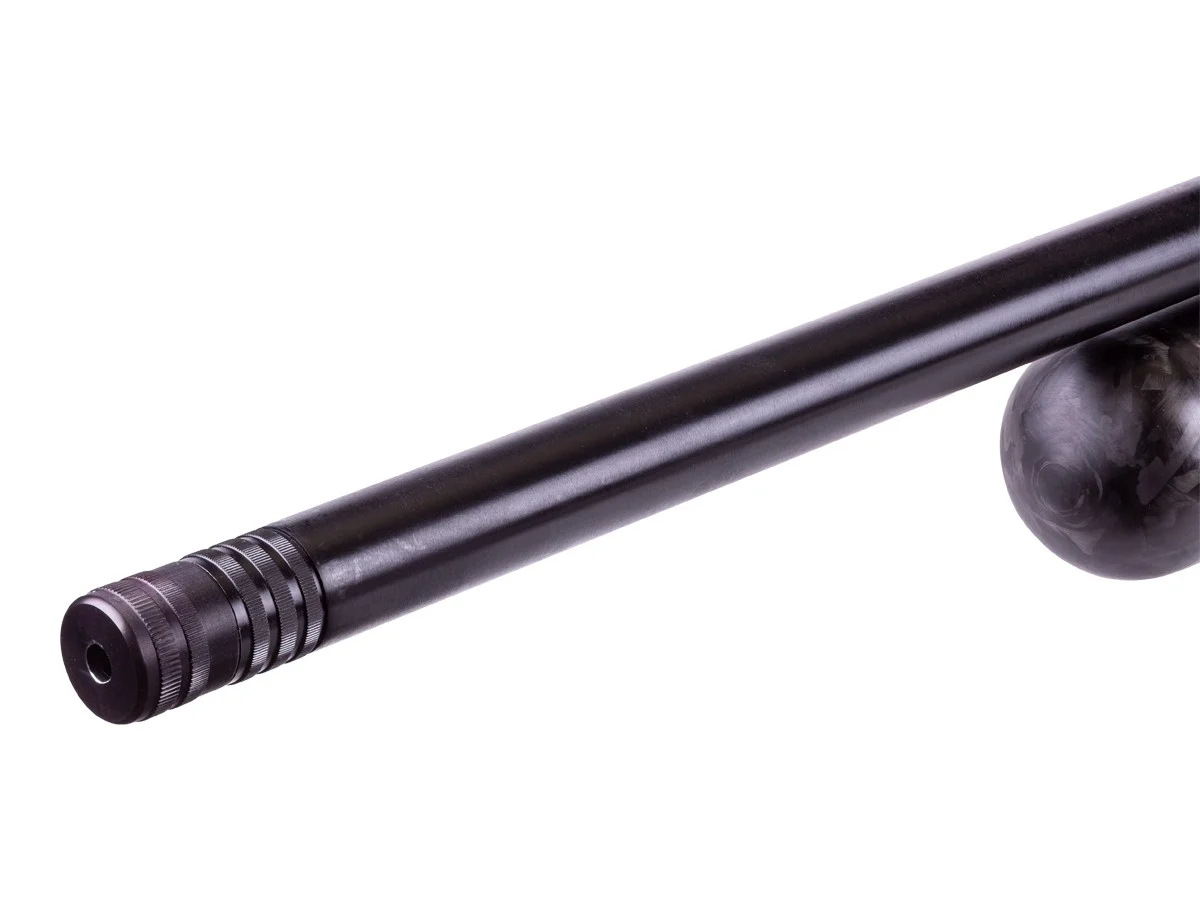
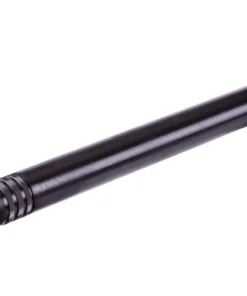
- Barrel shroud protects and stabilizes barrel for maximum durability and accuracy
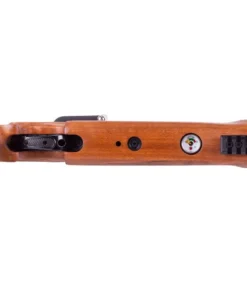
- Spare magazine storage in stock
- Patented Anti-Knock System prevents gas wastage when rifle is knocked or bounced
- Quattro Trigger: Two-stage, fully adjustable match trigger is adjustable for travel and load
- Picatinny accessory rail
- Velocity: 1300 FPS (.177), 1125 FPS (.22), 1050 FPS (.25)
- Maximum muzzle energy: 37 FPE (.177), 47 FPE (.22), 54 FPE (.25)
- Shots at optimal velocity; 110 (.177), 100 (.22), 90 (.25)
- Maximum fill pressure: 250 BAR (3625 PSI)
- 23” barrel
- 43.5” overall length
- Includes two magazines, single-shot tray, fill probe and spare seals
Specifications
BrandHatsan
Caliber.177 (4.5mm)Max Velocity1400 fpsMuzzle Energy37 ft/lbsSuggested forSmall game hunting/target practicePowerplantPre-charged pneumaticLoudness3-MediumWeight8.4 lbsFunctionRepeaterCylinder Size480 ccActionSideleverShroudedYesScopeableWeaver & 11mm dovetailsFront SightsnoneRear SightsnoneTriggerTwo-stage adjustableBarrelRifledBarrel Length23.0″Overall Length43.5″Capacity14 round(s)Body TypeRifleStockWalnutButtplateAdjustableColorBrownOperating Pressure3625 PSI / 250 BARGrip OrientationAmbidextrousRegulatedNoIs Safe To Dry FireYesMagazine Included2
Hatsan NeutronStar Air Rifle – Premium PCP Air Rifle
Hatsan NeutronStar Air Rifle – Premium Engineering, Advanced PCP Technology and Exceptional Craftsmanship
1.1 Introducing the Hatsan NeutronStar Air Rifle
The Hatsan NeutronStar Air Rifle represents a sophisticated addition to the modern pre-charged pneumatic air rifle category. Designed around contemporary pneumatic engineering, this model combines an attractive Turkish walnut thumbhole stock, a carbon-fibre air cylinder and carefully manufactured mechanical components.
Developed by Hatsan, the NeutronStar reflects an engineering philosophy that emphasizes construction quality, ergonomic design and mechanical consistency. Furthermore, its traditional exterior appearance gives it a distinctive identity within a market increasingly dominated by synthetic materials.
At the centre of its construction is a pre-charged pneumatic system. Unlike conventional spring-operated air rifles, this architecture uses stored compressed air as its power source. Consequently, the equipment offers a different mechanical operating experience from traditional break-barrel designs.
The NeutronStar is available in three commonly listed calibres: .177 (4.5mm), .22 (5.5mm) and .25 (6.35mm). Each configuration has different published performance characteristics, magazine capacities and shot-count figures. Therefore, customers should identify their preferred factory configuration before evaluating individual specifications.
Pyramyd AIR+1
1.2 Advanced PCP Engineering and Carbon-Fibre Construction
One of the distinguishing characteristics of this model is its 480cc carbon-fibre air cylinder. This component provides the compressed-air storage capacity required by the pneumatic system.
Furthermore, carbon-fibre construction offers an alternative to conventional heavier metallic reservoir designs. Its integration contributes to the overall engineering identity of the rifle.
The manufacturer specifies a maximum fill pressure of 250 BAR (3,625 PSI). Because this is a pressure-containing assembly, inspection, filling and servicing must follow the official manufacturer’s instructions and approved equipment requirements.
The model also incorporates an enhanced side-lever mechanical architecture. Together, these features establish its identity as a contemporary PCP platform rather than a conventional spring-powered air rifle.
Pyramyd AIR+1
1.3 Precision Barrel Construction and Manufacturing Quality
Barrel construction represents another important element of the NeutronStar’s engineering.
The rifle incorporates a precision rifled and choked barrel, with a reported barrel length of 23 inches. Its barrel is also shrouded, contributing to the product’s distinctive exterior construction.
Manufacturing consistency, material quality and dimensional accuracy are important considerations when evaluating any precision sporting instrument.
However, actual accuracy should not be judged exclusively by advertised specifications. Individual results depend on the particular configuration, ammunition characteristics, equipment condition and independently verified testing conditions.
1.4 Turkish Walnut Stock and Ergonomic Design
The genuine Turkish walnut thumbhole stock gives the NeutronStar a traditional appearance while incorporating contemporary design features.
Its adjustable cheekpiece and rubber butt pad distinguish it from simpler fixed-stock alternatives. Additionally, the fore-end incorporates an accessory rail.
The combination of natural wood and modern mechanical construction creates a distinctive appearance.
Moreover, the walnut finish provides an alternative for customers who prefer traditional sporting-equipment aesthetics over completely synthetic construction.
1.5 Quattro Trigger and Mechanical Components
The NeutronStar incorporates Hatsan’s Quattro two-stage adjustable trigger system.
This is an important factory feature because the trigger assembly forms part of the rifle’s overall mechanical architecture.
The rifle also incorporates a patented Anti-Knock System intended to reduce unwanted compressed-air wastage associated with accidental knocks or impacts.
These features distinguish the model within the manufacturer’s broader range of pneumatic sporting equipment.
Pyramyd AIR+1
1.6 Magazine System and Factory Accessories
The product uses a detachable Roto-Mag magazine system. Published capacities are:
-
.177 calibre: 14 pellets.
-
.22 calibre: 12 pellets.
-
.25 calibre: 10 pellets.
The listed package includes two magazines, a single-shot tray, a fill probe and spare seals. Nevertheless, package contents should be confirmed with the supplying distributor because regional packages and production configurations can differ.
Pyramyd AIR+1
1.7 Technical Specifications and Available Configurations
The following specifications are published for the NeutronStar range:
| Specification | Manufacturer/distributor listing |
|---|---|
| Power system | Pre-charged pneumatic |
| Available calibres | .177, .22 and .25 |
| Air cylinder | 480cc carbon fibre |
| Maximum fill pressure | 250 BAR |
| Barrel length | 23 inches |
| Overall length | 43.5 inches |
| Listed weight | Approximately 8.4 lbs |
| Action | Side lever |
| Trigger | Quattro two-stage adjustable |
| Stock | Turkish walnut |
| Magazine | Detachable Roto-Mag |
| Optics mounting | 11mm and 22mm compatible rail |
| Barrel | Shrouded, rifled and choked |
Published maximum energy figures are approximately 37 FPE for .177, 47 FPE for .22 and 54 FPE for .25. These are configuration-dependent manufacturer/distributor figures, not guaranteed results for every individual rifle.
Pyramyd AIR+1
1.8 Why Consider the Hatsan NeutronStar?
The NeutronStar stands out through its combination of traditional walnut styling and contemporary pneumatic engineering.
Its principal distinguishing characteristics include:
-
Carbon-fibre compressed-air reservoir.
-
Traditional Turkish walnut construction.
-
Adjustable exterior components.
-
Distinctive two-stage trigger assembly.
-
Multiple factory calibre configurations.
-
Detachable magazine architecture.
-
Compatibility with specified optical mounting standards.
For customers researching the wider Hatsan air rifle family, related models include the Hatsan BT65, Hatsan Hercules, Hatsan BullBoss, Hatsan Flash, Hatsan Invader, Hatsan Jet II, Hatsan Velox, Hatsan Sortie and Hatsan FlashPup QE.
Each belongs to a different product configuration or design category, so their specifications should not be confused with those of the NeutronStar.
Important SEO note: I have prioritized relevant Hatsan search terms rather than inserting unrelated FX Impact, FX Panthera and other competing-brand phrases into this product’s description. Those terms would make the listing misleading and weaken its topical relevance.
Advanced Engineering, Construction Quality, Material Technology, Mechanical Design, Durability and Long-Term Ownership
2.1 Engineering Philosophy and Overall Construction
Modern sporting equipment is increasingly influenced by advances in mechanical engineering, material science and manufacturing technology. Manufacturers are expected to balance structural strength, dimensional accuracy, aesthetic quality and long-term reliability within a carefully integrated design.
The construction examined in this section demonstrates how different materials and mechanical assemblies contribute to the identity of a sophisticated sporting product. Rather than concentrating exclusively on exterior appearance, it is important to consider the relationship between the individual components and the overall manufacturing philosophy.
Every major assembly has a particular function within the completed structure. Consequently, material selection, manufacturing consistency and component compatibility deserve considerable attention.
Furthermore, contemporary manufacturing increasingly emphasizes the relationship between traditional craftsmanship and modern production methods. Natural materials can be combined with precision-manufactured metallic components and engineered polymers to create a distinctive finished appearance.
The result is a product whose quality should be evaluated through its construction, documentation, manufacturing consistency and verified specifications rather than promotional descriptions alone.
2.2 Understanding the Importance of Material Selection
Material selection represents one of the most important stages of mechanical product development.
Engineers must consider several characteristics when choosing materials, including structural strength, density, resistance to environmental deterioration, dimensional stability and manufacturing compatibility.
Different materials offer different advantages. Metallic components, for example, provide useful structural characteristics, while engineered polymers can accommodate complex exterior shapes.
Natural materials introduce another dimension because their appearance and surface characteristics vary between individual examples.
However, selecting an attractive material is not sufficient. Its suitability must also be considered in relation to the environment in which the completed product will be stored and maintained.
Material compatibility is equally important. Components manufactured from different substances may respond differently to temperature fluctuations, humidity and prolonged environmental exposure.
Therefore, the overall quality of a completed assembly depends on more than the individual characteristics of its materials. It also depends on how those materials have been selected, manufactured and integrated.
2.3 Natural Wood and Traditional Craftsmanship
Natural wood remains an important material in the manufacture of traditional sporting equipment.
Its appeal comes from its distinctive appearance, individual grain patterns and established association with conventional craftsmanship.
Unlike synthetic materials, natural wood contains variations that make each finished component visually distinctive. Grain direction, colour distribution and surface characteristics may differ between individual examples.
Furthermore, appropriate finishing contributes to the overall appearance and preservation of the material.
Wood selection requires attention to moisture content, structural consistency and surface condition. Poorly controlled environmental conditions can encourage dimensional changes, cracking or other deterioration.
Consequently, natural materials require appropriate environmental care.
Another important consideration is the quality of the finishing process. Consistent sanding, suitable protective treatments and careful inspection contribute to the appearance of the completed component.
The combination of traditional materials and modern manufacturing creates an interesting relationship between established craftsmanship and contemporary engineering.
Ultimately, natural wood provides aesthetic individuality while demanding appropriate preservation throughout its service life.
2.4 Synthetic Materials and Contemporary Manufacturing
Engineered polymers have transformed the manufacture of modern mechanical and sporting products.
These materials can be formulated to provide particular combinations of strength, flexibility, surface consistency and resistance to environmental exposure.
Furthermore, advanced manufacturing processes allow complex shapes to be produced with relatively consistent dimensions.
This makes synthetic materials suitable for applications where repeatable manufacturing characteristics are important.
However, polymers are not completely resistant to deterioration.
Prolonged ultraviolet exposure, excessive temperatures, unsuitable cleaning substances and accidental impacts can influence their physical condition.
Different polymer formulations also possess different material properties.
Therefore, the suitability of a particular material should be evaluated according to the manufacturer’s intended application.
Another consideration is the quality of the connection between synthetic and metallic components.
These interfaces require appropriate manufacturing tolerances and compatible structural arrangements.
Ultimately, contemporary material technology provides significant manufacturing advantages when supported by suitable engineering and quality-control procedures.
2.5 Structural Integrity and Manufacturing Consistency
Structural integrity describes the ability of an assembled product to maintain its intended physical characteristics under its specified conditions.
It is an important consideration because sophisticated mechanical products contain several interconnected components.
Each component must meet appropriate manufacturing requirements.
Dimensional accuracy, material quality and assembly consistency contribute to the integrity of the finished product.
Furthermore, manufacturing tolerances must be considered throughout the production process.
A component may appear visually correct while still exhibiting dimensional inconsistencies that affect its compatibility with adjoining assemblies.
Consequently, manufacturers rely on inspection procedures to identify production irregularities.
These procedures may include dimensional measurements, material verification and visual examination.
However, quality-control requirements differ according to the particular component and manufacturing process.
Structural integrity should never be assumed exclusively from exterior appearance.
Professional inspection and authentic technical documentation provide a more reliable basis for evaluating equipment condition.
2.6 Precision Manufacturing and Industrial Quality
Precision manufacturing involves producing components within carefully established dimensional requirements.
Modern industrial facilities may employ computer-controlled machinery, specialized measuring instruments and documented inspection procedures.
These technologies help manufacturers achieve greater consistency across production batches.
Furthermore, repeatable manufacturing processes reduce unnecessary variations between individual components.
Nevertheless, automated machinery cannot independently guarantee exceptional manufacturing quality.
Material verification, machine calibration, qualified personnel and appropriate inspection remain important.
Manufacturing quality also depends on the coordination of different production stages.
Material preparation, machining, finishing and final assembly must operate according to compatible specifications.
Where multiple suppliers contribute components, consistency becomes particularly important.
Different production batches may also incorporate technical revisions.
Consequently, accurate identification of the manufacturing generation helps establish the correct technical information.
Ultimately, precision manufacturing combines advanced machinery, qualified personnel, reliable documentation and consistent inspection.
2.7 Component Alignment and Mechanical Compatibility
Mechanical compatibility describes the relationship between components designed to form part of the same assembly.
Each component must correspond with the manufacturer’s established design requirements.
Dimensional differences, unsuitable materials or unauthorized substitutions can compromise compatibility.
Furthermore, production revisions may introduce changes that affect the relationship between adjoining assemblies.
For this reason, visually similar components should not automatically be considered interchangeable.
Technical identification remains important when evaluating replacement parts.
Manufacturers generally establish component specifications according to particular production configurations.
Authorized service providers can help establish the correct identification when replacement becomes necessary.
Another important consideration is the condition of existing interfaces.
Corrosion, deformation or accidental impact may influence the suitability of individual components.
Consequently, suspected compatibility problems should receive professional attention.
The overall objective is to preserve the original engineering arrangement and prevent avoidable mechanical complications.
2.8 Exterior Finishing and Surface Protection
Exterior finishing contributes to both appearance and material preservation.
Manufacturers may employ different finishing techniques depending on the material and intended application.
These treatments can influence surface texture, colour consistency and resistance to ordinary environmental exposure.
Furthermore, a well-finished exterior contributes to the perceived quality of the completed product.
However, cosmetic appearance should not be confused with structural condition.
A visually attractive surface cannot establish the integrity of internal components.
Likewise, minor cosmetic deterioration does not necessarily indicate a serious mechanical problem.
Appropriate preservation remains important.
Abrasive substances, unsuitable chemicals and prolonged exposure to moisture may damage protective finishes.
Consequently, owners should follow the manufacturer’s approved cleaning and preservation recommendations.
Surface treatments also require periodic visual examination.
Where significant deterioration or suspected structural damage appears, professional evaluation is appropriate.
2.9 Environmental Resistance and Material Preservation
Environmental conditions can influence the condition of almost every mechanical product.
Humidity, airborne dust, temperature fluctuations and prolonged sunlight introduce different preservation challenges.
For example, moisture may encourage corrosion on susceptible metallic surfaces.
Similarly, dust and abrasive particles may accumulate around exposed mechanical interfaces.
Natural materials can also respond to changing humidity levels.
Wood may experience dimensional changes, while certain polymers can deteriorate after prolonged exposure to unsuitable environmental conditions.
Therefore, appropriate storage is an important part of responsible ownership.
Manufacturers generally establish environmental recommendations for their products.
These recommendations should be consulted because different materials and production configurations may require different conditions.
Another consideration is transportation between environments with significantly different temperatures.
Sudden environmental changes may contribute to condensation.
Ultimately, suitable storage and routine external inspection help preserve the appearance and condition of the completed assembly.
2.10 Understanding Mechanical Wear
Mechanical wear is a natural consideration in products containing moving components.
Repeated movement, environmental contamination and material aging can influence the condition of individual interfaces.
However, wear does not occur uniformly throughout an assembly.
Different components experience different environmental and mechanical conditions.
Some materials may retain their characteristics for extended periods, while others may require more frequent professional attention.
Consequently, manufacturers establish maintenance recommendations according to the intended design.
Unusual mechanical resistance, visible deformation or unexpected changes in external condition should not be ignored.
Rather than attempting unauthorized adjustments, owners should seek qualified technical assessment.
Professional evaluation can help distinguish ordinary cosmetic deterioration from more significant structural concerns.
Furthermore, accurate maintenance records provide useful information about the equipment’s history.
Ultimately, understanding mechanical wear helps establish realistic expectations regarding long-term ownership.
2.11 Quality Assurance and Factory Inspection
Quality assurance is an important part of responsible industrial production.
Manufacturers must establish procedures that help maintain consistent standards across different production stages.
These procedures may include material inspections, dimensional verification, surface examination and final assembly assessments.
Furthermore, documentation helps establish traceability throughout the manufacturing process.
Traceability becomes particularly important when technical revisions or replacement components are introduced.
Different production generations may incorporate changes that are not immediately visible from exterior photographs.
Consequently, accurate identification helps prevent confusion when obtaining technical support.
Quality assurance also involves identifying manufacturing irregularities before products enter commercial distribution.
However, no inspection process can eliminate every possibility of future deterioration.
Appropriate preservation and professional maintenance remain necessary.
The combination of factory inspection, accurate documentation and responsible servicing provides a stronger foundation for long-term reliability.
2.12 Long-Term Durability and Product Reliability
Durability describes the ability of a product to retain its intended characteristics throughout its expected service life.
Several factors influence this characteristic.
Material quality, manufacturing accuracy, assembly standards and environmental exposure all contribute to long-term condition.
Furthermore, maintenance history can significantly influence the preservation of mechanical components.
Products stored under unsuitable conditions may experience deterioration even when their original manufacturing quality was satisfactory.
Similarly, accidental impact can damage components that would otherwise remain reliable for extended periods.
Therefore, durability should not be evaluated exclusively through the manufacturer’s original specifications.
The condition of an individual example deserves separate consideration.
Professional inspection can provide useful information about the state of important assemblies.
Additionally, genuine replacement components help preserve the original engineering arrangement.
Ultimately, long-term reliability depends on the combination of sound manufacturing, appropriate preservation and qualified technical support.
2.13 Professional Maintenance and Technical Servicing
Professional maintenance plays an important role in preserving complex mechanical equipment.
Specialized products may incorporate components that require manufacturer-approved inspection procedures.
Furthermore, pressure-containing assemblies and interconnected mechanical components introduce responsibilities that should not be underestimated.
Routine external observation can help identify visible deterioration.
However, external appearance cannot establish the condition of every internal component.
Consequently, suspected damage or abnormal mechanical behaviour should be evaluated by qualified personnel.
Owners should consult the original manufacturer’s documentation for servicing requirements.
Unauthorized disassembly or modification may introduce mechanical hazards and compromise warranty eligibility.
Another important consideration is the availability of genuine replacement components.
Products supported by established distribution networks may be easier to maintain over their service life.
Ultimately, professional servicing helps preserve structural integrity while reducing the likelihood of avoidable complications.
2.14 The Importance of Genuine Replacement Components
Replacement components should correspond with the original manufacturer’s specifications.
This is particularly important for products containing specialized mechanical assemblies.
Visually similar components may incorporate different materials, dimensions or production characteristics.
Consequently, compatibility should never be established solely through photographs.
Accurate identification requires the appropriate technical documentation.
Authorized distributors may help establish the correct component reference and manufacturing generation.
Furthermore, genuine components are generally intended to preserve the original design relationship between adjoining assemblies.
Unauthorized substitutions may introduce compatibility concerns.
Owners should retain relevant purchase information and product identification records.
These documents can assist authorized service providers when identifying suitable replacements.
Another important consideration is the availability of manufacturer support.
A reliable supply network can contribute to more predictable long-term ownership.
Ultimately, genuine components and professional identification support the preservation of original manufacturing standards.
2.15 Understanding Product Authenticity
Authenticity represents an important consideration when purchasing specialized mechanical equipment.
A genuine product should correspond with its manufacturer’s identification information and official technical documentation.
However, attractive packaging and professional-looking photographs cannot independently establish authenticity.
Customers should examine the credibility of the retailer and the provenance of the equipment.
Authorized distribution channels may provide additional reassurance.
Furthermore, buyers should confirm that the supplied configuration corresponds with the description.
Differences between production generations can influence specifications and package contents.
Transparent commercial descriptions should identify included components and distinguish optional accessories.
Customers should also retain purchase receipts and warranty information.
These documents may become useful when requesting technical assistance.
Ultimately, authenticity depends on reliable identification, credible distribution and accurate documentation.
2.16 Warranty Protection and Customer Assistance
Warranty coverage forms an important part of the overall ownership experience.
Manufacturers and distributors may provide protection against specified manufacturing defects.
However, coverage varies according to the product, purchasing location and applicable commercial conditions.
Consequently, buyers should examine warranty documentation before completing a transaction.
Important considerations include the duration of coverage, eligible defects, exclusions and authorized servicing requirements.
Furthermore, unauthorized modifications may affect warranty eligibility.
Accidental damage and unsuitable maintenance may also fall outside standard coverage.
Customers should retain original purchase receipts and relevant product identification information.
These records may simplify legitimate service inquiries.
Another consideration is the availability of authorized technical support.
A retailer with established service arrangements may provide a more convenient ownership experience.
Ultimately, clear warranty conditions and accessible assistance contribute to greater purchasing confidence.
2.17 Product Inspection and Purchasing Confidence
Purchasing decisions should be based on accurate information rather than promotional presentation alone.
Customers should examine the product description, published specifications and included accessories.
Furthermore, photographs should correspond with the actual configuration being offered.
Where possible, buyers should request confirmation of the production generation and product condition.
This is particularly important when purchasing previously owned equipment.
An apparently attractive exterior may conceal deterioration that cannot be identified through photographs.
Consequently, an appropriate professional inspection may be valuable.
Customers should also establish whether the product includes original documentation and applicable warranty protection.
Retailers should communicate any differences between advertised specifications and the actual supplied configuration.
Transparent communication reduces misunderstandings and supports informed purchasing decisions.
Ultimately, purchasing confidence comes from accurate information, credible distribution and verifiable product condition.
2.18 Transportation and Storage Considerations
Transportation introduces additional responsibilities for specialized sporting equipment.
Products may be exposed to vibration, accidental impact, environmental changes and handling-related damage.
Consequently, appropriate protective packaging is important.
However, transportation requirements may differ according to the equipment’s legal classification and the destination.
Owners should verify applicable legislation and carrier restrictions before arranging transportation.
International movement may involve additional customs requirements.
Furthermore, pressure-containing products can be subject to specific transportation restrictions.
Customers should consult the relevant carrier and competent authorities rather than assume ordinary shipping arrangements are permitted.
Storage also requires consideration.
Secure arrangements help prevent unauthorized access and reduce avoidable environmental exposure.
Manufacturer-approved storage recommendations should always take priority over generalized advice.
Ultimately, responsible transportation and storage help preserve equipment condition while supporting legal compliance.
2.19 Responsible Ownership and Legal Considerations
Responsible ownership involves understanding the legal requirements associated with the particular product.
Regulations differ between countries and may also vary between local jurisdictions.
Requirements can concern classification, minimum age, possession, transportation, storage and authorized sporting activities.
Consequently, prospective owners should verify the applicable legislation before purchasing or importing regulated equipment.
Manufacturer specifications do not replace local legal requirements.
Furthermore, international shipments may require customs documentation or additional authorization.
Customers should confirm these requirements with the relevant authorities.
Secure storage is equally important.
Appropriate arrangements help prevent unauthorized access and support responsible ownership.
Another important consideration is the availability of authorized sporting facilities.
Participation requirements may differ between organizations.
Ultimately, lawful ownership depends on accurate information, appropriate authorization and continued compliance with applicable regulations.
2.20 Overall Value and Long-Term Ownership Considerations
The initial purchase price represents only one element of the total financial commitment.
Additional considerations may include secure storage, professional inspection, replacement components and authorized technical servicing.
Furthermore, the availability of local assistance may influence the overall ownership experience.
Products requiring specialized maintenance can involve different costs from simpler mechanical alternatives.
Consequently, prospective buyers should investigate servicing arrangements before making a purchasing decision.
Warranty coverage deserves similar attention.
Customers should understand the exclusions and conditions associated with their particular purchase.
Long-term value also depends on the condition of the individual example.
Previous maintenance, storage history and product authenticity can influence future ownership considerations.
However, resale values cannot be guaranteed because market conditions and regulatory requirements may change.
Ultimately, informed financial planning helps establish realistic expectations.
2.21 Understanding the Importance of Manufacturer Documentation
Technical documentation provides important information about a product’s original construction and intended specifications.
It may include identification details, component descriptions, material information, maintenance requirements and warranty conditions.
Furthermore, documentation can help distinguish different production generations.
This becomes particularly important when manufacturers introduce revisions.
Two visually similar products may incorporate different factory components.
Consequently, technical information should correspond with the exact example being purchased or serviced.
Customers should retain original documentation whenever possible.
Digital copies can also provide convenient access to important information.
However, unofficial information found online should not automatically replace manufacturer instructions.
Authorized technical support remains the preferred source when uncertainty concerns structural condition or compatibility.
Ultimately, accurate documentation contributes to informed ownership and dependable professional servicing.
2.22 Manufacturing Innovation and Future Development
Industrial manufacturing continues to evolve through advances in materials, precision machinery and quality-control technology.
Computer-assisted production can improve dimensional consistency.
Similarly, modern inspection systems allow manufacturers to evaluate components using increasingly sophisticated measurement methods.
Material science also continues to introduce new possibilities.
Engineered polymers, improved surface treatments and advanced composite materials may provide additional manufacturing options.
However, innovation should be evaluated through measurable benefits rather than marketing terminology.
A newly introduced material does not automatically provide superior performance in every application.
Its suitability depends on the intended structural requirements and environmental conditions.
Furthermore, long-term reliability requires adequate testing and quality assurance.
Manufacturers must consider the relationship between innovation, serviceability and component availability.
Ultimately, successful engineering development combines useful technological improvements with dependable manufacturing and realistic long-term support.
2.23 Why Construction Quality Matters More Than Appearance Alone
Exterior appearance often influences initial purchasing decisions.
Nevertheless, the actual quality of a mechanical product involves considerably more than its finish.
Structural integrity, component compatibility, manufacturing consistency and material quality all deserve attention.
Furthermore, products with similar exterior appearances may differ considerably in their internal construction.
Consequently, customers should evaluate documented specifications alongside visual presentation.
Retail photographs are useful for understanding exterior characteristics, but they cannot establish internal condition.
Professional inspection provides additional information where necessary.
Another consideration is the quality of manufacturer support.
Even well-manufactured equipment requires appropriate preservation throughout its service life.
Therefore, purchasing decisions should consider both original construction and long-term serviceability.
Ultimately, dependable quality is demonstrated through verified manufacturing standards, accurate documentation and consistent technical support.
2.24 Practical Considerations for Different Ownership Situations
Different owners may have different expectations regarding mechanical products.
Some place greater importance on traditional appearance, while others prioritize contemporary materials and manufacturing consistency.
Likewise, storage arrangements and access to professional servicing can vary considerably.
Consequently, purchasing decisions should reflect the individual’s circumstances.
A product that appears suitable in promotional photographs may not necessarily represent the most appropriate option for every customer.
Furthermore, local legislation may influence the availability of particular configurations.
Prospective buyers should establish whether the intended product can legally be possessed and maintained in their jurisdiction.
Another consideration is the availability of replacement components.
Specialized equipment may require access to an established service network.
Therefore, evaluating ownership requirements before purchasing can help avoid unnecessary complications.
2.25 Final Assessment of Engineering Quality and Long-Term Reliability
The construction of sophisticated sporting equipment reflects the combined contributions of material science, precision manufacturing and mechanical engineering.
Natural materials provide distinctive visual characteristics, while engineered components contribute structural consistency and contemporary manufacturing possibilities.
Furthermore, accurate component dimensions and compatible interfaces support the integrity of the completed assembly.
Nevertheless, manufacturing quality should be evaluated through verified information rather than unsupported promotional claims.
Material selection, inspection procedures and professional servicing all contribute to long-term reliability.
Appropriate environmental care also remains important.
Owners should retain manufacturer documentation, purchase records and relevant warranty information.
Additionally, replacement components should correspond with approved technical specifications.
Responsible ownership requires attention to legal requirements, secure storage and professional maintenance.
Ultimately, the long-term value of sophisticated mechanical equipment depends on the relationship between original manufacturing quality, material preservation, genuine components and dependable technical supportHatsan NeutronStar Air RifleHatsan NeutronStar Air RifleHatsan NeutronStar Air RifleHatsan NeutronStar Air RifleHatsan NeutronStar Air Rifle Hatsan NeutronStar Air RifleHatsan NeutronStar Air Rifle Hatsan NeutronStar Air RifleHatsan NeutronStar Air RifleHatsan NeutronStar Air RifleHatsan NeutronStar Air RifleHatsan NeutronStar Air RifleHatsan NeutronStar Air Rifle.
A thoughtful purchasing decision therefore considers the complete ownership experience rather than focusing exclusively on exterior appearance or initial cost Hatsan NeutronStar Air RifleHatsan NeutronStar Air RifleHatsan NeutronStar Air RifleHatsan NeutronStar Air RifleHatsan NeutronStar Air RifleHatsan NeutronStar Air RifleHatsan NeutronStar Air RifleHatsan NeutronStar Air RifleHatsan NeutronStar Air RifleHatsan NeutronStar Air RifleHatsan NeutronStar Air RifleHatsan NeutronStar Air RifleHatsan NeutronStar Air Rifle.
Be the first to review “Hatsan NeutronStar Air Rifle”
Related products
Hatsan
Hatsan
Hatsan
Reviews
There are no reviews yet.