
Air Arms S400 Biathlon Air Rifle
$1,490.00
Description
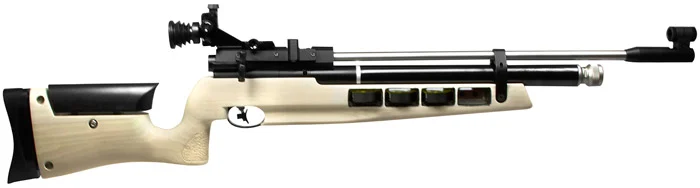
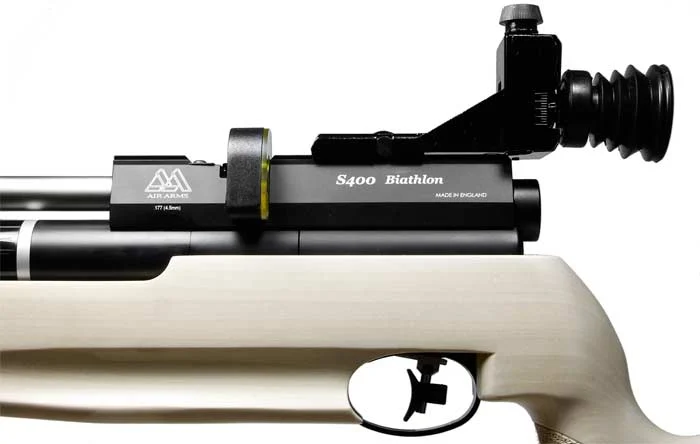
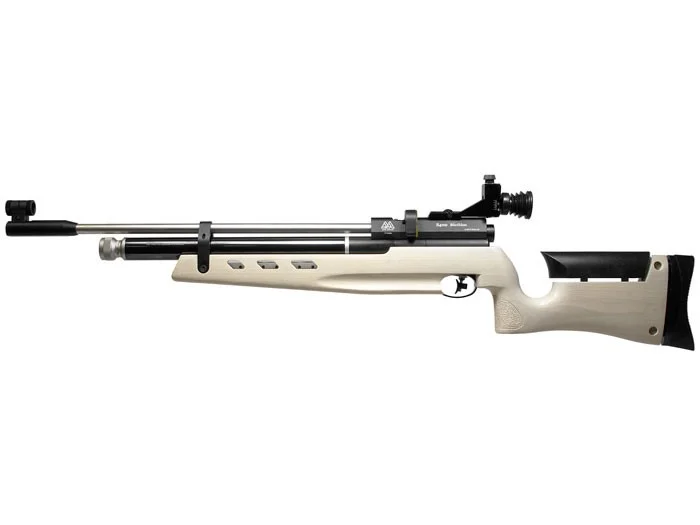
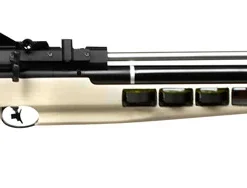
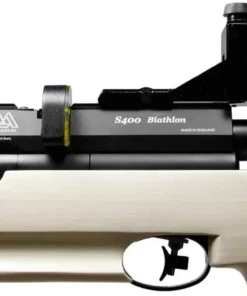
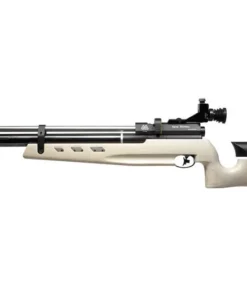
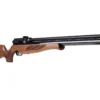
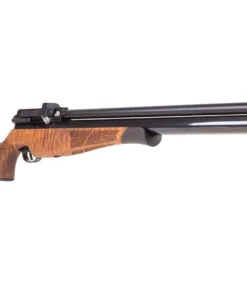
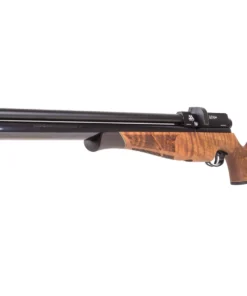
The Air Arms Precision Biathlon rifle delivers world-class accuracy. Air Arms is known for making extremely accurate guns, and the Biathlon is no exception. This air rifle is dressed in a unique white poplar stock with adjustable black cheekpiece and rubber buttpad. If you don’t shoot competitively and just want a very accurate repeater, install a compact scope on the 11mm dovetail. Because the dovetail is very short, you’ll need to use a 2-piece mount.
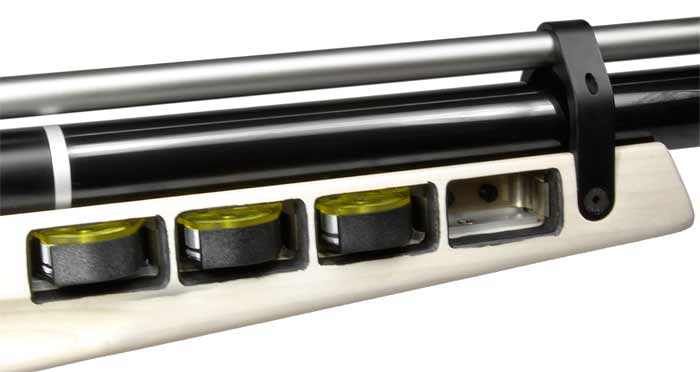
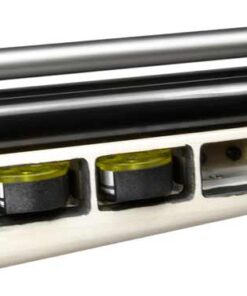
Keep your extra rotary clips in the slots of the right-hand forearm. Load them before each match so there’s no fumbling when the pressure is on!
Helpful resources:
- Learn about hunting with air rifles
- Tips for picking the right airgun for hunting game & pests
- Learn about airgun hunting laws in your state
- Shop related categories: pellet guns, pellet rifles
- Air Arms S400 Biathlon air rifle
- Precharged pneumatic (200 bar max fill pressure)
- Bolt-action
- 5-shot repeater (self-indexing rotary clip)
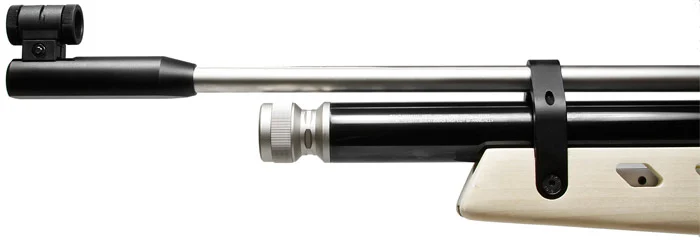
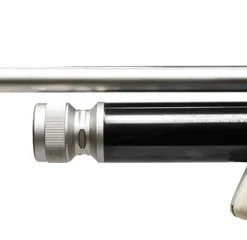
- Removable air reservoir
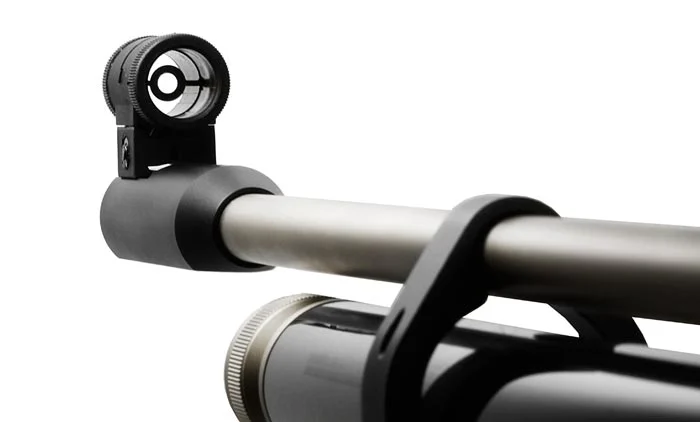
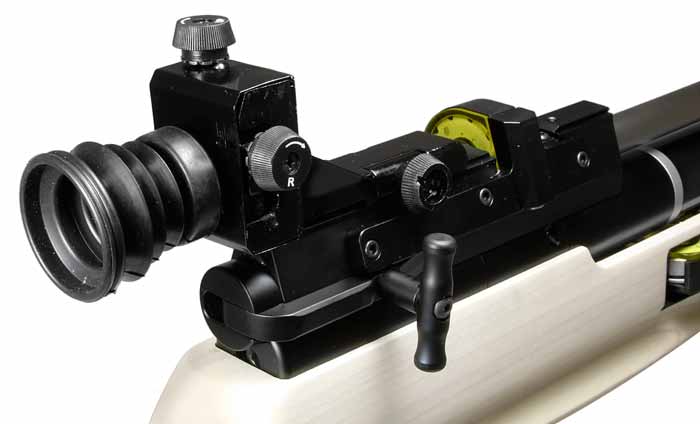
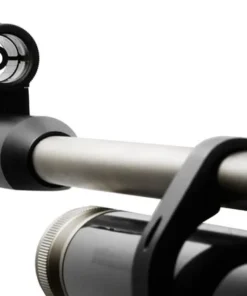
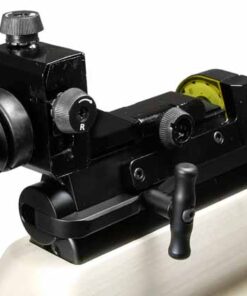
- Match sights: globe front accepts inserts, rear diopter (not included)
- 11mm dovetail
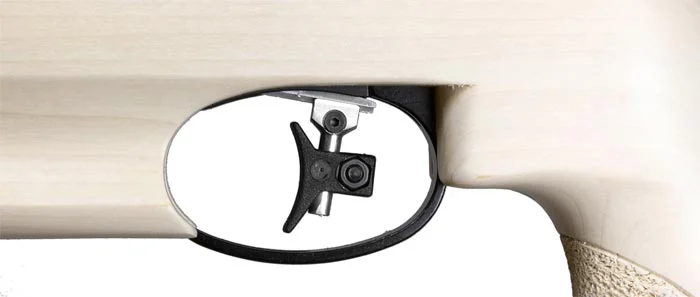
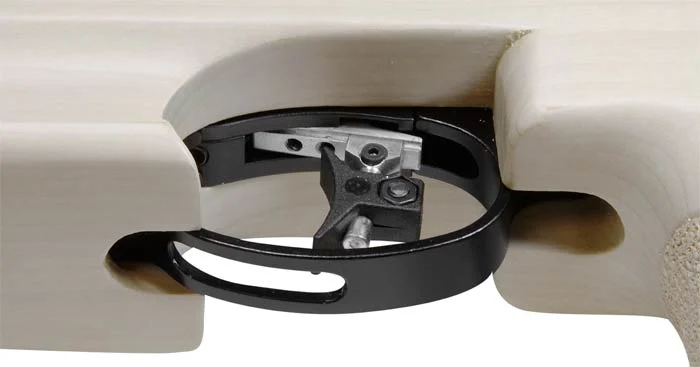
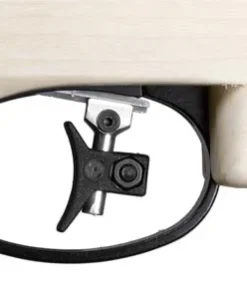
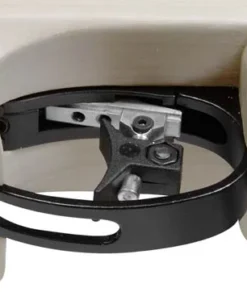
- 5-way adjustable match trigger
- Lothar Walther barrel
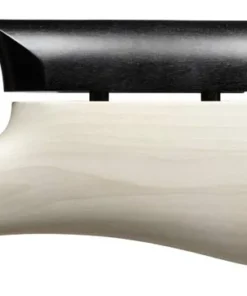
- White poplar stock
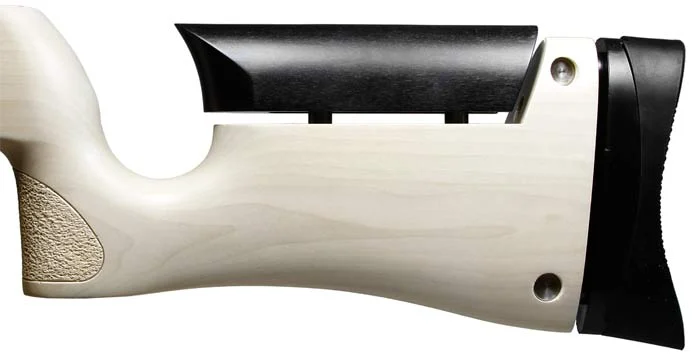
- Cheekpiece adjusts vertically and horizontally
- Buttpad adjusts vertically
- 4 rotary clips fit in slots in right-hand forearm
- Beautiful deep bluing
- Stock is flawlessly executed
- 29.875″ between front & rear sight positions
- 10.25″ long accessory rail
- 12.12″ to 12.50″ length of pull (LOP)
- 5.15 ft-lbs.
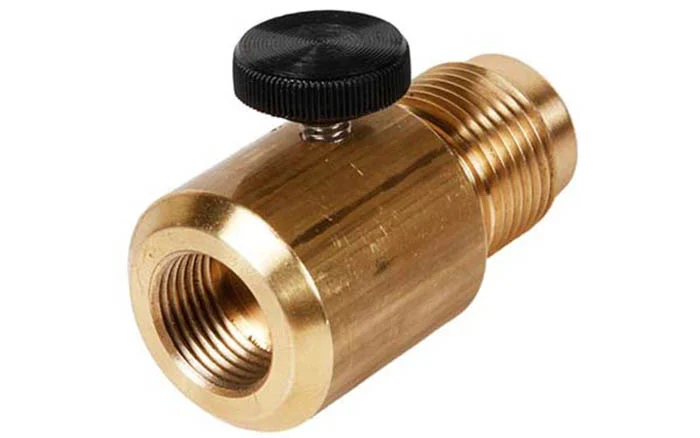
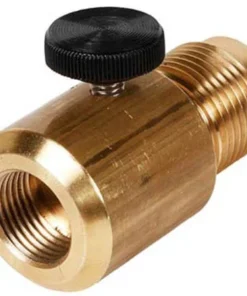
- Includes owner’s manual, 7 Allen keys, four 5-shot clips, fill adapter & spanner (to remove reservoir)
Specifications
BrandAir Arms
Caliber.177 (4.5mm)Max Velocity564 fps Muzzle Energy5.15 ft/lbsSuggested forCompetitionPowerplantPre-charged pneumaticLoudness2-Low-MediumWeight6.99 lbsFunctionRepeaterMax Shots per Fill120ActionBolt-actionScopeable11mm dovetailFront SightsGlobe w/Aperture InsertsRear SightsnoneSafetynoneTriggerFive-way adjustable matchBarrelRifledBarrel Length20.5″Overall Length41.0″Capacity5 round(s)Body TypeRifleButtplateAdjustableOperating Pressure2900 PSI / 200 BARRegulatedNoIs Safe To Dry FireYes
Air Arms S400 Biathlon Air Rifle – Precision PCP Competition Engineering and Adjustable Biathlon Ergonomics
The Air Arms S400 Biathlon Air Rifle was developed around precision competition use rather than general-purpose sporting versatility.
Its design combines a pre-charged pneumatic powerplant with a bolt-operated action, 5-shot self-indexing rotary clips, adjustable match trigger and competition-style stock geometry.
Unlike the conventional single-shot S400 sporter currently sold by Air Arms, the Biathlon version uses a specialized repeater configuration intended to support timed target stages and deliberate positional shooting.
Current specialist listings document the model in .177 calibre, with a 200-bar maximum fill pressure, removable reservoir, Lothar Walther barrel, five-way adjustable match trigger, 11 mm dovetail rail, globe front sight, adjustable cheekpiece, vertically adjustable buttpad and white poplar stock. Typical published figures include approximately 564 fps, 5.15 ft-lb, 120 shots per fill, 20.5-inch barrel, 41-inch overall length and approximately 6.99 lb weight.
Air Arms’ service centre now categorizes the Biathlon under discontinued rifles, so it should be understood as a legacy competition model rather than part of the current production S400 range.
That distinction is important when evaluating specifications, replacement parts and service information.
Air Arms S510 XS Ultimate Sporter FAC
The Air Arms S510 XS Ultimate Sporter FAC belongs to a different modern regulated PCP family.
It uses a side-lever multi-shot action and higher-output pneumatic system.
The S400 Biathlon instead uses a lower-powered competition-oriented bolt-action setup.
air rifle
An air rifle propels a pellet using compressed gas or mechanically compressed air.
The S400 Biathlon uses pre-compressed air stored in a removable cylinder.
air gun
An air gun is a broad category covering PCP, spring-piston, gas-ram and CO₂-powered equipment.
This model belongs to the pre-charged pneumatic category.
air arms
Air Arms is the British manufacturer behind the S400 Biathlon.
The company’s current service resources still provide documentation for the discontinued Biathlon platform.
air rifles
Air rifles vary significantly in mechanism and purpose.
The S400 Biathlon differs from conventional sporters because it was developed around competition-style handling and rapid controlled target transitions.
pellet guns
The phrase pellet guns refers broadly to air-powered equipment designed to fire pellets.
The Biathlon model uses .177 pellets.
cal .177 pellets
cal .177 pellets are approximately 4.5 mm in diameter.
This is the documented calibre for the S400 Biathlon.
Why .177 Is Appropriate
The lighter projectile can provide a relatively flat trajectory at the modest competition energy level used by this rifle.
break barrel pellet gun
A break barrel pellet gun uses a hinged barrel to cock a spring or gas-ram mechanism.
The S400 Biathlon does not.
It uses stored compressed air and a bolt-operated action.
airguns
Airguns include both mechanical and pneumatic systems.
The S400 Biathlon is a PCP design.
air pisto
The phrase air pisto generally refers to an air pistol.
The S400 Biathlon is instead a shoulder-fired competition rifle.
177 caliber
177 caliber is the documented chambering for the model.
Why Calibre Matters
Projectile diameter affects pellet selection, trajectory and barrel compatibility.
177 pellet vs.22 pellet
The 177 pellet vs.22 pellet comparison normally involves projectile mass and trajectory.
.177
Lighter projectile.
Generally flatter trajectory.
.22
Heavier projectile.
Different ballistic characteristics.
Why It Is Important Here
The Biathlon was designed around .177 rather than .22 competition use.
air arms s510 ultimate sporter .177 sub 12
The air arms s510 ultimate sporter .177 sub 12 is a different modern sporting PCP.
It uses a side-lever multi-shot action and should not be confused with the bolt-operated S400 Biathlon.
what is an air rifle
For what is an air rifle, it is a shoulder-fired air-powered platform that launches pellets using compressed gas or mechanical air pressure.
The S400 Biathlon stores compressed air in a removable cylinder.
airgins
The term airgins is commonly a misspelling of airguns.
The S400 Biathlon belongs to the PCP category within that broader group.
.22 air rifle
A .22 air rifle uses approximately 5.5 mm pellets.
That is not the documented calibre of the S400 Biathlon.
air arms s510
The air arms s510 uses a side-lever action and rotary magazine architecture.
The S400 Biathlon uses a different bolt-action competition system.
air riflery
air riflery can include structured target disciplines where precision, consistency and positional control matter.
The S400 Biathlon was developed around this type of controlled competition use.
airgun shooting range near me
For airgun shooting range near me, the most appropriate environment is a recognized club or target facility with controlled firing lines and reliable backstops.
Why
A range provides:
Known distances
Defined firing procedures
Safe pellet containment
Structured practice conditions
air arm
The phrase air arm may be used informally, although Air Arms is the correct manufacturer name.
target air rifle shooting
target air rifle shooting depends heavily on repeatability.
Important Skills
Position stability
Sight alignment
Breathing
Trigger control
Follow-through
Why the Biathlon Format Helps
Its adjustable stock and match trigger were designed to support controlled target work.
air arms s410
The air arms s410 belongs to an earlier Air Arms multi-shot PCP sporter family.
It differs from the S400 Biathlon in action layout and intended role.
air arms tx200
The air arms tx200 is mechanically unrelated.
It uses a spring-powered underlever system rather than stored compressed air.
177 air rifle
A 177 air rifle uses 4.5 mm pellets.
The S400 Biathlon fits directly into this category.
how do air guns work
For how do air guns work, different systems operate differently.
In the S400 Biathlon
Compressed air is stored inside the removable reservoir.
The bolt prepares the action and feeds the pellet.
When the trigger is released, a measured quantity of air propels the pellet through the barrel.
Air rifle cleaning kit
An Air rifle cleaning kit suitable for a precision PCP should use gentle tools.
Useful Items
Soft cloth
Appropriate pull-through
Cleaning patches
Manufacturer-approved maintenance products
Why
The barrel crown and bore should be protected from aggressive cleaning.
177 caliber vs 22
The 177 caliber vs 22 comparison is relevant generally, although the S400 Biathlon itself is documented in .177.
Why .177 Fits the Design
The calibre complements the rifle’s modest competition energy and precision-target role.
air guns for home defense
The phrase air guns for home defense does not describe the intended role of this rifle.
The S400 Biathlon should be treated as competition and target equipment for lawful sporting use.
air compressor rifle
The phrase air compressor rifle is sometimes used informally when discussing PCP equipment.
The rifle itself does not contain a compressor.
Instead, the removable cylinder is filled externally.
pcp hand pump
A pcp hand pump can be used with compatible PCP equipment when correctly rated for the required pressure.
Why Proper Equipment Matters
The S400 Biathlon operates at up to 200 bar.
Only correctly rated filling equipment should be used.
air rifle calibers
Common air rifle calibers include .177 and .22, with larger options used in other platforms.
The S400 Biathlon is specifically documented in .177.
prosport air arms
The prosport air arms phrase refers to the Air Arms Pro Sport.
That rifle uses a spring-powered mechanism and serves a different sporting role.
what is break barrel air rifle
For what is break barrel air rifle, it is a design in which the barrel pivots to cock a spring or gas-ram powerplant.
The S400 Biathlon uses neither a break barrel nor a spring system.
Air Arms S510 XS Ultimate Sporter FAC Walnut Stock
The Air Arms S510 XS Ultimate Sporter FAC Walnut Stock belongs to a higher-output regulated sporting PCP family.
It should not be confused with the lower-energy competition-oriented S400 Biathlon.
Air Arms S510 XS Ultimate Sporter
The Air Arms S510 XS Ultimate Sporter uses a modern regulated side-lever platform.
The Biathlon instead uses an older competition-focused bolt-action repeater design.
Air Arms S510 FAC
The Air Arms S510 FAC refers to high-power S510 variants.
The S400 Biathlon operates at a much lower documented energy level of approximately 5.15 ft-lb.
Air Arms S510 XS FAC PCP Air Rifle
The Air Arms S510 XS FAC PCP Air Rifle is a higher-output regulated PCP.
The S400 Biathlon is lower powered, competition focused and uses different ergonomics and loading architecture.
Air Arms air rifle
An Air Arms air rifle can be spring-powered or pneumatic depending on model.
The S400 Biathlon represents the company’s older specialist competition PCP engineering.
PCP Competition Architecture
The S400 Biathlon is built around stored compressed air.
Why PCP Operation Matters
There is no heavy spring piston moving through the action.
Practical Result
The firing cycle is comparatively calm.
Why This Helps
The shooter can maintain the sight picture more easily.
200-Bar Removable Reservoir
The rifle uses a removable air reservoir with a maximum documented pressure of 200 bar.
Why Removability Matters
The cylinder can be serviced or handled separately according to manufacturer procedure.
Why Pressure Safety Matters
Compressed air stores significant energy.
Only correctly rated hoses, adapters and filling equipment should be used.
Approximate 120-Shot Capacity
Specialist specifications list approximately 120 shots per fill.
Why This Helps in Competition
A high usable shot count reduces interruptions for refilling during practice or match preparation.
Why Real Shot Count Can Vary
Temperature, cylinder condition and individual rifle condition can influence results.
Bolt-Action Operation
The rifle uses a traditional bolt action.
Why
The bolt prepares the action and cycles the feeding system.
Why This Suits Biathlon-Style Use
The movement is short and deliberate.
Five-Shot Rotary Clips
The rifle uses self-indexing 5-shot rotary clips.
Why This Matters
Several pellets can be prepared before a shooting stage.
Why It Supports Competition Rhythm
The shooter can focus on cycling the bolt and rebuilding the shooting position.
Four Clip Storage Positions
The right-hand fore-end incorporates storage positions for four clips.
Why
Spare clips can remain organized and accessible during structured use.
Five-Way Adjustable Match Trigger
The trigger is one of the rifle’s major competition features.
Why
A match trigger allows finer control over the shooter’s interface with the firing mechanism.
Why Adjustment Matters
Different shooters prefer different:
Trigger reach
Stage feel
Blade position
Release characteristics
Important
Trigger adjustment should remain within safe manufacturer settings.
Lothar Walther Barrel
The S400 Biathlon uses a Lothar Walther barrel.
Why Barrel Quality Matters
The barrel provides the pellet’s final guidance before exit.
Why Consistency Matters
Uniform internal dimensions support repeatable pellet travel.
White Poplar Stock
The Biathlon is known for its distinctive white poplar stock.
Why Poplar Works Well
Poplar provides a relatively light stock structure while allowing competition-oriented shaping.
Adjustable Cheekpiece
The cheekpiece can be adjusted vertically and horizontally.
Why This Matters
The shooter can align the eye more naturally with the sights.
Why Repeatable Eye Position Matters
A consistent head position supports consistent sight alignment.
Adjustable Buttpad
The buttpad can be adjusted vertically.
Why
Different shooters and shooting positions require different shoulder placement.
Accessory Rail
The rifle includes a long accessory rail beneath the fore-end.
Why
Compatible competition accessories can be positioned without permanently modifying the stock.
Globe Front Sight
The rifle uses a globe front sight that accepts inserts.
Why
Different inserts can support different target presentations.
Rear Diopter Compatibility
The platform is designed around match-style rear diopter use, although current listings note that the rear diopter is not included.
Why Diopter Sights Suit Competition
They encourage consistent eye alignment and precise target centering.
11 mm Dovetail
The receiver also includes an 11 mm dovetail.
Why
A compatible optic can be installed for appropriate target practice.
Approximate 5.15 ft-lb Energy
Published specifications list approximately 5.15 ft-lb.
Why This Matters
The rifle was designed around precision competition rather than high-output sporting performance.
Approximate 564 fps Velocity
Published .177 specifications list approximately 564 fps.
Why Velocity Should Be Viewed in Context
Maximum velocity alone does not determine accuracy.
Pellet compatibility and consistency matter more.
20.5-Inch Barrel
The documented barrel length is approximately 20.5 inches.
Why
The longer competition configuration supports a traditional sight radius and balanced target layout.
41-Inch Overall Length
The rifle measures approximately 41 inches overall.
Why Overall Length Matters
It affects balance and handling during positional shooting.
Approximately 6.99 lb Weight
The documented weight is approximately 6.99 lb before accessories.
Why Competition Weight Can Help
Moderate mass can make the rifle feel settled.
Why It Can Also Cause Fatigue
Unsupported positions still require good body mechanics.
Why Biathlon-Style Ergonomics Matter
A competition rifle needs to fit the shooter consistently.
Why
Poor stock fit creates unnecessary muscular tension.
Why Adjustable Components Help
They allow the rifle to be tailored to the shooter rather than forcing the shooter to adapt completely to the rifle.
Why Cheek Alignment Matters
The head should return to the same location.
Why
Different head positions can produce different sight pictures.
Why Trigger Control Matters
The trigger determines the final moment before discharge.
Why
A sudden movement can disturb aim.
Why Low Recoil Matters
The PCP action produces relatively little mechanical disturbance.
Why This Helps
The shooter can maintain a stable sight picture and evaluate follow-through.
Why Low Recoil Does Not Replace Technique
The rifle can still be moved by the shooter.
Important Factors
Grip
Shoulder pressure
Breathing
Trigger release
Follow-through
Why Pellet Selection Matters
Different pellet designs can produce different group sizes.
Why
Pellets vary in:
Weight
Head diameter
Skirt shape
Material consistency
Why Pellet Batch Testing Can Help
Manufacturing batches can vary slightly.
Why
Small dimensional differences may influence barrel fit.
Why Barrel Cleaning Should Be Conservative
A precision barrel does not need aggressive cleaning after every session.
Why
Improper cleaning can damage the bore or crown.
Why the Crown Matters
The pellet exits at the muzzle crown.
Why
Damage here can affect the consistency of departure.
Why Sight Security Matters
Whether diopter sights or a compatible optic are used, the mounting system should remain secure.
Why
Movement changes alignment.
Why Zeroing Should Be Methodical
One shot is not enough to establish a reliable zero.
Better Approach
Use repeated groups.
Identify the true center.
Adjust gradually.
Why Wind Matters
Even a precise competition rifle cannot eliminate environmental effects.
Why
A .177 pellet remains exposed to moving air during flight.
Why Range Practice Matters
Controlled practice helps the shooter understand the rifle’s normal behavior.
Useful Areas to Develop
Position
Trigger control
Breathing
Sight alignment
Follow-through
Why a Known Baseline Matters
Record the rifle’s normal setup.
Useful Information
Preferred pellet
Sight settings
Normal fill pressure
Stock adjustment
Why
Future changes become easier to diagnose.
Why High-Pressure Maintenance Matters
The reservoir and filling system contain stored compressed air.
Therefore
Damaged hoses, fittings or reservoirs should never be ignored.
Why Dry Air Matters
Moisture inside the pneumatic system can contribute to corrosion.
Better Practice
Use clean, dry filling equipment.
Why Professional Servicing Matters
Internal pneumatic components should be inspected by someone familiar with the model.
Why
Incorrect disassembly can affect both safety and reliability.
Why Discontinued Status Matters
Air Arms currently lists the Biathlon under discontinued rifles.
Why This Is Important for Ownership
Original documentation remains available, but some model-specific replacement components may require more careful sourcing.
Where the Rifle Fits Best
The platform is most appropriate for:
Controlled competition practice
Target ranges
Biathlon-style training
Precision-oriented sporting sessions
When the S400 Biathlon Makes Sense
It makes sense when the shooter values:
Competition ergonomics
Low recoil
Adjustable fit
Multi-shot clip convenience
Deliberate bolt operation
How Good Is the S400 Biathlon?
Its technical strength comes from the way the main systems work together.
The Barrel
Provides pellet guidance.
The Trigger
Controls release.
The Stock
Provides adjustable shooter fit.
The PCP System
Provides a calm firing cycle.
The Rotary Clips
Support efficient competition loading.
Why Precision Is More Than Barrel Quality
Practical accuracy depends on both rifle and shooter.
Mechanical Factors
Barrel condition
Sight security
Pellet compatibility
Air-system consistency
Trigger behavior
Shooter Factors
Body position
Breathing
Sight alignment
Trigger release
Follow-through
Important Ownership Information
Before use, confirm:
Correct .177 ammunition
Safe trigger operation
Appropriate reservoir pressure
Sight security
Clip condition
Suitable backstop
Applicable local legal requirements
Final Section 1 Assessment
The Air Arms S400 Biathlon Air Rifle is a specialist competition PCP built around adjustability, repeatable handling and a low-disturbance firing cycle.
Its design differs significantly from the standard current S400 sporter.
The modern S400 is a single-shot bolt-action rifle, whereas the discontinued Biathlon configuration uses 5-shot self-indexing rotary clips and a competition-specific stock system.
Published Biathlon specifications identify a .177 calibre, 200-bar removable reservoir, approximately 120 shots per fill, five-way adjustable match trigger, Lothar Walther barrel, white poplar stock, vertically and horizontally adjustable cheekpiece, vertically adjustable buttpad, globe front sight and 11 mm dovetail.
The relatively low documented energy of approximately 5.15 ft-lb reflects its competition-oriented character.
This is not a platform centered on maximum output.
Instead, its design priorities are control, consistency and shooter fit.
The adjustable cheekpiece helps establish repeatable head position.
The buttpad helps refine shoulder placement.
The match trigger gives the shooter greater control over the release.
The Lothar Walther barrel provides the precision foundation.
The bolt and rotary clips support a quick but deliberate loading sequence.
Meanwhile, the PCP action keeps recoil and internal mechanical disturbance relatively low.
That allows the shooter to focus on technique rather than managing a heavy firing cycle.
High-pressure care remains important.
The reservoir should only be filled with correctly rated equipment.
The 200-bar limit should be respected.
Hoses and fittings should be inspected.
Clean, dry air is preferable.
Any internal pneumatic servicing should be carried out carefully, particularly because the model is now discontinued.
For lawful target and competition use, the S400 Biathlon remains technically distinctive because it combines precision barrel engineering, match-grade controls and specialized competition ergonomics in a relatively simple pneumatic platform.
Its strongest quality is repeatability.
When ammunition, sight setup, air pressure, stock adjustment and shooter technique remain consistent, the rifle provides a stable foundation for precise target work.
Biathlon Handling, Multi-Shot Operation, Accuracy, Air Management, Ergonomics, Maintenance and Long-Term Ownership
Overall Shooting Character
The Air Arms S400 Biathlon was developed around a very different set of priorities from a conventional general-purpose sporting rifle.
Speed of handling, repeatable positioning, low recoil, controlled cycling and precision all play important roles in the way the rifle should be understood.
Its pneumatic operating system produces a relatively calm firing cycle. Therefore, little mechanical disturbance is introduced when the shot is released.
That characteristic can be especially useful during structured target practice where the shooter needs to move between positions, settle quickly and establish a reliable sight picture.
At the same time, the rifle should not be regarded as equipment that automatically creates accurate results.
Good performance still depends on positioning, sight alignment, breathing, trigger control, ammunition consistency and disciplined follow-through.
Why Biathlon Handling Is Different
Biathlon-style shooting combines physical movement with controlled marksmanship.
That places unusual demands on both the shooter and the equipment.
The rifle needs to settle quickly.
Its controls need to remain accessible.
The stock must provide predictable contact.
The loading system should operate without forcing the shooter to rebuild the entire position after every shot.
Why Fast Position Building Matters
A rifle can be mechanically accurate but still feel difficult to use if the shooter needs too much time to establish a stable position.
Good ergonomics reduce unnecessary movement.
Consequently, more concentration can be directed toward the target and trigger.
Balance
Balance is particularly important when a rifle is moved repeatedly between carrying and firing positions.
Why
A front-heavy rifle can fatigue the support arm.
A rifle that feels excessively rear-heavy may be harder to settle.
Why Centralized Weight Can Help
When most of the mass remains reasonably close to the shooter, the rifle can feel easier to control during transitions.
Why Total Weight Is Only Part of the Story
Two rifles of similar weight can feel completely different depending on where that weight is located.
Therefore, balance should be assessed with the complete sight system fitted.
Adjustable Stock Geometry
The stock plays a major role in the rifle’s intended target-oriented use.
Adjustment allows the shooter to refine the relationship between the body, eye, trigger and sights.
Why Fit Matters
Poor fit creates compensation.
The shooter may raise the shoulder unnaturally.
The neck may be tilted.
Trigger reach may become uncomfortable.
The support arm may carry unnecessary tension.
Why Reduced Tension Helps
Less muscular effort generally makes a position easier to repeat.
Cheekpiece Adjustment
The cheekpiece should support a natural head position.
Why
The eye needs to return to the same location behind the sight system.
Why Repeatability Matters
If the cheek position changes, the sight picture can change.
That becomes particularly noticeable when precision sights or magnified optics are used.
Horizontal Cheekpiece Adjustment
A horizontally adjustable cheekpiece can help center the head behind the sight line.
Why
Not every shooter’s facial structure and shoulder geometry are identical.
Vertical Cheekpiece Adjustment
Height adjustment allows the eye to line up with the chosen sights.
Why
Different sight systems sit at different heights above the bore.
Butt-Pad Adjustment
The butt pad should sit naturally against the shoulder.
Why
Shoulder position affects:
Head placement
Trigger reach
Rifle height
Rifle angle
Stability
Why Position Changes Matter
A setting that feels ideal while standing may feel different while prone.
Therefore, the stock should be adjusted to provide a practical compromise across the positions in which the rifle will be used.
Standing Position
Standing gives the shooter the least external support.
Why
The rifle is supported almost entirely by the body.
Why Balance Matters More Here
Any excess forward weight must be held by the support arm.
Why Skeletal Support Helps
Whenever possible, the shooter should allow body structure to carry the rifle rather than relying purely on muscle.
Why Muscular Tension Is a Problem
Muscles fatigue.
As they fatigue, movement increases.
Prone Position
Prone shooting provides considerably more body support.
Why
The shooter can stabilize the rifle through the elbows, shoulders and torso.
Why Stock Fit Still Matters
Even from a stable position, poor cheek or shoulder alignment can create inconsistent sight pictures.
Transitioning Between Positions
Position transitions should remain controlled rather than rushed.
Why
Speed has little value if the final shooting position is unstable.
Better Principle
Move efficiently.
Settle the rifle.
Confirm alignment.
Then prepare the trigger.
Low-Recoil PCP Operation
The pneumatic action produces relatively little recoil compared with a spring-powered design.
Why
There is no heavy piston accelerating forward inside the rifle.
Why This Helps
The sight picture is disturbed less during firing.
Why This Can Improve Training
The shooter can observe reticle or sight movement more clearly.
Why Low Recoil Does Not Eliminate Error
The shooter can still move the rifle before the pellet exits.
Trigger disturbance, poor breathing control and inconsistent support can all affect point of impact.
Five-Shot Repeating System
The rifle’s multi-shot system is designed to reduce interruption between shots.
Why This Matters
The shooter does not need to insert every pellet directly into the breech after each discharge.
Why Magazine Condition Matters
Reliable cycling depends on the magazine operating correctly.
Check For
Smooth indexing
Clean pellet chambers
Undamaged components
Correct pellet seating
Why Pellets Should Be Loaded Carefully
Lead pellets are soft.
Their skirts can be damaged easily.
Why Deformation Matters
A bent or crushed skirt may enter the barrel inconsistently.
Why Magazine Cleanliness Matters
Small pieces of lead, dirt or grit can interfere with operation.
Magazine Storage
Spare magazines should be kept clean and protected.
Why
Dropping or crushing them can create indexing problems.
Why Magazine Familiarity Helps
A shooter should practice loading and handling the magazine before formal use.
Why
Equipment operation should become routine enough that it does not distract from the shooting process.
Cycling the Action
The action should operate smoothly.
Why
A biathlon-style system is intended to reduce unnecessary interruption.
Why Sudden Resistance Matters
A change in feel can indicate:
Pellet misalignment
Magazine interference
Debris
Mechanical wear
Why the Mechanism Should Not Be Forced
Force can damage the magazine, breech or action.
Better Response
Stop and investigate the cause.
Trigger Control
The trigger is one of the most important interfaces on a precision target rifle.
Why
The trigger determines the final moment at which the shot is released.
Why a Good Trigger Helps
A predictable release allows the shooter to apply pressure smoothly.
Why Trigger Position Matters
The blade should meet the finger naturally.
Why
If the finger has to stretch, sideways force may be introduced.
Why Excessive Finger Contact Can Be Unhelpful
Too much finger around the trigger can pull the rifle laterally.
Trigger Preparation
Pressure should be built deliberately.
Why
A sudden trigger movement can disturb alignment.
Why Trigger Adjustment Requires Caution
A competition-style trigger can provide extensive adjustment, but safety and reliable engagement remain more important than an extremely light pull.
If Trigger Behavior Changes
Stop using the rifle until the cause is understood.
Sight Alignment
The rifle was developed around precision sighting.
Why
Target shooting depends on returning the eye to the same relationship with the sights.
Globe Front Sight
A globe-style front sight provides a precise visual reference.
Why Inserts Matter
Different aperture inserts can alter how the target appears within the sight.
Rear Diopter Sight
A rear aperture system allows very precise alignment.
Why
The eye naturally centers itself in a small rear aperture.
Why Sight Height Matters
The stock must position the head correctly behind the sight.
Scope Use
Where appropriate and compatible, an optic may also be mounted to the available rail.
Why Mount Security Matters
Any movement in the sighting system changes point of impact.
Why Zero Should Be Checked Regularly
Transport and repeated handling can shift sight components.
Parallax
If a scope is used, parallax should be considered.
Why
Apparent reticle position may change when the eye moves.
Why Consistent Cheek Position Helps
A repeatable head position reduces this source of error.
Zeroing
A reliable zero establishes the reference for the intended shooting distance.
Why Several Groups Should Be Used
One pellet does not represent the true average point of impact.
Better Approach
Shoot several consistent groups.
Observe the center.
Make small corrections.
Why Large Adjustments Should Be Avoided
Large changes make it harder to understand how much each adjustment moved the point of impact.
Pellet Selection
Different pellets can perform differently in the same rifle.
Why
Pellets vary in:
Weight
Head size
Skirt shape
Material consistency
Why Quality Matters
Precision shooting makes small ammunition differences easier to notice.
Why Several Pellet Types May Need Testing
One barrel may perform better with a particular pellet dimension or weight.
Why Maximum Velocity Is Not the Main Goal
The fastest pellet is not automatically the most accurate.
Better Standard
Choose the ammunition that produces the most repeatable groups.
Pellet Batch Testing
Different manufacturing batches may behave slightly differently.
Why
Minor dimensional variations can exist even within the same pellet model.
Why Competition Shooters May Track Batches
A known batch provides another controlled variable.
Pellet Inspection
Before loading, look for:
Bent skirts
Damaged heads
Dirt
Severe deformation
Why
Irregular pellets can produce irregular results.
Barrel Condition
The barrel is fundamental to mechanical precision.
Why
It guides the pellet until the moment of exit.
Why the Crown Matters
The muzzle crown should remain undamaged.
Why
Uneven damage can disturb pellet departure.
Barrel Cleaning
Cleaning should be conservative.
Why
A barrel that is already grouping well may not need frequent aggressive cleaning.
When Cleaning May Be Appropriate
Grouping deteriorates unexpectedly.
Contamination enters the bore.
A large ammunition change produces inconsistent performance.
Why Appropriate Tools Matter
Hard rods or incorrect attachments can damage precision surfaces.
Air Reservoir
The removable air reservoir stores the compressed air used by the rifle.
Why Removability Matters
It simplifies certain aspects of filling and service.
Why Pressure Control Matters
The cylinder must remain within its intended pressure range.
Why Overfilling Is Wrong
Higher pressure does not automatically produce better results.
Why
The valve and air system are designed to operate within specific pressure limits.
Filling Equipment
Only correctly rated high-pressure equipment should be used.
Suitable Sources
Purpose-built PCP pump
Certified high-pressure air cylinder
Suitable PCP compressor
Why Ordinary Compressed-Air Equipment Is Unsuitable
Normal workshop systems generally do not operate at the pressure required and may introduce excessive moisture.
Why Clean, Dry Air Matters
Water inside the pressure system can contribute to corrosion.
Why Other Gases Should Not Be Used
The system is designed for clean compressed air.
Using inappropriate gases can create severe safety risks and damage.
Slow Filling
The reservoir should be filled in a controlled manner.
Why
Rapid compression generates heat.
Why Pressure Changes After Filling
As the air cools, gauge pressure may settle slightly.
Fill Fittings
Connections should remain clean.
Why
Dirt can damage seals.
Hose Inspection
Inspect high-pressure hoses regularly.
Replace Any Hose Showing
Fraying
Bulges
Cuts
Damaged fittings
Why
High-pressure failure can be dangerous.
Pressure Retention
A healthy system should retain air normally.
Possible Warning Signs
Unexpected pressure loss
Audible leakage
Reduced useful shot count
Why Temperature Should Be Considered
Air pressure naturally changes with temperature.
Why Persistent Loss Is Different
A repeated decline under stable conditions may indicate a seal or valve issue.
Seal Condition
The pneumatic system depends on correctly functioning seals.
Why Seals Age
Pressure cycles
Temperature
Time
Mechanical wear
Possible Symptoms
Slow leaks
Difficulty maintaining pressure
Reduced efficiency
Why Internal Repair Requires Care
High-pressure components can remain dangerous if improperly handled.
Better Approach
Professional servicing should be used for internal pressure-system faults.
Self-Regulating Valve Behavior
The rifle’s air system is designed to deliver useful consistency across the intended pressure range.
Why
Stable valve behavior supports stable velocity.
Why Velocity Matters in Target Shooting
Changes in speed affect trajectory.
Why Distance Makes Variation More Visible
A slower pellet stays in flight longer and experiences more drop.
Chronograph Monitoring
Where lawful and appropriate, a chronograph can help establish a performance baseline.
Why
It can reveal unusual velocity variation.
Why One Reading Is Not Enough
A string of shots is more informative than a single result.
Why Baseline Data Helps
A known normal pattern makes future changes easier to identify.
Breathing Control
Physical exertion can increase breathing rate.
Why
This is especially relevant in biathlon-style training.
Why Immediate Shooting After Exertion Is Challenging
The chest moves more rapidly.
The heart rate is elevated.
Muscular stability may be reduced.
Practical Training Principle
Learn to settle breathing efficiently without excessive breath holding.
Why Long Breath Holds Are Unhelpful
They increase tension and can make recovery more difficult.
Natural Respiratory Pause
A brief natural pause can provide a more stable release window.
Heart Rate Awareness
A high pulse can cause visible sight movement.
Why
Small body movements can transfer into the rifle.
Why Training Matters
Repeated practice helps the shooter recognize the rhythm of these movements.
Trigger Timing
The shooter should avoid forcing a shot simply because the sight momentarily crosses the target.
Why
That can lead to jerking the trigger.
Better Approach
Maintain control and release the shot within a stable aiming process.
Follow-Through
The shooter should remain in position after firing.
Why
It allows the sight movement to be observed.
Why This Helps Training
The shooter can learn whether the rifle moved before or during release.
Calling the Shot
Experienced shooters may estimate where a shot landed based on sight movement.
Why
This helps distinguish equipment problems from technique errors.
Wind
Outdoor shooting introduces wind.
Why
A light pellet can be moved laterally.
Why Wind Is Difficult
It may not be constant between shooter and target.
Why Accuracy Alone Cannot Solve Wind
The environment remains an external variable.
Temperature
Temperature can influence air pressure and shooter comfort.
Why Cold Weather Is Relevant
Biathlon-style use may occur in colder conditions.
Why Gloves Matter
Gloves change:
Grip feel
Trigger contact
Control access
Why Training With Actual Clothing Helps
Equipment should be tested in the conditions in which it will be used.
Cold Fingers
Reduced sensitivity can change trigger feel.
Why
The shooter may apply more pressure than expected.
Rain and Moisture
Wet conditions require additional maintenance.
Why
Moisture can affect:
Metalwork
Stock finish
Sight surfaces
Grip
After Wet Use
Dry the rifle thoroughly before storage.
Stock Maintenance
The stock should remain clean and dry.
Why
Even stable stock materials benefit from protection against prolonged moisture and impact.
Adjustment Hardware
Cheekpiece and butt hardware should remain secure.
Why
Movement can change rifle fit.
Why Over-Tightening Should Be Avoided
Excessive force can damage threads or adjustment components.
Accessory Rail
The fore-end rail can support compatible competition accessories.
Why
It allows the setup to be tailored without unnecessary permanent modification.
Why Added Accessories Affect Balance
Any additional mass changes weight distribution.
Therefore
Balance should be reassessed after adding equipment.
Pre-Session Inspection
Before use, check:
Reservoir pressure
Sight security
Trigger operation
Magazine condition
Stock settings
Why
Small problems are easier to address before training begins.
Post-Session Care
After use:
Unload the rifle
Remove the magazine
Wipe external surfaces
Dry the stock
Check the air system
Store securely
Why
Consistent care improves long-term reliability.
Diagnosing Accuracy Changes
Start with simple causes.
Check First
Pellet condition
Sight security
Wind
Body position
Air pressure
Then Consider
Barrel condition
Valve behavior
Mechanical service
Why This Order Matters
It prevents unnecessary disassembly.
Vertical Spread
Possible causes include:
Velocity variation
Breathing changes
Sight movement
Poor hold consistency
Horizontal Spread
Possible causes include:
Wind
Cant
Trigger movement
Body alignment
Why Repetition Matters
One poor group does not prove a fault.
Several groups under similar conditions provide better evidence.
Training From Standing
Practice should focus on natural balance.
Why
The rifle should settle toward the target rather than being forced into position.
Training From Prone
Focus on:
Consistent shoulder contact
Cheek alignment
Sight picture
Trigger release
Why
The stable position makes small technique errors easier to identify.
Transition Drills
Where appropriate in a controlled sporting environment, transitions can be practiced as part of formal biathlon-style training.
Why
The goal is to develop efficient movement while maintaining safe handling and disciplined shooting.
Why Accuracy Should Not Be Sacrificed for Speed
Fast movement means little if the final shooting position is unstable.
Better Progression
Build accuracy first.
Then improve efficiency.
Fatigue
Physical fatigue changes shooting technique.
Why
The support muscles become less stable.
Breathing becomes heavier.
Concentration can fall.
Why Training Under Controlled Fatigue Can Be Useful
Biathlon performance depends partly on recovering quickly after physical effort.
Why Safety Still Comes First
Fatigue should never be allowed to compromise muzzle control or trigger discipline.
Long-Term Mechanical Care
The rifle should be maintained conservatively.
Main Priorities
Keep the air system clean.
Protect the barrel.
Keep sights secure.
Inspect magazines.
Keep stock hardware tight.
Why Unnecessary Internal Work Should Be Avoided
Every disassembly creates an opportunity for seals, settings or components to be disturbed.
Professional Service
Professional inspection may include:
Valve condition
Seals
Trigger mechanism
Cylinder fittings
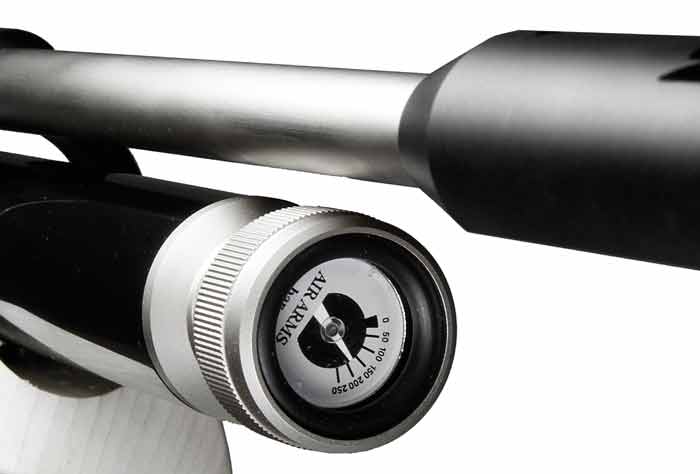
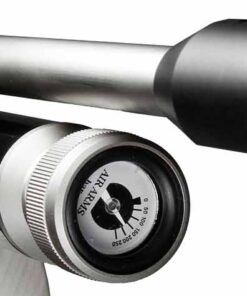
Gauge condition
Action operation
Why Service Records Help
Maintenance history makes future troubleshooting easier.
Storage
Store the rifle unloaded and securely.
Why
Unauthorized access should be prevented.
Dry Storage
The rifle should not remain in a damp environment.
Why
Persistent humidity can affect metal parts and finishes.
Transport
Use a protective case.
Why
The sight system, stock, barrel and air cylinder can be damaged through impact.
Why the Rifle Should Be Secured Inside the Case
Movement during transport can change adjustments.
After Travel
Check:
Sight zero
Stock settings
Air pressure
Trigger operation
Magazine condition
Why
A brief inspection reduces surprises.
Long-Term Air-System Ownership
PCP ownership requires reliable filling infrastructure.
Hand Pump
Advantages:
Independent
Portable
No electricity required
Limitations
Physical effort
Slower filling
High-Pressure Cylinder
Advantages:
Fast filling
Convenient
Limitations
Requires refill access
Requires periodic inspection
Compressor
Advantages:
Independent air supply
Limitations
Maintenance
Moisture control
Higher initial cost
Why Air Quality Matters
Clean, dry air supports internal longevity.
Legal Compliance
Air-rifle rules vary by location.
Possible Requirements
Energy limits
Licensing
Storage rules
Age restrictions
Transport requirements
Why Local Rules Must Be Confirmed
Legal treatment can differ substantially between jurisdictions.
Safe Range Use
The rifle should be used only with a reliable pellet-containment backstop.
Why
A target alone may not safely contain every shot.
Why Hard Surfaces Can Be Dangerous
Ricochets can occur.
Training Value
The rifle can be particularly useful for structured marksmanship development.
Why
Its calm firing cycle and adjustable ergonomics allow the shooter to concentrate on technique.
Useful Training Areas
Position building
Breathing recovery
Sight alignment
Trigger control
Follow-through
Transition efficiency
Why Structured Practice Works
One weakness can be isolated at a time.
Why Simply Shooting More Is Not Enough
Repetition without analysis may reinforce poor habits.
Establishing a Baseline
A known setup is extremely useful.
Record
Sight position
Zero
Stock settings
Preferred pellet
Normal fill routine
Why
If performance later changes, the shooter has a reliable reference.
Why Constant Adjustment Is Counterproductive
Changing several variables together makes it difficult to determine what actually caused the result.
Better Method
Change one factor.
Test it.
Record the outcome.
Long-Term Precision
A well-maintained example can continue to provide consistent target performance.
Important Areas
Barrel
Valve system
Trigger
Sight equipment
Magazine
Stock adjustments
Why Shooter Technique Often Becomes the Largest Variable
When the rifle is operating correctly, human inconsistency can exceed mechanical variation.
Why That Is Useful
The rifle provides clear feedback during training.
Practical Ownership Philosophy
The best results usually come from stability.
Why
A consistent setup creates a meaningful performance reference.
Final Section 2 Assessment
The Air Arms S400 Biathlon is best understood as a specialized pneumatic target platform designed around controlled multi-shot operation, adjustable ergonomics and efficient position changes.
Its calm PCP firing cycle allows the shooter to maintain a stable sight picture without the larger internal movement associated with spring-powered rifles.
The repeating system reduces interruption between shots, while the adjustable stock allows the shooter to establish a more natural relationship between shoulder, cheek, trigger and sight.
The rifle’s target-oriented design becomes particularly useful when shooting technique is developed systematically.
Position should be repeatable.
Breathing should be controlled.
Trigger pressure should be smooth.
Follow-through should be maintained.
The same pellet type, sight setup and air-pressure routine should be used when evaluating performance.
Air-system care is equally important.
Only clean, dry compressed air should be used, in line with the original Air Arms manual. The reservoir and fittings should remain undamaged, hoses should be properly rated, and the stated pressure limit should never be exceeded.
The magazine system also deserves routine attention.
Pellets should be loaded carefully.
The magazine should remain clean.
Unexpected cycling resistance should be investigated rather than overcome with force.
The barrel should be cleaned conservatively.
The muzzle crown should remain protected.
Sight components should remain secure.
Stock adjustment hardware should be checked periodically.
Because the S400 Biathlon is now a legacy model, condition and service history become particularly important when evaluating an existing example. Air Arms currently lists the original Biathlon under its discontinued-rifle manual archive, while its present competition-biathlon offering is the MPR Biathlon.
For long-term ownership, a baseline should be established.
Record the preferred pellet, sight zero, stock settings and normal air-pressure routine.
Avoid changing several variables simultaneously.
If accuracy changes, begin with the simple factors first: ammunition, sights, air pressure, environmental conditions and technique.
For lawful target, club and biathlon-style sporting use, the S400 Biathlon can provide a disciplined combination of rapid cycling, low recoil, adjustable fit and precision-oriented handling.
Its strongest practical quality is repeatability.
When the rifle is maintained correctly and the shooter builds a consistent position, breathing routine, sight picture and trigger release, the platform provides a stable foundation for controlled target training and biathlon-oriented marksmanship.
Be the first to review “Air Arms S400 Biathlon Air Rifle”
Related products
Air Arms
Air Arms
Air Arms
Air Arms
Air Arms
Reviews
There are no reviews yet.