
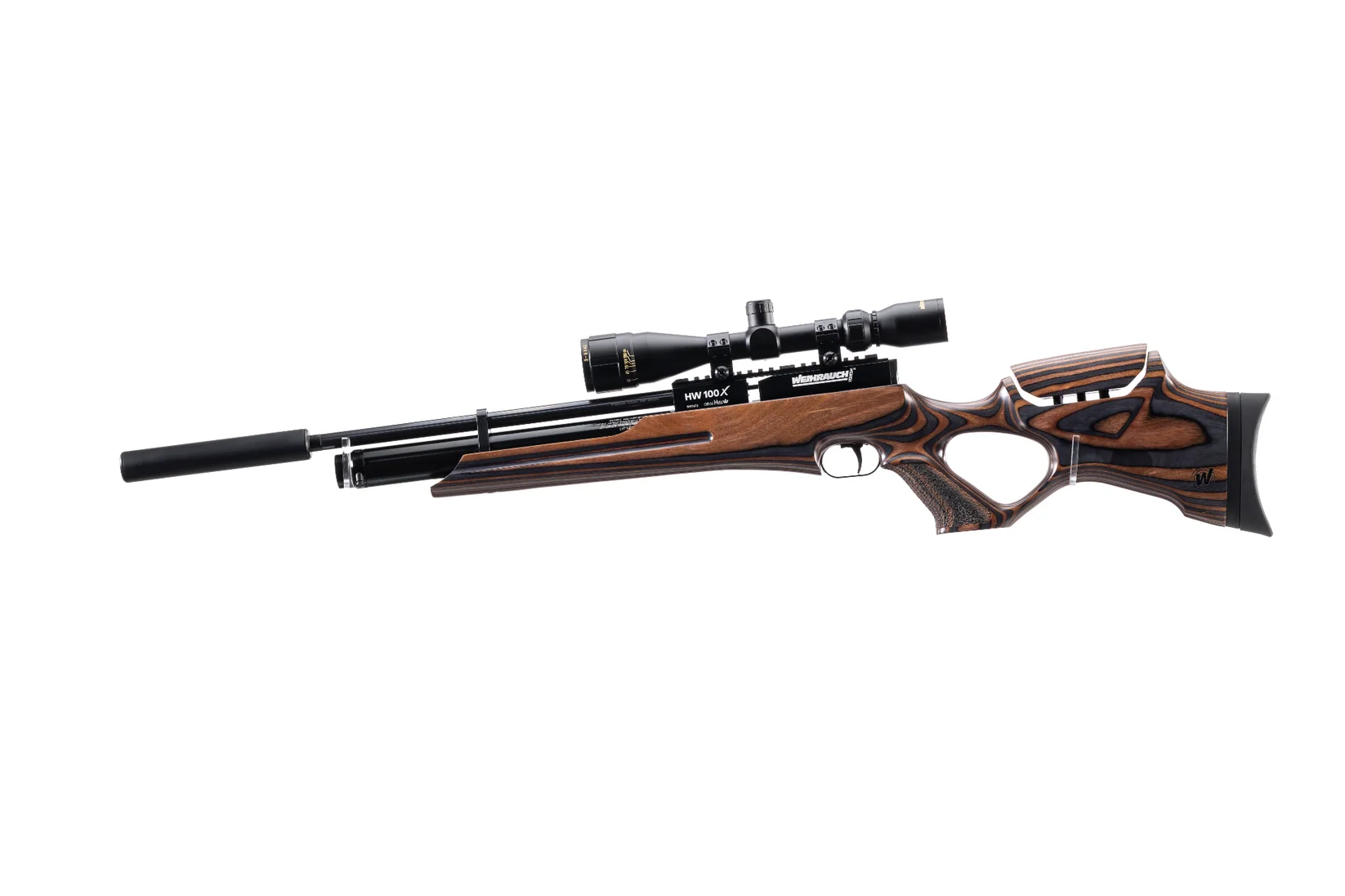
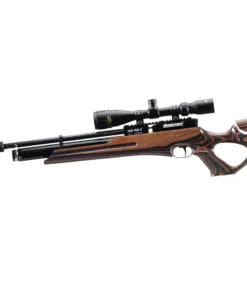
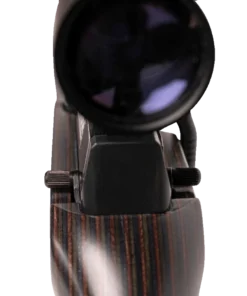
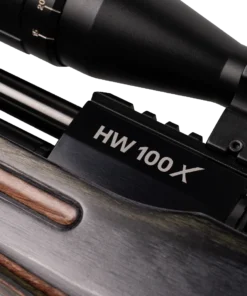
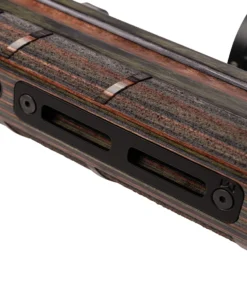
Weihrauch HW100X T Thumbhole Laminate Adjustable
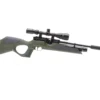
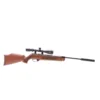
$1,260.00
Weihrauch HW100X T Thumbhole Laminate Adjustable Gun Only
X-tra Pressure, X-tra Shots; The New HW100 X
Weihrauch Sport UK are excited to announce the launch of the new HW100 X – the highly anticipated subsequent model of the legendary HW100 which by public demand now features an increased shot count.
To celebrate this pivotal milestone in Weihrauch’s development a new HW100 X Sporter Laminate Adjustable launch model, available from December 2025, will feature the following extras:
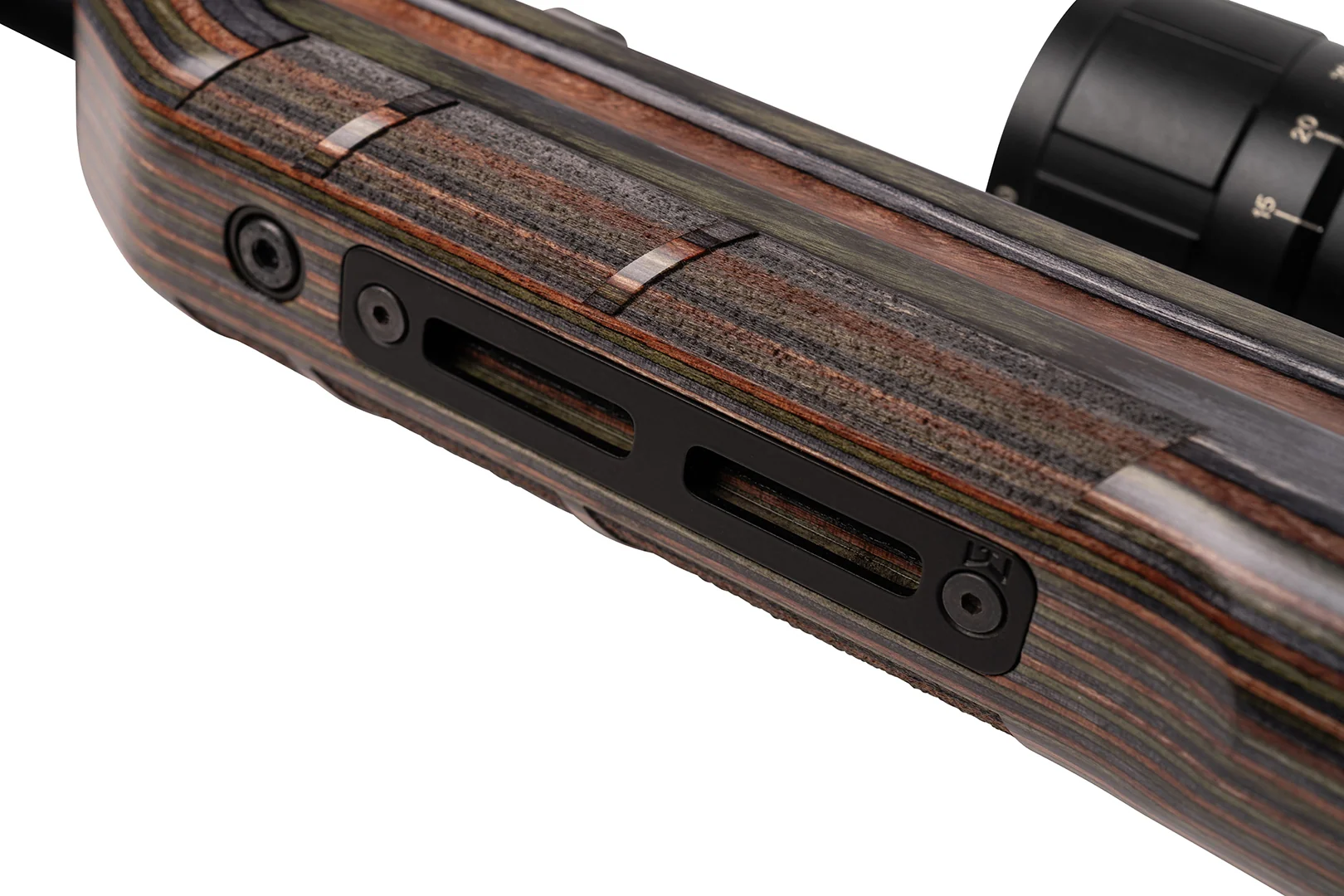
M-Lok Rail System
Adjustable cheek-piece
New cushioning ventilated butt pad
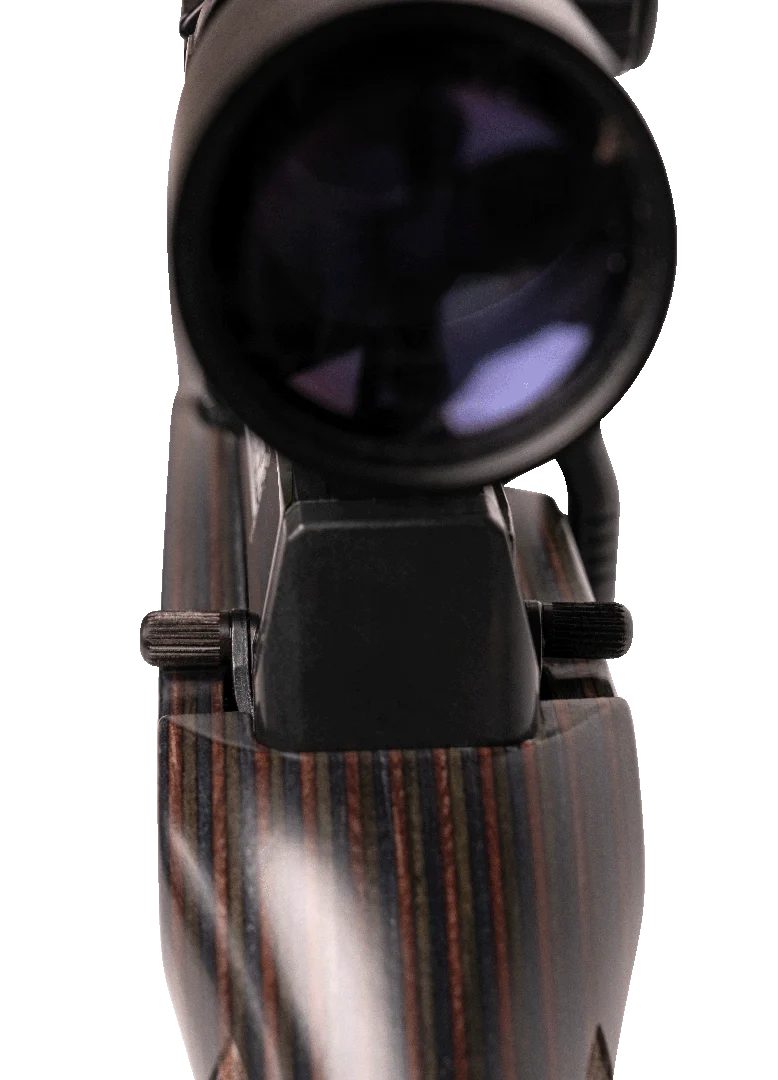
Ambidextrous safety levers that sit in both sides of new Unique Laminate Sporter stock design.
A new ultra efficient regulator is the keystone behind the triumphant model updates. The easily accessible regulator which is fitted into the valve block offers an unparalleled consistent performance, crucially important for improved accuracy.
The new cylinder, filled to 250 bar and made from high grade aluminum, offers an overall decrease in weight by 360gm in standard length and 240gm in the karbine version and of course enables those extra shots!
The full length HW100 X variant in .177 cal. offers 90% more shots than its predecessor, now sitting at up to 210 shots per fill while the .22 cal now delivers an impressive 250 shots per fill – nearly 80% increase in shots!
As expected from Weihrauch’s Precision German Engineering the HW100 models come packed full of features as standard, including;
High efficiency silencer
Quick-fill system
Fast fire side lever action
2-stage Match trigger
Read the Review Below,
One of the best airguns in the world just got better Mat Manning puts the new Weihrauch HW100 X to the test… Any new airgun release from Weihrauch tends to cause a lot of excitement, and the HW100X is no exception. The Weihrauch HW100 is widely regarded as one of the best PCP airguns in the world – so a new version is a very big deal indeed. Distributed in the UK by Hull Cartridge, the Weihrauch HW100X has a recommended retail price of £1,440.
That is pushing into what I regard as the territory of high-end airguns, and I have heard one or two critics suggesting that it’s a little expensive. However, having used the HW100X for a couple of weeks, I think the renements made to this version of the HW100 amount to something very special – and, when you compare it with other airguns in the same price bracket, the new Weihrauch’s price tag is more than justi ed.
One of the big upgrades on the HW100X is that, thanks to a very e cient regulator and a new and improved cylinder, it delivers signi cantly more shots per ll than previous models.
It also happens to be lighter. The version featured here is the Sporter Laminate Adjustable launch model, which weighs a very manageable 3.4kg. This model is just under 1050mm long with the supplied silencer tted and about 880mm long without it.
I really like the stock, which – apart from looking great – has also been designed for functionality, and results in an extremely well-balanced gun. Thoughtful stock design with adjustability for re ned gun t The laminate pattern gives this airgun a very distinctive look and its colour swatch looks very at home in the British countryside.
Its long forend will accommodate a wide variety of hold styles and is enhanced by a groove that runs along both sides of the forward section. It even has a rail with MLOK slots sunken into its underside as well as a thread for bipod or sling attachment. There are panels of really crisp stippling on both sides of the lower part of the forend.
There is also similar stippling on both sides of the pistol grip – and what a great grip it is. Suitable for a thumb-up or thumb-around hold, the HW100X’s pistol grip lls the palm very nicely and is really steep, which I certainly appreciated as it set me up very well for the trigger.
At the rear of the stock, you have a height-adjustable butt pad. The rubber pad is ventilated, has a bit of squishiness to it and feels great in the shoulder. Even more signi cantly, though, this stock features a height-adjustable cheekpiece – a very nice touch indeed. It has a neat push-button mechanism; give the button a press and the cheekpiece shifts up and down, then release it and it locks solidly in position.
The result is perfect eye-scope alignment, whatever height mounts you are using. Again, I have seen a few purists bemoaning the fact that the cheekpiece is made from polymer and not the same laminate as the rest of the stock. I don’t see that as a problem, it still matches the overall aesthetic of the HW100X, and it feels very solid – unlike some of the cheap plastic cheekpiece arrangements out there.
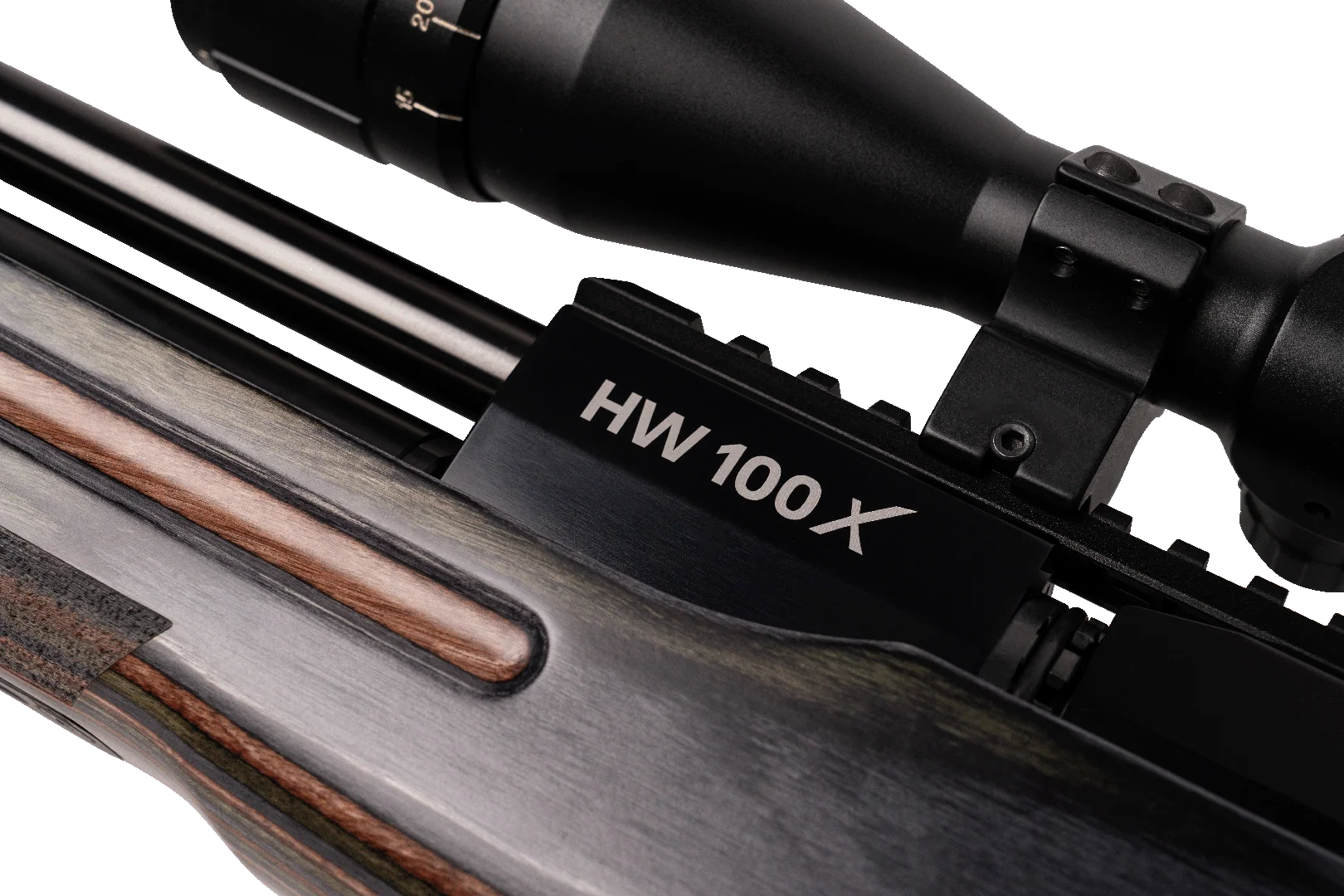
Below: An adjustable butt pad and cheekpiece means there is no compromise on eye alignment with the HW100 XTwo scope mounting options and an e ective sound suppressor Returning to the subject of scope-mounting, the HW100X features the usual dovetail scope rail that most of us would associate with Weihrauch airguns.
However, it also comes supplied with a removable Picatinny rail. It has three fastening points for super-secure attachment and provides a very useful Picatinny mounting option with about 170mm of uninterrupted clamping space. This feature will be particularly useful when attaching night vision optics with integral mounts and should also prove popular with shooters who have a preference of Picatinny-type mounts. As I would expect from Weihrauch, the build quality of the HW100X is excellent.
The nish is absolutely awless wherever you look, and it feels rock solid. With the general standard of airgun build quality across the board seeming rather more imsy than it was a few years ago, the robustness of this one, along with its precision German engineering, is very reassuring. My old Weihrauch HW100 has given years of dependable service with very little maintenance (as has my HW95K) and I get the impression that this Weihrauch has been built to the same uncompromising standards.
The model featured here has a 410mm (16in) barrel which has a half-inch UNF thread for silencer attachment.
The supplied Weihrauch High E ciency silencer does a brilliant job of keeping the HW100X very quiet and I can’t imagine many shooters feeling the need to change it for anything else. Super-crisp trigger and proven magazine-fed loading Apart from solid build quality, Weihrauch also has a reputation for making good trigger mechanisms, and the two-stage unit on this airgun is just brilliant.
The blade is very gently curved and is nice and wide, which means it transmits plenty of feel. The mechanism is adjustable for length and weight of pull but, as ever, I tested it on its factory setting to give you an idea of what to expect straight from the box.
First stage weight and travel felt just right and concluded in a very clear stop which was followed by a totally creep-free second stage break. The second stage felt relatively light and short but, thanks to its excellent engineering, it still delivered a crisp and utterly predictable shot release. I felt no need whatsoever to make any adjustment to this trigger setup. The safety catch is sensibly positioned away from the trigger blade towards the rear of the action.
There is actually a switch on each side to facilitate ambidextrous operation. I like the fact that it can’t be moved when the gun is not cocked, so it’s a good way to check. Positive and very quiet in operation, it is safe when in the backward position and you simply push it forward when you’re ready to take the shot.
The HW100X runs what I think is one of the best airgun magazines out there. It’s really easy to load: just push pellets in nose- rst from the side with the cog in the centre. The mechanism is so basic that there’s virtually nothing that can go wrong on it. Nonetheless, it works with absolute precision.
You get two magazines supplied and each holds 14 shots whether you go for .177 or .22 calibre. Push back the retainer switch in order to remove the magazine and then return it to its forward position (to engage a pin that keeps everything perfectly aligned) after you slot it back in.
High performance regulator and increased ll pressure The tried and tested magazine is driven by an extremely slick sidelever action, which comes supplied with a detachable biathlon-type dropdown handle but can’t be reversed for lefthanded operation.
The magazine and lever work together like clockwork – it is an utterly dependable mechanism, delivering quick and reliable cocking and loading shot after shot. It’s great for fast reloading on the range and even better when you need a rapid follow-up shot in the eld. The HW100X has a new ultra-e cient regulator and a high-grade aluminium cylinder.
The new cylinder is removable and brings a signi cant weight saving – 360g on the standard model and 240g on the carbine. Maximum ll pressure has also been increased to 250 bar. Pressure inside the cylinder is displayed on a very clearly marked gauge. Although that gauge is positioned at the front of the cylinder, it can easily be read from a sideways angle – so you don’t have to put your face in front of the dangerous end to check your air reserves.
The new regulator is denitely doing its job in terms of consistency. The sub-12 .177 calibre model I was sent to test was running at 11.5ft/lb and shot to shot variation was staying within four feet per second over a ten-shot string.
The combination of a very e cient regulator and increased air pressure also means that the HW100X delivers considerably more shots per ll than its predecessor – up to 90 percent more, in fact! You can expect the standard model to return 210 shots per ll in .177 calibre and as many as 250 in .22.
When it is time to re ll, simply remove the plug from the inlet at the front of the cylinder and plug in the supplied quick ll probe. One important thing to note is that you need to remove the cylinder from the gun the rst time you ll it – unless it has already been lled. This is only a one-time job though, and the cylinder can stay in situ for re lling thereafter. Below:
The Weihrauch HW100 X has a maximum ll pressure of 250 bar – pressure inside the cylinder is displayed on an easy-to-read gaugePinpoint accuracy and easy handling for versatile hunting As for shooting performance and accuracy, I have a Weihrauch HW100 of my own which is almost ten years old.
It is a very accurate airgun, but the HW100X feels much more rened and is denitely more accurate – its super-consistent power output is no doubt contributing to that. Match it with the right pellet (the test gun had a liking for H&N Baracuda 8) and it’s a pellet-on-pellet gun at 30m. Shooting o the bench, it’s still a single-holer at 40m and grouping remains very tight at 50m.
This isn’t just a bench gun though; its great handling means it has the potential to shoot well from any stance and I can see it being a great choice for hunting. The HW100X really has taken what I believe to be one of the best o-the-peg PCP airguns out there to the next level. It is lighter, it delivers more shots per ll and it is incredibly consistent – plus you’ve got Weihrauch’s proven pedigree and solid German build quality. Most importantly though, it’s just a really nice gun to shoot.
In short, it has all the makings of another legendary airgun from Weihrauch. VITAL STATISTICS MAKER: Weihrauch MODEL: HW100X Sporter Laminate Adjustable (standard length) UK DISTRIBUTOR: Hull Cartridge RRP: £1,440 (for model featured) LENGTH: 1050mm (41in) with silencer WEIGHT: 3.4kg (7.5lb) BARREL LENGTH: 410mm (16in) MAX FILL PRESSURE: 250 bar Article rst published December 1st 2025
Weihrauch HW100X T Thumbhole Laminate Adjustable – Premium 250-Bar PCP Air Rifle
The Weihrauch HW100X T Thumbhole Laminate Adjustable represents a major evolution of the long-established HW100 pneumatic platform. While the rifle retains the familiar multi-shot architecture, smooth repeating action and precision-focused character that made earlier versions popular, the X generation introduces an upgraded 250-bar air system, lighter aluminium cylinder and redesigned regulator.
The result is a PCP rifle designed around increased air capacity, reduced cylinder weight, ergonomic adjustment and repeatable shooting performance.
For the full-length laminate configuration, Weihrauch currently lists approximately 3.9 kg for the FAC version and around 3.6 kg for lower-power configurations. Depending on power specification, overall length and barrel length also vary. FAC full-length versions can use a 600 mm barrel and measure approximately 1,070 mm overall, while lower-powered versions can use a 410 mm barrel and measure approximately 975 mm.
The rifle is offered in .177, .20 and .22 calibres, depending on market and power configuration.
Its black-brown laminate thumbhole stock incorporates an individually adjustable cheekpiece and adjustable buttplate. Therefore, the rifle can be configured around the shooter rather than forcing the shooter to adapt completely to a fixed stock.
A 14-shot rotary magazine, smooth Biathlon-style cocking lever, adjustable two-stage trigger, manual safety and versatile scope-mounting arrangement complete the main operating system.
250-Bar Aluminium Air Cylinder
One of the most significant upgrades is the lightweight aluminium cylinder.
The maximum working pressure is 250 bar.
Why 250 Bar Matters
Greater usable air capacity can support longer shooting sessions between fills.
However, only properly rated filling equipment should be used.
The cylinder should never be filled beyond its approved working pressure.
Redesigned Regulator
The X-generation platform uses a more efficient regulator.
Why Regulation Matters
Cylinder pressure decreases as shots are fired.
The regulator controls the pressure supplied to the firing system so that individual shots can remain more consistent.
Why Consistency Supports Precision
Stable air delivery can contribute to:
Consistent velocity
Predictable trajectory
Stable point of impact
Repeatable groups
Increased Shot Capacity
The updated air system provides considerably greater shot capacity than the preceding generation.
The exact number depends on calibre, power specification and barrel configuration.
Why Higher Capacity Matters
More shots can be completed before the cylinder needs to be refilled.
This can be particularly useful during longer target and range sessions.
Lightweight Cylinder Construction
The aluminium cylinder reduces weight compared with the previous stainless-steel system.
Why Reduced Weight Matters
Less mass below the barrel can improve overall handling.
The rifle remains substantial, particularly with the laminate stock, but the upgraded cylinder helps control unnecessary forward weight.
14-Shot Rotary Magazine
The rifle uses a 14-shot rotary magazine.
Why Fourteen Shots Matter
It provides enough capacity for extended target strings without making the magazine excessively large.
Biathlon-Style Lever
The action incorporates a fast and smooth lever arrangement.
Why Lever Operation Matters
The rifle can be cycled while major changes to the firing position are minimized.
Adjustable Two-Stage Trigger
The trigger can be adjusted to suit individual preferences within manufacturer specifications.
Why a Two-Stage Trigger Helps
The first stage allows controlled preparation.
The second stage provides the final release.
This can help minimize unwanted rifle movement.
Adjustable Cheekpiece
The laminate stock features an individually adjustable cheekpiece.
Why Cheekpiece Adjustment Matters
Scope height differs depending on:
Mounts
Tube diameter
Objective size
Shooter anatomy
A correctly adjusted cheekpiece helps the eye return naturally to the same position behind the optic.
Adjustable Buttplate
The rear of the stock can also be adjusted.
Why Buttplate Adjustment Matters
Shoulder position differs from person to person.
Adjustment helps establish a repeatable relationship between rifle and shooter.
Black-Brown Laminate Stock
The current laminate version uses a distinctive black-brown layered stock.
Why Laminate Is Popular
Laminate combines visual character with strong dimensional stability.
Thumbhole Design
The stock uses a thumbhole layout.
Why Thumbhole Ergonomics Matter
The firing hand can sit at a more vertical angle.
This can reduce unnecessary wrist tension during longer sessions.
Why PCP Operation Matters
Very little heavy internal movement occurs during firing compared with traditional spring-powered rifles.
Why This Supports Precision
The shooter can concentrate more closely on:
Sight alignment
Breathing
Trigger control
Follow-through
Low Mechanical Disturbance
The pneumatic firing cycle is calm.
Why This Matters
Reduced mechanical movement makes technique easier to repeat.
Scope Mounting
The platform is intended to be used with optical sights.
Depending on configuration, mounting arrangements can include Picatinny or traditional prism-style interfaces.
Pellet Selection
A quality rifle still requires suitable ammunition.
Several pellet types should be tested.
Why Pellet Testing Matters
Pellets differ in:
Head diameter
Weight
Skirt design
Manufacturing consistency
Why Maximum Velocity Is Not Everything
The fastest pellet is not automatically the most accurate.
Repeatability and barrel compatibility matter more.
Where the Rifle Performs Best
The platform can be particularly well suited to lawful:
Precision target shooting
Range sessions
Bench-supported shooting
Recreational shooting
Club use
Any field use should comply with local law and appropriate power requirements.
When the Adjustable Stock Is Most Useful
An adjustable stock becomes particularly valuable when different scopes, mounts or shooting positions are used.
It also allows the rifle to be configured for individual body proportions.
Why the Rifle Is Good for Precision
Several systems work together:
Regulated air delivery
Low mechanical disturbance
Quality barrel
Stable laminate stock
Adjustable cheekpiece
Adjustable buttplate
Two-stage trigger
Repeatable magazine feed
Why Filling Equipment Matters
The rifle operates at pressures up to 250 bar.
Therefore, the filling source, hose, fittings and adapter must all be correctly rated.
Clean, dry and oil-free compressed air should be used.
Cylinder Service Life
The air cylinder is a regulated pressure vessel.
Current Weihrauch guidance specifies a manufacturer-defined 10-year service life for its PCP cylinders.
The inspection and expiry markings should therefore be checked during ownership.
Weihrauch HW90
The Weihrauch HW90 is a gas-ram break-barrel rifle rather than a PCP platform.
weihrauch
weihrauch refers to the German manufacturer behind this rifle and many other premium sporting airguns.
weihrauch
The repeated weihrauch phrase also refers to the manufacturer generally, although each model has its own specifications.
hw 30
The hw 30 is a lightweight break-barrel spring rifle.
weihrauch hw45
The weihrauch hw45 is a spring-piston air pistol.
weihrauch hw100
The weihrauch hw100 is the established PCP family from which the newer X-generation platform evolved.
weihrauch hw 95
The weihrauch hw 95 is a conventional spring-powered break-barrel rifle.
weihrauch hw44
The weihrauch hw44 is a PCP air pistol.
german air rifle
A german air rifle is often chosen by shooters who value established engineering, careful machining and precision-oriented design.
This platform is manufactured within Weihrauch’s German range.
air rifles
Modern air rifles can use spring-piston, gas-ram, CO₂ or PCP systems.
This model belongs to the pre-charged pneumatic category.
weihrauch hw95 hw100 airgun air pistols
The phrase weihrauch hw95 hw100 airgun air pistols combines different product categories.
The HW95 is spring powered, the HW100 family is pneumatic, and the company’s pistols use their own operating systems.
hw100 airgun
The hw100 airgun is known for regulated PCP operation, rotary magazines and smooth repeating use.
air pistols
air pistols use handgun-format designs rather than shoulder-fired rifle stocks.
rifles de aire
rifles de aire means air rifles in Spanish.
This model belongs to the premium PCP rifle segment.
hw50
The hw50 is a traditional spring-powered break-barrel rifle.
what are air pistols
For what are air pistols, they are handgun-style air-powered platforms that can use spring, pneumatic or CO₂ systems.
weihrauch hw50
The weihrauch hw50 is a lightweight spring rifle rather than a PCP.
sk x rifles
The phrase sk x rifles is not a confirmed factory designation for this product and should not be treated as part of its technical specification.
air shot gun
An air shot gun belongs to a separate category of air-powered equipment.
This product is a rifled pellet rifle.
air rifle makes
Among established air rifle makes, Weihrauch produces spring rifles, gas-ram platforms, PCP rifles and air pistols.
weihrauch hw97k
The weihrauch hw97k is a fixed-barrel underlever spring-piston rifle.
compressed air rifles
compressed air rifles includes PCP designs that store high-pressure air inside a reservoir.
This rifle uses that principle through its 250-bar aluminium cylinder.
hw97
The hw97 uses a mechanical spring-piston system rather than a refillable compressed-air cylinder.
weihrauch hw50s
The weihrauch hw50s is a break-barrel spring rifle.
weihrauch englisch
The phrase weihrauch englisch is often used when searching for English-language manufacturer information.
hw50 s
The hw50 s is another spelling format for the HW50S designation.
hw35 air rifle
The hw35 air rifle belongs to the manufacturer’s traditional break-barrel range.
hw 97k
The hw 97k uses fixed-barrel underlever operation.
weihrauch hw80
The weihrauch hw80 is a substantial break-barrel spring rifle.
weihrauch hw30
The weihrauch hw30 is a lightweight traditional spring rifle.
hw35e for sale
A search for hw35e for sale concerns another model rather than this modern PCP platform.
hw97k
The hw97k remains a spring-powered fixed-barrel design.
accurate air rifles
accurate air rifles depend on several interacting factors.
These include:
Barrel quality
Ammunition compatibility
Velocity consistency
Trigger quality
Optic stability
Shooter technique
hw35
The hw35 belongs to the classic break-barrel range.
weihrauch revolvers
weihrauch revolvers refer to handgun products rather than the PCP rifle family.
hw 50
The hw 50 is a conventional spring-powered sporting rifle.
hw 100 bullpup
The hw 100 bullpup refers to a more compact bullpup-style interpretation of the pneumatic platform.
The X-T retains a conventional thumbhole-stock architecture.
hw75
The hw75 is a precision air pistol with a separate operating system.
hw95
The hw95 is a traditional break-barrel spring rifle.
weirauch
weirauch is a common misspelling of Weihrauch.
weihrauch hw30s
The weihrauch hw30s is a lightweight spring-powered model.
hw50s
The hw50s is another break-barrel sporting rifle.
Weihrauch HW90 air rifle
The Weihrauch HW90 air rifle uses a gas-ram system and therefore does not require PCP filling equipment.
HW90 gas ram air rifle
The HW90 gas ram air rifle stores firing energy inside a sealed gas strut.
It should not be confused with an externally refillable PCP reservoir.
Weihrauch gas ram rifle
A Weihrauch gas ram rifle normally refers to the HW90 family.
Weihrauch pellet gun
A Weihrauch pellet gun can refer broadly to the company’s rifles and pistols.
This model belongs to its modern premium PCP range.
CARABINA HATSAN PCP BT65 SB ELITE
The CARABINA HATSAN PCP BT65 SB ELITE is a PCP rifle produced by Hatsan.
Its reservoir, action and stock specifications should not be transferred to this rifle.
hatsan air rifle
A hatsan air rifle belongs to another manufacturer’s range.
hatsan sortie
The hatsan sortie is a semi-automatic PCP pistol.
hatsan velox
The hatsan velox is another pneumatic handgun platform.
hatsan jet 2
The hatsan jet 2 is a compact PCP pistol/carbine-style design.
hatsan model 95
The hatsan model 95 is a break-barrel air rifle.
hatsan flash
The hatsan flash is a PCP rifle with its own reservoir and magazine system.
hatsanusa
hatsanusa refers to Hatsan’s American-market distribution operation.
hatsan usa
hatsan usa is another common search phrase referring to the manufacturer’s presence in the United States.
hatsan harpoon
The hatsan harpoon belongs to a specialized pneumatic platform and is unrelated to this rifle.
hatsan mod 95
The hatsan mod 95 is another spelling variation of the Hatsan Model 95.
hatsan sortie tact
The hatsan sortie tact belongs to the semi-automatic PCP pistol category.
hatsan hercules
The hatsan hercules is a high-capacity PCP rifle family from another manufacturer.
hatsan
hatsan is a Turkish manufacturer whose models have their own specifications.
Snowpeak PP750L PCP Air Pistol
The Snowpeak PP750L PCP Air Pistol is a compact pneumatic pistol/carbine platform.
It belongs to another manufacturer and should not be confused with this full-size regulated rifle.
snowpeak airguns
snowpeak airguns covers a broad range of PCP and other air-powered products.
snowpeak sports
snowpeak sports is associated with the Snowpeak airgun range.
snowpeak ap900
The snowpeak ap900 belongs to another product family.
snowpeak max
snowpeak max refers to Snowpeak products rather than this rifle.
snowpeak pp750
The snowpeak pp750 is a compact PCP pistol.
pp750
The pp750 operates through a considerably smaller pneumatic platform.
snowpeak p35x
The snowpeak p35x belongs to the compact bullpup PCP category.
pr900 gen 3
The pr900 gen 3 is a separate PCP rifle.
snow peak pp750
The snow peak pp750 is another spelling variation for the compact pneumatic pistol.
snowpeak p35
The snowpeak p35 is a bullpup-style PCP rifle.
snowpeak m60b
The snowpeak m60b belongs to another pneumatic rifle family.
Why the 250-Bar System Matters
The move to a 250-bar aluminium cylinder is one of the most important technical changes introduced with the X generation.
The higher working pressure increases usable air capacity while the aluminium construction helps control cylinder weight.
Why the Redesigned Regulator Matters
The regulator manages the pressure delivered to the firing system.
Consequently, stable shot behavior can be maintained while the cylinder pressure gradually falls.
Why Higher Shot Capacity Matters
Longer shot strings reduce interruptions during range sessions.
The exact capacity depends on calibre and energy specification, so a single figure should not be applied to every configuration.
Why the Aluminium Cylinder Matters
The cylinder provides increased working pressure without the mass associated with the previous stainless-steel design.
This helps improve the balance of the rifle.
Why the Adjustable Cheekpiece Matters
A scope can sit at different heights depending on its tube, objective lens and mount arrangement.
The cheekpiece can therefore be positioned so that the eye naturally returns to the same line through the optic.
Why the Adjustable Buttplate Matters
Shoulder position can be refined.
This helps create consistent alignment between the shooter and rifle.
Why the Thumbhole Stock Matters
The more vertical firing-hand position supports controlled trigger use and relaxed wrist posture.
Why Laminate Matters
Laminate is visually distinctive and structurally stable.
The black-brown design also gives the rifle a premium appearance that differs from conventional walnut or synthetic furniture.
Why the Magazine Matters
Fourteen-shot capacity provides practical repeating operation.
The shooter can complete a substantial string before reloading the magazine.
Why the Lever Matters
Smooth cycling helps preserve body position between shots.
That is particularly useful during supported precision work.
Why Low Recoil Matters
Minimal firing disturbance makes sight alignment easier to maintain.
However, good technique is still required.
Precision and Shooting Technique
The rifle provides a strong mechanical foundation for accuracy, but the shooter remains part of the system.
Support-Hand Position
Use the same location consistently.
Shoulder Contact
Maintain repeatable pressure.
Trigger Release
Apply pressure smoothly.
Follow-Through
Continue observing the sight picture after firing.
Scope Selection
A quality optic should match the intended shooting distance.
Extremely high magnification is not automatically necessary.
Scope Mount Security
Mounts should remain firmly attached.
A moving optic can create apparent accuracy problems even when the rifle itself is performing correctly.
Pellet Testing
Several quality pellets should be compared under controlled conditions.
Keep Constant
Distance
Air-pressure range
Scope setting
Support position
Why This Helps
The ammunition becomes the main changing variable.
Filling Procedure
Only suitable high-pressure air equipment should be used.
The maximum cylinder pressure is 250 bar.
Clean, dry and oil-free compressed air should be used.
Why Overfilling Must Be Avoided
More pressure does not automatically improve performance.
The manufacturer’s maximum working pressure should never be exceeded.
Pressure Gauge
The upgraded system incorporates a pressure gauge for monitoring the air supply.
Why Gauge Awareness Matters
It allows the shooter to understand when a refill will be required.
Cylinder Inspection
The cylinder should be checked for:
Damage
Dents
Corrosion
Expired service-life markings
Why Cylinder Age Matters
Weihrauch defines a 10-year service life for the compressed-air cylinder.
Replacement should therefore be planned according to the markings on the cylinder.
Maintenance
Routine care should include:
Keeping the filling system clean
Checking magazine condition
Monitoring lever operation
Protecting the barrel
Checking scope mounts
Wiping external surfaces
Inspecting cylinder markings
Storage
The rifle should be stored unloaded, dry and secure.
Unauthorized access should be prevented.
Legal Considerations
Power levels vary by market.
Licensing, ownership, transport, storage and permitted-use rules may also differ considerably.
The exact legal requirements should therefore be confirmed locally.
Why This Rifle Offers Premium Value
The platform combines:
250-bar PCP operation
Lightweight aluminium cylinder
Redesigned regulator
14-shot magazine
Smooth lever action
Adjustable cheekpiece
Adjustable buttplate
Premium laminate stock
Low firing disturbance
German manufacturing
Who May Appreciate This Configuration Most
It may particularly suit shooters who value:
Long shooting sessions
Adjustable ergonomics
Premium stock construction
Multi-shot convenience
Low recoil
Precision-oriented performance
Who May Prefer a Carbine
A shorter configuration may be preferable when compactness is more important than the full-length balance and air capacity.
Who May Prefer a Synthetic Stock
A synthetic version may appeal to someone who prioritizes minimal stock maintenance over laminate appearance.
Final Section 1 Assessment
The Weihrauch HW100X T Thumbhole Laminate Adjustable represents a substantial modernization of the established HW100 concept.
The most important technical development is the new high-grade aluminium cylinder operating at a maximum pressure of 250 bar. Weihrauch also introduced an upgraded regulator and significantly increased shot capacity while reducing cylinder weight compared with the preceding system.
The full-length laminate model is currently listed at approximately 3.9 kg in FAC configuration and around 3.6 kg in lower-power configurations. Depending on energy version, the rifle can use a 600 mm or 410 mm barrel and measure approximately 1,070 mm or 975 mm overall. Calibre options include 4.5 mm/.177, 5.0 mm/.20 and 5.5 mm/.22.
Its stock is equally important.
The black-brown laminated thumbhole design includes both an adjustable cheekpiece and adjustable buttplate, allowing head position and shoulder fit to be refined around the shooter and chosen optic. The current catalogue confirms that the laminate stock is offered in both standard and carbine versions.
The pneumatic system is supported by a 14-shot magazine, smooth repeating action and low-disturbance firing cycle. Together, these characteristics make the rifle particularly well suited to deliberate precision shooting and longer range sessions.
Long-term ownership also requires attention to the air cylinder.
Weihrauch currently specifies a 10-year service life for its PCP cylinders, and the X-series aluminium cylinder is marked with a 250-bar working pressure and 375-bar test pressure. Cylinder inspection and expiry markings should therefore form part of routine ownership.
For shooters who want the familiar refinement of the HW100 platform combined with greater air capacity, reduced cylinder weight, adjustable ergonomics and a premium laminate stock, the X-T represents one of the most comprehensively developed configurations in the current range.
Used with properly rated filling equipment, clean dry compressed air, suitable pellets, a secure optic, an appropriate backstop and full compliance with applicable local law, it provides a refined foundation for long-term recreational and precision-oriented air-rifle shooting.
Real-World Handling, Air-System Performance, Ergonomics, Precision, Optics, Maintenance and Ownership
Overall Character of the Rifle
The Weihrauch HW100X T Thumbhole Laminate Adjustable is built around refined PCP operation, adjustable ergonomics and a pressure system designed for longer shooting sessions.
Its overall character is calm, deliberate and highly controllable.
There is very little heavy internal movement during firing, so the shooter can focus more easily on sight picture, breathing and trigger control.
That low-disturbance firing cycle is one of the most important advantages of the platform.
At the same time, the rifle remains substantial enough to feel stable from supported positions.
The laminate stock adds noticeable mass, but that weight is balanced by the lighter aluminium cylinder used in the current X-generation system.
The result is a rifle that feels premium and substantial without carrying as much unnecessary cylinder weight as the previous stainless-steel design.
Why the Full-Length Configuration Matters
The full-length version is designed for shooters who prioritize balance, air capacity and a stable shooting platform.
Practical Advantages
The longer configuration can provide:
A stable sighting platform
A more deliberate balance
Extended shooting comfort from supported positions
Greater air-system capacity depending on specification
Why It May Not Suit Everyone
A shorter carbine can be easier to transport or maneuver.
The full-length configuration is better suited to shooters who value stability over minimum overall size.
Laminate Stock Construction
The stock is one of the most important visual and ergonomic features.
The layered black-brown laminate provides a premium appearance while maintaining strong structural stability.
Why Laminate Is Practical
Laminate is generally more dimensionally stable than many traditional solid-wood stocks.
It also resists ordinary environmental changes well.
Why It Still Needs Care
The surface should still be protected from:
Standing water
Harsh chemicals
Deep impacts
Excessive heat
Thumbhole Ergonomics
The thumbhole layout places the firing hand in a more vertical position.
Why This Helps
A more natural wrist angle can reduce tension.
This can be especially useful during longer precision sessions.
Grip Consistency
The firing hand should return to the same position.
Why This Matters
A repeatable grip supports smoother trigger control.
Adjustable Cheekpiece
The cheekpiece can be positioned to match the shooter and optic.
Why This Is Important
Scope height changes depending on:
Mount height
Tube size
Objective diameter
Rail type
Shooter anatomy
Correct Cheekpiece Setup
The shooter should be able to shoulder the rifle naturally and see a full sight picture without lifting the head.
Why Natural Alignment Matters
A repeatable head position improves consistency.
Adjustable Buttplate
The buttplate can also be adjusted.
Why Shoulder Fit Matters
Different shooters have different:
Arm lengths
Shoulder widths
Neck lengths
Shooting positions
Why Buttplate Adjustment Helps
It allows the rear of the rifle to meet the shoulder more naturally.
Why Repeatable Shoulder Contact Matters
Small changes in stock placement can affect head position and sight alignment.
Balance
Balance influences how the rifle feels during unsupported and supported shooting.
Why the Aluminium Cylinder Matters Here
The current cylinder reduces weight compared with the previous stainless-steel system.
Why This Can Improve Handling
Less unnecessary forward mass can make the rifle feel more neutral.
Why Overall Weight Still Matters
The laminate stock and full-length action create a substantial platform.
This can help stability, but extended standing sessions can still become tiring.
PCP Firing Cycle
The rifle uses compressed air rather than a spring or gas ram.
Why This Changes the Shooting Experience
There is very little internal mechanical disturbance.
Benefits Include
Low recoil
Minimal vibration
Predictable shot behavior
Easier sight tracking
Why Technique Still Matters
Low recoil does not eliminate shooter error.
Important Factors
Trigger control
Breathing
Follow-through
Body position
Sight alignment
250-Bar Air System
The current X-generation platform uses a higher-pressure air system.
Why 250 Bar Matters
More pressure can support greater usable air capacity when combined with the revised cylinder and regulator.
Why Higher Pressure Requires Care
Every component in the filling system must be correctly rated.
Filling Equipment
Suitable equipment may include:
A properly rated PCP compressor
A certified high-pressure filling cylinder
A compatible high-pressure hand pump
Why Ratings Matter
Hoses, fittings and adapters must all be appropriate for the working pressure.
Controlled Filling
The cylinder should be filled gradually.
Why Slow Filling Helps
Compressed air heats during filling.
Why Heat Changes Pressure Readings
A warm cylinder can show a temporarily higher pressure.
Pressure Monitoring
The pressure gauge should be observed during filling.
Why This Matters
It helps prevent overfilling.
Why Overfilling Is Not Beneficial
Extra pressure does not automatically increase precision.
It can place unnecessary stress on the system.
Clean, Dry Air
Air quality matters.
Why Moisture Is Undesirable
Moisture can contribute to:
Internal corrosion
Seal wear
Long-term contamination
Why Oil Must Be Avoided
High-pressure oxygen-rich environments and oil contamination can create serious safety risks.
Only equipment intended for clean PCP air should be used.
Fill Connector Care
The charging connection should remain clean.
Why Small Contaminants Matter
Dust can damage O-rings or sealing surfaces.
Storage of Filling Equipment
Keep hoses and connectors protected.
Why This Helps
Clean fittings are more likely to seal properly.
Cylinder Condition
The aluminium cylinder should be inspected periodically.
Check For
Dents
Deep scratches
Corrosion
Damaged threads
Impact marks
Why Structural Damage Matters
The cylinder is a pressure vessel.
Cosmetic condition is secondary to structural integrity.
Cylinder Service-Life Awareness
The date markings should be checked regularly.
Why This Matters
The cylinder has a manufacturer-defined service-life period.
Why Used Buyers Should Check This First
Cylinder replacement can represent a meaningful ownership cost.
Pressure Retention
A healthy rifle should hold pressure normally.
Possible Signs of Leakage
Unexpected pressure loss
Audible hissing
Reduced shot count
Frequent topping up
Why Leakage Should Be Investigated Early
Small leaks can worsen.
Possible Areas
Fill valve
Cylinder interface
Gauge seal
Regulator
Main valve
Why Internal Repairs Should Be Professional
High-pressure systems require proper tools and experience.
Regulator Performance
The regulator is central to consistent firing behavior.
Why Regulation Matters
Cylinder pressure falls gradually during use.
The regulator helps maintain a stable working pressure for the firing valve.
Practical Benefits
Stable velocity
Predictable point of impact
Improved shot-to-shot consistency
More efficient air use
Why Regulator Problems Can Be Misdiagnosed
Similar symptoms can come from:
Pellet variation
Scope movement
Temperature
Barrel condition
Shooter technique
Diagnose External Causes First
Simple variables should be checked before internal service is assumed necessary.
Shot Count
Usable shot count varies with configuration.
Important Variables
Calibre
Power level
Barrel length
Starting pressure
Pellet weight
Why One Universal Number Is Misleading
Different market versions operate at different energy levels.
Practical Refill Point
The rifle should be refilled before pressure falls too low.
Why This Matters
Once pressure drops outside the regulator’s useful range, shot behavior may change.
Pressure Logging
A basic record can be useful.
Record
Starting pressure
Ending pressure
Approximate shot count
Pellet type
Why This Helps
Normal air consumption becomes easier to understand.
14-Shot Magazine
The rotary magazine is one of the most practical features.
Why Multi-Shot Operation Matters
The shooter can complete longer strings without loading each pellet manually.
Why Fourteen Shots Is Useful
It provides a useful balance between capacity and compact magazine size.
Magazine Loading
Pellets should be inserted carefully.
Why Damaged Pellets Matter
Bent skirts can reduce consistency.
Magazine Cleanliness
Keep the magazine free from debris.
Why Pellet Dust Matters
Small fragments can interfere with smooth indexing.
Spare Magazine Use
A second magazine can improve convenience.
Why This Helps
One magazine can be prepared while another is in use.
Magazine Inspection
Watch for:
Cracks
Rough indexing
Visible wear
Unexpected resistance
Why Early Detection Helps
Magazine issues are easier to manage before they affect feeding.
Lever Operation
The Biathlon-style lever should cycle smoothly.
Why Lever Feel Matters
The shooter quickly becomes familiar with normal resistance.
Warning Signs
Sudden stiffness
Grinding
Difficulty closing
Failure to index correctly
Avoid Forcing the Lever
Unexpected resistance should be investigated.
Why Force Can Cause Damage
Excessive pressure can deform pellets or stress internal components.
Trigger System
The two-stage trigger provides a predictable release.
Why Two Stages Help
The first stage allows preparation.
The second stage provides the final break.
Trigger Finger Placement
Use the same position each time.
Why This Matters
Poor finger placement can introduce sideways movement.
Smooth Trigger Release
Pressure should increase gradually.
Why Jerking Hurts Accuracy
Sudden input can disturb the sight picture.
Trigger Adjustment
Adjustment should remain within approved limits.
Why Extremely Light Is Not Always Better
Consistency and safety matter more than minimum pull weight.
Manual Safety
The safety should function positively.
Why Safety Is Only One Layer
Correct muzzle direction and trigger discipline remain essential.
Scope Selection
The rifle deserves a quality optic.
Why Optical Quality Matters
Clear glass and reliable adjustments help the shooter make full use of the platform.
Magnification
Magnification should suit the actual shooting distance.
Why More Is Not Always Better
Excessive magnification can exaggerate visible movement.
Scope Mounting
Mounts should remain secure.
Why Loose Mounts Cause Problems
A moving optic can create apparent accuracy problems.
Rail Compatibility
The chosen mounting system should match the actual rifle configuration.
Why Correct Fit Matters
Improvised adapters can introduce movement.
Scope Height
The optic should work naturally with the adjustable cheekpiece.
Why This Is a Major Advantage
The stock can be configured around the optic rather than forcing a poor head position.
Eye Relief
A full sight picture should appear from the normal shooting position.
Why Repeatability Matters
The eye should return to the same place after every shot.
Zeroing
The rifle should be zeroed under stable conditions.
Why Wind Can Mislead
Pellet drift can look like an incorrect scope adjustment.
Make Small Corrections
Incremental changes are easier to evaluate.
Confirm With Repeated Groups
One group should not determine final zero.
Why Repeated Groups Matter
They show whether a result is truly repeatable.
Pellet Selection
Pellet choice remains one of the most important accuracy variables.
Why Different Pellets Behave Differently
Pellets vary in:
Weight
Head diameter
Skirt design
Manufacturing quality
Controlled Testing
Compare several quality options under the same conditions.
Keep Constant
Distance
Pressure range
Scope setting
Rest position
Why This Helps
The ammunition becomes the main changing variable.
Pellet Weight
Different weights alter trajectory.
Why Heavier Is Not Automatically Better
The best pellet is the one that groups consistently.
Why Maximum Velocity Is Not the Goal
Stable performance is more important than chasing the highest speed.
Pellet Condition
Inspect pellets before loading.
Reject Pellets With
Bent skirts
Dented heads
Visible contamination
Why Damaged Pellets Matter
They may not enter the barrel consistently.
Pellet Storage
Keep ammunition clean and dry.
Why This Supports Precision
Contamination can affect both barrel and magazine behavior.
Barrel Condition
The barrel should remain protected.
Why Barrel Health Matters
The bore and muzzle directly influence pellet flight.
Barrel Cleaning
Clean only when performance suggests a need.
Why Overcleaning Can Be Harmful
Aggressive cleaning can damage the bore or crown.
Use Suitable Equipment
Only proper airgun-cleaning tools should be used.
Muzzle Protection
Avoid impact damage.
Why This Matters
Pellet exit consistency is critical.
Bench Shooting
The rifle is especially well suited to supported precision work.
Why Bench Use Works Well
Low recoil and substantial mass allow the rifle to settle naturally.
Rest Placement
Use a consistent support point.
Why This Matters
Changing contact position can alter alignment.
Standing Shooting
The rifle can be used unsupported.
Why Weight Becomes Important
Longer sessions can cause fatigue.
Short Practice Sessions
Focused practice can be more productive.
Why Fatigue Hurts Precision
Tired muscles create movement.
Kneeling and Seated Positions
These positions can provide extra stability.
Why Position Practice Helps
Different stances reveal different ergonomic needs.
Breathing Control
Use a natural breathing rhythm.
Why Long Breath-Holding Is Unhelpful
It increases tension.
Trigger Timing
Fire during a stable sight picture.
Why Forcing the Shot Is Unhelpful
Rushed shots reduce consistency.
Follow-Through
Continue observing the target after firing.
Why This Helps
It reinforces a repeatable shooting cycle.
Chronograph Use
A chronograph can help monitor consistency.
Why Velocity Data Is Useful
It can reveal abnormal shot variation.
Why Several Shots Are Needed
One reading does not show a pattern.
Legal Compliance
Velocity testing can also help confirm power compliance.
Why This Matters
Airgun regulations vary by jurisdiction.
Avoid Unauthorized Power Changes
The rifle should remain within legal and manufacturer-appropriate specifications.
Why This Is Important
Unapproved alterations can affect safety, reliability and legality.
Indoor Shooting
Indoor conditions remove most wind.
Why This Helps
Mechanical and ammunition performance become easier to evaluate.
Outdoor Shooting
Outdoor conditions introduce additional variables.
Wind
Pellets can drift noticeably.
Why Wind Can Mislead
A wider group may not indicate a rifle problem.
Temperature
Temperature can influence pressure behavior and shooter comfort.
Why Recording Conditions Helps
Performance changes become easier to interpret.
External Cleaning
Wipe the rifle after use.
Why Fingerprints Matter
Skin oils and moisture can remain on metal surfaces.
Laminate Stock Care
The stock should be kept reasonably dry.
Why Gentle Cleaning Is Better
Strong chemicals are unnecessary.
Avoid Harsh Solvents
They can damage the finish.
Cheekpiece Hardware
Adjustment hardware should remain secure.
Why This Matters
A moving cheekpiece changes head position.
Buttplate Hardware
The buttplate should also remain firmly locked.
Why This Matters
Shoulder fit should remain consistent.
Magazine Storage
Keep magazines protected from dust.
Why This Supports Reliability
Clean magazines are more likely to index correctly.
Fill Equipment Storage
Hoses and connectors should remain dry and protected.
Why Hose Condition Matters
Damaged high-pressure hoses should never be used.
Compressor Ownership
A properly maintained compressor can simplify frequent use.
Why Maintenance Matters
Air quality partly depends on the filling source.
Charging Cylinder Use
A certified high-pressure bottle can provide convenient refills.
Why Certification Matters
The filling source is also a pressure vessel.
Hand Pump Use
A suitable hand pump may be practical for some owners.
Why More Effort Is Required
Higher pressure demands more physical work.
Pressure-System Cleanliness
Keep the charging path free from dirt and oil.
Why This Protects Reliability
Contaminants can damage seals.
Accuracy Troubleshooting
Begin with the simplest variables.
Check
Pellet quality
Scope security
Pressure range
Barrel condition
Shooting technique
Why This Order Helps
External causes are easier to correct.
Feeding Troubleshooting
If loading becomes rough, inspect the magazine.
Why Pellet Damage Is a Clue
Crushed or shaved pellets can indicate alignment problems.
Lever Troubleshooting
The action should cycle smoothly.
Why Sudden Resistance Matters
A change may indicate a feeding issue.
Pressure Troubleshooting
Check external fittings first.
Why Internal Disassembly Is Not the First Step
High-pressure systems are safer in experienced hands.
Used-Rifle Evaluation
A second-hand example should be inspected carefully.
Check the Cylinder
Inspect:
Date markings
Surface condition
Threads
Gauge
Why This Comes First
Cylinder replacement can represent a meaningful expense.
Check Pressure Retention
If safe and lawful, confirm normal air retention.
Why This Matters
Persistent leakage may require immediate servicing.
Check the Magazine
Indexing should feel smooth.
Why Magazine Condition Matters
Damaged magazines can create unreliable feeding.
Check the Lever
The action should cycle cleanly.
Why Rough Operation Matters
It can indicate mechanical or feeding issues.
Check the Trigger
The release should feel predictable.
Why Very Light Is Not Automatically Better
A stable and safe trigger is more important.
Check the Stock
Look for:
Cracks
Loose cheekpiece hardware
Loose buttplate hardware
Major impact damage
Why Adjustment Hardware Matters
The stock should hold its chosen settings securely.
Check the Barrel
Inspect external condition and muzzle area.
Why Barrel Health Matters
Precision depends heavily on it.
Ask About Service History
Useful questions include:
Has the cylinder been replaced?
Has the regulator been serviced?
Have seals been changed?
Has the rifle been modified?
Why Modification History Matters
Unapproved alterations can affect:
Reliability
Safety
Power
Legality
Included Accessories
Confirm exactly what is supplied.
Useful Items May Include
Magazines
Fill adapter
Manual
Case
Why Missing Accessories Affect Value
Model-specific components can be expensive.
Warranty
Check whether valid coverage remains.
Why Dealer Support Matters
Premium PCP platforms benefit from knowledgeable technical support.
Replacement Parts
Use parts intended for the exact configuration.
Why Similar Parts May Still Be Wrong
Cylinder, regulator, seal and magazine specifications can differ between generations.
Service Records
Keep documentation of major work.
Useful Entries
Cylinder replacement
Regulator service
Seal replacement
Gauge replacement
Trigger service
Why Records Add Value
They make future troubleshooting easier.
Long-Term Ownership Costs
Potential expenses include:
Pellets
Filling equipment
Optics
Magazines
Seals
Cylinder replacement
Professional servicing
Why PCP Ownership Requires More Infrastructure
Compressed-air systems need filling equipment and pressure-vessel management.
Why Many Shooters Accept This
The reward is smooth multi-shot operation with very little firing disturbance.
Transport
The rifle should be unloaded and securely cased.
Why a Protective Case Helps
It protects:
Stock
Scope
Barrel
Cylinder
Magazine
Avoid Rough Handling
Impacts can damage precision components.
Storage
The rifle should be stored dry and secure.
Why Humidity Matters
Moisture can affect metal components and stock hardware.
Avoid Extreme Heat
The rifle should not be left in very hot environments.
Why Heat Matters
Temperature can affect pressure readings.
Secure Storage
Unauthorized access should be prevented.
Why Responsible Storage Matters
Air rifles can cause serious injury.
Legal Compliance
Rules differ considerably by location.
Possible Requirements
Power restrictions
Licensing
Age limits
Transport rules
Storage rules
Field-use restrictions
Why Exact Market Specification Matters
Different versions may be supplied at different power levels.
Responsible Use
Use only with an appropriate backstop.
Why Property Boundaries Matter
A missed pellet must still be contained safely.
Avoid Hard Surfaces
Metal, stone and concrete can create ricochets.
Eye Protection
Protective eyewear is recommended.
Why This Matters
Fragments can occur.
Pre-Shooting Routine
Before each session:
Check cylinder pressure
Inspect the cylinder
Check the magazine
Check lever operation
Confirm scope security
Inspect the barrel
Confirm the backstop
Why Routine Inspection Helps
Simple problems can be found early.
During the Session
Monitor:
Pressure
Point of impact
Magazine indexing
Lever feel
Why Sudden Changes Matter
Unexpected behavior can indicate a developing issue.
Post-Shooting Routine
After use:
Unload
Remove the magazine
Confirm safe condition
Wipe external surfaces
Store securely
Why Simple Care Works
Small routines support long-term reliability.
Precision Baseline
Establish normal performance under controlled conditions.
Why This Helps
Future changes become easier to diagnose.
Keep the Same Pellet
Use known ammunition when evaluating accuracy.
Why This Matters
Changing pellets constantly can hide the real source of a problem.
Keep Similar Pressure
Begin testing within the same pressure range.
Why This Helps
Comparisons become more meaningful.
Keep the Same Scope Setup
Avoid changing several variables at once.
Why This Matters
The cause of any improvement or decline becomes easier to identify.
Long-Term Reliability Strategy
Reliable ownership depends on straightforward habits.
Keep the Air System Clean
Protect seals and fittings.
Monitor Cylinder Age
Plan replacement before the marked service period ends.
Keep Magazines Clean
Support reliable feeding.
Keep the Lever Smooth
Avoid forcing the action.
Keep the Scope Secure
Maintain zero.
Address Leaks Early
Prevent larger problems.
Keep Adjustment Hardware Tight
Maintain ergonomic consistency.
Avoid Unnecessary Internal Disassembly
Reduce the chance of damaging precision parts.
Precision Strategy
The strongest results come from controlling variables.
Keep Consistent
Pellet type
Pressure range
Scope setup
Shooting position
Trigger technique
Why This Works
Performance changes become easier to understand.
Avoid Constant Adjustment
A properly functioning rifle generally benefits more from practice than unnecessary mechanical changes.
Practical Strengths
The rifle’s strongest qualities include:
High-pressure air capacity
Lightweight aluminium cylinder
Regulated operation
Low firing disturbance
Multi-shot convenience
Adjustable cheekpiece
Adjustable buttplate
Premium laminate construction
Smooth lever cycling
Practical Limitations
Potential compromises include:
Need for correctly rated filling equipment
Cylinder service-life management
Seal maintenance
Substantial overall weight
Greater complexity than a spring-powered rifle
Why These Are Normal PCP Considerations
They are natural consequences of using a high-pressure pneumatic system.
Who May Appreciate This Configuration Most
It can suit shooters who value:
Long shooting sessions
Low recoil
Adjustable ergonomics
Premium furniture
Multi-shot operation
Precision-oriented performance
Who May Prefer Another Configuration
A shorter carbine may suit someone who prioritizes portability.
A synthetic stock may suit someone who prioritizes minimal cosmetic maintenance.
A spring-powered rifle may suit someone who wants to avoid filling equipment entirely.
Why Understanding the Platform Matters
The rifle is designed around refinement, efficiency and adjustability.
Its value comes from combining a modernized air system with a mature repeating action and a premium adjustable stock.
New Owner Setup
A new owner should begin by:
Reading the manual
Checking cylinder markings
Learning the correct filling procedure
Learning magazine loading
Adjusting the cheekpiece
Adjusting the buttplate
Mounting the scope correctly
Testing quality pellets
Why Baseline Testing Matters
Normal performance should be understood before unnecessary adjustments are made.
Why This Helps Troubleshooting
A known reference makes future comparison easier.
Final Section 2 Assessment
The Weihrauch HW100X T Thumbhole Laminate Adjustable combines the smooth character of a regulated PCP with a significantly modernized air system and highly adjustable stock.
The 250-bar aluminium cylinder is one of the most important developments.
It increases usable air capacity while reducing cylinder weight compared with the previous stainless-steel arrangement.
That lighter cylinder helps balance the substantial laminate stock and full-length action.
The redesigned regulator supports stable shot behavior as cylinder pressure falls, while the 14-shot magazine and smooth lever make repeated target strings convenient.
The adjustable cheekpiece and buttplate are equally important.
Instead of forcing the shooter to adapt completely to a fixed stock, the rifle can be configured around the chosen optic, shoulder position and head height.
This makes consistent sight alignment easier to achieve.
Precision should still be approached methodically.
Quality pellets, stable pressure, secure optics and consistent trigger technique remain essential.
If performance changes, simple causes such as ammunition, scope security and pressure range should be checked before internal service is considered.
Long-term ownership requires more infrastructure than a mechanical spring rifle because the high-pressure system needs correctly rated filling equipment and cylinder management.
However, the benefit is a calm firing cycle, multi-shot convenience and efficient operation.
For shooters who want adjustable ergonomics, premium laminate furniture, modern high-pressure air storage and a refined repeating action, this configuration provides a highly capable long-term platform when maintained correctly and used within applicable local laws.
Section 3 – Long-Term Reliability, Cylinder Care, Regulator Health, Precision Management, Storage, Servicing and Buyer Guidance
Long-Term Ownership Perspective
The Weihrauch HW100X T Thumbhole Laminate Adjustable is designed as a premium PCP platform for shooters who value refined operation, strong air capacity, adjustable ergonomics and repeatable precision.
Its long-term performance depends on several systems working together correctly.
The rifle combines a high-pressure aluminium cylinder, regulator, firing valve, rotary magazine, cocking lever, trigger, barrel, pressure gauge, filling system, adjustable cheekpiece, adjustable buttplate and laminate stock.
Each of these areas contributes to overall reliability.
A healthy regulator can still appear inconsistent if the scope is loose.
A quality barrel can still produce poor groups if damaged pellets are used.
A perfectly adjusted stock can still feel uncomfortable if the optic is mounted too high or too low.
Likewise, a mechanically sound action can develop feeding problems if the magazine becomes dirty or damaged.
For this reason, long-term ownership should focus on preserving the entire system rather than concentrating on one component.
Why Preventive Maintenance Matters
Preventive maintenance is one of the easiest ways to protect long-term value.
Minor issues are usually easier to manage when discovered early.
A small leak can worsen.
A loose scope mount can become a repeated zeroing problem.
A dirty magazine can cause poor pellet feeding.
A damaged filling seal can make charging increasingly difficult.
Regular inspection reduces the chance of minor issues developing into larger ones.
Main Areas to Monitor
Important areas include:
Cylinder condition
Cylinder age
Pressure retention
Regulator consistency
Gauge behavior
Magazine indexing
Lever movement
Trigger feel
Scope security
Stock adjustment hardware
Aluminium Cylinder Condition
The lightweight aluminium cylinder is one of the most important components on the rifle.
Why Cylinder Condition Matters
It stores compressed air at high pressure.
It should therefore always be treated as a pressure vessel rather than an ordinary accessory.
Inspect the Exterior
Look for:
Deep scratches
Dents
Corrosion
Impact marks
Damaged threads
Why Surface Damage Deserves Attention
Minor cosmetic marks may not affect function, but deeper structural damage should not be ignored.
Cylinder Service Life
The cylinder markings should be checked periodically.
Why Age Matters
The manufacturer defines a service-life period for the pressure vessel.
Even a cylinder that looks clean can eventually reach the end of that period.
Used-Rifle Buyers
Cylinder age should be one of the first things checked on a second-hand rifle.
Why This Affects Value
A cylinder that is close to replacement can add a meaningful future expense.
Cylinder Replacement Planning
Replacement should be treated as a predictable maintenance item.
Why Planning Helps
Knowing the date in advance reduces unexpected downtime.
Fill Pressure Discipline
The cylinder should never be filled beyond its approved working pressure.
Why Overfilling Is Unhelpful
Extra pressure does not automatically improve accuracy.
It can place unnecessary stress on seals, fittings and the pressure vessel itself.
Controlled Filling
The rifle should be filled gradually.
Why Slow Filling Helps
Compressed air warms as pressure rises.
Why Temperature Matters
A warm cylinder can temporarily display a higher reading.
Gauge Monitoring
The gauge should be observed during the fill.
Why This Should Become Routine
It helps prevent accidental overfilling.
Fill Connector Care
The charging connection should remain clean.
Why Dirt Is a Problem
Dust can damage O-rings and sealing surfaces.
Adapter Storage
Keep charging fittings protected when not in use.
Why This Helps
Clean fittings are more likely to seal correctly.
Air Quality
Clean, dry and oil-free compressed air should be used.
Why Moisture Should Be Minimized
Internal moisture can contribute to corrosion and seal deterioration.
Why Oil Contamination Is Dangerous
Oil should never be introduced into the high-pressure air path.
Correct PCP filling equipment should always be used.
Pressure Retention
A healthy rifle should normally hold air between sessions.
Possible Signs of Leakage
Unexpected pressure loss
Audible hissing
Reduced shot count
Frequent topping up
Why Leaks Need Careful Diagnosis
Several components can create similar symptoms.
Possible Leak Areas
Fill valve
Cylinder connection
Gauge seal
Regulator
Main firing valve
Why Internal Repairs Should Be Professional
The rifle operates under substantial pressure.
Internal pneumatic work requires suitable tools and knowledge.
Seal Condition
Seals are normal service items.
Signs of Possible Wear
Slow leakage
Difficulty filling
Unusual air consumption
Reduced efficiency
Why Early Service Helps
A small seal problem is easier to manage before it becomes a larger fault.
Regulator Reliability
The regulator is central to consistent firing behavior.
Why the Regulator Matters
Cylinder pressure falls during use.
The regulator helps maintain a stable working pressure for the firing system.
Signs That May Need Investigation
Velocity changes
Unexpected point-of-impact movement
Reduced efficiency
Changing shot feel
Why These Symptoms Are Not Always Regulator Problems
They can also result from:
Pellet variation
Scope movement
Temperature changes
Barrel contamination
Shooter technique
Diagnose External Causes First
Simple variables should be checked before internal service is considered.
Shot Count Tracking
A basic record of air use can be useful.
Record
Starting pressure
Ending pressure
Approximate number of shots
Pellet type
Why This Information Helps
Unexpected changes in air consumption become easier to notice.
Practical Refill Point
The rifle should be refilled before pressure falls too low.
Why This Matters
Once pressure moves outside the useful regulated range, shot behavior may begin to change.
Magazine Reliability
The rotary magazine should remain clean and smooth.
Why Magazine Condition Matters
Reliable indexing supports clean pellet feeding.
Magazine Cleaning
Remove:
Pellet fragments
Dust
Visible debris
Why Small Debris Matters
Tiny particles can interfere with smooth movement.
Pellet Loading
Pellets should be inserted carefully.
Why Force Is Harmful
A damaged pellet may not enter the barrel consistently.
Magazine Inspection
Watch for:
Rough indexing
Cracks
Wear
Unexpected resistance
Why Early Detection Helps
Magazine problems are easier to correct before they affect repeated feeding.
Spare Magazine Care
Spare magazines should also be stored clean and protected.
Why This Matters
A neglected spare may fail when it is needed.
Lever Reliability
The cocking lever should remain smooth.
Why Lever Feel Is Important
The shooter quickly becomes familiar with the normal cycling resistance.
Warning Signs
Sudden stiffness
Grinding
Failure to index
Difficulty closing
Avoid Forcing the Action
Unexpected resistance should be investigated.
Why Force Can Cause Damage
Excessive pressure can deform pellets or stress internal parts.
Trigger Consistency
The two-stage trigger should feel predictable.
Why This Matters
A stable release point supports both safety and accuracy.
Warning Signs
Unexpected creep
Changing second-stage feel
Unusual resistance
Safety problems
Trigger Adjustment
Adjustment should remain conservative.
Why Extremely Light Is Not Always Better
Consistency and safety are more valuable than minimum trigger weight.
Manual Safety
The safety should operate positively.
Why Safe Handling Still Matters
Mechanical safeties are only one layer of responsible use.
Muzzle Discipline
The rifle should always be pointed in a safe direction.
Trigger Discipline
The finger should remain away from the trigger until the shooter is ready to fire.
Barrel Condition
The barrel should remain protected and reasonably clean.
Why Barrel Health Matters
The pellet depends on the bore for guidance and stability.
Cleaning Frequency
Cleaning should be based on actual performance.
Why Overcleaning Can Be Harmful
Aggressive cleaning can damage the bore or crown.
Use Appropriate Equipment
Only suitable air-rifle cleaning tools should be used.
Crown Protection
The muzzle should remain protected from impact.
Why Crown Condition Matters
Pellet exit consistency can be affected by damage.
Pellet Consistency
Quality ammunition remains essential.
Why Different Pellets Behave Differently
Pellets vary in:
Weight
Head diameter
Skirt shape
Manufacturing consistency
Use Repeated Groups
Several groups should be compared before judging a pellet.
Why One Group Is Not Enough
Chance can produce an unusually good or poor result.
Establish a Baseline Pellet
Once a pellet performs reliably, use it as a reference.
Why This Helps
Future changes in accuracy become easier to diagnose.
Pellet Storage
Keep pellets clean and dry.
Why This Supports Reliability
Contaminated ammunition can affect both magazine and barrel performance.
Scope Security
The optic should remain firmly mounted.
Why Loose Optics Cause Confusion
A moving scope can make a mechanically healthy rifle appear inconsistent.
Mount Inspection
Check:
Ring screws
Rail attachment
Scope position
Why Small Movement Matters
Even slight movement can alter zero.
Scope Height
The optic should work naturally with the adjustable cheekpiece.
Why Correct Height Matters
The shooter should not need to lift or tilt the head unnaturally.
Eye Relief
The scope should provide a full sight picture from the normal position.
Why Repeatable Eye Position Matters
Consistent alignment improves aiming.
Zero Retention
The rifle should maintain zero under normal conditions.
Why Zero May Change
Possible causes include:
Loose mounts
Transport impact
Pellet changes
Temperature
Check Hardware Before Adjusting Turrets
This prevents unnecessary sight corrections.
Adjustable Cheekpiece Reliability
The cheekpiece should lock securely.
Why This Matters
A shifting cheekpiece changes head position.
Adjustment Hardware
The locking mechanism should be checked periodically.
Why This Is Important
Repeated handling can gradually loosen hardware.
Adjustable Buttplate Reliability
The buttplate should also remain secure.
Why Shoulder Fit Matters
The rifle should return naturally to the same shoulder position.
Why Loose Adjustment Hardware Hurts Precision
Movement changes the shooter’s relationship with the optic.
Laminate Stock Condition
The stock should be inspected for structural and cosmetic changes.
Look For
Cracks
Impact marks
Loose hardware
Finish wear
Why Structural Damage Matters
The stock supports the action and shooter interface.
Why Laminate Is Durable
Layered construction generally resists dimensional movement well.
Why It Still Needs Care
Moisture and aggressive chemicals can still affect the finish.
Cleaning the Stock
Use gentle products.
Why Harsh Solvents Should Be Avoided
They can damage the protective surface.
Grip Consistency
The firing hand should return to the same position.
Why This Matters
Repeatable grip helps support trigger control.
Shoulder Contact
Maintain similar pressure.
Why Consistency Matters More Than Force
The same position is more useful than excessive pressure.
Support-Hand Position
Use a repeatable contact point.
Why This Helps
The rifle settles more predictably.
Breathing
Use a natural rhythm.
Why Excessive Breath-Holding Is Unhelpful
It increases tension and movement.
Trigger Technique
Apply pressure smoothly.
Why Sudden Input Hurts Accuracy
The rifle can move before pellet release.
Follow-Through
Continue aiming after the shot.
Why This Helps
It reinforces consistent technique.
Bench Precision
The rifle is particularly well suited to supported precision work.
Why Bench Shooting Works Well
Low recoil, stable ergonomics and a refined trigger allow the rifle to settle naturally.
Rest Placement
The support point should remain consistent.
Why This Matters
Changing position can alter body alignment.
Standing Shooting
The rifle can also be used unsupported.
Why Balance Matters Here
Good balance reduces fatigue.
Why Weight Still Matters
Long sessions can still become tiring.
Kneeling and Seated Positions
These positions can improve stability.
Why Position Practice Helps
Different stances reveal different ergonomic needs.
Chronograph Use
A chronograph is useful for monitoring consistency.
Why Velocity Data Helps
It can reveal abnormal variation.
Why Several Shots Are Necessary
One reading does not show a pattern.
Legal Compliance
Velocity testing can also help confirm that the rifle remains within local power limits.
Why This Matters
Airgun regulations vary by jurisdiction.
Indoor Testing
Indoor shooting removes most wind.
Why This Helps
Mechanical consistency becomes easier to assess.
Outdoor Testing
Wind and temperature add additional variables.
Why Wind Matters
Pellets can drift noticeably.
Why Temperature Matters
Pressure and general shooting conditions can change.
Record Conditions
A simple shooting log can provide useful context.
Backstop Selection
A proper stopping area is essential.
Why Hard Surfaces Are Risky
Pellets can ricochet.
Pellet Trap
A dedicated trap can be useful for paper targets.
Why Trap Quality Matters
It should safely contain projectiles.
Eye Protection
Protective eyewear is recommended.
Why This Matters
Fragments can occur.
External Cleaning
Wipe exposed surfaces after use.
Why Fingerprints Matter
Skin oils and moisture can remain on metal.
Cylinder Exterior Care
Keep the pressure vessel clean.
Why Corrosion Deserves Attention
Any corrosion on a pressure vessel should be evaluated carefully.
Magazine Storage
Keep magazines protected from debris.
Why This Helps
Clean magazines are more likely to index correctly.
Fill Equipment Storage
Hoses and connectors should remain dry and protected.
Why Hose Condition Matters
Damaged high-pressure hoses should never be used.
Compressor Maintenance
A compressor should be maintained according to its manufacturer’s instructions.
Why This Matters
Air quality depends partly on the filling equipment.
High-Pressure Cylinder Care
A separate charging bottle must remain within its own inspection period.
Why This Is Important
The filling source is also a pressure vessel.
Hand Pump Care
If a hand pump is used, seals and filtration should remain serviceable.
Why Moisture Control Matters
Poorly maintained equipment can introduce humidity.
Pre-Shooting Inspection
Before each session, check:
Cylinder pressure
Cylinder condition
Magazine
Lever
Trigger
Scope
Barrel
Safety
Why This Routine Helps
Small issues can be identified early.
During the Session
Monitor:
Point of impact
Pressure
Magazine indexing
Lever feel
Why Sudden Changes Matter
Unexpected behavior can indicate a developing fault.
Post-Shooting Routine
After use:
Unload
Remove the magazine
Confirm safe condition
Wipe surfaces
Store securely
Why Routine Care Works
Small maintenance habits support long-term reliability.
Storage Environment
The rifle should be stored dry and secure.
Avoid
High humidity
Extreme heat
Direct water exposure
Chemical fumes
Why Humidity Matters
Moisture can affect metal and stock hardware.
Why Heat Matters
High temperatures can increase cylinder pressure.
Protective Case
A padded case helps protect the rifle.
Why Scope Protection Matters
Optics can be damaged by impact.
Why Cylinder Protection Matters
The pressure vessel should not be knocked or dropped.
Case Moisture
Do not leave a damp rifle inside a closed case.
Why Foam Can Trap Moisture
Water can remain against surfaces.
Long-Term Storage
Follow current manufacturer guidance for pressure-system storage.
Why Periodic Inspection Still Matters
Seals and fittings can age even while the rifle is unused.
Return to Use After Storage
Check:
Cylinder markings
Pressure retention
Magazine condition
Lever movement
Scope security
Trigger behavior
Why the First Session Should Be Controlled
The rifle’s normal operation can be confirmed gradually.
Service Intervals
There is no single universal service interval.
Service Needs Depend On
Shot volume
Cylinder condition
Seal health
Pressure retention
Regulator behavior
When Professional Service Is Appropriate
Seek skilled assistance if:
Pressure will not hold
The regulator becomes inconsistent
The lever becomes abnormal
The gauge is damaged
The trigger changes unexpectedly
Why PCP Expertise Matters
The system operates under substantial pressure and uses precision internal parts.
Replacement Parts
Use components intended for the exact configuration.
Why Similar Parts May Still Be Wrong
Magazines, seals, regulators and cylinders can differ between generations.
Useful Spare Items
Potential spares include:
Magazine
Approved O-rings
Fill seals
Factory screws
Why Exact Fit Matters
Incorrect parts can create leaks or feeding problems.
Service Documentation
Keep records of major work.
Useful Entries
Cylinder replacement
Regulator service
Seal replacement
Gauge replacement
Trigger service
Why Documentation Helps
It supports future troubleshooting and resale.
Used-Rifle Evaluation
A second-hand example should be examined carefully.
Check the Cylinder
Inspect:
Date markings
Surface condition
Fittings
Gauge
Why This Comes First
The pressure vessel can represent a significant replacement cost.
Check Pressure Retention
If safe and lawful, confirm normal air retention.
Why This Matters
A persistent leak may require immediate service.
Check the Magazine
Indexing should feel smooth.
Why Magazine Condition Matters
Damaged magazines can cause unreliable feeding.
Check the Lever
The action should cycle smoothly.
Why Rough Operation Matters
It can indicate mechanical or feeding issues.
Check the Trigger
The trigger should feel predictable.
Why Very Light Is Not Automatically Better
A stable and safe release is more important.
Check the Stock
Look for:
Cracks
Loose adjustment hardware
Major impact marks
Why Adjustment Hardware Matters
The cheekpiece and buttplate should remain secure.
Check the Barrel
Inspect external condition and the muzzle.
Why Barrel Health Matters
Precision depends heavily on it.
Ask About Service History
Useful questions include:
Has the cylinder been replaced?
Has the regulator been serviced?
Have seals been changed?
Has the rifle been modified?
Why Modification History Matters
Unapproved alterations can affect reliability, safety and legality.
Included Accessories
Confirm exactly what is included.
Useful Items May Include
Magazines
Fill adapter
Manual
Case
Why Missing Accessories Affect Value
Model-specific parts can be expensive.
Warranty
Check whether valid coverage remains.
Why Dealer Support Matters
Premium PCP platforms benefit from knowledgeable service access.
Long-Term Ownership Costs
Possible expenses include:
Pellets
Filling equipment
Optics
Magazines
Seals
Cylinder replacement
Professional service
Why PCP Ownership Requires More Infrastructure
Compressed-air systems require filling equipment and pressure-vessel management.
Why Many Shooters Accept This
The benefit is smooth multi-shot operation with very little mechanical disturbance.
Transport
The rifle should be unloaded and securely cased.
Why a Protective Case Helps
It protects:
Stock
Scope
Barrel
Cylinder
Magazine
Avoid Rough Handling
Impacts can damage precision components.
Legal Transport Requirements
Rules differ by location.
Why This Must Be Checked
Transport law may differ from general ownership law.
Secure Storage
Unauthorized access should be prevented.
Why Responsible Storage Matters
An air rifle can cause serious injury.
Pellet Storage
Keep ammunition dry and protected.
Why This Supports Precision
Damaged or contaminated pellets create unnecessary variation.
Safe Backstop
Every shot should have a suitable stopping area.
Why Knowing What Is Behind the Target Matters
A missed pellet must still be contained.
Avoid Hard Surfaces
Metal and stone can cause ricochets.
Range Discipline
Follow local range commands and procedures.
Why Routine Safety Matters
Experienced shooters still benefit from consistent habits.
Long-Term Precision Strategy
The strongest accuracy comes from controlling variables.
Keep Consistent
Pellet type
Pressure range
Scope setup
Support position
Trigger technique
Why This Works
Performance changes become easier to understand.
Avoid Constant Adjustment
Too many changes make diagnosis more difficult.
Establish a Known Baseline
Record normal group performance and air use.
Why Baselines Matter
A genuine decline becomes easier to recognize.
Long-Term Reliability Strategy
Reliable ownership depends on a few simple habits.
Monitor the Cylinder
Respect its marked service period.
Keep the Air System Clean
Protect seals and fittings.
Keep Magazines Clean
Support reliable feeding.
Keep the Lever Smooth
Avoid forcing the action.
Keep Optics Secure
Maintain zero.
Address Leaks Early
Prevent larger problems.
Keep Adjustment Hardware Secure
Preserve cheekpiece and buttplate settings.
Avoid Unnecessary Internal Disassembly
Reduce the risk of damaging precision parts.
Practical Ownership Strengths
The main long-term strengths include:
High-capacity air storage
Lightweight aluminium cylinder
Low mechanical disturbance
Smooth repeating operation
Adjustable ergonomics
Stable laminate construction
Refined trigger
Efficient pressure management
Practical Ownership Limitations
Potential compromises include:
Need for 250-bar filling capability
Cylinder service-life management
Seal maintenance
Greater complexity than a spring rifle
Substantial overall weight
Why These Are Normal PCP Considerations
They come directly from using a high-pressure pneumatic system.
Who May Appreciate Long-Term Ownership
The platform can suit shooters who value:
Long precision sessions
Premium ergonomics
Low recoil
Multi-shot convenience
Adjustable fit
High shot capacity
Who May Prefer Another System
Be the first to review “Weihrauch HW100X T Thumbhole Laminate Adjustable”
Related products
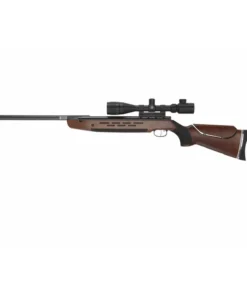
WEIHRAUCH
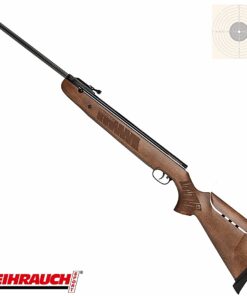
WEIHRAUCH
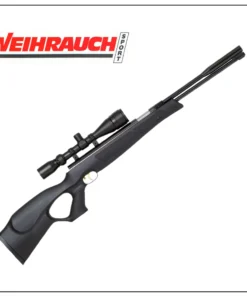
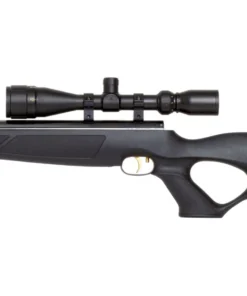
WEIHRAUCH
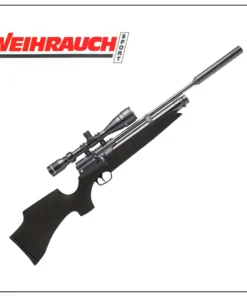
Uncategorized
Air Gun Pistol
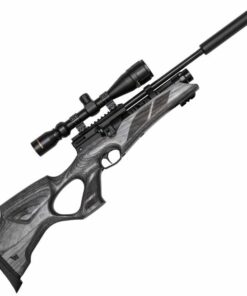
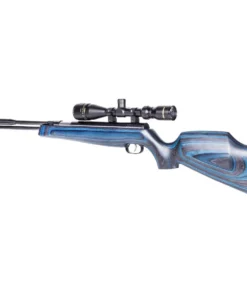
WEIHRAUCH
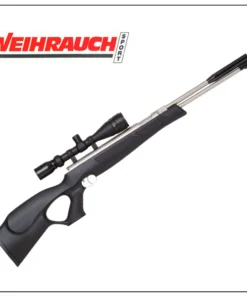
Reviews
There are no reviews yet.