
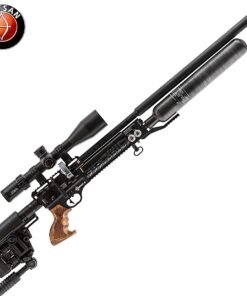
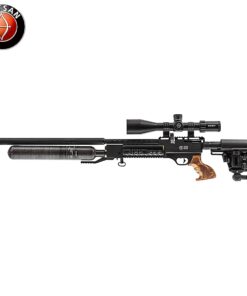
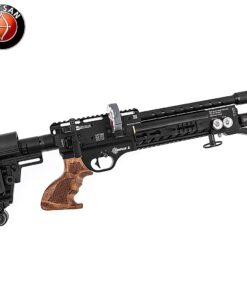
Hatsan Factor Sniper L PCP Air Rifle
$1,150.00
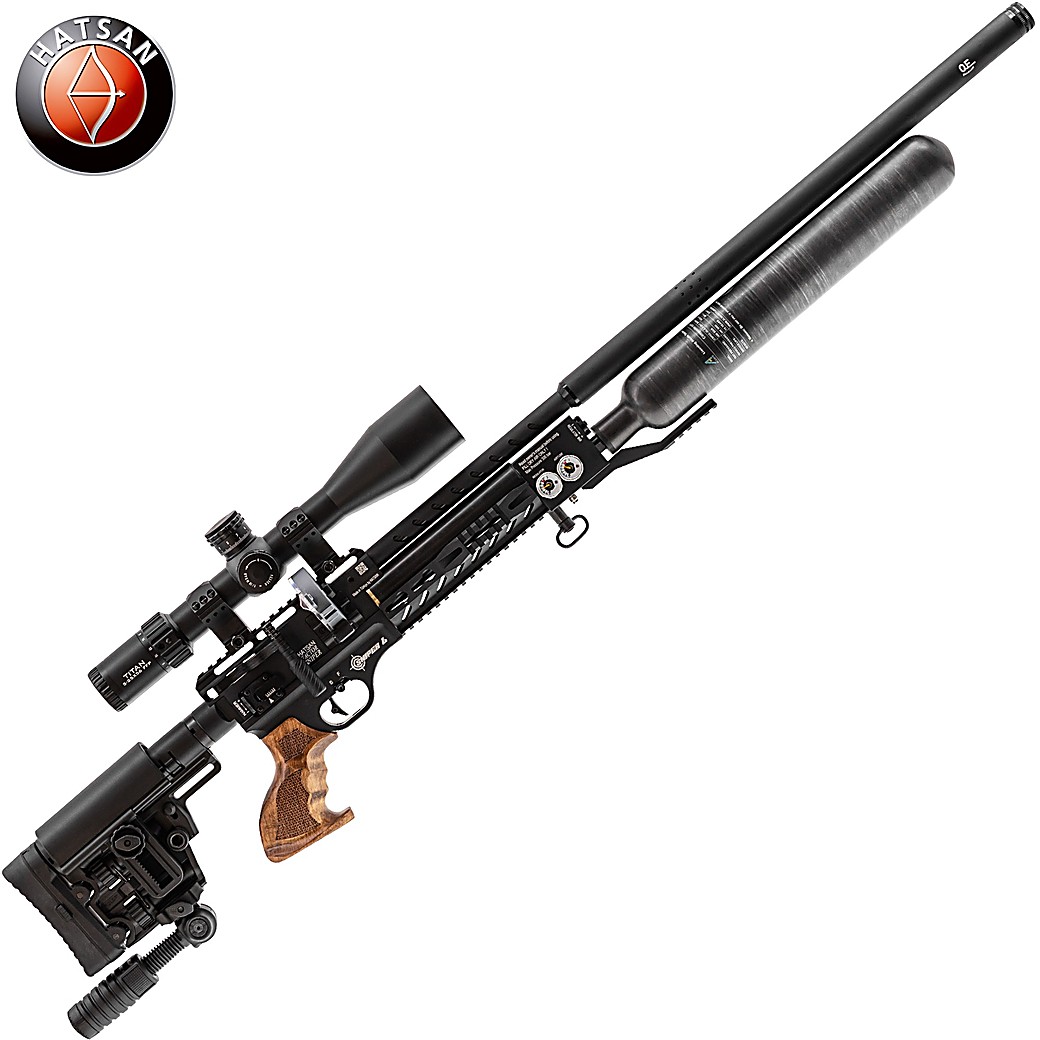
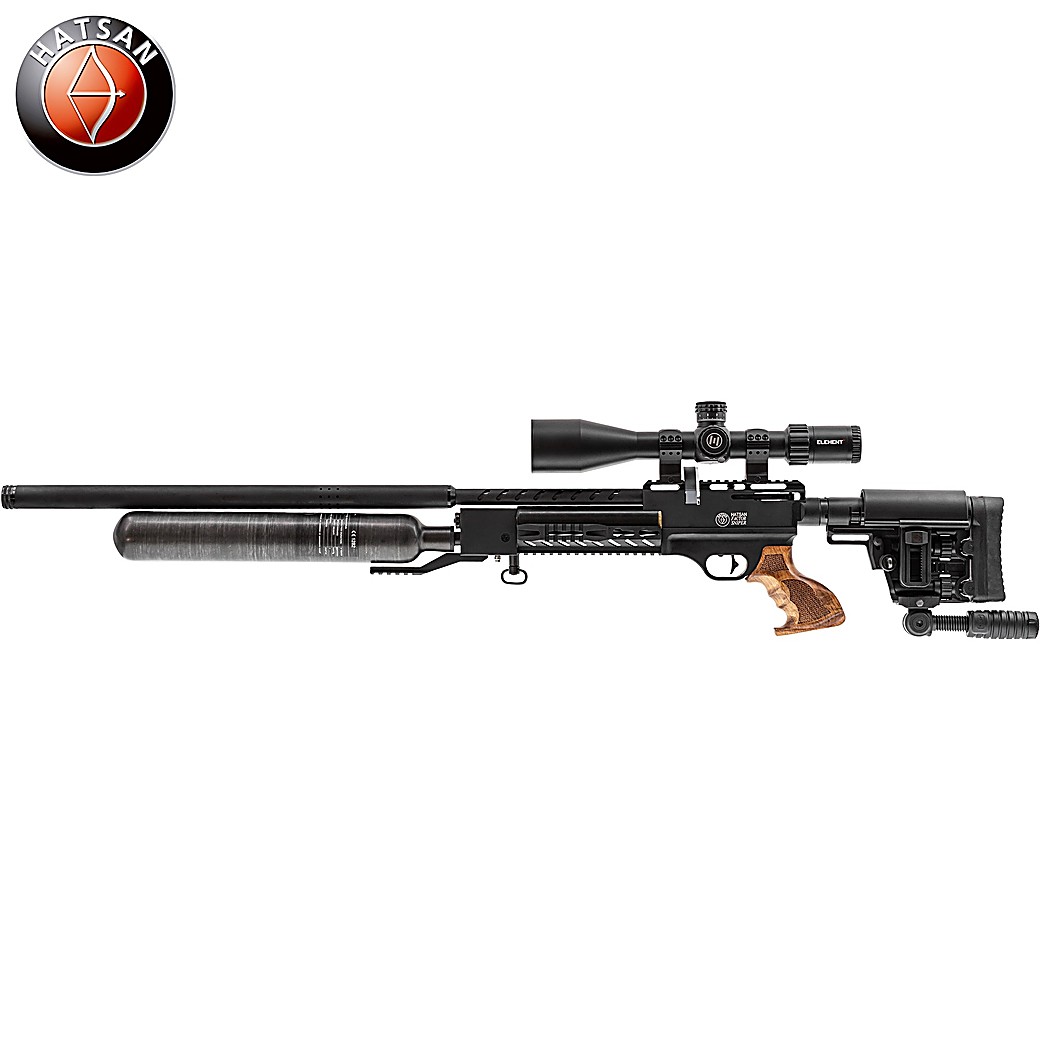
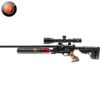
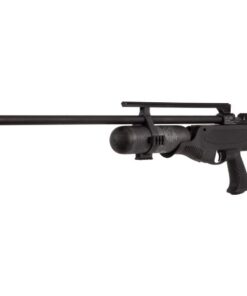
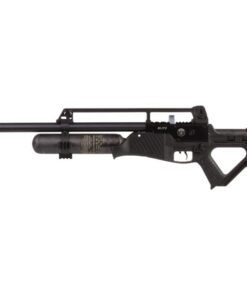
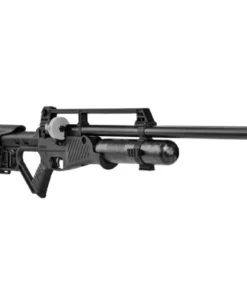
Hatsan introduces the Factor Sniper L Air Rifle, a stable platform for long range shooting.
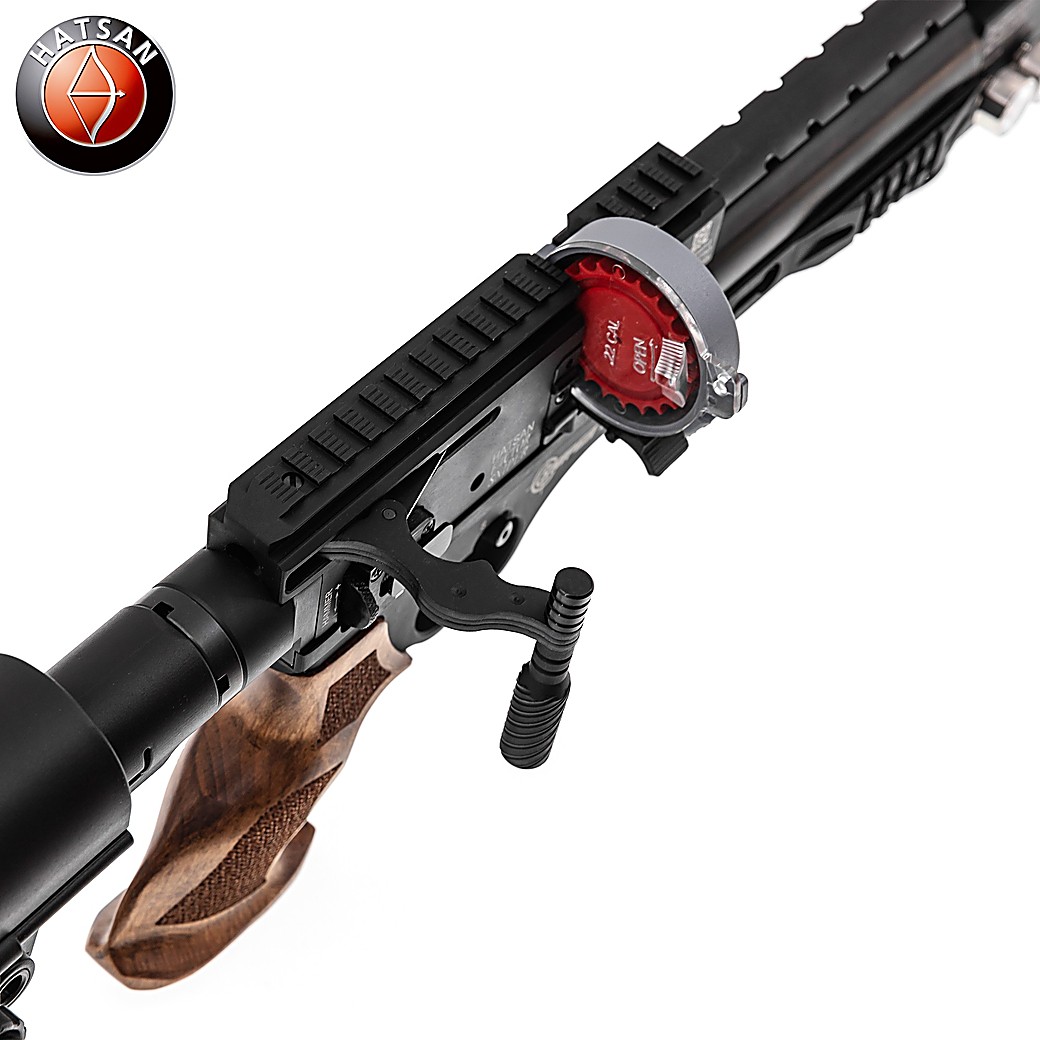
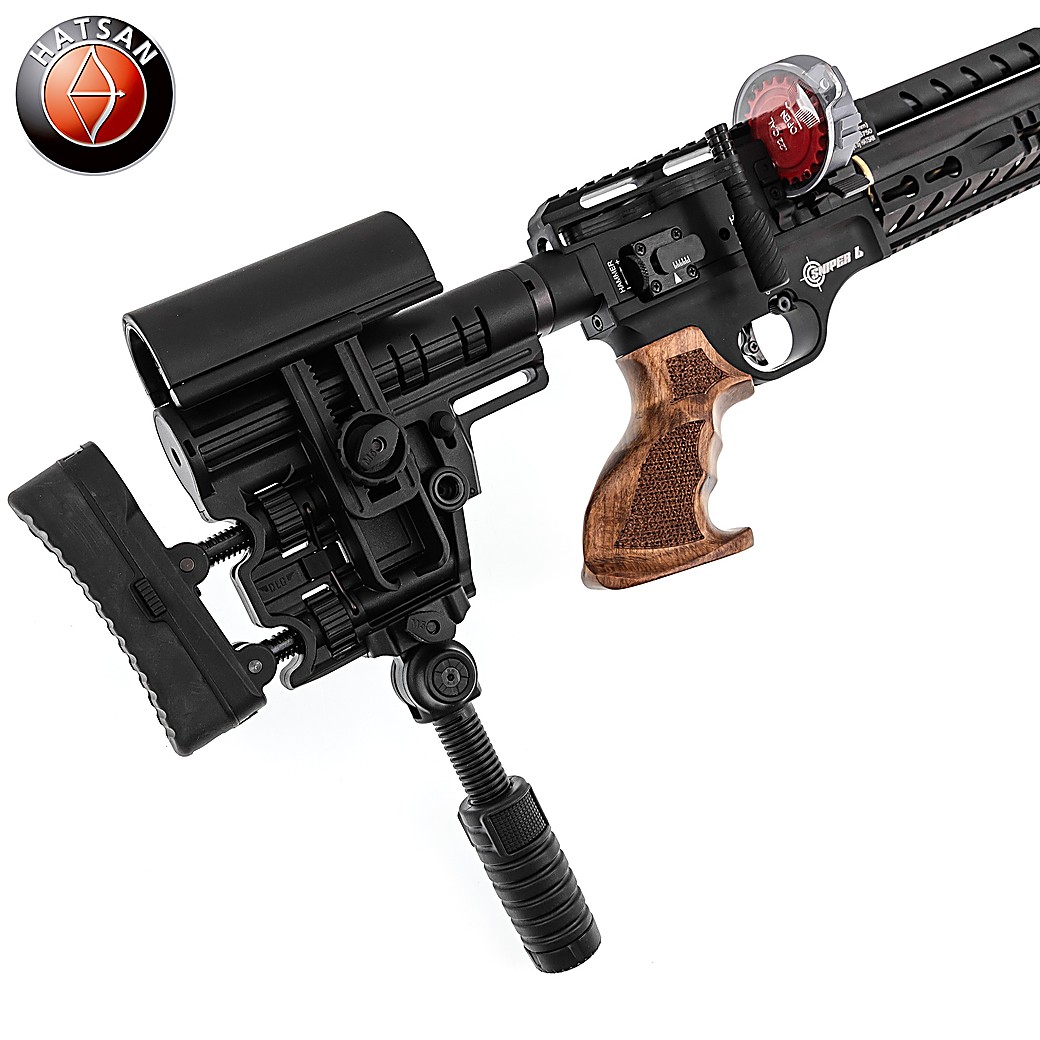
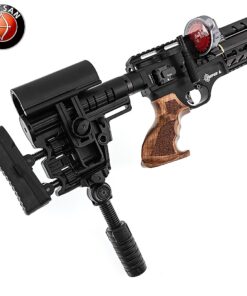
Accuracy focused, comes with a long 760 mm fully shrouded barrel, a sturdy impact-resistant aluminium frame and with a telescopic tactical stock.
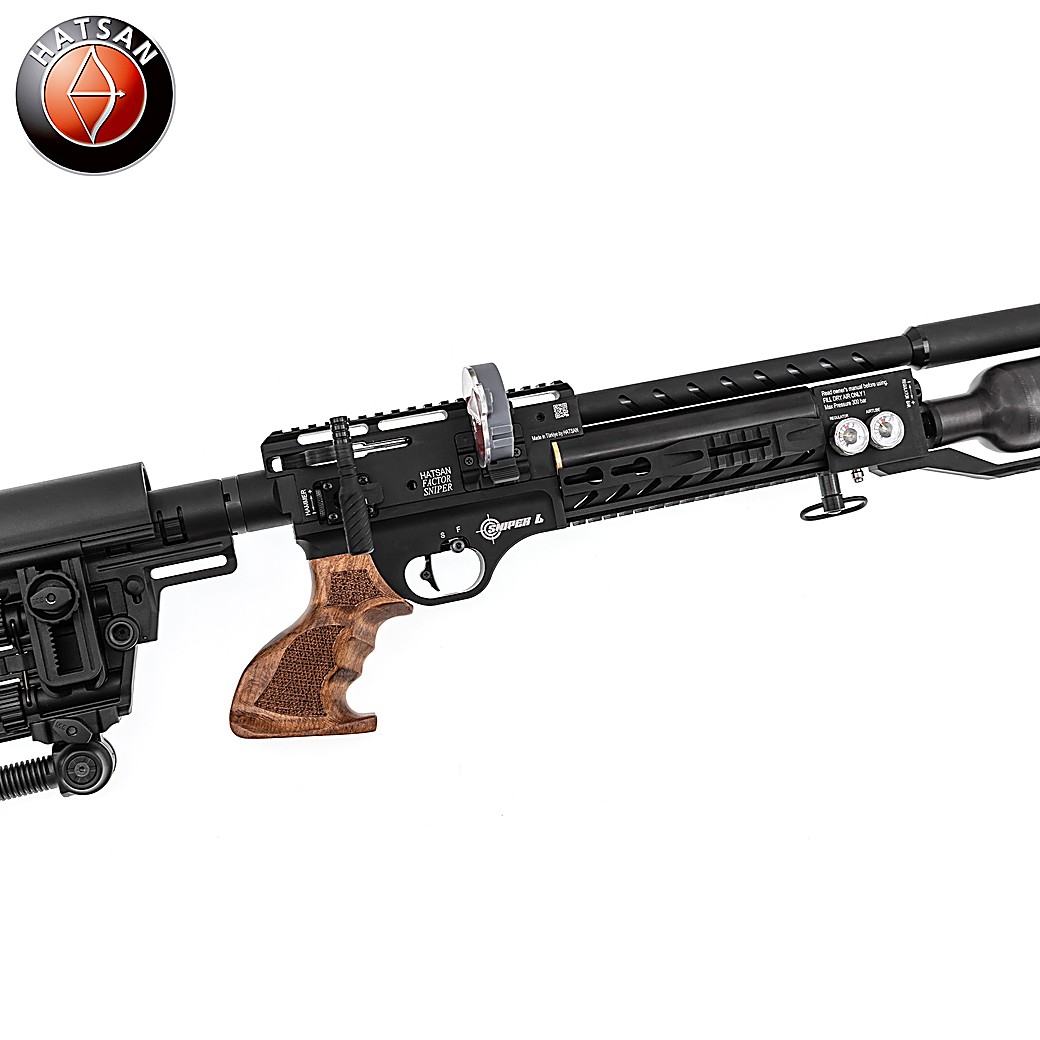
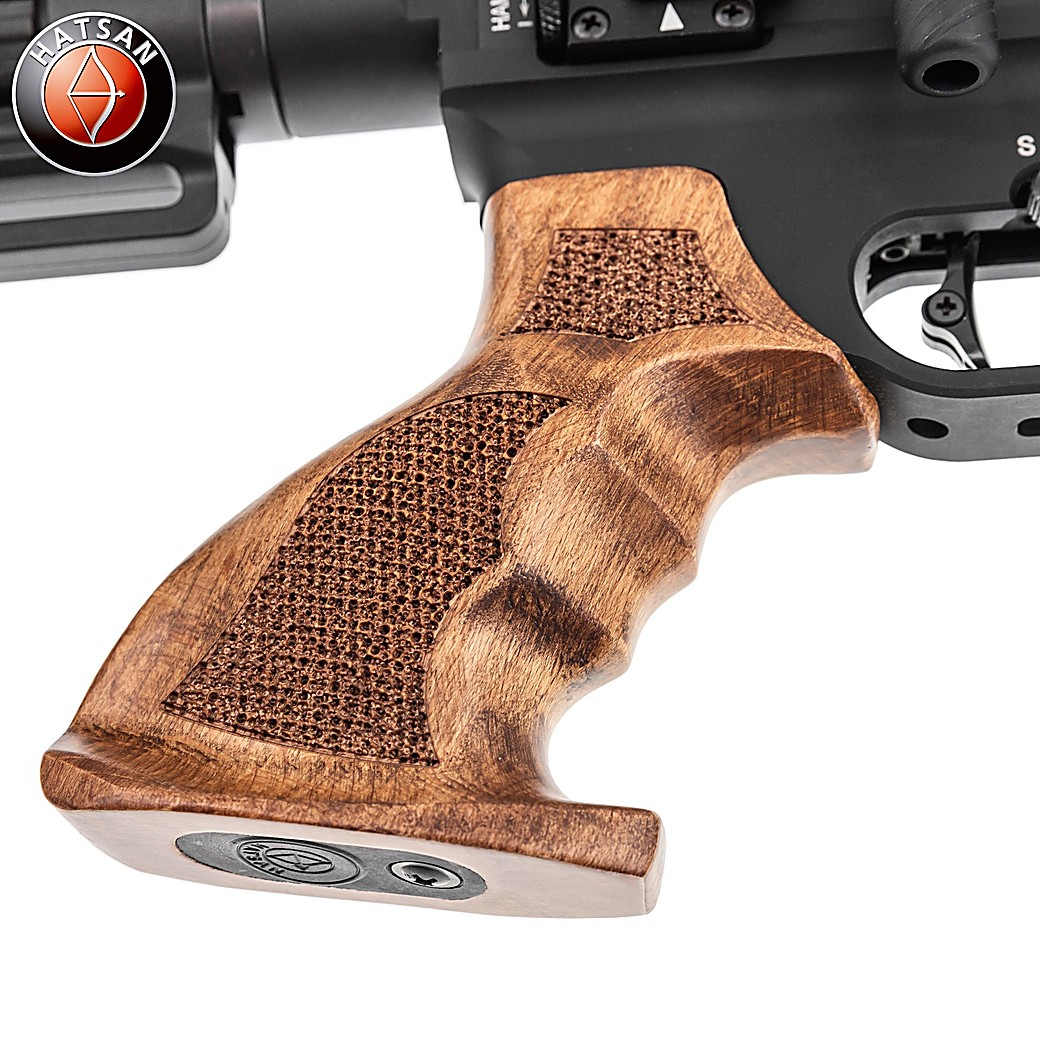
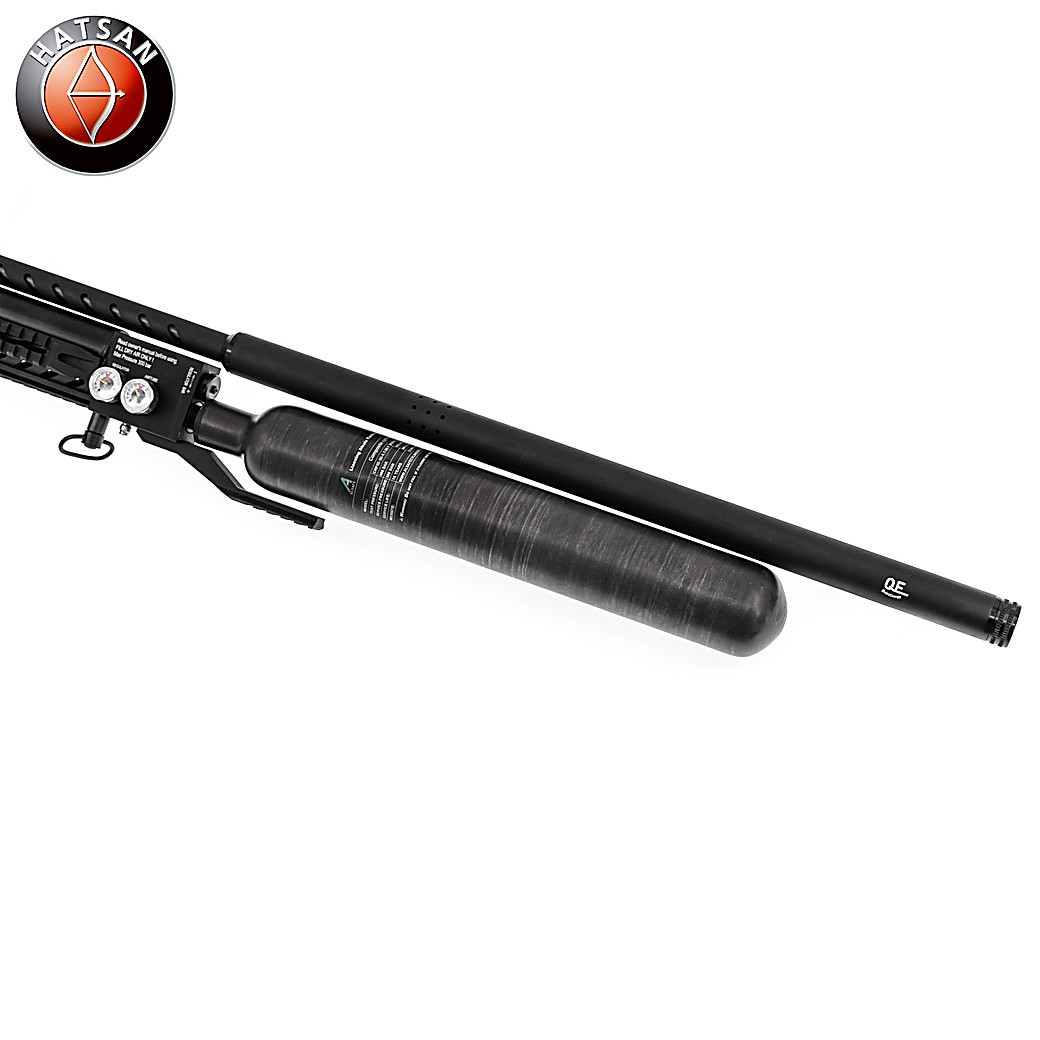
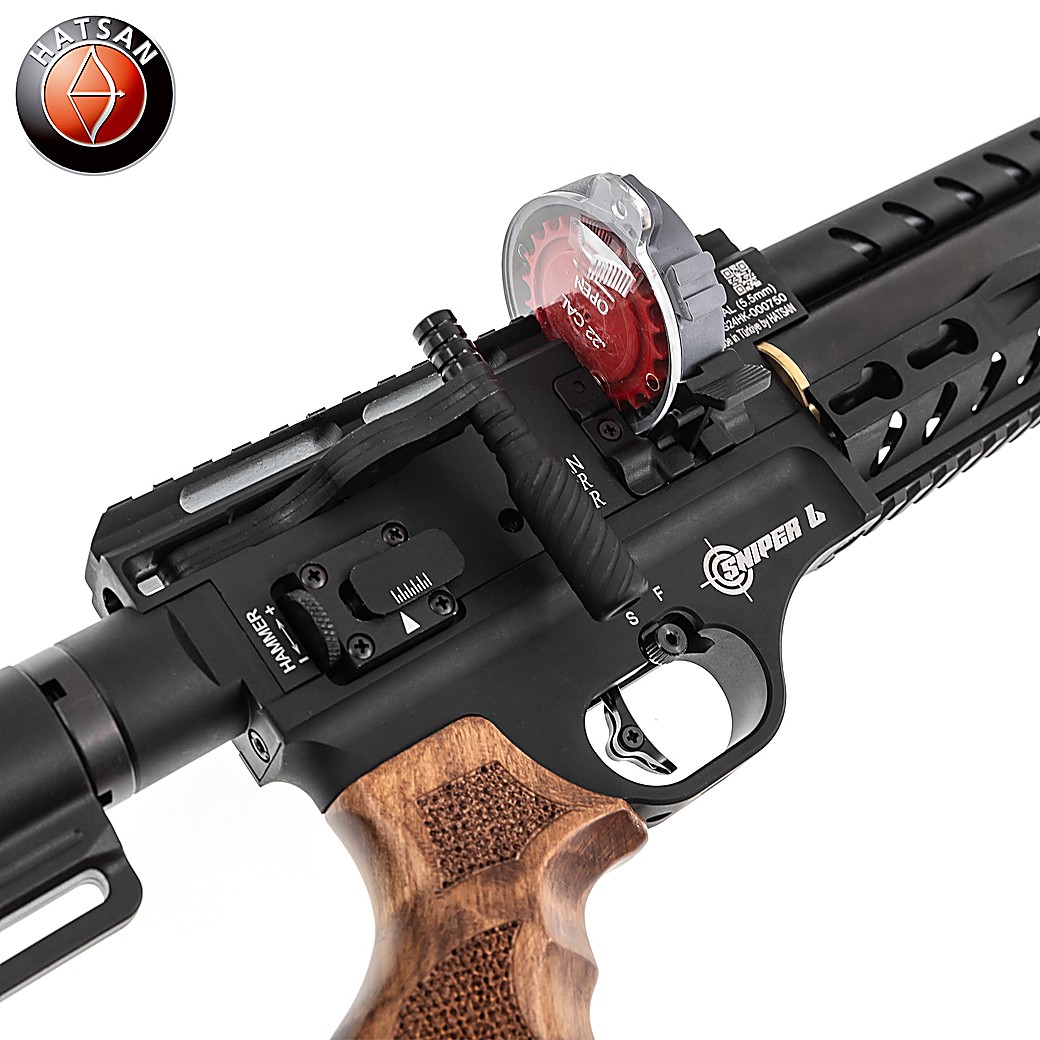
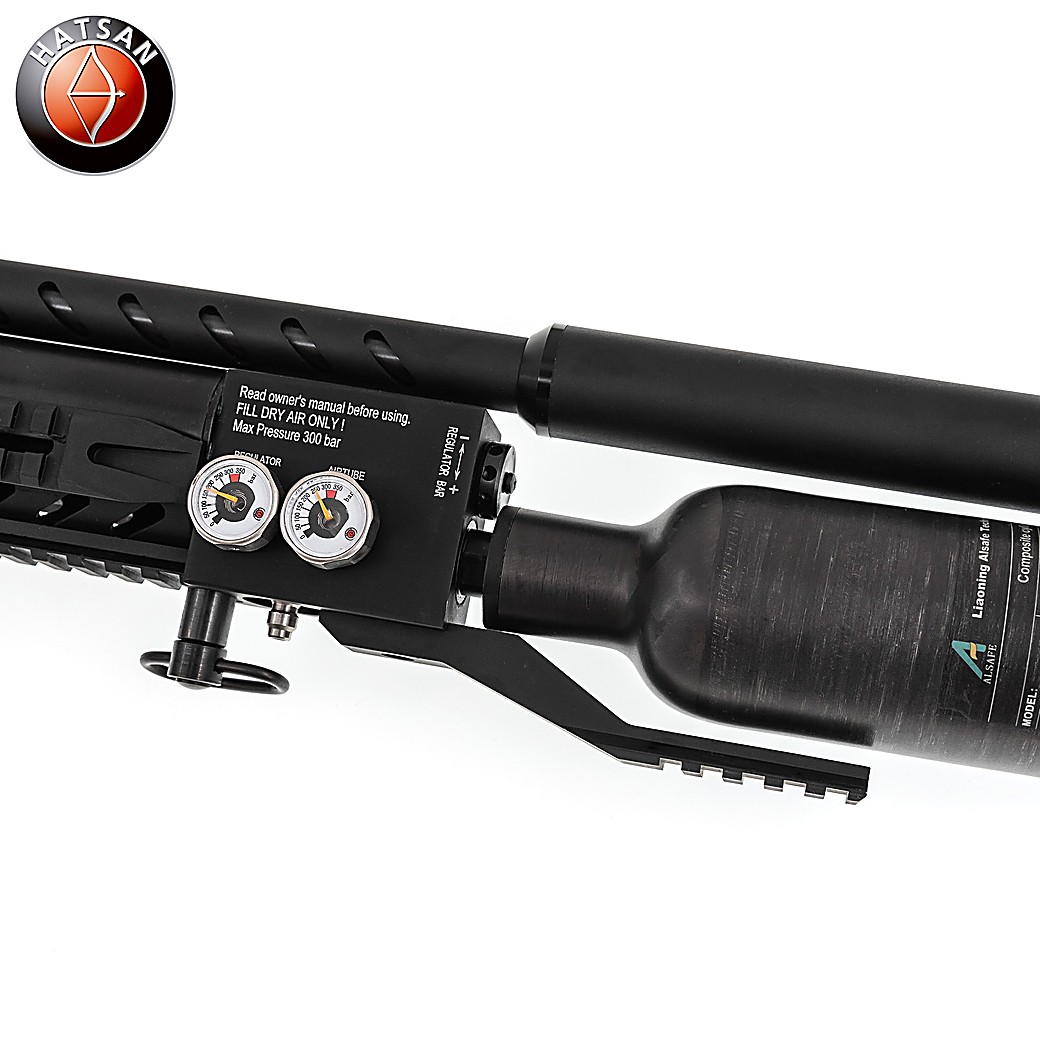
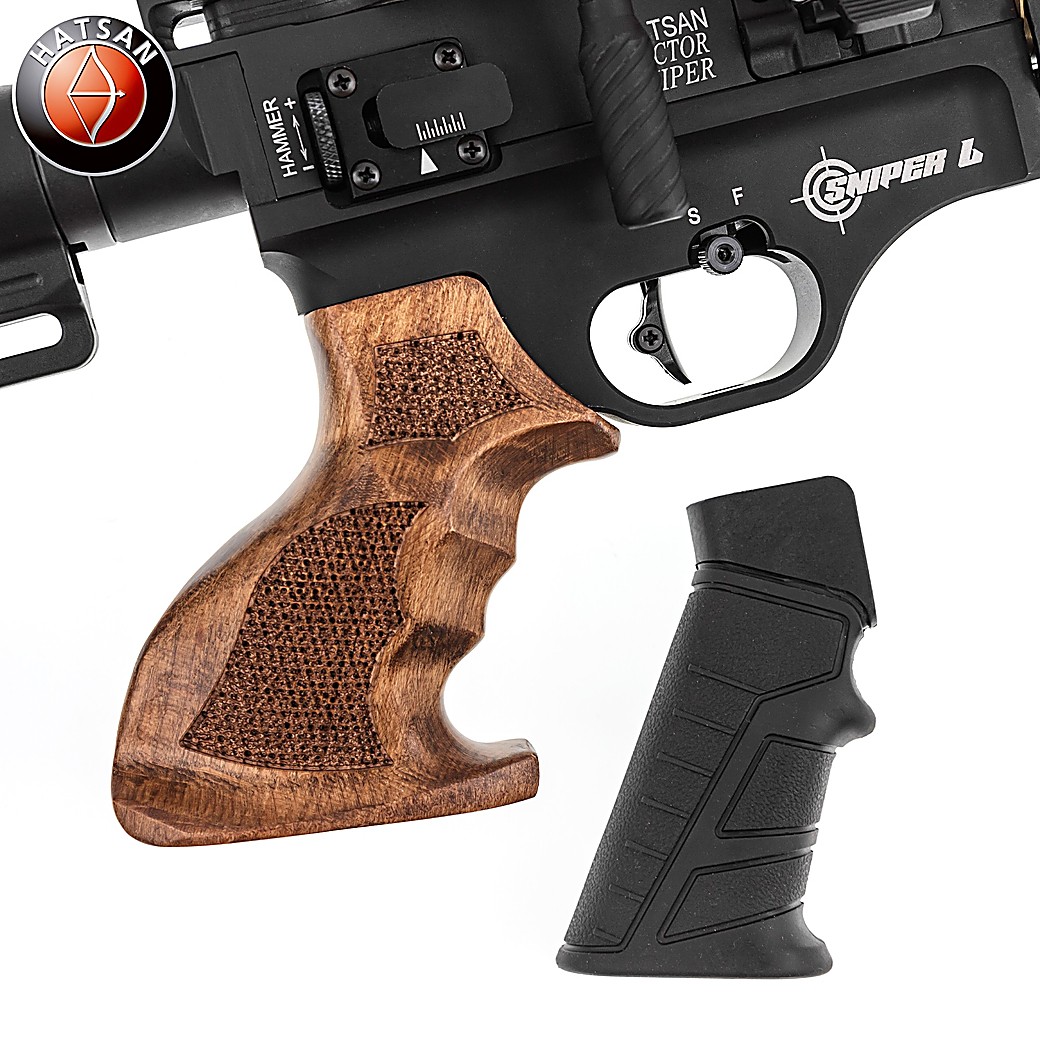
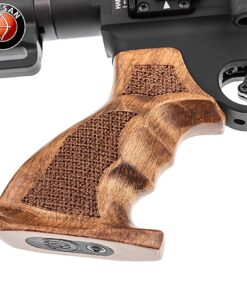
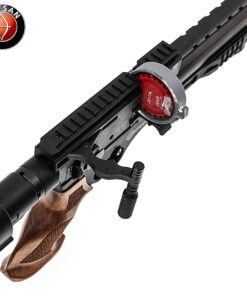
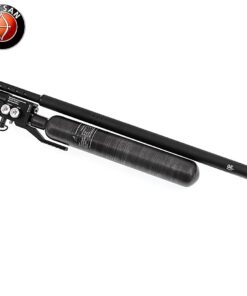
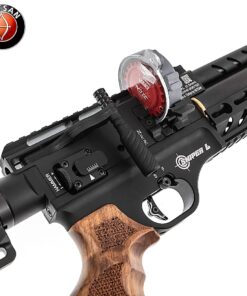
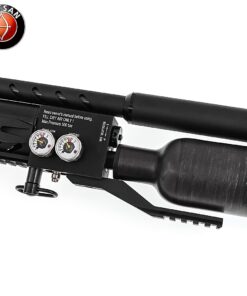
It features a 700 cc carbon fiber air bottle, 100 cc plenum, pressure and regulator gauges, externally adjustable regulator and hammer preload, “Quattro” match trigger, adjustable cheek piece and rubber but pad.
The Hatsan Factor Sniper L offers a blend of accuracy, strength, and convenience in a solid design, making it an ideal option for those looking for a top-tier, long-range, air rifle.
Hatsan Factor Sniper L PCP Air Rifle – High-Capacity Precision PCP with 700cc Carbon-Fiber Bottle and 30-Inch Barrel
The Hatsan Factor Sniper L PCP Air Rifle is a full-size, precision-focused pre-charged pneumatic platform designed for experienced shooters who want high air capacity, extensive external adjustment, a long precision barrel, and strong consistency across extended shooting sessions.
Built around a detachable 700cc carbon-fiber air bottle, a 300-bar maximum fill pressure, a dedicated 100cc pre-air chamber, an externally adjustable regulator, externally adjustable hammer preload, and a long 760mm / 30-inch precision-rifled and choked barrel, the Factor Sniper L sits among Hatsan’s most technically advanced manually operated PCP platforms.
It is offered in .22/5.5mm, .25/6.35mm, .30/7.62mm, and .35/9mm configurations. Therefore, shooters can select a calibre appropriate for their lawful sporting, recreational, or precision-target requirements.
Published manufacturer energy figures vary by calibre and projectile choice, while actual performance depends on ammunition, pressure settings, environmental conditions, and local legal limits. Because the platform is highly adjustable, careful tuning and systematic testing are important if the owner wants to achieve repeatable precision rather than simply maximum output.
700cc Carbon-Fiber Air Bottle
One of the most important features of the Factor Sniper L is its large 700cc carbon-fiber bottle.
This capacity provides a substantial reserve of compressed air and makes the rifle particularly useful for longer range sessions, extensive pellet testing, zero verification, and repeated precision work.
Carbon-fiber construction also helps reduce the weight penalty normally associated with a reservoir of this size.
As a result, the rifle can carry a large volume of air without becoming unnecessarily heavy in the front.
300-Bar Fill Pressure
The rifle uses a maximum fill pressure of 300 bar.
This allows the large reservoir to store a considerable amount of compressed air.
However, properly rated filling equipment must always be used.
The fill connection should remain clean, and only clean, dry compressed air should be introduced into the system.
Pressure should also be monitored during use so the rifle remains within a stable and predictable operating range.
100cc Pre-Air Chamber
The Factor Sniper L includes a 100cc pre-air chamber.
This chamber works together with the regulator and firing system to provide a controlled supply of air for each shot.
The additional regulated air volume is particularly important on a rifle designed around high-energy performance and a long barrel.
Externally Adjustable Regulator
The externally adjustable regulator is one of the rifle’s most valuable features.
Regulator pressure can be changed without major internal disassembly.
A dedicated gauge also allows the shooter to observe regulator pressure independently from the main bottle pressure.
This makes systematic tuning easier.
However, higher pressure does not automatically mean better accuracy.
The best result normally comes from balancing pressure, projectile choice, hammer preload, and airflow so the rifle remains consistent.
Externally Adjustable Hammer Preload
Hammer preload can also be adjusted externally.
This provides another way to influence how the valve behaves.
A carefully selected hammer setting can improve consistency and efficiency.
However, excessive preload may increase air consumption without improving accuracy.
For that reason, adjustments should be made gradually and recorded.
Long 760mm Precision Barrel
The 760mm / 30-inch barrel is a major reason the long version stands apart from shorter Factor configurations.
The barrel is precision rifled and choked.
Its length provides a strong foundation for controlled projectile acceleration and stable flight.
Nevertheless, barrel length alone does not guarantee precision.
Projectile compatibility, regulator stability, optic security, magazine condition, and shooter technique remain equally important.
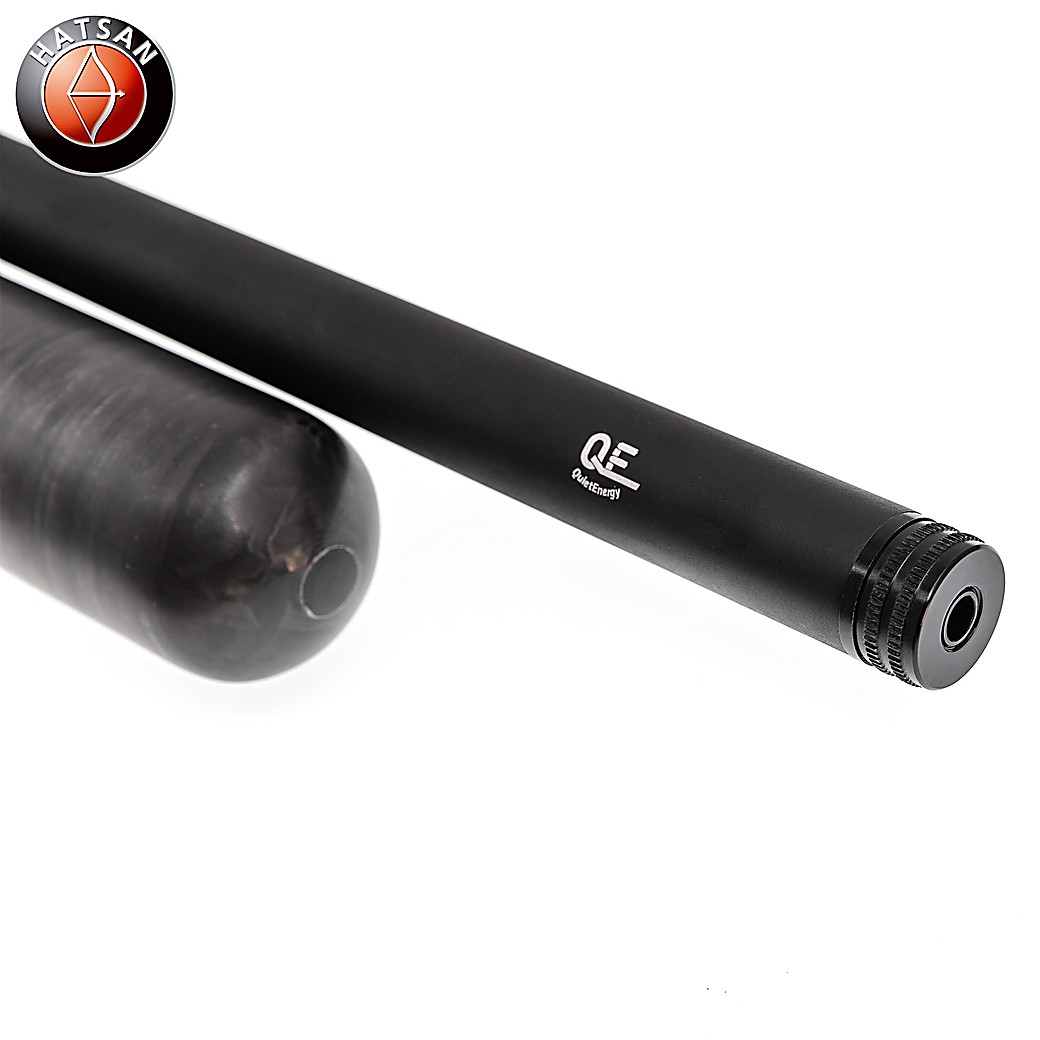
Fully Shrouded Barrel
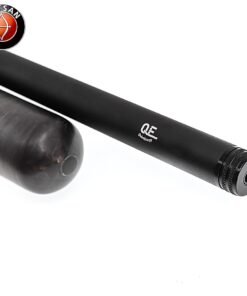
The barrel is enclosed in Hatsan’s QuietEnergy shroud system.
This integrated design is intended to reduce firing report.
The muzzle is also threaded 1/2-inch UNF for compatible accessories where lawful.
Side-Lever Action
The rifle uses a manually operated side lever.
The cocking handle can be reversed to accommodate different shooter preferences.
This allows the action to be configured for comfortable operation from either side.
The side-lever layout also keeps the operating hand relatively close to the firing position between shots.
High-Capacity Magazine System
Magazine capacity varies according to calibre.
- .22 – 21 shots
- .25 – 19 shots
- .30 – 16 shots
- .35 – 13 shots
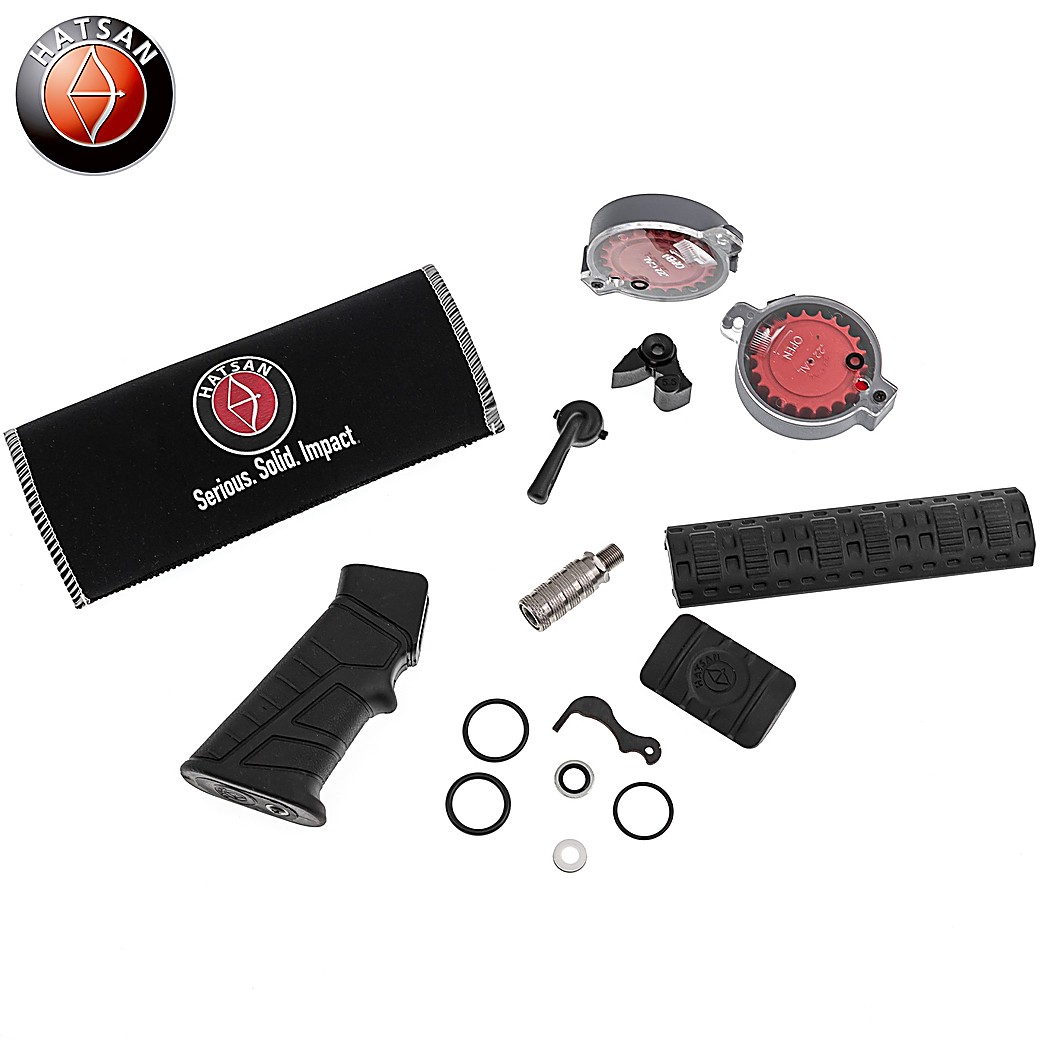
Two magazines are normally supplied.
Higher-capacity magazine options may also be available for selected configurations.
This large magazine capacity reduces loading interruptions during extended shooting sessions.
Practical Shot Capacity
Manufacturer reference figures indicate approximately:
- 100 optimal-velocity shots in .22
- 80 optimal-velocity shots in .25
- 70 optimal-velocity shots in .30
- around 70 optimal-velocity shots in .35
Actual results vary according to pressure settings, projectile weight, ambient temperature, and individual rifle condition.
Modular Precision Stock
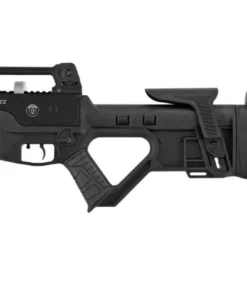
The rifle uses a modular precision buttstock.
An elevation-adjustable cheek rest helps place the shooter’s eye naturally behind the optic.
The rubber buttpad improves shoulder contact.
The stock can also be adjusted to improve overall fit.
This matters because consistent body position contributes directly to practical precision.
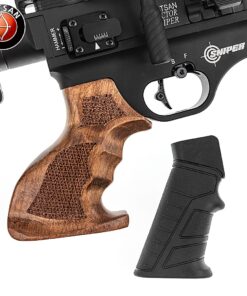
Adjustable Trigger System
The two-stage trigger is designed for deliberate shooting.
The trigger shoe can be adjusted vertically and horizontally.
This allows the finger to meet the trigger at a more natural angle.
A predictable trigger release helps reduce movement during the final stage of the shot.
Optics and Accessory Mounting
The rifle supports both 11mm and 22mm mounting systems.
A lower Picatinny rail is also provided.
This allows the shooter to configure the rifle with an appropriate optic and compatible support equipment for lawful range use.
Why Precision Is Important
Precision is created through repeatability.
The same projectile should be used during testing.
The same pressure should be used as a starting reference.
The regulator should remain at a known setting.
Hammer preload should remain unchanged during ammunition comparison.
The optic should remain secure.
The shooter should maintain the same cheek and shoulder position.
These small details create meaningful consistency.
How to Improve Practical Accuracy
The best way to evaluate the rifle is to create a baseline.
Select one projectile.
Use the same magazine.
Begin from a known bottle pressure.
Keep regulator and hammer settings unchanged.
Confirm the optic.
Shoot several groups.
Record the results.
Then change only one variable.
This method makes it easier to determine what actually improves performance.
Where the Rifle Performs Best
The long barrel, large bottle, and full-size stock make the rifle especially well suited to supported recreational target shooting and other lawful sporting use.
It is not primarily designed around minimum size.
Instead, it emphasizes stability, adjustability, and substantial air capacity.
When This Rifle Makes Sense
The Factor Sniper L makes the most sense for experienced PCP users who enjoy structured tuning and detailed performance testing.
It is particularly attractive to shooters who value long shot strings, configurable pressure settings, and a substantial full-size platform.
Why the Long Version Matters
The long version differs significantly from shorter configurations.
It uses a larger air bottle.
It uses a longer barrel.
It produces a different balance.
It also offers greater air capacity for extended sessions.
Therefore, the long version should not be treated as a cosmetic variation.
CARABINA HATSAN PCP BT65 SB ELITE
The phrase CARABINA HATSAN PCP BT65 SB ELITE relates to another full-size Hatsan PCP platform.
The Factor Sniper L differs through its larger carbon-fiber bottle, externally adjustable regulator, longer barrel, and more advanced tuning architecture.
hatsan air rifle
The phrase hatsan air rifle covers multiple spring, gas-piston, PCP, and self-cycling platforms.
The Factor Sniper L should specifically be identified as a manually cycled, externally regulated PCP.
hatsan sortie
The hatsan sortie uses semi-automatic pneumatic operation.
It should not be confused with the manually operated side-lever system used here.
hatsan velox
The hatsan velox belongs to another compact pneumatic category.
Its size, action, and intended use differ significantly.
hatsan jet 2
The hatsan jet 2 emphasizes portability and compact modular handling.
The Factor Sniper L instead focuses on full-size precision and high air capacity.
hatsan model 95
The hatsan model 95 belongs to the break-barrel category rather than the PCP category.
hatsan flash
The hatsan flash is a lighter and simpler manually operated PCP.
It uses a smaller air system and a less complex tuning arrangement.
hatsanusa
The term hatsanusa commonly appears when buyers research Hatsan products for the U.S. market.
hatsan usa
The phrase hatsan usa is also commonly used when researching regional availability and support.
hatsan harpoon
The hatsan harpoon belongs to a specialized pneumatic category with a completely different purpose.
hatsan mod 95
The hatsan mod 95 is a break-barrel design and does not use a high-pressure reservoir.
hatsan sortie tact
The hatsan sortie tact is a compact semi-automatic PCP.
It uses a different action and air system.
hatsan hercules
The hatsan hercules belongs to the manufacturer’s high-capacity PCP family.
However, its architecture differs significantly.
hatsan piledriver
The hatsan piledriver occupies a specialized high-output pneumatic category.
Its calibre range and mechanical design should not be compared directly.
hatsan sortie tact semi-auto pcp
The hatsan sortie tact semi-auto pcp uses a self-cycling action, whereas this rifle uses manual side-lever operation.
hatsan 135
The hatsan 135 is a break-barrel platform with completely different recoil, cocking, and maintenance characteristics.
hatsan jet
The hatsan jet is a compact modular pneumatic platform designed around portability.
hatsan bullboss
The hatsan bullboss uses bullpup architecture to reduce overall length.
The Factor Sniper L instead uses a conventional full-size precision stock layout.
hatsan 95
The hatsan 95 belongs to Hatsan’s break-barrel family.
hatsan
The wider hatsan range contains many different action types and power systems.
Therefore, model-specific specifications should always be confirmed.
hatsan refurbished
When evaluating hatsan refurbished equipment, bottle condition, pressure retention, regulator stability, side-lever operation, trigger condition, and magazine function should be checked carefully.
hatsan hercules bully
The hatsan hercules bully belongs to another high-capacity PCP family with a different chassis and air system.
hatsan airtact air rifle
The hatsan airtact air rifle is a break-barrel platform rather than a pre-charged pneumatic rifle.
hatsan invader
The hatsan invader uses a different pneumatic action and chassis arrangement.
hatsan flashpup qe
The hatsan flashpup qe emphasizes compact bullpup handling and uses a smaller air system.
hatsan neutron star
The hatsan neutron star is another full-size PCP platform, although its stock and bottle arrangement differ.
hatsan mod 25
The hatsan mod 25 belongs to another break-barrel category.
hassan blitz
The phrase hassan blitz is commonly used as a misspelling when searching for another Hatsan model.
That platform uses self-cycling operation rather than manual side-lever cycling.
air pellet gun
The phrase air pellet gun is a broad term covering several different power systems.
The Factor Sniper L is specifically a pre-charged pneumatic rifle.
co2 pellet rifle
A co2 pellet rifle uses carbon dioxide as its power source.
The Factor Sniper L instead uses high-pressure compressed air.
hercules bully air rifle
The hercules bully air rifle belongs to another large-capacity PCP family and should not be treated as mechanically equivalent.
hatsan sortie threaded adapter
The phrase hatsan sortie threaded adapter refers to another platform and should not be confused with this rifle’s muzzle system.
h&n field target trophy
The phrase h&n field target trophy frequently appears during pellet research.
However, projectile suitability should always be determined through real grouping and feeding tests.
hatsan bt65.25 specifications
The phrase hatsan bt65.25 specifications concerns another PCP platform.
Its reservoir, magazine, barrel, and performance characteristics should not be transferred to this rifle.
hatsan jet i pcp .22 caliber pellet rifle kit
The hatsan jet i pcp .22 caliber pellet rifle kit belongs to a much smaller modular PCP category.
model 95
The model 95 is a break-barrel platform rather than a regulated PCP.
Snowpeak PP750L PCP Air Pistol
The Snowpeak PP750L PCP Air Pistol belongs to a compact pistol/carbine category.
It is significantly smaller and mechanically different.
snowpeak airguns
The phrase snowpeak airguns refers to a separate range of pneumatic products.
snowpeak sports
The term snowpeak sports also relates to that separate manufacturer.
snowpeak ap900
The snowpeak ap900 belongs to a different airgun category.
snowpeak max
The phrase snowpeak max refers to another product family.
snowpeak pp750
The snowpeak pp750 is a compact PCP platform.
pp750
The shorter term pp750 generally refers to that same compact design.
snowpeak p35x
The snowpeak p35x belongs to a separate bullpup-style PCP family.
pr900 gen 3
The pr900 gen 3 represents a lightweight PCP platform with different design priorities.
snow peak pp750
The spelling snow peak pp750 is another common search variation for the same compact PCP platform.
snowpeak p35
The snowpeak p35 is another compact bullpup-style PCP.
snowpeak m60b
The snowpeak m60b belongs to another pneumatic product family.
snow peak pp20
The snow peak pp20 belongs to another compact pneumatic category.
p35
The search term p35 commonly refers to another bullpup-style PCP.
p35x
The p35x is a separate variation within that family.
p35x pcp
The phrase p35x pcp should therefore be treated only as comparison research.
snowpeak m25
The snowpeak m25 belongs to another pneumatic rifle family.
ap900b pcp air rifle
The ap900b pcp air rifle belongs to a different lightweight PCP category.
snowpeak m60
The snowpeak m60 is another separate pneumatic design.
snowpeak max 1 price
The phrase snowpeak max 1 price reflects buyer-intent research for another product.
pcp p 35
The phrase pcp p 35 usually relates to another compact PCP platform.
m25 rifle
The term m25 rifle appears in searches for another pneumatic rifle configuration.
snow peak equipment
The phrase snow peak equipment is broad and covers unrelated products.
It should not be used as specification data for this rifle.
hp300
The term hp300 may appear in wider high-pressure equipment research, but it is not a defining specification of this rifle.
pellet 9mm
The phrase pellet 9mm is relevant to the .35/9mm version because the Factor Sniper L is available in that calibre.
Projectile compatibility should still be confirmed for the exact configuration.
snowpeak p35 vs p35x
The phrase snowpeak p35 vs p35x compares two other PCP platforms.
snowpeak pp20
The snowpeak pp20 belongs to another compact pneumatic category.
m25 weapon
The phrase m25 weapon relates to a separate product family and should only be treated as comparison context.
Why Choose the Hatsan Factor Sniper L PCP Air Rifle?
The strongest reason to choose this platform is the combination of large air capacity, long-barrel construction, extensive external adjustment, and high-capacity magazine support.
The 700cc carbon-fiber bottle supports extended sessions.
The 300-bar system provides substantial stored air.
The 100cc pre-air chamber works with the regulated pneumatic system.
The externally adjustable regulator gives experienced users control over operating pressure.
Hammer preload can also be refined without opening the rifle.
The long 760mm barrel provides a substantial precision-oriented platform.
The reversible side lever supports adaptable handling.
The modular stock allows the rifle to be fitted more naturally.
The adjustable trigger improves ergonomic control.
Together, these features create a highly configurable PCP intended for shooters who value structured testing and consistent performance.
How Good Is the Precision?
The mechanical architecture provides a strong foundation for precision.
However, the rifle performs best when ammunition, pressure, regulator settings, optic setup, and shooter technique are kept consistent.
Good accuracy should therefore be measured through repeated groups rather than isolated shots.
A well-matched projectile and a stable setup can make a substantial difference.
Why the Rifle Is Important for Serious PCP Users
This platform provides a level of external control that is useful for experienced shooters.
Instead of relying on one fixed configuration, the owner can evaluate pressure behavior, hammer settings, projectile compatibility, and stock fit methodically.
That makes the rifle particularly useful for shooters who enjoy understanding how each part of the system influences performance.
Final Section 1 Assessment
The Hatsan Factor Sniper L PCP Air Rifle combines a 700cc carbon-fiber bottle, 300-bar fill pressure, 100cc pre-air chamber, externally adjustable regulator, externally adjustable hammer preload, 760mm precision barrel, high-capacity magazines, reversible side lever, adjustable trigger, and modular precision stock in one substantial PCP platform.
Its greatest strengths are capacity, adjustability, stability, and long-session usability.
However, those advantages are best realized through disciplined setup.
A suitable projectile should be selected carefully.
Pressure should be monitored.
Regulator and hammer settings should be recorded.
Only one variable should be changed during testing.
The magazine should remain clean.
The optic should remain secure.
The bottle and seals should be inspected periodically.
The stock should be fitted correctly.
For experienced PCP users who value long-barrel construction, substantial air capacity, and detailed performance tuning, the Factor Sniper L offers a sophisticated and highly capable platform for lawful recreational target shooting and other permitted sporting applications.
Precision Setup, Air Management, Regulation, Handling and Practical Ownership
Understanding the Rifle as a Precision System
The Hatsan Factor Sniper L performs best when the entire rifle is treated as one integrated system.
The bottle, regulator, pre-air chamber, hammer setting, side lever, magazine, barrel, trigger, stock, optic, projectile, and shooter technique all influence the final result.
Because the rifle offers several adjustable systems, a disciplined setup process is important.
The same projectile should be used during testing.
The rifle should begin from a similar fill pressure.
The regulator should remain at a known setting.
Hammer preload should remain unchanged during comparison work.
The optic should stay secure.
The stock should remain in the same position.
Only one variable should be changed at a time.
This makes the rifle much easier to understand.
Establishing a Baseline Configuration
Before tuning anything, create a reliable reference setup.
Choose one projectile that has already shown good consistency.
Use the same magazine.
Begin from a known bottle pressure.
Record the regulator setting.
Record the hammer setting.
Keep the same optic zero.
Use the same stock position.
Shoot from the same distance.
Fire several groups.
Write down the results.
This baseline becomes extremely useful later.
If accuracy changes, the rifle can be returned to the original configuration before deeper troubleshooting begins.
Why One Variable at a Time Matters
A highly adjustable rifle can quickly become confusing if several settings are changed together.
The regulator may be altered.
Hammer preload may be increased.
A different projectile may be loaded.
The optic may be adjusted.
A different magazine may be used.
If the result improves or becomes worse, the reason may be unclear.
A better method is simple.
Change one thing.
Test again.
Record the result.
Then decide whether another change is needed.
Projectile Selection
Projectile choice can have a major influence on practical accuracy.
Different weights can behave differently.
Head diameter can affect barrel fit.
Projectile shape can influence magazine feeding.
Manufacturing consistency also matters.
For serious testing, several suitable options should be compared under the same conditions.
Projectile Weight
Heavier projectiles generally travel more slowly.
Lighter ones may produce higher velocity.
However, higher speed does not automatically mean better accuracy.
The most useful projectile is the one that produces stable groups and dependable feeding.
Projectile Shape
Shape can influence both loading and flight.
Some designs may sit more consistently in the magazine.
Others may enter the barrel more smoothly.
Practical target results should guide the final choice.
Inspecting Ammunition
Damaged projectiles can create misleading results.
Deformed skirts may affect sealing.
Visible damage can influence feeding.
Dirty ammunition can introduce inconsistency.
For serious precision testing, damaged pieces should be removed.
Batch Variation
Different production batches can sometimes behave differently.
If a new tin changes group size, the rifle should not immediately be retuned.
The ammunition itself may be responsible.
Comparing the new batch with a known batch can help identify the cause.
Understanding the Large Air Bottle
The large carbon-fiber bottle provides substantial stored air.
This supports longer shooting sessions and reduces the frequency of refilling.
However, large capacity does not remove the need for pressure management.
The shooter should still understand how bottle pressure affects consistency.
Consistent Starting Pressure
Testing becomes easier to compare when each session begins from a similar pressure.
One test should not begin nearly full while another starts much lower if the goal is direct comparison.
A consistent starting point removes one important variable.
Understanding the Useful Pressure Window
The rifle may perform best within a certain bottle-pressure range.
Velocity may remain more consistent.
Point of impact may remain more stable.
The firing cycle may feel more predictable.
Once the rifle begins to move outside that range, performance may change.
Why Remaining Air Does Not Tell the Whole Story
The presence of air in the bottle does not guarantee that every remaining shot will behave identically.
Once accuracy or velocity begins to change, refilling may be more useful than continuing to use every last shot.
For precision work, consistency is more important than maximum shot count.
Controlled Filling
Only properly rated high-pressure equipment should be used.
The fill connection should remain clean.
The bottle should be filled gradually.
The marked pressure limit should never be exceeded.
Why Slow Filling Helps
Compressed air heats during filling.
After cooling, the pressure reading may settle lower.
A slower fill reduces unnecessary heat and makes the final reading easier to understand.
Clean and Dry Air
Clean, dry compressed air helps protect the internal pneumatic system.
Moisture can contribute to corrosion.
Dust can damage seals.
The filling connection should remain protected between uses.
Fill Connection Care
The fill fitting should remain clean.
Protective caps should be used where supplied.
Dust and grit can damage sealing surfaces.
The connection should be inspected periodically.
Hose and Coupler Condition
High-pressure hoses should be checked regularly.
Cuts, cracking, bulges, or damaged fittings should not be ignored.
Couplers should connect securely.
Questionable equipment should be replaced.
Monitoring Pressure Retention
Pressure should remain reasonably stable under stable temperature conditions.
A small change after filling may be normal.
Repeated pressure loss under similar conditions may indicate a leak.
The pattern should be observed before the cause is assumed.
Temperature Effects
Temperature influences compressed air.
A bottle filled while warm may show lower pressure after cooling.
A cold bottle may show a higher reading after warming.
This should be considered before diagnosing a leak.
Understanding the Pre-Air Chamber
The pre-air chamber works as part of the regulated air-delivery system.
Its purpose is to provide a controlled volume of air for the firing cycle.
Because the chamber works alongside the regulator, changes to pressure settings can affect how the rifle behaves.
Why the Pre-Air Chamber Matters
A stable air supply between the regulator and firing valve can help support repeatable shot behavior.
However, consistency still depends on the complete system.
Bottle pressure.
Regulator pressure.
Hammer setting.
Projectile choice.
All of these factors should work together.
Understanding the Regulator
The regulator controls the pressure delivered to the firing system.
A stable regulator helps support repeatable velocity.
This is one of the most important systems in a precision PCP.
However, adjustment should always have a clear purpose.
Regulator Adjustment Strategy
Before changing regulator pressure, define the goal.
The aim may be improved consistency.
It may be better efficiency.
It may be improved compatibility with a particular projectile.
Any change should be small.
The result should be recorded.
Why Higher Regulator Pressure Is Not Always Better
More pressure does not automatically create better groups.
Higher pressure can increase air consumption.
It may also produce a velocity that is less suitable for the chosen projectile.
For precision shooting, stable performance is more valuable than maximum output.
Understanding Hammer Preload
Hammer preload influences how the firing valve is opened.
Small changes can affect air use and velocity.
The setting should be adjusted gradually.
Large changes make the result harder to interpret.
Balancing Hammer and Regulator Settings
The best setup normally comes from balance.
The regulator and hammer should work together.
A useful configuration should provide stable velocity, predictable shot count, reasonable air efficiency, and good target results.
Maximum settings are not required to achieve these goals.
Why Hammer Balance Matters
If hammer preload is excessive, more air may be used without meaningful improvement.
If it is too low, the rifle may not use the available regulator pressure efficiently.
The aim should be a stable and repeatable operating point.
Side-Lever Operation
The side lever should move smoothly.
It should not be forced.
A complete and controlled cycling motion helps ensure reliable loading.
If resistance changes suddenly, the cause should be investigated.
Why Smooth Cycling Matters
Smooth lever operation helps protect projectiles from unnecessary damage.
It also allows the shooter to maintain position more easily.
A consistent loading rhythm can improve concentration during longer sessions.
Reversible Handle Position
The operating handle can be configured to suit shooter preference.
The best side is the one that allows comfortable cycling with minimal unnecessary hand movement.
Magazine Reliability
The magazine should rotate smoothly.
Projectiles should sit correctly.
The indexing system should function normally.
Any unusual resistance should be investigated.
Loading the Magazine
Projectiles should be loaded carefully.
The skirt or base should not be damaged.
The magazine should not be overfilled.
Any projectile that does not sit correctly should be removed rather than forced.
Magazine Cleanliness
Dust and debris can affect indexing and feeding.
The magazine should remain clean.
Excess lubricant should be avoided because it can attract dirt.
Comparing Multiple Magazines
If several magazines are used, they can be identified individually.
This makes troubleshooting easier.
If one magazine repeatedly causes feeding issues while another performs correctly, the cause becomes easier to isolate.
Barrel Performance
The long precision barrel provides the mechanical foundation for projectile stabilization.
However, barrel length alone does not guarantee accuracy.
Ammunition compatibility, pressure stability, optic setup, and shooter technique remain important.
Barrel Cleaning
The barrel should not be cleaned automatically after a fixed number of shots.
If accuracy remains stable, unnecessary cleaning may provide no benefit.
Cleaning should be based on observed performance.
Gentle Cleaning
When cleaning becomes necessary, the process should remain careful.
The bore should be protected.
The muzzle should not be damaged.
Suitable equipment should be used.
Barrel Conditioning
A freshly cleaned barrel may require several shots before normal grouping returns.
The shooter should allow the barrel to stabilize before making unnecessary optic adjustments.
Muzzle Condition
The muzzle should remain clean and protected from impact.
Damage can influence projectile release.
A sudden accuracy change should include a visual inspection.
Shroud Condition
The shroud should remain secure.
Unexpected looseness should be investigated.
A change in firing sound or group behavior can justify inspection.
Trigger Control
The trigger should be pressed smoothly.
The finger should move mainly rearward.
The firing hand should remain relaxed.
A sudden pull can disturb the sight picture.
Trigger Finger Position
Too much finger can introduce sideways pressure.
Too little contact may reduce control.
The ideal position allows a straight and predictable press.
Trigger Shoe Adjustment
The adjustable trigger shoe can improve ergonomics.
Its position should allow the finger to contact the trigger naturally.
A comfortable angle can reduce unnecessary wrist and finger tension.
Trigger Weight and Travel
Trigger adjustment should prioritize control and safety.
An extremely light setting is not automatically better.
The first stage should remain predictable.
The final release should feel clean.
Grip Pressure
The firing hand should remain controlled but relaxed.
Excessive grip pressure can create tension.
A moderate and repeatable grip generally supports better precision.
Follow-Through
The shot does not end at trigger release.
The shooter should remain behind the rifle.
The cheek should stay on the stock.
The optic should remain observed.
The trigger movement should finish naturally.
This makes each shot easier to evaluate.
Shot Calling
Shot calling is a useful precision skill.
The shooter watches the reticle during release.
Any movement is noted.
The likely impact is predicted.
The target is then checked.
This helps separate shooter movement from equipment problems.
Stock Fit
The stock should place the rifle naturally into the shoulder.
The cheekpiece should align the eye with the optic.
The grip should feel comfortable.
The buttpad should provide repeatable contact.
Correct fit reduces unnecessary tension.
Stock Length
The stock should be configured so the trigger hand remains relaxed.
The elbow should not be forced into an awkward position.
Correct stock length improves comfort and repeatability.
Cheekpiece Position
The cheekpiece should place the eye naturally behind the optic.
The shooter should not need to raise or lower the head excessively.
A repeatable head position supports consistent sight alignment.
Buttpad Position
The buttpad should contact the shoulder comfortably.
Its position should remain repeatable.
Poor fit can create unnecessary muscular tension.
Shoulder Contact
The rifle should return to the same part of the shoulder.
Changes in pressure or position can alter alignment.
Consistency improves practical precision.
Support-Hand Placement
The support hand should use a consistent reference point.
Moving it significantly changes balance.
A stable support position helps the rifle settle naturally.
Understanding Weight and Balance
The long barrel and large bottle create a substantial full-size platform.
That mass can improve stability from supported positions.
However, it can also increase fatigue during prolonged unsupported shooting.
The shooter should find a position that reduces unnecessary muscular effort.
Bench Shooting
A stable bench is useful for evaluating mechanical accuracy.
The same support points should be used.
The rifle should not be forced into alignment.
Several groups should be compared.
Front Support
The front support should reduce movement without applying unnecessary pressure.
A consistent support point is more important than absolute rigidity.
Rear Support
A rear bag can help stabilize the stock.
Small elevation corrections can then be made without changing the entire body position.
Bipod Use
A compatible bipod can provide stable front support.
However, rear support and shoulder pressure should remain consistent.
The rifle should still be allowed to settle naturally.
Standing Practice
Standing is naturally less stable.
Some movement is normal.
The goal is to manage movement rather than eliminate it completely.
A balanced stance is usually more repeatable.
Kneeling Practice
Kneeling provides additional support.
The shooter should find a position that feels stable without excessive tension.
Seated Practice
A seated position can provide excellent stability.
The shooter should still maintain consistent cheek and shoulder contact.
Prone Practice
Prone can be highly stable.
The optic and cheekpiece should allow a comfortable head position.
Neck strain should be avoided.
Natural Point of Aim
The rifle should settle toward the target when the body relaxes.
If the shooter constantly forces alignment, body position should be adjusted.
Breathing Control
Breathing moves the upper body.
A comfortable pause after exhaling is often used for the shot.
The pause should remain natural.
Long forced breath holds can increase tension.
Avoiding Excessive Hold Time
Holding on target for too long can increase movement.
Muscles become tired.
Visual focus decreases.
If the shot does not develop naturally, lowering the rifle and restarting is usually better.
Managing Fatigue
Long sessions can reduce performance.
Hands become tired.
Shoulders become tired.
Visual concentration declines.
Short breaks can restore consistency.
Optic Selection
A suitable optic should match the rifle and intended shooting distance.
Clear glass matters.
Reliable adjustment matters.
Eye relief matters.
Field of view matters.
Extreme magnification is not always necessary.
Scope Mounting
The optic should be mounted securely.
The reticle should remain level.
Eye relief should feel natural.
The shooter should not need an awkward head position.
Mount Inspection
Scope mounts should be checked periodically.
Loose hardware can cause point-of-impact movement.
Overtightening should also be avoided.
Zeroing
Zero should be established with the projectile and rifle settings chosen for regular use.
Once a stable zero is found, unnecessary adjustment should be avoided.
Constant changes make the rifle harder to evaluate.
Confirming Zero
Zero should be checked periodically.
If groups remain tight but move, the optic and mounts should be inspected before deeper tuning begins.
A shifted group is different from a larger group.
Range Verification
Point of impact changes with distance.
The shooter should confirm actual performance at several useful ranges.
Real target data is more valuable than generic trajectory assumptions.
Creating a Personal Range Reference
A simple record can be created showing actual point of impact at different distances.
This produces practical information specific to the rifle, projectile, optic, and chosen settings.
Wind Effects
Wind can influence projectile flight.
Its effect becomes greater as distance increases.
Outdoor groups should always be interpreted in relation to wind conditions.
Temperature Effects
Temperature influences compressed air.
It can also affect ammunition behavior.
Comparisons are more meaningful when conditions are similar.
Lighting Effects
Lighting changes how the target and reticle appear.
Bright glare can reduce clarity.
Low light can make aiming more difficult.
Consistent lighting helps during testing.
Chronograph Testing
A chronograph can provide useful information about velocity consistency.
Several shots should be measured.
Average velocity can be recorded.
Extreme spread can be reviewed.
Standard deviation can provide additional context.
Average Velocity
Average velocity provides a useful reference.
If it changes significantly without an intentional adjustment, pressure, temperature, projectile selection, or regulator behavior may have changed.
Extreme Spread
Extreme spread shows the difference between the fastest and slowest measured shot.
A smaller spread generally suggests more consistent velocity.
However, good numbers do not automatically guarantee tight groups.
Standard Deviation
Standard deviation shows how tightly measured shots cluster around the average.
Lower values can be useful.
However, the target should remain the final measure of practical performance.
Evaluating Group Shape
Group shape can provide useful information.
Vertical patterns may suggest one type of inconsistency.
Horizontal patterns may suggest another.
Irregular groups may result from several combined factors.
Several groups should be compared before conclusions are drawn.
Tight Groups That Shift
If groups remain tight but move to another part of the target, the rifle may still be mechanically consistent.
Possible causes include optic movement, pressure differences, regulator changes, lighting, or changes in hold.
Groups That Become Larger
If groups open up, ammunition should be checked.
The optic should be inspected.
Pressure should be reviewed.
Shooter fatigue should be considered.
Magazine feeding and barrel condition may also deserve attention.
Accuracy Troubleshooting
Troubleshooting should follow a logical order.
Check the projectile.
Check the magazine.
Check bottle pressure.
Check regulator settings.
Check hammer settings.
Check the optic.
Check the mounts.
Check shooter position.
Check environmental conditions.
Only after these factors are reviewed should deeper mechanical causes be considered.
Returning to a Known Configuration
If troubleshooting becomes confusing, return the rifle to the baseline setup.
Use the known projectile.
Restore the recorded regulator setting.
Restore the hammer setting.
Confirm stock position.
Confirm the optic.
Then test again.
This is often the fastest way to determine whether a real problem exists.
Exterior Maintenance
The rifle should remain clean and dry.
Dust should be removed.
Moisture should not remain on metal surfaces.
Excess lubricant should be avoided.
Chassis Care
The chassis should be inspected periodically.
Fasteners should remain secure.
Adjustment mechanisms should operate smoothly.
Any unusual looseness should be addressed.
Stock Mechanism Care
The stock and cheekpiece should move correctly.
Locking points should remain secure.
A loose stock can affect repeatability.
Bottle Inspection
The carbon-fiber bottle should be examined periodically.
Visible damage should not be ignored.
The neck and connection area should remain clean.
Applicable inspection requirements should be respected.
Bottle Removal
The detachable bottle should only be removed according to manufacturer guidance.
Threads should not be forced.
The sealing area should remain clean.
Cross-threading should be avoided.
Seal Wear
Seals are normal service items.
Their lifespan depends on pressure, temperature, cleanliness, storage, and use.
Correct replacement parts should be used when servicing becomes necessary.
Detecting Air Loss
A small pressure change after cooling may be normal.
Repeated pressure loss under stable conditions may indicate a leak.
The pattern should be observed before the cause is assumed.
Avoiding Unnecessary Internal Work
A properly functioning rifle does not need constant internal disassembly.
Opening the high-pressure system without a clear reason can create problems.
Seals can be damaged.
Leaks can be introduced.
Settings can be disturbed.
Routine external inspection is usually enough until a genuine issue appears.
Professional Servicing
The internal pneumatic system operates at high pressure.
Deeper regulator, valve, bottle, and pressure-system work should be handled by someone with appropriate knowledge and tools.
Storage
The rifle should be stored securely.
Unauthorized access should be prevented.
The environment should remain dry.
Extreme heat should be avoided.
Heat Exposure
High temperatures can affect seals, optics, and pressurized systems.
The rifle should not be left unnecessarily in a hot vehicle or similar environment.
Moisture Control
If the rifle has been exposed to moisture, it should be dried before long-term storage.
This helps protect external components and accessories.
Transport Protection
A suitable case can protect the rifle during transport.
The optic, barrel, stock, magazine area, and bottle should be protected from impact.
The rifle should remain unloaded and be transported according to applicable law.
Evaluating a Used Example
A used rifle should be inspected systematically.
Check bottle condition.
Observe pressure retention.
Confirm regulator behavior.
Cycle the side lever.
Inspect the magazines.
Evaluate the trigger.
Check stock adjustments.
Inspect the optic rail.
Inspect the barrel and shroud.
Review service history where available.
Pressure Retention in a Used Rifle
Pressure should remain stable under stable temperature conditions.
Persistent loss may indicate a leak.
The cause should be identified before continued use.
Bottle Condition in a Used Rifle
The carbon-fiber bottle should be examined carefully.
Visible structural damage should not be ignored.
The neck and connection area should remain clean.
Regulator Behavior in a Used Rifle
Velocity consistency can reveal whether the regulator is behaving normally.
Irregular results should be investigated before unnecessary adjustment is made.
Side-Lever Condition in a Used Rifle
The lever should move smoothly.
Unexpected resistance or excessive looseness should be investigated.
Magazine Condition in a Used Rifle
The magazine should index correctly.
It should not bind.
Projectiles should feed consistently.
Damaged magazines should be repaired or replaced.
Trigger Condition in a Used Rifle
The trigger should feel consistent.
Unexpected roughness or unpredictable release may indicate that servicing is needed.
Stock Condition in a Used Rifle
The stock and cheekpiece should lock securely.
The structure should not show significant damage.
Excessive looseness can affect repeatability.
Barrel Condition in a Used Rifle
The muzzle should remain clean and undamaged.
The shroud should remain secure.
Any impact marks should be investigated.
Cosmetic Wear Versus Mechanical Condition
Cosmetic marks do not automatically indicate poor performance.
A used rifle can show normal handling wear and still function very well.
Likewise, a visually clean example may still require service.
Mechanical condition matters more than appearance.
Ownership Costs
Long-term ownership includes more than the initial purchase.
The owner should consider filling equipment, projectiles, magazines, seals, bottle inspection, servicing, storage equipment, and optic maintenance.
These costs should be considered before purchase.
Why the Large Bottle Matters
The large bottle reduces the frequency of refilling.
This is useful during projectile testing, zeroing, and extended target sessions.
Why the Regulator Matters
The regulator helps create a repeatable air supply.
A stable regulator supports predictable velocity and more meaningful precision testing.
Why Hammer Adjustment Matters
Hammer adjustment adds another tuning variable.
When used carefully, it can help balance consistency and air efficiency.
Why the Pre-Air Chamber Matters
The chamber supports the regulated firing system by providing controlled air volume ahead of the shot cycle.
This contributes to the platform’s overall consistency when the system is properly balanced.
Why the Side Lever Matters
The side lever provides deliberate manual cycling while keeping the operating hand relatively close to the firing position.
This creates a smooth and controlled shooting rhythm.
Why the Long Barrel Matters
The long barrel gives the projectile more controlled travel within the bore and provides a substantial precision-oriented platform.
However, its benefits are best realized when ammunition and pressure settings are well matched.
Why the Trigger Matters
A predictable trigger helps the shooter release the shot without disturbing aim.
The adjustable trigger shoe provides additional ergonomic flexibility.
Why Stock Adjustment Matters
Stock length, cheek position, and shoulder fit influence comfort.
A properly fitted stock improves eye alignment and reduces tension.
Why Optic Stability Matters
A secure optic allows meaningful accuracy testing.
A loose scope can make a mechanically consistent rifle appear inaccurate.
Why Pressure Management Matters
The rifle performs best when pressure is monitored carefully.
The shooter should understand the useful operating range instead of relying only on the presence of remaining air.
Why Maintenance Discipline Matters
A sophisticated high-capacity PCP benefits from careful ownership.
Clean air matters.
Bottle condition matters.
Regulator consistency matters.
Magazine cleanliness matters.
Seal condition matters.
Optic stability matters.
Storage conditions matter.
These habits improve long-term reliability.
Who Will Appreciate This Platform
The rifle is best suited to experienced PCP users who value a large air supply, extensive adjustment, deliberate side-lever operation, long-barrel stability, and structured precision testing.
It is particularly suitable for shooters who enjoy methodically refining a setup and recording the results.
Final Practical Assessment
The Hatsan Factor Sniper L combines a large carbon-fiber air supply, regulated pneumatic system, dedicated pre-air chamber, adjustable hammer setting, side-lever operation, high-capacity magazines, long precision barrel, adjustable trigger, and configurable stock in one substantial PCP platform.
Its strongest qualities are capacity, adjustability, and stability.
However, dependable performance requires disciplined setup.
A suitable projectile should be selected.
Pressure should be monitored.
Regulator and hammer settings should be recorded.
Only one variable should be changed at a time.
The magazines should remain clean.
The optic should remain secure.
The barrel should be maintained carefully.
Air connections should remain protected.
The bottle and seals should be inspected.
Internal high-pressure work should be handled appropriately.
When these principles are followed, the Factor Sniper L can provide dependable precision, substantial air capacity, controlled manual operation, and a refined ownership experience for lawful recreational target shooting and other permitted sporting applications.
Be the first to review “Hatsan Factor Sniper L PCP Air Rifle”
Related products
Hatsan
Hatsan
Hatsan
Hatsan
Reviews
There are no reviews yet.