
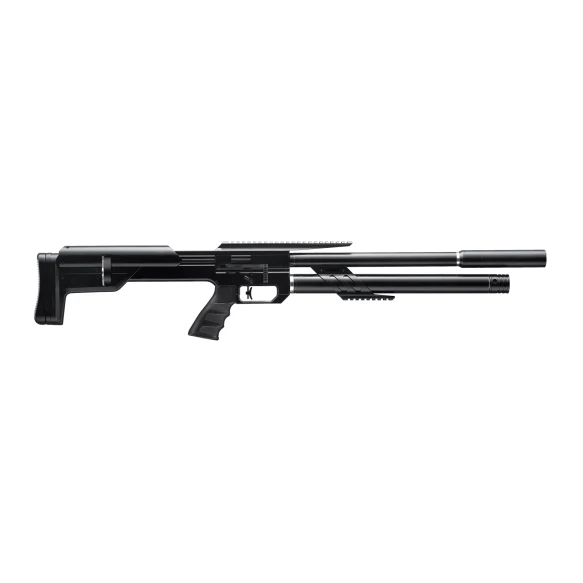
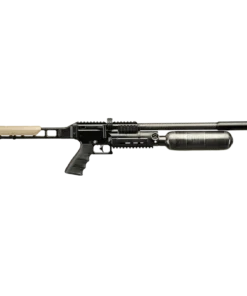
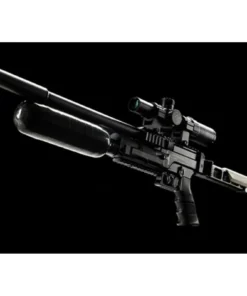
Snowpeak M60 PCP Air Rifle
$600.00
Up to 250 shots per fill
Max fill pressure 250bar
Air capacity 205cc
21.2mm picatinny Rail
| Action | MULTI SHOT SIDE LEVER |
|---|---|
| Type | PCP |
| Stock | ADJUSTABLE SYNTHETIC TACTICAL |
| Trigger | Adjustable |
| Length (total) | 92cm |
| Weight | 2.99kg |
- Picatinny rail
- REMOVABLE THREADED SILENCER
- ADJUSTABLE REGULATOR
Snowpeak M60 PCP Air Rifle – Regulated Multi-Shot PCP Performance, 205CC Removable Air Tank, 610mm Barrel, and High-Capacity Magazine System
Snowpeak M60 PCP Air Rifle Overview, Engineering, Precision, Handling, and Practical Performance
The Snowpeak M60 PCP Air Rifle is a compact full-size pneumatic platform designed around a removable pressure vessel, adjustable regulator, long 610mm barrel, multi-shot magazine system, and manageable 3.0kg overall weight. It is offered in multiple caliber configurations and combines high shot capacity with a relatively short overall length of approximately 925mm.
The M60 is especially attractive to shooters who want regulated air delivery, practical magazine capacity, a long barrel, and a compact layout without moving into a very heavy rifle. Its design supports controlled recreational target shooting, ammunition testing, and repeated range use while maintaining straightforward handling.
Snowpeak PP750L PCP Air Pistol
The Snowpeak PP750L PCP Air Pistol belongs to a smaller and more portable category. It should not be confused with the full-size M60 rifle.
snowpeak airguns
snowpeak airguns include compact pistols, conventional rifles, regulated multi-shot models, bullpups, and larger-capacity pneumatic platforms.
snowpeak sports
snowpeak sports is the manufacturer behind the M60 and publishes the model’s core technical specifications, including its regulator, barrel, tank, magazine capacities, and dimensions.
snowpeak ap900
The snowpeak ap900 belongs to another product family with different ergonomics, air capacity, and intended use.
snowpeak max
The snowpeak max family uses a different design approach and generally focuses on substantially larger air capacity.
snowpeak pp750
The snowpeak pp750 is a compact pneumatic platform that prioritizes portability rather than full-size rifle handling.
pp750
The pp750 should therefore be considered a separate platform rather than an M60 variation.
snowpeak p35x
The snowpeak p35x belongs to another compact pneumatic family with different dimensions and balance.
pr900 gen 3
The pr900 gen 3 is a lighter conventional rifle platform and differs significantly from the M60’s bottle-fed regulated layout.
snow peak pp750
The phrase snow peak pp750 refers to another compact model and not the M60.
snowpeak p35
The snowpeak p35 uses a different architecture and should be evaluated independently.
snowpeak m60b
The snowpeak m60b is related to the M60 but should not be treated as identical. The M60B uses a different reservoir configuration and published capacity.
snow peak pp20
The snow peak pp20 is another separate pneumatic platform.
p35
The p35 belongs to another model family and differs substantially from the M60.
p35x
The p35x is likewise a separate design.
p35x pcp
The phrase p35x pcp concerns another pneumatic platform rather than this rifle.
snowpeak m25
The snowpeak m25 is another full-size model with different action, reservoir, and handling characteristics.
ap900b pcp air rifle
The ap900b pcp air rifle belongs to a lighter shoulder-fired category and should be compared separately.
snowpeak m60
The snowpeak m60 combines an adjustable regulator, removable pressure tank, 610mm barrel, multi-shot operation, and relatively compact overall dimensions.
snowpeak max 1 price
The phrase snowpeak max 1 price relates to another larger-capacity model rather than the M60.
pcp p 35
The phrase pcp p 35 refers to another compact pneumatic product family.
m25 rifle
The m25 rifle uses a different mechanical and pneumatic arrangement from the M60.
snow peak equipment
snow peak equipment searches can include rifles, pistols, optics, protective cases, filling equipment, and maintenance accessories.
hp300
The term hp300 may appear in pneumatic-equipment searches but does not represent an official M60 configuration.
pellet 9mm
A pellet 9mm option is relevant to the M60 because larger-caliber versions are available, including a 9.0mm configuration in the manufacturer’s published range.
snowpeak p35 vs p35x
A snowpeak p35 vs p35x comparison concerns two different compact models and does not describe the M60.
snowpeak pp20
The snowpeak pp20 remains a separate design with different operating characteristics.
m25 weapon
The phrase m25 weapon relates to another product family rather than this rifle.
m50 rifle
The m50 rifle belongs to another Snowpeak platform and should not be treated as an M60 variant.
pcp pellet rifle
The M60 is fundamentally a pcp pellet rifle, using compressed air stored onboard and released in controlled amounts for repeatable operation.
snowpeaks
The term snowpeaks is often used informally when searching for rifles and pistols produced by the manufacturer.
air gun accessories
Compatible air gun accessories may include optics, cases, approved filling systems, cleaning products, and maintenance equipment.
snowfall gun
The phrase snowfall gun appears to be an unrelated search variation rather than an official model designation.
snow peak customer service
Anyone searching snow peak customer service should ensure they are contacting the correct airgun manufacturer or an authorized distributor.
snow peak brand origin
The snow peak brand origin for this airgun manufacturer is China, where the company operates from Zhejiang Province.
what is a pcp airgun
For anyone asking what is a pcp airgun, PCP means pre-charged pneumatic. Compressed air is stored in an onboard cylinder or bottle and released in a controlled amount during each shot.
pistolet pcp arcea-snowpeak onix sport
The phrase pistolet pcp arcea-snowpeak onix sport concerns another pneumatic category and is not an M60 designation.
how much did the m60 weigh
For anyone asking how much did the m60 weigh, the manufacturer lists the rifle at approximately 3.0kg, depending on configuration.
t rex 6000
The phrase t rex 6000 relates to another pneumatic product family and should not be confused with the M60.
Snowpeak PP750L
The Snowpeak PP750L is a compact alternative designed for very different handling requirements.
Snowpeak Air Pistol
A Snowpeak Air Pistol emphasizes compactness and portability, while the M60 provides shoulder-fired stability.
PCP Pistol
A PCP Pistol uses the same general compressed-air principle but provides very different balance and ergonomics.
Airgun Pistol
An Airgun Pistol should therefore be evaluated separately from a full-size rifle.
High power PCP air pistol
A High power PCP air pistol remains a separate category from the M60’s rifle format.
Snowpeak PP750L PCP Air Pistol for sale
The phrase Snowpeak PP750L PCP Air Pistol for sale reflects buyer intent for another model and should not be used as an M60 product name.
Adjustable Regulator
The adjustable regulator is one of the M60’s defining engineering features.
A regulator helps manage air delivery more consistently through the useful portion of the fill, which supports repeatable shot behavior during target practice.
205CC Removable Air Tank
The current M60 configuration uses a 205CC removable air tank.
This bottle-based layout keeps the rifle compact while providing a practical onboard air supply.
High-Capacity Magazine System
Magazine capacity is one of the rifle’s strongest practical features.
Depending on caliber, the M60 can offer significantly more shots per magazine than many conventional pneumatic rifles.
This reduces interruptions during range sessions.
610mm Barrel
The rifle uses a 610mm barrel, providing a long projectile-guidance surface despite the relatively compact overall layout.
A stable barrel contributes to repeatable mechanical performance.
Two-Stage Adjustable Trigger
The two-stage adjustable trigger supports a more predictable release.
A consistent trigger helps the shooter maintain sight alignment through the final stage of the shot.
Manual Safety
A manual safety is incorporated into the platform.
Safe handling practices should still be followed at all times, including correct muzzle awareness, secure storage, and use of a proper backstop.
250-Bar Maximum Fill Pressure
The M60 is designed around a maximum working pressure of approximately 250 bar.
Only correctly rated filling equipment should be used, and the manufacturer’s stated limit should never be exceeded.
Why Choose the M60?
The strongest reasons include its adjustable regulator, multi-shot magazine, compact overall dimensions, removable air tank, long barrel, wide caliber availability, and manageable weight.
It combines capacity and practicality without becoming excessively bulky.
How Good Is the Precision?
Practical precision depends on ammunition quality, barrel condition, regulator consistency, optic setup, environmental conditions, and shooter technique.
The regulated air system and long barrel provide a solid mechanical foundation for repeatable recreational target shooting.
Where Is It Best Used?
The rifle is best suited to lawful recreational target shooting and controlled range use where regulated multi-shot operation is preferred.
Its compact dimensions can also make it easier to transport than many longer full-size rifles.
When Does the M60 Make Sense?
The M60 makes sense for users who want more magazine capacity than a single-shot platform while still valuing regulated air delivery and manageable dimensions.
It is particularly suitable for repeated target sessions where reduced reloading interruptions are useful.
How Good Is the Handling?
At approximately 3.0kg, the rifle remains reasonably manageable.
Its compact overall length helps keep the platform from feeling excessively long, while the shoulder-fired design provides good support during controlled shooting.
Precision and Consistency
A regulator, stable barrel, adjustable trigger, and secure optic mounting system all contribute to repeatability.
However, ammunition selection and consistent technique remain essential for achieving the best practical results.
Important M60 Information
Key published specifications include a 205CC removable air tank, adjustable regulator, 610mm barrel, 250-bar maximum fill pressure, 3.0kg approximate weight, 925mm overall length, two-stage adjustable trigger, manual safety, multi-shot magazine system, and multiple caliber options.
The M60B should be treated as a separate related model because its air capacity and overall configuration differ.
Final Section 1 Summary
The Snowpeak M60 PCP Air Rifle combines regulated pneumatic operation, high magazine capacity, a removable pressure vessel, long barrel, adjustable trigger, and compact dimensions into a versatile full-size platform.
For shooters who value controlled multi-shot use, practical precision, and straightforward range performance, it offers a strong balance between capacity, handling, and mechanical simplicity.
Engineering Design, Air System, Magazine Function, Handling, Trigger Control, and Precision Performance
Engineering Design
The rifle uses a compact full-size layout that combines a long barrel, removable air bottle, regulated pneumatic system, multi-shot feeding, and shoulder-fired ergonomics.
This arrangement gives the platform a practical balance between capacity, stability, and manageable overall dimensions.
Rather than relying on unnecessary complexity, the design focuses on efficient air use, controlled shooting, and repeatable operation.
Regulated Air Delivery
A regulated air system helps control how much compressed air is released for each shot.
This supports more predictable performance across the useful portion of a fill.
Consistent air delivery is especially valuable during accuracy testing because it reduces one source of variation.
Removable Air Bottle
The removable bottle system provides a practical way to carry the rifle’s compressed-air supply.
This configuration also contributes to the rifle’s distinctive balance and compact layout.
The bottle should always be handled carefully and kept within the manufacturer’s stated pressure limits.
Pressure Management
Pressure awareness is essential during normal use.
The shooter should monitor the air supply and avoid operating outside the recommended range.
Understanding how pressure changes during a session helps the user plan refills more effectively.
Safe Filling Practices
Only correctly rated filling equipment should be used.
Filling should be controlled and gradual rather than rushed.
Slow filling helps reduce heat buildup and allows pressure readings to stabilize more accurately.
Multi-Shot Magazine System
The repeating magazine system is one of the rifle’s strongest practical advantages.
It allows the shooter to prepare several shots before reloading becomes necessary.
This can make target sessions smoother and reduce interruptions.
Magazine Loading
Careful loading helps protect pellets and keeps the feeding cycle consistent.
Damaged or poorly seated ammunition can affect smooth operation.
The magazine should also be kept clean and free from debris.
High-Capacity Convenience
A larger magazine can be useful during longer sessions.
The shooter can concentrate on technique without stopping after every shot.
Even so, a deliberate shooting rhythm remains preferable to rushing.
Barrel Stability
The long barrel provides a stable projectile-guidance path.
A rigid barrel assembly helps maintain consistent alignment with the action and optic system.
This contributes to the mechanical foundation for repeatable shooting.
Trigger Characteristics
The trigger plays a major role in practical accuracy.
A predictable two-stage feel helps the shooter prepare for the release point more consistently.
This reduces the chance of disturbing the sight picture.
Trigger Control Technique
The shooter should apply pressure smoothly and gradually.
Sudden movement can shift the rifle before the shot is released.
Good trigger technique becomes easier when the mechanism behaves consistently.
Shoulder Position
A repeatable shoulder position improves control.
The rifle should sit naturally against the body without excessive tension.
Consistent contact helps establish the same sight picture from shot to shot.
Grip Consistency
Grip pressure should remain similar throughout a session.
Changing hand position constantly can introduce unnecessary movement.
A relaxed but controlled grip usually supports better repeatability.
Balance
The compact layout helps keep the rifle manageable.
Balanced weight distribution allows the shooter to maintain position with less effort.
This can improve comfort during longer sessions.
Supported Shooting
A stable rest can help reveal the rifle’s practical performance.
By reducing body movement, the shooter can focus more closely on ammunition behavior, trigger control, and optic setup.
Supported shooting is therefore useful for testing.
Unsupported Shooting
Without a rest, posture and balance become more important.
The shooter must manage body position, breathing, and grip carefully.
A manageable overall weight makes unsupported shooting easier than with much heavier platforms.
Sight Alignment
A consistent sight picture is essential.
The optic should be positioned so the shooter does not need to stretch or move the head excessively.
Comfortable alignment improves concentration.
Optic Mounting
The mounting system should remain secure.
Any movement between the optic and rail can change point of impact.
Fasteners should be checked periodically.
Precision Potential
Practical precision is created by several factors working together.
Air consistency, barrel condition, ammunition quality, optic setup, environmental conditions, and shooter technique all influence final results.
The rifle provides a strong mechanical base, but the user still plays a major role.
Ammunition Selection
Different pellets can produce noticeably different results.
Weight, shape, fit, and manufacturing consistency may all affect grouping.
Testing suitable options under similar conditions helps identify the best match.
Group Evaluation
Repeated groups provide useful information.
Consistent grouping suggests that the rifle, ammunition, optic, and technique are working together effectively.
Irregular patterns may indicate that one or more variables need attention.
Follow-Through
The shooter should maintain position briefly after the shot.
Moving too early can disturb the rifle and make results harder to evaluate.
Consistent follow-through supports better technique.
Breathing Control
Breathing affects stability.
A relaxed pause in the breathing cycle often creates a steadier moment for releasing the shot.
The goal is controlled timing rather than excessive tension.
Environmental Conditions
Outdoor performance can be influenced by wind, temperature, humidity, and changing light.
These variables should be considered when comparing accuracy between sessions.
Calm conditions provide the best baseline for testing.
Wind Awareness
Wind can influence lightweight projectiles even at moderate distances.
Observing direction and strength helps the shooter interpret group movement more accurately.
Experience gradually improves this skill.
Temperature Effects
Temperature changes can influence compressed-air behavior.
Hot and cold conditions may produce slightly different results.
Comparisons are most meaningful when testing is done under similar conditions.
Routine Reliability
A regulated multi-shot platform can provide dependable performance when properly maintained.
Regular inspection, careful filling, clean magazines, and secure mounts all help preserve reliability.
Small maintenance habits make a significant difference over time.
Maintenance Simplicity
Routine care should focus on external cleaning, pressure management, hardware checks, and proper storage.
Complex internal work should be handled by a qualified technician.
Unnecessary disassembly should be avoided.
Long-Term Ownership
A well-maintained rifle can remain dependable for many years.
Careful transport, sensible cleaning, correct filling, and secure storage all contribute to service life.
The owner’s habits have a direct effect on long-term condition.
Overall Section Summary
The rifle combines regulated air delivery, a removable pressure system, high-capacity repeating operation, a long stable barrel, and manageable handling.
Its engineering supports deliberate target shooting, practical consistency, and reduced interruption during sessions.
With suitable ammunition, proper pressure management, disciplined technique, and regular maintenance, it can provide reliable and satisfying performance across long-term recreational use.
Practical Shooting Experience, Accuracy, Handling, Range Use, and Real-World Performance
Practical Shooting Experience
The rifle is designed to provide a controlled and repeatable shooting experience during regular range sessions.
Its regulated pneumatic system, compact full-size layout, long barrel, and repeating action all contribute to a platform that can feel stable without becoming unnecessarily cumbersome.
For many shooters, this combination creates a useful balance between convenience and precision.
Accuracy Development
Practical accuracy depends on much more than the rifle alone.
Ammunition quality, optic setup, shooting position, air pressure, environmental conditions, and shooter technique all influence the final result.
Regular practice helps the user understand how these factors interact.
Target Shooting Performance
For recreational target use, consistency matters more than raw specifications.
A rifle that behaves predictably allows the shooter to concentrate on sight alignment, breathing, trigger control, and follow-through.
This makes performance easier to evaluate over time.
Supported Shooting
A stable rest can be very useful when testing the rifle.
By reducing body movement, supported shooting makes it easier to compare ammunition and confirm optic setup.
This also helps the shooter establish a reliable baseline for future sessions.
Unsupported Shooting
Without a rest, body position becomes more important.
The shooter must manage grip pressure, shoulder placement, breathing, and balance carefully.
The manageable overall weight helps make unsupported shooting more practical.
Grip Consistency
A repeatable grip supports better results.
The shooter should avoid changing hand pressure from shot to shot.
Keeping the same grip makes it easier to identify whether changes in grouping come from technique or equipment.
Shoulder Placement
The rifle should settle naturally into the shoulder.
A consistent contact point helps establish the same sight picture and body alignment for every shot.
This can improve comfort during longer practice sessions.
Head Position
A repeatable head position is also important.
The optic should be mounted so the shooter can see clearly without stretching or compressing the neck.
A natural position reduces fatigue and helps improve consistency.
Sight Picture
A clear and stable sight picture helps the shooter concentrate on the target.
Movement caused by poor mounting position or inconsistent posture can make accurate evaluation difficult.
Good alignment should feel natural rather than forced.
Trigger Technique
Trigger control has a direct influence on practical accuracy.
Pressure should be applied gradually so the rifle remains steady through the release.
Sudden movement during the final stage can shift the point of aim.
Breathing Control
Breathing affects stability.
Many shooters find that a natural pause in the breathing cycle creates the best moment for releasing the shot.
Relaxed control is generally more effective than excessive tension.
Follow-Through
The shooting process should not end the instant the trigger releases.
Maintaining position briefly helps the shooter observe the result and avoid disturbing the rifle too early.
Consistent follow-through supports better technique.
Magazine Convenience
A repeating system makes range sessions more efficient.
The shooter can fire several controlled shots before stopping to reload.
This reduces interruptions and allows more attention to be placed on shooting rhythm.
Maintaining a Deliberate Pace
Convenience should not lead to rushed shooting.
A steady pace helps preserve accuracy and makes group comparisons more meaningful.
Deliberate shot preparation remains important even when several rounds are immediately available.
Ammunition Testing
Different pellets can produce noticeably different results.
Weight, shape, diameter, and manufacturing consistency all influence performance.
Testing several suitable options under similar conditions helps identify the most reliable choice.
Group Analysis
Shot groups provide useful feedback about the entire setup.
Tight and repeatable groups suggest that the rifle, ammunition, optic, and shooter are working together effectively.
Scattered results may indicate that one or more variables need attention.
Pressure Behavior
The onboard air supply gradually changes during use.
A regulated system helps reduce large changes in performance, but the shooter should still monitor pressure and become familiar with the useful operating range.
This makes planning easier during longer sessions.
Shot Count Awareness
Actual shot count varies with caliber, pressure, ammunition, and individual configuration.
Keeping simple notes can help the owner understand how the rifle behaves over a complete fill.
This is especially useful when preparing for extended range sessions.
Range Practice
Regular practice builds familiarity with the rifle.
The shooter gradually learns the trigger feel, balance, preferred ammunition, optic position, and pressure behavior.
These details become easier to manage with experience.
Skill Development
A predictable platform is useful for developing shooting fundamentals.
Newer users can focus on basic control, while experienced shooters can refine consistency and group size.
Stable equipment makes progress easier to measure.
Outdoor Shooting
Outdoor conditions introduce additional variables.
Wind, temperature, humidity, and changing light can all influence practical results.
Understanding these effects helps the shooter evaluate performance more accurately.
Wind Influence
Wind can move lightweight projectiles away from the intended point of impact.
Even moderate wind may affect grouping at longer distances.
Observing direction and strength is therefore important.
Temperature Influence
Temperature can affect compressed-air behavior.
Cold and hot conditions may change the way the system performs.
Comparisons are most useful when testing is done under similar conditions.
Transport Convenience
The compact overall layout makes the rifle easier to transport than many longer full-size designs.
A padded protective case is still recommended.
This helps protect the barrel, optic, pressure system, and exterior finish.
Storage Between Sessions
The rifle should be stored in a dry, secure, and protected environment.
Moisture, excessive heat, and accidental impacts should be avoided.
Good storage habits support both mechanical reliability and appearance.
Routine Inspection
Before and after shooting, the owner should check for loose hardware, unusual wear, pressure loss, or visible damage.
Small issues are easier to manage when found early.
Routine inspection supports long-term confidence.
Confidence Through Familiarity
Repeated use helps the shooter understand the rifle’s individual behavior.
Knowing how it feels, where it balances, and how it responds makes performance more predictable.
This confidence can improve shooting consistency.
Recreational Value
For recreational shooting, enjoyment is an important part of ownership.
A rifle that feels stable, predictable, and convenient encourages more frequent practice.
Regular use also helps the owner become more comfortable with the platform.
Practical Ownership Experience
The rifle offers a combination of repeating convenience, regulated air delivery, manageable handling, and full-size stability.
These qualities make it practical for users who want efficient range sessions without giving up precision-oriented control.
Overall Practical Performance
In real-world use, the rifle provides a balanced combination of stability, convenience, and consistency.
Its repeating system reduces interruptions, while the regulated air system supports predictable operation.
With suitable ammunition, proper pressure management, good maintenance, and disciplined shooting technique, it can provide dependable performance across many recreational target sessions.
Maintenance, Storage, Protection, and Long-Term Reliability
Importance of Regular Maintenance
Routine care is essential for preserving reliable operation, safe handling, consistent performance, and long-term value.
A pneumatic rifle contains pressure components, seals, moving parts, mounting hardware, a barrel system, trigger components, and external surfaces that all benefit from periodic inspection.
Good maintenance does not require unnecessary disassembly. Instead, careful cleaning, sensible pressure management, and proper storage provide most of the protection needed during normal ownership.
Pre-Use Inspection
Before every shooting session, the rifle should be checked for obvious damage or unusual changes.
The owner should inspect the external surfaces, pressure indication, bottle connection, magazine area, trigger assembly, barrel, and optic mounts.
Any loose hardware, unexpected pressure loss, or visible damage should be addressed before normal use continues.
Post-Use Inspection
After shooting, another quick inspection is useful.
Dust, moisture, fingerprints, and debris can collect around the action, bottle, barrel, and mounting surfaces.
Removing these contaminants before storage helps preserve the finish and makes later inspection easier.
Exterior Cleaning
The rifle should be wiped with a clean, soft cloth after use.
Aggressive solvents and abrasive materials should be avoided unless they are specifically suitable for the finish.
Gentle cleaning helps preserve protective coatings while also making corrosion or wear easier to spot.
Barrel Care
The barrel plays an important role in practical consistency.
Cleaning should therefore be performed carefully and only when needed.
Suitable airgun cleaning equipment should be used to avoid damaging the bore or muzzle area.
Avoiding Over-Cleaning
Frequent aggressive cleaning is not always beneficial.
If performance remains stable and the barrel is free from obvious contamination, extensive cleaning may be unnecessary.
A controlled maintenance routine is generally preferable.
Air Bottle Protection
The removable pressure vessel is a critical part of the system.
It should be protected from impacts, excessive heat, corrosion, and improper handling.
The bottle should never be opened or disassembled while pressurized.
Bottle Connection Inspection
The connection between the bottle and rifle should remain clean and secure.
Dust, damaged threads, or debris can interfere with proper fit.
The connection should never be forced if it does not engage smoothly.
Safe Filling Practices
Only correctly rated filling equipment should be used.
The filling process should be slow and controlled.
Rapid filling can create unnecessary heat and make pressure readings less stable.
Pressure Monitoring
The owner should become familiar with normal pressure behavior.
Unexpected pressure loss may indicate a seal, fitting, or valve issue.
Repeatedly topping up the bottle without identifying the cause of a leak should be avoided.
Seal Condition
Seals help maintain pressure throughout the system.
Over time, they can wear or deteriorate.
Reduced air retention or unusual leakage can indicate that professional servicing is needed.
Correct Lubrication
Only compatible lubricants should be used where lubrication is recommended.
High-pressure pneumatic systems require suitable products.
Using inappropriate oils or greases can damage seals or create safety concerns.
Regulator Care
The regulator contributes to controlled air delivery.
It should not be dismantled casually.
If performance becomes inconsistent, qualified inspection is usually preferable to unnecessary internal adjustment.
Magazine Care
The magazine should remain clean and protected from impact.
Debris can interfere with smooth feeding and may damage pellets during loading.
Regular inspection helps maintain reliable operation.
Loading Area Inspection
The loading area should be checked for dirt, pellet fragments, or other contamination.
A clean feeding path helps prevent unnecessary resistance.
Forcing a pellet or magazine into place should always be avoided.
Trigger Protection
The trigger mechanism should remain clean, dry, and protected from contamination.
Unnecessary internal adjustment should be avoided.
A predictable trigger is important for maintaining consistent shooting technique.
Checking Fasteners
Mounting screws and other fasteners should be checked periodically.
Loose hardware can affect handling, optic alignment, and overall stability.
Fasteners should be secure without being overtightened.
Optic Mount Inspection
If an optic is fitted, its mounts should also be checked.
Movement between the optic and rail can change point of impact.
Periodic inspection helps maintain a stable sighting system.
Muzzle Protection
The muzzle area should be protected from impact.
Damage near the barrel exit can affect consistency.
A protective case helps reduce the risk of accidental contact during transport and storage.
Moisture Management
Moisture should not remain on the rifle for long periods.
After use in damp conditions, all exposed surfaces should be dried carefully.
Special attention should be given to joints, mounting points, and hidden areas.
Temperature Management
Extreme heat and cold can affect pressure, seals, and materials.
The rifle should not be left for long periods in very hot vehicles or direct sunlight.
A stable storage environment is preferable.
Transportation Protection
A padded case is recommended when transporting the rifle.
The case helps protect the bottle, barrel, action, optic, and external finish.
The rifle should also be secured so it cannot move excessively inside the case.
Safe Storage
The rifle should be stored in a dry, secure location that complies with applicable local regulations.
Unauthorized access should be prevented.
Good storage protects both the equipment and the people around it.
Storage Position
The rifle should be supported so it cannot fall.
Heavy objects should not be stacked against the barrel, optic, or pressure vessel.
A stable position helps prevent accidental damage.
Monitoring Performance Changes
Changes in sound, accuracy, trigger feel, magazine operation, pressure retention, or air consumption may indicate that inspection is needed.
Owners who recognize these changes early can often prevent larger problems.
Professional Servicing
Complex work involving the regulator, valve system, pressure bottle, seals, or internal action should be handled by a qualified technician.
Professional servicing helps preserve both safe operation and long-term reliability.
Avoiding Unauthorized Modifications
Unapproved modifications can affect safety, consistency, and reliability.
The rifle is best maintained within its intended design parameters.
Responsible ownership focuses on preserving dependable operation.
Developing a Maintenance Routine
A simple maintenance routine can be highly effective.
Inspect the rifle before use, monitor pressure, clean external surfaces, check the magazine, examine hardware, and store the rifle correctly.
These habits require little time but provide significant long-term benefits.
Long-Term Reliability
A properly maintained pneumatic rifle can remain dependable for many years.
Careful filling, clean connections, sensible storage, and regular inspection all contribute to service life.
The owner’s habits play a major role in preserving condition.
Final Maintenance Summary
Long-term reliability depends on responsible pressure management, routine inspection, careful cleaning, protected transport, and secure storage.
Protecting the bottle, regulator, magazine, barrel, trigger, optic mounts, and external surfaces helps preserve consistent operation.
With sensible care and qualified servicing when necessary, the rifle can continue providing dependable performance and a satisfying ownership experience across many future shooting sessions.
Be the first to review “Snowpeak M60 PCP Air Rifle”
Related products
Snowpeak Airguns
Snowpeak Airguns
Snowpeak Airguns
Snowpeak Airguns
Snowpeak Airguns
Snowpeak Airguns
Snowpeak Airguns
Snowpeak Airguns
Reviews
There are no reviews yet.