
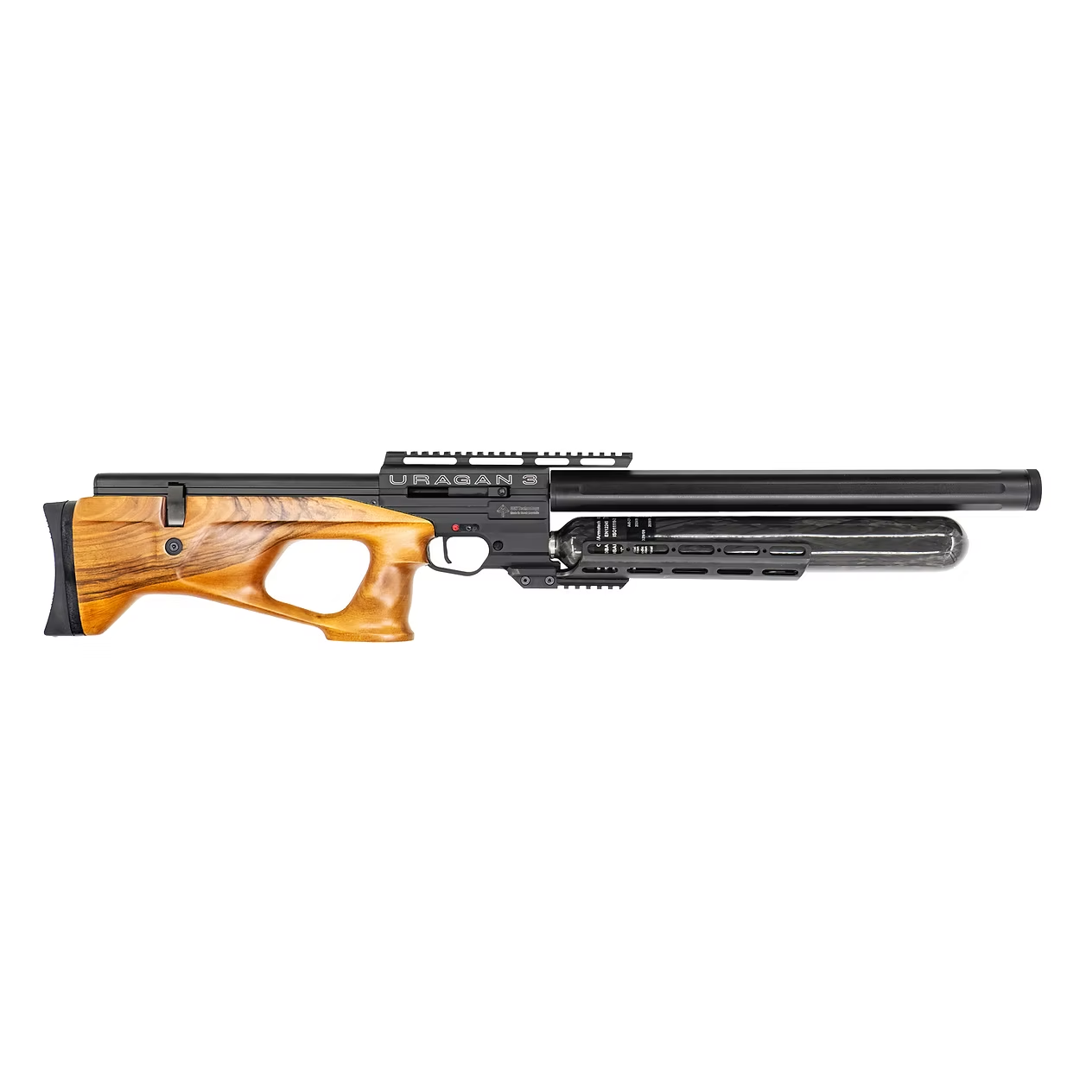
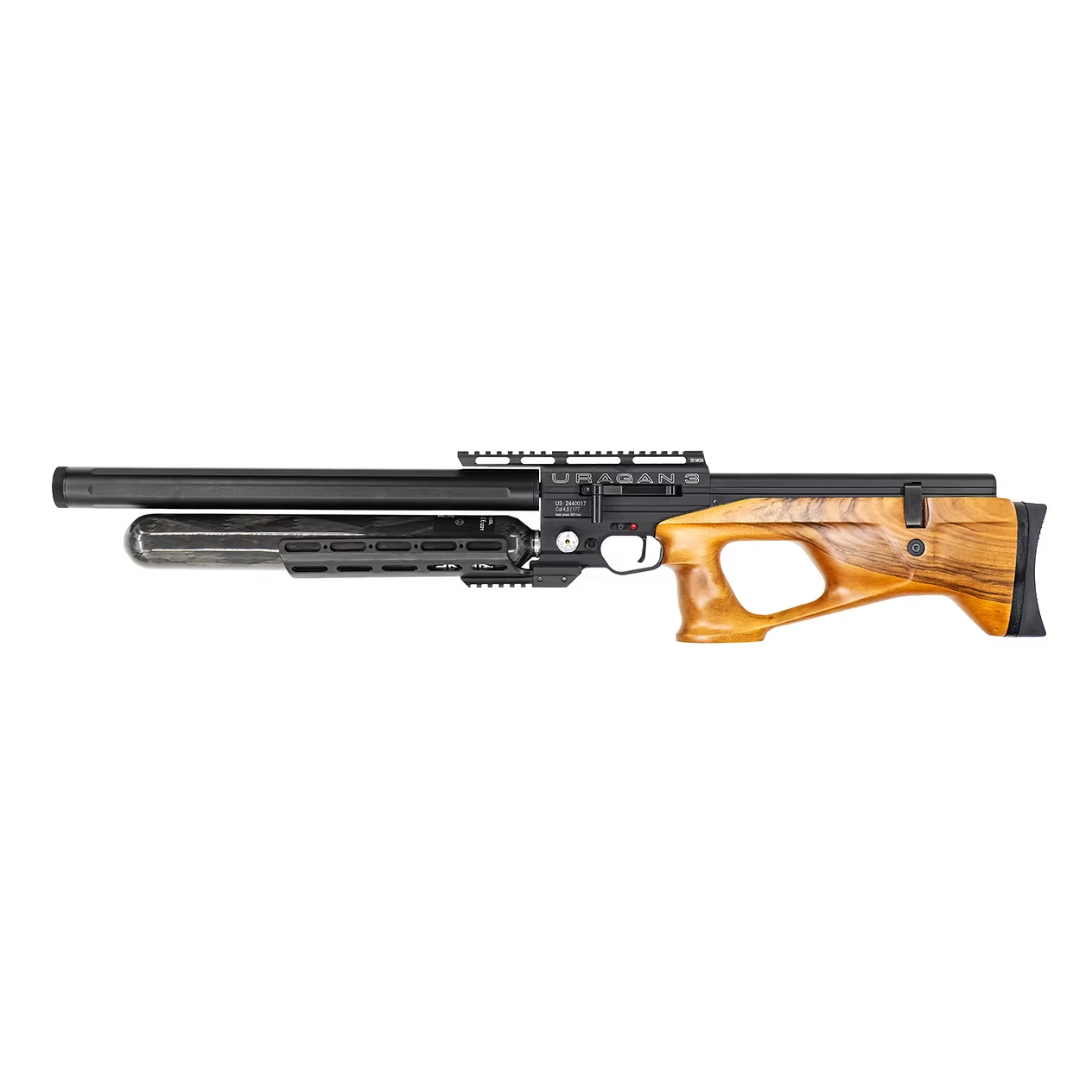
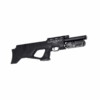
Airgun Technology URAGAN 3 Walnut PCP Bullpup Air Rifle
$2,000.00
AGN URAGAN 3 – The Next Evolution in Precision Air Rifles
The AGN URAGAN 3 represents the pinnacle of innovation in the URAGAN series, combining cutting-edge engineering with enhanced functionality to deliver an air rifle designed for the most demanding shooters. With major improvements to its internal mechanics and ergonomics, the URAGAN 3 sets a new standard for performance, reliability, and user-friendly design.
Revolutionary Internal Upgrades
- Enhanced Block and Receiver: The newly designed receiver integrates a completely reworked trigger and firing mechanism for greater precision and consistency.
- Improved Firing Valve Assembly: The valve’s durability has been significantly increased, with simplified maintenance, dismantling, and reassembly for effortless upkeep.
- Simplified Power Plenum: Ensures better airflow and improved shot efficiency.
- New Air Pressure Regulator: Delivers consistent performance, even under extremely high-pressure conditions.
- Upgraded Hammer System: Features a stronger hammer spring and a tighter screw for precise spring tension adjustments.
- Depinger: A newly added depinger reduces noise, making the URAGAN 3 quieter than ever.
Superior Ergonomics and Customization
- Extended Top Picatinny Rail: Perfect for fitting larger optics, including night vision add-ons, ensuring flexibility for any shooting scenario.
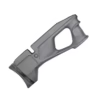
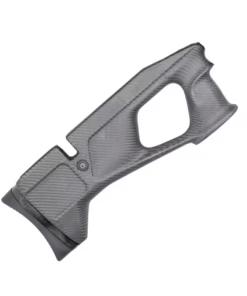
- Colder Weather Adaptation: The redesigned trigger guard offers improved usability with gloves, making it ideal for harsh environments.
- Swappable Side Lever: Adaptable to left or right-handed shooters for enhanced versatility.
Precision-Crafted Specifications
- Barrel: A 600mm shrouded CZ barrel system with integral silencer and M14CW threading for additional moderators.
- Stock: Adjustable butt pad for a customized shooting position.
- Trigger: Two-stage adjustable trigger for personalized pull weight and travel.
- Rails: Built-in 20MOA top Picatinny rail and a lower Picatinny rail with a bottle guard attachment, including a forward Keymod mount.
Technical Data
- Length: 900mm
- Weight: ~4Kg
- Max Fill Pressure: 300BAR
- Operational Pressure Range: ~200-100BAR (varies by calibre)
- Shot Count: Approximately 250 shots per fill (calibre-dependent)
- Safety: Ambidextrous slide safety
The AGT URAGAN 3 combines state-of-the-art technology with thoughtful design, offering a rifle that not only performs exceptionally but is also easy to maintain and adapt. Whether you’re a seasoned shooter or an air rifle enthusiast, the URAGAN 3 delivers an unparalleled shooting experience, making it the ultimate tool for precision and reliability.
Airgun Technology URAGAN 3 Walnut PCP Bullpup Air Rifle – Czech Engineering with Premium Walnut Furniture
The Airgun Technology URAGAN 3 Walnut PCP Bullpup Air Rifle combines the third generation of AGN Technology’s regulated pneumatic architecture with traditional walnut furniture. Current 600 mm versions use a 530 cc reservoir, 300-bar maximum fill pressure, regulated action, 600 mm CZ barrel, adjustable two-stage trigger, reversible biathlon-style side lever, ambidextrous controls, and approximately 897–900 mm overall length.
The third generation also introduces a redesigned receiver and firing system, updated pressure regulator, revised valve assembly, improved power plenum, upgraded hammer mechanism, and integrated depinger. These changes are intended to improve consistency, reliability, and service access compared with earlier generations.
AGT Uragan Air Rifle
The AGT Uragan air rifle family uses regulated compressed-air operation and a compact rear-action layout that retains useful barrel length within a relatively short overall package.
AGT Uragan
The AGT Uragan platform is particularly associated with Czech manufacture, substantial air capacity, magazine feeding, and a bullpup design that concentrates much of the mechanical system close to the shoulder.
Uragan Air Rifle
A Uragan air rifle uses stored compressed air instead of a spring-powered piston, reducing the heavy reciprocating movement found in traditional spring-powered designs.
AGT Uragan 3
The AGT Uragan 3 improves the previous architecture through a revised regulator, valve, plenum, firing mechanism, trigger system, hammer assembly, and receiver.
AGT Uragan Compact
The AGT Uragan Compact is a shorter configuration and should not be confused with the standard walnut 600 mm version. Current compact walnut models use a 400 mm barrel, 250 cc reservoir, and approximately 660 mm overall length.
AGT Uragan Air Rifle for Sale
The search phrase AGT Uragan air rifle for sale often covers several barrel lengths, stock styles, calibers, and legally restricted power configurations. Exact specifications should therefore be verified before comparing models.
Best AGT Uragan Review
A useful Best AGT Uragan review should examine regulator consistency, barrel quality, trigger feel, stock ergonomics, magazine function, pressure behavior, action smoothness, and serviceability rather than focusing only on appearance.
AGT Uragan Price
The AGT Uragan price varies according to country, caliber, walnut or alternative furniture, taxes, power restrictions, and barrel specification.
Buy AGT Uragan Air Rifle
Searches for Buy AGT Uragan air rifle should be approached with applicable licensing, possession, age, storage, transportation, and transfer regulations in mind.
AGT Uragan Hunting
The phrase AGT Uragan hunting relates to lawful field applications where pneumatic rifles are permitted. Suitability depends on caliber, legal energy limits, local wildlife rules, and humane-use requirements.
AGT Uragan .22
The AGT Uragan .22 uses 5.5 mm ammunition. Current 600 mm listings commonly identify a 12-round magazine in this caliber.
AGT Uragan .25
The AGT Uragan .25 uses 6.35 mm ammunition, with current standard listings commonly identifying a 10-round magazine.
AGT Uragan High Power
An AGT Uragan high power specification should never be assumed from external appearance because energy output varies considerably by market and legal configuration.
AGT Uragan PCP Air Rifle
The AGT Uragan PCP air rifle stores compressed air inside its reservoir and meters that air through a regulated firing system.
AGT Uragan Accuracy
AGT Uragan accuracy depends on barrel condition, regulator consistency, ammunition compatibility, optic installation, trigger control, pressure stability, and shooter technique.
AGT Uragan vs FX Impact
The phrase AGT Uragan vs FX Impact compares two premium pneumatic platforms. The URAGAN emphasizes a comparatively streamlined regulated bullpup arrangement, while the competing platform is known for extensive external tuning capability.
AGT Uragan Review 2026
An AGT Uragan review 2026 should focus specifically on the third-generation regulator, firing valve, plenum, hammer system, receiver, depinger, and improved servicing architecture.
AGT Uragan PCP
The AGT Uragan PCP design combines pressure regulation, magazine feeding, side-lever operation, and a large reservoir within a rear-biased platform.
Air Venturi Alpha
Air Venturi Alpha is a separate product family and does not share the walnut model’s components or specifications.
Air Venturi Alpha PCP Rifle
An Air Venturi Alpha PCP Rifle should be evaluated according to its own regulator, barrel, reservoir, and chassis design.
Air Venturi Alpha Air Rifle
The phrase Air Venturi Alpha Air Rifle represents comparison-search intent rather than a specification of this model.
Air Venturi Alpha Hunting Rifle
An Air Venturi Alpha Hunting Rifle belongs to a different platform and should be assessed separately.
Air Venturi Alpha Tactical PCP
The Air Venturi Alpha Tactical PCP follows a different external design philosophy from traditional walnut bullpup furniture.
Air Venturi Alpha Regulated PCP
An Air Venturi Alpha Regulated PCP illustrates the broader use of pressure regulation in modern pneumatic rifles.
Air Venturi Alpha Multi Shot Rifle
An Air Venturi Alpha Multi Shot Rifle also belongs to the magazine-fed pneumatic category, although magazine systems differ between manufacturers.
Air Venturi Alpha Precision Air Rifle
An Air Venturi Alpha Precision Air Rifle comparison should concentrate on barrel quality, regulator behavior, trigger consistency, ergonomics, and ammunition compatibility.
Air Venturi
Air Venturi is a separate manufacturer and distributor of pneumatic equipment.
Air Venturi Avenger
The Air Venturi Avenger is another regulated design frequently researched when comparing different pneumatic platforms.
Airventuri
The spelling airventuri generally refers to the same Air Venturi brand.
Air Venturi Avenge
The phrase air venturi avenge is commonly used as an abbreviated or misspelled reference to the Avenger family.
Air Venturi Compressor
An air venturi compressor represents one category of high-pressure filling equipment.
Venturi Air
The term venturi air often appears in searches involving pneumatic rifles, reservoirs, and filling accessories.
Air Venturi Air Compressor
An air venturi air compressor or equivalent suitable unit should provide clean, dry air within the pressure limits of the equipment being filled.
Air Rifle and Air Pistol
The phrase air rifle and air pistol covers spring-powered, CO₂, multi-pump, gas-ram, and pre-charged pneumatic platforms.
Air Venturi RovAir 4500 Portable Compressor
The air venturi rovair 4500 portable compressor belongs to the high-pressure filling-equipment category rather than the rifle itself.
Air Ventur Avenge
The phrase air ventur avenge is another common search variation connected with the Avenger family.
Air Venturi MicroStrike
The air venturi microstrike is a separate pneumatic product and should not be assigned specifications from this model.
Dragon Claw
The dragon claw belongs to the large-bore pneumatic category and differs substantially in caliber and architecture.
Air Venturi RovAir
The air venturi rovair name relates primarily to portable compressed-air equipment.
Air Venturi Tank
An air venturi tank can function as an external high-pressure air source when correctly rated and maintained.
Air Venturi Air Tank
An air venturi air tank should remain within applicable certification, pressure, and inspection requirements.
Air Venturi OmniStorm
The air venturi omnistorm represents another separate pneumatic product family.
Air Venturi PCP Compressor
An air venturi pcp compressor belongs to the equipment category used for charging compatible high-pressure reservoirs.
Air Venturi Avenger 25
The air venturi avenger 25 represents another .25-caliber pneumatic configuration with different adjustment and chassis characteristics.
Seneca Dragon Claw
The seneca dragon claw is a separate large-bore pneumatic platform.
Ventur Air Compressor
A ventur air compressor search generally relates to high-pressure filling equipment rather than rifle construction.
Seneca Air Rifles
Seneca air rifles include several pneumatic designs with independent specifications.
Air Bolt Gun
An air bolt gun refers to specialized pneumatic equipment configured for different projectile types.
50 Caliber Dragon
The phrase 50 caliber dragon usually refers to a large-bore pneumatic platform rather than this smaller-caliber walnut bullpup.
Claw Air Gun
A claw air gun search similarly points toward large-bore pneumatic equipment.
Avenger Price
An avenger price comparison reflects a different market segment and should not be treated as an equivalent specification comparison.
Air Rifle Compressor
An air rifle compressor suitable for high-pressure pneumatic equipment should be correctly rated and capable of supplying clean, dry compressed air.
PCP Airguns
PCP airguns store compressed air before firing, allowing regulators, magazines, and comparatively low-recoil firing cycles to be incorporated into modern designs.
PCP Air Rifles
Among modern pcp air rifles, this walnut model combines regulated pneumatic engineering with traditional natural-wood furniture and compact bullpup architecture.
Walnut Stock Construction
Walnut gives the rifle a warmer, more traditional appearance than synthetic or carbon alternatives.
Natural grain patterns also mean individual stocks can vary slightly in color and figure.
Although walnut is structurally suitable for sporting furniture, it benefits from protection against prolonged moisture and extreme temperature changes.
600 mm CZ Barrel
Current 600 walnut listings specify a 600 mm CZ barrel integrated into the bullpup platform.
A substantial barrel can be retained while overall length stays close to 900 mm because the action sits behind the trigger.
530 cc Reservoir
The standard 600 mm configuration currently uses a 530 cc air reservoir with a maximum listed pressure of 300 bar / 4,351 psi.
This provides considerably more capacity than the shorter compact configuration.
Regulated Pneumatic Operation
Pressure regulation is central to the platform.
Rather than sending full reservoir pressure directly into every firing cycle, the regulator provides a controlled working pressure to the valve while reservoir pressure remains within its useful range.
Adjustable Two-Stage Trigger
The adjustable two-stage trigger allows the shooter to establish a predictable first stage followed by a defined release.
Correct adjustment should remain within manufacturer specifications and prioritize reliable mechanical operation.
Reversible Side Lever
Current versions use a biathlon-style side lever that can be configured for right- or left-side operation, supporting broader ergonomic flexibility.
20 MOA Optics Rail
A sloped 20 MOA Weaver/Picatinny rail provides a secure mounting interface for compatible optics.
The rifle does not generally rely on traditional open sights, so optic selection forms an important part of the overall setup.
Why the Walnut Configuration Matters
The main distinction of this configuration is its combination of modern regulated pneumatic engineering with traditional hardwood furniture.
Walnut adds visual character and a different tactile feel compared with molded synthetic or carbon composite alternatives.
Meanwhile, the underlying action retains the third-generation regulator, valve, trigger, plenum, hammer, and receiver improvements.
Precision and Repeatability
Mechanical precision should be evaluated through repeatable groups rather than isolated shots.
Regulator consistency, suitable ammunition, barrel condition, secure optic installation, controlled trigger movement, and environmental awareness all influence practical accuracy.
Important Ownership Information
Only correctly rated, clean, dry compressed air should be used.
Pressure limits should never be exceeded.
Pressurized components should not be casually dismantled, and power-related alterations must remain within manufacturer guidance and applicable law.
Possession, transportation, storage, caliber, energy limits, and field use can also be regulated differently between jurisdictions.
Overall Engineering Character
The Airgun Technology URAGAN 3 Walnut combines a 600 mm CZ barrel, regulated 530 cc air system, 300-bar filling capability, side-lever operation, adjustable trigger, modern optics mounting, compact bullpup dimensions, and traditional walnut furniture.
Its engineering character is defined by the contrast between natural wood ergonomics and a thoroughly modern pneumatic action, making it an informative example of how contemporary regulated air-rifle design can be packaged within a traditional sporting finish.
Accuracy Development, Walnut Stock Ergonomics, Pressure Stability, Trigger Control, and Practical Target Performance
Developing Repeatable Accuracy
Consistent performance depends on controlling the same variables from one shot to the next.
Ammunition condition, reservoir pressure, optic alignment, trigger movement, shoulder contact, head position, and environmental conditions all influence point of impact.
For meaningful testing, the shooter should avoid changing several factors at once. Instead, one variable should be adjusted and then evaluated through several groups before another change is introduced.
Understanding Regulated Air Delivery
A regulated pneumatic system separates the high pressure stored in the reservoir from the lower controlled pressure used during the firing cycle.
This helps maintain more consistent output while reservoir pressure remains above the regulator’s operating threshold.
However, regulation does not eliminate the need to monitor pressure. As the reservoir approaches the lower end of its useful range, performance can begin to change.
Starting From Consistent Pressure
Accuracy testing becomes easier when each session begins from a similar reservoir pressure.
Starting one group immediately after filling and another near the bottom of the usable pressure range can make results harder to compare.
Keeping the starting conditions consistent helps separate pressure-related variation from ammunition, optic, and shooter influences.
Monitoring Air Consumption
Pressure should be observed before and after several groups.
Recording how quickly the reservoir drops can help establish normal consumption.
Over time, this provides a useful reference for detecting unusual behavior.
If air usage changes noticeably without another explanation, seals, regulator behavior, or other pneumatic components may deserve inspection.
Walnut Stock Balance
Natural walnut generally produces a different balance and feel from lightweight composite or molded furniture.
The additional mass can make the rifle feel more settled in supported positions.
However, final balance still depends on the optic, mounts, reservoir, barrel assembly, moderator, and any accessories.
The complete setup should therefore be evaluated rather than the stock alone.
Supporting-Hand Placement
The supporting hand should rest where the rifle feels naturally stable.
Holding too far forward may increase fatigue.
Holding too close to the body may reduce control of the front end.
The ideal position allows the rifle to settle without excessive muscular tension.
Once a comfortable support point is found, it should be repeated during serious group testing.
Shoulder Contact
The rear pad should contact approximately the same area of the shoulder for every shot.
Excessive rearward pressure is unnecessary.
A secure but relaxed position helps maintain consistent alignment.
Changing shoulder pressure can slightly alter how the rifle settles and may contribute to group variation.
Cheek Position
The cheek should return to the same area of the stock each time the rifle is shouldered.
Natural wood can provide a comfortable tactile surface, but consistency remains more important than material.
The head should not be forced downward.
A relaxed cheek position allows the eye to align naturally with the optic.
Optic Height
Ring height should support natural eye alignment.
A scope mounted too low may force the shooter to press the cheek down excessively.
A scope mounted too high may reduce contact with the stock.
The most useful setup allows the full sight picture to appear immediately without uncomfortable head movement.
Eye Relief
Eye relief should be adjusted while the shooter is in the normal firing position.
The eye should see the complete image without stretching forward or leaning backward.
Once the ideal location is established, mounting hardware should be tightened according to the optic manufacturer’s specifications.
Trigger-Hand Position
The firing hand should remain relaxed enough for the trigger finger to move independently.
Excessive grip pressure can introduce lateral movement.
The hand should provide control without squeezing unnecessarily.
Consistent finger placement also helps pressure travel directly to the rear rather than at an angle.
First-Stage Trigger Control
A two-stage trigger allows the first portion of movement to be taken up before final release.
The first stage should be approached smoothly.
The shooter should keep the sight picture stable while increasing pressure gradually.
Rushing through the first stage can make the final release less predictable.
Final Trigger Release
The final trigger movement should remain smooth.
A sudden jerk can move the rifle immediately before discharge.
The shooter should increase pressure steadily rather than trying to anticipate the exact moment of release.
Controlled movement generally produces more repeatable results.
Follow-Through
After firing, the shooter should remain in position briefly.
The head should stay behind the optic.
Shoulder contact should remain consistent.
The trigger hand should stay relaxed.
Good follow-through makes it easier to identify movement during the shot and helps build a more repeatable technique.
Side-Lever Operation
The loading lever should be cycled with a complete, smooth movement.
Excessive force is unnecessary.
If resistance increases suddenly, the shooter should stop and inspect the magazine, breech, or ammunition.
Forcing the action can create damage that might otherwise have been avoided.
Magazine Condition
The magazine should rotate freely and index consistently.
Each chamber should align correctly.
Projectiles should be loaded carefully to avoid damaging their skirts or heads.
If one position repeatedly creates resistance, the magazine should be inspected for wear, contamination, or misalignment.
Ammunition Inspection
Visible projectile condition matters during accuracy testing.
Bent skirts, damaged heads, contamination, or inconsistent shapes can create unnecessary variation.
A quick visual inspection is generally sufficient.
Clearly damaged ammunition should be removed from serious group testing.
Ammunition Selection
Different barrels may show preferences for different projectile weights, profiles, and dimensions.
Several suitable options can therefore be tested under similar conditions.
Pressure, distance, support, optic settings, and weather should remain as consistent as possible.
Repeated results provide stronger information than one unusually good group.
Supported Testing
A stable rest helps reduce shooter movement when evaluating mechanical consistency.
The rifle should contact the support at approximately the same points during each group.
It should not be clamped rigidly.
Supported shooting is especially useful when comparing ammunition or confirming optic settings.
Evaluating Vertical Spread
Repeated vertical spreading can sometimes result from pressure changes, breathing differences, inconsistent support, or ammunition variation.
One group is not enough to determine the cause.
Several groups should be compared before making mechanical adjustments.
Evaluating Lateral Spread
Side-to-side spreading may result from wind, trigger movement, changing shoulder pressure, or inconsistent body position.
If the pattern repeats under calm conditions, technique and setup should be reviewed carefully.
Zero Confirmation
Optic adjustments should be based on the center of a complete group rather than individual impacts.
Changing settings after every shot can create confusion.
A better method is to fire a controlled group, make a small correction, and then confirm that change with another group.
Managing Rifle Cant
Tilting the rifle differently from one shot to another can change point of impact.
The shooter should develop a repeatable level position.
If a bubble reference is installed, it can be used as a quick confirmation rather than becoming the main focus before every shot.
Breathing Control
Natural breathing moves the upper body.
The shooter should avoid holding the breath for excessively long periods.
A short natural pause can provide a stable moment.
If alignment is not satisfactory, resetting the breathing cycle is usually better than forcing the shot.
Standing Practice
Standing positions introduce more natural movement.
The objective is not to eliminate all movement but to control it.
Short practice sessions often provide better results than prolonged unsupported shooting that causes fatigue.
Seated and Kneeling Positions
Seated and kneeling positions can provide additional stability while still developing practical body control.
Shoulder placement, head position, trigger technique, and support-hand location should remain consistent.
These positions are also useful for understanding how the heavier hardwood furniture affects balance away from the bench.
Environmental Conditions
Wind, temperature, and lighting can all affect observed performance.
A change in impact should not automatically result in mechanical adjustment.
External conditions should first be considered.
Recording simple environmental notes can make later comparisons more meaningful.
Recognizing Fatigue
Fatigue changes grip pressure, breathing, concentration, and sight alignment.
Groups may widen even though the equipment has not changed.
Short breaks can restore consistency.
If performance deteriorates late in a session, fatigue should be considered before altering the setup.
Maintaining Performance Records
A simple shooting log can include starting pressure, ending pressure, ammunition type, distance, group size, optic settings, and weather.
Over time, these records can reveal useful patterns.
They can also make gradual mechanical changes easier to recognize.
Long-Term Setup Refinement
Reliable performance usually develops through controlled, gradual refinement rather than constant modification.
Once a comfortable optic position, support point, trigger technique, and ammunition combination are established, they should remain unchanged long enough to evaluate properly.
Frequent adjustments make troubleshooting more difficult.
Overall Practical Performance
Strong target performance comes from combining stable pressure behavior with consistent body position, correct optic setup, careful ammunition selection, controlled trigger movement, and regular mechanical observation.
When those variables remain consistent, the rifle becomes easier to evaluate and more predictable during lawful recreational and precision target use.
Repeatable performance across several groups remains a more meaningful measure than one exceptional result.
Real-World Handling, Natural Wood Comfort, Sight Stability, Shooting Rhythm, and Long-Term Performance Refinement
Real-World Handling Characteristics
A walnut-stocked bullpup can feel noticeably different from a lighter composite configuration.
Natural wood adds mass and changes how weight is distributed through the complete rifle.
This can create a more planted feeling during supported shooting, although the exact balance still depends on the optic, mounts, barrel assembly, reservoir, moderator, and other accessories.
The best way to evaluate handling is with the rifle configured exactly as it will normally be used.
Understanding the Balance Point
The balance point should allow the shooter to support the rifle without excessive muscular tension.
A slightly heavier stock may help counterbalance forward accessories.
However, too much rearward or forward weight can still make the rifle feel awkward.
The supporting hand should therefore be placed where the rifle settles naturally.
Once a comfortable position is found, it should be repeated consistently.
Supporting-Hand Position
The supporting hand should stabilize the rifle rather than grip it tightly.
Excessive tension can cause unnecessary movement.
A relaxed support position helps the rifle settle more naturally.
If the shooter changes hand position frequently, the balance and sight picture may also change.
For meaningful accuracy testing, the same support point should be used from one group to the next.
Shoulder Contact
The rear of the stock should contact the same part of the shoulder during each shot.
The rifle does not need to be pulled aggressively into the body.
A consistent but relaxed contact point usually provides better control.
Changing shoulder pressure can alter how the rifle settles, especially when shooting from a bench or supported position.
Walnut Cheekpiece Comfort
Natural walnut can provide a warm and comfortable cheek surface compared with some synthetic materials.
However, comfort alone does not guarantee consistent eye alignment.
The head should return to the same position naturally.
If the shooter needs to lift or lower the head repeatedly to find the optic, the mounting height may need to be reconsidered.
Eye Alignment
The full sight picture should appear quickly when the rifle is shouldered.
Repeated head movement can introduce inconsistency.
A good setup allows the cheek, shoulder, and optic to work together so that alignment occurs naturally.
This becomes increasingly important with higher magnification.
Eye Relief
Eye relief should be confirmed while the shooter is in the normal firing position.
A setup that feels correct from a bench may feel slightly different when seated or standing.
The optic should be positioned so the shooter does not need to stretch forward or pull backward to see the full image.
Magnification Selection
Higher magnification makes small movement more visible.
This can be useful for precision work, but it can also make natural body movement appear more dramatic.
The shooter should select enough magnification to see the target clearly without making the sight picture unnecessarily difficult to control.
Reticle Focus
The reticle should appear sharp and clear.
A poorly adjusted ocular focus can create eye strain.
The shooter should follow the optic manufacturer’s instructions when setting focus.
Once properly adjusted, frequent changes are usually unnecessary.
Parallax Awareness
Parallax can influence apparent point of aim when the eye moves behind the optic.
If the scope includes adjustable parallax, it should be set appropriately for the target distance.
Consistent cheek position also helps minimize variation caused by changing eye placement.
Building a Smooth Shooting Rhythm
A repeatable shooting rhythm can improve consistency.
Each shot should follow the same general sequence.
The shooter can load, settle into position, confirm alignment, control breathing, apply trigger pressure, fire, and maintain follow-through.
Rushing the sequence often creates unnecessary variation.
Lever Operation
The loading lever should be cycled smoothly through its complete movement.
There is no advantage in operating it aggressively.
If resistance increases suddenly, the shooter should stop and inspect the loading area.
Forcing the mechanism can damage ammunition or create unnecessary wear.
Magazine Observation
The magazine should continue to rotate smoothly throughout the session.
Any sudden change in resistance deserves attention.
Debris, damaged projectiles, or wear can interfere with feeding.
Keeping magazines clean and protected from dirt can help maintain reliable operation.
Monitoring Projectile Seating
Loading resistance should remain reasonably consistent.
If one projectile requires noticeably more force, it may be damaged or oversized.
Questionable ammunition should not be forced into the action.
Inconsistent seating can affect both reliability and practical accuracy.
Watching Pressure Trends
Reservoir pressure should be monitored periodically rather than only when the session ends.
The shooter should learn how the system behaves through its normal operating range.
A sudden increase in air consumption may indicate a leak or another mechanical issue.
Normal pressure decline during shooting should remain predictable.
Temperature Effects
Compressed air changes pressure as temperature changes.
A rifle filled in a cool environment may show a different reading after warming.
Likewise, pressure can decrease as the system cools.
For meaningful performance comparisons, temperature should be considered alongside gauge readings.
Allowing Pressure to Stabilize
After filling, the system may warm slightly.
Allowing a brief settling period before serious group testing can make pressure comparisons more consistent.
This is particularly useful when the shooter is recording pressure behavior over several sessions.
Ammunition Storage
Ammunition should remain clean, dry, and protected from impact.
A damaged tin can deform projectiles.
Loose ammunition carried alongside tools or metal accessories can also become damaged.
Proper storage helps preserve consistency before the ammunition reaches the magazine.
Comparing Ammunition Types
Different projectile shapes and weights can produce noticeably different results.
Only one variable should be changed at a time.
If weight, head size, and profile are all changed together, it becomes harder to identify what caused the difference.
Simple notes can make testing more efficient.
Avoiding Constant Sight Adjustment
Once the optic is mounted securely and zeroed, unnecessary adjustment should be avoided.
Repeated changes can make it difficult to determine whether variation comes from the shooter, ammunition, weather, or equipment.
Zero should be confirmed using groups rather than individual shots.
Checking Mount Security
Optic mounts should be inspected periodically for movement.
A small shift can create unexpected changes in point of impact.
Fasteners should be tightened according to the mount manufacturer’s guidance.
Overtightening can damage threads or mounting surfaces.
Bench Shooting
On a bench, the rifle should contact the support at the same points during each group.
Changing the resting position can affect balance.
The stock should rest naturally without being clamped tightly.
A stable support helps isolate mechanical performance from shooter movement.
Seated Position
A seated position can provide useful stability while still requiring practical body control.
The shooter should keep the back relaxed and use natural support where possible.
The stock should settle into the shoulder without being forced into position.
Standing Position
Standing introduces more natural movement.
The goal is not to eliminate every movement.
Instead, the shooter should maintain balance and use smooth trigger control.
A controlled movement pattern is usually more realistic than trying to hold perfectly still.
Kneeling Position
Kneeling can provide an intermediate level of stability.
The shooter should avoid excessive muscle tension.
The supporting arm and shoulder should work together to create a natural hold.
The balance of the walnut furniture may feel different here than it does from a bench.
Breathing Rhythm
Breathing should remain natural.
A short pause after a normal breath can provide a stable moment.
The shooter should avoid holding the breath until tension develops.
If the sight picture is not satisfactory, restarting the breathing cycle is usually better than forcing the shot.
Follow-Through Awareness
After firing, the head should remain behind the optic briefly.
The shooter should maintain shoulder contact and observe the sight picture.
This helps reveal whether movement occurred during the trigger release.
Good follow-through also reinforces a consistent shooting rhythm.
Recognizing Shooter Fatigue
Fatigue can develop gradually during longer sessions.
Grip pressure may increase, shoulders can tense, and trigger movement may become less controlled.
Groups can widen even though the rifle itself has not changed.
Taking a short break is often more useful than making immediate equipment adjustments.
Wind Awareness
Wind can affect lightweight projectiles considerably.
The shooter should observe safe environmental indicators such as flags or vegetation.
A change in point of impact during windy conditions does not automatically indicate an optic or mechanical problem.
Calm-weather groups provide a better reference.
Lighting Conditions
Bright sunlight, shade, glare, and low-light conditions can change how clearly the target and reticle appear.
Changes in visual conditions can influence aiming confidence.
Lighting should therefore be considered before adjusting the optic based on one unusual group.
Caring for Natural Wood During Use
Natural wood should not remain wet for long periods.
If the rifle is exposed to moisture, the stock should be wiped dry before storage.
Prolonged exposure to direct heat should also be avoided because rapid temperature changes can affect the finish and material stability.
Protecting the Finish
The stock should be protected from rough benches, metal tools, and abrasive dirt.
A padded shooting rest or maintenance mat can reduce unnecessary scratches.
Minor marks are usually cosmetic, but deep damage around mounting areas deserves closer attention.
Post-Session Inspection
After use, the stock, optic mounts, loading area, magazine, pressure gauge, and external surfaces should be checked.
Any new movement, unusual wear, or loose hardware should be identified early.
A short inspection after each session can prevent small issues from becoming larger problems.
Keeping a Performance Log
A basic record can include ammunition type, starting pressure, ending pressure, distance, group size, weather conditions, and sight settings.
Over time, these notes make patterns easier to recognize.
They also help distinguish mechanical changes from normal environmental variation.
Long-Term Familiarity
Consistent use allows the shooter to learn how the complete setup normally behaves.
The trigger feel, loading resistance, pressure consumption, balance, and sight picture become familiar.
This makes small changes easier to detect.
Familiarity therefore contributes to both performance evaluation and preventive maintenance.
Overall Real-World Performance
Practical performance comes from the combination of stable handling, consistent pressure behavior, correct optic setup, suitable ammunition, smooth trigger control, and careful maintenance.
Walnut furniture adds weight, natural texture, and a traditional feel to the platform.
When those characteristics are matched with disciplined shooting technique and regular inspection, the rifle can remain predictable and enjoyable during lawful recreational and precision target use.
Be the first to review “Airgun Technology URAGAN 3 Walnut PCP Bullpup Air Rifle”
Related products

AGT URAGAN
AGT URAGAN
AGT URAGAN

AGT URAGAN
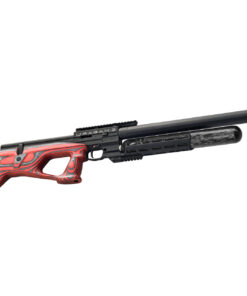
AGT URAGAN


AGT URAGAN
Reviews
There are no reviews yet.