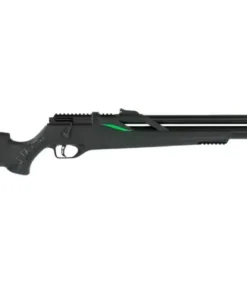

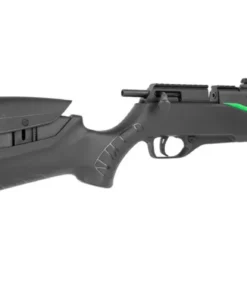
Snowpeak T Rex Air rifle
$200.00
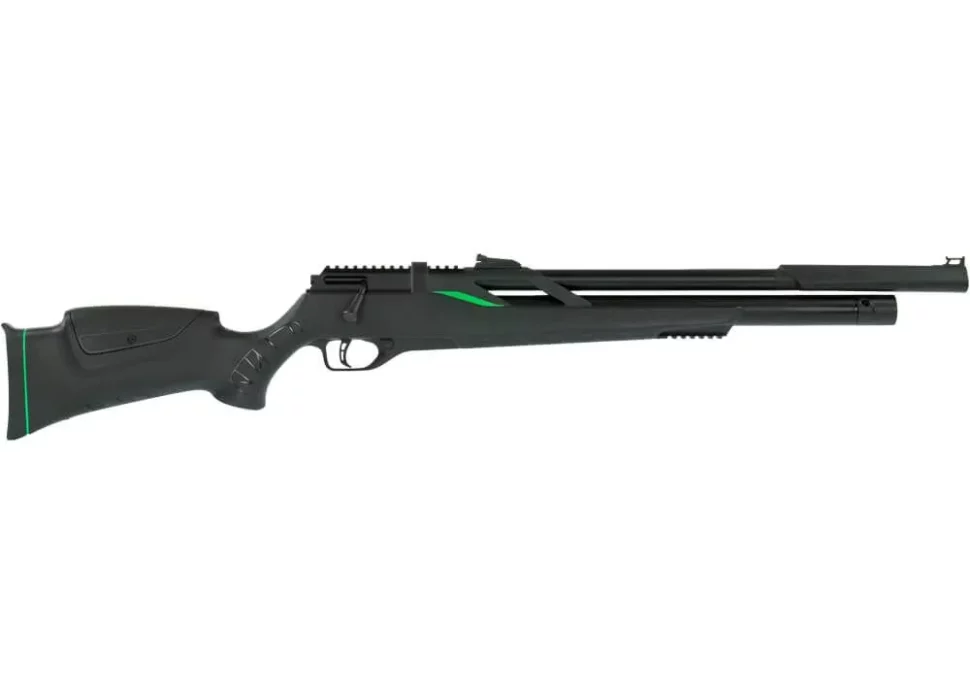
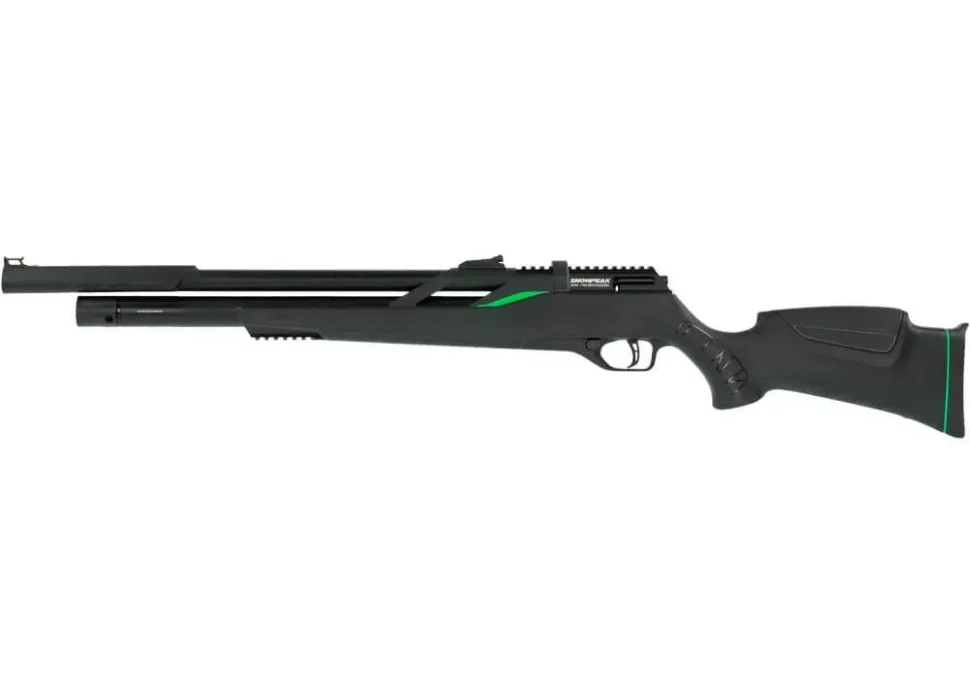
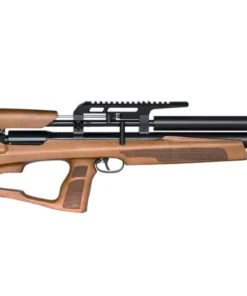
Snowpeak T-Rex PCP air rifle
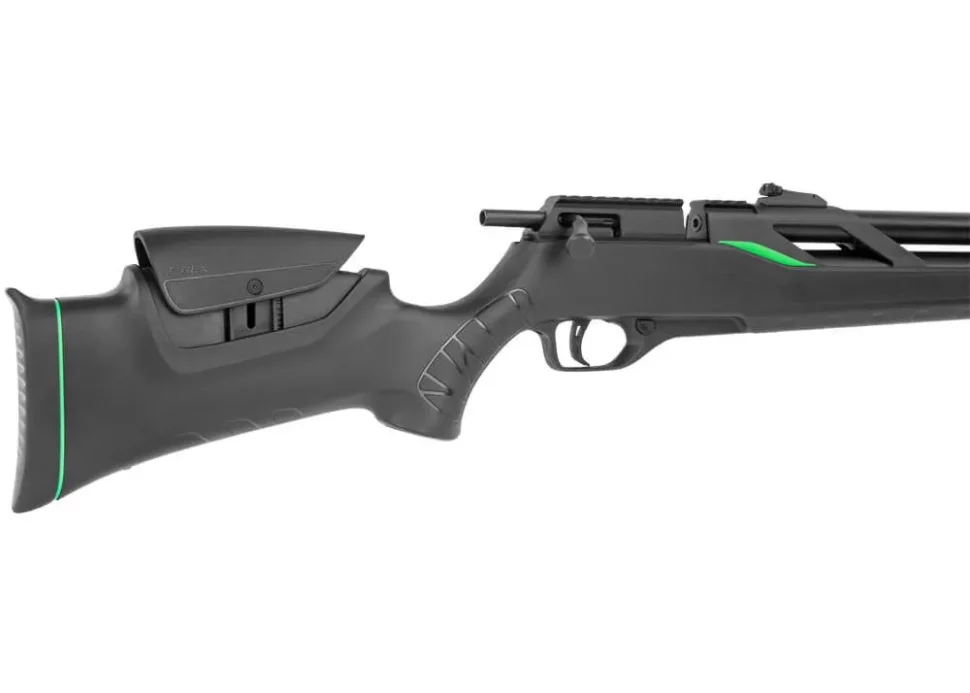
The Snowpeak T-Rex is a regulated PCP air rifle with a stock made of low-maintenance synthetic material. This stock comes with a vertically adjustable cheek pad and a rubber recoil pad that makes shouldering more comfortable and partially absorbs recoil. The air cylinder with a working pressure of 250 bar offers 230 cc’s of pressurised air.
Snowpeak fitted the T-Rex with open sights, of which the rear sight can be adjusted vertically and horizontally. They also added Weaver/Picatinny rails to the action and forend, which can be used to mount optics and accessories such as a bipod. The shrouded barrel features a moderator that suppresses the muzzle sound of a shot.
The bolt lever can be mounted on the left and right side to suit both left and right-handed shooters. Besides this, the trigger pressure can be adjusted from 2 to 5 lbf (900 to 2300 grams).
This item can only be sold to persons 18 years and older.
For this item we have to carry out an age check.
You can upload a copy/scan/photo of a legal identification document such as a passport, European ID or driver’s license in the order. Parts of the document may be made illegible or designated as a copy. However, your name, document number and place of issue must be legible. Your copy ID will only be used for verification purposes and will not be retained. If you are not able to upload it right now, we will contact you per email before shipping
We can ship these items only to the countries listed below:
Belgium, Bulgaria, Cyprus, Czechia, Denmark, Estonia, Finland, France, Germany, Greece, Hungary, Ireland, Italy, Kroatia, Latvia, Lithuania, Luxembourg, Monaco, Netherlands, Poland, Portugal, Romania, Slovakia, Slovenia, Spain, Austria, Sweden, United States
Specifications
| Brand | Snowpeak |
|---|---|
| Model | .177 / 4,5, .22 / 5,5, .25 / 6,35, .30 / 7,62, .35 / 9,0 |
| Energy (Joule / ft.lbs) | 26/19, 46/34, 62/46 |
| Cocking system | Bolt action |
| Magazine capacity | 10 (.22), 12 (.177), 9 (.25) |
| Weight (gram) | 3150 |
| Barrel length (mm) | 480 |
| Length (mm) | 1048 |
| Mounting base | Weaver / Picatinny |
| Rifle Stock Type | Ambidextrous |
| Stock material | Synthetic |
| Extra accessories included | Fill probe, Magazine, O-ring kit, Tools |
Snowpeak T-Rex Air Rifle – Detailed Technical Product Guide
Snowpeak T-Rex PCP Engineering, Product Family, and Technical Context
Snowpeak Airguns and Snowpeak Sports Background
Snowpeak airguns are produced by a Chinese manufacturer that states it began in 1976 and has more than four decades of experience designing and producing shooting equipment. Its current catalog includes spring-powered, PCP, CO2, and regional product categories.
Searches for snowpeak sports, snowpeaks, snow peak equipment, and snow peak brand origin commonly appear around the manufacturer because of its broad international product range.
The company also maintains official sections for air gun accessories, manuals, operating videos, and contact information.
Understanding the Snowpeak T-Rex PCP Platform
The T-Rex is a pcp pellet rifle, meaning it relies on pre-charged pneumatic technology.
For users asking what is a pcp airgun, PCP means pre-charged pneumatic. Compressed air is stored in an onboard reservoir before operation, and that stored pressure provides the energy used during each firing cycle Snowpeak T Rex Air rifle.
This differs from spring-powered equipment because the system does not rely on a large spring moving through the action during discharge.
The T-Rex Wood specifically uses a regulator, which is designed to support more consistent pressure delivery within the system.
T-Rex Wood Specifications
Snowpeak currently lists the T-Rex Wood with three caliber options: .177, .22, and .25. Manufacturer-stated velocities are approximately 950, 850, and 750 fps respectively.
The model uses a 530 mm barrel and 140 cc air capacity. Snowpeak also specifies an adjustable cheekpad, manual safety, and trigger pull of approximately 2–5 lbf.
Its published dimensions are approximately 790 × 180 × 50 mm, with an approximate weight of 2.3 kg.
These figures describe the current manufacturer-listed T-Rex Wood rather than every historical or regional T-Rex configuration.
Regional T-Rex Bullpup Version
Snowpeak also lists a low-power T-Rex Bullpup for Taiwan.
That platform is specified with a 230 cc air reservoir, regulator, 480 mm barrel, manual safety, polypropylene stock, 25 MPa working pressure, and caliber-dependent magazine capacities of 12 rounds in .177, 10 in .22, and 9 in .25.
This is important because it shows why regional model identification matters.
A product labeled simply “T-Rex” online may not automatically match the Wood configuration or another international version.
Precision and Regulated PCP Performance
The regulator is one of the more important engineering features within the T-Rex platform.
A regulated pneumatic system can provide more consistent pressure delivery compared with an unregulated reservoir over part of the usable fill range.
However, practical precision still depends on several connected factors.
Barrel condition, compatible pellets, sighting equipment, environmental conditions, mechanical condition, and user technique all contribute to repeatability.
For this reason, maximum velocity should not be treated as a complete measurement of accuracy.
Snowpeak PP750L PCP Air Pistol
The Snowpeak PP750L PCP Air Pistol, Snowpeak PP750L, snowpeak pp750, pp750, and snow peak pp750 are related brand searches but refer to pistol-format equipment rather than the T-Rex rifle.
Likewise, terms such as Snowpeak Air Pistol, PCP Pistol, Airgun Pistol, and High power PCP air pistol describe a different product category.
The phrase Snowpeak PP750L PCP Air Pistol for sale is a commercial search term and should not be treated as a technical specification for the T-Rex.
Snowpeak P35 and P35X Context
Searches for snowpeak p35, p35, pcp p 35, snowpeak p35x, p35x, p35x pcp, and snowpeak p35 vs p35x relate to separate compact PCP models.
They should not be used to establish T-Rex specifications.
Differences in reservoir size, stock layout, barrel length, magazine capacity, working pressure, and overall dimensions can materially affect the ownership experience.
Exact model identification is therefore essential when comparing related Snowpeak products.
Snowpeak AP900 and AP900B
The terms snowpeak ap900 and ap900b pcp air rifle refer to other Snowpeak-related platforms or regional listings.
Again, these should remain separate from T-Rex technical data.
This distinction is especially important when researching spare parts or accessories because visual similarity does not guarantee compatibility.
Snowpeak M25 and Related Products
Searches for snowpeak m25, m25 rifle, and m25 weapon refer to separate models within the wider Snowpeak product ecosystem.
Snowpeak currently lists the M25WG2 with a 250 cc air tank, regulator, 550 mm barrel, 25 MPa fill pressure, European beech stock, and 12/10/9-shot magazines depending on caliber.
These specifications are very different from those of the T-Rex Wood, so they should not be transferred between products.
Snowpeak M60 and M60B Search Terms
The terms snowpeak m60, snowpeak m60b, and how much did the m60 weigh are ambiguous and should be treated carefully.
“M60” can refer to unrelated products outside the airgun category.
Therefore, no M60-related specification should be presented as T-Rex information unless verified against a Snowpeak manufacturer source.
Snowpeak MAX and MAX 1 Price
Searches for snowpeak max and snowpeak max 1 price indicate interest in other Snowpeak products or regional product naming.
Pricing can change with region, taxes, distributor, availability, and configuration.
For that reason, current price should not be treated as a permanent engineering specification.
Snowpeak PP20 and Other Search Terms
The phrases snow peak pp20 and snowpeak pp20 relate to another model and should remain separate from T-Rex data.
Similarly, pr900 gen 3, m50 rifle, and hp300 refer to other platforms or ambiguous terminology.
Accurate technical content should distinguish between related search traffic and verified product identity.
Pellet 9mm and Caliber Context
The T-Rex Wood is currently listed by Snowpeak in 4.5, 5.5, and 6.35 mm calibers.
Therefore, pellet 9mm should not automatically be associated with the standard T-Rex Wood.
Ammunition must always match the exact caliber marked on the specific equipment.
Caliber compatibility should never be assumed simply because a projectile belongs to the broader pellet category.
Air Gun Accessories
The phrase air gun accessories covers a broad range of supporting equipment.
Snowpeak’s official site lists accessories such as pellets, pumps, compressors, gun bags, rifle scopes, cleaning kits, air tanks, targets, and other items.
Compatibility should always be verified for the exact model.
The most important support equipment for responsible recreational ownership includes eye protection, secure storage, suitable manufacturer-compatible maintenance products, and dependable target containment.
Snow Peak Customer Service and Brand Support
Searches for snow peak customer service should be directed toward the actual Snowpeak airgun manufacturer or authorized regional distributor.
Snowpeak’s official website currently lists sales contact information and a download center for manuals, operating videos, and product resources.
This is more reliable than assuming that every company using “Snow Peak” in its name represents the airgun manufacturer.
Ambiguous Search Terms
Terms such as snowfall gun, t rex 6000, and pistolet pcp arcea-snowpeak onix sport should be verified independently.
They do not establish standard T-Rex specifications.
International distributors sometimes use different product names, bundled packages, or regional descriptions, which makes manufacturer confirmation especially important.
Why the T-Rex Design Matters
The T-Rex combines regulated PCP operation, multi-shot functionality, adjustable ergonomics, and relatively compact dimensions.
The T-Rex Wood in particular offers a 140 cc air system and 530 mm barrel within a 2.3 kg package.
Its technical value comes from the relationship between pneumatic consistency, manageable handling, and straightforward mechanical architecture.
However, the most meaningful evaluation focuses on repeatability and equipment condition rather than maximum velocity alone.
Overall Technical Perspective
The Snowpeak T-Rex Air Rifle represents a regulated multi-shot PCP platform offered in several caliber configurations and at least one region-specific variant. The current T-Rex Wood specification includes a 140 cc air capacity, regulator, adjustable cheekpad, 530 mm barrel, and .177/.22/.25 caliber options.
Because Snowpeak also lists a substantially different low-power T-Rex Bullpup configuration, users should verify the exact model before relying on dimensions, pressure, magazine capacity, or output figures.
From a technical standpoint, the platform is best understood through regulated pneumatic consistency, compact construction, ergonomic fit, maintenance condition, and responsible ownership. Secure storage, appropriate eye protection, manufacturer pressure limits, dependable target containment, and compliance with applicable local regulations remain essential throughout lawful recreational use.
Build Quality, Durability, Maintenance, and Long-Term Equipment Care
Long-term ownership of the Snowpeak T-Rex depends on more than its initial appearance or factory performance. Construction quality, structural integrity, pressure-system condition, environmental protection, mechanical wear, cleaning practices, and secure storage all contribute to how well the equipment maintains its original characteristics. Consequently, proper maintenance should focus on preserving normal condition rather than making unnecessary adjustments. With regular observation and appropriate professional servicing when required, important components can remain protected throughout extended recreational ownership.
Overall Construction Quality
Construction quality begins with the way the major components work together as a complete assembly.
The receiver, barrel assembly, reservoir, stock, operating controls, magazine interface, and mounting areas should remain properly integrated during normal use. Secure assembly helps preserve predictable handling and mechanical operation.
As owners become familiar with the platform, unusual changes become easier to recognize.
Unexpected movement between major components, visible deformation, or significant changes in operating resistance should be investigated rather than ignored.
Material Selection and Durability
Different components require different material properties.
Pressure-bearing areas need structural strength, while external components must tolerate ordinary handling and environmental exposure. Stock materials also influence feel, weight distribution, and cosmetic durability.
Regardless of material quality, no sporting equipment is completely resistant to damage.
Hard impacts, abrasive contamination, unsuitable chemicals, excessive moisture, and extreme temperatures can gradually affect condition.
Careful ownership therefore remains important even when the equipment feels robust.
Structural Integrity
Structural stability provides the foundation for long-term reliability.
Major components should not develop unexplained looseness or deformation during ordinary ownership.
A significant fall or transportation impact deserves additional attention because damage may not always be immediately visible.
Continuing normal use without checking the equipment can allow a minor concern to become more significant.
When alignment or structural integrity cannot be confidently determined, qualified inspection provides the appropriate solution.
External Finish Care
External surfaces regularly encounter fingerprints, dust, moisture, cases, rests, and other environmental contact.
Minor cosmetic marks can naturally develop over time without affecting functionality.
However, keeping surfaces reasonably clean helps owners distinguish normal wear from genuine deterioration.
Suitable soft materials should be used for routine cleaning.
Aggressive abrasives and strong household chemicals should generally be avoided unless the manufacturer specifically approves them.
Gentle maintenance is preferable to excessive polishing or repeated intensive cleaning.
Pressure-System Condition
The compressed-air system deserves particular attention because it stores substantial pressure.
External pressure-bearing components should remain free from obvious deformation, significant corrosion, and serious impact damage.
Manufacturer-defined operating limits should always be respected.
If unexplained pressure loss, visible damage, or another abnormal condition develops, the system should receive appropriate inspection.
Improvised repairs to pressure-bearing components should be avoided because specialized knowledge and suitable equipment may be required.
Seals and Long-Term Pressure Retention
Sealing components help maintain pressure throughout the pneumatic system.
Over time, seals may experience normal aging and wear. Temperature changes, contamination, long storage periods, and general service conditions can also influence their behavior.
Persistent pressure loss deserves attention.
However, owners should avoid assuming that one particular component is responsible without proper diagnosis.
Unnecessary internal disassembly may create additional problems.
Qualified technical servicing is preferable when pressure retention changes significantly.
Regulated System Care
A regulated pressure system is designed to manage air delivery within the equipment.
Its internal components should generally be left undisturbed during routine owner maintenance.
Repeated adjustment without a genuine technical reason can interfere with a system that is already functioning correctly.
If performance becomes persistently irregular, several possible causes should be considered before internal changes are attempted.
Professional diagnosis provides a safer and more systematic approach when specialized pneumatic servicing becomes necessary.
Mechanical Wear
Moving components naturally experience service-related wear.
Normal wear develops gradually, while sudden stiffness, excessive movement, unfamiliar sounds, or inconsistent operation may indicate a problem requiring inspection.
Controls should never require excessive force during ordinary operation.
When resistance changes unexpectedly, forcing the mechanism can potentially worsen an existing issue.
Inspection should occur first.
If the cause cannot be identified safely, the equipment should receive qualified servicing before normal recreational use continues.
Magazine Care
Magazines are relatively small but important components.
They should remain protected from impacts, dirt, deformation, and crushing.
Loose storage alongside heavier equipment can increase the likelihood of accidental damage.
Keeping magazines organized inside a dedicated compartment or suitable protective container helps preserve their condition.
If operation becomes inconsistent, magazine condition should form part of the initial inspection process before more complex mechanical problems are assumed.
Barrel Preservation
Barrel condition contributes to long-term consistency.
The barrel should remain protected from physical impacts, excessive contamination, and unsuitable maintenance practices.
Internal cleaning should follow manufacturer guidance rather than being performed aggressively after every recreational session.
More cleaning does not automatically produce better results.
If consistency changes unexpectedly, the complete system should be evaluated because environmental conditions, sighting equipment, ammunition condition, and mechanical factors can also influence practical performance.
Stock and Ergonomic Components
The stock contributes both structural support and ergonomic comfort.
Wooden components, where present, should be protected from prolonged moisture and extreme environmental changes.
Adjustment mechanisms should move through their intended range without excessive force.
If an adjustable component begins slipping or behaving differently, inspection is preferable to improvised modification.
Preserving the original engineering generally provides better long-term reliability than altering structural components without manufacturer guidance.
Mounting Areas
Mounting interfaces should remain clean and structurally sound.
Accessories can introduce additional weight and mechanical stress, particularly during transportation.
Therefore, unnecessary accessory loading should be avoided.
After a substantial impact, mounted components should be visually inspected for movement or damage.
Accessory compatibility should always be confirmed rather than assumed from appearance alone.
A properly matched component reduces the likelihood of unnecessary wear or structural stress.
Routine Inspection
Regular inspection is one of the simplest preventive maintenance practices.
Before appropriate recreational use, visible components can be checked for damage, contamination, looseness, corrosion, or unusual deterioration.
Equipment returning from extended storage deserves similar attention.
Additional inspection is sensible following harsh environmental exposure or significant physical impact.
Routine observation does not replace professional servicing, but it can help identify developing problems early.
Cleaning and Preventive Maintenance
Everyday cleaning should remain controlled and purposeful.
External moisture, dust, and fingerprints can generally be removed using suitable materials.
The objective is preservation, not frequent mechanical intervention.
Internal disassembly should not become a routine activity simply because the equipment has been used.
Manufacturer documentation should determine appropriate servicing procedures.
When specialized work becomes necessary, professional assistance provides the more dependable approach.
Environmental Protection
Humidity, moisture, dust, temperature, and condensation can influence long-term condition.
After exposure to damp environments, the equipment should be appropriately dried before storage.
Extreme heat should be avoided, particularly because pressure-bearing components are involved.
Rapid environmental changes may also encourage condensation.
A clean, reasonably stable storage environment helps protect surfaces, seals, structural materials, and mechanical components throughout periods of inactivity.
Secure Storage and Transportation
The equipment should remain in a dry, secure location protected from unauthorized access.
Children and inexperienced individuals should not be able to reach it.
A suitable protective case can reduce scratches, impacts, contamination, and movement during transportation.
Accessories should be organized separately so that they cannot strike important components.
Applicable storage and transportation requirements should always be followed.
Long-Term Ownership Perspective
Durability ultimately depends on the relationship between original construction quality and responsible ownership.
Strong engineering establishes the foundation, while inspection, appropriate cleaning, environmental protection, careful transportation, and secure storage help preserve it.
Persistent pressure problems, structural damage, or abnormal mechanical behavior should receive professional attention rather than improvised repair.
With appropriate maintenance and responsible handling, the platform can retain its structural integrity, predictable operation, cosmetic condition, and overall usability throughout an extended service life.
Engineering Quality, Practical Performance, Precision, and Handling
The Snowpeak T-Rex combines pre-charged pneumatic engineering, a relatively compact structure, multi-shot operation, and adjustable ergonomic features to create a practical recreational platform. Specifications can explain dimensions, capacity, and general configuration, but they do not completely describe how equipment feels during ownership. Mechanical consistency, pressure management, barrel stability, balance, stock geometry, environmental conditions, and routine care all influence practical performance. Therefore, the platform is better evaluated through repeatability, reliability, comfort, and overall engineering quality rather than through maximum output figures alone.
Engineering Design and Mechanical Integration
A dependable sporting platform begins with effective integration between its major components.
The receiver, barrel assembly, compressed-air system, stock, magazine interface, trigger assembly, and operating controls must function as a coordinated structure. Good alignment helps preserve predictable behavior while reducing unnecessary movement between important components.
During ordinary ownership, the equipment should maintain a secure mechanical feel.
Any sudden looseness, unusual resistance, or visible deformation deserves attention because these changes may indicate wear, impact damage, or another developing issue.
Regulated Pneumatic Performance
The regulated pneumatic system is an important part of the platform’s engineering.
Rather than relying solely on the changing pressure inside the main reservoir, the pressure-management system helps control the air supplied during normal operation.
Consistency remains more important than simply achieving the highest possible pressure or velocity.
A predictable pneumatic system provides a stronger foundation for repeatable recreational performance.
Owners should avoid unauthorized internal adjustments because pressure-bearing components require suitable technical knowledge and should remain within manufacturer-defined limits.
Practical Precision
Precision is best evaluated through repeatability under comparable conditions.
Maximum velocity alone does not establish whether equipment will provide consistent results.
Projectile quality, barrel condition, pneumatic consistency, sighting equipment, environmental conditions, mechanical stability, and user technique can all influence practical outcomes.
For this reason, isolated results should not automatically be treated as representative.
Repeated evaluation under controlled recreational conditions provides more meaningful information about how consistently the complete system performs.
Barrel Stability
Barrel condition contributes to the mechanical foundation required for repeatability.
The barrel should remain properly supported and protected from significant impacts.
External damage or changes in alignment may affect overall equipment condition.
Routine internal care should follow manufacturer recommendations rather than aggressive cleaning after every session.
Excessive intervention is not necessarily beneficial.
If consistency changes, several possible causes should be considered before assuming that the barrel alone requires attention.
Compact Overall Configuration
Compact dimensions can provide several practical advantages.
The equipment requires less space during transportation and secure storage than many substantially longer platforms.
A shorter configuration can also feel more manageable when being moved between storage, transportation, and an appropriate recreational area.
However, compactness changes weight distribution.
Users accustomed to conventional full-length designs may initially notice that the balance feels different because important components are positioned differently throughout the structure.
Balance and Weight Distribution
Overall weight tells only part of the handling story.
The location of that weight determines how much effort different parts of the body must provide during handling.
A well-balanced configuration can feel manageable even when its total weight is not exceptionally low.
Accessories can significantly alter this relationship.
Additional components positioned far from the natural balance point may increase fatigue, so accessories should be selected according to genuine practical requirements rather than installed simply because mounting space is available.
Stock Design and Ergonomic Support
The stock provides an important interface between the equipment and the user.
Shoulder position, head placement, arm length, and body proportions all influence comfort.
An adjustable cheek area can help users achieve a more natural relationship with appropriately installed sighting equipment.
The objective should be comfortable positioning without excessive neck movement or muscular tension.
Any adjustment should remain within the intended design range, and structural modifications should be avoided unless specifically supported by the manufacturer.
Grip Comfort
Grip geometry affects wrist position, finger placement, and overall handling comfort.
A suitable grip should allow a relatively natural hand position without requiring excessive pressure.
During longer recreational sessions, small ergonomic differences become increasingly noticeable.
Consequently, comfort should be assessed over time rather than based entirely on a brief first impression.
Users with different hand dimensions may naturally prefer slightly different positioning.
The most important consideration is maintaining comfortable, controlled handling.
Operating Controls
Predictable controls contribute to a refined ownership experience.
Normal movement and mechanical resistance become familiar after repeated use.
This familiarity helps owners recognize changes that may indicate maintenance requirements.
If a control suddenly becomes unusually difficult to operate, additional force should not automatically be applied.
Inspection is preferable.
Persistent stiffness, excessive movement, or unfamiliar mechanical behavior may require qualified servicing to determine whether wear, contamination, or another issue is responsible.
Multi-Shot Convenience
A multi-shot system can reduce interruptions during organized recreational sessions.
However, reliable operation depends partly on the magazine remaining clean, undamaged, and correctly matched to the equipment.
Magazines should be protected from drops, crushing, and contamination.
Small components deserve particular attention during transportation because they can be damaged more easily than the main platform.
When irregular operation develops, magazine condition should form part of the initial inspection process.
Environmental Effects on Performance
Environmental conditions can influence both pneumatic behavior and practical results.
Temperature changes can affect pressure characteristics, while wind can influence projectile movement.
Humidity, dust, and moisture may also affect equipment condition over time.
Understanding these variables helps owners distinguish ordinary environmental variation from persistent mechanical problems.
Nevertheless, repeated irregularities under similar conditions deserve investigation rather than being continuously attributed to the environment.
Reliability During Regular Ownership
Reliability becomes easier to evaluate after repeated recreational sessions.
A dependable platform should maintain reasonably predictable characteristics when properly maintained.
However, moving components and sealing materials naturally experience service over time.
Routine observation can identify gradual changes before they develop into larger problems.
Preventive maintenance should focus on preserving normal condition rather than making unnecessary adjustments.
Repeated intervention can sometimes create problems instead of preventing them.
Routine Maintenance Requirements
Everyday maintenance should remain straightforward and purposeful.
External moisture, dust, fingerprints, and contamination can generally be removed using appropriate materials.
Internal components should remain undisturbed unless servicing is genuinely required.
Manufacturer documentation should guide maintenance procedures and operating limits.
Complex pneumatic repairs or structural work should be performed by appropriately qualified personnel because incorrect intervention may affect both equipment integrity and safe operation.
Transportation and Storage
Compact construction can make transportation and storage relatively convenient.
A suitable protective case helps prevent scratches, impacts, contamination, and excessive movement during travel.
During storage, the equipment should remain in a clean, dry, secure location inaccessible to unauthorized individuals.
Children and inexperienced users should not be able to reach it.
Extreme temperatures, excessive humidity, and corrosive substances should also be avoided.
Local storage and transportation requirements should always be followed.
Overall Performance Perspective
The T-Rex brings together regulated pneumatic engineering, compact construction, multi-shot convenience, ergonomic adjustment, and manageable handling.
Its practical quality should be judged through consistent mechanical behavior, structural stability, comfortable balance, and dependable long-term condition rather than maximum figures alone.
Ultimately, good engineering establishes the initial foundation, while responsible ownership preserves it. Routine inspection, appropriate maintenance, careful transportation, environmental protection, secure storage, and professional servicing when required all contribute to reliable long-term performance.
When these principles are followed, the platform can provide a comfortable, consistent, and manageable experience throughout extended lawful recreational ownership.
Everyday Usability, Comfort, Reliability, and Long-Term Ownership
The Snowpeak T-Rex is designed to combine compact dimensions, regulated pneumatic operation, multi-shot convenience, and adjustable ergonomics within a practical sporting platform. Although technical specifications help explain the basic engineering, everyday ownership is influenced by factors that numbers cannot fully describe. Balance, comfort, portability, mechanical consistency, environmental conditions, storage, maintenance, and long-term durability all contribute to the overall experience. Consequently, practical quality should be evaluated through how naturally the equipment handles, how consistently its major systems operate, and how straightforward it is to preserve in good condition.
Everyday Handling Experience
Compact construction can make the platform relatively convenient to handle during routine recreational ownership.
A shorter overall structure requires less physical space when moving between secure storage, transportation, and an appropriate controlled environment. This can also make selecting a protective case more straightforward.
However, compact dimensions do not automatically guarantee ideal handling.
The position of the major components determines the center of balance. Consequently, the platform may feel noticeably different from equipment built around a traditional full-length layout.
Comfort During Extended Sessions
Comfort becomes increasingly important as a recreational session continues.
Small ergonomic problems that appear insignificant initially may become noticeable after prolonged handling. Shoulder pressure, wrist position, neck angle, and support-arm fatigue can all affect the experience.
A comfortable setup should encourage a reasonably natural posture.
Users should not need to maintain excessive muscular tension simply to support the equipment.
Because body proportions vary, the most comfortable arrangement can differ significantly between individuals.
Adjustable Cheek Support
An adjustable cheek area can improve the relationship between head position and appropriately installed sighting equipment.
The objective is to establish comfortable, repeatable positioning without forcing the neck into an unnatural angle.
Adjustments should remain within the manufacturer’s intended range.
Once a suitable position has been selected, the mechanism should remain secure during normal handling.
If an adjustable component begins slipping or becomes unusually difficult to move, inspection is preferable to improvised structural modification.
Stock Comfort
The stock forms one of the principal physical interfaces between the equipment and the user.
Its shape influences shoulder contact, head placement, grip position, and overall balance.
Comfort should be assessed as part of the complete configuration rather than evaluating individual components separately.
A stock may feel substantially different once sighting equipment and other accessories are installed.
Therefore, the final arrangement should prioritize comfortable positioning and manageable weight distribution.
Grip and Hand Position
Grip geometry influences wrist angle and hand comfort.
A natural hand position can reduce unnecessary muscular tension, particularly during longer sessions.
Excessive grip pressure should not be required simply to maintain control.
Individual hand dimensions also matter.
A configuration that feels comfortable to one person may feel noticeably different to another.
For this reason, ergonomic quality is partly subjective even when the underlying manufacturing dimensions remain identical.
Balance and Weight Distribution
Total equipment weight provides only one measurement of handling.
Weight distribution can be equally important.
A platform with mass concentrated closer to the user may feel more manageable than another platform of similar total weight with substantial forward mass.
Accessories can change this relationship considerably.
Therefore, each additional component should provide a genuine practical benefit.
Installing unnecessary equipment can increase overall weight while shifting the natural balance point and contributing to fatigue.
Mechanical Operating Experience
Predictable controls contribute to confidence during ordinary ownership.
After repeated recreational sessions, normal mechanical resistance and movement become familiar.
This familiarity makes unusual changes easier to identify.
A mechanism that suddenly becomes substantially harder to operate should not simply be forced.
Inspection should occur first.
If contamination, wear, or another mechanical concern cannot be identified safely, qualified professional servicing provides the more appropriate solution.
Magazine Convenience
A multi-shot magazine can make organized recreational sessions more convenient by reducing interruptions.
However, magazines are comparatively small components and require appropriate protection.
Drops, crushing, dirt, and deformation can interfere with normal operation.
A dedicated storage compartment or protective container can therefore be useful during transportation.
If operation becomes irregular, checking magazine condition is a sensible part of the inspection process before assuming that a larger mechanical problem has developed.
Pressure-System Reliability
A well-maintained pneumatic system should provide reasonably predictable pressure retention.
Environmental temperature and equipment condition can influence behavior, so small variations should be interpreted within context.
Persistent leakage or substantial unexplained pressure changes deserve greater attention.
Pressure-bearing components contain considerable stored energy.
Consequently, internal pneumatic repairs should not be approached as ordinary household maintenance.
Qualified servicing is appropriate whenever pressure-system integrity becomes uncertain.
Environmental Conditions
Outdoor recreational environments expose equipment to temperature changes, moisture, dust, humidity, and other variables.
These conditions can influence both practical performance and long-term equipment condition.
After exposure to damp environments, appropriate drying and external care should occur before storage.
Dust and contamination should also be removed using suitable methods.
Extreme temperatures should be avoided, particularly during prolonged storage or transportation.
Environmental protection is an important part of preventive maintenance.
Routine Cleaning
Everyday cleaning should remain simple and purposeful.
External surfaces can be inspected and cleaned without repeatedly dismantling the equipment.
Aggressive cleaning is not automatically better.
In fact, unnecessary intervention can disturb components that are already functioning correctly.
Internal servicing should follow manufacturer recommendations.
When specialized mechanical or pneumatic maintenance becomes necessary, appropriately qualified assistance offers a more dependable solution than experimentation.
Secure Storage
Compact dimensions can make storage easier, but security remains essential.
The equipment should be kept in a clean, dry, stable location protected from unauthorized access.
Children and inexperienced individuals should not be able to reach it.
The storage environment should also protect the platform from accidental impacts, excessive humidity, corrosive substances, and extreme temperatures.
Any additional storage requirements established by local regulations should always be respected.
Transportation Convenience
A properly fitted protective case can reduce exposure to scratches, impacts, contamination, and unnecessary movement during transportation.
The platform should remain securely positioned inside the case.
Accessories and magazines should also be organized so that they cannot strike important components.
After a substantial transportation incident, inspection should occur before normal recreational use resumes.
Careful transportation contributes directly to long-term structural and cosmetic preservation.
Long-Term Reliability
Reliability becomes more meaningful after months or years of ownership.
A properly maintained platform should continue providing predictable mechanical characteristics without requiring constant intervention.
However, seals and moving components can experience normal service-related wear.
Routine observation helps identify gradual changes early.
Preventive maintenance should focus on preserving normal condition rather than repeatedly replacing or adjusting components without a genuine technical reason.
Responsible Ownership
Familiarity should strengthen responsible habits rather than reduce them.
Appropriate eye protection, dependable target containment, controlled recreational environments, careful handling, and secure storage remain important throughout ownership.
Local regulations governing possession, transportation, and use should always take priority.
Equipment should also remain inaccessible to anyone who cannot handle it responsibly.
Overall Ownership Experience
The T-Rex combines compact construction, ergonomic adjustability, regulated pneumatic engineering, and multi-shot convenience into a manageable recreational platform.
Its everyday strengths are best understood through comfortable handling, practical portability, predictable mechanical operation, straightforward maintenance, and long-term reliability.
Ultimately, the quality of ownership depends on preserving those characteristics. Routine inspection, appropriate cleaning, environmental protection, careful transportation, secure storage, and qualified servicing when necessary all contribute to dependable condition. When these responsibilities are maintained consistently, the platform can continue providing a comfortable and refined recreational experience throughout an extended service life.
Be the first to review “Snowpeak T Rex Air rifle”
Related products
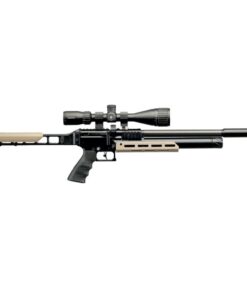
Snowpeak Airguns
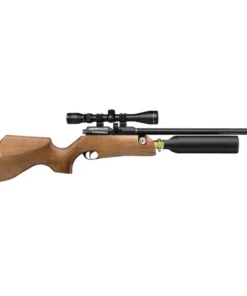
Snowpeak Airguns

Snowpeak Airguns
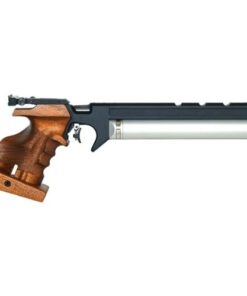
Snowpeak Airguns
Snowpeak Airguns
Snowpeak Airguns
Snowpeak Airguns
Snowpeak Airguns
Reviews
There are no reviews yet.