
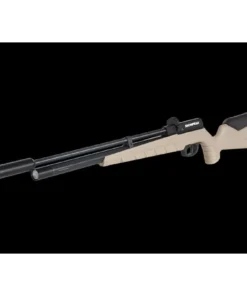
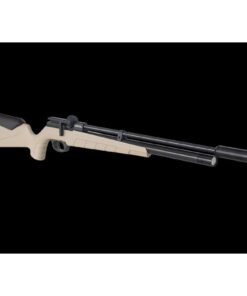
Snowpeak PR900S Lynx Synthetic
$195.00
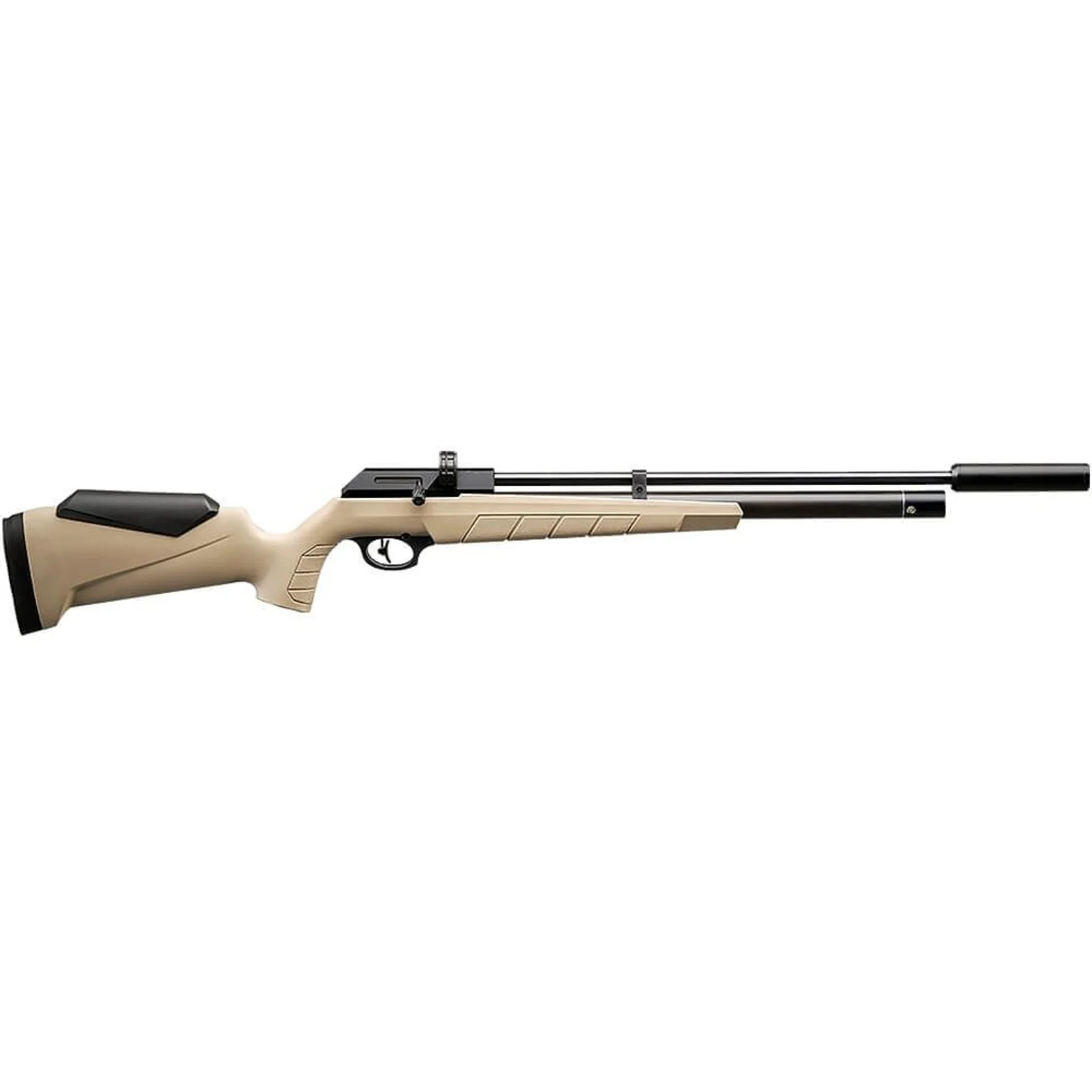
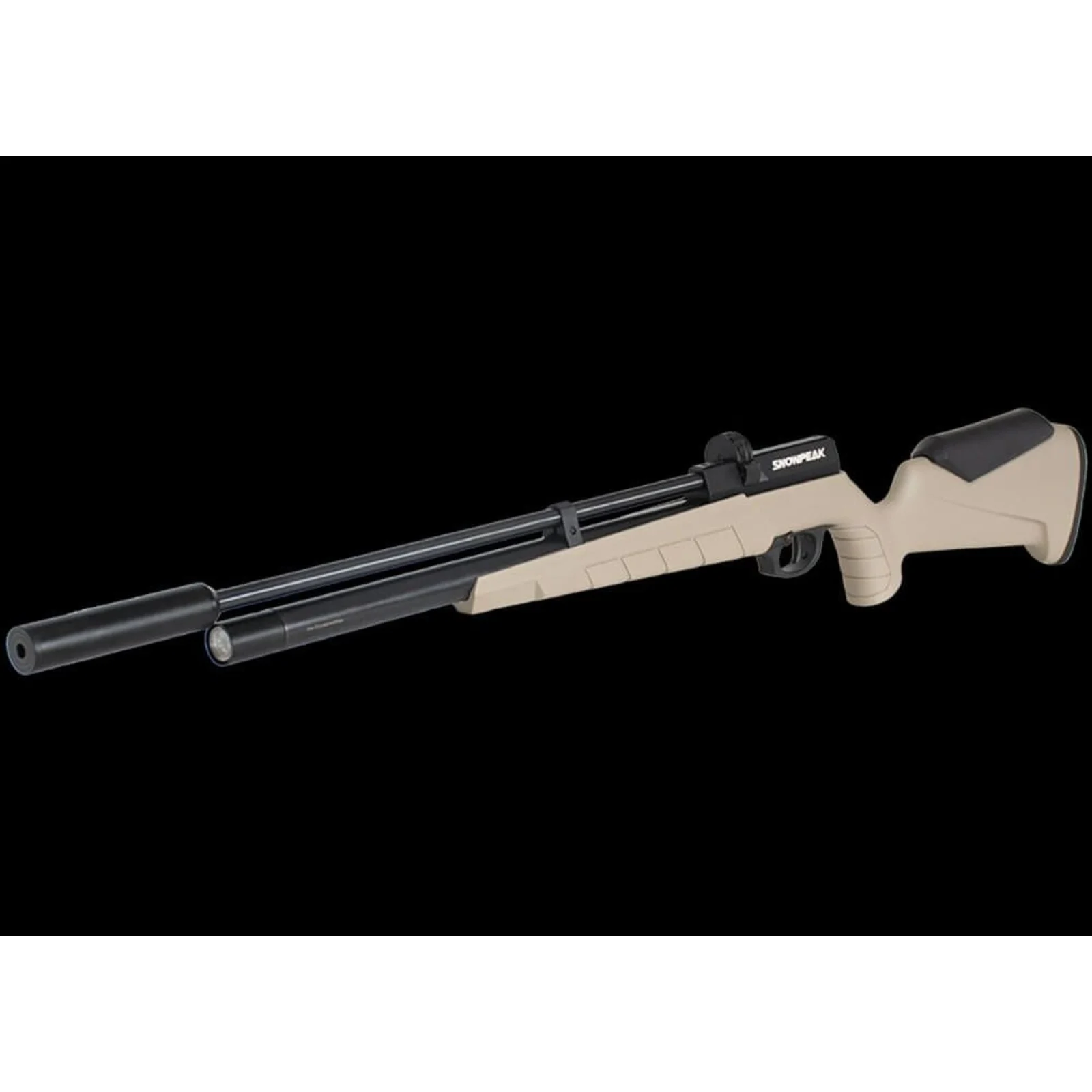
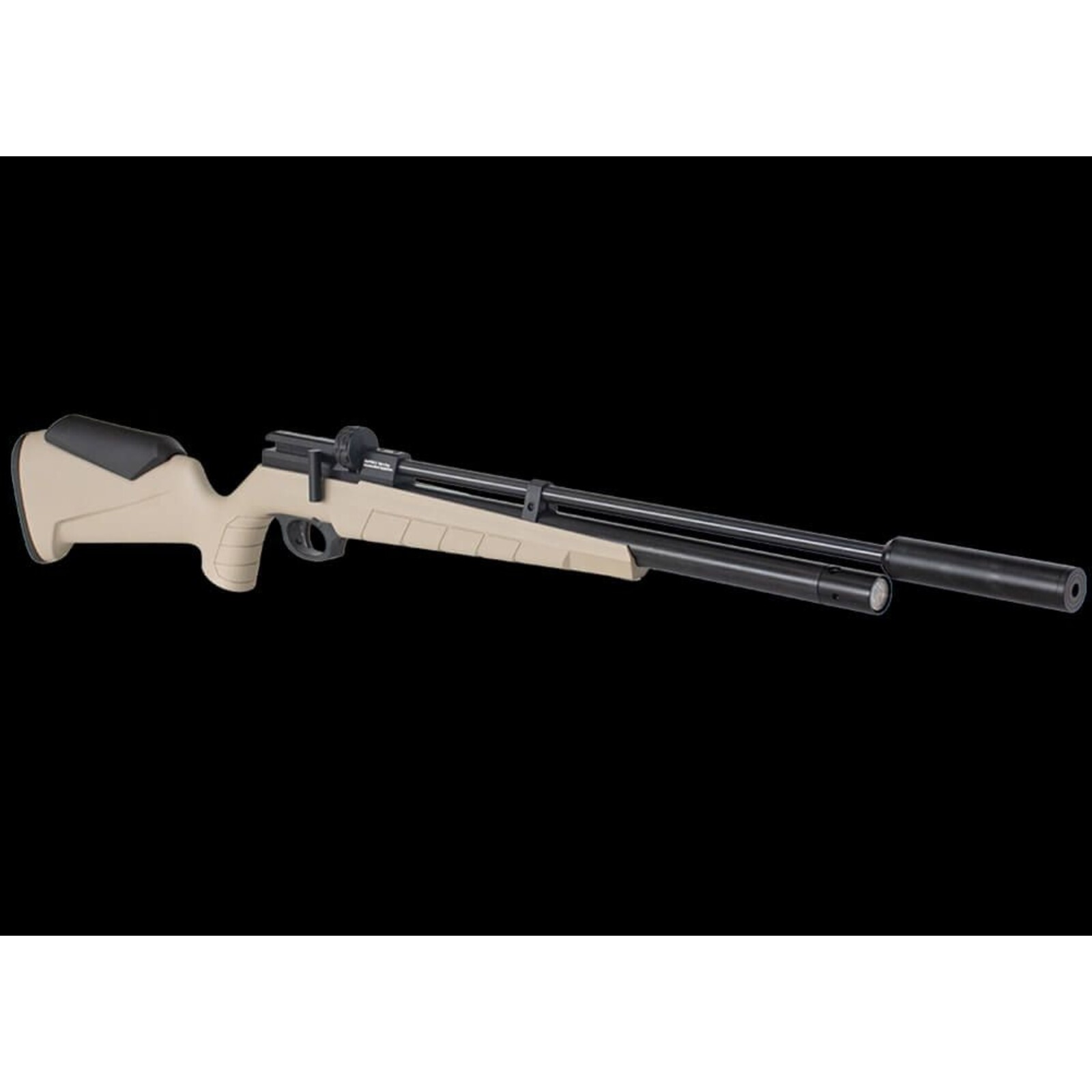
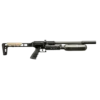
The Snowpeak PR900S G3 Lynx is a modern and versatile PCP air rifle that perfectly combines performance and ease of use at a great price!
This third generation within the popular PR900 series has been further refined and is equipped with a built-in regulator.
This regulated PCP system ensures consistent and stable energy output across the entire usable pressure range, resulting in highly consistent shot performance.
The enlarged 130cc air cylinder (30cc more than its predecessor) provides extra shots per fill.
Designed for Use with a Scope
Unlike its predecessors, the G3 does not feature open sights. This is because the rifle is specifically designed for use with a scope.
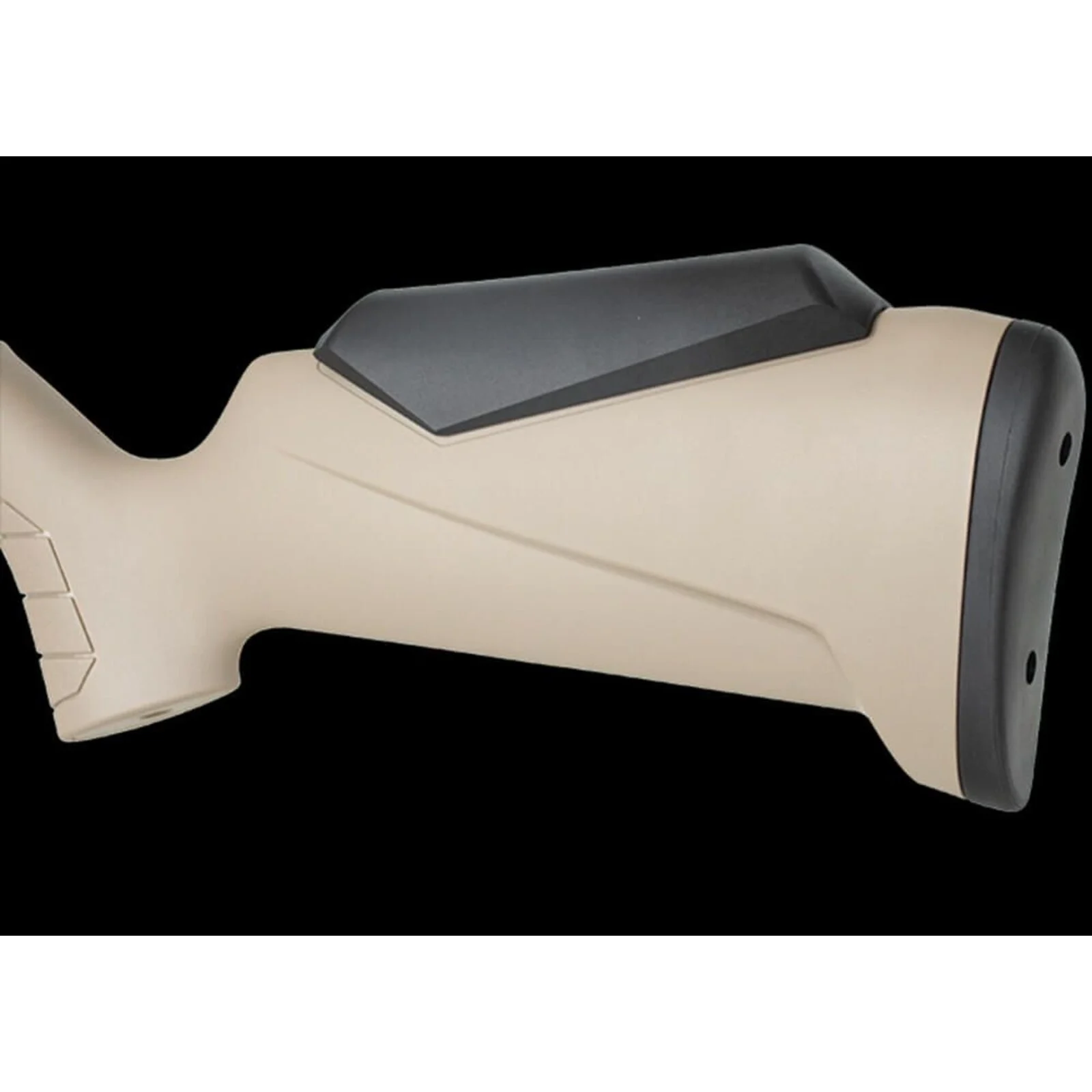
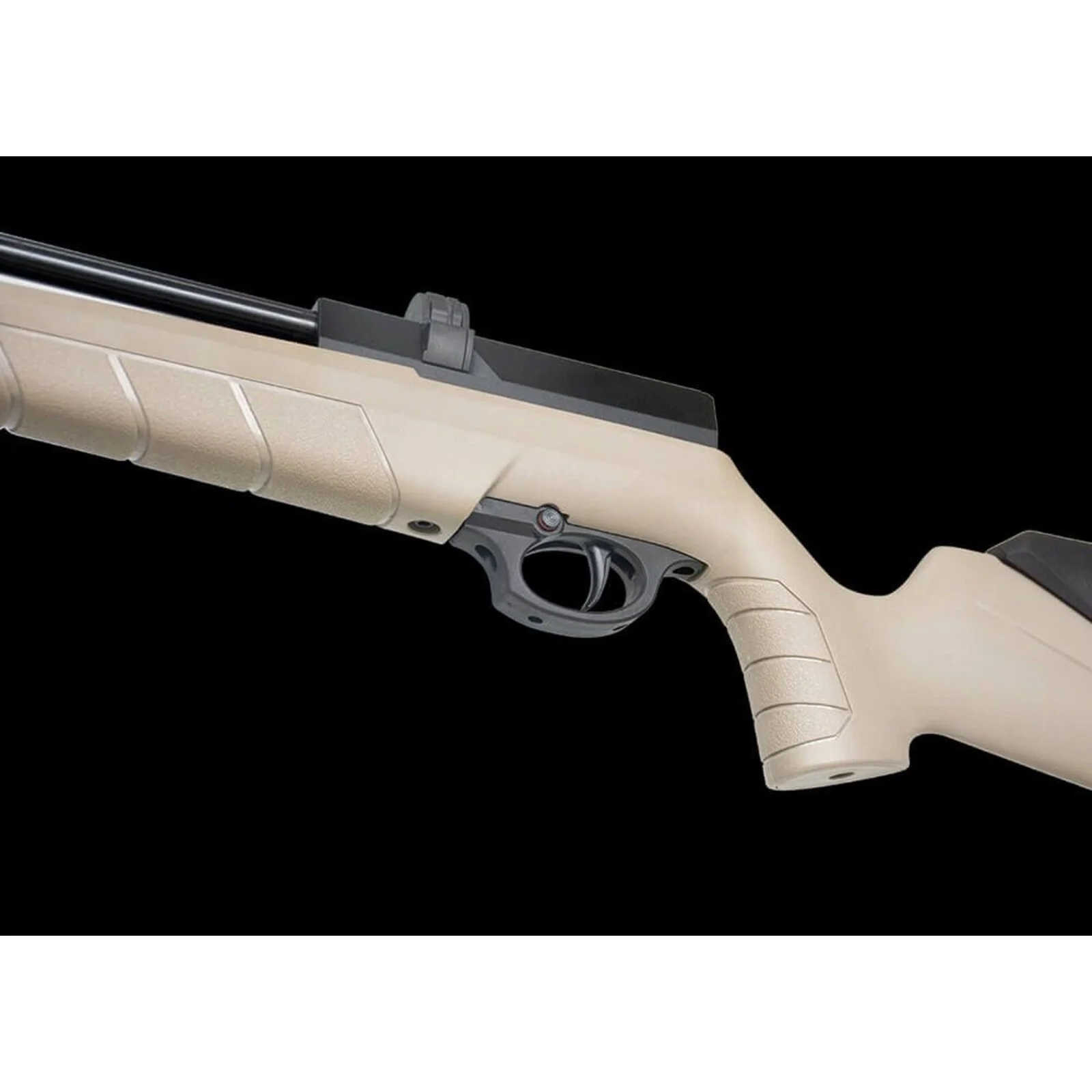
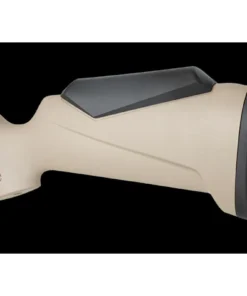
The low-maintenance synthetic stock has a comfortable design and features a rubber butt pad and raised cheek piece for a stable and comfortable shooting position when using optics.
For mounting a scope, the air rifle is fitted with an 11mm dovetail rail.
This allows virtually any compatible scope to be mounted; such as a precise optical scope like the popular Hawke Vantage 3-9×40 AO.
If you plan to use the PR900 G3 as a budget-friendly option for pest control, a suitable night vision optic can also be mounted on this accurate rifle.
As long as you use 11mm mounts, you’ll have no issues fitting your preferred optic.
Have questions about optics? Feel free to get in touch, we’re happy to help!
Using the PR900 G3
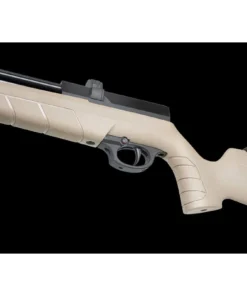
The improved, adjustable two-stage trigger provides controlled and predictable trigger pull, while the smooth side-lever mechanism ensures quick and pleasant operation.
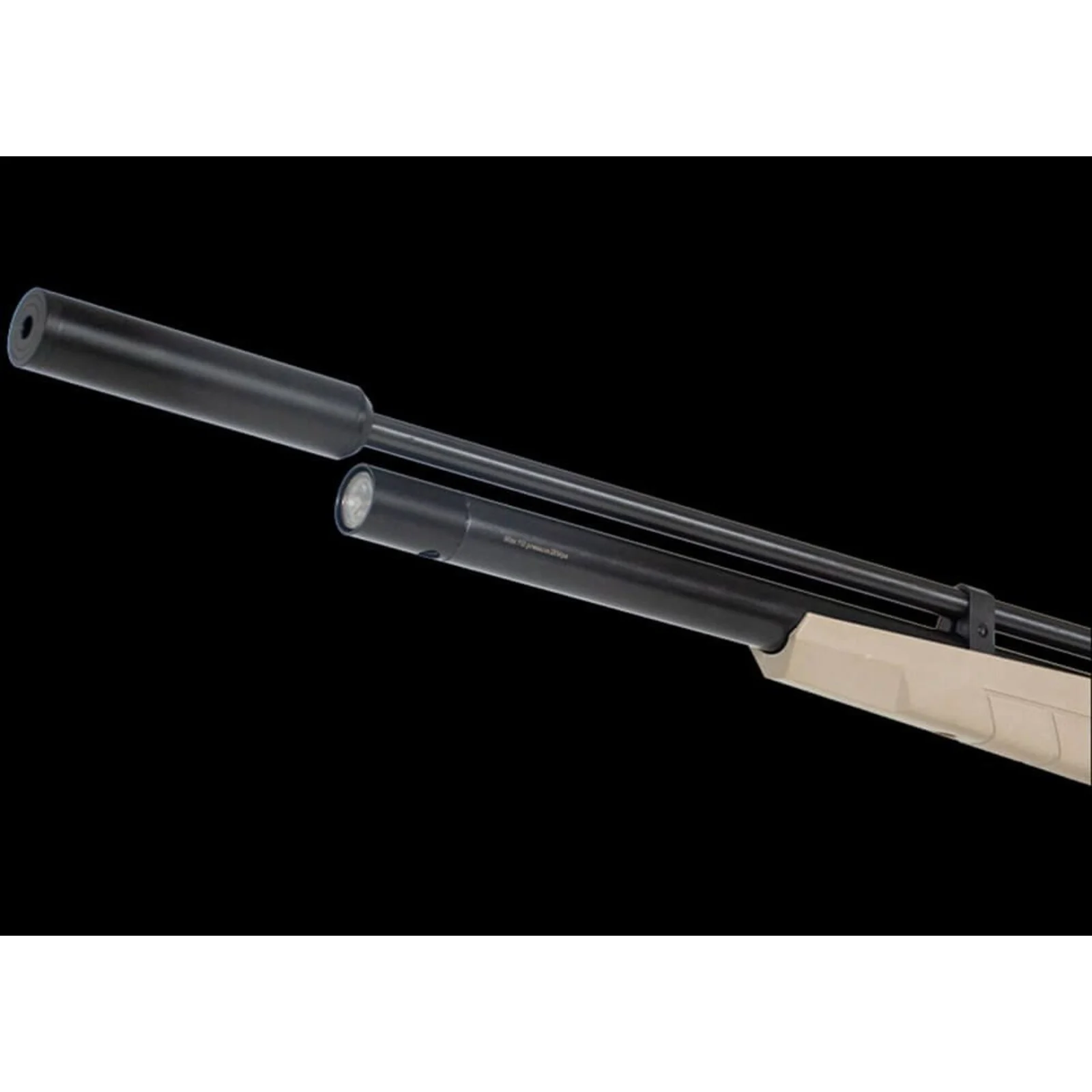
Thanks to the integrated moderator, muzzle noise is effectively reduced.
The PR900 G3 lynx is pressurized using the included fill probe.
This probe does not have threads but uses a Foster connection.
The air source (tank, compressor) must therefore have a female Foster coupling.
The PR900 G3 also uses a new and improved magazine design compared to earlier models.
The rotating magazine has a generous capacity depending on caliber:
- 4.5 mm / .177 – 12 shots
- 5.5 mm / .22 – 10 shots
- 6.35 mm / .25 – 10 shots
With its reliable engineering, increased capacity, and ergonomic design, the Snowpeak PR900S G3 Lynx is an excellent choice for both recreational shooters and more advanced users.
| Power source: | Pre compressed pneumatic (PCP) |
| Caliber: | 4.5mm | 5.5mm (.22) | 6.35 (.25) |
| Muzzle energy: | 25 | 41 | 43 joules |
| Fill pressure: | 250 bar |
| Air capacity: | 130cc |
| Regulator: | Yes |
| Operating system: | Sidelever |
| Magazine: | 12 | 10 | 10 |
| Max. projectile length: | 10.9mm |
| Optic mounting: | 11mm dovetail |
| Weight: | 2500 grams |
| Length: | |
| Barrel length: | 485mm |
| Muzzle: | Moderator included |
| Accessories: | Magazine, fill probe (foster), spare o-rings |
Snowpeak PR900S Lynx Synthetic – Regulated PCP Precision, Lightweight Handling and Multi-Calibre Performance
Snowpeak PR900S Lynx Synthetic Overview
Lightweight Regulated PCP Performance
The Snowpeak PR900S Lynx Synthetic combines practical handling, regulated compressed-air performance and accessible multi-shot operation in a streamlined sporting platform. Designed for lawful target shooting, recreational marksmanship and authorised pest-management applications, it offers a useful balance between manageable weight, consistent output and everyday usability.
The current Lynx specification is available in 4.5 mm, 5.5 mm and 6.35 mm configurations. Depending on calibre and regional specification, listed energy levels may reach approximately 25, 41 or 43 joules. The rifle uses a 130 cc reservoir, a maximum stated filling pressure of 250 bar, an 11 mm dovetail optics rail and a 485 mm barrel. Its synthetic-stock configuration weighs approximately 2.5 kilograms, making it relatively easy to carry and support during extended sessions.
What Is a PCP Airgun?
For anyone asking what is a pcp airgun, PCP means pre-charged pneumatic. The rifle stores compressed air inside an onboard cylinder before shooting begins. When the trigger releases the firing valve, a measured quantity of air propels the pellet through the rifled barrel.
This operating system gives the pcp pellet rifle a smoother firing cycle than many spring-powered designs. Because no heavy piston moves through the action, recoil remains low, and sight alignment can be maintained more easily. Furthermore, regulation helps stabilise the pressure delivered to each shot, supporting predictable velocity throughout the useful portion of the fill.
PR900 Gen 3 Lynx Improvements
The pr900 gen 3 platform advances the familiar PR900 concept with a regulated system, updated side-lever operation and multi-calibre availability. The current synthetic Lynx is listed with magazine capacities of 12 shots in 4.5 mm and 10 shots in the larger calibres. A moderator is also included in some retailer packages, although exact contents should always be confirmed before purchase.
Its synthetic stock resists minor weather exposure and requires less maintenance than traditional wood. Moreover, the ambidextrous form supports both right-handed and left-handed users.
Snowpeak Airguns and Snowpeak Sports Engineering
snowpeak airguns are produced within a broad product family that includes rifles, pistols and pneumatic accessories. Searches for snowpeak sports, snowpeaks, snow peak equipment, snow peak customer service and snow peak brand origin often come from buyers researching the manufacturer and its international distribution network.
The airgun manufacturer should not be confused with the similarly named Japanese camping-equipment company. Product warranties and support arrangements may also differ by retailer and country. Therefore, buyers should obtain service information from the authorised airgun distributor responsible for their market.
Snowpeak AP900 and AP900B PCP Air Rifle
The snowpeak ap900 and ap900b pcp air rifle represent alternative entry points within the broader range. Buyers comparing those models with the Lynx should examine operating system, reservoir capacity, regulation, magazine design and stock construction.
The Lynx is particularly appealing when the buyer wants a regulated multi-shot system rather than a basic single-shot platform. Consequently, it can provide more consistent performance during organised range sessions.
Snowpeak PP750 and Snowpeak PP750L PCP Air Pistol
The snowpeak pp750, pp750, snow peak pp750, Snowpeak PP750L and Snowpeak PP750L PCP Air Pistol belong to the compact pistol-carbine category rather than the conventional rifle class.
A Snowpeak Air Pistol, PCP Pistol, Airgun Pistol or High power PCP air pistol prioritises portability and compact handling. The PP750L includes a detachable, adjustable three-position shoulder stock, a regulated firing system, open sights and an 11 mm rail. It also features a manual safety and adjustable trigger weight.
Customers searching Snowpeak PP750L PCP Air Pistol for sale should compare the compact pistol-carbine layout with the Lynx’s longer barrel, full shoulder stock and greater stability. The rifle is usually more comfortable for sustained precision work, while the pistol platform offers easier transportation.
Snow Peak PP20 and Snowpeak PP20
The phrases snow peak pp20 and snowpeak pp20 refer to another pistol-oriented model. It should not be confused with the PR900S Lynx, which is built as a shoulder-fired rifle.
Although both may use compressed air, differences in grip design, barrel length, reservoir size and intended shooting position create distinct ownership experiences.
Snowpeak P35 and P35X PCP Platforms
The snowpeak p35, p35, snowpeak p35x, p35x, p35x pcp and pcp p 35 belong to Snowpeak’s bullpup-style family. A bullpup moves the action rearward, reducing overall length while retaining a useful barrel length.
A snowpeak p35 vs p35x comparison normally focuses on design updates, stock construction, adjustment and power configuration. By contrast, the Lynx uses a more conventional sporting profile. Therefore, it may feel more familiar to shooters who prefer traditional stock geometry and straightforward scope placement.
Snowpeak M25 and M50 Rifle Comparisons
The snowpeak m25, m25 rifle, m25 weapon and m50 rifle phrases relate to heavier or differently configured platforms within the product range. The word “weapon” may appear in searches, but the rifle should be marketed and handled as regulated sporting equipment under applicable law.
The Lynx offers a lighter and simpler alternative for buyers who do not require a large tactical chassis or oversized reservoir.
Snowpeak M60 and M60B
The snowpeak m60 and snowpeak m60b represent another category of pneumatic rifle. The search phrase how much did the m60 weigh may also produce results for the military M60 machine gun, which is unrelated to Snowpeak’s airgun model.
Buyers should therefore include the complete manufacturer and model name when researching specifications. The Lynx’s approximate 2.5-kilogram weight is one of its practical advantages for range use and field carry.
Snowpeak Max and Snowpeak Max 1 Price
The terms snowpeak max and snowpeak max 1 price generally reflect buyer interest in larger-capacity or high-output models. Price comparisons should consider more than initial purchase cost.
Reservoir capacity, regulator quality, calibre, included magazines, moderator, fill probe and warranty support all affect long-term value. The Lynx appeals to buyers seeking practical regulated performance without the weight or expense of more elaborate platforms.
HP300 and T Rex 6000 Comparisons
The hp300 and t rex 6000 terms may refer to unrelated equipment, compressors or differently branded products depending on the market. Buyers should verify model numbers carefully because similar naming can lead to incorrect compatibility assumptions.
No filling equipment should be connected unless its rated pressure, hose, probe and filtration system match the rifle’s requirements.
Pellet 9mm and Calibre Selection
The phrase pellet 9mm refers to large-bore ammunition and does not describe the standard Lynx chamberings. The Lynx is commonly listed in 4.5 mm, 5.5 mm and 6.35 mm configurations.
The smaller calibre generally supports flatter trajectories and economical target shooting. The larger options use heavier pellets and may retain more energy, although legal restrictions and intended use must guide the final choice.
Air Gun Accessories
Useful air gun accessories may include a compatible scope, mounts, filling probe, certified charging equipment, spare magazines, suitable pellets and a padded transport case.
The 11 mm dovetail rail supports common airgun optics. However, the scope should be mounted low enough to preserve comfortable cheek alignment without touching the barrel or action.
Pistolet PCP Arcea-Snowpeak Onix Sport
The phrase pistolet pcp arcea-snowpeak onix sport reflects regional branding and distribution terminology. Arcea and Onix names may appear alongside Snowpeak products in certain European markets.
Buyers should confirm the original model, calibre, energy rating and included accessories rather than relying only on a distributor’s local product name.
Snowfall Gun Search Clarification
The phrase snowfall gun appears to be an unrelated or mistaken search variation. It should not be treated as an official name for the Lynx.
Using the complete model designation helps buyers locate the correct rifle, replacement seals, magazines, fill probes and technical documentation.
Why Choose the Snowpeak PR900S Lynx Synthetic?
The strongest reasons to choose this rifle are its regulated output, lightweight stock, multi-shot action, useful calibre selection and accessible PCP design. The 130 cc reservoir keeps the rifle slim, while the side-lever system supports smooth loading.
It is best used at a lawful range or on authorised private land with a secure backstop. With clean compressed air, compatible pellets, a properly mounted optic and disciplined shooting technique, the Snowpeak PR900S Lynx Synthetic can provide dependable precision and strong value for both developing and experienced shooters.
Advanced Shooting Practice, Troubleshooting, Safety and Long-Term Care
Creating a Consistent Pre-Shooting Routine
A disciplined routine helps the shooter avoid mistakes and improves repeatability. Before every session, the rifle should be inspected externally, the pressure gauge should be checked, and the magazine should remain removed until the firing area is confirmed safe.
The shooter should also examine the stock, optic, loading lever and filling connection. Any loose component, damaged seal or unusual movement should be corrected before use.
Once the range is ready, the shooter can load the magazine, establish a stable position and begin the firing sequence. Following the same steps each time improves both safety and performance.
Confirming the Rifle Is Unloaded
The magazine should be removed before the chamber is inspected. The muzzle must remain pointed toward a safe backstop throughout the process.
The shooter should never rely solely on the magazine position because a pellet may already be inside the barrel. The action should be checked according to the manufacturer’s instructions.
An unloaded condition should be confirmed before cleaning, transport, storage or adjustment.
Preparing the Magazine Correctly
The magazine should be loaded on a clean surface where pellets cannot collect dust or debris.
Each pellet should be examined before insertion. A damaged skirt, flattened head or visible contamination can reduce accuracy and interfere with feeding.
Pellets should be seated evenly without excessive pressure. If one does not fit smoothly, it should be removed and replaced rather than forced into place.
The completed magazine should rotate freely and remain protected until it is installed.
Establishing a Reliable Loading Sequence
A consistent loading sequence reduces the risk of double loading or operating the rifle with an empty chamber.
The shooter should insert the magazine fully, cycle the lever once and then fire before operating it again.
If there is uncertainty about whether a pellet has been loaded, the session should pause. The rifle should be pointed toward the backstop while the chamber condition is checked safely.
Counting shots is especially useful when the magazine is close to empty.
Avoiding Double Loading
Double loading can occur when the lever is cycled twice without firing the first pellet.
Two pellets inside the barrel may produce an obstruction, reduced velocity or unpredictable impact behaviour.
The shooter should never attempt to clear a possible blockage by firing another pellet.
Instead, the rifle should be unloaded and examined using the approved procedure. Professional assistance may be required when the obstruction cannot be removed safely.
Developing Natural Point of Aim
Natural point of aim describes where the rifle settles when the body is relaxed.
The shooter should assume the chosen position, close the eyes briefly and then reopen them. If the sights are no longer centred on the target, the feet or body should be repositioned.
The arms should not be used to force the muzzle sideways.
When the rifle naturally aligns with the target, less muscular effort is required and the sight picture becomes more stable.
Building a Stable Standing Position
Standing requires balance because the rifle has no external support.
The feet should remain comfortably apart, while body weight is distributed evenly. The knees should not be locked.
The supporting elbow can be positioned beneath the rifle to transfer weight through the body structure.
The shooter should accept a small amount of natural sight movement. Trying to hold the reticle completely still often creates tension and worsens accuracy.
Improving the Kneeling Position
Kneeling provides more support than standing while remaining practical in outdoor environments.
The supporting elbow should rest against a stable area of the leg rather than directly on the kneecap.
The rear foot may be positioned flat or used as a seat, depending on comfort and flexibility.
A mat can protect the knee and improve stability. The position should remain comfortable enough to maintain controlled breathing.
Using a Stable Seated Position
A seated position can offer excellent control without requiring a bench.
The shooter may support the arms against the knees or thighs. However, contact points should remain consistent from shot to shot.
The back should stay upright enough to avoid strain. Leaning too far forward can restrict breathing and increase movement.
A stable seated position is useful for trajectory testing and longer practice sessions.
Prone Shooting Considerations
A prone position can provide strong support, although the rifle’s stock shape, magazine location and optic height may affect comfort.
The body should remain behind the rifle rather than angled excessively to one side.
The elbows should form a stable base, while the neck remains relaxed.
The muzzle must remain clear of dirt, grass and other debris. The barrel assembly should never rest directly on the ground.
Setting Up a Bench Rest
A bench rest is valuable for testing ammunition, confirming zero and diagnosing mechanical issues.
The front support should contact the stock rather than the barrel or air reservoir. A padded bag is normally preferable to a hard surface.
The rear stock may also be supported lightly.
The rifle should not be clamped rigidly because natural movement during discharge should remain unrestricted.
Measuring Accuracy Correctly
Accuracy should be judged through repeated groups rather than individual shots.
Each group should contain several pellets fired at the same aiming point. The distance between the two widest holes can then be measured.
Several groups should be compared before conclusions are made.
One unusually small group may occur by chance, while repeated results provide more reliable evidence of performance.
Recording Range Results
A shooting log helps the owner identify patterns over time.
Useful details include date, distance, pressure, pellet type, weather conditions, group size and optic setting.
The shooter may also record unusual sounds, changes in lever movement or any shift in impact position.
These notes can reveal developing faults and make future setup more efficient.
Testing Different Pellet Types
Pellet testing should be conducted under controlled conditions.
The same distance, support position, pressure range and aiming point should be used for each type.
Only one variable should change at a time. Changing the optic, pressure and ammunition simultaneously makes the results difficult to interpret.
Several groups should be fired before one option is selected.
Evaluating Pellet Head Size
Pellets of the same listed calibre may have slightly different head diameters.
A small difference can affect barrel fit, velocity and grouping.
The preferred size should chamber smoothly without excessive resistance.
A pellet that feels unusually loose or tight may perform inconsistently.
Testing should always be completed safely at a measured range.
Comparing Pellet Weight
Lighter pellets may produce greater speed, while heavier pellets may retain energy and resist wind more effectively.
However, maximum speed does not automatically provide maximum accuracy.
The shooter should compare practical grouping, trajectory and feeding reliability.
The rifle may perform best with a moderate weight that balances velocity and stability.
Understanding Pressure-Related Accuracy Changes
Velocity can change when the reservoir pressure moves outside its most efficient range.
A rising or falling point of impact may indicate that the rifle has entered a less consistent portion of the fill.
The shooter should compare group position with gauge readings.
When a reliable pattern appears, the rifle can be refilled before accuracy begins to decline.
Building a Shot-Count Record
The owner should begin with a known pressure and count every shot.
At regular intervals, the gauge reading and target performance should be recorded.
This process reveals how many consistent shots are available from a fill.
It can also help identify a leak, regulator problem or change in efficiency.
Recognising Regulator Behaviour
A regulator is intended to provide stable pressure to the firing valve.
If the system is operating correctly, velocity and point of impact should remain relatively consistent through the useful shot range.
Unexpected vertical variation, changing sound or irregular pressure behaviour may indicate a problem.
Internal regulator adjustment should not be attempted without appropriate technical knowledge.
Allowing the Regulator to Settle
After filling, some regulated systems may require a brief settling period.
The rifle should be allowed to return to a stable temperature before serious accuracy testing begins.
Rapidly filling and firing immediately may produce results that differ from those seen during a normal session.
A consistent preparation routine improves the reliability of recorded performance.
Managing Temperature Changes
Compressed air responds to changes in temperature.
Pressure may appear higher when the rifle becomes warm and lower when it cools.
The owner should not compensate for cold conditions by exceeding the maximum approved fill level.
The rifle must also be protected from direct sunlight, heaters and hot vehicles.
Shooting in Cold Weather
Cold conditions can reduce hand sensitivity and make the controls more difficult to operate.
Gloves should allow safe trigger and lever use without entering the trigger guard unintentionally.
The rifle should be kept dry and protected from snow or condensation.
After the session, it should warm gradually before moisture is removed.
Shooting in Hot Weather
High temperatures can increase reservoir pressure and affect shooter concentration.
The rifle should remain in the shade whenever possible.
Filling should be performed in a controlled environment rather than under direct sunlight.
The shooter should take regular breaks and remain hydrated.
Managing Wind
Wind can move a pellet sideways and may also affect elevation.
The shooter should observe flags, vegetation and dust before firing.
Conditions may differ between the firing point and target, so one indicator should not be trusted completely.
Beginners should practise in calm weather while building consistent technique.
Recognising Mirage
Warm air rising from the ground can distort the target image through a scope.
The target may appear to move or blur even when the rifle remains still.
Reducing magnification or pausing until conditions improve can help.
The shooter should avoid making major sight adjustments based only on a distorted image.
Setting Practical Magnification
Higher magnification can reveal more target detail, but it also exaggerates movement and narrows the field of view.
A moderate setting is usually more practical for unsupported positions.
Higher power may be useful from a stable bench.
The chosen magnification should allow a clear aiming point without making the shooter overly sensitive to normal movement.
Correcting Parallax
Parallax can cause the reticle to appear to shift when the shooter changes head position.
An adjustable optic should be set for the target distance.
The eye should remain centred behind the scope, and cheek placement should be consistent.
Parallax errors become more noticeable when shooting small targets at close or moderate range.
Leveling the Optic
A tilted optic can introduce horizontal error when elevation corrections are used.
The rifle should be held level while the reticle is aligned.
Scope rings should be tightened evenly after alignment is confirmed.
The reticle should be checked again after transport or impact.
Confirming Zero After Transport
Movement inside a case can affect optic alignment or mounting hardware.
After travel, the shooter should fire a confirmation group before beginning serious practice.
A small shift may require minor adjustment.
A large or inconsistent change should lead to an inspection of the mounts, rings and stock fasteners.
Understanding First-Shot Differences
The first shot after storage, filling or cleaning may strike differently from later shots.
Temperature, regulator condition and barrel surface can all contribute.
The shooter should record whether this pattern repeats consistently.
A predictable first-shot shift can be managed during target practice, but an irregular shift may require investigation.
Preventing Scope Movement
Scope screws should be tightened evenly and checked periodically.
Oil beneath the rings or rail can allow movement.
The scope tube should not be crushed by excessive torque.
Any visible sliding, ring marks or unexplained zero shift should be corrected before use continues.
Maintaining Trigger Discipline
The trigger finger must remain outside the trigger guard until the sights are on target and the shooter has decided to fire.
This rule applies during loading, movement, filling and adjustment.
The safety mechanism does not replace proper trigger discipline.
A consistent finger position also reduces accidental contact with the trigger.
Improving Trigger Release
The first stage should be taken up smoothly.
Final pressure should then increase steadily until the shot releases.
The shooter should avoid pulling sideways or tightening the entire hand.
The finger should remain in contact briefly after discharge before allowing the trigger to reset.
Reducing Anticipation
Anticipation may cause the shooter to tense, close the eyes or push the rifle forward before firing.
A smooth pressure increase helps reduce this reaction.
The shooter should focus on sight alignment and allow the release to occur without predicting the exact moment.
Short, controlled practice sessions are more effective than continuing when fatigue develops.
Maintaining Follow-Through
The shooter should remain in position after the pellet has been fired.
Cheek contact, grip and shoulder pressure should stay unchanged briefly.
The eye should continue observing the reticle and target.
Good follow-through helps reveal technique errors and prevents premature movement.
Diagnosing Vertical Groups
Vertical spread may result from pressure changes, breathing, inconsistent cheek placement or changing shoulder contact.
The gauge should be checked first.
The optic mounts and ammunition should then be inspected.
A stable bench test can help separate shooter error from mechanical performance.
Diagnosing Horizontal Groups
Horizontal spread often results from wind, sideways trigger pressure or inconsistent grip.
The shooter should verify that the trigger finger moves directly rearward.
The support hand should remain in the same position.
Testing during calm conditions helps determine whether wind is the main cause.
Diagnosing Scattered Groups
Random impacts may indicate several problems occurring at once.
Loose mounts, damaged pellets, poor pressure consistency and unstable technique should all be considered.
Only one factor should be changed at a time during diagnosis.
If external checks do not solve the problem, professional inspection may be required.
Investigating a Sudden Accuracy Loss
A sudden decline should be approached methodically.
The shooter should inspect the optic, stock screws, magazine and barrel condition.
A different pellet batch may also produce unexpected results.
The rifle should be tested from a bench before internal faults are suspected.
Checking the Magazine for Damage
A damaged magazine can deform pellets or position them incorrectly.
The pellet chambers should be inspected for cracks, dirt and wear.
The indexing mechanism should move smoothly.
A questionable magazine should be replaced or serviced rather than forced into use.
Identifying a Pellet Jam
A jam may be indicated by unusual resistance, weak sound or failure to fire normally.
The rifle should remain pointed toward a safe backstop.
The action should not be cycled repeatedly.
A suitable clearing procedure should be followed, and professional help should be used when necessary.
Responding to a Weak Shot
A weak shot may result from low pressure, a damaged pellet, valve inconsistency or obstruction.
The shooter should stop immediately and inspect the pressure gauge.
The barrel should be checked safely because a pellet may remain inside.
Another shot should never be fired until the bore is confirmed clear.
Responding to an Unusually Loud Shot
A louder report may indicate a change in pressure, pellet weight or barrel-shroud condition.
The shooter should inspect the rifle externally and verify the magazine and pellet type.
If the sound continues or is accompanied by unstable performance, the rifle should be serviced.
Detecting a Slow Leak
A slow leak may cause pressure to fall over several hours or days.
The owner should record the gauge reading and check it again under similar temperature conditions.
A small difference may result from cooling.
Continued loss suggests a seal, valve or gauge problem.
Responding to a Rapid Leak
A rapid release of air requires immediate caution.
The rifle should be placed in a safe location and handled as little as possible.
The owner should not attempt to tighten pressurised parts.
A qualified technician should inspect the system before it is filled again.
Be the first to review “Snowpeak PR900S Lynx Synthetic”
Related products
Snowpeak Airguns
Snowpeak Airguns
Snowpeak Airguns
Air Gun Pistol
Snowpeak Airguns
Snowpeak Airguns
Snowpeak Airguns
Snowpeak Airguns
Reviews
There are no reviews yet.