
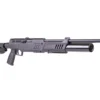
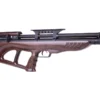
JTS Airacuda PRS Max PCP Air Rifle
$400.00
Description
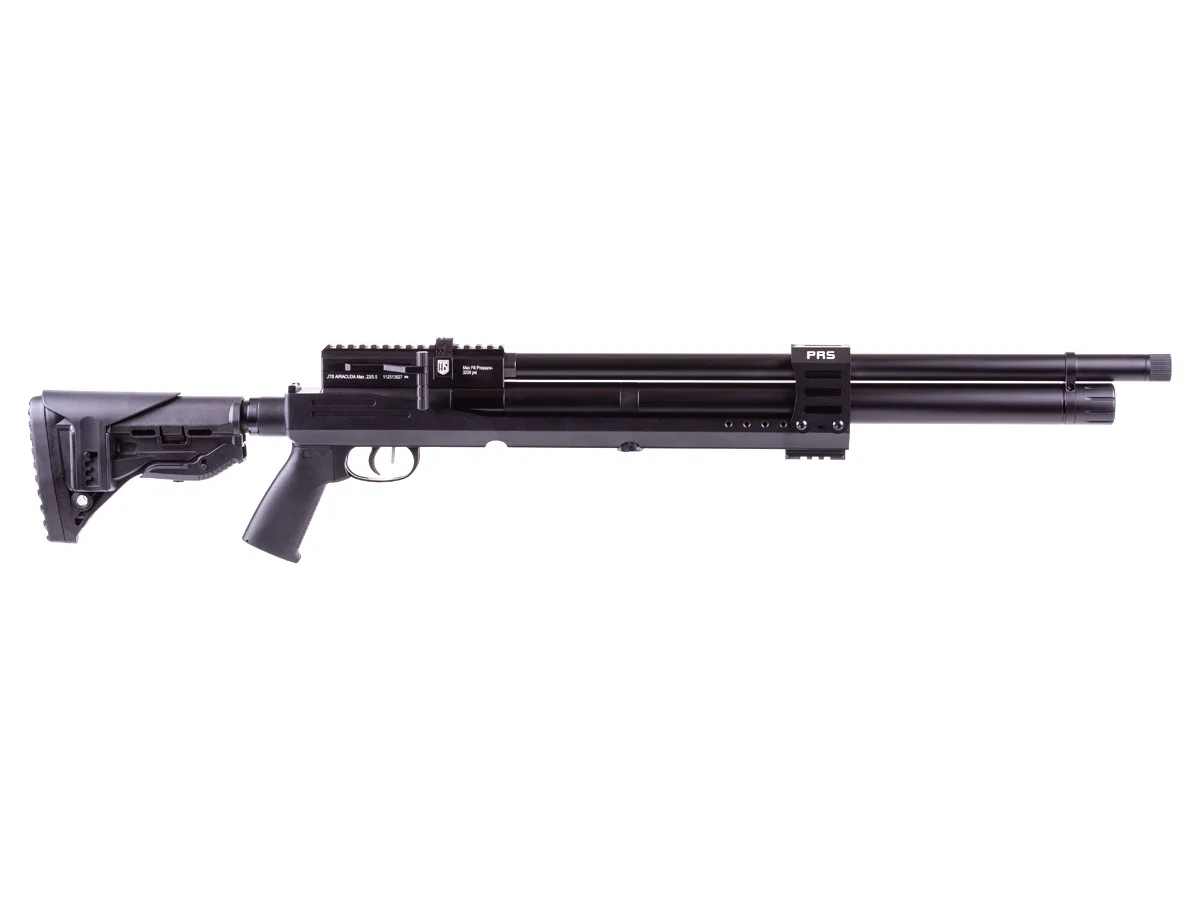
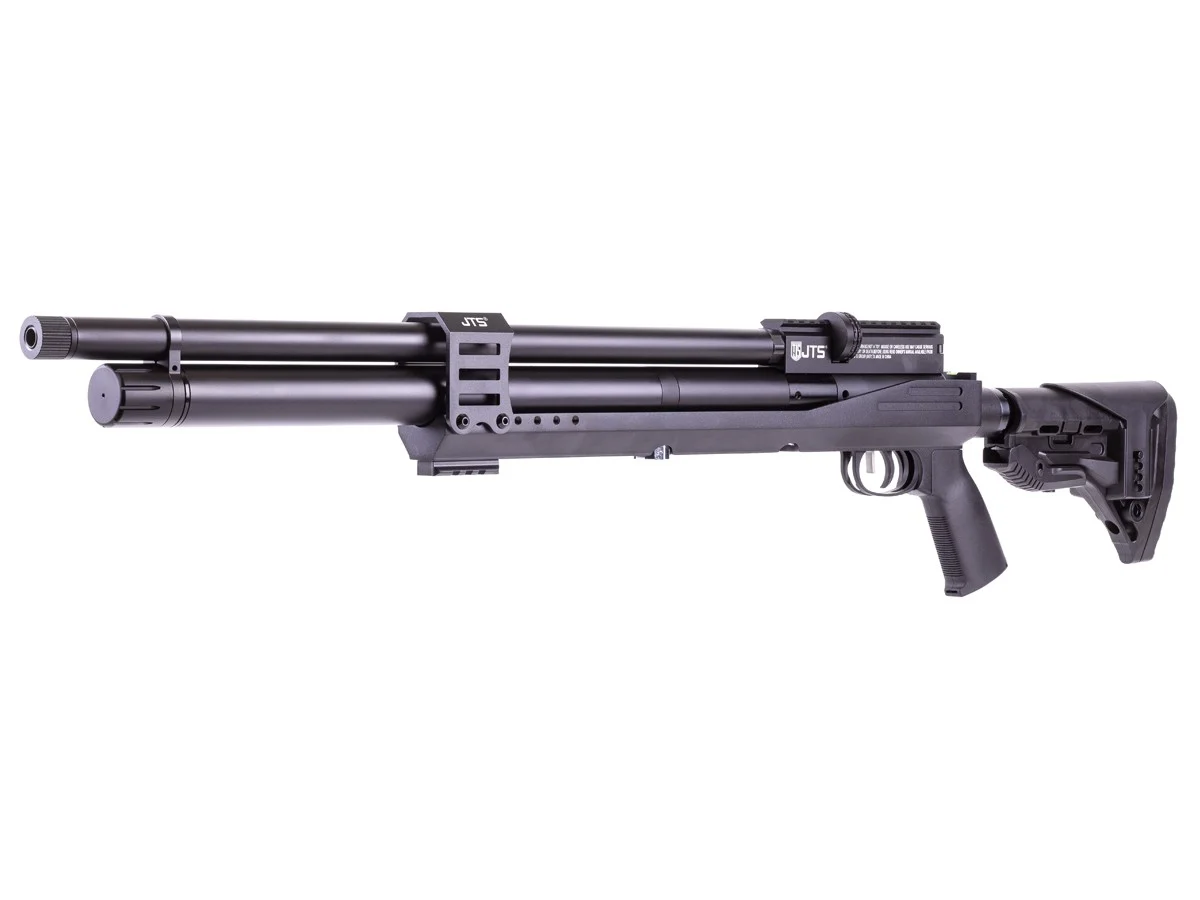
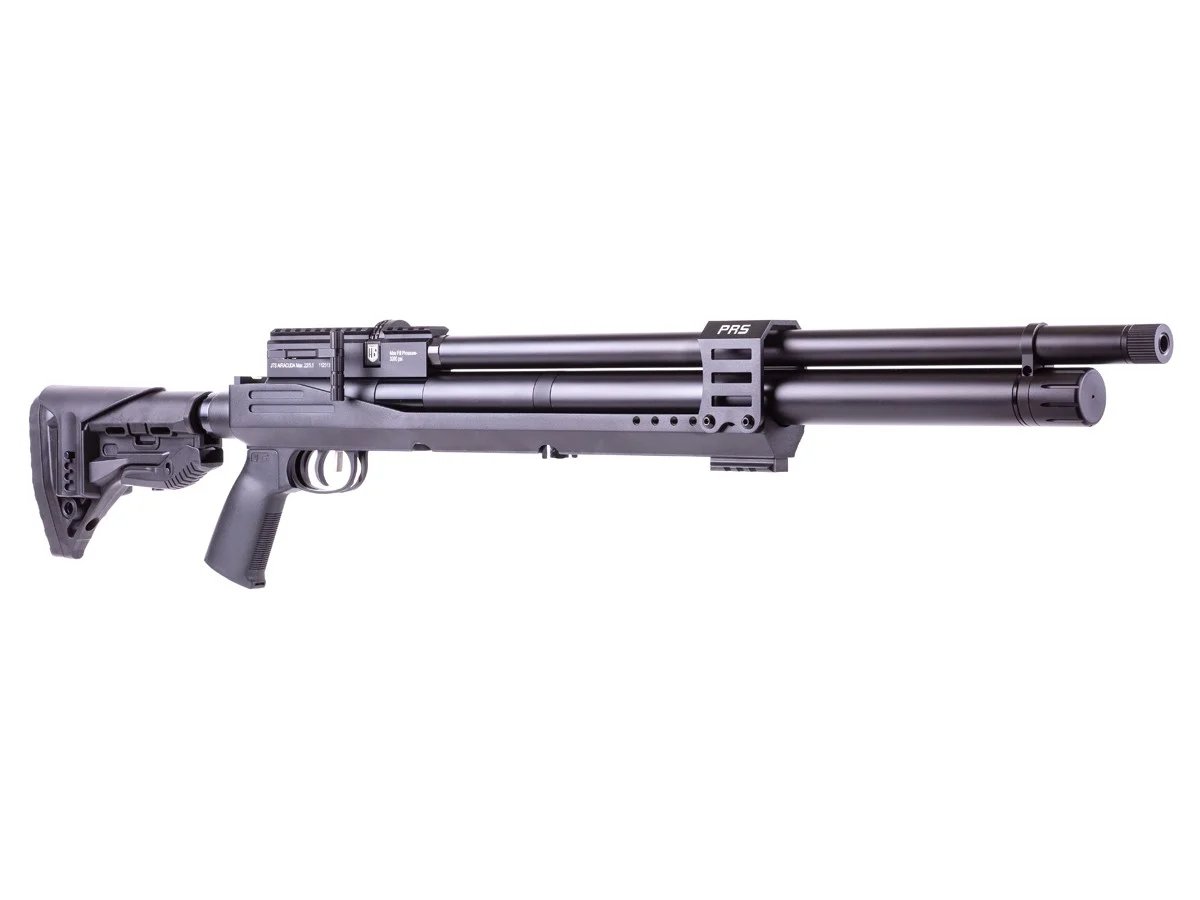
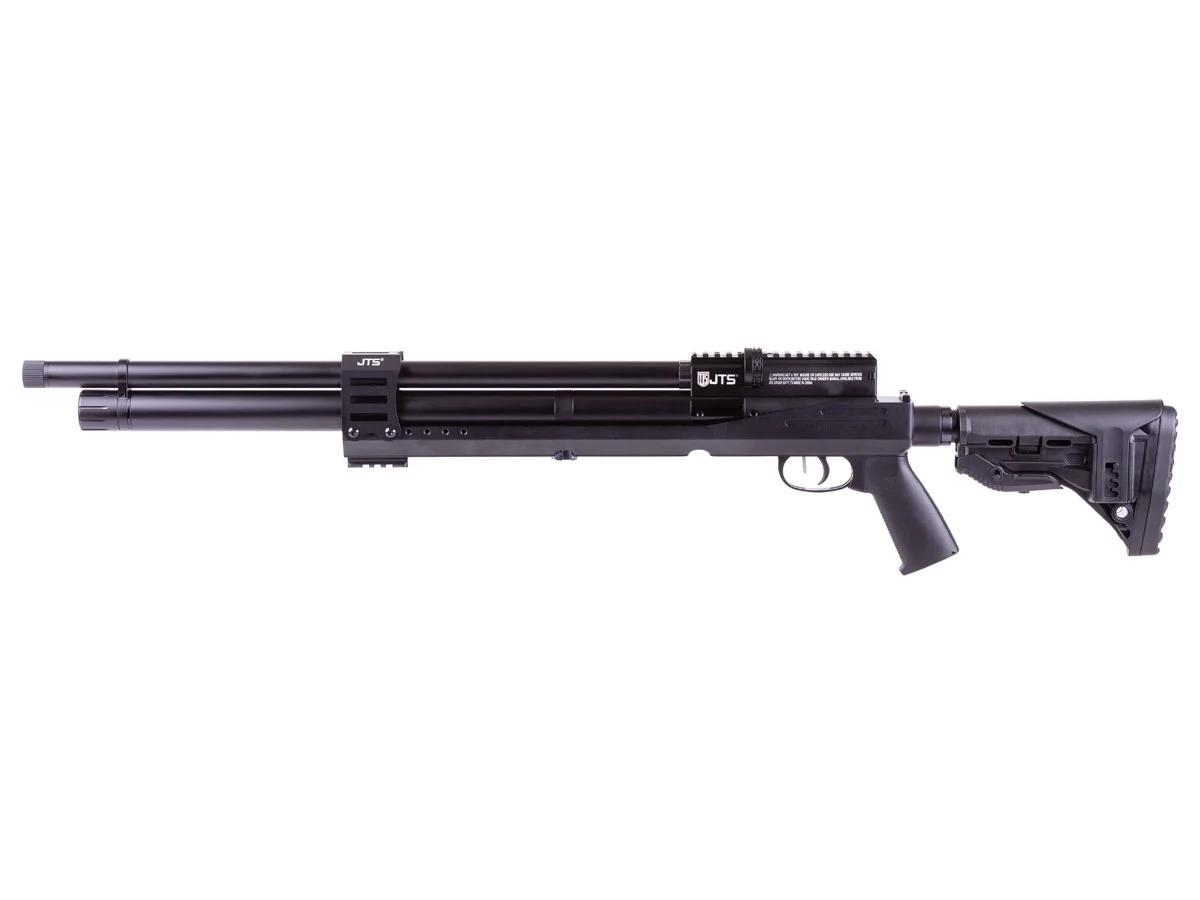
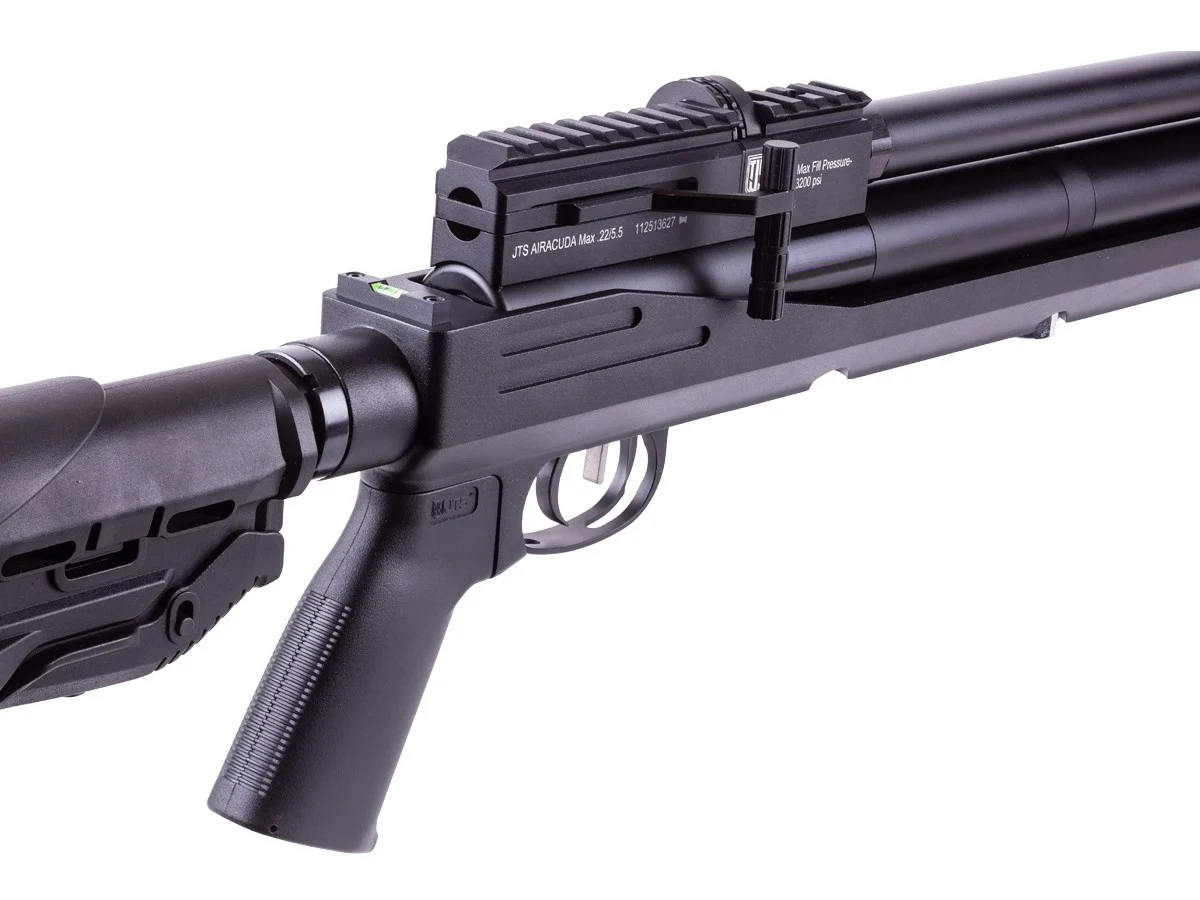
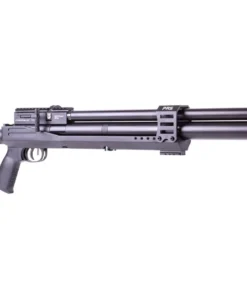
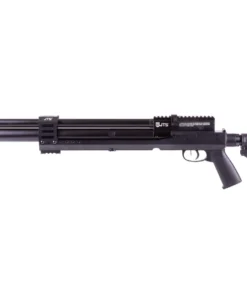
The JTS Airacuda PRS Max PCP Air Rifle offers high performance at a reasonable price considering the included features and options, paired with a high-quality custom aluminum alloy chassis for lightweight accuracy. In addition, the air rifle provides shooters with a chance to customize the setup because it uses an AR-compatible grip and an AR-compatible buttstock that can be changed to suit the user’s preferences.
Key Takeaways
- An advanced, custom aluminum alloy chassis and bridge provide superior performance and options
- The air rifle offers opportunities for personalization with the grip and buttstock
- The internal regulator delivers consistent velocities and steady and predictable performance that leads to accuracy
Advanced Custom Chassis for Lightweight Functionality
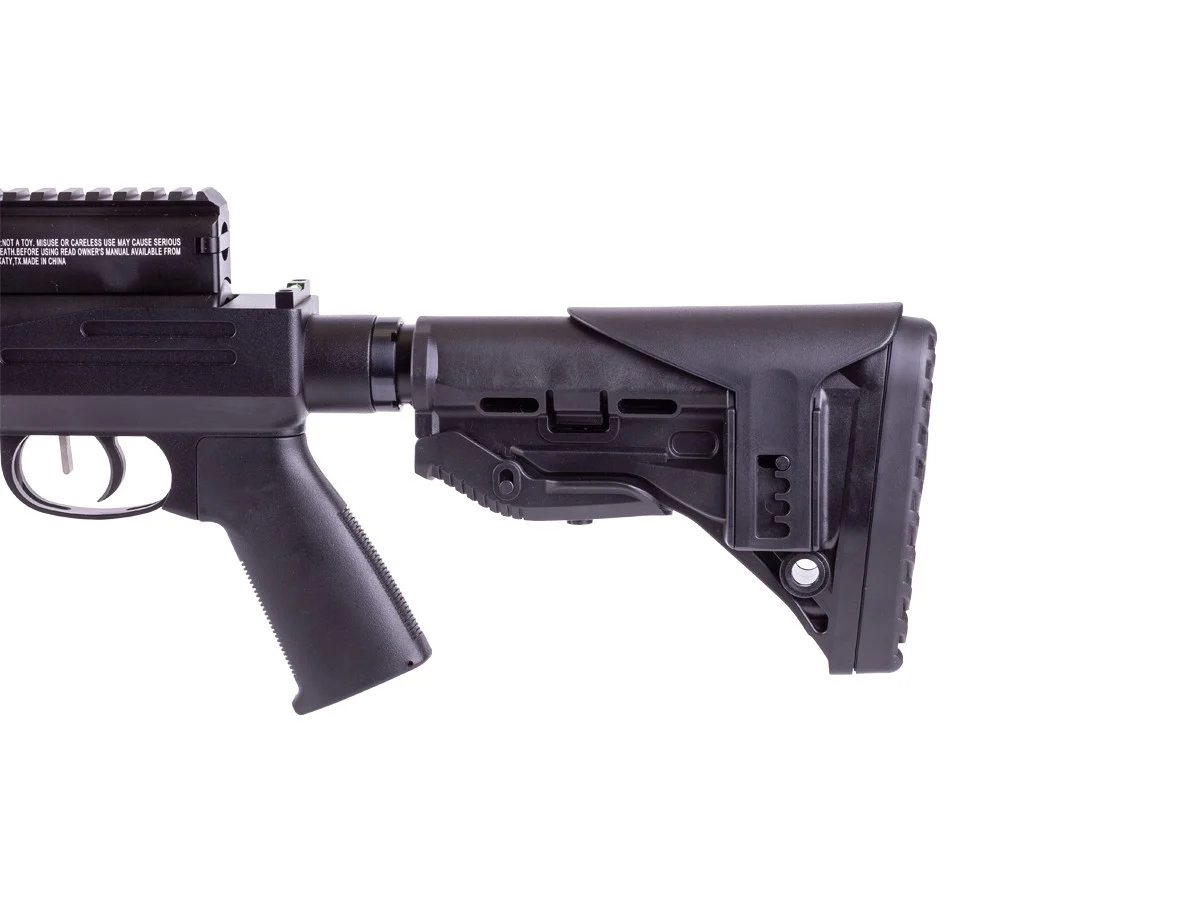
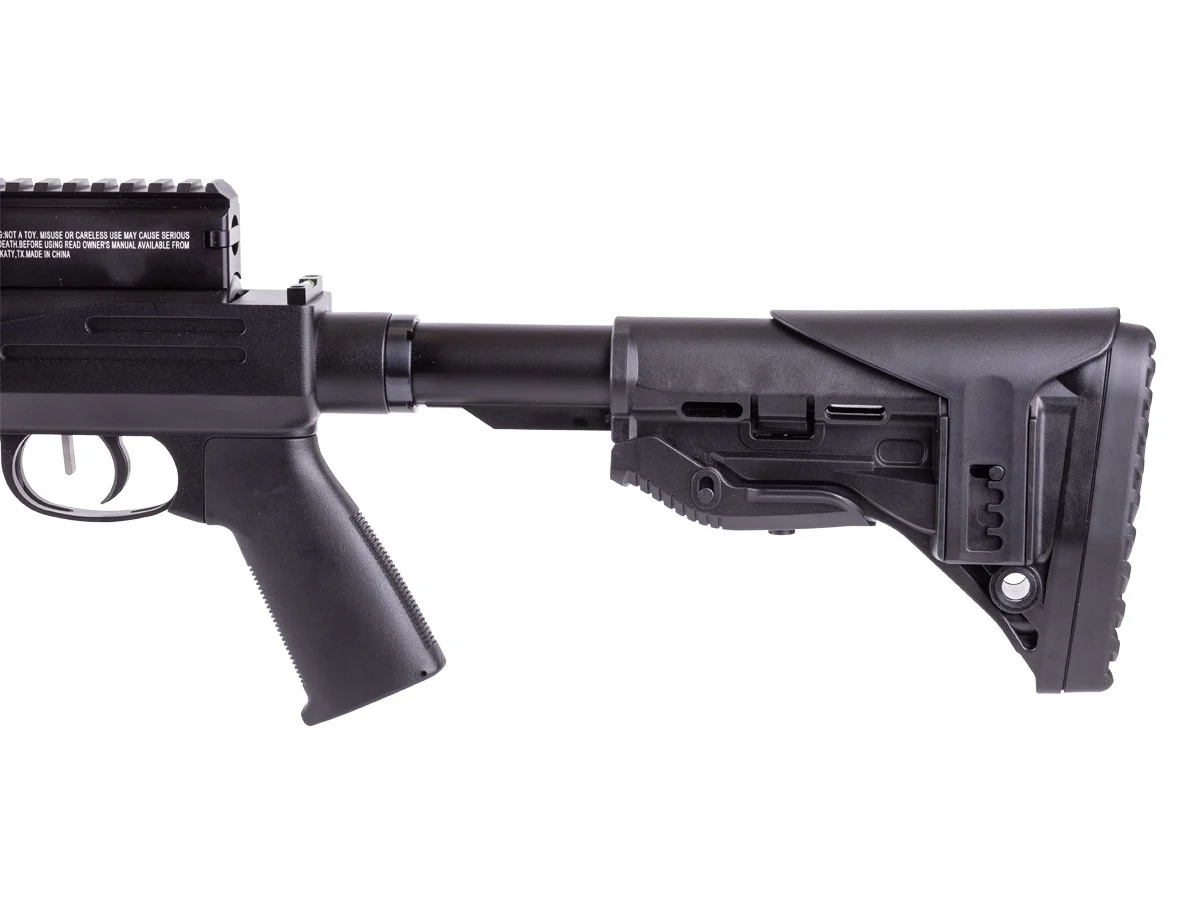
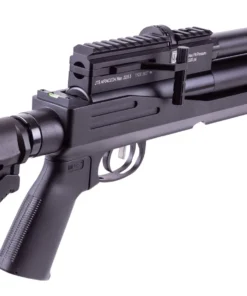
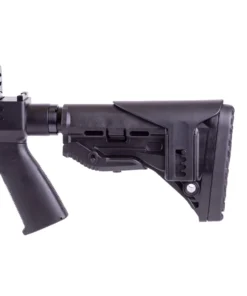
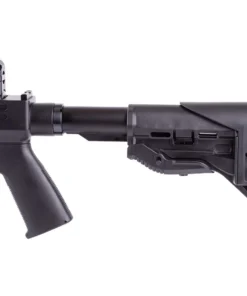
The feature that sets the JTS Airacuda PRS Max apart from other airguns in the lineup is the custom aluminum alloy chassis that offers ergonomics, stability, and control that leads to accurate shots. It features a patented adjustable buttstock with elevation-adjustable cheekpiece, and it has a simple length adjustment lever that results in a variable length of pull. In addition, it has a ridged rubber buttpad to provide comfortable control.
Internal Regulator for Consistent Performance
The internal regulator on this air rifle means that each shot leaves the rifled barrel with stable velocities, meaning lower variation across an entire shot string. Consistent and predictable performance is one of the main factors that translates to dependable accuracy, meaning every shot can be taken with confidence.
Options for Customization.
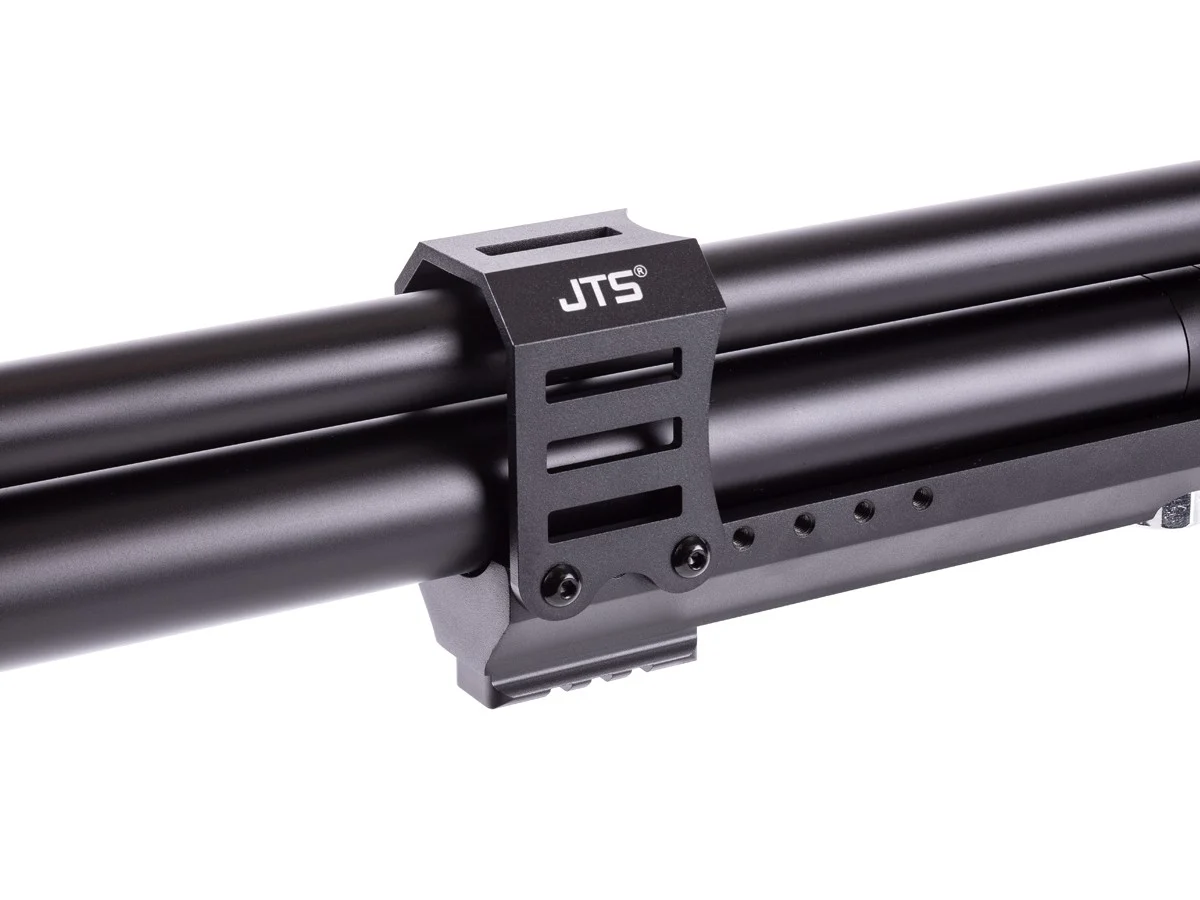
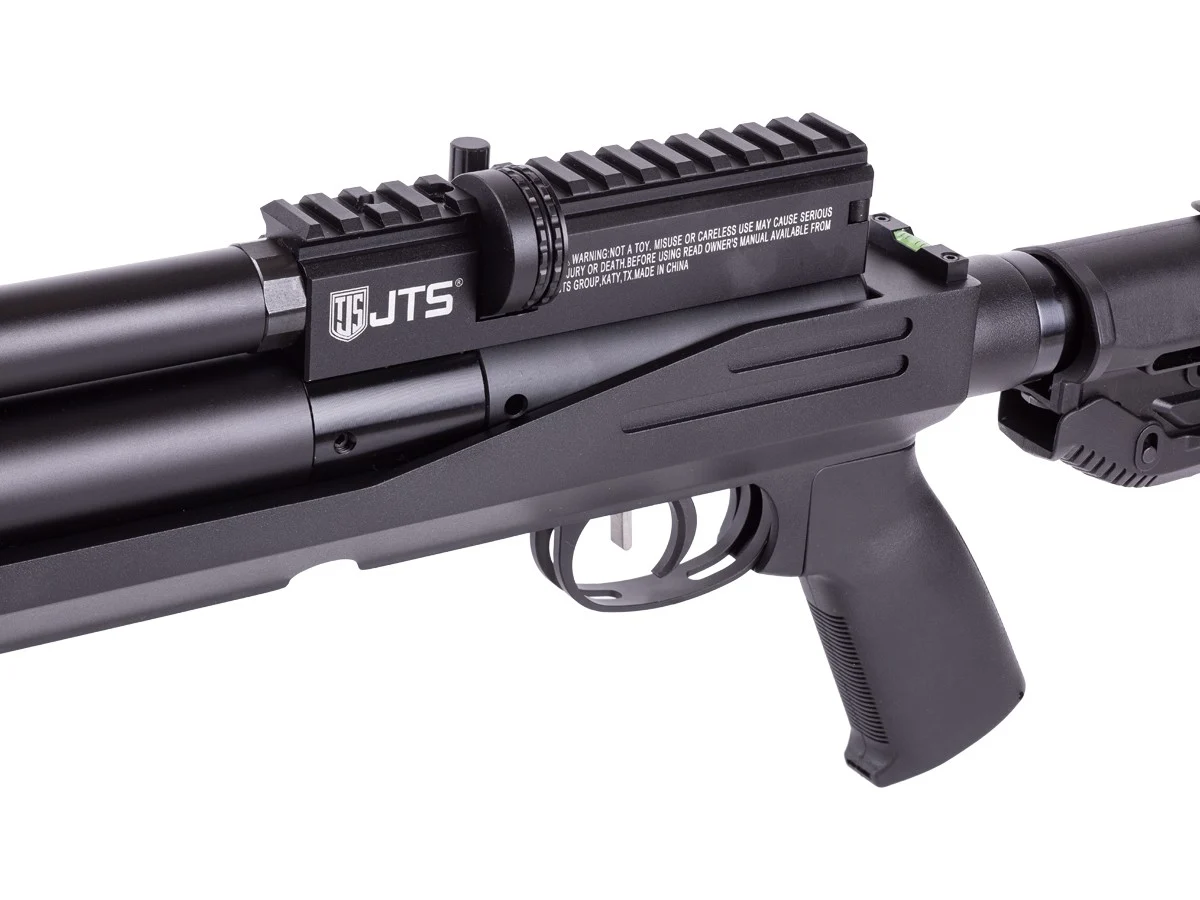
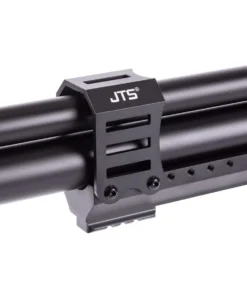
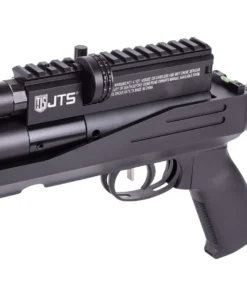
This air rifle provides opportunities for personalization, with an AR-compatible buttstock, AR-compatible grip, and the possibility of adding rails that extend the functionality of the airgun. In addition, the JTS Airacuda PRS Max has a Picatinny optics rail for adding a scope or other optic, as well as a Picatinny accessory rail underneath the front of the chassis for adding accessories such as a bipod for improved stability.
Features and Benefits
| Feature | Benefit |
|---|---|
| Patented Adjustable Buttstock | Provides lever for quick length adjustment, and can be switched for another AR-compatible buttstock. |
| Ability to Customize | Facilitates personalization because of its compatibility with the AR platform in terms of the grip and buttstock, and the possibility of adding rails. |
| Internal Regulator | Delivers consistent velocities from each shot, leading to predictable performance and improved accuracy. |
| Advanced Custom Aluminum Alloy Chassis | Offers high performance, improved toughness, and superior stability without adding unnecessary weight. |
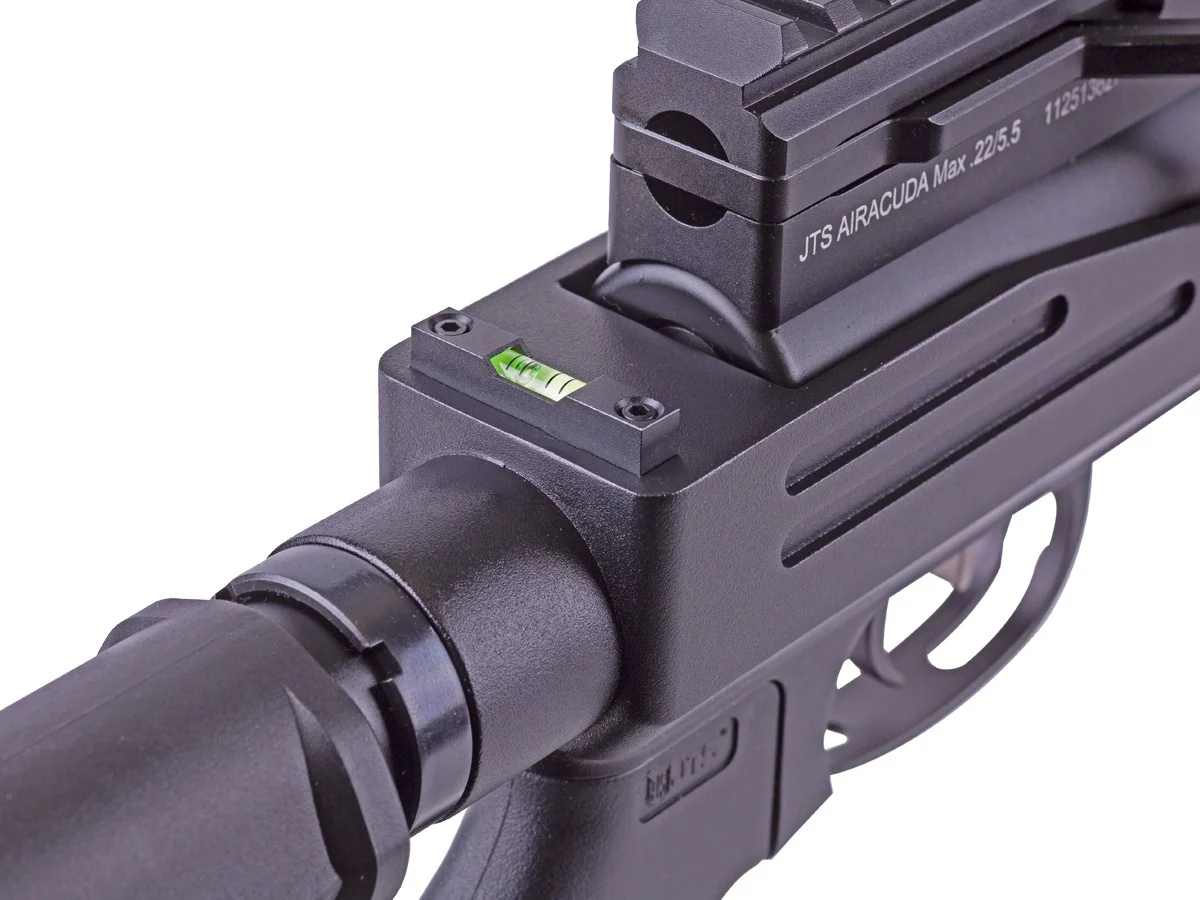
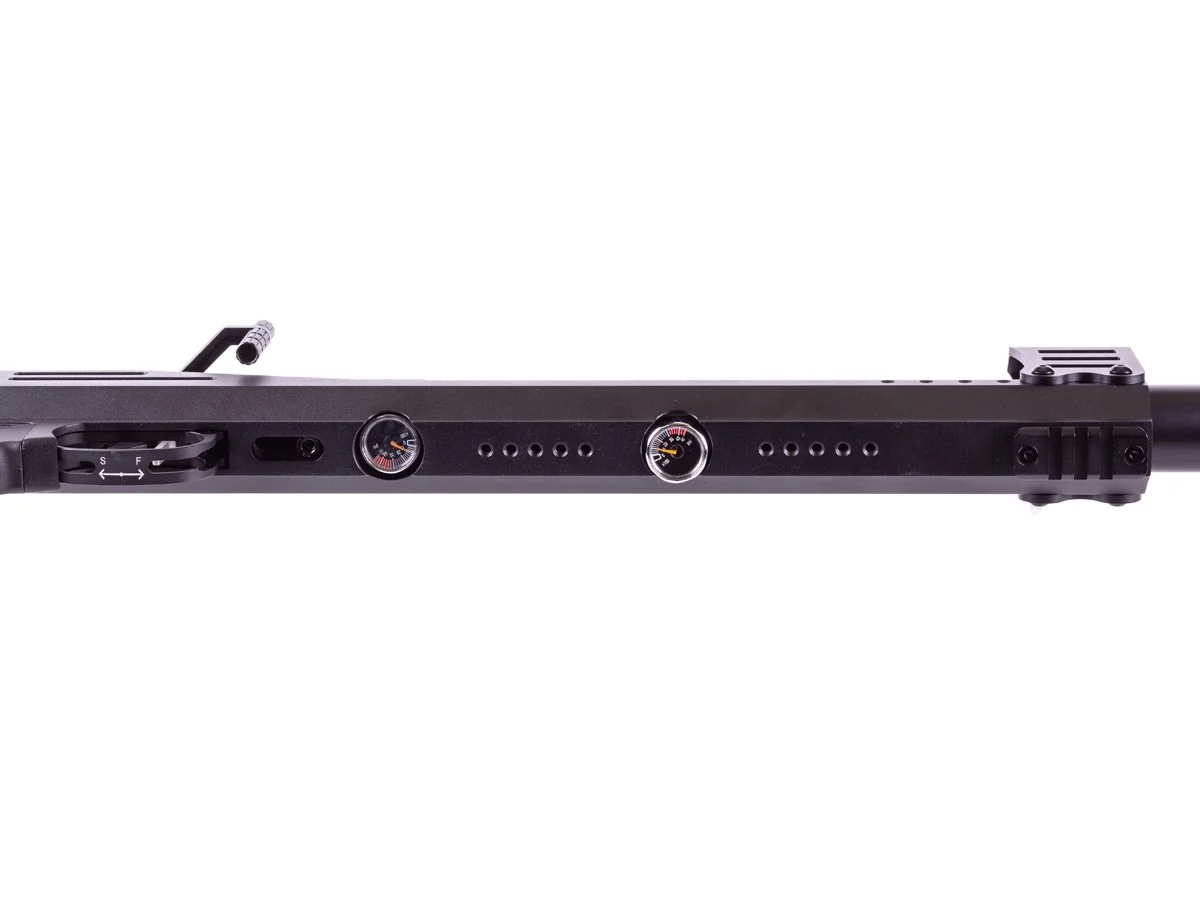
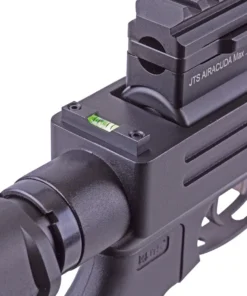
| Bottom Picatinny Accessory Rail and Integrated Bubble Level | Improves aiming accuracy and overall platform stability when combined with accessories such as a bipod. |
Why Buy JTS Airguns from Pyramyd AIR
JTS Airguns offers high-quality and thoughtfully-crafted airguns, pellets, and other accessories at reasonable prices for the features they provide. This practice allows shooters to experience dependability and ease of use that puts their needs front and center. JTS Airguns has a Katy, Texas headquarters with a design space and gunsmithing area to assist in creating their unique designs.
When you buy from Pyramyd AIR, you’re getting more than just great airguns, airgun accessories, and outdoor products. You’re also getting a valuable loyalty program, free shipping on qualifying orders, and expert pro shop services. Our knowledgeable staff is ready to assist you, and we offer a huge selection of ammo and other products for your shooting needs. In business since 1996, we are your trusted source for all things outdoors. Buy the JTS Airacuda PRS Max PCP Air Rifle at Pyramyd AIR now.
Additional Resources
- Shop Airgun Pellets
- JTS Airguns, Pellets, and Accessories
- Explore PCP Air Rifles
JTS Airacuda PRS Max PCP Air Rifle
- Precharged pneumatic
- Sidelever action
- Repeater
- Aluminum alloy chassis with bridge
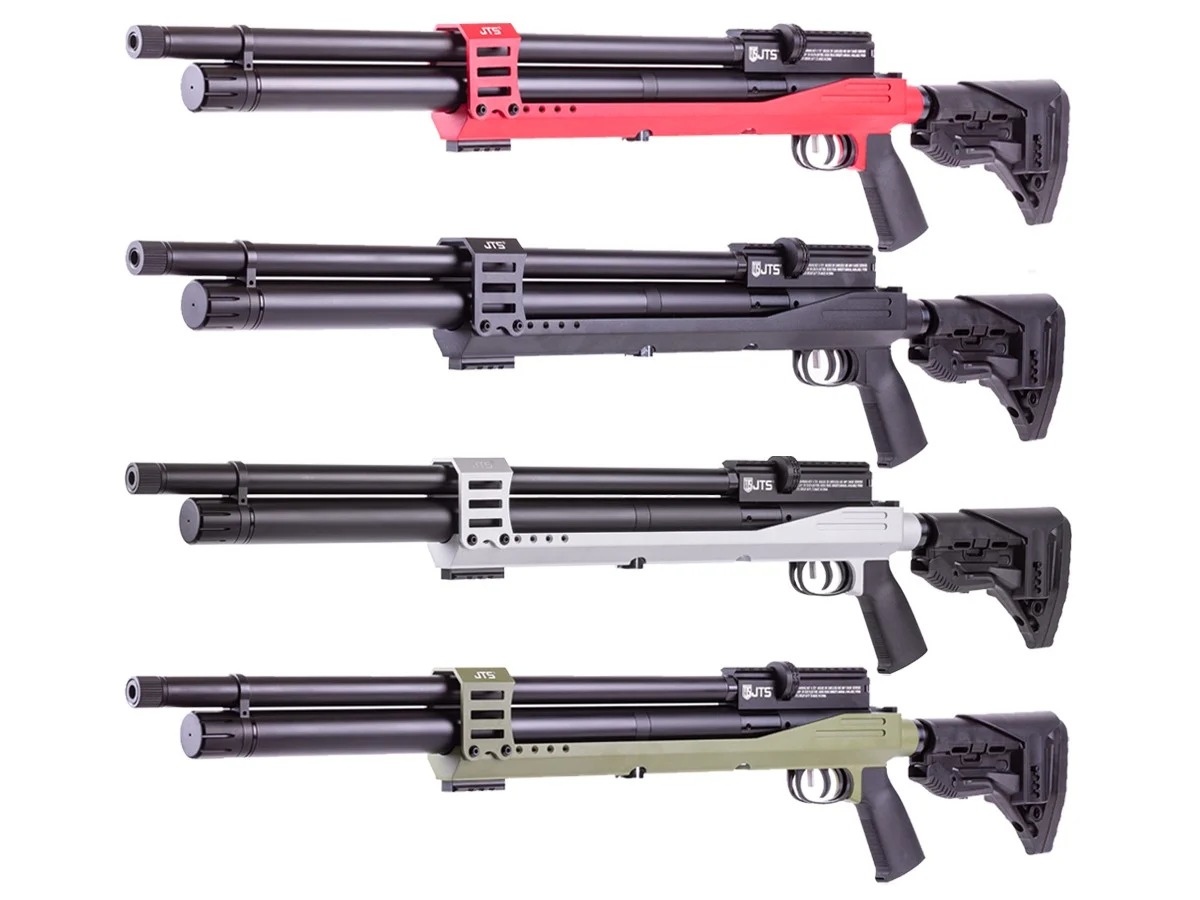
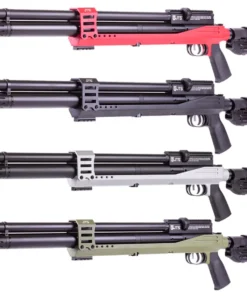
- Available chassis colors: black, green, red, silver
- Fully regulated
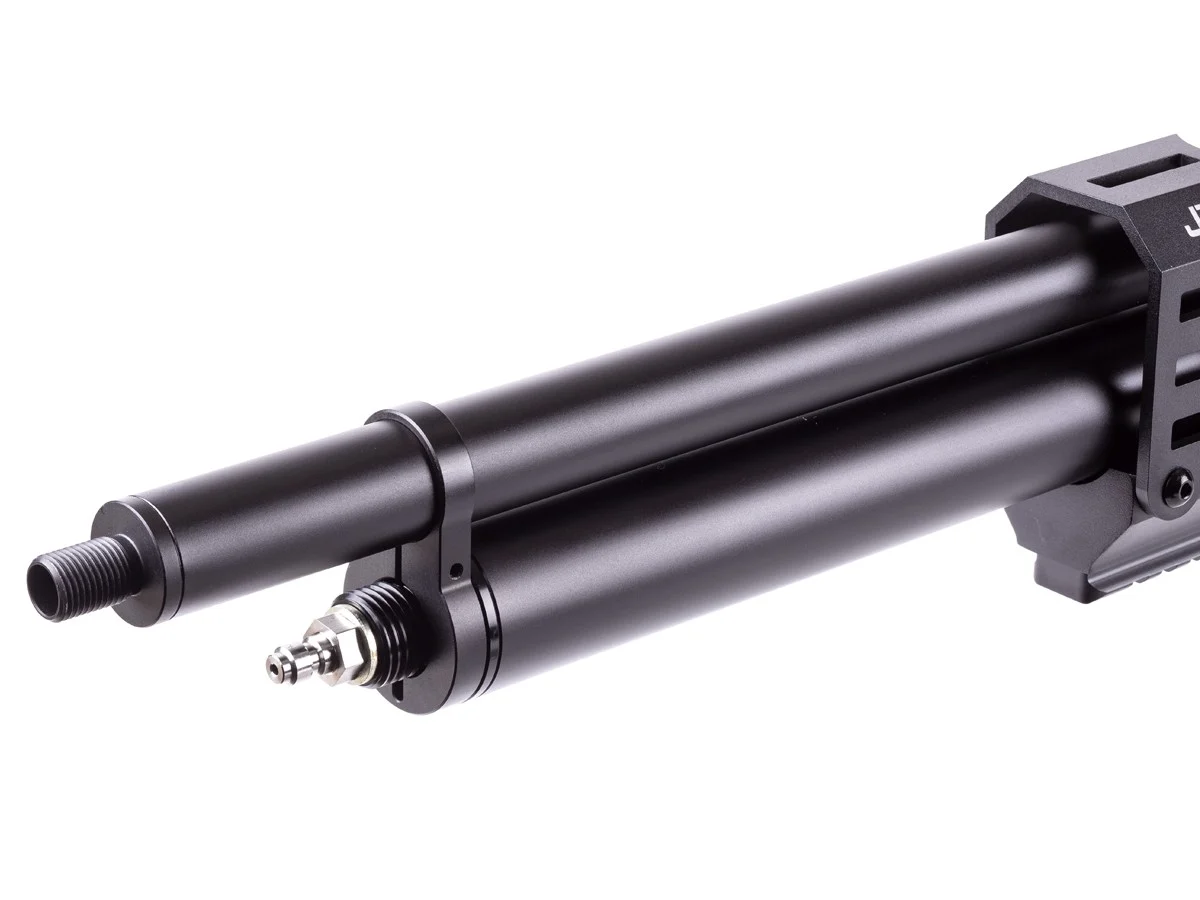
- 1/2 UNF adapter (.22/.25), M18-1 (.30)
- Max. fill pressure: 3,200 PSI/220 BAR
- Cylinder size: 220cc
- Magazine capacity: 10 rounds (.22, .25), 7 rounds (.30)
- Max. shots per fill: 40 (.22), 30 (.25), 20 (.30)
- Max. velocity: 950 FPS (.22), 920 FPS (.25), 860 FPS (.30)
- Max. energy*: 36 FPE (.22), 48 FPE (.25), 74 FPE (.30)
- Two-stage adjustable trigger
- Manual safety
- AR grip
- Picatinny optics rail
- Integrated bubble level
- Bottom Picatinny accessory rail
- Patented adjustable buttstock
- Elevation-adjustable cheekpiece
- Ridged rubber buttpad
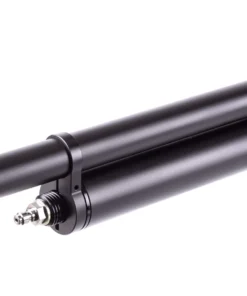
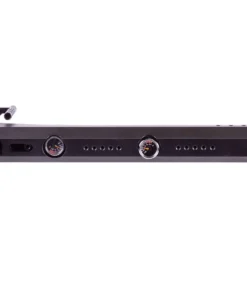
- Customizable pressure gauge placement options
- Sling adapter mount point on buttstock
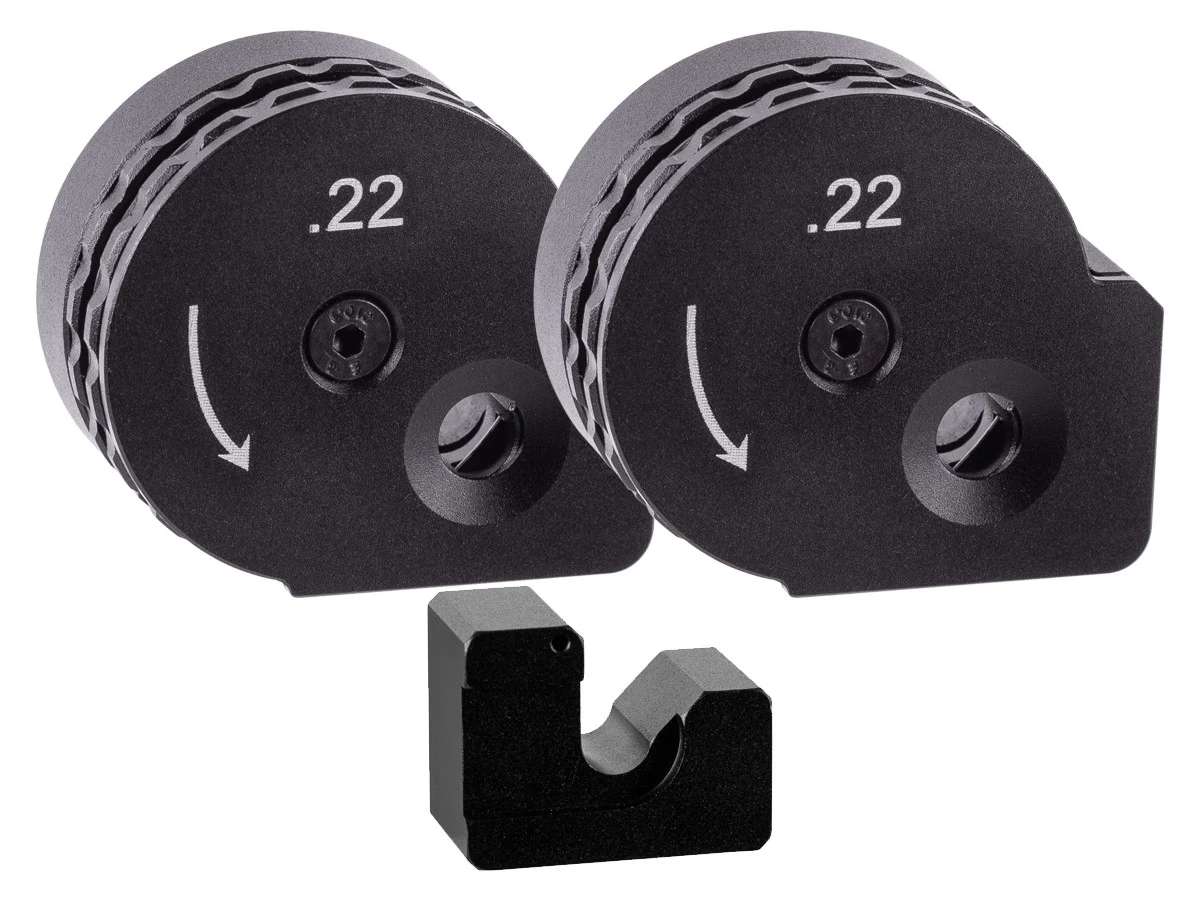
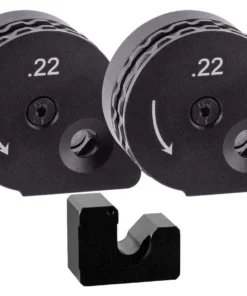
- Includes 2 metal magazines, single shot tray
- Barrel length: 21.1″
- Overall length: 38.8″-41.2″
- Weight: 8.5 lbs.
Specifications
JTS Airguns
Caliber.22 (5.5mm)Max Velocity950 fps Muzzle Energy36.28 ft/lbsSuggested forSmall game hunting/plinkingPowerplantPre-charged pneumaticLoudness3-MediumWeight8.5 lbsFunctionRepeaterMax Shots per Fill40Cylinder Size220 ccActionSideleverShroudedYesScopeableWeaver/PicatinnyFront SightsnoneRear SightsnoneSafetyManualTriggerTwo-stage adjustableBarrelRifledBarrel Length21.1″Capacity10 round(s)Body TypeRifleStockAluminumButtplateAdjustableColorBlackOperating Pressure3190 PSI / 220 BARRegulatedYesIs Safe To Dry FireYes
JTS Airacuda PRS Max PCP Air Rifle – Regulated PRS Precision, Aluminum Chassis, and Long-Range PCP Performance
JTS Airacuda PRS Max PCP Air Rifle Overview
The JTS Airacuda PRS Max PCP Air Rifle is a precision-oriented pre-charged pneumatic platform developed for shooters who want greater adjustability, chassis rigidity, regulated consistency, and PRS-inspired ergonomics. Rather than using the traditional wood stock found on the standard Airacuda Max, the PRS Max uses a custom aluminum-alloy chassis with a bridge, adjustable buttstock, cheek riser, AR-style grip, bubble level, and accessory mounting potential.
Available in .22, .25, and .30 caliber versions, the rifle uses a 220 cc cylinder, 21.1-inch rifled barrel, side-lever action, adjustable two-stage trigger, manual safety, and internal regulator. JTS lists maximum velocities of approximately 950 fps in .22, 920 fps in .25, and 860 fps in .30.
Why Choose the JTS Airacuda PRS Max?
The main reason to choose this rifle is its precision-focused chassis system. Shooters already researching jts airguns, jts airacuda, jts airacuda max, jts airacuda 25, airacuda, Jts aircuda, or airacuda max will recognize the familiar Airacuda platform, but the PRS Max places it into a far more adjustable competition-style configuration.
The platform can therefore appeal to shooters considering airacuda pcp, jts airacuda max 30, jts airacuda max 30 cal, jts guns, JTS PCP air rifle, or a serious compressed air rifle for benchrest and precision-oriented range use.
Independent 2026 testing of the .25 caliber version recorded excellent accuracy and consistency, including a 10-shot group measuring approximately 0.475 inch vertically and 0.285 inch horizontally at 25 yards under the test conditions.
How Good Is the PRS Max for Precision Shooting?
The rifle is particularly strong when stability and repeatability matter. Its regulated action manages air delivery, while the rigid aluminum chassis provides a consistent platform for the action and barrel. Furthermore, the adjustable cheek riser and buttstock help the shooter establish repeatable head and shoulder positioning.
Buyers comparing JTS AirStryke Carbine, jts airstryke, JTS AirStryke Carbine PCP air rifle, AirStryke Carbine airgun, JTS AirStryke Carbine review, JTS AirStryke Carbine price, JTS AirStryke Carbine for sale, or buy JTS AirStryke Carbine online should recognize that the PRS Max serves a more precision-oriented role.
Likewise, jts stealth hawk, jts brawn, Jts group, jts firearms, jts shotgun accessories, and air guns of texas represent broader searches around the manufacturer or airgun market rather than direct equivalents.
How Does the JTS Airacuda PRS Max Achieve Accuracy?
Precision comes from several systems working together. The regulator helps reduce pressure variation between shots, while the adjustable two-stage trigger allows the firing interface to be tuned to shooter preference. In addition, the 21.1-inch rifled barrel provides a stable projectile path, and the chassis allows the rifle to be supported consistently from bags, bipods, or other suitable rests.
The rifle includes two metal magazines and a single-shot tray. Magazine capacity is listed at 10 rounds in .22 and .25, and seven rounds in .30. JTS also specifies maximum shot counts of about 40, 30, and 20 respectively.
Quality jts pellets or other properly matched ammunition should be tested because projectile weight and barrel compatibility can affect groups significantly.
Where Should the PRS Max Be Used?
The PRS Max is particularly suited to target shooting, benchrest, PRS-style competition, recreational precision shooting, and lawful field applications where the selected configuration is permitted.
JTS itself lists small-game hunting and plinking among intended uses, although independent testing characterized the chassis version as especially well suited to benchrest and PRS competition.
A shooter researching JTS air rifle for hunting should therefore consider weight, caliber, shooting position, local laws, and intended carrying distance before choosing the chassis version.
When Should You Choose the PRS Max?
Choose this platform when adjustability and supported precision matter more than traditional sporting-rifle styling.
It is especially attractive when you want a regulated PCP with an adjustable stock, cheek riser, rigid aluminum structure, side-lever cycling, and dedicated precision features.
Shooters searching for a best scope for PCP air rifle should choose optics according to their intended distances and shooting discipline rather than magnification alone.
PCP ownership also requires a suitable air source, so searches involving jts compressor are directly relevant to the rifle’s operation.
How Does It Compare With Other PCP Platforms?
Some shoppers may also compare the PRS Max against the Reximex Lyra-K PCP air rifle, Reximex Lyra-K airgun, Reximex Lyra-K review, Reximex Lyra-K PCP rifle, Reximex Lyra-K regulated PCP, Reximex Lyra-K compact PCP rifle, and Reximex Lyra-K tactical air rifle.
Other buyer-intent searches include Reximex Lyra-K hunting rifle, buy Reximex Lyra-K online, best price Reximex Lyra-K, Reximex Lyra-K accuracy test, Reximex Lyra-K scope package, and Reximex Lyra-K pellet gun.
For users exploring legal field applications, searches such as Reximex Lyra-K for pest control and Reximex Lyra-K small game hunting reflect different priorities from PRS or benchrest use. The better platform depends on handling, adjustment requirements, available caliber, local regulations, and shooting environment.
Important Information About Caliber and Equipment
The PRS Max is offered in .22, .25, and .30 caliber rather than as a 177 cal pellet gun. Searches such as 177 cartridge may therefore refer to other platforms and should not be confused with the current PRS Max caliber lineup.
Similarly, phrases such as lindstradt air gun, tom air gun, and airgins may appear in broad airgun searches but do not identify documented PRS Max specifications.
The rifle operates at a listed 3,200 psi pressure and should always be charged with suitable high-pressure equipment. JTS also describes the barrel as moderator-ready, with caliber-dependent muzzle threading.
Ultimately, the JTS Airacuda PRS Max combines regulated PCP operation, a rigid aluminum chassis, adjustable ergonomics, useful shot capacity, a long rifled barrel, and competition-inspired handling into one purpose-built platform. For shooters who prioritize repeatable supported accuracy and extensive adjustment, it represents a significant evolution of the established Airacuda design.
Precision Engineering, Regulated Performance, Handling, and Real-World Shooting Experience
The JTS Airacuda PRS Max PCP Air Rifle is designed around consistency, adjustability, and stable shooting performance. While its chassis immediately gives the rifle a competition-oriented appearance, the real advantage comes from the way the stock, regulator, barrel, trigger, air system, and shooting controls work together. When properly configured, the rifle provides a predictable platform that can support careful target work, recreational precision shooting, and lawful field applications.
Regulated Air Delivery and Consistent Performance
A regulated pneumatic system helps control the pressure delivered to the firing valve. Instead of allowing every shot to depend directly on the constantly changing pressure inside the main cylinder, the regulator provides a more controlled working pressure.
This improves consistency across the useful portion of the fill.
More consistent pressure can contribute to smaller velocity variations, which is especially important when shooting at longer distances. When projectile speed changes significantly, vertical point-of-impact variation can increase.
However, the regulator is only one part of the accuracy equation. Ammunition quality, environmental conditions, optic setup, trigger technique, and shooting position all affect the final result.
Chassis Stability and Shooting Support
The aluminum chassis provides a rigid foundation for the action and other major components.
Rigidity is valuable because unnecessary movement between components can make repeatable shooting more difficult. A stable platform allows the barrel and action to remain consistently positioned throughout the firing cycle.
The chassis also makes the rifle easier to configure for supported shooting.
When used with a suitable rest, bag, or bipod, the rifle can be positioned consistently between shots. This helps the shooter evaluate ammunition and mechanical performance without introducing unnecessary changes in support position.
Adjustable Stock and Cheek Position
One of the most useful features of the platform is the adjustable rear section.
A shooter’s body dimensions influence how naturally a rifle fits. Arm length, shoulder position, neck length, and optic height all determine whether the shooting position feels comfortable.
The adjustable stock allows the rifle to be configured more closely to the individual user.
Likewise, the cheek support can be positioned so the eye aligns naturally with the optic.
Correct head positioning is important because repeatedly lifting or lowering the head can introduce inconsistency.
A properly adjusted rifle should allow the shooter to shoulder it and immediately find a comfortable sight picture.
Trigger Control and Precision
Trigger behavior has a major influence on practical accuracy.
A predictable two-stage trigger allows the shooter to take up the first stage deliberately before applying the final pressure required to release the shot.
This can reduce sudden movement.
The goal should not simply be the lightest possible trigger. Instead, the shooter should seek a safe, predictable, and repeatable release.
Good trigger technique involves pressing smoothly while maintaining sight alignment.
The finger should move independently without pulling the rifle sideways.
With practice, this process becomes more natural and can noticeably improve group consistency.
Barrel Performance and Ammunition Selection
The barrel provides the final guidance for the projectile before it enters open air.
Even a high-quality barrel can perform differently depending on the ammunition being used.
Projectile weight, shape, diameter, construction, and consistency all matter.
For this reason, shooters should test several suitable options rather than assuming that one type will automatically deliver the best results.
Testing should be performed from the same stable position and distance whenever possible.
Once a reliable ammunition choice has been identified, staying with it can make zeroing and trajectory management much easier.
Side-Lever Operation
The side-lever action allows the shooter to prepare the next shot without making large movements.
This is useful during precision sessions because the shooting position can be maintained more easily.
Smooth cycling also improves the overall feel of the rifle.
The lever should be operated firmly but without excessive force.
If unusual resistance develops, the shooter should stop and inspect the magazine or loading system rather than forcing the mechanism.
Consistent handling helps preserve reliability.
Magazine and Single-Shot Use
The rifle provides flexibility between repeated magazine-fed shooting and more deliberate single-loading sessions.
A magazine is convenient during recreational shooting or longer strings.
However, the single-shot option can be useful when testing ammunition or concentrating on individual groups.
Loading one projectile at a time encourages a slower shooting rhythm.
This can make it easier to focus on breathing, trigger control, and follow-through.
Both methods have practical value depending on the type of session.
Balance and Overall Handling
Although the rifle has a substantial precision-oriented chassis, correct setup helps maintain manageable handling.
The stock position and accessories should be adjusted carefully so the rifle does not become unnecessarily front-heavy or rear-heavy.
Adding large optics, bipods, or other equipment can change the balance significantly.
For this reason, accessories should be selected according to genuine need rather than appearance alone.
A balanced setup is easier to control and less tiring during extended sessions.
Practical Accuracy in Real Conditions
Mechanical accuracy is only part of real-world performance.
Wind, temperature, shooting angle, support position, and shooter technique all influence the final point of impact.
A stable platform gives the shooter a better foundation, but environmental awareness is still necessary.
At longer distances, even moderate wind can influence projectile movement.
Repeated practice under different conditions helps the shooter understand how the rifle behaves beyond controlled bench testing.
Long-Term Shooting Experience
The strongest advantage of the platform is the way its individual systems work together.
The regulator supports pressure consistency.
The rigid chassis provides stability.
The adjustable stock improves fit.
The trigger supports controlled shot release.
The barrel provides the foundation for precision, while the side lever and magazine system make repeated shooting convenient.
With suitable ammunition, careful setup, proper maintenance, and disciplined shooting technique, the rifle can deliver a refined and predictable experience across repeated shooting sessions.
Its greatest strength is not one isolated feature, but the combination of consistency, adjustability, and control built into the complete platform.
Precision Engineering, Regulated Performance, Ergonomics, Accuracy, and Real-World Shooting Experience
The JTS Airacuda PRS Max PCP Air Rifle is built around consistency, adjustability, and controlled performance. Its design combines a rigid chassis, regulated air system, long rifled barrel, adjustable trigger, side-lever operation, and customizable stock geometry. Together, these elements create a platform intended for shooters who value repeatable positioning, stable supported shooting, and predictable shot behavior over extended sessions.
Regulated Air Delivery
A regulated pneumatic system helps maintain more consistent pressure from shot to shot.
Inside an unregulated system, cylinder pressure gradually changes as the rifle is fired. A regulator reduces the influence of that changing reservoir pressure by supplying the firing valve with a more controlled working pressure.
As a result, velocity variation can be reduced during the useful portion of the fill.
This matters because changing projectile velocity can affect vertical point of impact, particularly at longer distances.
However, regulation does not guarantee perfect accuracy by itself.
Projectile quality, barrel condition, environmental conditions, optic setup, trigger control, and shooting technique still play important roles.
Consistent Shot Behavior
Consistency is one of the most important qualities in a precision-oriented pneumatic rifle.
When the rifle behaves predictably, the shooter can focus on improving technique rather than compensating for unexpected changes.
A repeatable firing cycle helps during group testing, zero confirmation, and longer practice sessions.
The shooter can also identify whether changes in point of impact are being caused by wind, ammunition, position, or equipment.
This makes the platform easier to understand over time.
Rigid Chassis Construction
The aluminum chassis provides a stable foundation for the main action.
A rigid structure helps maintain consistent alignment between major components.
This is particularly useful when the rifle is supported from a bench, rest, or bipod.
The chassis also provides a more competition-oriented feel than a traditional sporting stock.
Because the structure is adjustable, the rifle can be configured around the individual user rather than forcing every shooter into the same fixed position.
Adjustable Rear Stock
The rear stock can be adjusted to improve fit.
Correct length is important because it influences shoulder placement, trigger reach, and head position.
If the stock is too long, the shooter may stretch forward unnaturally.
If it is too short, the shooting position may feel cramped.
A properly adjusted stock allows the rifle to sit naturally against the shoulder.
This can improve comfort during longer sessions and make repeated positioning more consistent.
Adjustable Cheek Support
The cheek support helps position the head at the correct height behind the optic.
A consistent cheek position is essential because changes in eye alignment can affect sight picture and shooting comfort.
The goal is for the shooter to shoulder the rifle and immediately see through the optic without lifting or lowering the head excessively.
Once the correct position is found, it should be kept consistent.
This makes the rifle easier to mount naturally and supports repeatable shooting technique.
Trigger Feel and Shot Release
The two-stage trigger gives the shooter a clear preparation phase before the final release.
A predictable first stage allows the shooter to settle the rifle before applying the final pressure.
This can help reduce sudden movement at the moment of firing.
Trigger control should remain smooth and deliberate.
The finger should press directly backward rather than pulling sideways.
A controlled release helps maintain sight alignment through the shot.
The best setup is not necessarily the lightest possible setting.
Safety, predictability, and repeatability are more important.
Barrel Performance
The long rifled barrel provides the guidance needed to stabilize the projectile before it exits.
Barrel quality is important, but ammunition selection can be equally important.
Different projectile weights, shapes, and diameters may perform differently in the same barrel.
Because of this, accuracy testing should be conducted with several suitable options.
The shooter should compare groups under similar conditions rather than judging performance from only one or two shots.
Once a reliable combination is found, maintaining the same ammunition can simplify zeroing and trajectory management.
Magazine Operation
Magazine feeding makes repeated shooting faster and more convenient.
The side-lever system allows the shooter to cycle the action without making large movements away from the shooting position.
This is helpful when using a rest or bipod.
The lever should be operated smoothly and fully.
If unusual resistance is felt, the action should not be forced.
The magazine should be checked for correct loading, positioning, or obstruction before continuing.
Careful operation can reduce unnecessary wear and help prevent feeding issues.
Single-Shot Shooting
A single-shot tray can be useful during accuracy testing.
Loading one projectile at a time encourages a slower pace and more deliberate technique.
This is particularly useful when evaluating different projectile types.
The shooter can focus on breathing, aim, trigger control, and follow-through without rushing into the next shot.
A slower shooting rhythm also makes it easier to record results and compare performance.
Rifle Balance
Balance affects how comfortable the rifle feels during use.
Large optics, bipods, mounts, and other accessories can shift the center of gravity.
A front-heavy rifle may become tiring during unsupported use.
A rear-heavy setup can also feel awkward.
Accessories should therefore be selected according to practical need.
The rifle should remain manageable when moved between positions.
A balanced setup helps reduce fatigue and makes the platform feel more natural.
Optic Positioning
The optic should be mounted so the shooter can maintain a relaxed head position.
If the optic sits too high, too low, too far forward, or too far backward, the shooter may compensate by changing posture.
This can reduce consistency.
Once the optic is installed, eye relief and cheek position should be checked together.
A comfortable setup should allow a full sight picture without unnecessary head movement.
This becomes especially important during long sessions.
Air Management
The air reservoir should be monitored carefully.
A pneumatic rifle performs best when operated within its intended pressure range.
The shooter should become familiar with the pressure gauge and avoid allowing the reservoir to fall below the useful operating range.
Filling equipment should also be clean, suitable for high-pressure air, and used correctly.
Moisture and contamination should be kept out of the system whenever possible.
Proper filling habits can contribute to long-term reliability.
Practical Accuracy
Real-world accuracy depends on more than the rifle itself.
Wind, temperature, shooting angle, distance, and projectile choice can all affect point of impact.
At longer ranges, wind becomes particularly important.
Even a consistent rifle cannot eliminate environmental influence.
The shooter should therefore learn how the projectile behaves under different conditions.
Repeated practice makes it easier to distinguish equipment performance from environmental effects.
Supported Shooting
The chassis is particularly well suited to supported shooting positions.
A front rest or bipod can reduce movement and help the shooter focus on trigger control.
The rear of the rifle can also be supported carefully to improve stability.
Support pressure should remain consistent from shot to shot.
Changing how the rifle contacts the rest can affect point of impact.
A repeatable setup produces more meaningful accuracy testing.
Follow-Through
The shooting process should continue after the trigger releases.
The shooter should keep the rifle steady, maintain the sight picture, and avoid lifting the head immediately.
This is known as follow-through.
Good follow-through reduces unnecessary movement during the firing cycle.
It also helps the shooter observe the shot and maintain consistency.
Even with a low-recoil pneumatic platform, disciplined follow-through remains useful.
Long-Term Shooting Confidence
The strength of the JTS Airacuda PRS Max comes from the way its systems work together.
The regulator supports consistent pressure.
The chassis supports stability.
The adjustable stock improves fit.
The cheek support improves eye alignment.
The trigger supports controlled shot release.
The barrel provides the foundation for accuracy.
The side lever and magazine simplify repeated shooting.
With suitable ammunition, careful setup, proper filling practices, and consistent technique, the rifle can provide a refined and predictable shooting experience.
That combination of stability, adjustability, and consistency makes the platform especially suitable for shooters who want to develop repeatable performance rather than rely on a fixed factory setup.
Build Quality, Maintenance, Air-System Care, Reliability, Storage, and Long-Term Ownership
The JTS Airacuda PRS Max PCP Air Rifle is designed as a precision-oriented platform, but long-term performance depends heavily on how well the rifle is maintained, stored, and inspected. A pneumatic rifle contains several systems that work together, including the air reservoir, regulator, barrel, trigger assembly, magazine system, seals, fittings, and adjustable chassis components. Because of this, routine care can make a substantial difference in consistency, reliability, and overall ownership experience.
Maintaining the Exterior Finish
The exterior should be kept clean and dry after regular use.
Dust, fingerprints, moisture, and handling residue can collect on the chassis and exposed metal surfaces. A soft cloth is generally suitable for routine wiping.
The rifle should not be stored while wet.
If it has been used in damp conditions, the exterior should be dried carefully before being placed in a case or cabinet.
Good surface care helps preserve both appearance and function over time.
Inspecting the Air Reservoir
The air reservoir is one of the most important components of the system.
Its condition should be checked periodically for unusual marks, damage, or leakage.
The pressure gauge should also be observed regularly.
A noticeable pressure drop while the rifle is stored may indicate that the system should be inspected.
High-pressure components should never be modified casually.
If a suspected leak develops, professional servicing is preferable to forcing or disassembling pressure-bearing parts without the correct knowledge.
Filling the Rifle Correctly
Clean, dry compressed air is important for pneumatic systems.
Moisture or contamination introduced during filling can affect internal components over time.
The filling connection should remain clean before the air source is attached.
Dirt around the fitting should be removed carefully.
The rifle should also be filled within the manufacturer’s stated operating range.
Overfilling should be avoided because it may affect performance or place unnecessary stress on the system.
Protecting Seals and Fittings
Seals help maintain air pressure throughout the system.
Repeated filling, storage, temperature changes, and age can eventually influence their condition.
A healthy system should generally retain pressure without rapid loss.
If leakage is suspected, the shooter may notice pressure falling faster than expected.
Only suitable lubricants and replacement parts should be used when required.
Incorrect products can damage sealing materials.
For significant internal work, qualified service is the safer approach.
Regulator Consistency
The regulator contributes directly to predictable shot behavior.
Its condition should therefore be monitored indirectly through performance.
If velocity or point of impact begins changing unexpectedly despite consistent ammunition and environmental conditions, the air system may deserve inspection.
However, not every accuracy issue comes from the regulator.
Loose optic mounts, dirty barrel conditions, projectile variation, pressure changes, and shooter technique should also be considered.
A systematic approach prevents unnecessary adjustments.
Barrel Care
The barrel should be treated carefully.
Excessive cleaning is not always necessary, but accumulated residue can occasionally affect performance.
If accuracy begins to decline noticeably, barrel condition may be one factor worth checking.
Cleaning materials should be suitable for the bore and should not damage internal surfaces.
Harsh abrasives should be avoided.
After cleaning, several shots may be required before the rifle settles back into its normal performance pattern.
Protecting the Muzzle
The muzzle area should be protected from impact and contamination.
Damage near the barrel crown can affect how the projectile exits, which may influence accuracy.
The rifle should therefore not be rested directly on the muzzle.
When transporting it, the front end should be protected from hard contact.
If any accessory is fitted near the muzzle, alignment and security should be checked periodically.
Loose attachments can create unnecessary vibration or inconsistency.
Magazine Maintenance
The magazines should remain clean and free from debris.
Dust or damaged projectiles can interfere with smooth feeding.
The magazine should never be forced into position.
If resistance is felt, alignment should be checked before continuing.
Projectiles should also be seated correctly.
A damaged or dirty magazine can create feeding issues that may initially appear to be problems with the rifle itself.
Simple inspection can often identify the cause quickly.
Side-Lever Care
The side lever should operate smoothly through its full travel.
It should not require excessive force.
If movement suddenly becomes unusually stiff, the shooter should stop and inspect the loading system.
Forcing the lever can damage internal components or a poorly positioned projectile.
Routine handling should remain deliberate rather than aggressive.
Smooth mechanical operation is one of the easiest indicators that the action is functioning normally.
Trigger Inspection
The trigger assembly should remain clean and protected from dirt.
Adjustment screws should not be changed repeatedly without a clear reason.
Once a safe and comfortable setup has been established, unnecessary adjustment can create inconsistency.
If the trigger begins to feel significantly different, the rifle should be inspected before continued use.
A predictable trigger is important for both control and confidence.
Chassis Hardware
The adjustable chassis contains several connection points.
Stock adjustments, cheek support hardware, rail sections, and grip components should remain secure.
Repeated use and transport can sometimes allow screws to loosen gradually.
Periodic checks can prevent unwanted movement.
Fasteners should be tightened appropriately without excessive force.
Overtightening can damage threads just as easily as loose hardware can affect stability.
Optic Mount Security
Optics and mounts should also be checked regularly.
A loose mount can create sudden point-of-impact changes that may be mistaken for a problem with the rifle.
Before changing regulator settings, ammunition, or other variables, the optic installation should be inspected.
Mounting screws should remain secure and the optic should not shift under normal handling.
Keeping the sighting system stable simplifies troubleshooting.
Managing Moisture
Moisture should be taken seriously.
Rain, condensation, humid storage, or damp cases can affect both external and internal components.
After exposure to wet conditions, the rifle should be dried thoroughly.
It should not be sealed immediately inside a soft case while still damp.
A dry storage environment helps reduce corrosion risk and protects optics, metal surfaces, and adjustment hardware.
Storage Between Shooting Sessions
The rifle should be stored in a secure, dry location.
It should be protected from unauthorized access, heavy objects, and unstable temperatures.
The storage position should not place unnecessary pressure on the optic, barrel, or adjustment points.
A quality case can protect the rifle during transport, but long-term storage in a damp or poorly ventilated case should be avoided.
Local laws regarding secure storage should always be followed.
Transport Protection
During transport, the rifle should remain protected from impact and movement.
The optic and exposed controls deserve particular attention.
The air system should also be handled carefully.
Cases with internal support can help prevent the rifle from shifting.
Accessories should either be secured properly or removed if they are likely to catch on other equipment.
Careful transport reduces unnecessary wear and helps preserve zero.
Recognizing Performance Changes
Owners should become familiar with the rifle’s normal behavior.
Changes in sound, pressure retention, trigger feel, lever movement, accuracy, or shot consistency should be noticed early.
A single unusual shot does not automatically indicate a mechanical problem.
However, repeated changes deserve investigation.
Keeping basic shooting records can make this easier because performance patterns can be compared over time.
Long-Term Reliability
The strongest long-term performance comes from consistent maintenance rather than aggressive servicing.
Clean filling practices protect the air system.
Regular inspection helps identify loose components.
Careful barrel treatment preserves the bore.
Magazine maintenance supports reliable feeding.
Dry storage protects the chassis and metal surfaces.
Stable optic mounting preserves zero.
When these habits are followed consistently, the rifle is more likely to retain the predictable behavior expected from a precision-oriented pneumatic platform.
Over time, the owner develops familiarity with how the rifle should feel, cycle, and perform. That familiarity is valuable because small changes become easier to identify before they turn into larger problems. With sensible maintenance, careful transport, secure storage, and periodic inspection, the JTS Airacuda PRS Max can remain a dependable, refined, and enjoyable precision platform for long-term use.
Practical Field Use, Range Setup, Shooting Positions, Environmental Factors, and Performance Optimization
The JTS Airacuda PRS Max PCP Air Rifle is designed to reward careful setup and repeatable technique. Its chassis, regulated air system, adjustable stock, side-lever action, and precision-oriented layout give the shooter a strong foundation, but the best performance still depends on how the rifle is prepared and used in real conditions. Range setup, body position, wind, temperature, support choice, optics, and shot discipline can all influence the final result.
Preparing the Rifle Before Shooting
A consistent preparation routine helps reduce avoidable problems.
Before a shooting session, the air pressure should be checked, the magazine should be inspected, and the optic should be confirmed as secure.
The stock and cheek support should also remain in their usual positions.
If the rifle has been transported, screws and mounts deserve a quick visual inspection.
Small changes in adjustment can alter comfort and point of impact.
Starting every session from the same setup makes performance easier to evaluate.
Establishing a Stable Shooting Position
A stable position is one of the most important factors in practical accuracy.
The shooter should avoid unnecessary muscle tension.
The rifle should be supported naturally by the shoulder, hands, rest, or bipod rather than being forced into position.
When shooting from a bench, the body should align comfortably behind the rifle.
Twisting the torso or stretching forward can create inconsistency.
A relaxed position makes it easier to maintain the same sight picture from shot to shot.
Using a Bipod Effectively
A bipod can improve stability significantly when used correctly.
The front support should sit on a firm, consistent surface.
The shooter should avoid applying dramatically different forward pressure between shots.
Changes in loading pressure may alter how the rifle settles.
Once a comfortable amount of support has been established, the same technique should be repeated.
The rear of the rifle may also be supported with a suitable bag to reduce vertical movement.
Rear Support and Fine Adjustment
Rear support can help with precise elevation control.
Instead of lifting the rifle with the shoulder, the shooter can make small adjustments using the rear bag or support point.
This reduces unnecessary movement.
The goal is to allow the rifle to settle naturally on target.
If the shooter constantly forces the crosshair into position, the setup may not be aligned correctly.
Natural alignment is more repeatable than muscular correction.
Standing and Unsupported Use
Although the rifle is optimized for supported precision, unsupported shooting may still be practiced where appropriate.
The heavier chassis configuration will generally require more strength and balance than a lightweight sporting setup.
The supporting hand should be placed where the rifle feels naturally balanced.
The shooting elbow and shoulder should remain relaxed.
Shorter unsupported sessions may be more comfortable than prolonged holding.
Good technique becomes especially important when the rifle is used away from a bench.
Kneeling and Sitting Positions
Kneeling and sitting positions can provide greater stability than standing.
The shooter should establish a position that can be repeated comfortably.
Bone support should be used where possible instead of relying entirely on muscle tension.
The stock should remain firmly but naturally against the shoulder.
If the optic height has been adjusted correctly, the head should settle into position without excessive movement.
Stable intermediate positions can be useful for training outside the bench environment.
Managing Breathing
Breathing affects sight movement.
The shooter should avoid holding the breath for an unnecessarily long period.
A calm breathing cycle generally works better.
After a normal exhale, there is usually a brief natural pause when body movement is reduced.
The shot can be released during this stable period.
Rushing the process can increase tension.
If the shot does not feel right, the shooter can simply restart the breathing sequence.
Trigger Control
Trigger technique remains critical even when the rifle is well supported.
The finger should press smoothly toward the rear.
Sideways pressure can move the rifle off target.
The first stage should be taken up deliberately.
The final release should feel controlled rather than sudden.
After the shot breaks, the finger should remain steady momentarily.
This supports good follow-through and discourages unnecessary movement.
Follow-Through
Follow-through is often underestimated.
After firing, the shooter should maintain head position and keep looking through the optic.
The rifle should not be lifted immediately.
Remaining on target helps the shooter observe movement and evaluate technique.
Good follow-through is particularly useful when testing groups because it reduces one more source of variation.
The complete firing process should feel smooth from initial aim through the end of the shot.
Wind Awareness
Wind can affect projectile path significantly.
The shooter should observe vegetation, flags, dust, and other indicators where available.
Wind close to the shooter may not match conditions farther downrange.
Because of this, longer-distance shooting requires careful observation.
Rather than making large corrections immediately, shooters can record how different conditions affect impact.
Over time, this builds practical understanding of trajectory and drift.
Temperature and Air Conditions
Temperature can influence equipment and ammunition performance.
Changes in air density may also affect trajectory slightly at extended distances.
The pressure inside the reservoir can respond to temperature changes as well.
A rifle that has been stored in a hot vehicle may behave differently after cooling outdoors.
For the most consistent testing, the equipment should be allowed to stabilize in the environment before serious group evaluation begins.
Managing Long Shooting Sessions
Long sessions can introduce fatigue.
As concentration drops, groups may begin to open even though the rifle has not changed.
Regular short breaks can help maintain consistency.
The shooter should also monitor hydration and posture.
Neck, shoulder, or lower-back tension can affect how the rifle is held.
A short reset between groups often produces more meaningful results than continuing to shoot while tired.
Recording Performance
Keeping simple records can be valuable.
The shooter can note pressure, ammunition type, distance, weather conditions, group size, and optic settings.
This information helps identify trends.
If one combination repeatedly performs well, it can be selected with greater confidence.
Records also make troubleshooting easier.
Without notes, it may be difficult to remember whether a change in performance began after a different projectile, pressure level, or optic adjustment.
Confirming Zero
Zero should be checked periodically.
Transport, mount movement, temperature changes, or equipment adjustments can influence point of impact.
A zero confirmation does not need to involve many shots.
A small controlled group is usually enough to determine whether the optic and rifle remain aligned.
If a significant change is found, the cause should be investigated rather than immediately assuming the rifle requires mechanical adjustment.
Ammunition Testing
Testing should be organized rather than random.
Only one variable should be changed at a time whenever possible.
If both ammunition and optic settings are changed simultaneously, it becomes difficult to know which factor affected the result.
Several groups should be fired before judging a particular projectile.
One excellent or poor group may not represent typical performance.
Repeated results are more informative.
Pressure Management During a Session
The shooter should monitor remaining air pressure throughout the session.
Performance can eventually change as the usable pressure range is approached.
Learning how many consistent shots are available from a fill helps with planning.
For serious accuracy testing, groups should ideally be fired within the stable portion of the pressure range.
This reduces another variable.
Safe and Lawful Use
The rifle should only be used in suitable locations where discharge is permitted.
A safe backstop is essential.
The shooter should always know what lies beyond the target.
Eye protection and responsible handling remain important.
The muzzle should remain pointed in a safe direction, and the trigger should not be touched until the shooter is ready to fire.
Local laws governing ownership, transport, power levels, hunting, and storage should always be followed.
Getting the Best Performance From the Platform
The strongest results come from combining mechanical consistency with disciplined technique.
A stable position supports alignment.
Proper breathing reduces movement.
Smooth trigger control improves shot release.
Good follow-through maintains consistency.
Wind awareness helps explain downrange changes.
Careful ammunition testing identifies reliable combinations.
Pressure management keeps the rifle inside its most predictable operating range.
When these habits are combined with regular maintenance and a repeatable setup, the rifle becomes much easier to understand.
That familiarity allows the shooter to recognize whether changes come from technique, environment, ammunition, optics, or the rifle itself, making each session more productive and more consistent.
Be the first to review “JTS Airacuda PRS Max PCP Air Rifle”
Related products
JTS Air Rifles

JTS Air Rifles
JTS Air Rifles
JTS Air Rifles
JTS Air Rifles
JTS Air Rifles
JTS Air Rifles
Reviews
There are no reviews yet.