



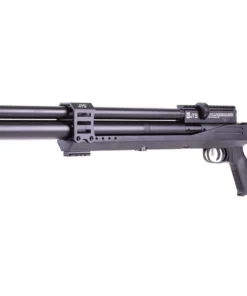
JTS Airacuda PCP Air Rifle


$215.00
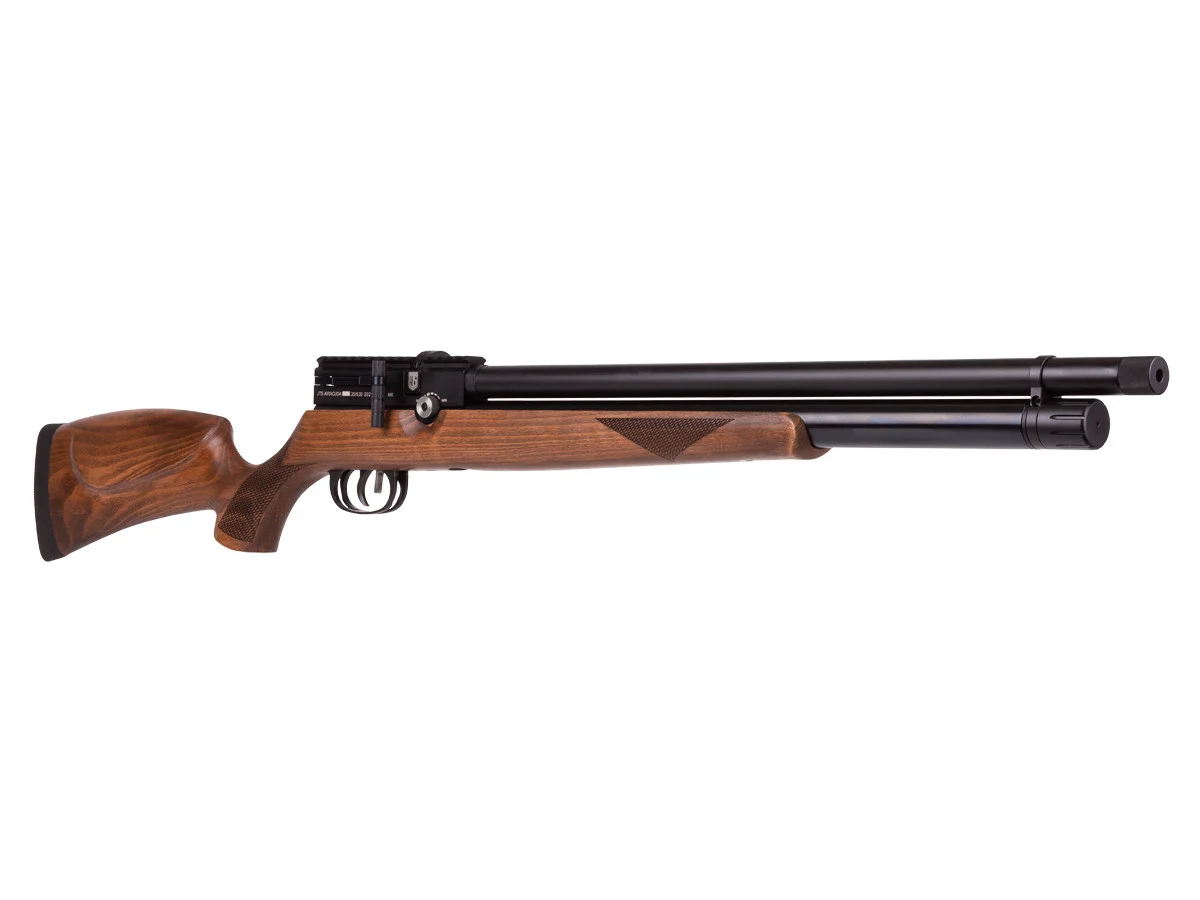
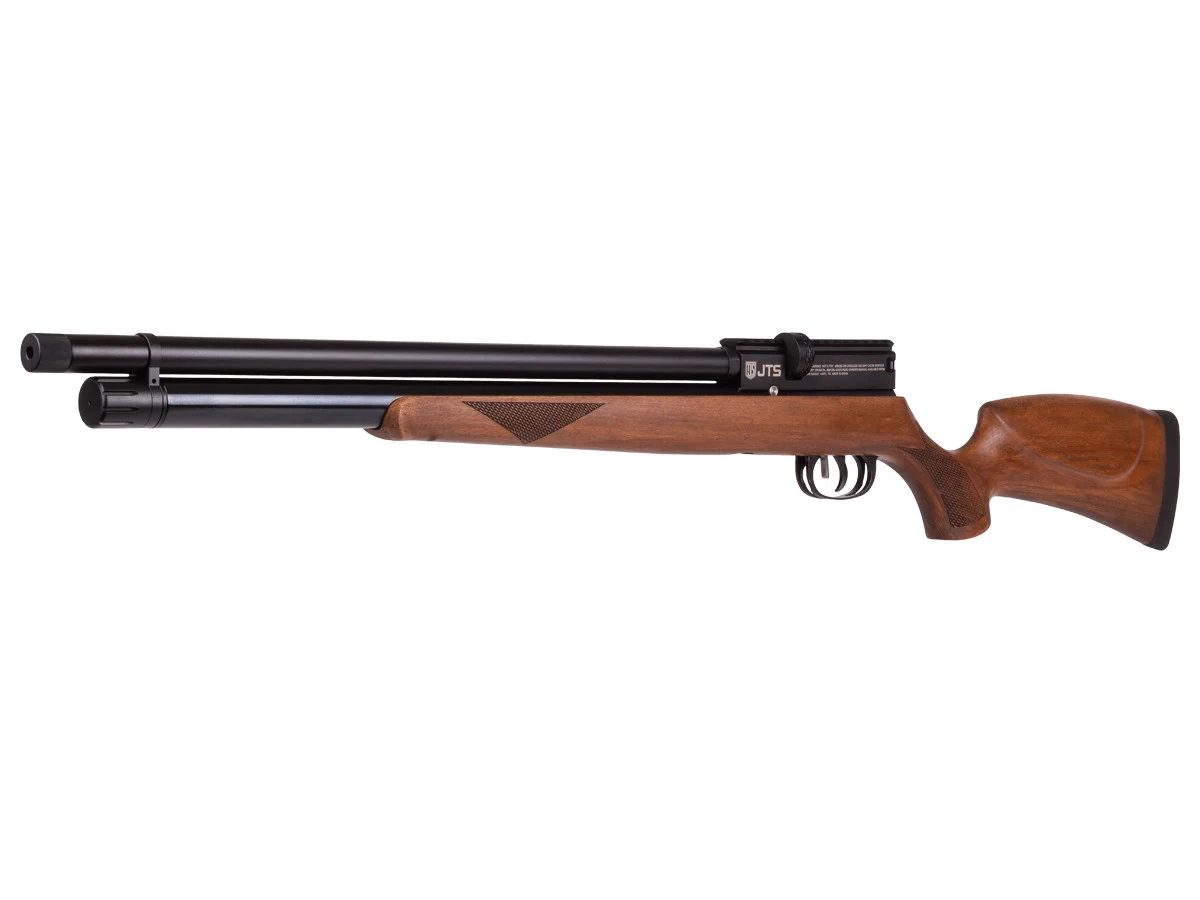
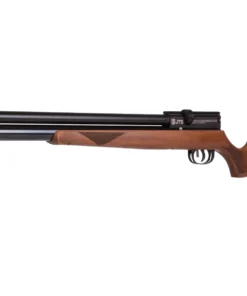
The JTS Airacuda PCP Air Rifle is an attractive and functional airgun with desirable features and thoughtful design at an affordable price. Capable of reaching velocities of 860 FPS in .22 with 18.13 grain pellets and .25 with 25.39 grain, it has the necessary power and accuracy for pest control, plinking, or small-game hunting.
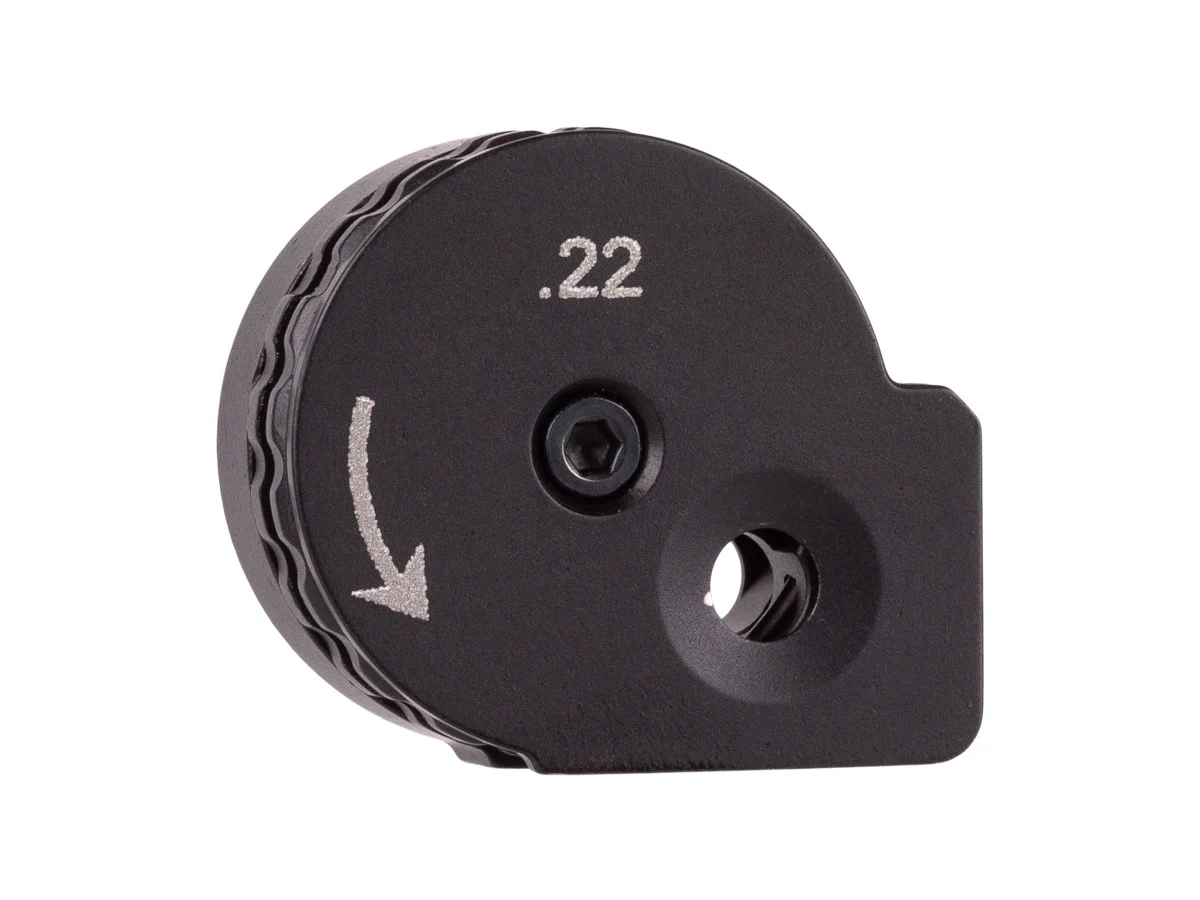
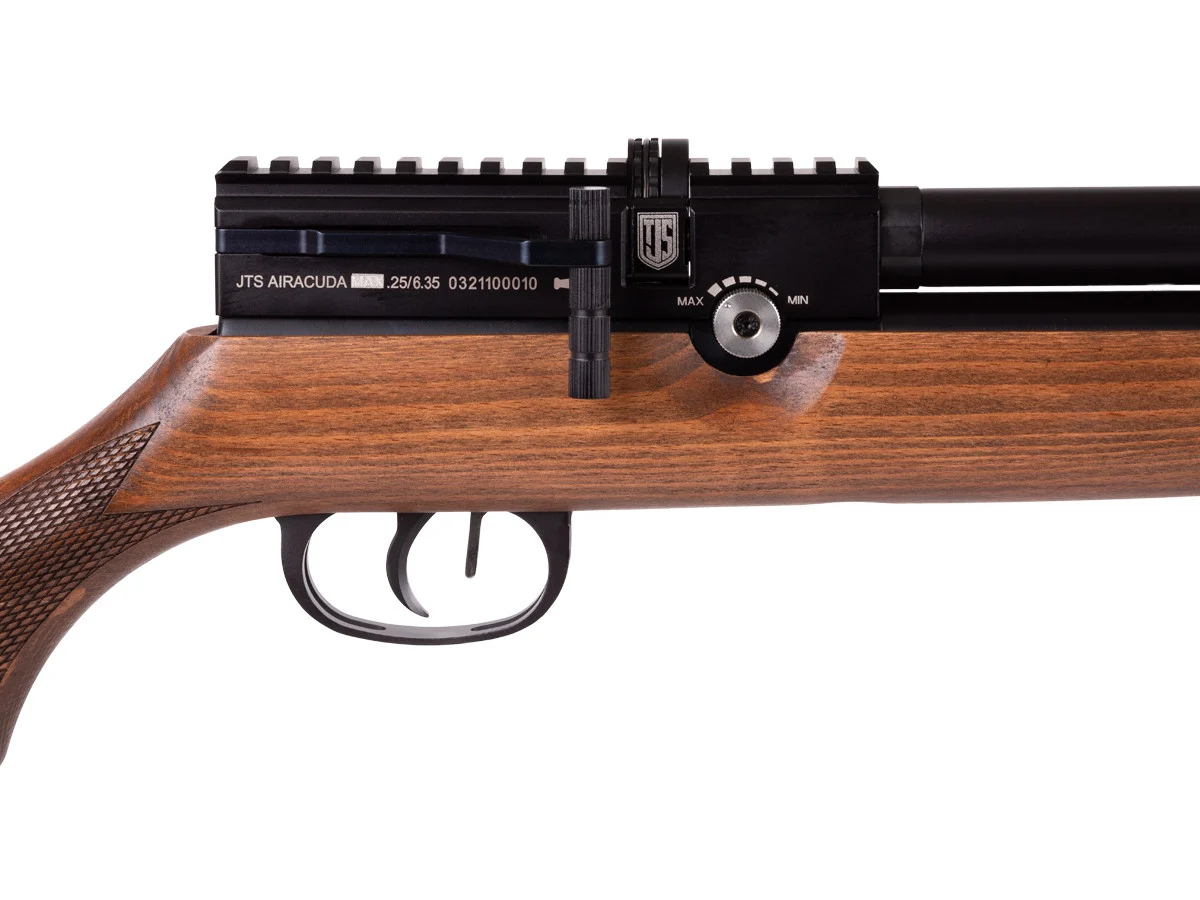
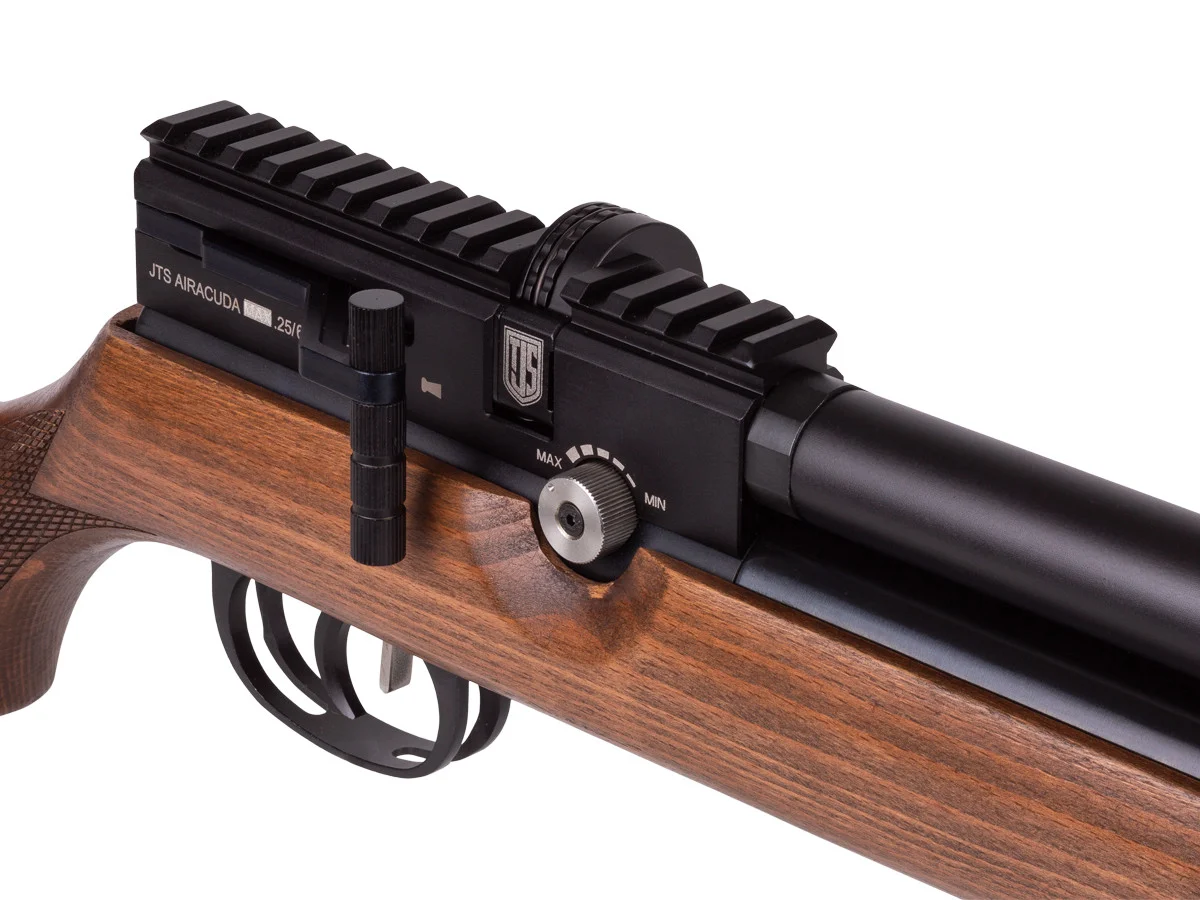
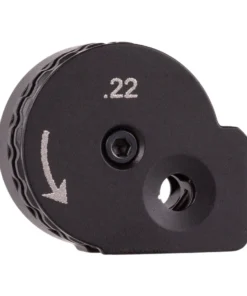
An adjustable feature not typically seen at this price point is the power adjuster knob that lets shooters vary the power of each shot, which is helpful for customizing the performance for specific pellets and uses. This airgun uses a 10-round metal magazine and can get up to 40 shots per fill, so shooters spend more time shooting and less time filling and reloading.
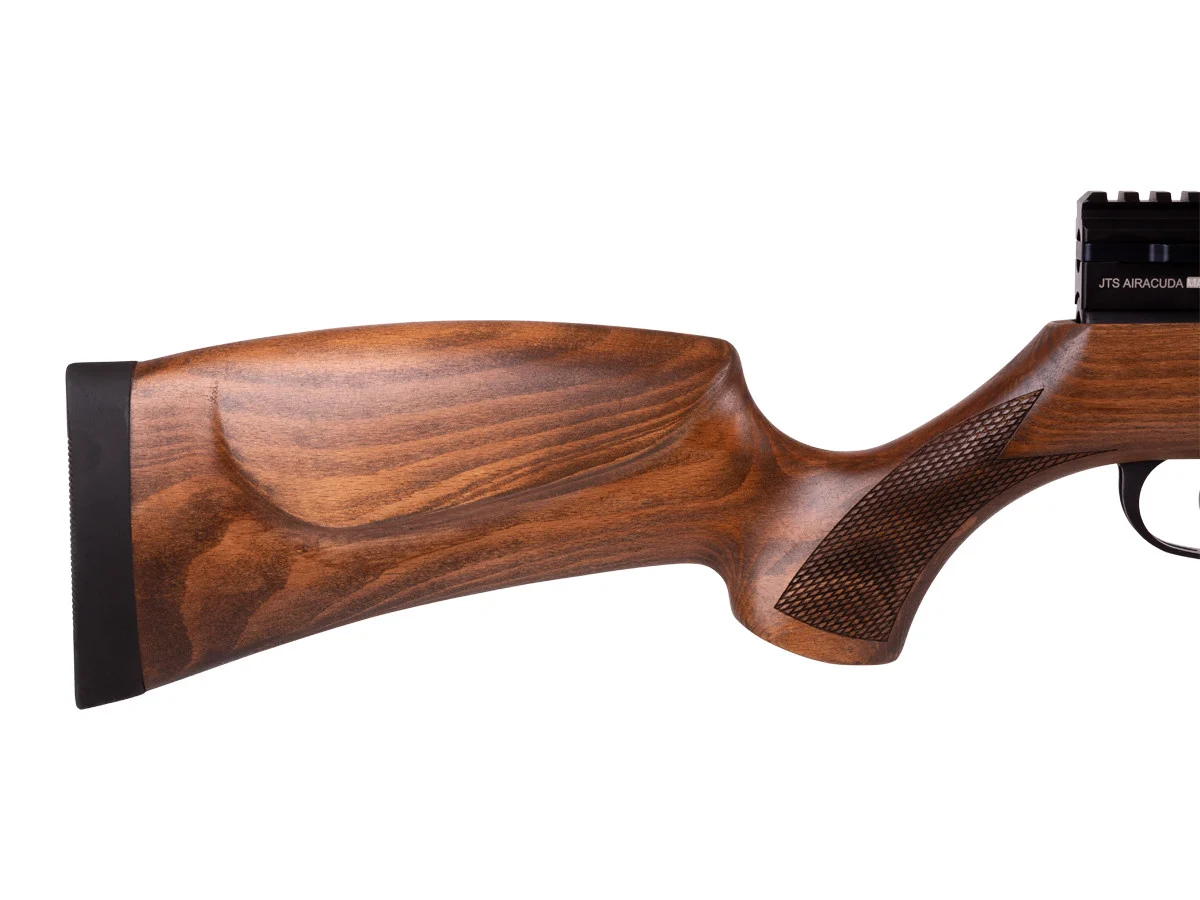
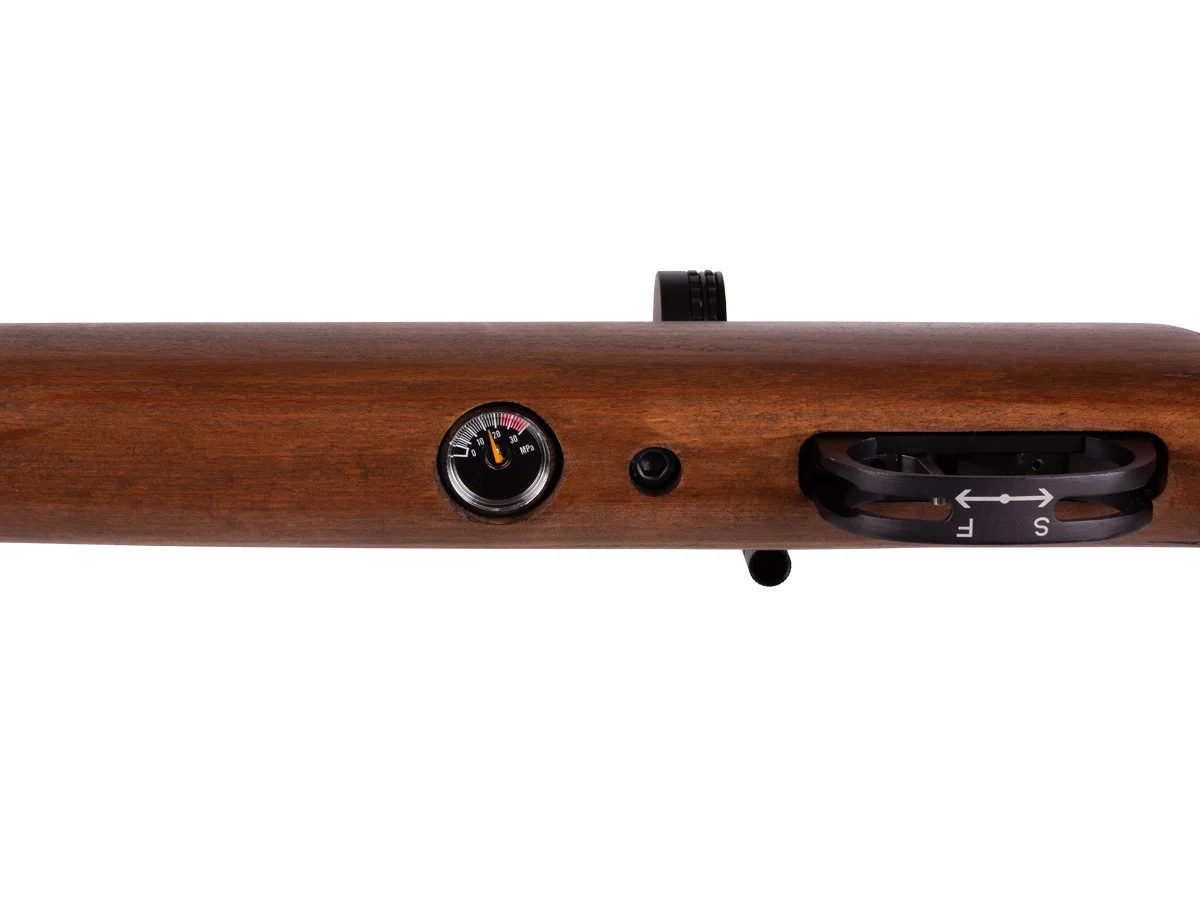
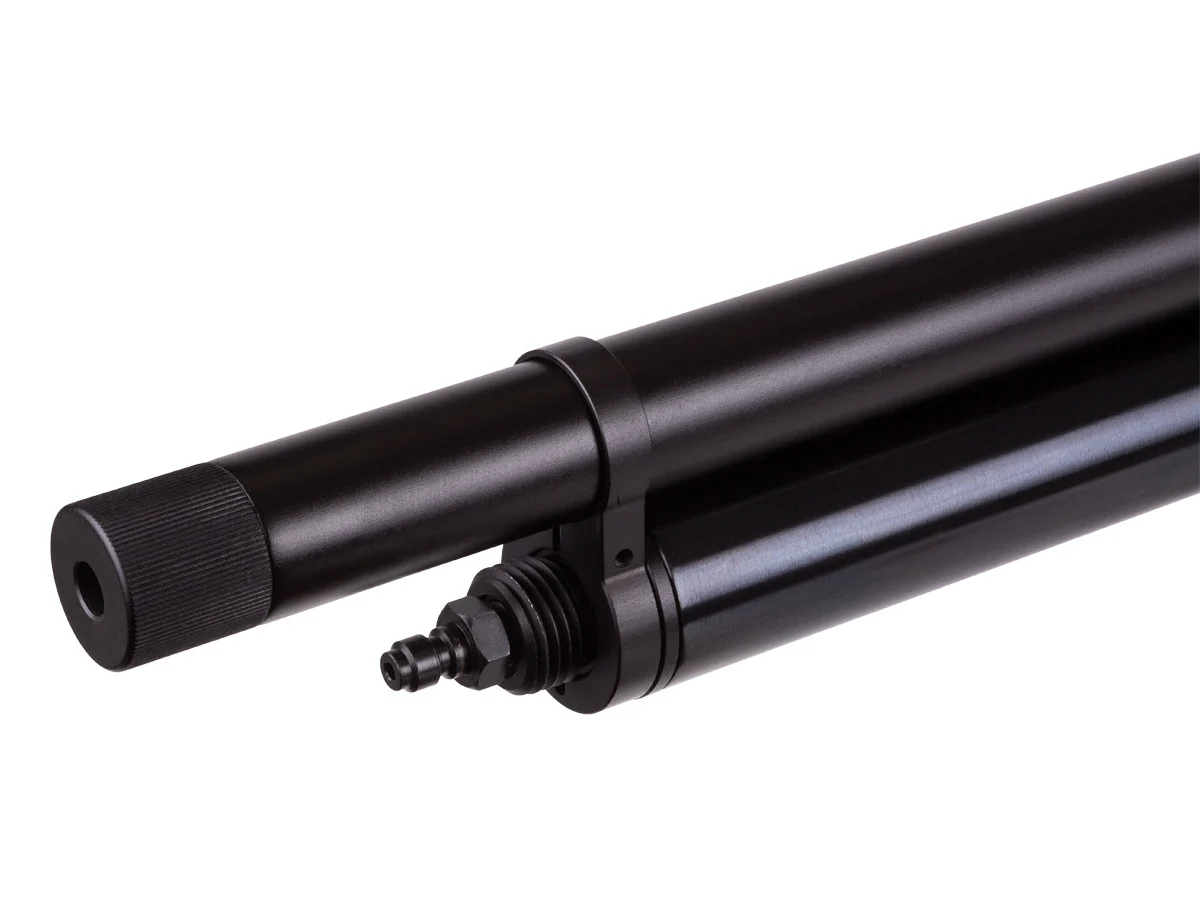
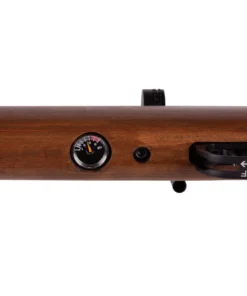
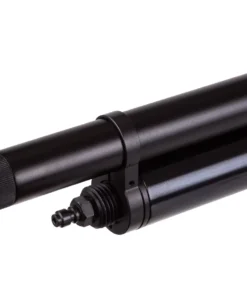
The JTS Airacuda features a solid wood stock with laser-engraved checkering on the grip and forearm for a reliable hold, in addition to a textured rubber buttpad to enhance comfort and control. The end of the air reservoir has a male Foster quick-disconnect fill fitting for convenience, and the underside has an integrated manometer to help monitor the reservoir fill pressure.
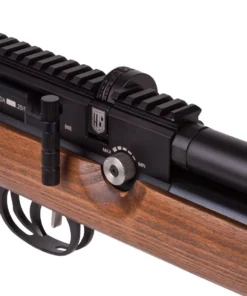
In order to help achieve accurate shots, this air rifle includes an all-metal Picatinny optics rail to give solid support to a scope. In addition, the sidelever provides convenient operation, and the shrouded barrel results in shots that are quieter than otherwise expected.
To get a wood stock air gun with adjustable power for effective pest control, small-game hunting, and plinking for a budget-friendly price, buy a JTS Airacuda PCP Air Rifle from Pyramyd AIR today.
Helpful resources:
- Learn about hunting with air rifles
- Tips for picking the right airgun for hunting game & pests
- Learn about airgun hunting laws in your state
- Shop related categories: pellet guns, pellet rifles
JTS Airacuda PCP Air Rifle
- Precharged pneumatic
- Sidelever action
- Repeater
- 3,000 PSI (206 BAR) Fill Pressure
- Wood stock
- All-metal construction
- Adjustable power
- Shrouded barrel
- 10-round metal magazine
- Up to 40 shots per fill
- Cylinder size: 280cc
- Max velocity: 860 FPS w/ 18.13gr pellets (.22), 860FPS w/ 25.39gr pellets (.25)
- Energy: 29.78 FPE w/ 18.13gr pellets (.22), 41.67 FPE w/ 25.39gr pellets (.25)
- Manual safety
- Picatinny optics rail
- Laser-engraved checkering on grip and forearm
- Textured rubber buttpad
- Integrated manometer
- Foster quick-disconnect fill fitting
- Barrel length: 18″
- Overall length: 41.5″
- Weight: 7.9 lbs.
Brand
JTS Airguns
Caliber.22 (5.5mm)Max Velocity860 fps Muzzle Energy29.78 ft/lbsSuggested forSmall game hunting/plinkingPowerplantPre-charged pneumaticLoudness3-MediumNoise Level81.16 dBWeight7.9 lbsFunctionRepeaterMax Shots per Fill40Cylinder Size280 ccActionSideleverFixed/adj. powerMultiple settingsShroudedYesScopeableWeaver/PicatinnyFront SightsnoneRear SightsnoneSafetyManualTriggerTwo-stage adjustableBarrelRifledBarrel Length18.0″Overall Length41.5″Capacity10 round(s)Body TypeRifleButtplateRubberColorBrownOperating Pressure3000 PSI / 206 BARGrip OrientationAmbidextrousRegulatedNoIs Safe To Dry FireYes
JTS Airacuda PCP Air Rifle – Technical Product Guide
Engineering, PCP Operation, Precision, Caliber Options, and JTS Platform Context
JTS Airguns
jts airguns currently lists several pneumatic platforms, including the standard Airacuda, Airacuda Max, Airacuda PRS Max, AirStryke, AirStryke Carbine, and Brawn. The company also sells filling equipment, magazines, and multiple pellet configurations.
JTS Airacuda
The jts airacuda standard model emphasizes mechanical simplicity combined with an external power-control system. Unlike the Max version, the current standard rifle is not described by JTS as regulated. Instead, the user-facing feature set centers on external power adjustment, an adjustable trigger, side-lever cycling, and a traditional wood-stock layout.
Airacuda
The airacuda is a full-length sporting PCP rather than a compact bullpup. Its 41.5-inch overall length and 7.9-pound listed weight give it a conventional rifle profile, while the Picatinny optics rail allows compatible sighting equipment to be mounted.
JTS Aircuda
The phrase Jts aircuda is a common misspelling of the product name. The official JTS designation is Airacuda. Correct identification is important because the standard and Max variants use different pressure-management features.
Airacuda PCP
The term airacuda pcp refers to the rifle’s pre-charged pneumatic operating architecture. Compressed air is stored onboard and used by the valve system rather than being generated by a spring piston during each cycle. JTS provides dedicated owner’s manuals for both the standard and Max Airacuda platforms.
External Power Control
One of the defining technical features of the standard model is its external power control. JTS specifically lists this feature for both the .22 and .25 versions.
This feature should be distinguished from the regulated architecture of the Max model. Adjustments should remain within manufacturer-supported parameters rather than being used for unauthorized performance modification.
JTS Airacuda 25
The jts airacuda 25 refers to the .25 caliber standard configuration. JTS lists it at approximately 900 fps with a 10-round metal magazine, 18-inch shrouded barrel, side-lever action, external power control, adjustable two-stage trigger, manual safety, Foster fill fitting, and 30+ shots per fill.
.22 Caliber Configuration
The .22 model is listed at approximately 920 fps and uses the same 10-round magazine capacity, side-lever action, shrouded 18-inch barrel, external power control, manual safety, and traditional wood-stock architecture.
JTS Airacuda Max
The jts airacuda max is a related but technically distinct model. The Max adds a regulator, adjustable cheek riser, and thumbhole stock. JTS currently offers it in .177, .22, .25, and .30 caliber configurations.
Airacuda Max
The airacuda max should therefore not be treated as another name for the standard model. It shares the 18-inch barrel and 41.5-inch overall length but uses different pressure-management and ergonomic features.
JTS Airacuda Max 30
The jts airacuda max 30 is part of the Max family, not the standard Airacuda. JTS currently lists the .30 Max at approximately 860 fps with a 7-round magazine.
JTS Airacuda Max 30 Cal
Similarly, jts airacuda max 30 cal describes the larger-caliber Max configuration and should not be used as a specification for the standard .22/.25 platform.
Side-Lever Action
The Airacuda uses a side-lever action. JTS also employs side-lever cycling on several other current PCP models.
A properly maintained lever should move smoothly. Binding or unusual resistance should be investigated rather than overcome by excessive force.
Adjustable Two-Stage Trigger
JTS specifies an adjustable two-stage trigger with a listed pull weight of approximately 2 lb for both standard calibers.
The two-stage layout provides a distinct initial movement followed by the final release stage. Adjustments should remain within manufacturer-supported specifications.
Shrouded Barrel
The platform uses an 18-inch shrouded barrel.
The shroud forms part of the barrel assembly and should not automatically be interpreted as a detachable accessory. Local laws governing airguns and sound-management components vary by jurisdiction.
Integrated Moderator
JTS’s current standard product page also lists an integrated moderator among the general platform features.
Because regulations concerning sound-moderating systems differ, legal requirements should be checked locally.
Wood Stock
The standard Airacuda uses a traditional wood stock with laser-engraved checkering.
This distinguishes it visually and ergonomically from the thumbhole Max stock and from the synthetic-stock configurations used on some other JTS platforms.
Picatinny Rail
The receiver incorporates a Picatinny rail for compatible optics.
A stable mounting system is important for repeatable recreational target performance because loose rings or mounting hardware can create apparent changes in point of impact.
Best Scope for PCP Air Rifle
The phrase best scope for PCP air rifle refers to a separate accessory decision rather than a rifle specification.
The appropriate optic depends on intended lawful target use, eye relief, mounting height, magnification preference, and compatibility with the Picatinny mounting interface.
JTS Pellets
jts pellets refers to JTS’s projectile line. The company currently lists multiple .177, .22, .25, and .30 caliber options in its catalog.
Only projectiles of the correct caliber and suitable specification should be used.
JTS Compressor
The term jts compressor refers to the manufacturer’s high-pressure filling equipment. Current JTS accessories include portable compressors and hand pumps rated for PCP charging applications.
High-pressure filling equipment should always be used within its specified pressure ratings.
Compressed Air Rifle
The Airacuda is accurately described as a compressed air rifle because its operating energy comes from stored compressed air.
Its pneumatic system should therefore be treated as high-pressure equipment, and servicing of pressure-bearing components should follow manufacturer instructions.
JTS AirStryke
The jts airstryke is a different JTS PCP family and should not be confused with the Airacuda.
The company currently lists both full-size and carbine AirStryke models alongside the Airacuda series.
JTS AirStryke Carbine
The JTS AirStryke Carbine is a separate compact platform. It belongs to the same current JTS PCP catalog but has a different stock, reservoir, barrel, and overall configuration.
JTS AirStryke Carbine PCP Air Rifle
The exact phrase JTS AirStryke Carbine PCP air rifle refers to that separate carbine platform, not the standard Airacuda.
AirStryke Carbine Airgun
Likewise, AirStryke Carbine airgun should not be used interchangeably with the Airacuda name because the two platforms occupy different places within the manufacturer’s product lineup.
JTS PCP Air Rifle
The phrase JTS PCP air rifle covers several current models. The standard Airacuda is distinguished by its external power adjustment, traditional wood stock, 18-inch barrel, 10-round magazines, and .22/.25 caliber offering.
JTS Brawn
The jts brawn is another separate PCP rifle within the JTS catalog, using a bullpup format rather than the Airacuda’s conventional full-length stock.
JTS Stealth Hawk
The phrase jts stealth hawk does not appear among the current official JTS product listings reviewed here, so it should not be treated as an Airacuda feature or alternative model name.
JTS Firearms and JTS Guns
Searches such as jts firearms and jts guns are broader than the specific product category. The Airacuda described here is a PCP air rifle within JTS Airguns’ catalog.
JTS Group
The term Jts group may be used generically online, but it does not identify a technical feature of this rifle.
For technical information, the official JTS Airguns product and owner-manual resources provide the appropriate reference.
177 Cal Pellet Gun
The phrase 177 cal pellet gun does not describe the current standard Airacuda, which JTS lists only in .22 and .25. The Max model, by contrast, currently includes a .177 configuration.
177 Cartridge
The phrase 177 cartridge is technically inaccurate for this platform. PCP air rifles of this type use airgun projectiles rather than conventional firearm cartridges.
JTS Shotgun Accessories
jts shotgun accessories belongs to a different product category and does not describe any standard Airacuda component.
Lindstradt Air Gun
The phrase lindstradt air gun does not correspond to a verified feature or current JTS product identified in the manufacturer sources reviewed.
Tom Air Gun
Likewise, tom air gun does not establish any verified Airacuda specification.
Airgins
The term airgins appears to be a misspelling or unrelated search phrase and should not be used as authoritative technical terminology.
Air Guns of Texas
The phrase air guns of texas represents location- or retailer-oriented search intent rather than a JTS engineering feature.
JTS itself lists its operation in Katy, Texas.
JTS Air Rifle for Hunting
The phrase JTS air rifle for hunting concerns intended use rather than product engineering. Whether an air rifle is legal or appropriate for hunting depends on local regulations, caliber, energy, species, and other jurisdiction-specific requirements.
Commercial AirStryke Search Terms
The phrases buy JTS AirStryke Carbine online, JTS AirStryke Carbine for sale, and JTS AirStryke Carbine price concern purchasing a separate weapon platform, so they are not used here as promotional or transactional content.
JTS AirStryke Carbine Review
The phrase JTS AirStryke Carbine review refers to assessment of another JTS product and does not establish technical information about the Airacuda.
Precision and Real-World Performance
The Airacuda’s 18-inch barrel, side-lever action, adjustable two-stage trigger, rigid all-metal action, Picatinny optics interface, and external power adjustment provide the basic engineering foundation for repeatable recreational target use.
However, practical precision depends on more than the rifle itself. Projectile uniformity, pressure condition, optical stability, environmental factors, barrel cleanliness, and user technique can all influence results.
Why the Standard Model Is Technically Distinct
The most important distinction is its external power-adjustment architecture. The Max uses regulation and an adjustable cheek riser, whereas the standard model retains a simpler traditional stock and external power-control system.
That makes the standard Airacuda its own configuration rather than merely a lower-trim version of the Max.
Overall Technical Perspective
The JTS Airacuda Standard PCP Air Rifle combines .22 or .25 caliber operation, external power control, an 18-inch shrouded barrel, side-lever action, adjustable two-stage trigger, approximately 2-pound stated trigger pull, manual safety, Picatinny optics rail, Foster quick-fill fitting, all-metal construction, barrel band, traditional wood stock, and two 10-round metal magazines. JTS lists both calibers at 41.5 inches overall, approximately 7.9 lb, and 30+ shots per fill, with rated velocities of approximately 920 fps in .22 and 900 fps in .25.
For responsible ownership, the important considerations remain correct-caliber ammunition, manufacturer-approved charging equipment, adherence to pressure limits, secure storage, appropriate eye protection, routine reservoir and seal inspection, and qualified servicing whenever pneumatic or mechanical condition becomes uncertain. JTS also states that unauthorized repairs or modifications and improper ammunition can affect warranty coverage.
Engineering Performance, Handling, Precision, Ergonomics, and Practical Operation
The standard model combines traditional sporting ergonomics with a modern pre-charged pneumatic operating system. Its character comes from the interaction between the compressed-air reservoir, externally adjustable power system, side-lever action, 18-inch shrouded barrel, two-stage trigger, wooden stock, multi-shot magazine, and optical mounting interface. Rather than evaluating the platform only through advertised velocity, its overall quality is better understood through consistency, mechanical reliability, balance, comfort, and repeatability during controlled recreational target shooting. Each component contributes differently, and the best results depend on the entire system remaining properly maintained.
Pneumatic Operating Character
Compressed air stored inside the reservoir provides the energy required for operation.
This arrangement avoids the large mechanical spring movement associated with conventional spring-powered designs. Consequently, the firing cycle can feel relatively controlled when the equipment is operating correctly.
However, pressure naturally changes as the reservoir is used. Because the standard configuration differs from a regulated design, users should expect its pressure behavior to form part of its overall performance characteristics.
Understanding Consistency
Consistency is one of the most useful ways to evaluate recreational target performance.
Maximum velocity alone does not establish precision.
Instead, repeatability depends on stable mechanical condition, suitable projectiles, barrel integrity, secure sighting equipment, environmental conditions, and consistent user technique.
When these variables remain controlled, it becomes easier to evaluate whether the platform is operating normally from one session to another.
External Adjustment System
An externally accessible adjustment system is incorporated into the standard configuration.
Its purpose is to provide manufacturer-supported control over the platform’s operating characteristics.
Any adjustment should remain within the limits specified by the manufacturer.
Internal modifications or attempts to exceed the intended operating range can introduce unnecessary mechanical stress and may affect reliability, legal compliance, or warranty protection.
Barrel Construction
The 18-inch barrel is an important contributor to overall consistency.
Its internal condition, alignment, and crown should remain protected from physical damage.
The surrounding shroud forms part of the barrel assembly and provides an integrated exterior profile.
Impacts to this area should be avoided because deformation or alignment problems can affect performance even when external damage initially appears minor.
Precision in Controlled Conditions
A controlled range provides the most useful environment for evaluating precision.
Reduced environmental variation makes it easier to distinguish between equipment-related changes and external influences.
If grouping suddenly becomes inconsistent, several possibilities should be considered, including optical mounting stability, projectile condition, barrel cleanliness, pressure behavior, and mechanical condition.
A systematic inspection is more useful than immediately changing multiple components.
Side-Lever Handling
The side-mounted lever provides a convenient interface for cycling the action.
During normal operation, movement should remain smooth and predictable.
Grinding, binding, or unexpected resistance should not be treated as normal.
If the mechanism begins behaving differently, the equipment should be inspected rather than operated with additional force.
This approach helps prevent a minor mechanical issue from becoming more substantial.
Magazine Function
The multi-shot magazine contributes significantly to everyday convenience.
Correct alignment is important because the magazine must interact consistently with the action.
It should remain clean and free from deformation.
If indexing becomes irregular or loading resistance changes unexpectedly, the magazine should be inspected for dirt or damage.
Only components intended for the exact caliber should be installed.
Trigger Characteristics
A two-stage trigger provides a distinct initial movement before the final release stage.
This arrangement allows the user to become familiar with a repeatable mechanical feel during controlled recreational shooting.
Trigger behavior should remain consistent over time.
Unexpected changes in engagement or resistance deserve inspection.
Adjustments should remain within manufacturer-supported settings rather than being altered through unauthorized internal modification.
Traditional Stock Ergonomics
The wooden stock gives the platform a conventional sporting profile.
Its shape supports the shoulder, grip, and cheek while distributing the weight of the action and reservoir along the full-length design.
Comfort becomes particularly important during longer sessions because an awkward position can make repeatable handling more difficult.
The stock should therefore be treated as a functional component rather than simply a cosmetic feature.
Balance and Weight
At close to eight pounds before accessories are added, the platform has a substantial physical presence.
That mass can contribute to a stable feeling during supported recreational target use.
However, adding a large optical system can change both total weight and center of balance.
The complete setup should therefore be evaluated after accessories have been installed rather than judging handling characteristics from the bare platform alone.
Optical Mounting Interface
A standardized upper rail provides the foundation for compatible sighting equipment.
Secure mounting is essential for meaningful precision testing.
Even slight movement between the optic, rings, and mounting surface can produce noticeable changes.
Consequently, unexplained shifts in point of impact should prompt an inspection of the mounting system before internal mechanical problems are assumed.
Pressure Monitoring
Pressure should be monitored throughout normal ownership.
The gauge provides a convenient indication of reservoir condition, but it should not replace routine inspection.
Unexpected pressure loss during storage can suggest a sealing problem.
Repeatedly refilling equipment that is losing pressure unusually quickly is not an appropriate long-term solution.
The source of the loss should instead be identified and serviced correctly.
Shot-to-Shot Behavior
Because reservoir pressure changes during use, performance may not remain absolutely identical throughout an entire fill.
Understanding the normal behavior of the platform helps the owner recognize meaningful changes.
A sudden reduction in consistency, unexplained air consumption, or unusual mechanical noise can indicate that maintenance is required.
Manufacturer documentation should be used as the primary reference when determining whether operation remains within specification.
Environmental Influence
Temperature can affect pneumatic equipment and should be considered when comparing performance between sessions.
Cold and warm conditions may influence pressure behavior differently.
Wind also affects projectile flight after it leaves the barrel.
Therefore, changes observed outdoors should not automatically be attributed to mechanical failure.
Testing under similar controlled conditions provides a more reliable basis for comparison.
Wood and Moisture
The wooden stock requires sensible environmental care.
Prolonged moisture exposure should be avoided, and wet equipment should be dried before storage.
Extreme heat can also affect finishes and other components.
A stable, dry environment helps preserve both appearance and structural integrity.
Deep cracking or unusual movement around mounting areas should receive professional attention.
Mechanical Reliability
Reliability comes from the complete system functioning correctly.
The reservoir, seals, valve system, lever, trigger, barrel, magazine, stock, gauge, and mounting hardware all contribute.
A problem affecting one component can sometimes appear as a completely different performance issue.
Regular inspection therefore provides a better maintenance strategy than replacing parts without identifying the underlying cause.
Appropriate Recreational Use
The platform should be operated only in a lawful and properly controlled environment.
A designated range with suitable containment provides the clearest setting for recreational target shooting.
Eye protection should be used, and all facility rules should be followed.
Local regulations determine where pneumatic sporting equipment may legally be possessed, transported, stored, and operated.
Transportation Considerations
A padded case helps protect the barrel, stock, reservoir, gauge, and optical equipment from impacts.
The equipment should remain unloaded during transportation and secured according to applicable regulations.
Charging accessories and other heavy objects should be prevented from striking the platform inside the case.
After any significant impact, structural and pressure-bearing components should be inspected.
Long-Term Ownership
Long-term reliability depends on preventative care.
Owners should monitor pressure retention, protect the barrel assembly, keep magazines clean, inspect visible hardware, preserve the wooden stock, and obtain qualified servicing when internal problems are suspected.
High-pressure components should not be experimentally disassembled.
Keeping the equipment within its intended configuration simplifies maintenance and supports predictable operation.
Overall Performance Perspective
The standard configuration provides a balanced combination of pneumatic operation, traditional ergonomics, multi-shot convenience, adjustable controls, and a stable optical mounting platform. Its practical strengths are best measured through repeatability and mechanical consistency rather than maximum velocity alone.
For recreational target use, careful maintenance and controlled operating conditions allow the platform’s design characteristics to be evaluated properly. When the pressure system remains healthy, the barrel is protected, the action cycles smoothly, the trigger behaves consistently, and optical equipment remains secure, the platform provides a solid foundation for predictable and enjoyable range-oriented use.
Maintenance, Inspection, Storage, Durability, and Long-Term Care
Proper maintenance plays an important role in preserving the reliability and condition of any high-pressure pneumatic sporting platform. Routine care does not require constant disassembly or complicated mechanical work. Instead, the most effective approach involves regular visual inspection, careful cleaning, responsible pressure-system management, protection from moisture and impacts, and professional servicing whenever internal problems are suspected. Because several mechanical and pneumatic components operate together, a problem in one area can influence the behavior of the entire system. Preventive inspection therefore provides a practical way to identify changes before they develop into larger problems.
Routine Condition Inspection
A basic inspection should be completed regularly, particularly before recreational use.
Examine accessible surfaces for cracks, corrosion, loose components, impact damage, or unusual wear. Pay attention to the reservoir, barrel assembly, stock, action, gauge, magazine area, trigger housing, and visible fasteners.
Becoming familiar with the equipment’s normal appearance makes developing problems easier to recognize.
Any substantial change should be investigated rather than ignored.
High-Pressure Reservoir Care
The reservoir deserves particular attention because it stores compressed air.
Its exterior should remain free from severe corrosion, significant dents, deep damage, or obvious deformation.
Pressure-bearing components should never be treated casually when their structural condition becomes uncertain.
Manufacturer inspection requirements and pressure limits should always take precedence over general maintenance advice.
Questionable reservoirs should be evaluated by an appropriately qualified technician.
Monitoring Pressure Retention
Pressure retention can provide useful information about overall pneumatic condition.
If stored equipment begins losing pressure considerably faster than normal, a seal or another pneumatic component may require attention.
Repeatedly restoring pressure without investigating an unexplained leak is not a suitable long-term solution.
Instead, the condition should be assessed so that the actual source can be identified.
Gauge Condition
The pressure gauge should remain clear, readable, and physically undamaged.
Cracked lenses, significant corrosion, loose mounting, or obviously abnormal readings deserve attention.
The gauge should be treated as an information component rather than subjected to impacts or unnecessary manipulation.
If its accuracy becomes questionable, qualified inspection is appropriate.
Seal Maintenance
Seals naturally age through time and use.
Temperature changes, contamination, storage conditions, and normal mechanical movement can influence their service life.
Possible seal deterioration may become noticeable through unexpected pressure loss or changes in normal operation.
Internal seals should be replaced with suitable manufacturer-approved components rather than improvised substitutes.
Fill Connection Cleanliness
The charging connection should remain clean and protected.
Dust, grit, moisture, and other contamination can interfere with proper sealing.
Before compatible filling equipment is attached, visible debris should be removed carefully.
A protective cover, where supplied, can help keep the connection clean during storage and transportation.
Damaged fittings should be professionally replaced rather than modified.
Charging Equipment Inspection
External charging equipment requires maintenance as well.
Hoses, connectors, gauges, and seals should be inspected for visible deterioration.
High-pressure accessories should always remain within their rated specifications.
Cracked hoses, damaged threads, severe corrosion, or questionable fittings should be removed from service.
Pressure-system safety depends on both the sporting equipment and the equipment used to charge it.
Barrel Exterior Care
The barrel assembly should be protected from moisture and impacts.
After outdoor use, visible moisture can be removed using an appropriate soft cloth.
Aggressive abrasives are unnecessary and may damage protective finishes.
The front of the barrel should also be protected during transportation because physical damage in this region can influence consistency.
Conservative Internal Cleaning
Internal barrel maintenance should be performed only when necessary and according to manufacturer guidance.
Excessive cleaning with unsuitable materials can potentially damage precision surfaces.
The objective should be removing genuine contamination without introducing scratches or altering the barrel.
When uncertainty exists regarding appropriate cleaning equipment, manufacturer documentation provides the safest reference.
Action Inspection
The cycling mechanism should retain its normal smooth movement.
A sudden increase in resistance, grinding sensation, or irregular operation should not be overcome through additional force.
Accessible contamination can be checked first.
If normal movement does not return, qualified servicing is preferable to dismantling internal components without the appropriate technical knowledge.
Magazine Care
Magazines should remain clean, correctly aligned, and protected from impact damage.
Small amounts of dirt can interfere with normal indexing.
During transportation, magazines should not be left loose among heavy tools or charging accessories.
If a magazine becomes visibly damaged or begins functioning irregularly, replacement may be preferable to forcing continued operation.
Trigger Inspection
The trigger should maintain predictable mechanical behavior.
Changes in resistance, engagement, or movement can indicate that inspection is required.
Routine ownership generally does not require internal trigger disassembly.
Unauthorized modifications can create reliability problems and should be avoided.
Professional servicing is appropriate when normal trigger behavior changes substantially.
Stock Care
The wooden stock benefits from a stable environment.
Prolonged exposure to moisture, excessive heat, or strong chemicals should be avoided.
After wet conditions, exterior surfaces should be dried before the equipment is placed into enclosed storage.
Minor cosmetic scratches are generally less important than structural cracking, separation, or movement around attachment points.
Checking Visible Hardware
Fasteners should be inspected periodically for looseness, corrosion, and physical damage.
Repeatedly overtightening hardware is not an appropriate maintenance technique because excessive force can damage threads or surrounding components.
When a fastener repeatedly becomes loose, the underlying cause should be investigated.
Correct replacement hardware should be used whenever a component becomes damaged.
Optics Mounting Surface
The upper mounting interface should remain clean and structurally sound.
If optical equipment is installed, its mounting hardware should also be checked periodically.
Movement at the mounting interface can create apparent performance problems even when the pneumatic system is functioning normally.
Consequently, external mounting integrity should be checked during troubleshooting.
Moisture Protection
Moisture can affect metal surfaces, wood, optical equipment, and storage materials.
Wet equipment should not remain sealed inside a case for extended periods.
After exposure to rain or high humidity, accessible surfaces should be dried.
The storage case itself should also be inspected because a damp case can repeatedly expose otherwise dry equipment to moisture.
Corrosion Prevention
Prevention is considerably easier than restoration.
A clean, dry storage environment provides one of the strongest defenses against corrosion.
Salt, aggressive chemicals, and persistent humidity should be kept away from the equipment.
Recessed areas and hardware deserve periodic inspection because early corrosion may develop where it is not immediately visible.
Temperature Management
Extreme temperatures should be avoided whenever possible.
Closed vehicles exposed to direct sunlight can become exceptionally hot.
High temperatures can affect seals, wood finishes, optical equipment, and other materials.
Rapid transitions from cold environments to warm humid spaces can also encourage condensation.
Allowing gradual temperature stabilization helps reduce unnecessary moisture accumulation.
Transportation Protection
A suitable padded case can reduce scratches and impact damage.
Heavy charging equipment should be separated from the sporting platform so it cannot strike the reservoir, stock, gauge, or barrel.
After a substantial impact, visible structural and pressure-bearing components should be inspected before recreational use resumes.
Transportation should always comply with applicable local regulations.
Secure Storage
Long-term storage should prevent unauthorized access while protecting the equipment from moisture, heat, and physical damage.
The platform should be unloaded and stored according to applicable regulations.
Children and unauthorized individuals should not have access.
A dry, stable storage environment also helps preserve the stock, seals, metal surfaces, and optical equipment.
Avoiding Improvised Repairs
Improvised repair methods should not be applied to pressure-bearing or critical mechanical components.
Random replacement seals, incompatible fittings, unapproved adhesives, or unsuitable hardware can create additional problems.
Manufacturer-approved parts and qualified technical servicing provide a more dependable approach.
This is especially important whenever the reservoir, valve system, trigger, or pressure-control components are involved.
Maintenance Records
Basic maintenance records can be valuable over extended ownership.
Professional servicing, seal replacement, repairs, inspections, and significant pressure issues can be documented.
This creates a useful history when troubleshooting future problems.
It can also help a qualified technician understand what work has previously been performed.
Long-Term Durability
Durability depends on both manufacturing quality and ownership practices.
Equipment that remains dry, clean, protected from impacts, and within manufacturer specifications generally has a stronger foundation for dependable service.
Normal wear will still occur, particularly around moving components and seals.
Regular inspection makes that wear easier to identify and manage appropriately.
Overall Maintenance Perspective
Effective maintenance should remain preventative and systematic. Pressure-bearing components should be monitored carefully, mechanical controls should retain predictable operation, the wooden stock should remain protected from environmental damage, and accessories should be kept clean and secure.
Most importantly, maintenance should preserve the original engineering rather than attempt to alter it. When unusual pressure loss, structural damage, mechanical binding, severe corrosion, or abnormal trigger behavior appears, recreational use should stop until the problem has been properly assessed. Combined with secure storage and responsible handling, this approach provides the strongest basis for maintaining dependable condition throughout long-term ownership.
Be the first to review “JTS Airacuda PCP Air Rifle”
Related products


JTS Air Rifles

JTS Air Rifles

JTS Air Rifles

JTS Air Rifles


JTS Air Rifles


JTS Air Rifles
JTS Air Rifles
Reviews
There are no reviews yet.