



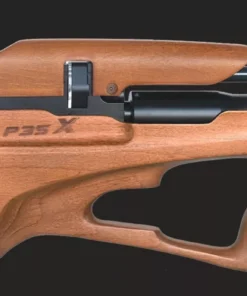

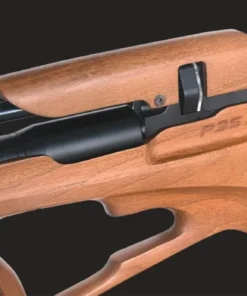
Snowpeak P35X Wood Air Rifle
$330.00
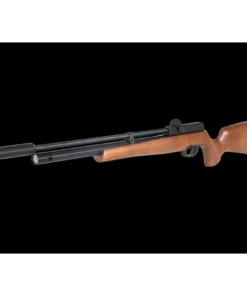
Snowpeak P35X Wood bullpup Air Rilfe
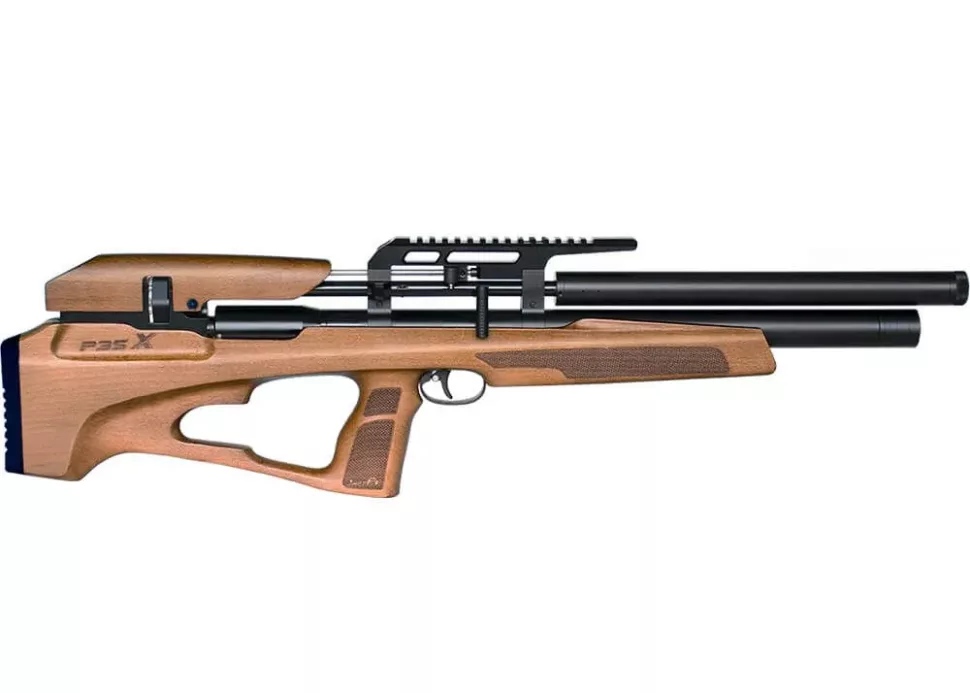
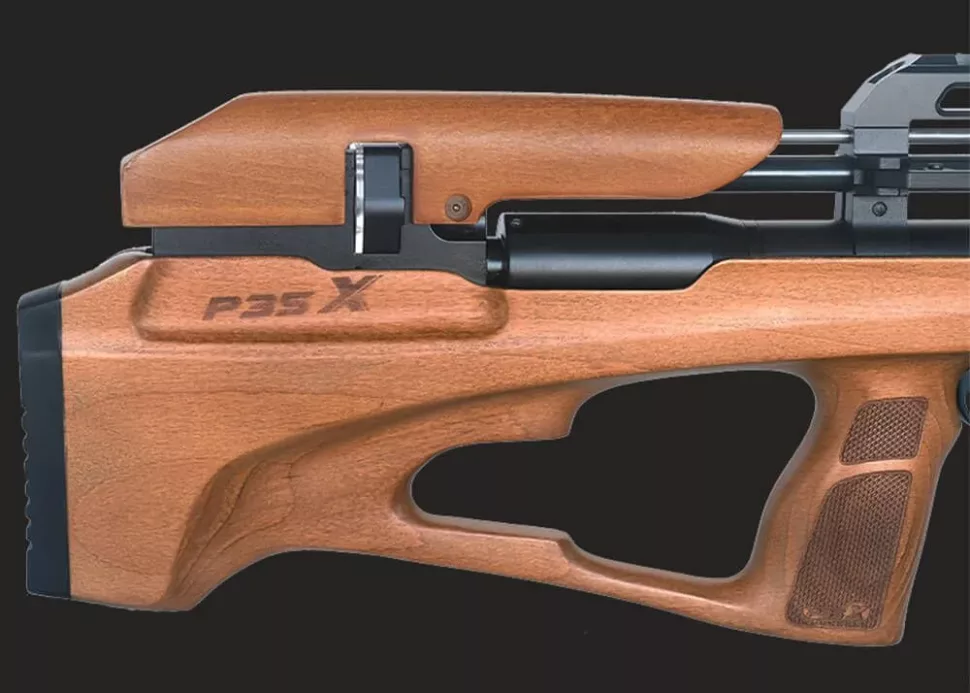
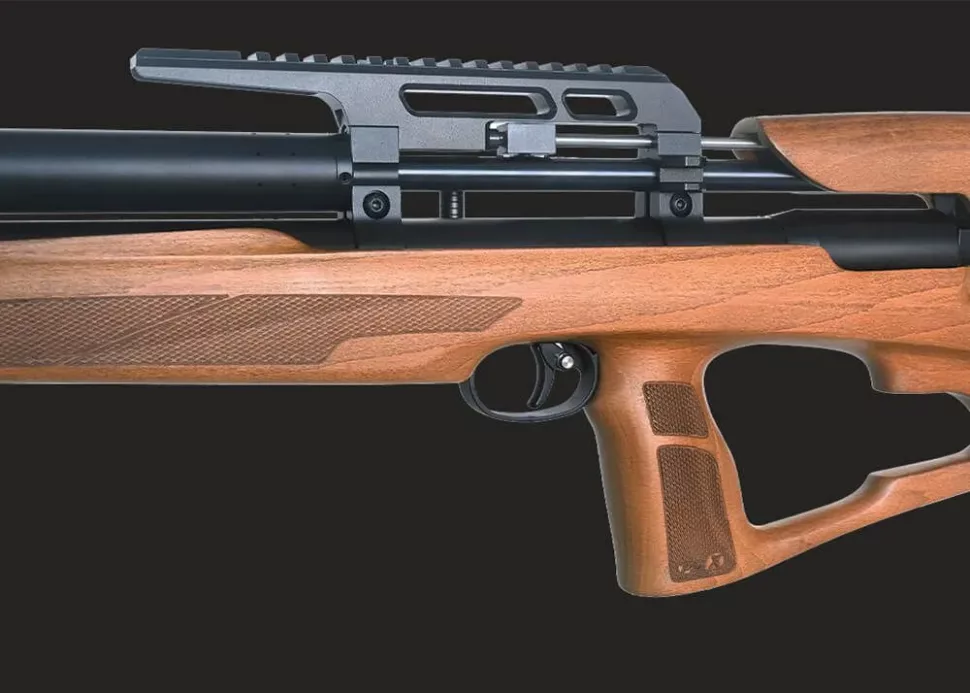
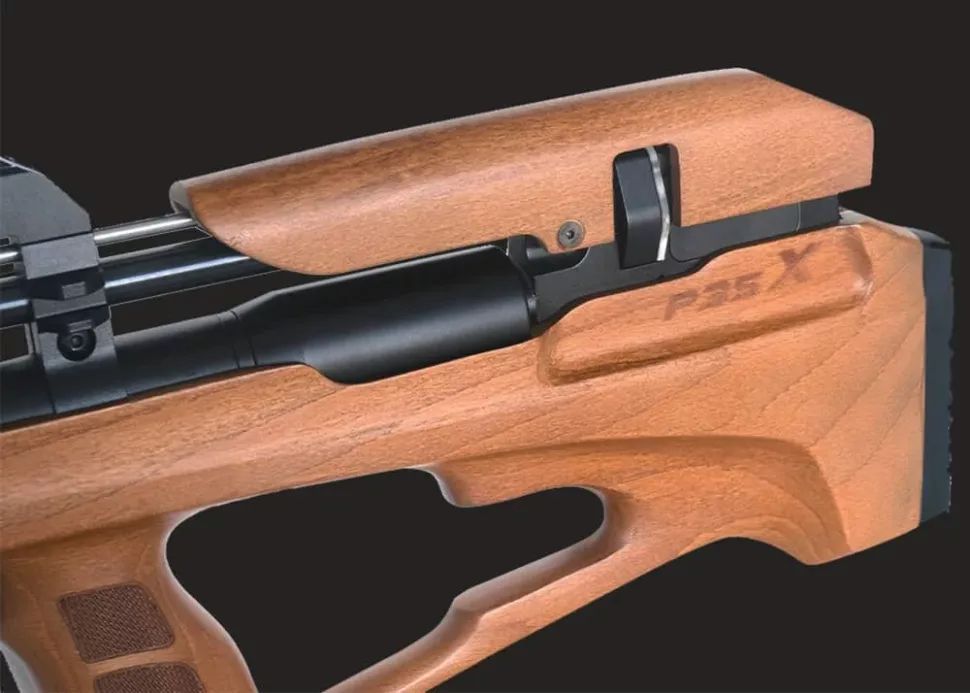
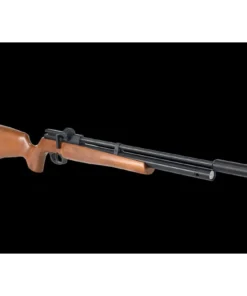
This Snowpeak P35X bullpup has a durable thumbhole stock made of wood, that can be operated ambidextrously. The comfortable pistol grip feels great in your hands and it has a rough texture on both sides for added grip. That same rough texture is also on both sides of the fore-end. The P35X by Snowpeak (formerly known as Artemis) features an elevated cheek rest that allows you to line your eye up perfectly with a scope.
Despite its compact design, the P35X bullpup has a barrel with a length of no less than 531 mm. It’s a highly accurate barrel that’s primarily suited for long-range shooting. Since open sights would barely be of use with a long-range rifle such as this, the P35X has no sights of its own. Instead, it has an elevated Weaver/Picatinny scope rail, which can be used to mount a rifle scope of your choosing.
There’s a 280 cc PCP-cylinder located just below the barrel and it has a fill pressure of 250 bar. You can extend the front end to reveal the fill port. The Snowpeak P35X features a regulator which creates the desired fill pressure in the 65 cc plenum, so you can shoot with increased consistency.
Snowpeak’s bullpup uses a magazine. There are different magazines that can be loaded with different calibres. Each calibre has its own magazine capacity, as indicated below:
• 4.5 mm / .177 has a capacity of 11x
• 5.5 mm / .22 has a capacity of 9x
• 6.35 mm / .25 has a capacity of 8x
It’s a bullpup, which means the magazine slots into the back end of the P35X, just below the cheek rest. Reloading is done by pulling back the side lever.
This item can only be sold to persons 18 years and older.
For this item we have to carry out an age check.
You can upload a copy/scan/photo of a legal identification document such as a passport, European ID or driver’s license in the order. Parts of the document may be made illegible or designated as a copy. However, your name, document number and place of issue must be legible. Your copy ID will only be used for verification purposes and will not be retained. If you are not able to upload it right now, we will contact you per email before shipping
We can ship these items only to the countries listed below:
Belgium, Bulgaria, Cyprus, Czechia, Denmark, Estonia, Finland, France, Germany, Greece, Hungary, Ireland, Italy, Kroatia, Latvia, Lithuania, Luxembourg, Monaco, Netherlands, Poland, Portugal, Romania, Slovakia, Slovenia, Spain, Austria, Sweden, United States
Specifications
| Model | .177 / 4,5, .22 / 5,5, .25 / 6,35 |
|---|---|
| Brand | Snowpeak |
| Energy (Joule / ft.lbs) | 22/16, 34/25, 46/34 |
| Velocity (m/s / fps) | 213/700, 243/800 (.25), 274/900 (.177) |
| Cocking system | Side lever |
| Magazine capacity | 11 (.177), 8 (.25), 9 (.22) |
| Weight (gram) | 2400 |
| Barrel length (mm) | 573 |
| Length (mm) | 675 |
| Mounting base | Weaver / Picatinny |
| Rifle Stock Type | Ambidextrous |
| Stock material | Wood |
| Extra accessories included | Magazine, O-ring kit, Pellets, Tools |
Snowpeak P35X Wood Air Rifle – Detailed Technical Product Guide
Snowpeak P35X Wood PCP Engineering, Specifications, and Product Context
Snowpeak Airguns and Snowpeak Sports
Snowpeak airguns are produced by a manufacturer whose official site states that the company began in 1976 and has spent more than four decades developing shooting equipment. Its current snowpeak sports catalog includes PCP, spring-powered, and CO2 platforms along with accessories and product-support resources.
Therefore, searches such as snowpeaks, snow peak equipment, snow peak customer service, and snow peak brand origin frequently appear alongside individual model names.
However, exact model identification remains essential because individual Snowpeak products can differ significantly in air capacity, barrel length, working pressure, stock material, magazine design, and overall dimensions.
Snowpeak P35X Wood Engineering
The snowpeak p35x, p35x, and p35x pcp terms refer to the upgraded P35X platform.
Snowpeak lists the current P35X with a 280 cc air tank and a 65 cc power plenum. The rifle also incorporates a regulator and uses a 531 mm barrel.
The wooden configuration provides a different physical and visual character from more utilitarian synthetic-stock platforms.
Wood contributes to the stock’s appearance and handling feel, while the wooden cheek pad helps establish a repeatable physical interface between the user’s head position and properly installed sighting equipment.
What Is a PCP Airgun?
For users asking what is a pcp airgun, PCP stands for pre-charged pneumatic.
Compressed air is stored inside an onboard reservoir before operation. That stored air supplies the pneumatic energy used during each firing cycle.
The P35X’s 280 cc reservoir operates at a manufacturer-listed pressure of 25 MPa, while the regulator and 65 cc power plenum form part of the system’s pressure-management architecture.
Because this is a high-pressure system, pressure limits should always follow manufacturer documentation and pressure-bearing components should not be modified casually.
Caliber Options and Manufacturer Performance
Snowpeak currently lists three P35X calibers:
4.5 mm/.177 – approximately 1000 fps
5.5 mm/.22 – approximately 900 fps
6.35 mm/.25 – approximately 800 fps.
These figures are manufacturer ratings rather than guaranteed real-world results for every projectile or market configuration.
Projectile mass, shape, atmospheric conditions, equipment condition, and regional power restrictions can influence measured performance.
For that reason, practical precision should be assessed through repeatability rather than velocity alone.
Magazine Capacity and Multi-Shot Design
Magazine capacity is caliber-dependent.
Snowpeak lists 11 shots for .177, 9 shots for .22, and 8 shots for .25.
This multi-shot arrangement reduces interruptions during controlled recreational sessions.
However, magazine condition remains important. Dirt, deformation, or physical damage can affect reliable operation, so magazines should be stored carefully and matched to the correct caliber and model.
Ambidextrous Operating Handle
One of Snowpeak’s highlighted P35X characteristics is an ambidextrous handle.
This makes the operating interface more adaptable to different users.
Nevertheless, ambidextrous operation does not eliminate the importance of overall ergonomic fit. Grip position, cheek placement, shoulder relationship, hand dimensions, and accessory setup can still influence comfort significantly.
Adjustable Trigger
Snowpeak lists an adjustable trigger with a manufacturer-specified pull range of approximately 1–6 lbf.
Adjustability can help accommodate personal preference within the manufacturer’s intended configuration.
However, internal trigger modifications should not be improvised. Mechanical controls should remain within manufacturer specifications, and abnormal resistance or unreliable behavior should receive qualified inspection.
Snowpeak P35 Versus P35X
The search snowpeak p35 vs p35x reflects an important product comparison.
The standard snowpeak p35, p35, and pcp p 35 are separate from the P35X. Snowpeak currently lists the standard P35 with a 265 cc air capacity, 450 mm barrel, 25 MPa maximum pressure, and 11/9/8-round magazines.
By comparison, the P35X uses a 280 cc reservoir, 65 cc power plenum, 531 mm barrel, regulator, wood stock, and 2.9 kg listed weight.
Therefore, specifications should not be transferred between the two models.
P35X Versus P35XTB
Snowpeak also lists a P35XTB, which is another distinct configuration.
The P35XTB uses approximately 600 cc of total gas storage, a 90 cc plenum, 580 mm barrel, and caliber options extending to 7.62 mm/.30.
This differs substantially from the standard P35X Wood.
The comparison demonstrates why exact model designation matters when researching magazines, air-system components, specifications, and accessories.
Snowpeak PP750 and PP750L
The Snowpeak PP750L PCP Air Pistol, Snowpeak PP750L, snowpeak pp750, pp750, and snow peak pp750 relate to pistol-format products rather than the P35X Wood.
Likewise, Snowpeak Air Pistol, PCP Pistol, Airgun Pistol, and High power PCP air pistol describe another category.
The phrase Snowpeak PP750L PCP Air Pistol for sale represents commercial search intent for that separate platform rather than a P35X technical specification.
Snowpeak AP900 and AP900B
The terms snowpeak ap900 and ap900b pcp air rifle refer to separate Snowpeak-related platforms or regional product terminology.
These should not be used to determine P35X specifications.
Component compatibility should always be confirmed against the exact model because visually similar equipment does not necessarily share internal dimensions or operating components.
PR900 Gen 3
The pr900 gen 3 is another model-family search frequently associated with Snowpeak’s PCP range.
It should remain separate from the P35X specification.
Stock design, reservoir volume, barrel length, action configuration, and magazine systems can differ substantially even when the products come from the same manufacturer.
Snowpeak MAX and MAX 1
Searches for snowpeak max and snowpeak max 1 price concern a substantially larger performance-oriented platform.
Snowpeak lists the MAX 1 with a 550 cc pressurized-air capacity, dual constant-pressure chambers, externally adjustable regulator, 700 mm barrel, and magazine capacities of 24/20/18 shots.
These figures should not be confused with P35X specifications.
Snowpeak M25, M50, and Related Terms
Terms such as snowpeak m25, m25 rifle, m25 weapon, and m50 rifle relate to other products or broader search terminology.
Likewise, hp300 is too ambiguous to establish P35X compatibility without further model-specific information.
Accurate technical content should distinguish between search relevance and actual mechanical compatibility.
Snowpeak M60 and M60B
The terms snowpeak m60, snowpeak m60b, and how much did the m60 weigh concern another platform or broader search context.
Snowpeak’s current M60 PCP listing specifies a 205 cc air tank, adjustable regulator, 610 mm barrel, 25 MPa working pressure, and several caliber choices.
That makes the M60 mechanically distinct from the P35X.
Snowpeak PP20
The snow peak pp20 and snowpeak pp20 terms refer to another model and should not be interpreted as P35X specifications.
The same principle applies to pistolet pcp arcea-snowpeak onix sport, which appears to represent regional or distributor-specific terminology rather than the official P35X model name.
Pellet 9mm and Caliber Compatibility
The keyword pellet 9mm should not be presented as a standard P35X Wood caliber.
Snowpeak officially lists the P35X in 4.5, 5.5, and 6.35 mm only.
Ammunition must always correspond precisely to the caliber marked on the individual product.
Never assume compatibility simply because another Snowpeak model is offered in a larger caliber.
Air Gun Accessories
The broad term air gun accessories can include cleaning equipment, pumps, compressors, cases, sights, air tanks, and recreational target equipment. Snowpeak’s current official accessory catalog includes pellets, pumps and compressors, gun bags, rifle scopes, cleaning kits, air tanks, targets, and related equipment.
Compatibility should always be confirmed with the exact P35X configuration before an accessory is fitted or used.
Snowfall Gun and T-Rex 6000
Terms such as snowfall gun and t rex 6000 are ambiguous and do not establish P35X specifications.
Search engines can group unrelated terminology around the same product category, but that does not make the terms technically interchangeable.
Official manufacturer information should take priority.
Precision and Practical Accuracy
The P35X combines a regulated pneumatic system, 65 cc power plenum, 531 mm barrel, wooden stock, adjustable trigger, and multi-shot magazines into a compact sporting architecture.
These features provide a foundation for repeatability, but practical accuracy still depends on projectile quality, barrel condition, sighting equipment, environmental conditions, equipment maintenance, and user consistency.
Velocity alone should therefore not be treated as a complete measure of precision.
Overall Technical Perspective
The Snowpeak P35X Wood Air Rifle is distinguished by its 280 cc reservoir, 65 cc power plenum, regulator, 531 mm barrel, wood stock, wooden cheek pad, ambidextrous operating handle, three caliber options, and 25 MPa working pressure.
Compared with the standard P35, it provides a different pneumatic and ergonomic configuration, while the larger P35XTB represents another separate evolution of the family.
From a technical standpoint, the platform is best understood through pressure consistency, ergonomic fit, structural condition, appropriate ammunition, and responsible maintenance rather than maximum output alone. Secure storage, suitable eye protection, dependable target containment, respect for manufacturer pressure limits, and compliance with applicable local regulations remain essential throughout lawful recreational ownership.
Engineering Quality, Precision, Handling, and Practical Performance
The Snowpeak P35X Wood is built around a compact pneumatic architecture that combines controlled pressure management, multi-shot operation, a traditional wooden exterior, and adjustable ergonomic features. Although specifications provide useful information about the platform, everyday quality cannot be measured through numbers alone. Mechanical consistency, barrel stability, structural rigidity, weight distribution, stock comfort, environmental conditions, and maintenance all influence practical performance. Therefore, the equipment is best evaluated through repeatability, comfortable handling, dependable construction, and long-term consistency rather than maximum output figures alone.
Engineering Quality and Construction
The overall engineering approach brings several mechanical systems together within a relatively compact structure.
The receiver, barrel assembly, pressure system, stock, magazine interface, operating controls, and mounting areas must remain properly integrated for predictable performance. Secure assembly helps preserve alignment while minimizing unnecessary movement between major components.
A well-maintained platform should continue to feel mechanically stable during ordinary recreational ownership.
Unexpected looseness, visible deformation, or substantial changes in mechanical resistance deserve inspection rather than being treated as normal behavior.
Pressure Management and Consistency
Controlled pneumatic operation is an important part of the platform’s design.
Rather than depending entirely on the changing pressure within the main reservoir, the pressure-management architecture helps create more predictable operating characteristics.
Consistency matters because repeatable air delivery provides a stronger mechanical foundation for practical precision.
Environmental temperature, seal condition, maintenance history, and component wear can still influence pressure behavior.
Persistent irregularities should therefore receive attention instead of being automatically considered normal variation.
Practical Precision
Precision should be understood primarily as repeatability under comparable conditions.
Maximum velocity does not automatically translate into consistent results.
Several variables work together to influence practical performance, including projectile uniformity, barrel condition, pneumatic consistency, sighting equipment, environmental conditions, and user technique.
Consequently, one isolated result provides limited information.
Repeated evaluation under similar controlled circumstances offers a more useful indication of whether the complete system is operating consistently.
Barrel Design and Stability
The barrel forms an important part of the overall precision system.
Structural support and proper alignment help maintain predictable mechanical characteristics.
Because compact equipment may experience frequent transportation, protecting the barrel from substantial impacts remains important.
Internal maintenance should follow manufacturer recommendations.
Aggressive or unnecessary cleaning can introduce wear without providing meaningful benefits.
If practical consistency changes, several possible causes should be considered before assuming that the barrel itself requires extensive attention.
Wooden Stock Character
The wooden furniture gives the platform a distinctive physical character.
Beyond appearance, wood influences tactile feel, weight distribution, and the way the equipment interacts with the user’s hands and shoulder.
Natural material also requires reasonable environmental care.
Prolonged exposure to excessive moisture or extreme conditions should be avoided.
Minor differences in grain and tone are normal characteristics of genuine wood and can make individual examples visually distinctive without affecting their intended functionality.
Stock Ergonomics
Stock geometry influences shoulder contact, grip position, head placement, and overall handling.
A comfortable configuration should allow the user to maintain a reasonably natural posture without excessive muscular tension.
Individual body proportions vary significantly.
Therefore, ergonomic suitability cannot be determined entirely from dimensions.
Arm length, shoulder structure, hand size, and accessory positioning can all affect comfort.
A configuration that feels excellent to one person may require a period of familiarization for another.
Cheek Support and Head Position
Comfortable head positioning becomes particularly important when sighting equipment is installed.
The cheek-support area helps establish a repeatable physical reference while reducing the need for excessive neck movement.
A natural position should be prioritized.
Repeatedly forcing the head downward, upward, or sideways can create unnecessary fatigue during longer recreational sessions.
Any adjustment mechanism should remain within its intended operating range and should not require improvised structural modification.
Grip Comfort
The grip creates another major contact point between the user and the platform.
Hand dimensions and wrist angle can influence how comfortable it feels.
A natural position should not require excessive pressure.
During extended sessions, small ergonomic differences become increasingly noticeable.
Consequently, grip quality should be evaluated together with shoulder position and overall balance.
Discomfort in one area may actually originate from poor alignment elsewhere in the complete setup.
Compact Handling Characteristics
Compact architecture can make the equipment relatively convenient during transportation and secure storage.
Shorter overall dimensions may also make movement between storage and an appropriate recreational environment less cumbersome.
However, compact construction changes the center of balance compared with traditional full-length configurations.
Users accustomed to conventional layouts may notice this immediately.
The difference is not inherently positive or negative; it depends largely on individual preference and physical proportions.
Weight Distribution
Total weight provides only part of the handling picture.
Where that weight is positioned can matter just as much.
Mass concentrated closer to the body may reduce the sensation of forward heaviness, while additional equipment positioned farther forward can significantly change the balance.
Accessories should therefore be selected according to genuine practical requirements.
Adding unnecessary components can increase fatigue while reducing the handling advantages provided by the original compact architecture.
Operating Controls
Predictable mechanical controls contribute to confidence during ordinary ownership.
After repeated use, owners naturally become familiar with normal movement and resistance.
This familiarity makes unusual changes easier to identify.
If a control suddenly becomes substantially harder to operate, additional force should not automatically be applied.
Inspection is preferable.
Persistent stiffness, excessive movement, or unfamiliar mechanical feedback may indicate contamination, wear, or another condition requiring qualified servicing.
Multi-Shot Convenience
A multi-shot configuration can reduce interruptions during organized recreational sessions.
However, reliable operation depends partly on magazine condition.
Magazines should remain protected from dirt, impacts, deformation, and crushing.
During transportation, they should be stored securely rather than left loose alongside heavier components.
If operation becomes irregular, magazine condition should form part of the initial inspection before a more complicated mechanical problem is assumed.
Environmental Influences
Temperature, humidity, moisture, dust, and wind can all influence the overall recreational experience.
Temperature may affect pneumatic characteristics, while wind can influence practical results.
Moisture and dust can also affect long-term equipment condition if suitable care is neglected.
Understanding environmental variables helps owners distinguish normal changes from persistent mechanical concerns.
After exposure to damp conditions, appropriate drying and external care should occur before storage.
Maintenance Requirements
Routine maintenance should remain straightforward and purposeful.
External moisture, fingerprints, dust, and contamination can generally be removed using suitable materials.
Wooden surfaces should receive care appropriate to their finish.
Internal components should remain undisturbed unless servicing is genuinely necessary.
Pressure-bearing and specialized mechanical components should be handled by appropriately qualified personnel when repair is required.
Manufacturer guidance should remain the primary maintenance reference.
Overall Performance Perspective
The P35X Wood combines compact engineering, controlled pneumatic operation, multi-shot convenience, traditional material character, and comfortable ergonomic potential.
Its practical strengths should be evaluated through mechanical consistency, structural stability, natural handling, dependable pressure behavior, and long-term condition.
Ultimately, engineering establishes the foundation while responsible ownership preserves it. Routine inspection, appropriate cleaning, environmental protection, careful transportation, secure storage, and professional servicing when necessary can help maintain dependable performance throughout extended lawful recreational ownership.
Build Quality, Durability, Maintenance, and Long-Term Care
The Snowpeak P35X Wood combines a compact mechanical structure with a traditional wooden exterior and a high-pressure pneumatic system. Long-term ownership depends not only on initial manufacturing quality but also on how consistently the equipment is protected from physical damage, moisture, contamination, unsuitable storage, and unnecessary mechanical intervention. Routine inspection and appropriate preventive maintenance can help preserve the platform’s structural integrity, external appearance, pressure retention, and overall reliability. Therefore, long-term care should focus on protecting the original engineering rather than repeatedly modifying components that already function correctly.
Overall Build Quality
Build quality begins with the relationship between all major components.
The receiver, barrel assembly, pressure-bearing system, stock, operating controls, magazine interface, and mounting areas should remain securely integrated during normal ownership. Good structural stability helps maintain alignment and predictable mechanical behavior.
Over time, owners naturally become familiar with the equipment’s normal condition.
Unexpected movement, visible deformation, unusual gaps, or significant changes in mechanical resistance should receive attention rather than being ignored.
Wooden Stock Durability
The wooden stock provides a distinctive appearance and tactile quality, but natural material requires appropriate environmental care.
Wood can respond to prolonged changes in moisture and temperature differently from synthetic materials. Consequently, the platform should not be stored in persistently damp environments or exposed unnecessarily to extreme heat.
Minor variations in grain, color, and texture are natural characteristics rather than manufacturing defects.
Suitable care helps preserve both the finish and the structural condition of the stock throughout extended ownership.
Protecting the Wood Finish
Regular handling can leave fingerprints, dust, moisture, and minor surface marks on the stock.
Cleaning should remain gentle.
A soft material suitable for the existing finish is generally preferable to abrasive products or aggressive household chemicals.
Before applying specialized wood-care products, compatibility with the original finish should be confirmed.
Over-treatment should also be avoided because more product does not automatically provide better protection.
The objective is to preserve the existing finish rather than continually alter it.
Structural Integrity
Compact construction places several important components within a relatively concentrated structure.
Although this provides practical handling advantages, the equipment should still be protected from significant impacts.
A substantial fall can potentially affect more than the area where visible contact occurred.
After a serious impact, the platform should be inspected for deformation, looseness, or other unusual changes.
If structural alignment becomes uncertain, qualified professional assessment provides the appropriate response.
Pressure-System Condition
The pneumatic system is one of the most important areas requiring responsible care.
Pressure-bearing components store considerable energy and should remain within manufacturer-defined operating limits.
Their external condition should be monitored for significant corrosion, deformation, or impact damage.
Persistent unexplained pressure loss can also indicate that servicing is required.
Improvised repairs should be avoided when pressure-system integrity is uncertain because specialized knowledge and appropriate equipment may be necessary.
Seal Condition
Seals help maintain pressure throughout the pneumatic system.
Like other service components, they can experience gradual aging and wear.
Environmental temperature, contamination, storage conditions, and normal use can influence their condition over time.
Persistent leakage should receive attention, but the cause should be properly diagnosed rather than assumed.
Unnecessary internal disassembly can introduce contamination or disturb correctly functioning components.
Professional servicing is preferable when significant pressure-retention problems develop.
Pressure-Management Components
Internal pressure-management components contribute to predictable pneumatic behavior.
When the system operates normally, routine owner intervention should generally remain minimal.
Repeated adjustment or unauthorized modification can make future diagnosis more difficult.
If performance changes persistently, the complete system should be considered rather than focusing immediately on one component.
Environmental conditions, sealing elements, mechanical wear, or maintenance history may also contribute.
Qualified inspection can determine the actual cause more reliably.
Barrel Preservation
The barrel should remain protected from impacts, contamination, and unsuitable maintenance practices.
External condition can be inspected during routine cleaning.
Internal maintenance should follow manufacturer recommendations instead of being performed aggressively after every session.
Excessive cleaning is not automatically beneficial.
If practical consistency changes, barrel condition can be considered alongside pressure behavior, ammunition consistency, sighting equipment, environmental conditions, and the overall mechanical state of the platform.
Mechanical Components and Wear
Moving components naturally experience some wear during extended ownership.
Gradual wear is different from sudden mechanical change.
Unexpected stiffness, excessive movement, unfamiliar sounds, or unusual resistance should be investigated.
Applying excessive force to a mechanism that suddenly behaves differently can potentially worsen an existing problem.
Inspection should occur first.
When the cause cannot be identified safely, professional servicing provides a more appropriate solution than continued experimentation.
Magazine Care
The magazine is comparatively small but remains important to reliable operation.
It should be protected from dirt, impacts, crushing, and deformation.
During transportation, magazines should not remain loose beside heavier components.
A dedicated compartment or suitable protective container can reduce accidental damage.
If irregular operation develops, checking magazine condition is a sensible first step before assuming that the primary mechanism requires extensive servicing.
Adjustment Mechanisms
Adjustable ergonomic components should operate smoothly through their intended range and remain secure once positioned.
These mechanisms should not require excessive force.
If an adjustment begins slipping or becomes unexpectedly difficult to move, inspection is preferable to improvised modification.
Replacement components should correspond to the manufacturer’s intended specification.
Making structural alterations simply to overcome normal wear can compromise the original design and potentially create additional problems.
External Metal Surfaces
Metal surfaces can be affected by fingerprints, moisture, dust, and prolonged exposure to unsuitable environments.
Routine external cleaning helps preserve appearance while making corrosion or physical damage easier to identify.
Harsh abrasive products should generally be avoided.
After exposure to damp conditions, visible moisture should be removed before storage.
Particular attention should be given to areas where moisture could remain trapped between adjoining components.
Routine Inspection
Regular inspection is one of the simplest preventive maintenance practices.
Visible components can be checked for looseness, contamination, corrosion, cracking, deformation, or unusual wear.
Equipment returning from extended storage deserves similar attention.
Additional inspection is sensible after significant transportation incidents or harsh environmental exposure.
Routine observation cannot replace technical servicing, but it can identify developing concerns before they become more serious.
Cleaning After Use
Everyday cleaning should remain controlled and purposeful.
External dust, fingerprints, and moisture can generally be removed without dismantling the equipment.
Internal disassembly should not become routine simply because the platform has been used.
Manufacturer documentation should determine when more extensive maintenance is genuinely necessary.
Specialized pneumatic or mechanical work should be completed by appropriately qualified personnel rather than attempted without the necessary knowledge.
Environmental Protection
Humidity, temperature, dust, moisture, and condensation can influence long-term condition.
Wood and metal may respond differently to environmental exposure, making stable storage particularly valuable.
The equipment should be appropriately dried after damp conditions and should not be stored while wet.
Extreme heat should also be avoided because pressure-bearing components are present.
A clean, reasonably stable environment offers better protection during extended periods of inactivity.
Secure Storage and Transportation
Secure storage protects both the equipment and surrounding people.
The platform should remain inaccessible to children and unauthorized individuals while being protected from accidental falls, excessive humidity, corrosive substances, and extreme temperatures.
A properly fitted protective case can reduce scratches and impact damage during transportation.
Accessories should be organized so they cannot strike the main structure.
Applicable local storage and transportation requirements should always be followed.
Long-Term Durability Perspective
Long-term durability depends on the relationship between original construction quality and responsible ownership.
Strong engineering establishes the foundation, while preventive maintenance helps preserve it.
Wood protection, routine inspection, controlled cleaning, careful transportation, appropriate environmental conditions, secure storage, and professional servicing when required can all contribute to dependable condition.
With consistent care, the platform can retain its structural integrity, attractive wooden finish, predictable mechanical behavior, and overall usability throughout an extended period of lawful recreational ownership.
Everyday Usability, Comfort, Reliability, and Ownership Experience
The Snowpeak P35X Wood combines a compact configuration, traditional wooden furniture, pneumatic operation, multi-shot convenience, and adjustable ergonomic features in a platform intended to provide a balanced recreational ownership experience. Technical specifications explain the basic architecture, but everyday usability depends on factors that cannot be represented completely by numbers. Comfort, balance, portability, mechanical consistency, environmental conditions, maintenance, transportation, and storage all influence how practical the equipment feels over time. Therefore, overall quality should be evaluated through dependable operation, natural handling, ease of ownership, and long-term condition.
Everyday Handling Experience
The compact configuration is one of the most noticeable characteristics during routine handling.
Shorter overall dimensions can make the platform relatively manageable when moving it between secure storage, transportation, and an appropriate recreational environment. The design can also require less storage space than a conventional full-length configuration.
However, compact dimensions influence weight distribution.
Users accustomed to traditional layouts may immediately notice that the center of balance feels different. Whether this is preferable depends largely on individual proportions, experience, and personal handling preference.
Comfort During Longer Sessions
Comfort becomes particularly important during extended recreational sessions.
Shoulder position, wrist angle, head placement, arm extension, and support-hand location all influence physical effort. Small ergonomic issues may not be obvious initially, yet they can become increasingly noticeable over time.
A suitable setup should encourage a natural posture without requiring excessive muscular tension.
If discomfort develops repeatedly, the complete physical arrangement should be considered rather than assuming that one individual component is responsible.
Wooden Stock Feel
Natural wood gives the platform a distinctive tactile character.
Unlike many synthetic surfaces, finished wood can provide a warmer and more traditional feel in the hands. Grain pattern and natural tonal variation can also make individual examples visually distinctive.
However, appearance should remain secondary to ergonomic suitability.
The stock should provide comfortable contact with the shoulder, hand, and cheek while maintaining sufficient structural stability for ordinary recreational ownership.
Appropriate care helps preserve both its appearance and physical condition.
Shoulder Position
Comfortable shoulder placement contributes significantly to overall handling.
The platform should settle naturally without forcing the user to stretch excessively or compress their posture.
Body proportions vary, so one position cannot be considered universally ideal.
The relationship between the shoulder, grip, support hand, and head should be evaluated together.
A balanced posture generally feels more comfortable during longer sessions because fewer muscle groups are required to compensate for poor alignment.
Cheek Support and Head Comfort
The cheek-support area influences how naturally the head aligns with appropriately installed sighting equipment.
A comfortable position should minimize unnecessary neck movement.
Repeatedly forcing the head into an awkward angle can create fatigue even when the rest of the platform feels comfortable.
Therefore, accessory height and positioning should complement the user’s natural posture.
Any adjustable components should remain within their intended operating range and should remain mechanically secure after adjustment.
Grip Ergonomics
Grip geometry affects hand placement, wrist angle, and overall comfort.
Individual hand sizes vary considerably, meaning the same configuration can feel different from one user to another.
Excessive gripping pressure should not be necessary during normal handling.
A relaxed but controlled position generally reduces fatigue.
If wrist discomfort develops consistently, shoulder position and overall equipment balance should also be considered because ergonomic problems often result from the interaction between several contact points.
Balance and Weight Distribution
Total weight does not provide a complete picture of handling quality.
Where the mass is located can matter equally.
A compact platform may concentrate more of its weight closer to the body, potentially reducing the sensation of excessive forward heaviness.
Accessories can change this balance substantially.
Even a relatively lightweight component can become noticeable when positioned far from the natural center of mass.
For this reason, accessories should provide a clear practical benefit rather than being installed simply because space is available.
Operating Controls
Predictable controls contribute to a comfortable ownership experience.
After repeated recreational use, normal movement and mechanical resistance become familiar.
This familiarity helps users identify changes that may indicate wear, contamination, or another maintenance concern.
If a control suddenly becomes unusually stiff, forcing it is generally inappropriate.
Inspection should occur first.
Persistent changes should receive qualified attention when the underlying cause cannot be safely identified through ordinary external inspection.
Multi-Shot Convenience
A multi-shot configuration can make organized recreational sessions more convenient by reducing unnecessary interruptions.
However, the magazine should remain clean and protected from physical damage.
Because magazines are comparatively small, they can easily be dropped, crushed, or contaminated during transportation.
Keeping them in a dedicated storage compartment can improve organization and protection.
If operation becomes irregular, magazine condition should be considered before assuming that a larger mechanical problem has developed.
Pneumatic Reliability
Predictable pressure retention contributes significantly to everyday usability.
A properly maintained pneumatic system should provide reasonably consistent characteristics under similar conditions.
However, temperature, seal condition, equipment age, and maintenance history can influence behavior.
Persistent leakage or substantial unexplained pressure changes deserve attention.
Because pressure-bearing components contain significant stored energy, specialized pneumatic servicing should be completed by appropriately qualified personnel rather than through improvised repair.
Environmental Conditions
Outdoor environments can introduce temperature variation, humidity, dust, moisture, and wind.
These conditions influence both equipment preservation and practical recreational performance.
After exposure to damp conditions, external surfaces should be appropriately dried before storage.
Dust and contamination should also be removed using suitable materials.
Extreme heat should be avoided, particularly during transportation and storage.
Environmental awareness helps preserve wooden, metallic, and pneumatic components over time.
Routine Maintenance Experience
Everyday maintenance should remain straightforward.
Routine inspection and external cleaning generally provide greater value than unnecessary disassembly.
Wooden surfaces should receive care compatible with their existing finish, while metal surfaces should remain reasonably clean and dry.
Internal components should remain undisturbed unless servicing is genuinely necessary.
Manufacturer guidance should determine appropriate maintenance procedures, particularly where pressure-bearing components are concerned.
Storage Convenience
Compact construction can make secure storage comparatively straightforward.
Nevertheless, security should never be sacrificed for convenience.
The equipment should remain in a clean, dry, stable location inaccessible to unauthorized individuals, especially children.
The storage environment should protect it from excessive humidity, corrosive substances, accidental impacts, and extreme temperatures.
Any additional legal storage requirements applicable to the owner’s jurisdiction should always be respected.
Transportation Experience
A suitable protective case provides valuable protection during transportation.
The platform should remain securely positioned rather than moving freely inside the case.
Magazines and accessories should also be organized so that they cannot strike the wooden stock, barrel assembly, or other important components.
After a substantial transportation impact, external inspection should occur before normal recreational use resumes.
Careful transportation directly supports long-term cosmetic and structural preservation.
Long-Term Ownership Satisfaction
A satisfying ownership experience depends on predictable operation rather than constant adjustment.
When equipment remains mechanically consistent, comfortable to handle, straightforward to maintain, and easy to transport securely, it becomes easier to appreciate its practical engineering.
Preventive care should therefore concentrate on maintaining normal condition.
Unnecessary modification can create problems that would not otherwise have developed.
Routine observation and appropriate servicing provide a more dependable long-term strategy.
Overall Ownership Perspective
The P35X Wood combines compact proportions with traditional material character, ergonomic functionality, pneumatic consistency, and multi-shot convenience.
Its practical strengths are best understood through comfortable handling, manageable balance, predictable mechanical behavior, straightforward maintenance, and attractive long-term presentation.
Ultimately, responsible care preserves these qualities. Routine inspection, appropriate cleaning, protection of the wooden surfaces, environmental awareness, careful transportation, secure storage, and professional servicing when necessary can help maintain dependable condition throughout extended lawful recreational ownership.
Be the first to review “Snowpeak P35X Wood Air Rifle”
Related products
Snowpeak Airguns
Snowpeak Airguns
Snowpeak Airguns
Snowpeak Airguns
Snowpeak Airguns
Snowpeak Airguns
Snowpeak Airguns
Air Gun Pistol
Reviews
There are no reviews yet.